Annual Capacity Building Plan (ACBP)

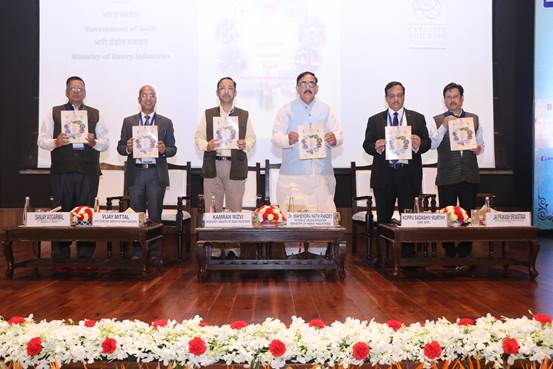
 Bharat Heavy Electricals Limited (BHEL) under the aegis of Ministry of Heavy Industries (MHI) successfully organised “BHEL SAMVAAD 3.0 – अनुसन्धान से आत्मनिर्भरता की ओर, BHEL की एक और पहल” the third edition of its dialogue with domestic business partners, industry associations, academia and research institutes to promote local suppliers, at Bharat Mandapam today.
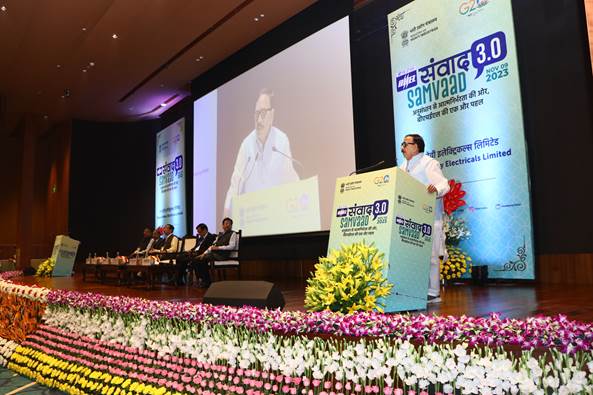
In this mega-event,  Dr. Mahendra Nath Pandey, Union Minister for  Heavy Industries launched the MHI’s ‘Annual Capacity Building Plan (ACBP)’ for 2023-24 outlining key strategic areas with focused capacity-building initiatives within the Ministry to enhance capability across all levels to achieve maximum governance to fulfill the  PM’s vision of Mission Karmayogi (National Programme for Civil Services Capacity Building (NPCSCB) Plan).

Addressing the gathering, Dr. Pandey said that  under the leadership of  Prime Minister Shri Narendra Modi today, we are moving towards building a New India. He further mentioned that five pillars of Aatmanirbhar Bharat (economy, infrastructure, systems, vibrant demography and demand) have not only strengthened our manufacturing capabilities but also helped in reducing our dependence on foreign goods, which is also important from the national securities’ point of view.
 

Lauding the indigenization efforts of BHEL, he expressed happiness for the initiative taken by BHEL under the name BHEL SAMVAAD since Dec’2020. 

In his address, Shri Kamran Rizvi, Secretary (HI) shared that the Ministry is working extensively towards providing an ecosystem for the growth of the heavy industry sector. He underlined the significant role of BHEL in shaping the industrial landscape in the country that has helped in reducing India’s dependence on imports, and initiatives like BHEL SAMVAAD stand testimony to their commitment towards Aatmanirbhar Bharat.

Talking about the emergence of new technologies and the need to update the current technological capabilities, Shri Rizvi emphasized that newer technologies are being developed almost every day in today’s world, and learning new skills and accumulating knowledge of current trends is a need of the hour. He  also informed about the government platform, where more than 1000 courses are being offered for skill upgradation. He pointed out that the Annual Capacity Building Plan (ACBP) is the right step in this direction.

Shri Vijay Mittal, Joint Secretary (HI) informed about the efforts made by BHEL along with its successful partners in the indigenization of critical components. Mentioning the importance of each official’s role down the line, he quoted “Any chain is as strong as its weakest link”. Two unique immersion programs have been conducted by the Ministry on “Industry 4.0” and “Electric Vehicles” as part of a knowledge addition program for Ministry officials. He added that after thorough discussions with all the stakeholders, various modules for training have been prepared and domain-specific knowledge has been created for MHI.

The star performers (suppliers/vendors) among BHEL success partners, who contributed towards Aatmanirbhar Bharat were felicitated by the Minister.

Senior officials from MHI, CMD & other Board members of BHEL, Sr. officials from Department of Expenditure, Ministry of Steel, DPIIT, representatives of local vendors, industry associations, academia and research institutes participated in the event.

 *****

Aspirational Young India

 Union Minister for Commerce and Industry, Consumer Affairs, Food & Public Distribution and Textiles, Shri Piyush Goyal in his inaugural address at the ‘DPIIT-CII National Conference on Ease of Doing Business’ held in New Delhi yesterday said that Aspirational Young India will spur the future growth of India.

Shri Goyal said that the foundational economic reforms undertaken by the Government has ensured that India moved from fragile 5 to top 5 economies in the last 5 years. The Minister lauded the Industry for supporting the national initiative of Ease of Doing Business (EoDB) and said that the Government is working to take EoDB to the next level.

‘National Conference on Ease of Doing Business’ was held at New Delhi on 8th November 2023. Department for Promotion of Industry and Internal Trade (DPIIT), a nodal department for Ease of Doing Business organized the conference in association with Confederation of Indian Industry (CII).

The Conference covered many important areas relating to Ease of Doing Business. Sessions regarding Ease of Doing Business way Forward, National Single Window System, Strengthening Dispute Resolution mechanism, Easing Paying Taxes and customs procedures were part of the conference. Sessions involved participation from representatives of States, Central Ministries and industry.

Session 1 on EODB Reforms – Journey so far and way forward was chaired by Secretary, DPIIT, Shri Rajesh Kumar Singh.  Secretary, DPIIT in his keynote address covered initiatives by DPIIT related to EODB (state rankings and reforms), NSWS, minimizing compliance burden (Jan Vishwas Bill), Preparations for Jan Vishwas Bill 2.0, Cost of regulation and briefed on upcoming World Bank B-Ready framework. He further encouraged the industry to work more closely on all initiatives and share suggestions. Mr. Ajay Shriram, MD, DCM Shriram Limited and Mr. Sunil Kant Munjal, Chairman, Hero enterprise shared industry concerns. Shri Navneet Mohan Kothari, MD, MP Industrial Development Corporation, Govt. of MP and Shri Sandeep Sagle, Commissioner, Industries and Commerce department, Govt. of Gujarat made presentations on States’s best practices, effective and simplified Single window portal and implementation of EODB reforms.

Session 2 on National Single Window system – One stop solution for all approvals/renewals was chaired by Joint Secretary, DPIIT, Ms. Manmeet Nanda. She encouraged the industry members and SMEs to utilize the National Single Window system for obtaining complete guidance on identifying and applying for approvals according to the business requirements. She also sought feedback for improving user experience and to achieve the goal of making this platform a true, genuine National Single Window. Senior government officials from the State governments of Uttar Pradesh, Nagaland and Central Ministries (Ministry of Labour & Employment and Ministry of Environment, Forest and Climate Change) addressed the audience and enumerated various initiatives led by their respective departments enabling ease of doing business and highlighted on the positive feedback received from the industry users from ease of usage post the integration of respective departmental services on NSWS.

In Session 3, strengthening dispute resolution mechanism, discussions were held on streamlining the enforcing contracts mechanism, Decriminalization of Business Laws, Strengthening the role of Alternate Dispute Resolution (ADR) Ecosystem. For Decriminalization, it was highlighted that discussions have been held on future implementation of retrospective applications of provisions that would be beneficial in reducing burden on courts. The discussions revolved around reducing the government litigation through systematic change in attitude and delaying of cases by officers, restricting the time for arguments and looking into limiting the number of adjournments, increasing the number of courts, tribunal and judges.

In Session 4, Easing Paying Taxes and Customs Procedures, discussions were held on Minimizing Tax Litigation, improving processes involved in refund/credit/returns, Rationalizing Procedural Compliances in GST, Streamlining and expediting the Customs processes and procedures.

***

Vacancy for Managers at National High Speed Rail Corporation Limited (NHSRCL)

National High Speed Rail Corporation Limited (NHSRCL) is a special purpose vehicle incorporated under the Companies Act, 2013 with an objective to finance, construct, maintain and manage the High Speed Rail Corridor in India. It is a joint venture of the Government of India and participating state governments. The company has been entrusted with the responsibility of executing the operations of high-speed corridors in India. NHSRCL has been involved in various activities such as recruitment, tendering, and social initiatives.

1. Senior Manager (Architecture)

Positions: Senior Manager (Architecture)
No. of Vacancy: 01 Nos.
Institution: National High Speed Rail Corporation Limited (NHSRCL)
Qualification: ✔️ Essential: Bachelor of Architecture from recognized institute/ university.
✔️ Desirable : Masters in Architecture/ Planning.
Experience: ✔️ Details Provided Below.
Job Description: ✔️ Details Provided Below.
Type: Full Time / Contractual
Location: New Delhi / Mumbai
Salary: ✔️ Rs. 70,000 – 2,00,000 (E4)
Apply at: ✔️ Apply Link
Walk-In-Interview: 30 November 2023

2. Manager (Architecture)

Positions: Manager (Architecture)
No. of Vacancy: 03 Nos.
Institution: National High Speed Rail Corporation Limited (NHSRCL)
Qualification: ✔️ Essential: Bachelor of Architecture from recognized institute/ university.
✔️ Desirable : Masters in Architecture/ Planning.
Experience: ✔️ Details Provided Below.
Job Description: ✔️ Details Provided Below.
Type: Full Time / Contractual
Location: New Delhi / Mumbai
Salary: ✔️ Rs. 60,000 – 1,80,000 (E3)
Apply at: ✔️ Apply Link
Walk-In-Interview: 30 November 2023

3. Assistant Manager (Architecture)

Positions: Assistant Manager (Architecture)
No. of Vacancy: 05 Nos. (UR – 4, OBC – 1)
Institution: National High Speed Rail Corporation Limited (NHSRCL)
Qualification: ✔️ Essential: – 1. Bachelor of Architecture from recognized institute/ university.
✔️ Desirable: – 1. Masters in Planning/Architecture.
Experience: ✔️ Details Provided Below.
Job Description: ✔️ Details Provided Below.
Type: Full Time / Contractual
Location: New Delhi / Mumbai
Salary: ✔️ Rs. 50,000-1,60,000) (E2)
Apply at: ✔️ Apply Link 
Walk-In-Interview: 30 November 2023

How to manage Budget on Grant Proposal for Oral Health Care Research

 Managing the budget for a grant proposal in the field of oral health care research is crucial for ensuring the success of your project. 

Here are some steps to effectively manage your budget:

  1. Understand the Grant Guidelines:

    • Carefully review the grant guidelines provided by the funding agency. Understand the specific budget requirements, eligible expenses, and any limitations.
    • Identify the maximum grant amount available for your project.
  2. Develop a Detailed Budget:

    • Create a comprehensive budget that covers all aspects of your research. Consider the following categories:
      • Personnel Costs: Salaries, wages, and benefits for research staff, including yourself.
      • Materials and Supplies: Costs for laboratory supplies, equipment, and consumables.
      • Travel and Conferences: Expenses related to attending conferences, workshops, or fieldwork.
      • Data Collection and Analysis: Costs for data collection tools, software licenses, and statistical analysis.
      • Publication and Dissemination: Fees for publishing research findings.
      • Indirect Costs (Overhead): Administrative and operational expenses.
      • Subcontracts or Collaborations: If you collaborate with other institutions or researchers, allocate funds accordingly.
  3. Justify Your Expenses:

    • Provide a clear rationale for each budget item. Explain why the expense is necessary for achieving your research objectives.
    • Be realistic and avoid overestimating or underestimating costs.
  4. Budget Narrative (Justification):

    • Write a budget narrative that explains each line item in detail. This narrative should align with your research plan.
    • Highlight how each expense contributes to the success of your project.
  5. Consider Inflation and Currency Fluctuations:

    • If your project spans multiple years, account for inflation by adjusting costs accordingly.
    • If working internationally, be mindful of currency exchange rates.
  6. Track Expenses During the Project:

    • Maintain accurate records of all expenses incurred during the research.
    • Regularly review your budget to ensure you stay within allocated amounts.
  7. Budget for Contingencies:

    • Include a contingency fund (usually around 10% of the total budget) to cover unexpected expenses or changes in project scope.
  8. Collaborate with Financial Experts:

    • Consult with financial experts or your institution’s grants office to ensure compliance with financial regulations.
    • Seek advice on budget development and management.

Remember that a well-structured budget demonstrates your project’s feasibility and enhances your chances of securing the grant. Best of luck with your oral health care research! 🌟🦷

For more specific details, you can refer to the ICMR Call for Extramural Ad-hoc Research Proposals in the area of Oral Health1.

Job for Landscape Architect at Adani Group


Landscape Architect

AHMEDABAD, GUJARAT, India

RESPONSIBILITIES

  • Design Review , Developing designs, BOQ and execution schedule of Landscape development at existing airports
  • Develop Landscape master planning and design concepts using the 2 D& 3D and digital mediums
  • Take ownership and work effectively without any  supervision 
  • Presentation of Landscape design Developments to Airport CAO and Group Heads
  • Preparation of Project Briefs, kick-off meetings and design direction to External consultants
  • Diligent coordination with Landscape Architects at asset levels and prepare reports for keeping Head-office updated in all fields of work
  • Set out / agree design standards and parameters with senior team members
  • The individual will be required to travel at times to the different Airports and sites India/globally and interface with the team based there
  • Work on a program for the project and proactively advise Senior team members of any issue which affects the efficient completion of the project
  • Design Coordination with other related works agencies for sequential work execution
  • Maintaining detailed Green Zone Data for all the airports and 100 million tree plantation Scheme.
  • Draft technical reports, of acceptable technical and presentation quality with minimum guidance
  • Assist ESG team for Carbon Sequestration Study
  • Interaction with landscape consultants for design coordination for new Airports
  • Interaction with the Asset/ project Team on continual basis
  • Interact  with other works contractors (Irrigation, Mechanical, Electrical, Civil, IT, Media, etc.) for site coordination.
  • Interaction with external stakeholders such as traffic police, CISF, telecom companies etc. for proper coordination of Landscape works
  • Interaction with Client & related government agencies for necessary approval

 QUALIFICATIONS

Qualifications :

  • Landscape Architect | M. Arch in Landscape Architecture

Experience: 

  • 5 – 8 years’ experience in Landscape
  • Must have good experience delivering Airport/ Urban Design/Public Realm projects in the public or the private realm
  • Working knowledge of standard regulations and best practice principles, with strong problem-solving skills
  • Must be competent in design detailing (indoor and outdoor)  and construction techniques
  • Experience in the use of Adobe design suite (Inc. InDesign, Photoshop, Illustrator) for production of graphics and reports
  • Must be proficient in AutoCAD REVIT, Adobe CS5, MS Office, sketch up and Google Pro. Advanced experience of BIM related software in Landscape Design/Infrastructure works will be considered an added advantage

JOB INFO

  • Job Identification5296
  • Posting Date06/11/2023, 13:47
  • Apply Before11/11/2023, 13:46
  • Job ScheduleFull time
  • Locations Ahmedabad, Ahmedabad, Gujarat, IN

Adani Group

Adani Group is a diversified organisation in India comprising 7 publicly traded companies. It has created a world class transport and utility infrastructure portfolio that has a pan-India presence. Adani Group is headquartered in Ahmedabad, in the state of Gujarat, India. Over the years, Adani Group has positioned itself to be the market leader in its transport logistics and energy utility portfolio businesses focusing on large scale infrastructure development in India with O & M practices benchmarked to global standards. With four IG rated businesses, it is the only Infrastructure Investment Grade issuer in India.

The Adani Group is one of India’s largest and most influential conglomerates, with a diversified presence in a wide range of industries, including energy, infrastructure, resources, logistics, agribusiness, and more. Founded by Gautam Adani in 1988, the group has grown rapidly over the years, becoming a global player in various sectors. Here are some key aspects of the Adani Group:
Founding and Leadership: The Adani Group was founded by Gautam Adani, who started with a small trading business in India. Under his leadership, the group has expanded significantly and is now a prominent name in the Indian business landscape.
Diversified Business Interests:
Energy: The Adani Group has a strong presence in the energy sector, with interests in power generation, transmission, and distribution. It operates thermal power plants and has ventured into renewable energy sources like solar and wind power.
Infrastructure: The group is involved in infrastructure development, including the construction of ports, airports, and highways. Adani Ports and Special Economic Zone (APSEZ) is one of India’s largest port operators.
Resources: The group has interests in mining and resources, particularly in coal mining and trading. It also has substantial holdings in natural gas exploration and distribution.
Logistics: Adani Group is involved in logistics and transportation services, with a focus on providing end-to-end supply chain solutions.
Agribusiness: The group is involved in the agribusiness sector, with activities such as the handling, storage, and trading of agricultural commodities.
Global Reach: The Adani Group has expanded its footprint beyond India and has undertaken projects in various countries, including Australia, Indonesia, and the United States. This global expansion is particularly evident in their energy and resources businesses.
Major Projects: Some of the major projects associated with the Adani Group include the development of Mundra Port in Gujarat, the expansion of the Tiroda and Kawai thermal power plants, and the creation of the world’s largest solar power project in Rajasthan.
Sustainability and Renewable Energy: In recent years, the Adani Group has shown a commitment to sustainability and renewable energy. It has made substantial investments in solar and wind energy projects and aims to become the largest renewable energy player in India.
Controversies and Challenges: The Adani Group has faced its share of controversies, including environmental concerns related to its coal mining projects, allegations of land acquisition issues, and disputes over infrastructure projects. These issues have sparked public debate and legal actions in some cases.
Financial Success: The group’s rapid expansion and diversification have contributed to its significant financial success. It is listed on the Indian stock exchanges, and several of its subsidiary companies are among the top players in their respective industries.
Adani Group is a conglomerate with a significant presence in multiple sectors of the Indian economy. Under the leadership of Gautam Adani, the group has achieved substantial growth and aims to continue its expansion, particularly in the renewable energy sector, as it navigates the challenges and opportunities presented by India’s evolving business landscape.

NCRPB, or the National Capital Region Planning Board

NCRPB, or the National Capital Region Planning Board, is a significant government body in India responsible for the integrated development and planning of the National Capital Region (NCR). The NCR comprises several areas in the northern part of India, including Delhi and its neighboring regions, which play a pivotal role in the country’s economic, political, and cultural landscape.

Here are some key aspects and functions of the NCRPB:
Formation and Objective: The NCRPB was formed in 1985 under the National Capital Region Planning Board Act, 1985, with the primary aim of promoting balanced development in the NCR. It was established to prevent haphazard and unplanned growth, which was leading to issues like congestion, pollution, and inadequate infrastructure in the region.
Geographical Coverage: The NCR comprises the entire National Capital Territory of Delhi, as well as adjoining areas in the states of Haryana, Uttar Pradesh, and Rajasthan. It encompasses cities like Gurgaon, Noida, Ghaziabad, Faridabad, and several others. These areas are interconnected and significantly influence each other in terms of urbanization and development.
Planning and Development: NCRPB is responsible for formulating and implementing regional development plans for the NCR. These plans are designed to ensure the rational utilization of resources, infrastructure development, and improved quality of life for the people residing in the region. The board collaborates with state governments and various other stakeholders to achieve these objectives.
Infrastructure Development: One of the primary roles of the NCRPB is to oversee the development of critical infrastructure in the region. This includes transportation networks, water supply, sewage and sanitation systems, housing, and urban renewal projects. By coordinating these efforts, the NCRPB aims to enhance the overall living standards in the NCR.
Environmental Sustainability: The NCRPB also plays a crucial role in environmental conservation and sustainable development. It works to protect and restore natural resources, such as rivers and forests, in the NCR, while simultaneously promoting eco-friendly practices in urban planning and development.
Collaboration and Coordination: The board serves as a platform for cooperation and coordination among the central government, state governments, local authorities, and other stakeholders. It ensures that development activities in the NCR are aligned with a common vision and goal.
Funding and Implementation: NCRPB provides financial assistance for various development projects in the NCR. It allocates funds for infrastructure development, regional planning, and environmental initiatives, in line with its overall objectives.
Challenges: The NCR faces several challenges, including rapid population growth, air pollution, traffic congestion, and the equitable distribution of resources. NCRPB addresses these challenges by formulating comprehensive plans and policies.
National Capital Region Planning Board (NCRPB) plays a crucial role in shaping the development of the National Capital Region, which is not only the political and administrative center of India but also a dynamic economic and cultural hub. By facilitating coordinated and sustainable development, the NCRPB aims to improve the quality of life for the people residing in the region while preserving its environmental heritage.

Job Vacancy at NCRPB -NCR Planning Board


NCRPB Jobs Notification 2023 information for the hiring of 2 Joint Director (Technical) Posts has been released on the official website at ncrpb.nic.in. Candidates Planning to start their career with National Capital Region Planning Board can apply Offline application on or before 2023-11-29.

  • NCRPB Jobs 2023 Notification
  • Job Location: Delhi, India
Organization Name National Capital Region Planning Board
Post Name Joint Director (Technical)
No. of Vacancies 2
Educational Qualification BE/B.Tech, B.Arch, Post Graduation Degree
Official Website ncrpb.nic.in
Mode Offline

NCRPB Post Details

Joint Director (Technical): 2 Posts

  • Qualification: B. Arch. or B.E. (Civil) or B. Planning or Post Graduate Degree in Geography or Economics from a recognized University/Institute; and (ii) Post Graduate Degree in Regional or City or Urban or Transportation or Infrastructure or Environment Planning from a recognized University/Institute; and (iii) 9 years’ experience in the field of town and regional planning in a local body or in a Government/ Govt. undertaking or in a recognized institution, out of which at least 3 years in preparation and implementation of urban/regional/town & country planning and monitoring of infrastructure projects. Note- Total experience would count after acquiring the Post Graduate Degree in Urban/ Regional Planning
  • Salary Details: Rs. 78,800 – 2,09,200/- Per Month
  • Age Limit: 50 years

Application Fee

For General Candidates: Rs.100/-
For SC/ST/PH/Ex-Servicemen/Female Candidates: Nil
Mode of Payment: Online/Offline

Selection Process: Selection will be based on the interview

How to Apply: Interested and eligible candidates Application in the prescribed proforma, along with attested copy of APAR for the preceding. Address: Member Secretary, NCR Planning Board, 1st Floor, Core-4B, India Habitat Centre, Lodhi Road, New Delhi-110003 on or before 29th november 2023.

Important Dates

Application Last date: 29th november 2023.

Important Links

Notification Link
Application Link

NITI Aayog Organised Workshop on Inclusive Trade for Growth & Prosperity

 NITI Aayog organised a thematic workshop on “Inclusive Trade for Growth & Prosperity which highlighted the need to enhance and widen domestic outreach, ownership and implementation of New Delhi Leader’s Declaration (NDLD) outcomes in the areas of inclusive trade for growth and prosperity, and resilient supply chains. The thematic workshop was organised as a follow up to New Delhi Leader’s Declaration (NDLD) under India’s presidency G20 Summit which emphasised on adopting strong, sustainable, balanced, and inclusive trade for growth and prosperity for all.


Shri BVR Subrahmanyam, CEO NITI Aayog, in his keynote address highlighted the need for a non-discriminatory and inclusive trading system which facilitates trade as an engine of growth and prosperity. Further, he emphasized the need for India to integrate into global value chains (GVCs) and adapt swiftly to emerging trading systems.

Dr. Arvind Virmani, Hon’ble Member, NITI Aayog, addressed the first session titled ‘Mapping Global Value Chains’, and highlighted the need for strengthening key areas such as labour-intensive supply chains, institutional factors for policy framing and simplifying taxation system, and integrating payment, refund and export credit system especially for MSMEs. Dr. Virmani also recognised the need to address various anti-dumping issues and the need to foster FTAs with potential partners.

The session on ‘Mapping Global Value Chains’ focused on strengthening logistics for efficient supply chains, exchange rate management to enhance competitiveness, utilising strategic intervention from MNCs, provision of cumulative Rules of Origin, identification of potentially competitive segments, transparent & traceable GVCs, mapping startups and integrating industrial policy with trade policy to name a few.

The second session on ‘Promoting Inclusive Trade for Growth’ was chaired by Prof. Ramesh Chand, Hon’ble Member, NITI Aayog. The session highlighted the key points including – strengthening capacity and infrastructure development of LDCs; reducing non-tariff barriers; mobilizing resources for scaling up aid-for trade, particularly for MSMEs in developing and least developed countries; digital inclusion in three areas namely infrastructure, skills and data ownership; standard setting; technical advancement; transparency; and incorporating climate principles into trading systems.

The concluding session of the Workshop ‘Addressing challenges to Inclusive Trade’ was chaired by Dr. Harsha Vardhana Singh, Ex DDG, WTO. He drew attention towards enhancing traditional exports of India; increasing female labour force participation in trade; state/district level integration into the supply chain and trade (promoting Districts as Exports Hub); facilitating integration of MSMEs in GVCs; logistics and financial support, access to information for MSMEs; climate resilient agriculture with promotion of Nutri cereals and accelerating services exports; document digitalization with respect to trade; and strengthening focused skill development including reskilling & upskilling.

NITI Aayog is organising a series of thematic workshops on key agendas of New Delhi Leader’s Declaration (NDLD) to devise actionable strategies and plans that can be implemented to provide impetus to growth and prosperity of the country. Other thematic workshops are focused on topics of SGDs, Roadmap for Tourism, Digital Public Infrastructure, India and African Union Cooperation, Data for Development, Women Led Development, etc.


***

NITI Aayog to organise workshop on Nari Shakti: Towards Women-led Development

 NITI Aayog is organizing a workshop on the theme of Nari Shakti: Towards Women-led Development on 8 November 2023 (Wednesday) at Park Hotel, New Delhi. This will be eighth in the series of G20 Feeder Thematic Workshops being organized on 10 themes discussed in the G20 New Delhi Leaders’ Declaration (NDLD). The knowledge partner of this workshop is the Institute of What Works to Advance Gender Equality (IWWAGE).


This workshop will endeavour to bring together various views from experts, entrepreneurs, innovators, academia, representatives of think-tanks, and government working on gender equality and empowerment to identify the way forward and the required resources to achieve the objectives and outcomes mentioned in the G20 New Delhi Leaders’ Declaration.

It will be divided into following four segments. Each segment will aim to coalesce into specific action points and strategies that are required to implement the vision laid out in the NDLD:

  1. Women in the economy: Enhancing women’s economic and social empowerment: Women’s social and economic empowerment is of paramount importance for fostering inclusive and thriving societies. The segment will explore various pathways to increase women’s meaningful participation in the workforce, role of government and private sector to achieve the same as well as the resources required to enable women to join workforce.
  2. Women’s collectives: strengthening SHGs, women-led FPOs and rural women’s leadership abilities: Women collectives like SHGs, Farmer Producer Organisations (FPOs) etc. are undeniably a unique and important gender-responsive policy solution in terms of securing employment, financial autonomy secured through credit and savings, improving women’s capabilities around decision-making, fostering leadership, and communicative abilities and so on. This segment will discuss strategies that will enable these groups/collectives to reach the next stage of economic empowerment and also to expand their coverage in the urban areas.
  3. Women and the future of work: bridging digital and skilling gaps for access to jobs and strengthening women’s entrepreneurship: Women’s access to digital and financial services can be a critical enabler of their labor force participation. This segment will delve into the trends in the future work, strategies to improve women’s access to these skills and to bridge the gender skill gap and various strategies to promote women’s entrepreneurship.   
  4. Legal safeguards for the empowerment of women: Legal frameworks can provide a powerful avenue for women to not only access justice, but also proactively set norms for their empowerment. The segment will explore various strategies to further strengthen the legal safeguards to create a safe space for women’s safety and empowerment.

This workshop will be an opportunity for industry, academics, experts, and civil society representatives to collaborate and design a roadmap for comprehensive gender equality and empowerment. 

*****

i-PhD – Industry Linked PhD Degree

 From the educated unemployed of the past, we are now seeking to move on into an era of educated employable Science entrepreneurs with the introduction of i-PhD which would in other words be an Industry linked degree in PhD.

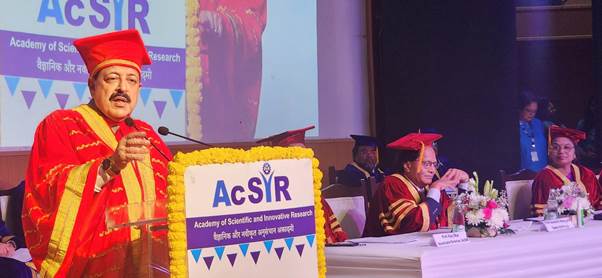
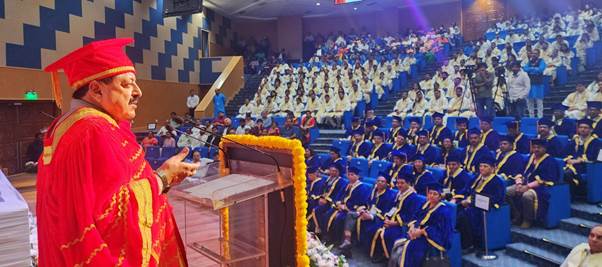
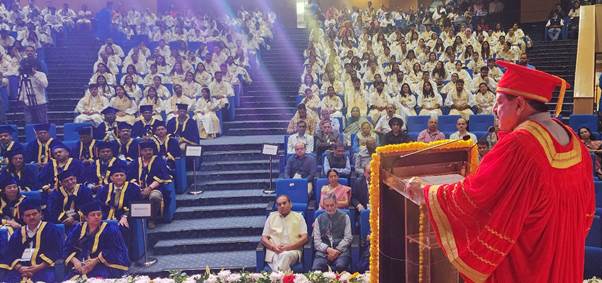
Addressing the 7th Convocation of Academy of Scientific and Innovative Research (AcSIR) in New Delhi today, Union Minister Dr Jitendra Singh said, this Academy is a unique academic platform which awards a Degree in Science that is employable and includes a curriculum underlined by the nuances of entrepreneurship.

The Union Minister of State (Independent Charge) Science & Technology, MoS PMO, Personnel, Public Grievances, Pensions, Atomic Energy and Space said that in the short span of 12 years since its inception in the year 2011, the AcSIR has emerged as the largest institution providing Doctoral education in India.

“The Academy is rich not only quantitatively, but also qualitatively, maintaining standards of excellence as well as innovation, and at the same time covering  a wide range of science streams, – it’s excellent, innovative and also versatile,” he said.

AcSIR is the largest Academic Institution for doctoral research in India having awarded 577 PhD degrees in 2022 and with more than 7,000 students currently registered for PhD. Presently, AcSIR is ranked 3rd by “Scimago Institutions Ranking” (2022), 11th by “Nature index” (2021-22) and 12th by National Institutional Ranking Framework (NIRF) (2023) in the Research Category among the academic institutions in India.

Calling for institutionalizing the linkage of Industry with our scientific endeavours, Dr Jitendra Singh said, this will help create sustainable Startups.

“We have to sustain this Startup movement in the country that we are witnessing, we have to have a very strong Industry to sustain the more than 1 lakh Startups in the country,” he said.

Dr Jitendra Singh said, the Government led by Prime Minister Shri Narendra Modi has provided an enabling milieu with his initiatives such as the Aroma Mission & Lavender Cultivation and opening up the Space sector.

“Right from the beginning, we need to have Industry as a stakeholder… And wherever the StartUp outcomes were found lucrative, it was noticed that many youngsters from the Corporate sector quit their jobs and joined them. And I am glad that i-PhD and similar courses introduced at AcSIR are a step in that direction, of institutionalizing the integration of scientific research and innovation with Industry,” he said.

With the unlocking of Space Technology, Dr Jitendra Singh said, the common masses of the country have been able to witness the launch of the mega space events like Chandrayaan-3 or Aditya-L1. About 10,000 students and common people came to see the Aditya launch and some 1,000 media persons witnessed the Chandrayaan-3 landing on the moon.

Advocating synergy of Science, Research, Academia, Startups and Industry, Dr Jitendra Singh said the Anusandhan National Research Foundation (NRF) and the new National Education Policy (NEP-2020) will create the right ecosystem to realise PM Modi’s Vision of Viksit Bharat @2047.

Dr Jitendra Singh said, the NRF will bridge the demarcation between the Public and Private sector and there will be integration. The NEP-2020, he said, will set free India’s youth as they will no longer be “prisoners of their aspiration” as the Policy now empowers them to choose or change subjects freely depending on their aptitude, skill, interest and other factors.


IREDA Launches CSR Portal to Improve Transparency in CSR Initiatives

 Indian Renewable Energy Development Agency (IREDA), a Mini Ratna (Category – I) Government of India enterprise under the administrative control of Ministry of New and Renewable Energy, has launched a Corporate Social Responsibility (CSR) portal for enhancing transparency in its CSR initiatives. The portal will facilitate transparency in receipt and disposal of CSR requests from various organizations and institutions. It will be accessible to all 24×7, with a CSR policy and proposal checklist for examination of CSR requests. The portal will also contribute to the more efficient execution of IREDA’s social welfare initiatives as part of its CSR efforts, making them readily available to the public. Developed by IREDA’s IT team, the portal can be easily accessed here: https://onlinela.ireda.in/OnlineCSR/

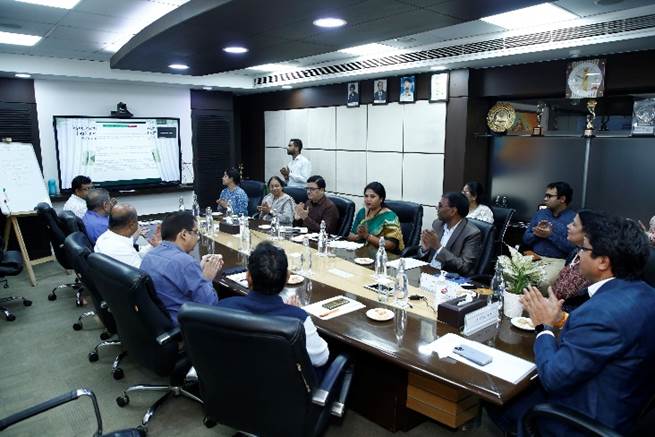
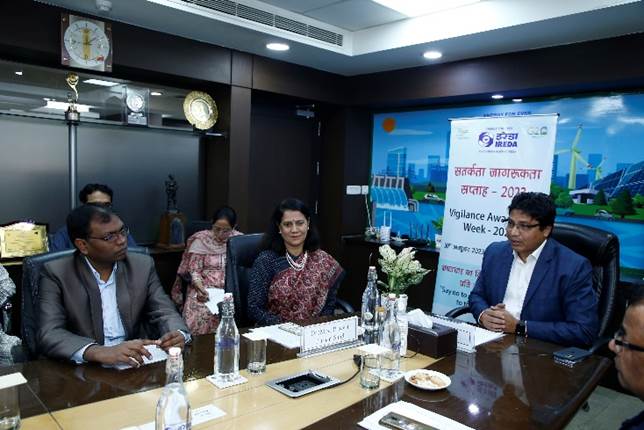
The portal was launched during the valedictory function of “Vigilance Awareness Week 2023”, held at the company’s registered office in Delhi. Dr. Praveen Kumari Singh, Additional Secretary, Central Vigilance Commission (CVC), launched the CSR portal in the august presence of Chairman and Managing Director (CMD) of IREDA Shri Pradip Kumar Das; Chief Vigilance Officer, Shri Ajay Kumar Sahani, and other senior officials.

A group of people sitting at a tableDescription automatically generated

Additional Secretary of CVC, Dr. Praveen Kumari Singh shared invaluable insights for promoting vigilance and integrity within organizations. She applauded the unique initiative undertaken by IREDA in 2021, of launching the Whistle Blower Portal, which positioned the company as the first Central Public Sector Enterprise (CPSE) for providing such an online platform.  She also highlighted that IREDA is a key partner in achieving Sustainable Development Goals, particularly in combating climate change.

CMD, IREDA expressed the company’s unwavering commitment to advancing renewable energy and Corporate Social Responsibility while upholding the values of transparency and ethics. He emphasized that the newly introduced CSR portal symbolizes its resolute dedication to these guiding principles, promoting a paperless approach and unwavering determination to better serve communities and stakeholders.

IREDA organized various competitions during ‘Vigilance Awareness Week 2023’ (30th October to 5th November 2023), and prizes were distributed to the winners at the valedictory function.

***

7th Edition of Swachh Talks Webinar Series organised to highlight importance of health and wellness in the sanitation sector

 The atmosphere is brimming with excitement and celebration as the festive mood sets in. Diwali is being welcomed with great fervour and delight by all, who have adorned their homes, streets, neighbourhoods, and market places with decorations and lighting. This time of the year also highlights the importance of swachhata, not only in households but also in public areas that witness heavy footfall. The citizens are participating in maintaining cleanliness and hygiene in their surroundings, making the festival even more special and meaningful. The onus also comes on the front-liners, who are conducting special cleanliness drives, managing heavy influx of waste and managing the sanitation and waste sector.

Taking forward the journey of Swachhata , the Ministry of Housing and Urban Affairs (MoHUA) launched the Swachh Diwali Shubh Diwali campaign to instil a sense of collective responsibility of celebrating a clean and eco-friendly Diwali, use local products and donate old and unused items in the RRR centres. It also aims to address the health and safety aspect in the sanitation and waste management sector during the festive season The citizens, local bodies, RWAs, Market Associations, SHGs, NGOs, office complexes, schools, institutions should ensure that the street cleaning timings be changed to early mornings when the pollution and the crowd visiting the busy markets and streets is not as much.  Misting and water sprinkling activities should be done more often to keep the dust down. Appropriate face masks, protective eye and safety gears should be distributed by the local bodies.

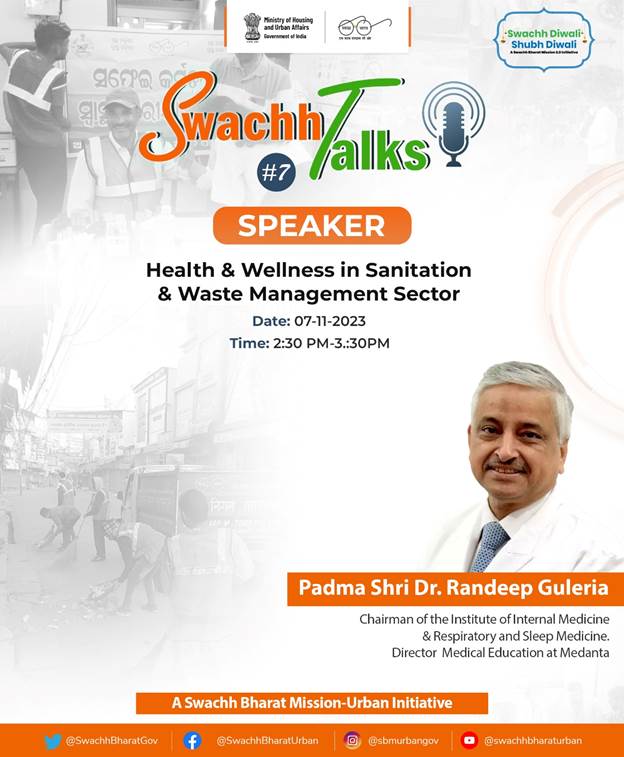
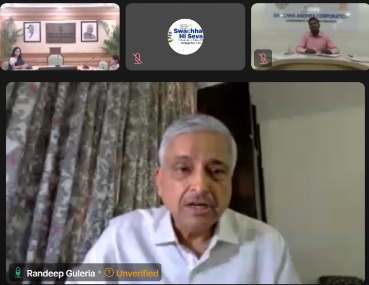
As a part of this campaign and a as a run up to the upcoming festival season, MoHUA organized the 7th edition of the Swachh Talks Webinar Series on the theme of ‘Health & Wellness in Sanitation & Waste Management Sector’. Chaired by Secretary, MoHUA, Shri Manoj Joshi & JS & MD, SBM-U, Ms. Roopa Mishrathe 7th episode highlighted the importance of health and wellness in the sanitation sector. The session was addressed by Padma Shri Dr. Randeep Guleria, Chairman of lnstitute of lnternal Medicine & Respiratory & Sleep Medicine, Director Medical Education at Medanta. Dr. Guleria suggested on SOPs and protocols to be made for the work force to practice and follow while being exposed to the air pollution.

Speaking at the forum, the Padma Shri awardee focused on a need for mitigation action and the need to strengthen the healthcare services. Highlighting the need for immediate measures, Dr. Guleria emphasized curbing the use of firecrackers, occupational health and safety measures like protective eye gears, safety gears, N95 masks, caps, reducing exposure, picking visible waste instead of manual sweeping, pollution abatement for sanitation / outdoor workers. Ms. Bharti Chaturvedi, Founder and Director of Chintan Environmental Research and Action Group, shared the findings of the study ‘Unfair Quality- The lmpact of Air Pollution on Three Occupation’. She highlighted on the possible health impacts of poor air quality on waste pickers, SafaiMitras and Security Guards and discussed the protocols to follow.  Padma Shri Dr. Indira Chakraborty, Public Health Specialist, Scholar& Environmentalist, shared her observations on how critical it is to link WASH to food and health. She emphasized on the pollution that results from street food. She highlighted the need to focus on Garbage Management in Food sector and how it is important to streamline health & hygiene. 


Speaking on the occasion, Secretary, MoHUA, Shri Manoj Joshi highlighted the need to focus on the SOPs and protocols to be practiced during the alarming air pollution. He mentioned that it is important for the Sanitation workers, especially in the waste management sector to use safety and protective gears. He also highlighted the need for Cities to ensure that the task force exposed to the polluted air is taking preventive measures. The virtual event was attended by State & city officials, sector partners, NGOs working in the sector and representatives of sanitation workers. The Swachh Talks concluded with an interactive session with Cities, wherein they shared their experiences and challenges in health and wellness.

****

2 Australian Universities in GIFT City

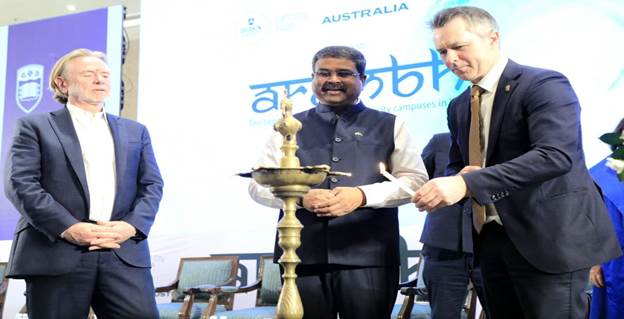
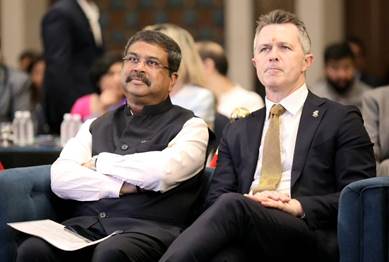
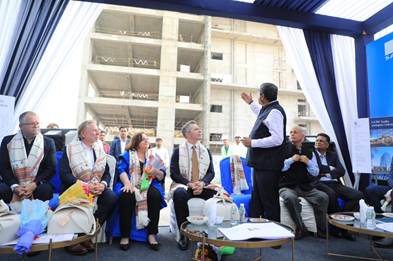
 Union Minister for Education and Skill Development & Entrepreneurship Shri Dharmendra Pradhan along with his Australian counterpart, Hon’ble Jason Clare, MP, Government of Australia, today visited the site for the upcoming campuses of Wollongong and Deakin Universities at GIFT City,Gandhinagar. They were briefed on the developments of the campus and future plans.

The Ministers attended an event, Arambh (The Beginning), formally announcing the opening of campuses at the GIFT City. Opening up of foreign universities on Indian soil is in line with the Nation Education Policy 2020’s vision of the internationalization of education.  Arambh  celebrated a significant milestone in the international educational landscape, bringing together eminent dignitaries, ministers, and academic leaders to mark the commencement of Australian university campuses in India.

The Vice-Chancellors of Deakin University and University of Wollongong stressed the importance of country-to-country partnerships, highlighting the significant growth in bilateral relations between India and Australia, even during challenging times such as the COVID-19 pandemic. They shared the future plans including the scheduled start of courses with opening up of the campuses in India.

Speaking on the occasion, Shri Pradhan congratulated the student and academic fraternity on a new ‘Arambh’. He said that Foreign University campuses at home will facilitate Study In India and also create a vibrant, diverse and inclusive educational environment as envisioned in the NEP 2020.

Shri Pradhan mentioned that opening up the campus of these two universities in the GIFT City—the land of opportunities—is a ‘Gift’ to the student community. He expressed his gratitude to Prime Minister Shri Narendra Modi for his vision and efforts to transform India’s education through the NEP 2020. He also said that students and faculty from different parts of the world will collaborate, learn, and grow together with such efforts.

This transformative policy emphasizes ‘Internationalization at Home’, aiming to create a vibrant, diverse, and inclusive educational environment within our own country, he added.

In the afternoon, both the Ministers addressed a conclave ‘Research Dialogue: New Horizons in Research Collaboration’. The aim of the conclave was to identify innovative opportunities for deepening bilateral collaboration in a thriving research ecosystem. Australian delegation, senior representatives of key Indian higher education and research institutions, and other dignitaries were also present at the conclave.

Shri Pradhan spoke at the ‘Research Dialogue’ , exhorting University leaders and researchers  to  catalyse new opportunities for deepening bilateral research collaborations between India and Australia. Research has to be a priority area for the larger benefit of society; both Australia and India are committed to promote research for mutual prosperity and global well-being, he added.

Both the Ministers met with academicians and industry leaders on Industry Education Partnerships where discussions were held on strengthening education-industry connections, benefiting industry through university partnerships, R&D collaboration etc.

***