Nutritious Cereals in Dietary Schemes

 The Food Safety and Standards Authority of India (FSSAI), under the aegis of Ministry of Health and Family Welfare has been promoting incorporation of millets as part of a healthy and diverse diet among different sections of people through its Eat Right India initiatives. FSSAI has also prepared a millet based recipe book called ‘Shree Anna (Millets) Recipes – A Healthy Menu for Mess/Canteens’. The book contains regional specific recipes from East, West, North and South. Shree Anna are also included under the Poshan Abhiyan of the Ministry of Women and Child Development. Further, the Ministry of Food and Public Distribution has revised its guidelines to increase the procurement of Shree Anna under the Targeted Public Distribution System (TPDS), Integrated Child Development Services (ICDS) and Mid-Day Meal. The Ministry has also advised the State Governments and Union Territories to increase the procurement of Shree Anna. An Export Promotion Forum dedicated to promotion of Shree Anna in the international market has been set up to facilitate promotion, marketing and development of Shree Anna exports from India.

As a part of promotional activities of International Year of Millets (IYM)-2023, the Ministry of Agriculture and Farmers Welfare (MoA&FW) is promoting Shree Anna during India’s G20 presidency. Shree Anna are also showcased in various events such as International Trade Fair, Surajkund Mela etc. A key event organized towards International Year of Millets was the Global Millets (Shree Anna) Conference, held from 18th– 19th March 2023 at IARI Pusa campus, New Delhi which was inaugurated by the Prime Minister. In continuation to the efforts towards mainstreaming Shree Anna, a ‘Millets Experience Centre (MEC)’ has been opened at Dilli Haat, INA, New Delhi with an aim to raise awareness on Shree Anna and encourage its adoption among general public. In order to encourage consumption of Shree Anna among government employees, all Government offices have been advised to include Shree Anna snacks in departmental trainings/meetings and Shree Anna based food items in departmental canteens. MoA&FW has also installed vending machines for Shree Anna products through National Agricultural Cooperative Marketing Federation of India (NAFED) to various Ministries/Departments. Shree Anna and its products have been identified as One District One Product (ODOP) in 19 districts of 10 States.

The Ministry of Information & Broadcasting through DD News Network carried out awareness campaign on Millets and International Year of Millets-2023 (IYM-2023) with live telecast of events, special prograrnmes, ground stories, interviews in all bulletins and prime time news shows. In addition, Akashvani Stations are broadcasting “Kisanvani” & “Kisan Ki Baat, programmes in collaboration with Ministry of Agriculture & Farmers Welfare. Moreover, sustained programmes are being broadcast through 97 identified stations on the nutritive benefits of Millets in human diet, its significant role in ensuring food security, its uses as nutri-rich livestock feed, climate-friendly cultivation and cost effective remunerative farming for farmers. Apart from this, discussion and interview bases programmes have also been produced by News Services Division (NSD), All India Radio to raise the awareness on the benefits of millets and awareness material is also being extensively disseminated on various digital platforms of NSD. Various recipes based on millets have also been uploaded on Akashvani samachar Youtube channel.
Farm Credit Target

 The erstwhile Centrally Sponsored Scheme of Sub-Mission on Agro forestry (SMAF) has now been restructured with focus on Quality Planting Material as an Agroforestry component to be implemented as one of the components of Rashtriya Krishi Vikas Yojana (RKVY) with an indicative outlay of Rs. 271.65 crore (GoI Share) for the 15th Finance Commission period i.e. 2021-22 to 2025-26 with special focus on production of certified Quality Planting Material (QPM). ICAR-Central Agro forestry Research Institute (CAFRI) is the nodal agency for providing technical support, capacity building, setting up of nurseries, production, and certification of QPM etc. CAFRI shall extend support through its All India Coordinated Research Project (AICRP) centers on agroforestry situated at various locations around the country. For the implementation of the scheme State Nodal Department/Agency shall be identified for each State/UTs. The Nodal Department/Agency shall ensure the availability of QPM by producing on its own or through the collaborative arrangement with individuals/institutions such as SAUs, KVKs, FPOs, SHGs, NGOs, Entrepreneurs/Startups, Forest/Agriculture institutes, farmers/cooperative societies etc. QMP raised under the scheme shall be made available for farmers/SHGs free of cost or as decided by the respective States/UTs. The scheme will have the following major components/ activities;

  1. Establishment of Nurseries for Production of QPM
  2. Tissue culture lab for quality planting material
  3. Skill Development and awareness campaign (up to 5% of allocation):
  4. Research & Development, Market linking:
  5. Project Management Unit (PMU) and Agroforestry Technical Support Group (TSG)
  6. Local Initiative (upto 2 % of Approved Annual Plan)


The government is promoting natural farming since 2019-2020 through a sub-scheme namely Bharatiya Prakritik Krishi Paddati (BPKP) under Paramaragat Krishi Vikas Yojana (PKVY). Natural farming is chemical-free farming based on the integrated agriculture and animal husbandry approach using livestock and local resources and relies on-farm biomass recycling with major stress on biomass mulching, the use of on-farm cow dung-urine formulations from local livestock.

Under the Namai Gange Program of PKVY scheme Government is promoting chemical-free Organic farming along the bank of the Ganga River. 1.23 lakh ha area has been covered under the Namami Gange program since 2017-18.

During 2022-23, Government approved Chemical-free Natural Farming for a 1.48 lakh ha area in 5-km wide corridors along river Ganga for the States of Bihar, Jharkhand, Uttarakhand and Uttar Pradesh. The States of Bihar, Jharkhand, Uttarakhand and Uttar Pradesh have approved areas of 52,000 ha, 4000 ha, 6400 ha and 85710 ha respectively for Natural Farming.

Agriculture Infrastructure Fund

 In order to address the existing infrastructure gaps and mobilize investment in agriculture infrastructure, Agriculture Infrastructure Fund (AIF) scheme was launched in 2020 with an objective to mobilize a medium – long-term debt financing facility for investment in viable projects for post-harvest management Infrastructure and community farming assets through incentives and financial support. The scheme envisages provision of Rs. 1 Lakh Crore by banks and financial institutions as loans with interest subvention of 3% per annum and credit guarantee coverage under Credit Guarantee Fund Trust for Micro and Small Enterprises (CGTMSE) for loans up to Rs. 2 Crores. As on date, loans amounting to Rs. 26,064 Crores have been sanctioned for 33,369 projects and these sanctioned projects have mobilized an investment of Rs. 44,208 crores in the agriculture sector.

A new campaign named ‘BHARAT’ (Banks Heralding Accelerated Rural & Agriculture Transformation) has been launched by the Government under Agriculture Infrastructure Fund Scheme to provide maximum benefits to the people and to create a competitive spirit among the Banks and lending institutions to mobilize agriculture infrastructure projects loan at a faster pace. This is a month-long Campaign from 15th July 2023 to 15th August 2023. Top performing Banks under different categories i.e. commercial Banks in public and private Sector, Regional Rural Banks, Small Finance Banks (SFBs), Non-Banking Financial Companies (NBFCs) and cooperative Banks will be selected at the end of the Campaign and their special contribution will be recognized. As on 31.07.2023, overall Rs.1239 Cr. have been sanctioned by numerous banks for 1375 projects under BHARAT campaign.

This Campaign was launched on 12th July, 2023 which was attended by more than 100 Banking Executives that included MDs/Chairman, EDs of commercial Banks in public and private sector, Regional Rural Banks, Small Finance Banks, NBFCs and select cooperative Banks. Moreover, the daily performance under the campaign is being shared among all the Banks through messages at the closing of business hours of Banks every day. These daily updates generate much enthusiasm and competitive spirit among the Banks and lending institutions to perform and exceed their targets.  Ministry is committed to have regular interactions with the Bank Executives through various modes of communication in between with a view to review performance under the campaign and to persuade the slow movers and non-starters to perform.

Banks have been requested to achieve the targets considering the potential  for agri infra projects from time to time and the response of the banks is encouraging. This ministry sets AIF annual targets for individual Banks on the basis of their clientele base, geographical reach and share in the agricultural advance and past performance. The department maintains regular touch with every bank through its designated AIF Nodal Officer in the Head Office for implementation of the AIF Scheme from the submission of application to reimbursement of Scheme benefits. Interaction with Banks’ top Executives and their Nodal Officers takes place to review the progress of the Scheme and providing handholding support at regular intervals such as “Bankers are Anchors “ programme conducted at NABARD HQ in Dec.2022.

Further, Ministry conducts capacity building programmes at Bankers’ Training Colleges on physical mode and awareness sessions on AIF Scheme with Bank officials from Head Offices and controlling offices of various Banks on VC mode to promote the Scheme.  which displays the enthusiasm of the Banks in general. Special award giving ceremonies are also organised to acknowledge the contribution of top performing Bank Executives and their Team members. Social media groups comprising Banks’ AIF Teams serve as the fast mode of communication with Banks for persuading them to lend more and more under AIF for creation of agriculture infrastructure and this forum also helps in sorting out operational issues and providing handholding support.

Information Technology in Agriculture Sector

 Information technologies are finding increasing use in the agricultural value system, and farmers are increasingly becoming more informed. The Government has taken various measures to provide access to technology and information across the country, through various Digital Initiatives, such as:

  1. National e-Governance Plan in Agriculture (NeGP-A) wherein, funds are provided to the State(s)/UT(s) for project involving use of modern technologies viz. Artificial Intelligence (AI), Machine Learning (ML), Robotics, Drones, Data Analytics, Block Chain etc. After receiving proposals from the States, funds are released for development of various solutions.
  2. The Government has announced for development of Digital Public Infrastructure (DPI) for agriculture as an open source, open standard and inter-operable public good to enable inclusive farmer centric solutions through relevant information services for crop planning and health, improved access to farm inputs, credit and insurance, help for crop estimation, market intelligence etc. In this regards, following action has been taken so far:
  • Architecture of three core registries i.e. Farmer registry, Geo referencing of village map registry, crop sown registry has been finalized.
  • To generate crop sown registry, Digital crop survey has been launched on pilot basis in 12 states from Kharif 2023.
  • An MoU has been signed with Pixxel Space India Pvt. Limited to develop use cases with the hyperspectral data of Pixxel for crop identification and mapping, crop health monitoring and soil organic carbon estimation over selected regions on pilot basis.
  1. Sub Mission on Agricultural Mechanization (SMAM) is being implemented w.e.f April, 2014.The scheme aims at ‘reaching the unreached’ by bringing to the small and marginal farmers in the core and giving the benefits of farm mechanization, by Promoting ‘Custom Hiring Centers’ , creating hubs for hi-tech & high value farm equipments, distribution of various agricultural equipments, creating awareness among stakeholders through demonstration and capacity building activities, and ensuring performance- testing and certification at designated testing centers located all over the country.
  2. National Agriculture Market (e-NAM) is a pan-India electronic trading portal which networks the existing Agricultural Produce Market Committee (APMC) mandis to create a unified national market for agricultural commodities. Digital services are provided to traders, farmers, Farmers Producer Organizations (FPO), Mandis through various modules of e-NAM platform such as FPO trading module, warehouse based trading module.
  3. Under PM KISAN Scheme, fund is directly transferred into the bank accounts of the eligible farmers under Direct Benefit Transfer mode. Farmers can do their self- registration through the Farmers Corner in the portal. PM-KISAN Mobile App was launched to broaden the reach of the scheme where farmers can view beneficiary status, update or carry out corrections of name based on their Aadhaar card and also they can see history of benefits transferred to their bank accounts. Recently, face authentication feature has also been included in PM-KISAN mobile App.
  4. Agriculture Infrastructure Fund (AIF): To mobilize a medium – long term debt finances facility for investment in viable projects for post-harvest management Infrastructure and community farming assets through incentives and financial support in order to improve agriculture infrastructure in the country. Financial assistance is provided digitally in the form of Interest Subvention and Credit Guarantee for setting up post- harvest management Infrastructure to beneficiaries such as Farmers, Primary Agricultural Credit Societies (PACS), Farmer Producers Organisations (FPOs), Self Help Groups (SHG), State Agencies/APMCs.
  5. National Mission on Horticulture: It Promotes holistic development of Horticulture sector (including bamboo & coconut) HORTNET project is a web enabled work flow- based system for providing financial assistance under MIDH. It is a unique intervention to accomplish e-Governance in NHM where-in total transparency has been envisaged in all the processes of workflow i.e., online application filing, authentication, processing and online payment to the beneficiary’s bank account through DBT.
  6. National Project on Soil Health and Fertility:-Issuance of soil health cards to farmers of the country, so as to provide a basis to address nutrient deficiencies in fertilization practices. Soil Health Card Portal is available where farmers can track soil samples.
  7. Several new technological initiatives has been taken under the Pradhan Mantri Fasal Bima Yojana such as Yield Estimation System, based on Technology (YES-Tech), Weather Information Network Data Systems (WINDS) portal and door to door enrollment app AIDE/Sahayak.
  1. YES-TECH, a technology-driven yield estimation system, offering methodologies, best practices, and integration insights for accurate yield assessments at the Gram Panchayat level.
  2. WINDS Portal is a centralized platform that hosts, manages, and processes hyper-local weather data collected by Automatic Weather Stations and Rain Gauges at Taluk/Block and Gram Panchayat levels. The portal enhances risk assessment and decision-making in crop insurance, agriculture advisories, and disaster mitigation, supporting the agricultural sector and rural economy.
  3. The AIDE app’s aims to revolutionize the enrolment process, bringing it directly to the doorstep of farmers. This door-to-door enrolment ensures a seamless and transparent process, making crop insurance more accessible and convenient for farmers.
  1. The Indian Council of Agriculture Research (ICAR) has also compiled more than 100 mobile apps developed by ICAR, State Agricultural Universities and Krishi Vigyan Kendras and uploaded on its website. These mobile apps developed in the areas of crops, horticulture, veterinary, dairy, poultry, fisheries, natural resources management and integrated subjects, offer valuable information to the farmers, including package of practices, market prices of various commodities, weather related information, advisory services, etc.
  2. Further, ICAR has developed a Digital multimedia platform named as “Kisan Sarathi” which is being used to provide advisories to the farmers through 731 KVKs across the Country.


NAXALITE ACTIVITIES

As per Seventh Schedule of the Constitution of India, subjects of Police and Public Order are with the State Governments. However, the Government of India (GoI) has been supplementing the efforts of States affected by left wing extremism. To address the issue of Left Wing Extremism (LWE) holistically, a National Policy and Action Plan to address  Left  Wing  Extremism (LWE) was  approved  in 2015. It  envisages    a   multi-pronged     strategy     involving   security    related measures, development interventions, ensuring rights and entitlements of local communities etc. While on security front, the Central Government assists the LWE affected State Government by providing Central Armed Police Forces battalions, training, provision of funds through schemes like Security Related Expenditure (SRE) and Special Infrastructure Scheme (SIS), funds for modernization of State police forces, equipment & arms, sharing of intelligence, construction of Fortified Police Stations etc; on development side, the Central Government has taken various measures including construction of roads, installation of mobile towers, improving network of banks, post offices, health and education facilities in the LWE areas.

Under Security Related Expenditure (SRE) Scheme funds are provided to LWE affected states for capacity building of the States through provisions of ex-gratia to the family of civilian/security forces killed in LWE violence, training and operational needs of security forces, rehabilitation of surrendered LWE cadre, community policing, compensation to security force personnel/civilians for property damage by left wing extremists, etc. Under the scheme, funds are not released district-wise but state-wise. Balaghat, Mandla and Dindori districts of Madhya Pradesh and Gadchiroli district of Maharashtra are covered under the scheme. Rs.1485 crore have been released to the LWE affected states in last 05 years. This includes Rs.14.05 crore for Madhya Pradesh and Rs.91.63 crore for Maharashtra.

Under Special Infrastructure Scheme (SIS), funds are provided to States for the following purposes:

  1. Strengthening of their Special Forces (SFs) Special Intelligence Branches (SIBs) for LWE operations only.
  2. Strengthening/construction of Fortified Police Stations.
  3. Strengthening of district police.

Under the scheme, funds are not released district-wise but state- wise. Balaghat, Mandla and Dindori districts of Madhya Pradesh and Gadchiroli district of Maharashtra are covered under the scheme. A total of Rs.324.90 crore have been released to the LWE affected states since 2018-19.  This include Rs.0.71 crore for Madhya Pradesh and Rs.12.85 crore for Maharashtra.

To give further impetus for development in the most LWE affected districts, funds are provided to the States under ‘Special Central Assistance (SCA)’ to fill the  critical  gaps  in  public  infrastructure  and services.  Rs.3120.74 crore  has been released to the States since 2018-19. The details of funds (in Rs.crore) released to the districts of Madhya Pradesh and Maharashtra are as under:

StateFunds released
Balaghat (MP)20
Mandla (MP)2.5
Gadchiroli (Maharashtra)69.88

On development front, apart from flagship schemes of Government of India (GoI) has taken several specific initiatives in LWE affected States, with special thrust on expansion of road network, improving Telecom connectivity, skill development and financial inclusion:

  • For expansion of road network, 13234 km roads have been constructed. Of which 250 km of roads in Madhya Pradesh and 869 km in Maharashtra have been constructed.
  • To improve telecom connectivity, 2343 mobile towers are installed in phase-I of the Mobile Tower Project. Of which 22 in Madhya Pradesh     and     65     in     Maharashtra     have     been     installed.
  • Under phase-II of the Mobile Tower Project, 2542 Mobile Towers are under installation. Of these, 23 are for Madhya Pradesh and 125 are for Maharashtra.  In additional to this, 05 more towers have been approved for Madhya Pradesh in May, 2023.
  • For financial inclusion of the local populace in these areas 927 Bank Branches (Maharashtra 81), 944 ATMs (Maharashtra 42) and 27513 Banking Correspondents (Maharashtra 699) in 30 Most LWE Affected Districts since April-2015.
  • 4903 new Post Offices in 90 districts have been opened during last 08 years. Of these 511 are opened in Madhya Pradesh and 829 are opened in Maharashtra.
  • For skill development 43 ITIs (Madhya Pradesh- 01) and 38 Skill Development Centres (SDCs) (Madhya Pradesh- 02) have been made functional in LWE affected districts.
  • For quality education in tribal blocks of LWE affected districts 125 Eklavya Model Residential Schools (EMRSs) have been made functional in 90 LWE affected districts, of which 11 are in Madhya Pradesh and 09 are in Maharashtra.

Steadfast implementation of this policy has resulted in consistent decline in LWE violence across the nation. The  number  of  LWE related violent incidents have come down by 76% in 2022 in comparison of high of 2010. The number of resultant deaths (Security Forces + Civilians) have also reduced by 90% from all time high of 1005 in 2010 to 98 in 2022. Details of LWE violence in LWE affected States during the last five years (year-wise) are as under: –

Parameter/Year201820192020202120222023(till July 15)
Incidents833670665361*148**413*118**273*63**
Deaths(Civilians & Security Forces)2402021831479879

* Incidents perpetrated by Left Wing Extremists

** Incidents Initiated by Security Forces

From 2022, the data is maintained separately for number of incidents perpetrated by Left Wing Extremists & Incidents initiated by Security Forces.

   The geographical spread of LWE violence has also been constricted and the districts reporting violence also reduced from 96 (2010) to 45 (2022).

Financial assistance upto Rs. 5.00 Lakh for outstanding sportspersons living in indigent circumstances

 The Ministry of Sports and Youth Affairs implements the scheme of ‘Pandit Deendayal Upadhyay National Welfare Fund for Sportspersons’ (PDUNWFS) with the objectives to provide suitable assistance to outstanding sportspersons now living in indigent circumstances, to provide suitable assistance to outstanding sportspersons injured during the period of their training for competitions and also during the competitions, depending on the nature of the injury, to provide suitable assistance to sportspersons for medical treatment, to provide suitable assistance to promote welfare of sportspersons generally in order to alleviate distress among them and their dependents in indigent circumstances, and to provide assistance to sportspersons living in indigent circumstances for training, procurement for sports equipment, participation in national and international sports events etc.

The information about state-wise and sports-wise number of sportspersons supported from this fund during last five years is available on the Department’s website https://yas.nic.in. Financial assistance upto Rs. 5.00 Lakh for outstanding sportspersons living in indigent circumstances and upto Rs. 10.00 Lakh for medical treatment to sportspersons or family members is provided under the scheme of PDUNWFS.

Sports Authority of India (SAI) has established 10 Regional Centres and 2 Institutional Units

 The Sports Authority of India (SAI) has established 10 Regional Centres and 2 Institutional Units in various parts of the country. The functions of these centres are, to implement and monitor the sports promotional schemes of SAI and Government of India, to conduct coaching camps and to assist the national teams for participation in international competitions by providing them with requisite state of the art infrastructure, equipment, coaching facilities and competition exposure, boarding and lodging to the selected trainees, scientific training/ equipment support, to provide scientific back-up to sportspersons to deliver high level performance in sports, to plan, construct, acquire, develop, manage, maintain and utilize sports infrastructure and facilities in the region, to liaise with other organizations/ sports bodies, State Govt./ UT Administration and act as an interface between the Ministry of Youth Affairs & Sports and respective State Governments, and to conduct Certificate, Skill Development, Diploma, Graduation and PG Level courses in Coaching/Physical Education in collaboration with the Academic Wing of SAI at NSNIS Patiala & LNCPE Trivandrum.

The decision regarding creation of facilities/SAI centres depends on various factors, such as suitable proposals received from the State Governments, availability of funds, local demand, etc. Further, as a part of its restructuring exercise, SAI has carried out a review of its existing sports promotional schemes. In view of the available sports infrastructure and financial constraints, it has been decided to focus primarily on the existing centres with a view to achieve excellence.

Sports Authority of India (SAI) implements the following Sports Promotional Schemes across the country to identify talented sportspersons in various age groups and nurture them to excel at national and international level:

  • National Centres of Excellence (NCOE)
  • SAI Training Centre (STC)
  • Extension Centre of STC
  • National Sports Talent Contest (NSTC)

A total of 187 Centres, including NCOEs, STCs, Extension Centres, etc. are functional in the country for implementation of these schemes. Presently, 7780 talented sports persons (4688 boys and 3092 girls) are being trained in 34 sports disciplines on residential and non-residential basis. The sportspersons identified under SAI Sports Promotional Schemes come from all sections of society, including the rural, backward, and tribal areas of the country.

Further, the Government has launched the Khelo India Programme with twin objectives of mass participation and the promotion of excellence in sports. Various programmes have been launched under this scheme to promote sports and improve the level of sports and infrastructural facilities, including stadiums, playing fields, tracks and sports training centres across the country.

31 Khelo India State Centres of Excellence and 960 Khelo India Centres are being supported under the scheme. 267 Academies have been accredited under the scheme. 2510 athletes in 21 sports disciplines (including Para sports) have been identified as Khelo India Athletes (KIA).

National Overseas Scholarship schemes

 The Ministry of Social Justice & Empowerment implements two National Overseas Scholarship (NOS) schemes. One is implemented by the Department of Social Justice & Empowerment for students from Scheduled Castes, Denotified Nomadic and Semi-Nomadic Tribes, Landless Agricultural Labourers and Traditional Artisans and the other one is implemented by Department of Empowerment of Persons with Disabilities (DoEPwD) for students with disabilities.

The criteria followed for selection of the candidates under the schemes is as under:

(i) NOS for SC etc.:

Selections are made for study in top 500 QS ranked foreign Institutes/Universities on the basis of unconditional offer of admission. At least 60% marks or equivalent grade in the qualifying examination are required. Further, the total family income including the candidate from all sources shall not exceed Rs. 8.00 lakh per annum in the preceding financial year and the age of the candidate shall not be more than 35 (Thirty Five) years, as on first day of April of the selection year.

(ii) NOS for students with Disabilities:

For Ph.D., First class or 55% (fifty five per cent) marks or equivalent grade in relevant Master’s Degree are required. Similarly, for Masters’ Degree 55% (fifty five per cent) marks or equivalent grade in relevant Bachelor’s Degree are required. The age of the candidate shall be below 35 (Thirty -Five) years as on lst January of the year of application and the Parents/Guardian’s income should not be more than Rs.8.00 lakh per annum.

The process of selection for both the schemes is as under:

  1. NOS for SC etc.:

The NOS portal (https://nosmsje.gov.in) is opened every year for calling of applications for the first round from mid of February to end of the March (for a period of 45 days). The candidates can apply on NOS portal for availing the scholarship under the scheme. Only complete and valid online applications are considered for award of the scholarship. After the scrutiny, the applications of all the eligible candidates’ are placed before the Selection-cum-Screening Committee for making their recommendations for selection as well as deciding the ranking of 125 candidates for scholarship. The ranking of the candidates are decided on the basis of QS ranking of the Institute/University he/she has sought admission to. Then, the provisional Award of Scholarship letters are issued to the selected candidates.

(ii) NOS for students with Disabilities:

Presently, the applications under the scheme are received offline throughout the year. The applications are examined by the Screening Committee constituted for the purpose. Applications shortlisted by the Screening Committee are placed before the Selection Committee. The candidates recommended by the Selection Committee are issued Award letters.

 Under both the schemes, disbursement of scholarship amount/ of miscellaneous expenses(on reimbursement basis) etc. incurred by the candidate, is done by Ministry of External Affairs (MEA) through Indian Missions abroad and for this funds are sanctioned to MEA through Letter of Authorization(LoA) by Ministry of Social Justice & Empowerment. Funds are released to MEA from time to time on demand by the Indian embassy concerned in respect of any NOS student.

The National Overseas Scholarship schemes of both the departments are central sector schemes and, therefore, there is no State-wise and district-wise distribution. However number of candidates benefitted under the schemes for last three years is as below:

Year

DoSJE

DoEPwD

Number of Beneficiaries

Number of Beneficiaries

2020-21

100

6

2021-22

125

11

2022-23

125

17


This information was given by Minister of State for Ministry of Social Justice and Empowerment

AWARENESS by National Safai Karamcharis Finance & Development Corporation

 In order to create awareness about the various schemes of NSKFDC and sensitization among its target group i.e., Safai Karamcharis, Waste pickers, Manual Scavengers and their dependants. NSKFDC has been taking following initiatives:-

  1. Awareness Camps: – In order to make target group aware about the schemes of the Corporation and to motivate them to avail the benefits under the schemes, awareness camps are organized in the basties of the target group of NSKFDC. NSKFDC is reimbursing upto Rs.30,000/-per awareness camp for organizing the Awareness Camps to its implementing agency.
  2.   Loan Meals: – Loan meals are organized in various Urban Local Bodies (ULBs) wherein the channelizing agencies are also invited. The schemes of NSKFDC and necessary documentation formalities involved in availing the loan are explained to the target group in these meals.
  3. Workshops: – NSKFDC also organizes sensitization cum awareness workshops in various Municipalities to create awareness about the provision of MS Act, 2013 and prevention of manual hazardous cleaning so as to minimize the incidents of manual hazardous cleaning.
  4. Recognition of Prior Learning Programme (RPL):- NSKFDC also organizes 5 days RPL programme to provide necessary orientation to the target group of NSKFDC on mechanized, improved and safe sanitation practices.

Besides the above, following interventions are also taken to raise awareness and sensitization about the schemes of NSKFDC:

  • Radio Programme “Sawarti Jayeein Jeevan Ki Raahein” a regular feature on All India Radio by the Ministry of Social Justice & Empowerment, Govt of India.
  • Distribution of leaflets/brochures about training progrmames by the Training Institutes.
  • Awareness during mobilization of candidates in their basties/localities for encouraging them for enrollment in training programme.
  • Dissemination of information/creatives through social media handles of Department and Corporation and through print media.

Further, the implementing agencies at their own level also create awareness about the schemes of the corporation through advertisements in newspapers, pamphlets and through notices at Notice board of their departments.

The progress made under various awareness-cum-sensitization programmes during the last 5 years and current year is as under: –

S.No.

Particulars

Nos.

1.

Health-cum-Awareness Camps

294

2.

Loan Melas

43

3.

Workshops

1177

4.

Recognition of Prior Learning (RPL)

(No of candidate)

50118


This information was given by Minister of State for Ministry of Social Justice and Empowerment

Special Skill Initiative for North-East Region

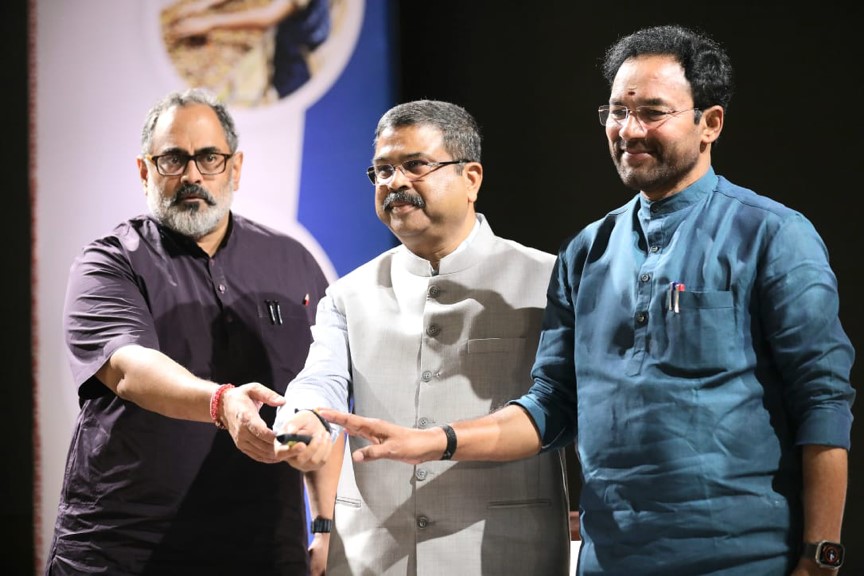
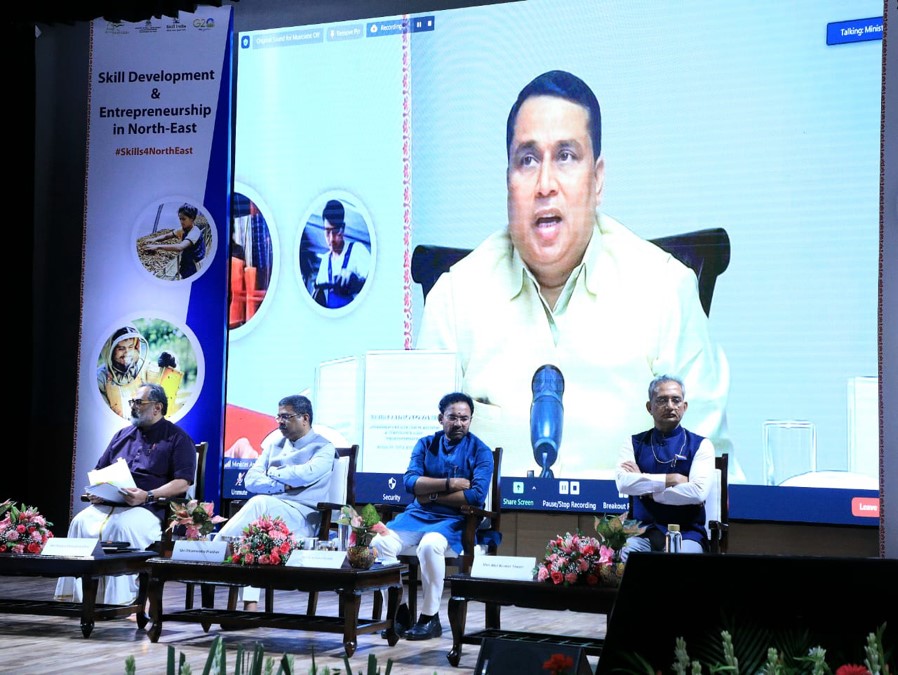
 To create a robust skill-centric and industry ready ecosystem in North-Eastern Region (NER), Union Minister for Education and Skill Development & Entrepreneurship, Shri Dharmendra Pradhan and Union Minister for Culture, Tourism & Development Of North Eastern Region (DoNER) Shri G. Kishan Reddy and Minister of State for Skill Development and Entrepreneurship, Electronics & IT today Shri Rajeev Chandrasekhar launched a special initiative ‘Transforming Lives, Building Futures: Skill Development and Entrepreneurship in North-East in New Delhi today.

As part of the initiative, 2.5 lakhs youth of the NER will be provided with industry relevant skill training programmes through a wide array of schemes and initiatives, including Pradhan Mantri Kaushal Vikas Yojana (PMKVY), National Apprenticeship Promotion Scheme (NAPS) and Jan Shikshan Sansthans (JSS). The Government has earmarked a substantial fund of Rs360 crore to facilitate inclusive development, nurture entrepreneurial talent, and propel the socio-economic growth of the region. To fuel further growth, the concerted efforts are being made to provide vocational education and skill development programs to cater to the demand for skilled professionals across sectors, including agriculture, tourism, handicrafts, and information technology.

Minister, Public Health Engineering, Skill Development Employment & Entrepreneurship and Tourism; Government of Assam, Shri Jayanta Malla Baruah; MLA, Advisor to Labour, Employment, Skill Development & Entrepreneurship and Excise Department, Government of Nagaland, Shri Moatoshi Longkumer; Minister, Public health engineering and Water security, Water resources & River Development, Skill Development & Entrepreneurship, Government of Sikkim, Shri Bhim Hang Limboo and Secretary, Union Ministry of Skill Development and Entrepreneurship, Shri Atul Kumar Tiwari addressed the event.

Speaking on the occasion, Shri Dharmendra Pradhan said that the program will create unprecedented skilling opportunities for the youth in line with their interest areas and lead to unlocking the potential of N-E youth. He also said that the north-eastern region of our country is abundant with natural resources and demographic dividend and with a whole-of-government approach, our government has worked to drive unprecedented development of the region. Today’s program will further give impetus to these efforts and lead to socio-economic transformation of the region, he further added. He also said that the Prime Minister Shri Narendra Modi has envisioned to make India developed and Aatmanirbhar and a robust skill development mission is essential to make this dream a reality. We are working to make India, the skill-capital of the world, he further added.

Lauding the initiative, Shri G. Kishan Reddy said that this initiative of MSDE will benefit more than 2.5 lakh youth in phase one, which will make them job ready for domestic as well as international markets. This is yet another endeavour of Shri Narendra Modi’s government to make the NER the engine of growth.

Shri Rajeev Chandrashekar said that over the past 9 years, our Prime Minister has worked relentlessly to create a conducive skill ecosystem by laying emphasis on education, skilling and innovation. We are now looking into the future with current trends that can shape our skilling strategies. We are one of the youngest countries in the world with a demography that is of great relevance to global economies, he added. With the tremendous number of new opportunities being created in both entrepreneurship and in jobs, the need for skills have heightened. Transforming Lives and Building Future is not just a slogan, this is a mission for our Young Indians of North-East. We believe that the future of New India is bright and skilling is the passport for prosperity, he further added.

The Skill Development and Entrepreneurship in North-East initiative lays emphasis on alignment of courses with National Skills Qualifications Framework (NSQF), bolstered by a digital infrastructure to develop well-rounded professionals. The event also deliberated on the need of enhancing industry participation in aggregating skill demand, simplifying training modules, curriculum development and augmenting training infrastructure to upgrade their skill sets in ‘earn while learn’ mode.

The special Initiative of “Transforming Lives- Building Futures: Skill and Entrepreneurship Dev in North-East will include:

  1. 2 Lakh skill training under Pradhan Mantri Kaushal Vikas Yojana (PMKVY)

  2. 30,000 Apprenticeship Engagement under National Apprenticeship Promotion Scheme (NAPS)

  3. 20,000 to be skilled under Jan Shikshan Sansthans (JSS)

  4. Quality enhancement of ITIs under skill strengthening for industrial value enhancement (STRIVE)

  5. Strengthening of Polytechnics

  6. Special projects will be taken up for the special needs of North-East region under SANKALP.

  7. Skill India International Centre to be set up to promote overseas job opportunities.

Over the last nine years, MSDE has increased the network count of ITIs to 106 in north-eastern region. It has trained over 3 lakh beneficiaries and assisted 1000 entrepreneurs through Indian Institute of Entrepreneurship (IIE). MSDE has also trained about 12 lakh candidates under Pradhan Mantri Kaushal Vikas Yojana (PMKVY) in textile, handloom, construction, apparel, agriculture, electronics and healthcare.

The National Apprenticeship Promotion Scheme (NAPS) has facilitated training to 38,240 candidates across 1,693 establishments in the last 7 years in north-east. Moreover, the centre has achieved significant success in training more 98000 beneficiaries with more than 72% women beneficiaries across JSS which stands as a testament to creating a robust skill ecosystem in the northeast region, empowering youth with domain and employability skills.

*****

Steps taken by Government of India to improve Women’s Health

Government of India implements various schemes/initiatives  to make healthcare more accessible to all  throughout the country including women, rural and SC/ST population.These schemes/initiatives include:

Comprehensive Primary Health Care (CPHC) through Ayushman Bharat- Health and Wellness Centres (HWCs):In February 2018, the Government of India announced 1,50,000 Ayushman Bharat- Health and Wellness Centres (AB-HWCs) to be established across the country by December 2022. The existing Sub- Health Centres (SHC), Primary Health Centres (PHC) and Urban Primary Health Centres (UPHC) are transformed into AB-HWCs to deliver Comprehensive Primary Health Care (CPHC) that includes preventive, promotive, curative, palliative and rehabilitative services which are universal, free, and closer to the community. As on 31.07.2023 a total of 1,60,816 AB-HWCs have been operationalized across the country.

Photo by Jennifer Murray on Pexels.com
  • Health Melas are organized at the level of AB-HWCs to optimize utilization of health care services and generate awareness. Ayushman Health melas are ‘one-stop’ platforms to address a comprehensive range of health issues have proven to be an effective strategy to reach the masses and augment the utilization of healthcare services.
  • Teleconsultation services, through eSanjeevani, are available at functional AB-HWC to ensure specialist services closer to the people. As on 31st July 2023, more than 14.35 crore Teleconsultations have been provided via eSanjeevani portal.  Screening of women is also being done at AB-HWCs for breast cancer, oral cancer and cervical cancer.
  • National Free Drugs Initiative: States/UTs are supported to provide essential drugs based on the level of public health facilities free of cost to all who access these facilities.
  • Free Diagnostics Initiatives. (FDI): Under the initiative, support provided to States/UTs to provide a set of essential diagnostics (14 tests at Sub Centre/ Health and Wellness Centre level, 63 tests at PHC/ PHC-HWC level, 97 tests at CHC level, 111 tests at SDH level and 134 tests at DH level) at various levels of care, free of cost.
  • National Ambulance Services (NAS) –  Under the NHM, technical and financial support is provided for emergency medical services in States/UTs through a functional National Ambulance Service (NAS) network linked with a centralised toll-free number 108/102.
  • National Mobile Medical Units (NMMU) – are supported to facilitate access to public health care at the doorstep particularly to people living in remote, difficult, under-served and unreached areas to provide primary care services.

Apart from above mentioned schemes,Government has also implemented following schemes especially for pregnant women:

  • Surakshit Matritva Aashwasan (SUMAN) provides assured, dignified, respectful and quality healthcare at no cost and zero tolerance for denial of services for every woman and newborn visiting public health facilities to end all preventable maternal and newborn deaths.
  • Janani Suraksha Yojana (JSY), a demand promotion and conditional cash transfer scheme for promoting institutional delivery.
  • Under Janani Shishu Suraksha Karyakram (JSSK), every pregnant woman is entitled to free delivery, including caesarean section, in public health institutions along with the provision of free transport, diagnostics, medicines, blood, other consumables & diet.
  • Pradhan Mantri Surakshit Matritva Abhiyan (PMSMA) provides pregnant women a fixed day, free of cost assured and quality antenatal check up by a Specialist/Medical Officer on the 9th day of every month.
  • LaQshya improves the quality of care in labour room and maternity operation theatres to ensure that pregnant women receive respectful and quality care during delivery and immediate post-partum.
  • Functionalization of First Referral Units (FRUs) by ensuring manpower, blood storage units, referral linkages to improve the access to quality of care for pregnant women
  • Outreach camps are provisioned for improving the reach of health care services especially in tribal and hard to reach areas. This platform is used to increase the awareness for the Maternal & Child health services, community mobilization as well as to track high risk pregnancies.
  • IEC/BCC campaigns: One of the key focus areas of Maternal Health is to generate demand through Information Education & Communication (IEC), Inter-personal Communication (IPC) and Behaviour Change Communication (BCC) activities.

Steps taken by Government of India to improve Women’s Health

Government of India implements various schemes/initiatives  to make healthcare more accessible to all  throughout the country including women, rural and SC/ST population.These schemes/initiatives include:

Comprehensive Primary Health Care (CPHC) through Ayushman Bharat- Health and Wellness Centres (HWCs):In February 2018, the Government of India announced 1,50,000 Ayushman Bharat- Health and Wellness Centres (AB-HWCs) to be established across the country by December 2022. The existing Sub- Health Centres (SHC), Primary Health Centres (PHC) and Urban Primary Health Centres (UPHC) are transformed into AB-HWCs to deliver Comprehensive Primary Health Care (CPHC) that includes preventive, promotive, curative, palliative and rehabilitative services which are universal, free, and closer to the community. As on 31.07.2023 a total of 1,60,816 AB-HWCs have been operationalized across the country.

Photo by Jennifer Murray on Pexels.com
  • Health Melas are organized at the level of AB-HWCs to optimize utilization of health care services and generate awareness. Ayushman Health melas are ‘one-stop’ platforms to address a comprehensive range of health issues have proven to be an effective strategy to reach the masses and augment the utilization of healthcare services.
  • Teleconsultation services, through eSanjeevani, are available at functional AB-HWC to ensure specialist services closer to the people. As on 31st July 2023, more than 14.35 crore Teleconsultations have been provided via eSanjeevani portal.  Screening of women is also being done at AB-HWCs for breast cancer, oral cancer and cervical cancer.
  • National Free Drugs Initiative: States/UTs are supported to provide essential drugs based on the level of public health facilities free of cost to all who access these facilities.
  • Free Diagnostics Initiatives. (FDI): Under the initiative, support provided to States/UTs to provide a set of essential diagnostics (14 tests at Sub Centre/ Health and Wellness Centre level, 63 tests at PHC/ PHC-HWC level, 97 tests at CHC level, 111 tests at SDH level and 134 tests at DH level) at various levels of care, free of cost.
  • National Ambulance Services (NAS) –  Under the NHM, technical and financial support is provided for emergency medical services in States/UTs through a functional National Ambulance Service (NAS) network linked with a centralised toll-free number 108/102.
  • National Mobile Medical Units (NMMU) – are supported to facilitate access to public health care at the doorstep particularly to people living in remote, difficult, under-served and unreached areas to provide primary care services.

Apart from above mentioned schemes,Government has also implemented following schemes especially for pregnant women:

  • Surakshit Matritva Aashwasan (SUMAN) provides assured, dignified, respectful and quality healthcare at no cost and zero tolerance for denial of services for every woman and newborn visiting public health facilities to end all preventable maternal and newborn deaths.
  • Janani Suraksha Yojana (JSY), a demand promotion and conditional cash transfer scheme for promoting institutional delivery.
  • Under Janani Shishu Suraksha Karyakram (JSSK), every pregnant woman is entitled to free delivery, including caesarean section, in public health institutions along with the provision of free transport, diagnostics, medicines, blood, other consumables & diet.
  • Pradhan Mantri Surakshit Matritva Abhiyan (PMSMA) provides pregnant women a fixed day, free of cost assured and quality antenatal check up by a Specialist/Medical Officer on the 9th day of every month.
  • LaQshya improves the quality of care in labour room and maternity operation theatres to ensure that pregnant women receive respectful and quality care during delivery and immediate post-partum.
  • Functionalization of First Referral Units (FRUs) by ensuring manpower, blood storage units, referral linkages to improve the access to quality of care for pregnant women
  • Outreach camps are provisioned for improving the reach of health care services especially in tribal and hard to reach areas. This platform is used to increase the awareness for the Maternal & Child health services, community mobilization as well as to track high risk pregnancies.
  • IEC/BCC campaigns: One of the key focus areas of Maternal Health is to generate demand through Information Education & Communication (IEC), Inter-personal Communication (IPC) and Behaviour Change Communication (BCC) activities.

Pradhan Mantri Kisan Sampada Yojana (PMKSY

 The Ministry of Food Processing Industries (MoFPI) has been implementing an umbrella scheme- Pradhan Mantri Kisan Sampada Yojana (PMKSY) since 2017-18 across the country. PMKSY is a comprehensive package of component schemes, which is aimed at creation of modern infrastructure with efficient supply chain management from farm gate to retail outlet. It provides boost to the growth of food processing sector in the country, helps in providing better prices to farmers, creates employment opportunities especially in the rural areas, reduces wastage of agricultural produce, increases the processing level and enhances export of the processed foods.

682 projects with grants-in-aid of Rs. 3530.25 crore during the last four years  (2019-20 to 2022-23) and 33 projects with grants-in-aid of Rs. 160.22 crore during the current year  2023-24 (till 31.07.2023) have been approved under various component schemes of PMKSY across the country. Out of this, 53 projects with grants-in-aid of Rs. 248.44 crore and 4 projects with grants-in-aid of Rs. 13.30 crore have been approved during the last four years and current financial year (till 31.07.2023) respectively in the State of Tamil Nadu.  

Fund amounting to Rs. 3925.89 crore has been allocated to PMKSY and out of this, Rs. 2648.41 crore has been released under various component schemes of PMKSY across the country including the State of Tamil Nadu for the period from 2019-20 to 2023-24 (till 31.07.2023). The details of the same are provided at Annexure.

Annexure

Details of fund allocated / grants-in-aid released under various component schemes of PMKSY from 2019-20 to 2023-24 (till 31.07.2023)

                                                           (Rupees in crore)

S. No.

Component scheme of PMKSY

Financial

Year

Funds allocated

Grants-in-aid

released

1

Mega Food Parks (MFP)


2019-20

139.40

106.34


2020-21

61.25

61.22


2021-22

53.60

51.52


2022-23

24.00

21.68


2023-24

54.00(BE)

0.00


Total

332.25

240.76


2

Integrated Cold Chain & Value Addition Infrastructure (Cold Chain)


2019-20

324.16

269.13


2020-21

250.58

204.89


2021-22

260.82

223.44


2022-23

220.00

201.64


2023-24

194.00(BE)

31.51


Total

1249.56

930.61


3

Creation of Infrastructure Development for Agro Processing Clusters (APC)


2019-20

49.83

43.53


2020-21

56.59

48.68


2021-22

53.50

49.08


2022-23

56.15

46.42


2023-24

81.00(BE)

5.73


Total

297.07

193.44


4

Creation/Expansion of Food Processing & Preservation Capacities (CEFPPC)


2019-20

200.72

169.98


2020-21

217.30

200.84


2021-22

241.00

236.58


2022-23

217.68

168.11


2023-24

319.00(BE)

26.62


Total

1195.70

802.13

5

Food Safety & Quality Assurance Infrastructure (FTL)


2019-20

39.80

26.85


2020-21

36.63

28.84


2021-22

46.60

34.14


2022-23

32.80

18.53


2023-24

44.50(BE)

2.47


Total

200.33

110.83


6

Operation Greens (OG)


2019-20

28.03

2.37


2020-21

38.00

38.00


2021-22

71.50

65.15


2022-23

73.34

69.91


2023-24

212.34(BE)

12.01


Total

423.21

187.44


7

Creation of Backward Forward Linkage (CBFL)


2019-20

48.96

42.13


2020-21

55.85

53.67


2021-22

40.39

32.85


2022-23

18.58

9.33


2023-24

5.19(BE)

0.42


Total

168.97

138.40


8

Human Resources & Institutions (HRI)


2019-20

23.69

17.70


2020-21

15.59

14.40


2021-22

8.89

7.80


2022-23

5.82

4.77


2023-24

4.81(BE)

0.13


Total

58.80

44.80


Grand Total

3925.89

2648.41

Production Linked Incentive Scheme for Food Processing Industry (PLISFPI)

 The Production Linked Incentive Scheme for Food Processing Industry (PLISFPI) was approved by the Union Cabinet on 31st March 2021 with a budget of Rs. 10,900 crores, to be implemented from 2021-22 to 2026-27. It consists of three components: incentivizing manufacturing in four major food product segments, promoting Innovative/Organic products of SMEs, and supporting branding and marketing abroad for Indian brands. Additionally, the PLI Scheme for Millet-based Products (PLISMBP) was launched in FY 2022-23 with an outlay of ₹800 crore, utilizing savings from PLISFPI. The scheme boosts the capacity of the food processing industry by supporting food manufacturing entities that are willing to expand their processing capacity, incentivizing the growth of strong Indian brands, enhancing the presence of Indian food brands in the global market, creating more employment opportunities, and ensuring higher income for farmers.

The Ministry is actively implementing three major schemes to promote the food processing sector: Pradhan Mantri Kisan SAMPADA Yojana (PMKSY), Pradhan Mantri Formalization of Micro Food Processing Enterprises (PMFME) scheme, and Production Linked Incentive (PLI) Scheme. These schemes offer comprehensive support across the entire food processing value chain, aiding the food industry in meeting international quality and safety standards for their food products. One of the objectives of the R&D scheme under PMKSY is to promote research and development in the field of food quality and safety standards in the food processing sector. Through this scheme, financial support is provided through grant-in-aid, covering 50% of equipment costs in general areas and 70% in difficult areas. Under another component scheme of PMKSY, known as “Food Safety and Quality Assurance Infrastructure,” financial assistance is provided to Central/State Government and private sector organizations/universities for the establishment and enhancement of food testing laboratories across the country. This initiative plays a crucial role in ensuring compliance with FSSAI regulations, which, in turn, facilitates the maintenance of high-quality and safety standards of processed food products to meet global demands.

To increase ethanol production, the Government is implementing the Ethanol Blended with Petrol (EBP) Programme nationwide. Various Ethanol Interest Subvention Schemes were introduced from 2018 to 2022, encouraging entrepreneurs to establish new distilleries or expand existing ones. The scheme offers an interest subvention of 6% or 50% of the interest charged by banks/financial institutions for five years, whichever is lower, along with a one-year moratorium, to promote ethanol production growth. Ethanol production from grain was also included under these schemes in 2021 to further promote ethanol production.

The Ministry of Food Processing Industries (MoFPI) has been implementing the Pradhan Mantri Kisan Sampada Yojana (PMKSY), which addresses the infrastructure challenges being faced by SMEs and promotes technology adoption in the food processing sector. PMKSY supports establishment of cold chains, and other processing facilities, which contribute to improving the supply chain and storage capabilities in the food processing sector. 1,281 projects have been approved under PMKSY.

The PMKSY provides significant support and incentives to food processing SMEs, encouraging their growth and development. Through financial assistance and other benefits, PMKSY facilitates the establishment of modern infrastructure/ technology, and capacity expansion for SMEs. This has led to increased processing levels, improved product quality, and enhanced market access for these SMEs. The Yojana has significantly boosted employment opportunities, particularly in rural areas, assisting in the generation of jobs for 13.09 Lakh people.

The Ministry is implementing three major schemes – PMKSY, PMFME scheme, and PLI Scheme – to promote the food processing, thereby reducing food losses and promoting sustainability. The R&D Scheme under PMKSY aims to enhance production, including tech- based food processing innovation, quality, safety, and trade while promoting sustainability. The PLI Scheme for Food Processing Industry incentivises MSMEs that focus on innovative products, boosting innovation in the food processing sector. Additionally, the PLI Scheme for Millet-based Products promotes millets, which are special grains that need less resources to grow, provide excellent nutrients, and can withstand changes in the weather, which helps in achieving the goal of sustainability.

 To promote “Brand India” globally, the PLI Scheme for Food Processing Industry supports companies with branding and marketing abroad, boosting emergence of strong Indian brands. Companies receive 50% financial incentives for expenditure on international branding, capped at 3% of food product sales or ₹50 Crore per year, whichever is less. Presently, 77 applications are covered under this PLI component.

13th BRICS Trade Ministers' Meeting

 Union Minister of Commerce and Industry, Consumer Affairs, Food & Public Distribution and Textiles, Shri Piyush Goyal attended the 13th BRICS Trade Ministers’ Meeting held yesterday under the BRICS Presidency of South Africa virtually. The theme of BRICS this year is “BRICS and Africa: Partnership for Mutually Accelerated Growth, Sustainable Development and Inclusive Multilateralism”. Shri Piyush Goyal, touched upon issues related to WTO, Supply chain, Digitalisation, MSMEs and on the issue of Mispricing and under-invoicing in the meeting.

The Minister lauded the South African Presidency on having an ambitious Agenda and successfully completing outcome oriented activities under the Contact Group on Economic and Trade Issues (CGETI). He extended strong support to BRICS spirit of equality, openness, inclusiveness, consensus, mutual respect and understanding.

Shri Piyush Goyal stressed upon building trust among each other and expressed strong belief in small, achievable, incremental steps towards WTO Reform. He also expressed how India wishes to see invigorated, improved, inclusive WTO as it completes three decades, talking about ’30 for 30’, which is an effort to bring at least 30 operational improvements to the WTO before the Organization completes 30 years, i.e., by 1 January 2025.

Reflecting India’s efforts to meet its commitments towards global efforts to fight the climate related challenges, the Minister apprised the BRICS Member countries about India’s achievement and its recent ranking at 5th position as per Climate Change Performance Index, published by German Watch. In this context, he also mentioned that India was the only G20 country in the top 10 rank. As BRICS members are also a part of G20, he sought cooperation for significant outcomes under the ‘Trade and Investment Working Group’ of G20 under India’s Presidency.

Shri Goyal also made it clear that for collective efforts amongst the BRICS countries, the utmost important issue would be to work in a trust based open atmosphere through transparency and sharing information. In this context, he also expressed disappointment that even within BRICS membership, a few Members had expressed concerns on Transparency. There are concerted efforts to bring in non-tariff barriers through the use of non science based Sanitary and Phyto-Sanitary measures to stall the collective efforts of the BRICS countries, which is the core of collaborative efforts for trade. Our efforts to get the agreement amongst the Members to be fair under the prevailing system, unfortunately did not bring in the desired result. He made it clear that unless trade and investment activities are carried out cooperatively in a transparent manner, it would not yield the desired results.

On Supply Chains, Shri Goyal stressed that the principles of trust and transparency along with security and diversification being the most important factors for resilient and robust supply chains. This will be the foundation for an ensuring early warning system amongst BRICS countries which would play an important role in preventing wide ranging disruptions as were experienced during COVID-19.

On digital economy, while acknowledging that technology is a great equalizer and not a source of division, the Minister expressed deep concern over deprivation of the access to virtual platforms, tele-medicine, distance education and e-payments. He mentioned about pro-active actions and concerted decision taken by India to adopt whole- of-society approach to digital technology and improved public services. Shri Goyal mentioned the initiatives taken by India under the able leadership of the Prime Minister, Shri Narendra Modi, aiming at bridging the digital divide by leveraging cost-effective technology-based solutions.

As MSME’s are an integral part of the BRICS Members, Shri Piyush Goyal brought the importance of cooperation and collective efforts to the foreground for MSME’s. He expressed the need to focus on key areas like, exploring cooperation in the form of Research and Development, Technology transfers and joint Ventures as well as the Business development opportunities for possible partnerships in the future.

On Mispricing and underinvoicing, the Minister expressed his concern about the negative impact trade mis-pricing and under-invoicing has on the economies. He even mentioned that India had acknowledged its importance under its Chairship in 2021 and included it as an outcome through Capacity Building Workshop. He commended the efforts made by the South African Presidency for conducting a workshop in the continuity on the initiative taken by India.

In conclusion, the Minister laid stress upon the importance of collaborative efforts and commitment along with resilience, unity and transparency to face challenges under the principles of compassion, empathy and understanding, for a common brighter future.

***