Promotion of Organic Farming

 Government has been promoting organic farming on priority in the country since 2015-16 through the schemes of Paramparagat Krishi Vikas Yojana (PKVY) and Mission Organic Value Chain Development for North Eastern Region (MOVCDNER). Both the schemes stress on end-to-end support to farmers engaged in organic farming i.e. from production to processing, certification and marketing and post-harvest management. Training and Capacity Building are integral part of the scheme. Incentives to farmers for producing and using organic fertilizers/manure are inbuilt in these schemes as on-farm and off-farm organic inputs.  Direct Benefit Transfer (DBT) is provided to the farmers for using organic inputs including organic fertilizers. PKVY is being implemented in all the States other-than North Eastern (NE) States across the country whereas MOVCDNER scheme is being implemented exclusively in the NE States.

Under PKVY, an assistance of Rs.50,000 per ha for a period of three years is provided to States including States of Tamil Nadu & Rajasthan for promotion of organic farming to cover different components like Training & Capacity Building, Data Management, PGS Certification, Value Addition, Marketing and Publicity. Out of this, assistance of Rs. 31,000 per ha for a period of three years is provided to farmers through DBT for on- farm /off –farm organic inputs. Whereas under MOVCDNER, an assistance of Rs. 46,575/ha for 3 years is provided for creation of FPO, support to farmers for organic inputs, quality seeds/ planting material and training, hand holding and certification.  Out of this, assistance @ Rs. 32500/ ha for 3 years is provided to farmers for off -farm /on –farm organic inputs under the scheme including Rs. 15,000 as DBT to the farmers and Rs. 17,500 for the planting material to be given to the farmers by State Lead Agency  (SLA) in kind.

In view of the increasing demand of organic farming products of India in the global market, Government is facilitating value addition, certification and marketing. As per requirement of International market, Government has initiated third party certification under National Programme for Organic Production (NPOP) in 2001.

Under PKVY assistance @ Rs 8800/ha for 3 years is provided to facilitate value addition, marketing and publicity to all the states/UTs including Tamil Nadu. Assistance is provided for certification and training, handholding & capacity building respectively @ Rs 2700/-ha for 3 years and Rs 7500/- ha for 3 years under PKVY for farmers of all the States including Rajasthan. Where  as under MOVCDNER scheme assistance is provided @ Rs 10,000/-ha for 3 years for training, capacity building & certification.

The scheme-wise and state-wise details of funds allocated, released and utilized under organic farming (under PKVY & MOVCDNER) schemes during the year 2022-23 are given at Annexure –I.

A long-term experiment, at selected sites, for comparative evaluation of organic and conventional management conducted by Indian Council of Agriculture Research (ICAR) indicated that yield was found to be higher during kharif and rabi /summer crops for coarse/ basmati rice based cropping systems, soybean-based systems compared to inorganic approaches indicating better suitability of these systems under long-term organic management approaches. Soil organic carbon was found to be significantly higher under long-term organic approach for coarse rice, basmati rice and soybean-based systems.

To disseminate information on organic and natural farming as well as on on- farm production and use of various kinds of organic fertilizers, National Center for Organic and Natural Farming (NCONF) and its Regional Center for Organic and Natural Farming (RCONF) located at Ghaziabad, Nagpur, Bangalore, Imphal and Bhubaneswar are organizing various trainings namely, One Day Farmers’ Training, Two Days Training for Extension Officers/Staff, Two Days Training on PGS, 30 Days Certificate course, One day Jaivik evam Prakratik Kisan Sammelan for 500 participants, One Day Stakeholder consultations/ conferences on Natural Farming for 100 participitants, Orientation Program on Natural Farming and awareness programmes across the country. NCONF and RCONF also organize online awareness campaign and training programmes on organic and natural farming and production and use of organic and bio-fertilizers.

The ICAR also imparts trainings, organizes front-line demonstrations, awareness programs etc. to educate farmers on organic farming and organic fertilizers.

Scheme-wise (PKVY & MOVCDNER) and State-wise details of funds allocation, released and expenditure under organic farming during the year 2022-23.

Rs in lakh

S. No.

Name of the State

2022-23

Allocation

Release

Expenditure*

PKVY

1

Andhra Pradesh

826.35

0.00

0.00

2

Bihar

2830.65

1547.68

789.75

3

Chhattisgarh

3504.93

0.00

571.03

4

Gujarat

20.50

0.00

0.00

5

Goa

1025.10

0.00

283.05

6

Haryana

10.25

0.00

0.00

7

Jharkhand

1397.27

0.00

0.00

8

Karnataka

1045.61

512.55

256.35

9

Kerala

1971.12

1712.07

647.52

10

Madhya Pradesh

5925.51

0.00

1375.93

11

Maharashtra

745.90

449.67

776.74

12

Odisha

741.44

370.72

311.97

13

Punjab

222.46

0.00

0.00

14

Rajasthan

2452.64

1783.26

3363.94

15

Tamil Nadu

704.87

0.00

170.56

16

Telangana

30.75

0.00

0.00

17

Uttar Pradesh

12972.55

5089.32

2111.16

18

West Bengal

555.39

555.39

240.41

19

NE (Aspirational & Committed liabilities)

0.00

0.00

7.58

20

Himachal Pradesh

1121.36

0.00

1124.32

21

Uttarakhand

6030.68

5969.00

7652.94

22

All Union Territories (UTs)

893.02

193.55

0.00


Total

45028.35

18183.20

19683.25

MOVCDNER

S. No.

Name of the State

2022-23

Allocation

Release

Expenditure*

1

Assam

2681.80

2059.15

2059.15

2

Manipur

2915.37

2915.36

2815.36

3

Meghalaya

2011.88

621.57

524.33

4

Nagaland

1961.01

1390.60

1289.60

5

Mizoram

1604.25

1140.90

876.63

6

Arunachal Pradesh

1860.77

1642.17

1526.26

7

Sikkim

4005.10

1538.83

1398.25

8

Tripura

2759.82

3000.26

2819.01


Total

19800.00

14308.84

13308.59

*Expenditure column also includes expenditure incurred from the releases made in the previous years


National Food Security Mission

 In order to increase the production and productivity of rice, wheat, pulses, coarse cereals (maize and barley), nutri-cereals (Shree Anna) and to fulfil the objectives of the National Food Security Mission (NFSM), assistance is being provided to the farmers through States/Union Territories for interventions like cluster demonstrations on improved package of practices, demonstrations on cropping system, seed production and distribution of high yielding varieties/hybrids, improved farm machineries/resource conservation machineries/tools, efficient water application tools, plant protection measures, nutrient management/soil ameliorants, processing &post-harvest equipment, cropping system based trainings etc. Initiatives like distribution of seed minikits of newer varieties of pulses, production of quality seed, creation of seed hubs at Indian Council of Agricultural Research (ICAR) Institutes/ State Agricultural Universities (SAUs)/ Krishi Vigyan Kendras (KVKs), technological demonstrations by KVKs have also been included under NFSM.

To meet the objectives of NFSM-Oilseeds,incentives/ subsidies are being provided for purchase of breeder seeds, production of foundation seeds & certified seeds, distribution of certified seeds, distribution of seed mini kits, demonstrations (block demonstrations /front line demonstrations /cluster front line demonstrations), farmers field school, training, supply of water carrying devices, plant protection equipments, soil ameliorates, micro-nutrients, weedicides, insecticides, bio-fertilizer/bio agents, etc. 

Government of India has launched a separate Mission i.e. National Mission on Edible Oils – Oil Palm (NMEO-OP) in August 2021 to promote oil palm cultivation with the aim to augment the availability of edible oil in the country by harnessing area expansion, increasing crude palm oil production and productivity with the aim to reduce the import burden.

Per Drop More Crop (PDMC) is being implemented from 2015-16 in the country to focus on enhancing water use efficiency at farm level through Micro Irrigation namely Drip and Sprinkler Irrigation systems. Indian Council of Agricultural Research (ICAR) has developed cost effective, location specific scientific technologies viz. rainwater harvesting and recycling, precision technologies for irrigation and farming practices, adoption of modern agronomic practices, diversifying cropping pattern from water guzzling crops like low land rice and sugarcane to pulses, oilseeds, maize and agro-forestry etc. Further, ICAR imparts training and organizes field demonstrations to educate farmers in these regard.

Under the Command Area Development & Water Management (CADWM) programme of Pradhan Mantri Krishi Sinchayee Yojana (PMKSY) implemented by the Department of Water Resources, River Development & Ganga Rejuvenation (DoWR, RD & GR), lined field channels are constructed and wherever possible underground pipeline network is laid for providing last-mile connectivity to the irrigation system to enhance irrigation efficiency. The DoWR, RD & GR has set up Bureau of Water Use Efficiency (BWUE) on 20.10.2022 for promotion, regulation and control of efficient use of water in irrigation, industrial and domestic sector. The Bureau facilitates promotion of improving water use efficiency across various sectors namely irrigation, drinking water supply, power generation, industries etc. in the country. National Water Mission (NWM) launched the ‘SahiFasal’ campaign in 2019 to nudge farmers in water stressed areas to grow crops which are not water intensive but use water efficiently and are economically remunerative, healthy and nutritious and suited to the agro-climatic-hydro characteristics.

The net irrigated area in the country has increased from 692.70 lakh hectare in the year 2016-17 hectare to 777.29 lakh hectare in the year 2020-21.

This information was given by the Union Minister of Agriculture and Farmers’ Welfare, Shri Narendra Singh Tomar in a written reply in Lok Sabha today.

******

Public Private Partnership Mode

 Government has constituted a Screening Committee on leveraging agriculture innovations for farmer to facilitate combined implementation on pilot scale of selected technologies/interventions by Private companies/startups to develop and refine products based on field-level observations, data and inferences for a fixed period.

Further, government has built Digital Public Infrastructure for Agriculture as an open source, open standard at interoperable public goods as per budget announcements for the 2023-24. In this regards, Architecture of three core registries i.e. Farmer registry, Geo referencing of village map registry, crop sown registry has been finalized. These registries can be used to develop various farmers centric solutions by the state governments as well as private sector entities.

Expenditure Finance Committee has approved a Central Sector Scheme for blended Capital Support to finance startups for agriculture and rural enterprise relevant for Farm Produce Value Chain.

Looking into the unique advantages of Drone technologies in agriculture, the Department of Agriculture & Farmers Welfare has released the Standard Operating Procedures (SOPs) for use of drones in pesticide and nutrient application in public domain in December 2021, which provide concise instructions for effective and safe operations of drones. In order to make this technology affordable to the farmers and other stakeholders of this sector, financial assistance @ 100% for purchase of agricultural drones and its attachments (actual cost of expenditure and its attachments or Rs. 10.00 lakhs, whichever is lower) together with the contingent expenditure is extended under Sub-Mission on Agricultural Mechanization (SMAM) to the Farm Machinery Training & Testing Institutes of Indian Council of Agricultural Research, Krishi Vigyan Kendra (KVK) and State Agricultural Universities (SAUs) and @ 75% to FPO’s for its demonstration on the farmer’s fields. In order to provide agricultural services through drone application, financial assistance @ 40% of the basic cost of drone and its attachments or Rs. 4 lakhs, whichever is less also provided for drone purchase by existing and new Custom Hiring Centers (CHCs) and also a general category farmers and @ 50% of the basic cost of drone and its attachments or Rs. 5 lakhs for SC/ST/women/small and marginal farmers and the agriculture graduates.

A component called “Innovation and Agri-Entrepreneurship Development” has been launched under Rashtriya Krishi Vikas Yojana (RKVY-RAFTAAR) in 2018-19 with the objective of promoting innovation and agri-entrepreneurship by providing financial support and nurturing the incubation ecosystem. Under this programme, start-ups are encouraged to use innovative technologies to resolve challenges faced in agriculture and allied sectors. A total of 1176 start-ups have been selected in various areas of agriculture and allied sectors under this programme for providing financial support through Knowledge Partners and Agri Business Incubators appointed by the Department for implementation of this programme.

The Indian Council of Agriculture Research (ICAR) has been supporting Agri-based startups under the project called National Agriculture Innovation Fund (NAIF) initiated in year 2016-2017. It has two components viz. (I) Innovation Fund; (II) Incubation Fund and National Coordinating Unit (NCU):

Component I: 10 Zonal Technology Management Units and 89 Institute
Technology Management Units (ITMUs) established in 99 ICAR institutes provide a single-window mechanism to manage innovations, showcase intellectual assets, and pursue matters related to intellectual property (IP) management and transfer/commercialization of technologies in these institutes.

Component II: Agri-business Incubator Centres (ABICs) are set up to speed up the delivery of the new technologies to stake holders. The ABICs are the nodal point to provide the desired link for Agriculture Research &Development (R&D) Institutions for incubation/ commercialization of the validated technologies. So far, 50 Agri-Business Incubation Centers have been established and are operational in the ICAR network under the NAIF scheme.

This information was given by the Union Minister of Agriculture and Farmers’ Welfare, Shri Narendra Singh Tomar in a written reply in Lok Sabha today.

******

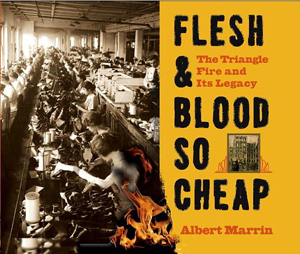
Flesh & Blood So Cheap


Flesh & Blood So Cheap cover

I liked this book. People who are interested in national disasters and US history as well as immigration will most probably be interested in reading this book.

Readers can gain knowledge of what it was like to work in New York City in the early 1900s. One of the things that was especially interesting was that there were no safety laws at work. Also, there was a big contrast between the rich and the poor. Some people may not like this book because it is very depressing, but it is an important event in history to remember.

This book was very well written. It has black and white photos along with descriptions of the photos. These photos give us a better idea of what people’s lives were like. This book is suitable for 9-20 year olds.

I give this book 5 stars.

Book Review: If I Never Forever Endeavor


If I Never Forever Endeavor cover

This book was about a bird who didn’t yet know how to fly.

The bird has to decide if it will try to fly, but it was not sure if it wants to. The bird thought, “If I never forever endeavor” then I won’t ever learn. On one wing, he worries he might fail and on the other wing he thinks of how he may succeed. He worries that if he tries, he may get lost in the world. That makes him want to stay in his nest where he’s safe.

I think this book would help other children to learn that trying new things can be scary, but sometimes when we try, we can find things that make us happy too. And this book will help others know that mistakes are okay and part of learning.

My favorite part is that the bird tried and learned that she could fly. I also liked that I read this book because it gave me a chance to talk to mom about making mistakes and how I don’t like making them. Then I learned they are good and part of learning.

Boys and girls who are 3 to 8 years old would like this book because it teaches about trying a new thing and how it’s important to get past being scared so you can learn new things.

I give the book 5 stars since I think it’s important for other children to learn about courage.

Book Review Writing

 If you love to read, at some point you will want to share a book you love with others. You may already do this by talking about books with friends. If you want to share your ideas with more people than your circle of friends, the way you do that is by writing a review. By publishing the reviews you write, you can share your ideas about books with other readers around the world.

It’s natural for young readers to confuse book reviews with book reports, yet writing a book review is a very different process from writing a book report. Book reports focus on the plot of the book. Frequently, the purpose of book reports is to demonstrate that the books were read, and they are often done for an assignment.

A book review is a totally different task. A book review’s purpose is to help people decide whether or not the book would interest them enough to read it. Reviews are a sneak peek at a book, not a summary. Like wonderful smells wafting from a kitchen, book reviews lure readers to want to taste the book themselves.

This guide is designed to help you become a strong book reviewer, a reader who can read a book and then cook up a review designed to whet the reading appetites of other book lovers.

Form: What should the review look like?

How Long Should It Be?

The first question we usually ask when writing something is “How long should it be?” The best answer is “As long as it takes,” but that’s a frustrating answer. A general guideline is that the longer the book, the longer the review, and a review shouldn’t be fewer than 100 words or so. For a long book, the review may be 500 words or even more.

If a review is too short, the review may not be able to fulfill its purpose. Too long, and the review may stray into too much plot summary or lose the reader’s interest.

The best guide is to focus less on how long to write and more on fulfilling the purpose of the review.

How Do You Create A Title?

The title of the review should convey your overall impression and not be overly general. Strong titles include these examples:

  • “Full of action and complex characters”
  • “A nail-biter that will keep you up all night”
  • “Beautiful illustrations with a story to match”
  • “Perfect for animal lovers”

Weak titles may look like this:

  • “Really good book”
  • “Three stars”
  • “Pretty good”
  • “Quick read”

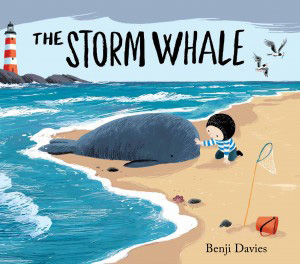
The Storm Whale cover

How Should It Begin?

Although many reviews begin with a short summary of the book (This book is about…), there are other options as well, so feel free to vary the way you begin your reviews.

In an introductory summary, be careful not to tell too much. If you retell the entire story, the reader won’t feel the need to read it him/herself, and no one appreciates a spoiler (telling the end). Here are some examples of summaries reviewers from The New York Times have written:

“A new picture book tells a magically simple tale of a lonely boy, a stranded whale and a dad who rises to the occasion.”

“In this middle-grade novel, a girl finds a way forward after the loss of her mother.”

“Reared by ghosts, werewolves and other residents of the hillside cemetery he calls home, an orphan named Nobody Owens wonders how he will manage to survive among the living having learned all his lessons from the dead. And the man Jack — who killed the rest of Nobody’s family — is itching to finish the job.”

“In vivid poems that reflect the joy of finding her voice through writing stories, an award-winning author shares what it was like to grow up in the 1960s and 1970s in both the North and the South.” Other ways to begin a review include:

  • Quote: A striking quote from the book (“It was a bright cold day in April, and the clocks were striking thirteen.”) can make for a powerful beginning. This quote begins George Orwell’s novel 1984.
  • Background: What makes this book important or interesting? Is the author famous? Is it a series? This is This is how Amazon introduces Divergent: “This first book in Veronica Roth’s #1 New York Times bestselling Divergent trilogy is the novel the inspired the major motion picture.”
  • Interesting Fact: For nonfiction books in particular, an interesting fact from the book may create a powerful opening for a review. In this review of The Middle East by Philip Steele, Zander H. of Mid-America Mensa asks, “Did you know that the Saudi Arabia’s Rub’ al-Khali desert reaches temperatures of 140 degrees Fahrenheit in the day and plummets to the freezing point at night?”
  • Explanation of a term: If a word or phrase in the book or title is confusing or vitally important to understand, you may wish to begin the review explaining that term.

Process: What should I write about?

Deciding what to say about the book can be challenging. Use the following ideas as a guide, but remember that you should not put all of this into a single review — that would make for a very long review! Choose the things that fit this particular book best.

General Information
What the reader ought to know

  • What kind of book is it? (Picture book? Historical fiction? Nonfiction? Fantasy? Adventure?)
  • Does the book belong to a series?
  • How long is the book? Is it an easy or a challenging read?
  • Is there anything that would be helpful for the reader to know about the author? For instance, is the author an expert in the field, the author of other popular books, or a first-time author?
  • How does the book compare to other books on the same topic or in the same genre?
  • Is the book written in a formal or informal style? Is the language remarkable in any way?
  • What ages is the book geared to?
  • Is the book written in normal prose? If it is written in poetic form, does it rhyme?

Plot
What happens?

Writing about the plot is the trickiest part of a review because you want to give the reader a feel for what the book is about without spoiling the book for future readers. The most important thing to remember is that you must never give away the ending. No one likes a spoiler.

One possibility for doing this is to set up the premise (A brother and a sister find themselves lost in the woods at the mercy of an evil witch. Will they be able to outsmart her and escape?). Another possibility is to set up the major conflict in the book and leave it unresolved (Sometimes the waiting is the hardest part or He didn’t know what he stood to lose or Finding your purpose in life can be as easy as finding a true friend.)

Try to avoid using the tired phrase “This book is about…” Instead, just jump right in (The stuffed rabbit wanted more than anything to live in the big old house with the wild oak trees.)

The Storm Whale cover

Characters
Who lives in the book?

Reviews should answer questions about the characters in fiction books or non-fiction books about people. Some possible questions to answer include:

  • Who are the main characters? Include the protagonist and antagonist.
  • What makes them interesting?
  • Do they act like real people act or are they too good or too evil to be believable?
  • Are they human?
  • What conflicts do they face?
  • Are they likeable or understandable?
  • How do they connect with each other?
  • Do they appear in other books?
  • Could you relate to any of the characters in the story?
  • What problems did the main characters face?
  • Who was your favorite character, and why?
  • We learn about characters from things they do and say, as well as things other characters say about them. You may wish to include examples of these things.

Theme
What is the book about at its heart?

What is the book really about? This isn’t the plot, but rather the ideas behind the story. Is it about the triumph of good over evil or friendship or love or hope? Some common themes include: change, desire to escape, facing a challenge, heroism, the quest for power, and human weaknesses.

Sometimes a book will have a moral — a lesson to learn. If so, the theme is usually connected to that moral. As you write about the theme, try to identify what makes the book worth reading. What will the reader think about long after the book is finished? Ask yourself if there any particular lines in the book that strike you as meaningful.

Setting
Where are we?

The setting is the time and place the story occurs. When you write about the setting in a review, include more than just the location. Some things to consider:

  • Is the book set in the past, present or future?
  • Is it set in the world we know or is it a fantastical world?
  • Is it mostly realistic with elements of fantasy (animals that can talk, for example)?
  • Is the setting unclear and fuzzy, or can you easily make the movie in your mind?
  • How much does the author draw you into the setting and how does s/he accomplish that?

The Storm Whale cover

Opinion & Analysis
What do you really think?

This is where the reviewer shares his/her reactions to the book that go beyond the essential points described above. You may spend half of the review on this section. Some possible questions to address include:

  • Why do you think other readers would enjoy it? Why did you enjoy it (if you did) or why didn’t you (if you didn’t).
  • What ages or types of readers do you think would like the book?
  • How does it compare with other books that are in the same genre or by the same author?
  • Does the book engage your emotions? If a book made you laugh or cry or think about it for days, be sure to include that.
  • What do you like or dislike about the author’s writing style? Is it funny? Is it hard to follow? Is it engaging and conversational in tone?
  • How well do you think the author achieved what s/he was going for in the writing of the book? Do you think you felt what the author was hoping you would feel?
  • Did the book feel complete, or did it feel as though key elements were left out?
  • How does the book compare to other books like it you’ve read?

Are there parts that are simply not believable, even allowing for the reader’s understanding that it is fiction or even fantasy?

  • Are there mistakes?
  • Would you describe the book as for entertainment, self-improvement, or information?
  • What was your favorite part of the book?
  • Would you have done anything differently had you been the author?
  • Would any reader enjoy this book? If not, to what ages or type of reader would it appeal?

Special situations: Nonfiction and young reviewers

Some of the tips and ideas above work best for fiction, and some of it is a little too complicated for very young reviewers.

Nonfiction
What to do if it’s real

When reviewing a book of nonfiction, you will want to consider these questions:

  • What was the author’s purpose in writing the book? Did the author accomplish that purpose?
  • Who is the target audience for the book?
  • What do you think is the book’s greatest value? What makes it special or worthwhile?
  • Are the facts shared accurate?
  • Is the book interesting and hold your attention?
  • Would it be a useful addition to a school or public library?
  • If the book is a biography or autobiography, how sympathetic is the subject?
  • Is it easy to understand the ideas?
  • Are there extra features that add to the enjoyment of the book, such as maps, indexes, glossaries, or other materials?
  • Are the illustrations helpful?

Young Reviewers
Keeping it simple

Reviewing a book can be fun, and it’s not hard at all. Just ask yourself these questions:

  • What is the book about? You don’t need to tell the whole story over — just give an idea of what it’s about.
  • Do you think other people would like it?
  • Did you think it was funny or sad?
  • Did you learn something from the book?
  • l Did you think it was interesting?
  • Would you want to read it again?
  • Would you want to read other books by the same author or about the same subject?
  • What was your favorite part?
  • Did you like the pictures?

Remember! Don’t give away the ending. Let’s keep that a surprise.

General Tips & Ideas

Use a few quotes or phrases (keep them short) from the book to illustrate the points you make about the book. If there are illustrations, be sure to comment on those. Are they well done? Has the illustrator done other well-known books?

Make sure you include a conclusion to the review — don’t leave it hanging. The conclusion can be just one sentence (Overall, this book is a terrific choice for those who…).

You can use the transition word handout at the end of the Writer’s Toolbox to find ideas for words to connect the ideas in your review. If you would like to read some well-written reviews, look for reviews of books for young people at The New York Times or National Public Radio.

Rating Books
How to award stars?

Most places you post reviews ask you to rate the book using a star system, typically in a range of from one to five stars. In your rating, you should consider how the book compares to other books like it. Don’t compare a long novel to a short poetry book — that’s not a valid comparison.

It’s important to remember that it’s not asking you to only give five stars to the very best books ever written.

  • 5 Stars: I’m glad I read it or I loved it (this doesn’t mean it was your favorite book ever).
  • 4 Stars: I like it. It’s worth reading.
  • 3 Stars: It wasn’t very good.
  • 2 Stars: I don’t like it at all.
  • 1 Star: I hate it.

Story of the Manufacturer Agilis Jet Tenders

 Qualitative jet tender should not only perform its main function – transfer guests and owners from shore to yachts, but also be customized in accordance with all requirements and taste preferences of the owner. We introduce to you Agilis Jettenders GmbH – a manufacturer well knowledgeable in personalization of jet boats.

“A jet tender should meet all your needs”, Maxym Starchenko is convinced. He is the owner and founder of Agilis, thus he knows exactly what he is talking about.

Agilis Jettenders GmbH is headquartered in Jülich, Germany and the company supplies luxury jet tenders all over the world now, but everything started as a family business. Mr. Starchenko was passionate about boats since his childhood; hence he created a business out of his passion and with the family support, he developed his company into a world leader among jet tender manufacturers.

“We try to meet diverse needs of our customers and comply with world-class quality standards, using only materials from leading global suppliers and cutting-edge technologies” – Maxym Starchenko.

In 2017 first model Agilis 355C was presented at the boat and watersports fair Boot Düsseldorf. The jet tender quickly found its admirers and buyers thanks to innovative technologies, luxury and high-quality materials, little accessories for greater convenience and a piece of soul invested in it. Afterwards these characteristics became an integral part of all subsequent Agilis jet tenders. There are eight models in the range now. Each model from compact and agile Agilis 280 to the most luxurious and spectacular Agilis 560D can be customized in Configurator. It`s a special Agilis application which helps to choose the different colors and materials of teak, deck, hull and other parts of boat, pick the diverse type of lights and add useful devices and accessories.

“Custom, luxury, jet. These three words fully describe Agilis tenders and our product strategy” – Maxym Starchenko emphasizes.

The safety of the customers and environment is in the first place for Agilis, that`s why it cooperates only with time-tested suppliers of spare parts and chooses only the best components for jet tenders. Agilis is responsible for product quality, thus if you choose Agilis jet tender you can be sure in everything from trouble proof engine operation to long service life of the tube’s material.

In summary, only in a few years from family business Agilis Jettenders becomes the world known jet tender`s manufacturer which is inextricably associated with customization, luxury and quality yacht tenders.

Different Types of Referencing Styles


In the academic and scholarly world, proper referencing is essential for acknowledging the sources of information and ideas used in research. Referencing styles serve as standardized systems that guide writers in citing their sources accurately and consistently. These referencing styles play a crucial role in ensuring academic integrity, allowing readers to trace the origins of the information and verify the credibility of the work. In this essay, we will explore some of the most commonly used referencing styles, their unique characteristics, and their applications in various academic disciplines.

Modern Language Association (MLA) Style:

The Modern Language Association (MLA) style is predominantly used in the fields of humanities, arts, and literature. It emphasizes clear and concise citations in parenthetical (in-text) format and a comprehensive Works Cited page at the end of the paper. The MLA style requires the author’s name and page number for in-text citations, making it easy to locate the exact reference in the source list.

American Psychological Association (APA) Style:

The American Psychological Association (APA) style is widely used in the social sciences, including psychology, sociology, education, and economics. APA formatting provides in-text citations with the author’s name and publication year, making it easier to identify the source. The APA style also requires a detailed reference list at the end of the document, listing all the sources cited in the paper.

Chicago Manual of Style (CMS):

The Chicago Manual of Style (CMS) is favored in history, humanities, and some social science disciplines. CMS offers two main citation systems: the notes-bibliography system and the author-date system. The notes-bibliography system uses footnotes or endnotes for in-text citations and a corresponding bibliography, while the author-date system utilizes parenthetical in-text citations and a reference list similar to APA style.

Harvard Referencing Style:

The Harvard referencing style is commonly used in various academic fields and is popular in the sciences and social sciences. In-text citations in Harvard style include the author’s name and the publication year. A separate reference list at the end of the document provides complete details about each source cited.

Vancouver Style:

The Vancouver style is primarily used in medicine and biomedical sciences. It employs a numeric system for in-text citations, with each source assigned a unique number. The corresponding reference list includes sources in the order they appear in the text, along with their assigned numbers.

IEEE (Institute of Electrical and Electronics Engineers) Style:

The IEEE style is specifically designed for the fields of engineering, computer science, and other technical disciplines. In-text citations include numeric references within square brackets, corresponding to a numbered reference list at the end of the document.

Harvard Business Review (HBR) Style:

The Harvard Business Review style is utilized in business-related academic writing. It follows the author-date format for in-text citations and includes a reference list at the end of the paper.

Conclusion:

In academic writing, adhering to appropriate referencing styles is critical for maintaining credibility, avoiding plagiarism, and facilitating further research. Different disciplines often prefer specific referencing styles, as each style has its own unique requirements and conventions. Understanding and correctly implementing the chosen referencing style are crucial skills for scholars, researchers, and students alike, contributing to the overall quality and integrity of academic work.

Burden of One's Desire

The cherished seed of desire in one’s heart is not a burden. It’s a misty road of salvation that one travels on their own accord.

Karma or act defines our purpose of existence. As in a war,’ a general marches his troops to their grave or the pinnacle of victory !’ who can say that?
the only fact is here that our deeds & motive drove us to the end which fits our stature.
Here stature is not determined by birth but by karma.
The only thing in this ominous universe under our complete control.
We are prone to our instincts. So sometimes we get lost in a dense forest of thoughts where ill thoughts give birth to a state of mind where we lose the foresight to take care of two crucial things.
The health and the wellbeing of mind.
Smile at the trouble and take a few deep breaths now and then. It helps rejuvenate not only the mind but the soul too.
Sit back in this treacherous endeavor of life & enjoy the ride with a smile. 

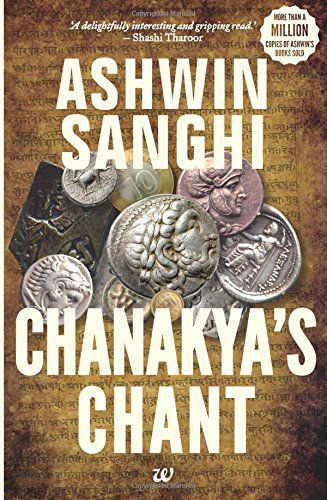
Book Review – Chanakya Chant

“Chanakya’s Chant” is a gripping historical thriller that weaves together two parallel narratives set in ancient and modern India. Written by the talented author Ashwin Sanghi, this book is the second installment in the Bharat Series, and it takes readers on an enthralling journey through time and politics.
The novel skillfully entangles the tales of two extraordinary strategists: Chanakya, the brilliant ancient Indian political strategist and philosopher, and Pandit Gangasagar Mishra, a contemporary political mastermind. The narrative alternates between these two characters, beautifully juxtaposing the political intrigues of the past with the machinations of the present.

The first thread of the story transports readers to the ancient world of Chanakya, where we witness his rise from a humble Brahmin to the mastermind behind the establishment of the Mauryan Empire. Sanghi meticulously paints a vivid picture of the historical period, recreating the courts, palaces, and battlefields of ancient India. The portrayal of Chanakya as a shrewd and cunning strategist is both captivating and insightful, making readers appreciate the brilliant mind of this historical figure.
In the contemporary storyline, we follow the life of Pandit Gangasagar Mishra, a modern-day political strategist who possesses the same intellect and ambition as Chanakya. Gangasagar’s journey to power is filled with twists and turns, as he navigates the complex world of Indian politics, corruption, and power struggles. The author deftly explores the dynamics of modern politics, presenting a realistic and engaging portrayal of the political landscape in India.
One of the most commendable aspects of “Chanakya’s Chant” is Ashwin Sanghi’s meticulous research and attention to historical and political details. The seamless interweaving of past and present demonstrates the timeless relevance of Chanakya’s principles and strategies. Sanghi’s writing style is fluid and captivating, keeping readers engrossed throughout the book’s 476 pages.
Moreover, the characters in the novel are well-crafted and multi-dimensional, adding depth to the plot. Both Chanakya and Pandit Gangasagar Mishra are complex individuals driven by their ambitions, making them relatable despite the vast differences in their eras.
The book’s pacing is near flawless, striking a balance between action-packed sequences and moments of contemplation. As the two narratives converge, the suspense intensifies, leaving readers eager to unravel the ultimate connections between the ancient and modern sagas.
“Chanakya’s Chant” is not just a historical thriller but also a thought-provoking exploration of power, ambition, and the pursuit of greatness. It reminds us that human nature remains constant over time, and the strategies employed in the past are still relevant in shaping the present.
In conclusion, Ashwin Sanghi’s “Chanakya’s Chant” is a masterfully crafted novel that effortlessly bridges the gap between history and contemporary politics. With its gripping narrative, well-researched backdrop, and compelling characters, the book is a must-read for fans of historical fiction and political thrillers alike. This engaging tale of cunning and power will undoubtedly leave a lasting impression on its readers.

SureShotPOST Online Publishing

ShureShotPOST Online Publishing is an imprint of Eduepedia Publications Pvt Ltd. 

SureShotPOST Online Publishing is a dynamic and innovative platform that revolutionizes the world of digital content creation and distribution. It provides a comprehensive suite of tools and services for authors, bloggers, content creators, and publishers to create, manage, and share their work with a global audience.

Key Features:
Intuitive Content Creation Interface: SureShotPOST offers a user-friendly and intuitive content creation interface that allows writers to draft, edit, and format their content effortlessly. The platform supports various media types, including text, images, videos, and interactive elements, enabling creators to craft engaging and multimedia-rich content.
Seamless Collaboration: SureShotPOST understands the importance of collaboration in the content creation process. Authors and publishers can collaborate in real-time, share feedback, and work together to refine and enhance the content. This feature fosters a sense of teamwork and ensures that the final product is of the highest quality.
Content Management System: The platform comes equipped with a robust content management system that organizes and categorizes content effectively. Authors can manage their drafts, published articles, and past works in an orderly manner, making it easier to access and update their creations.
Advanced Analytics: Understanding how content performs is crucial for content creators and publishers. SureShotPOST provides detailed analytics and performance metrics, allowing users to track their content’s reach, engagement, and overall impact. These insights help creators tailor their content strategies to maximize their audience reach.
Monetization Opportunities: SureShotPOST supports various monetization models, allowing authors and publishers to earn from their content. Whether through subscription-based access, ad revenue sharing, or sponsored content, creators have the flexibility to choose the monetization method that aligns with their goals.
Distribution Channels: SureShotPOST facilitates broad content distribution across various online platforms and social media channels. This ensures that content reaches a wider audience, enhancing its visibility and potential for monetization.
Content Security and Copyright Protection: Protecting intellectual property is paramount in the digital age. SureShotPOST employs robust security measures to safeguard content from unauthorized usage or plagiarism. Authors can confidently publish their work, knowing that their creations are protected.
Community Engagement: The platform fosters a vibrant community of content creators, readers, and publishers. Users can interact through comments, feedback, and sharing, fostering an engaged and supportive ecosystem.
Mobile Accessibility: SureShotPOST is accessible on various devices, including smartphones and tablets, enabling creators to work on their content anytime, anywhere.
SureShotPOST Online Publishing is a game-changer for content creators and publishers alike. By offering a suite of powerful tools, collaboration features, and monetization options, the platform empowers writers to unleash their creativity while connecting them with a global audience. With its emphasis on security, analytics, and community engagement, SureShotPOST is undoubtedly at the forefront of the digital content publishing revolution.