Know about New Zealand's law that bans smoking for next generation.

In a bid to curb smoking for the next generation and make the country smoke-free by 2025, New Zealand passed the world’s first legislation prohibiting the sale of tobacco to anyone born on or after January 1, 2009.

According to the Guardian, the number of stores legally permitted to sell cigarettes will be reduced by a tenth, from 6,000 to 600 across the country. The law passed will go into effect in 2023, as New Zealand strives to become “smoke-free” by 2025.

New Zealand’s smoking rate is already at historic lows, with just 8% of adults smoking daily according to government statistic released in November – down from 9.4% last year.

It is hoped that the Smokefree Environments Bill will reduce that number to less than 5% by 2025, with the eventual aim of eliminating the practice altogether.

India and Chinese troops clashes on border.

Soldiers from India and China clashed last week along the two countries’ disputed Himalayan border. In 1962, when the countries fought a bloody, high-altitude war over the contested territories, China seized Arunachal Pradesh, which it claims as part of South Tibet, before returning it to Indian control, but the disputed area belongs to and will remain in the integral control of India.

It was the first reported standoff between troops from the two Asian giants since deadly clashes in 2020 strained their already tense relations. 

Both sides were involved with a few soldiers suffering minor injuries. China is yet to comment on the stand off. But Reuters reported an Indian army source saying at least six Indian troops were injured.

“Both sides immediately disengaged from the area,” the Indian army said.

It added that commanders from both sides had held a meeting immediately after “to restore peace and tranquility”.

India’s Defence Minister Rajnath Singh told the parliament on Tuesday that no Indian soldiers had been “hurt or seriously injured” in the clash and that the incident has been “taken up at diplomatic levels”. He added that because of “timely intervention of Indian military commanders, PLA soldiers went back to their positions”.

China and India share a disputed 3,440km (2,100 mile) long de facto border – called the Line of Actual Control, or LAC – which is poorly demarcated. The presence of rivers, lakes and snowcaps means the line can shift. The soldiers on either side – representing two of the world’s largest armies – come face to face at many points.

India and Chinese troops clashes on border.

Soldiers from India and China clashed last week along the two countries’ disputed Himalayan border. In 1962, when the countries fought a bloody, high-altitude war over the contested territories, China seized Arunachal Pradesh, which it claims as part of South Tibet, before returning it to Indian control, but the disputed area belongs to and will remain in the integral control of India.

It was the first reported standoff between troops from the two Asian giants since deadly clashes in 2020 strained their already tense relations. 

Both sides were involved with a few soldiers suffering minor injuries. China is yet to comment on the stand off. But Reuters reported an Indian army source saying at least six Indian troops were injured.

“Both sides immediately disengaged from the area,” the Indian army said.

It added that commanders from both sides had held a meeting immediately after “to restore peace and tranquility”.

India’s Defence Minister Rajnath Singh told the parliament on Tuesday that no Indian soldiers had been “hurt or seriously injured” in the clash and that the incident has been “taken up at diplomatic levels”. He added that because of “timely intervention of Indian military commanders, PLA soldiers went back to their positions”.

China and India share a disputed 3,440km (2,100 mile) long de facto border – called the Line of Actual Control, or LAC – which is poorly demarcated. The presence of rivers, lakes and snowcaps means the line can shift. The soldiers on either side – representing two of the world’s largest armies – come face to face at many points.

International World Braille Day

In honor of Louis Braille, who was born on January 4, 1809, the world observes International World Braille Day every year. The United Nations General Assembly established World Braille Day in 2019 and it serves as the opening ceremony for Braille Literacy Month, a campaign in January that strives to increase public awareness of the value of braille and braille literacy.

Braille is useful for many people, even though it is most often associated with people who are completely blind and who use it as a reading medium. This includes people with severe disabilities, visual impairments, and dual sensory loss.


HISTORY OF WORLD BRAILLE DAY

After its inventor, “Braille,” the term was given. When Louis Braille was a young child, he inadvertently injured himself in the eye with his father’s awl, which caused him to lose his vision. He spent time at the Royal Institute for Blind Youth in France starting at the age of 10 when he developed and improved the raised-dot technique that eventually became known as Braille.

Braille finished his work by creating a code based on cells with six dots that allowed a fingertip to quickly go from one cell to the next while still feeling the full unit with one touch. Braille eventually gained acceptance as the primary method of written information for blind people on a global scale. Unfortunately, Braille was unable to witness the usefulness of his creation. Two years before the Royal Institute started teaching Braille, in 1852, he passed away.

The United Nations General Assembly recognized Braille as a wonderful tool that gave the blind and visually handicapped access to a wide range of opportunities (UNGA). The date January 4 was designated as World Braille Day in November 2018. The next year, the first-ever World Braille Day was marked and recognized as a global holiday.

Six fun facts about braille

1. There is a braille code for practically every language, and braille is used in almost every nation in the globe.

2. The braille’s creator has a fascinating tale to tell. Louis Braille was 3 years old when he accidentally poked his eye with a leather embosser, causing a severe infection that eventually led him to lose eyesight in both eyes. Ironically, a stylus, a device used nowadays to emboss braille by hand, is comparable to an awl.

3. There are numerous ways to type in braille. It can be printed using a braille typewriter or embossed using a slate and styles, which is usually regarded as braille handwriting.

4. Popular tourist destination Castle Sant’Elmo provides more than just a panoramic view of the Italian city of Naples from its vantage point. The stronghold is home to Paolo Puddu’s “Follow the Shape” art project, a braille-embossed railing with a poetic description of the scene. The photo for this blog was taken from an image of this installation.

5. In recent years, more toys—including a Rubik’s Cube, the well-known card game UNO, and LEGOs—have become accessible in braille.

6. A conventional typewriter is not like a braille keyboard. In addition to a space key, enter button, and backspace button, braillers feature six keys, one for each of the six dots in a braille cell.


Russia offers India large ship on lease.

Russia has offered India to lease and build very large crude carriers (VLCC) as insurance on Russian oil. “Traditionally India couldn’t get large quantities of crude from Russia as there weren’t any VLCC’s. However, now with India’s imports from Russia reaching nearly 30 per cent of total requirement, VLCC is the need of the hour.

This can also remove insurance liability on India as after price cap most insurers have backed out from insuring Russian crude,” say sources. This offer was given  when Russian Russian Deputy Prime Minister Alexander Novak met India’s Ambassador to Russia, Pavan Kapoor on December 9th.

In 2021, bilateral trade between Russia, India increased by 46.5 per cent, exceeding $13.5 billion. From January to September 2022 trade reached $20.4 billion.

Russia offers India large ship on lease.

Russia has offered India to lease and build very large crude carriers (VLCC) as insurance on Russian oil. “Traditionally India couldn’t get large quantities of crude from Russia as there weren’t any VLCC’s. However, now with India’s imports from Russia reaching nearly 30 per cent of total requirement, VLCC is the need of the hour.

This can also remove insurance liability on India as after price cap most insurers have backed out from insuring Russian crude,” say sources. This offer was given  when Russian Russian Deputy Prime Minister Alexander Novak met India’s Ambassador to Russia, Pavan Kapoor on December 9th.

In 2021, bilateral trade between Russia, India increased by 46.5 per cent, exceeding $13.5 billion. From January to September 2022 trade reached $20.4 billion.

India climbs to 5th spot in top global 500 list released by Hurun.

India, with 20 of the most valuable companies in the world, has moved into the fifth position among countries that are home to the world’s top 500 firms. Last year, it ranked ninth with eight companies. The US continued to top the charts, according to the 2022 Hurun Global 500 list.

Of the 20 Indian companies featuring on the list this year, 11 are based in Mumbai, four in Ahmedabad and one each in Noida, New Delhi, Bengaluru and Kolkata. The list, released by the Hurun Research Institute, is a compilation of the 500 most valuable non-state-controlled companies in the world. Companies were ranked according to their market capitalisation (for listed companies) and valuations for non-listed companies.

Led by energy giant Reliance Industries with market capitalisation of $202 billion, the list includes Tata Consultancy ($139 billion) and HDFC Bank ($97 billion).

Billionaire Gautam Adani controlled Adani Group has debuted in the global top 500 companies list with four companies — Adani Enterprises ($63 billion), Adani Transmission ($44 billion), Adani Total Gas ($43 billion) and Adani Green Energy ($40 billion). The other new entrants in the list from India include ITC ($52 billion), Avenue Supermarts ($33 billion), Axis Bank ($33 billion), Bajaj Finserv ($32 billion) and Larson & Toubro ($32 billion)

India climbs to 5th spot in top global 500 list released by Hurun.

India, with 20 of the most valuable companies in the world, has moved into the fifth position among countries that are home to the world’s top 500 firms. Last year, it ranked ninth with eight companies. The US continued to top the charts, according to the 2022 Hurun Global 500 list.

Of the 20 Indian companies featuring on the list this year, 11 are based in Mumbai, four in Ahmedabad and one each in Noida, New Delhi, Bengaluru and Kolkata. The list, released by the Hurun Research Institute, is a compilation of the 500 most valuable non-state-controlled companies in the world. Companies were ranked according to their market capitalisation (for listed companies) and valuations for non-listed companies.

Led by energy giant Reliance Industries with market capitalisation of $202 billion, the list includes Tata Consultancy ($139 billion) and HDFC Bank ($97 billion).

Billionaire Gautam Adani controlled Adani Group has debuted in the global top 500 companies list with four companies — Adani Enterprises ($63 billion), Adani Transmission ($44 billion), Adani Total Gas ($43 billion) and Adani Green Energy ($40 billion). The other new entrants in the list from India include ITC ($52 billion), Avenue Supermarts ($33 billion), Axis Bank ($33 billion), Bajaj Finserv ($32 billion) and Larson & Toubro ($32 billion)

Alternatives to layoff.

In the span of weeks, the United States’ Silicon Valley which has been a reliable source of high-paying jobs and booming stocks is now witnessing a tough time with major big tech companies including Meta, Twitter, Snap, and Microsoft announcing mass layoffs, which have tens of thousands of people unemployed. 

Layoffs are happening as the world ponders whether a global recession is coming. Whatever label people end up putting on this era, companies are struggling with consecutive lackluster quarters, inflation, price hikes, and uncertainty. Varying interest rates, a plummeting stock market, and a downturn in consumer confidence are only making matters worse. 

Here are some alternatives to layoffs that may help HR avoid all the drama: 

Remote Work

Thanks to the pandemic, most, if not all, companies with knowledge workers are now set up for remote work. 

Hiring Freeze

Many companies that are laying off people are still hiring at the same time. It is a bad look. Employers should have a hiring freeze to save money and stay on budget.

Furloughs

Furloughs can be a short-term way to avoid at least some layoffs. A furlough is a mandatory but temporary leave of absence. A furloughed employee works a reduced schedule or takes unpaid leave.

Pay cuts

Pay cuts can help prevent a business from bleeding jobs. However, to be noted that this strategy can be costly for employees, particularly those living paycheck to paycheck amid high inflation.

Cuts in benefits or perks

Aside from pay cuts, an employer might temporarily reduce benefits or perks to “buy the company some time” to turn around its finances.

Alternatives to layoff.

In the span of weeks, the United States’ Silicon Valley which has been a reliable source of high-paying jobs and booming stocks is now witnessing a tough time with major big tech companies including Meta, Twitter, Snap, and Microsoft announcing mass layoffs, which have tens of thousands of people unemployed. 

Layoffs are happening as the world ponders whether a global recession is coming. Whatever label people end up putting on this era, companies are struggling with consecutive lackluster quarters, inflation, price hikes, and uncertainty. Varying interest rates, a plummeting stock market, and a downturn in consumer confidence are only making matters worse. 

Here are some alternatives to layoffs that may help HR avoid all the drama: 

Remote Work

Thanks to the pandemic, most, if not all, companies with knowledge workers are now set up for remote work. 

Hiring Freeze

Many companies that are laying off people are still hiring at the same time. It is a bad look. Employers should have a hiring freeze to save money and stay on budget.

Furloughs

Furloughs can be a short-term way to avoid at least some layoffs. A furlough is a mandatory but temporary leave of absence. A furloughed employee works a reduced schedule or takes unpaid leave.

Pay cuts

Pay cuts can help prevent a business from bleeding jobs. However, to be noted that this strategy can be costly for employees, particularly those living paycheck to paycheck amid high inflation.

Cuts in benefits or perks

Aside from pay cuts, an employer might temporarily reduce benefits or perks to “buy the company some time” to turn around its finances.

One need to spend 4 years instead of 3, to graduate in honours degree.

Students looking to earn an honours degree in undergraduate courses will have to pursue four-year programmes under new regulations likely to be announced by the University Grants Commission this week,  PTI reported.

“Students will be able to get a UG [undergraduate] degree in three years on completion of 120 credits (measured through the number of academic hours) and a UG honours degree in four years on completion of 160 credits,” the news agency quoted from the draft Curriculum and Credit Framework of the University Grants Commission.

At present, students get an honours degree after completing three years of undergraduate programmes. Under the National Education Policy (NEP) 2020, universities and colleges will offer four-year undergraduate degrees with multiple exit and entry options. Several universities, including DU, and Jawaharlal Nehru University (JNU), have already adopted the programme.

A senior UGC official, requesting anonymity, said, “There will be only one honours degree, that is four-year UG with honours or honours with research. The regulations will be applicable for students who will be enrolled under the new norms from this year onwards.”

One need to spend 4 years instead of 3, to graduate in honours degree.

Students looking to earn an honours degree in undergraduate courses will have to pursue four-year programmes under new regulations likely to be announced by the University Grants Commission this week,  PTI reported.

“Students will be able to get a UG [undergraduate] degree in three years on completion of 120 credits (measured through the number of academic hours) and a UG honours degree in four years on completion of 160 credits,” the news agency quoted from the draft Curriculum and Credit Framework of the University Grants Commission.

At present, students get an honours degree after completing three years of undergraduate programmes. Under the National Education Policy (NEP) 2020, universities and colleges will offer four-year undergraduate degrees with multiple exit and entry options. Several universities, including DU, and Jawaharlal Nehru University (JNU), have already adopted the programme.

A senior UGC official, requesting anonymity, said, “There will be only one honours degree, that is four-year UG with honours or honours with research. The regulations will be applicable for students who will be enrolled under the new norms from this year onwards.”

'Divya Kala Shakti: Witnessing Abilities in Disabilities'

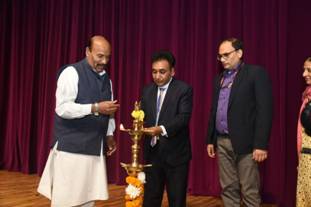
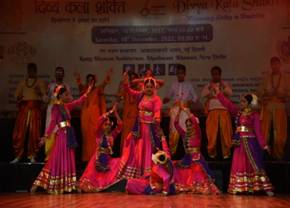
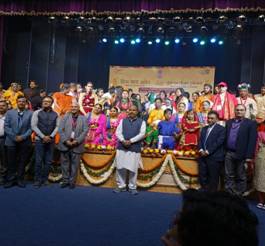
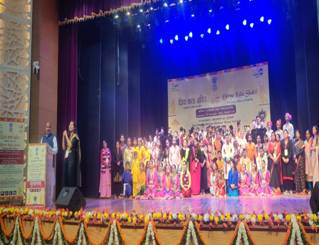
 Minister of Social Justice & Empowerment, Dr. Virendra Kumar inaugurated the ‘Divya Kala Shakti’ Programme at Rang Bhawan Auditorium, Akashwani Bhawan, Delhi, today on 10th Dec 2022.Various Non-Govt organizations working in disability sectors and  stake holders of the Department witnessed the extraordinary performances by the Divyang children and youth at the cultural event ‘Divya Kala Shakti- Witnessing Ability in Disability’ organized by the Department of Empowerment of Persons with Disabilities (Divyangjan), Ministry of Social Justice and Empowerment in collaboration with PDUNIPPD , a National Institution uder the Administrative head of the Department.

After two national events held on 18th April 2019 & 23rd July 2019 at President House & Balayogi Auditorium  of India Department is taking Divya kala Shakti to regional levels with the direction of former President Sh. Ram Nath Kovind. Accordingly three regional “Divya kala Shakti” programmes have already been held at various places i.e, Western Region, North Eastern and Southern Region in Mumbai, Arunachal and Chennai. This time the first ever Northern regional Divya kala Shakti  held in Delhi where approximately 100 Ar111qqQqqqqtistes have been drawn from different states, cultural societies, institutions, civil societies from Northern regions to make it a truly Northern regional spirit. Department arranged for their rehearsals and practice session with the choreographer and the discipline and precision of timing and performance among such children is the greatest example of their intellectual, creative and their latent ability that needs to be harnessed for their optimal self-actualization. The event was witnessed by about 300 dignitaries representing Senior Government officials, Creative personalities, Educators, Principals, various disability advocacy groups etc.

The performances were presented by children and youth with disabilities ranging from physical, visual, hearing, intellectual, Autism to multiple disabilities and dwarfism. They are capable of excelling in any field, be it art, culture, sports, or anything. The children with disabilities and the audience will always remember the inspiring words said by PM  “Divyang are gifted human beings we are working steadfastly towards ensuring an inclusive, accessible and equitable future for our Divyang sisters and brothers. Their fortitude and accomplishments in various fields inspire all of us” .

President of India, also rightly said Divyangjan required no sympathy what is required is empathy and an enabling, barrier free environment.

The programme was packed with several state specific performances that made the evening vibrant. Durga Dance by a cancer survivor and locomotor disable Anita Gupta from East was really an awakening. Really lots of mind-blowing performances by these Divyangjan can inspire one and all.

*******

Pradhan Mantri National Apprenticeship Mela


  • The Mela will begin in 25 states covering 197 districts
  • Several local businesses have been invited to be part of the mela and provide apprenticeship opportunities to the youth

As a part of Prime Minister Shri Narendra Modi’s vision to boost career opportunities for India’s youth under Skill India Mission, the Ministry of Skill Development and Entrepreneurship (MSDE) will hold the Pradhan Mantri National Apprenticeship Mela (PMNAM) on December 12th, 2022, across 197 locations in 25 states and union territories.

Several local businesses have been invited to be a part of the mela to provide local youth with the opportunity to shape their careers through apprenticeship training. The event will witness the participation of various companies from different sectors. Participating companies will have the chance to meet potential apprentices on a single platform and choose applicants on the spot and provide them with an opportunity to be a part of their organization.

Individuals can register for the mela by visiting https://www.apprenticeshipindia.gov.in/and to find the mela’s nearest locationCandidates who have passed Class 5 to Class 12 and have skill training certificates, or ITI Diploma holders or graduates can apply during this apprenticeship melaThe candidates must carry three copies of their resume, three copies of all the marksheets and certificates, photo ID (Aadhaar card/driving licence etc) and three passport size photographs to the respective venues.

Those who have already enrolled have been requested to reach the venue with all the relevant documents.Through this fair, the candidates will also earn National Council for Vocational Education and Training (NCVET)-recognized certifications, improving their employability rate after the training session.

Expressing his views on the Pradhan Mantri National Apprenticeship Mela, Shri Atul Kumar Tiwari, Secretary, Ministry of Skill Development and Entrepreneurship, said “India has often been compared to other developed economies in terms of apprenticeship opportunities for the youth of today. To bridge this gap, we are trying our best to make apprenticeship opportunities reachable to trainees and students. We received a great response during last month’s apprenticeship mela from the potential youth who is eager to work hard, contribute to our economy, and help shape the future of our country. The major purpose of this programme is to encourage companies to hire more apprentices, while also assisting employers in discovering the right talent and developing their potential via training and practical experience. It is also critical to embed apprenticeship in the educational ecosystem besides building credible pathways from apprenticeship to higher education. With our continuous efforts, our goal is to raise apprenticeship opportunities in India to 10 lakhs by end of 2022, and to 60 lakhs by 2026”.

Apprenticeship melas are hosted in the country every month, wherein selected individuals receive a monthly stipend in accordance with government criteria for gaining new skills. Apprenticeship is considered the most sustainable model of skill development, and it has been getting a big boost under Skill India Mission.

The government is striving to train 1 million youth per annum through apprenticeship training and to fulfil this mission, PMNAM is being used as a platform to increase the participation of establishments and students. It is also providing awareness to the youth on various opportunities existing across the participating companies.

****

Swahid Diwas in Goa

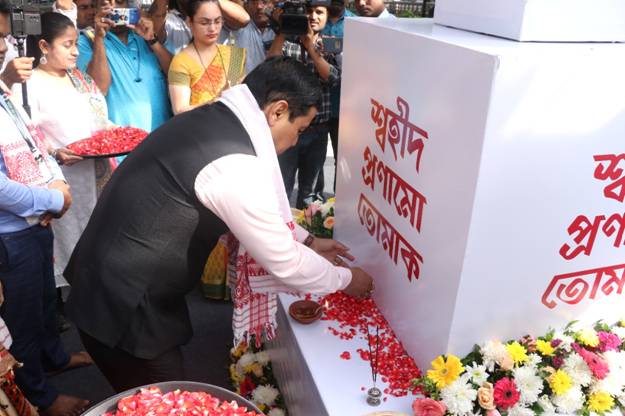
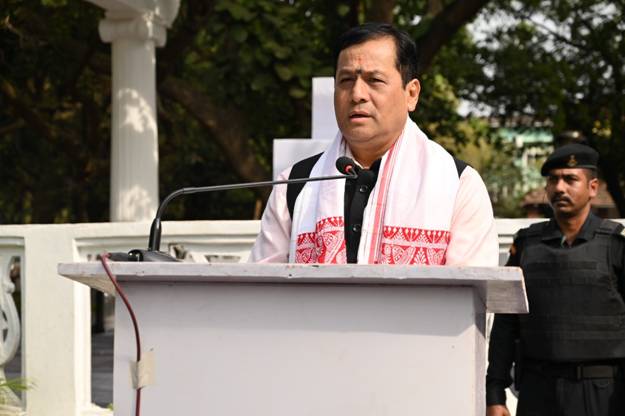
 Union Minister of Ports, Shipping & Waterways and Ayush Shri Sarbananda Sonowal paid glowing tributes to the martyrs of the historic Assam Movement in a solemn programme in Goa today marking Swahid Diwas, the martyrdom day of Khargeswar Talukdar in 1979, the first martyr of the Assam Movement. The Union Minister is on a three day visit to the coastal state. The programme held at Francisco Luis Gomes Garden in Panjim was organised by the Assam Society of Goa and was attended by members of the Assamese community and a host of dignitaries and locals. 


Speaking on the occasion, the Minister reminisced the valour of the martyrs of the six year long Assam Movement from 1979-1985. “Today, on the occasion of Swahid Diwas, I salute all those who made the ultimate sacrifice to protect Assam. The people of Assam took part in the six year-long movement to protect the state from illegal immigrants and 860 martyrs gave their ultimate sacrifice to protect the unity and integrity of India. These great martyrs have written an unforgettable history of unparalleled patriotism and courage The Assam Movement is a shining example of the united efforts of the indigenous people of Assam to protect the nation and its impact was far-reaching. The immortal sacrifice of the martyrs will continue to inspire the greater Assamese community and the nation forever,” the  Minister stated.


Shri Sonowal added, “We have to continue to work with honesty, dedication and determination to keep alive the noble ideals of the brave martyrs. We have to fulfill our national responsibility to keep our language, culture, heritage and tradition alive. If the history of student movements of the world is analysed, the Assam movement was a watershed moment. I urge the people of Assam as well as the people from different parts of the country to take the lead in building a strong India inspired by the nationalistic spirit of this movement and render dedicated service to our motherland.”

*****