Import of thermal coal in the country to be completely stopped by 2024-2025

 : Nagpur/Mumbai, October 14, 2022
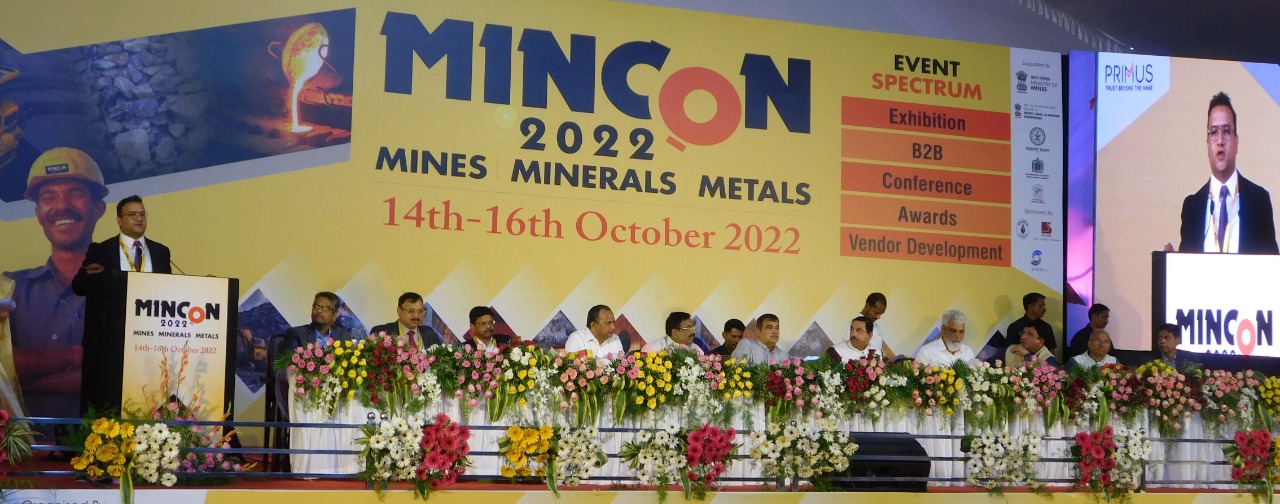
Union Minister of Parliamentary Affairs, Coal and Mines Shri Pralhad Joshi said that, the mineral and mining sectors, following agriculture and industrial sectors, provide maximum employment opportunities, and thus, for India to be recognized as a developed country by 2047, the role of these two sectors is important. While addressing MINCON 2022 – a Conference on Mines, Minerals and Metals in Nagpur today, he said that Government’s target is to produce 900 million tonnes of coal in the current year and 163 mines will be auctioned. He added that the Union Government has faith in the federal system and Prime Minister Narendra Modi is insisting that most of the powers should be conferred upon the states.
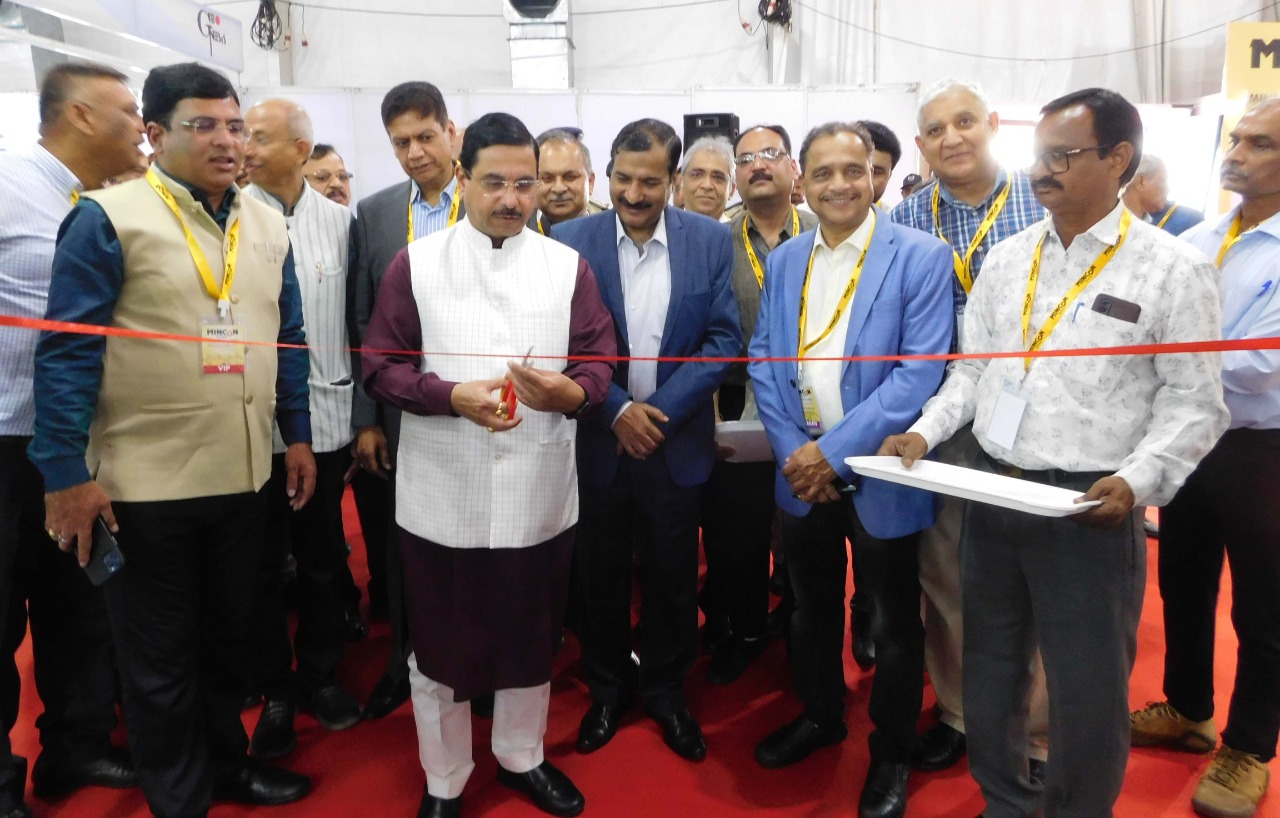
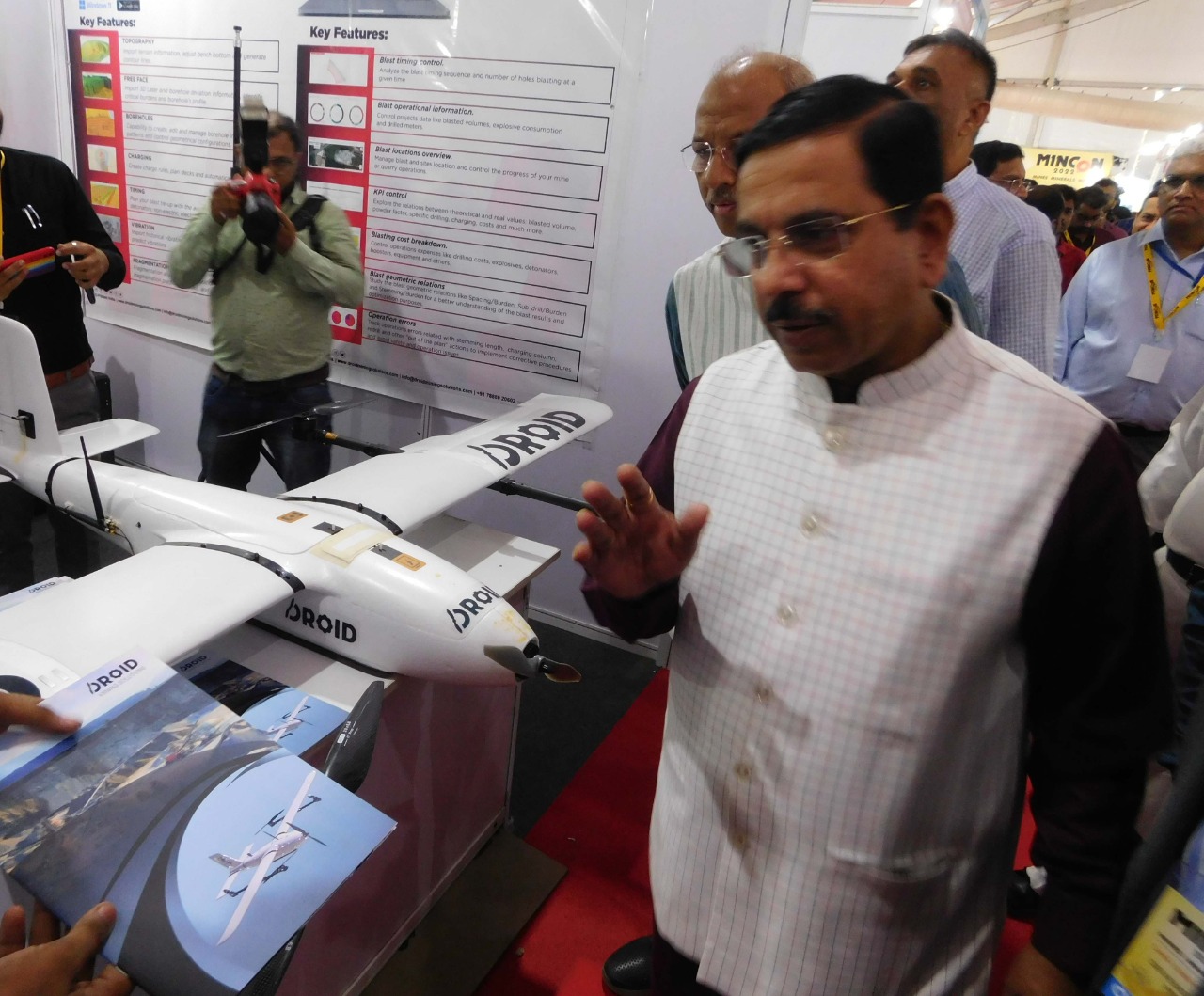
Maharashtra State Mining Corporation (MSMC) and Vidarbha Economic Development Council have jointly organized this conference at Nagpur. Union Minister for Road Transport and Highways Nitin Gadkari presided over this conference. Maharashtra State Forest and Environment Minister Sudhir Mungantiwar, Maharashtra Government Minerals Minister Dadaji Bhuse, Principal Secretary of Commerce Department Harshdeep Kamble, President of the Maharashtra Mining Corporation Ashish Jaiswal, President of the Vidarbha Economic Development Council Devendra Parikh also attended this conference.
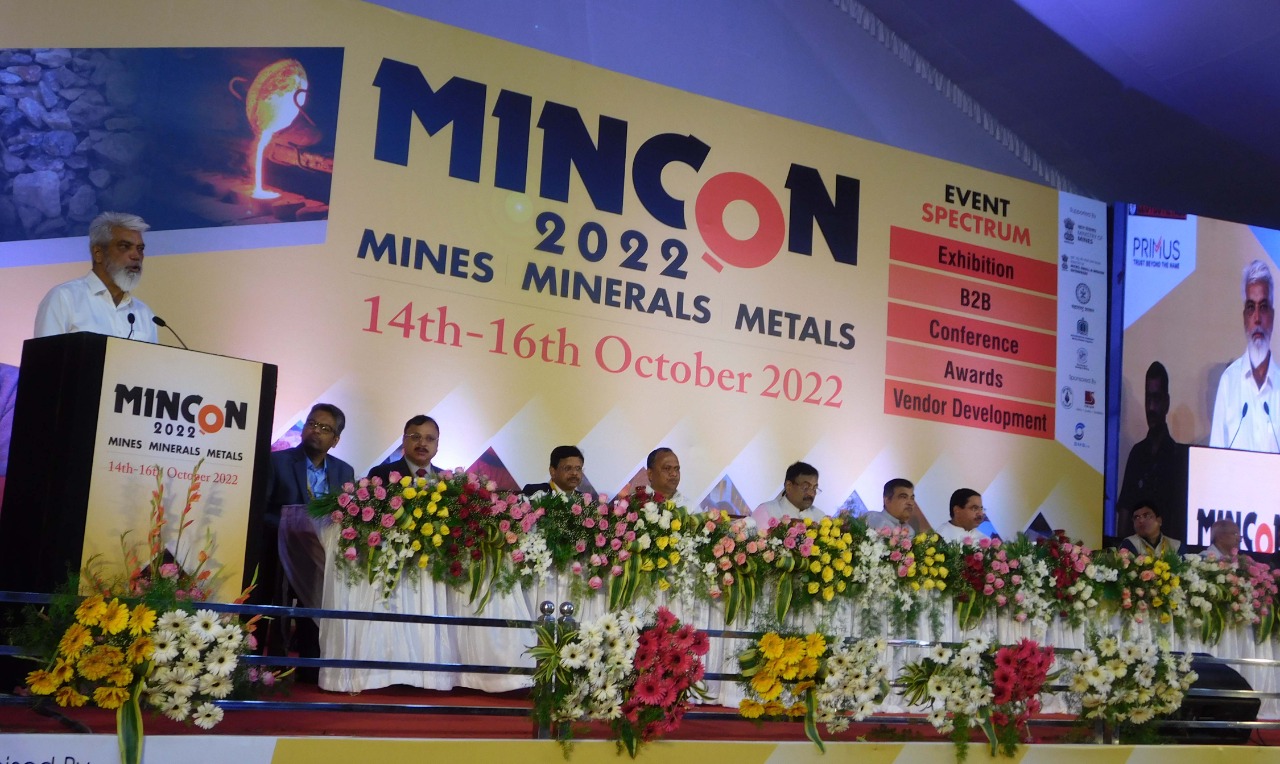

Shri Joshi further informed that the value of mineral wealth in India was Rs 1.9 lakh crore in 2021-22. The Government is committed to its appropriate utilization and distribution, he added. He said that the Vidarbha region’s role will remain important in developing India as a 5 trillion dollar economy. He further said that the Union government will always extend complete support for new ideas and new research, and also provide necessary incentives.

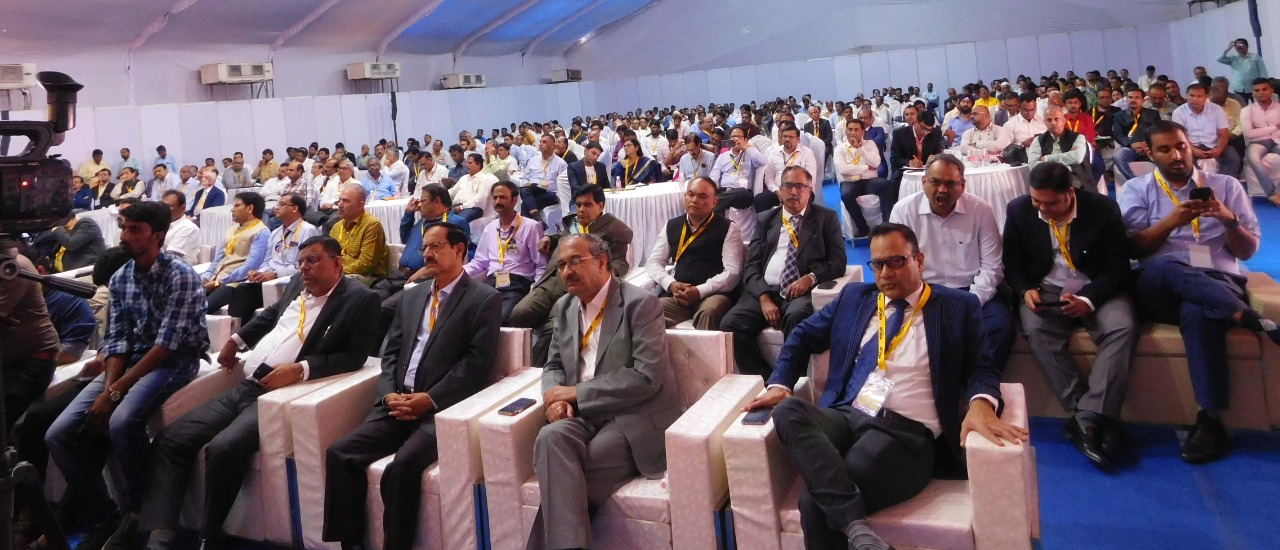
Union Minister Nitin Gadkari said that the foundation of the Vidarbha region’s development is based on mining and forest, and only mining-based industries can accelerate the progress of the Vidarbha region. He said that the Vidarbha region has 75% of mineral and 80% of the forest resources of Maharashtra and proper utilization of these will increase the Vidarbha region’s share in the energy sector. He further said that more investment in water, energy and communication is necessary to make India self-sufficient along with a 5 trillion dollar economy. Stating that coal production has increased due to the radical changes made by the Central Government in the mining sector, Shri Gadkari said that India’s energy needs are increasing and more coal will be needed in the future. Only Vidarbha region can fulfill this need, he added.


Following the Centre, the State Governments should also save time by using modern working systems, Nitin Gadkari said. He urged the state governments to provide the required licenses for these sectors at the earliest with emphasis on time planning and transparency. These sectors should reduce the country’s urea import of Rs. 60 thousand crores by producing ammonium nitrate and urea from coal. He further suggested that these sectors should now formulate new policies to reduce fuel imports of Rs 17 lakh crore. He said that the steps have to be taken now for the closed mines and if the mine is not economically viable, the policies will have to be relaxed.

Shri Gadkari also said that the country needs 6 million tonnes of manganese and Vidarbha region should take the initiative to fulfill it. He also suggested that the mining industry and investors should come together to find a solution for a royalty based on the market price of coal. The Union Road Transport and Highways Minister said that transparency, timely functioning and corruption-free processes are very much necessary for the mining sector, and assured that he will strive for proper coordination and communication between the concerned ministers and officials of all departments for the new coal mining in the Vidarbha region.

Officials of various government organizations and investors in the mining and mineral sector are participating in this conference organized between October 14-16, 2022.

***
Topics

 List of Import National Days and International Days 

In India, we habitually celebrate many days which are of social, international, economic, commemorative, or festive importance. Some of the days are also significant for General Studies as UPSC IAS Prelims exam has at least one question about a celebration of the important days and dates. Nowadays, the exam does ask factual questions related to days when they are in the news due to some other important aspect.

Every international day adopts a theme for that year. The concerned authorities formulate the policies according to the theme adopted for the year. In the UPSC and other Exam questions connected to international days, especially associated with technology, environment and humanity services.

This article will help you with those important dates and events that are important for you read and write

Interns should make sure that they cover every topic mentioned in the LIST of Days !!

Try to write on Those days which is coming in next few days or few weeks., check the following links:

  • Write around 500-1000 words on each topic
  • Try to post daily one Article and maximum two articles in a day. 
  • You can choose any topics of Current Affairs and write on that topic too. 
  • Make sure that you give due references and links to other important sites if you refer them. 
  • At least 30 articles is must for getting the internship certificate. 
  • Write daily and share the link of the published aricle on social media platforms and in whatsapp groups. 

National & International Dates For Exam

Aspirants should have all information about our important days and dates in India. There is a list of dates and their importance, which will help the aspirants to understand the days and dates of both national and international significance.

Day  Events

January

4th Jan International World Braille Day
6th Jan World Day -War Orphans
9th Jan Pravasi Bhartiya Diwas
10th Jan World Hindi Day
11th Jan National Human Trafficking Awareness Day
12th Jan National Youth Day (India)
15th Jan Army Day (India)
17th Jan World Religion Day
24th Jan National Girl child day (India)
25th Jan Tourism Day

National Voters Day

26th Jan Republic Day (India)
27th Jan International Holocaust Remembrance Day
30th Jan Martyrs’ Day

World Neglected Tropical Diseases

Last Sunday of January World Leprosy Eradication Day

February

2nd  Feb World Wetlands Day
4th Feb World Cancer Day
6th Feb International Day of Zero Tolerance to Female Genital Mutilation
9th Feb Safer Internet Day
10th Feb National De-Worming Day
11th Feb International Day of Women and Girls in Science
13th Feb World Radio Day (UNESCO)

National Women’s Day

20th Feb World Day of Social Justice
21st Feb International Mother Language Day
23th Feb World Peace and Understanding Day
24th Feb Central Excise Day
27th Feb World NGO Day
28th Feb National Science Day (India)

March

1st Mar Zero Discrimination Day

World Civil Defence Day

3rd Mar World Wildlife Day
4th Mar World Day of the Fight Against Sexual Exploitation

National Security Day

8th Mar International Women’s Day
11th Mar World Kidney Day
14th Mar International Day of Action for Rivers
15th Mar World Consumer Rights Day
16th Mar National Vaccination Day
18th Mar Ordnance Factories Day
20th Mar World Sparrow Day

International Day of Happiness

21st Mar International Day for the Elimination of Racial Discrimination

World Forestry Day

22nd  Mar World Day for Water
23rd Mar World Meteorological Day
24th Mar World Tuberculosis Day
27th Mar World Theatre Day

April

2nd Apr World Autism Awareness Day
4th Apr International Day of Mine Awareness
5th Apr National Maritime Day 
7th Apr World Health Day
10th Apr World Homeopathy Day
11th Apr National Pet Day

National Safe Motherhood Day

14th Apr Cultural Unity Day (recognized by India, Sri Lanka, Maldives, Bangladesh, and Nepal)
15th Apr World Art Day
17th Apr World Haemophilia Day
18th Apr World Heritage Day
21st Apr National Civil Services Day 

National Administrative Professionals Day

22nd Apr Earth Day
23rd Apr World Book and Copyright Day
24th Apr National Panchayati Raj Day
25th Apr World Malaria Day
26th Apr World Intellectual Property Day
28th Apr World Day for Safety and Health at Work
29th Apr International Dance Day
30th Apr Ayushman Bharat Diwas

May

1st May International Labour Day
2nd  May International Astronomy Day
4th May World Asthma Day
7th May World Athletics Day
8th May World Red Cross & Red Crescent Day

World Thalassemia Day

9th May World Migratory Bird Day
10th May World Mother Day
11th May National Technology Day (India)
12th May International Nurses Day (India)
16th May Dengue Prevention Day (India)
17th May World Telecommunication Day

World Information Society Day

18th May International Museum Day
20th May World Metrology Day

World Bee Day

21st May World Day for Cultural Diversity for Dialogue and Development

Anti-Terrorism Day

22nd May International Day for Biological Diversity
23rd May World Turtle Day
24th May Commonwealth Day
28th May International Day of Action for Women’s Health
29th May International Day of United Nations Peacekeepers

International Mount Everest Day (Chosen by Nepal)

31st May World Anti-Tobacco Day

June

1st Jun World Milk Day
3rd Jun World Bicycle Day
4th Jun International Day of Innocent Children Victims of Aggression
5th Jun World Environment Day
7th Jun World Food Safety Day
8th Jun World Ocean Day
12th Jun World Day Against Child Labour
14th Jun World Blood Donor Day
15th Jun World Elder Abuse Awareness Day
16th Jun International Integration Day
17th Jun World Day to Combat Desertification and Drought
19th Jun World Sickle Cell Day
20th Jun World Refugee Day
21st Jun World Music Day

International Yoga Day

23th Jun United Nations Public Service Day

International Olympic Day

26th Jun International Day against Drug Abuse and Illicit Trafficking International Anti-Drugs Day

International Day in Support of Victims of Torture

29th June National Statistics Day
3rd Sunday of June International Father’s Day

July

1st Jul National Doctor’s Day (India)
2st Jul World UFO Day

World Sports Journalists Day

4th Jul International Cooperative Day
11th Jul World Population Day
15th Jul World Youth Skills Day
17th Jul World Day for International Justice
18th Jul Mandela Day
26th Jul Kargil Memorial Day (India)
28th Jul World Hepatitis Day

World Nature Conservation Day

World Nature Day

29th Jul International Tiger Day
30th Jul International Day of Friendship

August

1st Aug Clergy Sexual Abuse Awareness Day
6th Aug Hiroshima Day
9th Aug Nagasaki Day

World Tribal Day

International Day of the World’s Indigenous People

10th Aug World Biofuel Day

World Lion Day

12th Aug International Youth Day
15th Aug India’s Independence Day
19th Aug World Humanitarian Day
20th Aug World Mosquito Day
21st Aug World Senior Citizen Day
23rd Aug International Day for the Remembrance of the Slave Trade and its Abolition
29th Aug National Sports Day 

International Day against Nuclear Tests

30th Aug National Small Industry Day

September

2nd Sep World Coconut Day
5th Sep Teachers Day (India)
8th Sep International Literacy Day
12th Sep United Nations Day for South-South Cooperation

World First Aid Day

14th Sep Hindi Day (India)
15th Sep International Day of Democracy

National Engineer’s Day

16th Sep World Ozone Day
19th Sep International Talk Like a Pirate Day
21st  Sep International Day of Peace

World Alzheimer’s Day

Biosphere Day

22nd Sep World Rhino Day
23rd Sep International Day of Sign Languages
28th Sep Right to Know Day
30th Sep International Blasphemy Rights Day

October

1st Oct International Day of Older Persons
2nd Oct International Day of Non-Violence

Human Rights Day (10th December)

4th Oct World Animal Welfare Day
5th Oct World Teachers’ Day
8th Oct Indian Air Force Day
10th Oct National Post Day 
13th Oct World Day for Natural Disaster Reduction
15th Oct International Day of Rural Women
16th Oct World Food Day
17th Oct International Day for the Eradication of Poverty
20th Oct International Day of the Air Traffic Controller
24th Oct United Nations Day

World Development Information Day

World Polio Day

27th Oct World Day for Audiovisual Heritage
28th Oct National Ayurveda Day
30th Oct World Thrift Day
31st Oct National Unity Day

November

2nd Nov International Journalist’s Remembrance Day
6th Nov International Day for Preventing the Exploitation of the Environment in War and Armed Conflict
9th Nov World Legal Services Day
10th Nov World Immunization Day
11th Nov National Education Day
12th Nov World Pneumonia Day
13th Nov World Kindness Day
14th Nov Children’s Day (India)
16th Nov International Day for Tolerance

National Press Day

17th Nov International Students Day
18th Nov World Chronic Obstructive Pulmonary Disease Day
19th Nov International Men’s Day

National Integration Day (India)

20th Nov Africa Industrialization Day

Universal Children’s Day

Transgender Day of Remembrance

21st Nov World Television Day

World Fisheries Day

25th Nov International Day for the Elimination of Violence against Women
26th Nov National Law Day (India)

Constitution Day

National Milk Day

29th Nov International Day of Solidarity with the Palestinian People

December

1st Dec World Aids Day
2nd Dec International Day for the Abolition of Slavery
3rd Dec International Day of Disabled Persons
4th Dec Indian Navy Day
7th Dec Indian Armed Force Flag Day

International Civil Aviation Day

9th Dec The International Day Against Corruption
10th Dec Human Rights Day

International Animal Rights Day

11th Dec International Mountain Day
14th Dec National Energy Conservation Day (India)
18th Dec International Migrants Day
20th Dec International Human Solidarity Day
22nd Dec National Mathematics Day
23rd Dec Farmers Day (India)

Important National & International Days in the Year:-Download PDF Here

Inner Voice Episode 1

I never wanted that to be happening. Never wanted me to want someone more than myself. It just happened that I started believing in someone more than myself. And every time, no one turned out to be worthy of me. Repeatedly getting cheated, caught dumbed & ditched, people changed one after the other. I thought that this person would not betray me, so I went ahead.

Whereas the one who cheated earlier realized his flaws and wanted to come back I didn’t allow it only because of my belief that the one who had betrayed me once then it not tough to do that again. But Even when I got attached to another person in this world I was also getting that hurt, tears, and even afraid of getting betrayed….Why???

People of this world made me ask “Why” Then why God would answer? I’m pretty sure people would be answerable and have to pay for their Karma.

It’s not possible for a human being to leave and forget someone but every time another human forced me to act like and accept this tough lesson. To be honest I’m not learning too much from these all but yes it’s broken me into tiny pieces inside.

There & then it’s God’s will for my goodwill, right??? I forgot God then what are you and who to enlighten??

It’s my bad as everyone is the same instead of me.

Inflation not yet in control.

In twin blows to Indian economic revival, higher food prices drove retail inflation to a five-month high of 7.4 per cent while factory output fell for the first time in 18 months. This relates to data of september month.

The second consecutive month of rise in consumer price index (CPI)-based inflation will add to the pressure on the Reserve Bank of India (RBI) to again raise interest rates to tame high prices.

Inflation has been above the targeted zone for the ninth month in a row and as per statute, the RBI will now have to explain to the government in writing why it failed to keep prices below 6 per cent.

This is the ninth consecutive month where the inflation print has remained above the upper band of 6 per cent and the second successive quarter where the average is higher than 7 per cent.

Irregular rainfall is said to be the primary reason behind higher inflation in vegetable and fruits. While inflation in cereals has also inched up, the steps taken by the government and a reasonably healthy Kharif output are expected to address the concerns behind the further hike in prices.

Inflation not yet in control.

In twin blows to Indian economic revival, higher food prices drove retail inflation to a five-month high of 7.4 per cent while factory output fell for the first time in 18 months. This relates to data of september month.

The second consecutive month of rise in consumer price index (CPI)-based inflation will add to the pressure on the Reserve Bank of India (RBI) to again raise interest rates to tame high prices.

Inflation has been above the targeted zone for the ninth month in a row and as per statute, the RBI will now have to explain to the government in writing why it failed to keep prices below 6 per cent.

This is the ninth consecutive month where the inflation print has remained above the upper band of 6 per cent and the second successive quarter where the average is higher than 7 per cent.

Irregular rainfall is said to be the primary reason behind higher inflation in vegetable and fruits. While inflation in cereals has also inched up, the steps taken by the government and a reasonably healthy Kharif output are expected to address the concerns behind the further hike in prices.

Netaji is Netaji Subhas Chandra Bose

The death of Mulayam
Singh Yadav
is sad as he was a great political leader and his
contribution to Indian politics in general in our country and Uttar Pradesh in
particular from time to time has been highlighted in many prints and electronic
media.  With a political career straddling more than six decades, being
elected as a Member of Parliament (MP) seven times and the Member of the
Legislative Assembly (MLA) 10 times, the veteran politician was a prominent
political leader. In 1992, Yadav set up his own Samajwadi Party (Socialist
Party). He served three non-consecutive terms as the Chief Minister of Uttar
Pradesh, and also served as the Minister of Defence, at the Government of
India. Later on, his son the young Akhilesh Yadav became Chief Minister of
Uttar Pradesh in 2012. Mulayam Singh Yadav’s controversial statement on rape
many Indians did not take in the good sense. Anyway, he was often referred to
as Netaji by party leaders, workers, and others (reason which may be
understood). But as a senior citizen and academician, I cannot accept. In this
context, I wish to mention all Indians even many Pakistanis and Bangladeshis
talked about Netaji Subhas Chandra Bose’s immense contribution to the freedom
movement of India. So, Netaji means Netaji Subhas Chandra Bose. It is pertinent
to mention that Mahatma means Gandhiji. Indians have accepted Mahatma for
Gandhiji then why some people will use Netaji for Mulayam Singh Yadav? Many
newspapers highlighted ‘Netaji’ for Mulayam Singh Yadav.  Can they write
for any other stalwarts? Here I wish to mention a few lines about Netaji Subhas
Chandra Bose’s contribution to those who are not aware.  While Subhas
Chandra Bose was Congress President, many admired him for his energetic role
and that is why he was elected President of Indian National Congress for two
consecutive terms but had to resign in the mid of second term due to
ideological differences with Gandhiji as Mahatma Gandhi preferred Pattabhi
Sitaramaiah, but he was defeated.   It is believed that albeit
Pattabhi Sitaramaiah was a Telugu person hailing from the southern part of
India but many persons of the southern region of India voted in favour of
Netaji Subhas. Anyhow, while Netaji was Congress President he carried out many
remarkable works – one was his initiative to keep Assam with India as then
Muslim League leaders’ had different game plans. In 1938, Assam was passing
through great political turmoil as there was a serious political problem –
Muslim League vs. Congress. During that time, Gopinath Bordoloi invited Netaji
(President of Congress at that time) to come to Assam and intervene. Netaji
Subhas Chandra immediately rushed to Assam and strongly advocated the formation
of the ministry under the leadership of Gopinath Bordoloi.  As a sequel,
Assamese youths were happy and a booklet on Netaji was published by some
enthusiastic students of Cotton College in 1939, under the umbrella of the All
Assam Progressive Youth Association (AAPYA, formed at that time).  
While Netaji Subhas was Head of the Indian National Army (INA) or Azad Hind
Fauj, Dr. (Mrs.) Lakshmi Swaminathan met him in Singapore and decided to join
the freedom movement as she was impressed with the charismatic speech of Netaji
Subhas. She as   Captain Lakshmi headed a regiment called Jhansi Rani
Laxmi Bai Regiment.  It was the first regiment headed by a lady in Asia
with around 1000 women personnel. Also, it is pertinent to mention that around
60,000 persons consisting of all religions were in Azad Hind Fauj and brigades
were in the name of great personalities like Gandhi brigade, Nehru brigade, Azad
brigade, Subhas brigade, Rani of Jhansi regiment.  

No Indian can forget Netaji’s
great statement, ‘You give me your blood and I will give you
Independence!’ 

Neighbourhood Planning


What is neighbourhood planning?

Neighbourhood planning is a right for communities to shape the way their local area is developed through 

the use of Neighbourhood Development Plans.

Introduced through the Localism Act 2011, Neighbourhood Development Plans become part of the wider 

Local Plan and are used to determine the outcome of planning applications.

Neighbourhood Plans allow communities to have more influence and control over their local area to 

ensure they get the right type of development for their neighbourhood. However they cannot influence 

or block development set out previously by the Local Plan.

Neighbourhood Plans are led and produced by an authorised local community organisation such as a 

parish or town council, or where one does not exist a Neighbourhood Forum may be designated.

A Neighbourhood Plan can:

  • Identify a vision for the area and set objectives for the next 5 to 20 years
  • Provide detailed planning policies setting out for example, where new development should be located 
  • and how it should be designed
  • Allocate sites for different types of development such as housing, retail and office space and designate 
  • areas of community greenspace
  • Identify key areas for improvement and set out proposals for them

Neighbourhood Plans will be subject to consultation, examination and a referendum, and once adopted 

form a part of the statutory development plan for Wigan.

An adopted Neighbourhood Plan carries significant weight in determining development proposals for the 

local area, as a result, there are a number of legal requirements that the plan must meet.

A Neighbourhood Plan must:

  • Have appropriate regard to national planning policy
  • Be in general conformity to the strategic policies in the Wigan Local Plan and Places for Everyone plan
  • Contribute to the achievement of sustainable development
  • Be compatible with environmental obligations, as incorporated in UK law
  • Be compatible with human rights requirements.

Neighbourhood planning activity in Wigan Borough

There are currently four designated Neighbourhood Forums in the borough:

Setting up a Neighbourhood Plan

If you are interested in creating a Neighbourhood Plan for your area, or would like more information, 

please contact Neighbourhood Planning. We will be happy to meet with you and talk through 

what is involved.

The Benefits of Boredom

I have always been a rather easily bored person (much to the annoyance of my parents and friends). I have also been a very creative person. It was not until very recently that I learnt that the two go hand-in-hand with each other.

A lot of neurologists suggest that boredom is good for you. The only problem is that no one allows themselves to experience the benefits of boredom. Why is this, you may wonder? Well, boredom has been demonised in popular culture. People go about saying “An idle mind is a devil’s workshop.” As a result, we instantly seek relief from boredom through some or the other engaging activity- even something as simple as watching a YouTube video or scrolling through Instagram or TikTok.

Photo by Alan Retratos on Pexels.com

Boredom makes you itch to do something, anything. But the only way one can reap the benefits of boredom is to wallow in that discomfort. Instead of seeking relief from the boredom, staying bored and letting your mind wander and work its magic is the perfect way to boost and stimulate creativity.

So, every now and then, just sit there and do nothing and see where your thoughts take you!

The Benefits of Boredom

I have always been a rather easily bored person (much to the annoyance of my parents and friends). I have also been a very creative person. It was not until very recently that I learnt that the two go hand-in-hand with each other.

A lot of neurologists suggest that boredom is good for you. The only problem is that no one allows themselves to experience the benefits of boredom. Why is this, you may wonder? Well, boredom has been demonised in popular culture. People go about saying “An idle mind is a devil’s workshop.” As a result, we instantly seek relief from boredom through some or the other engaging activity- even something as simple as watching a YouTube video or scrolling through Instagram or TikTok.

Photo by Alan Retratos on Pexels.com

Boredom makes you itch to do something, anything. But the only way one can reap the benefits of boredom is to wallow in that discomfort. Instead of seeking relief from the boredom, staying bored and letting your mind wander and work its magic is the perfect way to boost and stimulate creativity.

So, every now and then, just sit there and do nothing and see where your thoughts take you!

IMF’s Chief praises India’s economic growth.

India has emerged as “a bright light” at a time when the world is facing imminent prospects of a recession, the chief economist of the International Monetary Fund (IMF) said on 12 October, noting that the country, however, needed key structural reforms in order to achieve the ambitious target of being a USD 10 trillion economy.

Pierre-Olivier Gourinchas, chief economist of the IMF said: “Well, India is, I want to say, sort of bright light. The Indian economy has been doing reasonably well.”   In its World Economic Outlook, the IMF projected a growth rate of 6.8 per cent in 2022 as compared to 8.7 per cent in 2021 for India.

The projection for 2023 slides down further to 6.1 per cent, he noted.

Responding to a question on the ambitious goal of India becoming a USD 10 trillion economy, Gourinchas told PTI that he certainly believes this is achievable.

“Inflation is still above the central bank target in India. We expect India’s inflation at 6.9 per cent in 2022-23, which is likely to come down to 5.1 per cent next year. So, the overall stance of the policy we think that fiscal and monetary policy should be probably on the tightening side,” Gourinchas said.

IMF's Chief praises India's economic growth.

India has emerged as “a bright light” at a time when the world is facing imminent prospects of a recession, the chief economist of the International Monetary Fund (IMF) said on 12 October, noting that the country, however, needed key structural reforms in order to achieve the ambitious target of being a USD 10 trillion economy.

Pierre-Olivier Gourinchas, chief economist of the IMF said: “Well, India is, I want to say, sort of bright light. The Indian economy has been doing reasonably well.”   In its World Economic Outlook, the IMF projected a growth rate of 6.8 per cent in 2022 as compared to 8.7 per cent in 2021 for India.

The projection for 2023 slides down further to 6.1 per cent, he noted.

Responding to a question on the ambitious goal of India becoming a USD 10 trillion economy, Gourinchas told PTI that he certainly believes this is achievable.

“Inflation is still above the central bank target in India. We expect India’s inflation at 6.9 per cent in 2022-23, which is likely to come down to 5.1 per cent next year. So, the overall stance of the policy we think that fiscal and monetary policy should be probably on the tightening side,” Gourinchas said.

What is Neighbourhood Planning


What is neighbourhood planning?


Neighbourhood planning gives your community the opportunity to plan for your local area, to decide what the place you live in should look like and define how your neighbourhood should grow and change in the future.

Neighbourhood planning gives your community the opportunity to set out proposals such as:

  • developing a shared vision for your neighbourhood
  • choosing where new homes, shops, offices, and other development should be built
  • identifying and protecting local green spaces
  • having a say on what new buildings should look like

While neighbourhood planning gives your community the opportunities to develop you own area, any neighbourhood plan must align with national planning policies as well as policies contained in our local plans for that area. It is important to mention that neighbourhood plans cannot block development already agreed through the council’s local plan or development which has already been agreed.

Who can start neighbourhood planning activity?

Anyone can identify the need for neighbourhood planning. However, only the relevant parish or town council can initiate this and in doing so, they will be responsible for the progression of the work required, in consultation with us.

In the absence of a parish or town council, you can create a neighbourhood forum (a community organisation) to carry out this role. The same measures for neighbourhood planning activity apply to both designated neighbourhood forums and parish / town councils. Its membership is open to:

  • anyone living in the neighbourhood area concerned
  • anyone working there
  • elected members of the county council, whose area falls within the geographic area concerned

Groups can either work individually or jointly in which case a lead authority would need to be nominated. For the purposes of this web page, we refer to all bodies undertaking neighbourhood planning activities as ‘neighbourhood planning groups’.

Types of neighbourhood planning activity

There are three types of neighbourhood planning that your community may wish to do:

  • Neighbourhood plan
  • Neighbourhood development order
  • Community right to build order

Neighbourhood plan

In addition to existing planning policies for your area, your neighbourhood planning group can develop further policies relating to the future development and use of land in your neighbourhood. This can include general or site specific policies.

Whilst our development plan for your area sets out the broad policies which neighborhood planning activity must conform with, your neighbourhood plan can provide greater detail. Future planning applications will be judged against a neighbourhood plan as well other relevant statutory plans. 

Neighbourhood plans have to meet particular tests (known as ‘basic conditions’) before they can be brought into force. You can find out more about basic conditions at Top tips on Neighbourhood Planning: Understanding the Basic Conditions. Before a neighbourhood plan can be brought into force it must pass an independent examination and gain support from a majority of residents through a referendum. Once a plan is in force, planning decisions for that area will take into account its policies as well as those set out in the current local plan. 

Neighbourhood development order

Neighbourhood development orders allow your community to identify development proposals which can go ahead without having to go through the formal planning application process.. Examples are:

  • extensions of a certain size or type
  • major development schemes
  • new houses (including affordable)
  • a new shop or pub
  • employment units

Community right to build order

Community right to build orders allow you to grant planning permission for your local community to build small-scale housing developments, community facilities or shops. Any benefit from this should stay within your community, for example providing or maintaining a playground, village hall or delivering affordable housing.

Any local community organisation can create a community right to build order, not just parish and town councils or a neighbourhood forum.

What neighbourhood plans cannot do

Neighbourhood plans cannot block development already agreed through our local plan, or development that has already been granted planning permission.