Online learning platforms

What do you mean by an online learning platform?

The online learning platform is a website where students can learn online. They can attend all the lectures, recordings, live classes and tests. Online learning platform are very easy to attend. It is very helpful because you can do from your own comfort zone.

From 2020 onwards when covid – 19 came from that time the online learning platforms are very much active and have came forward to help the students with their academics.

Some of the best online learning platforms are below –

1. Skill share

Skill share is a online learning platform where you can get free trial for 1 month and you can cancel at any time before the month get over to not being charged. In skill share you get all the courses on ver high quality. The lectures are very good. You can easily learn from their videos

2. Unacademy

Unacademy is an Indian online platform where you can get all the live classes and recordings after you get subscription. They take a fee from Rs 1200 to Rs 6200 per annum. They also prepare for all the competitive exams like UPSC, NEET, JEE, CUET and many more.

3. Udemy

Udemy is a online learning platform where you can learn various course in all the particular fields. In udemy there are 49 millions students have been enrolled. You can learn various programmes like python, programming, photography and more.

4. Coursera

Coursera is a online learning platform where that provide top learning courses from top educators around the world. It has 23 million users. Coursera provides university level courses and certification programmes.

5. edX

edX is a MOOC platform that offers university level online courses. You can enroll onedX and learn various courses according to your interests and make you career growth personally and professionally.


A brief history of Yoga in India

 One cannot imagine Indian culture and heritage without the presence of Yoga. Tracing its root in ancient India, Yoga is known as an art of attaining spiritual and mental peace.

Yoga has evolved over the course of time and is considered an effective means of maintaining physical, spiritual, and mental wellbeing. The word ‘Yoga’ is derived from the Sanskrit word ‘Yuj’, which means ‘to unite’. Every Yogic mudra focuses on spiritual alignment between the mind and body, for attaining inner peace. 

A brief history of Yoga in India

Yoga traces down its history thousands of years ago in India, early traces were found in the Pre-Vedic period (2700 B.C.). Yoga developed prominently between 500 BC-800 A.D. and has evolved since then. Sage Maharshi Patanjali codified the existing Yoga practices that had been in practice, and which are now performed worldwide. Today in contemporary times, Yoga is a means to preserve and maintain health. It has helped individuals with their well-being, from generation to generation.

Yoga and Indian Culture

Yoga has a presence in the folk traditions, Vedic, and Upanishadic heritage of India. Yoga tends to the body, mind, emotions, and energy and follows four major oaths namely: Karma Yoga focused on the body; Bhakti Yoga focused on emotions; Gyana Yoga, which focused on intellect; and Kriya Yoga, which focused on energy.

In olden times, Yoga education was imparted by gurus in ashrams. In today’s time, several Yoga institutes and colleges are providing lessons on Yoga across India.

Actions@75, The Future of Yoga in India!

“Yoga guarantees wellness as well as fitness. Yoga is not merely an exercise but a way to attain peace through physical, mental, and spiritual well-being.”

―  Hon’ble Prime Minister Narendra Modi

India is referred to as the land of Yoga and is continuing to take initiative for promoting the importance of Yoga education. The United Nations General Assembly honored the suggestion of Hon’ble Prime Minister Narendra Modi and declared ‘21st June’ as the International Day of Yoga. This aims to make people aware of the significance of Yoga and the positive changes it can yield in everyday life.

The International Day of Yoga in India is celebrated every year since 2015 with distinct themes such as ‘Yoga for Harmony and Peace’, ‘Connect the Youth’, ‘Yoga for Health, and Yoga at Home’ reflecting the emergence of Yoga as a path for maintaining well-being.

The government aims to equip more and more people with the knowledge of Yoga, preserve Yogic heritage, and introduce it to future generations. Yoga has become a part of the curriculum in schools across the country.  The Central Council for Research in Yoga and Naturopathy (CCRYN), an autonomous body under the Ministry of AYUSH, has created eight Yoga outpatient clinics in Delhi and Haryana Government hospitals.

Summing it up

At a time when the world is facing the wrath of the COVID-19 pandemic, Yoga can have positive effects on the mind and physical well-being of individuals. Increasing the involvement of youth in Yoga can yield a generation of Yoga instructors, learners, and promoters who can be the future flag bearers of Yogic culture and heritage.

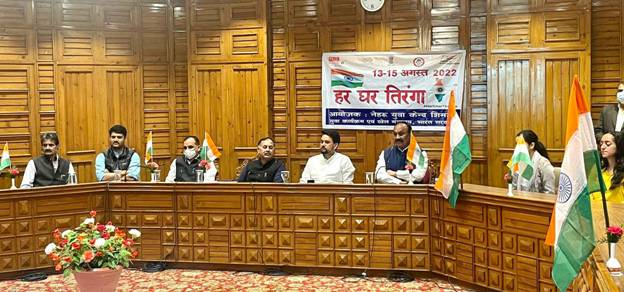
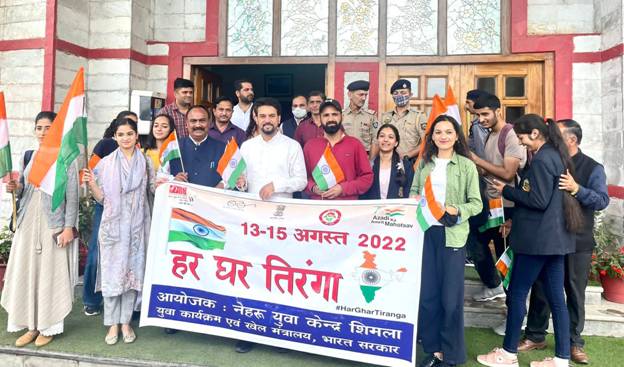
Shri Anurag Thakur urges youth to hoist Tiranga at their homes from 13-15th August

 Union Minister for Information and Broadcasting, and Youth Affairs and Sports Shri Anurag Singh Thakur  urged the youth to unfurl Tiranga at their homes from 13th to 15th August 2022  as a part of the celebration of “Har Ghar Tiranga” campaign in the country. He said that today being the “August Kranti” Diwas  our youth should take oath to hoist Tiranga at the top of the world by contributing with their dedication and hard work in their respective field.   Shri Anurag said that our national flag is not mere a piece of cloth but the power of Tricolour unites 130 crore Indians. He further said that our youth should take pledge that they will keep the country united and will take India forward and make India stronger. He was addressing during a Youth conference  held with the members of Nehru Yuva Kendra, NSS volunteers and different Yuva Mandals in Shimla today. The programme was organized by the Nehru Yuva Kendra, Shimla (HP).

While interacting with the youth, he called for inculcating the feeling of patriotism and national integration among the younger generation through Bharat Darshan programme. He said that every youth should visit and see the other places and  parts of their State and the country which will infuse a sense of belonging and patriotism among them and help them becoming responsible citizens. He also mentioned about the role of the “EK Bharat Shreshth Bharat” (EBSB) programme in breaking the barriers of language, culture and different cuisines of different states thus bringing youths of different states closer to each other. The Minister said that it will work towards maintaining  the unity and integrity of the nation and thus will enhance the glory of India.

In a candid discussion with the participants, Shri Anurag Thakur tried to know the views of the youth on the different issues and problems in the country.  He discussed the issues of women empowerment, Ek Bharat Shreshth Bharat, skill development, role of sports, Fit India movement and carrier counseling threadbare with the youths of Nehru Yuva Kendra, NSS volunteers and different Yuva Mandals. He expressed hope that such meetings will continue in future also so that youth of this country can come to know about the Government schemes and can approach the Government.

The Minister also mentioned about the achievements of the  Central  Government schemes like the Har Ghar Jal Yojna,  sanitation drive Ujala, Ujwala Yojna,  and Digital India etc.  He said that to promote the Fit India movement he has established 250 gyms in his parliamentary constituency.

While replying to the questions of the media persons, he said that under the leadership of Prime Minister, Shri Narendera Modi India  has done remarkable progress in every sphere. He said that in sports our achievements have increased manifold as results of the recent Commonwealth Games show that India got 61 medals and scored 4th position in the tournament.


******

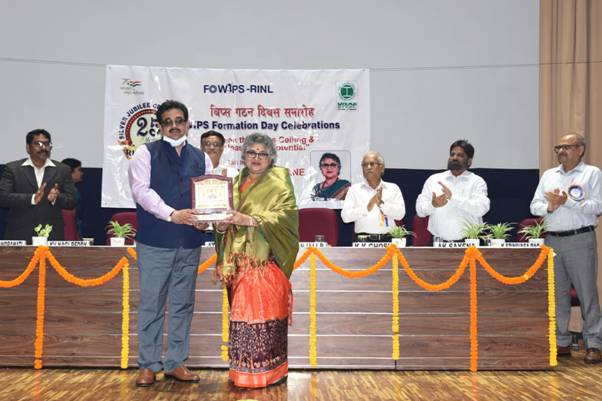
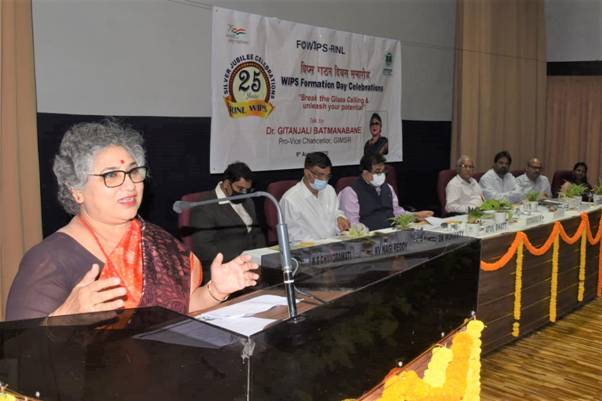
WIPS (Forum for Women in Public Sector) formation day celebrated at Visakhapatnam Steel Plant

 Silver Jubilee of WIPS (Forum for Women in Public Sector) formation day was celebrated in VSP today in a grand manner. Addressing the women employees of RINL, Shri Atul Bhatt, CMD, RINL-VSP in his address, lauded the exceptional contribution by the women fraternity of RINL in turning around the company after six years of making losses.” I am very happy to note that Women in Public Sector (WIPS) of RINL, which was established in 1997 has completed 25 long and successful years and is celebrating silver Jubilee this year”, Shri Atul Bhatt said.  He congratulated all the women employees of RINL on this special occasion and appreciated them for their active role in improving the awareness on the role of women in the society.

Shri Atul Bhatt congratulated Ms.PV Sindhu, for bagging the prestigious gold at the Commonwealth Games in Badminton women’ singles competition and said that it is matter of pride for entire RINL family that Ms. PV Sindhu is the brand ambassador of RINL.

Shri Atul Bhatt complimented Ms. Sheela Priyadarsini, Chief General Manager & head of the department -Materials Management, RINL for efficiently handling the extremely complex supply chain management of steel plant. “It is heartening to note that more number of women are joining RINL and it is a matter of pride to note that women are increasingly and gradually seen marching into domains which were once reserved only for men like the armed forces.I would like to compliment WIPS of RINL for their active role in improving the awareness about the role of women in society and the various programmes they undertake for this cause.”, Shri Atul Bhatt added.

Shri Atul Bhatt thanked Dr.GitanjaliBatmanabane for her gracious presence and said that her presence and message will certainly inspire the women participants to scale greater height in professional life.

The Guest of honour, Dr Gitanjali Batmanabane, Pro-Vice Chancellor, GITAM Institute of Medical Sciences and Research(GIMSR) highlighted the need for women to develop the culture of courage to encounter the difficulties being faced in the society for success in their life. She said that India is known for youngest population and next gen women would play a dominant role in variety of fields. Dr.Gitanjali Batmanabane, Shri Atul Bhatt and Directors of RINL felicitated some of the women employees of RINL and also gave prizes to winners of various competitions held on the occasion.

*****

India and United States are committed to take the bilateral cooperation in Science, Technology and Innovation to next level

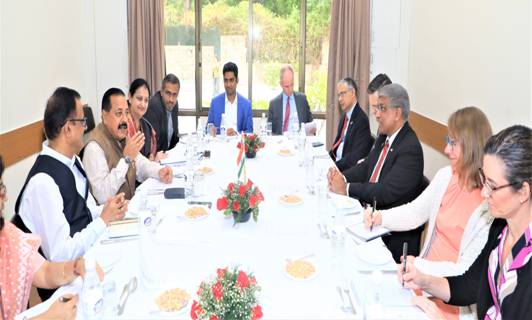
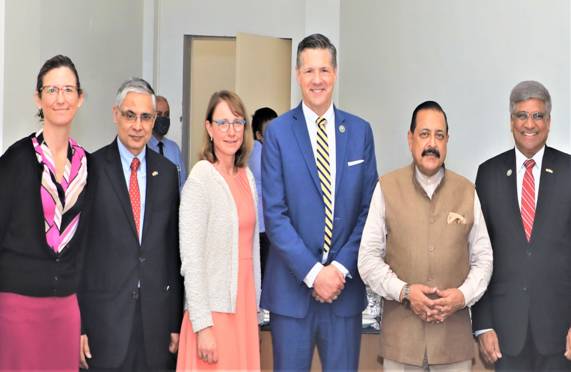
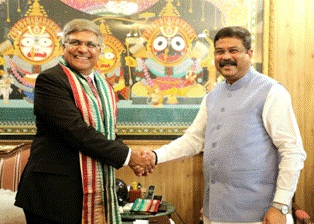
 A US delegation of the premier National Science Foundation (NRF), currently on visit to India, today called on Union Minister of State (Independent Charge) Science & Technology; Minister of State (Independent Charge) Earth Sciences; MoS PMO, Personnel, Public Grievances, Pensions, Atomic Energy and Space, Dr Jitendra Singh and discussed bilateral collaboration between the two countries as well as the ways to carry this collaboration to the next level.


Dr. Kendra Sharp, Head, Office of International Science and Engineering (OISE), National Science Foundation (NSF) of USA, Brian Stone, Chief of Staff, NSF, USA, Dr. Bridget Turaga Program Director, Office of International Science and Engineering (OISE), NSF, Drew Schufletowski, Minister Counselor for Economic, Environment, Science and Technology Affairs, United States Embassy in India, William Harford Chief of Environment, Science, and Technology Unit, United States Embassy and Dr. Sethuraman Panchanathan Director, National Science Foundation of United States, among others, were part of the delegation joined the meeting.

During the delegation level talks, Dr Jitendra Singh said, both the sides have already identified the sectors and collaboration is on in areas like healthcare, technology, Space, earth and ocean science, energy, emerging technologies and cooperation in Science & Technology education. The Minister underlined that India and the United States have a long-standing connection and shared interest when it comes to scientific discovery and technological innovations and time has come to strengthen and leverage these connects for larger global good.

Director, National Science Foundation (NSF) of United States and head of the delegation Dr. Sethuraman Panchanathan assured Dr Jitendra Singh that the subjects identified in the two-day brainstorming session would be taken to logical conclusion. He also promised to open new avenues of cooperation in areas like Artificial Intelligence, Biotechnology, Geosciences and Astrophysics.


Dr Jitendra Singh said, Prime Minister Narendra Modi has always accorded highest priority to scientific pursuits and takes keen personal interest in each of the subjects. He said, since 2014, in every Independence Day speech, PM Modi has flagged key scientific challenges and projects like Cleanliness, Hydrogen Mission, Digital Health Care system, clean energy, net zero emission and Start-ups.

Dr Jitendra Singh told the NSF delegation that both sides must focus on meaningful, targeted, deliverable-driven R&D partnerships in technology areas such Quantum, Metaverse, Clean Energy Technologies, Cyber-Physical Systems, Advanced Materials and Communications Technologies. The Minister pointed out that the Indian Scientific diaspora is one of the world’s largest and powerful diaspora communities in shaping global discourse, particularly in the technological innovation landscape. He said, both the countries must explore avenues for the US and India to jointly identify, nurture, and promote deep-tech start-ups in areas of mutual interest.

Dr Jitendra Singh also sought the support of NSF for the proposed Integrated Data System. He said, data collection at present is being done by various institutions in different ways, but the Integrated Data System will go a long way in data analytics and associated benefits. The Minister said, the knowledge partnership with NSF-National Centre for Science and Engineering Statistics will be of great value addition in terms of long-term capacity development in this area.

Dr Jitendra Singh also called for scaling up the cooperation in the Space sector and mainly in emerging areas like management of space debris. He also recalled that the NASA-ISRO Synthetic Aperture Radar satellite is expected to be launched in 2023. The Minister said, Science and technology education partnership has been another dimension of the outreach—to establish linkages between American and Indian institutions and students. Education Roundtable held last year with participation of a number of STEM-focused universities.

Prof. Ajay Kumar Sood, Principal Scientific Adviser (PSA) to the Government of India, Dr. Parvinder Maini, Scientific Secretary, Office of PSA, Dr. Preeti Banzal, Adviser, Office of PSA, Dr. Monoranjan Mohanty, Adviser, Office of PSA, Dr. Sindura Ganapathi, PSA Fellow, hri Shirish Panda, Scientist ‘D’, Office of PSA and Dr. B. Chagun Basha, Senior Specialist, Office of Principal Scientific Adviser to the Government of India joined the talks from Indian side.


Indo-US joint research projects to be implemented through TIHs

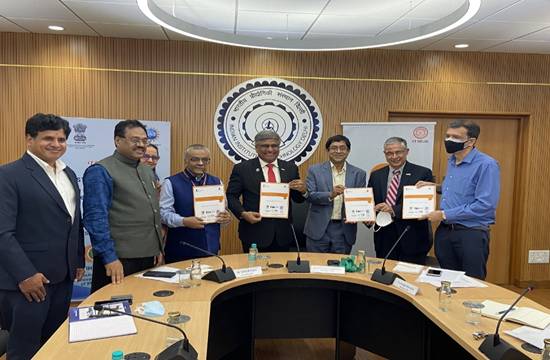
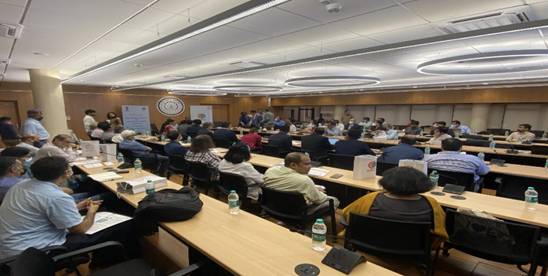
 Experts from the India and United States interacted to bring out the best plans for joint research projects that would be implemented through the Technology Innovation Hubs (TIH), at DST-NSF Joint Research and Development Projects Kick-off Workshop.

The workshop was organised by IIT Delhi in association with DST to discuss how the projects to be implemented by the six TIHs identified under NM-ICPS for collaborative research and development with NSF-supported institutions would leverage unique resources, such as testbeds and datasets available in India and in the US, expand collaborations on critical technologies like AI and advanced wireless, and encourage student and researcher exchange programs.

Dr Akhilesh Gupta, Senior Adviser, DST informed that a total of 35 joint projects have been identified which will be implemented by the Technology Innovation Hubs (TIHs) and research institutions from USA. “This endeavor will further help us to achieve collaborative research and development between the two countries in the area of CPS,” he added.


US is our natural partner. Especially in science we have traditionally partnered and through collaborative projects the engagement will more deeper at the institution level, government level and even people level,” Dr Gupta pointed out.

Six TIHs under NM-ICPS have been identified for collaborative research and development with NSF-supported institutions. These projects aim at adding the component of international collaboration to existing research projects in both countries. The Hubs are part of a five-year, nearly $430 million investment by DST under the National Mission on Interdisciplinary Cyber-Physical Systems and comprise academic researchers and industry partners.

“US is committed and proud to partner with India for prosperity and opportunity for all. These projects shall be aspirational and should be able to solve the societal problems,” NSF Director Dr. Sethuraman Panchanathan.

Prof. Rangan Banerjee, Director, Indian Institute of Delhi (IIT Delhi) said that this workshop will enable linkages and build up TIH to solve problems of society.


Department of Science and Technology (DST), Government of India, and National Science Foundation (NSF) joined hands for collaborative research and development in Sept 2021 in thematic areas of Agriculture, Autonomous systems technologies and applications, Health and Environment, Rehabilitation and assistive robotics, and Smart cities covering various cyber-physical systems.

DST is implementing National Mission-Interdisciplinary Cyber-Physical Systems (NMICPS) with an outlay of Rs. 3,660.00 crore for a period of five years to encourage innovation in new age technologies. As part of the Mission implementation, 25 Technology Innovation Hubs (TIHs) have been established in reputed institutes across the country in advanced technologies to create a strong foundation and a seamless ecosystem for Cyber-Physical Systems, leading a platform for policymakers, researchers/innovators, premier institutes, start-ups, entrepreneurs, investors, industries and global connect as well.

The workshop was attended by Shri Sanjeev K Varshney, Head, International Corporation, DST; Dr. Ekta Kapoor, Head FFT Division; Dr. JBV Reddy, Scientist F, DST; Dr. Kendra Sharp, Head, Office of International Science and Engineering; Dr. Bridget Turaga, Program Director, O/o International Science & Engineering; Dr. Gurdip Singh, Director of the Division of Computer and Network Systems along with the representatives from TIHs and institutes from US.

NSF to reach out to unrepresented education institutions

 The US National Science  Foundation has expressed keenness to deepen and widen its collaborations with India in the education and skilling sectors. NSF Director Shri  Sethuraman Panchanathan met the Union Minister of Education Shri Dharmendra Pradhan in New Delhi today, to discuss mutual areas of interest and India’s plans for STEM studies under the National Education Policy 2020. 

2022-08-09 15:59:31.677000

Speaking at the meeting Shri Pradhan emphasized that India’s strength lies in its young demographics and strong knowledge base. He said a wealth of  talent is available in various institutions across different regions of the  country, waiting to be nurtured. NSF should therefore  look at increasing its engagement with lesser known and hitherto unrepresented institutions  like NITs, Central Universities and State Universities in addition to the premier  institutions in the country.  Referring to the education- skill continuum that is being created in accordance with NEP 2020, Shri Pradhan also emphasized the necessity of  bringing the  skill sector within the ambit of such collaboration by reaching out to institutions like polytechnics, ITIs and community colleges. He said it was top priority and responsibility of his Government to ensure that all youth, whether in  mainstream academics or in the formal or informal skill sector, get equal opportunity to quality education and skilling so that they are equipped to face the twenty first century challenges. 

NSF is an independent federal agency with the responsibility of promoting  scientific discovery, technological innovation and STEM education. With a budget of  US$8.8 billion, NSF is the major source of federal funding in fields such as mathematics, computer science and the social sciences . India’s engagements with the NSF include six Technology Innovation Hubs under which 8 institutions like IITs, IISc Bangalore and others are collaborating in 30 projects and some projects on Cyber Security. Director NSF is in India to explore ways to enhance these engagements.

Echoing India’s priorities Shri Panchanathan said that like India, inclusivity and accessibility of quality education are  a priority with the US Government too. He assured that NSA would reach out for collaboration with unrepresented institutions including those involved in skilling, so that talent in these places can also be nurtured.

Shri Pradhan has asked the Ministry of Education, led by AICTE, to prepare a framework for further engagement with the NSF, also consulting other relevant Ministries  in this regard.

*****


econfiguring curricular and pedagogical structure under NCF

 To take forward the process of widespread consultation for the development of the new National Curriculum Framework (NCF) based on the National Education Policy, 2020, the Ministry of Education held a meeting with senior officials/representatives of all Ministries and Departments of Govt. of India and important bodies including NCERT, Election Commission of India, ICAR, DRDO, etc. The meeting was chaired by Ms. Anita Karwal, Secretary, Department of School Education and Literacy (DoSEL), Ministry of Education (MoE), and focused on how ministries and organisations can contribute in developing a curriculum framework that is responsive and relevant to the developmental needs and interests of learners at different stages of their development.

In the said meeting, the officials present were first taken through a presentation by Ms LS Changsan, Additional Secretary, DoSEL, on how a curriculum framework is prepared, what are its deliverables and what is expected from them. Many areas of contribution were subsequently discussed, such as, the rapidly changing technology, need for innovation and generation of new ideas, need to focus on crucial areas like climate change, future skill requirements, crucial factors for agricultural growth, knowledge of India, especially in those areas where India is at the forefront for instilling a sense of pride, assistive technology for inclusion, enriching subject knowledge with real-life information, how to promote multilingualism, integration of sports, fitness, arts, etc.  The inputs from ministries would help in identifying and integrating several pertinent areas, skills and competencies in the NCF at relevant stages. It was also discussed that it would be very helpful if the ministries also point out their own role in taking certain ideas forward by partnering with school education ecosystem.

The key deliverables of NCF were discussed in detail, including, Early Childhood Care and Education, Foundational Literacy and Numeracy, Competency Based Education, Flexibility in Choice of Subjects in Secondary Classes, Reduction of Curriculum to Core Essentials, Reimagining Vocational education, Identification of Core Skills and Content, Inclusive Education, Multilingualism, Integrating Knowledge of India, citizenship, values like-appreciation of national heritage, respect for public property, taking care of elders, spirit of service, needs of Gifted Children,  Experiential learning, Integration of arts and craft, toys, health and well-being, sports and physical education Guidance and Counselling, Community involvement etc.

Given the crucial nature of the work undertaken by the MoE in preparing the new NCF, participants shared their ideas on how they would be able to contribute to the process. Ideas such as leveraging the innovation ecosystem of the Department of Science and Technology, understanding the efforts that go into agriculture to bring food on the table, the huge role of Gram panchayats in ensuring enrolment and retention in schools, the importance of imbibing volunteerism in early years, the need for every child to participate in activities related to physical health and well-being, focus on Divyang children, exposure to new technology from a young age, etc. were discussed. It was decided that all ministries would soon send written inputs for the National Steering Committee and NCERT to take cognizance of. In the end, the ministries were also requested to whole-heartedly participate in and disseminate the web-app based citizen survey being undertaken by NCERT on https://survey-ncf.inroad.in/#/ where the questionnaire is available in 22 Indian languages and in English.

The NCF process can be seen at: https://ncf.ncert.gov.in/#/web/home

*********

22nd ‘Bharat Rang Mahotsav’ at Rabindra Natya Mandir in Mumbai

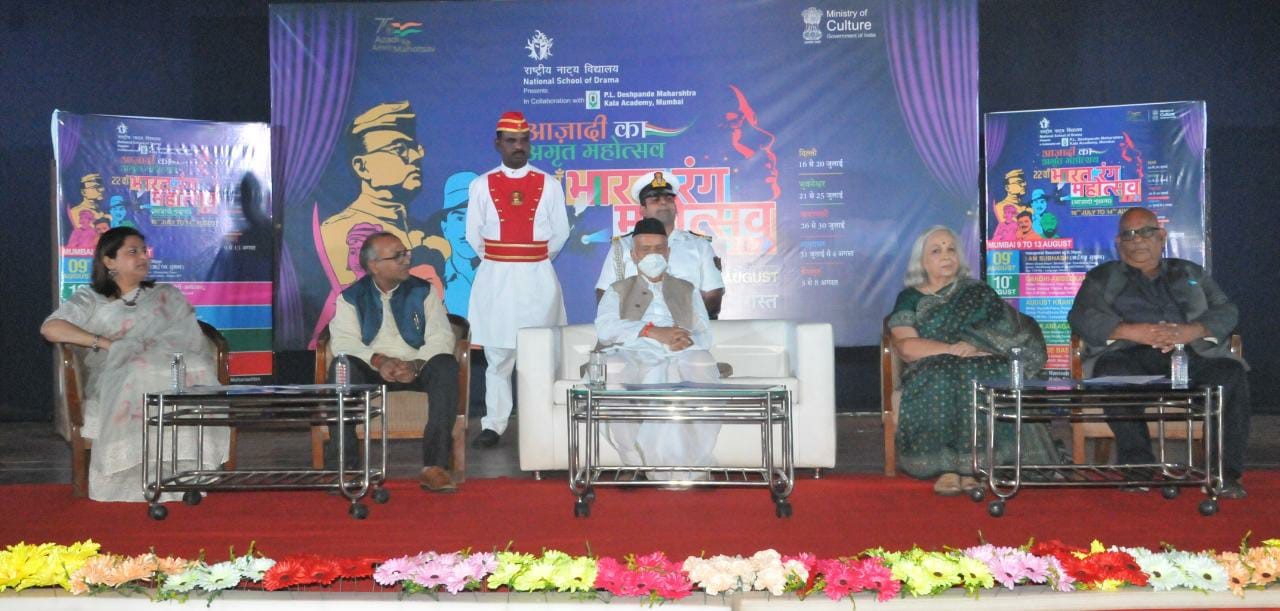
 Maharashtra Governor Shri Bhagat Singh Koshyari inaugurated the 22nd ‘Bharat Rang Mahotsav’ at Rabindra Natya Mandir in Mumbai today. The five-day drama festival (being held from August 9 to August 13, 2022) is being jointly organised by the Union Ministry of Culture and P.L. Deshpande Maharashtra Kala Akademi in the city to pay tribute to our freedom fighters. Veteran actress Rohini Hattangadi, Producer Director Satish Kaushik and Vani Tripathi Tikku also graced the inauguration ceremony in Mumbai today.  The Director of National School of Drama (NSD), Professor Ramesh Chandra Goud presided over the programme. 

Speaking on the occasion, Maharashtra Governor said that theatre is an important medium to spread joy, promote awareness and protect our rich heritage and culture.  Theatre has also an important role in showing us how we should be as a nation and society, he added. When the stories of great people such as freedom fighters are told through the plays of National Theatre Festival, it will provide inspiration for citizens to imbibe their qualities and make similar contribution, said the Governor. Speaking about the great role played by the NSD in shaping good actors, he expressed hope that more talented actors will come up from NSD. The Governor said that more theatre artists should come up and contribute positively to the society. Recalling that today is the 80th anniversary of the launch of Quit India Movement from Mumbai, the Governor wished all success for the Bharat Rang Mahotsav which showcases the contribution of Indian freedom fighters.

Actor Vani Tripathi said, “It is commendable that NSD has identified plays showcasing the stories of our freedom fighters from across the country. We all need to work together to make our youth too aware about the festival and the stories being portrayed in the plays of the festival”. Actor Rohini Hattangadi said, “This drama festival organized by the National School of Drama on the occasion of Amrit Mahotsav is a commendable initiative and it is an inspiration to the younger generation”.

NSD Director Professor Ramesh Chandra Goud stated that NSD has taken this initiative to remember the brave freedom fighters through various programmes on the occasion of Azadi Ka Amrit Mahotsav. Besides, a play called ‘Kargil Ek Shauryakatha’ was staged on Kargil Vijay Diwas a few days back, he added.

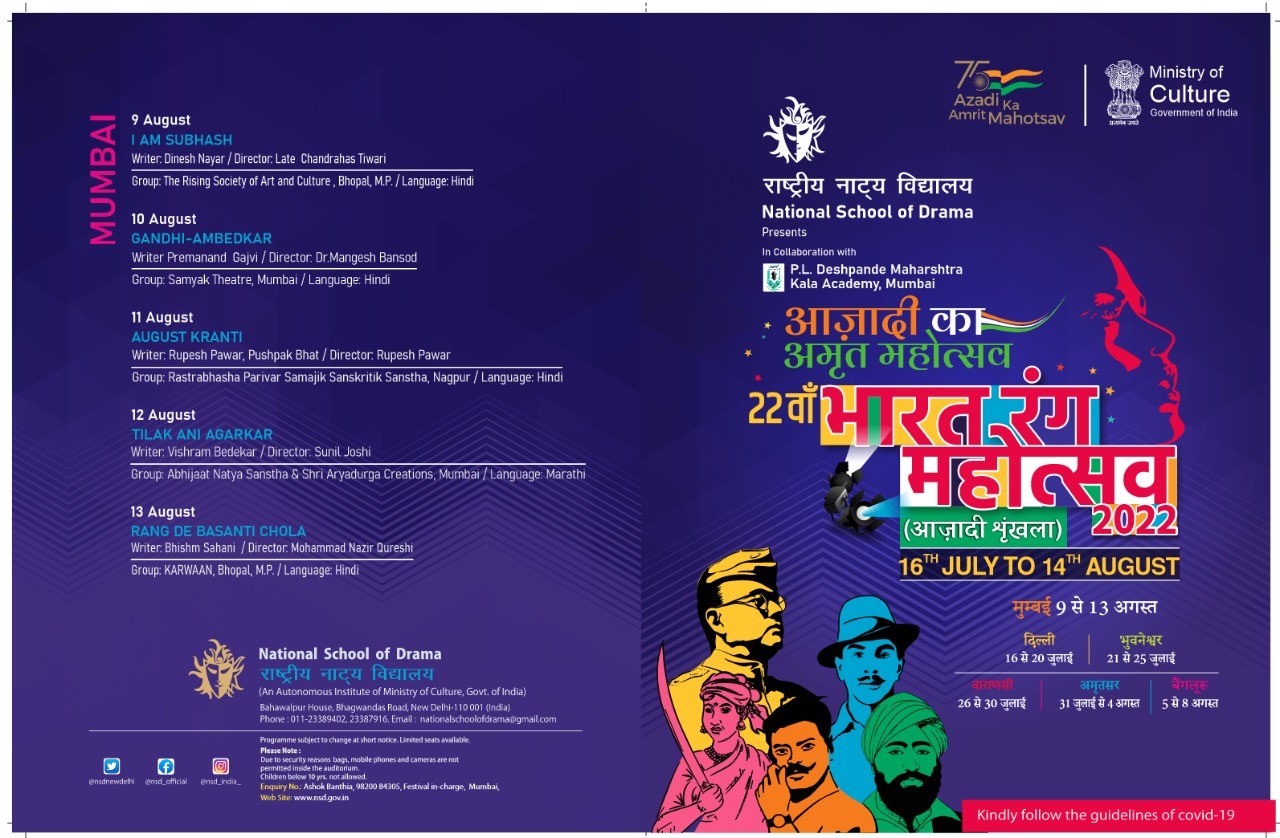
The festival is open for public. The festival will showcase plays of renowned theatre directors based on life and sacrifices of our freedom fighters. Hindi Drama ‘I am Subhash’ by Bhopal based theatre group ‘The Rising Society of Art and Culture’ and directed by Chandrahas Tiwari will be played on the first day of the festival. On August 10, Hindi play ‘Gandhi-Ambedkar’ by Mumbai-based Samyak Theatre and directed by Dr. Mangesh Bansod will be performed. Rupesh Pawar’s Hindi play “August Kranti” will be staged by Nagpur-based group ‘Rashtrabhasha Parivar Samajik Sanskritik Sanstha’  on August 11 and Marathi play “Tilak and Agarkar” directed by Sunil Joshi will be presented by Mumbai-based Abhijat Natya Sanstha and Shri Aryadurga Creations on August 12. The festival will conclude on August 13 with the Bhopal-based KARWAAN theatre group’s Hindi play ‘Rang De Basanti Chola’ which is directed by Mohammad Nazir Qureshi.

Over the five day festival in Mumbai, noted theatre personalities from Maharashtra will be felicitated from the stage of Bharat Rang Manch. This list includes Sohani Kumar, Anand Panchal, Ullas Surve, Chandrashekhar vaman kirdavkar, Pange Rohidas, Sharad Sawant, Lau Raul, Nayana Apte, Balu Mama Ghodke, Sushma Deshpande and Abhiram Bhadakmakar.

As part of the 22nd Bharat Rang Mahotsav, 2022 (Azadi Segment), 30 plays are being showcased in Delhi, Bhubaneshwar, Varanasi, Amritsar, Bengaluru and Mumbai from 16th July to 14th August, 2022. Bharat Rang Mahotsav (BRM) (भारत रंग महोत्सव) or the National Theatre Festival, started in 1999, is the annual theatre festival organized by National School of Drama (NSD), New Delhi. Bharat Rang Manch was started to stimulate the growth and development of theatre across the country. Originally a national festival showcasing the work of the most creative theatre workers in India, it has evolved to international scope, hosting theatre companies from around the world, and is now the largest theatre festival of Asia. The National School of Drama is India’s premier theatre training institute funded by Govt. Of India.

*** 

The cooperative model allows people with limited capital to come together and work on a large scale

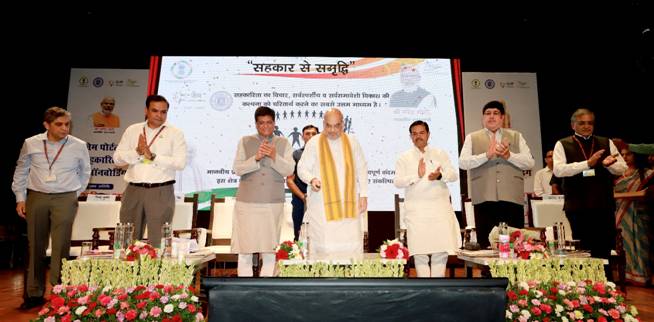
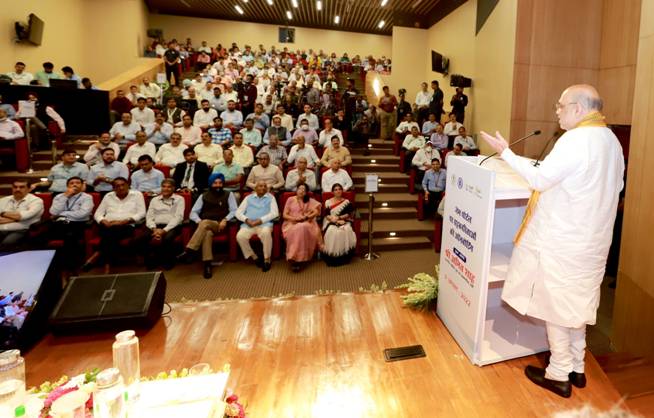
 The Union Home and Cooperation Minister, Shri Amit Shah launched the onboarding of cooperatives on the Government e-Marketplace (GeM) portal, today in New Delhi. The program organized by the Ministry of Cooperation, Government of India, the National Cooperative Union of India (NCUI) and GeMwas also attended by Union Minister of Commerce and Industry Shri PiyushGoyal, Union Minister of State for Cooperation and North East Region Development Shri B.L.Verma and the NCUI President Shri DilipSanghani and many other dignitaries.

https://static.pib.gov.in/WriteReadData/userfiles/image/image001QGDJ.jpg

In his address, Shri Amit Shah said that today is a very important day in Indian history. In 1942, on August 9, Gandhijibegan the Quit India Movement against British Rule and today another important work is being done task is taking place on the occasion ofAzadikaAmritMahotsav on August 9, in which access to GeMhas been given to cooperative societies in the country.  He said there is immense potential in the cooperative sector and the GeM portal will be a very useful platform for the expansion of this sector. The Union Minister of Cooperation said most of units of the government buy through GeM, so cooperatives should also start preparing for registration for supply on GeM to increase their market. He also appealed to the National Cooperative Union of India (NCUI) to expand marketing of cooperatives and for this there can be no better way than the GeM.

The Cooperation Minister said this sector has been neglected since Independence, but Prime MinisterNarendraModi is accelerating its expansion with historic reforms and modernization. Under the leadership of Shri Modi, the Ministry of Cooperation has taken a number of measures for expansion and in the last year the Ministry has been continuously working on 25 to 30 initiatives.

The government has to expand cooperatives but there is no database, therefore the ministry is also creating a national level database of different categories of cooperatives. Arrangements for training will also be made available. Shri Shah said an export house is also being registered the work for which will be completed by December. It will provide a platform for export from cooperatives across the country. He said radical changes are also being made in the Multistate Cooperative Act and the government led by Shri NarendraModi has also decided to computerize all PACS.

 Amit Shah said population size is a great advantage in aneconomy, because ultimately the population is also the market. Till 2014, India’s population was 130 crore, but the market was only 60 crore,as 70 crore people did not have purchasing capacity. 60 crore people worried about their next meal andother basic needs and generations went through the same ordeal. Prime Minister Shri NarendraModiopened bank accounts, provided gas cylinders, toilets, electricity, pure drinking water and food grains free of cost to the poor and as a result awakened the aspirations of these 60 crore people by fulfilling their basic needsand cooperatives havethe potential to fulfil all these aspirations. Today after fulfilling their primary needs, these people have ambitions to move ahead in life by earning more money and through cooperatives they can fulfil these ambitions. Shri Amit Shah said if these 60 crore people have justRs. 5,000, they can run the biggest of cooperatives. Giving the example of Amul, Shri Shah said today this cooperative has crosseda turnover of Rs.60,000crore and20 lakh women members are not only running the cooperative,but havealso been  making profits for many years.

https://static.pib.gov.in/WriteReadData/userfiles/image/image003TTRY.jpg

The Union Cooperation Minister said the cooperative model is a model in which even with limited capital people can come together and undertake large tasks easily. He said earlier the cooperative model did not have much potential, but Shri NarendraModihas awakened the aspirations of 60 crore people. He said if a system does not change itself with the times, then it becomes out dated, and therefore it is necessary to improve the cooperative system for the expansion of the sector. India’s cooperative system is 115 years old, the laws are also very old, thoughsmall changes have takenplace from time to time, radical changes and modernization according to the times have not taken place.

Shri Shah said now the cooperative sector cannot be given second class treatment, however there is a need to bring about change and to move in the direction of bringing transparency and for cooperatives to prepare themselves for change. The GeM portal will be very useful in bringing in transparency in the cooperative sector and when there is transparency, the trust of farmers and milk producers will also increase on the committees and their members. He said that by bringing theGeM portal, Shri NarendraModihas brought in transparency in government procurement. This is a new system, and therefore there may be some initial administrative problems, but no one should doubt the intention of bringing in this new system. Shri Shah said it is also very important to bring transparency in three areas within cooperatives – elections, recruitment and purchase. There can be no better medium than theGeM to bring transparency in procurement. The Union Minister of Cooperation said he is confident that the world will recognize this successful model of transparent government procurement in the next five5 years.

The UnionMinister of Cooperation said he is very optimistic about the future of GeM’s journey under the leadership of Union Minister for Commerce and Industry, Shri PiyushGoyal. He said of the589 of the committees to be added have a turnover of about Rs.100croreare of the state government and till date 289 of them have joined, as well as 45 of the 54 multistate cooperativeshave also joined, which is a huge achievement. Also more than 10,000 products and more than 288 services have been listed. Till now business worthRs. 2.78 lakh thousand crore has also been completed which is a huge achievement of the GeM. Shri Shah said this day is important for the Nation as the Quit India movement began on August 9 and six years ago on August 9 the GeM wasalso launched and todayonboarding of cooperatives has been initiated on this day.Shri Amit Shah congratulatedthose associated with cooperatives, the entire team of the GeM and eight lakh cooperative societies and especially Shri PiyushGoyal.


*****

The world sees India as an engine of economic growth

 Union Minister for Commerce and Industry, Consumer Affairs, Food and Public Distribution and Textiles, Shri PiyushGoyal today said that the world now sees India as an engine of economic growth. He was addressing the gathering at the VyapariUdyamiSammelan in New Delhi today.

Stressing that India enjoyed the confidence of the world today, Shri Goyal said that developed countries very keen to sign trade deals with India now. He added that before 2014, Indian economy was considered to be fragile and investors had their doubts bout doing business with India.

Stressing upon the need for transparency and ease of doing business, the Minister assured traders and entrepreneurs that the Government will fully support traders who raise their voice against harassment by any authority.

He called upon traders to work with the Government to reduce compliance burden of people and businesses, but asked that they strictly follow ethical trade practices. Unnecessary, cumbersome and counter-productive laws and regulations must be uprooted to improve ease of doing business, he added.

He asked traders to give priority to the quality of goods and services that India offered. He also underscored the need to encourage youngsters to come forward and lend a youthful energy to India’s growth story with new ideas. The clarion call of ‘vocal for local’ given by the Prime Minister, Shri Narendra Modi must be taken up by the youth of the nation, the Minister said. He added that we must also encourage more and more women to become traders and entrepreneurs.

Applauding Prime Minister’s visionary welfare policies, Shri Goyal said that these policies have been helping the poor emerge as consumers and have successfully transformed India’s population into its greatest strength. He added that the Prime Minister’s tireless work had ensured that every household in the country gets access to basic amenities such as cooking gas, drinking water, electricity and toilet and every village gets access to the internet. Shri Goyal said that the policies of the government had also given every Indian the courage to be ambitious and the confidence to aspire to become entrepreneurs.

The Minister also emphasized that traders and Micro, Small and Medium Enterprises (MSMEs) should benefit from demand of goods by beneficiaries of the Prime Minister’s welfare schemes. He asked all traders, entrepreneurs, and businesses, both big and small, to take a collective resolve to work together to take forward the dream of a self-reliant India by promoting more and more Indian products.

***


Policymaking and implementation should be a two way process with people’s participation

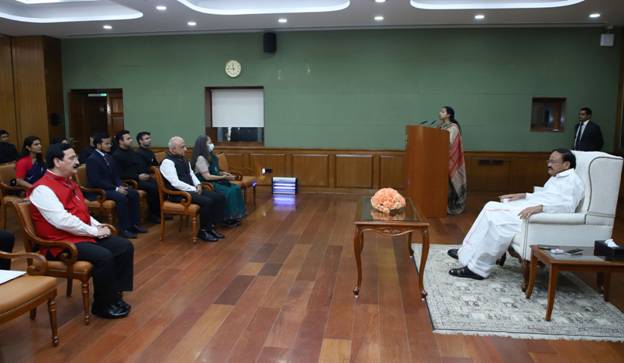
 The Vice President, Shri M. Venkaiah Naidu today emphasised the need for constant dialogue between the people and the governments for citizen centric and responsive governance. He said that policymaking and implementation should be a two way process with people’s participation at every stage. 

Addressing the Indian Information Service officers of 2018 and 2019 batches who came to call on him at Upa-Rashtrapati Nivas today, Shri Naidu highlighted the role of communication in bridging the divide between the governments and citizens. “In a democracy, people need to be empowered through timely information on government’s policies and initiatives in their mother tongues. On the other hand, governments also need to be apprised of people’s expectations and aspirations in an objective and timely manner,” he said.

Referring to the mass behavioral change campaign undertaken as part of the Swachh Bharat Mission, Shri Naidu said that the success of any reform depends on the cooperation from the people. He further said that people will understand and support an initiative better when they have been involved in its planning and implementation strategy from the beginning.

Describing India as the largest Parliamentary democracy in the world, he said that the purpose of any reform process should be to make people’s life happy and prosperous. “Therefore, the focus of all government policy measures should be on bringing lasting happiness to people’s lives,” he told the officers, and at the same time, underscored the need to bear with “temporary pain for long term gain”.

IIS officers of 2018 and 2019 batches in group photographs with the Vice President, Shri M. Venkaiah Naidu

Mentioning that the ICT revolution and spread of the internet have fundamentally changed the way we consume news, he cautioned that this ‘ease of information’ comes with its associated risks. “Misinformation, disinformation and fake news have emerged as new challenges which need to be promptly tackled by the government communicators round the clock,” he added. The Vice President also cautioned against the misuse of social media by certain anti-social elements, the Vice President called for curbing such tendencies at the earliest.

Drawing attention to the growing trend of ‘instant journalism’ triggered by the emergence of Internet and social media expansion, Shri Naidu expressed concerns about the erosion of journalistic norms and ethos due to this. He emphasized the importance of neutrality and objectivity in media reporting and said that news should not be mixed with views. “Media is the fourth pillar of democracy and its neutrality, objectivity and fairness is crucial for survival of India’s democratic ethos,” he stressed.

The Vice President asked the young officers to bring forth many developmental stories from across the nation. “You as government communicators should also make all efforts to ensure that the good work being done by various ministries and departments is covered adequately by the media,” he told them. Terming information & psychological warfare as an important dimension of modern day wars, Shri Naidu advised the IIS officers to develop expertise in these emerging and strategic areas.

Referring to the increasing frequency of extreme climatic events and erratic weather patterns across the globe, the Vice President asked the young officers to run a mass media campaign for nature conservation and environmental protection. “If you love nature, nature will protect you,” he told them.

Cautioning against the populist measures to garner votes by various political parties, Shri Naidu said that the freebie culture has led to deteriorating financial health of many states. “Government should definitely support the poor and needy, but at the same time should prioritize health, education and infrastructure development,” he said.

In his address, his last as the Vice President of India, Shri Naidu said that “the key to my rise from an ordinary farmer’s son to the second highest constitutional post in the country lies in sheer hard work, single minded devotion and constant travel and interaction with the people in every part of the country.”  I have learned a lot by meeting and talking to the people, he said.

Congratulating the officer trainees for joining the prestigious Civil Services, he exhorted them to work for transforming the lives of people in the country. It may be noted that the Indian Information Service (IIS) is a Central Group ‘A’ Service whose members work as the media managers of the Government of India. The IIS officers, in their various capacities, act as a vital communication link between the Government and the people by way of disseminating information and communicating various Government policies and schemes to the public at large.

Prof. (Dr.) Sanjay Dwivedi, Director General, IIMC, Shri Ashish Goel, ADG, IIMC, Dr Rinku Pegu, Associate Professor IIMC & Training Coordinator for IIS officers, officers of Indian Information Service batches of 2018 & 2019 were present during the interaction. Prof. Sanjay Dwivedi also presented his book titled, “Bharat Bodh ka Naya Samay” to the Vice President on this occasion.

******

e-learning platforms

 e-learning platforms

An online learning platform or e-learning is a web portal educational content that provides everything related to learning on one platform like lectures, training, resources, courses, changes to meet other students, etc. It is one of the best to learn at any time and anywhere and monitor students’ progress.
These platforms provide a lot of benefits like self-paced learning, work from home, improved technical, communication, and critical thinking skills even at very low cost, better time management, etc.
After the pandemic, the use of online learning platforms has risen because during covid educational system have been shaken all over the world and online learning platform has helped a lot to get education from home while closing educational institutions.
You need to just sign in to the e-learning website and you are good to go. You can select the course of your choice to learn. Some website provides free courses and other may require pay monthly subscription cost. Online classes are provided through online learning platforms.
There are various online learning platforms where a lot of quality education courses are provided by experts. These platforms are:
1. SWAYAM= SWAYAM is a program initiated by the Government of India and designed to achieve the three cardinal principles of Education Policy viz., access, equity, and quality. The objective of this effort is to take the best teaching learning resources to all, including the most disadvantaged. SWAYAM seeks to bridge the digital divide for students who have hitherto remained untouched by the digital revolution and have not been able to join the mainstream of the knowledge economy.
2. Coursera= Coursera is a popular online education platform that offers courses from top education providers around the world. Over the years, the company has grown rapidly and provides the world’s best standards of education through Massive open online courses. This online learning platform partners with universities including Stanford, Duke, Penn, Princeton, Michigan, Peking, and HEC Paris and companies like IBM, Google, and PwC. Overall, they have 190 active partners from 48 countries. 
3. Skillshare= Skillshare is an online education platform that is beneficial for both students and teachers. The website offers thousands of courses related to design, business, marketing, technology, photography, film, fashion, music, gaming, cooking, writing, and DIY. crafts, and more. Instructors can easily create classes through the step-by-step guidelines provided by the platform. This platform offers referral compensation for teachers if any of the students subscribe to the premium package.

4. BYJU’s= Byju’s is an Indian E-learning Company Headquartered in Bangalore, and they provide classes to CBSE, ICSE & State Boards. Byju’s had ventured into providing study material for competitive govt. exams such as UPSC CSE, Bank Exam, and other Government exams. It also includes various entrance exams such as JEE, NEET, CAT, GATE, etc. 

5.LinkedIn Learning= LinkedIn Leaning is a massive open learning website that covers a wide variety of creative, technology, and business courses. It has been offering informative and clear video-based training for individuals, corporate, and academics. The site is quite famous for teaching skills such as photography and coding.
6. Udemy= Udemy is a popular online learning platform that gives people a chance to develop their careers and explore a wide variety of hobbies. From web development to public speaking, they offer a broad range of courses. Reputed companies like Booking.com, Lyft, Adidas, and General Mills use the business plan of Udemy. Udemy provides great support for instructors. They can create, share and promote their courses via re-targeting ads, search and discovery, email campaigns, and external partner promotion.
7. edX= edX is an open learning platform that offers university-level online courses. It has over 120 institutional partners like Harvard, MIT, Berkeley, Delft, RWTH, Sorbonne, and more. The platform offers six different types of programs – one-off courses, Micro Master’s Program, Professional Certificates, Global Freshmen Academy, and XSeries Program.

8. Unacademy= Unacademy mainly started as an online platform for the Competitive examination such as UPSC, SSC, RRB, GATE, Bank Jobs, JEE, NEET, etc. Later on, Unacademy started classes for the student from class 6 to 12th. It’s one of the biggest hubs of educators started as a YouTube channel now they have more than 1 million video lessons with 14k educators.
 E-learning is the future of education. Now people are shifting towards it because it saves a lot of time and money. You can learn anything apart from your academics and enhance your skills.


Online Platforms for Learning.

An online learning platform is a webspace or portal for educational content and resources that offers a student everything they need in one place: lectures, resources, opportunities to meet and chat with other students, and more. It is also an excellent way for the student and the teacher to monitor student progress. Whether you want to learn a new language or obtain career-advancing certifications, signing up for an online course could be just the perfect solution. The online class is typically provided through online learning platforms. 

Online learning has numerous advantages over traditional learning methods. Some of these include the possibility for students to make use of self-paced learning and to choose their own learning environments. Additionally, e-learning is both cost-effective and cost-efficient, as it removes the geographical obstacles often associated with traditional classrooms and education. The benefits of an online course platform are that both students and teachers can track the students’ progress through the course material, and everything is neatly organized in one place. Additionally, students may also have an option of interacting with each other on the platform.

Some of the popular Online learning (e-learning) platforms.

Coursera.

Coursera isn’t just a place to take classes that are like college courses—it actually offers real academic courses from real professors and universities at a fraction of the cost of getting an online degree. The platform partners with over 200 universities and companies to provide real learning experiences that can connect to real-world benefits. In some cases, you can even earn certifications or degrees entirely through Coursera, which can then potentially lead to professional benefits like raises, promotions, and more. 

Course Hero.

Course Hero is home to study resources, 24/7 homework help and textbook guides to provide students across top institutions with tailored reinforcement of the courses in which they are enrolled. The library of materials uploaded to Course Hero’s platform can be searched by either school or textbook to find the exact resource a student needs, with tutors available to provide total support.

Edx.

Generally, this online learning platform has a high-end pedigree. edX was established by graduates from both MIT and Harvard University. Real college courses that are generated and taught by real college tutors are available in a vast array of topics and fields. They have a slight leaning toward the Science, Technology, Mathematics, and Engineering fields. Nonetheless, there are plenty of topics in the humanities, arts, and languages as well. By partnering with the universities, this course provides professional degree certificates as well as the “micro” degree programs at both the bachelor’s and the master’s levels. In this sense, they largely serve as tools for professional development. 

Skill Share.

Whereas many online class platforms do confer college-style classes, Skillshare is not formal and is mainly targeted at boosting creative skills. Some business and marketing classes exist on this online education platform. Most of the courses though tend to have a focus on the creative fields and are administered by practicing experts in various fields. Common examples of these fields are interior design, visual arts, animations, films, and photography. 

LinkedIn Learning.

Formerly called Lynda.com, LinkedIn Learning is an educational platform that confers professional course training in the fields of technology, business, creative fields, and technology-related areas mainly in the form of videos. The online learning marketplace is largely available as a premium service for the users of LinkedIn and has so far provided well over 16,000 courses in a whopping 7 languages. Its focus is mainly to aid individuals in investing in their professional development. 

Udemy.

If you want to learn something, it’s probably on Udemy. The site is less of a unified platform and more of a portal or repository where students can access well over 100,000 courses on every topic imaginable. There’s not one standard format for a Udemy course—the platform allows instructors to design multimedia lectures with audio, video, and text elements, plus readings, quizzes, and other activities. Udemy allows students to preview classes they’re interested in and does offer a 30-day refund if you’re dissatisfied.

FutureLearn.

FutureLearn lets you learn online from universities and companies all over the world, including Anglia Ruskin University, King’s College London, Monash University, and the University of Wollongong. On top of their university partnerships, they also partner with specialist organizations such as Accenture, Amnesty International, the British Library, and UNESCO. From personal development video lessons to employment-related course content, FutureLearn definitely deserves its place near the top of our best online learning platforms list.