Urban Planning Policy in India

 In our first five year plan, the problem of urbanization was identified with the problem of increasing shortage of living space in urban areas, as a consequence of heavy shift of population from rural to urban area. The second plan marked the expansion of the housing programme of the first plan and given due attention to slum clearance, slum improvement and land acquisition and development was given due importance. In the third plan, it was decided to prepare master plans and regional development plans for metropolitan and industrial cities. In this plan urbanization was recognized as an important aspect of the process of economic and social development. 

In the fourth plan the expansion of urban community and spatial implications of the problems of urbanization was given due importance. In the fifth and sixth plan period attention has been given to spatial and functional linkage of towns, development and growth of small towns and prospects of developing new towns as the centres of agro-industries and rural services. The overall view of developing urbanization as a part of integrated rural development was given due consideration.

Spatial Policy 

The urban spatial policy considerations are becoming increasingly important in development planning. Alternative settlement patterns are being evaluated from the point of view of cost and efficiency. It has been demonstrated that, in spite of continuous failure to arrest the urban growth at a pre planned time and place, reasonable programmes to influence the direction of migration and the pattern of urbanization are feasible. One of the difficulties in facing the formation of spatial policies and urban growth strategies is that, there are very few successful models of urban planning and there are no ready made policies, programmes and strategies to suit all conditions, places and times.
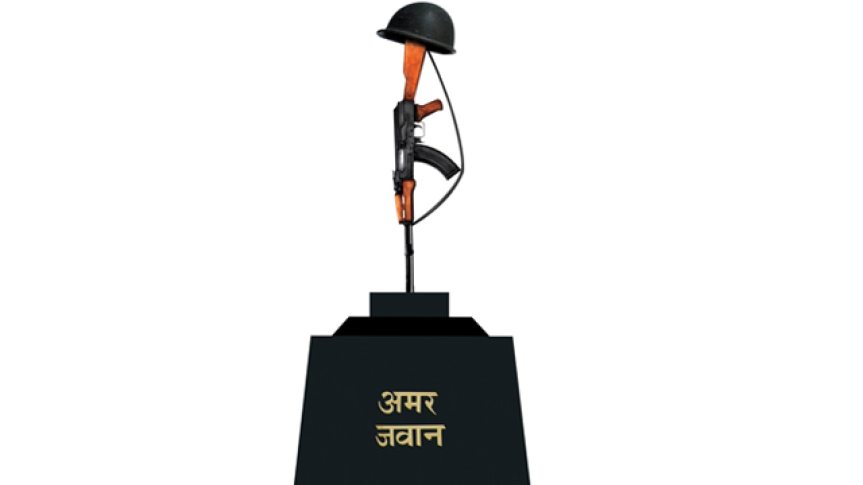
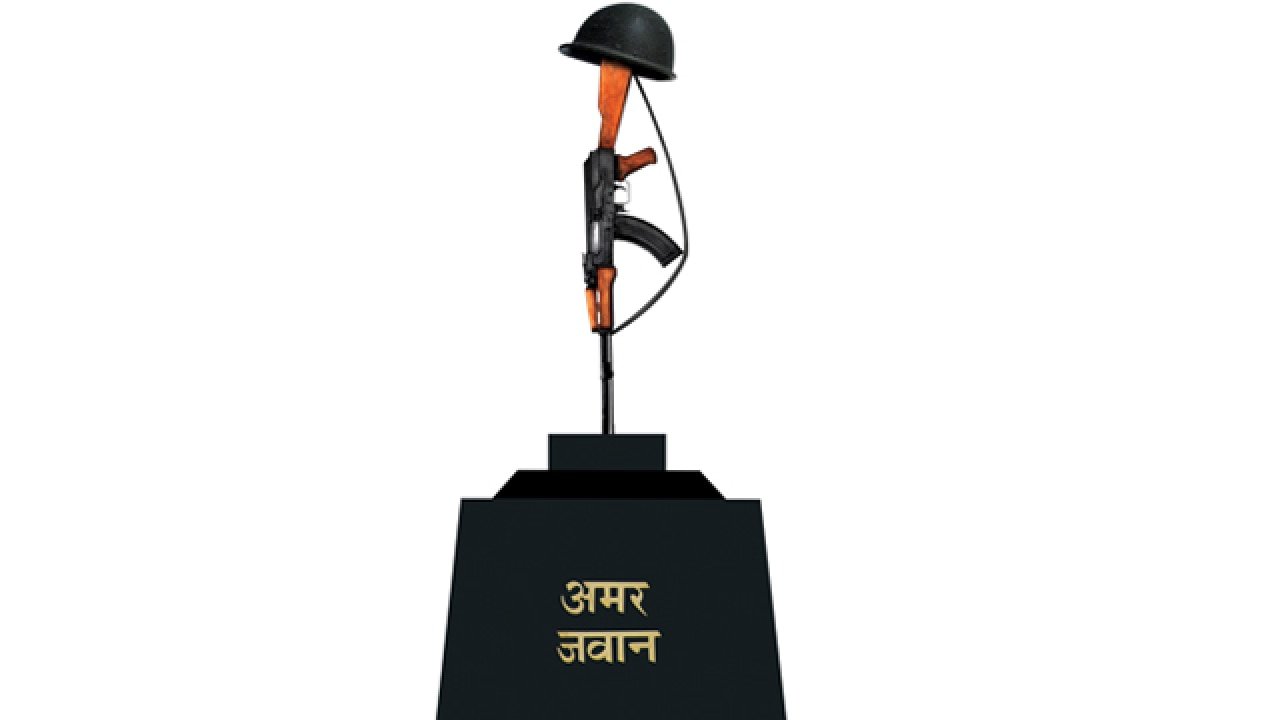
No use of ‘Martyr’ word in Army for death of on duty soldier .

History of the use of the word martyr:
The government has claimed for nearly a decade that the word “martyr” has not been officially recognized. In 2013 and 2014, in response to RTI’s request, the Ministry of Home Affairs revealed that the words “martyr” and “shahid” were not defined anywhere by the Government of India.
In December 2015, then Home Affair Minister Kireen Rijiju said in Lok Sabah that it is advised that the word “martyr” is not refer to any of the victims of the Indian army. He added that such terms were not used by Central Armed Police Forces (CAPF) and Assam Rifles personnel either.
In December 2021, Minister of State Home Nityanand Rai told Rajya Sabha again that there was no formal term like “martyr.”


Objections to the use of martyrs’ words:
The word “martyr” has religious implications and has historically been used to refer to people making sacrifices for their religious beliefs like in Christianity . The word “Shahid”, which is used as a Hindu alternative to the word “Martyr”, also has a religious meaning and is associated with the Islamic concept of Shahadat. The word “martyr” is said to be derived from the Greek word “martur”. In various dictionaries, “martyr” is defined as a person who is willing to die as a punishment for refusing to abandon religion.
Since the Indian army is not affiliated with any religion and does not sacrifice their lives for religious principles, the use of such words for their sacrifice is found wrong,including the supreme leader of the army. Using words like martyr may not be correct in context to armed forces especially in India according to many legal experts and prominent officers of army and retired officers.

Steps Taken By Government To Stop Use Of Martyr Word:
Despite the repeated assertions of the government about the word martyr having no official recognition, it was mostly used in government statements issued by various PR Officers for the defence services and the CAPFs. Many senior serving and retired officers also used it frequently to describe the death of soldiers in action. Thus, the word remained in common use.
The Army in 2022 issued a letter to all its commands asking them to abstain from using the word martyr as it may not be appropriate for soldiers who die in the line of duty. They have been, instead, asked to use phrases such as killed in action, supreme sacrifice for the nation, battle casualty, laid down their lives,veergati etc.

“Either I will come back after hoisting the tricolor, or I will come back wrapped in it, but I will be back for sure. “

-Late Captain Vikram Batra (PVC)

Design and Implementation of a Public Participation Process

 A public participation process is designed and implemented in four discreet stages, as outlined below.

1) Preliminary Design 

  • Situation analysis 
  • Decision process 
  • Information exchange 
  • Public and stake-holders 
  • Planning team 
  • Approvals 

2) Developing the Plan 

  • Establish objectives
  • Identify and address major issues 
  • Identify and involve the stakeholders 
  • Choose techniques 
  • Prepare to provide and receive information 
  • Develop critical path 
  • Budget, staff, resources, logistics, roles and responsibilities 
  • Prepare to give and get feedback

3) Implementation 

  • Follow the critical path 
  • Apply techniques 
  • Provide and receive information 
  • Monitor the process 

4) Feedback 

  • Report to decision makers 
  • Report to participants 
  • Evaluate the overall process

Techniques 

A number of emerging public participation techniques provide the opportunity for shared engagement, which has been difficult to achieve with traditional techniques. Traditional techniques include print publications, public meetings, open houses, advisory committees, workshops, bilateral meetings, and focus groups. Emerging techniques include open space technology, future search conferences, policy dialogue, and a suite of electronic techniques. In general, emerging techniques offer more in-depth opportunities for dialogue and collaboration, with emphasis on value exploration and reaching consensus on shared outcomes in complex situations. It should be noted that public servants and community groups have numerous opportunities to interact with each other, exchange information and gain a better understanding of each other’s views and interests. 

Citizen participation is mainly seen as an instrument to strengthen and support the way representative democracy is functioning now. The local or national government should take and keep the initiative in policy-making. Initiatives ought to be taken from above. The process of involving citizens in politics and policy-making should not lead to the erosion of the primacy of the representative institutions. The central focus of thought is not on citizens, but on the government. The role of participation is mainly an instrumental one. That is, its main objective is to give citizens and their organizations a say in the official political process. Participation is not regarded as a value in itself, but is merely aimed at producing a government. 

A trip to cherish!

Image credit: http://www.alamy.com

When my Nani and I were drinking chai and chatting about random topics a few days ago at her home in Surat, she began talking about her early years spent in Ahmedabad. She told me about her family, the people there, the delectable food, the holidays she celebrated with them, and the spots where she used to hang out with her friends. Her descriptions piqued my enthusiasm for travelling to Ahmedabad and exploring the city.

          So, the following morning, I was prepared with my bag and a train ticket in hand and departed for the station after bidding my family farewell. I travelled with one of my cousins because she had visited Ahmedabad previously and was familiar with the area’s landmarks. We left Surat station at eight in the morning and arrived at Ahmedabad station around noon after a four-hour journey. Later on arriving at my cousin’s home, we relaxed there for a while before starting our city tour. I still can remember how I couldn’t contain my excitement to explore the places.

                    We started our trip at Jama Masjid. 

            We learned that the mosque was constructed by Ahmad Shah in 1424. The mosque’s architecture was such that it gleamed beautifully in the sunlight. 

                   The tombs of the male and female members of Ahmad Shah’s royal family, Badshah no Hajiro and Rani no Hajiro, respectively, were the next stop on our tour. Since women couldn’t enter Badshah no Hajiro, we snapped some photos of the monument from the outside.

                  On arriving at the female tomb, we discovered that the street leading there had changed to serve as a neighbourhood women’s market. I was surprised to find an antique jewellery piece at the market that I could afford to buy for my Nani as a souvenir, given that antiques are typically pricey.

                  After a few hours of exploring these monuments, we went to Manek chowk’s hustling and bustling market. It was late in the evening so it was pretty crowded with people. The aroma of the delicious street food hit us and we decided to dive in. We tried some of the popular food items of the chowk which includes Ghugra sandwich, Gotala Dosa, Fafda Jalebi, Dhokla and Methi Gota. I can still remember how delicious they tasted. We wound up exploring for the day.

                On the second day of the tour,  we started with having breakfast at a well-known neighbourhood eatery and later travelled to the Sabarmati Ashram. We learnt about its history and spoke with the women who worked there, who gave us information about the Ashram and the city’s rich culture. The ashram was exquisitely constructed.

                 The Sabarmati Riverfront was our next stop, followed by the lakeside flower garden. From the riverfront, there was a breathtaking vista.

                 The third and final day of my journey to Ahmedabad, I made the decision to wrap it up by going to the Utkantheshwar Temple in Sarkhej. It made me feel divine and grateful for my decision to travel to Ahmedabad. This city is truly, incredibly extraordinary.

Drive in the Rain

“When it rains, it pours.”

A statement that holds a lot of emotion during rainy season in India. You never know how much will it rain. Sometimes it pours, sometime it just gives a short peek and passes by for us to enjoy the rainbow. In India, power cuts, roads filled with water, unseen manholes are opened, people driving in hurry to reach their destination, couples in love sharing hot food to the sides of the road, people removing helmets to feel the strong connection to earth, some standing by for it to pass and many more.

As a bike rider, I enjoy driving during the time it rains. I don’t care if it pours or drizzles, there is something about that moment that holds me close to it. The smell of petrichor, the slow drive, the sound of rain hitting the skin, and music just makes this meal heavenly. The destination may not be fulfilling but it’s the journey that fills me with a sense of joy. 

As a person, I connect with mother earth on a deeper level during rain. It gives me a feeling of belonging to a deeper purpose. Mother Earth causes rain to hydrate herself and add water to it’s lovely citizens. As a student, it’s my best bet if the college would be cancelled. The sound of rain on a Monday morning always lifts my spirits because I knew school/college would be cancelled. Now, the same rain helps me find peace from the worldly pains.

Drive in the Rain

“When it rains, it pours.”

A statement that holds a lot of emotion during rainy season in India. You never know how much will it rain. Sometimes it pours, sometime it just gives a short peek and passes by for us to enjoy the rainbow. In India, power cuts, roads filled with water, unseen manholes are opened, people driving in hurry to reach their destination, couples in love sharing hot food to the sides of the road, people removing helmets to feel the strong connection to earth, some standing by for it to pass and many more.

As a bike rider, I enjoy driving during the time it rains. I don’t care if it pours or drizzles, there is something about that moment that holds me close to it. The smell of petrichor, the slow drive, the sound of rain hitting the skin, and music just makes this meal heavenly. The destination may not be fulfilling but it’s the journey that fills me with a sense of joy. 

As a person, I connect with mother earth on a deeper level during rain. It gives me a feeling of belonging to a deeper purpose. Mother Earth causes rain to hydrate herself and add water to it’s lovely citizens. As a student, it’s my best bet if the college would be cancelled. The sound of rain on a Monday morning always lifts my spirits because I knew school/college would be cancelled. Now, the same rain helps me find peace from the worldly pains.

HOW TO WIN AN ARGUMENT

Arguments, whether they are interpersonal or professional, are essential. Be it a constructive or non-beneficial disagreement, we engage in it more frequently than we plan to in our regular lifestyle.

Nobody can win an argument against you unless you give the opportunity to.

Even if this isn’t your strongest suit, there are a few straightforward strategies you may use to quickly and easily win. To assist you, here are a few of them:

Image credit : pixaby.com https://images.app.goo.gl/dv31TkrJaxJ7cZRm9

1. Do your research – In a professional setting when you know you’re likely to have to get into an argument, prepare yourself beforehand with all the information and facts so that you have an upper hand in the discussion

2. When it’s unlikely – Sometimes you could encounter yourself in a heated argument in an unusual situation, caught off guard and unsure of what to say. It’s typically best to try to reason with the other person so that you can depart the argument quickly.

3. Calm down – The most important thing to remember when in an argument is to keep your composure and maintain decorum, especially if your parents are on the other side. However, this is true for practically all contentious discussions.

4. Don’t raise your voice – Being ear-splittingly loud won’t help you win, instead strengthen your case. Maintaining your mental fortitude will help you make your point to the opposing side as effectively as you can.

5. Decapitate them delicately – Be gentle and kind! Talk calm and pleasant until your generosity and encouraging words cause the opposition’s rage to subside. In between disputes, you must remind the other person of the good in you in case they have forgotten. This works!

6. Be reasonable Avoid making assumptions just to justify your assertions. Provide evidence to back up your claims so the opposite side won’t have a chance to refute the information.

7. Choose your next word carefully- Remember in an argument the point is not just winning but also successfully winning at it. So communicating the issue that you’re debating about is also vital because that is the reason it happened in the first place. In doing so,  be careful how you choose your words.

8. Don’t rush— Time may not always be to your advantage, so consider whether it is the appropriate time to protest before you start the conversation. Better to steer clear of it for a while if not. Additionally, it will offer both parties a chance to think things through.

9. Listen!- If you aren’t willing to listen and consider the opposing viewpoint, how can you expect others to? It’s crucial to hear what the opposing side has to say because a one-sided discussion is not an argument.

10. Make believe – when you really want to win and your case isn’t solid enough, make the opposition believe that your perspective is stronger and their claim needs to be reevaluated. Even if you’re wrong, trick them into thinking otherwise.

You’ll master the art of argumentation in no time, just follow these simple methods and the win is yours.

Neeraj has confident of throwing 90 meters

Olympic gold medalist Neeraj Chopra on Thursday broke his national record to win a silver medal in the prestigious Diamond League and missed a 90-yard throw at close range, but he’s confident he’ll achieve that goal this year. Neeraj had a throw of 89.94m on his first attempt to break into the Diamond League top 3 for the first time.But he missed 90 meters by only six centimeters.Neeraj said: “The first throw was very good.It wasn’t like this had to happen in the first throw itself.Was very close to 90 meters and looked like I could do it, but when I did my best it feels good.I’m almost 90 meters now and this year I’ll do it.He said: “When Anderson Peters covered the distance of 90 metres, I also felt I had to do the same.I had in mind that everything should be perfect.The javelin should be in a single line and the technique should be perfect.If everything is correct, only you can throw that far.I’m glad that all my throws were good.I am happy with my performance.I’m playing after a long time and I’ll try to do my best in the next competition.Neeraj looks back on his best performance at the World Championships to be held in Eugene, USA from July 15th to 24th.India has only one medal at the World Championships, which was won in 2003 by long jump athlete Anju Babi George with a bronze medal.Neeraj said: “There is only one medal at the World Championships, there is no pressure.Just gonna try my best.Well, you’ll only know if you go to Oregon.Every competition, every day is different.It’s not until I start playing in Oregon that I’ll know if I feel the pressure of being an Olympic champion.Well, I play without pressure.

Neeraj has confident of throwing 90 meters

Olympic gold medalist Neeraj Chopra on Thursday broke his national record to win a silver medal in the prestigious Diamond League and missed a 90-yard throw at close range, but he’s confident he’ll achieve that goal this year. Neeraj had a throw of 89.94m on his first attempt to break into the Diamond League top 3 for the first time.But he missed 90 meters by only six centimeters.Neeraj said: “The first throw was very good.It wasn’t like this had to happen in the first throw itself.Was very close to 90 meters and looked like I could do it, but when I did my best it feels good.I’m almost 90 meters now and this year I’ll do it.He said: “When Anderson Peters covered the distance of 90 metres, I also felt I had to do the same.I had in mind that everything should be perfect.The javelin should be in a single line and the technique should be perfect.If everything is correct, only you can throw that far.I’m glad that all my throws were good.I am happy with my performance.I’m playing after a long time and I’ll try to do my best in the next competition.Neeraj looks back on his best performance at the World Championships to be held in Eugene, USA from July 15th to 24th.India has only one medal at the World Championships, which was won in 2003 by long jump athlete Anju Babi George with a bronze medal.Neeraj said: “There is only one medal at the World Championships, there is no pressure.Just gonna try my best.Well, you’ll only know if you go to Oregon.Every competition, every day is different.It’s not until I start playing in Oregon that I’ll know if I feel the pressure of being an Olympic champion.Well, I play without pressure.

Head and Lyon lead Australia to 10-wicket win

Spin from part-time off-spinner Travis Head and veteran off-spinner Nathan Lyon helped Australia beat Sri Lanka by 10 wickets in the opening session on day three of Friday’s first Test. Sri Lanka’s team only managed 113 runs in the second innings.Improvised off-spinner Head took four wickets in 17 balls while taking four for 10.He has taken just one wicket in the last 26 Test matches.Lyon, who took five wickets for 90 runs in the first innings, continued his fine form with four wickets for 31 runs in the second innings.Australia, leading by 109 runs based on their first innings, had a target of just five runs to win and David Warner (10 not out) finished the match on four balls.Australia began playing 313 for eight in the first innings on the morning of Day 3.Fast bowler Asit Fernando (2/37) made Pat Cummins (26) the victim of his Yorker.He then fired Mitchell Swepson (1) with an inswinger to end the Australian innings for 321 runs.Cameron Green (77) and Umman Khawaja (71) each scored half a century for Australia.Sri Lanka’s second innings, tied for 212 in the first innings, did not start well.Sri Lanka got off to a quick start in the second innings on a spin-friendly pitch with the intention of quickly ending Australia’s first innings lead.Sri Lankan captains Dimuth Karunaratne (23) and Pathum Nisanka (14) scored in the first-ever over 17 runs ahead of Mitchell Starc that included four boundaries.Lyon ended the 37-run partnership with Karunaratne caught by wicketkeeper Alex Carey.Two runs later, leg spinner Mitchell Swepson sent off Nisanka lbw.Kushal Mendis (8) and Oshada Fernando (12) added 20 runs for the third wicket.But on the ball from Leon, Mendis was caught in the square leg.Fernando was also caught by Steve Smith ahead of Swepson, making the score 63 for four.

Head and Lyon lead Australia to 10-wicket win

Spin from part-time off-spinner Travis Head and veteran off-spinner Nathan Lyon helped Australia beat Sri Lanka by 10 wickets in the opening session on day three of Friday’s first Test. Sri Lanka’s team only managed 113 runs in the second innings.Improvised off-spinner Head took four wickets in 17 balls while taking four for 10.He has taken just one wicket in the last 26 Test matches.Lyon, who took five wickets for 90 runs in the first innings, continued his fine form with four wickets for 31 runs in the second innings.Australia, leading by 109 runs based on their first innings, had a target of just five runs to win and David Warner (10 not out) finished the match on four balls.Australia began playing 313 for eight in the first innings on the morning of Day 3.Fast bowler Asit Fernando (2/37) made Pat Cummins (26) the victim of his Yorker.He then fired Mitchell Swepson (1) with an inswinger to end the Australian innings for 321 runs.Cameron Green (77) and Umman Khawaja (71) each scored half a century for Australia.Sri Lanka’s second innings, tied for 212 in the first innings, did not start well.Sri Lanka got off to a quick start in the second innings on a spin-friendly pitch with the intention of quickly ending Australia’s first innings lead.Sri Lankan captains Dimuth Karunaratne (23) and Pathum Nisanka (14) scored in the first-ever over 17 runs ahead of Mitchell Starc that included four boundaries.Lyon ended the 37-run partnership with Karunaratne caught by wicketkeeper Alex Carey.Two runs later, leg spinner Mitchell Swepson sent off Nisanka lbw.Kushal Mendis (8) and Oshada Fernando (12) added 20 runs for the third wicket.But on the ball from Leon, Mendis was caught in the square leg.Fernando was also caught by Steve Smith ahead of Swepson, making the score 63 for four.