

A warrior who can not be forgotten Hav. Gajender Singh Bisht.
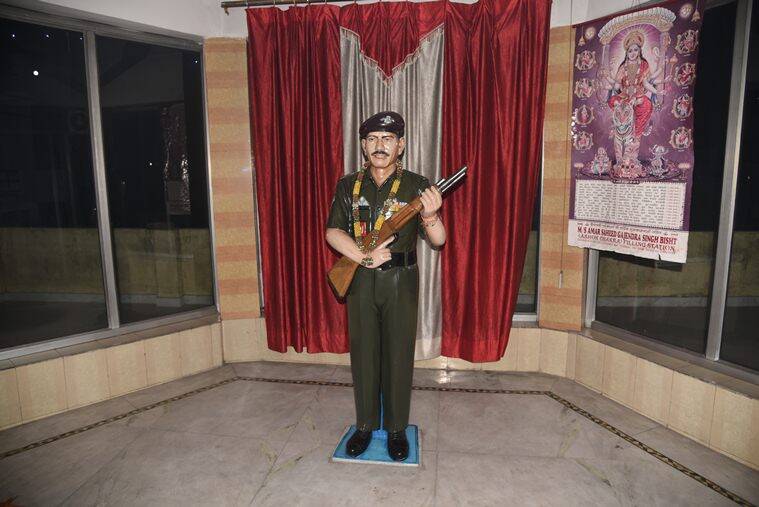
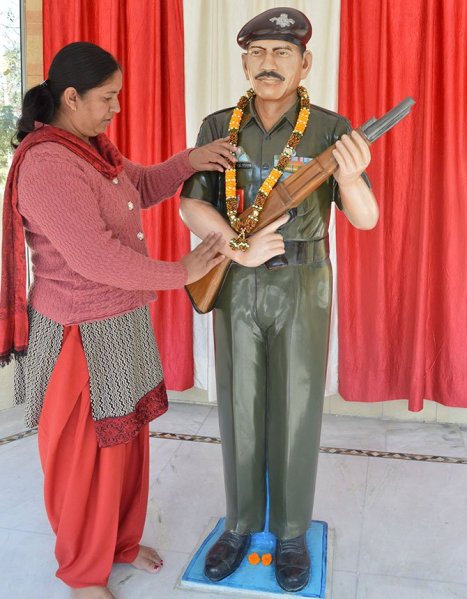
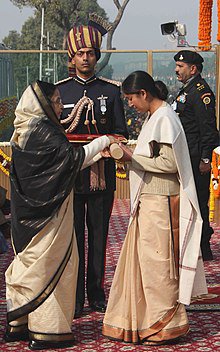
Havaldar Gajender Singh Bisht was an NSG commando who was martyred in the 2008 Mumbai attack. His bravery received the Ashoka Chakra Award from the President of India on January 26, 2009, on the Anniversary of the Republic of India.
He was born on 1 July,1972 in Dehradun, Uttarakhand.
He persued his education from the Janata Inter College in Naya Gaon.As a student he used to participate in every event organised in the school, sports or cultural activities. But he had a particular interest in boxing. Havaldar Gajendra Singh joined Garhwal Rifles in 1991 and later decided to become part of the 10 Para (Special Forces). Havaldar Gajendra also actively participated in Operation Kargil in 1999. Havaldar Gajendra was a trained commander of the Indian Army Special Forces, but he was commissioned to serve the National Security Guard’s Elite Special Action Group.
Gajendra Singh Bisht was a member of the 51st Special Action Group of the National Guard. He was part of a team of NSG Command rushed to the roof of Nariman’s house to neutralize an terrorist inside the building who had at least six hostages.
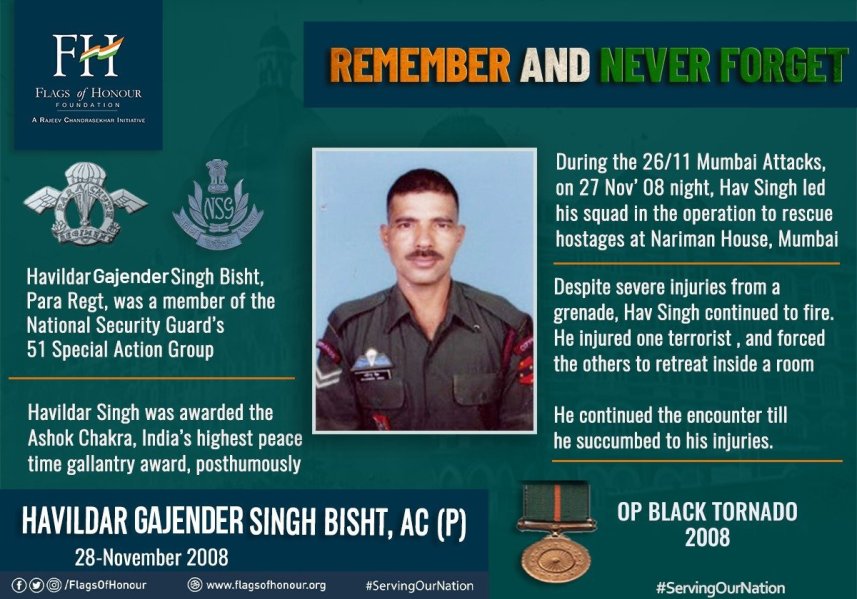
According to NSG Secretary Jyoti Krishna Dutt, Bisht led one of the teams entering the building. The team was hit by a violent terrorist attack and returned to fire while trying to contain the situation. Terrorists also threw some grenades at Commando. At this point,Bisht had the opportunity to retire with his team. But he realized they needed to seize this opportunity and went forward with thier mission.Instead of turning his back on the militants, he made the way to other troops instead, despite the grenades being thrown. He suffered multiple gunshot wounds in the process, but moved forward and was eventually injured. This allowed his team to secure a dominant position in the encounter. On the night of November 27, 2008, Havildar Gajender Singh Bisht led his army in an operation to rescue hostages from terrorists at the Nariman House in Mumbai. While securing the Nariman House during Operation Black Tornado, Bisht got fatally injured at Jewish center attack and died.
Panchayati Raj

The term “Panchayati Raj” in India signifies the system of rural local self-government. It has been established in all the systems of India by the Acts of the state legislative to build democracy at the grass root level. It is ensured with rural development. It was constitutional through 73rd Constitutional Amendment Act, 1992.
Ø A three-tier structure of Indian administration for rural development is called panchayati Raj. The aim of the panchayati Raj is to develop local self government in districts, zones and villages.
Ø Rural development is one of the main objectives of panchayati Raj and this has been established in all states of India except Nagaland, Meghalaya and Mizoram. In all union territories except Delhi and certain other areas. These areas include:-
a) The scheduled areas and the tribal areas in the states.
b) The hill area of Manipur for which a district council exists and
c) Darjeeling district of West Bengal for which Darjeeling Gorkha Hill council exists.
Evolution of Panchayati Raj
Ø The panchayati system in India is not purely a post-independence phenomenon. In fact, the dominant political institution in rural India has been the village panchayat for centuries. In ancient India, panchayat were usually elected councils with executive and judicial powers.
Ø The evolution of the Panchayati Raj system, however, got a trip after the attainment of independence after the drafting of the constitution. The constitution of India in Article 40 enjoined, The state shall take steps to organise village panchayats and endow them with such powers and authority as may be necessary to enable them to function as units of self-government.
Ø There were member of committees appointed by the government of India to study the implementation of self-government at the rural level and also recommend steps in achieving this goal.
Ø The committee appointed are as follows:-
a) Balwant Rai Mehta Committee
b) Ashok Mehta Committee
c) G V K Rao Committee
d) LM Singvi committee
A. Balwant Rai Mehta Committee and Panchayati Raj
The committee was appointed in 1957, to examine and suggest measures for better working of the community development programme and the national extensions services. The committee suggested the establishment of a democratic decentralised local government which came to be known as panchayati Raj.
Recommendations by the Committee
Ø Three tier panchayati raj system: Gram Panchayat, Panchayat Samiti and Zila Parishad.
Ø Directly elected representatives to constitute the gram panchayat and indirectly elected representative to constitute the panchyat samiti and zila parishad.
Ø Planning and development are the primary objectives of the panchayati raj system.
Ø Panchayat Samiti should be the executive body and zila parishad will act as the advisory and supervisory body.
Ø District collector to be made the chairman of the Zila Parishad
Ø It also requested for provisioning resources so as to help them discharge their duties and responsibilities.
v The Balwant Rai Mehta committee further revitalised the development of panchayati in the country, the report recommended that the panchayati raj institutions can play a substantial role in community development programmes throughout the country.
v The objectives of the panchyat, thus was the democratic decentralisation through the effective participation of locals with the help of well-planned programme. Even then prime minister of India, Pandit Jawaharlal Nehru, defended the panchyat system by saying, “authority and power to the panchayats”.
B. Ashok Mehta committee and Panchayati Raj
Ø The committee was appointed in 1977 to suggest measures to revive and strengthen the declining panchayati raj system in India.
The key recommendations are:-
Ø The three-tier system should be replaced with two-tier system: Zila parishad (District-level) and the mandal panchayat (a group of villages).
Ø District level as the first level of supervision after the state level.
Ø Zila Parishad should be the executive body and responsible for planning at district level.
Ø The institutions (zila parishad and the mandal panchayat) to have compulsory taxation powers to mobilise their own financial resources.
C. G V K Rao committee and Panchayati Raj
Ø The committee was appointed by the planning commission in 1985. It recognised that development was not seen at the grass root level due to bureaucratisation resulting in panchayat raj institutions being addressed as “grass without roots”. Hence, it made some key recommendations which were as follows:-
Ø Zila Parishad to be the most important body in the scheme of democratic decentralisation. Zila Parishad to be the principal body to manage the development programmes at the district level.
Ø The district and the lower levels of the panchayati raj system to be assigned with specific planning, implementation and monitoring of the rural development programmes.
Ø Post of district development commissioner to be created. He will be chief executive officer of the zila parishad.
Ø Elections to the levels of panchayati raj system should be held regularly.
D. L M Singhvi committee and panchayat raj
The committee was appointed by the government of India in 1986 with the main objective to recommend steps to revitalise the panchayati raj system for democracy and development. The following recommendations were made by the committee:-
1. The committee recommended that the panchayat raj system should be constitutionally recognised. It also recommends constitutional provisions to recognise free and fair election for the panchayati Raj system.
2. The committee recommended reorganization of villages to make the gram panchayat more viable.
3. It recommended that village panchayats should have more finances for their activities
4. Judicial tribunals to be set up in each state to adjudicate matters relating to the elections to the Panchayat Raj institutions and other matters relating to their functioning.
Ø All these things further the argument that panchayat can be very effective in identifying and solving local problems, involve the people in the villages in the development activities, improve the communication between different levels at which politics operate, develop leadership skills and in short help the basic development in the states without making too many structural changes. Rajasthan and Andhra Pradesh were the first to adopt panchayati raj in 1959, other states followed them later.
Ø The act is a very significant step in creating democratic institutions at the grassroots level in the country. Art has transformed representative democracy into participating democracy.
Salient features of 73rd Constitutional Amendment Act , 1992
1. Gram sabha
2. Three-tier system
3. Election of members and chairperson
4. Reservation of seats :-
a) For SC and ST
b) For Women
c) The state legislatures are also given the provision to decide on the reservation of seats in any level of panchayat or office of chairperson in favour of backward classes.
5. Duration of panchayat
6. Disqualification
7. State election commission
8. Powers and functions
9. Finances
10. Finance commission
11. Audit of accounts
12. Application to union territories
13. Exempted state and areas
14. Continuance of existing law
15. Bar to interference by courts.
In India, the panchayati raj system is not a post-independence development. For decades, the village panchayat has been the most powerful political entity in rural India. Panchayats were elected councils in ancient India that had administrative and judicial authority. Panchayat Raj is a three-tiered administrative framework in India that focuses on rural development. The panchayati Raj is a system of local self-government that is used to build districts, zones and villages.
The World Runs on Finance
Wherever you go, you hear the terms of budget, loans, bonds, stocks, crypto, and many more. Finance has become one of the highest searched topics that people want to learn. People want to get control, build different streams of income, build passive income, buy real estate, buy bonds and increase their wealth. Compared to 1980s to the present day, finance has developed and spread its branches across the world. With technology, finance has become easier to access.
Small NBFCs( Non-Banking Financial Corporations) have created apps that people can get for small amounts of loan. From 100₹ to 1,00,000₹, these corporations have found an untouched market in loan requirements, small loans. The term may be quite little, but it has huge potential. A lot of people take loans or borrow money from loan sharks at high interest rates, but do they always have money to give?

This question itself has created this part of market. With technology, payments have become quicker and able to move in a matter of minutes. NBFCs found this to be their best advantage of all time. People sign up on these apps with all their details and take the loan at exorbitant rates. They charge interest for each passing day ( 3% or more) and disburse the amount with the click of a button.
As many people are, no one wants to go through the terms & conditions because it is long and boring. Here lies the secret to the destruction of your reputation between you and the world. Many think that these apps are to be taken simply and not to be minded when the payment date comes. These NBFCs aren’t banks so they don’t give repeated notices for the payment, instead, they send your contacts all your details, with the amount of money you have taken and ask them to pay. They use godawful ways to get the payment.

Few messages are so disgusting and low that it breaks your reputation into pieces. You cannot rebuild your reputation and it keeps going on till the payment has been done. It’s a small yet such powerful blow that you cannot recover from. After the payment has been made, they don’t send a message stating that you have made the payment which doesn’t help you in any way but makes you droop down more. These interest rates on meager amounts is how they make the most money on.
Every time you borrow money, you are robbing time from your future self.
Nathan W. Morris
Loans are not a joke. You learn from the mistakes you make. Scars are lessons for what we have gone through. Learn from your experiences, teach them to your kith and kin, no matter what they are aged. If an 18 year old with a bank account, comes across the app and doesn’t know the effect of not paying on time, it’s not a wound that they can recover from easily.
Teach your younger ones about finance, how to maintain, when and where to use them but not teaching them leads to a higher damage. Be careful and do not go down this path unless you know how to come back from it.
The World Runs on Finance
Wherever you go, you hear the terms of budget, loans, bonds, stocks, crypto, and many more. Finance has become one of the highest searched topics that people want to learn. People want to get control, build different streams of income, build passive income, buy real estate, buy bonds and increase their wealth. Compared to 1980s to the present day, finance has developed and spread its branches across the world. With technology, finance has become easier to access.
Small NBFCs( Non-Banking Financial Corporations) have created apps that people can get for small amounts of loan. From 100₹ to 1,00,000₹, these corporations have found an untouched market in loan requirements, small loans. The term may be quite little, but it has huge potential. A lot of people take loans or borrow money from loan sharks at high interest rates, but do they always have money to give?
This question itself has created this part of market. With technology, payments have become quicker and able to move in a matter of minutes. NBFCs found this to be their best advantage of all time. People sign up on these apps with all their details and take the loan at exorbitant rates. They charge interest for each passing day ( 3% or more) and disburse the amount with the click of a button.
As many people are, no one wants to go through the terms & conditions because it is long and boring. Here lies the secret to the destruction of your reputation between you and the world. Many think that these apps are to be taken simply and not to be minded when the payment date comes. These NBFCs aren’t banks so they don’t give repeated notices for the payment, instead, they send your contacts all your details, with the amount of money you have taken and ask them to pay. They use godawful ways to get the payment.
Few messages are so disgusting and low that it breaks your reputation into pieces. You cannot rebuild your reputation and it keeps going on till the payment has been done. It’s a small yet such powerful blow that you cannot recover from. After the payment has been made, they don’t send a message stating that you have made the payment which doesn’t help you in any way but makes you droop down more. These interest rates on meager amounts is how they make the most money on.
Every time you borrow money, you are robbing time from your future self.
Nathan W. Morris
Loans are not a joke. You learn from the mistakes you make. Scars are lessons for what we have gone through. Learn from your experiences, teach them to your kith and kin, no matter what they are aged. If an 18 year old with a bank account, comes across the app and doesn’t know the effect of not paying on time, it’s not a wound that they can recover from easily.
Teach your younger ones about finance, how to maintain, when and where to use them but not teaching them leads to a higher damage. Be careful and do not go down this path unless you know how to come back from it.
'Cryptocurrency a clear threat'
Nothing has changed in the RBI’s view on cryptocurrencies. The Central Bank Governor, Dr. Shakktanta Das, clearly believes that cryptocurrencies pose a highly visible threat.
He said so in the Financial Stability Report (FSR) released on Friday. He has also indicated that the RBI will also take appropriate steps to protect the country’s financial sector from the danger it poses. Regarding cryptocurrency, the RBI governor has said that it is baseless speculation and is promoted with a good name only on the basis of speculation. In the report, the RBI has said that cryptocurrency should not be treated as a currency as there is no one monitoring it. These are neither financial assets nor debt securities. This can lead to a variety of risks. Also in the past when attempts were made to manage currencies privately the results were very poor. The Financial Stability Report said the rapid rise in crude oil prices in the world market has led to a reduction in growth rate estimates.
According to another RBI report, banks’ gross NPAs fell to a six-year low of 5.9 percent in March 2022. By March 2023, this could fall further to 5.3 percent. However, the RBI has warned that NPAs could rise if macroeconomic conditions deteriorate.
Sindhu-Pranay in quarterfinals
PV Sindhu and HS Pranay, who played a key role in India’s Thomas Cup title win, recorded contrasting victories on Thursday to advance to the quarter-finals of the Malaysia Open Super 750 tournament. Prannoy pulled off the biggest upset of the day when he defeated world No.4 Chou Tien Chen of Chinese Taipei 21-15, 21-7 in a match lasting more than 30 minutes.Prannoy next meets Jonathan Christie of Indonesia, against whom he has won three games and lost five games.At the same time, former world champion Sindhu defeated Thailand’s Phitayaporn Cheiwan 19-21, 21-9, 21-14 in a match that lasted 57 minutes after losing the first game.The seventh-seeded Indian will face arch-rival Tai Tzu Ying of Chinese Taipei in the next round. The 29-year-old Prannoy, who made it to the semi-finals of the Indonesia Open last week, started slowly in both games but once he got going the Indian didn’t give his opponent a chance.
Sindhu-Pranay in quarterfinals
PV Sindhu and HS Pranay, who played a key role in India’s Thomas Cup title win, recorded contrasting victories on Thursday to advance to the quarter-finals of the Malaysia Open Super 750 tournament. Prannoy pulled off the biggest upset of the day when he defeated world No.4 Chou Tien Chen of Chinese Taipei 21-15, 21-7 in a match lasting more than 30 minutes.Prannoy next meets Jonathan Christie of Indonesia, against whom he has won three games and lost five games.At the same time, former world champion Sindhu defeated Thailand’s Phitayaporn Cheiwan 19-21, 21-9, 21-14 in a match that lasted 57 minutes after losing the first game.The seventh-seeded Indian will face arch-rival Tai Tzu Ying of Chinese Taipei in the next round. The 29-year-old Prannoy, who made it to the semi-finals of the Indonesia Open last week, started slowly in both games but once he got going the Indian didn’t give his opponent a chance.
Agnipath Scheme a new vision for future India?
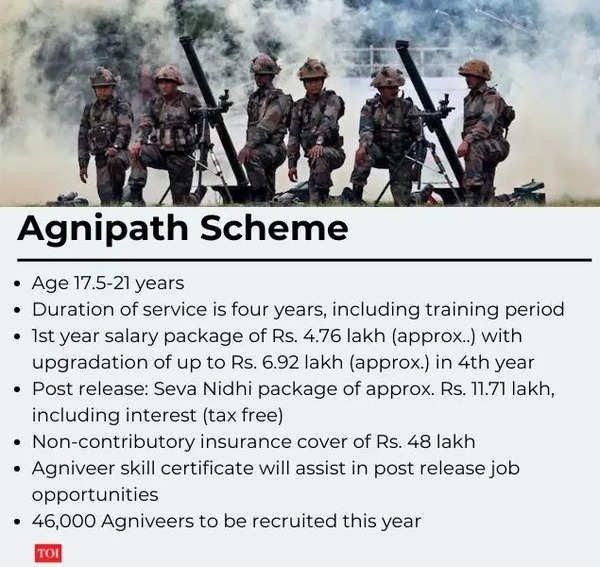
The Agnipath Program is a new program launched by the Government of India on June 14, 2022 to recruit soldiers under Corporal into three armies. The Agnipath program will be the only means of recruiting the military. All new employees will only be hired for 4 years. The personnel hired under this system are called Agniveers, a new military rank. The introduction of this system has been criticized for lack of consultation and open debate. The program is scheduled to start in September 2022. The Agnipath program was approved by the Government of India in June 2022 and will be implemented from September 2022. The announcement was made on June 14, 2022. This program is intended for both male and female applicants between the ages of 17.5 and 21. In widespread protests against the Agnipath program, the central government raised the cap from 21 to 23, but only in 2022. Recruitment under this program is held twice a year by the Indian Army, Indian Navy, and Indian Air Force. The available posts are below the executive list. The Agnipath program is the only way to serve in the army.
New employees, under the Agnipath scheme will be called “Agniveers,”who will have a four-year tenure, including six months of training followed by a 3.5-year deployment. After leaving the service, they have the opportunity to apply to continue in the army. Less than 25 percent of the retired group’s total strength is selected for the permanent roster. Employees who retire after four years of work are not eligible for a pension, but will receive a lump sum of approximately Rs 11,71,000 at the end of their tenure. The Government of India plans to hire 45,000-50,000 new employees each year through this program. In September 2022, 46,000 young people will be hired through this program. Prior to the start of the Agnipath program, soldiers were in the army for more than 15 years of service on a lifetime pension. As of 2019, there was no military recruitment for three years. The Government of India quoted the COVID-19 pandemic in India tye reason for no recruitment. Meanwhile, 50,000 to 60,000 soldiers continued to retire each year, leading to labor shortages and beginning to affect the military’s operational capabilities.
On June 16, 2022, fierce protests took place in several Indian states, where military candidates who were preparing for the armed forces were angry at the new system, demanding its rollback, and damaging public property. By June 17, 12 trains had been fired, affecting the movement of 300 trains. 214 trains were canceled, 11 trains were detoured, and 90 trains ended short of their destination. This scheme does not include long-term holdings, pensions and other benefits that existed in the old scheme. Individuals who wanted to join the army were disappointed with the rules of the new system. Of particular concern were short tenure, no early retirement pension, and an age limit of 17.5-21 years, making many of the current candidates unsuitable for serving in the Indian Army.
On June 20, a national strike called Bharat Bandh was summoned by a protesting organization calling for the withdrawal of the program. The call was made via social media without naming the organization. More than 600 trains were canceled due to a strike. Section 144 was imposed in parts of Rajasthan, Punjab, Uttar Pradesh and Haryana.
What is Startup India Seed Fund Scheme (SISFS)
China’s Presence in the Horn of Africa
In January 2022 , first “China-Horn of Africa Peace, Governance and Development Conference.” was held. During his 17th trip to Africa, China’s foreign minister and state councillor Wang Yi asserted China’s 3 main objectives in Africa : controlling the pandemic, implementing a Forum on China Africa Cooperation (FOCAC) outcomes, and upholding common interests while fighting hegemonic politics. He focused on increasing infrastructural investment in Africa. This is the first time China aims ‘to play a role in the area of security ‘.
What is Horn of Africa?
•The Horn of Africa is a peninsula in Northeast Africa.
•It is located on the easternmost part of the African mainland, it is the fourth largest peninsula in the world.
•It lies along the southern boundary of the Red Sea and extends hundreds of kilometres into the Guardafui Channel, Gulf of Aden, and Indian Ocean. The Horn of Africa is equidistant from the equator and the Tropic of Cancer.
•The Horn contains such diverse areas as the highlands of the Ethiopian Plateau, the Ogaden desert, and the Eritrean and Somalian coasts. The Horn of Africa denotes the region containing the countries of Djibouti, Eritrea, Ethiopia, and Somalia.
•The area has experienced imperialism, neo-colonialism, Cold War, ethnic strife, intra-African conflict, poverty, disease, famine and much else.
China’s recent project :
In the 2021 forum, the entire region of the Horn participated, and four resolutions were adopted :
• The Dakar Action Plan : The two sides commend the development of relations between China and Africa, and believe that over the past 21 years since its inception, the Forum has strongly promoted the development of relations between China and Africa, and become an important benchmark for international cooperation with Africa.
• China-Africa Cooperation Vision 2035 : It was formulated to determine the directions and objectives of mid- and long-term cooperation and promote a closer community with a shared future for China and Africa.
• Sino-African Declaration on Climate Change : It is aimed at enhancing coordination and cooperation in the multilateral process on climate, and jointly safeguard the legitimate rights and interests of China, Africa and other developing countries.
• Declaration of the Eighth Ministerial Conference of FOCAC : Under the theme ”Deepen China-Africa Partnership and Promote Sustainable Development to Build a China-Africa Community with a Shared Future in the New Era” and committed to the development of FOCAC and to the deepening of the China-Africa comprehensive strategic and cooperative partnership, both adopted by consensus the Dakar Declaration of the Eighth Ministerial Conference of FOCAC. The FOCAC promotes China’s role in the infrastructural and societal development of the Horn.
What are China’s Primary Interests in the Region?
1. Infrastructure :
• One of its landmark projects was fully funding the USD 200 million African Union headquarters in Addis Ababa.
• China has also invested in the Mombasa-Nairobi rail link in Kenya, and has already delivered on railway projects in Sudan.
• It also has a viable military hardware market in Ethiopia and has built over 80 infrastructural projects in Somalia, including hospitals, roads, schools and stadiums.
• In Djibouti, 14 infrastructural projects are funded by China.
2. Financial Assistance :
• Ethiopia, is one of the top five African recipients of Chinese investments, and also has a debt of almost USD 14 billion.
• China accounts for 67% of Kenya’s bilateral debt.
• In 2022, China promised to provide USD 15.7 million assistance to Eritrea.
3. Natural Resources (Oil and Coal) :
• China is also interested in minerals such as gold, iron-ore, precious stones, chemicals, oil and natural gas in Ethiopia.
• South Sudan, a source for petroleum products, has had continued Beijing investment in the industry since the latter’s initial entry in 1995.
4. Maritime Interests :
• China’s first and only military base outside its mainland is in Djibouti.
• In 2022, China hinted its willingness to develop Eritrea’s coast which would connect to China’s investments in land-locked Ethiopia.
• The U.S. has speculated that China wishes to build another military base in Kenya and Tanzania, thereby increasing its military presence in the region.
China shifts from its Principle of Non-Intervention :–
• For Africa, Chinese investments could lead to stable environments which could help the countries achieve their peace and development objectives. For China, conflict in the region comes at a heavy cost.
• In Ethiopia. when the conflict broke out, over600 Chinese nationals, working on different projects, were evacuated, putting several investments at risk.
• From a trading perspective, the region plays a significant role in achieving the objectives of the China-Africa Cooperation Vision 2035.
• China’s move towards peace in Africa indicates a shift in its principle of non-intervention.
• It is China’s message that its presence in the continent has a larger objective and is not likely to be limited to the Horn of Africa.
• This includes an aim to project itself as a global leader and boost its international status.
• Further, the recent developments imply that China is focusing on a multifaceted growth in the continent for the long run.
• For Africa, China’s presence is an alternative to the European powers, many of whom are facing criticism from African governments.
• Further, African governments, which do not conform to Western standards of democracy, interact better with powers like China and Russia.
Significance of Horn of Africa for India :-
1. Africa has been a Growing Interest : Africa has been of growing interest to India for political, economic and security reasons, especially the sub-region – the Horn of Africa.
2. Proximity to Oil Producing Region : The Horn of Africa is strategically important since it is close to the oil-producing region of the Middle East. Approximately 40% of the oil produced in the Middle East crosses through the shipping lanes of Red Sea.
3. Shipping Routes : Djibouti is the choke point on this shipping route. It is due to this reason that countries like the United States, France, and China have a military base in Djibouti. With the new reliance on the sea lines of communication for India’s economic growth, Delhi declared that its national interests were no longer limited to the Subcontinent but stretched from the “Aden to Malacca”.
India’s Concern over China’s presence :-
• Dominance in the Indian Ocean : Situated on the north-western edge of the Indian Ocean, Djibouti could become another of China’s “string of pearls” of military alliances and assets ringing India, including Bangladesh, Myanmar and Sri Lanka.China has stepped up activity in the Indian Ocean, which India considers within its sphere of influence, in recent days, citing anti-piracy patrols and freedom of navigation. It has forced the Indian Navy to tighten surveillance of the strategic waters.
• China seeks to control over Vital Shipping Routes : The Indian Ocean shipping lanes carry 80% of the world’s oil and a third of the global bulk cargo. China is looking to secure its energy and trade transportation links along the vital shipping route.
• Influencing Indian Ocean Countries : The Indian Ocean is also emerging as the playground for countries eyeing a bigger role in world affairs. China is looking to generate goodwill and influence in the Indian Ocean countries by investing in projects such ports, roads and railways. China is looking to expand its presence in the Indian Ocean, and is building ports and other infrastructure in Sri Lanka, Bangladesh and Pakistan.
Way Forward :-
• What happens in the region has a direct bearing on India’s security and well-being and hence India should pay more attention to the prevailing conditions and power dynamics in the Horn of Africa.
• India would be well advised to become more active in examining and discussing the complex problem in-depth with the governments in Eastern Africa, the African Union and others concerned so as to be able to make a meaningful contribution to its resolution.
Sources : The Hindu and Dristi IAS.

Neeraj is the Medal contender in Diamond League
Once the session begins, Olympic javelin champion Neeraj Chopra will do his best to win his first medal in Thursday’s Diamond League.Chopra won the silver medal in Turko, throwing 89.30 yards from 89.30 yards in Turko and leading the quarters with 86.60 yards.The match was tightened in these two tournaments in Finland.Due to rain due to rain, Chopra had also fallen on the third attempt but immediately won the title uninjured. After throwing 85.73 meters in August 2018 in Zurich, Chopra played in the Diamond League for the first time.He has played seven Diamond Leagues, three of which were played in 2017 and 2018, but did not win the medal.Fourth place twice.This is Chopra’s biggest tournament ahead of next month’s World Championship in America.There will be three medals from the Tokyo Olympics.Throwing the current round javelin players are most often injured due to Germany’s Johannes Kellner injury.After winning the gold in Koosana, Chopra practices in the substance a hundred kilometers from here.He will not play any other tournament before the Diamond League and the July 15 World Championship.
Neeraj is the Medal contender in Diamond League
Once the session begins, Olympic javelin champion Neeraj Chopra will do his best to win his first medal in Thursday’s Diamond League.Chopra won the silver medal in Turko, throwing 89.30 yards from 89.30 yards in Turko and leading the quarters with 86.60 yards.The match was tightened in these two tournaments in Finland.Due to rain due to rain, Chopra had also fallen on the third attempt but immediately won the title uninjured. After throwing 85.73 meters in August 2018 in Zurich, Chopra played in the Diamond League for the first time.He has played seven Diamond Leagues, three of which were played in 2017 and 2018, but did not win the medal.Fourth place twice.This is Chopra’s biggest tournament ahead of next month’s World Championship in America.There will be three medals from the Tokyo Olympics.Throwing the current round javelin players are most often injured due to Germany’s Johannes Kellner injury.After winning the gold in Koosana, Chopra practices in the substance a hundred kilometers from here.He will not play any other tournament before the Diamond League and the July 15 World Championship.
No one in the title character is Dunki: Taapsee
Pink and Thappad actress Taapsee Pannu is busy these days shooting for the movie Dunki starring Shah Rukh Khan.Taapsee works with Shah Rukh for the first time in this film, directed by Rajkumar Hirani.Regarding the film’s title, Taapsee said that the film’s title was not based on anyone’s role.He or Shah Rukh’s character in the film is not named Dunki.Excited about the film, Taapsee says, “I don’t know if I’ll get a bigger film than Dunki in my career or not.In this film I have the opportunity to work with the hero whose name has made Bollywood famous in many countries.When I started watching films in cinemas, all the films in them were Shah Rukh Khan.Working with him and a writer (Rajkumar Hirani) who only does classic films is a big thing for me.No matter how many times you watch each of Hirani’s films, it’s always just as enjoyable.I never thought I would ever get the chance to work with such a director and actor duo.Now it’s been found, so it seems I don’t know if something better will be possible or not.(laughs) Now I keep thinking what could be bigger in my career than that.
No one in the title character is Dunki: Taapsee
Pink and Thappad actress Taapsee Pannu is busy these days shooting for the movie Dunki starring Shah Rukh Khan.Taapsee works with Shah Rukh for the first time in this film, directed by Rajkumar Hirani.Regarding the film’s title, Taapsee said that the film’s title was not based on anyone’s role.He or Shah Rukh’s character in the film is not named Dunki.Excited about the film, Taapsee says, “I don’t know if I’ll get a bigger film than Dunki in my career or not.In this film I have the opportunity to work with the hero whose name has made Bollywood famous in many countries.When I started watching films in cinemas, all the films in them were Shah Rukh Khan.Working with him and a writer (Rajkumar Hirani) who only does classic films is a big thing for me.No matter how many times you watch each of Hirani’s films, it’s always just as enjoyable.I never thought I would ever get the chance to work with such a director and actor duo.Now it’s been found, so it seems I don’t know if something better will be possible or not.(laughs) Now I keep thinking what could be bigger in my career than that.
 Eduindex
You must be logged in to post a comment.