World Bank Group and the Consumer Technology Association's Global Women's HealthTech Awards

 NIRAMAI Health AnalytixPvt. Ltd. and InnAccel Technologies Pvt. Ltd., two start-ups supported by DBT-BIRAC), have received the World Bank Group and the Consumer Technology Association’s Global Women’s Health Tech Awards, which recognises innovative startups that leverage tech to improve women’s health and safety in emerging markets.

NIRAMAI Health AnalytixPvt. Ltd, a recipient of BIRAC’s Women in Entrepreneurial ResearchAward 2019, was selected for its novel software-based medical device that detects early-stage breast cancer in a simple and private way on women of all age groups and breast densities, addressing a critical unmet need in cancer screening. The solution developed is a low cost, accurate, automated, portable, contactless, radiation-free, and painless cancer screening tool with no known side effects. The core innovation is a machine learning and AI-based Computer Diagnostic Engine called Thermalytix that uses artificial intelligence algorithms to interpret thermal images and generates a quantitative report for breast health and likely abnormalities. So far, over 45,000 women have been screened through the startup’stie-ups with over 30 hospitals and diagnostic centres across India. The product can help 2 Billion women in the world to regularly screen for cancer and can potentially save 90,000 lives every year in India alone.

InnAccel Technologies Pvt Ltd., a recipient of DBT and BMGF’sGrand Challenges Exploration-India 2019, was adjudged a winner of the Global Women’s Health Tech Awards for Fetal Lite, a next-generation, AI-powered fetal heart rate (FHR) monitor based on fetal ECG signal extraction technology for mothers in labour or post 37 weeks of gestation. Fetal Lite has next-gen ECG signal processing and is more accurate, reliable, and easier to use thanthe conventional Doppler-based devices while being comfortable for the mother. Fetal Lite is European CE Certified and has completed 2 clinical trials of 60+ patients with excellent results and completed the demo in 30+ Hospitals. The device can be used for both active and remote monitoring in the in-hospital and in-home settings. So far, the device has helped doctors to monitor 5000 cases, including in tribal areas, and has the potential to save 1.2 million lives per year across the world.

“We are pleased to receive this recognition from World Bank. It’s a validation of the applicability of our Indian innovationto the world,” said Geeta Manjunath, Founder,NIRAMAI.”The support from BIRAC has been crucial for our journey of idea to benefitting the patients with European regulatory approval. It is not just funding but mentoring and handholding that has helped us mitigate risks,” said Nitesh Jangir, Co-founder, InnAccel.

“I am delighted to hear about this global recognition to two of the startups supported by the Department. As a funding agency, these success stories are a validation about the impact we have created by nurturing a vibrant startup ecosystem for solving the pressing challenges being faced by humanity,” said Dr Rajesh Gokhale, Secretary, DBT

As per a statement by the World Bank, this year, the Awards attracted over 70 companies from 35 countries, which submitted their innovative products and services under three categories: reproductive health and pregnancy, general women’s and adolescent health, and women safety and security.

About Department of Biotechnology:

The Department of Biotechnology (DBT), established in 1986, is an Indian Government department under the Ministry of Science and Technology. DBT is responsible for administrating development and commercialisation in modern biology and biotechnology in India. The Department has made significant achievements in the growth and application of biotechnology in the broad areas of agriculture, health care, animal sciences, environment, and industry. The proven technologies at the laboratory level have been scaled up and demonstrated in the field. For more information, visit, http://dbtindia.gov.in/

About BIRAC:

Biotechnology Industry Research Assistance Council (BIRAC) is a not-for-profit Section 8, Schedule B, Public Sector Enterprise, set up by the Department of Biotechnology (DBT), Government of India as an Interface Agency to strengthen and empower the emerging Biotech enterprise to undertake strategic research and innovation, addressing nationally relevant product development needs. For more information, visit, https://birac.nic.in/
Emergence of Lok Adalat as the most efficacious tool of Alternative Dispute Resolution

 National Legal Services Authority (NALSA) is committed to deliver prompt and inexpensive justice to the citizens. Recently, it has decided to lay more emphasis on contribution of National Lok Adalat in effectively reducing the number of pending cases through Alternative Dispute Mechanisms.

To achieve this goal, the Legal Services Authorities shifted to dynamic preparation strategies for organization of the Lok Adalats. As a preparatory measure, NALSA started organization of prior consultative and review meetings with all the State Legal Services Authorities to guide them towards the maximum disposal during such Lok Adalats. Before the organization of each National Lok Adalat, multiple interactions were organised with the Executive Chairpersons of all the State Legal Services Authorities, wherein one-to-one interactions were made to take a stock of the preparations as well as to boost the morale of the stakeholders tasked to organize the Lok Adalats.

A cumulative effect of all the preparatory and mobilization measures resulted in extraordinary disposal figures during the year 2021. Across the country, a total number of 1,27,87,329 cases were disposed of in four National Lok Adalats, which included a huge number of pending cases i.e., 55,81,117 and a record number of pre-litigation cases i.e., 72,06,212. Through these activities the Legal Services Authorities disposed off a large number of cases giving relief to the common citizens by ending or preventing long lasting legal battles.

Achieving these unprecedented disposal figures was not an easy task. A major contribution to this success can be attributed to the technological advancements. In June 2020, the Legal Services Authorities integrated technology with the conventional modes of dispute settlement and introduced virtual Lok Adalats also called as ‘E-Lok Adalats’. Since then, all the Lok Adalats including National Lok Adalats are organized through virtual and hybrid modes. To provide an unhindered experience during the proceedings, the Legal Services Authorities across the country are continuously upgrading their digital infrastructure.

Due to these technological advancements, Lok Adalats have reached to the doorsteps of the parties. The parties are now able to join the Lok Adalat proceedings from their homes or workplaces, saving them the hassle of travelling and reserving a full day for an affair, which gets over within minutes. The Authorities have witnessed that a large number of persons joined the virtual proceedings sitting hundreds of kilometers away from the physical location where the Lok Adalat was organized. Technology has also provided effective ways of supervision and monitoring of Lok Adalats.

The other major factor in the success of Lok Adalats was the formulation of decisive strategies at the National level. Under these strategies, the State Legal Services Authorities were instructed to conduct meetings with various stakeholder across every level with an objective to ensure their full cooperation and coordination. The authorities were guided to follow a litigant friendly approach as well as to persuade such litigants to settle the cases involving settled propositions of law.

Moreover, certain areas of law having greater possibilities of settlement such as NI Act cases, Bank recovery cases along other financial matters were highlighted and authorities were instructed to explore all the possibilities of compromise in such cases. The authorities were advised to proactively monitor the issuance and completion of processes in such financial matters as well as to conduct pre-Lok Adalat sittings to take a matter to a settlement.

There is no doubt regarding the fact that the number of pending cases surged during the ongoing pandemic. However, with a large number of disposals through Lok Adalats, a balance was created by the Legal Services Authorities in the judicial administration of the country. There is no gainsaying that the Lok Adalats settled greater number of cases than any other dispute resolution mechanism and emerged as the most efficacious tool of Alternative Dispute Resolution Mechanism.

During the year, the category wise list of the disposed cases was topped by the Criminal Compoundable Cases, wherein a total number of 17,63,233 such pending cases and 18,67,934 pre-litigation cases were disposed. The second in line were the Revenue cases consisting of 11,59,794 pre-litigation and 14,99,558 pending cases. Apart from these, the other disposed of cases were cheque bounce cases under NI Act, Bank Recovery Cases, Motor Accident Claims, Labour Disputes, matrimonial cases, etc.

****


Enhancing supply chain management by Community Based Organizations (CBOs)

 In the rural areas, challenges such as scattered market, irregular demands, and transportation bottlenecks often impede farmers and entrepreneurs from getting the right value for their products. In order to overcome these challenges, North Eastern Region Community Resource Management Society (NERCRMS) and the Changlang Community Resource Management Society (CCRMS) formed the Community Based Organizations (CBOs). At present, these CBOs are working towards enhancing the supply chain management at the district level.

Replacing the vicious chain of middlemen, the CBOs source raw spices such as ginger, turmeric directly from the individual farmers. This gives the farmers a ready platform to sell their produce at competitive market prices. As the raw materials are sourced directly from the field to the processing unit, their quality and freshness also remains intact, giving the final products an edge over the other competition in the market.

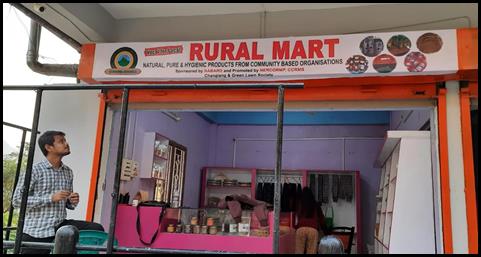
Post production and labelling, CCRMS in collaboration Changlang Co-operative Society Ltd. market the products through networks of local vendors and also through Rural Marts & Haats of NABARD. Adding to the campaign of Vocal for Local, the initiative is giving a major boost to the promotion of local products & strengthening the business eco-system at the district level.    

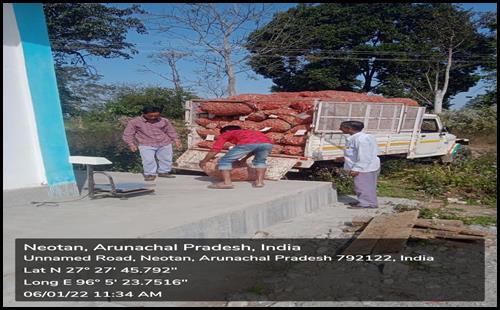
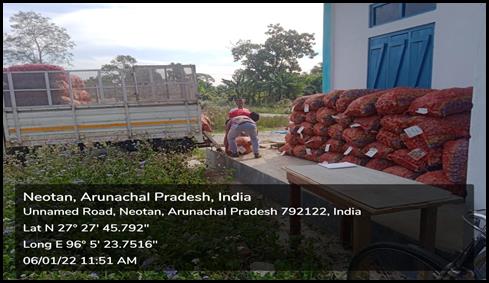
Collection of Ginger by Community Based Organizations (CBOs) at Spice Processing Unit, Neotan Village, Namphai Circle, Miao – Khagam Block


*****

Promoting Investor Education and Financial literacy among youth through Gyan Darshan channel

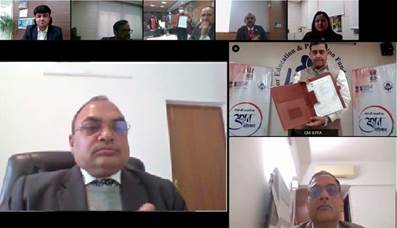
 The Investor Education and Protection Fund Authority (IEPFA) under the aegis of Ministry of Corporate Affairs has signed a Memorandum of Understanding (MoU) with Indira Gandhi National Open University (IGNOU) through a virtual event here today. The objective for signing the MoU is to achieve the mandate of Investor Education, Awareness and Protection by utilizing the tele-lecturing facility of Gyan Darshan Channel.

This association with IGNOU/Gyan Darshan channel will help in propagating the message of Investor Education and Awareness among a large group of present and prospective stakeholders. The panel of resource persons for the lecture series would include experts from professional institutions such as ICAI, ICSI & Senior officials from IEPFA, Ministry of Corporate Affairs and other regulators. The proposed lecture series of 75 episodes will be live tele-lecturing series on 24×7 Gyan Darshan TV channel and is a part of the ongoing celebration of the yearlong activity commemorating the 75th anniversary of India’s Independence under “Azadi ka Amrit Mahotsav”.

26 Episodes of the tele-lecturing series were earlier rolled out in the year 2021 which were appreciated by all stakeholders. The repository of the tele-lectures is available on IEPFA’s official YouTube channel.


      Description: A picture containing text, indoor, wall, personDescription automatically generated


Shri Rajesh Verma, Secretary, Ministry of Corporate Affairs (MCA) and ex-officio Chairperson of IEPFA in his keynote address said, “All of us are here with the common goal of educating people. The entire nation is celebrating 75 years of Azadi ka Amrit Mahotsav to celebrate the spirit of a self-reliant, progressive nation, India has become. This day is also celebrated as National Youth Day to commemorate the birth Anniversary of Swami Vivekananda, the youth ICON and influencer of global stature. With all these noble events falling together, today’s event has become even more apt and relevant. Both IEPFA & IGNOU have the common objective of imparting education and making people aware about subjects affecting their lives. IEPFA intends to create awareness among all the stakeholder groups and specially the youth”.

Prof. Nageshwar Rao, Vice Chancellor, IGNOU, in his remark stated that IGNOU and IEPFA with this initiative shall reach out to youth and other stakeholders at large which would be productive in fulfilling the vision and mission of both the organizations.

Sh Manoj Pandey, CEO IEPFA Authority, Prof. Satyakam, Pro-VC Vice Chancellor, IGNOU, Sh Nihar Jambusaria, President ICAI, Sh Nagendra D. Rao, President ICSI and other Senior officials from IEPFA, IGNOU and Ministry of Corporate Affairs also graced the occasion.

Investor Education and Protection Fund Authority (IEPFA) has been established under Section 125 of the Companies Act 2013 for administration of the IEPF fund as per section 125 (3) of Companies Act 2013. The main objective of the authority includes to promote Investor Education, Awareness & Protection, refund unclaimed shares, dividends and other amounts transferred to it under sections 124 and 125 of the Companies Act 2013 to the rightful claimants. IEPFA works under the administrative control of Ministry of Corporate Affairs.


****

Initiatives of Government in ensuring Safety in Online Education

 Central Board of Secondary Education (CBSE) has launched a ‘Cyber Security Handbook’ to ensure safe and healthy digital habits among students. This module covers topics in cyber safety, such as cyber bullying, including social exclusion, intimidation, defamation, and emotional harassment, online sexual abuse, cyber radicalisation, online attack and frauds, and online enticement. The ‘Cyber Security Handbook’ can be accessed at this link:http://cbseacademic.nic.in/web_material/Manuals/Cyber_Safety_Manual.pdf

Indian Computer Emergency Response Team (CERT-In) under Ministry of Electronics & Information Technology has prepared guidelines to handle the security concerns about various video conferencing apps, which can be found at this link:

https://www.cert-in.org.in/s2cMainServlet?pageid=PUBWEL01

The National Commission for Protection of Child Rights (NCPCR) has also issued advisory to all secretaries at school education department of all states to ensure safety of students in online classes.

PRAGYATA guidelines for school heads and teachers describe the need assessment, planning and steps to implement digital education while ensuring cyber safety and privacy measures. The guidelines can be accessed at:

https://www.education.gov.in/sites/upload_files/mhrd/files/pragyata-guidelines_0.pdf

National Webinar on ‘Indian Knowledge System, Languages, Art & Culture’

 As part of the celebration of one year of transformative reforms under National Education Policy, 2020, Government of India is organising a series of theme-based webinars on different aspects of National Education Policy, 2020. Indian Knowledge System, Language, Arts & Culture being one of the innovative thrust area of NEP, Indian Knowledge System at AICTE under Ministry of Education organised a National Webinar on Transforming Education in the Light of Indian Knowledge System, Language, Arts & Culture today.  Union Minister of Education and Skill Development and Employment Shri Dharmendra Pradhan was the Chief Guest on the occasion. Member of Parliament Shri Tejasvi Surya; Secretary, Higher Education Shri Amit Khare Senior officials from Ministry of Education and AICTE were also present.

Speaking on the occasion Shri Dharmendra Pradhan discussed the relevance of traditional knowledge systems & ancient wisdom in contemporary times and their role in the making of an Aatmanirbhar Bharat. He stated that there is a need to synergise knowledge with art, culture, language with a spirit of Bharatiyata.

The Minister said that no society can thrive without connecting to its roots. Our past is filled with examples of architectural grandeur, engineering marvel and artistic excellence, he further added. He called for conservation, promotion and dissemination of this cultural wealth of India should be the top priority of the country because it is crucial for the country’s identity. 

Shri Pradhan highlighted that the National Education Policy has laid down a roadmap for 21st century India and lays emphasis on our traditional knowledge systems. By taking Indian knowledge traditions forward, we can sow seeds for starting a new era. We must recreate our traditional knowledge with contemporary, contextual relevance to connect with the youth, he added. Shri Pradhan stated that solutions to many of contemporary challenges lie in our traditional knowledge systems

Shri Amit Khare, Secretary, Higher Education in his address shed light on the formulation and fundamentals of National Education Policy, 2020. Shri Khare said that NEP is the medium to fulfil the aspirations of New India and it will play an important role in realising the Prime Minister’s vision of attaining self-relaince. 

Shri Tejasvi Surya expressed his views on the need of new NEP 2020 with respect to Traditional Indian Knowledge in 21st century. He said that Science, Culture, Civilization, Art, various ancient learnings, History etc. are an important part of our glorious tradition and our young generation should we be aware and respect these traditions. He stressed upon value-based education to learners.

Shri Surya also highlighted different aspects of traditional Indian wisdom with respect to NEP 2020 which is being reintroduced in Indian Education. He added that through this NEP 2020, a strong effort is being made to strengthen the departments and institutions of various languages ​​across the country.

The theme wise sessions were conducted followed by the Inaugural Session where the first session of the Webinar was on the theme “Indian Knowledge System” and was addressed by Dr.Shailendra Raj Mehta,President and Director, MICA, Ahmedabad; Dr. A. S. Nene,Board Member, Civil Engg. Dept., Jagatguru Shri Devnath Institute of Vedic Science and Research, Nagpur;Prof. M. D Srinivas,Chairman, Centre for Policy Studies, Chennai.

The second session of the Webinar was on the theme “Languages” and was addressed byShri. Chamu Krishna Shastri, Secretary, Sanskrit Promotion Foundation; Prof. Santosh Kumar Shukla, Dean, School of Sanskrit and Indic Studies, JNU, New Delhi;Dr.Sudha Seshayyan,Vice- Chancellor, The Tamil Nadu Dr. M.G.R Medical University, Chennai.

The third session of the Webinar was on the theme “Arts & Culture” and was addressed by Dr.Sonal Mansingh, Member of Parliament, Rajya SabhaIndian classical dancer and Guru Bharatanatyam and Odissi dancing style; Dr. Anil Joshi, Environmentalist, Green Activist, and the Founder of Himalayan Environmental Studies and Conservation Organization, Dehradun; Dr.Shashibala,Dean, Centre of Indology, Bhartiya Vidya Bhavan, New Delhi.

The Valedictory session was conducted by the concluding remarks of Prof. Anil D. Sahasrabudhe, Chairman, AICTE. He motivated with the thought that the upcoming NEP 2020 by the Ministry of Education is the golden opportunity to awaken the self-respect and self-reliance for all the students.

Educational Infrastructure in North-Eastern States

 University Grants Commission (UGC) is implementing schemes, awards, fellowships, chairs and programmes under which financial assistance is provided to institutions of higher education as well as faculty members working  in North Eastern States to undertake quality research covering areas of knowledge across disciplines. Some of the initiatives taken for improving quality of higher education are (i) Choice Based Credit System (CBCS); (ii) Universities with Potential for Excellence; (iii) Centre with Potential for Excellence in particular area; (iv) Consortium for Academic Research and Ethics(CARE) (v) Basic Science Research (vi) Scheme for Trans-disciplinary Research for India’s Developing Economy (STRIDE) (vii) Deen Dayal Upadhyaya (DDU) Kaushal Kendras (viii) Scholarship Scheme (ISHAN UDAY) for North-Eastern Region; (ix) New Methodology of Grading by NAAC (x) UGC (Minimum Standards and Procedure for award of M.Phil/Ph.D Degree) Regulations, 2016; (xi) UGC (Credit Framework for Online Learning Courses through SWAYAM) Regulation, 2016. 

All India Council of Technical Education (AICTE) has taken several steps over the years for framing appropriate policies on technical education needed to design and implement various schemes for educational advancement and achieving the objective of creating favorable environment to ensure speedy socio-economic development in North East States. This includes equipping all necessary infrastructure upgradation of colleges, special coaching, educational concessions, better teaching learning material and infrastructure for North East region students. Some of the Schemes are (i) Research Promotion Scheme for North East Region; (ii) Short Term Training Programme for NER; (iii) Faculty Development Programme for NER; (iv) Scheme of Funds for Regeneration of Traditional Industries (SFURTI); (v) Post Graduate Scholarship Scheme; (vi) Doctoral Fellowship; (vii) Pragati Scholarship Scheme; (viii) Saksham Scholarship Scheme; (ix) Campus Accommodation & Facilities Enhancing Social Experience; (x) Grant for Augmenting Infrastructure in NER; (xi) Scheme for Promoting Interests, Creativity and Ethics among Students; (xii) Grant for Organizing Conference; (xiii) Establishment of Idea Development, Evaluation & Application Laboratory in Institutions; and (xiv) E-Shodh Sindhu (Subscription to e-Journals). 

A Virtual Reality

InformationQ.com on Twitter: "Gadgets – cheek out the latest electronics  gadgets information and it's reviews. And latest news on electronics gadgets.  #Gadgets #Electronics #GadgetsInfo #LatestElectronics  https://t.co/4qVjU9uO5U" / Twitter

As Neil DeGrasse Tyson rightfully says, “Dreams about the future are always filled with gadgets.” We human beings have constantly been growing and developing rapidly for generations now. One of the most things that we are constantly moving ahead with us is technology. The number of tabs, mobiles, phones, laptops that roll out in a few months is so many in our daily live themselves. Electronic gadgets once were a just medium however, now it is a necessity for every single human being. By this, I think the readers have some kind of idea about my topic for today’s article. It is about how electronic gadgets have become a part of our daily lives and even more during the pandemic.

Human life and electronic gadgets

Remember the time when having a phone used to be a privilege. We knew all the phone numbers through our strong memory. The only time that we used to get phones in our hands was when our parents were not using them and we could play all the games on them. Electronic gadgets then were a means of getting the work done or for communication. From standing in one place and using the landline to being able to move around with a mobile phone we have come a long way. Electronic gadgets have come a long way with human civilization. However, by coming along with us they have also managed to seep into our lives so much that now mobile phones, laptops have become more than just their purpose. They have not just become a part of our world but they are also our world now.

I was casually scrolling through social media when I came across this post showing a mom during the earlier times pulling us inside the home while the childe still was playing and a parallel image of the present where the mom is pushing out of the house to go and play outside. This might sound very typical and cliché but it is the reality. The virtual world has immensely taken over our real world. The games that we once used to play on the road is something that now children play on video game. Electronic gadgets have not just brought bad things but also an immense amount of good things. People do not have to spend a lot of time searching for information rather; it is now readily available at our fingertips. A cinematic experience is now available in the comfort of our own houses because of the various electronic gadgets that have come about to make our lives more comfortable and luxurious. We do not have to remember every single phone number these days. Just a small click and all the numbers are right with us anywhere, anytime, and any place.

With the invention of electronic gadgets, it slowly became a means of provision, entertainment, etc by the establishment of apps. Today, the virtual world of apps and online businesses has an immense amount of impact on our real-world not just physically but also mentally, emotionally, financially, and economically. Due to apps and electronic gadgets people can be a part of every sector such as clothing, footwear, food, appliances, language, culture, world, etc. Electronic gadgets and apps have made our lives easier, simpler, and more accessible. It is maybe due to this that these days electronic gadgets have become inevitably an important and major part of our lives.

The reason electronic gadgets whether it be television, radio, mobile phones, laptops, washing machines, etc are known as a necessary evil these days is because it has made it possible to increase human efficiency and productivity but at the same time is harmful to not just human beings, but also to nature and other living species of plants and animals. The improvement of technology, gadgets, etc has brought about so many solutions and yet so many problems that needs tackling and handling for the future generation to survive in the coming generations.

Electronic gadgets and the virtual world has been responsible for bringing human civilization together and are also responsible for bringing about division, hierarchy in human civilization. Electronic gadgets and the virtual world plays an important role in bringing about good in society but also play the same amount role in bringing about the bad things as well. It has connected us and disconnected us at the same time.

Therefore, it is very important to realize that human beings need to have the same amount of responsibility, carefulness, etc that they have in the real world to be present in the virtual world as well.

Let me ask all the readers out there, ‘What would happen if this necessary evil as we call it became our only means of dependency and daily living?’ Well, the answer is simple. Whatever is happening right now due to the pandemic would happen if we think about it. The dependency and the increase in the virtual world becoming our real world is because of the pandemic that we are still a part of even today. The pandemic has made it impossible to live without electronic gadgets these days.

Let us understand more about this.

How Cloud Technology Helps Connect People and Reduces Isolation

The Real virtual world during the pandemic.

Remember the times when our parents constantly were annoyed about the amount of time children spend on their phones and laptops? During the pandemic, it even got worse. Children’s screen time amount drastically increased during the pandemic. They spent time attending classes online and even spent the rest of the time on electronic gadgets because it was not safe during the pandemic to go outside. Their daily real world was constantly revolving in the virtual world and this brought about an immense amount of stress and uneasiness among children. The real world becoming the virtual world was not just for students, children but also for adults who were working regardless of which sector they were working in.

The real and the virtual world becoming one was a big problem especially for the lower economic class. Electronic gadgets do not come cheap and during the pandemic education, business and everything else became online which made it even more difficult for these people to survive and keep up with other people. Students from small towns and villages found it very difficult to survive in the real virtual world because they did not have access, products, or connection that would help them move forward with other kids.

The consumers during the real virtual world had a drastic increase, which brought about inefficient production. I have only mentioned the education sector but there are many more sectors that are very affected due to the virtual and the real world coming together as one.

The real and the virtual world becoming one are a boon and a pain at the same time. This was because it kept us safe and protected but at the same time brought about more amount of problems during the same time. Virtual reality has not had a conclusion yet. We are still fighting the pandemic and trying to bring about recovery from the losses and struggles that we have been facing for almost two years now. The only thing is that we are now more adaptable to the virtual and real-world coming together through experience.

To conclude with a hopeful note that, it is time we human beings act more responsibly, carefully, wisely so that we can overcome the pandemic time and through the lessons, we have learned during this time bring about some positive change and awareness and make our world a better place for everyone.

References

  1. Google searches for images and quotes

What is an Essay?

An essay is generally a short piece of writing outlining the writer’s perspective or story. It is often considered synonymous with a story or a paper or an article. Today the word essay is applied to several kinds of literary compositions in prose. An essay may contain reflections, quotations, or a few pages of concentrated wisdom. It may contain thin or diluted thought, profound or light observations, or even didactic musings or personal gossip. An essay can be as short as 500 words, it can also be 5000 words or more. However, most essays fall somewhere around 1000 to 3000 words; this word range provides the writer enough space to thoroughly develop an argument and work to convince the reader of the author’s perspective regarding a particular issue.

Orgin of The Essay

The word ‘Essay’ means an attempt or assay – an attempt to dwell on some subject or part of a subject. This is an apt name for this writing form because the essay’s ultimate purpose is to attempt to convince the audience of something. Since an essay does not necessarily deal with every aspect of a subject, it is usually short. Thus, the essay may be defined as a ‘composition of moderate length on any particular subject or branch of a subject’. It is limited in range though sometimes elaborate in style. The essay comes in many shapes and sizes; it can focus on a personal experience or a purely academic exploration of a topic. Essays are classified as a subjective writing form because while they include expository elements, they can rely on personal narratives to support the writer’s viewpoint. The essay genre includes a diverse array of academic writings ranging from literary criticism to meditations on the natural world.

History of Essay

Michel de Montaigne first coined the term essayer to describe Plutarch’s Oeuvres Morales, which is now widely considered to be a collection of essays. Under the new term, Montaigne wrote the first official collection of essays, Essais, in 1580. Montaigne’s goal was to pen his ideas in prose. In 1597, a collection of Francis Bacon’s work appeared as the first essay collection written in English. The term essayist was first used by English playwright Ben Jonson in 1609.

Definitions of The Essay

There are several definitions of the essay available. Dr.Johnson defined it as a loose sally of the mind, an irregular, undigested piece, not a regular and orderly composition’. The essay is characterized by comparative brevity and comparative want of exhaustiveness.

According to W.H. Hudson, an essay is essentially personal. It belongs to the literature of self-expression. This is most true of modern essays. In the essays of E.V. Lucas, G.K. Chesterton, A.G. Gardiner, etc. we find the personal elements dominant. We read them not to acquire facts or information but to acquire contact with the personality of the writer. Hugh Walker remarks that no subject may not be dealt with in an essay. The essay is easily distinguished by its manner and style rather than by its matter. The important elements in the essay of Charles Lamb, Hilaire Belloc, or A.G. Gardiner are the style and manner and the theme is secondary.

Sainte beuve, himself a delightful essayist, thought that a good essay should be characterized by conciseness and thoroughness. the essay is brief not because the writer knows little about the subject but because he is a master of the subject that he can present his ideas concisely and adequately. Thus brevity in an essay does not mean superficiality.
considering the various aspects of the essay, it can be defined as a composition of moderate length, usually in prose, which deals in an easy cursory manner with the chosen subject and with the relation of that subject to the writer.

Principles of Essay

One of the elementary principles of essay writing is selections and distribution of emphasis. In spite of its fragmentariness, as an essay should impress as complete within itself. Another trait of the essay is its freedom and informality. The essay provides the freedom of conversation. Bacon called his essays ‘brief notes set down rather significantly than anxiously’. The essay is relatively unmethodical though modern essays have undergone some transformation in this respect.

The essay is subjective and personal. The central fact of the essay is the play of the writer’s mind and character upon the subject matter. In the study of the essay, one has to consider the writer’s personality and standpoint, and outlook on life. we have to follow the evolution of thought, presentation, exposition, and illustration. Finally, we have to assess the value of what he says and the beauty of how he says it.

Five scientific steps to ace your next exam

1. When to Study

Studying time is more efficient if it is spread out over many sessions throughout the semester, with a little extra right before the exam.
Cover each piece of info five times from when you first learned it until your exam. It will enable you to retain the information with minimal effort.

2. What and How to Study

Testing yourself, so you have to retrieve the information from memory, works much better than repeatedly reviewing the information, or creating a concept map (mind map).
After the first time learning the material, spend the subsequent studying to recalling the information, solving a problem or explaining the idea without glancing at the source.

3. What Kinds of Practice to Do

For a particular exam, use the following:

  • Mock tests and exams that are identical in style and form.
  • Redo problems from assignments, textbook questions or quizzes.
  • Generate your questions or writing prompts based on the material.
4. Make Sure You Understand

Passing and failing rest on whether you understood some important ideas.
Your top priority should be to understand the core concepts. Identify the core concepts and make sure you can explain them without looking at the material.

5. Overcome Anxiety

Anxiety makes it difficult to remember things. To help overcome this, make some of your studying sessions like a mock exam, using the same seating posture, materials, and the same time constraints.

referEncE

https://www.scotthyoung.com/blog/2019/03/18/5-strategies-ace-exam/

Study less study smart

  1. Break your study time down into chunks such as 30 minutes and then take a 5-minute break to keep your brain fresh and awake as you are studying.
  2. Teach what you learn to others. This is one of the big values from study groups.
  3. Know the difference between recollection and recognition. Recognition is when you are studying and you turn the page and read something and you think, ‘I know that.’ But what is going on is that you recognize it.
  4. Use specific locations for studying. Have a study chair and a study desk so you know when you are sitting there you need to be studying.
  5. Don’t listen to music when you are studying especially if it has lyrics.
  6. Understand the difference between concepts and facts. The goal of learning is understanding. It is important to learn and remember facts but make your goal of understanding concepts not learning facts.
  7. To remember more of what you learn in class you should take notes. Take enough notes to trigger your brain after class but don’t take so many notes that you can’t focus during class.
  8. Getting enough sleep is key to remembering more of what you study.
  9. Test your memory by writing what you can recall without looking at your notes.
  10. The Survey, Question, read, recite and review method is when you survey or look over what you are going to learn and then develop questions that focus your brain.
  11. Use memory training techniques to study less study smart! When you use memory techniques such as the mind palace or the memory palace you are going to remember more of what you studied.
Reference

https://brainathlete.com/study-less-study-smart-by-marty-lobdell/

Human skills for the future of work

“Becoming is better than being.” – Carol Dweck

Empathy Mindset
  • Listening: Ask questions to understand.
  • Appreciation: Show sincere appreciation and celebration of others’ contributions.
  • Self-Awareness: Part of feeling what others feel is also about understanding your own biases and limiting beliefs.
  • Judgment: When people seek advice or share a problem, they are not looking for your criticism. 
  • Presence: Time is one of our most valuable assets, so be there fully.
Emotional Intelligence

Being aware of how your behaviour affects others is at the heart of emotional intelligence.
This means building self-awareness, self-management, social awareness, and relationship management.

Effective Communication

Consider the following principles:

  • Intention: Know what you want to say and be clear about your objective. 
  • Organization: Take the time to organize your thoughts and straightforwardly deliver them.
  • Framing: “I think, I feel” is much more effective than starting with “you,” which puts people on the defensive.
  • Affirmation:  Asking if the information makes sense may reveal a potential problem. 
Curiosity + Instigation

Curiosity is a natural part of any creative cycle. It paves the way for “possibility thinking,” rather than business as usual. 
Instigation is an invitation to challenge quick fixes, lacklustre solutions and mediocrity. 

Strategic Analysis and Analytical Thinking

Strategic analysis helps to identify complex problems by providing a top-level view into the interconnected web of what can often seem like isolated issues.
Analytical thinking enables people to suspend emotional decision making and instead look logically at evidence-based research and tests.

Complex Problem Solving

To get into problem-solving mode, you need to understand the true problem at hand, identify challenges in the way, resist simple solutions, identify constraints and pathways to feasibility, and, above all, make sure you’re open to experimentation. 

Conflict Resolution

Among the most effective skills to learn to resolve conflict are mastering deep listening, mediation and facilitation. 
Giving people the benefit of the doubt and leading with curiosity are also powerful tools. 

Negotiation and Persuasion

They are not required just for the sales team. You need to be clear about what you want and what you’re willing to let go of to get it.

Leadership

A great leader will understand that it’s not enough to build a culture, it needs to be protected and maintained. 
A great leader also needs to make difficult decisions and hold everyone, including themselves, accountable.

Reference

https://creativecloud.adobe.com/discover/article/ten-human-skills-for-the-future-of-work

Lessons By the Greatest Teacher

How We'll Live With Covid After the Pandemic | Johns Hopkins Bloomberg  School of Public Health

We hear or see quotes or statements through social media posts, stories, messages, etc. We find these readings sometimes meaningful or sometimes it is very cliché. However, they do have a lot of importance or have come true in our daily lives even if we do not realize it. Today my topic is going to be something along these lines. Whether we accept it or not one of the greatest teachers in our life is our life itself. Nobody can teach us better than our own experiences in our lives. What we go through as individuals is something that will help us grow, develop, and change for our betterment. Today we are going to discuss the life lessons that we have learned during the pandemic.

Life during the pandemic

Our life during the pandemic has been nothing but a big, dangerous, and very long roller coaster that nobody was ready for in their fast pace life. The pandemic is responsible for the changes that we see in our lives. Nothing is the same anymore. The pandemic has been there for almost two years now and we as human beings are still trying to adapt and get in touch with the new normal. The pandemic is responsible for teaching many new things and even remembering the things that we first made a point to learn and follow and then eventually we human beings forgot about it. The pandemic is one situation that is responsible for reminding us that though we consider ourselves the superior and most powerful creatures, there is nobody that can stand against nature, not even we human beings.

 The pandemic made us realize that we are not something away from nature rather we are a part of nature and mother earth. Pandemic acts as the harsh mirror that we had to face at some point in time. During the pandemic, people have had a large amount of suffering and pain, which has no comparison to anything. We had so many things that made us happy but there were much more things that made us all sad and think about human beings being the smartest animal in the world. It might sound that I am exaggerating but life during the pandemic is very stressful. One of the most important reasons for this is because stressors that have a negative impact on individuals not just were internal but also external that too with a lot of intensity. A person regardless of their class, caste, country, religion has had a really tough and unimaginable amount of things affecting them during the pandemic. The pandemic shows us that the things that we are so selfish, greedy, and proud of will be nothing if human beings cannot look after their nature and mother earth.

The other thing that needs consideration is that this is not the first pandemic that the human population has come across during their existence on this planet. As and when man has attempted to overpower nature and its cycle, we as human beings have seen the consequences. Yet, we still seem to be making the same mistake even after we have had our part of consequences. Yes, the making of the vaccines to these various pandemics is a big milestone in human evolution but what we fail to understand is that most of the pandemics happen because of our actions of messing with nature and mother Earth. A famous saying written by us human beings ourselves is something that has been forgotten and needs to be put out there which is “Prevention is better than cure” I do not have to go on and on about life during the pandemic because each one of us has had a first-hand experience of it. However, what I would like to go about is how important it is for people to realize their mistakes, make changes that will help us connect to nature and our surroundings, etc so that the future generation will at least remember them as history and be more confident and proudly works towards things that help avoid further pandemics.

The pandemic has been a part of all our lives and therefore has been responsible for teaching some lessons that we should make a point to never forget and make a discipline that is a part of our daily lives.

Pin on Personal Development

Life Lessons we learned during the pandemic

  1. Kindness: One of the most important life lessons that we learned again as human beings was about the importance of kindness. Every single individual during their childhood has learned in their textbook that being kind is a part of good manners that we should inculcate with time. However, as we grow up we forget what we learned as kids because as we grow up we learn more complicated things that we need to remember to score well and do well in life. The pandemic taught us how none of the things matter if we are not kind not just to other people but also to ourselves.
  • Generosity: Another important lesson that we learned during the pandemic was generosity. We understood the importance of being generous so that everyone gets basic facilities during tough times. Being generous does not make a person great, it just makes them humane and normal. When a person is generous, there is a sense of happiness that is no comparison with anything else. I think we understood the true meaning of generosity during the pandemic.
  • Compassion: A very important life lesson we learned during this pandemic was compassion. Love and understanding are some of the things that we forgot about in our mechanic lives. We during the pandemic realized the importance of love and understanding that we need to have not just for other people but also more importantly for ourselves. We learned to be compassionate towards animals during these tough times. Street dogs would have had a tough time living during the lockdown if it is not for the compassionate people giving them food and shelter.
  • Trust: Trust is something we had lost tremendously during our life when there was no pandemic. The pandemic made us realize the importance of trusting people. We learned to trust doctors with our lives and the lives of our loved ones. We learned to trust the immense research done by scientists who made the life-changing vaccines. We learned to trust our instincts and ourselves during the pandemic. We as human beings learned to trust the process even though it was difficult, painful, and life-threatening every single day.
  • Importance of Family and Friends: While we all were, confined to the four walls of our house, we understood how easy and granted we had taken the people around us such as our family and friends. We understood the importance of time and how need to take some time off from our busy schedule to spend time with people who mean everything to us and play a role in our personal life. During this pandemic, we have lost a lot of people who we love, value, and respect, therefore; we have to learn to value our time and our people.

I have just mentioned the five most important life lessons that I have seen, learned, and observed during the pandemic. I am sure everybody else has learned much more than this. Yes, the experience we have had is the most terrible one however, we should use this experience of our pandemic to make sure things get better for everybody and life becomes much more peaceful, harmonious, and worth living not just for us human beings but every single living thing on this planet.

To conclude, let us remember the things we learn through life and experience so that, life slowly gets better for us and every single person gets their happiness, fulfillment comes back.

References

  1. Google searches and quotes

January a Great month in the world: 12 January Birthday day of Swami Vivekananda also National Youth Day 

January month is popular across the world for various reasons. January is celebrated across the world as the English New Year. Also all over the Ramakrishna Missions in the world, this day (1 January) is celebrated as Kalpataru Day. In the world, many Orthodox Christians celebrate 7 January as Christmas by following the Julian calendar. When I worked as Associate Professor in Eritrea I had observed they celebrate 7 January as Christmas.
Across India on 14/15 January is celebrated in different names. In Assam, the celebration is known as Magh Bihu; Lohri is celebrated in Delhi/New Delhi, Punjab, Haryana, Himachal Pradesh, and Jammu; and Makar Sankranti in other parts of the country. It is pertinent to mention that the celebration is the same only the name of the celebration differs. On 26 January 1950, our constitution came into effect so we became a Republic. Also in this month, two great persons were born in India. They are Swami Vivekananda and Netaji Subhas Chandra Bose, Swami Vivekananda and master were born on 12 January 1863. Netaji Subhas Chandra Bose was born on 23 January 1897. Anyway, in history, we have read the contribution in the freedom movement of India to only two families’ names as if only for the two families we have got independence, but my salute to all who contributed to the freedom movement in India.
A few lines about Swami Vivekananda are presented here as his birthday tribute.
As mentioned already, Swami Vivekananda was born on 12 January 1863 in Kolkata then Calcutta. His real name in school/college was Narendranath Dutta and his pet name was “Biley”. By this (“Biley”) name parents used to call him. Although he is considered a key personality in the introduction of Vedanta philosophy and Yoga to Western countries mainly in the USA and Europe, humanity was his only consideration. Swami Vivekananda was intelligent from childhood. He was the only student to have received first division marks in the Presidency College entrance examination. He was a positive and broad-minded person with a feeling for all human beings irrespective of caste, creed, and religion. This paragraph will say many things “All power is within you, you can do anything and everything. Believe in that; do not believe that you are weak. You can do anything and everything, without even the guidance of anyone. Stand up and express the divinity within you. Arise, Awake, and Sleep no more. Within each of you, there is the power to remove all wants and all miseries. Believe in this, and that power will be manifested”.
Love and affection towards others are reflected from his saying, “All expansion is life, and all contraction is death. All love is expansion, all selfishness is contraction. Love is, therefore, the only law of life”. His positive feeling towards different religions is realised by this discourse, “The Christian is not to become a Hindu or a Buddhist, nor a Hindu or a Buddhist to become a Christian. But each must assimilate the spirit of the others and yet preserve his individuality and grow according to his own law of growth”. He further said, “Feel like Christ, you will be a Christ; feel like Buddha and you will be a Buddha. It is the feeling that is life, the strength, the vitality, without which no amount of intellectual activity can reach God.”
His patriotic fervour can be understood through this line, “The soil of India is my highest heaven, the good of India is my good and repeat and pray day and night…….O Thou Mother of Strength, take my weakness, take my unmanliness and make me a man!”
Vivekananda passed away on 4 July 1902 but no Indian can forget him as his thought-provoking lecture in Chicago in 1893 at the Parliament of the World’s Religions conquered the hearts of millions of the people of the World. In 1984 the Government of India declared this day (12 January) as National Youth Day and since 1985 the event has been celebrated in India every year.

Career Guidance for Students

 Central Board of Secondary Education (CBSE) organizes a two day capacity building programme for the teachers on career guidance of students. The trained teachers take sessions with senior students in their respective schools. The programme focuses on dimensions of career information, strategies and resources used in imparting career information, setting up a career resources room in a school, role of a teacher in imparting career guidance and understanding career development.

In Kendriya Vidyalaya Sangathan (KVS) services of counselors are engaged on part time contractual basis in all Kendriya Vidyalayas across the country. There is also a provision of inviting experts from different fields to sensitize students about the career options available for them to pursue.

In Jawahar Navodaya Vidyalayas (JNV) career guidance sessions are conducted regularly by the Counselors, Teachers and Vice Principals. Special sessions are also conducted for students in JNVs by inviting eminent experts of various fields.

National Scholarship Portal (NSP) is one-stop solution through which various services starting from student application, application receipt, processing and disbursal of various scholarships to students are enabled. The main objective of NSP is to ensure timely disbursement of scholarships to students and to provide a common portal for various scholarships schemes of Central and State Governments. National Means-cum-Merit Scholarship Scheme (NMMSS) of D/o SE&L is on-boarded on NSP. The details are available on the NSP Portal. The link is as follows: https://scholarships.gov.in