



Heath Benefits Of Cycling 15 Minutes A Day
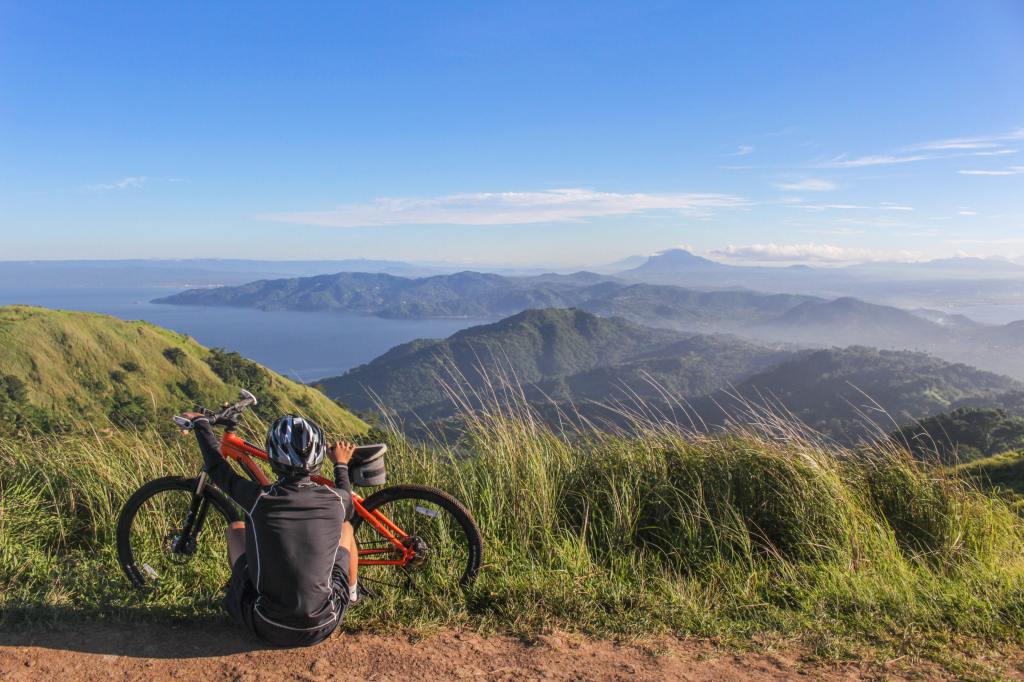
The indirect health benefits include reducing serious injuries caused by falls in older people, osteoporosis, and hip fractures.
Statistics show that cyclists, even those who only travel short distances can reduce the risk of death by 22 per cent.
Optimum results are achieved when cyclists are breathing heavily, but are not out of breath. Exercise has been shown to increase HDL (“good” cholesterol) and reduce the amount of triglycerides in the blood. Again, this means improved cardiovascular health. This leads to a reduced chance of heart blockage and reduces the risk of stroke. There are some reports that link exercise to a lowered risk of developing some cancer, like colon cancer.
Cycling burns the calories in a chocolate bar or a couple of alcoholic drinks in one hour, 300 calories. Translated into modern lifestyle terms, a fifteen-minute bike ride, five times a week, burns off 11 pounds of fat a year and meets the requirements for reducing heath risks.
There is a trick to exercising. Running a nine-minute-mile burns 11 calories a minute. Walking at 18 minutes per mile burns five. Faster exercise burns more calories.
Exercise continues to burn fat after the workout ends. Once the sweating stops the body’s metabolisms remains high. You can you increase the post-exercise burn?
A few scientific studies suggest that exercising for 20 minutes at 35 to 55% of aerobic capacity, as in riding briskly, elevated metabolism for 20 minutes after stopping. That means that a 20 minute, brisk bike ride burns fat for 40 minutes.
Cycling has been proven to reduce stress and depression and relieve symptoms of premenstrual syndrome.
The Department of Transport reports that ‘even a small amount of cycling can lead to significant gains in fitness’. The study reveals that aerobic fitness was boosted by 11 per cent after six weeks of cycling ‘short distances’ four times a week and cycling four miles a day the aerobic benefit increased to 17 per cent.
The Fentem PH. ABC of sports medicine report, Benefits of exercise in health and disease, 1994 concludes that cycling is ‘one of the few physical activities which can be undertaken by the majority of the population as part of a daily routine’.
The choice of bike is a personal thing.
Most people never cycle more than five miles, so choosing an expensive bike designed to challenge the most adventurous dare devils. Instead, choose a bike that will manage the local terrain, comfortably.
Equipment needs will also vary. Older people should consider elbow and knee guards. These will help prevent debilitating joint injuries that can seriously limit your mobility. A helmet is not optional.
Do not buy a helmet from a local hardware store. Get one from a bicycle specialty store. The selection is larger, and the quality better. Shopping at an online store can also save money.
Once introduced into the bicyle riding community, you’ll soon set out on your daily cycle for the joy of it. Health benefits will be secondary
Can Money Buy Happiness?
Some Weird Restrictions In North Korea that you can’t even imagine.
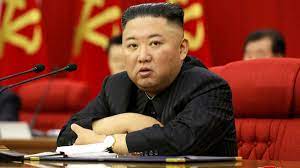
1. Consuming marijuana is accepted and unlike in most of the world, trade and consumption of the drug attract no punishment as per law.
2. Listening to foreign music or watching films in a foreign language are considered criminal activities. In 2015, Kim Jong Un issued a decree to scrap all cassette tapes and CDs that had state-banned songs in order to contain dissent. The sentence depends on the place of origin of the film: someone watching an American movie may be executed, while watching Indian films may lead to imprisonment. Distributing pornography may also lead to the death penalty.
3. Making international calls is a crime. In 2007, a man who made several international calls was killed.
4. Anything that disrespects the family of Kim Jong Un, the North Korean government, or the politicians is considered an act of blasphemy and may be met with severe punishment. In January, it was reported that a mother faced jail for trying to save her children instead of former President Kim Il-sung’s portrait in an inferno. Even failing to wipe off the dust of his portrait is enough to make one guilty; so every family is given a special duster.
5. Only male government officials are allowed to drive. Women are not permitted to drive, even if working as traffic officers. The government restrictions allow only one in a hundred people to have a car.
6. On July 8, when North Korean President Kim Il-sung died in 1994, smiling is strictly prohibited. Talking loudly, dancing, or drinking alcohol on this day is restricted. Disrespecting the rules may have people sent to labor camps or killed. Kim Il-sung’s body is preserved in a glass tomb and tourists are required to bow down at his feet.
7. People are not allowed to wear jeans as it is considered a symbol of capitalism. Women wearing skirts must cover the knees. Wearing bikinis is a strict no-no.
8. All citizens above 17 mandatorily have to vote in the elections. Elections are held to choose the party leaders who will rule the country, except that there’s usually one candidate!
9. North Korea offers only three television channels for people to choose from and all of them are government-controlled.
10. North Koreans are not allowed to travel abroad without permission. People who try to flee are sent to labor camps or simply executed.
11. Internet can only be accessed through their intranet, which is called “Kwangmyong” or Bright, launched in 2000. For professional use, only 28 websites may be accessed under government supervision. The list of people with Internet access includes political leaders and their families, students attending elite schools, and the military’s cyber-warfare department. Only the state-sanctioned operating system Red Star OS, designed in Korean, is allowed to use and not the standard Windows or Mac. Wi-Fi has been banned from use at all North Korean embassies worldwide.
12. Choice of the profession of an individual is decided by the government based on the country’s needs. Those who do not comply are sent to concentration camps for forced labor.
13. In 2013, Kim Jong Un released a list of haircuts that people in the country are allowed. There are 28 state-approved hairstyles that people can keep.
14. Citizens are not allowed to have the same name as the current president. So, everyone named Kim was made to change their names.
15. Freedom of religion is a myth in North Korea. It is officially an atheist state. Western religious practices and literature are forbidden. People who distributed Bibles have been executed in public. In 2014, American Jeffrey Fowle was imprisoned for five months because he forgot the Bible in the bathroom of a restaurant. Churches are controlled by the state.
16. An entire family could be punished if one person commits suicide. If an individual commits a crime, three generations in his family are punished.
17. It spends 20 percent of its GDP on the military when the population is desperate for food.
18. It is believed that film director Shin Sang-ok and his actor wife Choi Eun-hee were abducted in 1978 for inducing creativity in North Korean films. Later in 1986, the couple gradually earned the dictator’s trust and escaped during a trip to Austria for promoting North Korean films.
19. The North Korean calendar Juche is based on Kim II-sung’s date of birth – April 15, 1912.
20. North Korea cuts power every night due to the energy crisis in the country. Using electricity needs permission and owning a microwave is illegal!
21. School-going children are required to get their own desks and chairs, others are forced to do laborious tasks for the government.
22. In 2008, citizens were asked to give their stools to help with agriculture when South Korea suspended fertilizer supplies.
23. Newlyweds are expected to visit Kim II-sung’s statue after the official ceremony. Walking down the aisle is not permitted on any of the birthdays of Kim Jong Un and Kim II-sung.
24. Military service is compulsory for men (10 years) and women (seven years.)
25. Mothers are not allowed to give birth if anyone is around and must go into labor alone. They are not allowed to meet their family or even husband for a week after giving birth. If triplets are born, they are given to the state as there are reportedly concerns over the low birth rate in North Korea. They are returned on reaching four years of age.
26. Sunday is collective labor day – all cleaning is done by hands and tools are not allowed.
Why facts don’t change our minds
Humans need a reasonably accurate view of the world in order to survive. If your model of reality is wildly different from the actual world, then you struggle to take effective actions each day. However, truth and accuracy are not the only things that matter to the human mind. Humans also seem to have a deep desire to belong. Understanding the truth of a situation is important, but so is remaining part of a tribe. While these two desires often work well together, they occasionally come into conflict. In many circumstances, social connection is actually more helpful to your daily life than understanding the truth of a particular fact or idea. The Harvard psychologist Steven Pinker put it this way, “People are embraced or condemned according to their beliefs, so one function of the mind may be to hold beliefs that bring the belief-holder the greatest number of allies, protectors, or disciples, rather than beliefs that are most likely to be true.” We don’t always believe things because they are correct. Sometimes we believe things because they make us look good to the people we care about. False beliefs can be useful in a social sense even if they are not useful in a factual sense. For lack of a better phrase, we might call this approach “factually false, but socially accurate.” When we have to choose between the two, people often select friends and family over facts.
Facts Don’t Change Our Minds. Friendship Does.
Convincing someone to change their mind is really the process of convincing them to change their tribe. If they abandon their beliefs, they run the risk of losing social ties. You can’t expect someone to change their mind if you take away their community too. You have to give them somewhere to go. Nobody wants their worldview torn apart if loneliness is the outcome. The way to change people’s minds is to become friends with them, to integrate them into your tribe, to bring them into your circle. Now, they can change their beliefs without the risk of being abandoned socially. Perhaps it is not difference, but distance that breeds tribalism and hostility. As proximity increases, so does understanding. I am reminded of Abraham Lincoln’s quote, “I don’t like that man. I must get to know him better.” Facts don’t change our minds. Friendship does.
The Spectrum of Beliefs
If someone you know, like, and trust believes a radical idea, you are more likely to give it merit, weight, or consideration. You already agree with them in most areas of life. Maybe you should change your mind on this one too. But if someone wildly different than you proposes the same radical idea, well, it’s easy to dismiss them as a crackpot. he most heated arguments often occur between people on opposite ends of the spectrum, but the most frequent learning occurs from people who are nearby. The closer you are to someone, the more likely it becomes that the one or two beliefs you don’t share will bleed over into your own mind and shape your thinking. The further away an idea is from your current position, the more likely you are to reject it outright. In conversation, people have to carefully consider their status and appearance. They want to save face and avoid looking stupid. When confronted with an uncomfortable set of facts, the tendency is often to double down on their current position rather than publicly admit to being wrong.
Be kind first. Be right after.
The brilliant Japanese writer Haruki Murakami once wrote, “Always remember that to argue, and win, is to break down the reality of the person you are arguing against. It is painful to lose your reality, so be kind, even if you are right.” When we are in the moment, we can easily forget that the goal is to connect with the other side, collaborate with them, befriend them, and integrate them into our tribe. We are so caught up in winning that we forget about connecting. It’s easy to spend your energy labeling people rather than working with them. The word “kind” originated from the word “kin.” When you are kind to someone it means you are treating them like family. This, I think, is a good method for actually changing someone’s mind. Develop a friendship. Share a meal. Gift a book. Be kind first, be right later.
Role of youth in the development of country

By: Astha Raghav
It is a well-known fact that the youth of any country is a great asset. They are indeed the future of the country and represent it at every level. The role of youths in nation-building is more important than you might think. In other words, the intelligence and work of the youth will take the country on the pathway of success. As every citizen is equally responsible, the youth is too. They are the building blocks of a country.
The youth is important because they will be our future. Today they might be our partners, tomorrow they will go on to become leaders. The youths are very energetic and enthusiastic. They have the ability to learn and adapt to the environment. Similarly, they are willing to learn and act on it as well to achieve their goals.
Our youth can bring social reform and improvement in society. We cannot make do without the youth of a country. Furthermore, the nation requires their participation to achieve the goals and help in taking the country towards progress.
Likewise, we see how the development of any country requires active participation from the youth. It does not matter which field we want to progress in, whether it is the technical field or sports field, youth is needed. It is up to us how to help the youth in playing this role properly. We must make all the youth aware of their power and the role they have to play in nation-building.
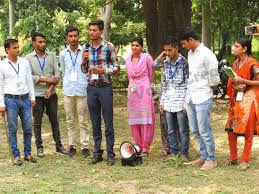
There are many ways in which we can help the youth of our country to achieve their potential. For that, the government must introduce programs that will help in fighting off issues like unemployment, poor education institutes and more to help them prosper without any hindrance.
Similarly, citizens must make sure to encourage our youth to do better in every field. When we constantly discourage our youth and don’t believe in them, they will lose their spark. We all must make sure that they should be given the wind beneath their wings to fly high instead of bringing them down by tying chains to their wings.
Furthermore, equal opportunities must be provided for all irrespective of caste, creed, gender, race, religion and more. There are various issues of nepotism and favoritism that is eating away the actual talent of the country. This must be done away with as soon as possible. We must make sure that every youth has the chance to prove themselves worthy and that must be offered equally to all.
In short, our youth has the power to build a nation so we must give them the opportunity. They are the future and they have the perspective which the older generations lack. Their zeal and enthusiasm must be channelized properly to help a nation prosper and flourish.
Thank You!
Lal Bahadur Shastri Biography
By: Astha Raghav
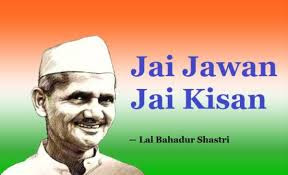
Shri Lal Bahadur Shastri was born on October 2, 1904 at Mughalsarai, a small railway town seven miles from Varanasi in Uttar Pradesh. His father was a school teacher who died when Lal Bahadur Shastri was only a year and half old. His mother, still in her twenties, took her three children to her father’s house and settled down there.
Lal Bahadur’s small town schooling was not remarkable in any way but he had a happy enough childhood despite the poverty that dogged him.
He was sent to live with an uncle in Varanasi so that he could go to high school. Nanhe, or ‘little one’ as he was called at home, walked many miles to school without shoes, even when the streets burned in the summer’s heat.
As he grew up, Lal Bahadur Shastri became more and more interested in the country’s struggle for freedom from foreign yoke. He was greatly impressed by Mahatma Gandhi’s denunciation of Indian Princes for their support of British rule in India. Lal Bahadur Sashtri was only eleven at the time, but the process that was end day to catapult him to the national stage had already begun in his mind.
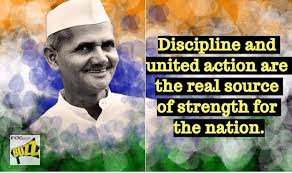
Lal Bahadur Shastri was sixteen when Gandhiji called upon his countrymen to join the Non-Cooperation Movement. He decided at once to give up his studies in response to the Mahatma’s call. The decision shattered his mother’s hopes. The family could not dissuade him from what they thought was a disastrous course of action. But Lal Bahadur had made up his mind. All those who were close to him knew that he would never change his mind once it was made up, for behind his soft exterior was the firmness of a rock.
Lal Bahadur Shastri joined the Kashi Vidya Peeth in Varanasi, one of the many national institutions set up in defiance of the British rule. There, he came under the influence of the greatest intellectuals, and nationalists of the country. ‘Shastri’ was the bachelor’s degree awarded to him by the Vidya Peeth but has stuck in the minds of the people as part of his name.
In 1927, he got married. His wife, Lalita Devi, came from Mirzapur, near his home town. The wedding was traditional in all senses but one. A spinning wheel and a few yards of handspun cloth was all the dowry. The bridegroom would accept nothing more.
In 1930, Mahatma Gandhi marched to the sea beach at Dandi and broke the imperial salt law. The symbolic gesture set the whole country ablaze. Lal Bahadur Shastri threw himself into the struggle for freedom with feverish energy. He led many defiant campaigns and spent a total of seven years in British jails. It was in the fire of this struggle that his steel was tempered and he grew into maturity.
When the Congress came to power after Independence, the sterling worth of the apparently meek and unassuming Lal Bahadur Shastri had already been recognised by the leader of the national struggle. When the Congress Government was formed in 1946, this ‘little dynamo of a man’ was called upon to play a constructive role in the governance of the country. He was appointed Parliamentary Secretary in his home State of Uttar Pradesh and soon rose to the position of Home Minister. His capacity for hard work and his efficiency became a byeword in Uttar Pradesh. He moved to New Delhi in 1951 and held several portfolios in the Union Cabinet – Minister for Railways; Minister for Transport and Communications; Minister for Commerce and Industry; Home Minister; and during Nehru’s illness Minister without portfolio. He was growing in stature constantly. He resigned his post as Minister for Railways because he felt responsible for a railway accident in which many lives were lost. The unprecedented gesture was greatly appreciated by Parliament and the country. The then Prime Minister, Pt. Nehru, speaking in Parliament on the incident, extolled Lal Bahadur Shastri’s integrity and high ideals. He said he was accepting the resignation because it would set an example in constitutional propriety and not because Lal Bahadur Shastri was in any way responsible for what had happened. Replying to the long debate on the Railway accident, Lal Bahadur Shastri said; “Perhaps due to my being small in size and soft of tongue, people are apt to believe that I am not able to be very firm. Though not physically strong, I think I am internally not so weak.”
In between his Ministerial assignments, he continued to lavish his organising abilities on the affairs of the Congress Party. The landslide successes of the Party in the General Elections of 1952, 1957 and 1962 were in a very large measure the result of his complete identification with the cause and his organisational genius.
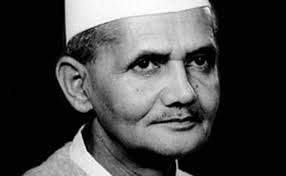
More than thirty years of dedicated service were behind Lal Bahadur Shastri. In the course of this period, he came to be known as a man of great integrity and competence. Humble, tolerant, with great inner strength and resoluteness, he was a man of the people who understood their language. He was also a man of vision who led the country towards progress. Lal Bahadur Shastri was deeply influenced by the political teachings of Mahatma Gandhi. “Hard work is equal to prayer,” he once said, in accents profoundly reminiscent of his Master. In the direct tradition of Mahatma Gandhi, Lal Bahadur Shastri represented the best in Indian culture.
Thank You!
Unrest among students
By: Astha Raghav
Student unrest is one of the problems of the day. The problem, however, cannot be analyzed properly unless we view it in the larger context of general unrest and discontentment in the country. As the things are, there is growing dissatisfaction everywhere. Prices are soaring and the burden of taxation is growing heavier. Corruption is rampant everywhere. Academic institutions are no exception to it these have polluted the student’s minds and created unrest in their hearts. Growing frustration is the root cause of student’s unrest. An average student has nothing but frustration in store for him, especially in the matter of employment. He joins one or the other course of study without any definite aim of his life, so he is frustrated.
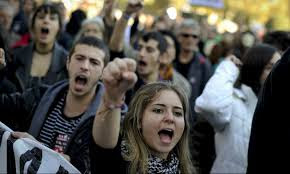
Political exploitation is another cause of student unrest. The vested interests in all political parties try to use the force of students for their personal ends. They patronize the student leaders in times of their union elections and ultimately use the academic atmosphere. They often instigate the students to indulge in anti-social and subversive activities.
The teacher-taught relationship has undergone tremendous change in recent years. Materialism has stuck deep roots in our thoughts and our teachers are more concerned about their own prospects than about those of their students. As a result, the student feels let down and confused, unable to find anyone to give him proper guidance. Maladministration of academic institutions is also responsible for indiscipline among students. The uncertainty of the future caused by unemployment instigates the students to indulge in anti-social and subversive activities.
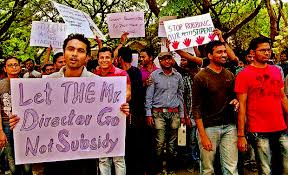
We cannot neglect the effects of mass media on students. With the fast-developing means of communication the world is coming closer day by day and the developments in one corner of the globe do not fail to affect others. If a student-led revolution takes place in some countries, their actions will naturally influence their counterparts in India. Students have been at the forefront in bringing about political upheavals in different parts of the world, no wonder; the Indian students feel they can do something similar here too. Student unrest is a social problem. It is to be tackled by responsible leaders and public-spirited men of society. The important remedy to the problem is that efforts should be made to increase opportunities for employment and education should be, as such, geared towards more of the professional career than mere academic pursuits. The academic environment should be improved and closer parent-teacher contact assure. The energies of the students should de-channelized towards a purposeful life. It should be a combined effort of educationists, parents, and leaders.
<
p style=”background-color: white;color: #070707;padding: 7px 0px”> Thank You!
ASPERGILLOSIS
BY DAKSHITA NAITHANI
INTRODUCTION
Pier Antonio Micheli, a priest and scientist, named Aspergillus while documenting moulds in 1729. The mould looked like an aspergillum, which is a type of holy water sprinkler. Physician Georg W. Fresenius described the species fumigatus for the first time in 1863.
Apergillus spp., found in abundance of nature, can be found in soil, decomposing materials, water sources, and air particle. Aspergillus-related disease is uncommon, although it has a significant death rate. The majority of people are exposed to spores (conidia) during their lives, although illness development occurs mostly in people with compromised immune systems, as well as during construction and yard activities. In patients with leukaemia, asthma, cystic fibrosis, and hematopoietic stem cell transplant recipients, A.fumigatus is the most frequent invasive mould infection, with death rates exceeding 50 percent in these high-risk populations.
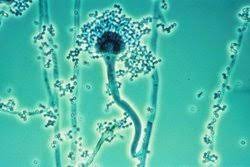
Around the apex, the stipes are grey in colour. They feature a slick finish. Their globule is tiny and columnar. The conidia’s texture is either smooth or spinose.
WHERE IT CAN BE FOUND?
Aspergillus is commonly found in rotting plant matter. After considerable environmental exposure to Aspergillus spores, such as when handling tree-bark chipping, Aspergillosis can develop in healthy hosts.
Aspergillus can be found in soil, compost piles, and damp grain in outdoor settings. Aspergillus may be found within buildings in wet insulation, fireproofing material, beds , behind couches, in damp rooms’ corners, dust, and air conditioning systems. In the Northern Hemisphere, most research studying seasonal changes in fungal exposure show an increase in airborne Aspergillus throughout the cold season.
TYPES OF ASPERGILLOSIS
Allergic bronchopulmonary aspergillosis (ABPA) is a multifaceted hypersensitivity reaction to inhaled Aspergillus fumigatus. Although it produces lung irritation and allergy symptoms, it does not cause infection. Aspergillus sinusitis is caused by an allergic reaction to the fungus Aspergillus, which produces inflammation in the sinuses and the symptoms of a sinus infection but does not cause an infection. A fungus ball is also known as an Aspergilloma. It forms in the lungs or sinuses but seldom spreads to other regions of the body, as the name implies.
Aspergillosis of the lungs (chronic pulmonary aspergillosis) Aspergilloma, chronic cavitary pulmonary aspergillosis (CCPA), chronic fibrosing pulmonary aspergillosis (CFPA), and Aspergillus nodules are all illnesses classified as chronic pulmonary aspergillosis (CPA). CPA is a lung infection that develops over time.
INVASIVE PULMONARY ASPERGILLOSIS
Inhaled conidia are removed by epithelial cells and alveolar macrophages in normal host lungs. Aspergillus becomes invasive when conidia escape these host defences and develop into branching filaments called hyphae. Alveolar macrophages generate inflammatory mediators, which attract neutrophils, which can destroy the hyphae.
CUTANEOUS SKIN ASPERGILLOS
Aspergillus comes in contact through a breach in the skin (for example, after surgery or a burn wound) and infects persons with weaker immune systems. Cutaneous Aspergillosis can also develop if invasive Aspergillosis moves from another part of the body, such as the lungs, to the skin.
LIFE CYCLE
Aspergillus begins its infectious life cycle by producing conidia (asexual spores) that are easily transported into the atmosphere, ensuring its ubiquity in both habitats. Inhalation of these conidia is the most common way to become infected, followed by conidial deposition in the bronchiole spaces. The phagocytosis and destruction of Aspergillus conidia is largely carried out by macrophages. The danger of infection stems largely from a breakdown in these host defences, as well as fungal characteristics that allow A. fumigatus to survive and flourish in this pulmonary habitat.
SYMPTOMS
The symptoms of Aspergillosis are:
- Wheezing, chest pain
- Shortness of breath, stuffiness, runny nose and reduced ability to smell
- Cough (sometimes blood)
- Fever (in rare cases), headache, fatigue
- Weight loss
• The length of time that an illness lasts depends on the underlying health concerns, the intensity or location of infection, and the kind of sickness.
• Allergic forms, may require steroid and antifungal treatment for a few months, possibly longer sometimes.
• Invasive pulmonary Aspergillosis may need at least 6 to 12 weeks of antifungal therapy. Severe cases may need therapy for lifetime and monitoring to keep the illness under control.
• If the infection spreads from the lungs to other areas of the body, additional symptoms may appear.
• Red to purple plaques or papules are common symptoms of cutaneous Aspergillosis.
DIAGONOSIS
Because the symptoms of Aspergillosis might be confused with those of other lung diseases, diagnosing it can be challenging. In order to make a diagnosis, your healthcare practitioner will look at your medical history, risk factors, symptoms, physical examinations, and lab testing.
An Aspergilloma, a fungal tumour, or the symptoms of invasive Aspergillosis and ABPA can be found on a chest X-Ray or a chest CT scan.
• A sample of your sputum is stained with a dye and examined for the presence of Aspergillus filaments in a respiratory secretion (sputum) test.
• Tissue and blood testing may be used to confirm the presence of ABPA.
• To confirm invasive aspergillosis, a biopsy of tissues from your lungs or sinuses is performed, as well as blood testing.
TREATMENT
In addition to early diagnosis, early treatment is critical in managing aspergillosis. Depending on the type of disease, one may have the following treatments:
• Observation- If you have a single aspergilloma, you may not need treatment; instead, you may be monitored with regular chest X-rays or CT scans. The doctor may prescribe antifungal medication if your disease worsens.
• Antifungal medicines may be used in combination with corticosteroids to reduce the need of steroids, improve lung function, and prevent existing asthma or cystic fibrosis from deteriorating. Some examples are prednisone (Deltasone), prednisolone (Orapred), and methylprednisolone (Medrol).
• Invasive pulmonary aspergillosis is treated with antifungal medications. Voriconazole (VFEND) and amphotericin B are two of these drugs (Amphocin, Fungizone).
• Surgery- as antifungal medicines have a hard time penetrating an aspergilloma, surgery may be required to remove the fungal mass if the aspergilloma causes pulmonary haemorrhage.
Embolization of the Arteries -This technique can be used to temporarily halt aspergilloma-related bleeding. A radiologist uses a catheter to inject a substance into an artery supplying a lung cavity where an aspergilloma is causing blood loss. The injected substance solidifies, cutting off the area’s blood supply and halting the bleeding. This therapy works for a while, but the bleeding will most likely return.
India Vs England
First Test
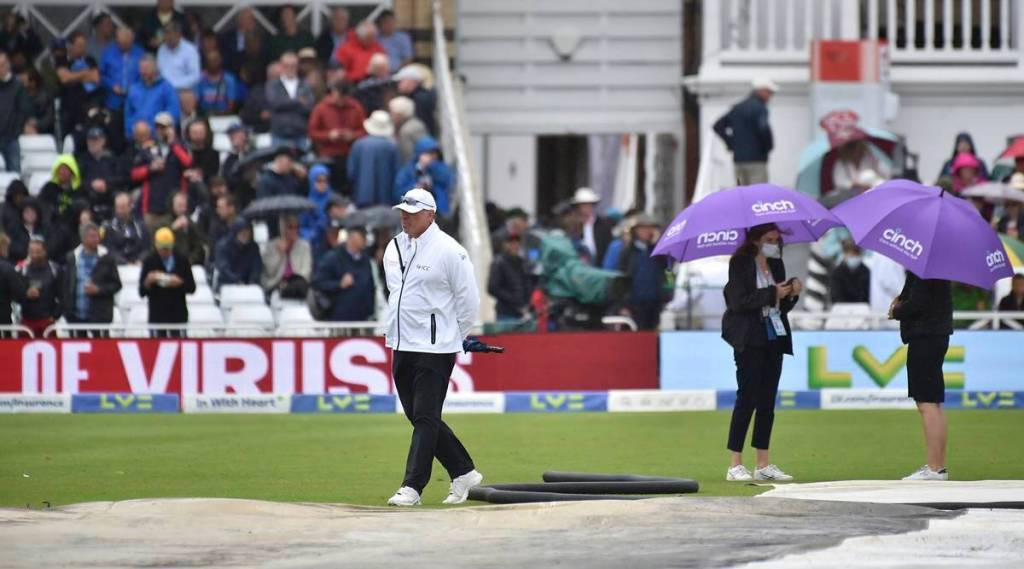
England 183 and 303 (Root 109, Curran 32, Bumrah 5-64) drew with India 278 and 52 for 1 (Rahul 26, Broad 1-18)
The promised grandstand finish to the Trent Bridge Test never materialised as it rained all morning and all afternoon in Nottingham to force a draw.
India came into the day slight favourites, needing a further 157 runs with nine wickets in hand on a quick-scoring ground whose pitch seemed to have settled down from the treacherous pit it had been in the first innings.
We will never know which team really lost out because of the rain, but they will both take four World Test Championship points each from the match.
Second Test
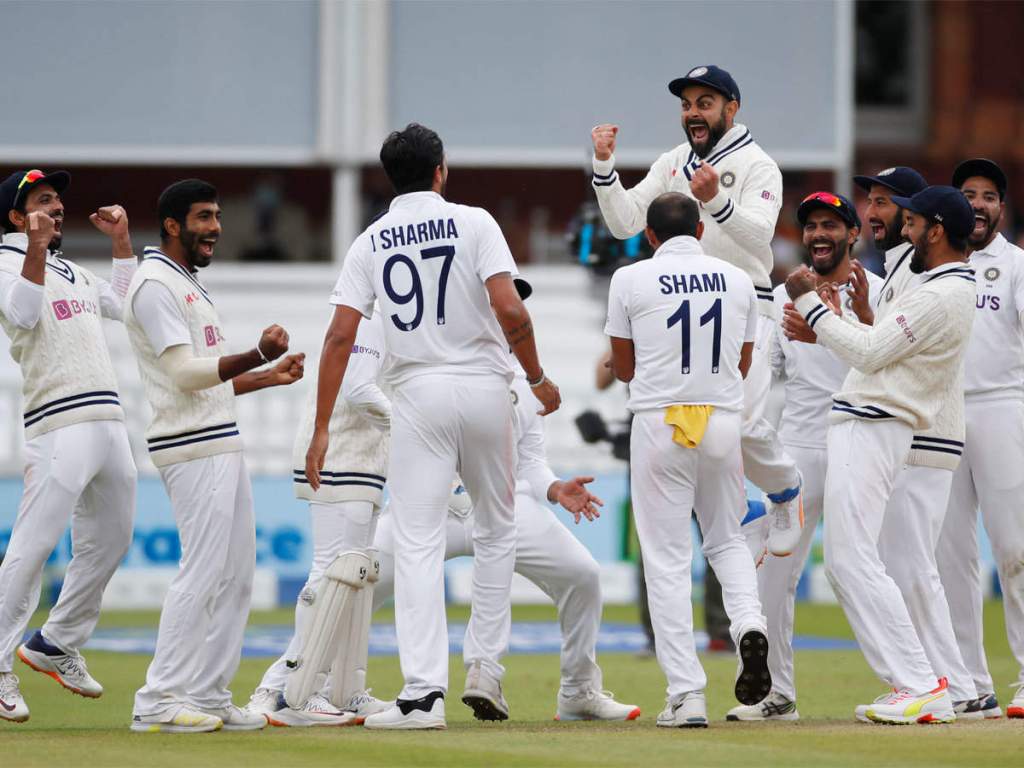
Kohli’s men go 1-0 up after hosts fold for 120, chasing 272, in the last hour
India 364 (Rahul 129, Rohit 83, Anderson 5-62) & 298 for 8 dec. (Rahane 61, Shami 56, Wood 3-51) beat England 391 (Root 180, Bairstow 57, Siraj 4-94) & 120 (Root 33, Siraj 4-32, Bumrah 3-33) by 151 runs
Another overseas Test, another flourish from India’s lower order. Jasprit Bumrah’s day began as a batter in a hostile environment; by the end of the day, he and Mohammed Shami had turned the pressure around on England so swiftly and clinically that the hosts, who were in control of the game coming into the last day, folded in the final hour as India went 1-0 up in the series.
India were 154 ahead when the day began, with Rishabh Pant and the bowlers left to contend with the second new ball. For the first half an hour, everything went according to plan for England. Their relentless, disciplined attack at India on Sunday evening had set them up to go all guns blazing.
Pant has foiled a plan or two this year, including on England’s tour of India in February, and he was priority number one. They got him early, when he nicked behind on the forward defensive. India were 167 ahead then, with three wickets in hand.
India had 60 overs to bowl out England and the task was made possible by an all-round effort from the pacers. Mohammad Siraj was the pick of the bowlers with four wickets including the final one. India’s long tail wagged as Mohammad Shami and Jasprit Bumrah shared an unbeaten 89-run stand to take India to 298 for eight before declaration came shortly after lunch.
India’s Mountains and Rivers 🇮🇳
So time to value our natural resources. Today we will know about the Mountains and Rivers of India. Great poets have sung songs in the praise of mountains and rivers of India. They are a boon for us. The rivers and mountains are source of great pride and joy for every Indian. India is blessed with the natural beauty as a whole which makes it different from other countries.
If we look at the map of the country, we find long ranges of mountains in the North. They are the Himalayas .They remain covered with snow throughout the year. They have some of the highest peak of the world. In Central India also we find big mountains. They are the Vindhyanchal and Satpura range. They separate Southern and Northern India. Besides these, Araveli and Nilgiri Hills are slow famous.
Mountains are useful from various points of view. First the high Himalayas are called “The Sentry of India ” they are so high that go enemy could invade India by crossing them. So they are like a natural wall which separates India from Tibet. Sharpa Tenzing an Indian citizen was the first to conquer the highest mountain peak of the world MOUNT EVEREST. He made history and so did Bichendri Pal the first woman to conquer this peak.
Like mountain and their ranges, our rivers are also world famous and well known. In the North, we have the Ganga (Ganges), the Yamuna, the Brahmaputra and their numerous tributaries, the Ganga is regarded as sacred by the Hindus and thus called Ganga Maa. South has famous rivers like Krishna, Kaveri, Narmada. Many of our big cities are situated on the banks of these rivers. Varanasi, Haridwar and Allahabad are important pilgrimage sites.
Rivers and mountains are real wealth of the country. Thanks to them. We are sure to make great progress in the near future. These natural resources should be fully utilised according to the necessary needs and try to save them. Hope you will like reading it.
Thank you!!
Missile Man of India
So I think you must have the name by the title…. Yes you are absolutely right none other than Ur. A.P.J Abdul Kalam. Dr. Avul Pakir Jainul Abideen Abdul Kayam, the missile magician who became the President of India (2002-2007). His name is synonymous with India’s technological development in satellite launch vehicles missile, main battle tank and light combat aircraft.
He was born on 15th October, 1931 in Rameshwaram in Tamil Nadu. He graduated from St. Joseph in Trichy and later specialized in aero – engineering at the Madras Institute of Technology . His only stunt abroad was a four month visit to NASA in the United States. In 1958 , he joined the Defence Research Organization (DRDO) and five years later he joined the Indian Space Research Organization (ISRO).
Dr. Kalam left the Vikram Sarabhai Space Centre in 1982 and joined the Research and Development Establishment Hyderabad as Director. It was here he conceived Integrated Guided Missile Development Programme and laid a solid foundation for indigenous design development of critical technology projects. In 1986 the Guided Missile Board took the decision to take up Missile Technology Control Regime from there on the short range anti tank Nag, surface to air Trishul and Akash 250 km, range Prithvi and Intermediate Range Ballistic Missile (IRDM) Agni came into existence.
Over the 15 years the Kalam team has delivered five missile to the nation of gradually improved efficiency and this was primarily due to the kind of leadership and vision that, Kalam provided. The nuclear test conducted on May 11 and 13, 1998 by the joint efforts of DRDO team led by Dr. Abdul Kalam and the atomic energy team had made India the 6th nuclear in the world.
He was awarded the Bharat Ratna, highest civilian award of the country in 1997. He was a man of victory who was at peace with himself. He never changed himself. His simplicity, politeness, humility and thoughtfulness is still remembered and alive among us. On 27 July, 2015 while delivering a lecture at Indian Institute of management, Shillong he was collapsed and then died of sudden cardiac arrest. Dr. Kalam was basically a man of peace.
FRIENDSHIP
Friendship is one of the greatest treasure bestowed on a person by time , it’s one of the significant bond one can ever wish for. A friendship stands on the pillars of trust like other relationship. The bond has to be cultivated for years so that it’s roots become strong and it can stand through every thick and thin of life. Friendship has no age, gender or cast. The most important part of this bond is acceptance, there is no judgement. And it’s them with whom u forget all the worries of your life as you know they will be the one to whom you will go to seek shelter in the rain of pain and difficulties.
Let me dedicate a poem to friendship;
THE THING I AM CURIOUS ABOUT; FRIENDSHIP.
A bestfriend say’s hastag forever!
But who know’s what future beholds,
Today you might be as close as winning a race,
But within a blink the future may change.
Yes! I am curious about my friendship.
I fear, I might lose it in a second:
Friendship is supported by the pillars of trust,
But trust is as delicate as glass.
Friendship is a circle that never ends,
But what if friendship takes 360 degree spin.
The circle can be broken into an arch,
But you can’t lose, only mourn.
The longing can be as painful as knife through heart,
I hope the crescent moon phase never arrives;
The crescent moon is a beautiful sight, but not in friendship.
The friendship circle shines like a moon in the darkest night.
 Eduindex
You must be logged in to post a comment.