GURU CIRCUIT
TAKHAT SRI HARMANDIR SAHIB
GURDWARA PAHILA BARI AKA GURUDWARA GAE GHAT
GURDWARA BAL LILA MAINI SANGAT
GURDWARA SHRI GURU GOBIND SINGH GHAT
GURDWARA HANDI SAHIB DANAPUR
GURDWARA BARI SANGAT SHRI GURU TEGH BAHADUR JI CHAUKI
|
ISBN NO. for Print Proceedings of Conference |
|
|||||
|
Publisher of Print Proceedings of Conference Papers |
Technoarete Research & Development Association |
|||||
|
Imprint |
Technoarete |
|||||
|
Name of Conference |
International Conference on Technological Advancement in Science, Engineering, Management & Pharmaceutics – 2021 (ICTASEMP-21)
|
|||||
|
Date of Conference |
15th – 16th July 2021 |
|||||
|
Venue of Conference |
Virtual Conference |
|||||
|
Conference Organizers Name and Details |
Department of Electronics and Communication Engineering Holy Mary Institute of Technology & Science in Association with Institute For Engineering Research and Publication (IFERP) |
|||||
|
Brief About Conference (100 to 500 words) |
International Conference on Technological Advancement in Science, Engineering, Management & Pharmaceutics – 2021 (ICTASEMP’21) aims to bring together leading academic scientists, researchers and research scholars to exchange and share their experiences and research results about all aspects of Electronics & Communication Engineering, Electrical Engineering, Computer Science & Engineering, Information Science & Engineering, Biotechnology, Mechanical Engineering, Civil Engineering, Basic Science Engineering and Master of Business Administration (MBA). Now-a-days the academia and researchers are not only pondering but also experiencing the overwhelming outcomes of interdisciplinary researches. Moreover, it has been ubiquitously encouraged by the governments, research agencies and by the academic institutions. The context of the conference is to foster as well as exaggerate the research culture among academia and industry facilitated by sprinkled out ideas by exchange of the intellect during conduct of the conference. For more Details: https://ictasemp.com/
|
|||||
|
Editor of Conference Proceedings |
Mr. Y. David Solomon Raju, Head of the Department, ECE, Holy Mary Institute of Technology & Science (Autonomous), Hyderabad |
Jamkhanas (durries) in Kannada means floor covering mats which are usually used during marriages and functions. These durries from Navalagund near Dharwad, Karnataka are well known for their structure, bold colors and form that makes them unique as compared to other durries. This craft is believed to have originated during the time of Ali Adil Shah of Bijapur. In the sixteenth century during the tussle between Deccan Sultanate and Vijayanagar Empire in 1565 AD, Jamkhana weavers migrated from Bijapur to Navalgund and continued this craft. Navalgund or Navelu in Kannada means peacock. These birds are found in abundance in this area and later got incorporated as a part of the pattern in the jamkhana.
ALSO BUY: Rosewood carving and metalware.
The very common masala dosa has its origin in Udupi, and a whole school of South Indian vegetarian cousine taken its name from this town. This is pure vegetarian food, sans onion or garlic. Adyes, ajayinas and chutneys, including one made of the skin of the ridge gourd, are the specialties of this region.
Kodava cuisine is very distinctive, just as the costumes, customs and festivals of the Kodavas. Pandi curry and kadumbuttu are arguably the most delicious dishes in the Kodava repertoire. The juicy Koli curry, book putty and bembla curry are also worth trying.
ALSO TRY: Uppittu, Kori Rotti and Sandige.
The Dollu Kunitha is a powerful drum dance accompained by arobatic movements, synchronised group formations and occasional screams. The shepherd community of ‘Kurubas’ performs the dance to honour their deity, Beereshwara, a form of the Hindu God, Shiva.
Veeragaase gets its name from the Hindu legendary warrior, Veerabhadra, where dancer narrate the story of Daksha Yajna. Dressed in colorful garb and traditional headgear, the dancers carry a wooden plaque of Veerabhadra in their left hand and a sword in their right.
Krishna Parijatha is a fascinating theatrical art form and is most popular in the northern part of Karnataka. The folk art narrates the adventure of Lord Krishna and Lord Indra and is quite popular throughout the whole country. Along with the vibrant and distinct costumes, Krishna Parijatha has the capability to enchant the viewer with its powerful performance. Moreover, the simple dialogues and the exciting plot add to the charm of the performance.
Kamsale refers to the musical instrument, which is made of brass and is used in the performance of the art form of Beesu Kamsale. The dance is performed with rhythmic and synchronized movements of the performers in tune with the music. This art form requires the performer to have intense training and concentration to present a powerful performance.
CHOWDIKE MELA
The devotees of Yellama, the patron goddess of the rural folk of North Karnataka, perform Chowdike Mela. ‘Chowdike’, a unique stringed instrument, partners their mesmerizing praise of the Goddess. The singers usually dedicate their entire lives solely to singing the heavenly glory.
The town of Mysore transforms dramatically into city of lights and celebration during the Dasara festival, held annually to commemorate the victory of Goddess Chamundi over the demon mahishasura. The ten day festival culminates in a magnificent display of horsemanship and the ever memerising torchlight parade.
This nine- day long festival is conducted by the Thigalar community, in the heart of city Bangalore. The festival is dedicated to Shakthi Devi, Draupathi in her godly form. The main priest is dressed in female attire, complete with a large pyramid of flowers on the head to symbolize her. He leads a spectacular procession of Thigalars who, with swords in hands, play the mythical roles of fearless soldiers of the Goddess, once more.
OTHER FESTIVALS: Kambala, Vairamudi, Tula Sankramana, Huthri &Kadalekayi Parishe.
Visit to nature’s headlong tumble as the Sharavati River takes a spectacular drop of 956ft. In four distinct waterfalls to create highest waterfall in India.
Discover nature’s creation in the form of this tiny island- town, 65km south-east of Mysore. Here the Cauvery River plummets from a height of 75m into a rocky gorge with the deafening roar. It is also home to Asia’s first hydro- electric project.
Nesting beside the Nagarahole National Park, Irrupu Falls presents a stunning sight during the monsoons. The falls plunge 170 ft. In two distinct stages. It is a great picnic spot.
A 5km trek from Heggarne, a dreamy hamlet in Uttara Kannada District, through dense forests brings you to the picturesque Unchalli Falls. The sound of the large waterfall hurtling down the hilly tract shatters the silence of forests, making it an unforgettable sight.
ALSO VISIT: Gokak Falls, Hebbe Falls, Abbey Falls, Kalhatti Falls, Magod Falls, Sathodi Falls and Lalguli Falls.
With gentle waves, miles of golden sand, rugged hill ranges, thick woods and acres of emerald greenery, Karwar is a great holiday destination.
This coastal town draws Hindu pilgrims, Sanskrit scholars and beach buff. Visit Om beach, which is in the shape of ‘Om’, a spiritual symbol.
Situated 12km south of Udupi, on the coastal belt that passes through the West Coast National Highway, Kaup has a lovely beach, a ruined fort and an old 100ft. light house. The two temples of Goddess Marianna and the Jain Basadis her, though in ruins, are worth visiting.
The 300m long and 100m wide palm- fringed St. Mary’s Island bears the cross placed by Vasca de Gama when he landed in 1498. Famous for its unique salt rock formations and geological importance, it has been declared National Geological Monument.
ALSO VISIT: Maple, Murudeshwara, Marawanthe, Ullal Beach, Suratkal Beach and Bhatkal.
Indulge in the thrills of white water rafting on some unpredictable stretches of the Kali River at Dandeli, an experience so far unavailable this side of the Ganga. Kemphole, Sitanadi and Netravati are other popular destinations for white water enthusiasts. The azure waters of the Cauvery also provide for some great river rafting.
Karnataka is a haven for all kinds of water sports. If you are looking for activities like coarcling, canoeing, kayaking and wind surfing, visit Honnemaradu. For scuba diving, power sailing, water skiing, sailing and water sledging, Devbagh is the ultimate destination.
Die-hard trekkers can explore the coastline on foot via the enchanting Golden Trek from Karwar to Gokarna. If you want to view the distant Arabian Sea, trek to Tadiyendamol, the tallest peak in Kodagu. When it comes to rock climbing areas like Ramanagar, Savanadurga, Tumkur, Yana, Hampi and Kanakapura are the best places for it.
It is a great place to sight the tiger, the Indian bison, striped hyena and the rare flying lizard. The southern part of the sanctuary is rich in birds, butterflies and reptiles. More than 250 species of birds can be spotted here.
Explore the surroundings of Nagarahole, which means ‘Snake River’ in Kannada. The park derives its name from winding course of the River Kabini that flows through the forests. Nagarahole has astonishing abundance of wildlife, especially the Asiatic elephant. It also has the backdrop of distant misty blue Brahmagiri.
ALSO VISIT: Cauvery Wildlife Sanctuary, Anshi National Park, Daroji Bear Sanctuary, Ranganath ittu Bird Sanctuary.
Coorg (also called Kodagu) is the land of coffee, cardamon, and colonels, located in beautiful hilly area settings, surrounded by the forested slopes of the Western Ghats. Kodagu seems to be a little corner of England. It is the place where River Cauvery originates.
Nested in the Baba Budan Giri Hills, where India’s first coffee seeds were planted is a calm, serene town full of scenic surprises with hills, valleys, streams and coffee plantations. Chilamagalur is a trekker’s due to its rugged mountain trails.
Kudremukh or Horse Face Range gets its name from the unique shape of its peak. It is a trekker’s paradise. This wonderland of lush green forests interspersed with rivers, grassy slopes, rare orchids, caves, cascades, ruins and traces of old civilizations amaze you as you trek your way through it.
ALSO VISIT: Agumbe, Kundadri, Kemmanagundi, Nandi Hills, BR Hills and Kodachadri.

KOLLUR MOOKAMBIKA TEMPLE
Introduction
With 448 Articles, 25 Parts, and 12 Schedules, the Indian Constitution is the world’s longest. It is the ultimate law of the land and controls a variety of sectors, some of which are essential and necessary for the nation’s functioning. The various portions of the Constitution have a specific title under which various legislation pertaining to that subject are listed. Parts III and IV, the Fundamental Rights and the Directive Principles of State Policy, are the most visible and discussed sections of the Indian Constitution. Whereas the Fundamental Rights are the rights that all citizens have, the Directive Principles are the mandates that the State must bear in mind when making laws and regulations. Each has a specific function to play, and each is fully described.
However, there may be times when both of these elements are at odds with one another. A circumstance may call for one to be picked over the other, i.e. one to take precedence over the other. In such a scenario, not only is it difficult to select between the two, but the worth of the one not chosen is reduced. It is sometimes stated that Basic Rights, since they are essential, will take precedence over Directive Principles; nevertheless, it is also contended that Directive Principles are fundamental in the sense that they provide the foundation for the operation of the State. To determine their real nature and activities, it is necessary to thoroughly analyse both components and comprehend the points of distinction between the two.
The Fundamental Rights

Individuals’ rights are extremely essential. Rights aid in the formation of personality by providing a person with plausible claims that may be enforced against the State if any of his basic convictions are infringed. The Fundamental Rights envisioned in Part III of the Indian Constitution are the fundamental rights guaranteed to every citizen of the nation, regardless of caste, creed, gender, religion, place of birth, and so on. Articles 12 to 35 of the constitution mention six essential rights:
These rights further branch out and give us various other fundamental rights, such as the Right to Privacy, the Right to Education, the Right to Life and Personal Liberty etc.
Although the rights are fundamental in nature, they can be taken away in certain situations, for example, if there is a situation of emergency under Articles 358 and 359 of the Constitution. Even then, the Right to Life and Personal Liberty cannot be taken away by the State.
The Directive Principles of State Policy
Articles 36 through 51 of the Constitution include the Directive Principles of State Policy. They were derived from the Irish Constitution, which was derived from the Spanish Constitution. The Directive Principles are rules that the government must follow while developing legislation for the country. They fulfil the notion of a Welfare State, which can only be realised if these Principles are followed in the manner that they are stated. Article 37 of Part IV indicates that, while these principles are not enforceable in any court of law, they are important to the country’s governance and the government has a duty to adopt them when drafting legislation.

In contrast to Fundamental Rights, the Directive Principles are not classified in the Indian Constitution. However, for a better understanding, they are typically divided into three categories: socialist principles, Gandhian principles, and liberal-intellectual ideas.
The Directive Principles do advocate for the protection of certain rights, such as the right to equal compensation for equal labour, as well as equality and justice, but they are more rules than rights. They may be classified as the responsibilities of those in charge of governing the country.
Points of Difference Between Fundamental Rights And Directive Principles Of State Policy
Apart from the fact that the Fundamental Rights and the Directive Principles of State Policy represent distinct things and are found in various portions and articles of the Constitution, they are fundamentally different in terms of their aims and execution. The following are the relationships between fundamental rights and state policy directive principles:
Conclusion
The differences between the Fundamental Rights and the Directive Principles of State Policy suggest that the aims and objectives of both are different but somewhat similar. Each part of the Constitution compliments another, and so do they. It is necessary to understand the importance of each and apply/use them accordingly. Fundamental Rights are rights in the sense that they are available to the people, and Directive Principles act as duties upon the State, which the State is required to fulfil, even though the Directive Principles incorporate some elements of social and economic rights. Together, they aim at promoting the principles of democracy and welfarism, which can be achieved only when both the parts go hand in hand, without any conflict.
|
ISBN NO. for Print Proceedings of Conference |
|
|||||
|
Publisher of Print Proceedings of Conference Papers |
Technoarete Research & Development Association |
|||||
|
Imprint |
Technoarete |
|||||
|
Name of Conference |
2nd International Conference on Futuristic Trends in Embedded Systems and Networking (ICFTEN 2021)
|
|||||
|
Date of Conference |
07th – 08th July 2021 |
|||||
|
Venue of Conference |
Virtual Conference |
|||||
|
Conference Organizers Name and Details |
Department of Electronics and Communication Engineering & IQAC Rao Bahadur Y.Mahabaleshwarappa Engineering College, Ballari in assosciation with Institute For Engineering Research and Publication (IFERP)
|
|||||
|
Brief About Conference (100 to 500 words) |
The objective of ICFTEN-2021 is to present the latest research and results of scientists (preferred students, post graduate Students, Research Scholars and post-doc scientists) related to Electrical, Electronics & Communication Engineering and Computer Science & Engineering. The conference will feature traditional paper presentations as well as keynote speeches by prominent speakers who will focus on related state-of-the-art technologies in the areas of the conference.
For more Details: https://icften.com/ |
|||||
|
Editor of Conference Proceedings |
Dr. S. Prabhavathi, Professor,Department of ECE,RYMEC, Ballari |
By:Astha Raghav
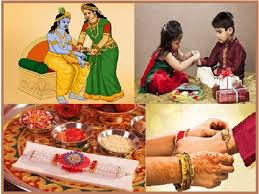
An occasion like Raksha Bandhan rings the bell once in a year, and it’s a moment which means a lot to a sister, so adore your loving sister with some super fantastic gift items which can make her delighted on this special day. You will never go wrong with offering a package of dark chocolate, personalized mug, favorite teddy, etc. So, dedicate a meaningful gift that can bring a big smile of happiness on her face on this special day.
He would have always surprised you with lots of gifts on various occasions. Now, it’s time to return the favor by giving your brother a little token of love. With blessings and loads of love, offer some heart-touching gifts to naughty brother on the special occasion of Raksha Bandhan. Delight him with cute and adorable gifts such as personalized pen stands, personalized photo frame, God idol, etc. and let him know how much he means to you.
Education is the guide to live as a human being. Because education is the sharpening of human rationality. This education can be of two types. One is Notebook Education and the other is Vocational Education.
” Learn an industry. Admit it you have no worries ” said a poet. It is an empirical fact that the home and country of those who receive vocational education based on notebook education will rise economically and professionally.
It is man’s economy to provide for man’s basic needs such as food, cloths and shelter. Creating the economy is work. Vocational education is essential for work. Those who have learned a profession work hard and improve their lives.
There are many lakhs of young people in our country who have just learned the notebook education and left to register with the employment office and are waiting for a job. If they had learned a profession like the young people of Japan, they would not have had to wait for work. So it turns out that vocational education is essential.
The government offers more than 50 types of vocational education to students. Although medical, engineering and computer related courses are at the forefront, today due to the development of science, tens of thousands of students are dropping out in various disciplines in their respective fields. Not only this, with the advent of automotive, home appliances, clothing, and jewelry, we can see that cooking has become a vocational education today. So low fees for vocational trainees, many incentives, accommodation for expatriate students, scholarships, food can all motivate them on many levels. Along with these, vocational trainees will be given direct training in good factories and training workshops and after completing their training, they will be able to work in good jobs or develop their own vocational education through various incentives such as business start-up assistance and the profits from vocational education will grow in the country.
Our country with a population of over three hundred crores. These people need a wide variety of items such as food, cosmetics, sporting goods, stationery and vehicles. To provide all this, cottage industries, medium industries and heavy industries are being started. In all these, preference is given to those who have got vocational education.
Vocational learning is the only way to produce world-class products. Vocational learners can stand on their own two feet and live with dignity without expecting anyone’s favor for the job.
There is no ups and downs in the industry. Therefore, the youth should come forward to learn and choose the profession that is suitable for them.
(Photo: Chess.com)
Chess, the king of all mind games….
Chess is perhaps the most popular and treasured board game in the world. The history of chess goes back to many years, decades and even centuries. But who really invented the game we all love? What was the origin of this famous mind game many millions of people play? How is it made? Many questions arises and rises our curiosity to know about it even more.
So, the tale begins about 1500 years aback when it originated in India. In India, the game was referred as Chaturanga, and has been mentioned in Persian manuscripts. From India, chess travelled to Persia, and through Muslim influence, it spread throughout the Europe. The game became very popular in the Muslim world, and it was carried throughout Islam, across North Africa and eventually into Europe.
With time the rules changed. Chess spread like a wildfire throughout Europe after the rules had been changed so that queen and bishop had greater mobility, and was even called “mad queen chess”. This was the start of our modern chess, and the popularity and growth of chess has not stopped since then. It remains a highly popular pastime in these days. In India, this game is very famous and thanks to the grandmaster Vishwanathan Anand.
Now another big question which arises is that: How are they made? A chessboard is made up of 64 square blocks. Thirty-two squares are dark and 32 are light. The task of making a wooden chessboard is quite challenging but once you master yourself, it’s super easy. The prospect of accurately cutting and gluing together 64 blocks is daunting, so don’t do it. The first thing to do is to select two type of woods, it can also be of same type. Take the boards and put a clean edge on each board. Then, with the newly clean and straightened edge against the fence rip them to about 4” wide and cross-cut them to 28”. Clean up one face on each board. Next clean up one edge on each board. Mark an “X” on the cleaned edge of each board. With the X edge against the fence and the X face on the table of your table saw rip 2 strips from each board 1-1/2” wide. Now you will get some strips about 3/8” thick. Set them aside for use on the border of the board. Now crosscut the 4 boards to 14”. You should now have 8 boards 1.5” wide X 14” long. Now gather up your clamps, set it and glue the edges. Try to keep all the boards held firmly and with even pressure. Let it sit for 3-4 hours. After the interval scrape away all the excess dried glue. Cut perpendicular strips. Lay out the cut strips and flip every other strip to form the chessboard pattern. Now it’s time for the second glue up. Glue up the edges and clamp it like you did before. Once dry, scrape the glue and plane it flat again. Make the border with those 3/8” scrap pieces and sand it up from 150 grit all the way to 320 grit. Then a thorough wipe down with mineral spirits. And then your chessboard will be ready.
Next comes the pieces. The wooden chess pieces are very valuable and expensive in the market because of the exotic woods used. So, we need to handle the process very effectively. So, the first step is to choose a design and then only you will go into the next step of choosing wood. It can be between 1.5-4.5m as long. The blocks are dried before in the sun. It’s only when the blocks turn out to be good the transformation begins. The most challenging part is “fine carving”. You can carve your chess pieces using special tools and your hand. Spinning takes place at 2400 rpm. And then the sanding process starts. It is very important to sand the pieces, in order to get the smooth and even surface. Chess pieces are then treated with a solution to preserve. Then final touches are made and chess pieces are polished to give it a shine.
Hence the transformation of wood into chessboard and chess pieces completes. It is a time-consuming process however it’s also true that it is worth of time.
Swami Vivekananda was born in Calcutta on
12th January 1863. His name was Narendranath Dutta and his father’s name was
Vishwanath Dutta was an educated man who was well-versed in English and
Persian. By profession, he was a successful Attorney-at-law in the high court
of Calcutta. His mother was a Pious lady who influenced Naren from his
childhood in the formation of his character. She first taught Naren English
lessons, and then made him acquainted with the Bengali alphabets.
Naren studied in the metropolitan
institution at Calcutta; And after passing the Entrance exam, he joined the
general assembly institution founded by the Scottish general missionary board
in Calcutta, from where he passed his B.A. examination and went to study law.
when his father died, his family’s financial condition did not allow him to
prosecute further to study. He was a good singer.
Once Ramakrishna Paramahamsa happened to hear Naren singing a devotional song.
He asked the young man to see him at dakshineswar, where he was a priest at the
Kali temple. The Naren was very eager to see God face to face. He asked many
religious stalwarts about his desire in the past, but none could satisfy him.
He
became the most important disciple of the saint. His guru taught him that God
lives in every human being. So. By serving mankind,.one can serve God.
With this teaching, Naren, in his later
life, established the Ramakrishna mission which is to this day engaged in
rendering voluntary social service the poor and the distressed, irrespective of
caste, creed, and religion. Naren was later named as “Swami Vivekananda” when
he became a monk. He went to America to participate in the parliament of world
religions held in Chicago in 1893. In his long lecture, Swami Vivekananda
explained to the world that God is one and that the different religions are
like different rivers to terminate in the sea.
Hence there should not be any dispute
among the preachers of different religions that they worship God in separate
forms or with different beliefs. The realization of the eternal truth of one
god can avoid hatred among the people. Swamiji’s view was acclaimed with great
appreciation, and a number of American men and women became his disciples who
later joined the Ramakrishna Mission.
Swami Vivekananda taught us the essence of
nationalism in his bold writings. He wrote: “Our sacred motherland is the land
of religion and philosophy- the birthplace of the spiritual giants-the land of
renunciation, where and where alone, from the most ancient to the most modern
times, there has been the highest ideal of life open to man.”
He also said, “have faith that you are
all, my brave lads, born to do great things.”
He was an extraordinary boy with spiritual
thoughts. His education was irregular, but he completed his Bachelor of Arts
degree from Scottish Church College, Kolkata. His religious and monk life began
when he met Sri Ramakrishna and accepted him as his guru. He later led the
Vedanta movement and introduced the Indian philosophy of Hinduism to Western
countries. His Chicago speech at the World Religion Parliament on 11 September
1893, where he represented India, helped establish Hinduism as an important
world religion. He was a brilliant man with in-depth knowledge of Hindu
scriptures (Vedas, Upanishads, Puranas, Bhagavad Gita, etc.). Karma Yoga,
Bhakti Yoga, Raja Yoga, and Jnana Yoga are some of his significant and famous
works.
|
ISBN NO. for Print Proceedings of Conference |
|
|||||
|
Publisher of Print Proceedings of Conference Papers |
Technoarete Research & Development Association |
|||||
|
Imprint |
Technoarete |
|||||
|
Name of Conference |
International Conference on Civil Engineering, Architecture and Sustainable Infrastructure (ICCEASI – 21)
|
|||||
|
Date of Conference |
23rd – 24th September 2021 |
|||||
|
Venue of Conference |
Virtual Conference |
|||||
|
Conference Organizers Name and Details |
Babu Banarasi Das University, Lucknow in Association with Institute For Engineering Research and Publication (IFERP) |
|||||
|
Brief About Conference (100 to 500 words) |
About Conference The objective of ICAET-2021 is to present the latest research and results of scientists (preferred students, post graduate Students, Research Scholars and post-doc scientists) related to Electrical, Electronics & Communication Engineering and Computer Science & Engineering. The conference will feature traditional paper presentations as well as keynote speeches by prominent speakers who will focus on related state-of-the-art technologies in the areas of the conference. For more Details: https://www.icceasi.net/
|
|||||
|
Editor of Conference Proceedings |
Prof. (Dr.) Omprakash Netula,HOD, Department of Civil Engineering,Babu Banarasi Das University, Lucknow |
|
ISBN NO. for Print Proceedings of Conference |
|
|||||
|
Publisher of Print Proceedings of Conference Papers |
Technoarete Research & Development Association |
|||||
|
Imprint |
Technoarete |
|||||
|
Name of Conference |
International Conference on Data Science , Machine learning and Applications-2021 (ICDSMLA-2021)
|
|||||
|
Date of Conference |
10th & 11h July 2021 |
|||||
|
Venue of Conference |
Virtual Conference |
|||||
|
Conference Organizers Name and Details |
CSE and CS/IT Department, RabindraNath Tagore University, Raisen, Madhya Pradesh in Association with Institute For Engineering Research and Publication (IFERP) |
|||||
|
Brief About Conference (100 to 500 words) |
About Conference International Conference on Data Science , Machine learning and Applications-2021 aims to bring together leading academic scientists, researchers and research scholars to exchange and share their experiences and research results about all aspects of Engineering Technology and Innovation. Now-a-days the academia and researchers are not only pondering but also experiencing the overwhelming outcomes of interdisciplinary researches. Moreover, it has been ubiquitously encouraged by the governments, research agencies and by the academic institutions. |
|||||
|
Editor of Conference Proceedings |
Dr.S.Veenadhari, Associate Professor, CSE Department, RabindraNath Tagore University
|
|
ISBN NO. for Print Proceedings of Conference |
|
|||||
|
Publisher of Print Proceedings of Conference Papers |
Technoarete Research & Development Association |
|||||
|
Imprint |
Technoarete |
|||||
|
Name of Conference |
4th International Conference on Food and Nutrition
|
|||||
|
Date of Conference |
23rd -24th September 2021 |
|||||
|
Venue of Conference |
Virtual Conference |
|||||
|
Conference Organizers Name and Details |
BioLEAGUES Worldwide and USFN |
|||||
|
Brief About Conference (100 to 500 words) |
BioLEAGUES and Universal Society of Food and Nutrition is excited to invite all the experts, professionals, officials, practitioners, researchers, experimenters, scholars and others from different parts of the world, who are in the field of Food and Nutrition industries to participate in 4th International Conference on Food and Nutrition, scheduled to be held on the 23rd -24th September 2021 in Singapore. We extend our warm welcome to all specialists and researchers interested in presenting their research results in the Food and Nutrition industries, to partake in this remarkable 4th International Conference on Food and Nutrition. We anticipate many Food and Nutrition industry experts to congregate at this extraordinary conference and take cognizance of this important educational convention to promote the position of experimentation and progress being made. This conference is promised to grant delegates extensive prolific networking opportunities and educational activities. Attendees are guaranteed to leave this event equipped with intense expertise, modern strategies, and resolutions that will assist them in promoting their profession, discipline, and research pursuits. 4th ICFN 2021, will also unravel the route to numerous productive professional opportunities capable of elevating one’s career to new heights. For more Details: https://www.foodandnutritionconference.com/
|
|||||
|
Editor of Conference
|
Dr. VijayaKhader, Former Dean ,Faculty of Home Science, Acharya N.G.Ranga Agricultural University, Hyderabad, India |
|
ISBN NO. for Print Proceedings of Conference |
|
|||||
|
Publisher of Print Proceedings of Conference Papers |
Technoarete Research & Development Association |
|||||
|
Imprint |
Technoarete |
|||||
|
Name of Conference |
3RD INDO ONCOLOGY SUMMIT
|
|||||
|
Date of Conference |
24TH, 25TH & 26TH SEPTEMBER 2021 |
|||||
|
Venue of Conference |
Virtual Conference |
|||||
|
Conference Organizers Name and Details |
BioLEAGUES Worldwide and IAO |
|||||
|
Brief About Conference (100 to 500 words) |
About Conference BioLEAGUES worldwide in association with International Association of Oncology glad invites all participants across the globe to the most prestigious 3rd Indo oncology summit. The aim of the conference is to discuss on the Research & Innovation in Clinical & Medical Oncology on a global platform. 3rd Indo oncology summit will have a rigorous scientific program that will be appealing to the entire spectrum of ovarian cancer researchers, those with interests in discovery-based, translational, clinical and population-level research. Open to worldwide participants, 3rd Indo oncology summit will celebrate the recent advances, explore the current scientific challenges and consider the merits of emerging therapies. 3rd Indo-oncology will focus on mainly lung cancer and breast cancer due to an increase in the number of cases around. For more Details: https://indooncologysummit.com/
|
|||||
|
Editor of Conference Proceedings |
Dr Ghanshyam Biswas, Executive director & Consultant Oncologist, Bhubaneshwar, India |
You must be logged in to post a comment.