FEVER

Fever is the sudden rise in body temperature. It is a signal that our body gives us that something bad is happening inside our body. It is a normal reaction or response of our immune system. Whenever a foreign particle enters our body and infects the cells, our antibodies fight against it. It is our body’s way of giving alerts by increasing the normal temperature. Fever is also called Pyrexia or Controlled Hyperthermia. When the body temperature goes to 100o F (38o C) or more, we consider it as a significant temperature rise. If it persists for more than 24 hours, the causes of it should be suspected, diagnosed, and treated. 

WHEN SHOULD WE TAKE IT SERIOUSLY?

Fever is just a normal function of our body that lets us know the correct response against an infection. But it should be taken care of especially in children or infants if there are symptoms like

  • Temperature is 102o F or more and if it continues for more than 36 hours.
  • Cold, cough, and loss of appetite.
  • Chills and night sweats.
  • Fever accompanied by vomiting and diarrhea.
  • Weakness, dizziness, body ache, or fatigue.
  • Having seizures or fits with high temperature.
  • Cough, sore throat, mucus accumulation, and chest tightness.
  • Inability to swallow foods even liquids.
  • Fever recurring after particular hours.

TYPES OF FEVER AND VARIATIONS

There are many kinds and causes of fever. Most commonly it may be due to viral or bacterial infections. Viral fevers usually stay for 1-3 days but the recurrent fever may persist for almost 14 days or more. A person with viral infections may experience nausea, coughing, running nose, body pain, etc. Not all viral fevers are contagious but most of them appear to be contagious. For example, common cold, influenza, malaria, dengue, HIV, covid-19, etc. are contagious and may spread from person to person by various means. Bacterial infections are similar to viral infections and there is no major difference in symptoms. It persists for few days or until treated with an antibiotic. Bacterial fever does not subside by itself and it is higher than a viral fever. It worsens day after day instead of showing better improvement.

Other than the common infections, fever may occur also due to other less common causes like hepatitis, sinusitis, gastroenteritis, tuberculosis, urinary tract infections, etc. Body temperature also varies with age and physical activities. It may be lower in the mornings and higher in late noon or after heavy workout sessions and hot showers.

WHERE TO TAKE THE TEMPERATURE?

There are four ways to measure the rise in body temperature.

  1. Rectal method – It is the most accurate way of measuring temperature, especially for children. It is taken by inserting the thermometer in the rectum or bum.
  2. Tympanic method – It is the next accurate method where the temperature is taken by keeping the thermometer into the ear canal.
  3. Axillary method – This temperature which is taken from the underarms is considered to be less accurate when compared with tympanic and rectal methods.
  4. Oral method – It is the least accurate method of all where the temperature is taken by keeping the thermometer under the tongue. But it is the most common method of reading the temperature.

THE BOTTOM LINE

Fever can be controlled by following some home remedies or by taking antipyretics which can only reduce the temperature but doesn’t treat the reasons. Few antipyretics or fever-reducing drugs are paracetamol, aspirin, or Anacin. These drugs can be taken rarely, however consuming them too often may cause unwanted side effects.

E RUPI

On 2 August 2021, a digital payment solution was launched by the honorable prime minister of India. 
E RUPI is a cashless and contactless payment method. Through it, the government is trying to bring an e-voucher system.
Under it, a QR code or message will be delivered to the mobile of the beneficiary. Through it, vouchers can be redeemed without a card, digital payment app, or net banking.
Developed by the National Payments Collaboration of India(NPCI) in partnership with the Department of Financial Services, Ministry of Health and Family Welfare & National Health Authority.
It works as a connection between a sponsor service and the targeted audience without involving any physical interface. Being pre-paid in nature will ensure timely payments in the process.
To be used as delivering service under welfare schemes by the government. It can also be used by the private sector companies for employees’ welfare schemes and corporate social responsibility.
It can be a game-changer in the future.

Hard Work vs Smart Work

Smart work:-

  • Advantages of Smart work:-
    • Smart work is intellectual. Hence it improves our innovative and creative thinking skills.
    • Smart work improves productivity.
    • It teaches time management skills.
    • Because of smart work, we now have more free time. For example, modern transport systems reduced effort and time in moving to another place.
    • Smart work forces us to concentrate on work fully because it demands mental presence too.
  • Disadvantages of Smart work:-
    • Smart work may make us lazy, as we get used to doing less work and get more output.
    • Mere smart work may not yield results. “Hard work beats talent when talent doesn’t work hard”. Hence we cannot completely rely on smart work.
    • To work smartly, at first we need knowledge about the work, which comes only with hard work and experience.
    • We cannot teach hard work to smart working persons if they are not willing to work hard.

Hard work:-

  • Advantages of Hard work:-
    • Through hard work, we gain knowledge and experience. This will help us to do smart work, that means we can then analyse shortcuts to do the same amount of work.
    • Hard work teaches us patience and discipline.
    • The result of hard work will be more appealing to us because we put a lot of effort into achieving it.
    • Everyone will choose hardworking persons to work under them.
    • We can teach smart work to hard-working people and we can be sure about the improved productivity because they work hard.
  • Disadvantages of Hard work:-
    • Hard work may become boring and monotonous.
    • It consumes a lot of time and effort.
    • If we fail after doing so much hard work, it’ll be very difficult to cope up with it.

Conclusion:-

We need to work hard as well as smart to achieve success in our lives. Only one of both will not be sufficient in this modern world. And hence both hard work and smart work are essential to succeed in life.

City vs Village

City Life:-

Advantages of City Life:-

  • City life has an advanced and well-equipped environment. People migrate to cities because of better job opportunities, stability and a decent income which is a lack in villages.
  • Cities have a huge number of schools, colleges or universities established. Hence, the city folks get proper quality education which is a primary factor for standard living.
  • Recreation and entertainment are plenty in the cities. People also get adequate opportunities to establish and showcase their talents here.
  • City life provides commercialization, banking systems, and entrepreneurial businesses. This attracts more people from townships to settle in cities.
  • Better transportation, sanitation, availability of water and drainage systems are seen in cities. The drainage of polluted water goes through treatment before getting dumped in lakes or rivers. This keeps a small check on pollution too.
  • Medical help is at fingertips when required. There are a number of hospitals and clinics and well-equipped doctors and nurses for people in need.
  • Anonymity in cities helps in escaping from the judgements of people.

Disadvantages of city life:-

  • Urbanization is increasing at a rapid pace, and currently, about 30-33% of Indians lives in cities. This rate tends to be around 40% by 2030. With the high population density, the quality of life in cities is expected to degrade and become unfit for living.
  • City life is a very busy one, developing every second to a better version of itself. This results in a loss of cultural qualities and flavours.
  • High demand for city life has resulted in congestion. Human population has increased a lot in city areas.
  • The city’s population increases day by day. This leads to an environment with polluted air, smog, unclean water supplies, noise pollution
  • It follows from the previous point that an increase in pollution rates in the cities brings in more health issues. People tend to fall sick more in cities due to the polluted environment which is unfit for living.
  • Unfair competition among businesses, an increase in crime rates and immorality of the people is more in the cities.
  • Increase in costs and expenditure is a vital problem for city dwellers. This creates a reason for more competition for gaining wealth and hence increases stress and crimes too.

Village Life:-

Advantages of rural life:-

  • A pollution-free environment is available in the rural/village areas only.
  • Scenic beauty and greenery of rural areas are prominent. This also attracts tourists from around the globe.
  • Rural areas have a scope for socio-economic benefits like reduction in prices of agricultural and consumer products, access to markets, public transport, employment opportunities, and better education and healthcare facilities.
  • The essence of folk and culture is prominent in these areas. This defines the rural areas uniquely.

Disadvantages of rural life:-

  • Lack of higher education is a backlog for rural lives. This creates the main hurdle for better standards of living.
  • Rural areas have poor road connectivity. Over 40 per cent of India’s rural population remains outside the rural road network. According to the Planning Commission’s Working Group on Rural Roads, there are over 3.3 lakh rural habitations with no road connection.
  • Limited medical help persists in these areas. A counted number of hospitals and even lesser doctors are available. Hence at times, people are bound to move to city areas for sustaining life.
  • Rural life is difficult for women more because of lack of proper sanitation and toilets. The primary reason for this has to be the lack of educational opportunities.

Conclusion:-

  • Though the city life has many disadvantages, people flock there more for its advantages.
  • Improper road connectivity is one of the main reasons for stopping growth in rural areas. But the government is making situations better for rural India. The Pradhan Mantri Gram Sadak Yojana (PMGSY) is a step towards improving road connectivity in rural parts of the country.
  • Hence, the reduction of pollution in cities and the development of roads and infrastructure in rural areas will bring a balance between the two.

Open book exams – Pros, Cons & Challenges

  • Delhi University conducted online open-book exams in 2020 due to COVID-19 pandemic.
  • In open-book exams, students are allowed to have their textbooks and other approved reference materials. They can check the material while writing their answers. The ability to find, analyse and apply the information will be tested through this type of exams.
  • The United States and some other countries have already implemented open-book exams in higher education. In India, the concept of open-book exams is being discussed in the past few years. Some experts are recommending these exams to reform the Indian education system. And some others are against this alternative to normal exams.
  • Central Board of Secondary Education (CBSE) has also tested open-book exams from 2014 to 2018 to make the exams suitable for all the students, who have different abilities & strengths.
  • Karnataka state too tried implementing open-book exams.

Pros:

  • Open-book exams can eliminate rote learning, which is deeply ingrained in the Indian education system. As they will analytical skills, students will be encouraged to be analytical & creative.
  • Memory-based exams often award the students that have better memory and are a cause of worry to students, who can understand the concepts but cannot memorize. Open-book exams can be a boon for the students, who have different learning abilities.
  • Without the fear of memory-based tests, students can peacefully learn concepts. At present, students are concentrating more on preparing themselves for exams rather than on conceptual understanding.
  • Open-book exams can reform the method of teaching and can improve the quality of education.
  • It can also eliminate cheating & copying.
  • Many are of the opinion that students will just copy the content from the textbook. But the questions in open-book exams are formulated in such a way that analysing the content is required.

Cons:

  • Fear of exams encourages many students to study. With open-book exams, students may not focus much on their studies.
  • In India, there are many coaching centres that prepare students for various exams. They may provide model answers for all the concepts, which can be memorized. This can dilute the purpose of open-book exams.
  • Memory training is also important, especially for children. Open-book exams may discourage students in memorizing even the basic things.
  • As the evaluation in open-book exams will be tough, it may put even more pressure on students.
  • Fear of forgetting the content will be eliminated.

Challenges:

  • If students are not guided well to give open-book exams, they may just copy what is in the textbook. And it will not serve the purpose for which the exams are held.
  • Training a large number of evaluators in the new evaluation method is also a challenge.
  • The lack of quality teachers in India will be a serious challenge in implementing the new way of teaching. Students in some high-quality schools will be at an advantage over other students.

Conclusion:

Open-book exams can bring a revolutionary change in the Indian education system by reforming the method of teaching. But it may not be suitable for primary education and will be useful in higher education. Not just open-book exams, but testing different kinds of exams as an alternative to memory-based exams is much needed to improve the quality of our education system.

Social media influencers – Impact on youth

  • Until recently, the impact of celebrities on youth is vastly discussed. Now, social media celebrities have more influence on people than traditional celebrities. Social media websites such as Youtube, Instagram, Twitter gave opportunities to common people to earn fame and thereby resulted in the rise of social media influencers.
  • Social media influencers have a great impact on many people and especially youngsters. Even film celebrities are collaborating with influencers to promote their films.

Impact of social media influencers on youth:

  • People trust social media influencers more than traditional celebrities because they are more relatable having the image of a girl/boy next door. Followers and especially youngsters feel closer to the influencers they follow because influencers interact with them frequently. And hence many youngsters follow social media influencers religiously and are influenced by what they say and promote.
  • As youngsters are spending more time on social media than people of other age groups, social media influencers have more impact on youngsters than others.
  • Brands are also preferring to collaborate with social media influencers over traditional celebrities due to the influence they have on youngsters, and also because the sponsored content is easily blended into the normal content of influencers. Influencer marketing is on the rise and is affecting the purchasing behaviour of youngsters. Moreover, youngsters are more likely to research the product before buying. And they will check the reviews by the influencers they follow.
  • Some influencers do not mention whether the content they created is sponsored or not. They promote products for money and mislead the youngsters. A few influencers are also creating paid content in favour of political parties. As followers do not know that it is paid content, they are likely to believe it and may get influenced.
  • The food habits of the youngsters are also shaping up by the influencers they follow.
  • As influencers are creating attention-grabbing content, several youngsters are wasting their precious time by watching the content.
  • Some influencers fake perfect bodies and perfect lives. So, some youngsters are comparing them with those influencers and are feeling insecure. This is resulting in low self-esteem, mental health issues, cosmetic surgeries and materialism. This influences identity formation too.
  • Youngsters are listening to different world views and perspectives from social media influencers.
  • Some social media influencers genuinely review the products they used. By watching their reviews, people are saving money and are avoiding bad purchases.
  • There are so many influencers on social media that promote positive things such as body positivity, financial awareness, ethical values etc.

Way forward:

  • With great power comes great responsibility. So, social media influencers should be socially responsible. They should avoid doing things that have the possibility of influencing people negatively.
  • Youngsters should be aware of the influence social media influencers have on them and need to make conscious decisions. They should choose to follow genuine influencers who are ethical and socially responsible.
  • Parents and teachers also have the responsibility to make their children aware of the positive and negative impact of social media celebrities on their daily lives.
  • Regulations should be there on influencer marketing to mitigate the negative impact and to prevent the misuse of fame.

Conclusion:

Social media influencers have the power to impact the daily lives of youngsters. However, many young people are increasingly aware of the influence social media celebrities have. So, they can choose the good leave the bad. But, influencers have the responsibility to be ethical.

Confidence vs Knowledge

  • Knowledge is essential to understand and solve problems. Confidence is necessary to take opportunities and to put the knowledge to use. So, both knowledge and confidence are important to achieve success.
  • When we have knowledge, we feel confident. More knowledge often increases confidence.
  • Knowledge alone may not give us success. Even if we have expertise, lack of confidence results in not utilising the knowledge, and hence wastage of resources.
  • Similarly, confidence without knowledge is not helpful in many circumstances. Sometimes, overconfidence without having the appropriate knowledge results in negative consequences.
  • Confidence alone is not sufficient to maintain success. To sustain the success in any field, one must work hard to gain and update the required knowledge.
  • But in some situations, confidence saves us even if we have no knowledge. For example, in group discussions, if we are confident enough we can understand what other participants are saying and we can manage to form new related points. If we are not confident enough and if we feel panicked, we cannot do so.
  • Sometimes more knowledge creates confusion and self-doubt. At that point, confidence helps in taking risks and in trying new things.
  • Most of the successful people are confident people or at least they fake confidence to overcome self-doubt. They work hard to increase their knowledge to maintain the level of confidence.

Conclusion:

Both confidence and knowledge are essential to achieve success. However, the importance of each varies depending on the situation.

revolution

    REVOLUTION THAT HELP IN GROWTH  OF                              INDIA

By: Neha Shahab 

The white revolution or called as operation flood relates to the rapid development in milk production that took place in india mid 1960s. The name is the variation of the name Green Revolution. 
The origin can be traced by the efforts of Dr. Varghese kurein at kaira district Co operatives milk producer union situated in Anand in gujarat state. The organization is better known by the brand name popularly called as Amul. 
The operation flood was implemented in 3 phases.
1. 1970 – 80
The financed by the sale of skimmed milk powder and butter oil donated by the European union through the world food programme. the dairies were setup in delhi , Mumbai,  Chennai and Kolkata.
2 . 1980 – 85
The milk sheds were increased from 18 to 136. By the end of 1985 , 43,000 villages cooperatives and 4,250,000 milk producers were covered. Direct marketing of milk by cooperatives increased by several million litres per day.
3. 1985 – 96 
Expansion and strengthening of infrastructure. The veterinary first aid , health care services , feed for animals were improved.

S.M.A.R.T. Weight Loss & Your Fitness Device

It Wouldn’t be nice if you knew exactly what to do to lose weight successfully? What you need is a fitness tracker and a smart goal! S.M.A.R.T. is an acronym to remind you how to set a goal that maps out exactly what you need to do. These goals are Specific, Measurable, Attainable, Relevant, and Time-bound.

Don’t just stack up data you get from a fitness device. Use the info you track, your calories burned, food eaten, and hours slept to shape S.M.A.R.T. goals for yourself.

Here’s one example of how to do it. Look at your fitness device to see how many calories you burn a week by . Let’s say it’s 1,000 calories.

Use that data to bump up your calorie burn. For example, a S.M.A.R.T. goal is “I will walk enough to burn at least 1,250 calories through exercise this week.”

Specific. Rather than simply saying, “I’m going to exercise more,” you’ve specified how many calories you’ll burn.

https://c602e2df2c4d24406b948fbd14b87a85.safeframe.googlesyndication.com/safeframe/1-0-38/html/container.html

Measurable. Your device will track the calories you burn, so you’ll be able to clearly know when you succeed.

Attainable. Since you’re already burning 1,000 calories a week through exercise, bumping it up a bit should be manageable. To burn 1,250 calories, you’ll need to add about one extra workout.

Relevant. Exercise is totally relevant to weight loss! So exercise more fits into your larger weight loss plan.

Time-bound. This is your goal for this week. Period. You can choose to pursue this goal again next week, or you can set a new goal. It’s easier to commit to a goal — and be successful — if you do it for a set amount of time.

Facts that will make you Uncomfortable

  • YOUR SKELETON IS WET
  • WE HAVE EXPLORED LESS THAN 5%MOF THE OCEAN
  • THE CHANCE OF YOU DYING ON YOUR BIRTHDAY IS 6.7% HIGHER THAN OTHER DAYS
  • BLOOD CAN BE SUBSTITUTED FOR EGGS IN BAKING
  • YOU HAVE MOST LIKELY ESCAPED DEATH IN YOUR LIFE SEVERAL TIMES ALREADY
  • WASPS CAN REMEMBER PEOPLE’S FACES
  • THEAVERAGE PERSON FORMS 400 FREINDSHIPS BUT ONLY 33 WILL LAST
  • SOME SPECIES OF OCTOPUS EAT THEIR ARMS WHEN THEY ARE BORE
  • ANCIENT ROMANS USED URINE AS A MOUTHWASH
  • THE AVERAGE PERSON WALKS BY 16 MURDERERS IN THEIR LIFETIME
  • YOUR BELLY BUTTON WAS YOUR MOUTH
  • YOU HAVE NO IDEA HOW YOU HAVE FORGOTTEN
  • A LION’S TONGUE IS SO ROUGH IT CAN LICK YOUR SKIN OFF
  • YOU ARE MOST LIKELY TO BE KILLED BY A COW THAN A SHARK
  • THERE ARE COLOURS HUMANS CAN’T SEE OR EVEN IMAGINE
  • RED DYE IN CANDIES IS OFTEN MADE WITH CRUSHED UP BEETLES
  • RIGHT THIS MOMENT, YOU ARE THE YOUNGEST AND OLDEST YOU’LL EVER BE
  • A DEAD BODY CAN SWELL AND DOUBLE IN SIZE DUE TO A BUILD UP OF GASES DURING DECOMPOSTION
  • THERE ARE TINY BUGS THAT LIVE ON YOUR FACE AND EAT DEAD SKIN OFF OF IT
  • YOU JERK YOURSELF AWAKE WHILE SLEEPING BEACUSE YOUR BODY THINKS IT IS DEAD; YOUR BRAIN IS CHECKING IF YOU ARE ALIVE

9 Benefits of Yoga

If you’ve done your “downward dog” yoga pose today, you’re probably feeling more relaxed. Regardless of your level of yoga expertise, if you’re practicing regularly, you can feel better from head to toe.

Yoga offers physical and mental health benefits for people of all ages. And, if you’re going through an illness, recovering from surgery or living with a chronic condition, yoga can become an integral part of your treatment and potentially hasten healing. 

A yoga therapist can work with patients and put together individualized plans that work together with their medical and surgical therapies. That way, yoga can support the healing process and help the person experience symptoms with more centeredness and less distress.

1. Yoga improves strength, balance and flexibility.

Slow movements and deep breathing increase blood flow and warm up muscles, while holding a pose can build strength.

Try it: Tree Pose
Balance on one foot, while holding the other foot to your calf or above the knee (but never on the knee) at a right angle. Try to focus on one spot in front of you, while you balance for one minute. 

2. Yoga helps with back pain relief.

Yoga is as good as basic stretching for easing pain and improving mobility in people with lower back pain. The American College of Physicians recommends yoga as a first-line treatment for chronic low back pain.

Try it: Cat-Cow Pose
Get on all fours, placing your palms underneath your shoulders and your knees underneath your hips. First, inhale, as you let your stomach drop down toward the floor. Then, exhale, as you draw your navel toward your spine, arching your spine like a cat stretching. 

3. Yoga can ease arthritis symptoms.

Gentle yoga has been shown to ease some of the discomfort of tender, swollen joints for people with arthritis.

4. Yoga benefits heart health.

Regular yoga practice may reduce levels of stress and body-wide inflammation, contributing to  Several of the factors contributing to heart disease, including high blood pressure and excess weight, can also be addressed through yoga.

Try it: Downward Dog Pose
Get on all fours, then tuck your toes under and bring your sitting bones up, so that you make a triangle shape. Keep a slight bend in your knees, while lengthening your spine and tailbone.

5. Yoga relaxes you, to help you sleep better.

that a consistent bedtime yoga routine can help you get in the right mindset and prepare your body to fall asleep and stay asleep.

Try It: Legs-Up-the-Wall Pose
Sit with your left side against a wall, then gently turn right and lift your legs up to rest against the wall, keeping your back on the floor and your sitting bones close to the wall. You can remain in this position for 5 to 15 minutes. 

6. Yoga can mean more energy and brighter moods.

You may feel increased mental and physical energy, a boost in alertness and enthusiasm, and fewer negative feelings after getting into a routine of practicing yoga.

7. Yoga helps you manage stress. 

According to the National Institutes of Health, scientific evidence shows that yoga supports stress management, mental health, mindfulness, healthy eating, weight loss and quality sleep.

Try It: Corpse Pose (Savasana) 
Lie down with your limbs gently stretched out, away from the body, with your palms facing up. Try to clear your mind while breathing deeply. You can hold this pose for 5 to 15 minutes.

8. Yoga connects you with a supportive community. 

Participating in yoga classes can ease loneliness and provide an environment for group healing and support. Even during one-on-one sessions loneliness is reduced as one is acknowledged as a unique individual, being listened to and participating in the creation of a personalized yoga plan.

9. Yoga promotes better self-care. 

Scientific Research on Yoga Benefits 

The U.S. military, the National Institutes of Health and other large organizations are listening to — and incorporating — scientific validation of yoga’s value in health care.

Numerous studies show yoga’s benefits in arthritis, osteopenia, balance issues, oncology, women’s health, chronic pain and other specialties.

Best places to eat in Delhi

1. Ama café

It is situated in Tibetan colony at Majnu ka tila which is easily reachable from vidhan sabha metro station. It has a different vibe as it is surrounded by Tibetan culture that one can experience while visiting the place. Now, let’s talk about food. Ama café has aced in all departments i.e., ambience, service, quality of food etc., and not to forget, it’s pocket friendly. This café has a variety of menu i.e., from sandwiches, pizza, pancakes to tea, coffee, shakes, this café has covered everything. This café is very famous for its bakery menu, especially mud cake and blueberry cheese cake. You can hang out with your friends and have a nice evening or start your day with their delicious breakfast.

Address – House no. 6, 1st Floor, Majnu-ka-tilla, New Aruna Nagar, New Delhi, Delhi 110054

2.Yum yum cha

It has 4 outlets in Delhi (Saket, khan market, vasant Kunj and Gurgaon). The restaurant is popular for its Pan Asian/Modern Asian cuisines. If you are looking for best variety of sushi’s and good steaming dim sums, you should definitely visit this place. They don’t believe in saying no, whether you ask for half portions or customization. The place has very welcoming and friendly vibe which makes you feel very comfortable and satisfied. one must go and have a yum yum finger licking experience at this place.

3. Nazeer

The ambience of this fine dining multi-cuisine restaurant is elegant and classy with pictures of Mughal emperors on the walls. The place is huge with comfortable seating space. It is perfect for family gatherings or even a quiet lunch or dinner with friends. Nazeer Delicacies specializes in North Indian, Mughlai and Chinese cuisine. You must try some of their signature dishes like ‘Nazeer Special Roasted Chicken’, ‘Murg Musallam’, ‘Special Mutton Bara’ or ‘Tandoori Raan Mutton’. Their ‘Chicken Seekh Roll’, ‘Mutton Seekh Roll’ and ‘Paneer Tikka Roll’ are a must try. End your meal with their ‘Nazeer’s Special Phirni’ or ‘Gulab Jamun’. This place is a must visit if you crave for good and authentic Mughlai food and have a great time with your family and friends. It has many outlets in Delhi.

Address –1. M block, Connaught place. 2. V3S mall, Laxmi Nagar, East Delhi.

4. Saravana Bhavan

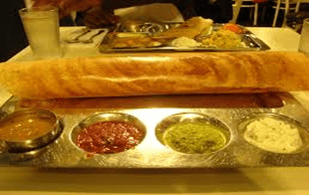
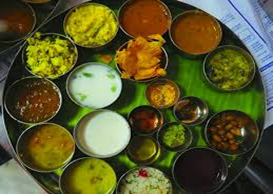
Hotel Saravana Bhavan is the largest South Indian restaurant chain in the world. They have 33 locations in India and 77 across 22 countries in Southeast Asia, Australia, New Zealand, the Middle East, Europe, and North America. It’s worth waiting in a long cue to get a table to have a bite of crunchy masala dosa dipped in chutney as the restaurant is always full with admirers of authentic south Indian food. It’s always a treat to be there as they serve you authentic flavors of south on a banana leaf. What’s more, its pocket friendly as well.

Address – P-13, Connaught Circle, Connaught Place, New Delhi

5. Desi vibe

Whether your order is Dal and Roti or a kingly repast, you will be served a welcome drink and a choice of about a dozen pickles with a smile. The staff is quite good at recommending dishes. Large tables to accommodate entire families make it a good option for a family gathering. Pick up your favorite cocktail from their extensive cocktail menu and accompany it with ‘Dahi K Kebabs’ and ‘Achari Paneer Tikka’. Do not miss the ‘Khas Tandoori Chaap’ and the ‘Paneer Lababdar’. End on a sweet note with ‘Phirni’ and ‘Moong Dal Halwa’.

Address – N-95, 2nd Floor, Connaught Place, Delhi 110001

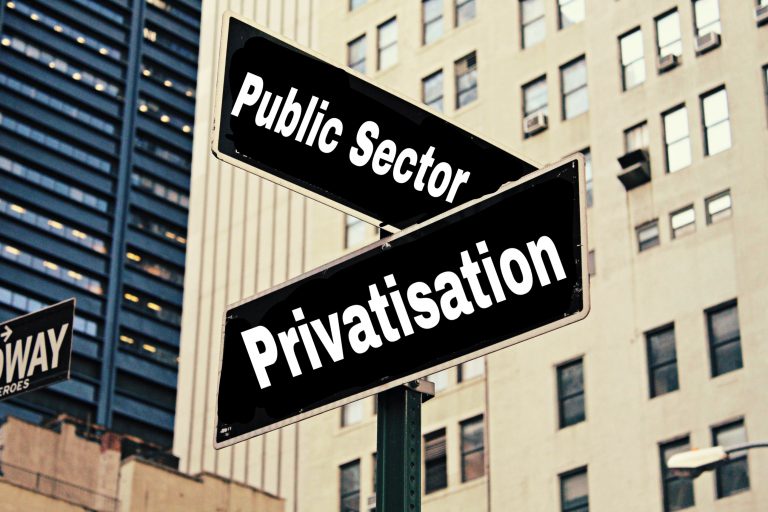
Is privatization of public sectors good or bad?

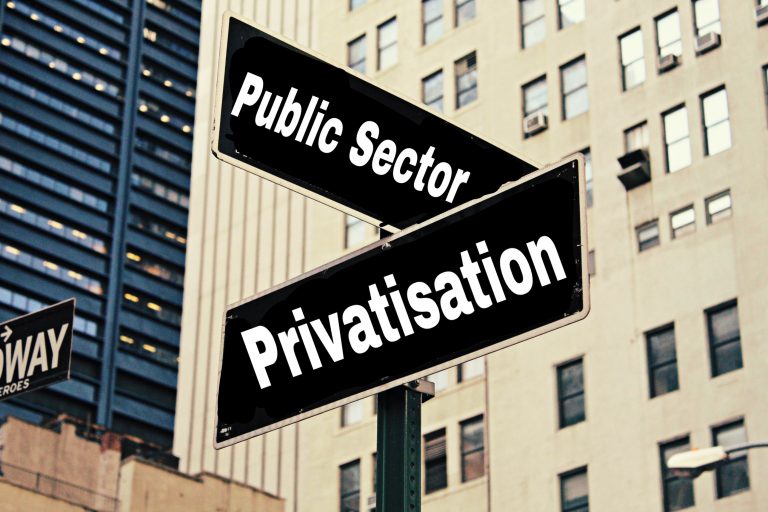
India comprises a mixed economy with the prevalence of both private and public sectors in wide range of fields like banking, education, health care, transport, manufacturing etc. Some are of the view that privatization could gear up the economic growth while other find that the privatization could bring more problems like unemployment taking the economic backward due to its inherent issues. Privatization could be defined as the process of transferring ownership of a business, enterprise, agency or public service from the public sector to the private sector. It is also known as denationalization. It is a situation where the government decides to transfer the control of a public owned resource to private sector either partially or completely. The history of privatization goes back to the Ancient Greece, when governments contracted out almost everything to the private sector in which private entities and companies performed the majority of services including tax collection, army supplies, construction.

Benefits

The proponents of privatization believe that private market factors can deliver goods or services more effectually due to free market competition. One promising reason that people want to privatize is to alleviate corruption. A monopolized function is prone to corruption and decisions are primarily designed for political reasons, personal gain of the decision maker, other than on a economic note. Privatization works on growth and performance. Corruption takes its place in both sectors but it can be effectively reduced by privatization. Private companies take immediate action on those who take bribe, so they are much motivated to work and focusses less interest on corruption.

It is beneficial for the growth and sustainability of the state owned enterprises. It is obliging in keeping the consumer needs uppermost, it helps in increasing long term jobs and promotes competitive efficiency and open market economy. Managers of publicly owned companies are required to be more accountable to the broader community and to political stakeholder, this can reduce their ability to directly and specifically serve the needs of their customers while the managers of privately owned companies are accountable to their owners/shareholders and to the customer and can only exist and thrive where needs are met. Private corporations typically profit more if they serve the needs of the clients well. Corporations of different sizes may target diverse market niches in order to satisfy the demand. If you work for a government run industry managers do not usually share in any profits, however a private firm is interested in making a profit, so it is likely to cut costs and be efficient. Public sectors may be unwilling to invest in infrastructure improvements which will benefit the firm in the long term because they are more concerned about projects that offer a benefit before the election.

Snags

There are also many reasons that accounts for the drawbacks of privatization. The opponents of this term believe that there are many industries which perform an important public service, eg. health care, education and public transport. The profit motive cannot be the primary objective of firms in the long run because in the case of health care, it is feared privatizing health care would mean a greater priority is given to profit rather than quality care to be given to the patients. Privatization would create a private monopoly which might seek to set higher prices which exploit consumers therefore it is better to have a public monopoly. Private companies often face a conflict between profitability and service levels. To please shareholders they may seem to increase short term profits and avoid investing in long term projects, while initial benefits to the consumer may occur, the industry may not be induced to keep prices low unless government controls are exerted. Privatization may limit access to certain industries for people who cannot afford them and the public has little control over a private industry. Public sectors could make education affordable for a wide range of people but when it becomes privatized the cost of education could increase tremendously.

It encompasses a variety of of techniques for shifting functions. Privatization could bring up a lot of problems as well pose some advantages, but if we are really considering privatization, there should a formulation of better maps and ideas to get rid of the challenges.

Abraham Lincoln

Abraham Lincoln, the name in itself speaks volumes. He is considered the greatest president of the United States of America. Historians and Political Scientists consistently rank him as the best American president ever. Above all, the man is renowned for ending slavery in his country. This certainly created a world-wide awareness against the evil of slavery. In the realm of social reform, he is holding a lofty status.Many surveys of the Presidents of the United States have taken place. Many scholars and experts of the United States took part in such surveys. Most noteworthy, Lincoln is always ranked in the top 3 in such surveys. Furthermore, there has been an organization of Presidential ranking polls since 1948. Abraham Lincoln certainly has the top rating in most of such polls.

Probably the most famous survey was by Chicago Tribune in 1982. There was a participation of 49 Historians and Political Scientists in that survey. These experts were to rate all the United States Presidents in five categories. The categories were: leadership, crisis management, political skills, appointments, and character/integrity. As was probably the prediction of most people, Lincoln got top place. Most noteworthy, Lincoln got top place in all the categories. This shows his magnificent historical reputation.


Many social reformers view him as a champion of liberty. He has the description of a classic liberal by historians. He is a role model to liberal intellectuals and human rights organizations. Some of his avid supporters even compare his life to Jesus Christ.

Abraham Lincoln appears on many postage stamps in the United States. His image also appears on two United States currency denominations. His sculpture on Mount Rushmore is certainly a world-class memorial. Furthermore, his other memorials include Ford’s theatre, Peterson House, and Lincoln Memorial.

The United States military greatly honors Lincoln. Many believe him to a symbol of national unity and pride. Two United States navy ships bear his name.

Abraham Lincoln was certainly a legendary American president. Probably everyone believes him to be a global icon of peace. His legacy is a powerful symbol against oppression. Above all, his greatest contribution to mankind is the emancipation of slaves. The forces of evil tried to stop him. However, his legacy became more glorious because of such attempts. Finally, his assassination took place at the hands of evil forces. However, this assassination left him as a national martyr. The name of Abraham Lincoln certainly belongs in the pages of greatness.

Lincoln taught himself law, passing the bar examination in 1836. The following year, he moved to the newly named state capital of Springfield. For the next few years, he worked there as a lawyer and serving clients ranging from individual residents of small towns to national railroad lines.

He met Mary Todd, a well-to-do Kentucky belle with many suitors (including Lincoln’s future political rival, Stephen Douglas), and they married in 1842. The Lincolns went on to have four children together, though only one would live into adulthood: Robert Todd Lincoln (1843–1926), Edward Baker Lincoln (1846–1850), William Wallace Lincoln (1850–1862) and Thomas “Tad” Lincoln (1853-1871).

PRESIDENTIAL ELECTION

In 1864, Lincoln faced a tough reelection battle against the Democratic nominee, the former Union General George McClellan, but Union victories in battle (especially General William T. Sherman’s capture of Atlanta in September) swung many votes the president’s way. In his second inaugural address, delivered on March 4, 1865, Lincoln addressed the need to reconstruct the South and rebuild the Union: “With malice toward none; with charity for all.”

As Sherman marched triumphantly northward through the Carolinas after staging his March to the Sea from Atlanta, Lee surrendered to Grant at Appomattox Court House, Virginia, on April 9. Union victory was near, and Lincoln gave a speech on the White House lawn on April 11, urging his audience to welcome the southern states back into the fold. Tragically, Lincoln would not live to help carry out his vision of Reconstruction.