Public Policy relevancy with Social welfare Programmes

Source: Shutterstock

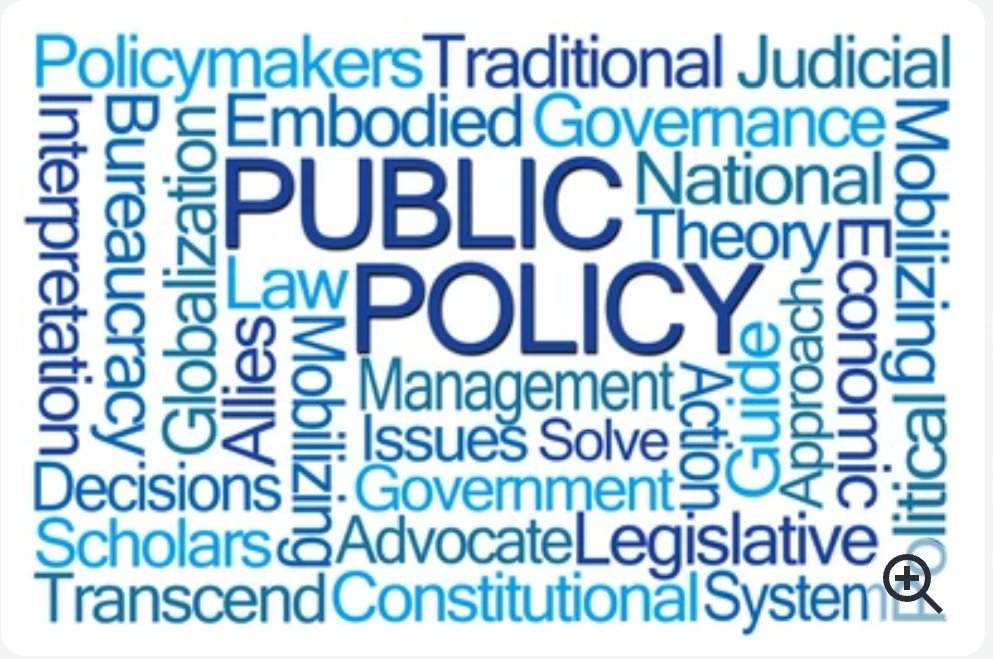
Public Policy is new tool of Government to solve socio economic problems through several policies such as Agriculture Policy, Labour Policy, Health Policy, Education Policy, Wage Policy, Industrial Policy and Foreign Policy etc. Government view public policy as a dependent variable and study as to how society is evolving and Political system shaping the nation.

The field of public policy has emerged comparatively in beginning as traced in early 1950s. The concept of public policy was originated in 1951 from the publication of Harold Lasswell. According to Thomas R Dye, Public Policy is what Government will choose to do or not to do. In indian context, public policy could be government rules and Programmes in the form of political system of laws, ordinance, court decision, executive orders, decisions or even unspoken understanding  of what is to be done.

Paul Appleby, the essence of public administrative decision policy defined as a purposed course of action of an individual a group, an Institution or government to realize a specific objective or purpose, within a given environment. The process of public policy flows both top to bottom and bottom to top or even simultaneously. The policy process is viewed from higher level as execution of Policy and viewing meta Policy meaning  progressive.

After independence, India did not carry a specific structural path for economic development. It was decided that economic development must be based on social, political growth that transmutes human advancements. India adopted the Socio – economic development model in which major areas were industries and agriculture. Planning commission (now NITI Aayog) for the purpose of development initiatives adopted in a five year plan as a major development plan. structure policies Public policy developed as academic pursuit in the 1950s. However, Public Policy was very much evident in 1940, stimulating Government activities and academic organizations. Study of government, policy, Social Science involves political Science, public administration, economics and management.

Dimock stated public policy as “deciding at any time or place what objectives and substantive measures should be chosen in order to deal with particular problems”. Public Policy process structure to maximize and utilize all resources to overcome the catastrophic events. Public Policy is a continuous process, furiously working towards  acquiring best outcomes. Righteous and accurate conditioning helps to bring desired aims. The process requires transparency, decentralization, and effective policy implementation. Public Policy Process is significant to change nation economic, social, and political representation especially in the Case of developing nations.

According to Chandler and Plano, treated public Policy as ” the strategic use of resources to alleviate national problems  or governmental concerns”. Freeman and Sherwoods stated that it is the Public answer to the interest in refining the circumstances. Robert linebewy  emphasized on “it is what governments do and fail to do for their citizens”. Anderson expresses it,” policy is being made as it is being administered as it is being made”.

 Understanding of Public Policy

Source: iass.potsdam.de

 The Public Policy process is a kind of Physics  equation that if finding a small error will cost the huge problem, also diffuses the whole processing mechanism. Public policy processes require pointed manifestation at each level. Hogwood and Gunn (Policy Analysis for the Real World, 1984) concluded nine vital Stages in the policy process: Agenda Setting, object screening issue defining , forecasting alternatives, objectives & priorities, policy implementation, monitoring and control, policy maintenance, succession and termination, these all required for successful policy. As we are aware, policy making is a complex and dynamic strategy, it requires certain tools to resolve the real world problem of economic, financial, economic, social problems. Public Policy enacted by the government or its executives with the help of civil Societies, media, and pressure groups.

 In the Context of public policy process Lindblom stressed on a highly relative and plasticity decision making system characterised by compromise, incrementalism and continual adjustment. Public policy process is conceptualized as in sequence or stages ( Benson, Jordan, 2015). There are (1) sequence follows as – i) Problem emergence 2) agenda setting 13) Consideration of policy options, &) Decision making 5) implementation 6) evaluation (Jordan and Adelle, 2012).

A policy can be simple or complex, explicit or implicit, discretionary or detailed, private or public qualitative and quantitative. Government does not set advisory principles;  it is the Supreme Court who decides and provides new interpretations of the articles of constitution to curve out the new Policy.

Nature of public policy covering wide portion of its activities such as socio- economic development, women empowerment, child labour, equality, education and so on. Nature of Public policy foremost needs Policy making closely related to decision-making. Decision making includes an identification of a problem, sharp analysis, and the ability to see alternatives. Policies have specific goals, It is absolute to expect a policy to indicate the direction towards. where actions are required. The choices of policies or its objectives are frequently mesmerized. Thus, goals and objectives depend on the values of the policy makers. Planning or formulation is a key component to move forward in the public policy process. Administrators must maintain a planner to know the portion of resources, investments because goals cannot be achieved without having proper planning. Policy Analysis is most significant to rectify any problem in process; it is a technique to use in Policy Process. Basically used for problem assessment and monitoring. Before the decisions, Similarly, Policy Management is also familiar with implementation. It deals with policy making and policy preparation process, it ensures it is producing good quality policies.

 Thus, goals and objectives depend on the values of the policy makers. Planning or formulation is a key component to move forward in the public policy process. Administrators must maintain a planner to know the portion of resources, investments because goals cannot be achieved without having proper planning. Policy Analysis is most significant to rectify any problem in process; it is a technique to use in Policy Process. Basically used for problem assessment and monitoring. Before the decisions, Similarly, Policy Management is also familiar with implementation. It deals with policy making and policy preparation process, it ensures it is producing good quality policies.

 Policy management should be considered as a loose point or giving no importance, it is an Icebreaker of Public Process, if you assess anything wrong at this stage, there will be high chance to “trash in” the policy. That is why policy analysis and policy management is interdependent. 
 

District Administration and Competency of Government

Source: Kahoot

The district is the geographical unit where the complete instrument of administration can be traced. It is the cutting edge level of administration that policies are transformed into action. The success or failure of policies are dependent on the efficiency of District Administration.

It is impossible for union government to manage entire nation in one unit so it is important to distribute the power into different units. Every state is divided into a number of administrative sub centres to needs of the people in the areas comprised in small areas.

According to Willoughby, field administrative organization falls under either of the patterns of areas including territorial, functional or unitary and multiple areas. These areas organized in horizontally , vertically and hierarchically. The office incharge of the area is the head, the head of all other specialized units at that level are his subordinates.

All communication from the field station to the head office and back are routed through him and he has a responsibility for the acts of all other departmental heads. The position is very different in a multiple or functional form of organization, where different division or branches of the headquarters office have their equitable field establishment at different areas and maintain direct contact with them. There is no coordinating or integrating authority at the area level, each service or agency is treated as an independent entity unrelated to other services the line of authority runs direct by from it’s headquarter office.

Luther Gulick described three patterns of field organization as all finger, short Arms long fingers and long Arms short finger. All fingers agencies are controlled by the headquarters office directly. Short arms long fingers patterns, agencies are controlled by the division, they communicate with control field officers in their respective areas.

Long Arms short fingers pattern geographical sub division, to these sub division are located in the central office itself each with an extensive staff and they communicate with the central field office in three respective areas. These districts split into tehsils/Taluks, headed by tehsildars, tehsil lies the pargana/revenue circle under the charge of revenue inspector then primary unit, village official is the patwari or Lekhpal or village accountant.

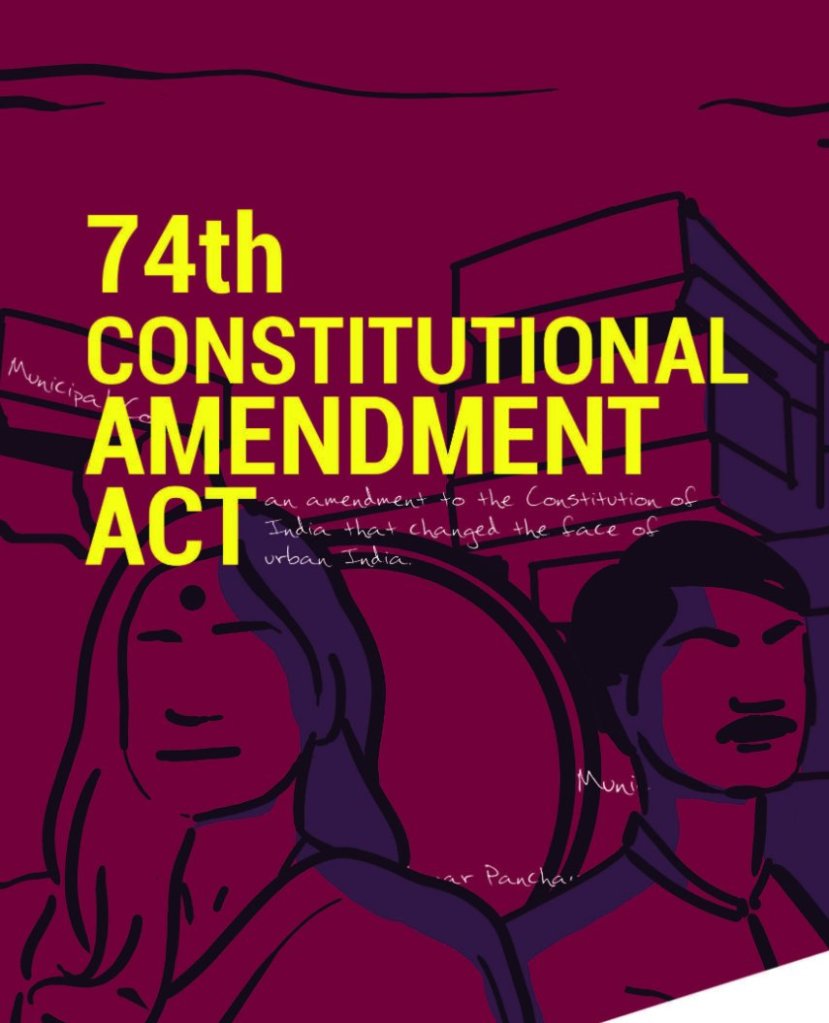
Constitution of India did not mentioned the term ‘district’ excluding Article 233 mentioned in term of ‘district judge’s. The 73th and 74th Amendment Act of 1992 including the term district at several places under Part IX and IX A dealt with panchayat and muncipalities respectively.


District Administration is the total management of public affairs, within this unit. DA is that portion of Public Administration which functions within the territorial limits of a district as explained by S S khera who is prominent figure in describing District Administration.

District as a unit of administration has a long history from the time of Medieval times. District called Sarkar and headed by Karori faujdar under the direct control of subedar. District administration and the office of district collector existence during the of British East India Company.

After independence the office of the District collector suffered in order to maintain status and authority due to expansion of governmental activities and emerged as Panchayati Raj, replacement of ICS into IAS, influence of pressure Group and Growth of Commissionerate system.

The programme are executed under the supervision direction and leadership of the collector. Development had a top down approach where people brought under the umbrella of one or in other development Programme. District collector’s main responsibility was identification of beneficiary in the development activities. District collector regulate the development.

The task of good District Collector is the ability to work with all people. This requires good human resource management, strategic thinking and financial management. Village Panchayat refer to the councils of the local government of India, look after the administrative affairs of the rural regions. The local government of India are self sufficient and self enabled units that work under the State Government of India. The 73rd and 74th Amendment Act 1992 attach with development of city and village councils in India. Local government have regular elections, fixed five year term and review and augmentation of finance by the State Finance commission.


How Urbanization and 74th Amendment Act working together

Source: Indo Global social service society

Urbanization refers to moving rural population in urban areas. With the gradual growth of the economy, the process of urbanization depends on the shift of surplus population from rural to urban areas along with the growth of some industrialized urban centres.

People from isolated village started to move towards urbanized centres in search of job, established industries and other activities constantly offer job opportunities to those people migrating to cities.

Urbanization in india

In India, an increasing trends towards urbanization has been recorded from the very beginning of this era. The census data on the rural – urban mixture reveal a continuous rise in the rate of urbanization in india.

Causes of Rapid Urbanization in India

Expansion in government services as a result of the second World War.

Migration of people during the partition of India and Industrial Revolution.

Eleventh Five year Plan that aimed at urbanization for the economic development of India.

Growth of Private sector after 1990.

Infrastructure facilities in the urban areas.

Land fragmentation, village being erased due to roads and highway construction, dam construction and other activities.

Agriculture is the primary source of livelihood, but now it is not profitable due to several reasons such as drought low productivity. These situations are forcibly the people of rural areas to migrate towards cities.

Growth of employment in cities is attracting people from rural areas as well as smaller cities to large towns. According to Mckinsey  India’s urban population will grow from 340 million in 2008 to 590 million in 2030.

Therefore, it is being driven by economic compulsions where people move out for economic advancement to areas offering better job opportunities.

Urban Local Government

The concept of local self Government is based on the assumption that there are certain basic human needs having direct bearing on the lives of the individual and the community as a whole. The Governance of an urban areas by the local people through their elected representative is called urban Governance. Urban local government in India was constitutionalised through the 74th constitutional Amendment Act of 1992. The Ministry at Central level dealt with urban local government such as Ministry of Urban development, Ministry of Defense in the case of cantonment Boards, Ministry of Home Affair in the case of Union Territories.

The Institution of Urban local Government originated and developed in modern India during the period of British rule. 1667 Municipal Corporation Madras, 1726, Municipal Corporation Bombay, Calcutta. 1870 Lord Mayo resolution on financial decentralization. 1882 Lord Rippon resolution, which is held as the Magna Carta of local Self Government. Rippon is remembered as father of local Self Government. 1919 Dyarchical scheme introduced in provinces.1924 Cantonments Act was passed and 1935 Provincial autonomy introduced.

  73rd Amendment Act of 1992

The act has added part IX – A to the Constitution of India. It is entitled as the municipalities and consists of provision from Article 243P to 243G. This act added 12th schedule to the Constitution. Indian long history of Urban Municipal Governance was characterised by some structural infirmities & affected it’s performance. Municipal bodies we’re delegate limited powers with restricted autonomy.

The 74th act gave constitutional status to the municipalities which has brought under the preview of judicial part of the Constitution. The act aim at revitalizing and strong thing the urban Government so that they function effectively as units of self Government.

The members of municipality are directly elected by people of the area. The territorial constituency of municipality is known as wards. The state legislature determine the manner of election of chairperson and representation of knowledgeable person and member of parliament to municipality.

The salient features of the 74th Amendment Act are: 1) Reservation of seats for SC/ST and women 2) Term of Municipalities 3) Ward Committee 4) Disqualification 5) Metropolitan Planning committee


Municipal Corporation

 Municipal Corporation are created for the administration’ of big cities like Delhi, Mumbai, Kolkata. They are established in the states by the acts of the concerned state legislature and in Union Territories by the acts of parliament of India. A municipal corporation has three authorities like – The council, standing committee and the commissioner. The corporation council consists of councillors directly elected by the people.

Corporation council is head by a mayor assisted by a deputy mayor. He is elected for a 1 year renewable term. The standing committee are created to facilitate the working of the corporation, which is large deals with taxation and finance.

Supply of pure water, construction and maintenance of Public streets, cleaning places, Public streets, sewers, Naming streets and numbering houses, lighting and watering of Public streets. Regulation of offensive, dangerous or obnoxious trades, Maintenance or support of Public hospitals, establishment of primary school are the following functions of Municipal Corporation.


Municipal Council

It is an Institution of local self Government in india. It is also known as Nagar palika. It is constituted in cities having population around 1 – 3 lakh. These are basically established for the administration of district level cities. The municipal Council is entrusted with the development related matters of Municipal Corporation areas and providing basic civic amenities. The services provided by the MC some of them are :

Construction, maintenance and cleaning of drains and drainage works and of public latrines, urinals. Supply water for public and private purposes. Scavenging, removal of garbage, survey of building and lands, maintenance and development of the value of all properties, maintenance of monuments and memorial vested in local authority etc.

Nagar panchayats

NP also known as notified area Council or city council helps in the transformation of rural and urban. It has a committee consisting of a chairman/mayor along with Ward members. The members are choosen via direct election and have a tenure of 5 years. Following are functions of Nagar panchayat such as essential services and facilities to the urban area, sanitation programme, street lighting and providing roads in wards and main roads, school in urban areas, water supply to wards of Urban areas, clean the drainage system, culverts for underground drainage system, programme for adult literacy and run city libraries and death & birth records.