Tips to stop mobile addiction

Pause to think before picking up your phone

Every time you’re about to unlock your phone, take a moment to think about why you are doing this right now. Because sometimes the reasons for checking your phone are much deeper than you think.

Analyze how you use your phone and set limits

With iOS 12, Apple has introduced the Screen Time feature which shows how much time you spend on your phone, what apps you use the most, and how often do you pick up your device. To see the report, go to Settings > Screen Time. Android users can try digital wellbeing which works similarly.
If particular apps take too much of your time, you can set daily limits for them. When you reach a limit, your iPhone notifies you about it.

Get rid of distracting apps

Sometimes you just can’t resist tapping a colourful icon on the Home screen. This is usually the case for games and social media apps. How can one avoid this temptation? Move all addictive apps to the second page where it’s harder to open them spontaneously. You can also group such apps in folders like Games or Social so they’re always one extra tap away from you.

Minimize notifications

When a new app asks if it can send me notifications, I usually say, ”No.” I only turn on notifications for messaging apps and email. If your app has flexible notification options, it’s a good idea to play around with them.

Keep your phone away

It’s easier to forget about checking your phone when it’s physically out of sight and reaches.

Don’t use your phone before going to bed

Constantly checking your phone throughout the day ruins your productivity, while staring at the screen before bedtime can affect the quality of sleep.

Kick your device out of bed

Don’t let your phone be the last thing you see at night and the first thing you check in the morning. By using a regular alarm clock and charging your phone out of reach, you won’t be tempted to start your day by getting vortexed into an avalanche of messages and updates.

Use speaker

One of the most valuable things about smart speakers such as the Amazon Echo or Google’s Home products is that they help you live a more screen-free life.
Since I got one, I’ve stopped turning on music or podcasts on my phone and will try to answer all basic questions via voice. Generally, using my smart speaker for as many things as possible has kept my smartphone out of my hands for long periods.
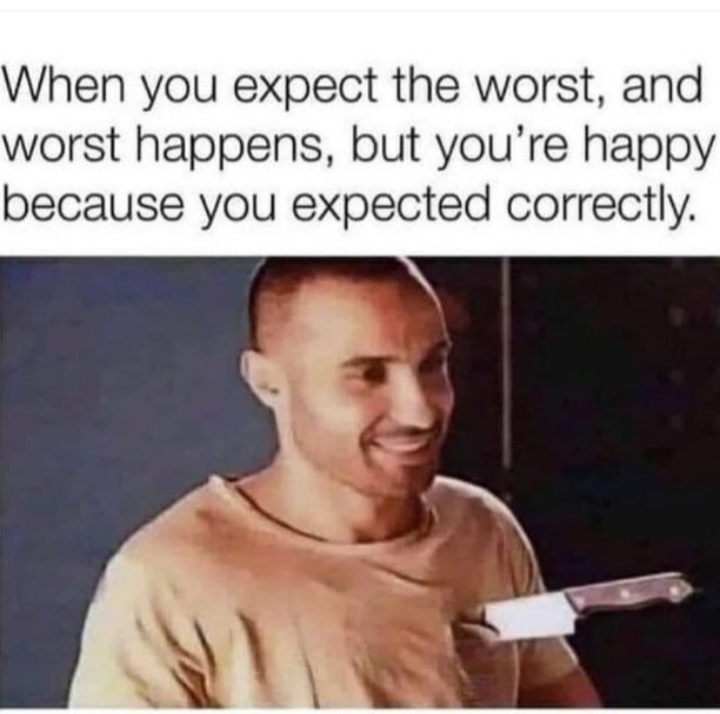
How cool is to be a meme addict…

Memes, the trending way to show yourself cool. If life makes you cry, make a meme on it, if something’s going wrong, make a meme.

Nowadays, the memes are also becoming the symbol of rebellion,of opposition. Some political parties & companies are hiring memers too. Well, it sounds cool, isn’t it?

But, do you really think that meme addiction is ok? Is it really ok to laugh on every unusual event ? Are memes really making you a well mannered & a risk taking human being..? Just think over it.

Well..I don’t think that meme addiction is cool. I’m not talking about facts, but about the personal experience. And obviously, no addiction is really cool.

So, let me tell you by a personal experience that how meme addiction can turn you into a negatively approached & inexorable person.

Let me share two incidents of my own related to this meme addiction ~

There, I was a meme addict, following a lot of meme pages two years ago. Of course, there were lot of memes which I never liked, but okk, I was still laughing on those too. And then at a point of time, I just realized that I was actually turning into a person full of hatred towards every shit thing/people. When, I analyzed the situation, I realized, it was the hate coming from the meme pages. I just unfollowed every single meme page. And yeh, this problem got solve.

So, after the first incident, I wasn’t really into memes. I used to see only the memes shared by my friends to me. But now, just coming to the present time, when I realized that memes are again causing negativity around me & has converted me into a person who just laughs on her problem. Ohh..Yes, laughing on your life problems isn’t always good.

Memes, like the above one, give us excuses actually. Excuses to avoid the problem.

Okk, I am going through a trough in my life, then I see a meme which is justifying my condition by helding someone/something responsible & now I am actually happy seeing this, just forgot that I need to work hard to get out of this trough.

Ok, scientific studies show that laughing is the best therapy & some motivator type people quote that ~ “laugh at all your problems”. But, you just need to think over it, not everything is for laughing.

Sometimes all these laughing situations give us excuses & we start avoiding the problem. “Problems are to fight not to avoid.”

I’m not saying that every single meme is turning every single being into negative. But, I’m saying that just look around you & see if it’s because of memes that you’re turning into a negative being.

And, finally just avoid, every kind of addiction, be it’s meme addiction or some other addiction. Addictions can charge a positive being to the negative.

🕊️ May the peace prevail on our Earth. May the hope abide in our Hearts…🕊️

Happy Reading..🙃

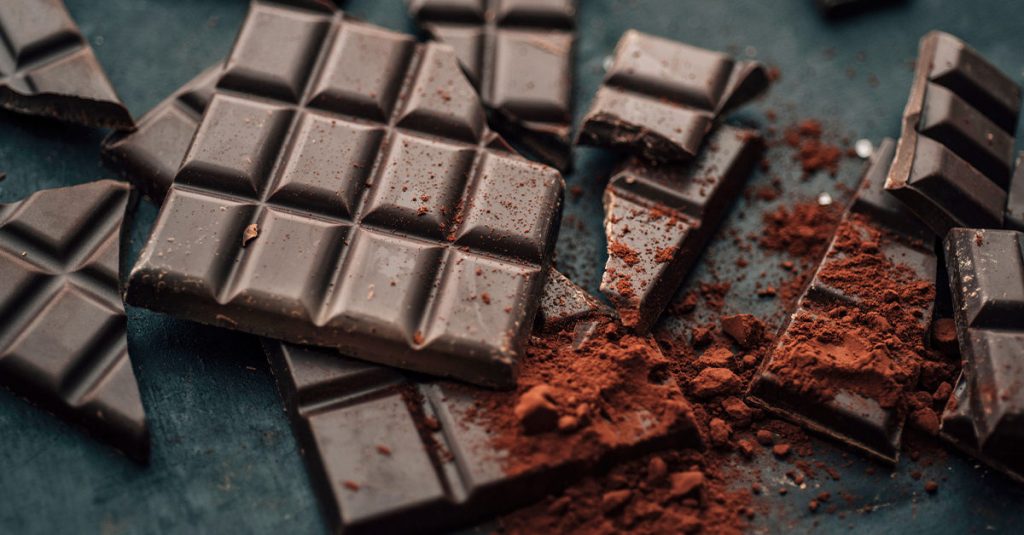
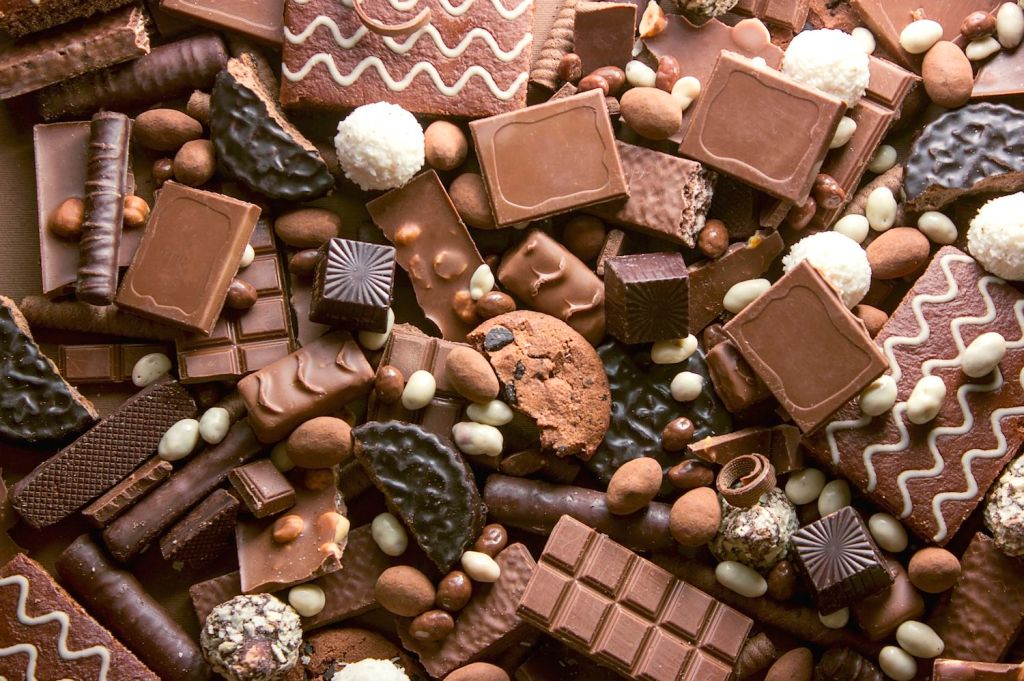
Is Chocolate a Compulsive Consumption?

The popular saying goes, “nine out of 10 people enjoy chocolate, and the tenth person always lies.” This is accurate since who doesn’t like chocolate?

For hundreds of years, people have loved chocolate and other sweets. And now it is consumed in a variety of ways and is probably one of the most popular meals, so you might be curious if it’s addictive.

So, can you become a chocoholic? Let’s explore the answer in this article. Distinct varieties of chocolate have different components, however they all share a few important ones. Some of these could be linked to chocolate’s risk for addiction. The main ingredients are cocoa mass, cocoa butter, sugar, milk, vanilla and other products can be used to help preserve chocolates and maintain a creamy consistency. Cocoa butter offers many benefits, but it’s also heavy in fat. This contributes to chocolate’s addictive potential, especially when paired with the high sugar content in some types. Some experts also doubt that food additives play a role in compulsive eating. Flavorings and artificial sweeteners are frequently used in highly processed and extremely appealing goods like chocolate. 

Also, just like addictive medications such as drugs, scientifically, exceptionally delicious foods like chocolates have been shown to trigger the release of dopamine, a neurotransmitter linked to pleasure, in the reward circuit in a brain area. After a time, merely thinking about these enjoyable things triggers the reward circuit. Your brain tends to crave these feel-good substances once you start connecting them with positive feelings. This kind of relationship can be made with lots of different foods but Scientists have identified several properties in chocolate that are particularly tempting. This might just be due to the fact that chocolate is generally high in sugar and fat as stated above, but according to one new study, it could be due to its interaction with a chemical called enkephalin, which is found in our brain and appears similar to endorphins, and may be the source of our addiction. 

Chocolate is frequently represented as a go-to pleasure as well as something we’re expected to feel guilty about, and the image of the hapless chocoholic appears in advertising and the media on a regular basis, typically in good humour. So, at least in part, the sense that we’re going crazy for chocolate originates from outside of our bodies. Furthermore, We’re naturally reward-seeking creature,we had to be to survive long enough to compete in the gene pool. Chocolate and other sugary, high-fat meals are natural rewards, so our brain responds by saying, “get more of that—if you can!” Now, however, we are able to do so. Almost all of the time. Especially in a culture when chocolate comes in all forms and sizes and may even be delivered.

So, eating chocolate that is less processed and lower in sugar and fat,is one approach to avoid the most potentially addicting forms of chocolate. 

Sugar content is reduced in many dark chocolate types. Furthermore, dark types contain the highest concentration of antioxidants and other beneficial elements. So, choosing dark kinds with less sugar and fat may be a healthier way to enjoy this delicacy.

Therefore, Chocolate is similar to medication, but like medicine, the key is moderation. Don’t overdo it. 

YOUTH AND THEIR OBSESSION WITH ALCOHOL

Today while I was attending my friend’s birthday party, I noticed something that prompted me to write about it. Alongside our group there was another group at this club. They all were easily below the age of twenty but their behavior was totally unacceptable. They were completely drunk and had no regard for the other guests. They were hogging the dance floor and when my friends and I tried to dance in the corner, they deliberately started bumping into us. One of the girls in my group even pushed him away hard but they didn’t budge from their conduct. They continued with their acts and finally we had to give up and get down the dance floor. The level of discomfort we felt during that moment can’t be accurately described. Even though two of the guys of their group came and apologized but doesn’t give them the right to behave like that in the first place. My question is Do people think that being drunk can be an excuse for everything? Why does our youth depend on alcohol to have fun? How can you make people around you uncomfortable and not even care a little?

It seems as if alcohol has become a lifestyle. Somehow consuming alcohol at a young age makes you “cool”. Surveys have shown that 75% youngsters in India consume alcohol before reaching the legal age. This normally starts with “I’ll have a few sips only” and ends up at binge drinking all weekend long. Around 80% of youth have at least tried alcohol once even if they didn’t develop a taste for it. Another factor that has ruined our youth is ‘Peer Pressure’. There are several examples where we can see a youngster following whatever the group says even though he is completely unwilling. As if peer pressure wasn’t enough, FOMO (Fear Of Missing Out) creeps in the minds of the youth. They feel as if they are missing out on something amazing because they see their friends having fun without realizing that their happiness is short lived. And before you know it that first drink turns into the first of many drinks to follow.

Other than the above mentioned reasons, it is a popular belief that kids take up drinking at a young age either because their parents regularly do so or because their parents introduce them to it. Children who take up drinking by following their parents never learn how to drink moderately because they generally do it secretly. On the other hands those who are introduced by their parents can learn to moderate their number of drinks. But the question still remains as to why is the youth so obsessed with drinking at an early age? The only reasons that come to mind are: because they are curious, to make themselves feel good, to relieve stress or to fit it. Do they not realize the risk they are putting themselves into? If they do, is it really worth it?

If you did not know it earlier, let me clarify you that alcohol can make you look extremely stupid especially if consumed without a check. You embarrass yourself, you embarrass the group you came with and in no way it that considered “cool”. In fact it is very disrespectful towards the people who are there for a good time. Drinking before legal age can even get you arrested. How would that be perceived among your peer group who you were trying so hard to impress? If this doesn’t persuade you to stop drinking then maybe when you grow a little older and your health starts to deteriorate, you would realize the hell you put your body through for a very short lived moments of fun.

If you don’t want to drink just say so. Don’t give into this vicious cycle. Stop drinking at every social gathering. If you problem is extreme, talk to an elder. Ask for help. One day you’ll be very thankful you stopped when you did. Don’t let alcohol ruin your youth and create problems for your adulthood. Stop before it becomes an addiction. Stop before having a drink turns into doing drugs. You will realize how your brain slowly loses its function when you feed this poison to your body. Remember, with alcohol the fun is temporary but the consequences are permanent.

Alcohol and Drug Abuse

Alcohol and drug abuse is one of biggest problems the world faces today. It is not only a personal problem that dramatically affects people’s lives, but is a major social problem that affects society as whole.

Drug abuse is mainly caused by rapid social, economic and technological changes which under certain circumstances, weaken the sense of family and reduce the sense of belonging to other people, groups and places. Stability of relationships, environment and expectations is a powerful force in helping people manage their lives, especially important for children and young adults. In some societies, the classical problem of balancing discipline and control of children with nurturing support to encourage their exploration, understanding of the world and self-realization may be complicated by substance abuse problems as well as a wide range of other conditions. Alcohol abuse and other substance abuse have been studied among family members. It is well known that having biological relatives with alcoholism increases the risk in individuals for alcohol problems. Persons who are heavy users of alcohol or other drugs may show psychiatric symptoms such as depression, severe anxiety etc. 

The most widely used addictive substances include alcohol and tobacco which are harmful causing extensive damage to the individual mind and body along with other diseases. All of these substances have several important characteristics in common as alter the function of the human brain and have an impact on behavior . Despite this, they are widely used throughout the world and they burden society by increasing social and economic costs for productive enterprises .

Drug addiction is difficult to treat as it is a chronic disease and requires intense, on-going care and is a long term process. Treatments such as behavioral counselling, medication , medical devices and application used to treat withdrawal symptoms and also treatment for mental health issues like depression and anxiety are the various ways to overcome drug addiction and stay drug-free.

Concerning alcohol, it remains one of the most widely used addictive substance with alcohol abuse being considered to be an age old problem. Alcoholism is the reflection of socio-cultural factors of an individual and sometimes society as a whole. For may people, this is a part of their daily life. People who have been drinking excess amounts of alcohol for longer periods of time come under the category of alcohol abuse. These people put themselves in the risk of developing serious and persistent changes in various organs including the brain. The effect of alcohol on the organs may be direct or indirect depending upon the general health status of the person. The studies have suggested that the brain functions are affected due to the interaction of alcohol with multiple neurotransmitter systems. Alcohol abuse also leads to different nutritional deficiencies and diseases as alcoholic people suffer from vitamins and minerals deficiencies. Also alcohol has been found to be associated with diseases like tumors, cancers, numerous digestive diseases and other conditions. 

Both alcohol and drug abuse requires a global approach, given their serious consequences to the social , professional and personal environment of the individuals and the society. Hence it is necessary to educate all individuals and spread awareness among people about the realities of addiction for a better society and for improving the lives of millions worldwide.