Most Powerful Biography of Dr.A.P.J. Abdul Kalam

Dr.A.P.J. Abdul Kalam, the star of the youth’s hope, is hailed as an unparalleled dawn in the political sky.

Birth and Adolescence of Abdul Kalam  

He was born on 15 October 1931 in Rameswaram, Tamil Nadu, the son of Jainulabdeen Marakayar and Ashiamma. His primary education took place in Rameswaram. He completed his engineering education in Chennai. 

Continuing Works of Abdul Kalam 

Not only did he tell others to dream, he also made it his policy to dream. The dream is not about selfishness. It is about her motherland, which includes the development of others. So he has a lot of work to do in relation to it. He first worked for an airline manufacturing and development company. At that time he developed the jet called “Nandi”. Realizing his uniqueness, the Indian Space Research Organization hired him. At that time, he was also known for his ability to launch satellites and launch missiles. Next he moved from the space company to the field of nuclear research and became successful. He next held the top post in the Indian Ministry of Defense and rose to the position of Scientific Adviser to the Prime Minister of India. Similarly, his work in the field of information and security is immeasurable.

Abdul Kalam Became the President of the Republic 

Among the positions held by Abdul Kalam, his crowning achievement was his position as the President of our Republic of India. Not only was he a good energetic scientist but also a great patriot, the position was only five years from 25.07.2002 to 2007. Although the benefits of this position were immeasurable. The benefits of the 12th President of India and his position are not to be underestimated. 


Kalam Received Titles and Awards 


Abdul Kalam was presented with several awards in recognition of their service. He has received many awards including Von Braun Award, Om Prakash Bass Award, Padma Vibhushan Award, Padma Bhushan Award, Nehru National Award, Indira Gandhi Award and special doctorate degree from various universities. Above all, he is proud to have been awarded the Bharat Ratna, India’s highest award, in 1998.

The Path Paved by Abdul Kalam

Abdul Kalam is the one who realizes that pride comes when knowledge and energy combine. He was exalted and sought to bring his country to the forefront of world history. Abdul Kalam passed away on July 27, 2015. 

Kalam, who has been not only a great leader but also a great volunteer in action, will guide us if we look at his picture and study the lesson and walk in his footsteps.

DR. RAJENDRA PRASAD : the first president of Republic India

 Rajendra Prasad (3 December 1884 – 28 February 1963) was an Indian independence activist, lawyer scholar, and subsequently, the first president of India, 

In Office from 1950 to 1962. he was an Indian political leader and lawyer by training. Prasad joined the Indian national congress during the Indian independence movement and became a major leader from the region of Bihar. A supporter of Mahatma Gandhi, Prasad was imprisoned by British authorities during the salt satyagraha of 1931 and the quit India movement of 1942.

 After the constituent  Assembly 1946 elections, Prasad served as minister of food and agriculture in the central government. Upon independence in 1947, Prasad was elected as president of the Constituent Assembly of India, which prepared the Constitution of India and served as its provisional parliament. 

when India became a republic in 1950, Prasad was elected its first president by the Constituent Assembly. as a president, prasad established a tradition of non-partisanship and independence for the office-bearer. Although a ceremonial head of state, prasad encouraged the development of education in India and advised the Nehru government on several occasions.

BENEFITS OF INTERMITTENT FASTING(IF)

 So, if you’re the one person who runs away from exercise and workout and still dream of a HEALTHY LIFESTYLE, let me bust out an age old myth about fasting for you. How can fasting benefit one’s body? What does intermittent fasting do to your body? Is a sixteen hour fast beneficial for your health? These are the type of questions that generally arise in our skeptical minds when we hear about intermittent fasting. Well, if you too find yourself in middle of these questions, then you have reached the right place. We’ll provide you with ample reasons to choose this fasting in order to benefit your inner and outer self.

Intermittent fasting is one of the most aired dieting methods these days, a pattern of eating and fasting in a cycle within 24 hours.

There are different patterns of intermittent fasting, the most common being the 16/8 (16 hours of fasting window and 8 hours of eating window) pattern. Others can be 20/4, 5:2 pattern etc.

You will be shocked to know that it is a scientifically proven method of improving your mental and physical health.

So here we bring your attention to some of the top benefits of intermittent fasting: 

1.CHANGES HORMONE, CELLS AND GENE FUNCTION

Many changes occur in our body while we don’t eat. Our body changes the level and functions of the hormones to allow them to use the stored fat for primary energy generation. It also initiates the repair of damaged body cells. 

Some of the aforesaid changes occurring in our body due to fasting are;

a. Increase in Human Growth Hormone (HGH)

The exotic increase in level of HGH in blood leads to high fat burning, repair of tissues in the brain, boost in metabolism and gain in muscle mass, that’s why it is very common in body building industry.

b. Lowering the Insulin level-

Keeping the insulin level low in the blood is the main aim of IF. During the fasting window the insulin level of body lowers down dramatically and reverses the formation of fat and hence, you lose fat. Lowering in insulin also prevents diabetes. 

c. Repair of cells-

During IF, our body cells rejuvenate, cleanse themselves of all waste materials and repair themselves with the help of HGH in order to become stress resistant.

d. Correcting Gene expression-

IF affects different gene expressions to cures many diseases and health problems at genetic levels like cancer etc.

2. LOSING WEIGHT

                   While following an intermittent fasting routine; the body lowers the level of insulin, increases the level of HGH and increases amount of noradrenaline. This consequently leads to burning of excess body fat which is then converted into energy, that is utilized by the body for its daily activities.

                  It also breaks down visceral fat from our abdominal cavity that otherwise is hazardous for our physical well-being. So basically, IF takes down our calorie intake in order to boost our metabolism and correct our lifestyle.

3.IMPROVES BRAIN FUNCTION AND IMMUNE SYSTEM

                      As the metabolic activity of the body improves, so does the condition of the brain which is the most important part of our body. IF reduces inflammation, oxidative stress, blood sugar and insulin resistance of our body which leads to the growth of new nerve cells. It also leads to the secretion of brain hormones which prevents depression and brain damage like strokes.

IF even protects the body against incurable disease like Alzheimer’s.

4.PROTECTS FROM HEART DISEASES

               The intake of healthy IF diet leads to almost no formation of low-density lipoprotein or bad cholesterol which prevents heart attack and also reduces the risk of high blood pressure and other inflammatory diseases of heart. According to new research, regular follow up of IF can considerably lower the rate of heart failure and can add more years to someone’s life.

5. INCREASES LIFE LONGITIVITY

                   Taking an IF diet can persistently uplift a poor lifestyle of a person and help him get rid of heart diseases, abnormal blood pressure, atypical brain problems, obesity, fatigue etc. This, thus, brings the overall health of  a person in the right track also benefitting him from over-aging by repairing the body cells timely. 

LET US KNOW IF YOU HAVE ANY QUESTIONS AND IF YOU WANT ANOTHER ARTICLE ON HOW TO START INTERMITTENT FASTING.


How did National Youth Day Begin?

Before going into main topic, let me ask you some questions that How did National Youth Day start? Who started it? Who is the reason for that?


Don’t know the answer to all this? Don’t worry. This article answers all your questions. Start reading the article with me.


 Who is this Narendranath Datta?

Narendranath Datta is none other than Swami Vivekananda. As a disciple of Ramakrishna Paramahamsa, his ideas aroused the youth. From time to time some saints appear and hide in this world so that unrighteousness does not raise its head and increase its attachment to righteousness. Swami Vivekananda was one of the great saints who raised the pride of India and Hinduism on the world stage. During his stay in India he was well aware that patriotism was more important than religion. 

Birth and Upbringing of Narendranath Datta

Narendranath Datta was born the son of Viswanath Datta and Bhuvaneshwari Devi. From an early age he was a man of great memory and a great athlete. He practiced meditation from an early age. He was also a rationalist. After completing his schooling, he studied philosophy at the State College, Calcutta, in 1879. There he chose to study foreign philosophies and the history of European countries. 

Reason for Swami Vivekananda’s Faith in God

During this time many questions and doubts arose about the divine truths. At the time, he was discussing faith in God with many adults. Became a member of the Brahmo Samaj. He heard about Ramakrishna and went to him to learn about the divine truths. Vivekananda, who rationally accepted anything, at first could not accept Ramakrishna’s views on God. Then little by little he understood both the religion of devotion and the religion of wisdom. He accepted Ramakrishna as his guru.

When did the Name Swami Vivekananda Appear?

In 1880, Swami Vivekananda made a long tour of the country. In 1880, Swami Vivekananda made a long tour of all parts of the country. Went to many places like Varanasi, Ayodhya, Agra, Brindavan, Alwar. During this journey, his real name Narendra disappeared and he got the name Swami Vivekananda. He felt that a national revival was needed if India was to be made a living nation.

Swami Vivekananda Rock Memorial

He went to Kanyakumari on December 24, 1892, at the southern tip of the Indian subcontinent. He swam a little distance in the sea and sat on a rock and began his meditation. He meditated there for three days. That rock is today known as the Vivekananda Rock.

Swami Vivekananda’s Historic Speech

In 1893, he attended the Chicago Conference in the United States, where he coined the famous word “Sisters and Brothers of America.” Swami toured the West and returned to India in 1897 after 4 years. He started spreading information about spiritual development in India.

Why was the Ramakrishna Mission Started?

He realized that social service is only possible through a joint effort. To this end, Swami Vivekananda started the Sri Ramakrishna Mission in 1897 and formalized his thoughts and goals. Then in the next two years he started Sri Ramakrishna Mission in Belur. He then toured the West. On his return to India, Swami Vivekananda passed away on July 4, 1902 at the Ramakrishna Mission he had established.

National Youth Day

In 1984, the Government of India declared January 12, the birthday of Swami Vivekananda, as National Youth Day. Swami Vivekananda had more faith in the youth than anyone else. He believed that only in a vibrant youth can determine our future. He emphasized the importance of physical health, social responsibility and intellectual development beyond spirituality. It is not education that does not enrich the character of one who has not taught the common man to fight for life, nor teach him the lion-like courage that does not teach humanity. He said that true education is teaching to achieve self-sufficiency. 

Here are some Quotes Swami said…

  • Fear is death, fear is sin, fear is hell, fear is unrighteousness, fear is wrong life. All the negative thoughts and ideas that are in the world have proceeded from this evil spirit of fear.
  • Believe in yourself and the world will be at your feet.

  • Arise! Awake! and stop not until the goal is reached.

  • You will be nearer to Heaven through football than through the study of the Gita…. You will understand the Gita better with your biceps, your muscles, a little stronger….You will understand the Upanishads better and the glory of the Atman when your body stands firm upon your feet, and you feel yourselves as man.
  • Strength is life, weakness is death

Finally we came to an end of the article about National youth Day. I hope you have read this article and know all the information and enjoyed it. If you like this article LIKE, SHARE and COMMENT


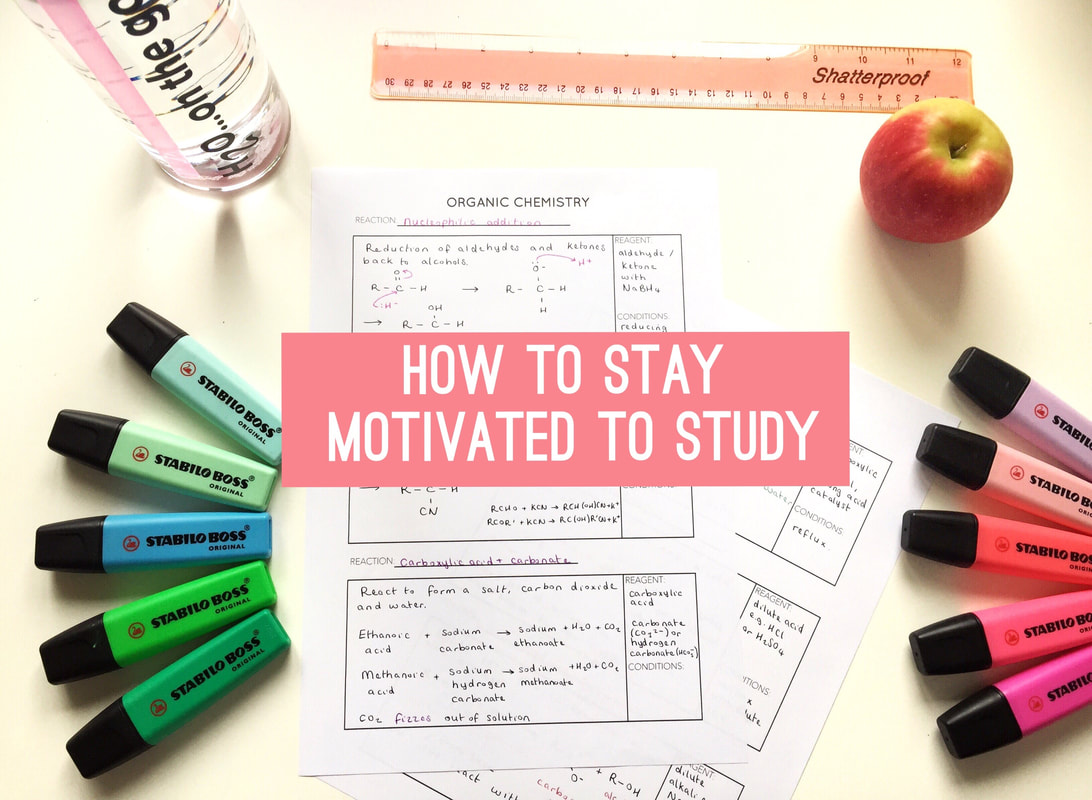
STAYING MOTIVATED WHILE STUDYING

Some people say that the hardest step in studying is to get started. Once you have taken the first step, the rest is easy, they suggest.

Other people, however, find it difficult to stay motivated when studying, especially when the end seems a long way away.


A Strategy for You👉

There is no single strategy that will work for everyone in supporting ongoing motivation.

However, there are plenty of options that you can try, to see if they work for you. If they do, you should incorporate them into your ongoing strategy. If not, then put them aside and try something else.

The important thing is whether your strategy keeps you motivated, not whether other people agree with you.

Tips for staying motivated👇

1. Designated study space

The first step to help you motivate yourself to study at home involves creating a designated space for your learning and revision to take place. Whether it’s a desk in your bedroom, or a portion of the kitchen table, make sure you sit in this same space each time you want to study, so your body gets into a routine of knowing that this is the space in which it needs to focus. 

2. Effective study schedule

One of the greatest benefits of getting up and going into school and/or college or university, is that you follow a structured timetable that helps your body get into routine. As humans, we need routine to help our brains know where and when to focus our attention, as well as when to relax. Therefore, it’s essential you create your own schedule/timetable to ensure you can study efficiently at home.

3. Break the task down into manageable chunks

A big task, such as writing a dissertation, or revising for an extended period, can be demotivating because it seems so big.

Breaking the task down into manageable chunks can therefore help make it seem less daunting.

4. Try different study approaches

Especially when you first start studying, you will not necessarily know what works for you. 


It is therefore worth trying different approaches, to see which you find most productive.

It is also worth varying your studying to keep you interested. Some days you may want to look at one subject, and try another on a different day. You may also find it helpful to vary your style of working. You could, for example, try working in different places, and varying whether you work alone or with friends.

5. Exercise regularly

When you’re focused on studying for a major exam, it’s common to overlook exercise.

But, as far as possible, get 20 to 30 minutes of physical activity every day.

This is because regular exercise is vital if you want to study effectively and stay motivated.

Aerobic activity, such as swimming, jogging or walking, sends oxygen, blood and nutrients to your brain.

This helps you to think and concentrate.

Conclusion

The key to getting motivated to study is organising your time and work, and knowing how to use your mind effectively.