ALL ABOUT AUTOBIOGRAPHY

Write in an autobiography the author writes the story of his own life and achievements. It is the successful presentation of personality. It takes its origin in the common human heart to express once-on achievement in the form of writing. The writer may give a full account of his life in detail or he may give only a few anecdotes or events from his life.

The great drawback of an autobiography is that it can never be complete because it comes to an end before the author’s death. Doctor Johnson preferred autobiography to biography saying that every man’s life is best written by himself. The writer of his own life has the full knowledge of the truth through sometimes he made disguise or suppress it in his writings. From the psychological viewpoint also an autobiography is preferable because the writer knows what are the motives, hopes, and omissions that prompted him to decisive moments in his life. Thus while biography is the product of second-hand knowledge, autobiography is the product of the first-hand experience. R.L. Stevenson says, “There is no truer sort of writing than what is to be found in autobiographies, and certainly none more entertaining”.

An autobiography is a candid narration of events in the author’s life. It may take the form of a confession, apology, self-scrutiny, or a mere delightful account. When it is a mere account of facts without reference to the author’s inner conflicts and motives it is an objective autobiography. When an autobiography reveals the character and inner struggle of the writer and the present a searching analysis of his moods, motives, and fancies, it is subjective. St. Augustine’s confession’s, the earliest example of an autobiography, belongs to the subjective kind. So also Rousseau’s ‘Confessions’ written in the 18th century. Three other important autobiographies appeared in the 18th century. Those of David Hume, Edward Gibbon, and Benjamin Franklin.

Chief characteristic of an autobiography:

  • Truth should be the Hallmark of an autobiography. facts should not be perverted. A true picture of the writer’s personality should emerge from the autobiography. Gandhiji’s autobiography is the best example in this respect.
  • Courage and frankness are the essential virtues of a good writer of an autobiography. The writer should not be secretive and reluctant. Bertrand Russell’s three-volume autobiography is noted for these qualities.
  • The author of an autobiography should be objective in dealing with contemporary events and personalities. Autobiographies of Gibbon and Nehru are good examples of this kind.
  • The author should not be verbose in his description or narration.
  • Self-consciousness is the very essence of an autobiography. An autobiography should not aim at self-effacement as in the autobiography of T.E. Lawrence. Similarly, the author of an autobiography should not indulge in self-clarification.
  • The style should be interesting and even entertaining. A natural felicity of expression and flashes of humor and wit are essential attributes of an autobiography.

Some difficulties an autobiographer faces:

  • He is likely to forget the impressions and emotions connected with the events that happened in the distant past. Sometimes there may be embarrassing episodes he would like to hide or reveal only partially.
  • It is difficult for anyone to be entirely objective while dealing with contemporary persons and events that have affected his personal life and happiness.
  • An autobiographer is likely to omit the details of daily life that are common. This may lead to some falsification.

WHAT IS LITERATURE https://eduindex.org/2021/07/22/what-is-literature/

ADVANTAGES OF EBOOKS https://eduindex.org/2021/07/22/advantages-of-e-books/
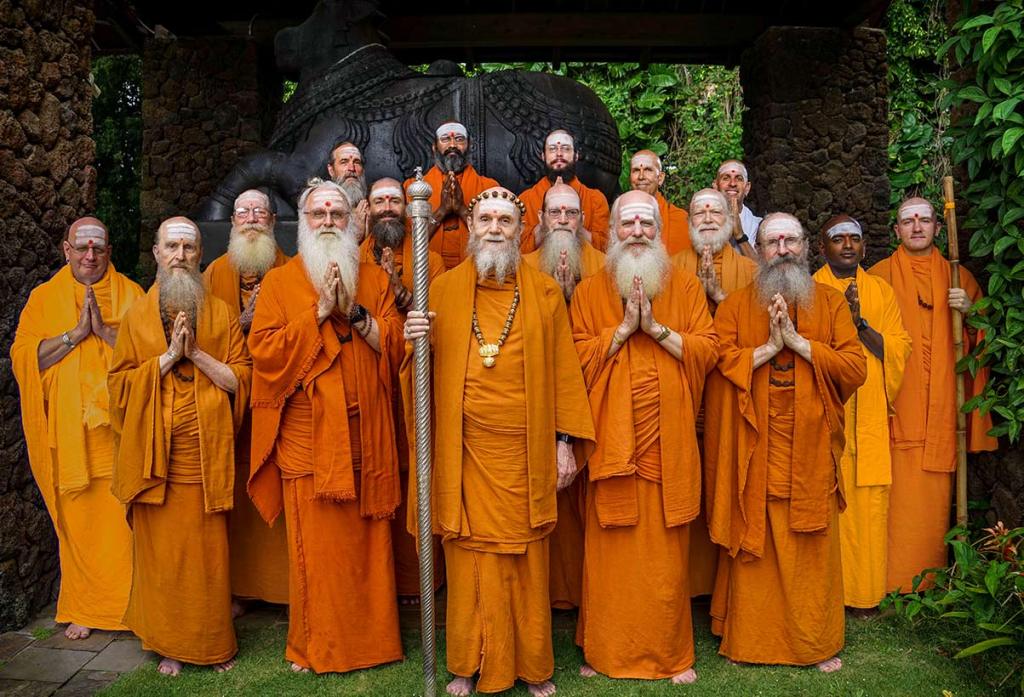
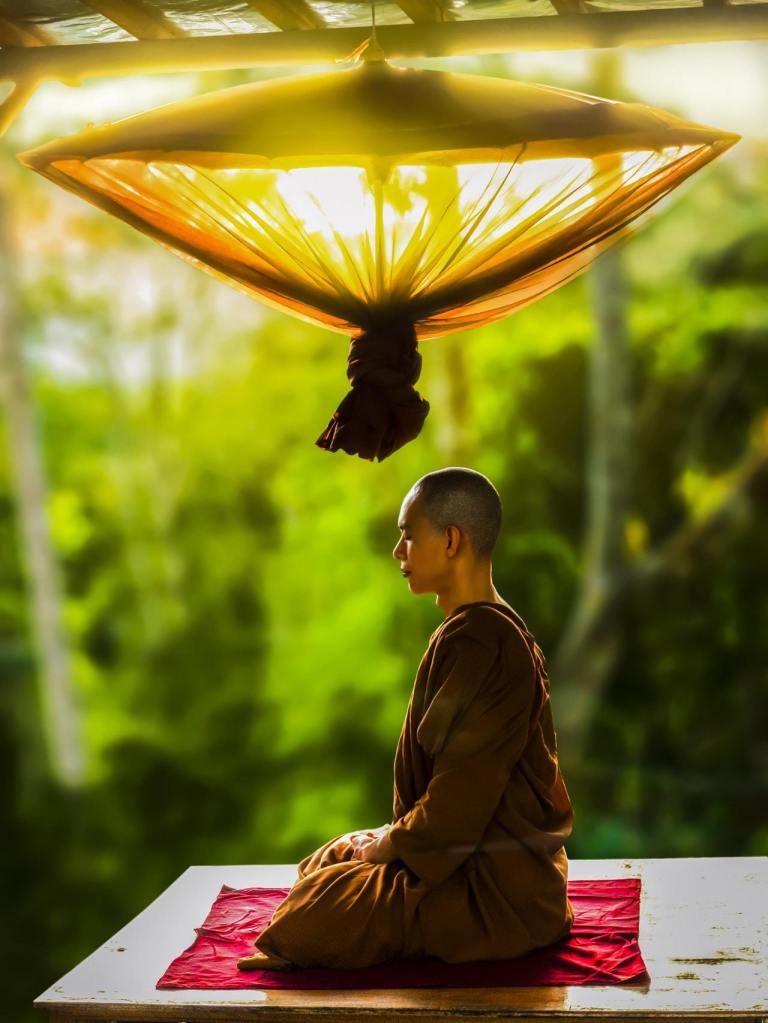
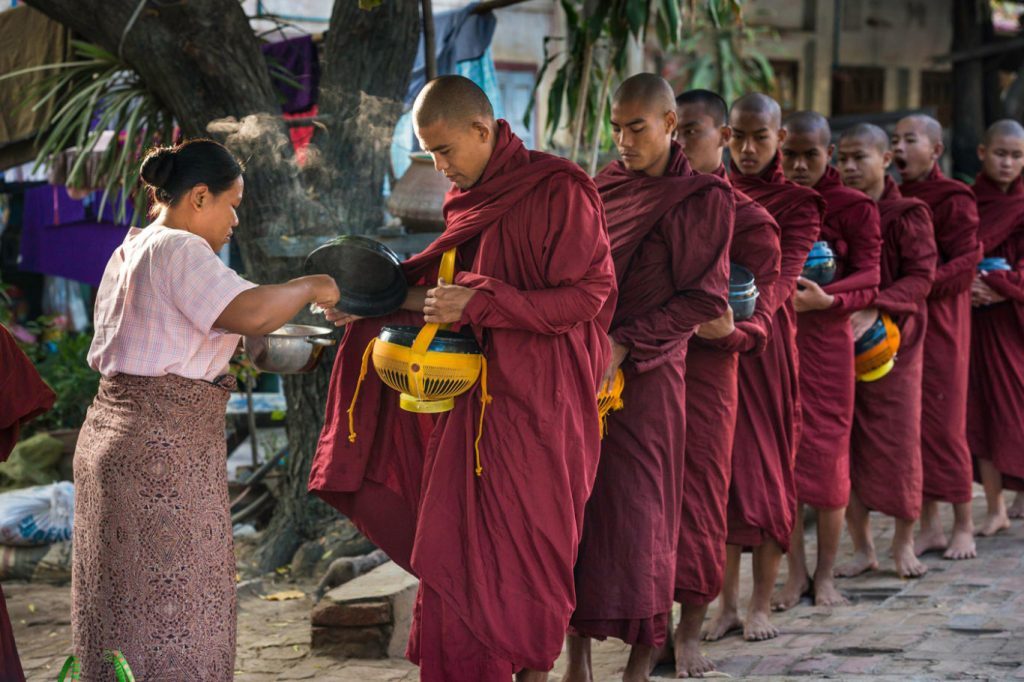
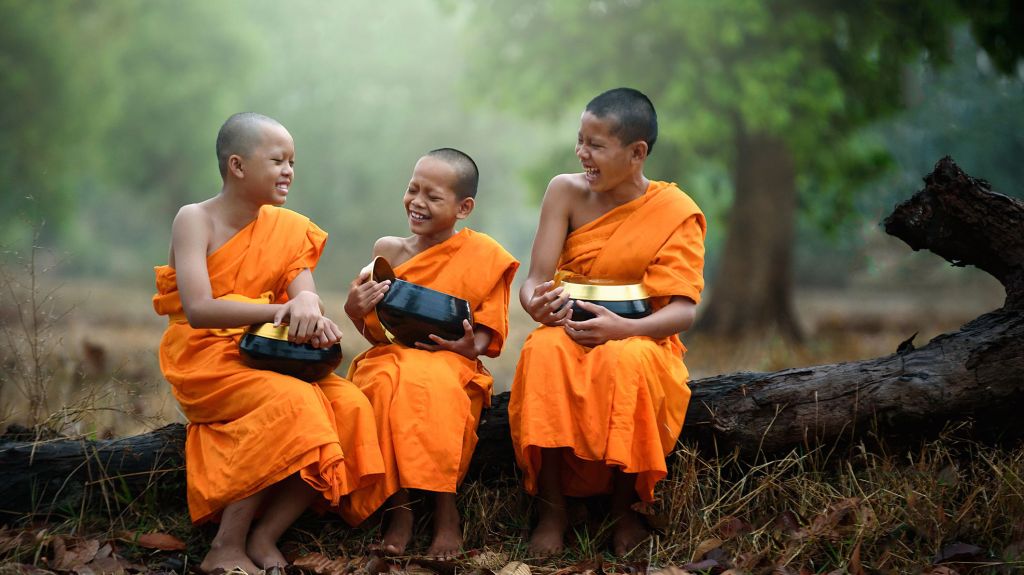
A Monk

Who are Monks ?

Why people are becoming Monks?

Is it some kind of religion ?

How a monk lives ?

What kind of God they persuit ?

Want to know more about them , then start some reading .

Introduction

A monk is a person who practices religious asceticism by monastic living, either alone or with any number of other monks . A monk may be a person who decides to dedicate his life to serving all other living beings, or to be an ascetic who voluntarily chooses to leave mainstream society and live his or her life in prayer and contemplation. The concept is ancient and can be seen in many religions and in philosophy.

In simple words , A monk is a man who devoted part or all of his life to a religion. The word comes from Ancient Greek, and can be translated as solitary. In Greek, the word can apply to women, but in modern English it is mainly used for men. The word nun is usually used for female monastics. Monks practice asceticism. They either live alone, or together with other monks who share the same ideals. Monks can be found in different religions, most often in Buddhism, Christianity, Hinduism, Jainism and Taoism.

There living

Monks usually follow rules and regulations for convenient life. As a monk you must obey these rules .

  1. Poverty: the monk cannot own anything.
  2. Chastity: the monk cannot have sex or a sexual relationship and cannot start a family or get married.
  3. Solitude: the monk should always be alone. Some monks choose to not follow this law.
  4. Silence: the monk shall not speak unless it is necessary.
  5. Generosity: the monk should always help other people.
  6. Stillness: the monk cannot travel far unless it is necessary. Sometimes this means that the monk must be cloistered which means that they must not leave their monastery (especially Warsa period). Sometimes they can be allowed to leave, but must not go very far.
  7. Duty: The monk must do some things every day. For example, the monk must pray or meditate and must do some work.

Indian monks

One of the finest and versatile monk in India was Swami Vivekananda . Swami Vivekananda was greatly inspired by Ramakrishna. For Swami, Ramakrishna was just a plain and simple villager, who was a part of the Kali temple. However, his intense spiritual practices intrigued Swami.

For five years, Swami learnt everything from his master, Ramakrishna. After his master left the world, everyone looked up to Swami. He urged the followers of Ramakrishna to leave the worldly pleasures and look up to God.

“You cannot believe in God until you believe in yourself.”

His saying intrigued just not one nation but the whole world .

Life lessons

Being a monk , gives you a pleasure of being yourself . We live in the world where we get pleasure from materialistic things . We become selfish , ruthless, dull, lifeless and worthless. You have to believe in yourself in order to excel in life.

Start learning from lessons.

  • When you start to do meditation you recognize the egotistical mind.
  • Trying until you get it right.
  • The answer to your question is inside of you.
  • Real wisdom in life comes from doing something and failing.
  • We must be both compassionate and resilient.
  • Patience is a virtue.
  • Detach from your ego.
  • Happiness come from within, and also comes from outside.

Link

THE PALACE OF ILLUSIONS (BOOK REVIEW)

Re-imagining the Epic with The Palace of Illusions by Chitra Banerjee  Divakaruni
Image source: Google

Mahabharata; as written by Vyasa, is heard and known by almost every person within and out of the community. All thanks to either the creators of the show or the story we heard from our grandparents back then. Mahabharata is historical fiction and the longest epic poem ever written revolving around the Kauravas and Pandavas, the brothers, the men of the story. Crux revolves around the battle and Victory of either of the two, the story of the brothers, the men in the house.

The women too had a shared part in it but what if I tell you the same story with the perspective of the women of their house? Perhaps, a story from the perspective of one woman in particular?

The Palace of illusions is all about itself.

Written by the award-winning poet and writer Chitra Banerjee Divakaruni, its first edition was released in 2008. 

The narrator and the protagonist is Draupadi herself.

Narrating all aspects of her life, from her unnatural birth to her lonely childhood, her bond with her brother, her marriage, her children, her death.

Every intricate detail is covered about her whole life

and the justice to the story is one hundred per cent done.

There are so many instances within the novel where you’ll feel too sympathetic with her character,story,struggles, and life.

Banerjee has not only laid emphasis on her but all the characters are defined and penned amazingly which makes its flow well. There are so many lines and dialogues within the novel that makes you ready to appreciate the writer for even thinking about that In all, the novel, the Mahabharata of this century, has something remarkable to it that there’s no way you can skip reading this one. It’s a kind of novel that maybe will make you think more of the role and the life of women involved in the world of men of Mahabharata with a whole new perspective.

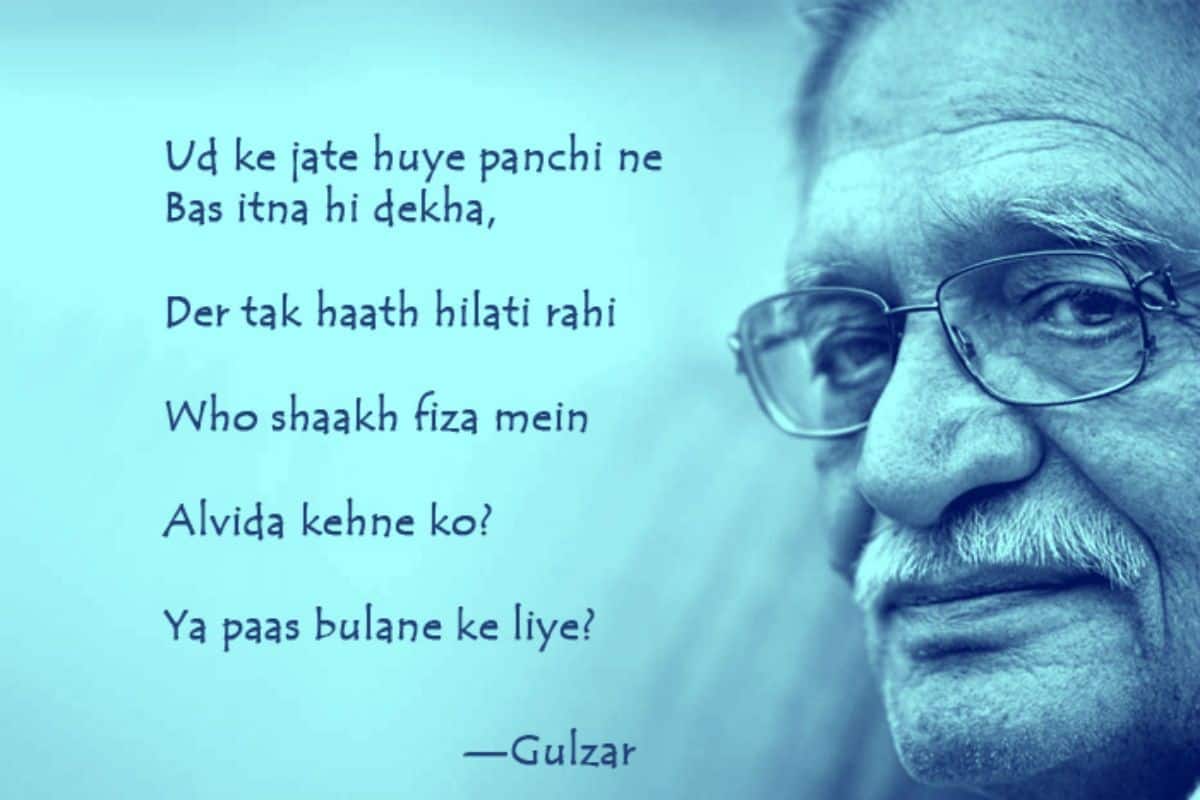
The Beauty Of Gulzar

Parallelism

In his seminal essay, ‘The Defence of Poetry‘, the Romantic poet Percy Bysshe Shelley endeavors to define the function of poetry. Shelley states that “Poetry lifts the veil from the hidden beauty of the world, and makes familiar objects be as if they were not familiar.”

On that account, Shelley would readily claim Gulzar in his breed of poets for the latter’s ability to verbalize and derive poetry out of regular and commonplace things. Over the course of half a century, Gulzar has produced countless verses that have left every listener mesmerized by the extraordinary visuals produced by ordinary words.

How Does He Make The Impact?

The immense power of Gulzar’s pen has found numerous means. He has written dialogues, screenplays and even poetic anthologies. However, the dominion where he reigns supreme is lyricism. Verses produced by him propel any song towards the domain of poetry. His graceful blend of Hindi and Urdu allows him to draw images and sights that could only be a poet’s imagination.

What fascinates about his writing capabilities, even more, is the ubiquitousness of it. These lyrics talk and discuss anything and everything on the face of the earth. A simple look at the body of his work might overwhelm anyone for the number of songs that he has penned in his splendid career. This number, however, feels surprisingly insufficient when you begin to listen to each song. For the more you discover, the more you crave.

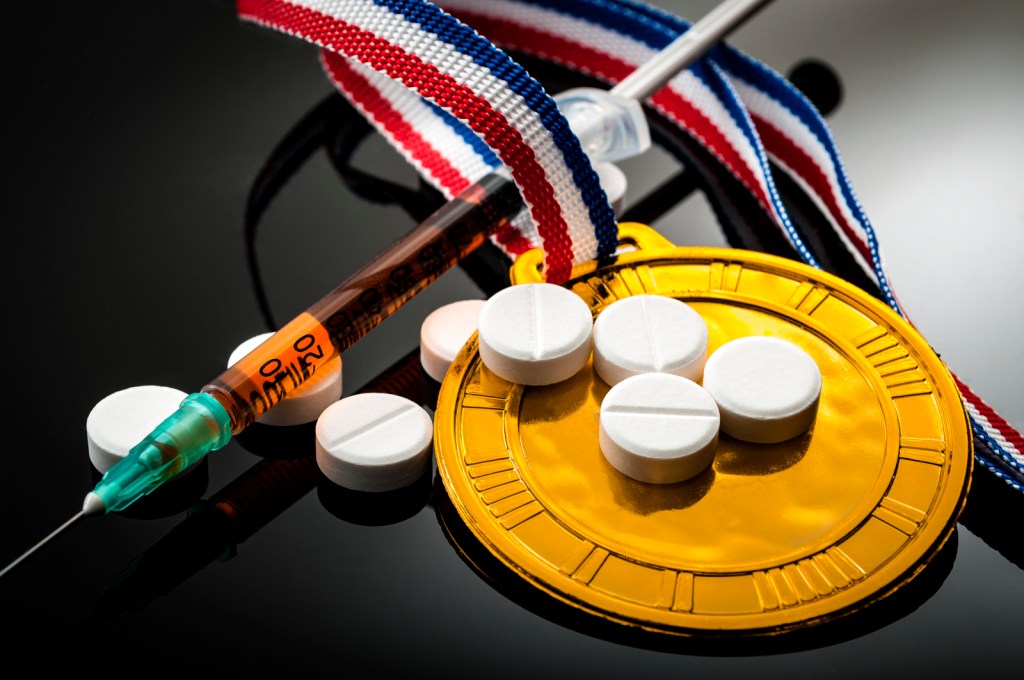
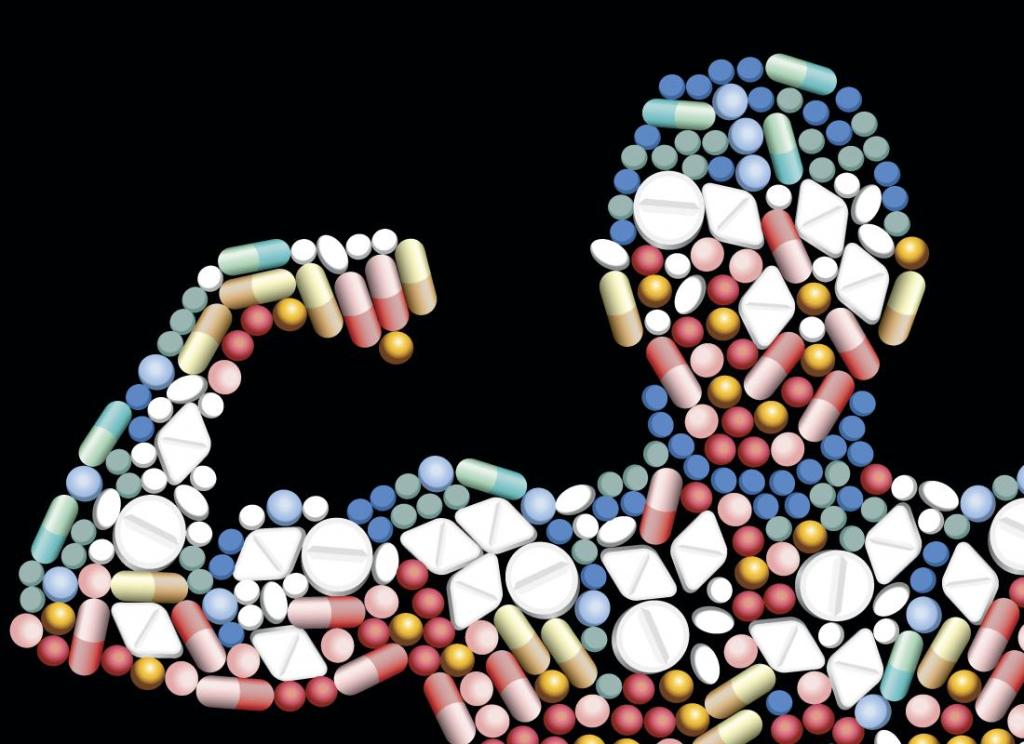
Doping – How is it Affecting Sports?

“Science has learned recently that contempt and indignation are addictive mental states. I mean physically and chemically addictive. Literally! People who are self-righteous a lot are apparently doping themselves rhythmically with auto-secreted surges of dopamine, endorphins and enkephalins. Didn’t you ever ask yourself why indignation feels so good?”

~ David Brin

Introduction

Doping in sport is a widespread problem not just among elite athletes, but even more so in recreational sports. In scientific literature, major emphasis is placed on doping detection, whereas detrimental effects of doping agents on athletes’ health are seldom discussed. Human growth hormone also increases muscle mass, although the majority of that is an increase in extracellular fluid and not the functional muscle mass.

The term doping is widely used by organizations that regulate sporting competitions. The use of drugs to enhance performance is considered unethical, and therefore prohibited, by most international sports organizations, including the International Olympic Committee.

History

According to the World Anti-Doping Agency (WADA), the term “doping” probably comes from the Dutch word “dop,” an alcoholic beverage made of grape skins that was used by Zulu warriors to make them stronger in battle.

Ancient Greek athletes used special diets and stimulating potions to improve performance, and 19th century endurance athletes indulged in strychnine, caffeine, cocaine and alcohol.

The American specialist in doping, Max M. Novich, wrote: “Trainers of the old school who supplied treatments which had cocaine as their base declared with assurance that a rider tired by a six-day race would get his second breath after absorbing these mixtures.”[8] John Hoberman, a professor at the University of Texas in Austin, Texas, said six-day races were “de facto experiments investigating the physiology of stress as well as the substances that might alleviate exhaustion.”

Effects of doping in sports

It builds muscle but causes abnormal growth, heart disease, diabetes, thyroid problems, hypertension, blood cancers and arthritis. Other adverse effects include joint pain, muscle weakness, visual disturbances, enlarged heart and diabetes.

Other side effects include:

  • Heart palpitations.Heart rhythm abnormalities.
  • Weight loss.
  • Tremors.
  • Mild high blood pressure (hypertension)
  • Hallucinations.
  • Stroke.
  • Heart attack and other circulatory problems.
  • Constipation.Skin rash or dermatitis.
  • Diarrhea.
  • Dizziness.
  • Drowsiness.
  • Dry mouth.
  • Headache.
  • Insomnia.

UFC ( Ultimate Fighting Championship ).

In December 2013, the UFC began a campaign to drug test their entire roster randomly all year-round. Random testing, however, became problematic for the promotion as it began to affect revenue, as fighters who had tested positive would need to be taken out of fights, which adversely affected fight cards, and therefore pay-per-view sales.

According to Steven Marrocco of MMAjunkie.com, about 31% of UFC fighters subjected to random testing since the program first started have failed due to using performance-enhancing drugs. That is approximately five failed tests for every sixteen random screenings.

From July 2015, the UFC has advocated to all commissions that every fighter be tested in competition for every card. Lorenzo Feritta, who at the time was one of the presidents of the UFC, said, “We want 100 percent of the fighters tested the night they compete”. Also, in addition to the drug testing protocols in place for competitors on fight night, the UFC conducts additional testing for main event fighters or any fighters that are due to compete in championship matches.

Link