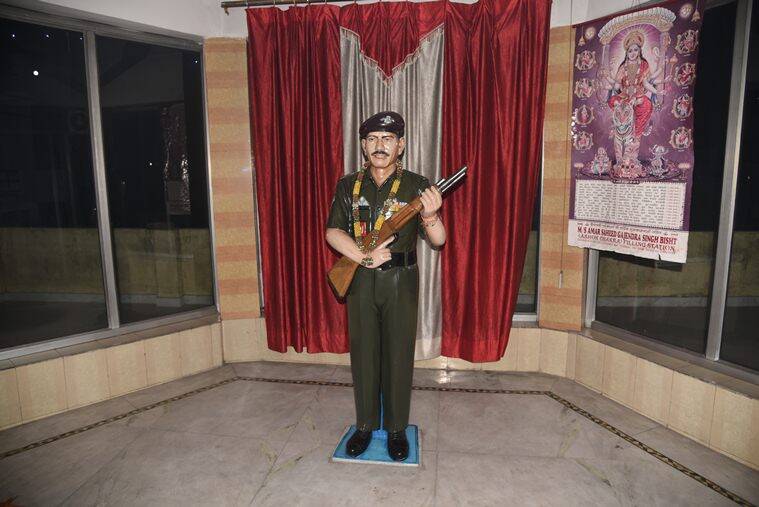
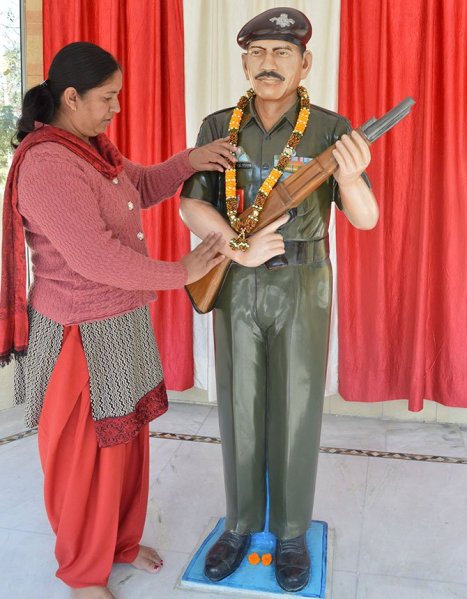
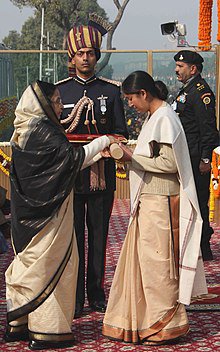
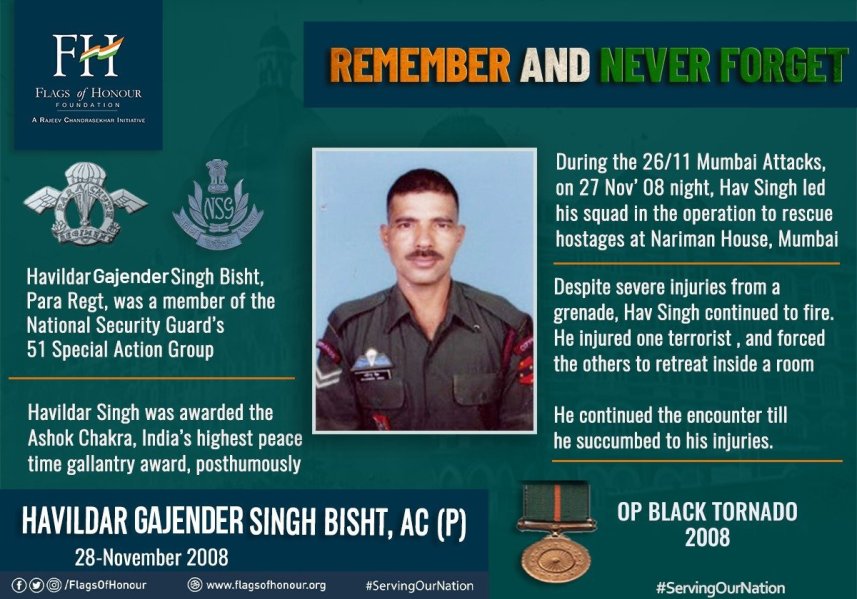
Havaldar Gajender Singh Bisht was an NSG commando who was martyred in the 2008 Mumbai attack. His bravery received the Ashoka Chakra Award from the President of India on January 26, 2009, on the Anniversary of the Republic of India. He was born on 1 July,1972 in Dehradun, Uttarakhand.
Credit- Facebook
He persued his education from the Janata Inter College in Naya Gaon.As a student he used to participate in every event organised in the school, sports or cultural activities. But he had a particular interest in boxing. Havaldar Gajendra Singh joined Garhwal Rifles in 1991 and later decided to become part of the 10 Para (Special Forces). Havaldar Gajendra also actively participated in Operation Kargil in 1999. Havaldar Gajendra was a trained commander of the Indian Army Special Forces, but he was commissioned to serve the National Security Guard’s Elite Special Action Group. Gajendra Singh Bisht was a member of the 51st Special Action Group of the National Guard. He was part of a team of NSG Command rushed to the roof of Nariman’s house to neutralize an terrorist inside the building who had at least six hostages.
Credit- Facebook
According to NSG Secretary Jyoti Krishna Dutt, Bisht led one of the teams entering the building. The team was hit by a violent terrorist attack and returned to fire while trying to contain the situation. Terrorists also threw some grenades at Commando. At this point,Bisht had the opportunity to retire with his team. But he realized they needed to seize this opportunity and went forward with thier mission.Instead of turning his back on the militants, he made the way to other troops instead, despite the grenades being thrown. He suffered multiple gunshot wounds in the process, but moved forward and was eventually injured. This allowed his team to secure a dominant position in the encounter. On the night of November 27, 2008, Havildar Gajender Singh Bisht led his army in an operation to rescue hostages from terrorists at the Nariman House in Mumbai. While securing the Nariman House during Operation Black Tornado, Bisht got fatally injured at Jewish center attack and died.
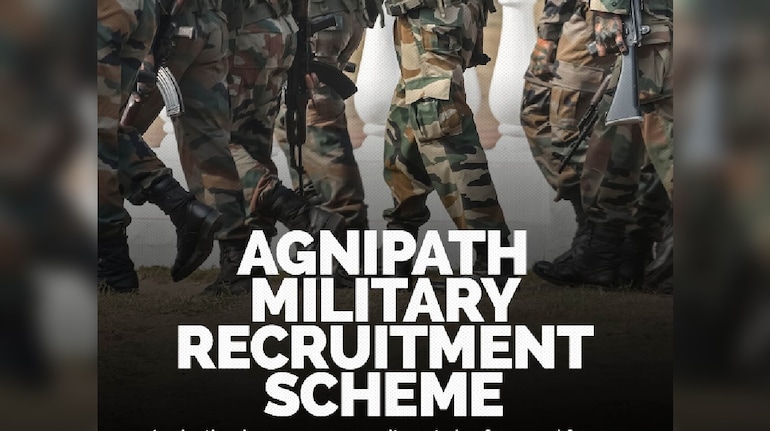
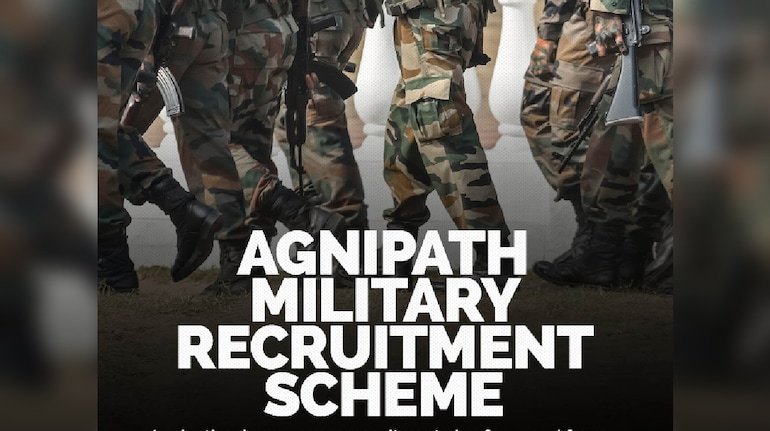
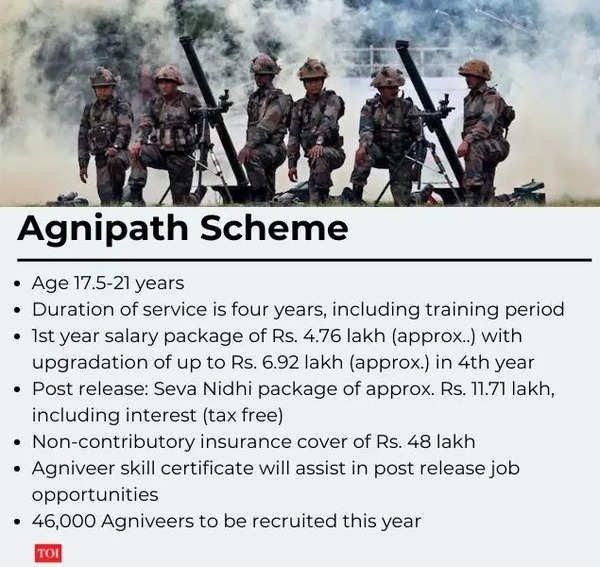
The Agnipath Program is a new program launched by the Government of India on June 14, 2022 to recruit soldiers under Corporal into three armies. The Agnipath program will be the only means of recruiting the military. All new employees will only be hired for 4 years. The personnel hired under this system are called Agniveers, a new military rank. The introduction of this system has been criticized for lack of consultation and open debate. The program is scheduled to start in September 2022. The Agnipath program was approved by the Government of India in June 2022 and will be implemented from September 2022. The announcement was made on June 14, 2022. This program is intended for both male and female applicants between the ages of 17.5 and 21. In widespread protests against the Agnipath program, the central government raised the cap from 21 to 23, but only in 2022. Recruitment under this program is held twice a year by the Indian Army, Indian Navy, and Indian Air Force. The available posts are below the executive list. The Agnipath program is the only way to serve in the army.
New employees, under the Agnipath scheme will be called “Agniveers,”who will have a four-year tenure, including six months of training followed by a 3.5-year deployment. After leaving the service, they have the opportunity to apply to continue in the army. Less than 25 percent of the retired group’s total strength is selected for the permanent roster. Employees who retire after four years of work are not eligible for a pension, but will receive a lump sum of approximately Rs 11,71,000 at the end of their tenure. The Government of India plans to hire 45,000-50,000 new employees each year through this program. In September 2022, 46,000 young people will be hired through this program. Prior to the start of the Agnipath program, soldiers were in the army for more than 15 years of service on a lifetime pension. As of 2019, there was no military recruitment for three years. The Government of India quoted the COVID-19 pandemic in India tye reason for no recruitment. Meanwhile, 50,000 to 60,000 soldiers continued to retire each year, leading to labor shortages and beginning to affect the military’s operational capabilities.
Credit- TOI
On June 16, 2022, fierce protests took place in several Indian states, where military candidates who were preparing for the armed forces were angry at the new system, demanding its rollback, and damaging public property. By June 17, 12 trains had been fired, affecting the movement of 300 trains. 214 trains were canceled, 11 trains were detoured, and 90 trains ended short of their destination. This scheme does not include long-term holdings, pensions and other benefits that existed in the old scheme. Individuals who wanted to join the army were disappointed with the rules of the new system. Of particular concern were short tenure, no early retirement pension, and an age limit of 17.5-21 years, making many of the current candidates unsuitable for serving in the Indian Army.
On June 20, a national strike called Bharat Bandh was summoned by a protesting organization calling for the withdrawal of the program. The call was made via social media without naming the organization. More than 600 trains were canceled due to a strike. Section 144 was imposed in parts of Rajasthan, Punjab, Uttar Pradesh and Haryana.
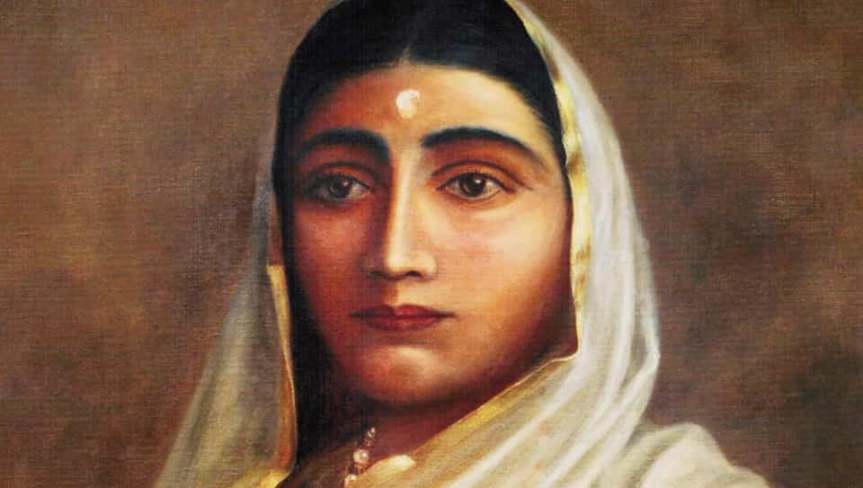
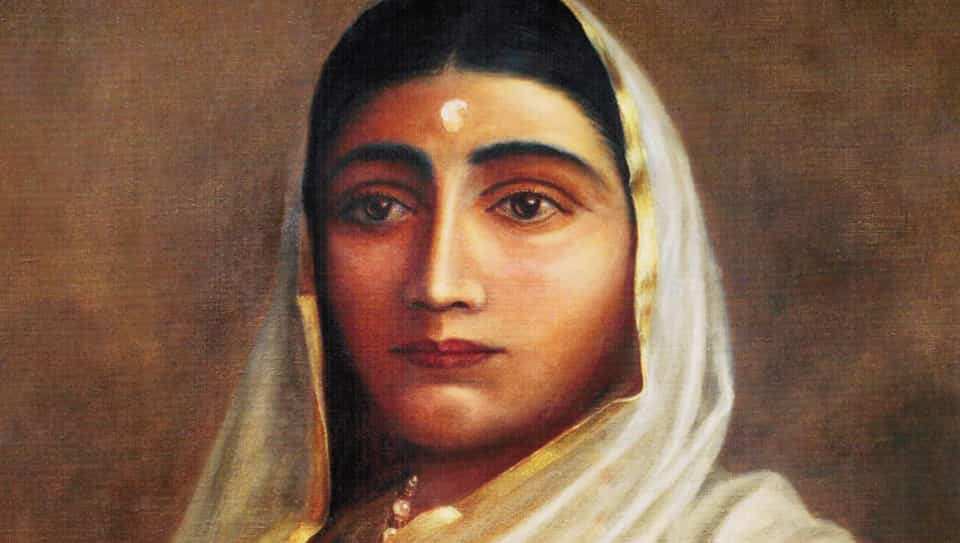
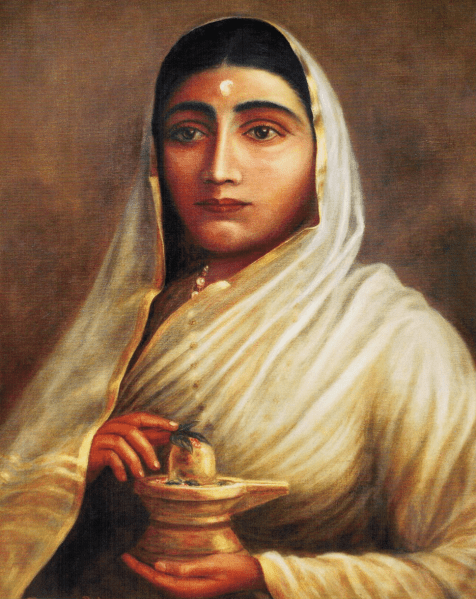
Ahilya Bai was born write to Mankoji Shinde and Sushila Shinde in the village of Chaundi (now Ahmednagar district) in Maharashtra, and was born in the Marathi Hindu family. His father, Mankoji Shinde, a descendant of the magnificent Dhangar family, served as a patil. At that time, the woman were not allowed to attend school , but her father taught her how to read and write.
According to one legend, Ahiliya once stopped by Chaundi on her way to Pune, where Bajirao I, commander of the Maratha army, and Marhar Rao Holker, the ruler of Malwa, saw eight-year-old Ahilya in a temple worship service. Impressed by her devotion and her personality, Marhar, on the advice of Peshwa, married Ahilya and his son Khande Rao. She married Khande Rao in 1733. Ahilya accompanied Khande Rao on many campaigns. Throughout her marriage, she was raised by her mother-in-law, Gautama Bai. Gautama Bai is believed to have played an important role in bringing out the values that she had planted in Ahiliya. She trained them in administration, accounting, politics, etc. and finally delivered their Khasgi Jagir in 1759.
In 1754, Candelao, along with his father Marharla O’Holker, besieged Fort Kumar in Jatrajas Rajimar in Bharatpur at the request of Imadulmark and General Mirbakshi of Mugar Emperor Ahmadsha Bahadur. Suraj Mal supported Emperor Mugar’s rebellious Wajir Safdar Jang. Khande Rao was inspecting his army with an open litter when a shell fired by the Jat army during the battle hit him and died. After the death of her husband, Ahilya Bye was prevented from playing sati by her father-in-law. After the death of her husband, she received military training by Malhar Rao Holker. After the death of Khande Rao.Ahilya Bai gave up all the desires of life and decided to perform a sati to accompany her husband’s funeral cremation. Her people urged her not to commit sati, but she said her husband promised to accompany her for the rest of her life, and now he walked in the middle of her. Finally, when she decided to play Sati and did not forgive her, it was her father-in-law, Malhar Rao, who made a fervent emotional plea to stop her from doing suicide. .
Credit- Wiki
Marhar Rao Holker died in 1766, twelve years after his son Khande Rao died. Male Rao,the grandson of Marhar Rao and the only son of Khande Rao became the ruler of Indole under the rule of Ahilya Bai in 1766, but he also died within a few months in April 1767.
Ahiliya Bai died on August 13, 1795, at the age of 70. The reign of the modern woman Ahiliya Bai is remembered as a golden age in the history of the Maratha Empire. Ahiliya Bai was taken over by her nephew Tucozy Rao Holker, her commander-in-chief. He immediately abandoned the throne in 1797 in support of his son Kashi Rao Holker.
Ahiliya Bai was a great pioneer and builder of Hindu temples and built hundreds of temples and Dharmashala throughout India. Especially well known for the refurbishment and re-dedication of some of the most sacred sites of Hindu pilgrimages that were desecrated and destroyed by Emperor Aurangzeb in the last century.
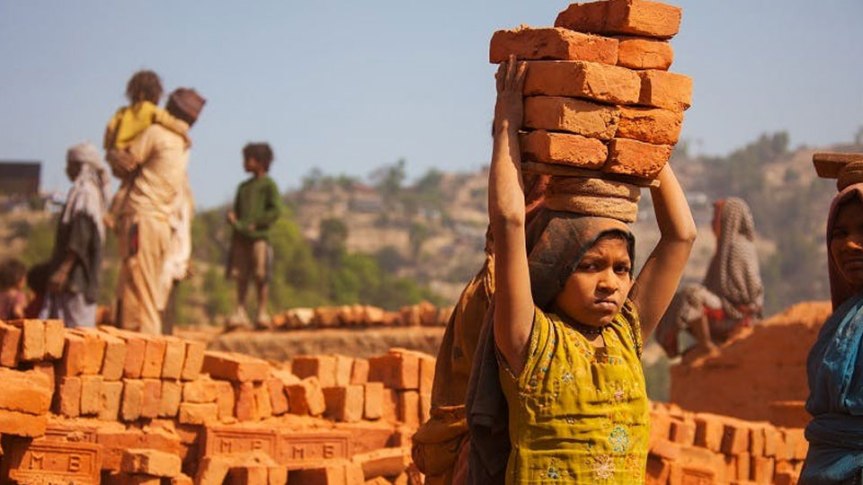
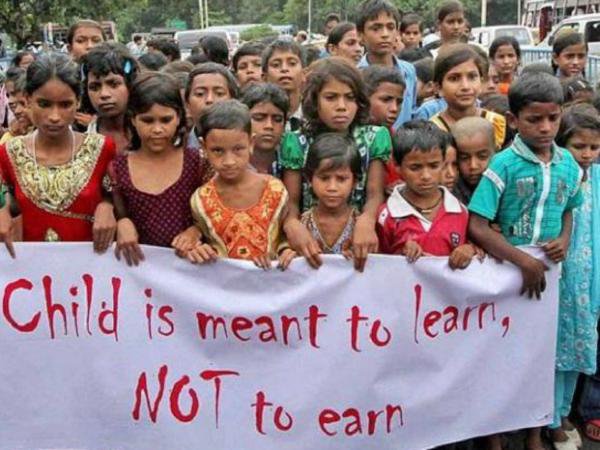
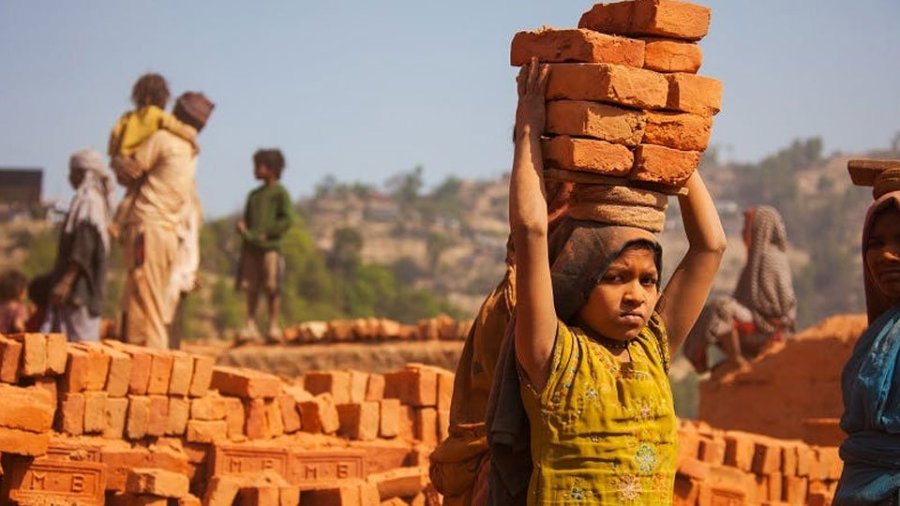
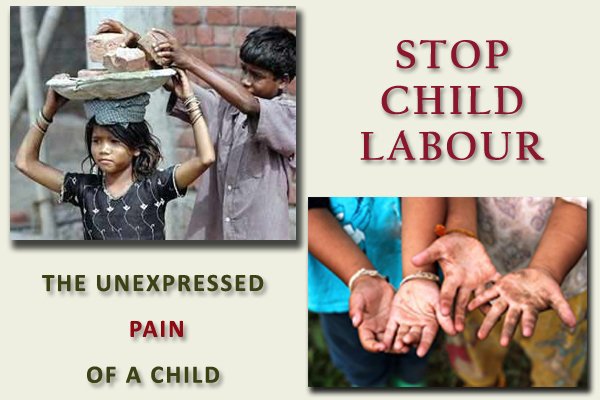
Child labor is the deprivation of children’s childhood, affecting their ability to attend regular school and exploiting them through all forms of work that are mentally, physically, socially and morally harmful.
After gaining independence from colonial rule, India enacted many constitutional protections and child labor laws. The Constitution of India in the principles of basic rights and public policy prohibits child labor under the age of 14 in factories, mines, castles or other dangerous occupations (Article 24). The Constitution also stipulated that by 1960 India would provide all children aged 6 to 14 with the infrastructure and resources for compulsory free of charge education . (Articles 21-A and 45). In 2011, the Indian Census found that of the 259.64 million children in this age group, the total number of child laborers [ages 5-14] was 10.1 million. The problem of child labor is not unique to India. Approximately 217 million children work worldwide, many of whom work full-time.
Credit-ipleaders
In India child labour is defined as the involvement of children under the age of 17 in economically productive activities, with or without compensation and wages . Such participation can be physical, mental, or both. This work includes part-time or unpaid work on farms, family businesses, or other economic activities such as cultivation or milk production for sale or personal consumption. The Government of India divides child labor into two groups. The main workers are those who work more than 6 months a year. And marginal child laborers are workers who work all year round, but less than six months a year. In 1979, the Government of India established the Gurupadswamy Commission to learn about child labor and how to fight it. The Child Labor Probation and Regulation Act was enacted in 1986 on the recommendation of the Commission. A national child labor policy was developed in 1987 focusing on the rehabilitation of children working in dangerous professions. Since 1988, the Ministry of Labor and Employment has established approximately 100 industry-specific national child labor projects to rehabilitate child laborers.
Credit- Track4Trainings
The Government of India has enacted numerous laws, organizations and institutions to combat the issue of child labor. Some initiatives include child labor bans and regulations, laws prohibiting the employment of children in certain occupation and regulating the working conditions of children. The National Child Labor Policy attempts to take a sequential approach with a primary focus on the rehabilitation of children working in dangerous professions and processes of works. The Ministry of Labor and Employment is responsible for providing and supervising a range of child labor policies in India. In addition, as Osment reported, NGOs such as Care India, Child Rights and You, and Global March Against Child Labor were implemented to tackle child labor through access to education and resources. However, these efforts were of little success.
Non-governmental organisations: Bachpan Bachao Andolan, Child Rights and You, ChildFund, CARE India, GoodWeave India,Talaash Association, Global March for Child Labor, and many other NGOs are campaigning to eliminate child labor in India. increase.
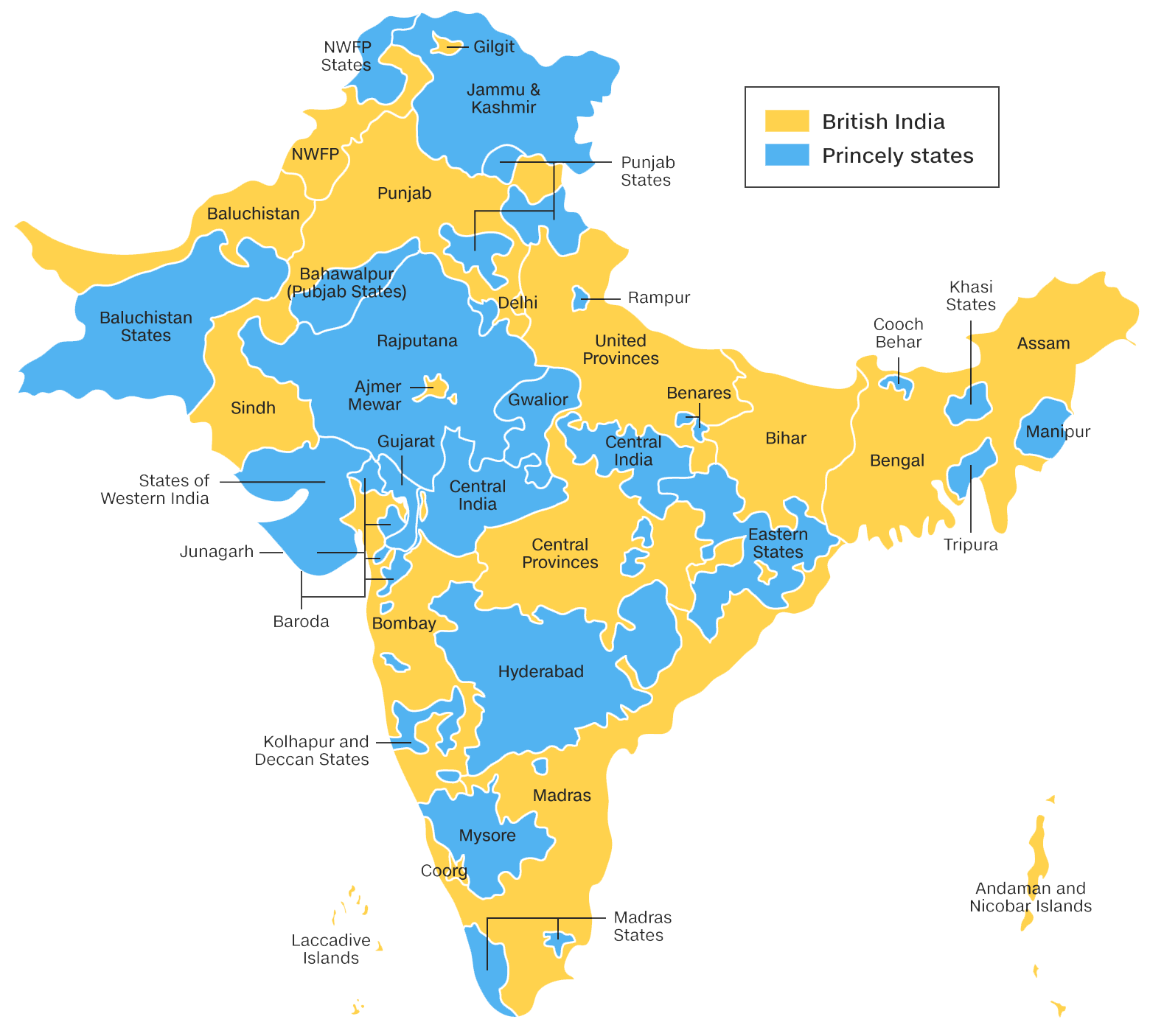
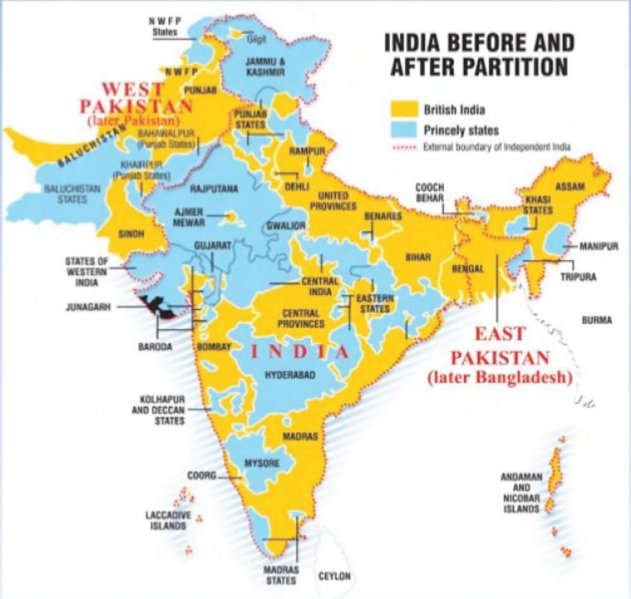
Sardar Vallabhbhai Patel played an important role in the integration of the princely state into the Dominion of India. This achievement laid the foundation for Patel’s popularity in the post-independence era. He is still remembered as the man who united India today. In this respect he is compared to Otto von Bismarck, who united many German states in 1871. The June 3 plan gave more than 565 princely states the option of joining India or Pakistan or choosing independence. Most Indian nationalists and the masses were afraid that most people and territories would be fragmented without the participation of these states. Parliament and British officials considered Patel to be the best man on a mission to secure the conquest of the princely state from Indian rule. According to Gandhi only Patel could solve this problem. Patel had practical insight and determination to accomplish monumental work. Patel asked V.P. Menon, a senior official involved in the division of India, to become his right-hand man as Principal Secretary of State. Patel used a social gathering and informal setting to involve most monarchs and invite them to their home in Delhi for lunch and tea. At these meetings, Patel stated that there was no essential conflict between Congress and the prince’s order. Patel aroused the patriotism of the Indian monarchs and urged them to embrace the independence of their country and act as responsible rulers who care for their people’s future. He persuaded the rulers of 565 states about the impossibility of independence from the Republic of India, especially in the face of rising opposition from their subject. He proposed favorable conditions for the merger, including the creation of a secret purse for the descendants of the ruler. Patel encouraged the rulers to act patrioticly, and to thought about his states people and their futur, but he did not rule out violence. He emphasized the need for the princes to join India in good faith and gave them to sign the membership certificate until August 15, 1947. All but three states were willing to join the Indian Union. Only Jammu and Kashmir, Junagad and Hyderabad were States which were tough to brought under Indian Dominion.
Credit-Youtube
Junagadh being situated in Gujrat it was very important for Patel to bring it under Indian’s dominion. This was also important because there was the super-rich Somnath Temple (a temple where different stones were their including emeralds, diamonds, and gold which were looted by Mohd. Ghazni) in the Kathiawar district. Bieng under the pressure from Sir Shah Nawas Bhutto, a Nawab who joined Pakistan. However, it was far from Pakistan, with 80% of its state population being Hindus.Patel combining diplomacy and power, Pakistan invalidated Pakistan’s accession and demanded that Nawab join India. Patel sent troops to occupy the three principalities of Junagadh to show his determination. After widespread protests and the formation of the civilian government, or Aarzi Hukumat, both Bhutto and Nawab fled to Karachi, and under Patel’s orders, Indian troops and police forces invaded the state. A later organized referendum resulted in 99.5% of the votes in favor of the merger with India. After taking over, Patel, who spoke at the University of Bahauddin in Junagad, emphasized his sense of urgency regarding Hyderabad. He believes this is more important to India than Kashmir.
Credit-Youtube
Hyderabad was the largest of the princely states and which included States parts of which are now Telangana, Arndra Pradesh, Karnataka and Maharashtra. Its ruler, Nizam Osman Ali Khan, was Muslim, but more than 80% of the population of state was Hindu. Nizam called for independence or accession to Pakistan. Under Kasim Razvi, an army of Nizam-faithful Islamic troops called Razakar urged Nizam to confront India and at the same time organize an attack on the people of India’s soil. The standstill agreement was signed by Lord Mountbatten’s in desperate efforts to avoid the war, but Nizam refused to trade and changed his position. At a cabinet meeting in September 1948, Patel emphasized that India should stop speaking and reconciled Nehru and Governor Chakravarti Rajgoparachari with military action. After preparation, Patel ordered the Indian troops to invade Hyderabad (in his position on behalf of the Prime Minister) when Nehru traveled to Europe. This action, called Operation Polo, in which thousands of Razakar troops were killed , but Hyderabad was secured and integrated into the Republic of India. Mountbatten and Nehru’s main goal was to avoid forced annexation to prevent the outbreak of Hindu and Muslim violence. Patel argued that if Hyderabad was allowed to survive as an independent state surrounded by India, the government’s fame would decline and neither Hindus nor Muslims would feel reassured in their empire. After defeating the Nizam, Patel held him as the head of state of the ritual and met with him. India had 562 princely states after addition of Junagarh, Heydrabad and Jammu& Kashmir.
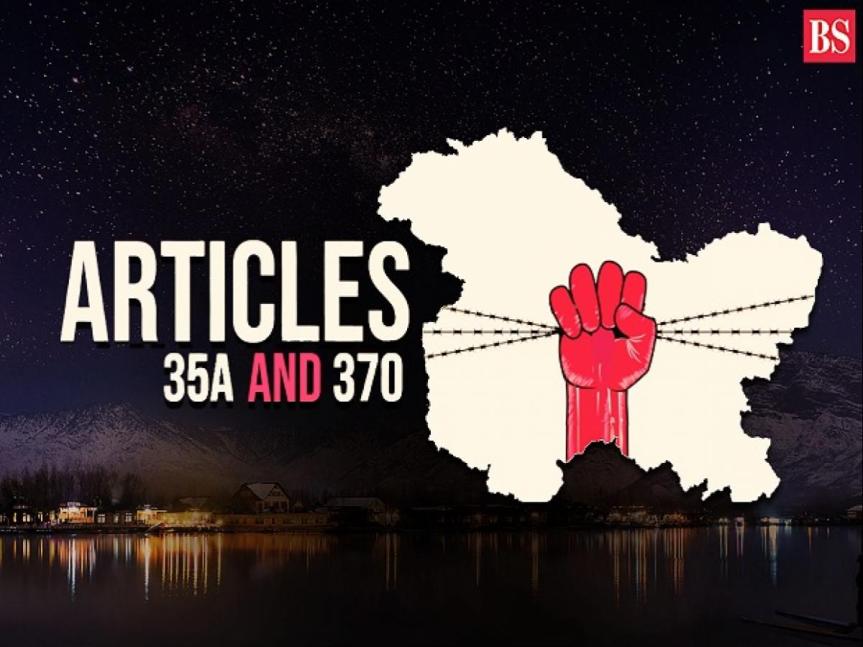
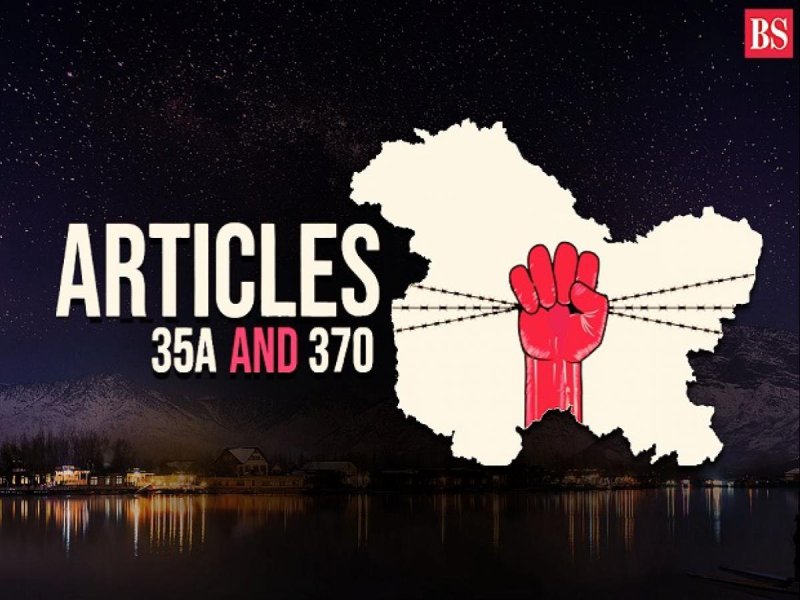
Article 370 The first accession of Jammu and Kashmir, like all other princely states, involved three issues: defense, diplomacy, and communications. All princely states were invited to send representatives to the Constitutional Parliament, which drafted the Constitution across India. They were also encouraged to establish a constituent parliament for their own state. Most states were unable to establish a parliament in time, but some states, especially Saurashtra Union, Travancore-Cochin, and Mysore. The State Department had drafted a model state constitution, but on May 19, 1949, the governors and Chief ministers of each state met in the presence of the State Department and agreed that no separate state constitution was needed. They accepted the Indian Constitution as their own constitution. The state in which the elected constituent council proposed some changes that were accepted. Therefore, the status of all states has been placed on par with the status of ordinary Indian states. In particular, this meant that the subjects available for legislation by central and state governments were consistent and same throughout India.
In the case of Jammu and Kashmir, state politicians have decided to establish a separate constitutional council for the state. Representatives of the Indian Constitutional Assembly applied only the provisions of the Indian Constitution corresponding to the original accession documents to the state, and demanded that the state Constitutional Assembly decide on other matters. The Government of India agreed to the request shortly before its meeting with the other states on 19 May. Therefore, Article 370 was included in the Constitution of India, which provided that other provisions of the Constitution empowering the central government would apply to Jammu and Kashmir only with the approval of the State Constitutional Assembly.This was a “provisional provision” because it was applicable until the State Constitution was enacted and adopted. However, the State Constitutional Assembly was dissolved on January 25, 1957, and did not recommend the abolition or amendment of Article 370. This article was considered an integral part of the Indian Constitution, as confirmed by various recent April 2018 rulings by the Supreme Court of India and the Supreme Court of Jammu & Kashmir.
Credit- Legal Service India
Article 35A Article 35A of the Constitution of India was a provision authorized by state to define the “permanent residents” of Jammu and Kashmir State and to give them special rights and privileges. It was added to the Constitution by an Executive Order, the 1954 Constitutional Order (application to Jammu and Kashmir). It was issued by the President of India under Article 370. Jammu & Kashmir has these privileges, the ability to acquire land and real estate, vote and participate in elections, pursue government employment, and receive the benefits of other governments such as higher education and medical expenses. Defined to include. Non-permanent residents of the state were not eligible for these “privileges”, even if they were Indian citizens.
Rani Karnavati was a princess and temporary ruler from Bundi, India. She married Rana Sanga of Mewar in Chittorgarh, the capital of the Kingdom of Mewar. She was the mother of Rana Vikramaditya and Rana Uday Singh, and the grandmother of the legendary Maharana Pratap. During 1527 to 1533 the minority years of her sons she served as a regent for Mewar. She died on 8th March 1535.
After Babur seized the throne of Delhi in 1526, Rana Sanga of Mewar led a coalition of Rajput Kings against Babur to seize the throne of Delhi. In the starting Rana Sanga was able to defeat Babul in the Battle of Bayana, but in the Battle of Kanua, he was defeated because of Babur’s excellent tactics, guns, and artillery.Rani Karnavati took over as regent on behalf of his eldest son Vikramaditya who was a minor at that time. Meanwhile, Mewar was attacked a second time by Gujarat’s ruler Bahadur Shah against whom Vikramaditya had previously been defeated. It was very important issue for Rani Karnavati.
The nobles of Mewar Kingdom did not want to fight for Vikramaditya, and as the upcoming battle will certainly be another stain in the history of Sisodias. Rani Karnavati was able to persuade nobles to fight for Mewar and honor of Sisodias . Their only condition was that Vikramaditya and Uday Singh should go to Boondi for their personal security during the war. In some legends some also said, that Rani Karnavati also sent Rakhi to Emperor Humayun of Mugals calling him his brother and asking for help. Therefore, her name was irreparably linked to the Raksha Bandhan Festival. However, this is not supported by modern writers, and modern historians such as Satish Kumar consider it a fable rather than a historical fact.
Rani Karnavati agreed to send her sons to Bundi ,while knowing the situation being very critical and which can be dangerous for her two sons and send her trusted maid Panna Dai to accompany them and take care of them. Panna hesitated, but she left for Bundi with Vikramaditya and Uday Singh and accept the Queen’s wishes.
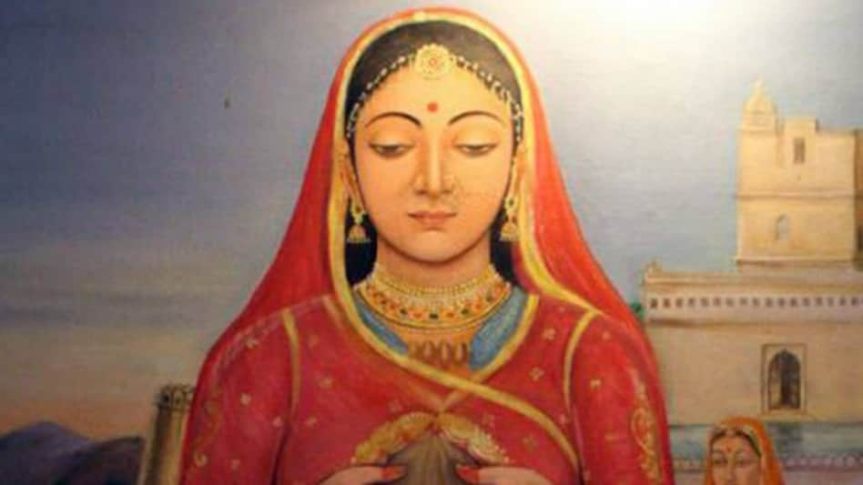
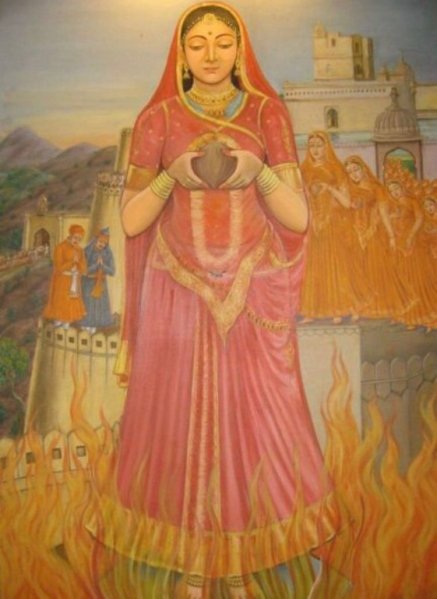
The Sisodias dynasty fought bravely, but the army of Mewar was outnumbered by Bahadur Shah army and they were defeated. Bahadur Shah entered Chittorgarh and it was his second attack on Chittor. The male nobles donned with saffron cloths fought with the enemy till thier death and commited Saka.Karnavati and other noble court women realized that defeat was imminent and to save their honour they committed suicide on March 8, 1534, in a fire called Jauhar. This was the second of the three Jauhar to take place in Chittor.
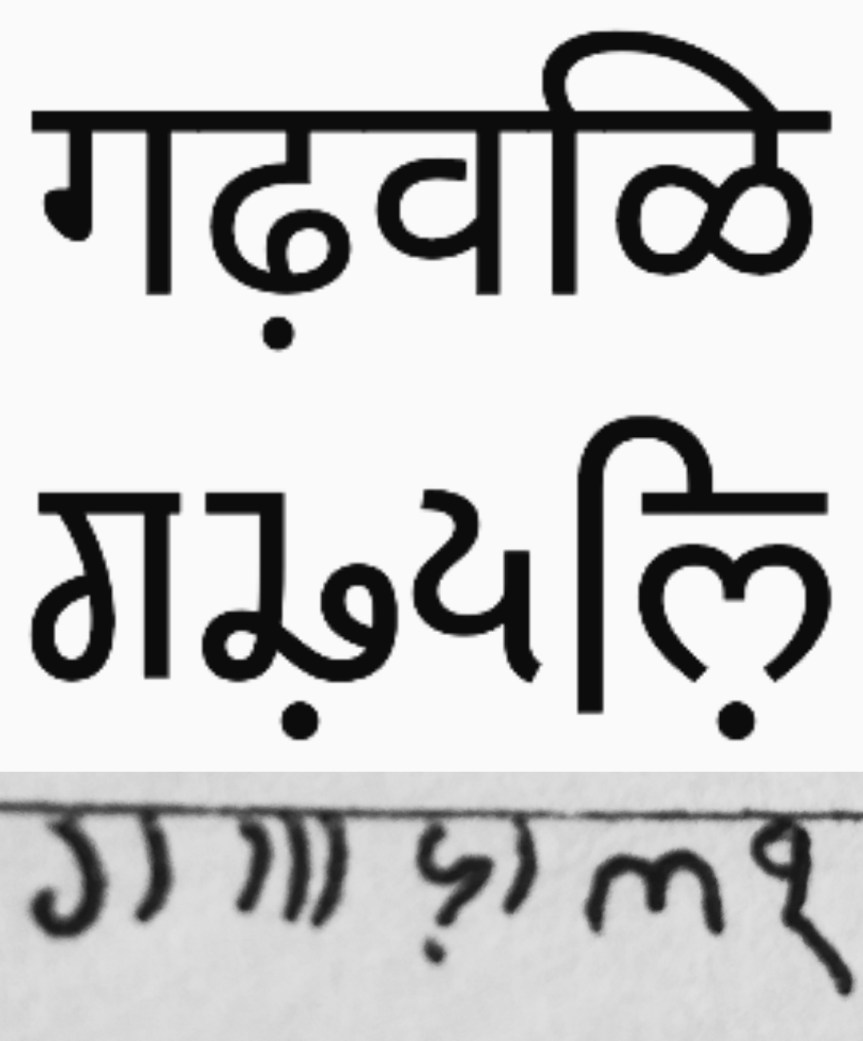
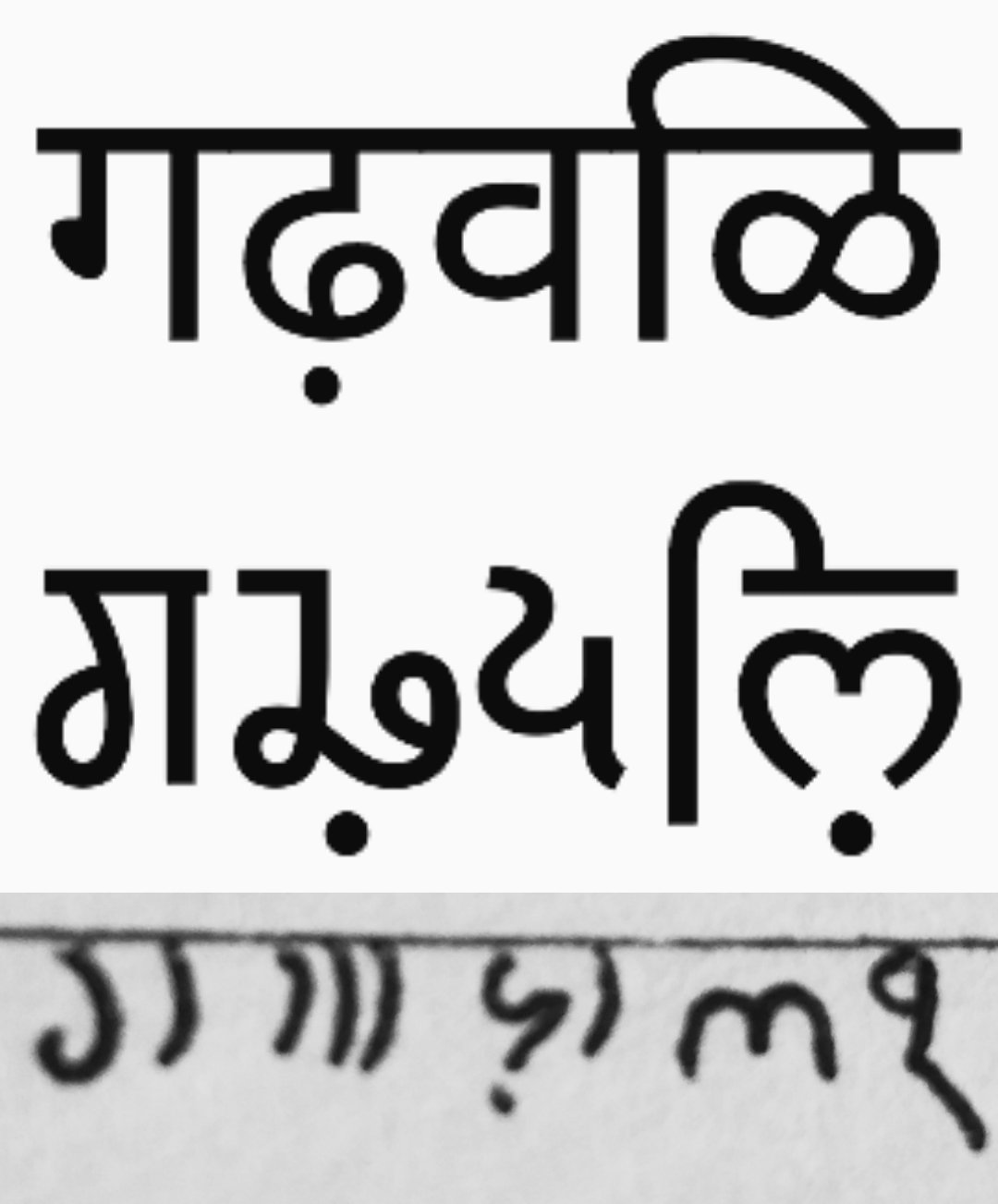
Garhwali is the Indo-Aryan language of the Central Pahari Region which is mainly spoken by more than 2.5 million people in the Garhwal region of Uttarakhand, northern India, in the Himalayas of India, Uttarakhand. Garhwali is also spoken by Garhwali people living in other parts of India, such as Himachal Pradesh, Delhi, Hariyana, Punjab and Uttar Pradesh. According to various estimates, at least 3.5 million Garhwali migrants live in Delhi and other cities.
HISTORY During the Middle Indo-Aryan era, there were various languages called Prakrit. Of which, Khas Prakrit language is believed to be the source of Garhwali language.The earliest forms of Garhwali can be traced back to the 10th century and can be found in temple stones, including numismatics, royal seals, copper plate inscriptions, royal orders and grants. An example is the inscription of King Jagatpal’s Temple Grant in Dev Prayag in 1335 AD. Most Garhwali literature survives in vernacular form and is transmitted verbally. But since the 18th century, Garhwali has developed a literary tradition.
LITERETURE & WRITERS Among the famous Garhwali writers in hiastory of literature are Sudarsan Shah, Kumdanand Bahguna, Hari Dutt Sharma (Nautiyal), Hari Krishna Daurga Dutti Rudra, Urvi Dutt Shastri ,Mahidhar Dangwal, etc. , Satyasaran Raturi, Atma Ram Gairola, Devendra Dutt Raturi, Suradutt Saklani and more. Among historians are Mola Ram, Miya Prem Singh, Hari Dutt Shastri, Hari Krishna Raturi and Vijaya Ram Raturi. Garhwali literature is thriving despite the ignorance of the government. Today, newspapers like Uttarakhand Khabarsar and Rant Raibaar are published entirely in Garhwali. Magazines such as Baduli, Hilaans, Chitti-patri and Dhaad have contributed to the development of GarhwaliGarhwali language.
Some Notable works of Gharwali writers: •)Abodh Bandhu Bahuguna – (1927–2004) Garhwali writer. Some nitable writings include Gaad, Myateki Ganga, and Bhumyal. •)Bachan Singh Negi – “Garhwali translation of Mahabharata and Ramayana”. •)Lalit Mohan Thapalyal – “Achhryun ku taal” •)Leeladhar Jagudi – (1944) Writer and novelist. PadmaShri •)Lokesh Nawani – “Phanchi” •)Madan Mohan Duklaan – “Aandi-jaandi saans” •)Chandramohan Raturi – “Phyunli” •)Chinmay Sayar – “Aunar” •)Dr. Narendra Gauniyal – “Dheet” •)Durga Prasad Ghildiyal – “Bwari”, “Mwari” and “Gaari” •)Gireesh Juyal ‘Kutaj’ – “Khigtaat”.
Struggle of Official RecogItion: Since the establishment of Uttarakhand in 2000, the state governments have made slow progress in promoting and developing the regional language of Uttarakhand. Like other languages in Uttarakhand, Garhwali, the most widely spoken language, is not officially recognized. In 2010, Hindi became the official language and Sanskrit became the second official language of Uttarakhand. In 2014, after making Garhwali the official language of Uttarakhand and demanding that it be taught at schools and universities for many years, the Uttarakhand State Government established Kumaoni and Garhwali departments at Kumaoni and Garhwali universities, respectively, to study the regional languages. At the national level, Garhwali is always required to be included in the 8th schedule of the Indian Constitution in order to be one of India’s schedule languages. In July 2010, Parliamentary member Satpal Maharaj of Pauli Garhwal submitted a legislative bill to Lok Sabha to include the languages of Garhwali and Kumaoni in the eighth schedule of the Constitution. Like most private citizen bills, the bill has not been discussed in Parliament and has since expired.
Gender is a widely used term in the society. No matter where we go, the term gender is mentioned in some way or the other, the very first place being the hospital where we are born. From there on gender becomes a persistent part of our life. However, with gender comes certain disparities which are faced by the people who are categorized under it.
Male and female, the two categories of gender, are assumed to do specific roles from which if they waver in some ways, then are heavily criticized. Male is visualized as the breadwinner in the society whereas the female is visualized as the one taking care of the household. Although in the modern world these assumptions do not hold a strong stance, there are still certain areas where gender inequality strongly prevails.
Whenever there is a talk about gender inequality the category that is affected the most by it is the female part. There are certain restrictions for the females which they are forced to abide by. In many parts of the society, a female child is seen as a burden to the family. She is not given proper educational, social as well as political opportunities in comparison to men. Although we say that our generation has rose above those stereotypes, we all know it is a big lie. People still do not see women to be skilled enough to hold higher positions than men or do any kind of skilled labor. Women are still seen as some fragile and weak section of the society who need to stay at home rather than go out and break the stereotypes and toxic social barriers. In many parts of the world, cases of female infanticide are still prevalent. The women in the certain areas are still denied access to education and most importantly proper health and sanitation. In the universal picture, no matter what field it is, the gender participation graph is not very promising for the case of women. Women also do not get equal pay as per men for the same work that they do. In many so-called developed as well as developing countries, the women are still criticized and are bashed publicly for being confident and breaking the socio political barriers. Although men also face certain discriminations, the struggles faced by women is an important global issue that needs to be solved as soon as possible.
In the world where the death does not discriminate between men and women, then why do we human still be bound by those stereotypes? Men and women both are the two faces of the same coin and are equally important for the smooth functioning of the society. Through the participation of women there can be a lot more opinions and solutions to many problems that are prevalent in the world. Gender equality today can prove to be beneficial in many ways and pave the way to a better and sustainable tomorrow.
Animal Cruelty : Simply put, animal cruelty harms animals, whether intentional or negligent. While certain activities such as animal cruelty are generally perceived as cruel, the specific actions that make up animal cruelty vary from person to person and from places to places or different countries. Many argue that docking a piglet’s tail without anesthesia is cruel, while others say it is common in meat production to prevent injuries later in the pig’s life. Animal cruelty defination is different in different areas due to countries laws. Animal abuse is an pervasive problem which often is difficult to detect. No species or community is spared from experiencing animal cruelty and neglect. Understanding what animal cruelty means and what it doesn’t mean is one of the first steps to prevent it from happening again. Animals, whether it’s the food, cosmetics, entertainment, or pet industry, don’t deserve to suffer.
Is Animal Cruelty Illegal: The legality of animal cruelty depends largely on where the activity takes place . For example, cruelty to farms and laboratory animals that is illegal in some countries may not be considered banned animal cruelty in some countries, due to differences in national law. In the United States, the best-known legislation to prevent animal cruelty excludes both livestock and laboratory animals from registration.
Animal cruelty in India: Recently, cases of animal cruelty are increasing in India. The same began to discuss animal rights and the extent of legal protection that current law provides to animals. The problem is that most of these crimes are either unreported or face disappointing legal responses, as some of the 1960 Animal Cruelty Prevention Act and the Indian Criminal Code are obsolete. SS Rithika an social activist in context to animal writes about common scenarios of animal cruelty and current laws, procedures, and court decisions dealing with animal cruelty in India. Rithika is also pushing for amendments to these laws to curb the rise in atrocities against animals.
Law related to animal cruelty in India: The Animal Cruelty Prevention Act of 1960 was amended in 1982. Under India’s newly amended 2011 Animal Welfare Act, animal abuse is a criminal offense with a fine of at least 10,000 rupees, a fine of up to 25,000 rupees for the first violation, or upto two years of imprisonment. For the second and subsequent violations, a fine of 50,000 rupees or more and imprisonment of 1 year or more upto 3 years or less. This amendment is currently awaiting approval by the Government of India. The 1962 law is the law currently in force. The maximum fine under the 1962 Act is 50 rupees (less than $ 1). Many organizations, including local SPCA, PF, A, Fosterdopt, etc., are actively involved in reporting cases of atrocities to police and assisting the general public in bringing perpetrators to justice. For this reason, there are many changes in the subcontinent. Under IPC sections 428 and 429, causing mischief by killing or amputating an animal worth more than 10 rupees is a recognizable crime punishable by two years’ imprisonment, a fine, or both.
Some of the campaign toward animal cruelty:#NoMore50 , #RespectForAnimals , #FarmedAnimals etc.
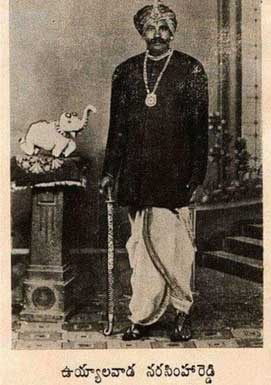
Uyyalawada Narasimha Reddy was an Indian freedom fighter and he was born in Rupanagudi village, on 24 November 1806.
The father of Narasimha Reddy was related to the Palegar family of Uyyalawada in Koilakuntla taluk who had married two daughters of the Palegar of Nossam. He had three sons, of whom Narasimha was the youngest son of the Palegar of Nossam, Seethamma. He married a woman named Siddhamma at the age of 6 . The British East India Company’s preface to the Chennai Presidency of the 1803 endless agreement, which had first been legislated in Bengal Presidency ten times preliminarily, replaced the agricultural socio- profitable status quo with a further egalitarian arrangement where anyone could cultivate handed that they paid a fixed sum to the East India Company for the honor of doing so. The Palegars and other advanced- status people who preferred the old agricultural system” represented the decadent social order”, were in numerous cases” arrivistes” and” were also the heirs at law of a social system in which colorful orders of Hindu society were integrated through periods”. These people were ousted of their lands, which were also redistributed, but the primary purpose of the changes was to increase product rather than to restructure the social order. In some cases, it coincided with a discipline because among the dispossessed were those who had lately been involved in fighting the East India Company in the Palegar Wars. Some entered pensions in lieu of the lost lands but at inconsistent rates.
The changes, which included the preface of the ryotwari system and other attempts to maximize profit, deprived vill helmsmen and other advanced- status people of their part as profit collectors and position as lodgers, while also impacting on lower- status tillers by depleting their crops and leaving them impoverished. The East India Company were economically exploiting the people and that those who were dependent on the traditional work were no longer had a means of making a living. As the old order collapsed into disarray, the formerly-authoritative Palegars, including Narasimha Reddy, came the focus of attention from victims, whose pleas fell on deaf cognizance. The Palegars saw a chance to rally peasant opposition both for genuine social reasons. Narasimha Reddy’s own expostulations too was grounded on their issues. Compared to the Palegar of Nossam, the pension awarded to his family upon their acquisition was paltry and the authorities refused to increase it by redistributing some of the Nossam moneybags when that ultimate family came defunct in 1821. At the same time, some of his cousins were facing proffers for farther reductions in their land rights, including by a reform of the vill policing system.
WAR AGAINT BRITISH EMPIRE Effects came to a head in 1846 when the Company authorities assumed land rights preliminarily held by colorful people who had failed in the townlets of Goodladurty, Koilakuntla and Nossum. Encouraged by the disgruntlement of others, Reddy came the statuette for an insurrection. An fortified group, originally comprising those ousted of inam lands around Koilakuntla, was led by Reddy’s Right- hand man Vadde Obanna in July 1846. The Amusement Collector for the area Lord Cochrane, believed that Reddy had material support from fellow pensioners in Bhagyanagar and Kurnool, whose land rights had also been appropriated. The group soon attracted support from the peasantry and was reported by Company authorities to have rampaged in Koilkuntla, taking back the pillaged storeroom there and escaping the police before killing several officers at Mittapally. They also despoiled Rudravaram before moving to an area near to Almore, pursued by the East India Company forces who also girdled them. A battle between Obanna’s 5000-strong band of revolutionists and a much lower British contingent also took place, with around 200 of the revolutionary being killed and others captured before they were suitable to break out in the direction of Kothakota, Giddalur where Reddy’s family were positioned. He with his family moved to Nallamala Hills . The British offered impulses for information regarding the whereabouts of the revolutionists, who were again girdled amidst reports that uneasiness was now growing in other townlets of the area. In a farther skirmish between the revolutionists and the British, who had transferred for mounts, 40 – 50 revolutionists were killed and 90 were captured, including Reddy. Although there was no substantiation of Obanna’s prisoner, he most conceivably was also a interned along with his leader. clearances were issued for the arrest of nearly,000 of the revolutionists, of which 412 were released without charge. A farther 273 were bailed and 112 were condemned. Reddy, too, was condemned and in his case entered the death penalty. On 22 February 1847, he was executed in Koilkuntla in front of a crowd of over 2000 people. Reddy’s head on the stronghold wall in public view until 1877.
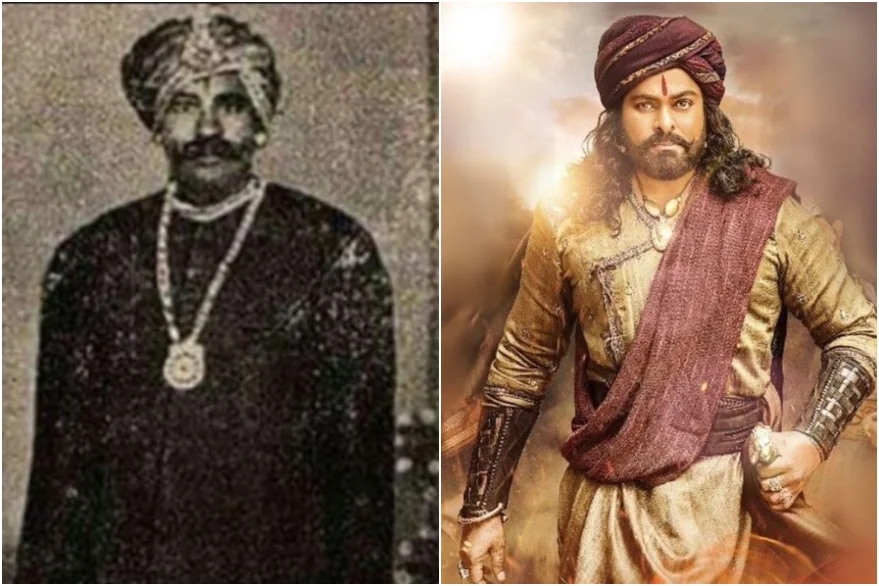
LEGACY On 2 October 2019 , a film based on the life of Narsimha Reddy’s life named Sye Raa Narasimha Reddy was released . On 25 March 2021 Kurnool Airport at Orvakal was named as Uyyalawada Reddy Airport .
Education is an essential thing in our daily life. According to the growth of society, education must be provided to every citizen. The new world is mysterious, all things that exist had to be known to every people education ensures that. So whatever we want to be we should know about that.
Findings of great peoples, Technological know-how, awareness of the environment, History, etc are the main components of education. An educated person must show good character they were intelligent and efficient. They can build up our economy in a good manner
Nowadays students are struggling with exam results. They were worried about the marks they got. Parents also wanted marks from children. However, studying with understanding makes a perfect education. There are a few tips for good studies.
1. Awareness Of The Chapters
The student must have a correct idea of the chapters including the basic needs. It will increase our energy to study new things.
2. Making The Day For Studies
Mornings are a good time for making good decisions they may whisper through our ears for an entire day. Put a goal for the day in the mornings and we will begin to work toward that.
3. Visualization
When we were teaching or studying, try to imagine the concepts as well it will lead to an incredible memory of the topics.
4. Setting Our Mind
Setting our minds before studies is the best way to attain knowledge. When we think that we are free from anything, nothing can disturb us from our goals. Set our minds to study and make differences
5. Concluding Sentences
When we are willing to study a paragraph, make the important keywords from that. It will help you to study shortly and easily .
Well! Well! First let me give you disclaimer that this discussion is about the contemporary scanerio of Bollywood keeping in mind classic Bollywood (which was full of new ideas) and I am not a big fan of kashyap but infact love his unique style of filmmaking (not always) he played completely different symphony than the USUAL BOLLYWOOD.
Credit: IMDB
Also, we need to Know one thing that kashyap is not the only director/ writer who love to experiment has different perceptive. Many new writers coming now more with fresh ideas continue same legacy which we lost back behind years ago .
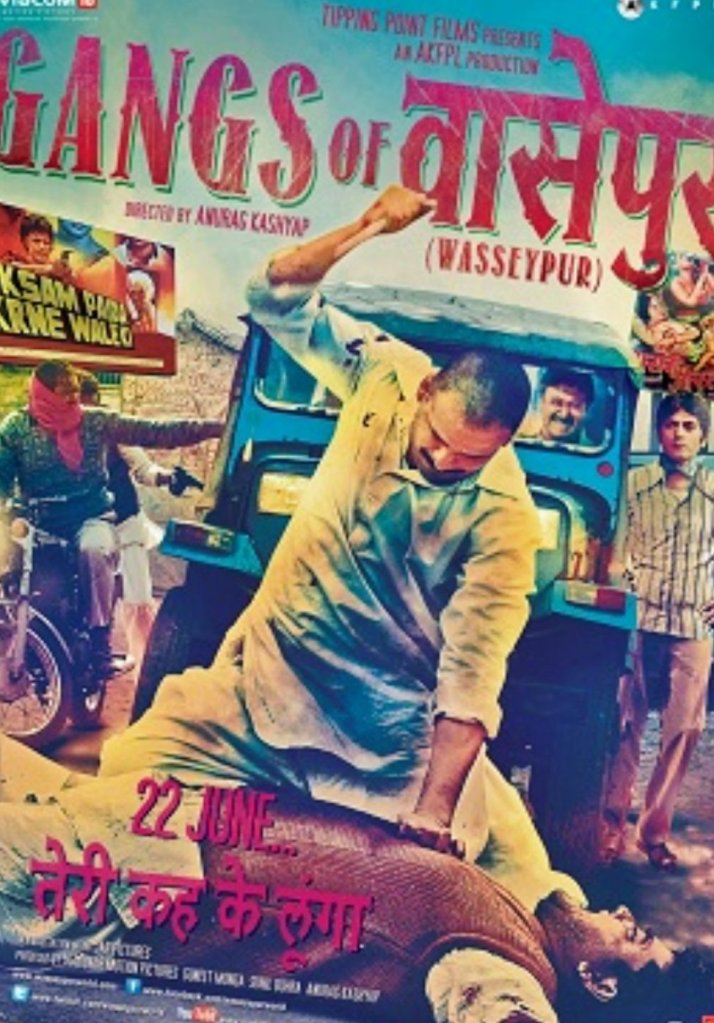
Now, let’s discuss why he is game changer. kashyap’s gangs of wasseypur was brought new wave of talented actors , never seen the kind of a screenplay that we encounter in GOF. Whereas mostly seen big stars in movies with nothing but only Dancing.
Both wasseypur part 1 and 2 stood only on script, acting, screenplay, direction, editing, cinematography and music that’s all . All ingredients that we need to make a good/ decent movie no more sho Sha!!
Credit: IMDb
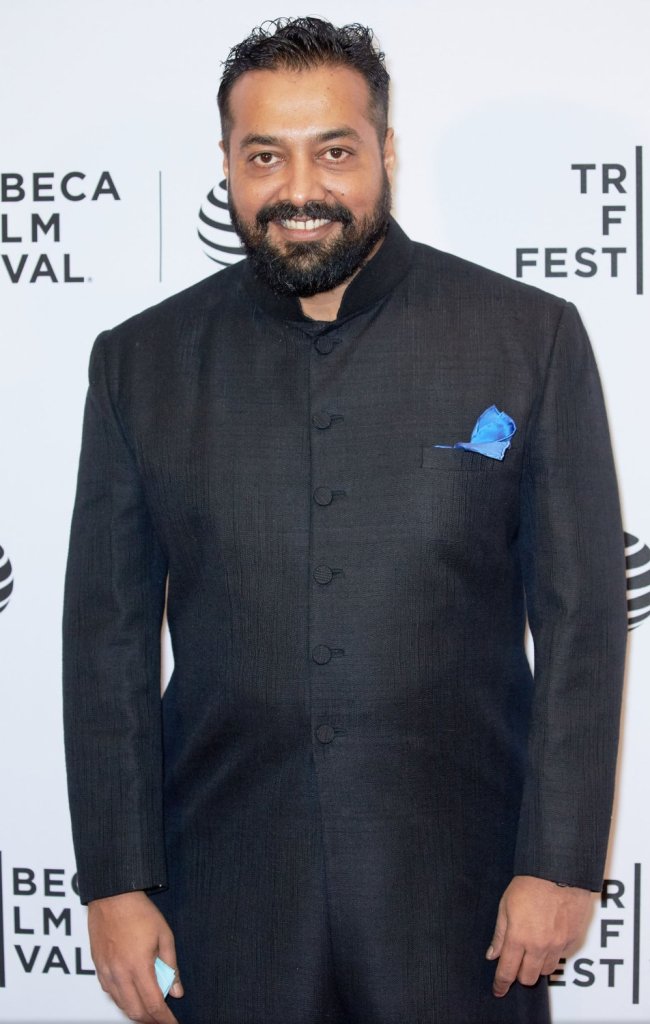
Anurag is the one who had fights with censor, continue to strike on right matters. Actually loves to dance on his own rhyme and creates his own beats. There must be many writers who wants to find their ways in Bollywood. So, what wasseypur did moved the table in 360° angel. How? Audience is GOD in showbiz , People love the film then what will happened critical claimed, HIT on silver screen, audience love dialogue (ironically even recite). Anurag became the The Anurag kashyap people started experiments in ways of thinking and filmmaking that was not the case before.
New writers started writing in real authentic way. Producers are ready to take risks, giving chances to new people. I am not saying it is completely changed but slowly and steadily moving towards changing and progressing simultaneously .
Good content matters
Ohh! Really good content matters now days. Not just movies but WEB SERIES CULTURE changed the entire filmmaking environment. where new writers has more to express , no censorship or producers/actors tantrums . All we need audiences.
Credit: IMDB
Mirzapur, scared games, patal Lok , family man are those web series which has something different new as compare to that old Bollywood stories. You know what I mean!!
Credit: IMDB
Anurag kashyap was ready to take risk when nobody wants to make movies what movies should be look like. Now after 2012 we can say there is lots of movies which likeable and different. However, before 2012 there were good like swades, luck by chance, udaan, lakshay , sarfrosh, lagaan, and many more but these kind of movies came out as once in year but now every next Friday we have something good to watch.
Introduction of Talent to BOLLYWOOD
Credit: IMDB
I will give one more example which infused that anurag is a game changer. He was the one who introduce us to amazing talent like nawazuddin , pankaj tripathi, Raj Kumar Rao, kalki koechlin, mahi Gill, abhay deol, radhika apte etc. Just imagine today’s cinema without them… You’ll be like yes that’s what we want. Who really deserves what they have late but not rejected. Where Nawaz was only seeing as pick pocketer in Munna Bhai mbbs nothing as he got because he doesn’t own THAT Bollywood looks.
Credit: IMDBCredit: IMDB
All I can say enjoy new Bollywood and web series experiment with the hint of talented and handsome actors.
Remember –
If you not afraid then you are not taking risk, if you are not taking risks, then you are not doing something original. – Beau willimon (house of cards’ director)
Sexual harassment include a refers to any sort of sexual behaviour that is unsolicited, overawed, abhorrent, disrespectful and humiliating. It took over decades for people to recognize sexual harassment as a real serious issue. However, it is still overlooked in the rural areas.
It is not just a single form. Any way of unwanted touch, grab or attempt to make physical contract without one’s consent, all are considered as inappropriate behaviour. Even staring and leering, someone asking for sexual favours and display of offensive and rude material by the perpetrator for others to see it also counts in. Another form may include cracking of sexual jokes and comments and making of sexual signs or gestures towards oneself. It is unacceptable for an individual to question oneself about their sexual life or humiliate oneself by absurd sexual remarks. Further, the sexual harassment also counts in indecently exposing of oneself or making salacious phone calls. Any of such form of sexual harassment is against the law.
Such inappropriate behaviour turns out to be much fatal. Sexual harassment leaves a deep impact on oneself. At times, the victims are so much stressed out that they even suffer from depression or anxiety. Apart from these, the victims often suffer by several significant psychological effects such as sleeping disorder, headaches, sexual dysfunction, plunked self esteem and many more. Furthermore, it can also cause them to withdraw from social situations. As a result, the victim starts loosing confidence and pride.
In this world, none deserves to be ill treated or be victim to any form of inappropriate behaviour and this implies to both men and women. Each and every individual has the right to live a life free from bullying, any sort of discrimination or harassment. Therefore, sexual harassment is illegal. As mentioned in Section 354 (A) of the Indian Penal Code-“A man committing any physical contact, advances involving unwelcome and explicit sexual overtures; or demanding or requesting sexual favours; or showing pornography against the will of a woman; or making sexually coloured remarks, shall be guilty of the offence of sexual harassment. It entails a punishment of rigorous imprisonment for a term which may extend to three years.”
It is essential to notice the signs or gestures if oneself feels that someone is harassing them sexually. One of such significant sign is if oneself feels uncomfortable and experience any unwelcomed physical contact. One must keep themselves updated with the policies and procedures against sexual harassment. If anyone unfortunately comes out to be a victim, then that person should try to get external information and acquire advice from people who can help them in filing a lawsuit. Similarily, one must make sure to save any evidence they get which would help them with their complaint. Likewise, one must never deal with it alone, rather try to share it with closed ones to lighten the burden.
To conclude, sexual harassment took a long time to be recognized as a real issue but now ii is no more un acknowledged. Thus, it is necessary to take effective measures against such practice and try to prevent the fatal damage that it causes to the victims. People need to understand that if someone says no it means no. However, if an individual’s no does not have any impact and is continued being subjected to sexual jokes then, its high time to realize that he/she is being sexually harassed. Therefore, it is essential to help out those who are being victim to such harassments and make the perpetrator liable for their repulsive act.
“It’s not consent if you make me afraid to say NO”
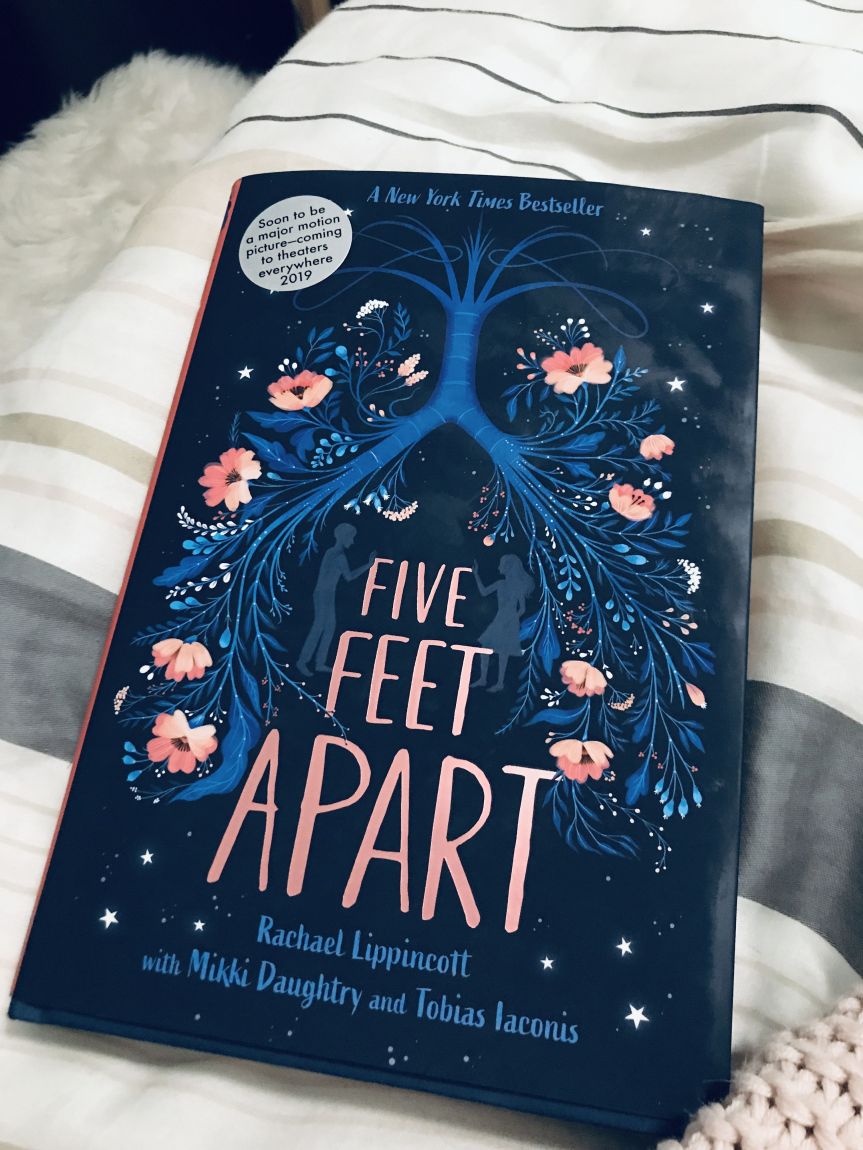
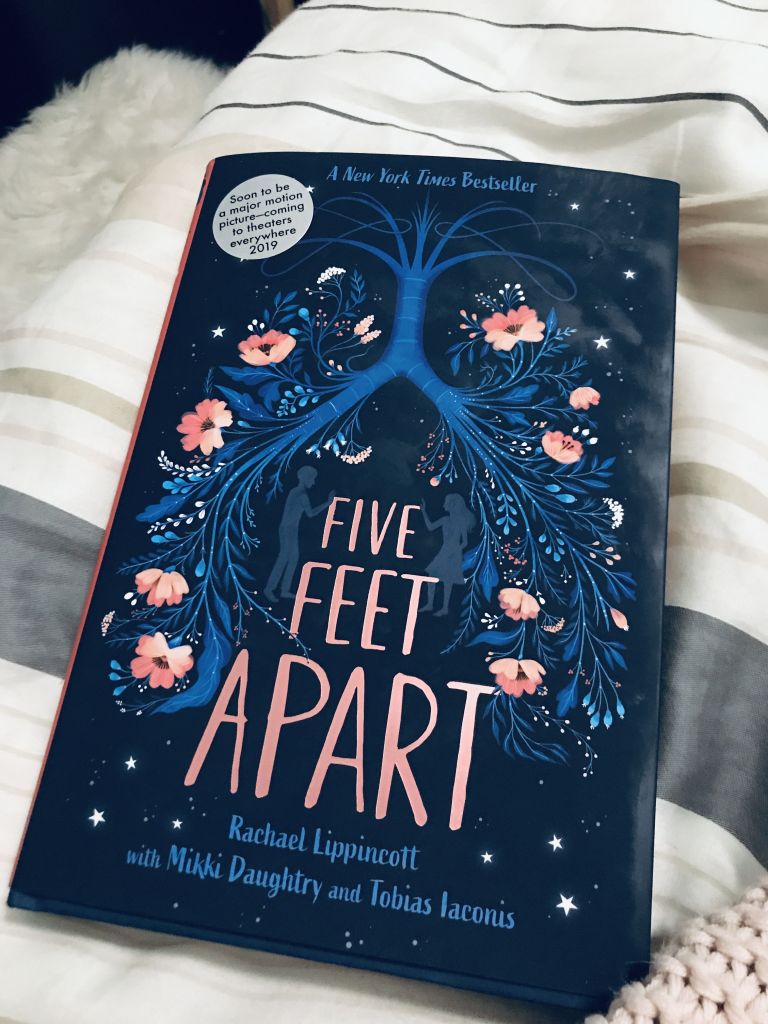
Love can happen to anyone at anywhere, even at a hospital. Five Feet Apart by Rachael Lippincott ( co-authored with Mikki Daughtry and Tobias Iaconis) is such an endearing, engaging and modern-age young adult novel. Talking about the difficulties of life and love while struggling with a inherited chronic disease, is artistically presented in this book. This novel appeals a demand for its readers to think the priorities of a normal life, that often a person with persistent sickness fails to enjoy. The Book Five Feet Apart is adapted into a movie under the same title with Haley Lu Richardson and Cole Sprouse as lead characters.
About The Authors
Rachael Lippincott is the coauthor of All This Time, #1 New York Times bestsellerFive Feet Apart, and She Gets the Girl and the author of The Lucky List. She holds a BA in English writing from the University of Pittsburgh.
Rachael Lippincott
Mikki Daughtry is an American screenwriter and Young Adult Fiction author. She is best known for writing, along with writing partner Tobias Iaconis, the films The Curse of La Llorona (2019), Five Feet Apart (2019) and Nightbooks (2021).
Mikki Daughtry and Rachael Lippincott
Storyline of The Novel
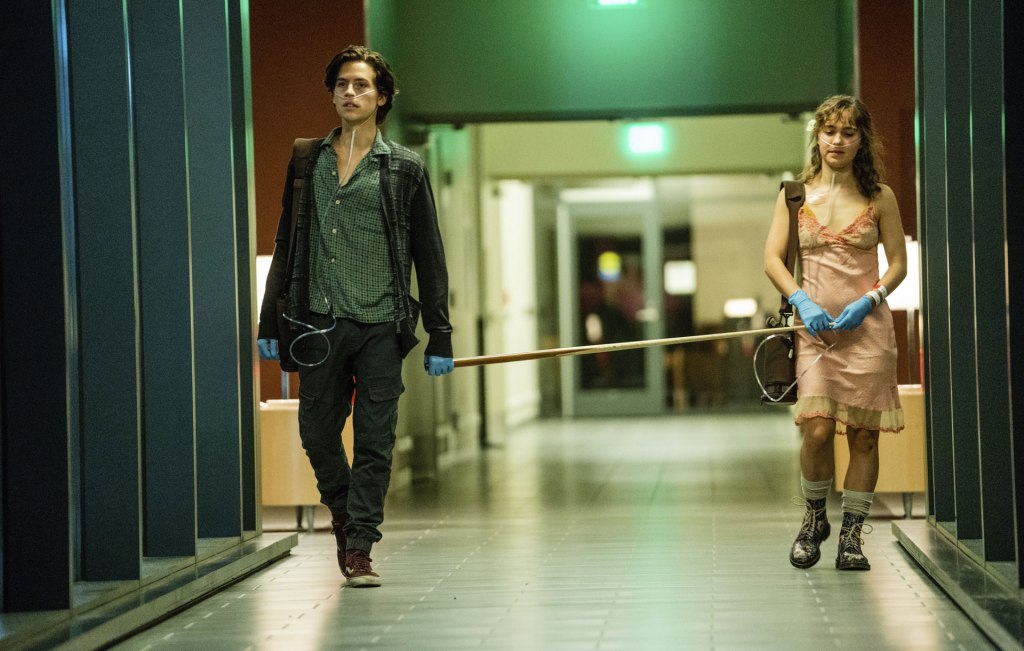
The story evolves around two teenagers Stella Grant and Will Newman. Stella is a chronically ill teen with Cystic Fibrosis (CF). She’s been in and out of hospitals for lengthy treatments most of her life. A rule-follower and control freak, Stella is careful to take her medications on time and do whatever is needed to maintain her treatment regimen. Only then can she hope for a lungs transplant. She maintains a website through which tens of thousands of viewers follow her journey. Her friend, Poe, who also has CF, is a patient at the same hospital. They communicate frequently, but often via text. Individuals with CF must remain 6 feet apart at all times to avoid sharing life-threatening germs. Will is a new patient at the hospital. His wealthy mother has arranged for him to participate in clinical trials all over the world. Nothing has helped. Will’s problem is worse than Stella’s and Poe’s. On top of CF, he has a condition called B. cepacia, which will deplete his lung function rapidly. This condition makes him ineligible for a lung transplant and far more dangerous to other CF patients.
Stella and Will meet at the hospital, and almost immediately fall in love with each other. If Stella catches this disease, she will get crossed off the list of people that can get new lungs and start a new life. This makes the relationship between the two very difficult since they must refrain from touching or even approaching each other closer than 6 feet. The more the two fall in love, the more tempting it is for them to break the rules and come closer, hold hands, or even kiss. Poe is a secondary character that is best friends with Stella and provides great support for her. The two have been friends since the age of 6, and are very close emotionally, but haven’t ever been close physically because of CF.
Haley Lu Richardson as Stella Grant and Cole Sprouse as Will Newman in Five Feet Apart movie (2019)
Analysis of The Storyline
Rachael Lippincott delivers an intriguing, emotional, well-plotted and well-written read here with relatable and likeable characters that readers can’t help but to fall in love with. The story is told in alternating perspectives between Stella and Will in a thoroughly enjoyable narrative manner. They complimented each other so well that both of their situations and feelings towards each other ring true.
While there are predictable elements in Five Feet Apart by Rachael Lippincott, as a whole it is tender, emotional and heartfelt. Its easy to root for these characters. The romance may be sudden but given the circumstances, it makes sense and their interactions felt genuine. With heart and humour, FiveFeet Apart by Rachael Lippincott is a good read.
Five Feet Apart movie (2019)
Criticism of The Storyline
The book flows very well and is very fast-paced. It is fun to read and is entertaining enough to read in one sitting. The authors used modern and teenage language by incorporating informal conversations ( and sometimes slangs) which adds lucidity to the novel and overall improves the readability. The authors did a good job explaining the disease that the two protagonists have which makes the book easy to understand even to the readers with no prior knowledge of the Cystic Fibrosis disease.
Five Feet Apart is a book that will move you to tears at times. It is heart-felt and gives light to the seriousness of Cystic Fibrosis. The authors included a lot of detail, writing about the daily struggles and tasks that the patients if CF have to go through. Every author tries to write in a way that makes it so the reader can live through the book and Lippincott, Daughtry, and Iaconis do a beautiful job at this. The reader can really feel the emotions of the characters and this is why the book is so gripping. You’re so engrossed in the story that you must know how it ends, with the hope that Stella and Will can conquer anything. This book is touching and definitely worth reading.
Scene from Five Feet Apart movie (2019)
Conclusion
This book is recommended to modern-age readers and fans of YA romance because the book tells you that even if you stand different and have difficulties to deal with in your life and health, you can still find love, even at places it is least expected to be found in general. This book is a definitely good romance novel that takes two people that think that they don’t have anything in common to them falling in love.












 Eduindex
You must be logged in to post a comment.