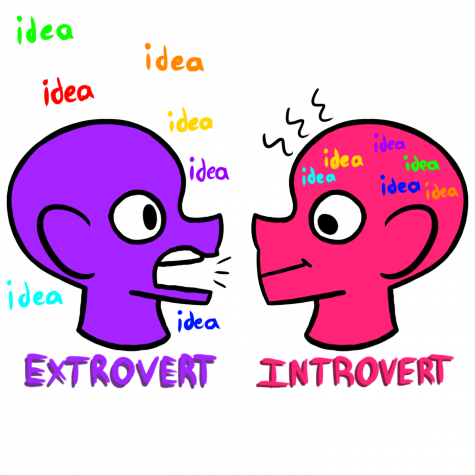
IS BEING AN INTROVERT AWFUL ?

Above all else, let me clear out that one ought not get befuddled between the words “introvert” and “being shy”. An outgoing/ extrovert person can likewise feel timid here and there and that doesn’t imply that he/she is an introvert. An Introvert is a tranquil individual that doesn’t prefer to talk definitely and likes to remain quiet about their contemplations for the most part. They are somewhat individual that returns home just to unwind and have the opportunity to think. However, that doesn’t imply that a friendly individual can’t be a contemplative/introvert person. Similarly as they partake in the calm opportunity to get themselves, they’re probably a contemplative person somewhat. Being a contemplative person is regularly viewed as frail. They aren’t exactly on par with the social butterflies, who simply appear to float through life.

OPINION: Introverts still make great leaders – The Lancer Feed

However, that is false, there isn’t anything amiss with being a introvert. The primary issue is with society, which doesn’t see it similarly. Society has instructed us that being an introvert or thoughtful person is the most exceedingly terrible thing you can be and that everybody should need to be outgoing.

The Perks Of Being An Introvert | Writers Write

They are informed that being active is acceptable and being modest and calm is terrible. They are advised in schools to lift hands, take an interest in a class or we lose marks. For introverts, those are a portion of the exceptionally hard principles to accomplish. Insights say that half of Indian populace is comprised of introverts. So society is saying that 675 Million individuals need to change what their identity is to be acknowledged, to be effective and to be content. I’m additionally told this thing since youth that I should change myself and become a outgoing individual. Indeed, presently likewise my companions, educators and direct relations bother me as a bashful individual and they request that I go along with them in their discussion which I don’t need. Furthermore, some of the time it’s truly irritating.

How to Know If and Why You're an Extreme Introvert | SocialPro

Continuously recollect inside this enormous gathering of self observers are individuals like Emma Watson, Michael Jordan, Albert Einstein, Elton John, Audrey Hepburn thus a lot additional moving individuals. Being an Introvert has not prevented any of them from accomplishing their objectives or being cheerful. Pioneers like Abraham Lincoln, Rosa Parks and Mahatma Gandhi. Every inconceivable pioneer and all are introverts. Being a thoughtful/introvert person has no impact on how glad you or fruitful you will be the length of you see it in the correct manner. In the event that you consider yourself to be a thoughtful person and think its the most exceedingly awful thing on the planet, you are never going to be really content with yourself. In any case, in the event that you acknowledge yourself as a introvert and you’re cheerful, there isn’t anything in your method of you accomplishing your objectives.

Introverted Leadership
INTROVERT LEADERS

So in conclusion there is noting wrong in being an introvert. I am an introvert myself and I don’t feel like to change myself for the society and so should you. As long as you are happy others opinion doesn’t matter.

Also, in case you are an extrovert and you see an individual sitting at the side of your working environment simply contemplate what incredible thoughts he/she is coming up with.

In a World of Extroverts, What Does it Mean to Be an Introvert at School

RESOURCES:

https://timesofindia.indiatimes.com/readersblog/wakeup-india/is-being-an-introvert-bad-23079/

Insecurity

Everyone feels a little unsure at times. As humans, we constantly think, and some of our thoughts can be filled with doubt. This can lead to thoughts of insecurity. Too much insecurity can lead to other problems — in relationships and in your everyday life. However, there are ways you can work through your insecure thoughts and live life more confidently.

What Is Insecurity?

Insecurity is a feeling of inadequacy (not being good enough) and uncertainty. It produces anxiety about your goals, relationships, and ability to handle certain situations. Everybody deals with insecurity from time to time. It can appear in all areas of life and come from a variety of causes. It might stem from a traumatic event, patterns of previous experience, social conditioning (learning rules by observing others), or local environments such as school, work, or home. It can also stem from general instability. People who experience unpredictable upsets in daily life are more likely to feel insecure about ordinary resources and routines.On the other hand, insecurity can have no definite, external cause. Instead, it can appear as a quirk of personality or brain chemistry. Understanding the nature of insecurities can help you manage your own and offer others the support they need.  

Types of Insecurity:

There are almost limitless areas of potential insecurity. Moreover, insecurity often bleeds over from one area of life into another. However, there are some types of insecurity that appear frequently.

Relationship Insecurity: One of the most common kinds of insecurity concerns relationships or “attachments.” Attachment theory originated out of a desire to connect the attachment patterns of early childhood to later relationship patterns and expectations. When a child’s “attachment figures”, often parents or guardians, aren’t reliably available and supportive, the child often feels insecure, forms a negative self-image and relationship models, and experiences greater emotional distress and maladjustment later in life. Relationship or attachment insecurities don’t need to begin in early childhood. They can arise wherever previous experience or personal insecurity undermines someone’s security in their closest relationships.

Job Insecurity: Job insecurity occurs when you are anxious about your continued employment or about the continuation of certain benefits attached to your employment. It can be triggered by anxiety over your own job performance or anxiety over factors beyond your control, such as the economy, industry trends, workplace conflict, or the danger of company restructuring or failure. High rates of unemployment and temporary work increase job insecurity on a national scale and contribute to widespread mental health problems.

Body Image Insecurity : A common source of insecurity is body image. Many people feel insecure about the way they look and question whether they measure up to an imposed ideal. There is no necessary connection between actual body health or appearance and body insecurity. People of all body types can experience this type of insecurity.

Social Insecurity/Anxiety : Another common type of insecurity surrounds the way we are perceived by our peers and the ease with which we interact with them. This insecurity can be a recurring, low-level problem or can blossom into full-blown social anxiety disorder or social phobia.

Signs of Insecurity:

Signs of insecurity are as variable as the condition itself, but there are some common tendencies you can look out for.

Low or Superficial Self-Esteem : One sign of insecurity is low self-esteem or negative self-image, particularly when that image seems to be inconsistent with external observation. Low self-esteem means you think badly about yourself or your abilities. It can lead to other problems, especially concerning mental health. Talk to a doctor if your self-esteem is very low.Because the measurement of self-esteem generally relies on self-report, insecurity can lead to superficial self-esteem. People with insecurity often want to appear secure, and their explicit comments may be at odds with their automatic responses to certain stimuli. Deliberate self-misrepresentation or false behavior/information on social media can also be a sign of social anxiety. The act of faking then reinforces the social insecurity.

Perfectionism : The inability to be satisfied with progress and need to control and refine projects until they’re perfect can be a sign of insecurity. It stems from the sensation that you or your performance is never enough. It can appear as a manifestation of insecurity in any area of life but is frequently found in cases of job insecurity and body insecurity. Eating disorders, for example, often appear along with both harmful perfectionism and attachment insecurities.

Self-Isolation : Social insecurity can lead people to avoid social interactions, isolating themselves. Sometimes these people prefer to interact virtually in internet situations they feel they can control.

Anxious or Avoidant Attachment Styles : Attachment insecurities often result in problematic attachment styles, or dysfunctional approaches to relationships. The two most common are anxious or avoidant attachments. Anxious attachment styles are characterized by emotional dependence (relying on someone else for your emotional well-being), a fear of being alone, and fantasies of perfect relationships that can never be fulfilled. Avoidant attachment styles also stem from insecurity but go in the other direction. People with this style tend to keep relationships superficial and disengage from more intimate connections.

Poor Job Performance : Job insecurity (not having a stable job) can work to motivate some people, but it more often results in poorer performances. It can lead to absenteeism (avoiding work), turnover intention (wanting to change jobs soon after starting), disengagement from colleagues and in group projects, and poor work attitudes.

Depression or Anxiety : All types of insecurity can lead to decreased mental wellness. Depressive or anxious behavior or thinking is often an effect of insecurity, particularly when that insecurity produces (or is accompanied by) erroneous beliefs and patterns of thought.

Dealing with Insecurity :

Occasional insecurity is a natural part of life. For deeper and more longer-lasting feelings of insecurity, however, professional therapists can help you sort through your emotions and develop strategies for everyday life. In dealing with insecurity, there are a couple of helpful tips to keep in mind.

Social Networks Matter : Broad and meaningful social networks — frinedships, relationships with coworkers, and more — help to lessen both insecurity and its negative effects. There’s an inverse correlation between healthy social networks and insecure attachment styles. Having a wide circle of friends and many close connections allows you to develop the tools and confidence to engage in deeper adult relationships.Developing good friendships both in and out of the workplace also has a proven record of success as a coping strategy that helps prevent job insecurity, depression, and general anxiety. People who disengage from colleagues in response to job insecurity more frequently suffer in their mental health and job performance.

Trust Takes Practice : While having an overly trusting behavior creates its own problems, ask yourself if you have any reason to distrust expressions of affection or liking from others. People with insecurities sometimes express doubt and perceive rejection in everything from partner relationships to new acquaintances. These expressions can be self-fulfilling. Practice taking displays of interest at face value, something that can be easier in more casual relationships. You can build up the confidence to accept deeper affection and intimacy.


ARE WE ‘DECEPTIVE’ IN NATURE ?

“A lie that is half-truth is the darkest of all lies.”
― Alfred Tennyson

In true sense, the word deception implies ‘make believe’, that is, convincing a person that something exists whereas, in reality, it does not exist. Deception is a simple tool for enticing people and trapping them to believe in something unbelievable. This is an evil that has subsisted among human beings since time immemorial in literature and history we come across several uses of deceptive methods; even in our contemporary world, deception is rampant. In fact, such is the enormity of deception that it is often difficult to distinguish the real from the fake. Consequently, even today we come across reports of how many large corporations, especially related to chit funds, dupe their investors through unrealistic schemes. As a result of their ‘get-rich-quickly schemes lakhs of innocent investors lose their lifelong savings because they are shown the dream of coming out of their miseries but are pushed to the brink of perishing.

Deception is also a major tool used in forging currency notes and other negotiable instruments like cheques and drafts. Governments across the world have introduced many new techniques to ensure that their markets are not flooded by fake currency notes or negotiable instruments but, so far, there has been no fool-proof methodology to prevent the menace. Master criminals always manage to deceive by preparing exact copies of the originals. The same applies for important documents like passports and visas.

With the dawn of online shopping, fraudsters have had a free-run as it is practically easy to dupe people and escape without leaving a trace. People end up paying money for products bought online but never actually receive the goods on many occasions, or even if they do, such goods are either defective or elaborately wrapped empty boxes are provided. Consequently, tracking cyber-criminals is very difficult and the number to solved cases is low.

However, like everything else, even deception is a double-edged weapon: it can be used against a deceitful enemy and so serves as an important military tactic, especially in guerrilla warfare. We have read how Babur, the first Mughal Emperor enticed Ibrahim Lodhi to charge headlong and then fall into the covered trenches on the battlefield or how Chhatrapati Shivaji, the great Maratha warrior, used deception to kill Afzal Khan and harass Aurangzeb. Nobody can ever forget the deception carried out by Mark Antony in inciting the Romans from the Forum to rebel against the conspirators who killed Julius Caesar.

In present day military tactics, elaborate plans are drawn out to combat the enemy. The best-known methodology is to plant spies among them so that delicate information can be easily retrieved and the opponent’s actions can be monitored.

The effects of video games on a child’s behaviour

Video gaming has become a popular activity for people of all ages. Many children and adolescents spend large amounts of time playing them, although no one should have more than two hours total of screen time in a day. Video gaming is a multi-billion dollar industry, bringing in more money than movies and DVDs combined. Video games have become very sophisticated and realistic and some games connect to the Internet, which allow children and adolescents to play online with unknown adults and peers.

While some games have educational content, many of the most popular games emphasize negative themes. They promote the killing of people or animals, the use and abuse of drugs and alcohol, criminal behavior, disrespect for the law and other authority figures, sexual exploitation and violence towards women, racial, sexual and gender stereotypes, and foul language obscenities and obscene gestures. Examples of video games not acceptable for children because they have these themes include the popular ones Grand Theft Auto, Call of Duty, and Mortal Kombat.

There is growing research on the effects of video games on children. Studies of children exposed to violence have shown that they can become immune or numb to the horror of violence, imitate the violence they see and show more aggressive behavior with greater exposure to violence. Studies have also shown that the more realistic and repeated the exposure to violence, the greater the impact on children. Children and adolescents can become overly involved and even obsessed with video games, leading to poor social skills, time away from family time, school work and other hobbies, lower grades, reading less, exercising less, becoming overweight, and having aggressive thoughts and behaviors.

So how can you, as a parent, protect your child against these types of video games? First, you can check the Entertainment Software Rating Board ratings to learn about the game’s content. Every video game will actually have a label on the front to tell you what type of game it is. If it says M for mature, it’s not for your child.

Play the video games with your child to experience the game’s content and know exactly what your child is playing. Set clear rules about the game’s content for both playing time in and outside of your home. Strongly warn your children about the potential serious dangers of Internet contacts and relationships while playing online. There are a lot of online predators that will look for children specifically playing video games and this can lead to them meeting in real life. Finally, remember that you are a role model for your child. Make sure the video games you play as an adult are ones that you would want your child to play.

If you are concerned as a parent that your child is spending too much time playing video games or your child starts becoming obsessed with aggressive or violent video games, make sure you set some limits. You’re not allowed to play games for one hour after all the homework is done and encourage your child to participate in other activities so they’re not drawn to those video games. By being aware of what games are out there, you can help your child make appropriate decisions about gaming no matter where your child plays.

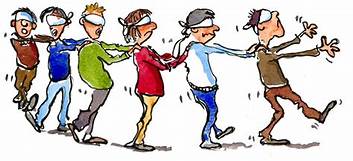
Bandwagon Effect

What Is the Bandwagon Effect?

The bandwagon effect is a psychological phenomenon in which people do something primarily because other people are doing it, regardless of their own beliefs, which they may ignore or override. This tendency of people to align their beliefs and behaviors with those of a group is also called a herd mentality. The term “bandwagon effect” originates from politics but has wide implications commonly seen in consumer behavior and investment activities. This phenomenon can be seen during bull markets and the growth of asset bubbles.

Understanding the Bandwagon Effect

The bandwagon effect arises from psychological, sociological, and, to some extent, economic factors. People like to be on the winning team and they like to signal their social identity. Economically, some amount of bandwagon effect can make sense, in that it allows people to economize on the costs of gathering information by relying on the knowledge and opinions of others. The bandwagon effect permeates many aspects of life, from stock markets to clothing trends to sports fandom.

Politics

In politics, the bandwagon effect might cause citizens to vote for the person who appears to have more popular support because they want to belong to the majority. The term “bandwagon” refers to a wagon that carries a band through a parade. During the 19th century, an entertainer named Dan Rice traveled the country campaigning for President Zachary Taylor. Rice’s bandwagon was the centerpiece of his campaign events, and he encouraged those in the crowd to “jump on the bandwagon” and support Taylor. By the early 20th century, bandwagons were commonplace in political campaigns, and “jump on the bandwagon” had become a derogatory term used to describe the social phenomenon of wanting to be part of the majority, even when it means going against one’s principles or beliefs.

Consumer Behavior

Consumers often economize on the cost of gathering information and evaluating the quality of consumer goods by relying on the opinions and purchasing behavior of other consumers. To some extent, this is a beneficial and useful tendency; if other people’s preferences are similar, their consumption decisions are rational, and they have accurate information about the relative quality of available consumer goods, then it makes perfect sense to follow their lead and effectively outsource the cost of gathering information to someone else.

However, this kind of bandwagon effect can create a problem in that it gives every consumer an incentive to free ride on the information and preferences of other consumers. To the extent that it leads to a situation where information regarding consumer products might be underproduced, or produced solely or mostly by marketers, it can be criticized. For example, people might buy a new electronic item because of its popularity, regardless of whether they need it, can afford it, or even really want it.

Bandwagon effects in consumption can also be related to conspicuous consumption, where consumers buy expensive products as a signal of economic status. 

Investment and Finance

Investing and financial markets can be especially vulnerable to bandwagon effects because not only will the same kind of social, psychological, and information-economizing factors occur, but additionally the prices of assets tend to rise as more people jump on the bandwagon. This can create a positive feedback loop of rising prices and increased demand for an asset, related to George Soros’ concept of reflexivity.

For example, during the dotcom bubble of the late 1990s, dozens of tech startups emerged that had no viable business plans, no products or services ready to bring to market, and in many cases, nothing more than a name (usually something tech-sounding with “.com” or “.net” as a suffix). Despite lacking in vision and scope, these companies attracted millions of investment dollars in large part due to the bandwagon effect.

Behavioural Economics

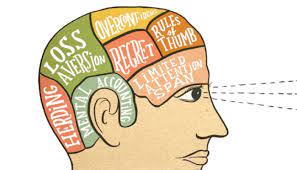
In an ideal world, people would always make optimal decisions that provide them with the greatest benefit and satisfaction. In economics, rational choice theory states that when humans are presented with various options under the conditions of scarcity , they would choose the option that maximizes their individual satisfaction. This theory assumes that people, given their preferences and constraints, are capable of making rational decisions by effectively weighing the costs and benefits of each option available to them. The final decision made will be the best choice for the individual. The rational person has self-control and is unmoved by emotions and external factors and, hence, knows what is best for himself. Alas behavioral economics explains that humans are not rational and are incapable of making good decisions.

Behavioral Economics is the study of psychology as it relates to the economic decision-making processes of individuals and institutions. Behavioral economics draws on psychology and economics to explore why people sometimes make irrational decisions, and why and how their behavior does not follow the predictions of economic models. Decisions such as how much to pay for a cup of coffee, whether to go to graduate school, whether to pursue a healthy lifestyle, how much to contribute towards retirement, etc. are the sorts of decisions that most people make at some point in their lives. Behavioral economics seeks to explain why an individual decided to go for choice A, instead of choice B.

Because humans are emotional and easily distracted beings, they make decisions that are not in their self-interest. For example, according to the rational choice theory, if Charles wants to lose weight and is equipped with information about the number of calories available in each edible product, he will opt only for the food products with minimal calories. Behavioral economics states that even if Charles wants to lose weight and sets his mind on eating healthy food going forward, his end behavior will be subject to cognitive bias, emotions, and social influences. If a commercial on TV advertises a brand of ice cream at an attractive price and quotes that all human beings need 2,000 calories a day to function effectively after all, the mouth-watering ice cream image, price, and seemingly valid statistics may lead Charles to fall into the sweet temptation and fall off of the weight loss bandwagon, showing his lack of self-control.

WHAT DOES THE THE COLOUR SAY

Our lives are full of colours. Every person has a favorite colour and colour preference for their things. It helps us identifying and recognizing various objects. Colours are not just for a pleasant visual experience. Each colour has its meaning. Every colour tells something about human behaviour.

It is exciting to know how human behaviour can be studied through various elements. One such element is colour. Colours can not only impact how food tastes but can also tell a lot about a person’s nature and behaviour. Ascertaining human behaviour through colour study is known as colour psychology.

Every colour has an emotion associated with it. People respond to different colours in different ways. Some colours like red and orange act as stimulants.

Impact of Colours

Colour influences the way people perceive and understand things. The colour even impacts the appetite. You must have noticed most of the restaurants or food outlets use red and yellow colours in their menus, logos, and table clothes because the colours like red and yellow stimulate hunger like Pizza Hut, McDonald’s, Domino’s, and more.

You must have also noticed the chocolate flavoured products feel more chocolaty if they are brown in colour than any other colour. If any food item is pale, white, or dull coloured, it is usually perceived as plain or spice-less food.

The colour for product packaging is chosen according to the need and personality of the product as well as customers. Like, the kinder joy chocolate makes its packaging containing toys for girls in pink, and in blue for packaging having toys for boys. This is because the colour pink is usually associated with femininity and blue with masculinity. Even the products that claim to be natural and organic have their packaging mostly in green, as green is the colour of plants and trees (natural).

The red colour is associated with danger and evokes alertness or fear, and hence, it is used for signboards that have any sort of warning written on it. The railway crossing has stop signs board in red. You must have noticed that the computer displays warning or error signs if any website or file poses any threat to the computer security, the warning sign that pops up is also usually red.

Some colours and meanings and emotions associated with it:

  • White signifies purity and peace. On the other hand, it also plain and tasteless when it comes to food.
  • Red is associated with danger and fear. But it is also said to be the colour of love and passion and that’s why mostly red coloured roses are given to someone you love.
  • The green colour soothes the mind and signifies eco-friendly nature, while it is also the colour of jealousy and envy.
  • Yellow radiates happy vibes and energy. On the flip side, it means cowardice and irresponsible.
  • On one hand, the blue colour stimulates calmness of mind, and on the other hand, it depicts the lack of emotions.

A single colour can have multiple meanings and emotions associated with it according to the thing it is related to.

Through colour mapping, human behaviour can also be studied. This also helps in identifying and psychological disorders.