
NEW EDUCATION POLICY TO BRING EVOLUTION IN THE EDUCATION SYSTEM.

NEW EDUCATION POLICY:
° Students are currently undergoing school exams conducted by responsible authorities in grades 3, 5, and 8.
° 10th and 12th grade board exams will continue, but will be redesigned for overall development.
° Mathematical reasoning and scientific temperament coding begins in 6th grade .Vocational training begins at school in sixth grade and includes internships.
° The 10 + 2 structure is replaced by 5 + 3 + 3 + 4. The new system consists of grades 12 and 3 years preschool / Anganwadi.
° Until 5th grade, this policy emphasizes the local / regional / native language as the teaching language.
° In schools and universities, Sanskrit is also included as a student option at all levels and consists of three language formulas.
° Under Graduate is now 3 or 4 years, with multiple degree options eligible for this period, such as a 1 year certificate, 2 years diploma, 3 years degree, 4 years bachelor’s degree in research, etc.
° An Academic Credit Bank (ABC) is created to store, transfer, and award bachelor’s degrees from digital learning achievements earned by students from various universities.
° The curriculum has been reduced to essentials for all subjects. They focus on critical thinking, discovery, inquiry, debate, and education based on analytical and holistic learning methods for education.
° Focus on e-learning so you can reduce your reliance on textbooks
Under the new policy, education will receive 6% of GDP, up from 1.7%. This definitely boosts the education system.
° By the end of 2040, all universities should be interdisciplinary institutions with more than 3000 students each. University affiliation will be phased out over the next 15 years.

Foucus on Regional /Mother Tongue Language:
As you know, young children learn new things as soon as they teach in their own language, not in another language they are unfamiliar with. This policy is aware of it, so children will be taught in their native language until the age of 5, but it can change to 8th grade .

NEW CURRICULUM STRUCTURE:
•) Rebuild the school curriculum and teaching methods into new 5 = 3 + 3 + 4 patterns.
•) The new curriculum structure is designed to attract the attention of learners at various developmental stages, such as 3-8 years old, 8-11 years old, 11-14 years old, 14-18 years old.
•) Elementary level lasts 5 years:
3 years before school, 1st and 2nd grade.
The preparatory stage lasts for 3 years: 3rd, 4th and 5th grade.
Middle school or high school lasts 3 years: 6th, 7th and 8th grade.
High school or junior high school lasts four years: 9th, 10th, 11th, 12th grade.
All of the above levels include Indian and regional traditions, ethical thinking, socio-emotional learning, quantitative and logical thinking, digital literacy, computational thinking, scientific manipulation, language and communication skills.

“Learning starts with failure; the first failure is the beginning of education.”

– John Hersey
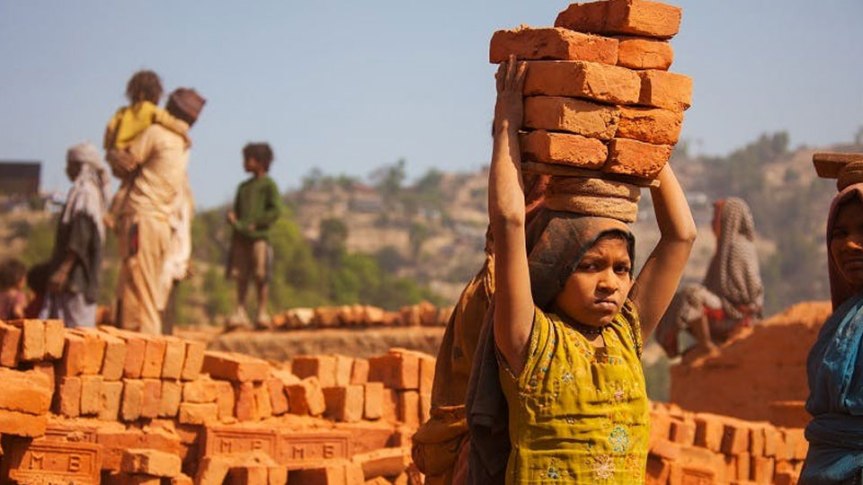
Child Labour in India.

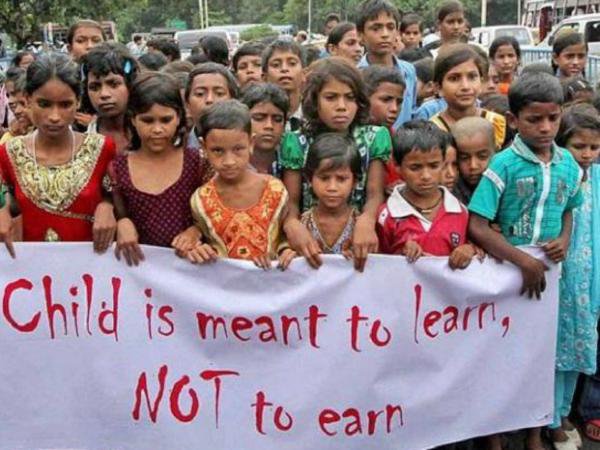
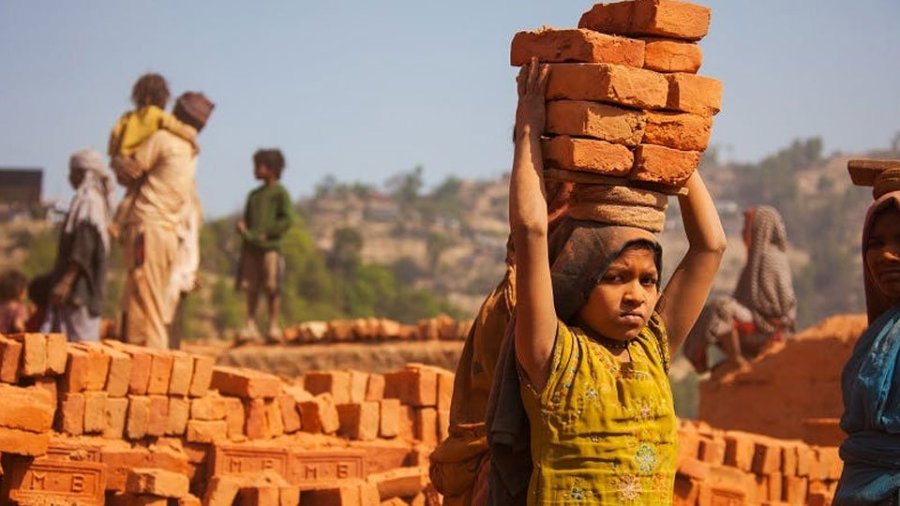
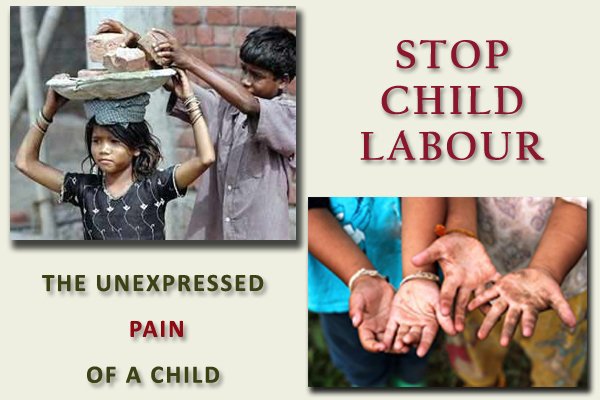
Child labor is the deprivation of children’s childhood, affecting their ability to attend regular school and exploiting them through all forms of work that are mentally, physically, socially and morally harmful.

After gaining independence from colonial rule, India enacted many constitutional protections and child labor laws. The Constitution of India in the principles of basic rights and public policy prohibits child labor under the age of 14 in factories, mines, castles or other dangerous occupations (Article 24). The Constitution also stipulated that by 1960 India would provide all children aged 6 to 14 with the infrastructure and resources for compulsory free of charge education . (Articles 21-A and 45).
In 2011, the Indian Census found that of the 259.64 million children in this age group, the total number of child laborers [ages 5-14] was 10.1 million. The problem of child labor is not unique to India. Approximately 217 million children work worldwide, many of whom work full-time.

In India child labour is defined as the involvement of children under the age of 17 in economically productive activities, with or without compensation and wages . Such participation can be physical, mental, or both. This work includes part-time or unpaid work on farms, family businesses, or other economic activities such as cultivation or milk production for sale or personal consumption. The Government of India divides child labor into two groups. The main workers are those who work more than 6 months a year. And marginal child laborers are workers who work all year round, but less than six months a year. In 1979, the Government of India established the Gurupadswamy Commission to learn about child labor and how to fight it. The Child Labor Probation and Regulation Act was enacted in 1986 on the recommendation of the Commission. A national child labor policy was developed in 1987 focusing on the rehabilitation of children working in dangerous professions. Since 1988, the Ministry of Labor and Employment has established approximately 100 industry-specific national child labor projects to rehabilitate child laborers.

The Government of India has enacted numerous laws, organizations and institutions to combat the issue of child labor. Some initiatives include child labor bans and regulations, laws prohibiting the employment of children in certain occupation and regulating the working conditions of children. The National Child Labor Policy attempts to take a sequential approach with a primary focus on the rehabilitation of children working in dangerous professions and processes of works. The Ministry of Labor and Employment is responsible for providing and supervising a range of child labor policies in India. In addition, as Osment reported, NGOs such as Care India, Child Rights and You, and Global March Against Child Labor were implemented to tackle child labor through access to education and resources. However, these efforts were of little success.

Non-governmental organisations:
Bachpan Bachao Andolan, Child Rights and You, ChildFund, CARE India, GoodWeave India,Talaash Association, Global March for Child Labor, and many other NGOs are campaigning to eliminate child labor in India. increase.

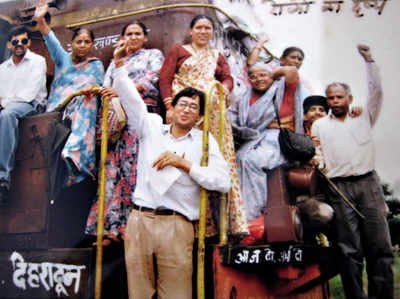
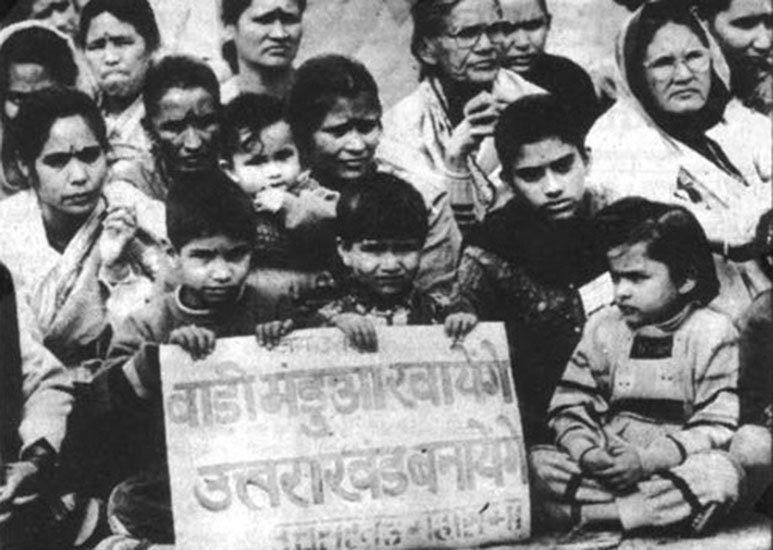
A Struggle of many people to make Uttarakhand a state.

Uttarakhand became a state on November 9, 2000. The establishment of Uttarakhand was achieved after a lot of hard work and sacrifice. The voice for Uttarakhand to become a state was first raised in a special session of the Indian National Congress in Srinagar, May 5-6, 1938. In 1994, after a series of events, demand gradually increased for another state eventually which took the form of a mass movement, leading to the formation of India’s 27th state by 2000.

In March 1994, Uttar Pradesh Chief Minister Mulayam Singh Yadav recommended the Mandal Commission to secure 27% of government positions and places in schools and universities for socially and economically weaker classes,which was later on carried on. The Hill region OBC population was very small at 2.5% and reserving OBC seats meant that all government seats would go to the plains of Uttar Pradesh. This led to intensified protests against the nation.

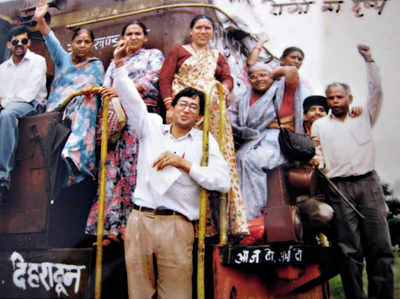
In 1994, the students throughout the region participated in separate state and group movements for reservations. The Uttarakhand movement was further intensified locally by the anti-Uttarakhand statement by then-Chief Minister of Uttar Pradesh, Mulayam Singh Yadav. Uttarakhand leaders continued to support their call for another state until their death. State officials went on strike for three months, and the Uttarakhand movement was exacerbated by the blockade and confrontation with police. Uttarakhand activists in Mussoorie and Khatima were shot dead by police. On October 2, 1994, in Delhi, the capital of the country, a large-scale demonstration and protest was held in support of the state under the support of Samyukta Morcha. Uttarakhand activists marched to Delhi to participate in the struggle. Activists who participated in peaceful demonstrations near Ranpur Tiraha Junction in Muzaffarnagar were tortured and shot dead openly without warning. Police officers were also charged with obscene behavior and rape with female activists. Satya Pokhriyal was a leader who led all people out of misery and other Andolankari helped others and showed courage. Several people were killed and many were injured. These incidents has fueled the Uttarakhand movement. The next day, October 3, the destruction of gunfights across the region and protests over multiple deaths broke up.

On October 7, 1994, a female activists died after police brutally attacked her in Dehradun while she protested against the shooting at Rampur Tiraha and many activists attacked the police station in return. A curfew was imposed in Dehradun on October 15, and one activists was also killed on the same day. On October 27, 1994, then Indian Minister of Home Affairs Rajesh Pilot met with state activists. Meanwhile, a brutal police attack in Srinagar’s Sriyantra Tapu killed several activists while they were protesting.


On August 15, 1996, then Prime Minister H.D. Deve Gowda announced at the Red Fort of Delhi the forming of a new state Uttarakhand.

In 1998, the BJP-led coalition government at the centre sent the “Uttarakhand Bill” through the President of India to the Uttar Pradesh state government . The Uttar Pradesh State Assembly passed , the Uttarakhand bill with 26 amendments and sent back to the central government. On July 27, 2000, the central government submitted the 2000 Uttar Pradesh Reorganization Bill to the Parliament of India. Lok Sabha passed the bill on August 1, 2000, and Rajya Sabha passed the bill on August 10, 2000. The Uttar Pradesh Reorganization Act was approved by then President of India, K.R. Narayana on August 28, 2000 and on November 9, 2000, the new state of Uttaranchal was established as the 27th state of India, now known as Uttarakhand.

Good Vibes Only

Source: svgfiles.us

Vibes are natural. They can be so easily faked by certain overly positive phrases similar to the title, that it becomes more difficult for us to experience sadness as just another part of our lives. Sadness is a valid emotional state. Let no post, quote or smiling person tell you it’s not

You see, juices too have the tag ‘Natural’ written in front of the tetra packets with a huge list of ingredients at the back. Good vibes is sold in somewhat a similar manner. ‘Good vibes only’ written in the front with tons of unsolved situations, sadness, depression, melancholy hiding behind.

But their Intentions are good,right?

Yes, just like the beauty brands which have good and pure intentions. Just like beauty brands want you to feel good and look good by using THEIR products, THEIR way and THEIR standards. Just like the whispering about how you should look to be perceived as glamourous behind the simple phrases like ‘Look good, feel good, be you’.
‘Good vibes only’ is a phrase which has become overly common on social media platforms. ‘Good Vibes’ are possible but ‘Only’ is less of a motivational advice and more of a ‘This is how you should feel’. On careful observation you will find it to be a sweet manipulation. And we buy it! So they sell it.
Just like we change ourselves little by little by falling for this fake goodness, we also remain unaware of the term called ‘mental health’. Even the well known writers were not born with good vibes pouring from them. It was their sadness, hurdles, frustrations,teenage,failures and gloomy days which had built them up.

Self Help Books promote good vibes too. What about them?

They promote good vibes while also putting forward the lesson that it cannot be achieved in a day. The writers often give a piece of their own past lifestyles while explaining the change in them or by mentioning the journey of some other renowned personality’s life. In the books it is often directly or indirectly mentioned how failures and hurdles help you understand the difference between wants and needs. Pleasure and purpose. Wrong and right. To be or to do.
The self help books are like a manual to an improved life. Sometimes our obsession to be positive makes us buy tons of self help books. But honestly, you need one, two or maximum three authors to know HOW to be positive. Such books are rather a process put forward which can help us be positive rather than a huge command asking us to BE POSTIVE straightaway.

So, we should be sad?

We should enjoy that emotion equally. In my previous article I had mentioned how you should accept your emotions. Its okay to feel how you feel. Its okay to have mental disorders. Its okay to be cynical. Its okay to be pessimist.
Feedback is necessary to improve yourselves. You get judged once, you ignore it and you may ignore it even after few more judgements regarding the same aspect of yours. But when many people will point that same aspect of yours again and again, you will know that there is indeed something wrong about it. That is how you understand where you need to improve. That is when you may start self introspection. Asking for feedback or getting unwanted feedbacks is not a pleasant experience. It never is. So what? You will cut them of? You will perceive them as someone who is jealous of you? Someone who eludes bad vibes?

In such a case you need to understand that your ‘good vibes’ is being fueled by ego. Surround yourself with people who do judge you. Sometimes you effortlessly get surrounded by such people. Sometimes, that is what even true friends do. They point it out on your face. We do need a second person’s perspective of us to know ourselves better.

Inferiority complex, depression, anxiety, panic attacks cannot be shut by putting a poster of ‘Good vibes only’ on your face. It will make you burst like an atom bomb.

Body Positivity

Body positivity is a real good campaign but imagine, a person who is sitting and chomping on food the entire day goes around singing slogans of body positivity and shouting at anyone who advices him to live a healthier lifestyle. That is how these posts effect us.
Accept yourself the way you are. True. Indeed. But improve yourself if there is truly a necessity. Be a better version of yourself. In the above example about the food chomper, the concept of ‘Body Is A Temple’ is a rather suitable advice.

Good vibes and Empathy

Good vibes is sympathy. When someone is sharing their story and if you put motivational speech in their head, they will either feel worse or leave you with your dearest vibes. Empathy is rather assuring them that its okay to feel the way they feel. Empathy is helping them to accept their situation,emotions,thoughts and present condition while sharing your own story to them. Everyone has a story. It’s the negative which makes the positive

Good Vibes and Happiness are same, right?

You mean, is mental peace and happiness same? Yes, they are. Being at peace with yourself takes years. It is a very difficult process. We are not saints. Once you are at peace with yourself, you will feel content. Self contention.
Happiness is not smiling and going here and there to tell everyone that ‘ Hey, I am positive. Feel my Vibes’. Happiness is enjoyment. It can be in public or private. Loud or quiet. A party or a book. A diamond or just a cup of tea. It depends. Happiness is based on your perspective. When you are content with yourself, you do elude positive vibes. You do not even need to wear a ‘Good Vibes Only’ t-shirt to communicate it to others.
Good vibes are not wrong. They are never wrong. But it is not achieved by hiding your pains, ignoring them or just imprisoning them behind your teeth while you put a big smile on your face

Being introvert

An introvert is often thought of as a shy, quiet, calm and reserved individual having minimal social interactions. Social engagements and special attention are not what an introvert looks for. Instead, introverts find more comfort in solitude and focusing on inner thoughts and ideas. Investing more of their time in reading, writing, creativity, music and art is what energises them. Social gatherings might not be their interest but alone time is what they prefer most.

Following these traits introverts are often misunderstood.

Misconception no.1: Introverts are shy

Being shy is not the same as being introvert. Introverts enjoy solitude and tend to be reserved and prefer being alone or in small groups. This is often mistaken as being shy.

Misconception no.2: Introverts are rude

Introverts value their privacy and don’t believe much in expressing their emotions publicly. This tends people to dislike them and mistake them for being rude or weird at times.

Misconception no.3: Introverts are boring

Socializing in gatherings and parties and hanging out with peers might not be their kind of thing but that doesn’t make introverts boring. Time spent with inner circle of friends and family in a low key environment is more valuable for them.

Misconception no.4: Introverts can’t make friends

Introverts need their time to open up to new relationship. When it comes to befriending someone, introverts choose to have close friends, though less in number. They prefer smaller circle and high quality relationships.

Misconception no.5: Introverts are underconfident

Our society equates confidence with boldness, strong statements and actions directed externally which come naturally to extroverts. On the other hand, introverts don’t believe in the public display of confidence. Even though they feel confident inside, they don’t show much of it on the outside. Keeping emotions to themselves is natural in introverts.

Misconception no.6: Introverts are emotionless

Keeping emotions to themselves is natural in introverts. They have great control on their emotions and avoid expressing the same publicly. Though introverts might not seem to be emotionally engaged but usually that’s not the case.

Misconception no.7: Introverts wish to be extroverts

Sometimes, introverts might envy the abilities of extroverts to fit quickly and naturally to any social environment. But they do take great joy in being themselves and the delight of being in their own inner world. Being introvert is a gift where one enjoys equally self company and the company of others and wishing to be someone else is not the desire.

Misconception no.8: Introverts can turn into extroverts some day

Introversion is a personality trait which can either degrade or upgrade but never change. It is similar to wine which will only get better with aging but never change into something else i.e. one can grow up to be a mature introvert but not an extrovert.

We live in a fast growing world where chatty behaving individuals are preferred over the quite listeners. Many introverts find it difficult making their way through this scenario. However, introversion must be observed as a gift- a gift of thoughtfulness, compassion and creativity. Introverts are considerate, compassionate, deep thinkers, natural writers, problem solvers, keen observers, good listeners and readers- everything the world needs today.

Self Confidence:- A must to have trait


If you want a definition of Self Confidence from Webster’s Dictionary or other primary sources – Google it… your question will be answered…

In my not so humble opinion, those definitions will be precise, accurate, and likely are far more measurable than any answer I will come up with.

Nevertheless, here are my thoughts regarding Self-Confidence…

A few thoughts on what is NOT Self Confidence…

It is being cocky, and rude…

It is not being obliviously obnoxious towards others in your life, taking advantage of and/or walking over anyone and everyone that is in your path.

If you have read any of my prior answers, I am REALLY big on the 3 Step Process of 1. Forgiveness of others and self; 2. Attitude of Gratitude; and 3. Hope, Dreams, Vision for the future. If these ideas are NEW to you, find an earlier answer for more information…

Self Confidence is the result of an awareness of…

1)WHO you are

2)What you value

Your Major Definite Purpose – what ignites a white-hot desire in your heart? See “Think and Grow Rich” by Napoleon Hill for more information

Your dreams, vision and hope for the future.

With some idea of these notions, one can set out in the general direction of their dreams and be confident that they are living a sincere, authentic life. Remain focused on the living in the present, and enjoying the journey moment by moment.

To be backed it up, I would like to mention what one of my super close friend “Rashi Sharma”said to me , who literally help me growing as a person, and I am blessed to have her as my closest friend and take this opportunity to thank her for the motivation and support she provides. She said “You got to have your own stand & influence other through that in order to improve self confidence. And that hit me up, and the same advice I want to give my readers out here.

Not fixating on the “cursed hows” (see Mike Dooley), or allowing yourself to be “should” upon by others… but living your life…

Self confidence is a humble sense of being true to oneself, asking 2 questions when faced with any decision…

Is this moving me toward or away from my Major Definite Purpose?

If I had no fear, what would I do? (Too many dreams are dead on arrival due to fear and anxiety blocking us from taking ANY action towards making them come true. Life is risky… there are no guarantees… but overcoming our doubts and fears will move us significantly closer to our dreams than wallowing in fear, doubt and anxiety.

Trying to be happy

The only thing that we can do to ourself is making us happy. Winning can make you get a job but Being happy can cost you a life. When the life you live is temporary, how can the problems be permanent.

The life you live must be the life you love. Earning till the end of life for the future where you no longer belong to make your next generation comfortable is so disgusting. Be o till you live. Earn for your life because you are not here to earn for them. Make them learn to earn. Living your life for the fullest is the great gift that you can give to yourself. Love to live the life you love. Try to be happy because that makes you happy.

Earn to live, don’t live to earn. What’s for that earning if you can’t spend. May be money matters but money isn’t the only thing that matters. It’s you, for whom you should answer. Self content is the only thing that makes you happy. Living isn’t that costly, but trying to live like others is cost you much. Become better version of yourself rather than becoming him/her. The sole person who cares about is you. Live to impress yourself. Don’t doubt yourself, believe you. Everyone are same but the work you do towards it fills that gap. Focus is the only thing that every one should develop. Focus on the unfocused to get focused.

Believing in your self confidence can make others believe you. If you can’t beleive you, how can you make others believe you. If you can’t, you will definitely can. Don’t try to escape, because life is giving opportunity to make you learn something. There are many something’s out there which are trying to complete you. Make yourself from it. Fail to learn. Learn to learn.

Love to learn and learn to love. Being you is the only thing that has to make you live. You are with whom you will be for the rest of the life. Remaining are temporary, you are permanent. Try to impress you and become the better version of you.