Startups to leverage " Deep Tech " to build solutions for local & global markets

 The Minister of Commerce and Industry, Consumer Affairs, Food and Public Distribution, Shri Piyush Goyal today called upon the Indian industry to aim for raising 75 unicorns in the 75 weeks to the 75th anniversary of Independence next year.

“We have added 43 unicorns added in 45 weeks, since the start of ‘Azadi ka Amrit Mahotsav’ on 12th March, 2021. Let us aim for atleast 75 unicorns in this 75 week period to 75th Anniversary of Independence,” he said, while releasing the NASSCOM Tech Start-up Report 2022.

Shri Goyal said Startup India started a revolution six years ago and today ‘Startup’ has become a common household term. Indian Startups are fast becoming the champions of India Inc’s growth story, he added.

“India has now become the hallmark of a trailblazer & is leaving its mark on global startup landscape. Investments received by Indian startups overshadowed pre-pandemic highs. 2021 will be remembered as the year Indian start-ups delivered on their promise, – fearlessly chasing opportunities across verticals – Edtech, HealthTech & AgriTech amongst others,” he said.

Shri Goyal lauded the ITES (Information Technology Enabled Services) industry including the Business Process Outsourcing (BPO) sector for the record Services exports during the last year.

“Services Export for Apr-Dec 2021 reached more than $178 bn despite the Covid19 pandemic when the Travel, Hospitality & Tourism sectors were significantly down,” he said.

Shri Goyal said the Prime Minister Shri Narendra Modi has declared 16th January as the National Startup Day, showing his commitment to take the innovation culture to every nook and corner of the country.

“We all celebrated this innovation spirit through Startup India Innovation Week, during the last week as part of ‘Azadi ka Amrit Mahotsav’. PM’s interaction with Startups a week ago has supercharged the courage of our innovators,” he said.

Shri Goyal said the Government has taken several steps to boost startup ecosystem, –

  • Removing problems of ‘Angel tax’, simplification of tax procedure & allowing self-certification and self-regulation towards which we are moving
  • Reducing burden of over 26,500 compliances
  • Decriminalization of 770 compliances

Shri Goyal said the New India is today being led by new troika of Innovation, Technology & Entrepreneurship (ITE), which in a way has grown further from the original ICE (Information, Communication & Entertainment).

“I remember when ICE was introduced many years ago, we were excited about the new information age. Today, that same vibrancy & excitement is witnessed in the way our startups are growing in the ITE areas,” he said.

Shri Goyal said India’s unique digital infrastructure – Aadhaar, Digilocker, Fastag, Cowin, UPI etc. have enabled Access & Affordability.

“The Cowin portal showed the world that Indian could run world’s largest vaccination programme efficiently & effectively, with complete mapping & monitoring done digitally. UPI has helped new age technologies in reaching the common man at affordable prices,” said Shri Goyal.

“The next “UPI moment” will be the ONDC (Open Network for Digital Commerce). The first-of-its-kind globally, ONDC to enable interoperability between eCommerce companies, providing equal opportunity to small & large players, will help control digital monopolies & make industry more inclusive for buyers & sellers alike, empowering MSMEs to unlock innovation & value,” he added.

Shri Goyal unveiled a five-point plan as the way forward for the NASSCOM:

     1. Emphasize on basic & core needs of people, – providing better access to financial          services, education & healthcare; solutions to problems of farmers, etc.

     2. Focus on High growth & Job creating sectors, – Advertising & Marketing, Prof. services, Fitness & Wellness (Yoga becoming popular globally), Gaming, Sports, Audio-Visual services

     3. More & more startups should leverage Deep tech to build solutions for local & global markets, – AI, IoT, Big Data, Data Analytics, Blockchain, Virtual Reality, 3D Printing, Drones, etc.

     4. We have a lot of potential in Startups from Tier-2 & 3 cities. If we give them more support & proper mentoring, they could also play a much greater in the years to come.

     5. India will assume G20 presidency in 2023 – suggest ideas on themes resonating with our vision to solve global issues.

Shri Goyal hoped this momentum of the Indian Startup ecosystem will continue in the current year and the years to come.

“While 2021 was a year in which we defied all odds, 2022 will be the breakthrough year which will unlock country’s exponential value. ‘India at 100’ will be renowned as a Startup nation. But as PM Modi said yesterday in his speech- the “Amrit Kaal,” the coming 25 years – are the period of utmost hard work, sacrifice and tapasya,” he said.

*****
What is Data Science?

As the world entered the era of big data, the need for its storage also grew. It was the main challenge and concern for the enterprise industries until 2010. The main focus was on building a framework and solutions to store data. Now when Hadoop and other frameworks have successfully solved the problem of storage, the focus has shifted to the processing of this data. Data Science is the secret sauce here. Data Science is a blend of various tools, algorithms, and machine learning principles with the goal to discover hidden patterns from the raw data. But how is this different from what statisticians have been doing for years? The answer lies in the difference between explaining and predicting. 

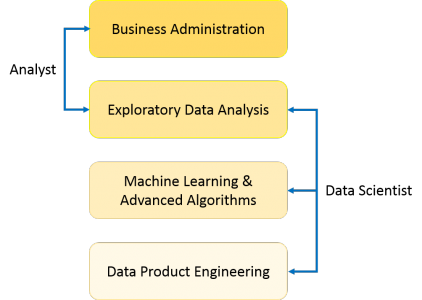
From the above image, it is clear that a Data Analyst usually explains what is going on by processing history of the data. On the other hand, Data Scientist not only does the exploratory analysis to discover insights from it, but also uses various advanced machine learning algorithms to identify the occurrence of a particular event in the future. A Data Scientist will look at the data from many angles, sometimes angles not known earlier.

So, Data Science is primarily used to make decisions and predictions making use of predictive causal analytics, prescriptive analytics (predictive plus decision science) and machine learning.

  • Predictive causal analytics – If you want a model that can predict the possibilities of a particular event in the future, you need to apply predictive causal analytics. Say, if you are providing money on credit, then the probability of customers making future credit payments on time is a matter of concern for you. Here, you can build a model that can perform predictive analytics on the payment history of the customer to predict if the future payments will be on time or not.
  • Prescriptive analytics: If you want a model that has the intelligence of taking its own decisions and the ability to modify it with dynamic parameters, you certainly need prescriptive analytics for it. This relatively new field is all about providing advice. In other terms, it not only predicts but suggests a range of prescribed actions and associated outcomes.
  • Machine learning for making predictions — If you have transactional data of a finance company and need to build a model to determine the future trend, then machine learning algorithms are the best bet. This falls under the paradigm of supervised learning. It is called supervised because you already have the data based on which you can train your machines. For example, a fraud detection model can be trained using a historical record of fraudulent purchases.
  • Machine learning for pattern discovery — If you don’t have the parameters based on which you can make predictions, then you need to find out the hidden patterns within the dataset to be able to make meaningful predictions. This is nothing but the unsupervised model as you don’t have any predefined labels for grouping. The most common algorithm used for pattern discovery is Clustering.

Why Data Science?

Traditionally, the data that we had was mostly structured and small in size, which could be analyzed by using simple BI tools. Unlike data in the traditional systems which was mostly structured, today most of the data is unstructured or semi-structured. One can understand the precise requirements of your customers from the existing data like the customer’s past browsing history, purchase history, age and income. No doubt you had all this data earlier too, but now with the vast amount and variety of data, you can train models more effectively and recommend the product to your customers with more precision. The self-driving cars collect live data from sensors, including radars, cameras, and lasers to create a map of its surroundings. Based on this data, it takes decisions like when to speed up, when to speed down, when to overtake, where to take a turn – making use of advanced machine learning algorithms. Data from ships, aircraft, radars, satellites can be collected and analyzed to build models. These models will not only forecast the weather but also help in predicting the occurrence of any natural calamities. It will help you to take appropriate measures beforehand and save many precious lives.

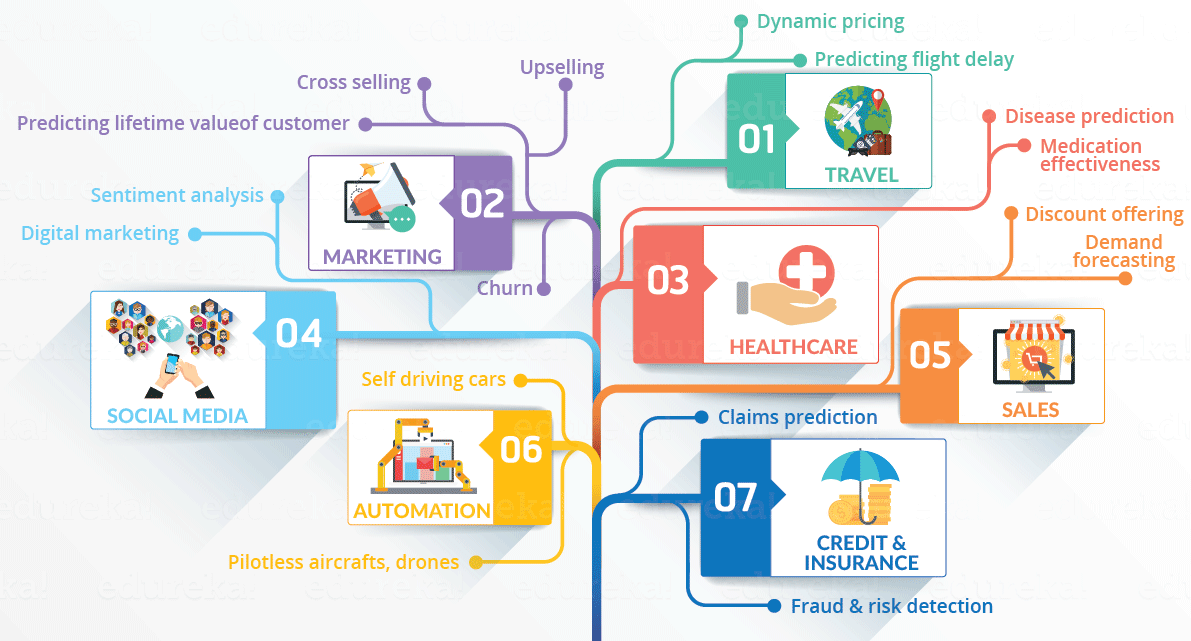
The following infographic shows the various domains in which Data Science is creating its impression:

Role of a Data Scientist

Data scientists are those who crack complex data problems with their strong expertise in certain scientific disciplines. They work with several elements related to mathematics, statistics, computer science, etc (though they may not be an expert in all these fields). They make a lot of use of the latest technologies in finding solutions and reaching conclusions that are crucial for an organization’s growth and development. Data Scientists present the data in a much more useful form as compared to the raw data available to them from structured as well as unstructured forms.

Big Data and Social Media

Photo by Pixabay on Pexels.com

Living in an internet governed world with a pandemic hanging over our heads, all of our work has gone online. With thousands of texts, e-mails, pictures, videos, receipts, searches, video-calls and so much more sent daily, we are now generating an incredible 2.5 quintillion bytes of data every day. With 1 quintillion having 18 zeroes, that’s quite a lot of data and it is very difficult for traditional computing systems to handle. This ever-increasing amount of data is known as BIG DATA.
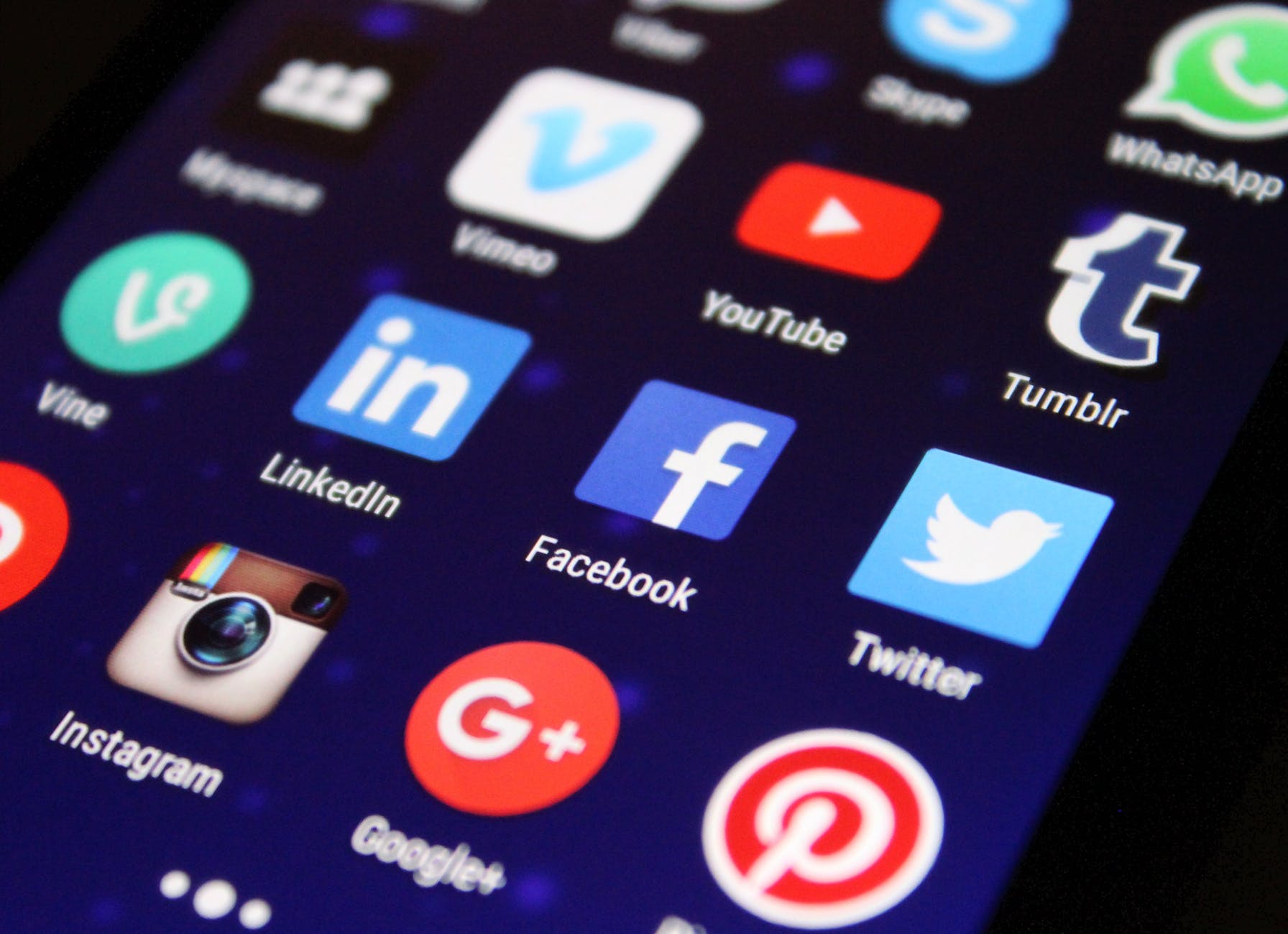
With facebook, instagram, telegram, twitter, sharechat and so many more social media applications coming up and the rising number of social media users with a single user having accounts across multiple social media apps, the amount of big data is increasing and the impact of big data on social media is undeniable. 

Photo by Pixabay on Pexels.com

When-ever you input any data in any social media platform, whether sending a message to your friend discussing about a new car that was recently launched, or making a check-in at a hotel, it gets stored in the form of big data. Various commercial websites let you sign up using your social media accounts asking you to let them access your data. Now, this big data is used by these platforms to suggest you the various products you have either searched or mentioned.
All of our activities spread over these platforms provide for a very reliable source of market study as it is dynamic and changes quickly with the change in demand of consumers. It helps producers keep a track of the consumers’ requirements and initiate necessary changes to meet them.
The big data available help marketers target a specific audience according to their interests, age, gender, education, etc. Various surveys conducted across various social media platforms that appear as per your preferences, requesting information about the products- whether you like it, ways to improve the product or what brand you prefer that makes getting reviews and improving products easier. 
Big data helps analyze what is the trending topic among the mass during some period of time. It helps influencers use it to their benefit to steer public opinions in support of or against various personalities, especially political personalities.
When such amount of our personal data is stored somewhere, that is accessible by others, even after we are, a lot of time, unwilling to share it, it is a significant threat to our privacy. Although, various social media platforms are now trying and so is our government to protect our sensitive data from breach.

That being said, if used judiciously, big data will be a boon owing to its benefits of ease in the field of marketing and research, as the world is increasingly moving online with 59.5 percent of the world population being active internet users as of January, 2021. So, if our sensitive data is protected, or rather, made volatile, big data will definitely continue to revolutionize the world of social media, marketing and research as it does today but without the public worry of data leaks.

Reference links: https://medium.com/dative-io/how-is-big-data-impacting-social-media-df31aa3f66f6 https://en.wikipedia.org/wiki/Big_data