THE ART OF PUBLIC SPEAKING

Man is not born with the latent ability of oration, it is developed over a significant period of time with experience and practice. The act of speaking face to face with a live audience is included in oratory practices. It is one of the most essential skills that an individual must imbibe within himself. Public speakers do have the potential to bring about a revolution in a society. Speakers from various places across the globe have played a crucial role in motivating their audiences in dark times. It can be called as an art that is used for teaching, persuasion or entertainment of listeners. Speakers who communicate with audiences to teach them something, often make use of jargons and anecdotes which will boost the learning ability and performance of the audience. Whereas speakers who wish to persuade their niche audience into doing something, put hyperbole, metaphors and persuasive literary tools into their speech.

Fortunate ones are immune to the fear of public speaking, but there are people with poised personalities and good literary skills and are yet low on confidence if made to face an audience. One need not feel worried about how to tackle the anxiety that builds up while delivering a speech. There are certainly a few tips and tricks that one can carry up his sleeve.

KNOW YOUR NICHE AUDIENCE BEFOREHAND

One needs to use alternative speaking styles while interacting with listeners belonging to different age groups, genders, societal strata, etc. Crafting the speech based on the type of audience which will be attending the session, will certainly help to maintain cordiality and smoothness in the oration.

FOR INSTANCE – While delivering a speech for a formal session, with businessmen and industrial expertise as the audience, one does not make use of comical references or satirical expressions.

USE OF APPROPRIATE GESTURES
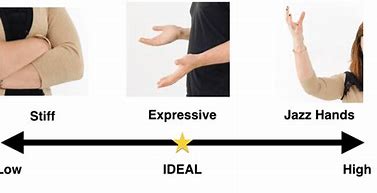
Making sure that your bodily gestures do not portray that you are anxious from within, is important. Clasping of hands, standing in the same stance for a longer time, rubbing of palms, tapping of feet should be avoided. Standing in an erect stance, with an amiable expression and making eye to eye contact with the audience present is essential. Simple confident hand gestures and displaying counting of points on fingertips from time to time, will attract the audience to follow along. An appropriate body language helps the speaker to engage well with the audience.

FOR INSTANCE – Distracting hand gesture such as fidgeting prevents the audience from absorbing what the speakers is trying to explain.

VOCABULARY BUILDING

To attain a sufficient level of mastery in usage of words and arranging them into sentences, reading does play a major role. Getting your hands on various genres of write-ups, hunting for meanings of less comprehensible words and jotting down those words on flashcards or sticky notes is one of the techniques to improvise on your vocabulary. Attempting to communicate with people possessing admirable literary skills, will help one to carefully pay attention to pronunciation of a plethora of words. Not everybody gets the privilege of interacting with literary expertise, but one can definitely listen to podcasts, songs, speeches and other audio visual means of learning.

FOR INSTANCE – Glancing through the Thesaurus such as the Oxford Dictionary on a regular basis, is beneficial to improve the vocabulary.

ENDLESS HOURS OF PRACTICE

We have all come across the quote, “Practice makes a man perfect.” One does not necessarily require an audience to practice public speaking. Many present day orators must have practiced their speeches in front of the mirror as newbies. Including personal experiences, explanation of real life stories, subtle humour can be used to craft a speech. After the script has been finalized, beginners can practice speaking against the mirror or a small group and record what is being spoken. But, one must not constantly make use of the mirror as a tool because the concept of public speaking in itself states that a speech has to be delivered in front of an audience. Hence, a mirror cannot create an audience like impact for the speaker. Thus, regular practice will help one to analyse his/her shortcomings and can make alterations accordingly.

FOR INSTANCE – Practicing in front of a mirror, will help an individual to focus on his gestures and he can thereby try to eliminate under confident bodily motions.

Man cannot gain absolute perfection in all the tasks throughout his journey of life. But one can definitely attempt to minimize the flaws or shortcomings within oneself. This blog strives to highlight the methods through which one can build up spoken skills and the confidence required to conquer the fear of Public Speaking.

PORTRAYAL OF WOMEN IN INDIAN MEDIA

Media plays such a major role in the lives of human beings. Over the last decade, media has become a powerful tool that mirrors social life of commoners and celebrities. However, the role that media plays in portraying gender democracy is still a matter of debate. Media has a significant impact on how social and cultural norms relating to women form and evolve. Over the past couple of decades audiences have been exposed to women in strong and independent roles in the media. This propagates the sense that western modernity and increased presence of free market promotes gender equality in a India.

PORTRAYAL OF WOMEN IN DAILY SOAPS

  • It does seem a little bizarre to see contemporary TV serials and soaps projecting women more as models of expensive costumes, jewellery or heavy sarees. 
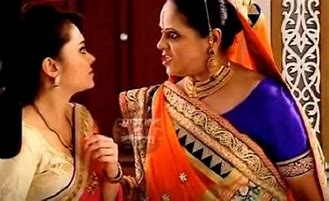
  • Moreover, the stereotypes used such as a wronged wife, a dominating mother-in-law, bitter relationships between sister-in-laws, portray women in conflicting roles.
  •  Also, daily soaps fail to include all the career options that are now being taken up by Indian women, new modes of lifestyle being adopted and remain stuck up in certain deep-rooted notions that are hard to be erased.
Mother-in-laws are often portrayed as ill wishers of the daughter-in-laws

PORTRAYAL OF WOMEN IN ADVERTISEMENTS

PAST SCENARIOPRESENT SCENARIO
1. In the past, women were portrayed as subjects of mockery and were allotted with submissive roles in television commercials. 1. In the present scenario, women are often shown playing lead roles in television commercials.
2. Women were deliberately depicted subordinate to their male counterparts. 2. Males and females are equally portrayed in brand endorsements.
3. The looks of a women were made use of, to endorse a product. Hence, females were said to be openly objectified in advertisements. 3. Women are rarely seen doing stereotypical roles, instead they are shown as heads of a family, position holders at workplace, achievers of glory in sports and ultimately independent.
TVC IN THE PAST ‘Stereotypical role’
CURRENT TVC – ‘Portrayal of gender equality’

PORTRAYAL OF WOMEN IN MOVIES

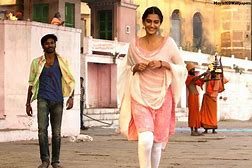
  • Bollywood has shaped and expressed the changing scenarios of modern India.
  • It has influenced the way in which people perceive various aspects of the society. 
  •  Despite the progress that bollywood films have made and the, things haven not changed much for Indian women, as objectification of women still continues in most of the Indian movies.
  • In many movies of present times, female characters are needlessly under represented. Also, publisizing vulgar lyrics and dances in the name of item songs is very derogatory for women.
  •  Women are shown as helpless victims or cunning villains. Generally, the lead hero is the one who solves everyone’s including heroine’s problems.
  • Movies depict actresses as unrealistically beautiful. This causes a lot of trauma and insecurity in the female audience. Laymen are generally unaware about the number of beautification surgeries and make up procedures which the actresses undergo to look perfect.
  • In movies, stalking and eve-teasing is depicted as love in Indian movies. In many movies, female characters are attracted towards these abusers. Due to this, several young men indulge into harassing women in the name of love.
Stalking and eve teasing is often normalized in Bollywood movies

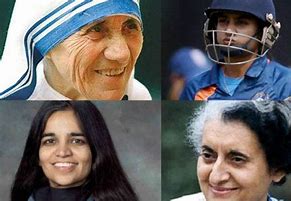
In conclusion, we can say that media has successfully stereotyped women in a negative way. It is true that women’s participation and presentation has advanced in various dimensions of social and political life but we still have a long way to go. It is high time that we learn to voice our disapproval against such practices and stand up for positive portrayals of women. The real women inspirations of India shall be depicted on all such platforms.

The admirable women of India

EVILS OF BULLYING

All of us may have been a part of or may have experienced subtle or extreme bullying in our lives. Now, what exactly is the idea or thought process behind bullying ? It is the use of force, psychological abuse, threats or aggressive domination on another person, mostly the vulnerable ones. It involves a hostile intent of a person over a period of time. This can impact a person negatively, taking a toll on their mental, emotional or physical health. It may be done by a single person or a mob. Such a culture generally develops at school, workplace or in a neighborhood. Several types of Bullying are prevalent in the society.

PHYSICAL BULLYING

It is one of the most common methods of bullying. It involves usage of physical actions which are disliked and highly unappreciated by the victim. Use of actions such as hitting, pinching, shoving, pushing, or causing damage to the property of an individual comes under Physical Bullying. The attacker, better known as the bully is in a dominating position, thus the victim remains vulnerable in such cases.

VERBAL BULLYING

It does not involve any physical contact or harm, but the scars of physical bullying are deeper and generally go unnoticed. Use of verbal techniques such as speaking or displaying a demeaning body language is a part of Verbal Bullying. Victims are made to face threats, rude tone of voice, mockery of oneself, insults, slurs, or constant criticism. According to a study, females are more likely to bully an individual verbally, in order to display superiority.

CYBER BULLYING

This new era method of bullying is coming into the spotlight day by day. Laymen are well informed with the term Online Bullying. Using Internet as a tool to harass somebody has become a typical behavior among the teenagers. Lack of courage to let out derogatory remarks about somebody, pulls these people towards devices which can aid to bully someone. The culture of Cyber Bullying involves spread of rumours, stalking, hate speech, defamation through leaking of audio or video clips without permission or shaming.

AFTERMATH OF BULLYING ON THE LIFE OF AN INDIVIDUAL

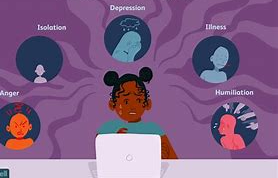
  • Mental disorders such as anxiety, inferiority complex or depression that creeps gradually into adulthood
  • Low academic performance among students
  • An individual may indulge into alcohol /smoking / drugs to escape from the negative reality of life
  • Persons who have been victims of bullying skip school or workdays and prefer confiding themselves within their homes
  • Emotional turmoil leading to low self esteem and loneliness
  • Isolation of oneself from peers or even family members
  • Experience of physical problems such as muscle aches, nausea, head aches
  • Extreme experience of bullying may ultimately even lead to self harm or suicidal attempts

We can conclude by stating that bullying must not go unnoticed. Anti-bullying related values must be imparted from the grass root levels. Schools must employ specialized counsellors and mental health professionals to combat the evils of bullying. Moral values of harmony, team building and co-existence must be advocated at all times.

SIMPLE LIVING HIGH THINKING

Haven’t we all been a part of the mad rat race to acquire money? Humans keep running behind wealth throughout their lives and eventually when they reach old age, they realize the importance of peace in life. Not always, luxury is based on looks or garments. Real richness is reflected through a person’s values and mannerisms. Bringing positive changes in the lives of others shall be taken into consideration more than bringing materialistic changes in one’s lives. It is not money that is of utmost importance but generosity and the act of giving back to the society is important. Life resembles a steadily flowing stream of water and what we do while being a part of that flow of water will matter in the end. In our day to day living we may notice the amount of clutter that is spread on our study desks inspite of the fact that, the only commodity that we use daily might be a laptop or a book, at the dining table, many food items are often seen lying for days together which later on get disposed off, in our wardrobes, numerous clothes often remain unused. What does this tell us? We humans keep running in the blind race of materialism without even considering whether something is really needed by us or not.

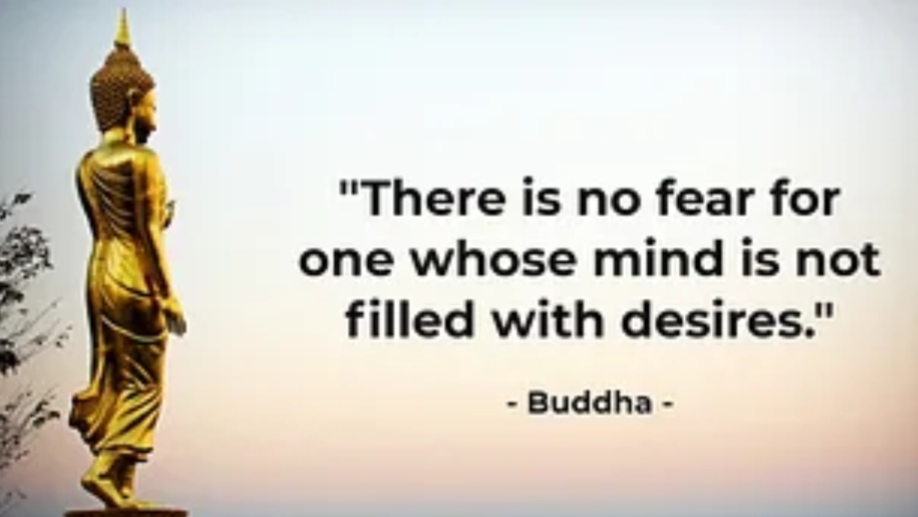
Siddhartha Gautama better known as a Gautam Buddha, renounced his life as a wealthy prince and instead left his palace to seek inner peace as an ascetic. He gave up on his comforts because at the age of 29, he realized that mere wealth cannot bring home happiness. He also came across the sufferings of people, hence wanted to find out ways on how human suffering can be ended. According to Buddha, ‘Desire’ is the root cause of suffering. In today’s times, eliminating desires is not quite possible but limiting them certainly is. The Wisdom of Frugality, states how living a simple living leads to good virtues and ultimately good virtues lead to happiness. In simple words, if a person chooses to live life without any extravaganza, he may not have to take up a stressful job. When he does not experience stress and overtime at his workplace, he gets more time for leisure, which in turn generates happiness.

A minimalist lifestyle involves living with fewer resources whether in terms of a house or possession. Minimalist livers prefer to have a simple lifestyle and yet be satisfied in life. A minimalist lifestyle is by no means a radical lifestyle but rather an optimal one. Minimalistic living involves a high thinking. For instance, rather than buying an expensive television set, a phone or an air conditioner, buying a cheaper one and spending rest of the money on buying basic necessities for the underprivileged displays the real wealth that a man possesses. Pioneers such as A.P.J Abdul Kalam, Sudha Murty, Mahatma Gandhi and many more idolizing personalities have opted to live in a simple manner and possess a benevolent, generous and humane disposition.
INDIA ACHIEVES A MILESTONE – News Update

The Indian Prime Minister, Mr.Narendra Modi has recently announced that the country remains a steadfast partner in global efforts to combat the Covid pandemic. The government’s results have resulted in a positive impact against the battle with the deadly Corona Virus. India made a 100 Crore Vaccine jabs milestone on 22nd October, 2021. Thousands of health care workers and people from the government sector joined hands to achieve this mark. There had been no such mass vaccination drive in the country prior to the pandemic. Indians were not made to wait endlessly for these jabs due to vaccine makers such as The Bharat Biotech and Serum Institute. Within a short duration of time amidst the Covid – 19 waves, these manufacturers came to the rescue and supplied indigenous doses.

After several episodes of complete and partial lockdowns in the nation, the authorities began permitting to open up different sectors, trains, educational institutes and shopping malls, with the mandatory restriction of complete vaccination of an individual. The date 16th of July, will be engraved in the history of India’s achievements, as this is the day when the very first vaccines were administered to the frontliners. The civilians were initially hesitant with administration of the jabs because of several inhibitions and rumours. Gradually, the public started pre-booking their slots in order to get vaccinated. In about only 9 months, India is basking in glory with the milestone that has been achieved.

The country not just secured itself from the virus, but also worked for humanitarian causes by supplying these vaccines to other nations such as Bangladesh, Myanmar, Nepal, Oman, South Africa, Afghanistan and many more. There were times when the government did receive backlash for supplying vaccines and this move was also being called as a risky diplomacy. Inspite of hardships, the country did supply approximately 361 lakh doses of the Covid-19 vaccine to other nations.

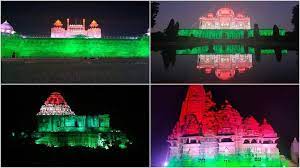
With the completion of this landmark, a gesture of gratitude towards the frontline warriors was displayed by lighting up of 100 monuments in India, ins colour of the Indian tri-colour. This initiative was lead by the Archaeological Survey Of India. Therefore, to offer a vote of thanks to all the doctors, nurses, sanitation staff, police officers, monuments including the Konark Temple, Agra Fort, Red Fort, Shanivar Wada, Khajurao, Fatehpur Sikri, Qutb Minar, Kumbalgarh, Nalanda, St. Francis Church, Dholavira, etc were illuminated. This expression of gratefulness towards the relentless efforts of the essential workers took place on the night of 21st October, 2021.

The National COVID-19 vaccination drive of India is the world’s largest vaccination drive and has been unprecedented in both scale and reach. India alertly imposed restrictions on the movement of people and quickly arranged for hospital like setups to provide timely health care. A series of sessions were conducted by the Prime Minister to advice the citizens regarding the ongoing crisis. India scored high on communications with health care workers during a public health emergency, trade and travel restrictions, laboratory systems, immunization, and socioeconomic resilience.

MASS MEDIA

As the name itself suggests, Mass Media refers to an array of methods which help to promote a variety of things/messages/ideas among the masses through different communication outlets. In today’s times, the various kinds of mass media include, Cinema, Radio, Television, Internet, Print, Recordings, Mobile phones, etc. People may opt for a particular medium of communication based on the availability of technology, type of message/product to endorse and ease of mass communication.

CINEMA

Movie making is certainly gaining a lot of popularity in this era. Cinema Media has a lot of potential to create an impact on the society at large. The film industry inclusive of Hollywood, Bollywood, Tollywood, so on and so forth manifests the reflection of society in the past and the present. Today, the youth does look up to movies for recreation. A good cinema can entertain, educate and inspire the viewer in several ways.

EXAMPLE – The movie JOKER, impacted it’s audience with inspirations like, leaning to forgive, succeeding despite having mental issues, never giving up on your dreams, etc.

RADIO

The credit of being able to enjoy broadcasting in the earlier times and today as well, goes to Guglielmo Marconi, the developer of the first radio transmitter and receiver. With scarce means of recreation in the olden times, Radio bound families, peers, neighbors together. The auditory mode of communication, Radio is also used to maintain contacts with the flights and ships that are out in the air and water. Radio is also an essential element used at war zones to transmit information through morse codes.

EXAMPLE – Africa considers radio as the most important too of communication. Radio is quite cost efficient, does not need any expensive data package, helps to reach out to a broader audience and is also easily portable.

TELEVISION

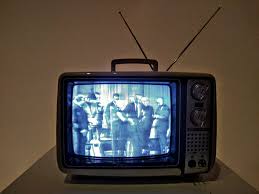
Television is an audio visual type of Mass medium. It is used by broadcasters to air sports, daily soap, movies, news, etc. The progress of the T.V is easily noticeable, as it started from the black and white version and has now developed to a very high extent in the form of OLED, LCD, LED, and HD. It is used by direction and production houses to entertain, inform and educate viewers. It can be considered as an ultimate Pandora’s Box.

EXAMPLE – Viewers ranging from the kids to the elderly at home, are often seen glued to the television for the purpose of entertainment.

INTERNET

Sharing information and communication has become a piece of cake since the invention of the Internet. This mass medium has bypassed almost all other media of communication. Internet is now considered as a boon to e-sellers, social media influencers, researchers and all the other end users as well. The Internet has become a global networking platform which anyone can access at any point of time.

EXAMPLE – People do resort to the Internet to pay their bills, listen to music, manage finances, to shop online or even to communicate with people all across the globe.

Mass Media plays a significant role in this era. Making appropriate usage of it will give us fruitful results. Mass media helps in transmitting values, heritage, cultures and information and acts as a watchdog on society.

YOGA – ORIGIN AND BENEFITS

Yogasana has its roots in ancient India. The Rig Veda, a sacred book for the Indian Hindu community, mentioned the word Yoga, for the very first time, around 5,000 years ago. The word was coined from the Sanskrit word ‘Yuj’, which means to join or to unite. Yoga is among the six schools of philosophy of Hinduism and is also a major part of Buddhism. The practice of Yoga is considered as a subtle harmony between the mind and the body. This science was developed by the ancient sages to overcome all kinds of sufferings and attain Moksha (liberation). The Hindu God Shiva, is called as the ‘Adiyogi’ for being the first preacher of Yoga. He was the supreme one to spread the knowledge of the bodily art form among the saints, who later took it across various places and people. Later on, the Brahmanic scholars, documented these practices in the Upanishads (Indian Sacred Literature). The westerners believed Yoga to be postured based physical activity which helps relieve stress. Yoga is also classified by different religions, into different forms such as Classical Yoga, Advaita Vedanta, Buddhist Yoga, Jain Yoga, Tantric Yoga, Hatha Yoga, Laya Yoga, etc.

Practice Of Yogasanas is extremely beneficial in several ways :

  • Yoga does help in attaining a sufficient level of flexibility. In the beginning, one may feel a pull in their hamstrings or tendons. But gradually, over hours of dedicated practice, one can attain flexibility, which is essential for a good posture.
  • Yoga helps in maintaining a stable heart rate. Practice of yoga daily, improves cardiovascular functioning. People who are engaged into Pranayama (breathing exercise) on a regular basis are able to perform several activities even with a lesser amount of oxygen supply.
  • Yoga helps one to calm the mind and relax the senses. Thus, a calmness in mind, in turn helps in better concentration. This assists in improvement of the I.Q levels and helps maintain a steady focus.
  • Yoga along with breathing techniques such as Ocean Breathing can help cure Insomnia. It can help a person to fall asleep quicker than usual, sleep for a longer duration and feel relaxed after waking up.
  • Yoga is also beneficial for boosting one’s self esteem and confidence. It trains a person to be more patient, maintain perseverance and gives the strength to work tiredlessly towards one’s goal.
  • Yoga tends to make people happier. According to various reports, even a single class can begin to change your brain chemistry. The increased blood flow in the body, helps keep Cortisol (a stress hormone) at bay. Thus, all of this adds up to making a person happy.

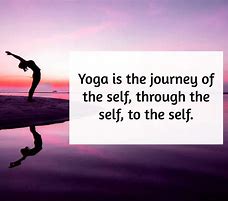
Yoga can be termed as a medicine that can cure nearly every human problem. Lifelong commitment to Yoga can improve mental and physical well being. The Bhagvad Gita states, “Yoga is the journey of the self, through the self, to the self.” Imparting knowledge about Yoga, shall begin from the foundation years of children, to inculcate lifelong values of discipline and endurance in them.

NEVER TOO LATE TO SUCCEED

Life is a book full of opportunities and a new chapter can begin at any point in life. One is never too young to get started with new things, also one is never too old to start again. Dreams have no age limit. With hunger for success and the determination to achieve it, one can begin with new ventures at any point in life. With the same thought and will power, there are many successful people who begun their new journey in a later point in life. These two iconic brand owners also did start their journey of success when they were middle-aged.

COLONEL SANDERS

Harland David Sanders of Indiana, took up several jobs at an early age due to his father’s death, when he was six. He did numerous jobs, including, being a part of the army, working as a streetcar conductor, a rail road fireman and an insurance salesman. He failed numerous times and was fired on many of the jobs that he had taken up. He lost hopes on his career and retired at age sixty-five. He then started selling fried chicken cooked in his own recipe, door to door. He opened up a cafe, named Sander’s Cafe and marketed his dishes well. In 1952, Sanders franchised his secret recipe to Pete Harman, who operated one of the city’s largest restaurants. Upon gaining success with this venture, Sanders visited many other restaurants to franchise his fried chicken recipe. Soon, Kentucky’s Fried Chicken (KFC) gained enormous success. Sanders was overwhelmed with his chain of food outlets, spread around 600 different places. At the age of 73, Sanders sold his food chain brand for 2 million dollars. Today, KFC is one of the largest quick service food chains in the world, valued over 5.1 billion USD.

RAY KROC

Raymond Albert Kroc was born in a family of Czech origin. Since a young age, he began trying his hands on business ventures such as opening a lemonade stand and working at a soda fountain place. He worked as a salesman for Lily Tulip and his work culture got him connected with Earl Prince, the inventor of a multi mixture milkshake machine. Ray resigned from Lily Tulip and started selling those multi mixture machines and paper cups across the country. Kroc came across a restaurant which was apparently owned by Dick and Mac McDonald. They sold burgers, french fries and shakes. Kroc had only visited this place to supply his multi mixture shakes machine, but was highly impressed with the working of their restaurant. He soon took up their franchise as an agent but did not have enough investment income to buy the entire corporation. Ray set up the McDonald Corporation in 1955. With the help of MC Corporation’s first President, he was able to make an outright purchase of the brand from McDonald Brothers at age 52. Under his ownership, he maintained strict ownership regarding his staff, packaging, size of portions, cooking methods and lay an emphasis on innovations. All this contributed to the grandeur of the brand. Even in the present times, McDonald’s Corporation is the world’s leading global food service retailer with a net worth of $180.91 B in 2021.

It is apparent that, failures are the stepping stone to success. One may fall seven times but getting up the eighth time is a real feat, which one must achieve. Also, there is no age bar to begin with your passion. One must happily complete the journey of life by following his/her dreams.

YOUNG MINDS – BIG REVOLUTIONS

It is rightly said, there is no age bar to make a difference in the world. It just needs an ignition and the willingness to do something different, for the betterment of the society. One might feel, it is a daunting task to initiate alone and make amendments, but a single person with grit and determination is sufficient enough to make the world a a better place. Mother Teresa states, “I cannot alone change the world, but I can cast a stone across the waters to create many ripples.” There are many such youth personalities, who came forward to make a difference.

Malala Yousafzai

Female education activist and Nobel Peace Prize awardee, Malala Yousafzai was born in a family where education to girl child was encouraged. Gaining inspiration from her father’s humanitarian work, she decided to get into female education activism. The terrorist group, Tehrik-i-Taliban, was agitated by the her attempts to encourage education for the women. Malala, along with two other girls were shot by gunmen from the same terrorist organization to retaliate against her activism. Even after facing such a violent attack at a tender age of just 15, she did not halt her deeds. She started a fund raising organisation with her own name after recovery. She was then featured in the Times Magazine as one of the Most Influential People in the world and was asked to address the House of Commons at Canada.

Isra Hisri

Isra Hisri, the daughter of Ilhan Omar (U.S Congresswoman), is an American Environmental Activist. She began gaining awareness bout concepts related to the environment in her freshman year when she became a part of her High School’s Environmental Club. In the Club, she was the only girl who had a dark complexion, hence she would feel left out amongst the whites. She played her part in co-ordination of student led strikes related to environmental protection in spite of being neglected by many of her fellow mates. Hisri has made it her goal to use her advocacy in environmental and anti-racial matters since the age of 16. She co-founded and served the Youth Climate Strike and has been awarded the Brower Youth Award.

Nkosi Johnson

Nkosi Johnson, hailing from South Africa was born with HIV-AIDS. He was adopted by another woman, as his mother could no longer nurture him since she herself was suffering from the disease. He lost his mother when he had begun with his schooling years. His school did not permit him to secure admission and attend classes when they became aware of what he was suffering from. Nkosi addressed at the International Aids Conference, encouraging Aids patients to be outspoken about the disease and seek medical aid. Nkosi’s Haven, a refuge for HIV Positive mothers and children was founded by him with the help of his adoptive mother. He lost his life in the year 2001 due to brain damage complications. He was declared as the awardee of International Children’s Peace Prize. His refuge was donated with USD 1,00,000 by Kids Right Foundation. Author, Jim Wooten, wrote a book on Nkosi’s journey of life and named it as We Are All The Same.

“BE THE CHANGE, YOU WANT TO SEE IN THE WORLD” – M.K Gandhi

There are several other youth personalities such as Greta Thunberg, Jaylen Arnold, Param Jaggi, Marley Dias and many more. The youth is not just the leaders of tomorrow but can be the leaders of today as well. Developing and nurturing social values is what the youth must try to contribute in today’s times. Young minds do have the energy and coherent ideas to bring about a change in society, therefore must strive for it. It is time for all the budding minds to realise their eureka moment and create a revolutionary change across the seven seas.

ORGANIC FARMING

An agricultural system that uses fertilizers of organic origin such as compost manure, green manure, and bone meal and involves farming methods such crop rotation and companion planting is Organic Farming. The term ‘Organic’ was popularized by Howard and Rodale. This type of farming is inclusive of usage of biodiversity, while preserving natural resources and ensuring animal welfare. Organic Farming is highly beneficial in all terms.

BENEFITS OF ORGANIC FARMING

MAINTAINS PURITY OF WATER

An extensive use of chemical pesticides and insecticides, contributes in polluting water bodies and underground water. Organic farming replaces such toxic substances with natural fertilizers such as manure, compost, animal waste, which help in soil retention and quality. In places where, the incidences of water pollution are more, organic farming must be brought into practice.

PRODUCTION OF HEALTHY FOOD

Organic Farming enhances the nutrients in the soil because use of toxic elements is prohibited. The quality of food is determined with the amount of vitamins and minerals that are embedded in it. Organic food is much richer in nutrients than food grown through conventional methods.

POCKET FRIENDLY

Organic food products are not grown with the use of inputs like expensive pesticides, chemicals, insecticide sprays, etc. Instead, it makes use of everything that is available naturally with no or minimal capital cost. There is yet a buzz that Organic products are costly, which is not true.

SAFE TO PRACTICE

Organic Farming is safe to practice than conventional methods. Annually 44% of the world’s farming population dies, due to poisoning while using harmful pesticides. Farmers are routinely exposed to high levels of pesticides, usually much greater than those of consumers. Farmers’ exposure mainly occurs during the preparation and application of the pesticide spray solutions and during the cleaning-up of spraying equipment. But, Organic farming is very safe to practice because of it’s natural methods.

BETTER TASTE

Farmers producing organic farm products are extremely careful about the quality of their soil and do practice soil care methods. Soil with high nutritional value tends to produce better farm products. Chefs and food experts actually do believe that organic farm products taste much better than the conventional ones.

METHODS OF ORGANIC FARMING

  • Vermicomposting
  • Green Manures
  • Animal Manures
  • Crop Rotation
  • Livestock Management
  • Soil Supervision
  • Weed Control
  • Genetic Modification

Hence, in conclusion, we can state that, Organic Farming is the best alternative for traditional farming. There are so many positives to Organic Farming. Today, Organic Agriculture is practiced in 187 countries by about 1.3 million farmers globally. Environmental consciousness has further given rise to the practice of Organic Farming.

UNDERSTANDING SUICIDE

Reasearch says, about 7 lac people die of suicide annually, with approximately 132 suicides daily. An alarming rate, isn’t it? At times, we as humans may fail to understand what another individual might be facing. For every death by suicide, there are many more people who attempt it. Globally, ingestion of toxic substances, hanging and firearms are the most common methods of committing a suicide.

Emile Durkheim, a French sociologist and scholar, identified four different types of Suicides. Durkheim stated that, there are no societies in this world, where suicides do not occur. It includes, Egoistic Suicide, Altruistic Suicide, Anomic Suicide and Fatalistic Suicide. We can understand the core of these four forms of suicide, with further expansion of each term.

1. EGOISTIC SUICIDE

Durkheim states, when a man becomes socially isolated or feels that he has no place in society, he destroys himself. It is committed by people in order to find a route of escape from loneliness and introversion. Such individuals are devoid of proper care and empathy from the people in their lives. They are not socialists, hence they find it difficult to mingle in groups. This leads them to feel unhappy, alone and helpless in this world. Cutting off from the mainstream is the main cause of suicide in this case.

EXAMPLE – Person A, is an employee of a firm and is working most of the time in his day. He does not mingle with his relatives and friends or attend any social functions. Due to this, the ties with his family members are getting estranged day after day. His spouse argues with him regarding the same complaints. He now begins to feel alone. Ultimately, there arrives a day when he’s fed up with all the querulous complaints and fights, thus takes his own life.

2. ALTRUISTIC SUICIDE

Durkheim states, it is a sacrifice of one’s life to save or benefit others, for the betterment of society. It is quite an opposite of Egoistic Suicide. An over integration with society may lead to extreme benevolence in an individual. The individual regards suicide as a sacrifice that he/she is making for the good of a group or society as a whole. People committing suicide due to such a reason may consider their act as courageous and selfless.

Example – In the olden times, Indian women used to lay themselves on the funeral pyre of their husbands in order to follow the cultural rituals.

3. ANOMIC SUICIDE

Durkheim states, a moral confusion within an individual and inability to comprehend social direction may cause an upheaval in the life of an individual. An individual feels bewildered about the position that he holds in society and goes through a lack of self regulation. A sudden change in societal dimensions or ups and downs in a person’s personal life, may contribute to disappointment in his/her life.

Example – A once wealthy businessman, invests in a venture, but the venture fails miserably, he suffers a tremendous loss and goes bankrupt. Unable to deal with the sudden change in status and overall situation, he plans to end his life.

4. FATALISTIC SUICIDE

Durkheim states, Fatalistic suicide is caused from excessive regulation, that of persons with futures, pitilessly blocked and passions violently choked by oppressive discipline. Burden of mental and physical oppression by other people on oneself may lead to a constant feeling of hopelessness. Finding oneself under strict norms, rules, high civil expectations and regulations may lead to depression in oneself, eventually causing the person to end his/her life.

Example – A famous singer feels extremely conscious about her image in the society. She experiences a burden from society’s expectations from her and thus fears failure and poor performance. She fails to handle this undue pressure and has thoughts about ending her life.

In my opinion, suicides do have societal roots. The reason for any person to commit suicide does not solely lie with him, but with the society as well. We are all directly or indirectly dependent on each other for materialistic and emotional needs. Materialistic needs can be fulfilled in some or the other way but emotional needs rarely come to the forefront. Rightly approaching those experiencing stressful situations, intervening and empathizing can greatly contribute in prevention. Suicides are preventable, with individual, community and national support.

Top 3 Hindu-Muslim Unity Advertisements

Advertisements have the potential to change human thoughts, behaviour and actions. They can do a lot more than just promoting brands. Through visual and auditory modes, advertisements have the competency to bring about a societal change and provoke a positive impact on people. Readers can have a glance at such impactful advertisements through the examples listed out in this blog.

Red Label (Tea Brand)

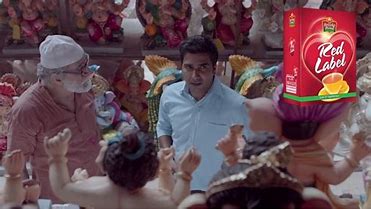
A man visits a store to place an order for a Ganesh idol (A Hindu God). The shopkeeper exhibits the different idols created by him to the man. While having a conversation with the buyer the shopkeeper also illustrates the meaning behind the different forms of the Ganesh idols. To the buyer, this shopkeeper seems to be a very knowledgeable man, who has much information about the Hindu worship and reverence. While conversing with the buyer, the shopkeeper puts on the Kufi (skullcap worn by Muslims). The Hindu buyer is taken aback after realising that the shopkeeper selling the Ganesh idols is a Muslim by religion. He attempts to cancel his order and go to his workplace. The Muslim shopkeeper offers him a cup of tea before leaving. The vendor explains him that , work is worship too, one need not compulsorily pray. The Muslim man was in fact worshipping God, by creating his idol. The buyer takes a sip of tea and plans to change his mind. He does not cancel his order and amiably buys the idol from that vendor on that day itself. The Brand, Red Label intends to portray that their product attempts to create harmonious relations between different religions.

Kaun Banega Crorepati (Reality Game Show)

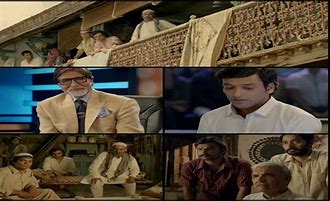
Six years ago, KBC came up with a phenomenal ad campaign featuring communal unity. In the ad it has been shown that, a Hindu boy had been selected for the episode. His family members were all set to bid him a goodbye as he was about to step out of his home, while his Muslim neighbors were watching him from the floor above. Just as the Hindu boy was about to step out, his neighbor sneezes. Sneezing while someone is about to leave from the doorstep is considered as a bad omen in the Hindu community. The Hindu boy’s family members feel agitated at the neighbor for sneezing and they misinterpret that, he had done it deliberately. Hours later, while facing a difficult question on the show, the Hindu participant decides to use the option of ‘Phone A Friend’ (According to the game’s format, this option is availed to all participants only once, whenever they wish to make use of it). He then rings up the same Muslim family and asks them the question i.e ‘What is the meaning of As-Salaam-Alaikum ?’ The man is overwhelmed by such a trustworthy gesture by the young boy. He answers his question accurately and assists him in winning the prize amount. This advertisement touched the hearts of many Indians. It indeed reflected the idea of communal harmony.

Surf Excel (Cloth Detergent Brand)

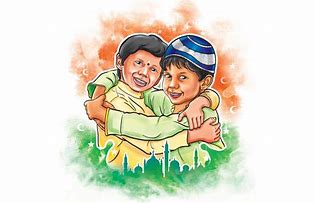
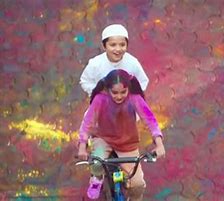
The advertisement broadcasted by this brand, intends to portray how Indian festivals are secular in nature. An individual from any community can enjoy a festivity according to his/her discretion. It is shown that, on the day of the Hindu festival of Holi (people celebrate this festival by applying colour on each other and splashing water with waterguns/waterballoons), a little boy wearing a white robe is hesitant to step out of his house. A girl of the same age as his, notices this and challenges her friends around, to smear all their colours on her. Her friends do accordingly, by throwing all the colour on her, from the floors above, as she waits down on her little bicycle. By doing so, she makes them use all their colour supplies on her and no colours are left out with them. Later, she offers to drop the boy to the place where he wants to go. It is then shown that, she drops him to the mosque, where he wanted to go to offer Namaaz (Islamic prayers). She also jests that, after he’s done with his prayers, the other kids will not leave him without including him in the merry festivities. He agrees to join them in the Holi celebrations after his prayers are done. The ad tagline said, “Rang Laaye Sang, Daag Acche Hai” (colours bind people together, such stains should be cherished). This advertisement depicts how mutual respect for each other’s religion can bring about unity. The principles of unity in diversity must be inculcated in children from their grassroot years, so that peace and harmony prevails in the society.

Advertisements can have a huge impact over the society, in terms of patriotism, unity, cohesiveness and peace-keeping. Various brands are positioning their ad campaigns around the pivot of National Unity in today’s times as the audience nowadays is readily accepting things which were not accepted earlier. Brands thus, not only create a name in the market with their products but also with their ad campaigns promoting social values and messages.

EXOTIC FRUITS OF INDIA

Fruits that are not native and are cultivated at their place of origin are known as exotic fruits, simply they are unusual or different. There are several fruits around the world that are found in a particular place, collected from the wild and usually eaten by the locals. nowadays, exotic fruits have found their way to the international audience. India too is an abode to some fruits that are different from the usual fruits like mango, banana and are rare, found in particular places.

Photo by Geraud pfeiffer on Pexels.com

Carambola (star fruit)

Thanks to social media star fruit has become a known fruit among indian locals and is quite popular. Also known as five fingers, carambola is the native to southeast asia and is consumed in many parts of the world. The whole fruits is edible, and is fleshy, crunchy and firm. It is consumed when the fruit leaves all traces of green and turns yellow, it tastes sweet and sour. It is a source of a good number of nutrients, especially vitamin C and fiber. despite being anutritiuos fruit star fruit can have negative effects on some poeple due to availability of high oxalate content.

Buddha’s Hands (fingered citron)

An unusual hand like fruit which is given as an offering in buddhist temples, and it is believed that buddha prefers fingers that are closed rather than open as they resemble praying hands. In chinese religion it is a symbol of happiness, longitivity and good fortune. It is a very fragrant fruit an is used to add fragnance to rooms and clothes, specifically in china japan and malaysia. although citrus fruits are juicy but most variety of buddha’s hands contain no pulp and usually known for their aroma and texture. It is used as a flavouring agent in dishes, desserts and beverages. It is also a part of traditional medicine.

Phalsa (Indian sherbet berries)

Phalsa is a small dark purple fruit and is helpful in balancing sweet and sour flavors. It is a good cooling agent and perfect for hot weather. It is a good source of calcium, magnesium, potassium, iron, phosphorus and vitamin C. It cures diarrhea, stomachache, builds immunity and supports smooth digestion. It is also consumed in the form of squash or sugar syrup and despite numerous benefits it is a very less known fruit in India.

Bael (wood apple)

One of the most popular summer fruit, bael is a highly effective against the scorching heat of the sun. The outer covering of the fruit is hard but the inner part is sweet and soft. Every part of the plant is good for human body, high in fibre, vitamins and other essential nutrients, it cures ulcers and piles, prevents constipation, is a good source of energy and equally effective against respiratory issues. The number of benefits it provides are uncountable.

Chalta (elephant apple)

Large sized shrub that is native to southeastern asia and the fruit of this plant is loved by the local elephants hence the fruit is known as elephant apple. It is consumed in both ripe and unripe form and is usually used is usually used for making jam, chutney or pickled dishes. The fruit has a large greenish-yellow shape and consists of 15-20 carpels, the fruit pulp is bitter-sour. It consists of numerous health benefits, like lowering blood pressure, fighting flu,cold and other infections, it is also good for eyes, has vitmin C and also cures stomach related problems.

CHIPKO MOVEMENT 2.0 ?

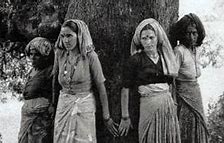
A historic environmental movement took place in the Chamoli district of Uttarakhand in India. It was started by Amrita Devi and lead by environmentalist Sunderlal Bahuguna. People involved in developmental projects ordered their workers to chop off the woods situated in Chamoli. The forest resources contributed greatly to the livelihood of the villagers. Their predominant occupation included, food gathering, forestry, farming, pastoral work, etc. Hence, these locals heavily relied upon the forest. The developmental officials intended to industrialize the area for improvement in transport and communication. But, the locals disagreed upon their plans. In the month of April 1973, contractors and workers visited the site to begin with felling of the woods. But, the locals gathered in masses and hugged the tress in protest. Women in large numbers too came forward to lead a non-violent struggle. Therefore, the movement came to be known as ‘The Chipko Movement’ (English Translation – ‘Hug The Tree Movement’) This unique movement gathered a lot of praise as the workers had to retreat due to the mass protest. The villagers thus gained success in eliminating deforestation.

A very similar protest occurred in the Aarey Forest in Mumbai city of India, which is an urban green space spread across 800 acres of land. This green landscape is popularly known as the ‘Green Lungs of Mumbai’. It is one of the only areas with a natural forest cover in Mumbai. A multi-crore metro rail project was launched in the city to ferry 13.9 lac passengers daily. Bharatiya Janata Party ( an Indian political party) announced a controversial decision to construct a car shed for Mumbai Metro line-3 at Aarey Forest. For this project, 2141 trees were cut down. Shivsena (political party) opposed the move of the BMC Tree Authority to allow felling of the trees, while other parties such as NCB and BJP were in favour. Mumbaikars were highly agitated with the decision taken. Protests regarding the same, legally gained pace when environmental activist, Zoru Bathena signed a petition at the Bombay High Court against the Tree Authority for giving clearance to the proposal.

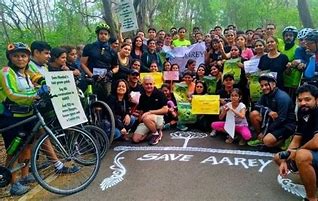
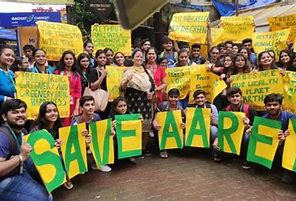
The MD OF MMRCL claimed that the plus points of the developmental project will outweigh the felling of trees. Upon receiving all such actions and statements, not just politicians and environmentalists but also the Bollywood actors came on ground to protest against the decision. The ‘SAVE AAREY’ campaign gained popularity with social media hashtags, posters, slogans and blogs. People from NGO’s, celebs, youtubers, influencers and the civil public gathered in the Aarey Milk Colony, Goregaon to lead agitations. As a part of duty, men and women in uniform had to detain, charge and arrest people for indulging in an unlawful assembly, under Section 144 which was imposed during that time period.

All of this gained favorable outcomes when, the Maharashtra Chief Minister, Mr. Uddhav Thackeray announced the declaration of 800 acres of land in the Aarey as forest premises, which will remain unharmed pertaining to any developmental work in the future as well. The cases filed against the protesters were also taken back by the court. CM Thakeray also announced that the Metro car shed for Phase III be shifted to a land in Kanjurmarg (suburbs of Mumbai), owned by the State Government. The land will be used free of cost as a property of the State. In this manner, the green patch of Aarey was treasured by a cohesive movement. Hence, we can conclude by stating that, this Save Aarey Movement 2020 was much similar to the Chipko Movement 1973.

“The Earth provides enough to satisfy every man’s need but not every man’s greed”

– Mahatma Gandhi

Sustainable use of natural resources and prevention of environmental degradation is essential. Mass consciousness in this regard is leading to environmental actions and movements. Thus, human evolution and environmental protection must go hand in hand.

SELF DEFENSE : TYPES AND BENEFITS

The use of an appropriate counter-measure or protection technique to physically confront an attacker is known as Self- Defense. It can be applied to protect your interests or against people who try to invade your personal space and to halt the attack. There are diverse Self Defense techniques around the world, depending upon the culture, availability of weapons, costumes, purpose, etc. A few of them have been mentioned below.

KARATE

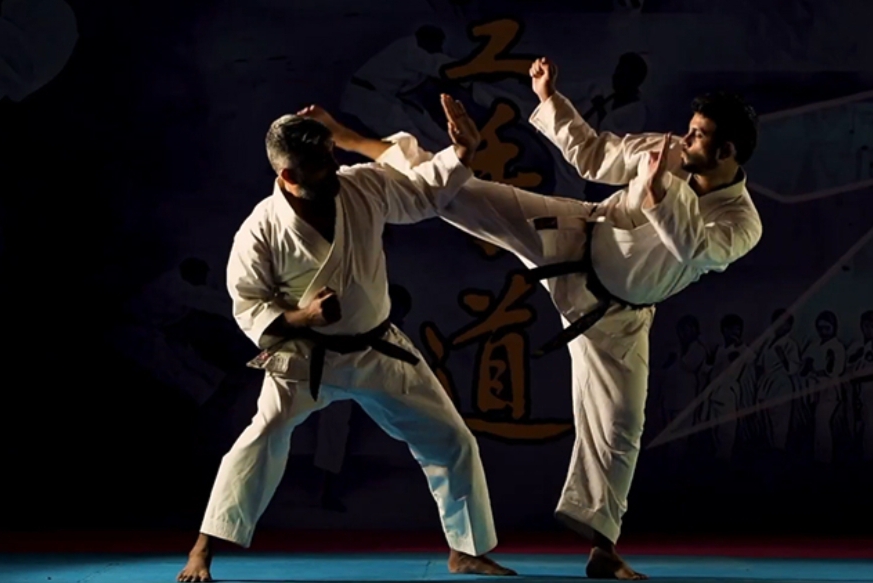
Karate was originated in the Ryukyu Kingdom under the Chinese and Japanese influence. This self defense form gained fame during WW II, when the Japanese military men stationed at sites used this martial art to defend themselves against enemies. This combat sport involves, kicks, elbow strikes, knee strikes, punches, vital point strikes, etc. The popularity gained by this form was so tremendous that the English men started naming any Martial Art technique as Karate. There are six belt colours which can be achieved by a student, starting from White and ending with Black.

JUJUTSU

Jujutsu is a Japanese origin martial art that can be learnt for close combat with minor or no weapons to attack or subdue people that are unarmed. It was primarily developed to distract or get rid of the attacker by trying to shake his balance through strangulation or locking of joints. In the earlier times, trained Samurai’s used to find it difficult to use long swords during wars or attacks. Hence, they used to make use of short daggers, small swords or would fight unarmed. There are eight belts in totality for adults trained in Brazilian Jujutsu.

KRAV MAGA

This martial art is practiced by the Israeli Defence Operations. It is a mixture of several other fighting forms such as boxing, karate, wrestling and judo. Training is rendered in such a form that, one might end up severely injuring or even killing the opponent. It avoids long close combat fights and rather focuses on quick and aggressive blows on weaker sections of the opponent’s body. Mental toughness, agility and development of muscle memory are a part of the training. Worldwide, there is a six belt system used in Krav Maga.

KALARIPAYATTU

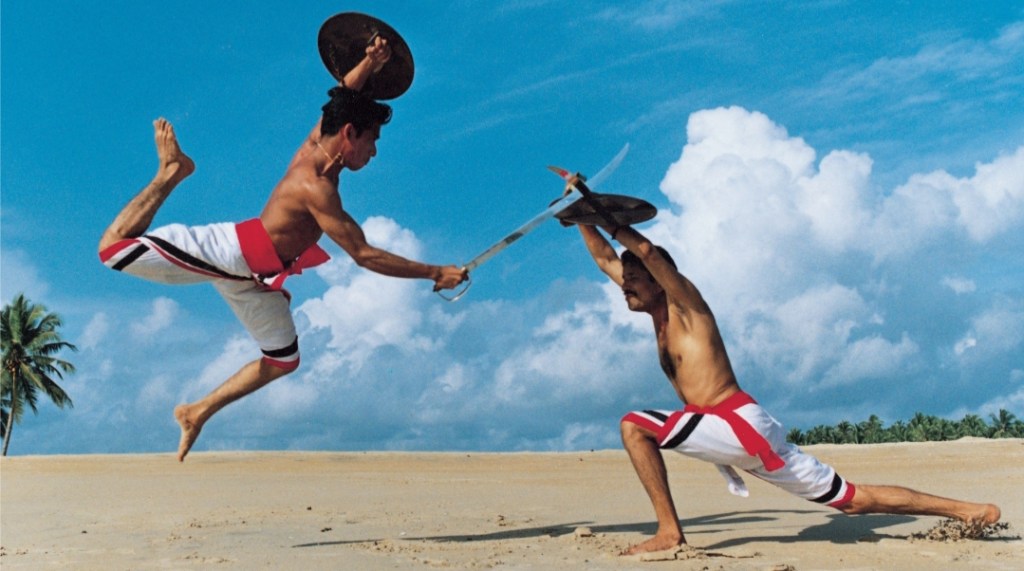
With a history of over 3000 years, this Indian self defence technique has two stages – Use of Weapons (taught first) and Barehanded Combat (taught later). It originated in Kerala, located in Southern tip of India. Training encompasses yogasanas, dance moves, kicks, strikes, ayurveda and healing techniques. Bodhi Dharma, a Buddhist monk who was trained in this self defense technique, travelled to China and spread this martial artform there, which evolved as Kung Fu. A greater focus is laid on mobility and flexibility. The Indian Kalaripayattu Federation is the body that governs this combat sport.

BENEFITS OF LEARNING SELF DEFENSE

  • Inculcates discipline within oneself. Attending coaching regularly and practicing to get better each day helps in maintaining self discipline.
  • It accelerates reflexes. The ones who are trained in self defense techniques respond to a situation in a different manner than normal people. Those who have learnt self defense tend to take decisions quicker and act faster than others.
  • It certainly helps boost confidence. In case if a person is caught up in a dangerous scenario, he/she will be self reliant enough to protect oneself. With all the upcoming news and stories, women in society have turned fearful of venturing out of their homes, during wee hours. Learning self defense will help to discard their fear by boosting self confidence.
  • Training in self defense techniques also helps to improve overall fitness. One can take it as a hobby or for recreational purpose. Since, it is a well defined form of exercise, it will help release endorphins in the body, leading to happiness. Along with agility, mobility, it will also help to eliminate extra calories from the body.

Self- Defense does not promote violence. It is only a method to protect oneself efficiently in case of an attack. With the rising concerns of abductions, murders and other heinous crimes, learning self defense has become the need of the hour. Hence, self defense can be explained as a justified defensive response to a threatening situation.