WHY BIODIVERSITY IS SO IMPORTANT??

 Biodiversity is soul for life!!💚


Biodiversity has become an important issue on the global arena. The importance of biodiversity is increasingly being recognised as of vital concern on the local, national and international levels. The challenge is how to find practical and workable ways to increase biological diversity. Obviously action needs to be taken on the governmental level. However there are also ways that individuals, and groups of individuals can begin to act on their own right and help create ecological change and increase biodiversity.

The issues and challenges around achieving biodiversity are many and therefore likely require many solutions in order to be find the most effective solution, or combination of solutions, for a given area.

One highly effective solution which has recently emerged is called a “Rewilding Stick”. Rewilding Stick is a highly-scalable method suitable for leveraging the planting efforts of either a single individual, or of a large group of individuals.


Jaipur: The Ancient 'Pink City' of Rajasthan

     OUR PINK CITY!!😍

Jaipur – land of the Rajputs, is an exuberance of colour, dance and traditional arts and crafts. Known, as the ‘Pink City’, Jaipur is home to a wonderful selection of ancient forts and palaces. One of India’s most well planned cities, Jaipur is built in 9 rectangular sectors symbolising 9 divisions of the universe, as per Indian cosmology!


 The first planned city of India, Jaipur has a rich history of a clan of rulers who lived in magnificent forts and palaces. But, that’s not only what the capital of Rajasthan is famous for. The entire city of Jaipur is painted in the colour pink and there’s a really interesting story behind this. Here’s all you need to know about the ‘Pink Paint Culture’ of one of the most hospitable cities on the planet.

The Hawa Mahal 

The reason behind the terracotta-pink colour of the city was the influence of a king named Sawai Ram Singh. In 1876, Queen Victoria’s son, Albert Edward, Prince of Wales (who later became King Edward VII, Emperor of India) visited India and, since pink was considered the colour of hospitality at the time, Maharaja Ram Singh had the whole city painted pink to welcome the royal guests. Lord Albert was said to have described Jaipur as the ‘pink city’, hence creating the name Jaipur is known by today.


Peer group and its influence


                                                                            (Photo: Titanium Success)

According to APA Dictionary of Psychology, a group of individuals who share one or more characteristics, such as age, social status, economic status etc. are peer groups. Peer Group is both social group and primary group. 

Functions of Peer group:

  • Provide support in shaping an individual’s self-esteem and self-valuation.
  •  Provide emotional security under unprecedented or threatening situations.
  • Provide the foundation for intimate relationships as they are essential non-family contexts for intimacy and affection.
  • Teach gender roles.
  •  Help in Identity formation.
     The peer group is an important socializing agent contributing beyond the influence of the family and school. Peers socialize each other through certain mechanisms. They are.

  •  Reinforcement – Giving Attention.
  •  Modeling-Imitation
  •  Punishment- Rejection, bullying etc.
  • Apprenticeship- Someone with more experience teach someone with less experience.

As your teen grows older, their peers will play a bigger role in their life. Their friends may influence everything from what they wear to how they talk.

  1. Positive influence: Positive peer influence is when someone’s peers influence them to do something positive or growth building. For example, peers who are committed to doing well in school or at sport can influence others to be more goal orientated. Similarly, peers who are kind, loyal or supportive influence others to be the same. They are subconsciously looking to their friends for information about how to act and interact with others. For the same reason, they also learn more quickly in the presence of their peers. For example, friends tell your teen to study harder so they can get better grades. They decide it’s cool to get good grades in a test. Several of your teen friends buy their own car. Your teen becomes motivated to save their money so they can buy their own car too.
  2. Negative influence: If your teen starts hanging around with the wrong crowd, like peers who skip school, do drugs, and break the law, they’re likely to influence your teen behavior in an unhealthy way. Most negative peer pressure involves more serious problems, like pressuring a teen to smoke cigarettes or experiment with drugs. For example, your teen skips school because it’s senior skip day and they don’t want to get made fun for showing up. Your teen purchases e-cigarettes online because their friends tell them they can get away with it.
Peer Group Stages

ž PEER GROUP BY AGE (2 TO 6) –The first bond Or attachment that a child shares with is his Or her family. They feel secure and warmth around the family. They tend to be less aggressive and more actively involved in activities.

ž MIDDLE CHILDHOOD PEER GROUP ( 6 TO 13) –Children no longer need adults or their family to structure them socially. They start looking for children of their own age group. They try to socialize with children of their own age by doing friendship with them and spending time with each other.

ž ADOLESCENT –During adolescence, peer groups tend to face dramatic changes. Adolescents tend to spend more time with their peers and have less adult supervision. Adolescents’ communication shifts during this time as well. They prefer to talk about school and their careers with their parents, and they enjoy talking about sex and other interpersonal relationships with their peers. Children look to join peer groups who accept them, even if the group is involved in negative activities. Children are less likely to accept those who are different from them.

     How to tackle it ?

     1. Developing good self-esteem and taking charge of yourself.  

     2. Satisfaction and taking charge of our aspirations. 

     3. Choosing our friends wisely.

     4. Identify our core values.

     5. Taking the help of our parents/elders/teachers.

     CONCLUSION

     “Without friends no one chooses to live, though he has all other goods.” – Aristotle

     It is not possible to live our lives without being influenced by anyone. So the best thing that we can do is guard ourselves and to choose our influence.


Morality in Rule of Law

                                                            (Photo: Thought and action)

Rule of Law is the fundamental principle which ensures good governance as well as individual rights and liberties. It says no one is above the law and every person living in a particular society is subject to the law of that society. All other notions associated with the rule of law must also be considered alongside it. It is a mechanism that encourage the equality of all citizens before the law. It also secures a non-arbitrary form of government, and specifically prevents the arbitrary use of power. In general, the rule of law implies that the creation of laws, their enforcement, and the relationships among legal rules are themselves legally regulated, so that no one including the most highly placed official is above the law.

Moralityis a concept that distinguishes right from wrong. It also talks about conduct that is considered acceptable or unacceptable in a particular society. The source of morality is usually considered to be natural law and God’s instructions through sacred documents.

Morals provide a basis for the development of law by virtue of justice, equity, good faith, and conscience. Morality plays an important role in making of law and its interpretation. Morals are an intrinsic part of the laws. In the ancient time morals and laws were considered as one and the same. In the current period though law and morality have several distinctions yet the same are not completely different or distinct. A relationship can be established between morality and law on three grounds: –

1)     morals as the basis of law

2)      morals as test of positive law

3)      morals as the end of law.

According to Stammer “jurisprudence depends much upon moral ideas as just law has a need of ethical doctrine for its complete realization. Positive law and just law correspond to positive morality and rationally grounded ethics. There’s no difference and if any, it is only the difference of manner in which the desire for justice present itself”.

H.L.A Hart believes that there are several relations between law and morals. He was of the view that a legal system must exhibit some specific conformity with morality or justice or must rest on a widely diffused conviction that there is a moral obligation to obey it.

Ronald Dworkin has argued that both laws and constitutions are unavoidably rooted in political and moral principles. The law is not derived logically from accepted true moral principles. Rather, it is established by legislatures that come to agreement on public rules that are shaped by a political consensus about right and wrong.

Rule of law prioritizes the supremacy of law whereas morality prioritizes the moral values and consciences of the subjects of the state. For instance, a man is under no duty to help a beggar or the distressed and can neglect his sick and old parents without the fear of any legal or penal consequences, but morality does not allow a person to do so as it amounted to undesirable conduct condemned by morals and ethics. There is a close relation between the rule of law and morality.  Morality complements the rule of law. But it is a casual relationship, as laws are not made out of moral principles, rather, they are established and shaped by a “legal consensus of right and wrong”. Even though morality is ultimately involved in making and modifying the law, it is never legally binding and does not have constitutional value.  Laws have a marginal origin from the morals and ethics derived in the society which initially monitored the conduct of people, but morality solely cannot be the basis on which law has been derived. An acceptable statement is that both morality as well as rule of law have adapted to the development of society. Sometimes what seems right from the morality point of view may be contrary when viewed from the point of rule of law.  For instance, when a person tries to feed a needy person, by means of theft solely for the purpose of feeding that needy person, morally the act may be justified yet the same may not be the case under rule of law. Because under the concept of rule of law, a person has committed. Therefore, morality has a marginal presence in rule of law whereas it is highly contradictory of the same.

Morality in Rule of Law with reference to H.L.A. Hart theory

Professor Herbert Lionel Adolphus Hart (H.L.A. Hart) is an influential legal professor. Hart revolutionized the methods of jurisprudence and the philosophy of law. He authored ‘The Concept of Law’ and made major contributions to political philosophy. Law can be analyzed in terms of rules which is largely based on Hart’s theory of law. According to him, rules are concerned not with what happens but with what is to be done. Rules are imperative or prescriptive rather than indicative or descriptive. Rules have a certain independence or self-legitimating character. Rules are different from commands. Commands normally call for one unique performance whereas rules have a general application and demands repeated activity. According to Hart, ‘Law consists of rules which are of broad application and non-optional character, but which are at the same time amenable to formalization, legislation and adjudication. According to Hart the law consists of primary and secondary rules. Primary rules are duty imposing rules on the citizens and have a legal sanction. Secondary rules are power conferring laws that describe how laws should be recognized, adjudicated or changed. Hart says these rules form the heart of the legal system.

Hart’s version of natural law is empirical. His position is based on a theory of human nature which believes in certain truisms. For example, Hart believes that one truism of human nature is that the overwhelming majority of human beings wish to survive. It means they would rather live than die. If one wish to survive, it is imperative that a society be developed which will help ensure survival. Hart believes there are five features of the human condition which sometimes work against survival, and the legal system must take these into account.  Hart believes that: –

  •      there is the feature of human vulnerability.
  • .     there is the Hobbesian notion of approximate equality.
  • .      human beings possess at best a limited altruism.
  • .      the concept of limited resources governs our actions.
  • .     the idea of limited understanding and strength of will is important to any society.
     Conclusion
    The fundamental principle which ensures good governance as well as individual rights and liberties is the rule of law under which no one is above the law and every person living in a particular society is subject to the law of that society.  Morality, on the other hand, is concept that distinguishes right from wrong and may refer to conduct that is considered acceptable or unacceptable in a particular society.  Coercion and sanction may be important considerations but not the basic elements to make law work. The law is meant to facilitate. It is mechanism that resolves conflicts of interest among individuals. This idea of law brings us to the concept of rule of law which aims to treat every individual equally, irrespective of social status. Under the rule of law, individuals are protected from the element of coercion. Another element of the rule of law is equality, which is often confused with generality. Laws are based on generality and bind everyone, not any singular group. But equality here means that every individual is subject to the same law and procedures and has the same rights. A close relation exists between the rule of law and morality, since morality complements the rule of law. But it should still be considered a casual relationship, as laws are not made out of moral principles, rather, they are established and shaped by a “legal consensus of right and wrong”

THE INFLUENCE OF GENDER ROLES ON HEALTH SECTOR INCLUDING REPRODUCTIVE RIGHTS

                                                                          (Photo: Singularity Hub)

  Men form one-third of a typical medical school’s population; Rest of the seats are all occupied by women. The pay gap in the healthcare sector is 25% higher than any other sector. Most women agree to work at low wages because of the financial crises they face. Gender inequality is leading to a shortage of healthcare workers in the sector. Women in India face “extensive gender discrimination” in access to healthcare. Gender inequality is leading to a shortage of healthcare workers in the sector because obviously only one-third of the seats were taken by men. 

Under the National Health Mission, the government has launched several schemes. The most important program launched by the government is Rashtriya Arogya Nidhi which provides financial assistance to the patients that are below poverty line and are suffering from life-threatening diseases.  Rashtriya Swasthya Bima Yojana is a government-run health insurance program for the Indian poor. It aims to provide health insurance coverage to the unrecognized sector workers belonging to the below poverty line.  National AIDS Control Organization was set up so that every person living with HIV has access to quality care and is treated with dignity.  Anganwadi Workers and the ASHA workers are the grassroots level functionaries under the umbrella ICDS Scheme and the National Health Mission respectively.  Both these functionaries being closely connected with the rural and urban poor families, play a pivotal role in addressing their nutrition and health related problems/issues.

How the Government has failed them ?

·        Do not have regular salaries, partly because their work is supposed to be voluntary and part-time.

·        Even though the Code on Social Security, 2020 aims to include formal and informal sectors under a social safety net, it excludes several categories of workers, including ASHA and Anganwadi workers. The Code on Wages, too, has left this constituency out of its coverage, depriving employees of a fixed minimum wage.

·        As per Modi government’s definition, Anganwadi and ASHA workers are not ‘workers’ but only ‘volunteers’, who do not receive any ‘wage’ but only an ‘honorarium’! So the principle of minimum wage would not apply to these scheme workers.”

Also a gender issue

·  Limited space for career progression is linked to low institutional recognition, demotivation, and curtailed opportunities for growth. ASHAs face sexual harassment by other health workers and community members, linked to their mobility and public profile. ASHAs have worked to further women’s interests, particularly in Chhattisgarh state where Mitanins(the name for ASHAs there) have mobilized protests against alcoholism, supported women’s collectives and taken action against gender based violence. ASHAs have begun taking action to mobilize their peers to reduce gender based violence. ASHAs have reported an increased sense of empowerment and personal growth, in part through their belief in the social value of their work.

     Gender as a social determinant of health

  •     The social determinants of health (SDH) are the non-medical factors that influence health outcomes. They are the conditions in which people are born, grow, work, live, and age, and the wider set of forces and systems shaping the conditions of daily life. These forces and systems include economic policies and systems, development agendas, social norms, social policies and political systems.
  •          The SDH have an important influence on health inequities – the unfair and avoidable differences in health status seen within and between countries. In countries at all levels of income, health and illness follow a social gradient: the lower the socioeconomic position, the worse the health.
  •        The following list provides examples of the social determinants of health, which can influence health equity in positive and negative ways:

              1.Income and social protection

              2. Education

              3.Unemployment and Job security

  •      Research shows that the social determinants can be more important than health care or lifestyle choices in influencing health. For example, numerous studies suggest that SDH account for between 30-55% of health outcomes. In addition, estimates show that the contribution of sectors outside health to population health outcomes exceeds the contribution from the health sector.
  •     Addressing SDH appropriately is fundamental for improving health and reducing longstanding inequities in health, which requires action by all sectors and civil .
  •      Social determinants of health are conditions in the environments in which people are born, live, learn, work, play, worship, and age that affect a wide range of health, functioning, and quality-of-life outcomes and risks. Conditions (e.g., social, economic, and physical) in these various environments and settings (e.g., school, church, workplace, and neighborhood) have been referred to as “place.”
  •      In addition to the more material attributes of “place, ” the patterns of social engagement and sense of security and well-being are also affected by where people live. Resources that enhance quality of life can have a significant influence on population health outcomes. Examples of these resources include safe and affordable housing, access to education, public safety, availability of healthy foods, local emergency/health services and, environments free of life-threatening toxins.
     Reproductive rights in India
     Reproductive Rights are rights of individual to decide freely and responsibly the number, spacing and timing of children. It is individual’s right to decide whether to reproduce and have reproductive health. The Supreme Court of India and several state high courts have recognized the importance of reproductive rights and have observed that the denial of reproductive rights is violation of women’s fundamental and human rights.
     Courts have been at the forefront of expanding, protecting, and promoting reproductive rights. court through its various judgements from time to time has promoted and protected the reproductive rights of women. for instance, Puttaswamy judgment, Suchita Srivastava V. Chandigarh Administration, Navtej Singh Johar V. UOI. 
     
     Role of socio-physical environment in health care
     Social determinants of health are the conditions in the environment where people sustain, i.e. they born, live, learn etc., which affects the health, functioning and quality of life outcomes and risks. Health starts from our localities, our homes, schools, communities where it is also examined by our access to social and economic opportunities. So, social determinants of health are designed to identity ways to create social and physical environment that promote good health.


Role of IBC in the credit sector


                                                                (Photo: SignalX)
As per the Reserve Bank of India (RBI), India’s banking sector is sufficiently capitalized and well – regulated. Credit, market and liquidity risk studies suggest that Indian banks are generally resilient and have withstood the global downturn well. The Indian economy is a mixed economy. It is known to be the world’s sixth largest in terms of nominal GDP. The legal environment plays a vital role in the economic development of a country.

After GST, IBC is the second most crucial reform in the legal setting of India. It was implemented through an act of Parliament. The law was necessitated due to huge pile up of non-performing loans of banks and delay in debt resolution. Insolvency resolution in India took 4.3 years on an average against other countries such as U.K (1 year) and U.S.A (1.5 years), which is sought to be reduced besides facilitating the resolution of big-ticket loan accounts. Two years on the IBC has succeeded in a large measure in preventing corporates from defaulting on their loans. The IBC process has changed the debtor-creditor relationship. A number of major cases have been resolved in two years, while some others are in advanced stages of resolution. 

With a strict 180+90 days ‘resolve-or-liquidate’ diktat, the Code has received commendation, not only from the Indian Industry, but from the global fraternity, including The World Bank and IMF, and has materially contributed to India’s 30 place jump in 2018’s Ease of Doing Business ranking. IBC truly enforces the concept of ‘creditor in control’ instead of ‘debtor in possession’, and maximize value recovery potential corporate debtors.  “Capitalism without Bankruptcy is like Catholicism without Hell,” said Frank Borman, renowned astronaut and erstwhile chairman of a failed US airline. As such, the institutions established by the state should promote freedom to start a business (entry), to run the business (level playing field) and to exit/discontinue the business. The reforms of the 1990s focused on freedom of entry (dismantling the license-quota raj) and then, from the beginning of this century, the focus shifted to freedom of continuing business. The third leg, which is freedom to exit, has now been provided in the shape of the IBC, to provide a mechanism to stressed businesses to resolve insolvency in an orderly manner.

The IBC seeks to consolidate scattered and unstructured jurisprudence on insolvency prevalent in various Acts, like the Presidency Towns Insolvency Act, 1909, Sick Industrial Companies Act, 1985, Limited Liability Partnership Act, 2008, Companies Act, 2013, etc. On the positive side, we have witnessed that debtors were reconciling with the ‘creditor in control’ scenario, with the committee of creditors (CoC) becoming all- powerful in the resolution process.

It was the first time that the government and Reserve Bank of India were on the same page for effective resolution of the problem of bad debt and improving overall financial discipline in the way business is conducted in India. As Nelson Mandela said, “I never lose; I either win or I learn.” The jury is still out on the IBC even though the World Bank has acknowledged the efforts.

WHAT IS INSOLVENCY AND BANKRUPTCY CODE, 2016?

“In One line we can say that in case of a default by the equity owners to meet their debt obligations, control is transferred to the creditors and equity owners take a back seat.”

The insolvency and Bankruptcy code, 2016 (IBC) is the bankruptcy law in India and whose aim is to consolidate the existing framework by creating a single law for insolvency and bankruptcy and amend the laws relating to the entities in India with the time being enforce. The consolidation of laws in India is not a new concept like GST was framed by consolidating 17 laws into one. This code was introduced in Lok Sabha in December 2015. It was passes by Lok Sabha on 5 May 2016. 

The purpose of this act can be divided into the following two goals:

 1. Making sure that the insolvency proceedings can be completed within a minimum amount of time.

 2. Making sure that the financial risks to the foreign investors is decreased.
Its primary goal was to consolidate insolvency resolution process for LLPs. Companies, individuals and partnerships.
 That being said, the purposes of these codes, being a part of The Companies (Amendment) Act 2017, are the following:

 1.  Establishing and amending the laws associated with reorganizing and resolving the insolvency of entities like partnership firms, individuals and corporate persons.

 2.  Providing resolution in a time bound manner.

3.  Promoting entrepreneurship in India.

4.  Maximizing the availability of credit in the Indian market.

5.  Establishing Insolvency and Bankruptcy Board in India.

The four pillars of supporting institutional infrastructure, to make the Insolvency and Bankruptcy Process work efficiently are:

  1. The regulator – The Insolvency and Bankruptcy Board of India (IBBI)
  2. Adjudicating Authority (AA):
    1. National Company Law Tribunal (NCLT) – For Corporate, i.e., Companies and Limited Liability Partnerships
    2. National Company Law Appellate Tribunal (NCLAT) will act as Appellate Authority.
    3. Debt Recovery Tribunal (DRT) – For Individuals and Unlimited Partnership Firms
  3. A private industry of Insolvency Professionals (IPs) with oversight by private Insolvency Professional Agencies (IPAs)
  4. A private industry of Information Utilities (Ius)

THE ROUTE TO THE IBC

The main objective of the act is to consolidate and amend the laws relating to reorganization and insolvency resolution of corporate persons, partnership firms and individuals in a time bound manner for maximization of value of assets of such persons, to promote entrepreneurship, availability of credit and balance the interests of all the stakeholders including alteration in the order of priority of payment of Government dues and to establish an Insolvency and Bankruptcy Board of India, and for matters connected therewith or incidental thereto.

IBC provides for a time-bound process to resolve insolvency. When a default in repayment occurs, creditors gain control over debtor’s assets and must make decisions to resolve insolvency. When a default in repayment occurs, creditors gain control over debtor’s assets and must make decisions to resolve insolvency. Under IBC, debtor and creditor both can start ‘recovery’proceedings against each other.


It is a comprehensive Code enacted as the Preamble states, to

“consolidate and amend the laws relating to reorganization and insolvency resolution of corporate persons, partnership firms and individuals in a time bound manner for maximization of value of assets of such persons, to promote entrepreneurship, availability of credit and balance the interests of all the stakeholders including alteration in the order of priority of payment of Government dues and to establish an Insolvency and Bankruptcy Board of India, and for matters connected therewith or incidental thereto”.

The Preamble clearly states that the legislative intent to incorporate this code is

Firstly, to remove the ambiguity that had been prevailing in the previous legislations;

Secondly, to prevent unnecessary delays and to ensure fast dismissal of matters, i.e., within 180 days;

Thirdly, to prevent loss to corporate creditors due to depreciation of assets of the insolvent company;

Fourthly, to establish a balance among the interests of the various stakeholders, and

Lastly, to create a common forum to deal with such matters.

IMPACT OF IBC

The Covid-19 pandemic has been driving corporate failures around the world, including in India. The global financial news reveals an increase in bankruptcies due to the Covid-19 induced global lockdowns. While the bankruptcies are unfortunate, a recognition of the bankruptcies facing companies in the face of the collapse and an efficient resolution of such bankruptcies (which will allow both the companies and creditors involved to move along) is vital to rejuvenating the economy.

 In the light of the Covid-19 pandemic and business failures globally, it is important that financially distressed companies can still access the credit market thanks to a strong bankruptcy system and survive under stressed scenarios. Using a panel of 33,845 non-financial firms for the period of 2008-19 and by exploiting a difference-in-differences analysis, a study has been undertaken revealing the impact of the IBC policy on the availability of long- and short-term financing for, and the cost of, credit of distressed firms as compared to their non-distressed counterparts. As in most emerging markets, India’s debt market is dominated by state-owned banks and the domestic credit to private sector by banks (percentage of GDP) is 50 per cent in 2019 compared to a world average of 90.5 per cent (Source: World Development Indicators). Recent statistics from World Bank’s Doing Business Data show the creditor rights index in India improving from 6 in 2014 to 9 in 2019 compared to the world average of 5.67 in 2019.

Bose et al. (2021) study shows that after the introduction of the IBC reform, the access to long-term debt increased by 6.3 per cent, short-term debt increased by 1.4 per cent, while the cost of borrowing declined for distressed firms. This is the first study that provides evidence on the impact of the IBC policy on the “credit channels” of distressed firms. The enactment of the code has helped to enforce discipline in the country’s credit culture. IBC has created a credit culture that discourages defaults. There has been a change in the business culture as well: there is now an understanding that when things go wrong, companies will not get an automatic rescue package from the taxpayer funds. The objective of IBC was to create conditions so that credit could be generated from the domestic market and investments drawn from the international market. In order to achieve those objectives, it was necessary to create a culture of deterrence against default. The practice of dragging lenders to court to delay the repayments of outstanding loans is slowly coming to an end. India’s Insolvency and Bankruptcy Code is ensuring that lenders get repaid on time and this is making India a more attractive investment destination.

IBC has played a great role in macroeconomic objectives providing India a strong stand in the global platform. After the enactment of the code, the FDI has substantially increased. In 2012-13, the FDI of India was 34298 US$ Million and just after enactment of the code it rose to 61463 US$ Million in 2017-18 which is growing by approximately 80%. There has been an increase in Mergers and Acquisitions activity in the country. It also led to the establishment of Information Utilities (IUs) which further accelerated the development of the credit market of India.

In previous, no law prevented the operational creditors but under the code, there is a provision that the operational creditors (domestic as well as international) have right to file suit against the default. Thus, the code provides right to the foreign creditors which will enhance the economic transactions of India and others.

 MEASURES TAKEN DUE TO COVID

The global COVID-19 pandemic and its consequential lockdown are having an economic ripple effect on the business of Indian citizens. To mitigate its impact, in the last tranche of economic reforms, the Central Government made numerous changes upon the Insolvency and Bankruptcy Code, 2016 (“IBC”), and its adjudicatory processes, which will have wide-ranging ramifications. In exercise of its powers under Section 4 of the IBC, the Central Government has raised the threshold for invoking insolvency to Rs 1 crore from the existing Rs 1 lakh. This provision will relegate MSMEs to civil remedies for debt recovery and may have an effect of excluding it under the IBC. At this cost, the amendment may have successfully addressed the issue of frivolous recovery claims initiated under the grab of insolvency processes due to the seemingly low original threshold of rupees one lakh.

The government has come up with IBC 2020 to streamline the CIRP, protect last-mile funding, and boost investment in financially distressed sectors. The changes put a threshold condition for initiating CIRP by the financial creditors, who are allottees under a real estate project. It also imports safeguards for successful bidders, the corporate debtors, and its assets from the offenses of the former promoters or management.

India took decades to implement such an effective insolvency regime and improve its global ranking of doing business. It promotes entrepreneurship and tries to balance the interest of the various stakeholders.

CONCLUSION

Resolving insolvency in a strict time bound manner is an important challenge for any country to maintain a healthy and robust economic system. This study has made an attempt to understand and analyze the impact of the IBC on the credit sector of the economy. The study emphasizes the fact that IBC is a big step in the direction of resolving the issues of Non-Performing Assets and hence will act to the rescue of banks which have been facing a lot of difficulties due to corporate defaults. The number of companies that have benefitted from this law is large, there has been improvement in the speed as well as the success rate of the resolution process.

There is still a long way to go ahead and as the saying goes,

“We have to acknowledge the progress we made, but understand that we still have a long way to go. That things are better, but still not good enough.”

Legal and policy challenges in space technology


                                                           (Photo: Outlook India)

History is agreed upon as an uninterrupted process in time and space.”

India before independence was very different from the India that we see today. Of course, it is common knowledge that pre 1947 India consisted of modern day, Pakistan and Bangladesh. The after-independence chase of India faced major developments and changes that we can see today. India has an impressive array of achievements in the development of space transport as well as aviation industry for various applications. From a humble beginning with a small RH 75 rocket in the sixties to the successful launch of PSLV-D2 with 804 kg IRS-P2 in October, 1994, the Indian space programme has made remarkable progress through a well-integrated, self-reliant programme. On the other hand, the civil aviation industry of India has emerged as one of the fastest growing industries in the country during the last three years. India has become the third largest domestic aviation market in the world and is expected to overtake UK to become the third largest air passenger market by 2024.

Every country’s success depends upon its government. The way it handles the whole economy largely affect its economic environment. In such a globalized environment, the governmental policies act as the key factor in determining its real success, be it in field of aviation, space technology or any other. The government however has reviewed its aviation policies from time to time and tried to make it friendlier however it lagged in certain jurisprudence. In the recent past, the outlook of the government of India has undergone substantial change. It has tried to adopt emerging trends and include different terminologies, ownership of private companies, more new projects, financing, hassle free management and its operations. The government has increased its investment in this sector. Moreover, it has tried to devise the privatization method to solve many problems attached to this sector. Privatization is needed for solving the problem of “distressed state syndrome”. The complete or partial privatization will give positive impact on efficiency, productivity and profitability. Trends of privatization is rising all around the world and it is important to analyze all consequences and specific results, which will be helpful to understand better difficulties and structural changes.

During the COVID time, there was a dramatic drop in demand for passenger air transport. This threatened the viability of many firms, putting many jobs at stake. While the aviation industry has often been a target of government policies, the COVID-19 crisis has precipitated a new suite of loans, loan guarantees, wage subsidies and equity injections, raising concerns about efficient use of public resources. The COVID-19 crisis has hit hard to the economy.

Although the aviation and space sector contribute a lot to the economy, however every coin has two sides. The other side of the story is that we have grown, but grown at the cost of our mother nature. The question that we need to dwell into is: “Do we belong to this earth or does this earth belong to us”. Commercial aviation is experiencing dramatic growth in various regions throughout the world but at the cost of what. It is leading to the pollution of the environment. Over the past 50 years global demand for air travel has risen by 9 per cent per annum. The environmental impact it has caused is very degrading. This has become a cause of concern.

INVESTMENT

According to the data released by Department for Promotion of Industry and Internal Trade (DPIIT), FDI inflow in India’s air transport sector (including air freight) reached US$ 2.79 billion between April 2000 and June 2020. The government has allowed 100% FDI under the automatic route in scheduled air transport service, regional air transport service and domestic scheduled passenger airline. However, FDI over 49% would require government approval.

India’s aviation industry is expected to witness Rs. 35,000 crore (US$ 4.99 billion) investment in the next four years. The Indian Government is planning to invest US$ 1.83 billion for development of airport infrastructure along with aviation navigation services by 2026.

Key investments and developments in India’s aviation industry includes:

  • In October 2020, Zurich Airport International signed the concession agreement for the development of Jewar Airport on the outskirts of Delhi. The agreement has granted Zurich Airport International the license to design, build and operate Noida International Airport (NIAL) for the next 40 years.
  • In October 2020, the Airports Authority of India (AAI) announced plan to upgrade runways at seven airports across the country by March 2022.
  • In January 2020, IndiGo became first Indian carrier to have an aircraft fleet size of 250 planes and became the first airline to operate 1,500 flights per day.
  • In December 2019, AAI announced its plans to set up India’s first three water aerodromes in Andaman & Nicobar.
  • As of December 2019, France-based Safran Group planned an investment of US$ 150 million in a new aircraft engine maintenance, repair and overhaul (MRO) unit in India to cater to its airline customers.
  • AAI plans to invest Rs. 25,000crore (US$ 3.58 billion) in next the five years to augment facilities and infrastructure at air transport.

THE NEED FOR SPACE LEGISLATION

What we can sketch out is that there’s a greater need for space legislation. With no legal obligation, the dream of ‘DIGITAL INDIA’ can’t be achieved. A robust legal regime would instill investor confidence, attract FDI and new technologies, reduce administrative and regulatory uncertainties, provide clarity on stamp duty, registration requirements, insurance, transfer of property, contractual obligation, space debris liability and intellectual property rights concerning space-related issues, and flourish space entrepreneurship by providing a level playing field to the private entities. 

The policymakers need to resolve the following issues in virtue of requisite space legislation:

·       Single Independent Regulator – In contradiction to the present multiple ministries, agencies and departments, namely, the Ministry of Home Affairs, the Department of Space, the satellite divisions of Department of Telecom, the Department of Telecommunications, the Telecom Engineering Centre, the Network Operation and Control Centre, the Ministry of Defense, and the Ministry of Defense, a single independent regulator is required to perform regulatory processes including the issuance of a place in orbit to launch a satellite and/or rocket, mandatory licenses to launch it, spectrum to communicate with it, and clearance for the technology and/or space equipment to be used. 

·       Space debris – Space debris or space junk encompasses both man-made and natural (meteoroid) particles that enhance the probability of disastrous collision that may cause damage to space vehicles. Although there is no specific international treaty or convention dealing with the imposition of liability, some long-standing guidelines were issued by NASA, on ‘how to deal with space debris’ which were later adopted by the UN General Assembly and COPUOS. However, well-defined provisions on liability of the launching state need to be formulated to reduce the persisting or potential conflicts among countries.

·       Security measures – With the rising threats to national peace and security by potential space and cyber warfare possibilities, countries need to invest adequately in adopting cyber and military security measures. Rules and regulations on lines with the Data protection laws need to be formulated to ensure that adequate cyber security measures are in place.

·       Granting of license – The process for granting a license is yet to be developed, but section 5 of the Bill envisages that there will be eligibility criteria, and a fee to pay, without giving any detail or indication as to what those criteria or fees might be. In particular, it sets out the obligation to provide a financial guarantee or insurance, which essentially addresses the broader liability question and the principles of liability that flow under the international space regime.

·        Intellectual property rights- Section 25 of the Bill states, Any invention, or other form of intellectual property rights, developed, generated or created during the course of any space activity shall be protected by any law for the time being in force, with the primary objective of safe guarding national security. such a provision might deter the potential participation of the private sector in the Indian space industry and thus needs to be looked into by the policymakers to enable innovation in the space industry.    

CONCLUSION

“Without your involvement you can’t succeed. With your involvement you can’t fail.”

Well said by APJ Abdul Kalam.India’s aviation and space transport are largely untapped with huge growth opportunities. It’s the need of the hour to grab these opportunities and the government should deeply involve in this process by making key changes in its policy and legal framework. A single policy should be adopted. In aviation industry, a lot of digital transformation is required. A big vision and strategy are needed to get through stormy waters. Cost pressure should be taken into account. New technology should be adopted. With the increase in competition and entry of private players, only the companies who do best will be able to survive. On the other hand, in space industry, policy changes are needed to make the space sector more accessible to private players. There’s a need of single space legislation. Changes are needed in New Space India Limited (NSIL). Last year, the finance minister announced the opening up of the ISRO’s facilities to the country’s private sector as part of its COVID-19 special economic stimulus. This was an early but a commendable step. Many a thing have changed since COVID.

As it is said, “Every cloud has a silver lining.” We should also hope for the best. It is at these times when the government was able to realize its incapability and failure and hopefully it has started considering legal and policy aspect that needs deeper consideration


How does blogging gain you money?

Is it not interesting when you get income by pursuing your passion? Bloggers are people who write blogs and put forth their opinions or pen their thoughts which are incorporated into websites. While blogging was initially an opportunity to outbring an individuals writing skills like a diary or journal, it has grown more over the years from which you can even acquire income. These days blogging has taken in its form in a video material called video blog or video log condensed to vlog. Blogging has grown by 12% since 2015 and presently there are roughly over 1.9 billion web pages. Bloggers come up with a wide range of contents like food blogging, travel blogs, fashion blogs, fitness blogs, DIY blogs, finance blogs, business blogs, parenting, news blogs, gaming, and many such things that fascinates our interest. People visit such blogging pages when they are looking out for ideas and information about a particular area of field where there is a lack of grip and that’s where the blogging becomes a popular tool, bloggers bring the outside world more closer to us, of things which we may not be aware of and want to acquire knowledge about. This is how the bloggers bring traffic to their page and gain profit.

A blogger can earn anything between $100 and $10000 per month. On an average a typical blogger earns around $300-$400 per month. If the blogger is more experienced they can earn up to $30000 + also. There are various income streams and lets have a look at some of them.

  • One of the most common ways to make money is affiliate marketing. It is just promoting other’s products on your blog and when someone makes a purchase of that product, you get paid for it, like a paid promotion not necessary that bloggers have to come up with their products/services.
  • When you a have a large amount of followers on your page people offer advertisements and pay the website owners based on how many people have seen their ads. Cost per click ads are usually banners that bloggers place in their content/sidebar. Each time a reader clicks on the ad, they are paid for that click. Click per impression are ads that pay the bloggers a fixed amount of money based on the views.
  • Bloggers also make ventures by introducing their own products through the websites and gain money by selling them online.
  • Paid reviews are also one of the common modes of gaining income. This is making a review about the product that the bloggers use and get paid for making such reviews in their videos, the bloggers need to be mindful about the products reviewing on the blog.
  • Launching online courses is a very consistent way to make income. It is a form of selling what you know which just needs an investment in time and work. The topics that can be covered in the online courses is very vast including language, educational courses, parenting, make up artistry, technology, marketing, finance etc.
  • There are also social media applications which can provide you income just on the views you bring to your blogs or vlogs.

So there are numerous streams to make money through blogging. The most prominent factor to dwell as a successful blogger is the consistent work and the quality of content. You should have a well built connection and never be reluctant or cease building great connections, acquire adequate knowledge about the websites and the topic. It may take time to become successful in the field, all you need is endurance, real focus, SEO knowledge, flexibility, strong work ethics and be passionate and the victory is never afar.

Domestic violence


                                                        (Photo: Bar and Bench)

Domestic violence (also named domestic abuse or family violence) is violence or other abuse in a domestic setting, such as in marriage or cohabitation.  Domestic violence may be used as a synonym for intimate partner violence, which is committed by a spouse or partner in an intimate relationship against the other spouse or partner, and can take place in heterosexual or same sex relationships, or between former spouses or partners. In the broadest sense, domestic violence can also involve violence against children, parents, or the elderly. It takes a number of forms, including physical, verbal, emotional, economic, religious, reproductive and sexual abuse, which can range from subtle, coercive forms to marital rape and to violent physical abuse such as choking, beating, female genital mutilation, and acid throwing that results in disfigurement or death. Domestic murders include stoning, bride burning, honor killing and dowry death(which sometimes involve non-cohabitating family members). 

FORMS OF DOMESTIC VIOLENCE

Physical abuse is that involving contact intended to cause fear, pain, injury, other physical suffering or bodily harm. In the context of coercive control, physical abuse is to control the victim. Physical violence can be the culmination of other abusive behavior, such as threats, intimidation, and restriction of victim self-determination through isolation, manipulation and other limitations of personal freedom. Denying medical care, sleep deprivation, and forced drug or alcohol use, are also forms of physical abuse.

Sexual abuse, is defined by World Health Organization as any sexual act, attempt to obtain a sexual act, unwanted sexual comments or advances, or acts to traffic, or otherwise directed, against a person’s sexuality using coercion. Aside from initiation of the sexual act through physical force, sexual abuse occurs if a person is verbally pressured into consenting, unable to understand the nature or condition of the act, unable to decline participation, or unable to communicate unwillingness to engage in the sexual act. This could be because of underage immaturity, illness, disability, or the influence of alcohol or other drugs, or due to intimidation or pressure.

Emotional abuse includes minimizing threats, isolation,  public humiliation, unrelenting criticism. Stalking is a common form of psychological intimidation. Victims tend to feel their partner has nearly total control over them, greatly affecting the power dynamic in a relationship, empowering the perpetrator, and disempowering the victim. Victims often suffer from depression, putting them at increased risk of eating disorders, suicide, and drug and alcohol abuse.

Economic abuse (or financial abuse) is a form of abuse when one intimate partner has control over the other partner’s access to economic resources. Marital assets are used as a means of control. Economic abuse diminishes the victim’s capacity to support themselves, increasing dependence on the perpetrator, including reduced access to education, employment, career advancement, and assets acquirement. Forcing or pressuring a family member to sign documents, to sell things, or to change a will are forms of economic abuse.

 CAUSES

A partner’s domination may take the form of emotional, physical or sexual abuse. Studies suggest that violent behavior often is caused by an interaction of situational and individual factors. That means that abusers learn violent behavior from their family, people in their community and other cultural influences as they grow up. They may have seen violence often or they may have been victims themselves. Some abusers acknowledge growing up having been abused as a child.

Children who witness or are the victims of violence may learn to believe that violence is a reasonable way to resolve conflict between people. Boys who learn that women are not to be valued or respected and who see violence directed against women are more likely to abuse women when they grow up. Girls who witness domestic violence in their families of origin are more likely to be victimized by their own husbands. Although women are most often the victim of domestic violence, the gender roles can and are reversed sometimes.

Alcohol and drugs may contribute to violent behavior. A drunk or high person will be less likely to control his or her violent impulses toward their partner, so keeping such drinking or drug use episodes to a minimum may be valuable for a person living in a domestic violence situation.

No cause of domestic violence, however, justifies the actions of the abuser, nor should it be used as a rationale for their behavior. These possible causes are only to better understand why an abuser believes it is acceptable to abuse their partner physically, sexually, psychologically or emotionally. Ultimately an abuser needs to get help for their unhealthy and destructive behavior, or find themselves living a solitary and lonely life.

 STATISTICS OF DOMESTIC VIOLENCE

        1 in 4 women and 1 in 7 men will experience severe physical violence by an intimate partner in their lifetime. (CDC, 2017)

        1 in 10 women in the United States will be raped by an intimate partner in her lifetime. (CDC, 2010)

    Approximately 16.9% of women and 8.0% of men will experience sexual violence other than rape by an intimate partner at some point in their lifetime. (CDC, 2010)

        Data on sexual violence against men may be underreported.

        An estimated 9.7% of women and 2.3% of men have been stalked by an intimate partner during their lifetime. (CDC, 2017)

        Nearly half of all women and men in the United States will experience psychological aggression by an intimate partner in their lifetime. (CDC, 2017)

GOVERNMENT SCHEMES TO CURB DOMESTIC VIOLENCE

  • Beti Bachao, Beti Padhao, meant for uplifting women in the sphere of women’s education
  • Sukanya Samriddhi Account, meant to help families’ save for their daughters
  • One Stop Center scheme meant to offer easy access for women suffering from domestic abuse or violence, and needing support
  • Pradhan Mantri Ujjwala Yojana meant to offer free LPG connections to women living below poverty line
  • Mahila Haat meant to support women entrepreneurs and women self-help groups
  • Rajiv Gandhi National Crèche Scheme for Children of Working Mothers meant to provide affordable daycare services to working women
  • Maternity Benefit Scheme meant for pregnant women and lactating mothers
  • Women’s Helpline 1091 meant to provide emergency assistance to women in trouble, especially those facing violence of any kind
WHAT CAN WE DO?

        Calling the police if you see or hear evidence of domestic violence.

        Speak out publicly against domestic violence.

        Consider reaching out to your neighbor, friends, family.

        Educating others on domestic violence.

        Organize campaigns special in rural areas.

  •   Donating to domestic violence counselling programs


TOP 5 sectors that provide opportunities in post covid-19


The current situation are impact on ongoing pandemic, this changed lots of thing around us. Many of the changes have been come with negative impact for example small business house hit very badly, change in student’s education and their learning behaviours and many more industries have faced same impact.

 However there are some sectors which are still in high demand and we have to look this positive side of this pandemic as well. These sectors are providing opportunity in short term as well as in long term.  


1.     1.  E-learning platform

During this pandemic era, when all the schools and colleges are operating in virtual mode through online classes, it’s led to create a rise of web courses and online mode of education. The cost of education to also decrease, making it more financially accessible to a larger section of society as well. This helps many e-learning platforms to grow their market and reach every section of society though internet.  


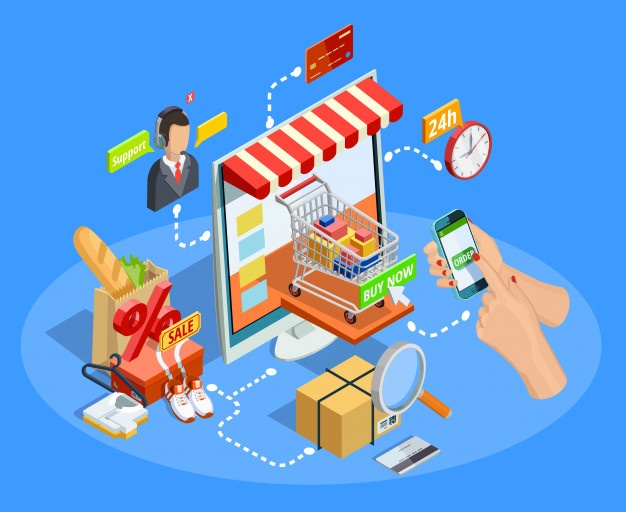
2.    2E-Commerce sector

  E-commerce was already on the rise before the pandemic hit due to our increasingly digitized & globalised world looking for further convenience. But, during pandemic consumer had a no choice to gave up there old shopping habits for fear to get sick. It is expected that e-commerce industry is likely to reach over $ 200 billion in the coming 8 years.

                Amazon, Walmart and Ali Babaare large players that will take leverage of the growth opportunity. 


3.    Remote working software

 Thegovernments implementing more serious measures such as full or partial lockdowns, and businesses struggling to find ways to maintain adequate levels of productivity, many are turning to remote working apps and software. The desire to have more flexibility of working and remain safe from virus will also drive businesses to rely more on cloud and virtual office solutions.

  The concept of ‘’WORK FROM HOME’’ become more widely popular. The tech firms like zoom, Google meet saw an unpredictable growth     that remain continues for upcoming years.  


4.    OTT platforms

covid-19 has brought a shift to the entertainment sector where over the top (OTT) platforms   replaced old entertainment watching habits.  Over the past few months, online content consumption has risen exponentially, creating a vast user base for OTT platforms. Confined to their homes for months, people turned to OTT platforms to keep themselves occupied. The worldwide   OTT   platforms are Hotstar, Netflix, Prime, etc.

5.      HEALTH CARE

The pandemic has reminded us of many key essentials, but one of the biggest takeaways has been remembering how important it is to have skilled medical staff and top end medical equipment to combat unpredictable deadly and contagious diseases. The pandemic has undoubtedly brought the pharma and healthcare sectors to the forefront. While the crisis was unprecedented and did put a strain on the industry, it has recovered quickly and is now thriving. With a surge in demand for healthcare and pharma professionals, the industry is expected to be largely immune to the looming economic slowdown in the near future.


<

p class=”MsoNormal” style=”line-height: 18.15pt;margin-bottom: 0cm;vertical-align: top”>            Covid-19 is changed whole living pattern, from virtual classroom to remote working styles etc. Newer technologies are coming up to bridge   the gap created through social distancing. The new wave of technologies emerging helped to broom some sectors that provided new opportunities to all.  

Importance of Skill Development Training

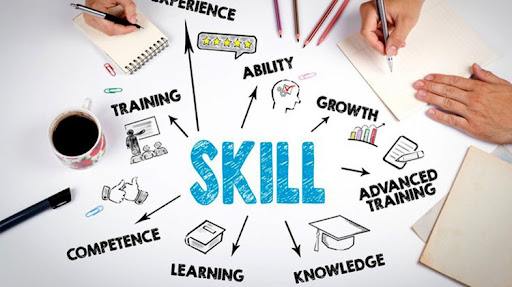
 In today’s competitive world, its very important for people to invest their time and resources to improve their skills, potential capabilities. One needs to do so in order to be future ready. One’s skills determines their ability to carry out any task effectively and efficiently. 

                                                              (Photo: doaram.com)

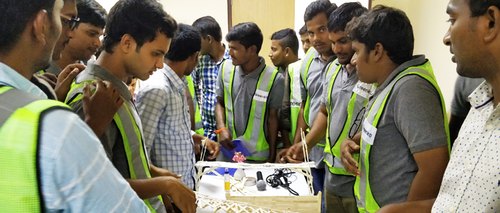
Skill development is a powerful tool to safeguard the future of youth and for their overall development. It is an important way to increase the employment rate of India. Skills are as essential as one’s academic qualifications. Education and skills should now go hand in hand to be successful. In today’s world, lack of education and skill development restricts people from realizing their potential capabilities and abilities. Eventually, this prevents them from contributing to the economic growth of a country. Thus, education and skill training is vital for the overall growth and personality development of an individual.
Illiteracy is one such reason for lack of skill training. The capability of the poorest sections of society to start business is restricted owing to because of their lack of business skills, illiteracy, their inability to take risks, capital, lack of investment, etc. It would be far better to upgrade their skills so that they can get employed. The strategy of the Ministry of Labor to specialize on skill upgradation has contributed significantly to this mission. 
According to the World Trade Organization, the GDP level can increase up to 3%-5% in 2035, if India focuses on skill development and training. India has taken many initiatives in this regard. The Ministry of Skill Development and Entrepreneurship (MSDE) is responsible for coordinating skill development activities in India. It has supported various organizations like National Skill Development Corporation (NSDC), which aims to promote skill development in the country by establishing institutes across the country and National Skill Development Agency (NSDA), which seeks to coordinate the efforts of the government and the private sector and aid in skill development.

Hon’ble Prime Minister Shri Narendra Modi launched the Skill India Mission, under the Ministry of Skill Development and Entrepreneurship on 15 July 2015, which aims to train over 40 crore people in India in different skills by 2022. The mission seeks to vocational training and certification of Indian youth for a better livelihood and respect in the society. Various initiatives under this campaign are National Skill Development Mission, National Policy for Skill Development and Entrepreneurship, 2015, Pradhan Mantri Kaushal Vikas Yojana (PMKVY), Skill Loan scheme, Rural India Skill etc.

                                                     (Photo: Indiamart)

Schemes & Initiatives through NSDC

  • Pradhan Mantri Kaushal Vikas Yojana (PMKVY)
  • Rozgar Mela
  • Pradhan Mantri Kaushal Kendras (PMKK)
  • Capacity Building Scheme
  • Udaan
  • School Initiatives and Higher Education
  • India International Skill Centres (IISCs)
  • Pre Departure Orientation Training (PDOT)

Schemes related to Entrepreneurship

  • Pradhan Mantri ‘YUVA’ Yojana

Other Schemes and Initiatives

  • Skill Loan Scheme
  • Indian Institute of Skills (IISs)
  • SANKALP
  • Academic Equivalence to Vocational Qualifications
  • Aspirational Districts
  • Swachh Bharat Abhiyan
  • Technology Initiatives

To encourage enterprise and boost employment generation, skill training initiatives are coming up with specialized courses on entrepreneurship in different sectors. Skill development is a very important tool to boost self-confidence of an individual and to instill trust on themselves. With proper skill development training, one can surely become confident and successful. It not only nurtures the inner will but also boosts the personality of an individual.

<

p style=”background: rgb(255, 255, 255);border: 0px;font-family: Roboto, sans-serif;font-size: 16.1px;line-height: 23px;margin: 0px 0px 15px;padding: 0px;vertical-align: baseline”>

Advent of Fast-food chain in Indian Market


We all are very much familiar with the fast-food chains. With the revolution in food, the world has become so fast-moving that it’s very difficult to keep a track. With the demand for fast-food came the entry of fast-food joints. It has garnered the market to a wide level.

(Photo: PMQ Pizza Magazine)

Increasing demand for fast food

Is there anyone who doesn’t like fast-food? It has become so inevitable and specially among children. The youth mainly crave for fast-food in everyday life. This increase in demand has benefitted the fast-food chains at a rapid pace. The children specially like burger and pizza more than dal or roti. Demand for McDonald’s, Subway, KFC has increased rapidly over the years. Who knew that they will capture the market at such a level?

Why they are so much in demand?

·       If we see from the customer’s view, we can say that it’s highly desirable.

·       The prices are also low as compared to dine in restaurants.

·       It is spread across many locations.

·       The taste is also good and it’s very convenient.

The fast-food has become very………Fast

If a fast-food restaurant wants to remain in business, then it has to be very fast. This pace has been very well maintained by the fast-food chains of Indian market. Many people after work grab their fast-food while going back to home.It’s everywhere and that’s why it is very convenient to order. The faster order arrives, the happier customer is. Delay in delivery should be prevented as it can cause dissatisfaction and it can also harm the goodwill of the fast-food chain.

Cuisines around the world under one roof

·       In this era of globalization, to be one step forward, this fast-food chain has turned towards different method to maintain its uniqueness.

·       It’s like a cat race. To be faster, you have to be better.

·       They think globally and apply it locally. The fast-food chain which offers more cuisine to its menu is more preferred by the customers.

·       Getting everything under one roof. What do you want more? For example, Haldiram offers south Indian, north Indian, street food, Chinese etc. It’s not just limited to one cuisine. There are many other examples too. Like Dunkin’ Donuts, KFC, McDonald’s. They aim at adding taste to your buds.

S   Smarter than You Think

     Fast-food chains adopt various approaches to target customers. They mainly target children as fast-food is more popular among children. They very well know how to sell their product and execute their plan accordingly. For example, the use of characters such as Ronald McDonald and The Trix Rabbit, it is a tactic to emotionally bond with the children. They also organize birthday parties and offer happy meal to give happiness to children. They keep kids hooked up on happy meals. This is what is called as “SMART PLAY”.

     The fast-food chain can be seen everywhere. It has increased rapidly around the globe. The demand for fast-food has also increased competition. In India, increase in disposable income has in turn increased the frequency of people going out for meals. India is now heavily dominated by global players. Despite of its potential growth, Indian food chain still faces many challenges due to the change in trend. So, we can say that India still has a long way to go.


<

p class=”MsoNormal”>

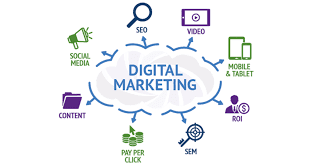
DIGITAL MARKETING


Digital Marketing

Any marketing that uses electronic devices to convey promotional messaging and measure its impact. In practice, digital marketing typically refers to marketing campaigns that appear on a computer, phone, tablet, or other device. It can take many forms, including online video, display ads, and social media posts. Digital marketing is often compared to “traditional marketing” such as magazine ads, billboards, and direct mail. Oddly, television is usually lumped in with traditional marketing.


Did you know that more than 3 quarters of Americans go online on a daily basis? Not only that, but 43% go on more than once a day and 26% are online “almost constantly.”

These figures are even higher among mobile internet users. 89% of Americans go online at least daily, and 31% are online almost constantly. As a marketer, it’s important to take advantage of the digital world with an online advertising presence, by building a brand, providing a great customer experience that also brings more potential customers and more, with a digital strategy.

What is digital marketing?

Digital marketing, also called online marketing, is the promotion of brands to connect with potential customers using the internet and other forms of digital communication. This includes not only email, social media, and web-based advertising, but also text and multimedia messages as a marketing channel.

Essentially, if a marketing campaign involves digital communication, it’s digital marketing.

Inbound marketing versus digital marketing

Digital marketing and inbound marketing are easily confused, and for good reason. Digital marketing uses many of the same tools as inbound marketing—email and online content, to name a few. Both exist to capture the attention of prospects through the buyer’s journey and turn them into customers. But the 2 approaches take different views of the relationship between the tool and the goal.

Digital marketing considers how each individual tool can convert prospects. A brand’s digital marketing strategy may use multiple platforms or focus all of its efforts on 1 platform.

Inbound marketing is a holistic concept. It considers the goal first, then looks at the available tools to determine which will effectively reach target customers, and then at which stage of the sales funnel that should happen.

The most important thing to remember about digital marketing and inbound marketing is that as a marketing professional, you don’t have to choose between the 2. In fact, they work best together. Inbound marketing provides structure and purpose for effective digital marketing to digital marketing efforts, making sure that each digital marketing channel works toward a goal.

B2B versus B2C digital marketing

Digital marketing works for B2B as well as B2C companies, but best practices differ significantly between the 2.

  • B2B clients tend to have longer decision-making processes, and thus longer sales funnels. Relationship-building strategies work better for these clients, whereas B2C customers tend to respond better to short-term offers and messages.
  • B2B transactions are usually based on logic and evidence, which is what skilled B2B digital marketers present. B2C content is more likely to be emotionally-based, focusing on making the customer feel good about a purchase.
  • B2B decisions tend to need more than 1 person’s input. The marketing materials that best drive these decisions tend to be shareable and downloadable. B2C customers, on the other hand, favor one-on-one connections with a brand.

Of course, there are exceptions to every rule. A B2C company with a high-ticket product, such as a car or computer, might offer more informative and serious content. Your strategy always needs to be geared toward your own customer base, whether you’re B2B or B2C.


Types of digital marketing

There are as many specializations within digital marketing as there are ways of interacting using digital media. Here are a few key examples.

Search engine optimization

Search engine optimization, or SEO, is technically a marketing tool rather than a form of marketing in itself. The Balance defines it as “the art and science of making web pages attractive to search engines.”

The “art and science” part of SEO is what’s most important. SEO is a science because it requires you to research and weigh different contributing factors to achieve the highest possible ranking. Today, the most important elements to consider when optimizing a web page include:

  • Quality of content
  • Level of user engagement
  • Mobile-friendliness
  • Number and quality of inbound links

The strategic use of these factors makes SEO a science, but the unpredictability involved makes it an art.

In SEO, there’s no quantifiable rubric or consistent rule for ranking highly. Google changes its algorithm almost constantly, so it’s impossible to make exact predictions. What you can do is closely monitor your page’s performance and make adjustments accordingly.

Content marketing

SEO is a major factor in content marketing, a strategy based on the distribution of relevant and valuable content to a target audience.

As in any marketing strategy, the goal of content marketing is to attract leads that ultimately convert into customers. But it does so differently than traditional advertising. Instead of enticing prospects with potential value from a product or service, it offers value for free in the form of written material.

Content marketing matters, and there are plenty of stats to prove it:

  • 84% of consumers expect companies to produce entertaining and helpful content experiences
  • 62% of companies that have at least 5,000 employees produce content daily
  • 92% of marketers believe that their company values content as an important asset

As effective as content marketing is, it can be tricky. Content marketing writers need to be able to rank highly in search engine results while also engaging people who will read the material, share it, and interact further with the brand. When the content is relevant, it can establish strong relationships throughout the pipeline.

Social media marketing

Social media marketing means driving traffic and brand awareness by engaging people in discussion online. The most popular platforms for social media marketing are Facebook, Twitter, and Instagram, with LinkedIn and YouTube not far behind.

Because social media marketing involves active audience participation, it has become a popular way of getting attention. It’s the most popular content medium for B2C marketers at 96%, and it’s gaining ground in the B2B sphere as well. According to the Content Marketing Institute, 61% of B2B content marketers increased their use of social media this year.

Social media marketing offers built-in engagement metrics, which are extremely useful in helping you to understand how well you’re reaching your audience. You get to decide which types of interactions mean the most to you, whether that means the number of shares, comments, or total clicks to your website.

Direct purchase may not even be a goal of your social media marketing strategy. Many brands use social media marketing to start dialogues with audiences rather than encourage them to spend money right away. This is especially common in brands that target older audiences or offer products and services not appropriate for impulse buys. It all depends on your company’s goals.

To learn more about how Mailchimp can help with your social media strategy, check out the comparison of our free social media management tools versus others.

Pay-per-click marketing

Pay-per-click, or PPC, is posting an ad on a platform and paying every time someone clicks on it.

How and when people see your ad is a bit more complicated. When a spot is available on a search engine results page, also known as a SERP, the engine fills the spot with what is essentially an instant auction. An algorithm prioritizes each available ad based on a number of factors, including:

  • Ad quality
  • Keyword relevance
  • Landing page quality
  • Bid amount

Each PPC campaign has 1 or more target actions that viewers are meant to complete after clicking an ad. These actions are known as conversions, and they can be transactional or non-transactional. Making a purchase is a conversion, but so is a newsletter signup or a call made to your home office.

Whatever you choose as your target conversions, you can track them via your chosen platform to see how your campaign is doing.

Affiliate marketing

Affiliate marketing lets someone make money by promoting another person’s business. You could be either the promoter or the business who works with the promoter, but the process is the same in either case.

It works using a revenue sharing model. If you’re the affiliate, you get a commission every time someone purchases the item that you promote. If you’re the merchant, you pay the affiliate for every sale they help you make.

Some affiliate marketers choose to review the products of just 1 company, perhaps on a blog or other third-party site. Others have relationships with multiple merchants.

Whether you want to be an affiliate or find one, the first step is to make a connection with the other party. You can use a platform designed to connect affiliates with retailers, or you can start or join a single-retailer program.

If you’re a retailer and you choose to work directly with affiliates, there are many things you can do to make your program appealing to potential promoters. You’ll need to provide those affiliates with the tools that they need to succeed. That includes incentives for great results as well as marketing support and pre-made materials.

Native advertising

Native advertising is marketing in disguise. Its goal is to blend in with its surrounding content so that it’s less blatantly obvious as advertising.

Native advertising was created in reaction to the cynicism of today’s consumers toward ads. Knowing that the creator of an ad pays to run it, many consumers will conclude that the ad is biased and consequently ignore it.

A native ad gets around this bias by offering information or entertainment before it gets to anything promotional, downplaying the “ad” aspect.

It’s important to always label your native ads clearly. Use words like “promoted” or “sponsored.” If those indicators are concealed, readers might end up spending significant time engaging with the content before they realize that it’s advertising.

When your consumers know exactly what they’re getting, they’ll feel better about your content and your brand. Native ads are meant to be less obtrusive than traditional ads, but they’re not meant to be deceptive.

Marketing automation

Marketing automation uses software to power digital marketing campaigns, improving the efficiency and relevance of advertising.

According to statistics:

  • 90% of US consumers find personalization either “very” or “somewhat” appealing
  • 81% of consumers would like the brands they engage with to understand them better
  • 77% of companies believe in the value of real-time personalization, yet 60% struggle with it

Marketing automation lets companies keep up with the expectation of personalization. It allows brands to:

  • Collect and analyze consumer information
  • Design targeted marketing campaigns
  • Send and post marketing messages at the right times to the right audiences

Many marketing automation tools use prospect engagement (or lack thereof) with a particular message to determine when and how to reach out next. This level of real-time customization means that you can effectively create an individualized marketing strategy for each customer without any additional time investment.

Email marketing

The concept of email marketing is simple—you send a promotional message and hope that your prospect clicks on it. However, the execution is much more complex. First of all, you have to make sure that your emails are wanted. This means having an opt-in list that does the following:

  • Individualizes the content, both in the body and in the subject line
  • States clearly what kind of emails the subscriber will get
  • Offers a clear unsubscribe option
  • Integrates both transactional and promotional emails

You want your prospects to see your campaign as a valued service, not just as a promotional tool.

Email marketing is a proven, effective technique all on its own: 89% of surveyed professionals named it as their most effective lead generator.

It can be even better if you incorporate other techniques such as marketing automation, which lets you segment and schedule your emails so that they meet your customer’s needs more effectively.

Reasons to learn content writing

Content writing is a step wise process of planning, writing and editing. It usually includes content for blogs, articles, speeches, video and podcast script etc. Content writing helps construct a great relationship with the audience and intrigue them in coming back for more. The power of good content should never be underestimated keeping in intellect the sum of difference it can make with just the help of words.

Let’s take a look at some reasons to learn content writing:

>Improves vocabulary

Content writing is one of the good ways to improve vocabulary. It’s not usually about using high level language tending readers to look into the dictionary every minute but using the most appropriate language and words to convey one’s thoughts to the readers in the simplest of the ways.

>Tickles creativity

Content writing covers a range of writing styles from imagination to originality. The purpose is to express thoughts and ideas through literary devices. While learning to create good content, one also learns how to be creative and original at the same time. Content writing gives opportunities to explore various topics and themes with no restrictions giving rise to new ideas paving way to creativity.

>Helps acquire research skills

Learning content writing also includes researching over a wide variety of topics which helps in creating meaningful content. To provide a genuine and verified content one goes through multiple web searches in order to acquire the most accurate information regarding the respective content.

>Exposure to global knowledge

Content writing is also a good way of learning. It tends one to know about the world and its whereabouts. Exposure to vast knowledge of different fields is one of the many benefits of content writing.

>Boosts confidence

Enrolling oneself in content writing boosts confidence. One gets to learn so many new things which automatically lift up self confidence.

>Path to freelance content writing

Freelance writers are always much in demand and enjoy flexibility and independence. Moreover, freelancing can be done part time as well making it easier to juggle with everyday work. Even in this time of pandemic where almost everyone is losing jobs, content writing still finds a place in the market. Otherwise as well, content writing as career is growing at a fast rate.