Fake-dating trope books.

The Love Hypothesis: Ali Hazelwood.
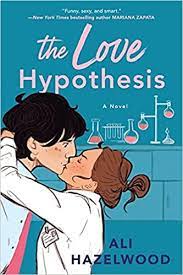
Olive Smith, a third-year Ph.D. student, doesn’t believe in long-term love relationships, but her closest friend does, and that’s how she ended up in this scenario. It was always going to take more than hand-wavy Jedi mind tricks to persuade Anh that Olive is dating and well on her way to a happily ever after: scientists want proof. Olive panics and kisses the first man she sees, like any self-respecting scientist would.Adam Carlsen, a young hotshot professor—and well-known ass—is the man in question. That’s why Olive is astounded when Stanford’s reigning lab tyrant offers to be her phoney boyfriend and keep her farce a secret. When a major science conference goes awry, putting Olive’s career on hold, Adam shocks her once more with his unwavering support and even more unwavering…six-pack abs.Suddenly, their tiny experiment appears to be on the verge of exploding. Olive learns that the only thing more difficult than a love hypothesis is examining her own heart under a microscope.

The Spanish Love Deception: Elena Armas.
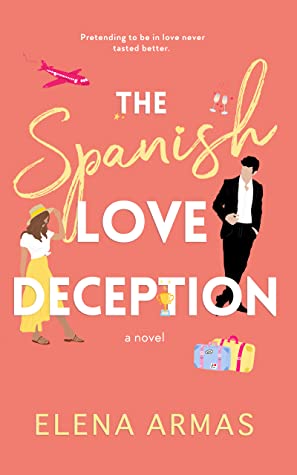
It’s a wedding. A vacation to Spain is planned. The most vexing individual. And then there were the three days of faking. Or, to put it another way, a strategy that will never succeed.

Finally, Catalina Martn is not single. Her family is overjoyed to learn that she would be attending her sister’s wedding with her American beau. Everyone is welcome to attend the most enchanting event of the year.

That would almost surely make the front page of the local newspaper in the small Spanish town where she grew up tomorrow. Or the epitaph on her tombstone, knowing how her life had changed in the time it took to make a phone call. Four weeks wasn’t a lot of time to locate someone willing to go across the Atlantic for a wedding, from New York to Spain.Let alone someone who is willing to participate in her ruse. But it didn’t mean she was desperate enough to drag the 6’4 blue-eyed jerk. Aaron Blackford is a musician. Her date had just been given by a man whose sole vocation was to make her blood boil. After poking his nose into her business, accusing her of being insane, and claiming to be her best choice?

The Unhoneymooners: Christina Lauren.
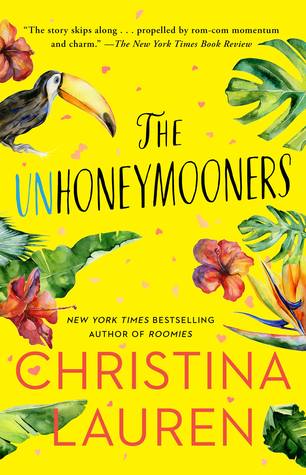
Olive has bad luck in everything she does: her work, her love life, her…well, everything. On the other side, her identical twin sister Ami is possibly the luckiest person on the planet. Her first meeting with her fiancé is straight out of a romantic movie (gag), and she’s managed to fund her entire wedding by winning a series of online competitions (double gag). Worse, she’s making Olive spend the day with her sworn nemesis, Ethan, who also happens to be the best man.Olive prepares herself for a 24-hour wedding ordeal before returning to her luxurious, unfortunate existence. When the whole wedding party suffers food illness from rotten shellfish, Olive and Ethan are the only ones who aren’t harmed. And now there’s a chance to win an all-expenses-paid honeymoon in Hawaii. Olive and Ethan leave their mutual enmity behind for the purpose of a free vacation, intending to avoid each other at all means. When Olive runs into her future employer, though, the small white lie she tells him risks becoming a lot bigger. She and Ethan now have to act as though they’re in love newlyweds, and her luck appears to be getting worse or it is for the better?

The Kiss Quotient: Helen Hoang.
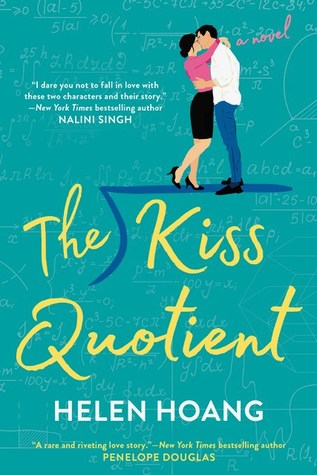
Stella Lane believes that arithmetic is the only thing that holds the cosmos together. She creates algorithms to forecast client purchases—a career that has provided her with more money than she knows what to do with and far less dating experience than the typical thirty-year-old.

Stella has Asperger’s syndrome, and French kissing makes her think of a shark getting its teeth cleaned by pilot fish. Her conclusion was that she needed a lot more practice—with a pro. That is why she employs Michael Phan, an escort. The Vietnamese and Swedish beauty can’t say no to Stella’s offer, so she offers to assist her in checking off all the boxes on her lesson plan.Stella soon discovers that she not only enjoys his kisses, but also craves all of the other sensations he gives her. Their no-nonsense relationship soon begins to make bizarre sense. The pattern that emerges will persuade Stella that the best type of reasoning is love.

Take a Hint, Dani Brown: Talia Hibbert.
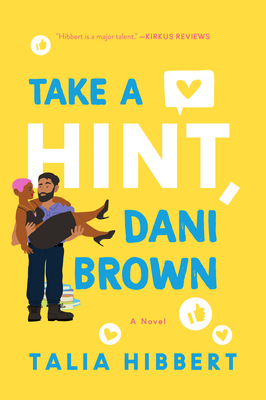
Danika Brown has a clear vision of her goals: professional achievement, academic acclaim, and the odd roll in the hay to ease the stress of her job. But what about romance? I’ve been there, done that, and thrown away the T-shirt. Romantic relationships, regardless of gender, are at best a nuisance and at worst a drain. So Dani prays to the cosmos for the ideal friend-with-benefits—someone who knows their way around the bedroom and understands the score.

When moody security officer Zafir Ansari saves PhD student Dani from a botched workplace fire drill, it’s a clear indicator that the two are meant to sleep together. However, before she can explain why, a video of the heroic rescue goes viral.

Now that half of the internet is shipping #DrRugbae, Zaf is pleading with Dani to join in. His children’s sports organisation, it turns out, could use the attention. Is it okay to lie to aid children? Who in their right mind would say no?
Dani’s strategy is simple: pretend to be dating Zaf in public while seducing him behind the scenes. The problem is, gruff Zaf is a hopeless romantic at heart, and he’s hell-bent on corrupting Dani’s stone-cold reality. He’ll soon be tackling her concerns to the ground. However, the former athlete has his own problems, and the walls surrounding his heart are as thick.Dani’s desire of a simple lay is suddenly more complicated than her thesis. Has her wish come true? Is her concentration being put to the test? Is the cosmos simply waiting for her to see something?

5 reasons why reading is so important for a student to succeed

It seems so simple. Of course, students should learn to read. That’s been understood for generations. No one is going to argue against the importance of student literacy.

However, many don’t understand just how important student literacy and reading are to student development, starting at a very young age. Reports say that reading when young – even infants being read to by their parents – increases academic success down the road. However, many children enter kindergarten without the skills needed to read well. Helping students bridge that skills gap falls to those who have trained to become elementary school teachers. They play a significant role in the development of young minds in this vital area.

Here are some of the ways student literacy impacts a young mind:-

1.Self Esteem


This might be the most important area of all. The sooner students develop reading skills, the more they gain ground in the areas listed below. That leads to more assurance in how they speak and write and gives them the confidence of an expanded knowledge base. When students start to read about diverse people, distant places, and historical events at an early age, they become more creative and open. Also, those who have read a lot will naturally be asked to answer more questions – another confidence builder for a young student.

2.Improved Concentration


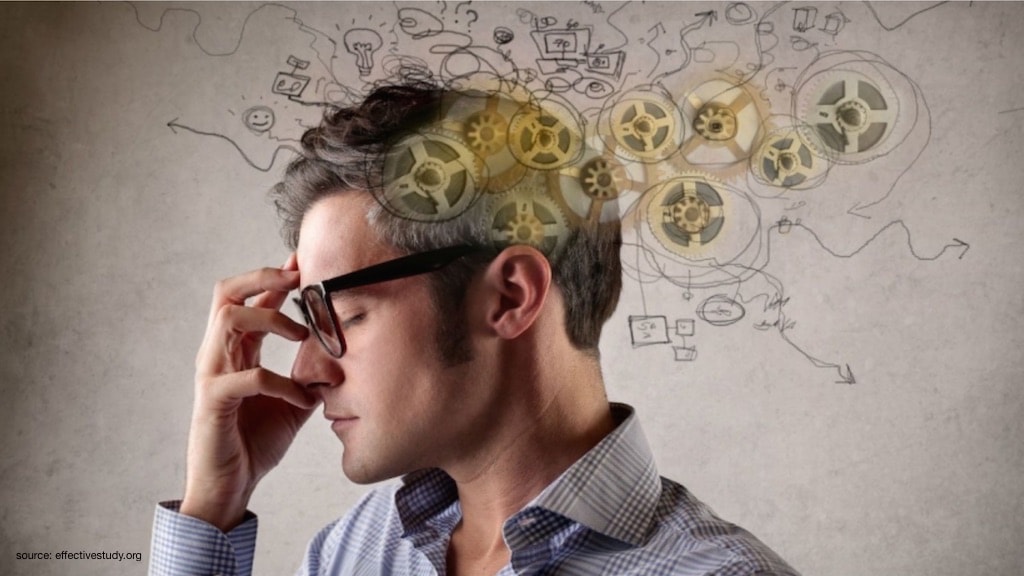
An emphasis on reading and student literacy helps develop higher levels of focus and concentration. It also forces the reader to sort things out in their own mind – including topics that might not be familiar to them at all (Paris at the end of World War II, for example, or another planet in a science fiction novel). This type of concentration on one topic – rather than trying to do many things at once – leads to better focus even after the book is put down.

3.Critical and Analytical Thinking Skills


The classic here is when a young reader becomes absorbed with a mystery book – Hardy Boys or Nancy Drew were examples for generations all over the world – and manages to solve the mystery in her head before the books reveal it. That’s a simple example of how reading helps students develop better critical and analytical skills, something that carries over even after they have put the book down.

4.Stronger Memory Skills


Think about reading. Even an elementary-age child with a relatively simple book must keep in mind a group of characters, the setting, and past actions. Reading helps to strengthen memory retention skills. That’s a powerful tool for young students – and older adults, as well.

5.Expanded Vocabulary

How many times do we all search for just the right word to express what we’re trying to say? Readers do that less. They have a larger vocabulary, and the words that young readers learn in a book will eventually make their way into their speech.

These are some of the most powerful ways that reading is important for student success. For those who have decided to teach children at the elementary school level, their impact on students in this vital area can resonate throughout the rest of their lives.

Muna Madan

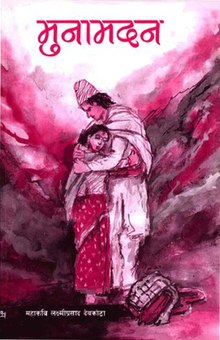
Almost no one hasn’t heard of Devkota’s most well-known creation, the Muna Madan. This short epic about Muna and Madan is well-known in Nepali, but its English translation is equally well-known. Madan, a hopeless rancher, decides to go to Tibet as a vendor in order to get money, leaving behind his elderly mother and lovebird wife, Muna. Muna begs her husband to stay, but Madan withdraws in the hopes of accumulating wealth for the family. The hardships Muna and Madan have while trying to reunite with one another are depicted in a horrible way in sonnet. Muna Madan, while being a short epic, has become a commercial success and is regarded as a model of Nepali writing.

Plot

Muna Madan is a Nepalese epic that tells the heartbreaking story of Muna and Madan. It was written in a melodious version in 1935 by Nepalese writer Laxmi Prasad Devkota. It is one of the most well-known works of Nepali literature. Not long before his death in 1959, Devkota observed, “It would be fine if every one of my works were singed, except for Muna Madan.” In terms of deals, it is the best Nepali book ever written. It’s not a Jhaurey song in the traditional sense. The plot revolves around a man (Madan) who abandons his significant other (Muna) and travels to Lhasa in order to bring in money. Madan represents all Nepalese young people who migrate abroad to make ends meet.

Muna, Madan’s wife, is the queen of sacrifice and love. She adores her Madan and is devastated that she must send him to Lahsa, a dangerous and difficult region. However, she accepts the challenge and decides to remain in the country with her elderly and weak mother-in-law. On his way back to his residence, Madan becomes unwell. His friends abandon him on the road and come home to tell him he has died. Finally, a Nepalese man from a lower caste comes to his aid. That is why a guy is said to be magnificent because of his heart, which is full of love and humanity, rather than his caste or ethnicity.

Madan returns to Kathmandu after regaining his health only to discover that both his mother and beloved wife had died. Madan ultimately comes to the realization that money has no meaning at the time. The story also recounts the life of a poor widow who suffered greatly without her husband and died in sorrow. In this poem, Devkota addresses the most important challenges plaguing Nepalese society at the moment. Through the story of Muna and Madan, Laxmi Prasad Devkota hopes to stabilize the truths of archaic societies, unscientific notions, and the negative impacts of unemployment and poverty in Nepalese society. The poet has brilliantly characterized love by writing about Muna and Madan’s connection.

LIBRARIES: A BOON TO THE SOCIETY

THE HARD COPY OF LIBRARY

According to WIKIPEDIA, “A library is a collection of materials, books or media that are easily accessible for use and not just for display purposes. It is responsible for housing updated information in order to meet the user’s needs on a daily basis. A Library provides physical (hard copies documents) or digital access (soft copies) materials, and may be a physical location or a virtual space, or both. A library’s collection can include printed materials and other physical resources in many formats such as DVDs, CDs and Cassette as well as access to information, music or other content held on bibliographic databases.”

IMPORTANCE OF LIBRARIES TO MAN

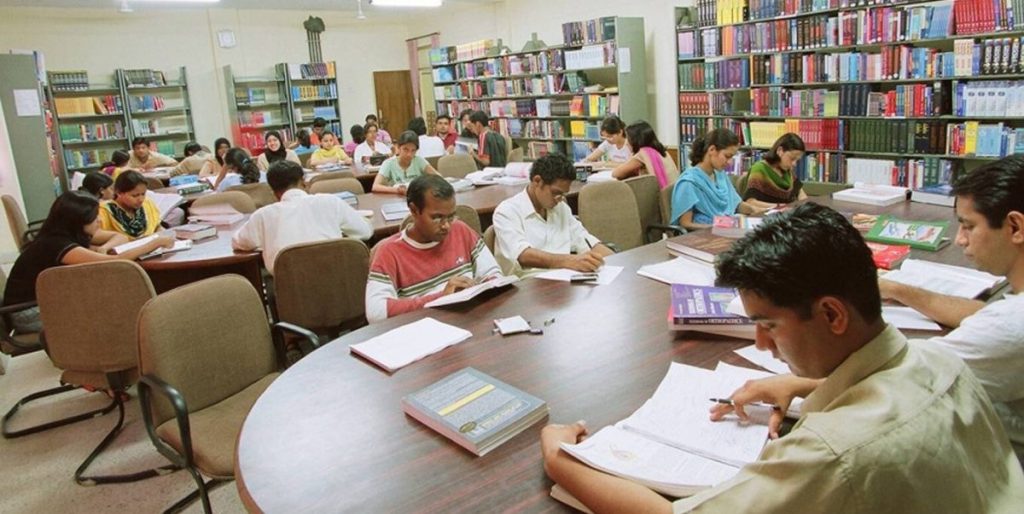
Libraries are said to be the storehouse of culture. If a man is to be known by the company he keeps, society is to be known by the number of good libraries it has. Man’s craving for knowledge is eternal. He wants to know more; he wants to enjoy more. But he cannot always move about for various reasons. He goes to a library and reads books of his choice. Libraries preserve books of various types, old and new. There are also periodicals and daily papers to meet the demands of the people. In all ages, libraries have been considered to be the best medium of public instructions.

The doors of library are exposed to everyone for rewarding the requirement for information. They are run by the government, schools, colleges, and universities. The society members of the neighbouring locality can visit these libraries to boost their information and complete their research.

TYPES OF LIBRARIES

There are different types of libraries, such as public libraries, circulating libraries, private or personal libraries. Of these, public libraries are most important. These are financed either by Government or by public institutions. All readers are allowed to read here. These libraries have two sections-lending and reference. Books are lent out to those who deposit money. Others are allowed to sit a id read books during the period, these are kept open. As libraries spread education, the Government of India have taken up a scheme to establish rural libraries for the benefit of rural people. They sanction annual grants to these libraries in cash or kind. In these libraries, books are stocked to suit the half-literate people of villages.

A FRIEND IN NEED

Government-managed libraries are well equipped and well manned. Only technical men are employed here to help the readers. Quite a large number of scholars, students and members of the public daily attend such libraries for reading and making notes. There are public libraries organised by public institutions. These libraries cater to the needs of a large number of people living in particular localities. Students of schools and colleges also utilise these libraries and derive benefit from them. But these libraries are in bad shape. Government grants to these libraries are not adequate. Public-spirited men now-a-days, are rare. Development of libraries is an important task of a welfare Government. Common people and students get opportunities to read in these libraries. In our country where the percentage of illiteracy is high, these libraries help in expanding the facilities for reading. Public libraries and rural libraries do a lot of good to the localities where they are established. Now the Government has established primary unit libraries, town libraries etc. The Government gives regular grants for the purchase of books and equipment. But still the grants are not adequate. However, they help the public libraries to satisfy the needs and aspirations of the local people.

CONCLUSIONS

So, if we can see deeply a library Builds and helps to connect Community, it Provide Access to the full range of information resources needed to live, learn, govern, and work. It Promote Literacy to both children and adults. It Protect Your Rights to read and offers freedom of information gathering and sharing. People becomes innovative and smart in the company of library, which enhances creation and collaboration.

Dystopian Genre: Analysis and its Significance

The dystopian genre can be categorized into a wide group of literary works of speculative fiction. It usually involves a vision of the future, or an alternate world, which is used by an author to comment on and explore ideas about their own society. It’s has been a popular genre for quite some time. Lets analyze why dystopian literature, in particular, is so important.  

Dystopian literature makes important commentary on the world, societies, and our governments. Humans, since the beginning of the organized society, have always been fascinated by a perfect society which is ‘Utopia’. Since Humans are flawed and our societies mirror that, but it’s also in our nature to strive for better, similar to philosophers who focused on political theory. 

During the medieval age, utopia seemed to be a noble idea among the European authors and philosophers. While its main aim was to depict an ideal society, Dystopia on the other hand was a response where authors argued with the Utopian literature. Dystopias are utopias in the real world as these visionary ideas work well, as ideas. When placed in reality they quickly turn into dystopias.

In order to have an ideal society, humans should be devoid of humanistic values. Writers Depict societies that strive for perfection but ultimately fail as they ignore some vital part of humanity, which makes a convincing dystopian world.

Writers look for flaws that exist in our societies today, grounded in truth, and amplify them. A similar reflection of flaws can be seen in Orwell’s 1984 where it paralleled the problems that were ongoing in that period with the depiction of the overt dictatorial elements present in the Soviet Union and Third Reich. He critically pointed out the Government Surveillance, thought police, the constant change of history, and banning of books, which may seem exaggerated. These elements parallel our society albeit in a more subdued manner. Nevertheless, the parallels are present there, hence 1984 is still a very relevant piece of literature today.    

Similarly in Brave new world, Huxley pointed out that there would be no need for banning books as people will be bombarded with too much information and would be critically incapable to decipher reality with information overload. Where pleasure receptors hijack people’s critical thinking    

Within these two instances, we can interpret that one man’s heaven (Utopia) is another man’s hell (Dystopia). And dystopian writers don’t shy away from being political or radical when they try to describe these phenomena to warn readers.

It has also given rise to many similar genres like science fiction and cyberpunk, dystopian literature can share elements with these themes. In recent times, dystopian literature has also been popularized with the help of Movies, TV shows, and Video Games. 

With the advent of the 20th-century dystopian literature evolved and flourished, many of the revered classic literature in the past century has been a part of this genre. Technology and science progressed and new means of government and bureaucratic institutions were established. This gave writers a new method to introspect the societal trend.   

There is a critical need to academically evaluate these literary writings as its getting more relevant in our present society.

References:

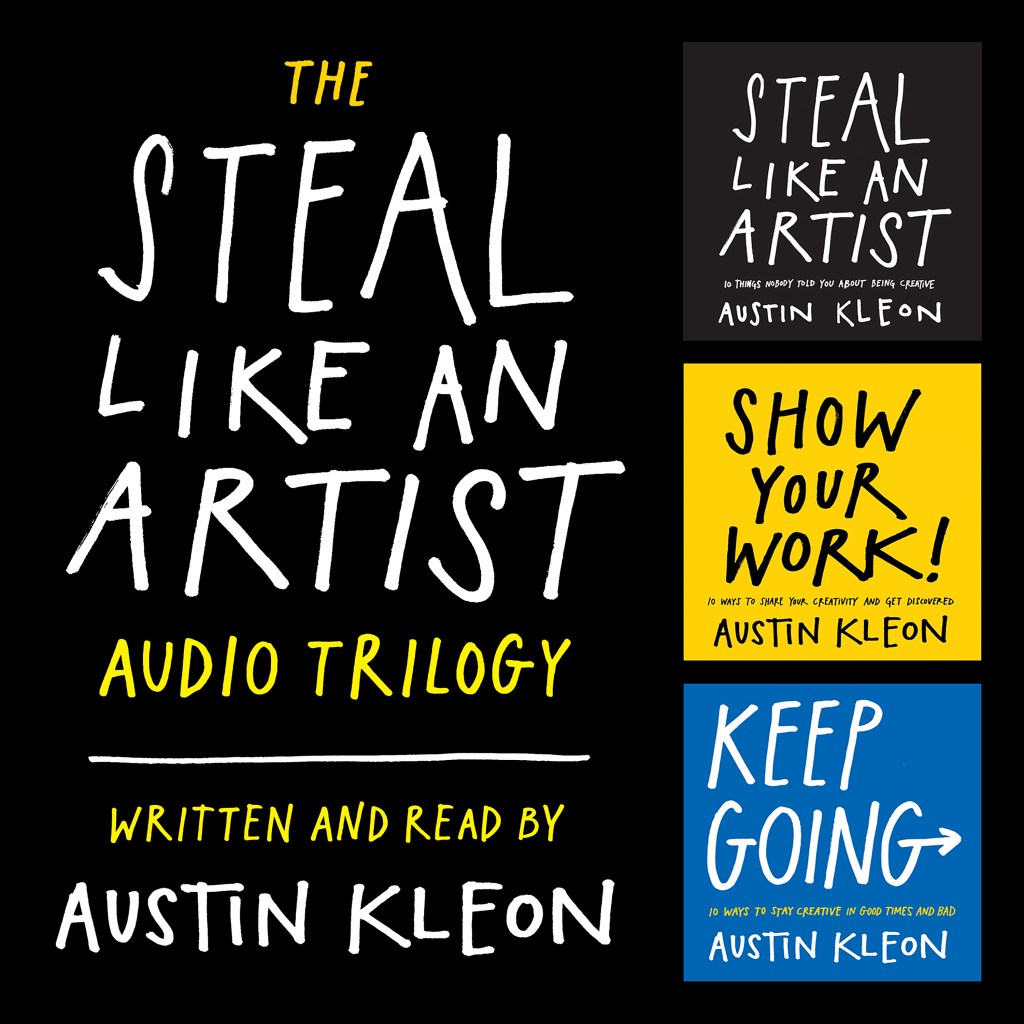
4 MAJOR LEARNINGS FROM THE BOOK: STEAL LIKE AN ARTIST.

1. NOTHING IS ORIGINAL

What a good artist understands is that nothing comes from nowhere. All creative work builds on what came before. Nothing is completely original.

If we are free from the burden of trying to be completely original, we can stop trying to make something out of nothing, and we can embrace influence instead of running away from it.

2. PRODUCTIVE PROCRASTINATION.

Creative people need time to sit around and do nothing. You get some of your wonderful ideas when you seat and do nothing. So take time to do nothing and just sit.

If you are running out of ideas, go for a long walk. Por stare at something as long as you can. As artist Maira Kalman says, “Avoiding work is the way to focus my mind”.

3.KEEP YOUR DAY JOB.

A day job gives you a daily routine in which you can schedule a regular time for your creative pursuits. Establishing and keeping a routine can be even more important than having a lot of time.

4. SCHOOL YOURSELF.

School is one thing. Education is another. The two don’t always overlap. Whether you are in school or not its always your job to get yourself an education.

You have to be curious about the world in which you live. Look things up. Chase down every reference. Go deeper than anybody else – that’s how you will get ahead.

Books – the elite partner

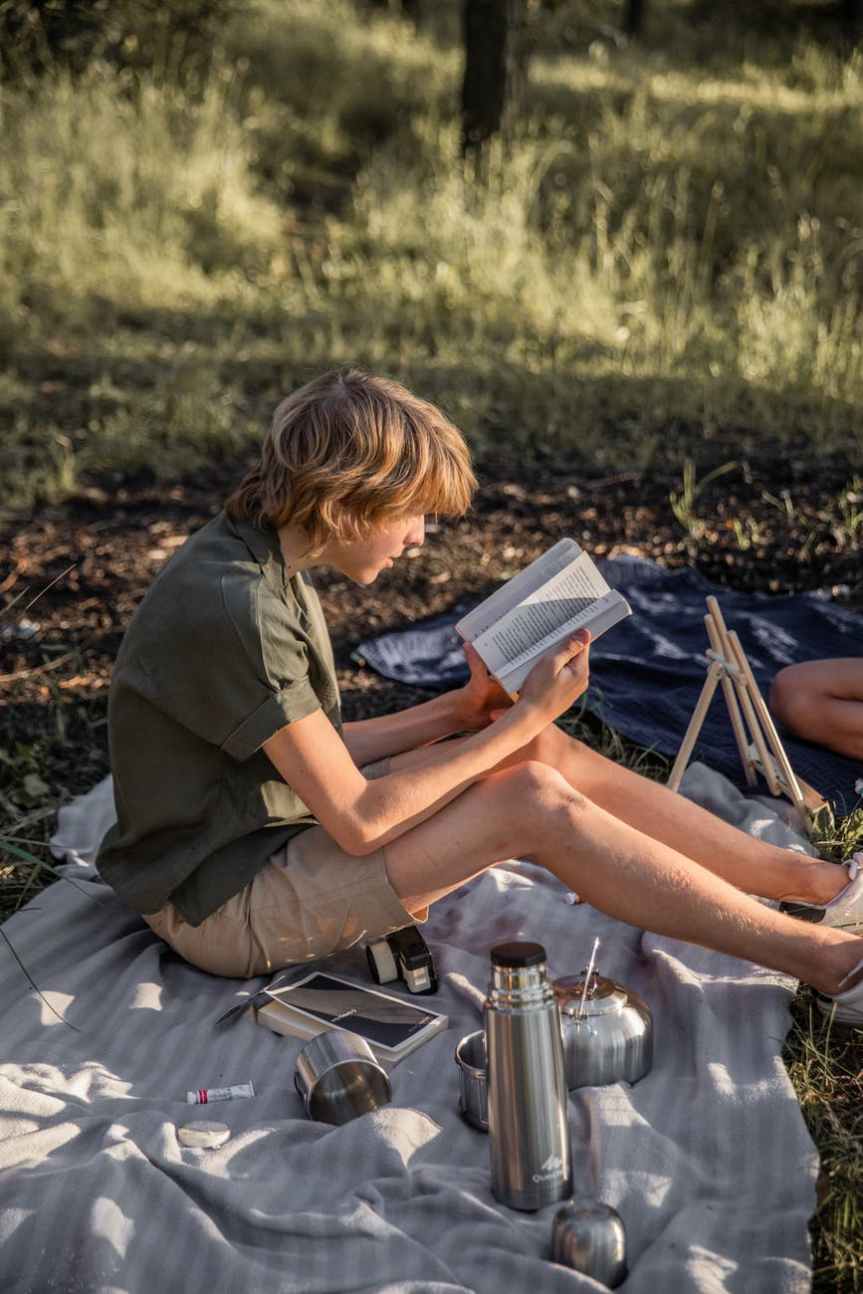
Who would not relish reading a book with a cup of coffee / tea? If you are a person who is not fond of reading books then you might be missing a great part of life even. Some may find it boring and consider it as of no use or waste of energy. But the fact provided by reading books is just a contrast to your mindset. The love towards reading books can protect you even from hazardous diseases of life. But for many reading books in their spare time is like a great craving. Nevertheless it is not like the other leisure time activities that we do to pass time. We are benefitted by books beyond what we think. It benefits both the physical and mental health and the benefits are enduring, lasts lifelong. It increases our creative thinking, imagination and molds us into better person. It aids us to formulate a better roadmap for our career. Books exposes us to new things which we might have failed to notice in our past times, renders more information, and fosters us to handle strenuous situations and provides us innovative ways to solve them and thus gives us a great exploration. It leads us to the other part life which is peaceful and gets you tension free apart from your regular hectic work. Reading good books widens our mind and uplifts our way of thinking.

Books can be referred to as the man’s best companion which is the power house of information and ingenuity. Even in the early times, writing system was invented and people used stones, clays, tree and different things that can be carved as a writing material. Fortunately today we have newspapers, magazines and books. We would have come across several books over the years. In our childhood we were fond of story books which would be flooded with pictures to fascinate little children and for the better understanding of the younger ones. And then as we grow up we would be interested in different genre of books like history, literature, science fiction, crime, fantasy, inspirational, adventure, horror, comics, detective, biographies and so on. All books are either nonfiction or fiction. Nonfiction books contain biographies, history books and contain factual information . Fiction books contain a story which is framed by the author. Technical books gives you technical insight, novels distracts you from the monotonous world and stimulates your imagination level. Comics is meant for enjoyment and relaxes you from your repetitive work. As writing is an art, so is reading and it an excellent habit. It should be inculcated in all from an early stage. The cognitive abilities of kids who read books regularly seem to be improved. It helps us on a larger scale to improve the vocabulary , communication skills, writing skills. As we read books we come know about the various fields engaged around us and it boosts the confidence & self esteem and helps us to become highly efficient and excel in various activities. It increases our concentration level and makes it elastic to grasp things quickly and easily.

With the gradual advancement in technology people are getting fascinated by the idea of e-books. E-books – It is the digital representation of a book publication on platforms like computers, smartphones etc. and provides an easy access to the readers. They are more flexible than paper books. It has many perks like we can enlarge the font size to make the reading more pleasurable and it is easy on the eyes. They are portable and handy making it easy to carry around. E books can be purchased through internet and also some are available for free of cost. E-books have a large scope for further developments and universal acceptability.

Paper and electronic books , both provide an effective way of reading . Paper books allow more precise reading and e books are quicker and more convenient. Books are like fellow mates with no demands and no anticipations, rather we could anticipate many stuffs from books. It gives us a kind of inner happiness and gives us an optimistic feel which enhances our knowledge and wisdom.