Karakku

Caste discrimination faced by Bama

Introduction:
Karakku is a novel written by the Tamil Dalit writer Mary Faustina Fatima Rani. In this novel she speaks about a lot of problems faced by the Dalits and how they were discriminated and exploited. She expresses her angst and her pain through her writing. The most prominent one is the problems faced by the dalits is that of caste discrimination. Bama belongs to the untouchable class called Parayas.


• Even though her living standards were not luxurious, it was still a little better than others as her father was an army officer and because of that, whenever he came back home, there was always food at the table. She also had an older brother who made her aware of the conditions of Dalits and help to understand why it is important to overcome it.


• In the Indian society, the discrimination of people based on their caste was rampant. Every person was judged according to which caste they belong to and showed respect accordingly.


• The problem with food:
The people of the upper caste always got to eat all the tasty food like the fishes with fancy names but the lower caste people always had to settle for the cheap fishes as that is what they could afford. She tells us how the lower caste people are the ones who do all the work yet only the rich benefit from it.

• The problem of exploitation and untouchability:
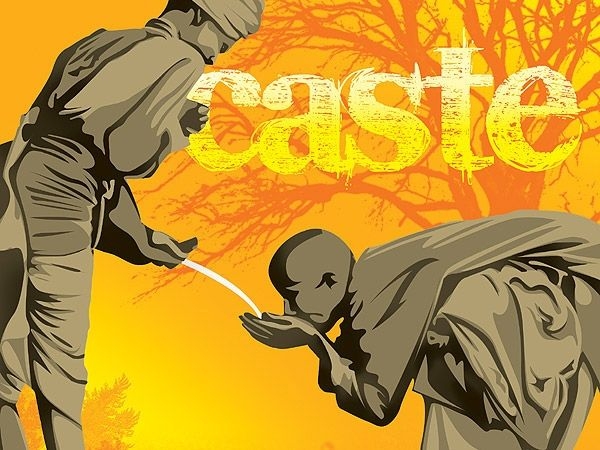
Bama mentions the exploitation of the poor Dalits by the rich Naickers and tells us how that is the reason that the Dalits haven’t prospered yet. She talks about work and how the Dalits had to work all their lives just to make ends meet and they were not even be rewarded for it. An example or incident is when a lady was holding a ‘bajji’ with a string so she does not touch it while giving it to a Naicker. At first Bama found this incident funny but after she was explained about the concept of untouchability by her brother she gets a little furious.


• The problem of Education:
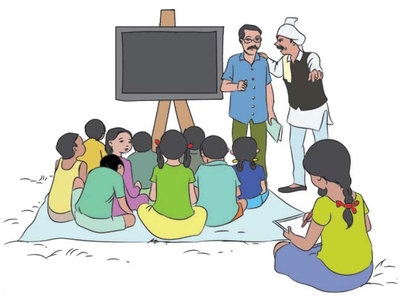
The next problem that the Dalits face is the problem of education. Not all Dalits have the luxury or opportunity to attend school and receive an education. The children or not allowed education and even if they are, they are not given equal opportunities and are always identified by their caste.
Bama also faced or experienced these during her school days but she managed to gain the trust and respect of her peers and teachers as she was a very bright student. That is when Bama realised that if every child is given this opportunity to receive education, they would be independent and would not have to struggle to make ends meet and would also be a respectable citizen of the country.

• Visible Caste discrimination:
In the future when she joined the convent and taught for 5 years, Bama also realised that the caste discrimination still exists. She realised that where there was a vow to help the Dalit children, really care about that aspect. Nobody tried to teach the children what their rights are and how they can together work to overcome their problems as a community and prosper.


Conclusion:
All of these incidents show us the plight of the dalits and how difficult their lives are on a daily basis. They need to overcome problems every day, in every field they go to. There is no leniency for the poor which shows us that the hierarchy of caste is an atrocious topic and everyone should be treated equally.

Journey to Ithica

How the character of 'the Mother' was dubious.

Introduction:
The novel Journey to Ithica is a literary genre from the second half of the 19th century. Novel as a literary genre rose in Spain in the 17th century, France and Europe in the 18th century and America in the first half of the 19th century. Literary novel is a criticism of life and gives an authentic picture of life. It’s only character based and the central character revolves around the growth and development of that character.


The main theme is how Sophie wants to prove that what the Mother is seen for is fake, and she wants to expose her true self. Things weren’t exactly harmonic between Sophie and her husband Matteo, Matteo was ill from hepatitis (dangerous form of jaundice). He finds the Mother/Guru and starts to live in her ashram and blindly believes everything be sees. On the other hand, Sofie, the more mature one, realized that there is more to what meets the eye and tries to uncover the truth as only then can Matteo be treated in the hospital. In this article, I’ll be expanding my thoughts on how the character of the Mother is dubious.


About the author:
Anita Desai was born on June 24, 1973 in Missouri, India. She is an English language Indian novelist who excels in evoking character and mood through visual images. Most of her novels reflect the tragic view of Life. Journey to Ithica was first published in 1995.


Journey to Ithica describes a pilgrimage to India by a young couple, Matteo and Sophie and the life of a mysterious woman, ‘the Mother’, who runs the ashram where they live. The ashram is located at the foothills of the Himalayas.


~ The character of ‘the Mother’ in the novel is portrayed as very suspicious or dubious. Even though Matteo completely trusted and devoted himself to her, Sophie was still unsure about her and the fact that she went on a whole journey just to learn more about her or learn about her spiritual journey does raise a lot of suspicion.


~ We see how Matteo was so ill, he still chose to stay with ‘the Mother’ and learn more about scriptures rather than go home to his kids and wife. This shows how devoted he was to ‘the Mother’. It is also suspicious how every time the mother falls, all her devotees fall ill too. It is very a natural for something like that to happen.


~ Even though, in the story she is shown as someone who might be doing better than other gurus, the readers do not find it amusing or any different as she sits among her devotees and not at the top. This raises suspicion of her being a Guru.


~ The novel tells us how ‘the Mother’ has childhood roots from Egypt but the doubtful part here is that she possesses the Indian English accent of dragging the letters.


~ It is still a question as to why she travelled to India and what was the reason that she decided to do things differently compared to other cult leaders. All of her actions points towards the fact that she has not yet attained enlightenment or even any kind of divinity. Her actions are childish and immature which makes us question if she is even worthy of the title ‘Guru’.


~ She also does not treat her devotees equally. She mainly focuses on the new members and ignores the old members which is suspicious.


Conclusion:
Henceforth, all her actions prove that she is a very doubtful and dubious person.

https://www.boloji.com/articles/2371/journey-to-ithaca

SHORT STORIES WITHIN NOVELS:

A story within a story is referred to as an embedded narrative. The embedded narrative is a literary device in which a character within a story becomes the narrator of a second story within the first one. Multiple layers of stories within stories are sometimes called Nested Stories. These stories mostly exist in a book to enlighten people. Sometimes the author himself wrote some short stories which are really motivating and alluring, then he might include them in his novels. In the other case, the author pushes himself to write short stories which will be suitable within his/her novels.

We all love stories, especially short stories. So, we will look at some stories within stories or stories within novels or dramas one by one as parts of segments.

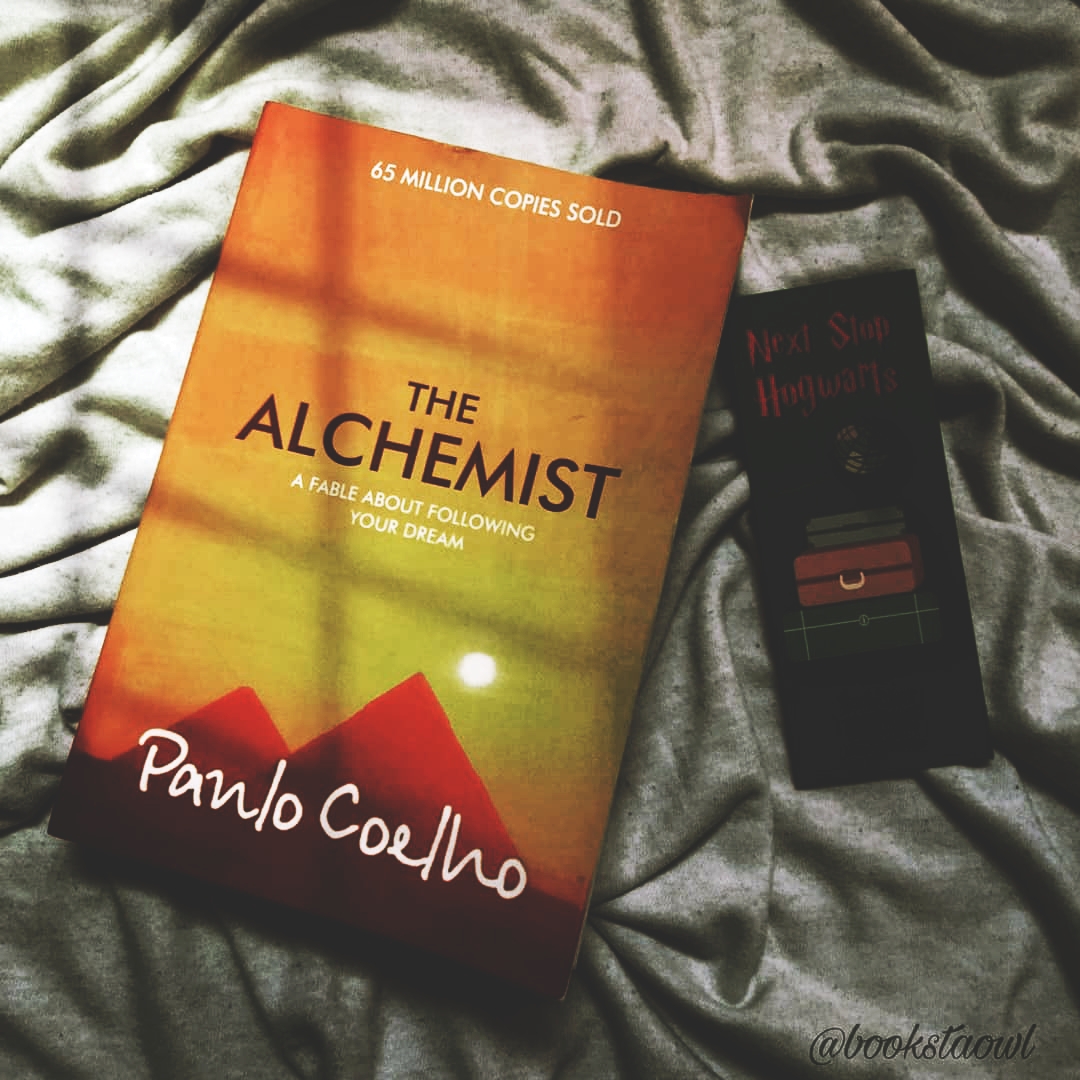
THE ALCHEMIST: BY PAULO COELHO

The shopkeeper sent his son to learn about the secret of happiness from the wisest man in the world. The lad wandered through the desert for forty days, and finally came upon a beautiful castle, high atop a mountain. It was there that the wise man lived.

“Rather than finding a saintly man, though, our hero, on entering the main room of the castle, saw a hive of activity: tradesmen came and went, people were conversing in the corners, a small orchestra was playing soft music, and there was a table covered with platters of the most delicious food in that part of the world. The wise man conversed with everyone, and the boy had to wait for two hours before it was his turn to be given the man’s attention.

“The wise man listened attentively to the boy’s explanation of why he had come, but told him that he didn’t have time just then to explain the secret of happiness. He suggested that the boy look around the palace and return in two hours.

“‘Meanwhile, I want to ask you to do something,’ said the wise man, handing the boy a teaspoon that held two drops of oil. ‘As you wander around, carry this spoon with you without allowing the oil to spill.’

“The boy began climbing and descending the many stairways of the palace, keeping his eyes fixed on the spoon. After two hours, he returned to the room where the wise man was.

“‘Well,’ asked the wise man, ‘did you see the Persian tapestries that are hanging in my dining hall? Did you see the garden that it took the master gardener ten years to create? Did you notice the beautiful parchments in my library?’

“The boy was embarrassed and confessed that he had observed nothing. His only concern had been not to spill the oil that the wise man had entrusted to him.

“‘Then go back and observe the marvels of my world,’ said the wise man. ‘You cannot trust a man if you don’t know his house.’

“Relieved, the boy picked up the spoon and returned to his exploration of the palace, this time observing all of the works of art on the ceilings and the walls. He saw the gardens, the mountains all around him, the beauty of the flowers, and the taste with which everything had been selected. Upon returning to the wise man, he related in detail everything he had seen.

“‘But where are the drops of oil I entrusted to you?’ asked the wise man.

“Looking down at the spoon he held, the boy saw that the oil was gone.

“‘Well, there is only one piece of advice I can give you,’ said the wisest of wise men. ‘The secret of happiness is to see all the marvels of the world, and never to forget the drops of oil on the spoon.’

Through this story author express, that one should follow his dreams and must take care of his responsibilities also. That’s the secret of happiness.

The Alchemist

WHERE TO GET FREE EBOOKS https://eduindex.org/2021/07/20/where-to-get-free-e-books/

THE DETECTIVE NOVELS https://eduindex.org/2021/07/21/the-detective-novels/

HAYAVADANA

HYBRIDITY AND COMPLETENESS

Introduction:
In this article, I’ll be exploring the themes of Hybridity and completeness. One of the most recurring themes in Hayavadana is the theme of incompleteness and Hybridity. Through this incompleteness, we learn that no matter how much one yearns or desires completeness, it is unattainable.
In this play by Girish Karnad, we see three expressions of hybridity. One is in the opening act where the narrator speaks about lord Ganesha, the embodiment of imperfection, of incompleteness, the second concerns Hayavadana and the third is the story about two men whose head were swapped due to an incident.

The play opens with Bhagavatha performing a puja to Ganesha and asking him to bless the performance. He then moves on to introduce the characters when he hears a scream off stage and notices nata, an actor who is causing the ruckus. He then proceeds to question him as to why he is screaming and nata tells the story of how he heard a voice but when he looked up, there was no one but a horse. Bhagavata is unable to believe this and doubts nata but a few moments later, he himself witnesses Hayavadana. Hayavadana proceeds to explain his story and Bhagavatha suggests he visit the Kali temple to fulfill his wish/dream of being complete. He then proceeds with the story where two men fell in love with a woman and lost themselves.

In the beginning of the play when Bhagavatha was praying to Ganesha, he mentions how even though Ganesha is a form of different being, he is still considered complete and perfect. He also says that this might not be something a mere mortal can comprehend. At the end of the play, no other mortal is able to achieve this completeness or perfection.

As the play progresses, we see Hayavadana who longs for completeness. Hayavadana is a creature with a man’s body and a horse’s head, the offspring of a deity in horse form and a woman. He tries very hard to get rid of his horse head but fails every time and when he leave to go to the Kali temple, he requests Kali to turn him into a complete being and she fulfills his request by turning him into a complete horse. Even though, he loses his body of a man, his voice remains the same and worries about if he will ever find completeness but towards the end of the play, he magically achieves completeness with the help of a little boy. As they sing and laugh together, he loses his human voice and starts neighing.

The primary story line is about two friends Devadatta and Kapila who fall in love with the same woman, Padmini. Even though Padmini marries Devadatta, notices that she has feelings for Kapila and is in despair. This drives him to cut off his own head the Kali temple. Seeing his best friend in that state, Kpaila decides to cut off his head too. Padmini found them lifeless and begs goddess Kali to help her. She then swaps the heads, that is, Devadatta’s head is on top of Kapila’s body and vice versa. When this happens, one might think that Padmini has gotten the best of two worlds as she was physically attracted to Kapila’s body while being married to Devadatta. This isn’t true as at one point, she realizes that both of those men cannot go on and live like that their whole life. She realizes that this would end only with bloodshed as it did. The incompleteness of the two men becomes the main conflict between all three characters. Their inability to find a sense of wholeness drives them to kill each other/themselves at the end of the play. 

Conclusion:
Karnad tries to make us realize that completeness is not something every or any human being can achieve. It must be left to the divine beings.

Reference: https://www.litcharts.com/lit/hayavadana/themes/identity-hybridity-and-incompleteness

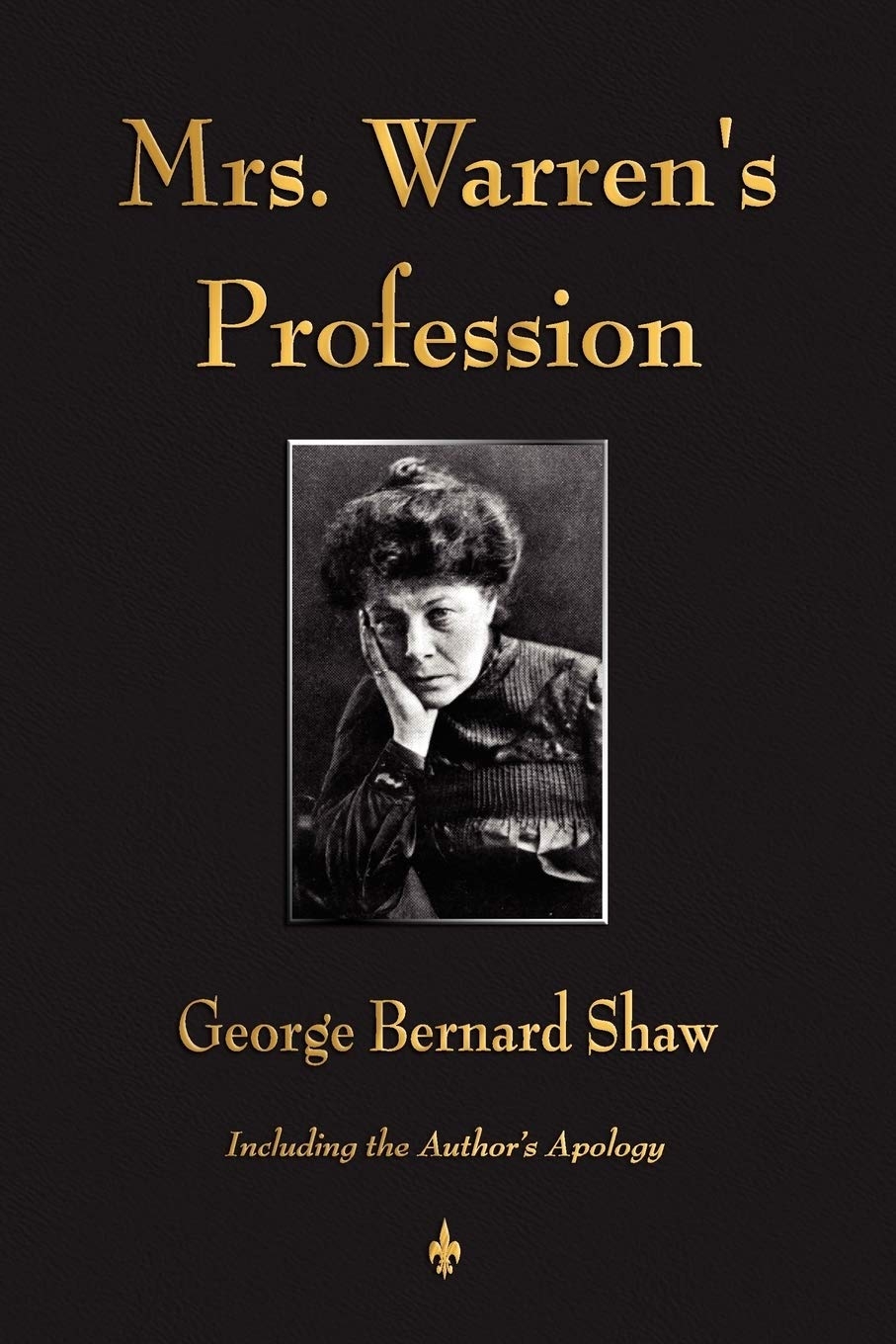
George Bernard Shaw’s Mrs Warren’s profession

Introduction:
In this article, I’ll be focusing my writing on the concept of middle class morality. Middle class morality is the way a person is expected to behave and think when they are a part of the middle-class. this was because the poor and the rich weren’t compelled to follow rules but the middle class had to.


~ Firstly, with the rise of industrialization and trade, there was a great inflow of Wealth in England. Thus we are aware that the Victorian society was a very successful one. The ‘Victorian Morality’ included a class structure, focus on work ethics and economy, and charity. It shows us the immorality and sentimentality of the values and norms of the British society which consisted of hypocrisy, corruption, and injustice of the British social system infects everyone affiliated with it. It was hypocritical as respect was only received by those who held high places in society and everyone else were treated like dirt, charity was just a social responsibility and not a willing done act in order to help the less fortunate. Victorian era also discriminated between men and women which played a major role in the legacy of Victorian morality.


~ Industrialization saw the middle class of the society making their way up the social ladder. They worked hard towards wanting a better life and wanted to live life like the upper class society. They aspired for new goals and were desperate to improve their working condition. Even though they couldn’t enjoy all the luxuries of the upper class, they still could get a taste of how the upper class society led their life. If one was a part of the middle class society, their thoughts, opinions were dictated. Even though they worked hard, only some of them enjoyed all the privileges while some were suffering to make ends meet. These morals were applied to middle and high class society but honestly, most of the Victorian era were not moral at all.


~ In this play, Shaw throws light on how Mrs Warrens has defied social expectations by working as a prostitute and has no problem with owning or accepting reality. Why is it that when the rich baron, Mr. Croft who runs a prostitution ring which is considered highly immoral but is always treated with respect? This is because of the discrimination which happens between men and women. If there was a woman in the place of Mr. Croft, then nobody would true a blind eye. It is also because he belongs to the higher class society. We can see the luxuries the higher class society members enjoy through this example.


~ Women who wanted to express their emotions through prostitute were considered “morally incorrect” as in the Victorian era, people would encourage one to starve rather than prostitute their own bodies to make a living. People who belonged to the Victorian era consideration prostitution to be a huge threat to the society. The society had the audacity to judge women when they weren’t even provided with stable jobs/ good opportunities for women. They always thought that the women were weak and always had to be dependent on men. They forgot that women were their own people and were not existing to satisfy the needs of men.


~ In the Victorian society, respect was earned not by working hard or achievements but it was from how much income one earns. Monetary worth is given utmost importance. Shaw brings out the skepticism by showing us different means of earnings money by Mr. Croft and Mrs Warrens. Even though Mr. Croft is respected, Mrs Warren’s profession is considered as vulgar and completely inappropriate. They make comments about how Mrs Warrens is going against the society’s values like feminity and oppression.


~ Being aquatinted with Victorian society, we know that they were quick to blame Mrs Warrens for choosing the profession of prostitution even though that wasn’t her first choice. Shaw uses this opportunity to point out the hypocrisy and unjustness actions of the society where women weren’t given enough opportunities to be independent.


~ Shaw portrays most of his major female characters as unconventional. Women were highly objectified and considered as creatures of oppression, dependency and passiveness. They thought that women weren’t worthy of education and therefore Vivie was not considered to be feminine. She is strong, realistic and a rational thinker, independent and ambitious and refuses to think that marriage is her end goal. Mrs Warrens expects Vivie to listen to her as she is her mother and wants her daughter to follow these Victorian society Norms but Mrs Warrens break these Norms when they tend to benefit her. She refuses to accept Vivie and her bold outlook but enters the field of prostitution when it’s beneficial.


~ We can see the inequality between men and women. Even though, the era was thriving under a female monarch, even though there was abundant growth in art, culture and wealth, it was very unjust towards women. Even though it had it benefits, it failed to uphold the rights of women which would’ve led them to lead better and happy lives.

WHAT IS LITERATURE

Literature is one of the fine arts like music and painting. It is fundamentally, an Expression of life through the medium of language. Literature is composed of books that are of great human interest due to their subject matter and mode of presentation.

In Literature, form and the pleasure that form gives are of great importance. The writer is provoked by an urge for self-expression. Literature reflects an interest in the world of reality as well as imagination and our love of form and order. Matthew Arnold one of the prominent writers defined literature as a criticism of life.

We can find four distinct elements in all good Literature which are:

  1. The intellectual element
  2. The emotional element
  3. The element of imagination and fancy
  4. The element of composition and style or (The technical element)

Literary productions can be classified into five categories from the point of view of their subjects or themes:

  1. Literature of purely personal experience.
  2. Literature dealing with the common questions of life, death, Destiny, and God.
  3. Literature dealing with the social world order and its activities.
  4. Literature dealing with nature and man’s relationship with the external world.
  5. Literature deals with Literature and Art’s themselves.

How Literature came into existence:

The study of Literature begins with the reading of books which gradually leads to a familiarity with authors. Every great book has something fresh and original to say and it says this freshly and originally. As Plato says the foundation of all good and lasting work is entire sincerity to oneself and to the truth of things one perceives in life. The purpose of studying literature may be pleasure or acquirement of knowledge and insight or both. In any case, the Readers business is to enter into the spirit of the work and to penetrate the vital forces of the author’s personality.

Features of Literature:

Another important aspect of Literature is style. Literature uses language in various molds. The great writer modifies the language to his purposes and molds it according to his peculiarities. Thus the style of the author is the product of his personality; it is also a record of his artistic, spiritual and intellectual growth.
A proper study of Literature involves the study of its history, the biography of the author, and the ethos of the ages and society in which it is produced. Thus Literature becomes a supplement to the study of history. While history tells us about the externals of a people’s civilization, Literature gives us an insight into their mental, spiritual and moral condition.

Literature helps us to know more about the life of the people and the period of the time. It gives us an enormous study of the works and the mentality of the author and the author reflects the visions of the people. Thus, it expresses the emotional aspects which are locked inside the person and it provokes agony in the paper. However, Literature is a fine art that provides inner knowledge and enlightens people all over the world in different languages.

GET PAID TO READ https://eduindex.org/2021/07/12/get-paid-to-read/

BOOK SELLING WEBSITES FOR INDIAN RESIDENCE https://eduindex.org/2021/07/12/best-bookselling-websites-for-indian-residents/

THE GOTHIC NOVEL

During the later half of the 18th century, there was a revival of interest in the life and art of medieval times. The gothic novel arose out of this new zeal for medieval life and fashions.

Gothic Novel:

The Gothic novels of the period sought to satisfy the reader’s craving for mystery and violent emotion and for stories set in remote times and places, depicting ghosts, portents, and demonic forces at work.

Themes of the Gothic Novel:

  • Generally, the central theme of the Gothic novel is romantic love. A somber, restless villain is the central figure.
  • The innocent, beautiful heroine probably imprisoned in a castle wants to be rescued by her lover.
  • The scene is placed in a castle or the dark cloisters of a ruined Abbey equipped with frightening secret passages and private chambers.

Structure of the Gothic novel:

Supernatural events, physical violence, and mental anguish are part of the thematic structure of the Gothic novel. Wild and desolate nature provides the background. The central sentiment of the Gothic novel is melancholy. The Gothic novel was, thus, a conscious protest against the rational and realistic creed of the earlier period.

The father of Gothic novel:

Horace Walpole is called the father of the Gothic novel. His “The Castle Of Otranto” published in 1764, set the trend. He used a medieval setting for this novel. There is death murder, intrigue, and villainy in the novel. The Castle looms large as a sinister symbol until a ghost throws it down.

Ann Radcliffe

Ann Radcliffe continued the gothic tradition in several novels. Her best work is ‘The Mysterious Of Udolpho’ published in 1794. It shows an extravagant spectacle of Gothic elements like the somber castle of Udolpho with its sliding panels, secret passages, and supernatural sounds. Her other important novel is “The Italian.” Her method way to arouse terror and curiosity by apparently supernatural events which are finally explained as natural events.

Some other Gothic novels:

  • Dracula by Bram Stoker
  • The strange case of Dr. Jekyll and Mr. Hyde by Robert Louis Stevenson
  • The Turn of the Screw by Henry James
  • The Fall of the House of Usher and Other Tales by Edgar Allan Poe
  • Wuthering Heights by Emily Brontë
  • Frankenstein by Mary Shelley
  • The Picture of Dorian Gray by Oscar Wilde

Why they are famous:

The plot and content of the gothic novels will be Scary and mysterious. The book contains several allusions and assumptions. The plot always seems creepy to the readers. And during that era, people needed some drama and unrealistic elements in their life to boost up the experience of reading time. When some novels started to fire up the process of Gothic literary forms, more authors started to write on this theme. Even, some well know authors who are famous for their humorous works and romance works started to write Gothic to follow the trend and current affairs.

However, People love unrealistic dramas and fiction, especially Gothic elements. Thus, Gothic novels will always entertain their readers with the plots and beautiful narration of dark aesthetics.

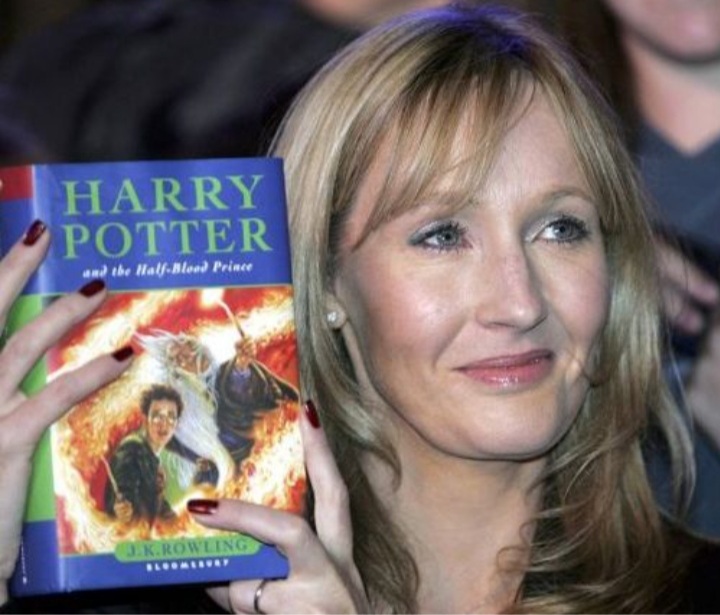
INSPIRATIONAL STORY OF J.K ROWLING

J.K Rowling’s story is one of the most famous insipirational failures to the success story of our time. She had failed in almost everything she attempted to do in her life and at one point she considers herself a major failure.


Most of the people only know her as a woman writer who created Harry Potter, but what people don’t know about the struggle she faces before reaching the stardom.


BIRTH AND CHILDHOOD :


Joanne Rowling was born on 31st July 1965 in yate, Gloucestershire, England to Peter James Rowling and Anne Rowling. Her father was a Rolls- Royce aircraft engineer and mother was a science technician
She had one little sister, Dianne, as a child Rowling loves to write fantasy stories and read them to her younger sister. When she was a teenager she got a chance to read Jessica Mitford ‘s autobiography, from then on Mitford become her heroine and after that, she read all her books.


BOOK INSPIRATION AND MOTHER ‘S DEATH :


After working for Amnesty International as a researcher and bilingual secretary in London, Rowling moved to Manchester with her then- boyfriend where she worked at chamber of commerce. In1990, Rowling first had the idea for Harry Potter, a story of a young boy who attends a school of wizards, while she was on a 4 hour delayed train trip from Manchester to London.
While travelling the idea fully formed in her mind and when she reached her flat she began writing furiously. However, in December 1990 her mother died after 10 years of complications from Mutiplr sclerosis Mother’s death heavily affects Rowling and leave her extremely distraught and upset. Later she channelled her own feelings of her loss by writing about Harry’s feelings in her first book.


MARRIAGE, DIVORCE AND SINGLE MOTHER:


After a few months of her mother’s death, she moved to Portugal to teach the English language. There she met a man, fall in love with him, got married and gave birth to her daughter. In 1993 her marriage ended in Divorce and she with her infant daughter moved to Edinburgh Scotland to be closer to her sister.
This is the most struggling time for Rowling and she saw herself as a complete failure. She was divorced, jobless, no money and a dependent child. Because of all this, she suffered bouts of depression and contemplated suicide. Eventually, she signed for Government-assisted welfare describing her economic status as poor. It was a really difficult time in her life but she kept going on and put all her energy on completing her novel.


HARRY POTTER :


In 1995 Rowling completes her manuscript for Harry Potter and the philosopher’s stone on an old manual type writer. She was so poor at that time she could not afford a computer or even the cost of photocopying the novel, so she manually typed each copy and submitted to twelve publishing house in London.
The manuscript was rejected almost dozens time until she was finally given chance with £1,500 advance by a small London publisher, Bloomsbury after the company’s CEO little 8 years old daughter fell in love with it after reading the first chapter of the book.


In July 1997 Bloomsbury published first 1000 copies of Harry Potter series out of which 500 copies were distributed to libraries. Just five months later the book won Nestlé smarties Book prize it’s first award . In early 1998 an auction was held in America for the printing rights to publish the novel.
Scholastic INC won the auction for USB 105, 000, later Rowling said in a interview that she nearly died when she heard the news of this amount for printing her novel. Today Harry Potter is a global brand worth an estimated 15 billion dollars.
The last four Harry Potter books have set the records for the fastest selling books in history. The Harry Potter series to talking 4, 195 pages have been translated either in whole or in part into 65 languages. The Harry Potter books series have also gained recognition for creating an interest in reading among the children’s at a time when they were more inclined towards the Internet, computers and television.


FINANCIAL SUCCESS :


In 2001 J.K ROWLING purchased a 19th century killiechassie House, an estate house on the banks of the river tay in Perth. She also owns a £ 4.5 million Georgian house in West London. In 2004 , Forbes named Rowling as the first person to become a us dollar billionaire by only writing books.In 2017, according to Sunday times, Richard list Rowling net worth was approx. £ 650 million.


PERSONAL LIFE :


Rowling and her second husband Neil Murray were married on 26th December 2001. They live in Edinburgh with their 3 children. Rowling was a runner up in 2007. Time’s annual person of the year issue after Russia’s president Vladimir putin.


JK ROWLING’S RULES OF SUCCESS :

  • Failure helps you discovers yourself.
  • Take action on your ideas.
  • You will be criticised
  • Remember where you started
  • Truly Believe in yourself
  • learn from adversity.
    *Visualise to achieve
  • Persevere
  • Dreams can happen.
  • use your creativity.

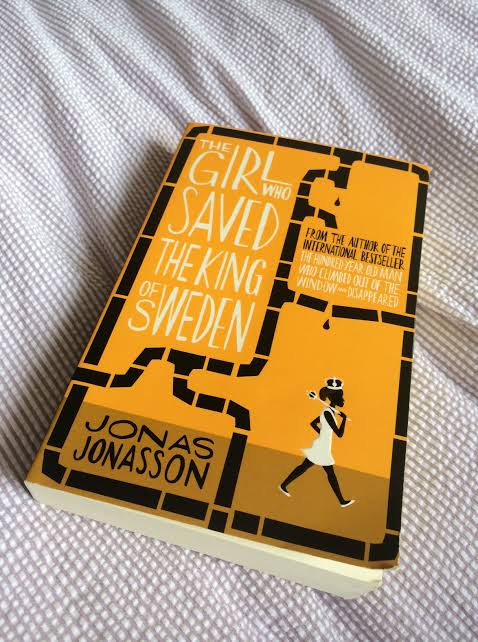
Book Review: The Girl Who Saved the King of Sweden

The Girl who saved the king of Sweden is written by Jonas Jonasson. His best-selling novel is the hundred years old man who climbed out of the window and disappeared.

Book plot:

Nombeko Mayeki is born a poor black girl in Soweto. She leaves the slums and in a twist of fate. She ran over a car but survives. this puts her into the employ of the engineer who ran her over, as a cleaner in South Africa’s secret nuclear weapons facility.
Nombeko is smart, brilliant and a fast learner. Even during her childhood, she is surrounded by uneducated people, still, she managed to teach herself how to read write, and calculate arithmetics. She even tells the answers of long multiplications within seconds. She learned English and poetry from a scholar who has 32 diamonds in his teeth. He is irresponsible about his life, but he is good at poetry and reading. First, he wanted to seduce Nombeko but, she stabbed his leg with her scissors and made him use a crane for more than several months. After that incident she always had her scissors wherever she goes, one night she came to know that person is dead and went to his home and grabbed all his diamonds then in the morning she left her native place.
In the custody of the engineer, she taught herself engineering arithmetics and science as well as learned Chinese from the other servent sisters. After fate made her escape from there. She went to Sweden but… Instead of antelope meat, one of the atomic bombs ended up inside her luggage.
Nombeko’s Ultimate wish is to live a normal and happy life with her own family and children. How does she gets rid of that nuclear weapon, what happened to her diamonds? how she lives her life normally and how she saves the king of Sweden- as it is said in the title of the book is the main plot of this book.

About the book:

This is one of the books that you never feel pathetic whenever a character dies. Cause, the whole book is written in a comical manner, and the author used a lot of anectode and funny incidents to make the book more alive.

Some facts about Jonas Jonasson’s books:

  • His storylines will be simple and understanding. Whatever the plot might be, it will have the question mark of what is going to happen at every end of the chapters in our minds.
  • Jonas Jonasson’s book themes will be similar to his other works. The cover itself tells you that the appearance of the books is similar to one and another.
  • Jonas Jonasson is a comedy writer. Who writes with a lot of anectodes and comical scenes. He is one of the authors who has the ability to make the funeral into a theatre.

Book Quotes:

It sure was an unjust world when certain people received an excess of certain things, while others got nothing.

The more I see of men, the more I like my dog.

The difference between stupidity and genius is that genius has its limits.

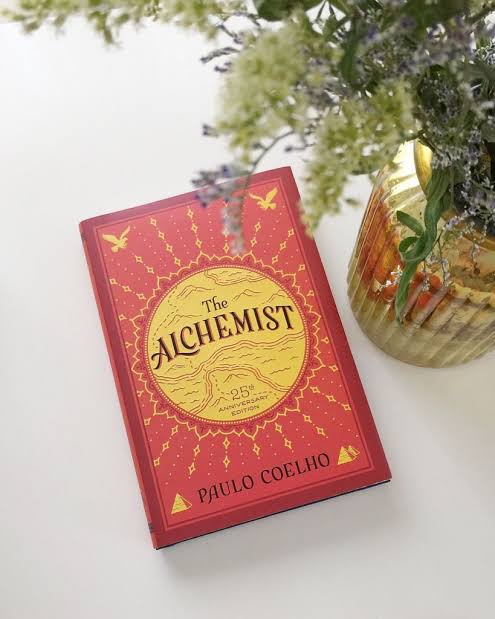
Two must-read books of Paulo Coelho

Book: The Alchemist

Book Plot:

A Sheppard boy who wandered most of the places in Andalusia with his flock of sheep. Once he was sleeping in an abandoned church, he dreamed of going to the pyramid. He already had that dream once before. So in a place Tarifa he accidentally met a gypsy lady and she told that there in Egypt he will find his treasure. The followed story is about the adventure taken by the Sheppard boy to reach his Destiny.

About the Book:

  • Through this book, the author motivates us to listen to our hearts while we pursue our dreams. a philosophical fiction and Paulo Coelho gave him at best.
  • The Sheppard boy’s name is Santiago. But, the author never mentions his name except in the first line of the story. We must learn that trick from Paulo Coelho.
  • Paulo Coelho always concentrates on his story. No puns, no scribbles, no long narrations, no heroic entries, and especially no circumlocution. Just a plot and beautiful words to make it a novel. That’s why he is one of my favorite authors.

Quotes:

It is not what enters men’s evil mouths that’s evil… It is what comes out of their mouth that is.

There is only one thing that makes a dream impossible to achieve: the fear of failure.

There is only one thing that makes a dream impossible to achieve: the fear of failure.

when you want something, all the universe conspires in helping you to achieve it.

Tell your heart that the fear of suffering is worse than the suffering itself

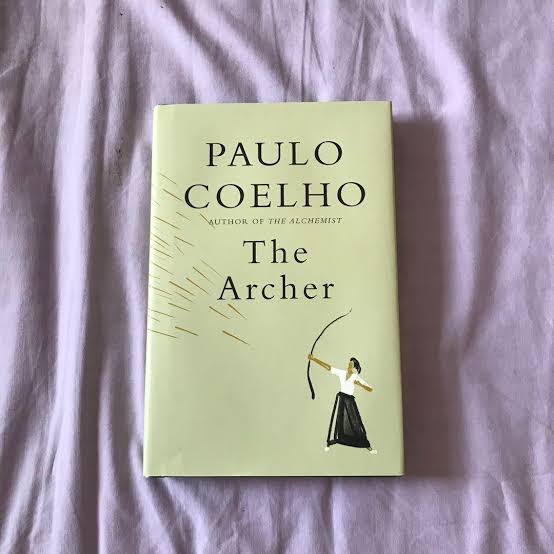
Book: The Archer

Book Plot:

Tetsuya, a man once famous for his prodigious gift with a bow and arrow but retired from public life. The boy who comes searching for him wants him to teach the way of the bow, and the archer illustrates the way of the bow and the tenets of life.

Quotes:

What is a master? I would say that he is not someone who teaches something, but someone who inspires the student to do his best to discover the knowledge he already has in his soul.

The bow is life: the source of all energy. The arrow will leave one day. The target is a long way off. But the bow will stay with you, and you must know how to look after it.

Elegance is not the most comfortable of postures, but it is the best posture if the shot is to be perfect.

Why you must read these books:

  • Paulo Coelho is an inspirational person who never disappoints us through his books, he suffered a lot and searched the way out of his hell through philosophy, religion, and faith.
  • I don’t know why Paulo Coelho’s books come under the genre of fiction? For real, it is a self-motivational book. His words are simple his books are the only books that I read in a single sitting.
  • If you are a person who fears failure, rejection, and humiliation… You must read these books. After reading these books you will do something you love to do or you will at least think about what do you love to do.

Remains of the day

Introduction: In this article, I’ll be examining the ideas of dignity, loyalty and nobility that the novel explores.


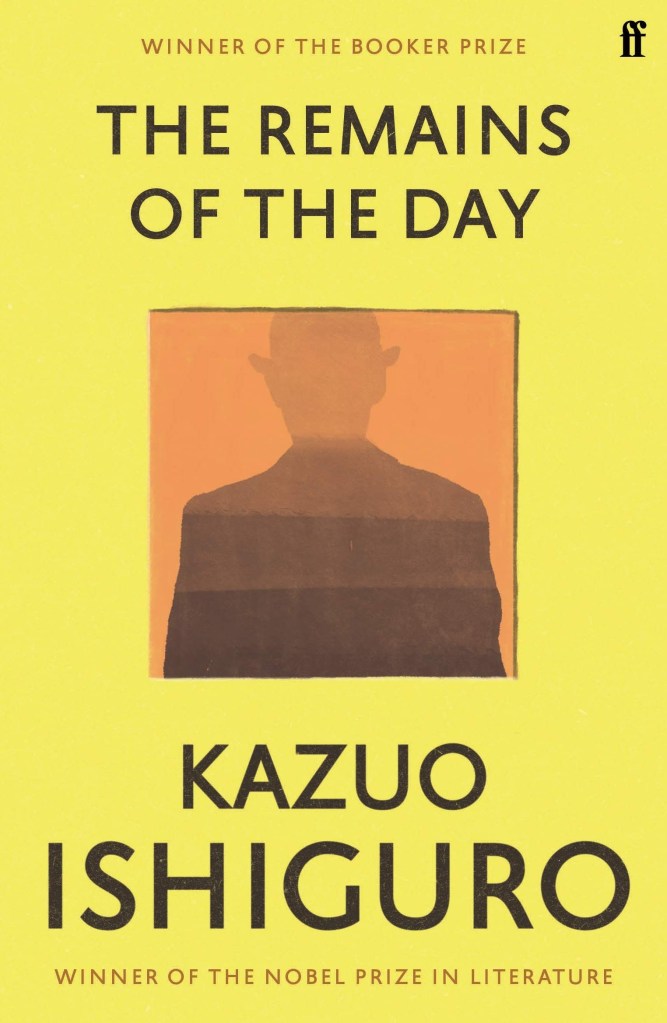
The novel Remains of the Day by Kazuo Ishiguro is a reflective novel. It explores many themes but the one I am going to elaborate about is the theme of dignity, loyalty and nobility. In this novel, the tone is controlled, the language is carefully crafted, and the themes revolve around the position of the individual within a society. The story takes place in July 1956, the same month and year as the Suez Crisis. The novel portrays the decline of the aristocracy and of the practice of keeping a large staff of house servants on English estates. It is staged alongside the histories of Great Britain and Europe in the years preceding and following World War II.
In the novel, the first person narrator, Stevens is a butler on the verge of retirement who takes on a journey to meet his former coworker, Miss Kenton. He also tries to come into terms with his past by remembering the time he spent in Darlington hall.

Idea of dignity:
Stevens’s Idea of dignity is one of the central themes of the novel. Stevens’s definition of dignity is quite different from that of the usual meaning. On one hand where dignity is referred to as being honourable and worthy, Stevens Idea is to completely suppress his emotions which leads to him losing Miss Kenton forever. To him, this kind of ‘dignity’ is the highest Ideal. He believes to be a great butler, one needs to have dignity which one can strive for throughout their career. He believes in professionalism which cannot be compromised at any cost and that’s what makes a great butler, but also adds that the ‘lesser butlers’ who don’t understand dignity will be swayed by the luxuries and etc and forget their professionalism. The fact that his idea of dignity is so misguided is sad because we are aware that he has always wanted great things from life but fails to take the right path in order to achieve his goals.
Stevens Idea of dignity is to follow all orders even if one doesn’t agree with it. For instance, Lord Darlington had ordered all the Jews to be stripped from their post and even though Stevens felt that it was an atrocious step to take, he still believed that following that order would be the right thing to do as he is a dignified professional. He knew that it was wrong and yet carried out because of blind loyalty.

Theme of loyalty:
We can see the theme of loyalty in Stevens by witnessing the way he always followed his employers orders even though he knew some were wrong. Mr. Stevens is so ingrained in his job to please his employer he almost becomes detached from his own self and becomes an extension of Lord Darlington. People always mentioned that his blind loyalty was like being a slave to Lord Darlington but he refused to believe all of it as he thought he was just being loyal to his employer. Stevens makes great sacrifices to dedicate his life to his understanding of dignity and professionalism. We can also see how his choice to blindly be loyal to Lord Darlington takes a toll on him and he breaks down in front of a stranger as he cannot even state that the mistakes were his but he is aware that it’s his employers which makes him a bit sad. It was clear that Lord Darlington sympathised with the Nazis and was Hitler’s pawn in a diplomatic game to influence the British government. Even after being aware of this fact, Stevens remained loyal and stated that Lord Darlington was not a bad man but was just a victim to politics.
Stevens says that Lord Darlington was a courageous man. He chose a path in his life which he thought was right and even though it was a misguided one, he chose it for himself. He says, that’s something he can never say about himself. He always followed orders and did what was expected of him and due to that his personal life was lost. The blind loyalty makes him wonder about his life choices.

Theme of nobility:
We can also see the theme of nobility in the novel. His role as a servant is fixed within the hierarchy of social classes left over from the Victorian and Edwardian eras. As a butler, his duty demands to be loyal to Lord Darlington. He followed his fathers footsteps who was also a butler as it was a tradition of service without families. His position and duties as a butler are defined by the rules and customs that bind the servant class. The class conditions under which Stevens serve are rigid. It says that marriage interferes with service and If one is interested in marriage, they have to first quit the job and Stevens always strives to meet these standards. Later in life he realises that it was a grave mistake and he should’ve just followed his heart.