The concept of social responsibility in relation to business means that the firm functions to accomplish its financial objectives and serves the society as well. No business exists in isolation. Every organ of the society contributes towards the success of a business. Thus it becomes imperative that business too does something for the society in return. This responsibility of business towards the society is called social responsibility.
A socially responsible firm should not work solely for profit maximization but should also seek the welfare of different sections of the society. Social responsibility of business refers to its obligations to take those decisions and perform those actions which are acceptable in terms of the objectives and values of the society.
Why business need to do social responsibility?
Business is a Part of Society:
Since business organisations are a part of society they must have a positive attitude towards the needs of society. Business is only a sub-system of society and this sub-system must contribute to the welfare of the main system. Therefore, the decisions taken by the manager should take into consideration the welfare of not only his organisation but also the welfare of other sub-systems (different parts of society like customers, shareholders, employees, etc.)
Long-Term Interest:
It is in the long-term interest of the business to discharge its social obligations by serving different interest groups such as employees, consumers, government and citizens. Wise business persons know that unless they serve the society by fulfilling its needs, they will not be able to climb the success ladder.
Indebted to Society:
A business uses the resources of the society for its functioning. Hence, it becomes obligatory for it to pay back its dues by serving the society. Businessmen should tend to the needs of the society and use its resources for community welfare. This practice ultimately helps the organization in establishing itself on the strong foundation of a pleased society and a cooperative labour force.
Public Image:
The activities of business towards the welfare of the society earn goodwill and reputation for the business. The earnings of business also depend upon the public image of its activities. People prefer to buy products of a company that engages itself in various social welfare programmes. Again, good public image also attracts honest and competent employees to work with such employers.
Social Awareness:
These days, employees and customers are more informed about their rights. While consumers expect the seller to abide by the fair trade practices, workers want fair wages and other employee benefits. If the expectations of these interest groups are not met, they may resort to either anti-social activities or seek help from trade unions and consumer courts. This will lead to industrial turmoil and unrest within the society which is harmful for proper functioning of the business.
Boston Consulting Group (BCG) Matrix is a four celled matrix (a 2 * 2 matrix) developed by BCG, USA. It is the most renowned corporate portfolio analysis tool. It provides a graphic representation for an organization to examine different businesses in it’s portfolio on the basis of their related market share and industry growth rates. It is a two dimensional analysis on management of SBU’s (Strategic Business Units). In other words, it is a comparative analysis of business potential and the evaluation of environment.
According to this matrix, business could be classified as high or low according to their industry growth rate and relative market share.
Relative Market Share = SBU Sales this year leading competitors sales this year.
Market Growth Rate = Industry sales this year – Industry Sales last year.
The analysis requires that both measures be calculated for each SBU. The dimension of business strength, relative market share, will measure comparative advantage indicated by market dominance. The key theory underlying this is existence of an experience curve and that market share is achieved due to overall cost leadership.
BCG matrix has four cells, with the horizontal axis representing relative market share and the vertical axis denoting market growth rate. The mid-point of relative market share is set at 1.0. if all the SBU’s are in same industry, the average growth rate of the industry is used. While, if all the SBU’s are located in different industries, then the mid-point is set at the growth rate for the economy.
Resources are allocated to the business units according to their situation on the grid. The four cells of this matrix have been called as stars, cash cows, question marks and dogs. Each of these cells represents a particular type of business.
Stars- Stars represent business units having large market share in a fast growing industry. They may generate cash but because of fast growing market, stars require huge investments to maintain their lead. Net cash flow is usually modest. SBU’s located in this cell are attractive as they are located in a robust industry and these business units are highly competitive in the industry. If successful, a star will become a cash cow when the industry matures.
Cash Cows- Cash Cows represents business units having a large market share in a mature, slow growing industry. Cash cows require little investment and generate cash that can be utilized for investment in other business units. These SBU’s are the corporation’s key source of cash, and are specifically the core business. They are the base of an organization. These businesses usually follow stability strategies. When cash cows loose their appeal and move towards deterioration, then a retrenchment policy may be pursued.
Question Marks- Question marks represent business units having low relative market share and located in a high growth industry. They require huge amount of cash to maintain or gain market share. They require attention to determine if the venture can be viable. Question marks are generally new goods and services which have a good commercial prospective. There is no specific strategy which can be adopted. If the firm thinks it has dominant market share, then it can adopt expansion strategy, else retrenchment strategy can be adopted. Most businesses start as question marks as the company tries to enter a high growth market in which there is already a market-share. If ignored, then question marks may become dogs, while if huge investment is made, then they have potential of becoming stars.
Dogs- Dogs represent businesses having weak market shares in low-growth markets. They neither generate cash nor require huge amount of cash. Due to low market share, these business units face cost disadvantages. Generally retrenchment strategies are adopted because these firms can gain market share only at the expense of competitor’s/rival firms. These business firms have weak market share because of high costs, poor quality, ineffective marketing, etc. Unless a dog has some other strategic aim, it should be liquidated if there is fewer prospects for it to gain market share. Number of dogs should be avoided and minimized in an organization.
SWOT is an acronym for Strengths, Weaknesses, Opportunities and Threats. By definition, Strengths (S) and Weaknesses are considered to be internal factors over which you have some measure of control. Also, by definition, Opportunities (O) and Threats (T) are considered to be external factors over which you have essentially no control.
SWOT Analysis is the most renowned tool for audit and analysis of the overall strategic position of the business and its environment. Its key purpose is to identify the strategies that will create a firm specific business model that will best align an organization’s resources and capabilities to the requirements of the environment in which the firm operates.
In other words, it is the foundation for evaluating the internal potential and limitations and the probable/likely opportunities and threats from the external environment. It views all positive and negative factors inside and outside the firm that affect the success. A consistent study of the environment in which the firm operates helps in forecasting/predicting the changing trends and also helps in including them in the decision-making process of the organization.
An overview of the four factors (Strengths, Weaknesses, Opportunities and Threats) is given below-
Strengths – Strengths are the qualities that enable us to accomplish the organization’s mission. These are the basis on which continued success can be made and continued/sustained.
Strengths can be either tangible or intangible. These are what you are well-versed in or what you have expertise in, the traits and qualities your employees possess (individually and as a team) and the distinct features that give your organization its consistency.
Strengths are the beneficial aspects of the organization or the capabilities of an organization, which includes human competencies, process capabilities, financial resources, products and services, customer goodwill and brand loyalty. Examples of organizational strengths are huge financial resources, broad product line, no debt, committed employees, etc.
Weaknesses – Weaknesses are the qualities that prevent us from accomplishing our mission and achieving our full potential. These weaknesses deteriorate influences on the organizational success and growth. Weaknesses are the factors which do not meet the standards we feel they should meet.
Weaknesses in an organization may be depreciating machinery, insufficient research and development facilities, narrow product range, poor decision-making, etc. Weaknesses are controllable. They must be minimized and eliminated. For instance – to overcome obsolete machinery, new machinery can be purchased. Other examples of organizational weaknesses are huge debts, high employee turnover, complex decision making process, narrow product range, large wastage of raw materials, etc.
Opportunities – Opportunities are presented by the environment within which our organization operates. These arise when an organization can take benefit of conditions in its environment to plan and execute strategies that enable it to become more profitable. Organizations can gain competitive advantage by making use of opportunities.
Organization should be careful and recognize the opportunities and grasp them whenever they arise. Selecting the targets that will best serve the clients while getting desired results is a difficult task. Opportunities may arise from market, competition, industry/government and technology. Increasing demand for telecommunications accompanied by deregulation is a great opportunity for new firms to enter telecom sector and compete with existing firms for revenue.
Threats – Threats arise when conditions in external environment jeopardize the reliability and profitability of the organization’s business. They compound the vulnerability when they relate to the weaknesses. Threats are uncontrollable. When a threat comes, the stability and survival can be at stake. Examples of threats are – unrest among employees; ever changing technology; increasing competition leading to excess capacity, price wars and reducing industry profits; etc.
SWOT Analysis is a strategic management tool that assists an enterprise in discerning their internal Strengths, and Weaknesses, and external Opportunities, and Threats, to determine its competitive position in the market.
Software is a generic term, used to refer to a set of algorithms, instructions, or programs which instruct a computer to complete specific tasks.
Business software (or a business application) is any software or set of computer programs used by business users to perform various business functions. These business applications are used to increase productivity, to measure productivity and to perform other business functions accurately.
Popular types of business software are :
Accounting Software
Accounting is, as everyone knows, an integral part of operating any business. Choosing the best accounting software for your business needs is highly important. But there are many types of accounting software which cater to a variety of different needs.
Payroll Software
One of the best accounting software options for small businesses to use is payroll software. Easy to use payroll software can be a lifesaver for over encumbered small business owners, allowing smooth daily operation of business activities and making sure that employee satisfaction and morale is kept high through competent pay management.
Tax Software
A comprehensive, easy to use and easily implemented tax software application can provide exactly what business owners need in order to navigate the complexities of any nation’s tax framework. It is well known that fulfilling legal tax obligations and calculating the best tax outcome for your business is one of the most important aspects of maintaining business integrity.
Book-keeping Software
Streamlined and easy to understand bookkeeping software programs are the lifeblood of any successful business of any size. When it comes to accounting software for small businesses, the ability for layman business owners to have important accounting information delivered in an easy to use, easy to understand format can be absolutely essential, allowing business owners to focus less on understanding complex accounting mechanics and more on running their business.
Communication Software
Effective and efficient communication, both internally within the business and externally towards customers, is vitally important to the successful operation of any small business. It is important to identify and make use of competent workflow software in order to maximise the efficiency of your business communications.
Customer Relationship Management Software
One of the best ways to better understand relationship with customers and to drive business growth is to use a CRM software tool in order to better analyse the ways in which your business interacts with its customer base. Small businesses are able to successfully manage customer relationships through the best CRM for small businesses.
“Dreams reach their final destination when executed.”
Amatullah P.
What exactly is Execution for you? A dictionary nerd would give the perfect definition of it but the ‘Dictionary of Business’ has a completely different meaning altogether. Let’s begin with the standard way and get you imagining!
Till now, we made you analyse the aftermath of building a company but this story will drag you into that internal process of thought!
It’s been a struggling journey all along. You are broke and want some source of income which is quite obvious. That is when your company is born because it has started occupying some space in your thought. Now, you plan towards executing its existence in the society. Of course, you don’t begin with that company motive in head. The first thought is always to go for a job wherein you receive ample experience from which you can learn and set up your own business. Let us consider that you are ready to begin your own company which means that you will now have to execute your motive. Executing here doesn’t simply mean initiating. Execution includes the proper steps you take into getting your company a success! Of course, you are not required to become an overnight news sensation. All you need to do is, just take the correct steps towards your company.
Execution means employing eligible employees for your company, being updated with the current market trends and coming up with suitable services, efficiently marketing your goods and services either through social media or any other network which is in exquisite demand during the given period of time! All the steps that you take which would guarantee success of your company come under the umbrella term Execution in business. Coming up with customer attractions like discounts, giveaways, buy 1 get 1 free offers are examples of perfectly executing your business in the smoothest way possible! You want people to buy your products and these attractions are sure to get the flies in the trap! Of course, the word ‘Trap’ shouldn’t be literally considered here because you don’t want to impose your services on people rather make them opt for those willingly and with love. That’s exactly why, Execution as a concept turns out to be handy!
The example of KFC has been discussed in the earlier article as well. How it started with the sale of chicken and became a widespread branch including more variety in food items which is the way they executed their business to make it run for a long long period of time. They considered the needs of people and came up with convenient offers to keep fuelling the company. Effective planning in short, is what we term as Execution. By this, you are not expected to lay down a prospectus with phenomenal ideas, all clashing into one another, making it difficult for you to decide! You are not expected to stretch a wide sheet of paper and jot down ideas from different sources. It’s because experience teaches you all but if you are a perfectionist then you are free to do so. There is no obligation in the negation! 😂
By now, you must have understood the key to effective functioning of a company which lies in the way you run it- Execution. Yes, execution is similar to initiation. Yes, execution is beginning the task but it also carries a deeper meaning wherein the way you begin that task, too is involved.
Technology is defined as the use of data to create and develop products and equipment that may be used in a variety of ways.
Technology has become an increasingly important aspect of our daily lives. Despite the fact that technology has made life easier for all of us, it has also brought with it a number of negative consequences that we must not overlook. Technology is essentially the means by which we put scientific discoveries into practice and combine them with our personal demands. Technology is a broad term that refers to the various tools, machinery, and equipment that we utilize on a daily basis. Man devised these tools and equipment to make tasks faster, easier, and more comfortable. Science and technology are inextricably linked; progress in one field leads to progress in the other. Science helps to build and produce technical items and equipment that serve humanity through research, experimentation, and observations.
Advantages of Technology in Life:
1. It has aided human growth and development.
2. Inventions and discoveries have improved the quality of life by making it easier, more effective, and more convenient.
3. Technology has connected the entire world, transforming it into a global village.
4. It is a boon to mankind because it is used in every aspect of life.
5. Technology has not only made our lives easier and more comfortable, but it has also contributed significantly to global economic growth.
6. Creative technology, which includes art, design, and advertising, has aided in the promotion of art and design through software applications.
7. Buildings, bridges, and plazas have become easier to design and construct thanks to advancements in architectural technology.
8. Industry has benefited from industrial technology as well.
9. Microtechnology is advancing at a breakneck pace, allowing chips and microelectronics circuits to improve performance and functionality while lowering costs.
10. Medical technology has produced a plethora of diagnostic and treatment devices and instruments. With the use of technology, diseases that were formerly difficult to diagnose and treat are now effectively diagnosed and treated.
Drawbacks of Technology:
While technological improvements are beneficial to us, we now appear to be overly reliant on them.
The following are some examples of technological disadvantages:
1. The use of mobile phones was intended to allow people to communicate in times of crisis. However, we now witness children becoming overly engrossed in various mobile applications, wasting their time.
2. The use of digital technology has been linked to a number of crimes.
3. It has also been observed that many people lack the fundamental education required to ensure proper use of today’s technology. Most of them, in fact, use it for the sake of fashion and hence end up misusing it.
4. People have become so reliant on technology that they are unwilling to engage in any manual labour. People prefer to use technology even for little tasks that can be completed manually. As a result, humans have become both intellectually and physically inert.
Finally, we must acknowledge that science and technology have led human society to the pinnacle of living perfection. However, we must proceed with prudence and in moderation. Misuse of science and technology can lead to negative outcomes. As a result, we must keep an eye on usage and behave wisely.
In India, the marketing environment is shifting. From the last ten years to the present, the consumer marketing trend has shifted dramatically. In India, the local environment has altered in terms of infrastructural, social, and economic factors. The popularity of online marketing is growing across a wide range of people of various ages. E-commerce is growing as a new market that has the potential to contribute to economic progress.
INTRODUCTION:
E-commerce is a platform for businesses and consumers to buy and sell goods and services through the internet. The term “electronic commerce” refers to the use of telecommunication networks to expand a company’s market and retain client relationships. “Businesses and their customers use e-commerce software to conduct transactions. Customers can order things, verify orders and track shipment, review prior transactions, reorder products, and manage their accounts with them 24 hours a day, seven days a week.” (From 2009 to 2012, Auburn See Wolf llc)
India’s economic industry is on the rise and experiencing a growth spurt. The Online Travel Industry is one of India’s most important segments of ecommerce, and it is flourishing because to the country’s Internet-savvy urban populace. Private companies such as Make my trip, Clear trip, and Yatra were part of the online travel sector. The government has also launched IRCTC, an Indian Railways project that has proven to be successful. The online classifieds market is expanding as well. It is organized into three categories: employment, matrimonial, and real estate. Due to the fast development in the number of mobile users in India in recent years, mobile commerce is proving to be a robust and secure supplement to ecommerce.
According to a research by the Internet and Mobile Association of India, India’s e-commerce business is growing at a 70 percent yearly rate and has increased by more than 500 percent since 2007. E-commerce and digital downloads are predicted to develop quicker, while online travel will continue to dominate the sector. The following are the primary sectors in the e-commerce industry:
Travel- 51%
E-Retailing-40%
Cothiers-09%
Unique Features of E-commerce Technology:
1. E-Commerce: is Technology-Enabled: While traditional commerce has existed since the dawn of time, E-commerce is the result of the integration of digital technology into business processes and commercial transactions. Internet, WWW, and different protocols are the technological basis of E-commerce.
2. Virtual Communities: are online communities formed through the use of tools such as chat rooms and specially designed websites where people with common interests may connect with one another over the internet.
3. Customization: The world is moving away from mass-production and toward mass-customization, thanks to the use of E-commerce technology. Product customization guarantees that goods are created to clients’ specifications and preferences.
4. Intercommunication: E-commerce technology allows buyers and sellers to communicate in both directions. Firms can communicate with customers via E-commerce enabled websites on the one hand. Customers, on the other hand, can fill out order forms, provide comments, and contact with the companies who run the business.
5. Universality: E-Commerce allows people to buy and sell things all over the world using websites. The websites are universal in that they may be accessed from anywhere in the world at any time.
The media platform is considered to be strong because it is the sole reason through which various different business opportunities are flourished by providing them many wide opportunities in the process. Thus, to conclude in simple words media contributes a lot and it helps to improvise the conditions of many businesses and such media laws are very much crucial and relevant. They are required to be Amended as and when needed in the business sector. Different ways through which media can heavily benefit businesses are –:
: Advertisements which are preparing in educational advertisements are a logical way of spreading the voices in masses concerning the particular business. As the spheres of media are growing and are branching out, the most important branch of it is social media which has the potential to uplift businesses from a root level. With addition to the standard media sources and social media strategies many customers can be invited and give people what they want and deliver their services.
Better Responsiveness: The method of input and distribution by way of media is made simpler. If the clients have queries, questions, or any issues with, what the company does, they will let the company know in a prompt way. Social networking in businesses provides people a possible means to convey their thoughts and it allows businesses an incentive to react accordingly. Through such sources companies will see lawless stuff and verify to their clients that their questions and queries can be answered.
Information: Social networking which is presently emerging to be the most helpful source for new business opportunities is insightful and allows individuals to see an insight to what the target audience is and what other consumers share in terms of goods and services share online. This offers a better insight into the industry and many variables that impact the business.
Branding and Communication: Communication is the most crucial aspect for any businesses success and if they frequently engage with customers it helps to improve the company’s image. On can connect and handle their clients in a private level through social networks mediums. When the company is engaged in debates, the consumer finds the company as available, free and sensitive. The way that the company is viewed and consumers are gradually linked to the information that one gets, is largely impacted by this type of presentation. Both personal tales and social media can help boost the technology retail.
Social Media for growth in business sector: One has to make sure that their social media approach and presence is suitable for mobile phones which helps to guarantee a useful user experience to the consumers. Social media advertising sites generally generate popularity at a very fast pace, and the use of those particular websites in advertising and is used to promote what they have offered will also be beneficial for them.
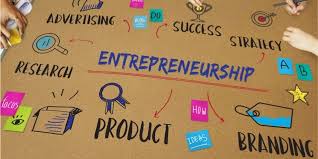
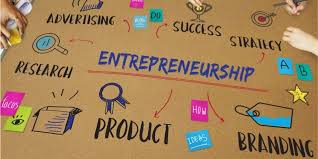
Entrepreneurship is the ability to develop, organize and run a business enterprise, along with any of its uncertainties in order to make a profit. Entrepreneurship is basically the act of creating a business or businesses while building and scaling it to generate a profit. It’s about building a life on your own terms. No bosses. No restricting schedules. And no one holding you back. Entrepreneurship development is a process of developing certain skills in an individual which are required to make him/her a successful entrepreneur. The success of an entrepreneur can be judged by success of his project or business. Finding a way to sell oneself before anyone believes in one or ones business, being able to explain and prove why their product or service is worth the price or investment, knowing when something is valuable, even if no one else does etc. are some of the features a successful entrepreneur possess. Big successful companies like Microsoft, Google, Apple etc. have all attained the status they have now because of their respective entrepreneurs. Success of such start-ups not only benefits the people associated with it but also the economy as a whole. It slowly changes the world. Off course not every start up is a massive hit, some might be pretty mediocre and some might even do more losses than gains but nevertheless in the contemporary world, the need and urge for entrepreneurship development has drastically increased. There are certain characteristics which are observed in entrepreneurs who write big success stories. These characteristics are a prerequisite for becoming a successful entrepreneur. The first and foremost skill is creativity. It means thinking out of the box. Coming up with new ideas, being open to new methodologies, creating something new etc. are some examples of being creative. Creativity gives birth to Originality. Risk taking is another characteristic of a successful entrepreneur. Without the will to explore the unknown, one cannot discover something unique. Risk-taking involves a lot of things. Using unorthodox methods is also a risk. Investing in ideas, nobody else believes in but you is a risk too. Good entrepreneurs are always ready to invest their time and money. But, they always have a backup for every risk they take. Planning is another characteristic and probably the most important one. They say “If you fail to plan, you plan to fail.” Planning is strategizing the whole thing ahead of time. It basically sums up all the resources at hand and enables one to come up with a structure and a thought process for how to reach ones goal. It involves how to make optimum use of these resources. Facing a situation or a crisis with a plan is always better. It provides guidelines with minimum to no damage incurred to a business. Other characteristics include passion for the work or business one choose to do, professionalism in the way the work is done, knowledge of the field of work or business, social skills including relationship building. An entrepreneur must be open minded towards learning, people and even failures.
“Entrepreneurship is an activity that entails putting one’s own resources at risk in order to start a business or produce something with a commercial purpose.” The act of starting a firm in order to make a profit is the basic definition of entrepreneurship. In today’s society, however, entrepreneurship has expanded to include the act of changing the world by solving large-scale problems. With the introduction of the internet, entrepreneurship now has the ability to effect social change by developing a service or product that has a good influence on individuals and addresses societal concerns with innovative solutions. Entrepreneurship including land, labour, natural resources, and capital can yield a profit in economics. The entrepreneurial mindset is characterized by exploration and risk-taking, and it is an essential component of a country’s ability to compete in an ever-changing and increasingly competitive global marketplace.
What is an entrepreneur?
An entrepreneur is a person who starts a new firm, taking on the most of the risks and reaping the majority of the benefits. The entrepreneur is often thought of as a creator of new ideas, products, services, and business or methods. The entrepreneurs on this list hail from all over the world (from the United States to Europe to Asia) and operate in a wide range of fields (HR, digital, health, finance, entertainment, art, design, and so on), but they all have one thing in common: a passion for what they do. Small or home-based businesses to global corporations are all types of businesses. An entrepreneur’s earnings are made through a combination of land, natural resources, labour, and capital, according to economic theory. In a word, an entrepreneur is someone who has the desire and determination to start a new business and is willing to take on all of the risks that come with it.
Characteristics of Entrepreneurship:
1.Self-motivation: One of the most important attributes of entrepreneurs is their ability to motivate themselves. Even if you don’t have an immediate source of revenue, you must stick to your plan and keep moving forward.
2.Job Creation: Entrepreneurship leads to the creation of jobs. It offers an entry-level role, which allows unskilled workers to gain experience and training. 3.Increased Standard of Living: Entrepreneurship helps to raise a person’s standard of living by raising his or her income. The term “standard of living” refers to a growth in a household’s consumption of various products and services through time. 4.Risk Bearing: The essence of entrepreneurship is the willingness to take risks, without which one cannot thrive. It occurs as a result of the development and implementation of new concepts. Because such ideas are sometimes speculative, the outcome may or may not be favourable and immediate. 5.Encourages research and development: Before introducing a new product or service, it must be thoroughly investigated and tested. As a result, entrepreneurship helps universities and research institutes to support research and development. This encourages economic growth, research, and development. 6.Be enthusiastic about your work: At the end of the day, successful entrepreneurs are driven by their passion. They are passionate about their product, service, or mission. When you’re feeling down, passion will help you discover inspiration and propel you forward. To keep going forward with your self-employment ideas, you’ll need passion.
With the rise in the online world of work, digital marketing is emerging as a crucial field of marketing. In 2019, digital marketing surpassed traditional marketing for the first time. This is due to the fact that, consumers are increasingly getting involved with the online channels. Due to the pandemic, nearly all utilities and services are shifting towards the online mode. In such scenario, digital marketing is increasingly getting popular and necessary to sustain businesses. Digital marketing refers to the marketing that is done using internet or online based technologies like laptops, mobiles, or other digital devices. It is basically advertisements done through digital platforms such as search engines, websites, social media, email, and mobile apps. By implementing an a sound digital marketing strategy, marketers can collect valuable insights into target audience behaviours while opening the door to new methods of customer engagement. Additionally, companies can expect to see an increase in profits. Digital marketing revolves around 5Ds: digital devices, digital platforms, digital media, digital data, and digital technology. The first of the 5Ds mainly focuses on digital devices such as smartphones, tablets, desktop computers, TVs, and gaming devices. It mainly deals with the target audience’s interaction and engagement on websites and mobile applications. Digital platforms like Facebook, Twitter, LinkedIn, YouTube, Instagram etc. Are the preferred platforms to capture the attention of target audience. Digital media revolves around paid, owned, and earned communications channels utilized to build engagement with the target market through several ways such as advertising e-mails, messaging, search engines, and social networks. Digital data refers audience profiles and engagement patterns with businesses. Digital technology on the other hand focuses on building interactive experiences across a wide range of platforms, from your websites and mobile apps. To gain an upper hand in the sphere of digital marketing, it is important to understand and creatively utilize the 5Ds for the benefit of the company or business. There are many platforms that assist in digital marketing. Social media is a great way to promote products or resources organically to brand followers, and engage with consumers. A vast majority of individuals have more than single social media accounts. Platforms like Facebook, Instagram etc. Are very popular and helpful in reaching out to a large audience. Social media platforms allow marketers to reach their prospects in a variety of ways. Marketing teams can use these channels to distribute paid ads and sponsored content. Each platform is different so one can choose accordingly but most have capabilities that allow marketing teams to place ads based on location, job title, interests, age, etc. E mail marketing is also very useful. It allows organizations to stay connected with prospects and customers, sending them customized newsletters or offers based on past shopping history or brand engagements. Even consumers agree that email plays a role in their purchase decisions. Furthermore, transactional emails are more likely to be opened by subscribers. Digital marketing platforms span several functions in one solution – allowing marketing teams to get a more integrated / holistic view of their campaigns.
“Your smile is your logo. Your personality is your business card. How you leave others feeling after an experience with you is your trademark.”
– Jay Danzie
Salut! Let us first discuss the evolution of a perfect company. It starts with the owner’s hard earned money (through different sources of course 😉 ) singlehandedly. With growth in sales, the owner feels the need to have assistants to help him out which encourages him to hire a few eligible ones. They are so eligible and proficient that the company keeps experiencing surplus which fetches high amount of customers until it becomes a reputed brand to generate regular customers. However, the owner realizes that apart from his regular customers, the new ones weren’t bothering to choose his brand. Then, he shapes his services in a way that distinguished his company from the competitors. What do you think did he do?
He used ‘Creativity’ which is so essential in business if you wish have an edge over the others. He creatively increased the convenience in his services thereby attracting larger audience.
KFC or Kentucky Fried Chicken for instance, originally dealt with the sale of chicken and now surprisingly includes burgers, softies, cold drinks, and other finger licking attractions. Why do you think did they need to evolve? KFC originally was started by Colonel Harland Sanders on a small scale but as his popularity increased, he transformed to a brand which is so high in demand today. Customers make a brand. However, to get a variety of customers apart from the regular chicken friendly ones, they decided to assign variations into their services which includes burgers, soft drinks, softies, mousses and what not!
Creativity in business demands cooking up interesting services from the existing ones. In short, coming up with variety from a single theme! For instance, the above example where an eatery for chicken evolved into multiple scrummylicious items!
Convenient services avail more benefits for customers. That is where creativity comes into the picture. How well can you craft convenience in your services without imitating your competitor? How well can you observe the convenience policy and services of your competitors and frame an entirely unique service which could fetch great surplus? Which services would have a greater demand and how will it be unique from the competition? If you master the above questions by coming up with a suitable answer, then your business is fully secured and benefits are awaiting you!
Why do you need to be unique though when people are more attracted to the common services? People normally think that common services send Express posts to customers thereby inviting them faster than usual but they fail to contemplate over the fact that they aren’t alone in the market and that their competitors are like sharks who won’t let them survive!
That’s exactly why, we yearn for creativity. Everybody wants to go for a unique idea that would have no competitors because attacking or imitating the services of your competitors will only damage relations and may make matters worse! In a fit of rage, your competitors may not allow customers to reach out to you and may act as hitchhikers in the way by showing your customers directions towards their company instead of yours! They may badmouth your services and show your weak side to the mob. The extent of enmity can’t be predicted because nobody likes a “Copy Cat”.
Thus, one can conclude stating that Creativity is all about understanding the changing desires of the mob or the market trends and to subtly begin including a variety in your services or fine tune the existing ones with amazing facilities that offer whole lot of conveniences!
“Excellent customer service is the number one job in any company. It is the personality of the company and the reason customers come back. Without customers there is no company.”
Connie Elder
An exciting endeavor is to have your own business and company. At first, you start with its services all alone. When you grow gradually, you employ staff to help you out. A company receives its prestige with the amount of staff in it because people usually estimate a company to be ‘big’ because of the amount of people working in it and also because of its quality services that attract a plethora of customers! The amount of people working in it signifies the economic condition of the company which acts as a step towards effective branding! However, this doesn’t imply employing all types of unskilled labor just for showing off your prosperity! Of course, you require skilled individuals to inflate the balloon of prosperity because they would be representing your company. You don’t want a bad impression of your company and its services because of certain amateur employees who would make you lose even your ‘family customers’. When I refer to family customers, I pinpoint towards the regular ones who never fail to pay us a visit and always prefer our brand over the other!
Creating such regular customers requires a great deal of time and patience because you are expected to reach the core of their hearts and win their trust. How will this happen? Surely, by establishing friendly relations with them, solving their queries patiently, providing them the best quality services, interacting with them, being available at all times, and offering to solve their difficulties while using your product or service.
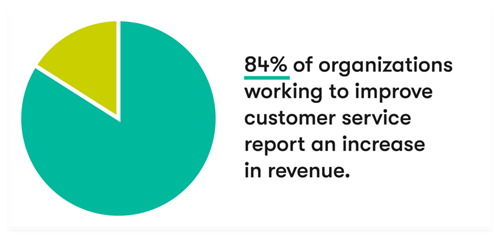
What if I tell you that these qualities could be assigned in a single person who could take this position and help you set things straight? Yes, you guessed it right. The Customer Service is a great initiative to establish and maintain all of the above qualities of your company. The goal of any company is to create convenience for customers. Customer Service is the greatest convenience you could ever offer because the genuineness of your company isn’t under threat and people feel free to interact in a friendly manner conditioned to the personality and skill of your customer service!
If your company isn’t prospering despite having this service then ask yourself and provide a Yes or No answer to the below questions to arrive upon a conclusion!
Is your customer service timely?
Is your customer service friendly?
Is your customer service patient when dealing with consumer problems?
Is your customer service an extrovert with bold orating skills?
Is your customer service having a high pitched and audible conversational tone?
Is your customer service fluent in formal talk and good in vocabulary?
If the answer to all of these is a big Yes, then you are currently on the safe side but if, even one of the questions has No as an answer then expectation of heavy gains from the company must be deflated! A customer service needs to have all of the above qualities to ensure success, reputation, brand, and image of your company in the market!
Let’s consider our own experience. Vodafone would be a good example to go on with.
Imagine that company without a customer service. Would you ever go for their services? Whenever we have network issues or balance issues, we instantly phone the customer service for help and they update us regarding their recent development due to which perhaps the issue has occurred. Now, what if there was no customer service? We lose our internet connectivity suddenly for hours together and have nobody to confront to regarding the same! We feel helpless and impatient without internet because the world can’t survive without it today. We have nobody to ask regarding this and after encountering such issues several times and with no possible interaction, we decide to leave the company and its service once and for all!
So, that’s the beauty of Customer Service. They help maintain good interaction with the consumers which is so very essential when handling a company! Customer Service acts as a mediator or a link between the head (CEO) and consumers. They have the authority to speak on behalf of the head or CEO and transfer calls to the CEO for the consumers, if needed!
That eases some of your burden as a boss, doesn’t it? After all, a boss has several other affairs to look after, like trimming and shaping the services of the company in accordance to the desires of consumers through online surveys for which mailing lists are vital. That too comes with its own hefty steps. Creating a website and providing a follow button while allowing people to jot in their addresses or creating surveys with mailing facility at the end while enquiring regarding the problems of consumers. Since, digital marketing is so great in demand today, one can’t possibly ignore these pivotal steps in the process and compromise with the reputation and smooth functioning of one’s company!
That should explain the Importance of Customer Service as a whole. So, if you are the CEO, work on the services that you offer while your Customer Service responsibly blurts those services out to your consumers while maintaining effective interaction! Unity is strength, isn’t it?
However though some of the answers to what customer service means to you are subtly a part of that long paragraph above, let me provide a brief list of answer samples that could help nail your interview!
Amazing Customer Service is like receiving an additional dollar from your parents as a gift or that extra icing on your favourite cake! Good customer service makes the customer enthralled with your honey dipped marketing as they start feeling sweetness being overloaded!
With Impeccable Customer Service, you are one step away from evangelism marketing.
Customer Service is the art of effectively persuading the customer into always preferring you over the others. That’s exactly why, the first impression of your customer service would decide the return of your customers in the future!
Customer Service is like holding a magic wand and pulling the customers in a state of trance so that they are completely convinced of being your regular or family customers!
Great Customer Service is associated with the feelings of gigantic loyalty and ethics inclined towards your job and clients! Thus, customer service is an ethical mannerism of mesmerizing your customers!
Customer Service is considering your clients as guests and paying them hospitality in the most respectful manner as possible.
Customer Service is actually like coining customer rights and accepting fundamental customer service duties oneself wherein customers’ rights and your duties can’t be violated!
Customer Service is like laying out your resume during an interview wherein constant frustration and nervousness prevails pondering over whether or not our work will be approved.
Customer Service is like giving a competitive examination wherein your answers would determine your marks.
Customer Service needs to be relevant and interesting. Thus, it is the medium of customer satisfaction wherein you don’t fail to reveal the additional perks your customers are exposed to!
Ever seen the advertisement of Oreo cookies being dipped in milk? The ancillary concept of a glass of milk is that efficient customer service which compels and tempts the mob to definitely try the cookie out!
It isn’t necessary to appoint extra staff for customer service because the owner is enough to introduce his services or products in a creative manner so as to indirectly highlight the benefits and the reason for customers to always grace his arena of the ‘best available products’.
Customer Service is like getting your customers ride the giant wheel of words so as to help them enjoy the amusement park of your business to their fullest!
Customer Service is gently abutting the customer’s heart through cupid arrows of words thereby making them fall for your services.
A service that shows a complete disclaimer of the quality of your brand or business. It’s the major factor in helping customers decide whether or not, you are worth their expenses!
Customer Service is like that short trailer which effectively covers the interesting parts of your business in order to bond and attract customers towards checking your business out entirely. Of course, if the trailer is amazing one can naturally assume the movie to ace the theatres!
Customer Service is like dropping before the customer, a transparent veil that only allows partial vision with regards to mellow and patient wordings!
Customer Service is making people blindly trust your commodities so that no finger be pointed at the quality or making of your products and services! Humans have a myopic vision with respect to shopping which makes them easily trust the value of a commodity if a dozen sweet words are shot at them which is why, customer service comes in handy, making it simpler to generate a surplus.
Customer Service can be compared to the clouds wherein fluffy and picturesque words float about the vast sky of your business to make it look genuine and impressive.
Customer Service is a term coined for genuine, honest, patient, committed, devoted, and determined approach towards your business and clients. In short, the collection of perfect ethical behavior is a simple way to win your customers’ heart because the quality of your services is solely based on the characteristics and attributes you exhibit.
Every one of us loves a wee bit of flattering and advice. Customer service does this job. However, along with a few flattering remarks customers also require help with selecting the most suitable product or service according to their personality and budget. During times as such, customer service comes to the rescue wherein we, as businessmen patiently advise customers to opt for the right commodity on the basis of their need.
Customer Service is like accepting a little amount of your favourite creamy cake and offering a whole lot to the customer to create a grand impression in their hearts!
Customers are satisfied when you are with your duties. Thus, customer service is understanding that your job is to impress a hell lot of customers through your sweet words no matter how many attempts of profits fail initially!
Customers come out of the blue. Customer Service is like military training wherein one has to constantly remain alerted of the next approaching client as well as prepare oneself for the most satisfactory interaction every single time.
Considering the word Customer Service closely, one can figure that it actually is a service which means treating every customer equally without any bias or enmity and composing truthful and honest words from which you vow to never back off!
Thus, I would conclude stating that customer service is a highly dignified job wherein each and every customer is given careful attention thereby not disappointing them. The better your service, the more customer satisfaction can be guaranteed, and the better surplus can that particular company experience. Customer service thus, is that quintessential morality that you exhibit in order to win the hearts of your clients who would in turn fetch you potential customers with their precious feedback. Of course, one shouldn’t request customers to recommend their business to others. Why not leave a lasting impression with the quality of your services instead so that good feedbacks automatically drop from their mouths? In short, customer service focusses on the quality aspect, the way you interact and not the amount of words you chose to interact. The perfect marketing skills that you used in an ethical manner and not the incessant blabbering simply praising the product. Why not from now on, focus more on the quality aspect of our services rather than trying to thrust our commodities at a rapid pace without even trying to fine tune our services to emanate customer satisfaction? So, let us work with love and show the same to our customers so that they definitely feel the need to revert.
Trade cycle or business cycle refers to cyclical fluctuations in economic activities like employment, income, prices etc. It is a characteristic feature of capitalist system. In a trade cycle, there are alternating waves of expansion and contraction. These waves recur frequently and in similar patterns. It comprises of a period of good trade wherein the prices are high and unemployment is low and a period of bad trade wherein the prices are low and unemployment is high. A business cycle usually consists of four phases. These phases do not have a definite time intervals or periodicity. The four phases are: recovery, prosperity, recession and depression. Recovery is the first phase in the trade cycle. It is the revival period. Here entrepreneurs increase the level of investment. This in turn leads to increased employment and income. A increased income level means more purchasing power in the hands of people which leads to more demand for consumer goods. This leads to increase in prices for commodities and eventually leads to profit generation Business expectations improve and optimism prevails. Prosperity is the second phase in the trade cycle. In this stage, demand, output, employment and income are at the peak levels. Increased profits lead to increased stock market values. There is expansion in economic activities. Demand and prices go up. The production level is very high and known as boom. The economy surpasses the level of full employment to reach the level of over full employment. This leads to inflation and is a sign of end of prosperity. Recession is the third phase of the trade cycle. It starts when there is a downward descend from the peak. The level of investment declines and consequently the demand for raw materials decline as well. Liquidity preference rises in the economy. The margin of profit declines and a wave of pessimism spreads in the business. Recession can be mild or severe. Depression is the fourth phase of the trade cycle. It’s characteristic feature is the general fall in all economic activities. Production, employment, income decline. This general decline in economic activities lead to fall in bank deposits. Credit creation declines and bank rate falls. Distribution of national income change and margin of profit declines.
There are several factors responsible for the existence of fluctuations and trade cycles. External factors like political events, growth rate of population, migrations, discoveries, innovations etc are responsible for the cyclical fluctuations in the economy. As far as internal factors are concerned, mechanisms within the economy give rise to repetitive fluctuations. Over investment is one such factor. It is the credit availability by the banks which leads to over investment in capital goods rather than consumer goods. This eventually brings depression in the economy. Competition may be another reason for fluctuations. The profit motive causes firms to anticipate demand and subsequently do excess production. For this, firms hire more workforce and cost of production increases. This raises the prices of the commodities and decline in the demand for them. This ultimately leads to depression.
Business management involves the supervision, organisation and coordination of business resources and operations to achieve specific objectives.Managing yourself: introduction to management and leadership styles. Managing money and key financial concepts, including the implications of various sources of finance and the relative importance of cash flow and profit. Managing people, stakeholder management and professional communication.
Topics Of Business AND Management:-
*Advertising
* Business Planning
* Business Planning Guides
* Business Structure
* Business Structure
* E-Commerce
* Employment Issues
* Energy Topics
* Financial Management
*Integrating Business and Family
* Inventory Control
* Insurance
* Legal Issues
* Marketing
* Market Research
*Merchandising
* Packaging
* Pricing
* Record Keeping
* Risk Management
* Self-Employment Assessment
* Social Media
* Taxes
* Time Management
1. Advertising:-
Advertising — A fact sheet on advertising your business from the U.S. Small Business Administration.
Advertising (PDF) — Another advertising fact sheet from U.S. Small Business Administration.
Advertising — A PowerPoint presentation on advertising by Rutgers University Cooperative Extension.
Advertising Topics — A variety of advertising topics for agricultural business owners.
Online Advertising — Tips on online advertising by the U.S. Small Business Administration.
2. Business Planning:-
Business Planning — Business planning fact sheet by Penn State University.
Business Planning Workbook — Business planning resources for small farmers from the University of Maryland.
Business Plans Made Simple — A six-page fact sheet on how to write a business plan for your small business from the Nevada Small Business Development Center.
Economic Analysis of a New Business — Doing It Right — An eight-page fact sheet on conducting an economic analysis of your new business from Kansas State University Research and Extension.
Market Planning for Value-Added Agricultural Businesses (PDF) — A 53-page market planning guide and workbook from the University of New Hampshire.
Plan Your Farm — Business planning tools for small-scale farmers from Cornell University.
Restaurant Start-Up Profile (PDF) — A 51-page fact sheet on starting-up your own restaurant from the Illinois Institute for Rural Affairs.
Starting a Business — A fact sheet on starting a home-based business from the Iowa Small Business Development Centers.
Starting a Business in Your Home: Weighing the Pros and Cons — A four-page fact sheet on the pros and cons of starting a home-based business from UMaine Extension.
Starting a Home Business — An eight-page fact sheet on starting a home-based business from UMaine Extension.
Starting a Successful Catering Business (PDF) — A six-page fact sheet on starting a catering business from Virginia Cooperative Extension.
Starting Your Own Business (PDF) — A four-page fact sheet on starting your own business from the University of Wisconsin Extension.
Ten Frequently Asked Questions for Micro and Home Based Business Start-Ups — A four-page fact sheet on micro and home-based business start-ups from the Oklahoma Cooperative Extension Service
Writing a Business Plan (PDF) — A six-page fact sheet on business planning by the University of Tennessee.
3. Business Planning Guides:-
Business Plan Guide — Guide with worksheets to assist in developing your business plan from the Massachusetts Small Business Development Center Network
Business Planning — A guide for writing farm-based business plans from Cornell University.
Business Planning for the Agriculture Sector: A Guide to Business Plan Development for Start-up to Mid-Size Operations — A book to help agricultural business operators and a full fledged business plan from Cornell University
Business Plans and Profiles Index — A subject guide to sample business plans and profiles for specific business types from Carnegie Library.
Developing a Bed & Breakfast Business Plan — A 98-page fact sheet on creating a bed and breakfast business plan from Illinois Extension.
Developing a Business Plan for Value-Added Agricultural Products — A four-page fact sheet on developing a business plan for value-added agricultural products from Oklahoma State University
Landscape Business Planning Guide — How to develop and implement a well-defined business strategy from Cornell University
Online Business Planning Software — A free business planning software tool for agricultural and natural resource businesses from the University of Minnesota.
Sample Business Plan: Moose Mountain Cafe — Sample plan for a cafe business from New Hampshire Small Business Development Center.
Sample Business Plans — A selection of business plans to assist in the wording of your own plan from Michigan Small Business & Technology Development Center.
Sample Business Plans — A list of business plans to assist in drafting a plan for your business from the Small Business Development Center Network.
Sample Business Plans — Sample business plans for a wide range of businesses.
Scaling Up for Regional Markets — Scaling up for regional markets tutorial by ATTRA.
4. Business Structure:-
Choose Your Business Structure — A fact sheet written by the U.S. Small Business Administration.
Determine Your Federal Tax Obligations— A fact sheet on what form of legal entity you should use from the U.S. Small Business Administration.
Farmers’ Guide to Business Structures — A SARE publication outlining the various forms of business structures available to farmers’ and small businesses.
How toOrganize Your Business — A six-page fact sheet on how to organize your home-based business from UMaine Extension.
Selecting an Organizational Structure for Your Small Business — A four-page fact sheet on structuring a small business from Montana State University.
Starting, Operating, or Closing a Business — Web links to a new business checklist, selecting a business structure, employees, deductions, recordkeeping and accounting methods, and FAQs from the IRS.
5.Customer Service:-
Customer Service — Customer service video by the U.S. Small Business Administration.
Focus on Customer Service — A Colorado State University Fact Sheet on improving your service to customers.
Obtaining Referrals to Increase Sales — Methods of gaining referrals in the sales industry from the University of Florida Extension.
So You’re in Sales — A six-page fact sheet on customer service for your home-based business from UMaine Extension.
The Customer is Still King — University of Maryland Extension bulletin on customer service.
6. E-Commerce:-
Creating Valuable Content that Converts — Recorded webinar exploring ways to improve the online presence for small businesses from eXtension.org.
Email Marketing — A fact sheet for eMarketing from the U.S. Small Business Administration.
Five Key Ingredients in Creating a Small Business Website — An article about creating a website for your small business by the U.S. Small Business Administration.
Maps, Apps and Mobile Media Marketing — Recorded webinar exploring a variety of ecommerce tools for your business from eXtension.org.
Selling On-line — A 24/7 Opportunity – Factors to consider in starting an on-line business by the University of Maryland Extension.
You are Here — Recorded webinar exploring mapping tools for small businesses from eXtension.org.
7. Employment Issues:-
Charming the Worker Bees — A fact sheet on employee compensation from the Iowa Small Business Development Center
Communication on the Job for Employees — A four-page fact sheet on communication for employees from the Alabama Cooperative Extension System.
Communication Skills for Daily Use at Work — A four-page fact sheet on communication skills at work from the Alabama Cooperative Extension System.
Developing and Implementing Sound Hiring Practices — A ten-page fact sheet on hiring procedures and practices from Purdue University Cooperative Extension.
Evaluating Employee Performance — A fact sheet from eXtension.org.
Great Employees Require Great Employers — A fact sheet on recruiting employees from the Iowa Small Business Development Center
Independent Contractor or Employee? — A fact sheet from the Internal Revenue Service.
Managing Employees — A fact sheet on employees from the U.S. Small Business Administration.
Orientation and Training of New Employees (PDF) — A fact sheet from North Carolina State University Cooperative Extension.
Overtime Rule — (Maine DOL Information and Resources). Maine Department of Labor information about the new overtime rule.
Recruiting and Retaining Employees — A video from the U.S. Small Business Administration.
Writing Effective Job Descriptions — A fact sheet from the U.S. Small Business Administration.
8. Energy Topics:-
Saving money through energy conservation and alternative energy sources — Energy saving tips for the homeowner, traveler, and business owner. Includes video how-to from UMaine Extension.
Efficiency Maine Business Program — Save energy and money and improve the environment from Efficiency Maine.
9. Financial Management:-
Balance Sheet Template — An Excel spreadsheet from the Maine Small Business Development Center.
Benchmark Data — 2015 Farm Credit East financial benchmark data for selected natural resource-based industries.
Break-Even Analysis Template — An Excel spreadsheet from the Maine Small Business Development Center.
Capital Sources for Your Business — A six-page fact sheet on finding capital sources for your business from UMaine Extension.
Cash Flow Template — An Excel spreadsheet from the Maine Small Business Development Center.
Developing an Income Statement (PDF) — A fact sheet from Oklahoma State University Extension.
Managing a New Business: A Beginner’s Guide to Financial Concepts and Tools — A 16-page fact sheet on successful small business management from Oregon State University.
Preparing Financial Statements — A fact sheet from the U.S. Small Business Administration.
Profit and Loss Template — An Excel spreadsheet from the Maine Small Business Development Center.
Setting Up Your Own Business: Financing Your Business — A three-page fact sheet on financing your business from the University of Nebraska – Lincoln Extension.
Setting Up Your Own Business: Monitoring the Health and Growth of Your Business — A six-page fact sheet on using financial statements to measure the health and growth of your business from the University of Nebraska – Lincoln Extension.
10. Integrating Business and Family:-
Setting Personal, Family and Business Goals for Business Success — from Iowa State University.
11. Inventory Control:-
Managing your Inventory — A fact sheet on stock control in your small business from the Iowa Small Business Development Center
12. Insurance:-
Agricultural Business Insurance — A fact sheet on insurance options for farm businesses from Penn State University.
Business Insurance: The Basics — When considering business insurance, business owners should start with the basics from the Missouri Small Business development Centers.
Get Insurance — What type of insurance to get for your business from the U.S. Small Business Administration.
How to Insure Your Business — 4-page fact sheet covers insurance types, state laws, insurance options and steps to setting up an insurance program from UMaine Extension.
13. Legal Issues:-
Avoiding Patent, Trademark and Copyright Problems — An eight-page fact sheet on how to avoid patent, trademark and copyright problems from the Nevada Small Business Development Center
Copyright Basics — A fact sheet on dealing with copyright issues from the Iowa Small Business Development Center
Deciding if Bankruptcy is an Option for You — Information about bankruptcy options provided by the Virginia Cooperative Extension.
Patents, Trademarks and Copyrights — U.S. Small Business Administration video on intellectual property protection.
Taxes and Permits — A six-page fact sheet on taxes and permits for your home-based business from UMaine Extension.
14. Marketing:-
Building Your Brand During a Downturn — Fact sheet on branding from the Missouri Small Business & Technology Development Centers.
Developing a Sensible and Successful Marketing Attitude — A five-page fact sheet on general marketing principles from Purdue University Cooperative Extension.
Developing and Implementing a Successful Marketing Plan — A five-page fact sheet on developing and implementing your marketing plan from Purdue University Cooperative Extension.
Direct Marketing of Farm Produce and Home Goods (PDF) — Direct marketing alternatives and strategies for beginning and established producers.
Food for Profit: Marketing Your Food Product — A fact sheet on the basics of marketing food products profitable by Penn State University Extension.
Is There a Market for My Product or Service? — A fact sheet on marketing techniques for growing businesses from the Iowa Small Business Development Center
Marketing Specialty Forest Products (PDF) – A fact sheet discussing was entrepreneurs can market their specialty forest products by the University of Nebraska.
Marketing Strategies to grow your business — A fact sheet on understanding marketing for small businesses from Penn State University.
Marketing: What Needs to be Done — An eight-page fact sheet on marketing from Kansas State University Research and Extension.
15.Market Research:-
A Do-it-Yourself Approach to Market Research — A fact sheet on conducting market research from MissouriBusiness.net.
Building Healthy Communities: Analyzing Local Markets — An eight-page fact sheet on analyzing local markets from Kansas State University Extension.
Demographics and Lifestyle Analysis — A fact sheet from the University of Wisconsin Cooperative Extension.
Estimating Retail Market Potential — A four-page fact sheet on estimating retail market potential for your home-based business from UMaine Extension.
Marketing Research for Entrepreneurs and Small Business Managers (PDF) — An eight-page fact sheet on market research for small businesses from Montana State University Extension Service.
Market Research: Surveying Customers to Determine Their Needs — A two-page fact sheet to aid in conducting your market research from the University of Wisconsin Extension.
Micro and Home-Based Businesses: Market Research — A six-page fact sheet on market research from Oklahoma State University Extension
Tradeshow Marketing — A fact sheet to help prepare for trade shows from the U.S. Small Business Administration.
16. Merchandising:-
Merchandise Presentation for Agricultural Businesses — A Penn State University publication on food product merchandising.
17. Packaging:-
The Role of Packaging in Society and the Environment — Understanding the types of packaging and the purpose from the University of Florida.
18. Pricing:-
How to Price Your Products and Services — A four-page fact sheet on pricing your products and services from the Iowa Small Business Development Center
Introduction to Pricing — A U.S. Small Business Administration resource to sound pricing strategies.
Micro and Home-Based Business Product Pricing — A four-page fact sheet on pricing for micro and home-based businesses from Oklahoma Cooperative Extension Service
Smart Pricing Strategies — A fact sheet on pricing from the Virginia Cooperative Extension.
Understanding Pricing Objectives and Strategies — A publication on pricing strategies for the value-added agricultural producer.
19. Record Keeping:-
Financial Statements — A fact sheet describing the balance sheet, income statement, and the cash flow statement from UMaine Extension.
Ratio Analysis — A fact sheet on using ratios to analyze your business performance from UMaine Extension.
Recordkeeping — A fact sheet from the U.S. Internal Revenue Service.
Record Keeping for a Small Business — A Powerpoint Presentation on basic recordkeeping from the U.S. Small Business Administration.
Record Keeping for Profit — A six-page fact sheet on record keeping for your home-based business from UMaine Extension.
Records — A fact sheet on tips for successful record keeping from UMaine Extension.
Setting Up Your Own Business: Records and Bookkeeping — A six-page fact sheet on records and bookkeeping for your small business from the University of Nebraska-Lincoln Extension.
The Projected Cash Flow Statement — A fifteen-page fact sheet on developing a projected cash flow statement from Purdue University Cooperative Extension.
20. Risk Management:-
Risk Management Agency Homepage — Website listing of resources related to risk management in Agriculture from the United States Department of Agriculture Risk Management Agency.
The Ag Risk Education Library — Risk Management Education Center from the University of Minnesota.
21. Self-Employment Assessment:-
Self- Assessment Checklist (PDF) — A self-assessment tool from the Nevada Small Business Development Center.
Small Business Readiness Assessment Tool — Take a test to see if you are ready to start your own business from the U.S. Small Business Administration.
Starting and Managing a Business — Programs and services to help you start, grow and succeed from the U.S. Small Business Administration.
22. Social Media:-
Getting Down to Business with Social Media — Recorded webinar exploring the use of social media in your business from eXtension.org.
How to Use Social Media for Your Farm Business(PDF)— A workbook designed to help you better understand how to use social media marketing in your farm business.
Intro Social Media for Small Business — Introduction to using social media in small business from the Alabama Cooperative Extension System.
Social Media and Internet Marketing — Social media and Internet marketing for small business from SBDC.NET.
Social Media for Agricultural Businesses: Blogs — A Penn State University publication about using Blogs as a marketing tool in your business.
Social Media for Agricultural Businesses: Facebook — A Penn State University publication about using Facebook as a marketing tool in your business.
Social Media for Agricultural Businesses: Twitter — A Penn State University publication about using Twitter as a marketing tool in your business.
Using Facebook to Grow Your Farm Business — A webinar that will teach you how to use Facebook to help market your farm business.
Using Social Media to Grow Your Farm Business — A webinar outlining strategies for using social media to help market your farm business.
23. Taxes:-
Business Use of a Car — A fact sheet from the U.S. Internal Revenue Service.
Filing and Paying Taxes — A fact sheet from the U.S. Small Business Administration.
IRS Checklist for starting a business — Start up checklist for small businesses from the IRS.
Self-Employed Individuals Tax Center — Basics on self-employment, filing requirements, and reporting responsibilities for independent contractors from the IRS.
Small Business and Self-Employed Tax Center — One stop resource assistance center for filing your business returns from the IRS.
Taxes and Permits — A six-page fact sheet on taxes and permits for your home-based business from UMaine Extension.
24. Time Management:-
7 Leaders Share Insights About Work-Life Balance — A Syracuse University publication offering seven time management tips for balancing work and life.
Managing Time in the Workplace — A four-page fact sheet on learning to manage time from the University of Florida.
Ten Strategies for Better Time Management–A fact sheet written by the University of Georgia Extension.
Time Management for a Small Business (PDF) — A time management guide from the U.S. Small Business Administration.
25. Branding:-
Branding Power Video — Proper branding creates an anchor in the customer’s mind which can be triggered by recurring events. When you really, really build a brand, every time that somebody has that recurring need in their life, your product is what is going to pop in their mind and that is what branding is.
Marketing Your School Foodservice DVD & Guide — Join FAME’s Golden School Foodservice Director of the Year, Jean Ronnei, and foodservice branding guru, Tom Whitney, for a step-by-step guide to marketing and branding your school foodservice program.
Accelerate Your Business — How can any organization consistently improve its most important desired outcomes, and do it in a way that is sustainable? In the end, it comes down to mastering simple, practical processes that can be repeated over and over again. In this content-loaded seminar.



 are considered to be internal factors over which you have some measure of control. Also, by definition, Opportunities (O) and Threats (T) are considered to be external factors over which you have essentially no control.

















 Eduindex
You must be logged in to post a comment.