NYKAA Business Model | How Nykaa Earns? | Case Study

 Hello Friends , we are going to talk about NYKAA If you are a girl or if you have a girlfriend or if you have a sister, You may have heard about this NYKAA is an ecommerce store Who provides cosmetics Cream, shampoo, lipstick They provide stuff like these If you are a female, then do tell me in the comments Whether you order things from NYKAA or not If you are male then also comment if you have ever used it You must be aware that cosmetic market is a profitable market. After a lot of research You get a 30-70% discount on normal products. Means this much commission Now they are dealing with high end products. Like MAC Whose foundation cream is worth 3k So in this, they may get More commission in this But right since childhood I’ve hearing this that margin is high in cosmetics And they brought it online Means you don’t need to go to stores You can order online. 

Brands like MAC etc If i am not pronouncing their names well I am punjabi, understand it :p When you go to their stores You can imagine the amount of money they spend on infrastructure. So if you want to spend this much money And people get free makeup from there Like come and try this lipstick It’s a part of your expenses. And this was the problem they catered. So it’s a nice business model. NYKAA was started by Falguni in 2012 She was an investment banker Means investment work and after that she started NYKAA and after 5 years, she reached Break even Means No profit No loss Means before that she was in loss In starting, it took 1000 to acquire one customer. Means Online marketing If you have heard about them, then it’s from their online campaign .

They don’t advertise much on tv. They give sponsorship in femina Means 1000 for one customer. Which is reduced to 200-300 And the cart size of this industry Means the amount people add is between 1250-1500 Which is upto US standard You can imagine the high exclusive audience. They like expensive makeup and are switching towards NYKAA> They don’t have time to go to stores To buy a lipstick They can order online easily and delivery is fast They have a fast delivery system Why because they have an inventory model Means you already have all the products in bulk and they can directly send the product from their warehouse directly And delivery process is fast. If you’ll visit their website. their monthly traffic is around 10M and according to their CEO 50% customers are repeated Repeat customer means Now they don’t need to spend much on acquisition.

 Those 50% customers will buy things without any ads And other 50% customers. We need to show them ads via social media. Affliate They have to spend on those 50% and one more thing If you want to open an ecommerce store You should have an advantage, their advantage is They are buying directly from the brands and don’t offer discounts on their own. Unless Until brands offers it. Whenever you see a discount on their site. Those discounts are from brands itself. If you receive a gift from them, it’s from brand not from NYKAA> So it’s an advantage, Now they have started their own product line. Every ecommerce department is doing it. Here you already had a marketplace and an audience who likes buying a lot of products. You have shown them your products. 

And they tried your products. If your product quality turned out to be good. You created a new set of audience. You want to buy your products in the inventory model. and earlier company was giving you commission BUt here profit is yours They are opening their own stores. Their idea is to open 30 stores till 2020 They may open more than 30 stores because recently they received funding and have reached break even. If you ask them about IPO She was an investment banker means she knew about IPO But according to her, unless until her profit reaches 200 crore. They won’t launch IPO talking about their revenue. Their revenue in last year was 214 crore. and now have increased to 570 crore You can imagine their growth And have already reached break even meanns profit!!!! Expenses are less.

Whether salary cost or maintaince cost or in marketing. NOw that they have reached break even, profitablility is high Let’s talk about financial stats They have received funding in 6 rounds. From 9 investors and they have received 69 Million dollar funding and it’s a maharashtra based company that’s it. If you need more info, you can check on crunchbase about their financial stats. One more thing, in starting .

They faced a lot of issues in order to convince brands. Imagine They are selling nivea to a high end product If they are shown together SO they faced issues in the starting. then after some time Brand understood their pitch They want to create a platform where every audience get their desired products. Their biggest competitor is SEPHORA What do they do They only sell high end products. NYKAA on the other side sells both type of products. and we’ll target all the audience. so according to me, business model is profitable You tell me in the comments about their business model.

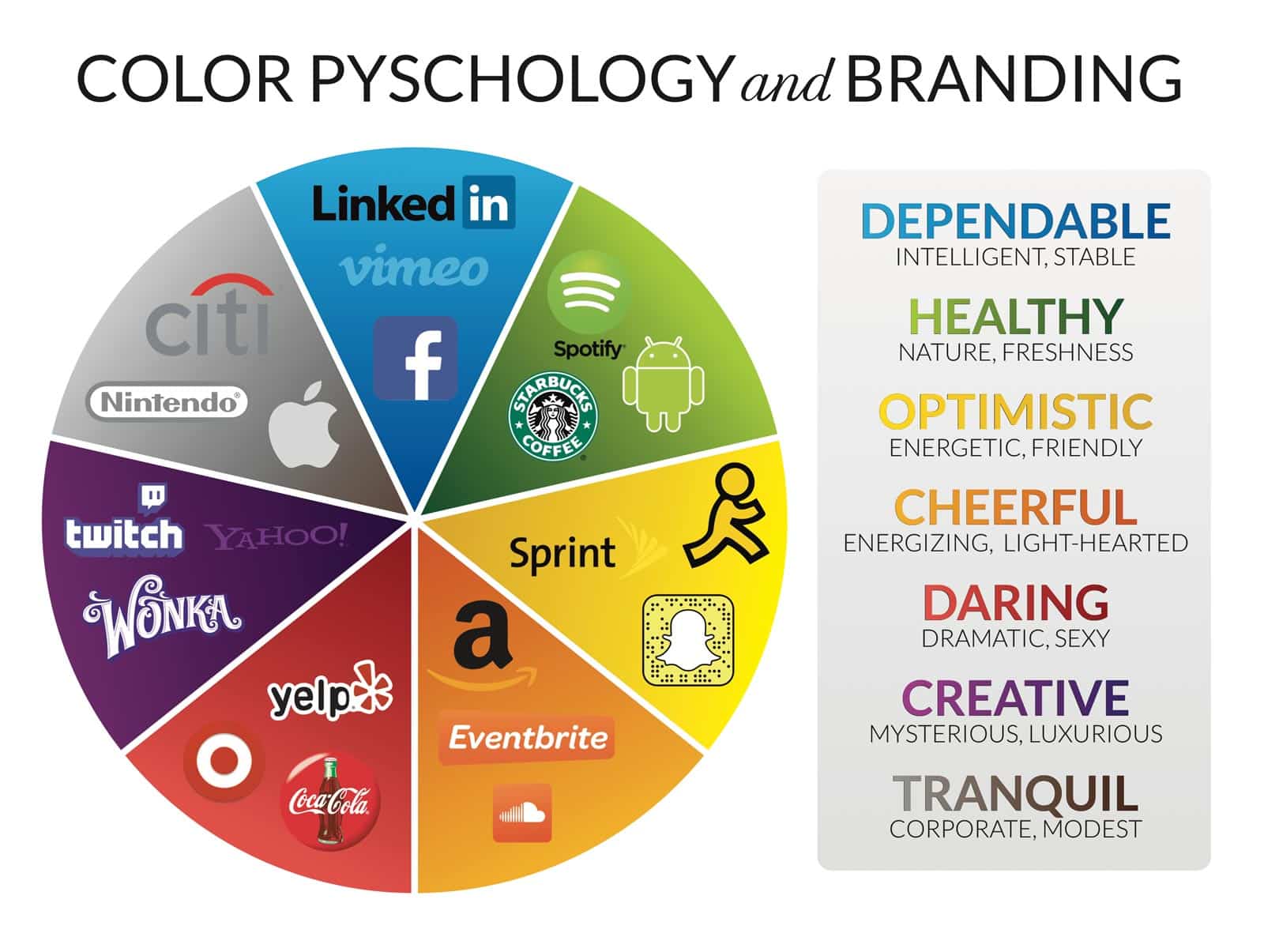
Color Psychology , How Colour of Logo of Brand Benfit

Hello Friends , we will talk about color psychology color psychology means any color that we see in this world in some ways it affects our mind it makes some sense and has a meaning that our mind is able to anaylze if we see red color we assume it as a danger because we see red color at traffic signal green color whenever we see green color on the red light , it means GO GO… but there is a hidden secret behind these colors we will talk about this in details and how it can help a businessman if you are making your logo or anything related to your brand either your office color or house interior or for house also basically we look at this from business point of view you can put that theory in the users mind you make your website and if you understand the color science then you can trigger your consumer mind any way you want your users to perform a particular task which is this is the most important thing and which is not so this is called color psychology.

Lets start with primary colors red color. red means dangerous danger . fear red is basically used in heart(love)heart color, blood color mata ka tikka so red color is a very vibrant color red color has the largest wavelength and because of that it can be seen from long distance if it is visible from a long distance means if it use the red color in a place where we want it to seen from a long distance. there we can use red color this is scientific but according to psychology red color is a physical color so where we want to put physical things there we should use red color if we want to show love, affection here also we can use red color if we want to show anger then also we can red color basically it is a masculine color if your brand is representing a masculine thing.

we use our mind more we can live our life in 2 ways one is chilled other is all about learning about new things so all the learner brands use blue if you want to show that you are targeting people who comes into the category of learner whether they are businessman or anyone else this is why blue also symbolizes trust so if you use blue color in your brand you can show your consumer that you can trust us so in India mostly all the business logos that are made made by some common people they didn’t have much knowledge of color science that’s why they made it blue because blue is for trust for business just use it. so mostly small proprietorship businesses they have blue in common also blue means blue means coolness coolness means yo bro! not that coolness ,

 coolness means cold if you want to showcase your brand as cold, you can blue color is a good choice then WHY BECAUSE in sunlight, there’s some yellowish tint in absence of sunlight there’s a bluish tint you may have seen that in movies this is all according to psychology it was practically experimented also where basically you were given two juice box both were of same flavor and both were of strawberry flavor one set of audience were given juice box A other set of audience were given juice box B but here , as flavor has no color juice box A was a transparent color liquid with a strawberry color group. 

A tasted it but the juice that was given to set B with a little color of strawberry so the positive reviews received were of set B i.e which has a strawberry color public liked the taste of set B so this was the experiment. also they retested this experiment they took an another set of audience and they offered them both the juices set a and set b and asked them to judge which one is better so in majority people liked the set B with artificial color of strawberry so why this was happening? because we were judging the juice by its color we try to perceive that this thing is like this that is why color psychology works on a deep level> so intellectual is blue means bro i am intellectual, smart busy and money man, I don’t have time so this creates a negative phase also if i want to show I don’t have time for people like this or that , then I can show my brand that way another color is yellow yellow means emotional if you use yellow color you may have seen many logos they all symbolize emotions so if you want to trigger emotions anywhere then use yellow color in your room in logo or in your house anywhere here comes optimism.

Optimism means positivity so some brand shows optimism use yellow color if you want to show creativity, confidence , friendliness then use yellow color now talking about its opposite like anxiety, depression they all are connected to yellow so see every coin has its two face positive and negative how we want our consumer to see us it depends on us later I will tell you in deep that grey color you see behind me there is a reason behind this grey color too what is this reason? every nature thing that is green and it is not green we assume it is green so according to psychology , if you show any brand green it kind of represent nature now nature mean refreshment for peace now talking about its negative side we get easily bored there too so considering the negative side of green color, its boring here you can use green color but for peace also green color every coin has its two faces, now you have to think how you want to present it talking about the shortest wavelength in the spectrum is violet , also known as purple.

If you have seen purple color all the kings used to wear purple it was a luxury color for kings it is a extremely lavish color so if you want to showcase your brand as luxurious then you can use purple color now here one more thing come along with purple that is spiritual because earlier pop used to be spiritual if you want to showcase your brand spiritual then you can use purple color if you want to show you are of high priest then use purple in violet comes truth now it has one negative thing also now these high priest people with these people in old age there used to exist caste system lower caste and upper caste so here comes inferiority complex also if you showcase your brand as luxurious then it’s not for poor people so here you can showing them as if they are inferior that depends where you are using this color I am talking about brand about walls, interior about clothes.


If you mix red and yellow color physical and emotion will mix together so the result is orange foodpanda is of orange color orange is related to food and drinks it also means fun and orange defines passion also now talking about negative immature :/ so the brand I told you earlier ;p is immature also by representing orange color it’s all about portrayal right if I want to I can portray that orange color as fun also right also i can portray that brand as immature now it depends on what prospectus I want to portray my brand to consumer here there are many corelating with each other we don’t use just one color but we use multiple color if all those colors when mixed together they all compliment each other it to a theory now you need to think that if .

I use orange with black then what does it signify by the end of this video , you’ll get my point which color you can mix with others and what it will portray now lets talk about pink pink is a feminine color girls color if you are wearing a pink shirt, you are a girl ;p in real, pink is a feminine color also this color is that something that’s non masculine here comes all the non masculine features boys are told that they have strength okay girls are not that strong so it is a color which signifies lack of strength so if you have seen any girls brand they all are of pink color so pink means feminine let’s talk about its negative face feminine means weak so pink color is for weak.

If you want to portray pink as weak you can use pink color that this is weak. if you wear pink color then you may look like them ;p think in deep about what I just said ;0 if you are wise, you may have got my point ; because grey color is a neutral color psychologically  neutral means by seeing this grey color, you don’t interpret anything there is no impact of grey color on you your focus will be on me not on the background so that that’s why i use grey color it has its negative side too grey is a boring color lack of energy if you want to showcase something as boring then use grey but what I do I am standing here what i was telling you about the negative and positive and how you can play with them here I am using grey in the background i am showing you its positive side and why am I not showing its negative side because grey signifies lack of energy and I don’t want to show lack of energy so if I show lack of energy then this grey color will symbolize lack of energy but I am speaking with energy censored.

 BLACK because it is amazing of all the things that I have done it’s always based on some psychology what do I want portray and just because people don’t know about this, they are unable to understand it now whatever I am telling you about the color science , from now all the logos you see in your daily life, make sure you think about what they are trying to portray whether its a wall or anything think what that particular color signifies whether it was done randomly or there was a hidden message behind it always be curious to know this old age kings palace see what they are trying to portray look at their paintings, its colors try to think of the reason behind the colors the painting of bloody marry it was used to be made with a specific color and why now black represents one more thing i.e security that’s why security guard wears black color uniform it represents security its negative face is that it is heavy weights of a weighing machine those weights are of which color.

Big Basket Business Model – How Big Basket Earns

Hello Friends ! Big Basket, our grocery leader in India so the story starts in 1999 when there was a .com boom and this is one of the 1st e-commerce company who came to buy online after 2 years they added grocery too in starting a lot of people came online but you know in starting people don’t buy online only COD can operate at that time and not online payment so people came but did not buy it so they analyze and they came to offline and in south India they got a huge success they opened a fab mart and sell everything in it but still it did not make much profit and in 2006 Birla group overtook it and in 2011 they again return online under sell retail network in 2011 only they got a funding do try to understand this.

If you want to have a grocery business so what are the options 1st is inventory modal, means I will buy product directly from the company at a discount rate next I will be selling to my target audience and rest is my profit 2nd is market place, like amazon and flipkart do here if I will get an order then I will transfer to other and they will deliver it 3rs is hybrid here I am doing the both 1st and 2nd logically they did marketplace, they captured small-small grocery shop and made a pact with them and now the orders they get via there app and website, they do forward to these small grocery shops and deliver the product via a delivery boy so this was the simple process slowly they got the findings and they started to grow and then they shifted to inventory model because in this there is a lot of margin and you can too control your quality they have 18000 listed products, more than 1000 brands and still it’s going under loss.

 but slowly and slowly there revenue is increasing last year they did Rs1176 crore revenue and had a loss of Rs191 crore they had a 1500 ticket size and 650 ticket size if one opts for express delivery there target is by the end of 2020 we gonna to take 2000 crore revenue in my opinion fab mart too was a good business model but in 1999’s internet used to be a new technology and people don’t trust internet and online payment, not good speed, and not visual websites so they took a good step by coming to offline market and made money and reinvested afterword so from 2011 they are in loss, but in coming years they will be coming in profit because it’s inventory modal will keep on increasing with the advent of revenue there expenses will tend to decrease they do a simple strategy by ranking it’s customer basically. 

If you order today then you are not it’s customer so suppose in 3 month you ordered 2-3 times, then you became a silver customer for them silver customer means that this is our potential customer and their platinum customer comes 95% repeatedly so your expenditure get’s decreases time to time countanously in 13 funding round, they had taken 884 million dollar and recently they had taken 300 million dollar funding from Alibaba in June 2015 they acquired deliver and that inquisition was good according to me because of this they are able to deliver products on time before that in inventory modal they used to get delay in delivery time.

Now they can deliver vegetables in 2 to 3 hours in vegetable you need to deliver within 1 hours and not in 2 to 3 days so this thing is possible due to delivery acquisition and I will be giving them +1 in grocery they operate in 35% of profit margin and in other item 10-12% margin you may be finding it more but if you see there expenditure-website, app, delivery and many more things to run this makes there expenditure and still they are under loss there is 2 trillion dollar economy in this globally out of which 300 billion dollar online is there if we take globally then it will fluctuate 15-30% in online retail .

If you want to do this type of business then target the cities because in cities there is a lot more awareness, less acquisition cost and you will be getting at a less rate ultimately will tend to sell in your products and will increase your potential customer in village your accusation cost will tend to rise due to lack of education .

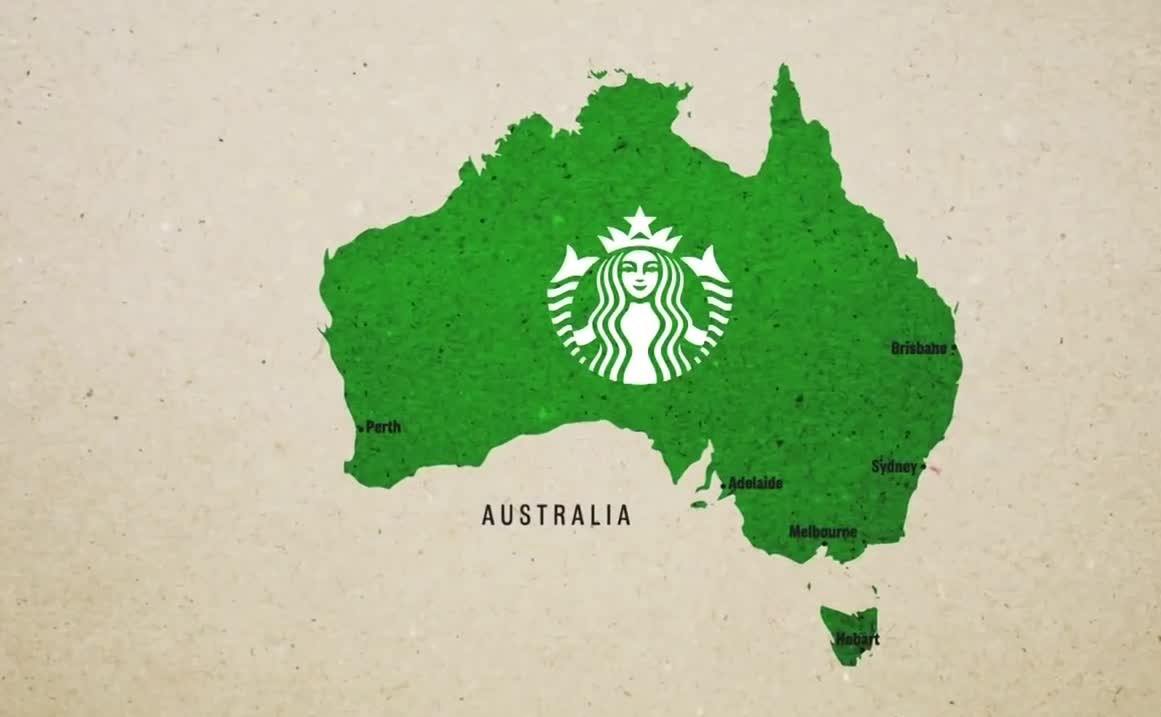
Starbucks Failed In Australia WHY ?….

Starbucks has coffee shops all over the world There are more than 28,000 locations and 76 markets From Shanghai to Guantanamo Bay And in China, a new Starbucks location opens up every 15 hours But there is one continent that seems uninterested in the hype over the Seattle based coffee chain And that continent is Australia It’s proven to be one of the toughest markets in the world to break into So tough in fact, that Starbucks closed more than two-thirds of its stores on the continent back in 2008. So what went so wrong with Starbucks and Australia To answer that let’s go back to July of 2000 When Starbucks opened its first Australian shop in Sydney.

 From there it expanded fast By 2008 Starbucks had 87 stores across the continent I think one of the problems with Starbucks and its true for a lot of businesses that have been successful in one country is that they thought that their business model could just roll out to a different environment and there was no need for them to adjust But that was the problem They tried to grow the Empire too fast Starbucks rapidly opened up multiple locations instead of slowly integrating them into the Australian market When they launched they launched too rapidly and didn’t give .

The Australian consumer an opportunity to really develop an appetite for the Starbucks brand They also moved into regional areas into outer suburbs of major cities And so for the Australian consumer it was almost like it was too available for them And so there wasn’t this point of difference, this want, this need for Starbucks And it wasn’t an organic growth which is what we very much saw in the US In its first 7 years in Australia, Starbucks accumulated $105 million in losses By 2007, Starbucks Australia was hanging on by a thread taking big loans from the US, totaling up to $54 million And in 2008, Starbucks announced it was shutting down 61 stores But of course 2008 was a difficult time for businesses due to the financial crisis Along with Australia closures, Starbucks also closed 600 underperforming American stores But even still such a retreat in Australia was embarrassing for the brand.

When you’re shutting down 75 stores For the Australian consumer when they, when they did leave the market or at least a large number of bestowals were shut down they didn’t really care It’s partly because Australians are spoiled for choice when it comes to coffee Australia’s coffee market is one of the biggest in the world the industry is expected to hit more than $6 billion in total revenue in 2018 They’ve been immersed in nuances of cafe culture since the mid 1900s when Italian and Greek immigrants began traveling to the country The immigrants introduced Australians to espresso By the 1980s, Australians were fully engulfed in cafe culture.

They’ve also grown accustomed to specialty menu items like a flat white or an Australian macchiato So cafes in Australia were born out of like the Italian culture of, you know, meeting of friends and knowing your local barista and it being kind of like a local meeting place where everyone knew each other and that coffee was just a part of that and then Starbucks came in with what is more of an American style like coffee culture which is essentially just like coffee is a product, coffee is a commodity Coffee is like, like perk me up in the morning it’s caffeination Starbucks had a basic menu and offered more sugary drinks which most Australians didn’t like in Australia where, you know, local tastes are different So we don’t really want a coffee that’s, you know, hundreds of ounces with lots of sugar in it We want something a little more sophisticated Plus Starbucks charge more than local cafes .

So Australians instead opted to pay less for coffee they liked from a local barista they trusted And so when you come in with this big like hey, we’re going to open all these cafes And they’re all gonna be to go focus It just was the complete wrong market for what, what the Australian was used to But there is one American coffee company that’s thriving in Australia Founded in Chicago and now based in Australia Gloria Jean’s got the traction in Australia that Starbucks couldn’t Gloria Jean’s has more than 400 Australian locations And serves more than 35 million consumers in Australia each year So what is Gloria Jean’s doing in Australia that Starbucks isn’t Well the company attributed to success to two Australians who franchised the business in their home country Shops started to show up in Australia in 1996 Fast forward to today, the company has a presence in every Australian state .

The reason? Its menu The chain offers a wide variety of espresso drinks and specialty coffee Failing to adapt its menu to Australians coffee culture proved to be a mistake for Starbucks And the company faces another challenge later this year Italy Starbucks is opening its first store in Milan in late 2018 home of the espresso, Italy is rich in cafe culture But according to Starbucks it’s not going to make the same mistakes that it did in Australia The company said that it would develop in Italy with humility and respect for its coffee culture It announced it would be opening a roastery which is not your average cafe It gives customers a chance to see coffee beans roasted and processed before their eyes So there’s a chance that it won’t struggle like it did in Australia But Starbucks isn’t admitting defeat in Australia either Starbucks is staging a comeback on the continent In 2014, Starbucks locations in Australia were purchased by the Mount Waverley base withers group .

So this time it’s taking a different approach to putting Starbucks on the continent So if you just think about Australia as a big tourist destination There’s a lot of U.S. and Chinese tourists Starbucks has been very successful in China and it makes a lot of sense for them to build out because there are people looking for something that’s familiar to them Now with 39 locations in Brisbane, Melbourne, the Gold Coast, and Sydney areas this time it’s not looking to appeal to Australians but instead the coffee giant hopes to be a familiar face for tourists visiting popular vacation destinations in Australia free Australia has always been a high-volume tourist market .

The same thing in terms of international students at our universities are potential opportunities for them And we’re starting to see Starbucks enter into some large shopping malls here in Australia as well Australia welcomed 9 million tourists from 2017 and 2018 And those international visitors spent more than $30 billion in 2017 alone So tourists could possibly be the key to keeping the company afloat and preventing another downfall .

Genius Marketing That To $19.6 Billion – American Express Case Study

Hi everybody, If you want to be a legendary entrepreneur, this episode is for you. because the story that I’m about to tell you today is the story of a brand that has leveraged, perhaps, the most undervalued attributes of mankind and made a billion dollars out of it. And if you learn how to use these attributes you can easily go on to outperform your competition regardless of which domain you belong to. These attributes that I’m talking about are kindness and empathy. Now, in this capitalistic world while most people might consider empathy and kindness to be intangible qualities . I gotta tell you that it’s an open secret recipe that can enable you to design game changing marketing strategies in the 21st Century. To tell you about it, let me take you back to 2010 America. 

This is when the American economy was still experiencing the wrath of the 2008 recession which caused the stock market to hit rock bottom, the giant corporations to shut down, and caused millions of job losses within a fortnight. When this happened, while the entire economy was collapsing there was one company that did not just survive but also went on to make a profit of $13.4 billion during the very same times of recession. This company that I’m talking about is the giant American retailer- Walmart. And as it turns out during the two years of recession Walmart improved its profitability by $700 million year on year. Additionally, Walmart never had a return of equity of less than 20% during the same time of recession. Now, on the outside this might sound amazing but if you take a closer look at the impact of Walmart on retail America it’s quite devastating. 

In fact, it has even got a term called the Walmart effect. Among the multiple studies that were conducted, it was proved time and again that every time a Walmart store opens up in a city or a town hundreds of small businesses along the radius of the store shut down within 1 year or at max 2 years. This was because Walmart bought all of its product at such high quantities that it was able to lower the price of products to such a low level that small business couldn’t even come close to competing with Walmart’s prices. Now, just to give you an example of the same, let’s say if you have a small retail shop. You would buy notebooks from the wholesaler for ₹30/notebook, alright? And when you buy it at ₹30 , you will sell it at ₹40 in the market but at the same time Walmart would sell the same notebook at ₹28 per piece. Which means what? Walmart’s selling price is lower than your cost price. And this made it impossible for small businesses to survive in the market. 

In fact, more often than not there are even protests that are held every time Walmart announces that it’s going to open up a store in a town. But you know what? There was a small twist in the tale here. As it turns out another giant company stepped up and became a saviour for small businesses during the times of recession. And this company lodged a campaign that was such an amazing hit that the senate of the United States itself unanimously passed a resolution to support the initiative. And cherry on the cake, President Barack Obama himself publically supported the campaign. The question is- What is this company and how did the American president himself end up endorsing a marketing campaign. Well, the company that I’m talking about is American Express and the campaign that it launched is known the ‘Small business Saturday’ This was an initiative where American Express gave away $25 dollars of special credit to 100,000 credit card members wherein they could only redeem these $25 if they shopped at a small business on a Saturday, after thanksgiving. And they also gave away $100 of Facebook advertising credits to 10,000 small businesses just so that these small businesses could utilise digital marketing in order to maximise their profits. 

On top of the incentives, they also ran T.V. ads, radio ads and even social media campaigns to educate the American population about their impact on the small businesses. And you know what? Soon enough, hundreds of small business owners all across the country participated in the campaign and what followed next was nothing short of a capitalistic miracle that many considered to be impossible. Millions of Americans started walking into a small business store and rather than shopping from a Walmart they began shopping from a small business inspite of knowing that they were making a more expensive purchase as compared to Walmart. In it’s second year, ‘Small Business Saturday’ became even more successful wherein 5,000 small businesses participated in the campaign and 103 million Americans shopped small. And soon enough the Small Business Saturday became such a social phenomenon that it generated over 2.7 million Facebook likes and became a top trend in topic on Twitter. And #SmallBusinessSaturday became so popular that even President Barack Obama tweeted his support towards the campaign. 

This is how the capitalistic America went beyond their conventions and came together as a community to spread kindness and showed empathy towards small businesses in their community. By 2012, American Express took the campaign to the next level wherein they did not just give out credit card incentives but they also provided the small business owners with social media kits, email templates and various marketing materials to help them maximise their marketing. This further maximised their sales and within just 2 years Small Business Saturday became a part of the annual American tradition wherein everybody starting from small business owners to the President himself participate in the campaign. And soon enough, it turned into a beautiful occasion with lots of happines, lots of smiles and most importantly it became an occasion of communal unity for the United States of America. 

In 2015, President Obama even documented taking his daughters to the local bookstore to promote the initiative of shopping at a small business. Fast forward to 2020, American Express estimates that 110 million people participated in the Small Business Saturday and sales hit a record high with an estimated $19.6 billion in spending and all of this money helped keep small businesses alive even during COVID-19 recession. This is how a bank like American Express was able to use empathy and kindness to make an economic miracle come true even during the toughest times of American history. 

Now, there are 3 very important lessons that we need to learn from this case study while we execute these ideas to our domain. Lesson 1, identifying the pain and the interest of the audience is always the key to unlocking extraordinary business ideas. In this case, American Express identified the pain of the shoppers and used its service to give them a $25 credit just so that it could motivate the shoppers to shop from a small business. Therefore, the interest of the shoppers has been addressed, at the same time it has also catered to the pain of small business owners. 

Lesson 2, in the 21st Century participatory campaigns will always turn out to be more powerful than even an award winning advertisement. Why? because the new age of marketing is moving from impressions to expressions. So, more than a T.V. ad it is the participation of the customers that is going to create more impact. In this case, because American Express gave out email templates and social media kits the shopkeepers automatically became the local ambassadors who participated in the campaign which eventually led to a chain reaction and got millions of shoppers on board too. This is what we call as participatory marketing campaign.

 And last and most importantly, always remember that empathy and compassion are the most undervalued attributes of this capitalistic world and very few people know that these are two of those qualities that are so powerful that they can turn a commoner into a king. In this case, they were powerful enough to give rise to a capitalistic miracle that America will cherish forever.

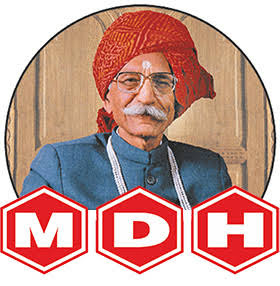
The Story of Spice King Of India From A Tonga Driver To A Millionaire

Hi everybody , one of the most iconic business Maharajas of India whose name was Mahashay Dharampal Gulati. This is a story of a man who went from being a tonga driver to building an empire with an operating revenue of 2000 crores. And the reason why his story is even more special is because he built a business during a time when people were struggling hard even to stay alive because back then India was still recovering from the massacres of partition.

 Dharampal Ji was born in the year 1923 in Sialkot, which today, falls in modern-day Pakistan in a Hindu family which had high ideals of honesty and simplicity. And since childhood, he was a carefree kid but with a sheer will to do something extraordinary. 

Gulati Ji, since childhood, experienced a lot of failures, he first dropped out of school in class 5 and tried doing several jobs where he couldn’t find any fulfilment. 

Then he tried selling Mehendi (Henna) from street to street. and even that did not work out. Then, his father tried to set up a separate shop for him and his brother and eventually, even that venture failed. So after spending years trying to do different kinds of jobs like selling wood, mirrors he finally decided to settle in and start running his father’s spice shop which at that time was named as Mahashian Di Hatti. 

But when he was just 25 years old and he began to settle down in his business and his business began to pick up the India-Pakistan partition happened. and within a midnight, the entire nation was in chaos. And because Sialkot became a part of Pakistan soon enough there was such a massive bloodshed that hundreds of innocent people were being killed due to the Hindu-Muslim riots. 

During that time they somehow managed to board a train that brought them to Amritsar and people, if you have seen the movie ‘Bhaag Milkha Bhaag’ you would pretty much have an idea of how terrible the situation of partition was. In fact, the very train that Gulati Ji’s family boarded had the dead bodies of the people who had been killed due to the massacres of partition.

 So, he stayed in the refugee camp of Amritsar for quite some time and then decided to move to Delhi wherein he became a tonga driver. Now people, back then he was already married for 7 years because he got married at the early age of 18. So he had responsibilities on his shoulders to provide good life for his family.

 But then after a few months he understood that tonga driver’s profession was not good enough to provide a good life for his family. And that is when he decided to restart his father’s business and set up a small spice shop in Delhi. And that is when he named his shop Mahashian Di Hatti which today is known by the name MDH

Now, people, even after partition India was still struggling hard to recover from the massacres of partition. There were millions of people who had lost their everything and India as a country was in a state of poverty wherein 80% of the entire country’s population lived below the poverty level. 

So, the markets, in general, never focused on quality because if you had to produce quality product during that time it would increase the cost of production, it would decrease your margins of profit and most importantly, because the cost of the product will increase majority of the peope will not be able to afford it eventually, resulting into decrease in sales. 

So running a viable business during that time by selling quality products was practically impossible. So, the majority of the poducts that were being sold in he market including milk and salt were being completely . 

For example, milk was being mixed with a lot of water to increase the quantity. And to compensate for the density, even harmful chemicals were used. Similarly, yellow soil was mixed with haldi (turmeric) and sawdust was being mixed with dhaniya (coriander) powder. And just like that, even spices were being adulterated to a large extent because it was practically impossible for a common man to be able to understand the difference between pure spices and adulterated spices.

But even during that time Gulati Ji poured his blood and sweat and always made sure that his shop always sold pure spices. Because he believed that the primary intent of any business should not be to make money but to do great service. And money should always be a bi-product of great service.

That is why Gulati Ji worked very hard to monitor every single process of the production of spices just so that he can give a common man of India, a taste of pure spices And people can you imagine how difficult it would have been ? 

He had to keep the cost low just so that he can match the cost of the adulterated spices. Number two, he had to keep his margins very thin because his cost of production was way higher as compared to adulterated spices. 

And most importantly he was making very less money, inspite of making the best product in the market. But all throughout these difficult times, this great man worked tirelessly with the hope that he’ll be able to build a brand one day that the mother of a common household can blindly trust upon when she makes a meal for her family. And guess what ? 

Slowly and steadily, people began to realize the differnce between Gulati Ji’s spices and the adulterated spices and soon enough people started to line up at his shop just to buy his products. And that is how Gulati Ji’s small shop- Mahashian Di Hatti Masale as in, MDH masale, became a popular brand in Delhi. 

And as his business started growing, he started to recruit his friends and family into his business with the hope that they will be able to stand by his belief of providing excellent quality spices to people. And he also started outsourcing a few processes like powdering turmeric. 

And yet again, when everything looked well, he faced even tougher challenges and here’s where ordinary people like you and me have something very important lesson to learn. 

People, Gulati Ji was a person who did every small thing in his shop starting from the raw material transportation to the grinding of spices, he participated in every single activity and that is the reason why he soon enough became an expert in finding out even a little bit of adulteration in his spices.

 So, when he was scaling up he was able to maintain the same excellent quality standards that he used to maintain while he was selling spices from his small shop. And because of his sharpness and diligence he was able to spot certain loopholes in his system which could have completely destroyed his business altogether.

 Because soon enough he discovered that the contractor who was powdering his turmeric was actually mixing Chana Dal to adulterate the turmeric powder. And when he spotted similar practices being followed in a lot of these outsourcing ventures.

 He understood that this loophole would betray the trust of his customers. And just to keep the trust of his customers he ended all of his outsourcing practices and poured in his entire life saving to open up his own factory wherein he could powder all the spices.

 And not just that. He was betrayed by his childhood friend who used to take a commission on every single material which used to come in from the supplier. And many of his friends and family who were supposed to help him grow, started causing a lot of troubles while this man was putting his blood and sweat just to make sure that he can sell pure spices to the mothers of India. 

And that is how, by facing a lot of hurdles Gulati Ji was able to establish a brand which the mothers of India could trust. And that is how due to the incredible hard work of Gulati Ji, today, people like you and me have the luxury of having mouth watering dishes like Chole Batture and Pav Bhaaji.

 And in this world where people talk about retiring at the age of 30 and people like you and me who often feel lazy inspite of achieving nothing. This legendary person was shooting for an advertisement even at the age of 97. 

So because of this incredible dedication and persistence combined with extraordinary business acumen today, MDH has reached a level wherein it exports its spices to US, China, Vietnam, UAE, Malaysia, Saudi Arabia, UK, Germany, Singapore, Sri Lanka with US exports alone valued at $351.6 million. And all of this put together, turned Gulati Ji into one of those icons because of whom India, today, is known for spices all across the world.

 Now the question is- What can we learn from this incredible story of the king of spice ?

 Lesson 1, we all need to realize that optimism is the faith that leads to greatness and the real test of optimism is how you choose to react even during the times of calamity just like partition in Gulati Ji’s life. While and optimist will try to see an opportunity in every difficulty, a pessimist will try to see difficulty even during the times of great opportunity. 

Lesson 2, while outsourcing is essential for scaling up of any business it is also important to note that outsourcing along with a lot of growth will also bring in a lot of loopholes. So, as a leader of a business organisation it is important that you do all the petty works in the beginning because what might look like petty experience in the beginning will eventually help you find the loopholes in your business which could potentially destroy your whole business. 

And last and most importantly, each one of us needs to understand that greatness comes at a cost that very few people can afford. For example, at that time, very few people could actually settle in for less profits by selling pure spices.

 Very few people had the ability to put in the hardwork to have a look at every single process just so that they could sell pure spices and keep the trust of an innocent mother when she wanted to make something tasty for her family because very few people understand that the cost of greatness cannot be paid with stacks of currency notes but with every ounce of blood and sweat that you put in to achieve it.

 Because at the end of the day, greatness comes at a cost of persistence. And once a great man said that “Nothing in this world can take place of good old persistence. Talent will not, which is why in this world there is nothing more common than unsuccessful men with talent. 

Genius will not, which is why unrecognised genius is practically a cliché. Education will not, which is why the world is full of educated fools. 

Persistence and determination alone are all powerful.” In our case they were powerful enough to turn an ordinary refugee into the spice king of India who will live in our hearts forever. Thank you.


CRED's Master Plan – CRED Business Study

Hello everybody, CRED is one of the most fascinating business case studies in the Indian start-up ecosystem. In just 2 years, CRED went from 0 to hitting a $2B valuation and became one of the youngest Indian startups to reach this milestone. Now, the peculiarity of CRED is that in 2020 alone CRED incurred a massive loss of ₹360 crores which is a massive increase of 492% from 2019. And for every rupee of revenue that CRED generated they spent ₹727 which is a massive cashburn. 

We all have seen the result of massive expenditure into creative marketing. *beating noises* So now the question is, even with such massive losses how is it that CRED is getting so much funding ? And what exactly is Kunal Shah’s strategy ? Well, the beauty of this case study is the that if you only understand what CRED is doing you will more or less understand a large chunk of the Indian startup ecosystem because most of the giant companies like Jio, Ola, PharmEasy also operate in a similar fashion. and the most important factor that is common in all of them is that they extensively work on altering the behavioural design of the society. And the anticipation of that behavioural design, is what makes them billion dollar companies. 

This golden strategy works out in 4 discrete steps The first phase is what we call cash burn and here’s where The company, first identifies a major problem in the society, Number two, it designs a system to fix that problem Number three, it raises a million dollars in funding and lastly it entices the customers to use the product by giving out unbelievable offers which are almost too good to be true.

 A very simple example of the same is Jio. First of all, Jio identified internet accessibility as a major problem in the Indian society and then Reliance spent about ₹1.5 lakh crores into building the infrastructure required for Jio. And then in 2016 when Jio got launched, they gave out offers that almost looked impossible. -free sim cards, free calls and free internet. And the moment this announcement happened, millions of people rushed to buy Jio sims. And Jio did everything in it’s capacity to maximise it’s number of it’s users without even bothering about profits. Which is why, on top of the heavy investment that they made they further incurred a loss of Rs. 31 crores in 2016.

 Just like this, when CRED rolled out in 2018 they identified 3 of the biggest pains of a credit card holder which are; number one, hidden charges Number two, late fees due to forgetfulness and number three is the extra interest. And they rolled out massive cashbacks and offers to incentivise the act of on-time payment. And these offers were as amazing as free flight tickets extremely lucrative discounts and ₹1000 cashbacks also Fast foward to 2021, CRED today, has over 30 lakh users and today, CRED is already processing 20% of all the premium credit card transactions. 

So this is how within a short span of time, in Phase 1, companies present incentives in order to get customers to use their product, eventually, to increase their user base. And this is what brings us to Phase 2. Phase 2 is all about habituation. Once you bought a Jio sim, you never bothered about talktime, you never bothered about data. And we all recklessly got habituated to this newfound luxury of Internet Similarly, in case of CRED, the people who have 2-3 credit cards found it so simple to use CRED that they stopped using their conventional method wherein they had to go through this long list of their statements or putting in effort to dig in and find out whether there are hidden charges, on each credit card As a CRED user myself, I can’t even tell you how amazing it feels as compared to having this terrible feeling wherein you have no idea where the hell your money is going. 

In fact, there was a time when I thought that some hacker is stealing my money, alright ? and I’m not even kidding about this. So, this is how in Phase 2, using their super efficient system companies seemlessly get us habituated to new normal wherein we are no longer used to adjusting to the ‘hurdles of the system’. Here’s where we enter the most crucial phase of all, that is, Phase 3 and Phase 3 is what we can call as Irreversibility. 

A classy example of the same is Google Maps Now you might have observed that most of the people of our generation never even bother to remember the name of a landmark, street or chowk In fact, I’ve got so used to Google Maps that in my own city, if you leave me in some street I will start wandering as if I am in some strange jungle. That is how much I have got habituated to Google Maps And by the way, this does not include those superhumans who have this amazing memory to remember any route, even if they have visited that place only once and you know which friend am I talking about… So the point is, 

Google Maps has made our lives so easy that finding a way to a place no longer occupies our headspace and in case of CRED, users no longer have to remember to pay their credit card bills, they no longer have to remember when exactly is their due dates or bother about late fees. Similarly in case of Ola, we are no longer used to finding taxi on the streets In case of Jio, when there is no Internet you all know how you feel So you see, once these companies came in there has been an irreversible change in our behaviour wherein the small acts of booking a cab or paying a credit card bill has changed to such a large extent that we will never ever go back to our past system. 

Now CRED is yet to complete this phase which is why all the numbers that you see about CRED is in the negatives now because CRED is yet to change a significant part of the consumer behaviour. After this we come to Phase 4. Now, this is the goldmine that every investor waits for wherein the company starts making profits and if you look at the numbers, it literally looks like a goldmine. For that matter look at the numbers of Jio. In just 1.5 years, Jio became profitable that is in the 3rd quarter of 2017 with a profit of ₹504 Crores From there onwards it has been on a magnificent run wherein in 2020, Jio has posted a net profit of ₹5,562 crore and the reason why CRED is also sitting on a similar goldmine is because the customers of CRED are by default the richest 1% of the country.

 These people are literally the dream customers of any company. Their incomes are high, so they make expensive purchases on a regular basis which results into massive profit margins for every company And my sense is that in the 4th phase, CRED could leverage it’s golden customer base in three very very powerful ways. 

Number one, CRED could become this must have expense management app which will also allow it’s users to file their income tax and just like it cured the headaches of the credit card users by saving their money from hidden charges. CRED might also might start saving it’s customers a ton of money through their income tax rebate filings by turning the entire process of income tax filing into a very simple and efficient process and if this happens, I don’t think any of us will ever leave the CRED club.

So, Kunal sir if you’re watching this please help us out over here. Number two, CRED has one of the most valuable customer data in terms of purchase preferences For example, CRED clearly knows that Parsh loves to spend ₹20,000 into sports. Ganesh loves to spend ₹10,000 in education and books. So CRED could use this data to show relevant advertisements with exclusive coupons to get people to spend heavily on the things they absolutely love eventually, to make a comission out of it. 

Lastly, CRED could also became a bank for the top 1% of India and the reason why I think so is because there are two important factors that are very very crucial for any bank’s existence.

 Number one, every bank wants customers who have a lot of money deposited in their bank account after all their investment and expenses. And this money is what the bank uses to lend to businesses and customers in the form of home loans, car loans etc. 

Number two, every bank needs borrowers who pay back their loans judiciously. So that they can charge an interest on top of it eventually to make money out of the lending business. And guess what ? CRED literally has these exact people in it’s customer base which is why my sense is, CRED could literally extend itself to become a full fledged bank or maybe even become a full fledged portfolio management system for the top 1%.

 Eventually to become the most revolutionary fintech start-up of India So to put that straight, for ordinary people like you and me CRED might look like a weird idea but in reality it is a revolutionary idea coming from one of the most amazing entrepreneurs in the Indian start-up space. 

And we must consider ourselves to be extremely fortunate that we are getting to witness their processes and we must learn from these revolutionary start-ups that are going to redefine 21st century India forever.  

CRED's Master Plan – CRED Business Study

Hello everybody, CRED is one of the most fascinating business case studies in the Indian start-up ecosystem. In just 2 years, CRED went from 0 to hitting a $2B valuation and became one of the youngest Indian startups to reach this milestone. Now, the peculiarity of CRED is that in 2020 alone CRED incurred a massive loss of ₹360 crores which is a massive increase of 492% from 2019. And for every rupee of revenue that CRED generated they spent ₹727 which is a massive cashburn. 

We all have seen the result of massive expenditure into creative marketing. *beating noises* So now the question is, even with such massive losses how is it that CRED is getting so much funding ? And what exactly is Kunal Shah’s strategy ? Well, the beauty of this case study is the that if you only understand what CRED is doing you will more or less understand a large chunk of the Indian startup ecosystem because most of the giant companies like Jio, Ola, PharmEasy also operate in a similar fashion. and the most important factor that is common in all of them is that they extensively work on altering the behavioural design of the society. And the anticipation of that behavioural design, is what makes them billion dollar companies. 

This golden strategy works out in 4 discrete steps The first phase is what we call cash burn and here’s where The company, first identifies a major problem in the society, Number two, it designs a system to fix that problem Number three, it raises a million dollars in funding and lastly it entices the customers to use the product by giving out unbelievable offers which are almost too good to be true.

 A very simple example of the same is Jio. First of all, Jio identified internet accessibility as a major problem in the Indian society and then Reliance spent about ₹1.5 lakh crores into building the infrastructure required for Jio. And then in 2016 when Jio got launched, they gave out offers that almost looked impossible. -free sim cards, free calls and free internet. And the moment this announcement happened, millions of people rushed to buy Jio sims. And Jio did everything in it’s capacity to maximise it’s number of it’s users without even bothering about profits. Which is why, on top of the heavy investment that they made they further incurred a loss of Rs. 31 crores in 2016.

 Just like this, when CRED rolled out in 2018 they identified 3 of the biggest pains of a credit card holder which are; number one, hidden charges Number two, late fees due to forgetfulness and number three is the extra interest. And they rolled out massive cashbacks and offers to incentivise the act of on-time payment. And these offers were as amazing as free flight tickets extremely lucrative discounts and ₹1000 cashbacks also Fast foward to 2021, CRED today, has over 30 lakh users and today, CRED is already processing 20% of all the premium credit card transactions. 

So this is how within a short span of time, in Phase 1, companies present incentives in order to get customers to use their product, eventually, to increase their user base. And this is what brings us to Phase 2. Phase 2 is all about habituation. Once you bought a Jio sim, you never bothered about talktime, you never bothered about data. And we all recklessly got habituated to this newfound luxury of Internet Similarly, in case of CRED, the people who have 2-3 credit cards found it so simple to use CRED that they stopped using their conventional method wherein they had to go through this long list of their statements or putting in effort to dig in and find out whether there are hidden charges, on each credit card As a CRED user myself, I can’t even tell you how amazing it feels as compared to having this terrible feeling wherein you have no idea where the hell your money is going. 

In fact, there was a time when I thought that some hacker is stealing my money, alright ? and I’m not even kidding about this. So, this is how in Phase 2, using their super efficient system companies seemlessly get us habituated to new normal wherein we are no longer used to adjusting to the ‘hurdles of the system’. Here’s where we enter the most crucial phase of all, that is, Phase 3 and Phase 3 is what we can call as Irreversibility. 

A classy example of the same is Google Maps Now you might have observed that most of the people of our generation never even bother to remember the name of a landmark, street or chowk In fact, I’ve got so used to Google Maps that in my own city, if you leave me in some street I will start wandering as if I am in some strange jungle. That is how much I have got habituated to Google Maps And by the way, this does not include those superhumans who have this amazing memory to remember any route, even if they have visited that place only once and you know which friend am I talking about… So the point is, 

Google Maps has made our lives so easy that finding a way to a place no longer occupies our headspace and in case of CRED, users no longer have to remember to pay their credit card bills, they no longer have to remember when exactly is their due dates or bother about late fees. Similarly in case of Ola, we are no longer used to finding taxi on the streets In case of Jio, when there is no Internet you all know how you feel So you see, once these companies came in there has been an irreversible change in our behaviour wherein the small acts of booking a cab or paying a credit card bill has changed to such a large extent that we will never ever go back to our past system. 

Now CRED is yet to complete this phase which is why all the numbers that you see about CRED is in the negatives now because CRED is yet to change a significant part of the consumer behaviour. After this we come to Phase 4. Now, this is the goldmine that every investor waits for wherein the company starts making profits and if you look at the numbers, it literally looks like a goldmine. For that matter look at the numbers of Jio. In just 1.5 years, Jio became profitable that is in the 3rd quarter of 2017 with a profit of ₹504 Crores From there onwards it has been on a magnificent run wherein in 2020, Jio has posted a net profit of ₹5,562 crore and the reason why CRED is also sitting on a similar goldmine is because the customers of CRED are by default the richest 1% of the country.

 These people are literally the dream customers of any company. Their incomes are high, so they make expensive purchases on a regular basis which results into massive profit margins for every company And my sense is that in the 4th phase, CRED could leverage it’s golden customer base in three very very powerful ways. 

Number one, CRED could become this must have expense management app which will also allow it’s users to file their income tax and just like it cured the headaches of the credit card users by saving their money from hidden charges. CRED might also might start saving it’s customers a ton of money through their income tax rebate filings by turning the entire process of income tax filing into a very simple and efficient process and if this happens, I don’t think any of us will ever leave the CRED club.

So, Kunal sir if you’re watching this please help us out over here. Number two, CRED has one of the most valuable customer data in terms of purchase preferences For example, CRED clearly knows that Parsh loves to spend ₹20,000 into sports. Ganesh loves to spend ₹10,000 in education and books. So CRED could use this data to show relevant advertisements with exclusive coupons to get people to spend heavily on the things they absolutely love eventually, to make a comission out of it. 

Lastly, CRED could also became a bank for the top 1% of India and the reason why I think so is because there are two important factors that are very very crucial for any bank’s existence.

 Number one, every bank wants customers who have a lot of money deposited in their bank account after all their investment and expenses. And this money is what the bank uses to lend to businesses and customers in the form of home loans, car loans etc. 

Number two, every bank needs borrowers who pay back their loans judiciously. So that they can charge an interest on top of it eventually to make money out of the lending business. And guess what ? CRED literally has these exact people in it’s customer base which is why my sense is, CRED could literally extend itself to become a full fledged bank or maybe even become a full fledged portfolio management system for the top 1%.

 Eventually to become the most revolutionary fintech start-up of India So to put that straight, for ordinary people like you and me CRED might look like a weird idea but in reality it is a revolutionary idea coming from one of the most amazing entrepreneurs in the Indian start-up space. 

And we must consider ourselves to be extremely fortunate that we are getting to witness their processes and we must learn from these revolutionary start-ups that are going to redefine 21st century India forever.  

CRED's Master Plan – CRED Business Study

Hello everybody, CRED is one of the most fascinating business case studies in the Indian start-up ecosystem. In just 2 years, CRED went from 0 to hitting a $2B valuation and became one of the youngest Indian startups to reach this milestone. Now, the peculiarity of CRED is that in 2020 alone CRED incurred a massive loss of ₹360 crores which is a massive increase of 492% from 2019. And for every rupee of revenue that CRED generated they spent ₹727 which is a massive cashburn. 

We all have seen the result of massive expenditure into creative marketing. beating noises So now the question is, even with such massive losses how is it that CRED is getting so much funding ? And what exactly is Kunal Shah’s strategy ? Well, the beauty of this case study is the that if you only understand what CRED is doing you will more or less understand a large chunk of the Indian startup ecosystem because most of the giant companies like Jio, Ola, PharmEasy also operate in a similar fashion. and the most important factor that is common in all of them is that they extensively work on altering the behavioural design of the society. And the anticipation of that behavioural design, is what makes them billion dollar companies. 

This golden strategy works out in 4 discrete steps The first phase is what we call cash burn and here’s where The company, first identifies a major problem in the society, Number two, it designs a system to fix that problem Number three, it raises a million dollars in funding and lastly it entices the customers to use the product by giving out unbelievable offers which are almost too good to be true.

 A very simple example of the same is Jio. First of all, Jio identified internet accessibility as a major problem in the Indian society and then Reliance spent about ₹1.5 lakh crores into building the infrastructure required for Jio. And then in 2016 when Jio got launched, they gave out offers that almost looked impossible. -free sim cards, free calls and free internet. And the moment this announcement happened, millions of people rushed to buy Jio sims. And Jio did everything in it’s capacity to maximise it’s number of it’s users without even bothering about profits. Which is why, on top of the heavy investment that they made they further incurred a loss of Rs. 31 crores in 2016.

 Just like this, when CRED rolled out in 2018 they identified 3 of the biggest pains of a credit card holder which are; number one, hidden charges Number two, late fees due to forgetfulness and number three is the extra interest. And they rolled out massive cashbacks and offers to incentivise the act of on-time payment. And these offers were as amazing as free flight tickets extremely lucrative discounts and ₹1000 cashbacks also Fast foward to 2021, CRED today, has over 30 lakh users and today, CRED is already processing 20% of all the premium credit card transactions. 

So this is how within a short span of time, in Phase 1, companies present incentives in order to get customers to use their product, eventually, to increase their user base. And this is what brings us to Phase 2. Phase 2 is all about habituation. Once you bought a Jio sim, you never bothered about talktime, you never bothered about data. And we all recklessly got habituated to this newfound luxury of Internet Similarly, in case of CRED, the people who have 2-3 credit cards found it so simple to use CRED that they stopped using their conventional method wherein they had to go through this long list of their statements or putting in effort to dig in and find out whether there are hidden charges, on each credit card As a CRED user myself, I can’t even tell you how amazing it feels as compared to having this terrible feeling wherein you have no idea where the hell your money is going. 

In fact, there was a time when I thought that some hacker is stealing my money, alright ? and I’m not even kidding about this. So, this is how in Phase 2, using their super efficient system companies seemlessly get us habituated to new normal wherein we are no longer used to adjusting to the ‘hurdles of the system’. Here’s where we enter the most crucial phase of all, that is, Phase 3 and Phase 3 is what we can call as Irreversibility. 

A classy example of the same is Google Maps Now you might have observed that most of the people of our generation never even bother to remember the name of a landmark, street or chowk In fact, I’ve got so used to Google Maps that in my own city, if you leave me in some street I will start wandering as if I am in some strange jungle. That is how much I have got habituated to Google Maps And by the way, this does not include those superhumans who have this amazing memory to remember any route, even if they have visited that place only once and you know which friend am I talking about… So the point is, 

Google Maps has made our lives so easy that finding a way to a place no longer occupies our headspace and in case of CRED, users no longer have to remember to pay their credit card bills, they no longer have to remember when exactly is their due dates or bother about late fees. Similarly in case of Ola, we are no longer used to finding taxi on the streets In case of Jio, when there is no Internet you all know how you feel So you see, once these companies came in there has been an irreversible change in our behaviour wherein the small acts of booking a cab or paying a credit card bill has changed to such a large extent that we will never ever go back to our past system. 

Now CRED is yet to complete this phase which is why all the numbers that you see about CRED is in the negatives now because CRED is yet to change a significant part of the consumer behaviour. After this we come to Phase 4. Now, this is the goldmine that every investor waits for wherein the company starts making profits and if you look at the numbers, it literally looks like a goldmine. For that matter look at the numbers of Jio. In just 1.5 years, Jio became profitable that is in the 3rd quarter of 2017 with a profit of ₹504 Crores From there onwards it has been on a magnificent run wherein in 2020, Jio has posted a net profit of ₹5,562 crore and the reason why CRED is also sitting on a similar goldmine is because the customers of CRED are by default the richest 1% of the country.

 These people are literally the dream customers of any company. Their incomes are high, so they make expensive purchases on a regular basis which results into massive profit margins for every company And my sense is that in the 4th phase, CRED could leverage it’s golden customer base in three very very powerful ways. 

Number one, CRED could become this must have expense management app which will also allow it’s users to file their income tax and just like it cured the headaches of the credit card users by saving their money from hidden charges. CRED might also might start saving it’s customers a ton of money through their income tax rebate filings by turning the entire process of income tax filing into a very simple and efficient process and if this happens, I don’t think any of us will ever leave the CRED club.

So, Kunal sir if you’re watching this please help us out over here. Number two, CRED has one of the most valuable customer data in terms of purchase preferences For example, CRED clearly knows that Parsh loves to spend ₹20,000 into sports. Ganesh loves to spend ₹10,000 in education and books. So CRED could use this data to show relevant advertisements with exclusive coupons to get people to spend heavily on the things they absolutely love eventually, to make a comission out of it. 

Lastly, CRED could also became a bank for the top 1% of India and the reason why I think so is because there are two important factors that are very very crucial for any bank’s existence.

 Number one, every bank wants customers who have a lot of money deposited in their bank account after all their investment and expenses. And this money is what the bank uses to lend to businesses and customers in the form of home loans, car loans etc. 

Number two, every bank needs borrowers who pay back their loans judiciously. So that they can charge an interest on top of it eventually to make money out of the lending business. And guess what ? CRED literally has these exact people in it’s customer base which is why my sense is, CRED could literally extend itself to become a full fledged bank or maybe even become a full fledged portfolio management system for the top 1%.

 Eventually to become the most revolutionary fintech start-up of India So to put that straight, for ordinary people like you and me CRED might look like a weird idea but in reality it is a revolutionary idea coming from one of the most amazing entrepreneurs in the Indian start-up space. 

And we must consider ourselves to be extremely fortunate that we are getting to witness their processes and we must learn from these revolutionary start-ups that are going to redefine 21st century India forever.  

Job or business

 Many times people get confused What to choose as career like whether to do job or business 

Job demands pretty hard work to sustain while business require hard work in initial building of it 

Also one more disadvantage of business over education is It demands funding which become cumbersome specially for poor people 

Many people do job to gain financial support to start business which is quite good idea to build upon it 

Also doing job make expertise in respective field, treated as experienced wrt society and also it give experience in gaining expertise in team work 

7 Mumbai-Based Women Entrepreneurs Made a 1600 Cr empire from 80Rs – Lijjat Papad Case Study

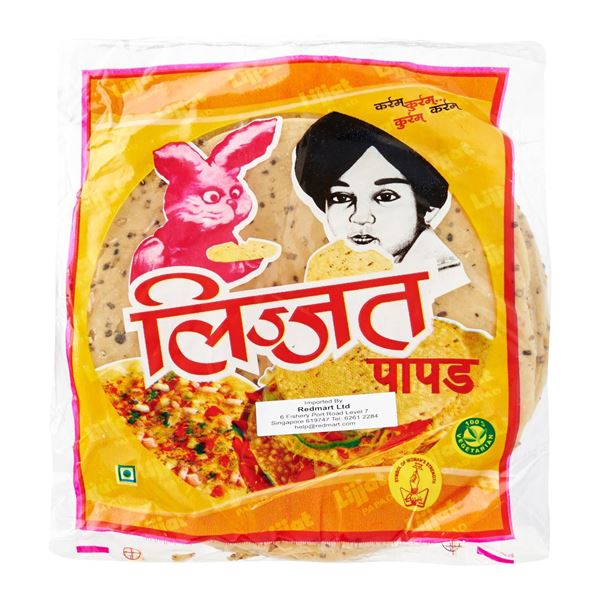
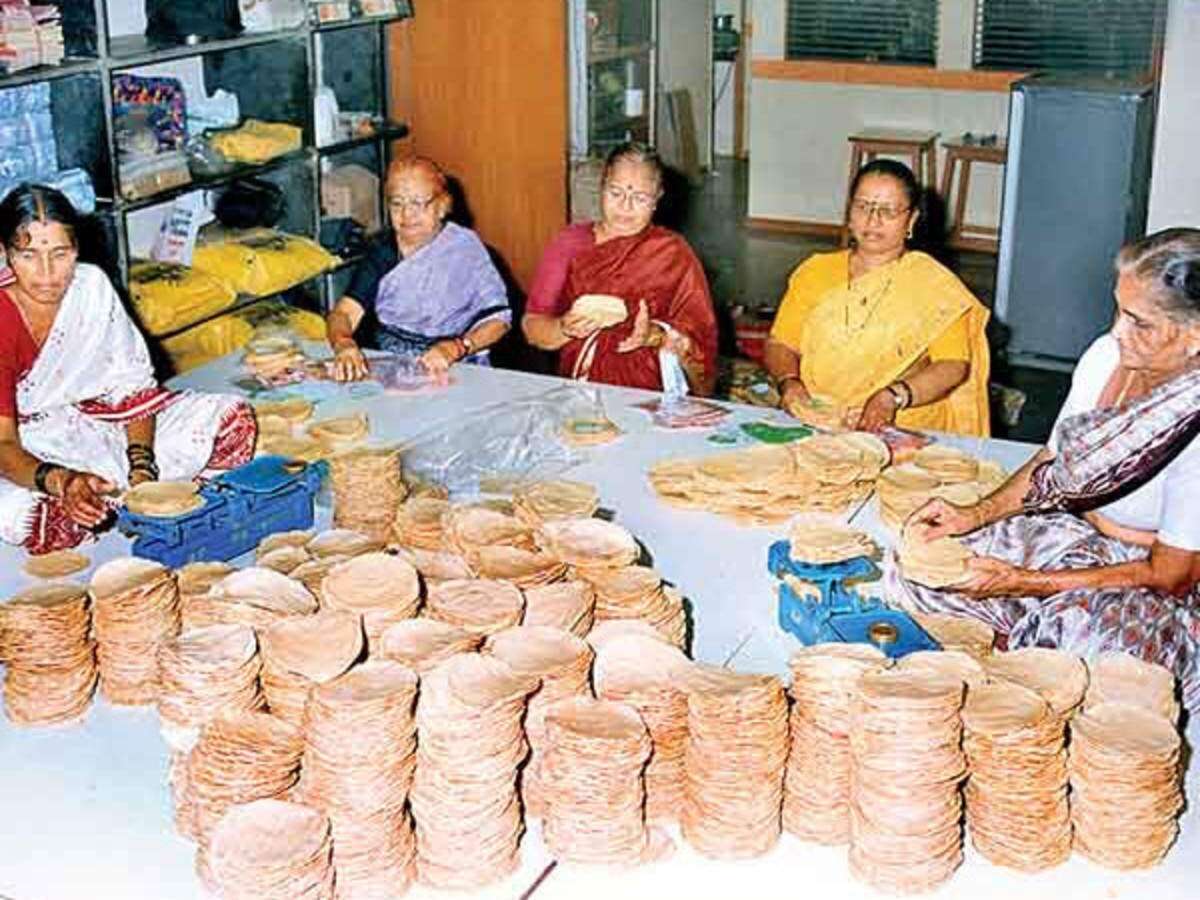
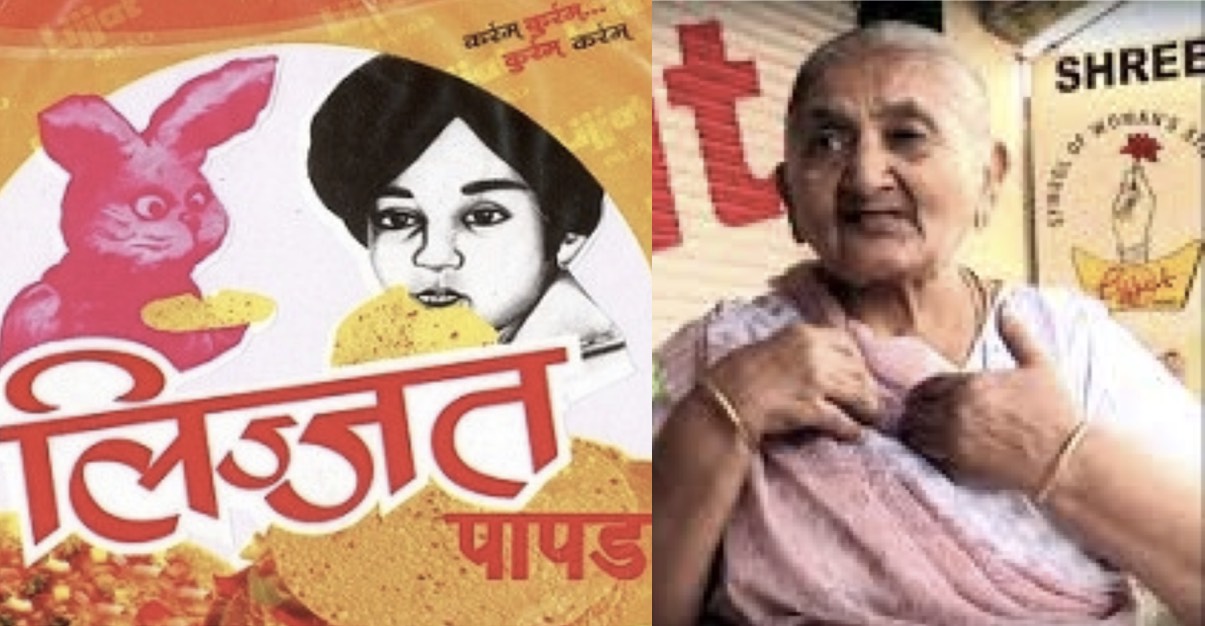
 Hi everybody, This is a story of 7 ordinary women who had no background in business, no significant educational qualification And with just 80 rupees in capital they were able to build a business empire worth 1600 crores which is spread across 69 branches and more than 42,000 employees. This home-grown brand that I’m talking about is none other than Shri Mahila Griha Udyog Lijjat Papad.

 Now, what’s more fascinating about this company is not the growth of the company but the fact that the business philosophies of this home-grown company somehow seems to have very close resemblance to extraordinary companies like Starbucks and Apple also. The question is- What is so special about this papad company and how has it lasted for more than 62 years ? And how did these 7 women manage to build a business empire out of just ₹80 in capital ? The answer to this question lies in the incredible history of the Lijjat papad. 

This is a story that dates back to the late 1950s India when India was a fairly underdeveloped country. And back then let alone education, even literacy was considered to be a luxury. And even in terms of literacy during those times woman’s literacy was not even considered important because of which only 8% of women in India could read and write while 92% of women in India were illiterates. On top of that, women were not even allowed to go out and work and the earning capacity of the families was not enough to afford a decent standard of living. That is when in 1959, Mumbai. 

A group of 7 amazing women from very ordinary background came together to discuss a business idea which wouldn’t need them to step out of the house, wouldn’t need education and yet could produce a competitive product in the market. Ladies and gentlemen, that is how the idea of Lijjat Papad was born with just ₹80 of capital that was given to them by a social worker. They first started selling their papads at a local store and soon enough due to the superb quality and taste of the papad even other shops started buying their papads. And that’s when they started scaling up. 

Now, when they started scaling they had the opportunity to hire women at a dearth cheap cost because they were one of the rarest avenues of income for women which allowed them to work from home. But you know what ? When these women had their first board meeting they established the fact that the primary goal of their business wouldn’t be to make money but to empower women from the smallest households of the country and to provide them with the livelihood to nurture their family. And mor importantly they also established the fact that money would only be used as a fuel to scale their impact on the women of India and not be the sole purpose of their existence. 

So instead of hiring women they started to give out ownership to every woman who joined their business and called them Lijjat Sisters rather than employees. This is what you call as collective ownership, wherein every employee owns a small part of the company such that the profits and losses, both are shared by every single person in the organisation. So regardless of your age, caste, religion even if you were at the lowest hierarchy of the Lijjat Papad organisation you’d still own a part of the business.

 Now, most of us might think that this is just another business move but I gotta tell you guys that this attribute of collective ownership is one of the foundational principles that make Starbucks an extraordinary company. Because you know what ? Just like the sisters of Lijjat papad own a small part of the company regardless of their position in the organisation, every employee at starbucks is considered as a partner in the business rather than an employee. Everyone starting from the baristas who serve coffee to the customers all the way upto the senior management officers, each one of them are offered stock options of the company. 

So this way, just like the Lijjat sisters every employee in Starbucks could be a small owner of the company And this move develops a deep sense of ownership which cultivates a culture of greatness wherein every employee is motivated to go out of the way and to contribute diligently towards the growth of the organisation. But the only difference between both these companies is that while Starbucks ideated this with MBA masterminds and with a million dollar capital backing the 7 sisters of Lijjat did it way before Starbucks, in 1959 without even knowing what an MBA degree is. 

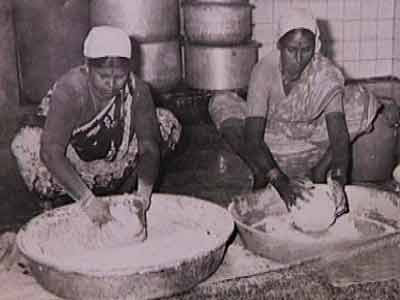
Such was the business acumen of these incredible women. The second phase of Lijjat was building a robust supply chain that would be cost effective, would ensure quality production and would fit the lifestyle of the women who work for the company. So instead of having huge office spaces they used the houses of the sisters as their small centres of papad making. And this is what their supply chain looked like The flour would first arrive from the mills to the respective central location wherein the dough is made. And after the dough is made the sisters will be brought by a bus facility provided by the company. 

Over here they would collect the doughs and then go home, make papads dry them on the veranda and then deliver the papads the next day. And lastly, after the delivery of the papads they would collect their money and the dough for the next cycle. This would be followed by surprise visits by the supervisors to check the quality of oil they use, the hygiene check of the house and most importantly the process of making papads. Now the sisters are also given aluminium papad makers to ensure that the papad is produced in a standardised manner. This happens at all the branches. If one of these branches does very well the profits are distributed among the sisters. And if not, the losses are borne by the branch members together. And after all of this comes the most challenging part of all and that is sticking to the vision and mission statement of the company. 

Now people, for most of us mission and vision statements are just stupid formalities and they have no real significance for us.  At the same time in case of colleges also even your principle wouldn’t remember the vision and mission statement of your college and if he did it would only be because he mugged it up because some committee was visiting to give your college some stupid certification or some accreditation. And this is the reason why most of us do not understand the importance of mission and vision statements. 

But here’s a thing guys Mission and vision statements form the very foundations of every single organisation. And when designed and followed the right way it can help the organisation sustain for a century. At the same time, if not done right they can even bring down a million dollar business. A classy example of the same is Apple. Now people, when Steve Jobs got fired from Apple in 1984, Apple was a million dollar company. Until he was there at the company, the company stuck to it’s value. And it was a formidable player in the industry. But after he left, they started to derail from their values. And within just 10 years they were almost about to go bankrupt. 

That’s when Steve Jobs got called back to Apple to fix things and get the company back on track. And you know what ? After he took over the company, the first question he asked to every single engineer to every single deisgner and every single manager was What does Apple stand for ? And what are the values that we believe in as a company. Because the biggest mistake that Apple made was while he was not around they started to loose their identity and started to deviate from their values because of which they started making products with no sense of purpose. 

Eventually, the brand lost it’s unique identity and customer loyalty just faded away. So Steve baba comes back asks this question and within some time the entire team is absolutely clear as to what exactly they were supposed to do. And this is what got them the ‘Think Different’ campaign that told the world what Apple truly stood for. And that is “Think Different”. And within just 2 years the same company with the same engineers and the exact same resources then went on to create history to become a legendary company that made products that changed the world forever. And again as soon as Steve baba left we all know what’s happening with Apple.

This is the importance of mission and vision statements. And here’s the most mind-blowing fact of all. In it’s 62 years of existence, not a single time Lijjat Papad has ever deviated from it’s core values. And even today After expanding to 67 branches and scaling up to 42,000 employees and after exporting their products to 15 different countries. They still abide by the core philosophy of their business, that is, Sarvodaya, which means Progress for all. 

While we live in a world where billion dollar corporates, even with the slightest change in the policies wouldn’t think twice before firing thousands of employees and putting each one of their family’s life at stake. On the other side we have got Lijjat Papad wherein with every single machinery they bring in for automation, they make sure that not a single woman is asked to leave the organisation. Because they are 100% clear that their ultimate purpose of business is not to make money but the empowerment of women so that they can give their family and children a better quality of life. 

On one side where we have got these evil companies who would put the health of their frontline workers at stake just to maximize their profits. On the other hand we have got Lijjat Papad wherein even if they have a great year, they make use of the extra profits to sponsor the education of the children of their frontline workers regardless of their age, caste, religion or even the position in the organisation. 

And they do all of this just so that the next generation of these frontline workers can be given the opportunities that they truly deserve. And last and most importantly while inspite of being at the pinnacle of the technological revolution there are people like you and me who often keep doubting our capabiities. And here we see a standing example of 7 incredible women who had no educational qualification. no background in business and no fancy investor. And yet, they were able to build a business empire that is now empowering generations of women all across the country. 

And that too during a time when women had no scope of opportunities. If this isn’t an epitome of greatness I don’t know what is…. bye bye.

4 Steps to Business Analysis Certification

Business analysis is a rapidly growing field, and many professionals wonder ‘how do I become certified’? Or how to become a business analyst? Certified business analysis professionals are in-demand. Certifications from the International Institute of Business Analysis (IIBA®) and others are globally recognized and help grow your career in business analysis. From entry-level to the more advanced CBAP, and even specialized areas like cybersecurity, certification in business analysis are worth getting to maximize your BA career potential. There are many portals through which you can get CBAP certification after completing training.
Step 1:
Choose Your Certification
The core certification program consists of three levels, ECBA™, CCBA®, and CBAP® spanning from entry-level knowledge to expert-level of business analysis. Determine which level matches your interest, experience, and career goals to see which certification is best for you.
Once you choose your certification, these certifications require professional development hours and other goals to be logged before you can register for the exam. 
Select the badge below for more details on each individual certification or browse all certifications.
Step 2:
Learn About Your Certification Exam
Before you start preparing for your business analysis certification, ensure you understand the basics of what’s on the exam. Review the exam competencies, exam blueprint, and sample questions to see what’s covered and the type of questions that will be asked. While the same exact questions will not be on your exam, these sample questions will give you an understanding of what to expect on the certification exam.
Be sure to check out the exam information page for guidelines on all our certification exams and click on the certification badge below for each of the exam blueprints and sample questions.
Step 3:
Begin Preparing for Your Exam
Review the standards or bodies of knowledge that align with your certification. 
IIBA endorses training providers globally to support the ongoing professional development of business analysis professionals. All CBaP endorsed training is aligned with best-practice standards including the Guide for our core certifications and these providers offer comprehensive courses designed to prepare you for your certification exam.
Step 4:
Register and Take Your Certification Exam
When you have acquired the skills and knowledge required for your desired certification, it’s time to take the exam. For the core certifications, start by paying the application and exam fees. For the specialized certifications just purchase the exam fee to get started. Then, you will begin the process of registering and scheduling your exam.
Congratulations!
You Are Now Certified.
You did it! You earned your business analysis certification! You have joined a community of more than 16,000 business analysis professionals worldwide. You’ve achieved a globally recognized certification that will help you advance in your business analysis career.
Now, it’s time to show the world you mean business. Showcase your expertise with your digital badge. Share and validate your certification achievements digitally your social media platforms and more!
Taking Flight With Business Analysis Certification
Develop Your Business Analysis Career
It’s important for you to know what your options are and pursue opportunities for experience, training, and certification that will take you to where you want to go.
PROFESSIONAL GROWTH STARTS HERE 
Business Analysis Specialization
Business analysis professionals come from many different backgrounds and fulfill different needs to deliver the best business outcome for their organization. Find the resources you need for best practices and specializations relevant to business analysis in today’s transformative world.
Business Analysis Resources
A curated body of knowledge dedicated to advancing your career in business analysis to create better business outcomes for your organization.

Review of a research article

Article name:A Study of University Students’ Motivation and Its Relationship
with Their Academic Performance.

Student motivation is the element that leads students’ attitude towards learning process.God-gifted talents, best teachers and best schooling facilitate the academic performance and students’ motivation
is prerequisite for students’ accomplishment. This study attempts to identify the influence of students’
motivation on their academic performance.So come on research enthusiasts let’s look into the why,how and what of student motivation through this review!

Purpose and sample

This outstanding Research article by Ali and colleagues has been published in the International Journal of Business and Management.This study attempts to identify the influence of students’ motivation on their academic performance.The sample consisted of 342 university students of different programs in various universities of Islamabad and Lahore, Pakistan.The students were asked about how motivated they are about their university experience and what really motivated them to study.

METHODOLOGY

The questionnaire was distributed among both male and female students. There were 82% male and 18% female students in the survey with an average age of 20 years.“The University Student Motivation and Satisfaction Questionnaire version 2″ (TUSMSQ2) instrument was developed by Neill (2004) to measure student’s motivation. TUSMSQ2 instrument contains 30-items.

WHAT WAS TESTED?

The questions measure both Intrinsic and Extrinsic motivation of students. There were two intrinsic motivators; Self-exploration and Altruism and four extrinsic motivators;rejection of Alternative options, career and qualifications, Social enjoyment, and Social pressure in the questionnaire. The questions were based on five point Likert scale. For each item, students rated themselves on a scale of 1 to 5; 1 being “Very False”, towards, 5 being “Very True”

BASIS/THEORY OF THE STUDY

Motivation is state of mind that stimulates activities and human body actions.Student motivation is often separated into two types: Intrinsic motivation and extrinsic motivation.


Intrinsic motivation: A student is intrinsically motivated when he or she is motivated from within. Intrinsically motivated students keenly engage themselves in learning out of oddity, interest, or enjoyment, or in order to achieve their own scholarly and personal goals.Thus students with intrinsic motivation are more enthusiastic, self driven, challenging and feel pleasure in their studies.Intrinsically motivated students tend to prefer challenging tasks.

Extrinsic motivation: It is commonly viewed that extrinsically motivated student engages in learning
purely for attaining a reward or for avoiding some punishment.Extrinsic motivation means
to obtain some reward or avoid some punishment external to the activity itself such as grades, stickers or teacher approval.Students with extrinsic motivation try to drag themselves with academic assignments, feel compelled to learn, and always put minimal efforts to achieve maximum appreciations.

Results

The results indicate that academic performance amplifies between the ranges of 23 percent and 34 percent due to extrinsic motivation and intrinsic motivation.Also the comparisons of variables on
individual bases indicates that those students who adapt self-exploratory variable and altruism variable, rejection of alternative options variable tend to perform better, whereas student who adapt career and qualifications variable, social enjoyment variable and social pressure variable tend to perform less then expected.Also the study found positive and mutually causal relationship between student’s motivation and student’s academic performance. This relationship is reciprocal, meaning students who are more motivated perform better and student who perform better become more motivated.

implications

Any research article would be a waste without implications.This study helps in identifying the factors that will help educational thinkers to know students’ attitudes towards learning, what facilitates learning and what hinders in learning.Thus it will lead to better teaching methods and facilities to suit the student’s need thereby increasing their job competence.

So,this was a comprehensive review of a wonderful research article.Click the below button to read the article:

Hope you all liked the review,if yes please give this blog a like.

Thankyou!

Stay Knowledgeable!

TOP 9 Small Business & Start-Up Ideas for 2020 (ONLINE FROM HOME)

Today, we’re going to talk about TOP business ideas for 2020. They are not going to be those obvious ideas that you can think of yourself like starting a restaurant or a car wash; we are going to talk about ideas based on recent trends, recent growing markets.

How To Start A Business

A very important rule! If you decide to start your own business, your motivation shouldn’t be because someone said: “It’s going to be a great business!”. Your perfect business idea should consist of the following things: it should be something you like doing and it should be something you are really good at.

1. Coworking Space

Remote workers are spurring on a new revolution for white-collar professionals, as many roles traditionally set in the office space transition to working via the web. Since loneliness is an all-too-common affliction for remote workers and working from a coffee shop isn’t always the quietest choice, the appeal of shared coworking spaces grows each year.

2. Posture Corrector

Nowadays, people constantly hunch over their phones and laptops, it’s no surprise that there’s been a rise in back and neck pain. The keyword “posture corrector” gets about 74,000 monthly searches proving to be a great startup idea for new entrepreneurs.

3. Fitness Tech

Apps related to diet and fitness account for 3.31% of all app on the Apple Store. People are constantly on the move. Making it possible for consumers to fit daily workouts conveniently into their crazy schedules closes another barrier to a healthy lifestyle.

4. Men’s Cosmetics

Men’s cosmetics industry is worth approximately $3.4 billion. One of the most popular niche products targeting men is beard oil, a part of the male grooming industry that makes approximately $6 billion in annual sales. Approximately 39% of American men have beards.

5. Food truck

Food trucks represent all the benefits of a restaurant but without the initial investment of a brick and mortar business space. Only 10-20% of food trucks fail, whereas the failure rate for new restaurants can be as high as 90%.

6. Healthy Fast Food

Think about why people flock to their favorite fast-food chains. The price, speed, and convenience offer consumers a quick way to eat on the go and on a budget. With high demand and low competition, healthy fast food makes a great business idea for 2020.

7. Reusable Bags

As people become more conscious of the waste they produce in their homes, some are starting to use reusable bags to lower the amount of plastic waste. Business ideas centered around preserving the environment can help you build a socially conscious brand.

8. Smart Apparel

With smart apparel’s surging growth rates, this niched industry is looking to net over $4 billion by 2024. This subsector is still so new, making it fresh for innovative ideas from budding entrepreneur techies.

9.Travel Consulting

If traveling is your passion and you are always updated about things like best airplane ticket options and hotel deals, then you fit the bill. You can start by helping your family and friends, securing the best travel deals and selling rewards flights.

Hope these ideas are useful to young budding minds out there looking forward to being Entrepreneurs of tomorrow!

Will Oil Price go down???

America does rely on oil in many ways. It’s about 90 percent of the energy that we use in transportation. And it’s more than a third of the overall energy that we use. In fact, it’s probably going to stay that way for a lot, a lot longer. The Energy Information Agency administration predicts that going out to 2050 is still going to over a third of the energy that we’re going to use. So how was it possible for oil to reach a negative value and what does it mean for the American economy? To understand what happened, it’s important to know how a futures contract functions. So the futures market is a way to bet on the future price of a certain commodity.

Oil Price Fundamental Daily Forecast – Pressured by Renewed ...

Different types of oil from all across the world are traded by barrels in their individual market places. But two futures contracts serve as the major benchmark for oil price. Brent Crude trades oil from the North Sea in northern Europe, setting the standard for international oil prices. While the West Texas Intermediate, or WTI, trades a specific grade of oil traded in Cushing, Oklahoma, that serves as a domestic benchmark for oil prices. A refinery might have a contract with a producer and say, we will pay you that Brent price or we’ll pay you the Brent price minus the transportation costs. Or you know that it’s all subject to negotiation. And those two are well known. It’s a shorthand, if you will. And a lot of times other crudes are priced off of those crudes because they’re well, known the quality is high and has a long track record. Similar to most treated commodities, oil prices rely heavily on how much of it is available on the market. In other words, supply and demand. Oil like just about anything else in the world is determined that prices are determined by a willing buyer and a willing seller. And so that means that as demand goes up, more people are buying it.

The price will typically go up, supply stays the same and vice versa. If supply suddenly increases, then then typically the price will go down if the demand stays the same. The demand is determined by how much oil is needed at any given moment due to its crucial role in the economy. High demand has often been associated with a healthy economic growth. Historically, oil demand has moved with the economy of a country. It’s been very tightly tied because almost all transportation comes from burning oil and a lot of other industrial processes use oil. So when the economy is humming along strongly, the demand goes up. And when you have a recession, the demand goes down. On the other hand, supply is usually determined by the producers who have control over its output. Historically, the Organization of Petroleum Exporting Countries, otherwise known as OPEC, has played a crucial role in determining the supply. OPEC currently has 13 member countries, including Iran, Iraq, Kuwait, Saudi Arabia and Venezuela as founding members. However, a lot has changed in recent years as the U.S. surpassed both Russia and Saudi Arabia to become the world’s largest crude oil producer since 2018. Thanks to the rise in production from American shale fields. Essentially these countries and OPEC, everyone is competing for market share.

Oil prices inch higher on output cut support, but US coronavirus ...

Everyone wants to produce more for their country, but also the optionality to export it to another country and especially growth regions such as China, Asia. Being an investor or a producer in the oil industry means keeping an eye on this fine balance between supply and demand, as well as the geopolitical events that could threaten the industry. Never forget about geopolitics and the impact it can have on the oil price, because that can be that X factor of why oil may have a big premium or a big discount to fundamentals that you see supply and demand. It’s because geopolitics introduces other risk factors. A historic drop occurred on April 20th, 2020, with U.S. oil prices on WTI dropped by almost 300 percent. Trading around negative 37 dollars. What happened with oil in terms of the negative pricing in April with the futures contracts was rather unprecedented. We have seen negative prices before. For example, last year we were talking about negative natural gas prices and Waha in April 2019. But that’s more due to processing or field issues, not what is happened specifically this time with the COVID 19 and in the price war. Oil prices had been under pressure since January as China battled the spread of COVID 19.

When the pandemic finally reached the rest of the world, demand took a devastating hit. People started talking about the demand going down 2 or 3 percent instead of growing by 1 or 2 percent, as was had previously been expected. But then by the time it got to the United States and all over Western Europe, the forecasts were very different. And at the trough, we probably saw demand in April bottom out, down 30 percent. So we’ve never seen anything like this, certainly in the last 40 years since world oil markets have developed. To make matters worse, a price war erupted between Saudi Arabia and Russia in early March after OPEC and its allies failed to reach an agreement on deeper supply cuts. Oil saw its worst trading day in 20, 29 years. Yesterday, both WTI crude and Brent crude lost nearly a quarter of their value, and the S&P energy sector ended the day 50 percent off its 52 week closing high. Saudi Arabia launched a price war against other key producers. As supply remains steady while demand struck record breaking lows. The petroleum industry quickly began running out of storage space to put their oil. Cushing plays a very big role as one of the main hubs of that commercial storage. And Cushing at the time of the negative contract was around 70, 70 percent full, and what was left was perhaps already committed. So that was a huge issue because Cushing plays one of the main roles in pricing the WTI contracts. As the delivery date for WTI grew near. And investors had nowhere to put the oil. They soon began a massive sell off, prompting an unprecedented crash into the negative territory. WTI special in a way, because it’s so tightly connected to physical oil. And so if you’re holding a contract for WTI, you’re expected to take possession of oil.

Oil prices spike above $30 for first time in over a month | Fox ...

What was happening was the buyers who had bought a futures contract, which meant they had responsibility to take delivery of the oil, recognized that that storage was filling up and they had no place to put the oil and they didn’t want the oil. And so they wanted to get out of the contract. Usually they can get out of the contract by getting somebody else to take the oil instead at a positive price. Cause oil’s a valuable commodity. But there was nobody who wanted to take that oil, particularly because it was located in an area that was producing way more oil than they needed. And the pipelines to move oil out of that area were completely full. The historic drop quickly sent shockwaves through the U.S. financial market. The Dow plunged by over 1,200 points over the following two days, and brokerage firms like interactive brokers reported taking 109 million dollar hit to cover its customers losses. It was kind of like what happened in 2000 where we we’re wondering if the computers could roll over. Some of the traders computers couldn’t even handle the negative. They weren’t set up for a negative. So you can imagine the disarray and the surprise, you know, that some traders faced the next morning when they looked at their margin calls or what they owed based on the severity of this drop.

However, experts point out that although the event was unexpected, there was no need to panic. It was not unforeseen. The exchange itself saw it as a possibility ahead of time. They actually discussed what to do if that were to happen, reprogram their software and so forth. And at least one major media outlet reported on it a week ahead of time before it happened. Also, some other products have gone negative in the past. Things like natural gas. So I think it’s important to put it in perspective that while this had never happened with oil before, it was just on one particular instrument. The WTI was just for one day and it was seen as at least a remote possibility ahead of time that it happened. It was very few contracts. There was very little trading at those prices and the price very quickly rebounded into positive territory.

Indian economy to benefit from slump in international oil prices ...