FINANCE-SOME BASICS

Finance is required by a business to establish and run its operations is known as Business finance. No business can function without an adequate amount of funds for undertaking various activities. The funds are required for purchasing fixed assets (fixed capital requirement), for running day-to-day operations ( working capital requirements) and for undertaking growth and expansion. Finance is a major function of any business enterprise, it deals with the arrangement of an adequate amount of capital to achieve the objectives of the enterprise and for the development of the enterprise.

SOURCES OF FINANCE FOR DIFFERENT TYPES OF BUSINESS FIRMS

No one can start a business or run an enterprise without adequate funds. Every business requires money to start which is called initial capital. In business, capital is required for both productions as well as the distribution of goods and services. The amount of capital required depends upon the nature and size of the business. The requirement of capital and sources of capital for different types of business firms are:

1. Sources of finance for sole trade

 A sole trader operates at a smallscale and requires a limited amount of capital to procure fixed assets and also for meeting day-to-day expenses. The proprietor brings in his capital to meet the above expenses. In a sole trade, owned capital consists of the owner’s contribution, and also earned profits are credited to his capital account at each financial year. In a sole trade, owned capital consists of the owner’s contribution, and also earned profits are credited to his capital account at the end of each financial year. In addition to this, a trader can raise by taking a loan from his family, friends, relatives and any known people and also can borrow money from banks and any financial institutions. Short-term finance to meet the day-to-day expenses and requirements may be obtained from commercial banks and long-term finance for the purchase of fixed assets is obtained from the state financial corporation and other financial corporations. The Central and central governments also provide financial assistance to small scale units to encourage Entrepreneurship and self-employment.


2. Sources of finance for a partnership firm

Capital requirement for a partnership firm is bigger than that of a sole trader business. The owned capital is contributed by the partners themselves in an agreed proportion. Accumulated profits of the firm credited to the accounts of partners also constitute a part of owned capital. A partnership firm can also raise loans from commercial banks and other financial institutions. In case of need, partners also advance loans to the firm.
3.Sources of finance for a joint-stock company

A joint-stock company generally requires a very large amount of capital in comparison to a sole trade and a partnership firm. A joint-stock company raises capital through the issue of shares and debentures. In addition to the issue of shares and debentures, it can utilize and retain profits in the form of reserves. It can raise borrowed capital through loans from financial institutions and commercial banks.


Master plan of China- DISCLOSED!!!

The life after the pandemic situation will not be normal again as this pandemic situation is also not normal.

Knowingly or unknowingly the virus developed in China (according to news) created the biggest impact in the health and economic sector of the world. Nobody knows how much time will it take to come out completely from this pandemic situation. China with the most power in terms of technology and population might have a master plan to be executed in the name of Novel Corona virus by supplying the goods of medical department and further other essential commodities which might be needed by the people in the near future to the world and soon they will earn billions of dollar by supplying it to the world. So, again now world will depend more on China than before.

download


We as a responsible citizen of India, need to stop the master plan of China as in the near future it will harm us very very badly. Let us understand by an example, India is surrounded by countries like Pakistan, Bangladesh, Sri lanka, Nepal this all countries have taken huge amount of money from China like wise Pakistan took huge money from China to develop a road passing from the mountain, so now Pakistan is in debt to pay the money and in return China can do anything to gain the money back. Pakistan took more money from China than from IMF, and has to pay around 19 billion US$, which will be extremely hard for Pakistan. In the same way Sri lanka owes 1.4 billion US$ which is left over from from 99 years and now China will ask for payback or will capture the Sri lanka. Bangladesh debt for 64.9 billion US$. India is also in debt of paying to China, but China will not capture India first it will first capture our surrounding countries and than head towards India. So, we need to become very attentive towards each step of China and understand their activity, we also need to stop buying Chinese goods to save our country and instead go for Made In India goods. JAY HIND…

made-in-india-vector-16416448

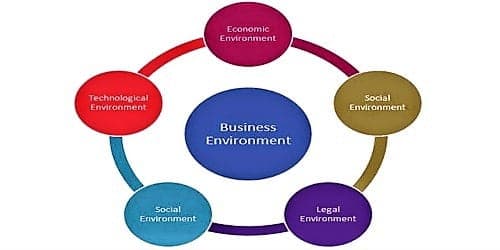
Business Environment

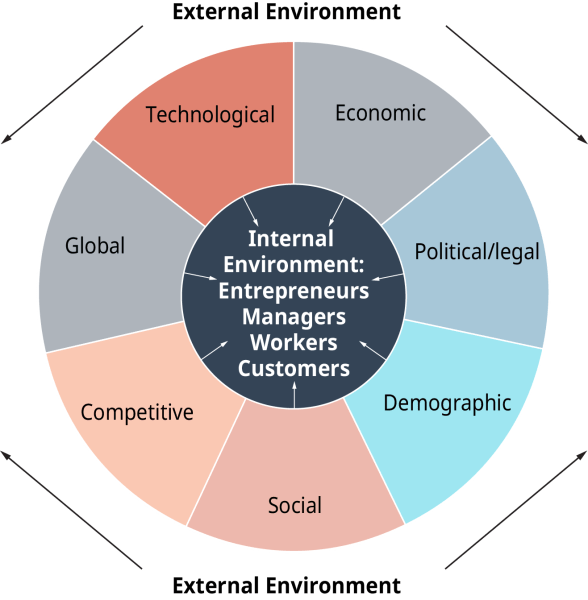
Business is a very economic activity of buying, selling, manufacturing, and rendering auxiliary services to trade and generating income through this activity. Modern Business is the economic and social organ of the society and also of the country and in today’s world modern business is not independent and it cannot work in isolation and business environment constitute- Government, public and economic, political and social situations constitute the business environment. Business environment may be defined as those conditions and forces external to a business unit under which it operates and these forces include government, suppliers, customers, creditors, political parties, socio-cultural organizations, and internal organizations, etc. Some of these may be direct influence over the business firm while others may operate indirectly. “Business environment encompasses the ‘climate’ or set of conditions, economic, social, political or institutional in which business operations are conducted”- Arthur M. Weimer.

– From opentextbc

The broad national economic environment is set by the nature of the economic system embodying the nature of property rights, ownership means of production, the role of planning, the functioning of the price mechanism, etc. Judged from these angles, the economic system of a country may be characterized as capitalist, socialist, communist, or mixed. The business environment consists of all those conditions and forces in the surroundings of a business enterprise under which the business operations are to be carried out efficiently and effectively and without any mistake. The management of the environment forces is an important task before every businessman of today and suitable decisions are required to be made in respect of various developments that are expected to take place for shaping the survival and growth of the business.

Characteristics of the business environment

1. The totality of external forces: The business environment is the total of all those factors/forces which are available outside the business and over which the business has no control. It is the group of many such forces, that is why the nature of it is totality.

2. Specific and General forces: The forces that exist outside the business are (a) Specific forces: These are the forces which affect the firms of an industry separately like customers, suppliers, etc. (b) General forces: These are the forces that affect all the firms of an industry equally, e.g., social, legal, political and technical situations.

3. The Business environment is dynamic: It is obvious that the environment is a mixture of so many factors and there are constant changes in some of them, due to these changes the business environment is dynamic.

4. The Business environment is complex: The nature of an environment in any field is the combination of so many factors and all these factors are related to one another. So the influence that they exercise on business cannot be recognized independently. That is why it is difficult for a business to face them.

5. The Business environment has a long-term impact: Any change in the environment has a long-term effect and impact on any kind of business because the changing environment affects the profitability, productivity, and development of the business.

6. The Business environment affects different firms differently: A change in the environment doesn’t need to affect all businesses in the same manner. One business may welcome the change in the environment while the other may not. Therefore, it is a special o environment that affects different businesses differently.

How can Start-ups and Businesses overcome the downturn because of COVID-19?

The COVID-19 has created a pandemonium for start-ups and businesses all around the world. Most of the start-ups and businesses are facing a downturn in their financial market. We know it’s a very hard time for all, and we all are trying very hard to survive through the pandemic. Most of the employees are in fear of losing their job security. The start-up entrepreneurs are afraid of not getting any proper upcoming projects. Every start-up enterprise and business are going through terrible times now, financially. The employees are trying to survive without pay. The economy of the country is degrading day by day. 

Hence, we are here to see what can start-ups and businesses do to overcome the downturn because of COVID-19. If we have the will to make progress, we are surely going to overcome this pandemic. Even if the market is not as fast-paced as before, we still can develop the businesses financially. All we need to have is a proper strategy to make the progress happen, to survive COVID-19. Here is a list of strategies that start-ups and businesses can follow to overcome the downturn.

Strategies to overcome downturn due to COVID-1

Communicating with regular clients 

Every business company or a start-up must have a regular set of clients. Try to communicate with your customers regularly. Even if the pandemic resists you from gaining any new project, you will still have your old clients. Try to keep your old client satisfied. You will get the support you need from regular clients.

Manage your team for new strategy plans

Your old strategies won’t be of any help now. You need new ideas to make new strategies. To have new ideas, you need a working team led by a strong leader. The leader has to make the team members understand how important it is to make strategies. If you want to overcome the financial loss your company has faced, you need to strategize everything. 

Make small plans rather than bigger ones

Your only goal, for now, is to survive the pandemic with as low financial loss as possible. So, make smaller plans rather than long-term plans. You should have a plan for the upcoming month, rather than the year. Plan every day out and execute the plan meticulously.

Pay attention to investment

Now, you won’t have a lot of funding. Your company would already suffer heavy losses, due to a lack of new projects. Hence, try to keep the investment at a bare minimum. Don’t invest in huge projects at the moment. Look for smaller projects. In this way, you can save funds for your company. This is not the time to invest your money, because you have no idea what the future holds.

New ideas and methods

You need to understand what is important at the moment. You have to impress your clients, and for that, you need to bring in new ideas. You have to focus on the necessity rather than the exuberance. Every new idea has to be convenient and needed by the customers. There is no need for fancy ideas. It’s highly unlikely that a customer would be interested to invest in any fancy project. You have to modify your methods according to the need of the moment.

How to save your company from financial loss?

Financial loss is inevitable for any company in the current scenario. But you can save your company from becoming bankrupt. You have to make your employees work towards the satisfaction of the existing clients. The employees would get paid based on their work. You have to make a new rule for your employees, which would stay consistent until the company is back on track. Your employees would get paid for the amount of work they are going to produce. You need to plan out work for every employee you have. Even for a start-up company, you need to keep your employees as well as your clients happy. Your employees are the pillars of your company. In this way, you can satisfy both the clients and the employees. Apart from that, you have to make small teams of members, headed by one leader. Make them work on small projects. They would get paid based on every successful project they execute. In this way, your company won’t suffer from a lack of work. Also, your employees would get paid for executing the projects wonderfully.

The best way to overcome financial loss is to not invest huge amounts on any projects now. Take up small projects, which would be easier for the employees to finish, and also in time. Try to invest less as much as possible. Only invest in projects you think would be fruitful for your company at the moment.

How to make plans and strategies to overcome financial loss?

The focus should be on new plans and strategies, for a small amount of time. Once the pandemic ends, the situation of the company would improve for the better. Now, you need to focus on new plans. Have a team of members who would give you proper strategies regarding new projects. The projects have to go according to the strategized plan. Every project should be well planned and simple. All the employees have to keep in mind, that it is better to have simple plans to work on, rather than complicated ones.

Therefore, it is not hard for any start-up or business to overcome downturns. Your employees are your strength. You all can work together to keep your company out of financial loss and debt. You need to focus only on what is needed and how you can work together to develop for the better. Work with your employees and plan out the upcoming months properly to achieve success. Your company will progress if you execute the plans properly. The more united you are with your employees, the better it would be for the company.

Go For Western Economy With These Pioneering

but it is too much for my strength — I sink under the weight of the splendour of these visions!

I am alone, and feel the charm of existence in this spot, which was created for the bliss of souls like mine. I am so happy, my dear friend, so absorbed in the exquisite sense of mere tranquil existence, that I neglect my talents.

Continue reading “Go For Western Economy With These Pioneering”

EDUindex: Correlation Coefficient for Curriculum Relevancy and Employability

Daily writing prompt
If you could meet a historical figure, who would it be and why?

The EDUindex is a quantitative measure designed to evaluate the relevancy of educational curricula to post-educational objectives, especially in the context of employability. It serves as a Correlation Coefficient that quantifies how well an academic curriculum aligns with the demands of the job market, skills required by employers, and overall preparedness for professional careers. The EDUindex is an insightful metric for educators, policymakers, and institutions to assess the effectiveness of their educational programs.

1. Understanding the EDUindex

  • Definition: The EDUindex is a value that ranges from -1 to +1, similar to traditional correlation coefficients. Here, a value close to +1 indicates a strong positive correlation between the curriculum and employability objectives, while a value close to -1 indicates a negative correlation. A value of 0 would indicate no correlation.
  • Purpose: It aims to bridge the gap between academic content and the skill sets required in the real world by providing a measurable framework for evaluating curriculum relevance. The primary focus is on ensuring that graduates possess the skills and knowledge necessary to meet the evolving demands of industries and employers.

2. Components of the EDUindex

The EDUindex is derived from various parameters that can be broadly categorized into the following components:

  • Curriculum Content Relevance: Measures how well the topics and subjects taught align with industry standards, technological advancements, and contemporary practices.
  • Skill-Based Learning: Assesses the extent to which the curriculum incorporates practical, hands-on experiences such as internships, projects, and case studies that enhance employability skills.
  • Soft Skills Integration: Evaluates the inclusion of communication, teamwork, problem-solving, and other essential soft skills in the curriculum.
  • Industry Collaboration: Looks at partnerships between educational institutions and industries, including guest lectures, workshops, and industry-based projects.
  • Graduate Employability Rates: Analyzes the percentage of graduates securing employment in their field of study within a certain period post-graduation.

3. EDUindex Gap Analysis

The EDUindex Gap Analysis is a diagnostic tool that identifies areas where the curriculum falls short in achieving alignment with post-educational goals, particularly employability. It helps institutions recognize missing elements or gaps that are crucial for enhancing the relevancy of their academic offerings.

How Gap Analysis Works
  • Step 1: Data Collection: Gather data on current curriculum structure, graduate employability outcomes, and industry feedback. This can include surveys from employers, feedback from alumni, and job market analysis.
  • Step 2: EDUindex Calculation: Using the collected data, calculate the current EDUindex score to understand the existing correlation between the curriculum and employability.
  • Step 3: Gap Identification: Identify gaps where the curriculum does not meet industry expectations. For instance:
    • Missing Skills: Lack of courses on emerging technologies like AI, Data Science, or Cybersecurity.
    • Outdated Content: Curriculum components that are no longer relevant in the current job market.
    • Insufficient Practical Exposure: Limited hands-on experience in labs, real-world projects, or internships.
  • Step 4: Recommendations: Based on the gap analysis, recommend curriculum changes such as the addition of industry-specific modules, skill development courses, or enhanced industry collaboration.

4. Benefits of Using the EDUindex

  • Improved Curriculum Design: Helps institutions refine their curriculum to better meet industry standards, thereby increasing the employability of graduates.
  • Data-Driven Decision Making: Provides a data-backed approach for curriculum reforms, ensuring that changes are aligned with market demands.
  • Institutional Benchmarking: Enables educational institutions to benchmark their programs against industry standards and other institutions.
  • Enhanced Student Outcomes: By aligning the curriculum with employability, students gain relevant skills that increase their job readiness.
  • Feedback Loop for Continuous Improvement: The EDUindex fosters a continuous feedback loop where institutions can regularly assess and update their curricula based on industry trends.

5. Case Study: Implementing EDUindex in Higher Education

Let’s consider an example of a university implementing the EDUindex for its Computer Science program:

  • Initial Assessment: The EDUindex score was calculated as 0.45, indicating a moderate alignment with employability goals. Key gaps included limited exposure to cloud computing and AI.
  • Gap Analysis Results:
    • Missing Courses: No dedicated courses on Cloud Technologies or AI.
    • Industry Collaboration: Lack of partnerships with tech companies for internships.
    • Outdated Curriculum: Focused more on theoretical knowledge rather than practical applications.
  • Action Plan:
    • Introduced new electives on AI, Machine Learning, and Cloud Computing.
    • Partnered with industry leaders like Google and AWS for certification programs.
    • Enhanced internship opportunities and real-world projects.
  • Outcome: After implementing these changes, the EDUindex score improved to 0.75, and the graduate employability rate increased by 20%.

6. Conclusion

The EDUindex serves as a vital metric for aligning educational curricula with post-educational objectives, particularly in enhancing employability. By leveraging the EDUindex and conducting regular gap analyses, educational institutions can ensure that their programs remain relevant, adaptive, and effective in preparing students for the dynamic job market.