Career in Environment and Wildlife Conservation

 The Ministry of Environment, Forest & Climate Change is implementing the Environment Education, Awareness and Training (EEAT) Scheme with the objective to promote environmental awareness especially among school and college students and to mobilize their participation for conservation of environment. Under the National Green Corps (NGC) programme of this Scheme, more than one lakh Eco-clubs have been formed in schools and colleges to educate students and to spread awareness on environmental issues. Further, this Ministry also supports organization of field visits/ nature camps for school students in Protected Areas, Wildlife Sanctuaries, National Parks, etc. under the National Nature Camping Programme of EEAT Scheme with an objective to provide ‘nature experience’ to students and thereby to trigger their sensitivity towards nature and its conservation. As per information provided by Department of Youth Affairs, awareness on environment conservation and enrichment is a component in the regular activities of National Service Scheme (NSS). Volunteers of NSS organize activities on environment conservation, climate change, use of renewable energy and other related issues in addition to plantation drives.

This Ministry has launched the Green Skill Development Programme (GSDP) in June 2017 under the ongoing Environmental Information System (ENVIS) Scheme, on a pilot basis, at 10 locations, spread over 9 biogeographic regions of the country with the objective to skill youth in environment, forest and wildlife sectors and enabling them to be gainfully employed or self-employed.Based on the success of the pilot phase, the programme was extended to pan-India level in 2018-19 covering diverse fields like pollution monitoring (air/water/soil), emission inventory, operation of Sewage Treatment Plant(STP)/ Effluent Treatment Plant (ETP)/ Common Effluent Treatment Plant(CETP), waste management, environmental impact assessment, forest management, water budgeting and auditing, wildlife management, para taxonomy including Peoples Bio-Diversity Register(PBR), bamboo management and livelihood generation, etc. The training imparted under GSDP endeavours to enhance technical knowledge of the skilled workforce with a focus on hands-on training.The ENVIS Hubs/ Resource Partners and other institutions imparting training under the GSDP invite applications from all over the country and the placements take place based on employment opportunities available within or outside the State / Union Territory.

Career advice for university students

Seek internship opportunities

Internships are a great way to gain valuable, hands-on experience in your field. For your internship to be beneficial, it must apply to your career aspirations. For example, if you’re interested in becoming a veterinarian, it may be beneficial to work at a kennel or animal shelter where you can learn proper animal care and handling.

Grow your skills and knowledge

Employers want to hire candidates with a wide range of skills. Use your college years to expand your skills and overall knowledge. Consider elective courses relevant to your career aspirations. For example, if you’re a photographer, taking an art class can help you expand your creativity. If your school doesn’t offer classes in the skill you’re hoping to grow, consider investing in relevant software.

Get an early start

To ensure you get the most out of your career, start looking for opportunities before you graduate. Find jobs relevant to your major. For example, if you’re interested in becoming a graphic designer, consider working for a design agency. This opportunity can help you understand what daily life is like for fellow designers and help you better understand the industry. Similarly, if you’re an art major, consider working for a local gallery to gain knowledge about the art industry. The sooner you look for opportunities, the greater chance you have of getting a job.

Keep your skills up-to-date

When you apply for a job or internship, you’ll likely be competing with other candidates. Because of this, it’s important to keep your skills current regardless of your industry. This means staying up-to-date with various technology and industry trends to help you gain an advantage over other candidates and make you stand out to hiring managers. Stay current by doing online research, reading professional journals or visiting your school’s library.

Pursue your passion

The easiest way to find happiness in your career is to determine what you love doing. For example, if you enjoy woodworking or metalworking, consider becoming an engineer. This ensures you’re doing something that makes you happy every day and will help your job feel less like work and more like fun. Following your dreams can also help increase your productivity because you’ll likely be more excited about going back to work. This advice is crucial as you advance in your career because it ensures you stay encouraged and driven to be the best you can be in your industry.

Strive for excellence and stay motivated

Whether you’re in your first job or an internship, it’s important to aspire to be the best you can be. Identify your own mistakes and believe in yourself and your abilities. This can help you stay vigilant in pursuing your dreams and give you the ability to advance in your career. Ultimately, striving for excellence can help you find success.

Use your school’s career services

Before you graduate, take advantage of your school’s career services to help you jump-start your career. This campus resource can provide you with a wealth of information, from crafting a resume to getting a job. Your school’s career services can also put you in touch with alumni in your field. Your tuition also pays for these services.

Reference

https://www.indeed.com/career-advice/career-development/career-advice-for-college-students

Selection of our career after school

There are some major factors which influence the selection of our career

Selecting the right course and college is a very significant decision after 12th because the right selection will lead to a gratifying career as the wrong one is equal to ending up in studying a subject or a sphere that doesn’t really interest you. Moreover, the choice made after class 12 will be the one that will decide your future.

The contemporary and highly competitive world is giving the students a tough time to choose their career. Today, students are facing with plentiful options as there are several courses all of which look almost equally lucrative and interesting.

  1. Cultural background: The cultural background of an individual plays a massive role in influencing the career.
    • Example: if the parents are doctors the child may be very much inspired by their way of life or the respect that is being paid in the society. So the child may opt to become a doctor.
  2. Bad work experience:  A bad work experience of any family member in a particular field may also influence the teenage in a negative way. It may lead to loss of interest in that particular kind of job.
  3. Economic condition: It’s hard to believe that many dreams are killed every day as the economic condition of the family is one of the main reasons.
    • Example: A hefty amount is required to get admission in an architectural designing college.
  4. Potential: Different profession demand different kind of requirements.
    • Example: If you want to join the film industry and you don’t have the requirements such as height and various physical requirements than perusing a course on acting and dreaming to be actor may be a waste of time and money. Pursuing a career depending on the potential may lead to success.
  5. Parent’s dreams: Every parent has dreams and expectation for their child regarding their future. Sometimes children’s are being forced to fulfil their parent’s dream by killing their own dream.
  6. Social value of the job:  Some people get fascinated towards some jobs because of the respect and social value they carry.
    • Example: Being an IAS officer carries a lot of admiration in the society.
  7. Peer pressure: Peer also plays a very important role while choosing a career. Some people choose the same career as their friend to maintain the same level of status forgetting their own field of interest.
  8. Income: The future income of the job also plays a very important role while choosing a particular career. Some time running behind money kills the field that we are really interested in.
  9. Our tastes and interests: Career should be selected depending on our tastes and interest which will help to give 100% to the job.
Reference

https://www.thehighereducationreview.com/news/tips-to-choose-the-right-course-after-12th-nid-797.html

HOW TO KNOW THAT YOU’RE ON THE RIGHT PATH ?

We all try really hard to become successful and for that we need to know our right path. We think about the situation if we not become successful in future. The fear of failure haunts everyone. We all are in a blind race of success and sometimes we forget our genuine subjects of interest in this rat race.

Pin on LDS Quotes

You all might have heard stories of people in which, initially they were involved in other professions like engineer or management but now they are in different profession maybe actor or fashion designer. There could be many explanations for it, one of them could be they didn’t have a clue about their right path, their inclinations.

The signs which tell that you are on the right path are:

1.You’re not doing things that make you feel uncomfortable.

2.You’re not making statements you later apologize for.

3.You don’t want to think twice about the Big Deal Stuff.

4.You feel your feeling of significant worth or worth and see it reflected back by your current circumstance.

5.You’re certain about your decisions and life.

The signs which tell that you are on the wrong path are:

1.The current situation is costing you your force.

2.You feel depleted. Getting tired is fine. Depleted means drained.

3.You feel ridiculously befuddled about where your life is going.

4.You are particularly on some unacceptable way when you feel as you are “losing yourself” to a specific circumstance.

5.In the event that you wind up saying “I can’t resist the urge to feel like I lost myself,” then, at that point you’ve presumably sold out yourself somehow or another.

If you ever feel like you are on the wrong path and need to escape the present situation then you ought to ask yourself questions like “What do I really want ?“. If you feel you are too afraid to get out of circumstance thinking it would make it only worse, then you should know that it is your life. You reserve an option to live your life in your own particular manner. You don’t have to compromise with your interests. Individuals who are in contact with their inward aides can all the more likely explore life’s hindrances. They quit jobs as they know aren’t ideal for them. They cut off relationships that aren’t satisfying. They settle on extreme decisions, since they know they’re taking the right decisions.

It’s hard to know the correct way for yourself however not impossible. The primary thing you need is to trust yourself, realize that you’re picking a right way for yourself and no one knows you better than you. Decide your objective and achieve it everyday, every week and every month. Don’t be hard on yourself. Relax and think with peaceful mind.

RESOURCES:

  1. https://everydaypower.com/signs-youre-on-the-right-path/

2. https://www.mindbodygreen.com/0-11308/how-do-you-know-if-youre-on-the-right-path.html

How to expand skill-set.

A skill set is a combination of abilities, qualities and experiences you can apply to perform tasks well. These can include soft skills such as interpersonal skills, organization and leadership as well as technical skills such as research, computer programming, accounting writing and more.

Spending time on improving your skills can help you achieve personal career goals such as earning a promotion or becoming an expert on a certain topic. Your skill set can be applied to progress in your current career or expanded to earn a job in a different field or industry.

You can gain and improve skills with education and experience. The more advanced you are in performing certain skills, the more likely you are to get or progress in a job.

While employers are struggling with a skills shortage, this means that professionals who have the right skill sets will find many opportunities in the job market. However, the practice of actually keeping your skills up-to-date is often easier said than done. Between full-time work and personal responsibilities, many professionals wonder how one finds the time to continue working toward their next career goal. As a result, finding new ways to continue learning on the job is crucial to not just staying up-to-date with current industry trends, but also keeping yourself marketable for future opportunities.

To continue working to develop your skills on the job, start with these steps:

Think about your career goals

As you consider how you can expand your skill set at work, start by thinking about your career goals. What kind of position do you want to have in the long-term? Once you answer that question, you can better determine where your current skill set is lacking. To do so, start by searching for relevant jobs that match your career goals. Once you see a job description of a role that interests you, you can begin to piece together where you need to improve. For example, perhaps you would like to manage a team of your own in the future, but you lack the leadership experience.

Look for more problems to solve

While it’s easy to get stuck in day-to-day operations, looking for ways to improve your (or your team’s) workflow or goals can give you more opportunities to learn new skills. This could mean that you identify and research how you can simplify a process, or help a colleague work through an issue. When you find a problem to solve, you could end up learning new software or even a new technique that improves everyone’s performance.

Five unique jobs no one told you about

If you ask any high school student or a graduate what is their career goal in life, you would get traditional answers like Engineer, Doctor, Lawyer, IAS, Banker etc. These are commonly known careers and as such have quite a large competition in the sector. The market is cut throat in these fields and very few manage to land the job of their dreams.

If you are passionate about these fields then more power to you but if not and you are still searching for your true calling then you can try your hands at these rare jobs not many are familiar with.

Headhunter

In other words professional recruiters, they are hired by organizations to hire employees without any advertisement. Finding a perfect candidate for a particular position is quite a hectic task so to save themselves time from interviewing multiple candidates, some companies prefer to hire a headhunter instead. This is mostly done to recruit higher level employees. It can be much more efficient for organizations to hire headhunters to cut down on the time and expense that goes into the recruiting process. To be successful in this field you need to have a strong professional network and a sharp eye for talent so you can shortlist the best available candidate for the job.

Art therapist

Did you know that art can be used as a form of therapy? Yes, this psychology career uses art to reduce person’s stress, anxiety and improve their self esteem. It’s main goal is to serve as a healing process and provide with many other mental health benefits. So, not only do you provide assistance to people in need, you are also doing something different. This can be useful for people who can’t express themselves verbally. If you are searching for interesting careers in psychology, then becoming an art therapist might fit the bill.

Professional Bridesmaid

You heard it right. Not many people think this could be a career option but it is and quite a successful one may I add. Now you may wonder why would anyone need a bridesmaid? Well answer is simple. Planning a wedding could be very tiresome for bride and her bridesmaids so hiring a professional bridesmaid can relieve them of that stress. As a professional bridesmaid your duty may involve Dress shopping, planning bachelorette party, managing guest list, catering, filling in for uneven number of bridal party. If you are a party planner and love weddings then this might just be a good opportunity for you.

Food scientists

Almost every edible item you consume has a good scientist working on it. They make sure that the food tastes delicious while maintaining the nutritional value of it. They are responsible for coming up with delicious flavors as well as different food processing techniques. They also come up with sustainable food items which can be used when the expenses increase every day.

Video game tester

If you are avid gamer you might as well get paid to play it. Tester’s role is to play the games which haven’t been released yet. Your job is to check every element of the game for the developer to make sure there are no glitches or errors.

Common Mistakes to Avoid on Your Resume


Saying YES to the mess

An unprofessional resume screams SKIP! Remember to keep it sleek and professional with proper highlighting, bullets, and minimal colours. Don’t make it fancy or too simple, don’t use any kind of word or sentence, which will look like a command or too unprofessional, make it professional.
Ensure that it isn’t too busy, too colourful or has illegible fancy font styles.

Check out my posts, ‘Tools to enhance your resume’ for more on this.

Not linking your portfolios, and recommendation

One of the most common mistakes that are made while creating a holistic resume is not providing links to these. Ensure you add a hyperlink to your port folio and recommendation. Also, ensure it is accessible to the employer to view!
Recommendations are like a golden star on your resume. Keep it short, but do provide a contact that they can reach out to, for verification.
Never forgot to add this!!

Not highlighting well enough

Sure, we did tell you what to highlight. But what do you not highlight? Unnecessary minor details, especially in a stretched – out manner. Just add what is important, that will make it look good but if you add small things, it will make your resume look bad. So just remember that you have added things which are important and don’t make it too long.
Use action verbs to describe your daily responsibilities and experience.

Sorry, they can’t come to the phone right now

Why? Because they listed an incorrect contact details on their resume or didn’t list one at all.
So many times we never check our personal information and because of this even if you got the job you will miss it.
Be careful to double and triple check your contact information. E-mail addresses and phone numbers should be highlighted for easier identification.

Too long to read

Keep it short. Your ideal resume should not exceed 2 pages. Employers usually have to go through several resumes in a single day. A super lengthy resume, just make it easier for them to glance and skip.
Make it effective and short.

Grammatical or spelling error

Not only is it extremely unprofessional, but it also implies to the employer that you are not very interested in the position. Use tools like Grammarly to run spelling and grammar checks. Additionally, you could also run it by a friend, just in case you missed something. It’s that easy!

TOOLS TO HELP ENHANCE YOUR RESUME

1. KICKRESUME

Kickresume is a resume builder tool that lets you choose from pre- designed resume and cover letter templates. Kickresume is by far the most easy to use and effective resume website which will help to make your resume look more elegant, well designed and impressive. Kickresume gives you amillion design combinations to improve your resume. Whether you are nurse or an engineer it doesn’t matter with kickresume your resume will always stand out.

“Being a college student who is transitioning to the work life, I consider Kickresume the most helpful tool available. It is very user-friendly with a variety of designs tailored to your personal preferences and profession. It doesn’t get any better than this!!!“

It offers templates for various professional arenas. Simply choose your profession and further customize it according to your needs!

2. READABLE

While creating your resume it is extremely necessary to view it from an employer’s perspective. Is the format clear? Does it hold attention? Is it easy to read and understand? Readable can help. The tools scores your content based on various aspect such as sentence construction, structure and more!

Readability is about making content clear and easy to understand for the largest audience possible. Focusing on readability increases the chance that your target audience will actually read and interact with the content you publish. For this reason, readability should be a natural part of your content management.

3. CANVA

Of course, you’ve heard of Canva choose from a plethora of templates to add that touch of finesse to your own resume. Customize your resume by changing elements, colour, and style. While it can be a lot of fun customizing your resume remember to it professional, sleek, and clean.

4. GRAMMERLY

Yes, this tool is nothing short of a lifesaver when it comes to assignments. But guess what? You can also use Grammarly to create grammatically flawless application and resumes. it will make sure that everything you type is effective and mistake-free, it will help you write mistake-free in not only resume but also in Gmail, Facebook, Twitter, LinkedIn and many other app you use. Even the text messages also!

It also check the tone of your application, making it suitable for professional and formal use . No silly spelling errors anymore, yay!

Grammarly isn’t just a safety net. You’ll get detailed explanations for all your mistakes to help you avoid making them again in the future.

Peer group and its influence


                                                                            (Photo: Titanium Success)

According to APA Dictionary of Psychology, a group of individuals who share one or more characteristics, such as age, social status, economic status etc. are peer groups. Peer Group is both social group and primary group. 

Functions of Peer group:

  • Provide support in shaping an individual’s self-esteem and self-valuation.
  •  Provide emotional security under unprecedented or threatening situations.
  • Provide the foundation for intimate relationships as they are essential non-family contexts for intimacy and affection.
  • Teach gender roles.
  •  Help in Identity formation.
     The peer group is an important socializing agent contributing beyond the influence of the family and school. Peers socialize each other through certain mechanisms. They are.

  •  Reinforcement – Giving Attention.
  •  Modeling-Imitation
  •  Punishment- Rejection, bullying etc.
  • Apprenticeship- Someone with more experience teach someone with less experience.

As your teen grows older, their peers will play a bigger role in their life. Their friends may influence everything from what they wear to how they talk.

  1. Positive influence: Positive peer influence is when someone’s peers influence them to do something positive or growth building. For example, peers who are committed to doing well in school or at sport can influence others to be more goal orientated. Similarly, peers who are kind, loyal or supportive influence others to be the same. They are subconsciously looking to their friends for information about how to act and interact with others. For the same reason, they also learn more quickly in the presence of their peers. For example, friends tell your teen to study harder so they can get better grades. They decide it’s cool to get good grades in a test. Several of your teen friends buy their own car. Your teen becomes motivated to save their money so they can buy their own car too.
  2. Negative influence: If your teen starts hanging around with the wrong crowd, like peers who skip school, do drugs, and break the law, they’re likely to influence your teen behavior in an unhealthy way. Most negative peer pressure involves more serious problems, like pressuring a teen to smoke cigarettes or experiment with drugs. For example, your teen skips school because it’s senior skip day and they don’t want to get made fun for showing up. Your teen purchases e-cigarettes online because their friends tell them they can get away with it.
Peer Group Stages

ž PEER GROUP BY AGE (2 TO 6) –The first bond Or attachment that a child shares with is his Or her family. They feel secure and warmth around the family. They tend to be less aggressive and more actively involved in activities.

ž MIDDLE CHILDHOOD PEER GROUP ( 6 TO 13) –Children no longer need adults or their family to structure them socially. They start looking for children of their own age group. They try to socialize with children of their own age by doing friendship with them and spending time with each other.

ž ADOLESCENT –During adolescence, peer groups tend to face dramatic changes. Adolescents tend to spend more time with their peers and have less adult supervision. Adolescents’ communication shifts during this time as well. They prefer to talk about school and their careers with their parents, and they enjoy talking about sex and other interpersonal relationships with their peers. Children look to join peer groups who accept them, even if the group is involved in negative activities. Children are less likely to accept those who are different from them.

     How to tackle it ?

     1. Developing good self-esteem and taking charge of yourself.  

     2. Satisfaction and taking charge of our aspirations. 

     3. Choosing our friends wisely.

     4. Identify our core values.

     5. Taking the help of our parents/elders/teachers.

     CONCLUSION

     “Without friends no one chooses to live, though he has all other goods.” – Aristotle

     It is not possible to live our lives without being influenced by anyone. So the best thing that we can do is guard ourselves and to choose our influence.


Role of IBC in the credit sector


                                                                (Photo: SignalX)
As per the Reserve Bank of India (RBI), India’s banking sector is sufficiently capitalized and well – regulated. Credit, market and liquidity risk studies suggest that Indian banks are generally resilient and have withstood the global downturn well. The Indian economy is a mixed economy. It is known to be the world’s sixth largest in terms of nominal GDP. The legal environment plays a vital role in the economic development of a country.

After GST, IBC is the second most crucial reform in the legal setting of India. It was implemented through an act of Parliament. The law was necessitated due to huge pile up of non-performing loans of banks and delay in debt resolution. Insolvency resolution in India took 4.3 years on an average against other countries such as U.K (1 year) and U.S.A (1.5 years), which is sought to be reduced besides facilitating the resolution of big-ticket loan accounts. Two years on the IBC has succeeded in a large measure in preventing corporates from defaulting on their loans. The IBC process has changed the debtor-creditor relationship. A number of major cases have been resolved in two years, while some others are in advanced stages of resolution. 

With a strict 180+90 days ‘resolve-or-liquidate’ diktat, the Code has received commendation, not only from the Indian Industry, but from the global fraternity, including The World Bank and IMF, and has materially contributed to India’s 30 place jump in 2018’s Ease of Doing Business ranking. IBC truly enforces the concept of ‘creditor in control’ instead of ‘debtor in possession’, and maximize value recovery potential corporate debtors.  “Capitalism without Bankruptcy is like Catholicism without Hell,” said Frank Borman, renowned astronaut and erstwhile chairman of a failed US airline. As such, the institutions established by the state should promote freedom to start a business (entry), to run the business (level playing field) and to exit/discontinue the business. The reforms of the 1990s focused on freedom of entry (dismantling the license-quota raj) and then, from the beginning of this century, the focus shifted to freedom of continuing business. The third leg, which is freedom to exit, has now been provided in the shape of the IBC, to provide a mechanism to stressed businesses to resolve insolvency in an orderly manner.

The IBC seeks to consolidate scattered and unstructured jurisprudence on insolvency prevalent in various Acts, like the Presidency Towns Insolvency Act, 1909, Sick Industrial Companies Act, 1985, Limited Liability Partnership Act, 2008, Companies Act, 2013, etc. On the positive side, we have witnessed that debtors were reconciling with the ‘creditor in control’ scenario, with the committee of creditors (CoC) becoming all- powerful in the resolution process.

It was the first time that the government and Reserve Bank of India were on the same page for effective resolution of the problem of bad debt and improving overall financial discipline in the way business is conducted in India. As Nelson Mandela said, “I never lose; I either win or I learn.” The jury is still out on the IBC even though the World Bank has acknowledged the efforts.

WHAT IS INSOLVENCY AND BANKRUPTCY CODE, 2016?

“In One line we can say that in case of a default by the equity owners to meet their debt obligations, control is transferred to the creditors and equity owners take a back seat.”

The insolvency and Bankruptcy code, 2016 (IBC) is the bankruptcy law in India and whose aim is to consolidate the existing framework by creating a single law for insolvency and bankruptcy and amend the laws relating to the entities in India with the time being enforce. The consolidation of laws in India is not a new concept like GST was framed by consolidating 17 laws into one. This code was introduced in Lok Sabha in December 2015. It was passes by Lok Sabha on 5 May 2016. 

The purpose of this act can be divided into the following two goals:

 1. Making sure that the insolvency proceedings can be completed within a minimum amount of time.

 2. Making sure that the financial risks to the foreign investors is decreased.
Its primary goal was to consolidate insolvency resolution process for LLPs. Companies, individuals and partnerships.
 That being said, the purposes of these codes, being a part of The Companies (Amendment) Act 2017, are the following:

 1.  Establishing and amending the laws associated with reorganizing and resolving the insolvency of entities like partnership firms, individuals and corporate persons.

 2.  Providing resolution in a time bound manner.

3.  Promoting entrepreneurship in India.

4.  Maximizing the availability of credit in the Indian market.

5.  Establishing Insolvency and Bankruptcy Board in India.

The four pillars of supporting institutional infrastructure, to make the Insolvency and Bankruptcy Process work efficiently are:

  1. The regulator – The Insolvency and Bankruptcy Board of India (IBBI)
  2. Adjudicating Authority (AA):
    1. National Company Law Tribunal (NCLT) – For Corporate, i.e., Companies and Limited Liability Partnerships
    2. National Company Law Appellate Tribunal (NCLAT) will act as Appellate Authority.
    3. Debt Recovery Tribunal (DRT) – For Individuals and Unlimited Partnership Firms
  3. A private industry of Insolvency Professionals (IPs) with oversight by private Insolvency Professional Agencies (IPAs)
  4. A private industry of Information Utilities (Ius)

THE ROUTE TO THE IBC

The main objective of the act is to consolidate and amend the laws relating to reorganization and insolvency resolution of corporate persons, partnership firms and individuals in a time bound manner for maximization of value of assets of such persons, to promote entrepreneurship, availability of credit and balance the interests of all the stakeholders including alteration in the order of priority of payment of Government dues and to establish an Insolvency and Bankruptcy Board of India, and for matters connected therewith or incidental thereto.

IBC provides for a time-bound process to resolve insolvency. When a default in repayment occurs, creditors gain control over debtor’s assets and must make decisions to resolve insolvency. When a default in repayment occurs, creditors gain control over debtor’s assets and must make decisions to resolve insolvency. Under IBC, debtor and creditor both can start ‘recovery’proceedings against each other.


It is a comprehensive Code enacted as the Preamble states, to

“consolidate and amend the laws relating to reorganization and insolvency resolution of corporate persons, partnership firms and individuals in a time bound manner for maximization of value of assets of such persons, to promote entrepreneurship, availability of credit and balance the interests of all the stakeholders including alteration in the order of priority of payment of Government dues and to establish an Insolvency and Bankruptcy Board of India, and for matters connected therewith or incidental thereto”.

The Preamble clearly states that the legislative intent to incorporate this code is

Firstly, to remove the ambiguity that had been prevailing in the previous legislations;

Secondly, to prevent unnecessary delays and to ensure fast dismissal of matters, i.e., within 180 days;

Thirdly, to prevent loss to corporate creditors due to depreciation of assets of the insolvent company;

Fourthly, to establish a balance among the interests of the various stakeholders, and

Lastly, to create a common forum to deal with such matters.

IMPACT OF IBC

The Covid-19 pandemic has been driving corporate failures around the world, including in India. The global financial news reveals an increase in bankruptcies due to the Covid-19 induced global lockdowns. While the bankruptcies are unfortunate, a recognition of the bankruptcies facing companies in the face of the collapse and an efficient resolution of such bankruptcies (which will allow both the companies and creditors involved to move along) is vital to rejuvenating the economy.

 In the light of the Covid-19 pandemic and business failures globally, it is important that financially distressed companies can still access the credit market thanks to a strong bankruptcy system and survive under stressed scenarios. Using a panel of 33,845 non-financial firms for the period of 2008-19 and by exploiting a difference-in-differences analysis, a study has been undertaken revealing the impact of the IBC policy on the availability of long- and short-term financing for, and the cost of, credit of distressed firms as compared to their non-distressed counterparts. As in most emerging markets, India’s debt market is dominated by state-owned banks and the domestic credit to private sector by banks (percentage of GDP) is 50 per cent in 2019 compared to a world average of 90.5 per cent (Source: World Development Indicators). Recent statistics from World Bank’s Doing Business Data show the creditor rights index in India improving from 6 in 2014 to 9 in 2019 compared to the world average of 5.67 in 2019.

Bose et al. (2021) study shows that after the introduction of the IBC reform, the access to long-term debt increased by 6.3 per cent, short-term debt increased by 1.4 per cent, while the cost of borrowing declined for distressed firms. This is the first study that provides evidence on the impact of the IBC policy on the “credit channels” of distressed firms. The enactment of the code has helped to enforce discipline in the country’s credit culture. IBC has created a credit culture that discourages defaults. There has been a change in the business culture as well: there is now an understanding that when things go wrong, companies will not get an automatic rescue package from the taxpayer funds. The objective of IBC was to create conditions so that credit could be generated from the domestic market and investments drawn from the international market. In order to achieve those objectives, it was necessary to create a culture of deterrence against default. The practice of dragging lenders to court to delay the repayments of outstanding loans is slowly coming to an end. India’s Insolvency and Bankruptcy Code is ensuring that lenders get repaid on time and this is making India a more attractive investment destination.

IBC has played a great role in macroeconomic objectives providing India a strong stand in the global platform. After the enactment of the code, the FDI has substantially increased. In 2012-13, the FDI of India was 34298 US$ Million and just after enactment of the code it rose to 61463 US$ Million in 2017-18 which is growing by approximately 80%. There has been an increase in Mergers and Acquisitions activity in the country. It also led to the establishment of Information Utilities (IUs) which further accelerated the development of the credit market of India.

In previous, no law prevented the operational creditors but under the code, there is a provision that the operational creditors (domestic as well as international) have right to file suit against the default. Thus, the code provides right to the foreign creditors which will enhance the economic transactions of India and others.

 MEASURES TAKEN DUE TO COVID

The global COVID-19 pandemic and its consequential lockdown are having an economic ripple effect on the business of Indian citizens. To mitigate its impact, in the last tranche of economic reforms, the Central Government made numerous changes upon the Insolvency and Bankruptcy Code, 2016 (“IBC”), and its adjudicatory processes, which will have wide-ranging ramifications. In exercise of its powers under Section 4 of the IBC, the Central Government has raised the threshold for invoking insolvency to Rs 1 crore from the existing Rs 1 lakh. This provision will relegate MSMEs to civil remedies for debt recovery and may have an effect of excluding it under the IBC. At this cost, the amendment may have successfully addressed the issue of frivolous recovery claims initiated under the grab of insolvency processes due to the seemingly low original threshold of rupees one lakh.

The government has come up with IBC 2020 to streamline the CIRP, protect last-mile funding, and boost investment in financially distressed sectors. The changes put a threshold condition for initiating CIRP by the financial creditors, who are allottees under a real estate project. It also imports safeguards for successful bidders, the corporate debtors, and its assets from the offenses of the former promoters or management.

India took decades to implement such an effective insolvency regime and improve its global ranking of doing business. It promotes entrepreneurship and tries to balance the interest of the various stakeholders.

CONCLUSION

Resolving insolvency in a strict time bound manner is an important challenge for any country to maintain a healthy and robust economic system. This study has made an attempt to understand and analyze the impact of the IBC on the credit sector of the economy. The study emphasizes the fact that IBC is a big step in the direction of resolving the issues of Non-Performing Assets and hence will act to the rescue of banks which have been facing a lot of difficulties due to corporate defaults. The number of companies that have benefitted from this law is large, there has been improvement in the speed as well as the success rate of the resolution process.

There is still a long way to go ahead and as the saying goes,

“We have to acknowledge the progress we made, but understand that we still have a long way to go. That things are better, but still not good enough.”


Content Writing As A Career


Over time content writing has evolved enormously in the market. Content writing as a career provides a tremendous opportunity. In today’s world, many big firms are hiring content writers exclusively to provide content solutions to clients. 

This brings us to the question that if content writing has such potential, What do I need to become a content writer? What are the career opportunities? Salary Expectation? Well, you will find all the answers needed in this article. 

What do you need to become a content writer?

While many of the companies prefer hiring an individual who has a degree in literature or journalism & mass communication, one with excellent writing and communication skills is also welcomed by the companies. In short, anyone with good writing and communication skills can apply for it. Also, thorough knowledge of the field you are writing about is always a plus point. 

What are the career opportunities?

Looking at the demand for content writers, it can be said that the demand will stay longer in the industry. Besides taking a job in a firm one can also become a freelance writer or a full-time blogger. Mentioned below are some of the different fields of content writing:-

I) Public Relations Writing: These days, most of the corporate hire in-house writers to write their newsletters, press releases, and bulletins.

II) Technical Writing: It mostly deals with literature like user manuals and do-it-yourself kits, etc.

III) Marketing Content: In this field, a writer should be able to attract customers through catchy headlines and slugs. As a marketing content writer, one needs to be creative to attract the attention of consumers and convince them. This type of writing includes brochures, fliers, etc.

IV) Web content: As websites need to update their content to stay fresh and relevant, they hire content writers. 

V) Others: Some of the other fields of content writing includes – health, lifestyle, financial, children’s writing, academic, copywriting, and fashion.

Salary Expectation

As an experienced freelance writer one can earn up to Rs 40-50 thousand in a month. And for the content writers working for a firm, the salary varies from company to company. The average starting salary for a content writer ranges from Rs 15,000 to Rs 20,000 per month. 

If you think you are made for writing then you should give content writing a short. 

WHAT DOES AN ENGINEER ACTUALLY DO?

BY:VAIBHAVI MENON

Engineers, as practitioners of engineering, are professionals who invent, design, analyze, build and test machines, complex systems, structures, gadgets and materials to fulfill functional objectives and requirements while considering the limitations imposed by practicality, regulation, safety and cost. The word engineer (Latin ingeniator) is derived from the Latin words ingeniare (“to create, generate, contrive, devise”) and ingenium (“cleverness”). The foundational qualifications of an engineer typically include a four-year bachelor’s degree in an engineering discipline, or in some jurisdictions, a master’s degree in an engineering discipline plus four to six years of peer-reviewed professional practice (culminating in a project report or thesis) and passage of engineering board examinations.

The work of engineers forms the link between scientific discoveries and their subsequent applications to human and business needs and quality of life. A professional engineer is competent by virtue of his/her fundamental education and training to apply the scientific method and outlook to the analysis and solution of engineering problems. He/she is able to assume personal responsibility for the development and application of engineering science and knowledge, notably in research, design, construction, manufacturing, superintending, managing and in the education of the engineer. His/her work is predominantly intellectual and varied and not of a routine mental or physical character. It requires the exercise of original thought and judgement and the ability to supervise the technical and administrative work of others. His/her education will have been such as to make him/her capable of closely and continuously following progress in his/her branch of engineering science by consulting newly published works on a worldwide basis, assimilating such information and applying it independently. He/she is thus placed in a position to make contributions to the development of engineering science or its applications. His/her education and training will have been such that he/she will have acquired a broad and general appreciation of the engineering sciences as well as thorough insight into the special features of his/her own branch. In due time he/she will be able to give authoritative technical advice and to assume responsibility for the direction of important tasks in his/her branch. Engineers develop new technological solutions. During the engineering design process, the responsibilities of the engineer may include defining problems, conducting and narrowing research, analyzing criteria, finding and analyzing solutions, and making decisions. Much of an engineer’s time is spent on researching, locating, applying, and transferring information. Indeed, research suggests engineers spend 56% of their time engaged in various information behaviors, including 14% actively searching for information. Engineers must weigh different design choices on their merits and choose the solution that best matches the requirements and needs. Their crucial and unique task is to identify, understand, and interpret the constraints on a design in order to produce a successful result.

Engineers apply techniques of engineering analysis in testing, production, or maintenance. Analytical engineers may supervise production in factories and elsewhere, determine the causes of a process failure, and test output to maintain quality. They also estimate the time and cost required to complete projects. Supervisory engineers are responsible for major components or entire projects. Engineering analysis involves the application of scientific analytic principles and processes to reveal the properties and state of the system, device or mechanism under study. Engineering analysis proceeds by separating the engineering design into the mechanisms of operation or failure, analyzing or estimating each component of the operation or failure mechanism in isolation, and recombining the components. They may analyze risk.

Traditional and Online School

 It sounded pretty weird when we thought about attending school from our bed back in 2019, but now when we look at it, it has become a new normal.

THE NEW NORMAL 

It started back in March 2020, when the complete lockdown was imposed by the Prime Minister of India due to increasing cases of Covid-19, and all the educational institutions along with everything else was shut down. The mode of classes was switched to online and all the students were directed to cope with the teachers in the online lectures. 

As time passed by and the situation grew even worse, and the mode of online education became normal like any traditional method of education. Online classes didn’t even mold the schedule of students but gave them a better chance to interact with teachers. It’s not that there aren’t any drawbacks to it, they’re present in almost everything like students finding a distraction during the time of classes and a rush to be highly self-motivated, which often leads to students getting misguided and wasting their time.

TRADITIONAL VS ONLINE CLASSES

Both traditional and online classes have their own pros and cons- it’s up to the students how they utilize the opportunities provided to them. 

FLEXIBILITY: Where traditional classes have fixed schedules and demand the particular time of the student, on the other hand, online classes provide students flexibility and a schedule that they can fix on their own. It lets students stay focused and give suitable time to their other commitments. 

SELF DISCIPLINE AND MOTIVATION: When it comes to discipline and motivation traditional classes do have an advantage for it holds a structured schedule and provides students on-campus interactive sessions, whereas in online classes students need to stay motivated and save themselves from distractions that might disrupt their schedule.

SOCIAL INTERACTION: The interaction in the online classes is so much more efficient than those in traditional because not only provides scheduled doubt lectures but gives access to students of recorded lectures that help them deal with their queries, while the traditional classes fail to thrive because of the lack in regularity due to distance and several other factors.

BLENDED EDUCATION

The curriculum is designed in such a way that it can be studied through both- online and in-person learning. It’s up to the individual on how they take the medium and learn to be productive by any means. 
There might be a minimal difference between the two- likewise timing, accessibility, and place, but both the sources implement the best of themselves for the education of students and hence it’s up to the students to decide what they want in the future, as per the present circumstances there might be a day where students will have to choose between the two options of education, that is- online and traditional.
CONCLUSION
Most of it comes to personal preferences of how one learns more efficiently, hence there ain’t no right or wrong in traditional versus online school. These learning methods can be very effective or of no use at all, all that depends on that particular individual for they take apply it on their personal style of learning.


How to choose a book to read for growth

In today’s time, everyone has free and easy access to social media. On some days we keep scrolling all through the day without even realising what are we doing. We say, “I’m bored”. So, what are we doing to get rid of the boredom?

Those in their teens, especially late teens and early 20s are about to go to college. Some are serious about their future. Some are still thinking. Some know what to do. Some are worried about what do to. Some know they want to do something, just don’t know what. Some probably, don’t even think much. For everyone, books are the solution. How?

Well, agreed, there are many courses that one can do. Many podcasts one can listen to. What’s the need for books?! Dead weights! Well, these ‘dead weights’ are what great minds write once they’ve achieved what they wanted to achieve. These weights helped them on their path. Some write to explain their journey and what they learnt so the younger gen can learn and grow. Some help those who know what they want to do, some help the others, who don’t know what they want to do. Some books help you make a path while some help you find your path. Some even help you during your path. But, we can just listen to podcasts of those books!

Well, not every book has been made into a podcast. Also, we listen to podcasts on our phones. And, let’s be honest. One ping is all it takes for our entire focus and concentration to go, poof! So, I guess I’ve made my point.

Moving on, what books should we read to help us grow? And how to develop an interest in boring non-fiction? How do we find out what books to read?

For starters, some people enjoy reading non-fiction. So, let’s rule out the thought that they are all boring and try to keep an open mind.

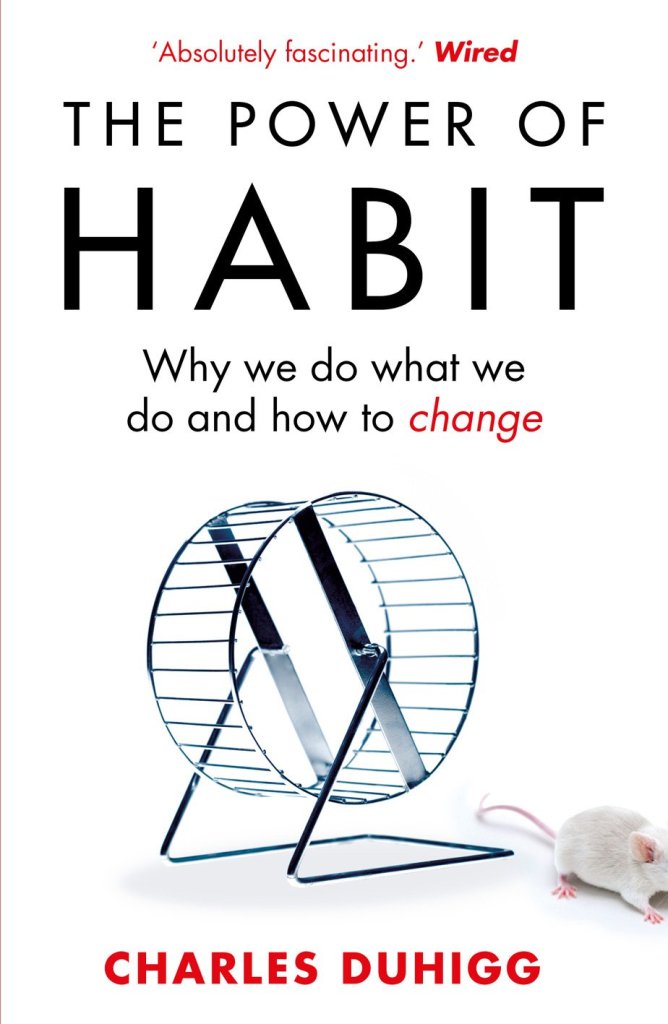
To know what book to read, try finding out what your goal is. If, for example, you wish to know your superpowers, read books on the subconscious mind, like The Power of your Subconscious Mind by Dr Joseph Murphy. Our subconscious mind is supreme, once you know how to utilise its strengths. If you are lazy and wish to break it and make a healthy habit, you can read The Power of Habit by Charles Duhigg.

Similarly, if you know what you want to do, look up books on Google, find out what you like best, which book suits your needs the best and read it. 

Every book is a gem and there are many gems for each person out there. All one has to do is know what do they wish to learn/know and look for a book which suits their needs. 

Here’s a list of books that I would recommend.

  1. The Power of Habit
  2. The Power of your Subconscious Mind
  3. How to Talk to Anyone
  4. Think and Grow Rich
  5. The 80/20 principle
  6. The Power of Now
  7. Don’t Overthink it
  8. The Subtle Art of Not Giving a F*ck
  9. Everything is F*cked
  10. The Rudest Book Ever


Benefits of Investing in Mutual Funds in India


(Photo: Bank Bazar)

Investment in any form is considered to be the best way of achieving additional income. It’s like waiting for an extra reward. One such word with which we all are familiar is “equity mutual funds”.There’s a large structural growth in equity mutual funds for Indian industries.  The Indian Mutual Fund AUM/GDP ratio currently stands at 12% vis-à-vis the global average of 60%.

India has seen a significant growth rate in equity mutual funds investment. Indian investors are usually keen on investing in equity mutual funds because of the risk management. Investing in mutual funds has many advantages. Let’s discuss them briefly. 

  •       Return:  Mutual funds involves higher risk but generally the return that it gives is greater than in any other investment plan.
  • Ø  Professional Management: Even a person who does not have professional knowledge can invest. They are assured by the experts. The experts manage and operate mutual funds. They allocate it in different securities thereby assuring them profit.
  • Ø  Flexibility in Investment amount: There’s no fixed amount to be invested. You can invest even with a minimal amount of Rs 100. This is the most important benefit which the investors get in equity mutual funds.
  • Ø  Liquidity: This is also another benefit of investing in mutual funds. It’s not like fixed deposit where you are unable to withdraw amount at any point. You can redeem it at any point. Mutual funds have flexible withdrawal.
  • Ø  Safety & Transparency: All the equity mutual funds have now become safe and transparent after the introduction of SEBI guidelines. They’ve a color coding through which the investors can assess the risk level.
  • Ø  Diversification: Diversification is another factor which reduces the risk involved in building a portfolio.  Mutual Funds consist of many securities, so investor’s interests are safeguarded if there is a downfall in other securities purchased.
  • Ø  Accessibility: Mutual Funds are easily accessible. By accessibility, it means that you can buy mutual funds from anywhere in the world. You don’t require a Demat account for it. Mutual funds are very easy to buy.
  • Ø  Lower cost: In Mutual Fund, funds are collected from many investors, and then the same is used to purchase securities. These funds are however invested in assets which therefore helps one save on transaction and lower its cost. Investors get the savings as lower costs of investing in Mutual Funds.

Mutual Fund is a strong financial tool which has helped in increasing the growth of Indian economy. Mutual Fund have provided financial stability to the Indian economy. The Indian capital market has been increasing significantly during last few years. With the Industrial revolution and reforms of financial sector, the economy has been opened up and many developments have been taking place in the Indian money market and capital market. In order to help the small investors, mutual fund industry has come to occupy an important place in the Indian market.

Although there are many benefits of investing in mutual funds in India, but we must remember that every good thing comes with some flaws. The market condition is very dynamic. Not anyone can invest in mutual funds. One needs to have a proper knowledge to do that.  However, one thing which is certain is that there’s no harm in it. India still has many steps to climb.