Salient features of Indian Society, Diversity of India

Indian society is very unique and diverse. We have a lot of cultures, communities, religions, languages, etc

India is a plural society, characterized by its unity and diversity. A grand combination different cultures, religions and languages of the people belonging to different castes and communities has upheld its unity. This combination of different culture and ethnicities is what that has made India unique from other countries. Different events such as the foreign invasions, immigration from other parts of the world, and the existence of diverse languages, cultures and religions have made India’s culture open- minded , on the one hand, and a unique continuing and living culture, with its specificity and historicity, on the other. Not only we have diversity in racial compositions, religious and linguistic distinction but also in patterns of living, life styles, land tenure systems, occupational pursuits, inheritance and succession law, and practices and rites related to birth, marriage death etc. 

Post-Independent India is a nation united against several odds and obstacles. India is a secular state. It has one Constitution providing guarantees for people belonging to diverse regions, religions, cultures and languages. It covers people belonging to all socioeconomic strata. The Article 15 of the Indian Constitution talks about Prohibition of discrimination on grounds of religion, race, caste, sex or place of birth. Our Indian Constitution itself safeguards and protects the rights of every individual irrespective of their religion, race, caste sex or place of birth. It gives everyone opportunity and treats everyone equally.

DIFFERENT FEATURES OF INDIAN SOCIETY

MULTI RELIGIOUS SOCIETY

India consists of people from many different religions. Hinduism, Islam, Christianity, Buddhism, Jainism, Sikhism are some major religion in India, However there are other different religions as well. Hinduism is the most dominant religion in India.

As per the census 2021, there are approx. 110 crore people follow Hinduism in India. The Hindus are most numerous in 29 States/UTs except in Manipur, Arunachal Pradesh, Mizoram, Lakshadweep, Nagaland, Meghalaya, Jammu & Kashmir, and Punjab.

Approx.  20 crores of people are Muslims In India. The Muslims professing Islam are in majority in Lakshadweep and Jammu & Kashmir.

In 2021 approx. 3.20 Crores people are Christians in India. Christianity has emerged as the major religion in three North-eastern states, namely, Nagaland, Mizoram, and Meghalaya. 

In 2021 approx. 2.4 Crores people follow Sikhism in India.

In 2021 approx. 10 million or 1 Crore people are followers of Buddhism in India and In 2022 approx. 5 million or 50 Lakh people follow Jainism in India.

MULTI RACIAL SOCIETY

Race is a group of people with a set of distinctive physical features such as skin colour, type of nose, form of hair, etc. India is a country of people with different racial groups. The latest racial classification of the Indian people based on researches in this field has been given by B.S. Guha (1952). He has identified six racial types (1) the Negrito, (2) the Proto Australoid, (3) the Mongoloid, (4) the Mediterranean, (5) the Western Brachycephals, and (6) the Nordic.

MULTI LINGUAL SOCIETY

According to the latest analysis of a census more than 19,500 languages or dialects are spoken as mother tongue in India.

There are 121 languages which are spoken by 10,000 or more people in India, which has a population of 121 crore. Only 22 languages are listed in Schedule VIII of the Indian Constitution. The 96.71 per cent population in the country have one of the 22 scheduled languages as their mother tongue and the remaining 3.29 per cent is accounted for other languages. Not all these languages are, however, equally widespread. Many of them are tribal speeches and these are spoken by less than one percent of the total population so here we can clearly see see that in India there is a great deal of linguistic diversity as there are so many people of different languages and dialects.

MULTI CASTE SYSTEM

The term caste is generally used in two senses: sometimes in the sense of Varna and sometimes in the sense of Jati. In India, caste system is very much prevalent. The Varna system is basically a four fold system in the Hindu society based on their functional criteria, the four divisions are Brahmins, which is on the top of this system followed by kshatriya, Vaishyas and then shudra with their functions as learning or teaching, defense, trade and manual labour. We find castes among the Muslim, Christian, Sikh as well as other communities. One must have heard of the hierarchy of Shaikh, Saiyed, Mughal, Pathan among the Muslim. Similarly, caste consciousness among the Christian in India is not unknown. Since a vast majority of Christians in India are converted from Hindu fold, the converts have carried the caste system into Christianity. Among the Sikh again we have so many castes including Jat Sikh and Majahabi Sikh (lower castes).

In addition to the above described major forms of diversity, we have diversity of many other sorts like settlement patterns – tribal, rural, urban; marriage and kinship patterns along religious and regional lines; cultural patterns reflecting regional variations, and so on.

Some other of the salient features applicable to Indian Society are:

  1. Unity In Diversity
  2. Patriarchal Society
  3. Tribes
  4. Family
  5. Kinship System
  6. Balance between spiritualism and materialism
  7. Co-existence of traditionalism and modernity

India is a very diverse country and because of its unique feature it always attracts people from all parts of the world.

.

MUST WATCH FILMS FOR REAL NATIONALIST

Nationalism always been most  forgettable ideology. Nationalism seeks to pressure & foster a nation’s traditional culture. Nationalism dominant the loyalty and devotion towards nation. It aims to build and maintain a single National identity based on shared social characteristics of culture, ethnicity, geographic location, language, politics, religion traditions and belief in a shared singular history to promote National unity or solidarity.

The moral value of nationalism the relationship between nationalism patriotism and the compatibility of nationalism and cosmopolitanism are all subjects of philosophical labels. Nationalism can be combined with diverse Political goals & ideologies such as conservatism (Right Wing) or socialism (Left Wing). Nationalism is seen as positive or negative depending on it’s actions and outcomes.

Scholars frequently place thebeginning of nationalism in late 18th century or early 19th century with American declaration of Independence or with the French Revolution. Nationalism as a concept was firmly established by 19th century. The template of nationalism, as a method for mobilising Public opinion around new state based on popular sovereignty, Due to Industrial Revolution there was an emergence of an integrated, nation encompassing economy & National Public sphere, where the people began to identify with the country at large, rather than the smaller units of their provinces, town or family.

Union Jack was adopted in 1801 as the rational one. The political development of nationalism and the push for popular sovereignty culminated with the ethnic/ national revolution of Europe. It has also been used to legitimate racial, ethnic and religious divisions, suppress or attack minorities and undermine human rights and democratic tradition. Radical nationalism combined with racial hatred was a key factor in the Holocaust perpetrated by Nazi Germany. In 1749, Thomas Arne composed the patriotic song “Rule Britannia”!. Cartoonist John Arbuthnot invented the character of John Bull as the personification of the English national spirit in 1712.

Imposing the idea of one language in 1772 through his “ Treatise on the origin of language” focusing on the role of common language the instance observe in modern politics. He attached exceptional importance to the concepts of nationality and of patriotism.

Sociological or modernist interpretation of nationalism & nation building argues that nationalism arises and flourishes in modern societies that an industrial economy capable of self sustainability, a central supreme authority capable of maintaining authority and unity, few prominent figures developed the modernist interpretation of nation and nationalism include: Carlton J H Hayes, Rabindranath Tagore, Emile Durkheim, Max weber, Talcott Parsons, Arnold Joseph Toynbee.

 Now, think about it, how preferable to have nationalism as development ideology that emphasis on destroying the diversity; diversity that intact the entire nation in oneness without holding on discrimination. If people understand each other with different culture & religion the world will become the better place to live; politicians will not take advantage & will not turn up entire region in war.

Conflict will resolve quickly if sit & have table talk. Far – Right leader Marine Le Pen in France emerging as second highest vote collector candidate belongs to National Rally Party. National Rally believes in strong French centric ideology same as Trump reign during his tenure like “ Make America great again” to have strong immigration policy and secure the American individual identity . VÖLKISH MOVEMENT (Body of people) – German ethno nationalist movement from late 19th century through to Nazi Era impose the “blood and soil”.

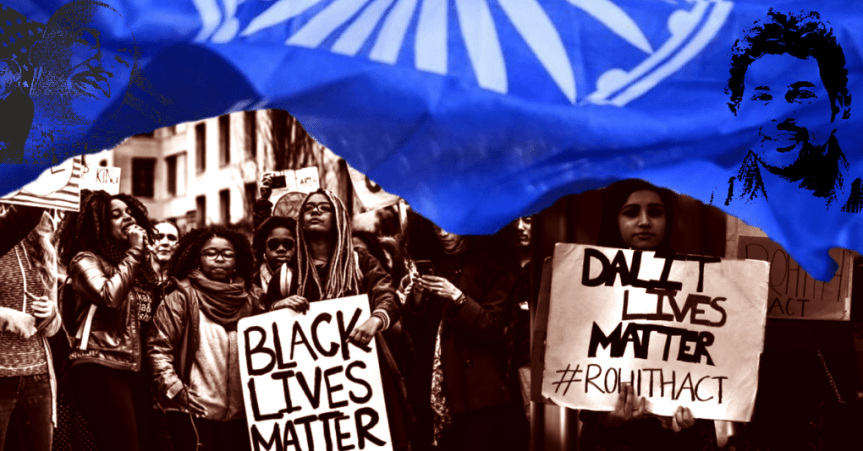
However, It is difficult to amaze the world with far right nationalism as we have example of Vietnam War reaction when people saw the images from Vietnam War people protested against the government, Movements like Black life matters, Protest against CAA.

So, Now what should be the real meaning of Nationalism – Simple we believe in democracy and diversity (ironically scrapped from new CBSE syllabus) when we embrace the different culture. Encouraging tolerance for people of different cultural and racial background. When we send off ethnic & racial difference, religion, socio – economic background, intelligence. So whatever movies are mentioned here are based on true meaning of Nationalism. These movies asking question from Society in terms of socio – economic difference, war, racial discrimination, gender biases if you concern about these matter then you are real nationalist and kind of facets of society that Government wants us that we must not talk about these situations.

Movies Like: –

1)Never look away – Werk ohne Autor

2)Dr. Strangelove: Or How I learned to stop worrying and love the bomb

3)Full metal jacket

4)The lives of others – Das Leben Der Anderen

5)Ardh Satya

6)Mathilukal

7)Shyam benegal’ s films

8)Apu Trilogy

9)Bimal Roy’s films

These above mentioned movies list here in this article because of their Challenging Attitude towards for bringing something better for disadvantaged groups. More Can include in it with time and how we will evolve.


MUST WATCH FILMS FOR REAL NATIONALIST

Nationalism always been most  forgettable ideology. Nationalism seeks to pressure & foster a nation’s traditional culture. Nationalism dominant the loyalty and devotion towards nation. It aims to build and maintain a single National identity based on shared social characteristics of culture, ethnicity, geographic location, language, politics, religion traditions and belief in a shared singular history to promote National unity or solidarity.

The moral value of nationalism the relationship between nationalism patriotism and the compatibility of nationalism and cosmopolitanism are all subjects of philosophical labels. Nationalism can be combined with diverse Political goals & ideologies such as conservatism (Right Wing) or socialism (Left Wing). Nationalism is seen as positive or negative depending on it’s actions and outcomes.

Scholars frequently place thebeginning of nationalism in late 18th century or early 19th century with American declaration of Independence or with the French Revolution. Nationalism as a concept was firmly established by 19th century. The template of nationalism, as a method for mobilising Public opinion around new state based on popular sovereignty, Due to Industrial Revolution there was an emergence of an integrated, nation encompassing economy & National Public sphere, where the people began to identify with the country at large, rather than the smaller units of their provinces, town or family.

Union Jack was adopted in 1801 as the rational one. The political development of nationalism and the push for popular sovereignty culminated with the ethnic/ national revolution of Europe. It has also been used to legitimate racial, ethnic and religious divisions, suppress or attack minorities and undermine human rights and democratic tradition. Radical nationalism combined with racial hatred was a key factor in the Holocaust perpetrated by Nazi Germany. In 1749, Thomas Arne composed the patriotic song “Rule Britannia”!. Cartoonist John Arbuthnot invented the character of John Bull as the personification of the English national spirit in 1712.

Imposing the idea of one language in 1772 through his “ Treatise on the origin of language” focusing on the role of common language the instance observe in modern politics. He attached exceptional importance to the concepts of nationality and of patriotism.

Sociological or modernist interpretation of nationalism & nation building argues that nationalism arises and flourishes in modern societies that an industrial economy capable of self sustainability, a central supreme authority capable of maintaining authority and unity, few prominent figures developed the modernist interpretation of nation and nationalism include: Carlton J H Hayes, Rabindranath Tagore, Emile Durkheim, Max weber, Talcott Parsons, Arnold Joseph Toynbee.

 Now, think about it, how preferable to have nationalism as development ideology that emphasis on destroying the diversity; diversity that intact the entire nation in oneness without holding on discrimination. If people understand each other with different culture & religion the world will become the better place to live; politicians will not take advantage & will not turn up entire region in war.

Conflict will resolve quickly if sit & have table talk. Far – Right leader Marine Le Pen in France emerging as second highest vote collector candidate belongs to National Rally Party. National Rally believes in strong French centric ideology same as Trump reign during his tenure like “ Make America great again” to have strong immigration policy and secure the American individual identity . VÖLKISH MOVEMENT (Body of people) – German ethno nationalist movement from late 19th century through to Nazi Era impose the “blood and soil”.

However, It is difficult to amaze the world with far right nationalism as we have example of Vietnam War reaction when people saw the images from Vietnam War people protested against the government, Movements like Black life matters, Protest against CAA.

So, Now what should be the real meaning of Nationalism – Simple we believe in democracy and diversity (ironically scrapped from new CBSE syllabus) when we embrace the different culture. Encouraging tolerance for people of different cultural and racial background. When we send off ethnic & racial difference, religion, socio – economic background, intelligence. So whatever movies are mentioned here are based on true meaning of Nationalism. These movies asking question from Society in terms of socio – economic difference, war, racial discrimination, gender biases if you concern about these matter then you are real nationalist and kind of facets of society that Government wants us that we must not talk about these situations.

Movies Like: –

1)Never look away – Werk ohne Autor

2)Dr. Strangelove: Or How I learned to stop worrying and love the bomb

3)Full metal jacket

4)The lives of others – Das Leben Der Anderen

5)Ardh Satya

6)Mathilukal

7)Shyam benegal’ s films

8)Apu Trilogy

9)Bimal Roy’s films

These above mentioned movies list here in this article because of their Challenging Attitude towards for bringing something better for disadvantaged groups. More Can include in it with time and how we will evolve.


How Caste Continues To Affect Our Education System

The caste system has always been ubiquitous. Whether it’s politics, economics, the law, religion, the media, or even education, the seemingly immutable caste system affects all spheres of our society. Schisms along caste lines are ingrained into public discourse and cause discrimination, hatred, and violence. The caste system divided society into the Brahmins (priests and scholars), the Kshatriyas (rulers and warriors), Vaishyas (merchants and traders), Shudras (artisans, labourers, and servants), and the Untouchables. While untouchability was abolished by the Constitution, it is still prevalent in Modern India. Despite valiant efforts, most notably by B.R Ambedkar, to eradicate the caste system post independence, the over 3000 years old system continues to divide Indian society. As we’ll see, the caste system has significant effects on modern-day education; it is as extensive as it is pernicious, leaving its victims helpless. 

The caste system meant that every aspect of one’s life was controlled by “the accident of birth”. Therefore, every caste had specific jobs assigned to them. This meant that children were only taught skills that helped them do jobs that their caste did, even if they could do other work. The strictures of the caste system meant that one is confined to the social status associated with one’s caste. This is discordant with the modern notion that education is the “great equaliser” and it gives everyone and anyone the “ability to rise” because of their hardwork and not their social status and uncontrollable factors such as gender, religion, caste, etc. 

While the Right to Education Act guarantees education for students aged 6 to 14, the quality of that education is usually determined by caste. Students that belong to lower castes receive poor quality and inadequate education in schools that lack basic facilities. This makes it difficult for them to cope at higher levels of education. Ostensibly fair systems such as entrance tests don’t take into account existing disparities that prevent poor lower-caste students from attending coaching classes, studying without frequent interruptions, and preparing adequately for these tests.  

Students belonging to lower castes, especially Dalits, are often ostracized from the education system as they are deemed to be unworthy of education. Their education is hampered as they are more likely to be forced into child labour than other students. They have lower attendance rates and higher dropout rates too. When in school, they face discrimination, not only from other students but also from teachers. They are forced to sit separately, eat separately, and clean classrooms and toilets. They are physically and verbally abused. 

This constant discrimination leads to psychological problems, such as low-self esteem and depression, leading to further exclusion from the education system. This countervails any attempt to make our education system equitable and inclusive. Lower caste families are disproportionately affected by poverty as their members are less likely to get a good job even after receiving an education. This fuels a vicious cycle of poverty and caste-based discrimination. 

In an attempt to alleviate caste-based discrimination through affirmative action, the concept of reservation was introduced. A certain number of seats are reserved for the marginalised castes in public education institutes. The Constitution [Article 16(4)], as well as the Constituent Assembly debates, emphasize that reservation was intended to prevent the formation of caste monopolies in the public sector. However, critiques of reservation call it excessively subservient to lower castes. They suggest that once members of a particular caste become affluent, they no longer deserve reservation. They say that students should earn their place in an educational institution based on merit. 

This meritocratic approach is unfair and flawed as it does not consider centuries of discrimination and underrepresentation that lower castes have had to suffer through. Inherent in any meritocratic system is the premise that all participants start from the same starting line and play on an even playing field. According to the meritocratic approach, everyone has an equal chance to climb the ladder of success. But it would be foolish if we didn’t ask ourselves the question – is the distance between the rungs of everyone’s ladder the same? As we have seen, caste-based discrimination occludes students of lower castes from competing on an even playing field and the distance between the rungs of their ladders of success is miles longer than those of the other students. 

Undoubtedly, the potency of caste-based discrimination has been reduced in urban India. Intermingling between castes, at school, office, public spaces, and even through marriage are common. However, in rural areas and small towns, the caste system’s pervasive nature foments unscrupulous discrimination. The fact that we still have caste-based discrimination, even after it has been outlawed, shows that it is an entrenched and institutional form of discrimination, not an anomaly that can be brushed aside. Along with reservation, we need comprehensive social and economic changes to debilitate this atavistic system. 

We have taken a few steps towards a more egalitarian society. 

Millions have benefitted from our education system and have ended the cycle of poverty and exclusion. The possibility of India ever having a Dalit Chief Justice and two Dalit Presidents would have been ludicrous pre-Independence. However, it is a far cry to say our country is free from discrimination at all levels. The values that students learn from their education determine the character and behaviour that they espouse in the future. Educational institutions cannot continue to remain passive during incidents of caste-based discrimination, so that we can work towards a more inclusive society.  

We must remember that equity is not limited to equality of opportunity. It involves enabling marginalised groups to live in conditions that allow them to access these opportunities. Completely erasing centuries of disadvantage and discrimination, while desirable, may not be possible in the immediate future. But, creating an inclusive education system is something we can start doing right now.  

Caste Discrimination

Caste discrimination is one of the most exceedingly awful denials of basic freedoms on the planet today. It is minimal perceived and infrequently recognized, and influences in excess of 260 million individuals around the world. Through a hierarchical situation, the task of essential rights among different castes is profoundly inconsistent, with those at the top getting a charge out of most rights combined with least obligations and those at the base performing most obligations combined with no rights. The situation is kept up with through the inflexible implementation of social segregation (an arrangement of social and financial punishments).

Caste discrimination includes enormous infringement of common, political, financial, social and social rights. It is normal banned in nations influenced by it, yet an absence of execution of enactment and caste-inclination inside the equity frameworks to a great extent leave casualties without security.

The rejection of supposed ‘lower caste networks’ by different gatherings in the public eye and the intrinsic underlying disparity in these social connections lead to significant degrees of neediness among influenced populace gatherings. There is little admittance to advantages and improvement measures, and their position by and large blocks contribution in dynamic and significant investment openly and common life.India’s caste framework is maybe the world’s longest enduring social progressive system. A characterizing highlight of Hinduism, caste includes an unpredictable requesting of gatherings of people based on custom immaculateness. An individual is viewed as an individual from the caste into which the person in question is conceived and stays inside that caste til’ the very end, albeit the specific positioning of that caste might differ among areas and over the long run. Contrasts in status are generally advocated by the strict regulation of karma, a conviction that one’s place in life is controlled by one’s deeds in past lifetimes.

Conventional grant has portrayed this over 2,000-year-old framework inside the setting of the four head varnas, or enormous caste classes. Arranged by priority these are the Brahmins (ministers and educators), the Ksyatriyas (rulers and officers), the Vaisyas (dealers and merchants), and the Shudras (workers and craftsmans). A fifth classification falls outside the varna framework and comprises of those known as “untouchables” or Dalits; they are regularly appointed undertakings also customarily dirtying to justify incorporation inside the customary varna system.7 Almost indistinguishable designs are likewise noticeable in Nepal.

Regardless of its established abrogation in 1950, the act of “distance”- the inconvenience of social incapacities on people by reason of birth into a specific caste-stays a lot of a piece of rustic India. Addressing more than one-6th of India’s populace or exactly 160 million individuals Dalits suffer close to finish social segregation. “Untouchables” may not go too far isolating their piece of the town from that involved by higher castes. They may not utilize similar wells, visit similar sanctuaries, or drink from similar cups in tea slows down. Dalit youngsters are regularly made to sit at the rear of study halls. In what has been called India’s “covered up politically-sanctioned racial segregation,” whole towns in numerous Indian states remain totally isolated by caste.

“Distance” is supported by state portion of assets and offices; separate offices are accommodated separate caste-based areas. Dalits frequently get the less fortunate of the two, in the event that they get any whatsoever. In numerous towns, the state organization introduces power, disinfection offices, and water siphons in the upper-caste segment, however fails to do likewise in the adjoining, isolated Dalit region. Fundamental conveniences, for example, water taps and wells are additionally isolated, and clinical offices and the better, covered rooftop houses exist solely in the upper-caste province. As uncovered by the contextual analysis underneath on the tremor in Gujarat, these equivalent practices remain constant even in the midst of extraordinary cataclysmic event.

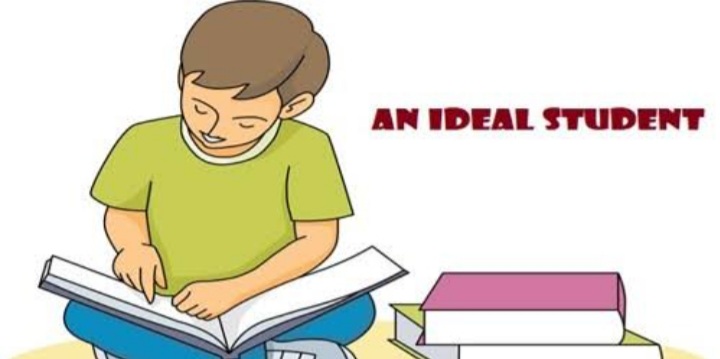
Ideal student

An ideal student is one who is good at skills and an motivation to everyone in the class. Schooling is one of the best blessings that a child can have. It is one of the best feelings which no others can have.

The ideal student is the one who respects others feelings and who will be obedient in many of the situations.

The student’s relation with the teacher is a great one. A student must maintain a healthy relationship with the teachers. Teachers play a very important role in making the student perfect and make them to understand the need of the situation. Teachers help the students to reach their desired goals and in any situation teacher motivates a student to get up and stand in all the ups and downs. Like that of the mother and the father, the teacher also feels equally happy when their student acheives high in their life and when they reach their desired goals.

An ideal student will never feel low at the failures. Instead, they will take their mistakes as an experience and will continue the hard work.

Some of the qualities that make an ideal student are :

  1. Hard work
  2. Discipline
  3. Taking responsibility
  4. Maintaining friendly relationships
  5. Respecting everyone
  6. Raising diubts without features.

SOME QUALITIES THAT MAKE AN IDEAL STUDENT FOR KIDS :

  1. • Ideal student traits make him uniqu, anong others.
    • It is believed that an ideal student will never waste his time and energy on non- productive things.
    • The ideal student has inborn winning qualities.
    • Ideal students will always goal- oriented. Thys, they play according to actions to reach their goals.
    • It is proven that ideal students will punctual in school and always on time regularly.
    • He respects everyone. He also obeys their instructions and others.
    • Ideal students are not bookwarms. They keenly observe and read wisely.
    • Ideal students take his studies with all seriousness. They dont’t allow any other activites to disturb them
    • Ideal students always seek the teacher’s guidance. Also, they believe in the knowledge of their teachers.
  2. SOME QUALITIES THAT MAKE AN IDEAL STUDENT FOR SCHOOL STUDENTS :
  1. • Ideal students are always thirsty to gain knowledge.
  2. • They always strive to reach their goals
    • Ideal students always dedicated to their education and work.
    • Ideal students behave well and very attentive in classes. They always listen to their teachers while classes are going on
    • They never hesitate to raise their doubts about studies if they feel some difficulty in understanding.
    • one of the best things about ideal students is that they are very friendly. Also, they help yo his friends regarding studies.
    • Ideal students are creative and think out of the box for any completion of tasks.
    • He always inspire eveyone and attracts the teachers and elders easily.
    • Ideal students are very responsible and underdtand the value of every wird from their elders.
  3. SOME QUALITIES THAT MAKE IDEAL STUDENT FO HIGHER CLASS STUDENTS :

• Ideal students are always fit both physically and mentally.
• Ideal students can differentiate between what is right and what is wrong .
• Ideal students always keep friendly relations with othet students even though he has many competitors
• He always maintains his promise and never feels proud of his awards and achievements.
• Ideal students will nevet trust in superstitions, but believe beliefs. It is because they think very logically abd ratinally.
• An ideal students tries to improvr in all aspects of his life and to reach goals.
• Ideal students show affection and respect towards their elders and parents.
• Ideal students read a lot of books.
• The ideal students will take responsibility for their society and country.
• An ideal student will never look fir shortcuts. They believe that hard work is the only way to succeed in life.


In simple terms, an ideal students is science towards academics and maintains friendly relations with teachers and elders. Aldo, an ideal student will have leadership and communication skills.
The role of an ideal student is both attentibe and punctual in duties. He goes to his school, college or university in time. He attends the classes on regular basis .

Communication skills

Good communication is very important to convey what is there in the mind. Whatever language, communicating in a understandable way is very important. communication today is very important both in the business world and in private life.

Even though the person is good at skills and is capable of doing things better, lack of communication degrades the skills and brings a negative mark on the person which is a bad thing for the individual.

Top 5 communication skills and How to improve them

Developing strong communication skills is essential when it comes to building a successful careee. Communication skills play a key role in your private life too. These 5 skills are absolutely necessary for sucessful commuincation in the workplace or private life.

1. Listening :

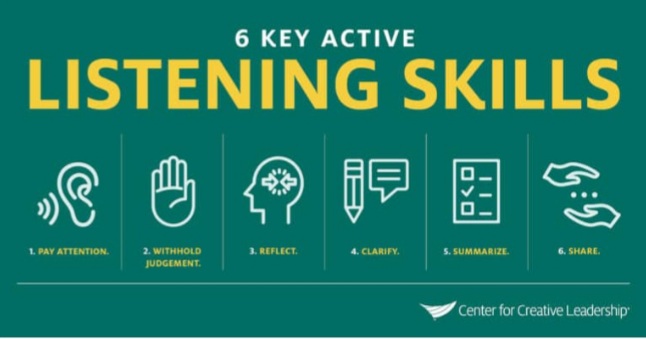
Listening is one of the most important aspects of communication. Successful listening is not just and understanding of spoken or written information, but also an understanding of how the speaker feels during communication. If a speaker can see and feel that someone is listening and understanding that can help build a stronger, deeper realtionship between interlocutors.

Careful listening can also create an environment in which everyone feels safe to express ideas, opinions and feelings, or plan and solve problems in a creative way.

2. Straight talking :

Conversation is the basis of communication, and one must not neglect its importanc. Even a simple, friendly conversation with colleafues can build mutual trust and even detect problems before they become serious. A healthy does of chatting with and unknown person can lead to a business opportunity . Be accessible and friendly because then you will be able to talk to almost anymore.

3. Non- verbal communication :

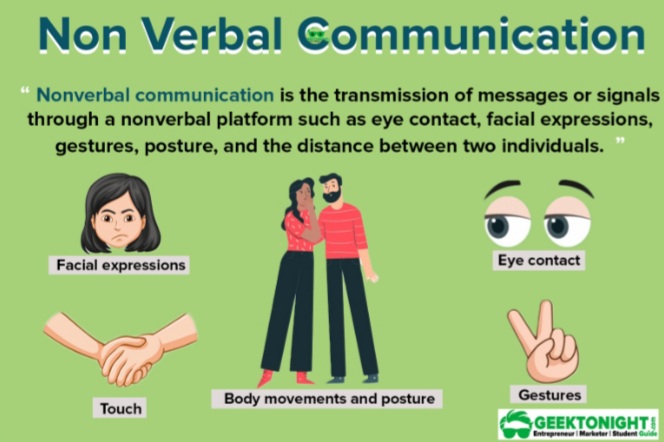
When we talk about things that matter to us then we send a lot of nonverbal messages. Non verbal signals are wordless communication, body position, facial experssion, hand movements, gestures, eye contact, attitude and tone of your voice, muscle tension and the way you breathe. The way you look, listen create, react, gesture , speaks far more about feelings than words will ever be able to.

4. Stress Management :

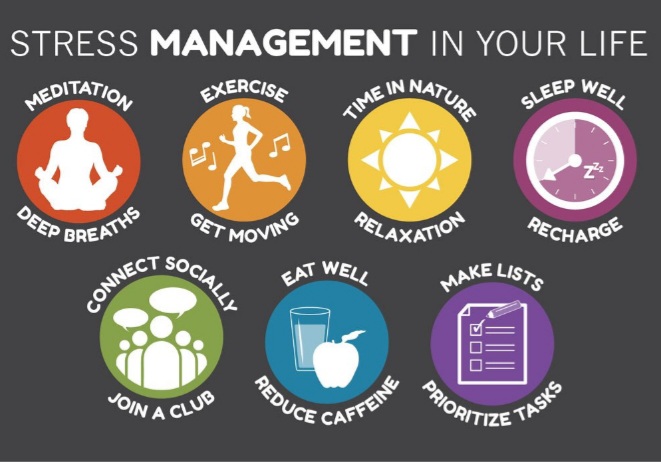
In small quantities, stress can be very useful and encouraging for work . However, when the stress becomes constant and completely begins to take effect, it can affect communication, clarity of opinion and appropriate behavior and action. When you are under stress you may misunderstand other people, send confusing nonverbal signals, and use funny patterns of behavior.

5. Emotion control :

In communication, feelings play an important role. Making decisions more often affects the way you feel than the way you think. Gudided by emotions, your nonverbal behavior affects the understanding of other people and how others understand and perceive you. Control of emotions provides you with tools to understand others, yourself and the messages you send. Though recognizing feelings makes it simple, many people have strong feeling like anger, sorrow, or fear being pushed under the carpet.

Importance of communication :

Communication thus helps understand people better removing misunderstanding and creating clarity of thoughts and expression. The communication brings people together, closer to each other. The communication is an important management function closely associated with all other managerial functions.

Everybody has their own way of communicating. It is influenced by cultural background, the way someone was raised, their gender, their temperament, and much more. At that point true communication may become utterly impossible. Sometimes we may have a difficult time understanding anothers feelings , needs and habits.

* communication serves four major functions with a group of organization :

* control

* Motivational

* Emotional expression

* Information

* communication serves five major purposes :

* to inform

* to express feelings

* to imagine

* to influence and

* to meet social expectations

For example:

For instance, if an individual is going to an interview with great confidence. An individual who is good at different kinds of skills, and also good at executing them and he is lack of communication skills. As the person is not a good communicator, the person faces difficulty in explaining the things to the other person which is known to him. Instantly, this brings a bad impression on the person and a negative mark will be marked on him. The negative mark has a lot to do with. The negative mark can also lead to the rejection of the person in the interview.

Being knowledgeable is very important to achieve certain goals in life, attaining good communication skills and being a good communicator is also equally important to achieve high in the life. Being a good communicator is not A big deal. It is so easy as the lifestyle. Any individual can be good communicator if he communicates all the time with other people in the possible way.

Colorism in India.

Ethnic complexities or relations in India have historically been complex. “Ethnic relations” refers to attitudes, behaviors and opinions towards people of other ethnicity or races. India is one of the most ethnically diverse countries, with more than 2,000 different ethnic groups. There is also significant diversity within regions, and almost every state/province has its own distinct mixture of ethnicities, traditions, and culture. Throughout the history of India, ethnic relations have been both constructive with mutual cultural influences and destructive with discrimination against other ethnicities. In this research paper we will talk about the progress or the current scenario of racial discrimination in India and its various problems.

Racism is most commonly used to name a form of prejudice in which a person thinks that their “race” is better or superior over other races. This most often takes the form of believing that those with other skin colors especially darker skin colors are inferior physically, intellectually, morally, and/or culturally, and mistreating and discriminating against them because of this. Such a belief typically promotes the notion that white people are “the default” that whiteness is “normal” and that people with other appearances are the ones who are “different” (and “inferior”).Racism has existed in our society from ages right from the time of colonization of India.

According to local sources, unity in diversity has been growing in India, making the country more tolerant. One World Values Survey reported 43.5% of Indians responded that they would prefer not to have neighbors of a different race.

What is race?

To fully understand racism, we have to understand the meaning of race. Throughout history, the word race has been used to classify humans based on various physical characteristics, especially skin color, facial form, and eye shape. But sorting people into such races is truly arbitrary they’re not based on meaningful scientific differences (like, for example, those used to determine legitimate scientific classifications such as species and genus). The obsession with the difference in people’s skin color is one of the foundations of racism.

Biases related to the caste system

Racism is linked to the prevalent caste system which is hierarchical in nature. The broad orderings and the sub-orderings in India seem complex and confusing as classifications are often overlapping: region, religion, caste, sub-caste, Jati, Gotra, Kula, Varna and language. “Any effort to simplify them beyond a point can lead to a distortion of social reality.”

earliest classification, as found in Rig Veda, was not based on birth but on the hierarchy that was determined by one’s occupation; however, it is certain that at some particular point in history it became birth-based and rigid

The killing or discrimination was not rooted in color, which some scholars mistakenly believe it to be the case rather this was a time of constant wars and conflicts between the invader immigrants and the actual tribal population of the time..

earliest classification, as found in Rig Veda, was not based on birth but on the hierarchy that was determined by one’s occupation; however, it is certain that at some particular point in history it became birth-based and rigid

The killing or discrimination was not rooted in color, which some scholars mistakenly believe it to be the case rather this was a time of constant wars and conflicts between the invader immigrants and the actual tribal population of the time.

Status of Racial discrimination in the 21st century

  • The next part of this research paper will discuss how skin tone is still so deeply      attached to the normal Indian psyche that it gets confused with the societal value system  of caste, class, and religion
  • Skin tone also forms various strata of variables and acceptability in society. Beauty ideals are now governed by the media, which glorifies lighter skinned models–both male and female–who are chosen to advertise almost all products over darker skinned models
  • In the wake of George Floyd’s death the debate about colorism and skin tone in India has been discussed in several media outlets, and as part of the general critique a big Indian matchmaking website, Shaadi.com has removed a filter where people could use to mark skin color preferences for their potential partner

In the state of Maharashtra, a group of young tribal girls trained to be flight crew through a government scholarship program that aimed to empower women; however, the program seems to have actually disempowered darker skinned women. The majority of girls were denied employment due to their darker skin tone. A few of those women obtained jobs, but only as out-of-sight ground crew.

Discrimination- Still a social issue

Discrimination is such a social issue that is prevalent in India from a long time. Though Indian Law describes discrimination as punishable crime under Civil Right Act 1964, we often see many cases of it. Why is this so?? Why even after so many years of evolution and development we see such social issues?? All the answers to these questions lies in our foundation and environment that we grow in. 

From the very start of growth many children are not taught the difference between “leg pulling” and discrimination. Many young as well as elderly people discriminate people and remark it as a “joke.” For instance calling someone “black” just for fun seems funny but in reality it is a huge social drawback. This shows how much we lack education. Recent incident of “youtuber Paras Singh calling Arunachal Pradesh a Chinese Territory” proves the fact. Though he apologized and realized his mistakes , no one can neglect the fact that this incident would not have occurred if we were more cautious and educated. 

There is a huge hole in our mindset and its needed to be filled before it eat us all. A discriminated person faces huge mental trauma and may have a severe impact. We need to be more sensitive while dealing with such topics. Educating children from the young age  as well as educating ourselves on such topic may bring a huge change in near future. It is well known that discrimination have a long history and it will not eradicate instantly. But taking small steps today will bring major change in near future