Set up of schools for child labour

 The Ministry of Labour & Employment had implemented the National Child Labour Project (NCLP) Scheme for rehabilitation of child labourers through District Project Societies under the chairmanship of the District Magistrate since inception of the Scheme in 1988.  Under the NCLP scheme, the children in the age group of 9-14 years are rescued / withdrawn from work and enrolled in the NCLP Special Training Centres (STCs), where they are provided with bridge education, vocational training, mid-day meal, stipend, health care, etc. before being mainstreamed into formal education system.  NCLP scheme has now been subsumed under Samagara Shiksha Abhiyan (SSA) Scheme with effect from 01.04.2021. Henceforth, the recused child labourers will be mainstreamed into formal education system through STC operational under SSA.  At present, no Special Training Centres (STC) is functional under NCLP scheme.

 No new STCs under NCLP Project have been approved after 31.03.2021. The number of districts in which Special Training Centres under NCLP Scheme were sanctioned since inception as on 31.03.2021 is at Annexure-I.

The details of funds released under the NCLP scheme during 2020-21 to 2022-23 is at Annexure-II. As on 31.03.2023, around 14.3 lakh children were rescued/withdrawn from work, rehabilitated and mainstreamed under National Child Labour Project (NCLP) Scheme since inception of the Scheme.


Annexure-I


Number of Districts in which Special Training Centres were sanctioned under NCLP Scheme since inception as on 31.03.2021

Sl. No.

Name of State

No. of Sanctioned NCLP Districts

  1.  

Andhra Pradesh

13

  1.  

Assam

5

  1.  

Bihar

24

  1.  

Chhattisgarh

8

  1.  

Gujarat

9

  1.  

Haryana

3

  1.  

Jammu & Kashmir

3

  1.  

Jharkhand

8

  1.  

Karnataka

17

  1.  

Madhya Pradesh

22

  1.  

Maharashtra

18

  1.  

Nagaland

1

  1.  

Odisha

24

  1.  

Punjab

3

  1.  

Rajasthan

27

  1.  

Tamil Nadu

18

  1.  

Telangana

31

  1.  

Uttar Pradesh

56

  1.  

Uttarakhand

13

  1.  

West Bengal

20

  1.  

Delhi

1


Total

 324


Annexure –II

Grant Released under National Child Labour Project Scheme, State-wise, during 2020-21 to 2022-23:

( Rs. In Lakhs)

Sl. No.

Name of  State

2020-21

2021-22

2022-23

1

Andhra Pradesh

306.29

32.01

116.37

2

Assam

49.64

81.10

140.68

3

Chhattisgarh

0

0

0

4

Gujarat

61.36

12.23

0

5

Haryana

116.83

34.79

0

6

Jammu & Kashmir

32.48

0

12.70

7

Jharkhand

177.42

0

60.73

8

Karnataka

82.74

7.53

18.14

9

Madhya Pradesh

363.41

143.29

236.50

10

Maharashtra

931.49

196.53

102.54

11

Nagaland

0

0

0

12

Odisha

115.16

236.66

57.24

13

Punjab

206.41

317.35

37.53

14

Rajasthan

124.19

16.64

0.64

15

Tamil Nadu

482.00

323.45

184.74

16

Telangana

152.86

71.56

94.65

17

Uttar Pradesh

433.83

137.70

99.91

18

Uttarakhand

0

0

0

19

West Bengal

463.37

203.10

424.26


This information was given by Union Minister of State for Labour and Employment Shri Rameshwar Teli in a written reply in the Lok Sabha today.

***
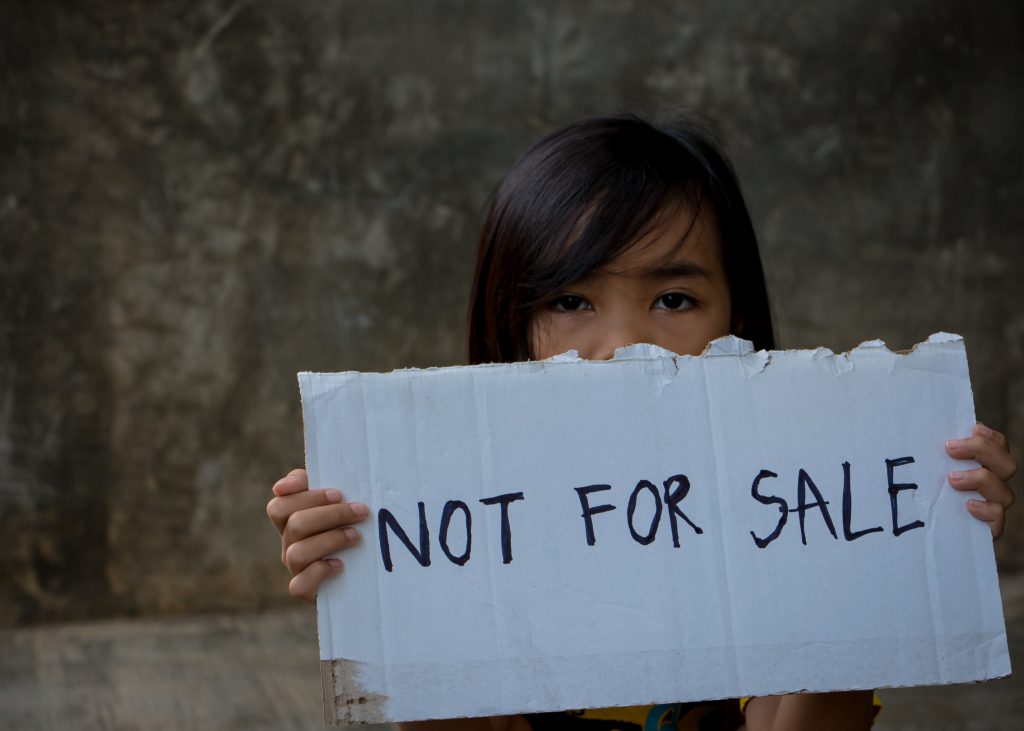
THE FIGHT AGAINST CHILD TRAFFICKING

Child trafficking alludes to the abuse of girls and boys, essentially for labor work and sexual exploitation. Children account for 27% of all the illegal exploitation victims around the world, and two out of each three child victims are girls. Some of the time sold by a relative or an associate, in some cases baited by bogus guarantees of education and a “superior” life.

Child Trafficking in the European Union - Humanium

The reality is that they take advantage of children. They are held in slave-like conditions without sufficient food, haven or clothing, and are regularly seriously manhandled and cut off from all contact with their families. Every country on the planet is influenced by human trafficking, and subsequently, kids are compelled to exit school, hazard their lives and are denied of what each child deserves ,a better future.

We can stop this by supporting unprivileged children who are denied of legitimate education, health and shelter. It’s a child right to get legitimate education, heath and shelter fundamentally a superior living. We can do this by interfacing with NGOs which work in improvement of kids’ lives. We can donate cash, garments and different accomplices to them. Also strict action should be taken against those who are involved in this vicious crime. Children are future of a country if they are not safe then a country will never develop.

RESOURCES:

https://www.savethechildren.org/us/charity-stories/child-trafficking-awareness

Child Labour

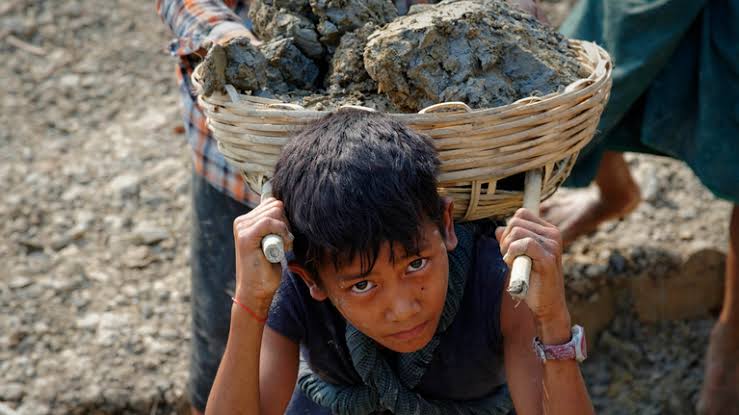
The term “Child Labour” is often defined as the work which deprives children of their childhood and the right to education which is mentally and physically exhausting that impairs growth and personality. Not every work performed by a child comes under the act of child labour, for an instance doing a part-time job with schooling or working at a firm during vacation etc. do not fall in such category. Most often, child labour occurs when families face huge financial crises or uncertainty such as extreme poverty or sudden death of the only earner of the family.

Child labour leads to extreme mental and bodily harm that leads to staggering consequences such as slavery, economic or sexual exploitation. Extreme pressure of work suffocates their existence as a result of which minors lag from education and cuts off from school ultimately.

Child labour is equally fatal for boy and girl child but girls often face more hardship because the chances of girls being sexually harassed are quite frequent. Apart from it, managing work, household chores and school concurrently are next to impossible due to which giving up education seems the only option that drags girls towards poverty even more.

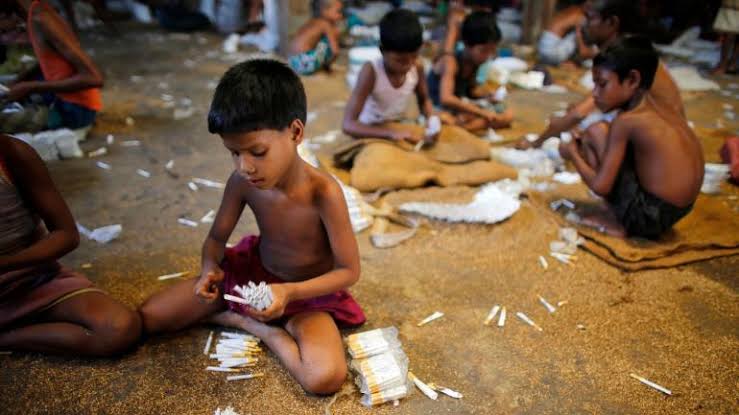
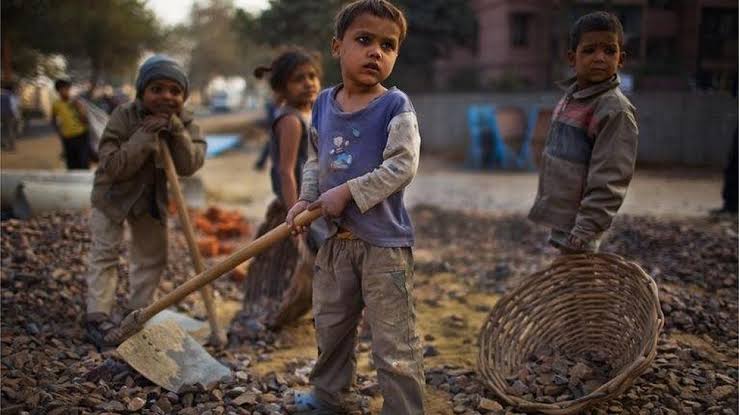
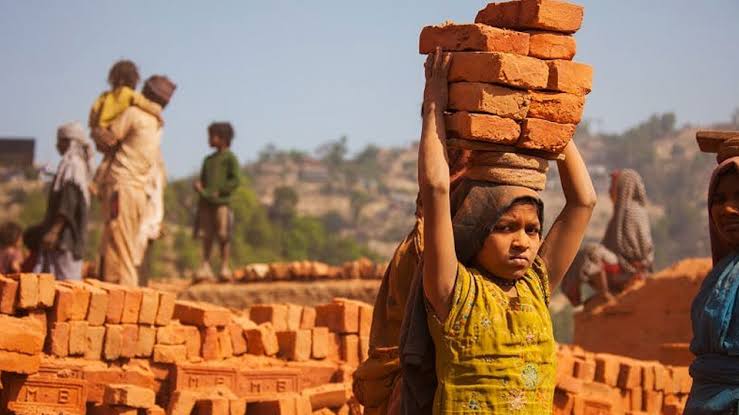
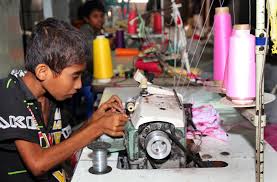
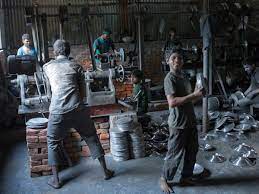
Several industries such as mining, brick industry, agriculture, garment industry, tobacco factory, bangle industries etc. employ children to work all day long at the minimum possible wage. Among forenamed industries, agriculture is the largest employer of child labour, worldwide. Working under such a situation puts health at a higher risk and more exposed to malnutrition.

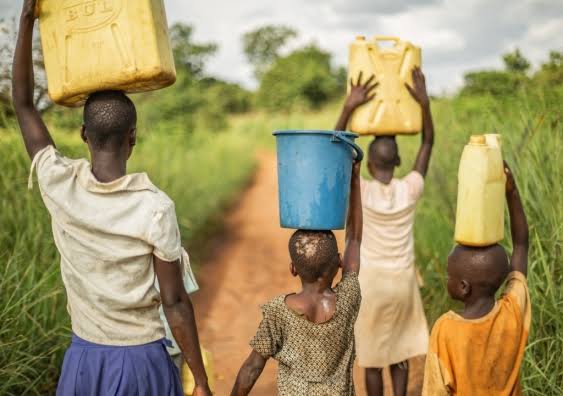
Nearly half of the child labour records in Africa followed by Asia and the Pacific that contributes almost 62 million children.

Globally the incidence of child labour decreased from 25% to 10% between 1960 and 2003, according to the World Bank. Nonetheless, the total number of child labourers remains high as per UNICEF that is an estimated data of 168 million children aged 5–17 worldwide were involved in child labour in 2013. The increasing case of child labour is a serious issue that needs to be addressed at the earliest so as to safeguard every nation against poverty.

Child – Labour in India

India is a democratic country and a welfare State and it’s children have no security and safety. The sons and daughters of the millions of Indians living under the poverty line in the age group of 5 and 14 are forced to spend a very miserable existence. There is no social security for them as their parents cannot afford to send them to schools. They are subject to various types of exploitations and abuses.

There are estimated to be over 11 million child workers. They are forced to labour hard and for long hours in mills, factories, fields, farms and houses as domestic servants. They have to work in very trying, unhealthy and sometimes dangerous conditions. They belong to the age group of 5 and 14 years and hardly know what is childhood and boyhood and its fun and enjoyments.

These children, who have only one childhood, are obliged to work as labourers in match, knit-wear, silk, carpet, sports goods, construction, fireworks, bangles and such other labour intensive industries. They are also engaged as bidi-rollers, brick kiln workers, shop servants and domestic helps against their wishes and abilities. The figure of 11 million child workers is far too low than the actual number of child labours because the Child Labour Act covers only the 15 percent of the employed children and the rest comprising 85 percent working in unorganised sector have been ignored. There is utter lack of social awareness and accountability in the matter. The children of the weaker sections of the society are being exploited openly and blatantly. There is no effective forum to voice their grievance and protect them against this wide spread exploitation.

The international code of conduct on minimum labour standards is not being implemented in our country. Actually every person under 18 years of age unless, under the law applicable to the child, majority is attained earlier, is a child. According to the Convention of Rights of the Child of 1990, every child has the right to an adequate standard of living and social security. He or she has the right to education. They have the right of protection against any kind of exploitation. They are entitled to protection from involvement in illicit production, trafficking and use of narcotic drugs, protection from sexual exploitation and abuse. But these rights are on papers and the reality is very shocking. They have no opportunity of going to school and develop their skills and abilities. Half the total population of children in India is estimated to be out of schools. Without provision of compulsory, free and universal elementary education, the evil of child labour in India cannot be checked and eradicated. The emancipatory value of education, specially primary education, is very significant.

Social groups, voluntary organisations, reform societies and parents should create public awareness against child labour and make the masses demand free, universal, primary education. Right to education on the elementary level should be one of the fundamental rights. The percentage of allocation on primary education is very low in India. The aim of providing education to all the children is not an easy one. It requires most sincere and concentrated efforts on the part of all concerned. The country cannot afford to neglect it any longer.

The problem of child labour is directly linked with the problem of literacy and poverty alleviation. The poor parents cannot afford to let their children not to work. Unless there is significant improvement in the quality of life and living standards, the eradication of child labour will remain a pipe dream. Children should be respected, their rights restored and their voices heard. They should be rescued from all types of labour and exploitation. Boycott of goods produced with child labour can be one of the effective weapons of fight against child labour. Apart from the government, individuals, organisations, companies and business firms should come forward and adopt poor children and see that those children are given education in a healthy and conducive environment. To stop dropouts, there can be financial and other incentives to children as well as to parents.

CHILD LABOUR

Child Labour refers to the practise of using young children in factories, but it is increasingly used to refer to the employment of minors in general, particularly in jobs that may interfere with their education or threaten their health. Children have always worked alongside their parents in the fields, the marketplace, and around the home as soon as they were old enough to accomplish simple tasks. Child labour is not a new occurrence, nor is it limited to a single state.

Facts and myth about child labour– Employers are thought to obligate children by hiring them. However, the fact is that employers are simply concerned with profit, and child labour can be exploited at no cost to them. Many industries rely significantly on child labour because children are willing to work for little or no pay and for extended periods of time without complaining. Industries such as bead manufacturing, glass manufacturing, carpet manufacturing, gem and stone polishing, matches, and fireworks have grown solely on the power of young labour. There is a vested interest in the recruitment of underage labourers since it benefits them. The main cause is low salaries. Which employer prefers a child above an adult. Poverty is NOT an option. These statistics reveal that the vast majority of children employed in these businesses are from Scheduled Castes, Scheduled Tribes, or Other Backward Castes.

Second, while it is true that child labourers come from impoverished families, it should be noted that child labour also perpetuates poverty because the child labourer who survives the harsh conditions becomes an unskilled adult who is not employed even in the industry that previously exploited him or her. Furthermore, child employees are paid a pittance or receive no pay at all. Child labour also lowers adult salaries and keeps adults out of work. Third, some people believe that if youngsters labour, they will be equipped with skills for the future. When we look at the facts, we can see that the activities assigned to child labourers, such as labelling, filling, and transporting, are simple and repetitive. By doing these exercises, youngsters are not so much learning a skill as they are being subjected to gruelling, monotonous work. Furthermore, the job done by young labourers jeopardises their prospects. Children’s health is harmed by exposure to the elements, dust, harmful gases, and chemical solutions, which shortens their lives. Some people believe that children work faster and have nimble fingers, which are required for certain types of work, particularly knotting carpets, but it is a myth that child labour is necessary and that children are capable of weaving better carpets than adults, but children were allegedly employed in simple tasks for which they had a special aptitude lost to adults. Adults were not only employed in all of these enterprises, but they outnumbered children in the studied units. Furthermore, their pace of physical production was higher than that of children.

Child labour is an International Problem– Child labour is still a major issue in many regions of the world in the early twenty-first century. According to research conducted during the International Year of the Child in 1979, more than 50 million children under the age of 15 were working in a variety of vocations, many of which were dangerous. Many of these youngsters reside in impoverished nations, where their living conditions are deplorable and their educational opportunities are limited. These families frequently lack the necessities of life, such as proper food, clothing, and shelter, as well as water for bathing. 20,000 children in India, for example, work 16-hour days in match factories. Child labour issues are not restricted to developing countries. They occur everywhere poverty exists in Europe and the United States. The most important efforts to reduce child labour abuses around the world are led by the INTERNATIONAL LABOUR ORGANIZATION (ILO), which was created in 1919 and is now a special agency of the United Nations. Among its members, the organisation has implemented various child-labor conventions, including a minimum age of 16 years for admittance to all work, a higher minimum age for specialised categories of employment, mandatory medical examinations, and night work control. Slavery, prostitution, debt bondage, and forced military service were added to the list of the worst types of child labour by the ILO in the late twentieth century.

CONCLUSION– It is possible to infer that The Child Labour (Prohibition and Regulation) Act is an Act that was passed in order to adopt all of the international standards against child labour that have been adopted by the United Nations. Furthermore, the Supreme Court’s explanation and analysis, as well as those of other courts, have made the Act a significant piece of legislation that has contributed to reducing the scourge of child labour to a bare minimum. Although a lot of laws have been enacted to prevent child labour, no law will be effective in eradicating the evil of child labour unless the laws are properly enforced and unless each and every individual does something to help in eradicating the problem aside from the application of the law.

Children integral part of any country and need to be empowered with protection of their rights

On the World Day against Child Labour on June 12, 2020 the Ministry of Labour and Employment (MoLE) and the V.V. Giri National Labour Institute (VVGNLI) in collaboration with the International Labour Organization (ILO), New Delhi organized a National Stakeholder Webinar on “COVID-19: Protect Children From Child Labour, Now More Than Ever”. This World Day against Child Labour in 2020 focuses on the impact of COVID-19 crisis on child labour.

The webinar was inaugurated by Shri Santosh Kumar Gangwar, Minister of State for Labour and Employment (I/C). He acknowledged the efforts of Shri Kailash Satyarthi and also the efforts of the ILO towards the elimination of child labour. He stated that children are an integral part of any country and need to be empowered with protection of their rights. He mentioned that in observing 12th June as the World Day against Child Labour, the Government of India has reiterated its commitment towards eradication of child labour. The Amendment of the child labour (Prohibition and Regulation) Amendment Act, 2016 is a noteworthy achievement of the Government of India, he stated. He also spoke about the various initiatives taken by the government in the eradication of child labour including the increase in the NCLP training centres stipends to Rs 400 from Rs 150 per month per child. He emphasized that the ratification of ILO conventions 182 and 138 reflect on India’s commitment towards this cause. At the end, he highlighted on the need for collective efforts by all stakeholders towards the eradication of child labour.

Shri Kailash Satyarthi, Nobel Laureate in his special address, acknowledged the children participating in the webinar. He also referred to the historical decisions taken in the context of child labour in the past. He stated that the efforts of the government of India has contributed immensely in reduction in the numbers in child labour. The ratification of ILO Conventions 182 and 138 reflect on India’s commitment towards the elimination of child labour. He referred to studies which have reflected on the need to invest in children’s education. He highlighted that in order to revive the economy, it is important to attract foreign investment but there is a need to ensure no child labour is engaged in supply chains. He emphasized on the need to ensure adults receive employment instead of children so that the employed children get liberated to pursue education and grow into healthy citizens.

Shri Heeralal Samariya, Secretary, Ministry of Labour and Employment, presided over the inaugural session. He highlighted the various labour legislations and policy initiatives taken by the government which have led to amelioration of the child labour problem. He further highlighted the efforts of the Ministry of Labour and Employment during the COVID-19 pandemic by opening up grievance handling centers throughout the country by the chief labour commissioner office and the efforts of Employees Provident Fund Organization in promptly clearing the disbursals apart from the medical succor provided by the ESIC hospitals. He said that the Ministry is continuously monitoring and taking immediate necessary steps so that the common man and the vulnerable children are taken care of.

Dagmar Walter, Director, ILO India, gave her perspective on the global child labour problem and said that the so called ‘normal’ is getting redefined as today this programme is being held virtually. She called upon all the stakeholders to contribute to reduce the child labour problem.

Earlier, Ms Kalpana Rajsinghot, Joint Secretary in her welcome address highlighted the problem of child labour and also the steps taken by the government in addressing the challenges, from time to time. She also outlined the contours of the webinar.

The inaugural session was followed by Two Technical Sessions on the themes ‘COVID-19: Protect Children from Child Labour-Across Sectors’ and ‘Barriers and Solutions in addressing the Rehabilitation Programme’. Resource Persons from the Central and State Government, ILO, NCPCR, Employers Organizations, Workers Organizations, VVGNLI Faculty, and NALSAR shared various technicalities of the child labour problem.

Dr. H. Srinivas, Director General, VVGNLI proposed the vote of thanks and also provided consolidation and way forward. Dr. Helen Sekar, Senior Fellow, VVGNLI coordinated the programme. The webinar was attended by around 450 government representatives, representatives from ILO and other international organizations, trade unions, employers’ organizations, academicians, representatives from research institutions and faculty and officers from VVGNLI.

State of CHILD LABOUR in the world!

On the rising population there is also rise in demand of  family members related to commodities. Many of the family don’t even get 2 meals per day! there is lack of only one thing and that is money. It is said that

“Empty stomach can make you to do anything”

To fill the stomach people can do anything especially when they have family to feed. Now-a-days the crises and cruelty has increased drastically that alone 1 man cannot feed the all 4 members in the lower labour section. So, unwillingly all the family members had to work at the field and contribute some money towards family to sleep without an empty stomach at night.

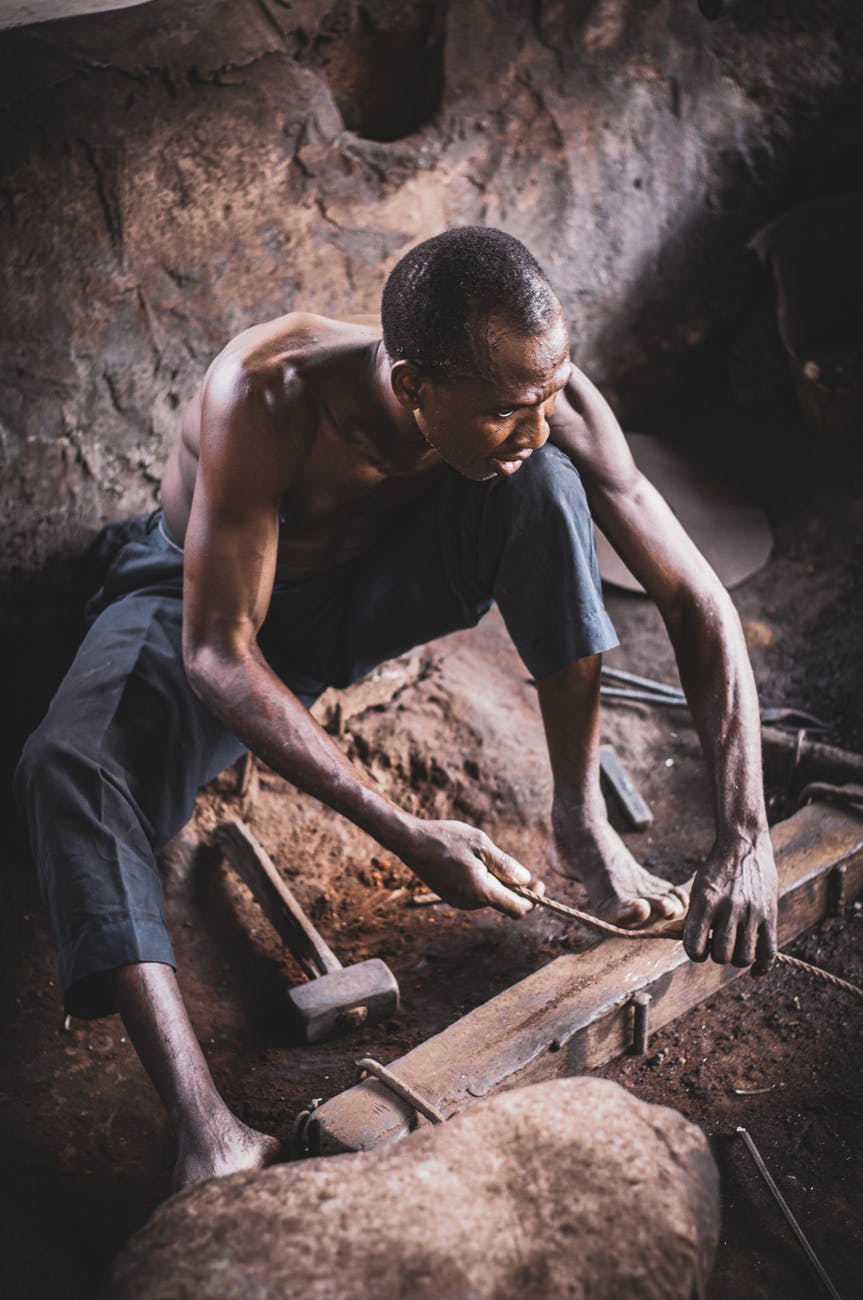
a photo of a hardworking man
Photo by Tope A. Asokere on Pexels.com

There are many schemes released by government to stop the child labour like making primary education almost free for poor children along with mid-day meal to them so that they do not have to crave for the meals and keep focus on the study, they are also regularly checked by medical if there is any weakness in any of the student. National Child Labour Project (NCPL) is a central government branch which takes strict actions against child labour and works at the best to resist this act. According to UNICEF, India with the highest amount of population has also high number of child labour cases under the age of 14 and 1% of it i.e. approx 1,20,000 are forced to engage in hazardous jobs.

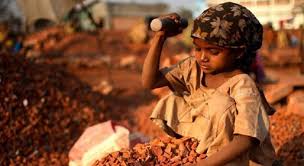
images

Image source: Jatinverma.org

Every year on the day of 12 June it is marked as Anti-Child labour day to draw the attention on the issue of child labour. Every year there is different themes on this day:

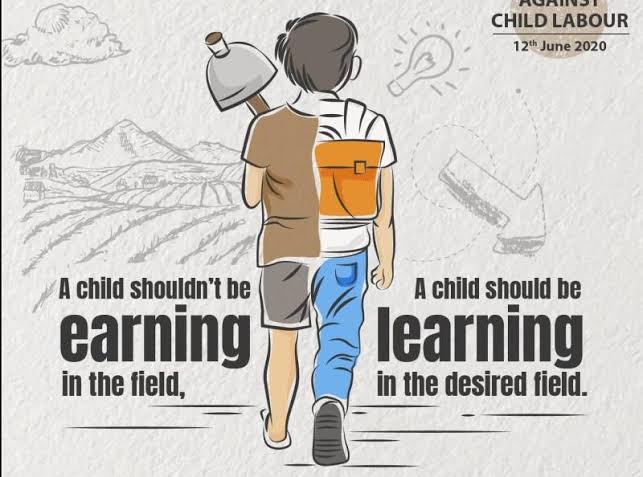
  • In 2020 the theme was “Protect children from child labour, now more than ever”.
  • In 2019 the theme was  “Children shouldn’t work in fields, but on dreams”.
  • In 2018 the theme was Generation safe and Healthy”.
  • IN 2017 the theme was “In conflicts and disasters, protect children from child labour”.
  • In 2016 the theme was “End child labour in supply chains – It’s everyone’s business!”.
  • In 2015 the theme was NO to child labour – YES to quality education!”.

Now the matter is not just to put it to one day and on a piece of paper, it’s a world wide conflict and has to be somehow resolved. Every year various types of acts and event are performed by students of schools, college and NGOs too, but this year digitally the message was forwarded as due to lockdown and pandemic situation rallies, etc cannot be held.

“Why had his mother gone to the trouble of bringing him into the world if the most exciting moment in his life was having been made lame by a bayonet?” -Félix J. Palma

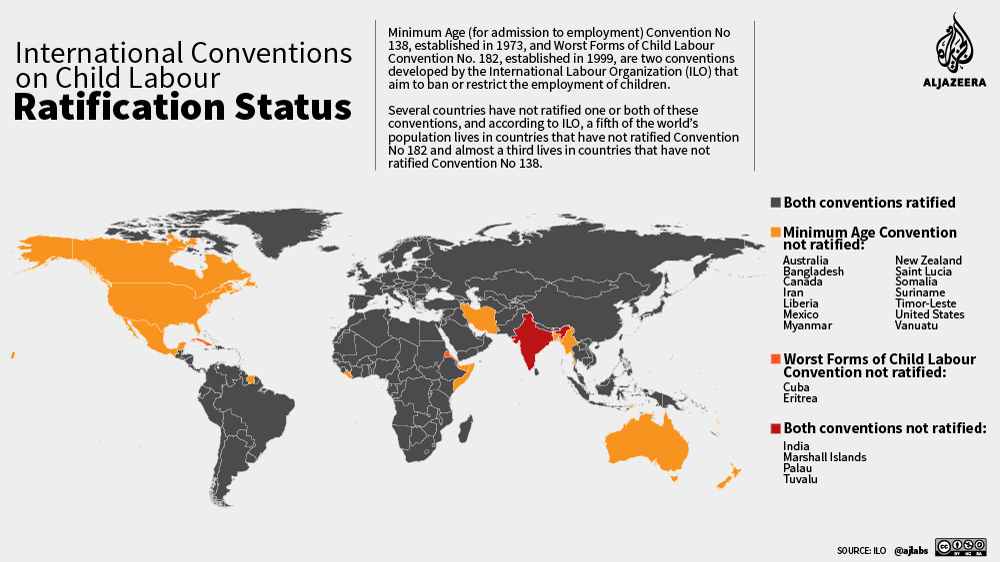
Let us have some stats:

2cc325d1413d4c61aabb17eb63fcd1d6_18

Image source: Al Jazeera

World Day against Child labour

If we see around us, we regularly see children on street selling balloons, small girls are working as maid in homes with their mother, in village children are working in field, some are working in factories which is very dangerous for them. So we can see there are many children who are in child labour.

So World Day against Child labour is standard holiday first launched in 2002 by International labour organization aiming to raise awareness and activism to prevent child labour.

According to ILO’s data, “hundreds of millions of boys and girls in this world are involved in work that deprives them to receive an adequate education, health, leisure and basic freedom, voilating this way their rights. Of these children, more than half children are exposed in worst form of child labour like working in hazardous environment, slavery and other form of forced labour, illicit activities such as drug trafficking and prostitution, as well as involvement in armed conflict.

Child labour affect children’s physical, cognitive and social development. Children who are working in factories are very dangerous for their health. While working they are at high risk for illness such as respiratory illness, and they exposed to harmful chemicals which also affect their physical development. These children oftee suffer from malnutrition which leads to serious health and mental conditions in later life.

According to researchers, teenagers who spend more than 20hrs per week working at a higher risk to problematic social behaviour like drug abuse and aggression. This also affect their education development, most children dropout from school and if they remain in school, they perform very poorly.

It also social development, as in this age it is very necessary to spend time with peers and family members which help them to built positive relationships but long working hours do not led to properly from these relations which lead to insecurities and improper identity development in later stage. It also leads to a feeling isolation and depression and prevent formation of healthy emotion and relation with others.

So, it is important to takeout children from the darkness. It is necessary to aware people about the ill-effects of child labour and how it is dangerous for the children. Strict action should be taken against the people who are involved in this.

Childhood is a very period of one’s life. It is the age of seeing dreams, playing, troubling elders through their naughtiness, not of going to factories or streets or working. So it’s not just about one day, it is our responsibility to spread awareness about child labour and take actions against it everyday and don’t let any of the child being trapped in this darkness.

Protect Children Labor, Now More Than Ever .

Children around the world are regularly engaged in hazardous activities that affect their mental, physical, social or educational development. Every year World Day Against Child Labor Day is celebrated on 12 June to provide a growing and developing environment for children to live a dignified life. In 1919, the International Labor Organisation (ILO) was founded and in 2002″World Day against Child Labour” was established to abolish child labor.

Impact of COVID-19 on Children

World Day against Child Labor 2020 focuses on the impact of COVID-19 on child labor. The COVID-19 pandemic has a huge impact on Livelihoods of the labor market and children are often the first to suffer. The economic slowdown has forced millions of children to left their school and opt for minimal jobs to support their parents for the livelihood. This year, the World Day Against Child labor is being conducted as a virtual campaign and organized jointly with the Global March Against child labor and the International Partnership for Cooperation on Child labor in Agriculture.  

If children are provided with a suitable environment to enjoy their life, surely they will contribute to the economic and social growth of the countrySo stop child labor, protect the right of children, and support them.

INDIA AND CHILD LABOR!

Starting from accompanying maid to officially working as an underage child, supporting family, and taking over responsibilities on shoulders. A child goes through a lot when he is below the poverty line. In our country, the government shifts the poverty line in spite of making people move upward and releases stats stating there are fewer people below the poverty line in comparison.
For example, maids help in household works, sometimes they are accompanied by their children, the Chotu who brings tea at your working hours in the office.

What is child labor? Working at a young age is just an incomplete definition of child labor. Child labor implies the ill treatment or utilization of children through any aspect of work that binds children, obstructs their ability to give attention to schooling, and is mentally, physically, socially, or purely harmful. Poverty is considered as the basic reason behind the working of a child. Upscale nations like the US, Europe, and Canada account for just 1% of the crew whereas Asia accounts for about 22%.
History. In 1757, the battle of Plassey ie the British gained power in conquered states of Bihar, Bengal, and Orissa. The states were prominent for agricultural work in the country, so after the battle, the British took advantage of the innocence of children. Also, kids were unaware of their rights, they were forced to work as children due to poverty, unemployment, and many such crises. The demand for laborers was also at the peak and children were enrolled for fewer payments.

Stats of India. The country was the home to the highest number of illegal workings of children in 2015. As agriculture was one of the most active occupations in the country, so to cover-up family issues and financial crisis children we’re a helping hand. In the list of giving birth to India’s child labor hubs, Uttar Pradesh is on top and it accounts for approximately 20% of India’s child laborer. Combining Bihar, Uttar Pradesh, Rajasthan, Madhya Pradesh, and Maharashtra summaries for over half of India’s total child labor population. There are differences in urban and rural areas. Child labor is prominent in rural areas. About 80% of working children live in villages and most of them are part of agriculture practices while others are engaged in household industries and hazardous works. In fact, boys are pushed to do hazardous work compared to girls(according to the International Labour Organization’s World Report on Child Labour 2015).

The positive thing that was seen after decades was a spectacular fall in child labor in the last two decades. For example, there was a considerable 45% decrease in child labor between 2004-05 and 2009-10, due to plans like Right to Education, MNREGA, Mid-Day Meal, which gave children an encouragement to study. https://www.savethechildren.in/resource-center/articles/statistics-of-child-labour-in-India-st
ate-wise

Child labor affects the mental and physical condition of a child. It results in malnutrition, misuse, premature aging, increases drug dependency, sexual abuse, etc.
Child labor can have lifelong negative consequences on children’s physical, mental, and social
development, robbing them of a chance to play and learn,”
said UNICEF Executive Director
Henrietta Fore. “We need to address the root causes that push children to work, like poverty
and violence. We also need concrete solutions to ensure that families have alternative income
sources and children have access to quality education and protective services.”

https://www.ilo.org/global/about-the-ilo/newsroom/news/WCMS_728159/lang–en/index.html


Change in perspective can bring change in the country.

“Child Labor – A Question To Humanity”?

Today’s era has become completely the opposite world which man ideally ever thought of. Clean environment, fresh water to drink and pure air to breath, with no discrimination and everyone considered equal under god’s eye and especially the Constitution. But man had changed and challenged various aspects as per his own greed and worked forward with them so for his own good. This isn’t limited to the innocent living beings also, the ones.Considering the fact and the greed to just let the work being done,he hasn’t let children out of these and rather indulge them at such an early stage of their life so as to get his work done.Life hasn’t been so easy for every individual as they stepped into the world. Nothing got them so easy going and rather had to sacrifice at an early stage of life. With a disbelief in such a act of child labor with around 152 million children around the world still in the act as per the survey till 2019. ..

Talking about child labor  which generally is banned in various countries, is still being practised around various parts of the world. These small children are let to do work by their parents so as to earn more money for their living. As per the reports of “International Labor Organization”,around 22000 of these innocent souls give their lives working around the globe each year. This is really a sad fact to hear, but is the hard truth, which these people who involve them at work don’t care. These children have been working in hazardous conditions, which is affecting their health and deteriorating day by day. It’s shocking that around 88 million of boys and 64 million of girls have been a part of this brutal act of child labor. Many of us believe that this shouldn’t be done and such kind of acts must be stopped, but still many of children every year are led to work at the age when they should study and enjoy life peacefully. 

“Indian Constitution bans child labor under the fundamental rights which defines the right for and of children to be free and compulsory education. Under the age of 14 years. UNICEF has been working in the efforts to reduce and eliminate this acts of child labor through various laws and policies defining complete freedom for these innocents.But what really matters is the strong implementation of these rules, and to be followed around the world.” 

We need to understand that every individual especially these innocent kids have the right to be and feel free and must not be forced to work even if they wish for before the age as per the law. They must be motivated to study and play which should help them grow both physically, emotionally and mentally. Every child must be treated equally irrespective of it’s background, caste and religion. Humanity is the biggest religion, which gives us the message to spread Peace, Harmony, Brotherhood and sense of Unity, and we must follow and respect it. 

“We must not led our coming generation to be shown the darker path of life, struggles, hardships and pain are a part of life but at the right stage and age, don’t let them lose out their innocence in the greed of more money, let them live their freedom, with education and let them win the world with the rights they truly deserve”. 

.