Healthy alternatives to coffee.

Golden milk

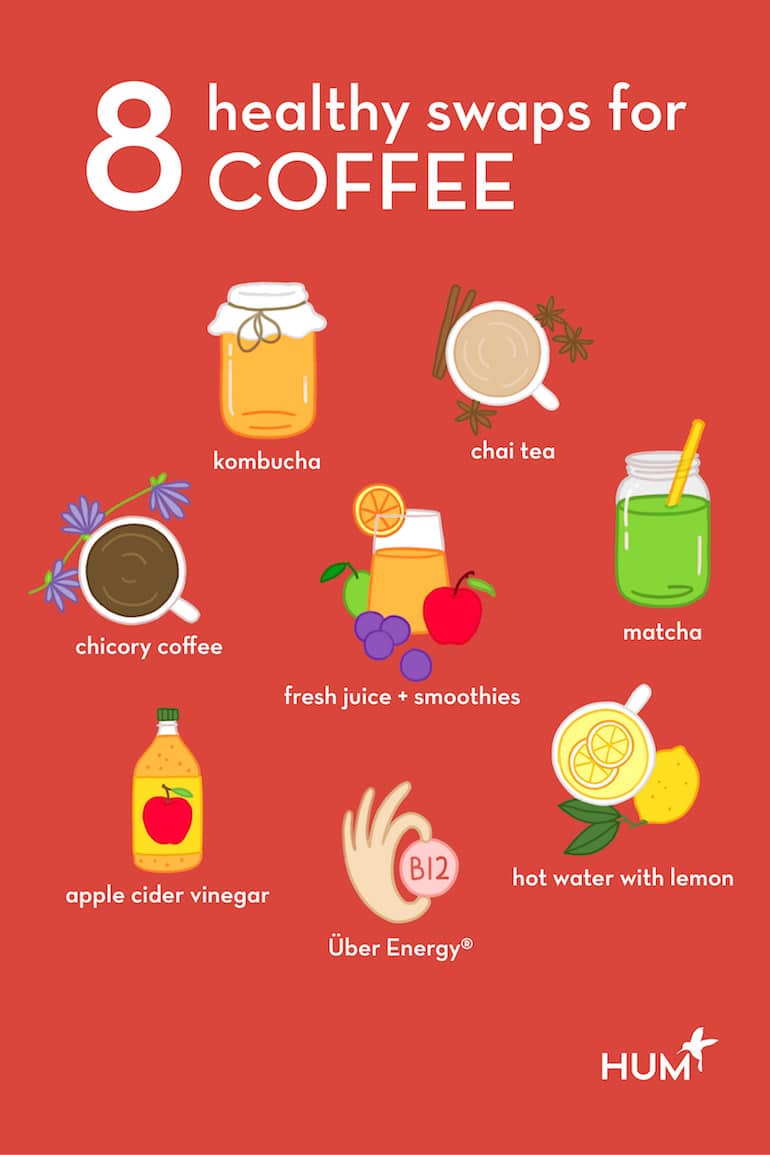
Made with several spices including ginger, cinnamon, turmeric and black pepper, this caffeine-free traditional Indian drink is a comforting yet invigorating concoction that’s sure to wake your senses in the morning. Cardamom, vanilla and honey can also be added to the mix.

Apple cider

Cider made with real apple cider vinegar is great for supporting digestion, since apple cider vinegar contains enzymes that can help balance blood sugar levels, control your appetite, and potentially ward off issues like heartburn and indigestion.

Coffee is the go-to morning beverage for many, while others choose not to drink it for a host of reasons.For some, the high amount of caffeine — 95 mg per serving — can cause nervousness and agitation, also known as “the jitters.” For others, coffee can cause digestive distress and headaches. Many simply don’t care for the bitter taste or are bored with their usual morning cup of Joe. Drinking too much coffee can be detrimental because of its high caffeine content. “Too much caffeine may pose a danger to your health,” the U.S. Food and Drug Administration warns. People are now are slowly dropping coffee from their daily diet and are looking for healthier beverages. This is a sign for you to rethink your caffeine intake. There are several other drinks that can help you stay awake in the morning aside from coffee. They are-


Hot cacao

Brewed cacao is a low caffeine drink that is rich in theobromine, a mild central nervous system stimulant. It offers all the “decadent flavors of dark chocolate, without any of the sugar and fat, and virtually no calories,” licensed dietitian/nutritionist Monica Reinagel wrote in an article for Food & Nutrition.

Lemon Water

 Lemon water is a great way to start your day. It’s calorie- and caffeine-free and provides an ample dose of vitamin C.As an antioxidant, vitamin C plays a role in your immune system and protects your skin from sun damage. It’s essential for creating collagen, a protein that provides the basic structure for your skin, tendons and ligaments.

You can also add other fruits and herbs for a variety of flavors — cucumbers, mint, watermelon and basil are some popular options.

Herbal tea

Herbal tea like rooibos ( from South Africa) and chai tea (from India )can be great healthy alternatives to caffeine. Most herbal teas are caffeine-free, although it depends on the exact kind.They may help to support your energy levels by keeping you calm and aiding in sleep quality, and by supporting digestive/gut health. Unlike coffee ,teas are  low in tannin antioxidants, which can be beneficial but also interfere with the absorption of iron. Despite a low tannin content it provides a substantial amount of other antioxidants .

Kombucha

Kombucha is made by fermenting black tea with bacteria, yeast and sugar.After fermentation, kombucha contains probiotics, acetic acid and antioxidants — all of which may have health benefits .kombucha may boost your immune system, improve cholesterol levels and blood glucose levels in people with diabetes

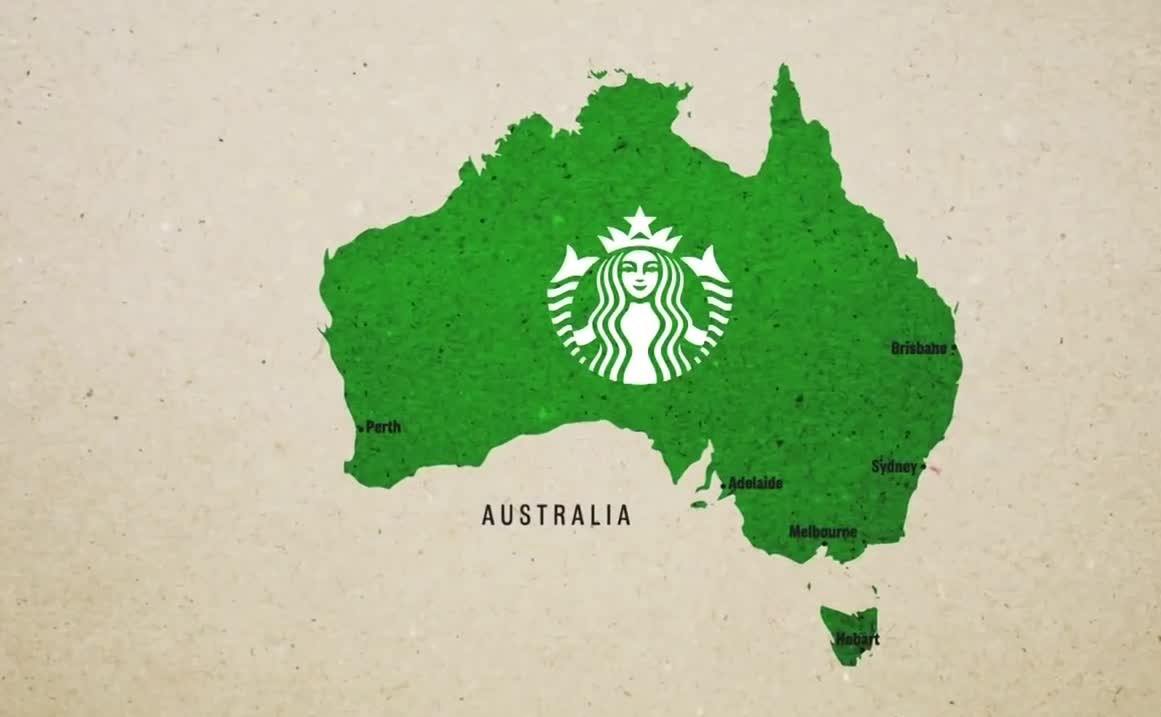
Starbucks Failed In Australia WHY ?….

Starbucks has coffee shops all over the world There are more than 28,000 locations and 76 markets From Shanghai to Guantanamo Bay And in China, a new Starbucks location opens up every 15 hours But there is one continent that seems uninterested in the hype over the Seattle based coffee chain And that continent is Australia It’s proven to be one of the toughest markets in the world to break into So tough in fact, that Starbucks closed more than two-thirds of its stores on the continent back in 2008. So what went so wrong with Starbucks and Australia To answer that let’s go back to July of 2000 When Starbucks opened its first Australian shop in Sydney.

 From there it expanded fast By 2008 Starbucks had 87 stores across the continent I think one of the problems with Starbucks and its true for a lot of businesses that have been successful in one country is that they thought that their business model could just roll out to a different environment and there was no need for them to adjust But that was the problem They tried to grow the Empire too fast Starbucks rapidly opened up multiple locations instead of slowly integrating them into the Australian market When they launched they launched too rapidly and didn’t give .

The Australian consumer an opportunity to really develop an appetite for the Starbucks brand They also moved into regional areas into outer suburbs of major cities And so for the Australian consumer it was almost like it was too available for them And so there wasn’t this point of difference, this want, this need for Starbucks And it wasn’t an organic growth which is what we very much saw in the US In its first 7 years in Australia, Starbucks accumulated $105 million in losses By 2007, Starbucks Australia was hanging on by a thread taking big loans from the US, totaling up to $54 million And in 2008, Starbucks announced it was shutting down 61 stores But of course 2008 was a difficult time for businesses due to the financial crisis Along with Australia closures, Starbucks also closed 600 underperforming American stores But even still such a retreat in Australia was embarrassing for the brand.

When you’re shutting down 75 stores For the Australian consumer when they, when they did leave the market or at least a large number of bestowals were shut down they didn’t really care It’s partly because Australians are spoiled for choice when it comes to coffee Australia’s coffee market is one of the biggest in the world the industry is expected to hit more than $6 billion in total revenue in 2018 They’ve been immersed in nuances of cafe culture since the mid 1900s when Italian and Greek immigrants began traveling to the country The immigrants introduced Australians to espresso By the 1980s, Australians were fully engulfed in cafe culture.

They’ve also grown accustomed to specialty menu items like a flat white or an Australian macchiato So cafes in Australia were born out of like the Italian culture of, you know, meeting of friends and knowing your local barista and it being kind of like a local meeting place where everyone knew each other and that coffee was just a part of that and then Starbucks came in with what is more of an American style like coffee culture which is essentially just like coffee is a product, coffee is a commodity Coffee is like, like perk me up in the morning it’s caffeination Starbucks had a basic menu and offered more sugary drinks which most Australians didn’t like in Australia where, you know, local tastes are different So we don’t really want a coffee that’s, you know, hundreds of ounces with lots of sugar in it We want something a little more sophisticated Plus Starbucks charge more than local cafes .

So Australians instead opted to pay less for coffee they liked from a local barista they trusted And so when you come in with this big like hey, we’re going to open all these cafes And they’re all gonna be to go focus It just was the complete wrong market for what, what the Australian was used to But there is one American coffee company that’s thriving in Australia Founded in Chicago and now based in Australia Gloria Jean’s got the traction in Australia that Starbucks couldn’t Gloria Jean’s has more than 400 Australian locations And serves more than 35 million consumers in Australia each year So what is Gloria Jean’s doing in Australia that Starbucks isn’t Well the company attributed to success to two Australians who franchised the business in their home country Shops started to show up in Australia in 1996 Fast forward to today, the company has a presence in every Australian state .

The reason? Its menu The chain offers a wide variety of espresso drinks and specialty coffee Failing to adapt its menu to Australians coffee culture proved to be a mistake for Starbucks And the company faces another challenge later this year Italy Starbucks is opening its first store in Milan in late 2018 home of the espresso, Italy is rich in cafe culture But according to Starbucks it’s not going to make the same mistakes that it did in Australia The company said that it would develop in Italy with humility and respect for its coffee culture It announced it would be opening a roastery which is not your average cafe It gives customers a chance to see coffee beans roasted and processed before their eyes So there’s a chance that it won’t struggle like it did in Australia But Starbucks isn’t admitting defeat in Australia either Starbucks is staging a comeback on the continent In 2014, Starbucks locations in Australia were purchased by the Mount Waverley base withers group .

So this time it’s taking a different approach to putting Starbucks on the continent So if you just think about Australia as a big tourist destination There’s a lot of U.S. and Chinese tourists Starbucks has been very successful in China and it makes a lot of sense for them to build out because there are people looking for something that’s familiar to them Now with 39 locations in Brisbane, Melbourne, the Gold Coast, and Sydney areas this time it’s not looking to appeal to Australians but instead the coffee giant hopes to be a familiar face for tourists visiting popular vacation destinations in Australia free Australia has always been a high-volume tourist market .

The same thing in terms of international students at our universities are potential opportunities for them And we’re starting to see Starbucks enter into some large shopping malls here in Australia as well Australia welcomed 9 million tourists from 2017 and 2018 And those international visitors spent more than $30 billion in 2017 alone So tourists could possibly be the key to keeping the company afloat and preventing another downfall .

Why is Starbucks so Successful? Here are 6 Reasons behind it…

Its success stems from the fact that it was able to deliver an experience that revolutionised the way the world views coffee shops and how many of us drink coffee outside of our homes. Starbucks has created a space in between home and work where people can unwind, enjoy a cup of coffee, and take in the appealing atmosphere. Starbucks competes not with other coffee companies, but with going to the movies.

Photo by Adrianna Calvo on Pexels.com

The following are the primary components of the company’s success formula:

1. Core Competence and Visions: The Company’s primary job or responsibility is to ensuring that the organisational culture is consistent with the types of individuals they want to attract and retain. Starbucks strives to instil a sense of belonging among its staff and consumers, as well as trust and faith in the company’s values. The quality of the coffee and the quality of the experience are what keep their consumers coming back, and the experience comes to life thanks to the personnel. Starbucks believes in a successful, competitive business approach aided by a strong commitment to the product. The Company’s good leadership and management strategy has resulted in the brand’s outstanding success and a clear vision of core competence. The company’s desire to create the most recognisable brand was fueled by a well-thought-out planning and positioning approach.

2. Promotional Patience: Starbucks has decided to avoid what would be considered standard marketing techniques, which is a departure from the norm. By depending on cafés to advertise themselves, a major reliance on a strong brand and word-of-mouth to spread a good reputation is unavoidable. Sutter (2003) also claims that effective positioning of the Starbucks environment uses powerful marketing techniques to create a setting that encourages individuals to study, hang out, and read.

3. Employee’s Approach: The Starbucks brand’s main retail success is defined by people’s interactions with the company’s experience, as well as the culture and values of how they connect with consumers. By investing in and cultivating a unique relationship with employees, and ensuring that they understand that the primary goal is to surpass the expectations of both employees and consumers. Starbucks employees are never treated as commodities, but rather as business partners.

4. Command of a Premium Brand: According to Hayes (1999), customers are prepared to pay higher costs for Starbucks coffee because they are not only purchasing a beverage, but also making a social statement. Consumers are purchasing an experience, a way of life, and a mindset. While these intangibles are notoriously difficult to quantify, Starbucks consumers are making it easy by flocking in massive numbers.

5. Experimentation and Innovation: Starbucks is a disciplined innovator, and one of the key reasons for the Company’s constant high levels of same-store sales is its effective management of its innovation timetable. In the store, customers can sample a variety of coffee brands. The Company’s capacity to quickly launch new activities and products is a significant competitive advantage. Customers are also becoming more interested in Starbucks’ music compilations, which are produced by Hear Music exclusively for the company. Starbucks aims to launch hi-tech cafés by the end of 2005, with bespoke music CDs in addition to high-speed Internet access (Ruggless,1997; Vishwanath and Harding, 2000; Donation, 2003).

6. Measured Expansion: While McDonald’s is known for its lightning-fast location evaluation and company setup, Starbucks has taken a more careful approach, particularly in international markets. Outlets in China have continuously risen from 8 in 1999 to just under 70 in 2004. Because of rising opportunities and its well-known global brand, the company is expanding into new markets.

Is coffee healthy ?

According to a report published last year at the Harvard School of Public Health it stated that drinking coffee in moderation “can be part of a healthy lifestyle”.

Coffee is one of the world’s most popular beverages due to its high levels of antioxidants and beneficial nutrients, it also seems to be quite healthy.
Studies show that coffee drinkers have a much lower risk of several serious diseases.

Benefits of drinking coffee –

1. Boosts energy –
Coffee can help people feel less tired and increase energy levels since it contains a stimulant called caffeine. The caffeine is absorbed into the bloodstream from there, it travels to the brain where it blocks the inhibitory neurotransmitter adenosine. This is instrumental in improving energy levels and lifting up the mood.

2. Aids in burning fat –
Caffeine boosts metabolism significantly by 3 to 11%. This in turn helps in burning the excess fat in the body.

3. Contains essential nutrients –
Many of the nutrients in coffee beans make their way into the finished brewed coffee.

A single cup of coffee contains –
Riboflavin (vitamin B2): 11% of the Reference Daily Intake (RDI).
Pantothenic acid (vitamin B5): 6% of the RDI.
Manganese and potassium: 3% of the RDI.
Magnesium and niacin (vitamin B3): 2% of the RDI.

4. Lowers the risk of Diabetes-
Type 2 diabetes is a major health problem, currently affecting millions of people worldwide.
It’s characterized by elevated blood sugar levels caused by insulin resistance or a reduced ability to secrete insulin.
For some reason, coffee drinkers have a significantly reduced risk of type 2 diabetes. Studies observe that people who drink the most coffee have a 23–50% lower risk of getting this disease. One study showed a reduction as high as 67%

5. Reduces the chances of dementia –
Alzheimer’s disease is the most common neurodegenerative disease and the leading cause of dementia worldwide.
This condition usually affects people over 65, and there is no known cure. However, there are several things you can do to prevent the disease from occurring in the first place. This includes the usual suspects like eating healthy and exercising, but drinking coffee may be incredibly effective as well. Several studies show that coffee drinkers have up to a 65% lower risk of Alzheimer’s disease

Beverages from scratch…

Wine

Wine is as old as civilization itself and it has a significant place in many ancient cultures. Many experts agree that wine probably dates to 6000 B.C., to Mesopotamia where wild vines grew in abundance. The popularity of wine eventually spread to Egypt, along the Nile Delta. Wine came to Europe with the spread of the Greek civilization around 1600 B.C. It was an important article of Greek commerce and Greek doctors including Hippocrates, were the among the first to prescribe it. The Greeks also learned to add herbs and spices to mask spoilage.

Starting about 1,000 B.C., the Romans made major contributions in classifying grape varieties and colours, observing and charting ripening characteristics, and popularizing the growing of vines and manufacturing of wines. As time progressed, the wealthy enjoyed the fruits of the vine. After the collapse of the Roman Empire, Europe’s wine industry was saved by the church as monks planted vines to provide wine for Mass. Before long, France emerged as a leader, with some of the world’s finest wines.

Did you know that an ancient Persian fable credits a lady of the court with the discovery of wine? This princess lost favour with the king and attempted to poison herself by eating some table grapes that had ‘spoiled’ in a jar. She became intoxicated and fell asleep. When she awoke, she found that she felt much more relaxed and stress free and wine was discovered!

Coffee

According to legend, an Arabian shepherd named Kaldi found his goats dancing joyously around a dark green leafed shrub with bright red cherries in the southern tip of the Arabian Peninsula. Kaldi soon determined that it was the cherries on the shrub that were making them act this way. After trying the cherries himself, he learned of their powerful effect. These were coffee berries and monks at a local monastery started using a drink made of these berries to stay awake during extended hours of prayer. And so, coffee was born.

The ancient Ethiopians made balls of crushed coffee beans and fat to give them energy during long journeys. The coffee we are familiar with originated in Arabia, where roasted beans were first brewed around A.D. 1,000. Later, coffee was brought to the rest of Asia from where it was taken to Europe by a merchant from Venice.

Did you know that the name coffee is derived from the Arabic term ‘gahwa’ which means ‘that which prevents sleep’?

Tea

Did you know that tea is 5000 years old? According to legend, it was discovered in 2737 B.C., by a Chinese emperor when some tea leaves accidently blew into a pot of boiling water. The emperor was interested in the new liquid, drank some, found it very refreshing, and tea was created!

Tea consumption spread throughout Chinese society reaching into every strata. In time, drinking tea became part of the social and cultural life in the far East and India. Tea was introduced to India by the silk caravans travelling from the Orient to Europe. It was a Buddhist priest who brought the first tea seeds from China to Japan. In Japan, tea received almost instant imperial sponsorship, and spread rapidly from the royal court and monasteries to the other sections of Japanese society. Dutch traders and Portuguese missionaries brought tea into Europe and tea became an extremely fashionable drink in the court of Charles II of England. Tea has played a very important role in the history of England for it brought fortune to the British empire and at the same time, it was a tax levied on tea that led to the loss of her colonies in the New World.

Today, tea is grown on tea estates, and 70% of the tea we drink is grown in Sri Lanka, India, Indonesia, Kenya, Argentina and China. Amazing, we drink virtually the same tea today that the Chinese emperor drank the day he discovered it!

Carbonated soft drinks

Do you love fizzy soft drinks? Well, even the ancient Romans loved to drink the bubbling waters of mineral springs and they believed that this water was very good for health as well. Later, scientists discovered that it was the carbon dioxide in the water that caused these bubbles and tried to find a way to introduce this gas into plain water to give the same effect. Thanks to the efforts of such scientists as Joseph Riestley and John Nooth, this feat was accomplished and carbonated water was available for sale by the end of the 1700.

The next step was to flavour this sparkling water. In 1784, citric acid was developed from lemon juice and by 1833, carbonated lemonade was on sale in England. Soon, other flavours were introduced and in 1886, Coca Cola entered the market and created soft drink history.

Thank you for reading. Have a nice day!🌼

FIRING THE BLAME BULLET

The popular game PUBG has weapon attachments that reduces weapon recoil. It makes life easier for the players. Recoil is the backward movement of a gun when a bullet is discharged. It is helpful to know which attachments help players to shoot better and more effectively without hurting themselves in the process due to the tremendous force at which the shots are fired.

In real life when we point the gun at someone, how badly are we affected?

Well fortunately for us, in India, there exists some tight Gun laws except for the water guns’ kids play with during Holi and Gangsters. Hence here I talk about the abstract gun which fires the Bullets of Blame on others. Pointing finger at anybody who is in sight, was my favorite thing to do in any situation.

The blaming gun can also point upwards or inwards. When it points upwards, we blame the Creator for being unintelligent or uncaring or even non-existent. When it points inwards, we beat ourselves down with self-recrimination, “I am good-for-nothing,” ending up unnecessarily with inferiority complex.

How many of you, like me; are blamers? How many of you, when something goes wrong, the first thing you want to know is whose fault it is? Well Hello there, I’m the former winner of the Miss Blamer Pageant and the magnitude to which I blamed others with respect to everything that went wrong in my life was comical.

I’m in my house. I have on white slacks and a pink sweater. I’m drinking a full cup of coffee in my kitchen. I drop it on the tiled floor. It goes into a million pieces and splashes up all over me. And a millisecond after it hit the floor, right out of my mouth comes this: “DAMN YOU CHINA!” For purposefully making these cups so shiny and slippery. Now my entire kitchen is infected by the tiny pieces of ceramic (China clay). The kitchen has to be quarantined until I clean it up…or somebody else cleans it up, never mind.

Now as I have aged, I realized- I’d rather it be my fault than no one’s fault. BUT WHY? Cause it gives me some semblance of control. Blame is simply the discharging of discomfort and pain. It has an inverse relation with accountability. What is the difference? Well accountability by definition is a vulnerable process wherein I confide to you, “Hey my feelings were really hurt by the things you said/did.” Blaming is simply a way to express anger.

People who blame a lot seldom have the tenacity and grit to actually hold people accountable because we spend all of our energy raging for 15 seconds and figuring out whose fault something is. Blaming’s very corrosive in relationships and it’s one of the reasons we miss our opportunities for empathy. Because when something happens and we hear the story, we’re not really listening, we’re in the place where I was – making the connections as quickly as we can about whose fault it was.

SO, DO I START BLAMING MYSELF FOR EVERYTHING?!

In the spiritual path, self-blame is the most dangerous thing. Firstly, stop blaming yourself and others. We don’t have to point the gun at others or our own heads. Let us drop the gun and never pick it up, ever again.

Secondly, we need to come out of the Destiny’s Illusion. Never focus on what you can’t do, focus on what you can do. If we keep on focusing on what we can do- Then even if you believe in destiny, it will be a good one for you. Blaming your destiny will close doors to all the wonderful opportunities waiting for you.

A child runs a race with his full speed & energy and yet comes last in it. Losing the race was not his fault but taking part in the wrong race is definitely a mistake worth correcting. To simplify- Making a mistake is not your fault but doing it without your interest in it, is a mistake that can be rectified.

To solve the problem, we need; not a blaming bullet, but a helping hatchet. Not a blaming finger but a helping hand. Making mistake is in our nature. Acceptance of mistake shows our culture and correcting the mistake is progress. I do accept that spilling that damn coffee was my fault, however damn you CHINA for making the cup which broke and spread on the entire floor leaving my kitchen dangerous to walk on freely. * Gun drop * I meant MIC DROP…..phew!

How Starbucks captured the coffee & the world…!!!

With nearly 30,000 cafes across the world , Starbucks has become over just a household name. From its iconic cups, often adorned with misspelled names, to the espresso inside them, Starbucks has catapulted from one coffee bean shop in Seattle to a sprawling $80 billion business over the last 47 years.

Starbucks has a 'void in innovation' and healthy beverages won't ...

Starbucks sales account for 57 percent of the total cafe market. Yes, 57 percent, nearly two-thirds of all coffee sold at cafes in the U.S. comes from a Starbucks. But this impressive expansion hasn’t come without growing pains. With more than 14,000 locations in the U.S. alone, Starbucks has spread itself too thin. Having too many stores has led to fewer transactions at individual stores. To compensate, the company has raised prices. But doing this too quickly or too often can drive customers away. So how did this happen? And what’s a coffee giant to do about it? The year is 1970.
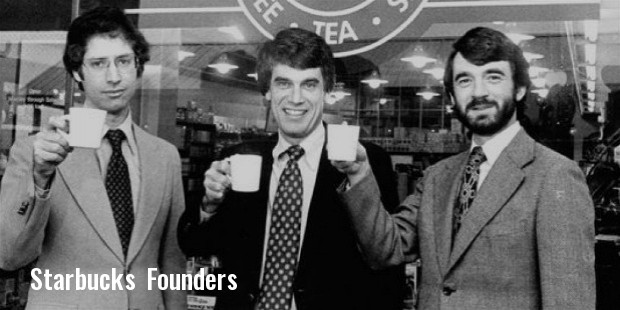
Three college friends, Zev Siegl, Jerry Baldwin and Gordon Bowker decide to get into the coffee business. They found a mentor in Alfred Peet, founder of Peet’s Coffee and the man responsible for bringing custom coffee roasting to the U.S. He knew the coffee industry inside and out, especially the gourmet end. He was the most educated coffee guy in the country at that time. So with Peet’s help, the three friends open Starbucks, a coffee bean shop and roastery at Seattle’s famous Pike Place Market in 1971. Peet provided the young entrepreneurs with roasted coffee beans and connected them with coffee brokers until they could set up their own roastery and source their own beans. For the first decade, the founders opened five more locations in Seattle. At this point, contemporary coffee consumers might have noticed a glaring absence: actual coffee drinks. But that’s the thing about the 70s coffee culture: it didn’t really exist outside the home. There were no coffee bars nor was there much of a requirement for espresso-based drinks. You purchased coffee beans and you either took them home as beans or we ground them for you in the store. Nobody expected to urge a beverage at a Starbucks coffee store until after 1980.
Starbucks Story - CEO, Founder, History | Coffee Company | Success ...
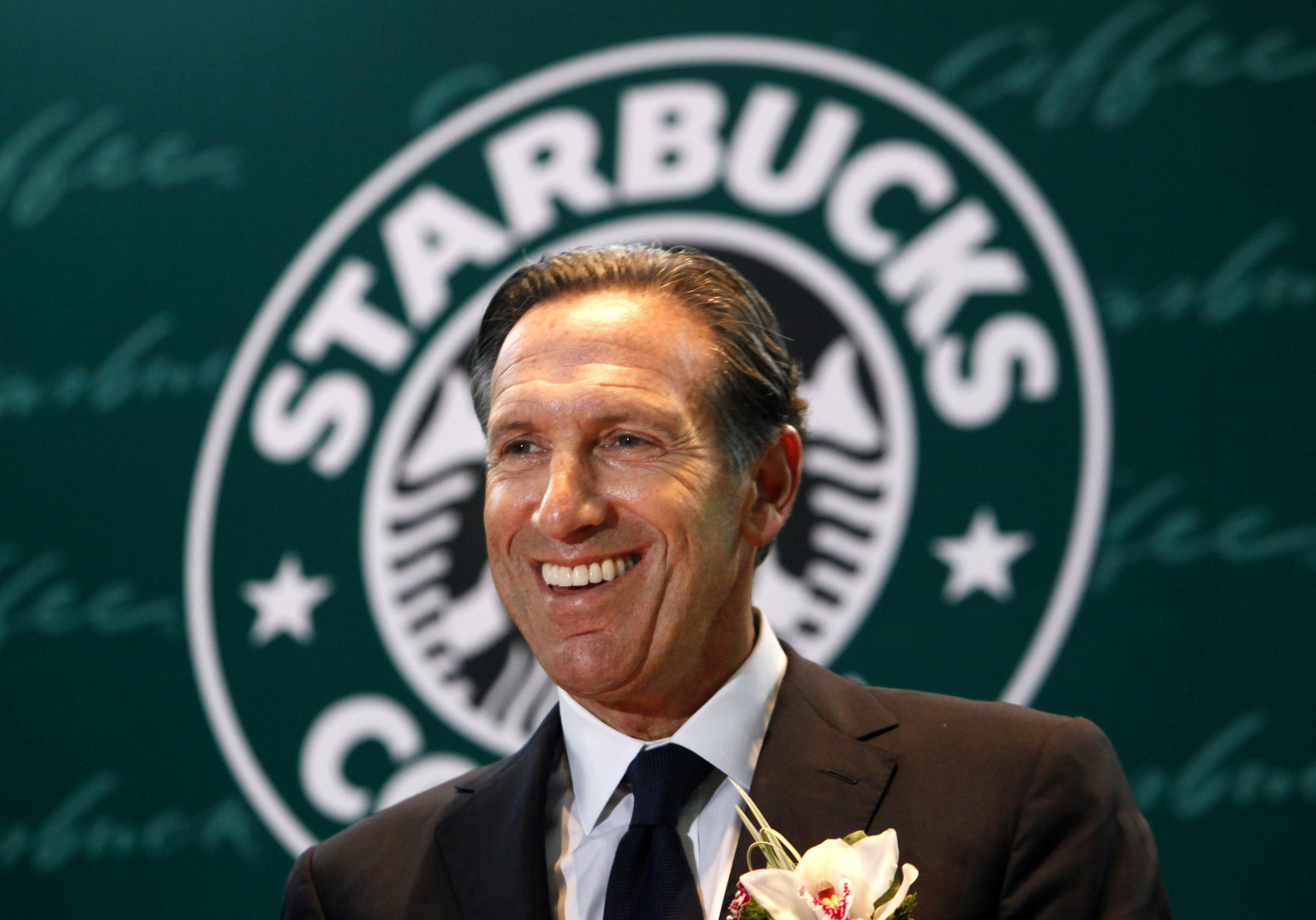
Starbucks’ initial focus was bringing high quality beans to consumers who were more accustomed to instant or canned coffee, but that changed with the addition of one man. The company hired its first really professional Director of Marketing and Sales, and that man was Howard Schultz. And he couldn’t figure out why we weren’t selling beverages. In 1983, Schultz travels to Italy and returns with an idea: turn the coffee bean stores into cafes. Starbucks served its first latte the next year. The experiment was a success, and four years later, Schultz partnered with investors and bought Starbucks for $3.8 million. He was only 34 at the time. Schultz pursued a strategy of aggressive expansion. By the time the company went public in 1992, it had 165 stores, in 1996 it had opened more than a thousand locations, including its first international cafes in Japan and Singapore.
Growth was so rapid that, just three years later, Starbucks opened its 2,000th location. Schultz switched from CEO to Executive Chairman in 2000, at which era Starbucks operated 3,500 stores in additional than a dozen countries. Between 2000 and 2007, the number of Starbucks cafes more than quadrupled, from 3,500 to over 15,000. During this era , the corporate opened a mean of 1,500 stores per annum , including 2,500 in 2007 alone. Sales shot up from $2 billion to $9.4 billion. Consumers were increasingly ditching their kitchen mugs for these iconic paper to-go cups. But then, Starbucks hit a wall: the 2007 financial crash. That year, its rapid growth screeched to a halt and its stock price plummeted by 50 percent as cash-strapped consumers backed away from pricey coffee habits. So, Starbucks brought back Howard Schultz. This news alone caused Starbucks stock to increase by 9 percent.
Xed Knowledge
Schultz halted growth and focused on customer experience. He shuttered cafes – more than 600 in 2008 and another 300 in 2009 – and laid off around 6,700 baristas. A month after his return, Schultz ordered Starbucks to shut all of its U.S. locations for one afternoon so he could retrain more than 135,000 baristas about how to make its signature espresso. Schultz’s goal was to remind customers what they loved about the brand by making the stores an experience, not just a place to get a quick coffee. They stopped selling breakfast sandwiches and brought back in-house grinding, infusing the cafes once again with that fresh coffee aroma. Schultz even mandated the removal of automatic espresso machines. These made service faster, but removed much of the romance and theatre of watching baristas craft each cup of coffee. Schultz’s makeover worked.

Starbucks | Description, History, & Facts | Britannica
The company’s stock soared more than 143 percent in 2009 and same-store sales rebounded. Starbucks has posted positive same-store sales ever since. During Schultz’s makeover of the cafes, Starbucks barely opened any new stores. But the pace picked up again in 2012. By 2017, Starbucks opened nearly 3,000 more locations, ending the year with 28,000 cafes round the world. However, this brings us back to the first problem: profit cannibalization. Over-saturation, particularly in urban locations, has spread sales thin. Because Starbucks has numerous locations, customers do not have to be loyal to only one. So albeit Starbucks overall sales are growing, its individual same-store sales won’t reflect it. Compounding this problem are changing consumer preferences. People are shying away from sugar-laden calorie bombs. which happens to be one of Starbucks’ staples. These signature Frappuccinos contain an average of 57 grams of sugar. That’s more than double the recommended daily limit of sugar. So, to combat these problems, Starbucks is changing once more . The company announced the closure of 150 stores in 2019. That may seem like a drop in the bucket for a sprawling company like Starbucks.

Starbucks App Users Now Drive 17 Pct Of Sales | PYMNTS.com

The company’s biggest undertaking is its new line of upscale stores: Starbucks Reserve Roasteries. These massive, 20,000-square foot stores are designed to be a tourist destination. Here, Starbucks baristas and bartenders’ experiment with different brewing methods and craft new, innovative beverages. These have proven popular. In the first weeks, the Shanghai Roastery made an average of $64,000 every day, which is double what a regular cafe makes in a week.


Koffie

If you are wondering what is  koffie, it is actually the previous name of the drink which is most consumed in world that is coffee. Before making its debut to the english people the dutch called the drink koffie. Discovery of this amazing drink was actually by an accident, In Ethiopia a goatherd found that his goats became strangely energetic after eating berries from a specific tree. It is also said that a person in Yemen when chewed these berries he found  these very much bitter, then he tried roasting the seeds so that it tastes better but it became hard and then he boiled it in water so as to soften it. This developed a brown liquid which had a very good smell. As he drank it, his fatigue was gone .

What is it about coffee that people like it so much?  There are many reasons that a person likes coffee and also there are many varieties of coffee. Coffee is a subjective thing , everyone has their own taste. Instant coffees are many people’s go to drink , as it is easy to make and nevertheless gives the freshness and energy just to kickstart your work.  Many people prefer  brewed coffee as it keeps the flavor and the aroma of  the coffee beans intact. Coffee is a drink with a high amount of antioxidants that is good for our health and both types of coffee has the same amount , but if you ask the baristas( the person who serves coffee) they would always prefer brewed coffee, they call it ground coffee as they think its the original coffee. The major difference between them is that they are made of two different beans, Robusta and Arabica. Robusta is the one used in the instant coffee, these are cheap and have more amount of  caffeine. Arabica is the one which is used in brewed coffee they are lighter and have a more complicated taste.

There many more  types of coffee which is a little bit different from these two for example espresso where the coffee beans are roasted for more time than for brewed coffee and can also be made by robusta beans. People prefer this as it takes less time for preparation but does captures the essence of coffee. Latte is another type of coffee derivative which has steamed milk and some amount of foam being put on a short of espresso. Latte is really good for health, it is said that it helps to burn fat more efficiently than other drinks. Cappuccino is a Latte which has more amount of foam, this drink was very popular in Europe for a very long time, people used to drink it with their breakfast.

What’s more is if you add chocolate to the coffee it becomes mocha, and an ice cream coffee is called Affogato , if you replace the foam with chocolate sprinkles in an espresso then it is called  flat white.  Not only that if you like cold things more, coffee  is present there too. cold coffee with whip is frappuccino, without whip and nitrogen bubbles its a nitro and many more. From the time it was discovered people never stop experimenting with coffee to make it something which would be different. The last one which I am sure you may not have heard of is the Irish coffee which has whiskey in a black coffee.. don’t you think  that people are now trying really weird combinations!!!

As you have seen coffee is really a versatile drink , its health benefits are also innumerable, but anything consumed beyond a limit is dangerous. If you see when drinking coffee becomes a habit, then we get addicted to it and cannot live without drinking it for a single day. Many people drink it to stay up all the night this can make a person insomniac that is not good for health. For a healthy life one should always eat right thing and in adequate amount, and have at least 7-8 hours of sleep, That means  coffee should be consumed in a proper amount which should not hamper the sleep cycles.

Other wise enjoy your cup of coffee……