Things one must know before starting college


Excited about starting college but slightly nervous too? Well keeping that in mind I’ve written an article addressing the very topic.

Starting college is like entering a whole new world and there’s so much to think about:

  1. Will I make friends?
  2. What Major should I pick?
  3. How will I juggle everything?
  4. What should I bring?

And, lot’s more.

That’s why I’ve created this list of things you need to know before you (or your child ) start college. Let’s get started!

1. What to Take With You to College



(You can skip this if you are living off-campus – but it’s still good to read.)

For most students, going to college is the first time they live away from home. So, the question is, What do you take with you when moving into a dorm?

Before deciding…Get in touch with your college and ask for their approved and prohibited items checklist. Every college will have one and each college will have slightly different guidelines. Some colleges won’t even allow a power strip! So…make sure you contact them before spending money on things like mini-fridges. Another thing to consider is space. Freshmen tend to underestimate how much space they need, and dorm storage space is notoriously less than it seems at first(quick tip – find out the exact dorm room dimensions and measure any larger items you want to take figure out how much will fit –good to know before showing up in a U-Haul!).

A good rule of thumb is just only to take what’s necessary:

  • Comfortable clothing for class.
  • A formal outfit & shoes for special occasions and job hunting
  • Laptop & phone (obviously)
  • Bathroom supplies
  • Bedding (sheets, pillows, blanket)
  • School supplies i.e. pens, rulers, calculators, sticky notes, etc.
  • Eye mask, earplugs, and pain medication (just trust me)
  • Of course, there’s more, but these are the essentials.

Many students wonder if you can bring your car to campus. This is something you will need to check with your college. Some allow cars; others don’t.

Talking about transportation ….

2. Things to Do On And Off Campus


Think about what you would like to do with your spare time (and how you will get there). College campuses and their surrounding areas are packed with things to do. Almost every college has plenty of clubs, events, and activities on offer for students. So…when you’re on the phone with the college and asking about what things you can take with you, make sure to find out about things to do on and off-campus. You will also want to get off campus now and then. Do google maps search using the college’s address to find out what there is to do out and about the college.

For example, you could search for:

  • Starbucks near [college name]
  • Restaurants near [college name]
  • Movie theatres near [college name]
  • Comic Conventions near [college name]

And so on…These kinds of places know that students love their products and services. So chances are they will be located around the college.

Then…you need to know how to get there! Once you know where you want to go, make sure that you come up with an idea of how you can get there by bus, train or bicycle (if you have one). Knowing how much it costs to get where you want to go is also an important element in making your weekly budget.

3. What Classes You Will Take


Maybe you have already chosen your Major, maybe you haven’t. Either way: If you look around the room on the first day of college, statistically up to half of them haven’t chosen their major either. Even then…Two-thirds of all college students who have picked their major, change it at least once before graduation. Having said that: You should look into which classes you will be attending in your first semester. Because you will need to prepare beforehand. You will need to buy books for example. However, don’t order them just yet, we’ll give you a few tips about saving money on books later. More importantly…Did you know that you forget almost 82% of what you learn in a class within 28 days? And after graduating from high school, students often have three or four months before starting class again.

This is a great way for students to relax after the stress of their final year of high school but the problem is that because of a natural memory drain, getting back into the flow of studying again can be stressful and overwhelming. That’s why we suggest taking a few pre-college tutoring classes based on classes you will have during the first and second semesters. That way you can hit the ground running with one less thing to worry about when starting college.

4. How to Improve Your Memorization


College can be challenging. There is so much to learn and topics you have never studied before. And…Like I said in the last section: The average person loses 82% of what they learn within 3-4 weeks, while a typical college semester is fifteen weeks long. This means that by the end of the semester: When it’s time for exams, you will only remember 18% of what you learned in the first two-thirds of the semester! Frustrating, right? So, I’m going to share three memory tips that will help you retain much more of your course content and while having fun doing it:

Tip 1. Find Your Why

Think about why you want to study your subjects. If you are just learning to pass an exam, chances are you will forget everything the next day. When you want to learn, you need to have a strong (emotional) motivation. Just tapping into a desire to learn something will increase your memory retention and learning abilities. For example:

Those who want to be doctors are more likely to have an active interest in topics like biology or chemistry and therefore find it easier to remember key facts and information from those classes. What is your end goal? Find something you want to achieve and connect it with your academic success. Once you find your own key motivation for studying, everything becomes easier to learn and remember.

Tip 2. Learn Use Mnemonic Devices

Mnemonic devices are ageless proven tricks to help you remember almost anything more easily. And…Many of the techniques have been around for thousands of years. So what does a Mnemonic device look like? They are simply different methods to help you remember specific chunks of information. Here’s an example:

This mnemonic device helps you to memorize the first 10 elements and their position.

“Henry Hester Likes Beer But Can Not Obtain Food Now”

Just by remembering this line, you are able to remember each of the first 10 elements and their position in the list:

  • Henry – Hydrogen
  • Hester – Helium
  • Likes – Lithium
  • Beer – Beryllium
  • But – Boron
  • Can – Carbon
  • Not – Nitrogen
  • Obtain – Oxygen
  • Food – Fluorine
  • Now – Neon

See how each word represents an element in its position? This is a type of mnemonic device. Our brains find it easier to remember a storyline or a structured sentence rather than a list of random names of elements. You can use Mnemonic devices to memorize nearly anything. The more you practice the easier it gets, too. And…If you practice these tricks often, studying for any exam will become a breeze.

Lastly:

Tip 3. Use Regular review

The best way to move something from your short-term memory banks to your long-term memory banks is to repeat it a few times.

So, schedule some time every week to review your class notes from the semester. Don’t just review what you learned that week. Review what you learned 2,3,4 weeks ago as well. Another extra trick here is to practise recalling the information out of sequence. This cements the info even further into your brain.

5. How to Take Notes Like a Boss


Notetaking is one of the best ways to help you learn faster, as long as you read them – see the previous chapter.

Here are some of our top notetaking tips to become a note-taking pro.

  1. Be prepared. Look over the upcoming class’ outline and slides if available to get an initial picture of the lesson to come.
  2. Use your notetaking to summarize, not transcribe. Focus on recognizing key concepts (often indicated in the class slides).
  3. Practice your listening skills. Learn to Identify the most important snippets of information and forget the rest. Create a few notes on the big picture, then pinpoint “subheadings” underneath with brief, key information under each.
  4. If the lecturer is going too fast for you, take a photo of the slides or board notes with your phone for later review. (Check first whether your faculty allows this)

Recognizing Key Topics

Wondering how to identify key information in a lecture? Here are a few things to listen out for which suggest what your professor feels is key information:

  • Introductory comments outlining the class topic
  • Repeated phrases or information.
  • Auditory changes such as verbal emphasis or change in speech pattern.
  • Verbal cues indicating something to be important.
  • Final remarks in the form of a summary or review of the lecture’s main idea.



What to Bring to a Job Interview

Job Interview is the most crucial phase of a person’s life. It is one step towards your success in life. If you are here, that means you probably applied for a job and now you have got a callback. So don’t worry, you have come to the right place. Here you will find absolutely everything you need to know about preparing for an interview. Once you have made up your mind about the interview, then there’s only one thing you have to take care of, that is, a list of essentials to take with you.

The first step towards preparing for an interview is to make a checklist of all the essential items you have to bring to the interview. Don’t panic. Just take a deep breath and leave this tension on us. We will clear all your doubts and you can go ace your interview. We might need a Thank you note afterwards ! Anyways, the most important thing is your confidence. Then comes your A-game. Other than these there are a few things which are shown below. So to make the employers pleasantly surprised, check out our fully detailed and updated list of what you need to bring to your interview. Come on let’s have a look and dive straight into the main points.

Photo by Sora Shimazaki on Pexels.com

What to bring to a job interview ?

You don’t want to make a fool of yourself if you show up half prepared for your interview. So we are here to help you with that. Here are some items listed below. Use this list to make sure you are fully prepared for your big day.

  1. Folder – There are many documents and papers you need to carry to the interview. So a  folder is an organized way to do that. You can store all the necessary documents in the folder. Plus you will have an easy access to your documents when needed.
  2. Copies of your resume – You should carry at least 5 copies of your resume. It will ensure that you have a resume for every employer you meet. Keep them safe, otherwise you’ll lose them. Keep them in the folder so they don’t wrinkle or bend. And it certainly won’t hurt to print a copy to keep for yourself. Would it ?
  3. Copies of your cover letter – Keep at least 5 copies of your cover letter. Bring them in the folder to ensure that they are safe from bending and you have easy access to them. One for you and others for all the employers you meet. It will be helpful, trust us on this one ! It will also be helpful in case one gets misplaced.
  4. Portfolio or your Work samples – Your portfolio is the most crucial and promising step ahead to you securing the job. Your work samples should be neatly maintained and are required to be perfect for the level of the job. The portfolio will be the best option to showcase your talents and what you have achieved in the past. It also helps the employer in finding your true potential and increases your chances of getting the job. The hiring manager always goes for the portfolio first. Keep it in the folder to have easy access to it when needed.
  5. A notepad and a pen – You should absolutely carry a notepad to write down the names, the company’s information and of course to note down what the employer has to say. Maybe try to catch up on the important information you get. But don’t take so many notes that you forget to make eye contact. That will not be a good impression and will show you as incompetent. Make sure to carry more than one pen so you have an extra if one runs out of ink. Don’t forget to first ask for permission from the employer to take notes.
  6. A list of references – Now, even if you are going well with the interview, a list of references will be a good addition to the list of things you need to carry with you. The employer might ask you for references anytime during the interview. So it will be good to be prepared for this hurdle beforehand. Think of all the people who could vouch for you and maybe put in good word for you to the hiring manager. Make sure to include the contact information with the details of your references. But don’t worry if you are not much experienced or don’t have any references to list down. Any former teachers will also make a pretty good reference. Just don’t list down your family members or friends. That will surely be the embarrassing highlight of the day.
  7. A bag or a briefcase – Carry a briefcase so it looks professional and you have a great first impression on the employer. It will help you carry all the items easily to the location. You should organize the items and documents in a proper manner so that they are easily accessible to you when needed. You don’t want to look like you can’t even handle your things. Pages dropping out of your hand will not look good. Now, would it ?
  8. Identification proof or Photo ID – Of course this is a very common thing to remember to take anywhere. Nut we thought it might be beneficial for you to remember to take it with you for your big day ahead. You don’t want to lose a probable job because you forgot your photo id. That would be depressing but don’t stress, we are here to remind you. Taking your identification with you will be good and will look professional. It may also earn you more points on the employers priority list of selection for the job. And plus you might need it to get through the security outside of the building.
  9. Talking points – You might want to add this also to your list. These should basically be the summary of your experience in bullet points. Points will be easy to glance at once before the big meeting. It will also boost your confidence and keep you out of stress. These points can be your specific skills that you might want to put light on in front of the employer. And most importantly your accomplishments should be surely mentioned so that you remember to review them before the meeting and you don’t forget to tell all about them.
  10. Questions for the Hiring Manager – These are the questions for you to ask the hiring manager. Any queries you have regarding the job can be written down on a paper and asked during or after the interview. These questions may also be regarding any company policies you need to clarify about. You can ask about the position you are applying for. But remember, do not ask for the salary details. It might cast a bad light on you in front of the manager. At least wait until he / she brings it up himself / herself. And remember to be specific in your questions and of course, ask in a professional manner to make a good impression. The questions should be valid and easily understandable to the employer. They should be good and relevant enough to make you stand out from the other applicants.
  11. Travel directions to the interview – You should absolutely carry the travel directions to the building you are suppose to go to. You certainly don’t want to get lost in the middle of no where. Do you ? So better carry a print out of the directions to the company building. It will of course be helpful if you are going in a new city for the interview or travelling first time to the area. And getting lost might get you late for the meeting. It could also cost you the chance to work in the company. After all your hard work and preparation, you don’t want to get late because of unexpected delays and interruptions that might get in your way. So it is better to be prepared before hand. And even after planning your schedule 10 – 15 minutes early, you are still running late then you should definitely inform the office or the employer.
  12. Contact information – You should have the contact information of the employer as well as the front desk of the company you are going to. In case you are running late or any other interruption has entered your way, then you can easily get in touch with them and maybe they will understand. But good luck with that ! Mostly the hiring managers don’t consider any issues but you can always hope for better. However, it is better to make sure you reach to the building on time.
  13. Business cards – They may not be necessary but are certainly a good addition to the list. They can be eye catching and helpful for increasing your chances of getting the job. It is only because the hiring manager may find you smart and more experienced if you show a business card. It depicts you as a more professional candidate for the job. They might also be helpful in providing your contact information to the employer. Business cards are just a piece of paper to store your information in a concise form and in a single place.
Photo by Sora Shimazaki on Pexels.com

What else you should carry with you ?

Well, there are a lot of other things that you need to keep in mind while preparing for an interview. They are not things to carry to the meeting, but rather some personality traits or may we say, a professional persona. Here, come on we will have a look at them.

  1. Positive mind – You need to remind yourself that you have worked so hard for this job and now this is where it all comes comes together. You need to keep a positive mind going into the big meeting. Do not stress or have doubts about the job just before the interview. It can destroy all your hard work that you put into it. You just need some positive vibes around you to keep you all ready to go and ace the interview. Believe in yourself and there it is. You did it. You will get through it with flying colors.
  2. Confidence – Now the next is confidence. Well all of us know that this is the most important and required component of your list. Remember, do not get nervous. Do not get cold feet at the last minute. It will ruin your preparation and afterwards you will feed bad and regret not being confident enough. But of course, you know there is a fine line between being fully mentally prepared and being overconfident. Do not in whatever circumstances, cross that line. More than anything else, being overconfident will surely almost drop your chances of getting the job.
  3. A professional outfit – Your first impression will be taken on how you look. It is very important for you to look absolutely professional. You need to set a work outfit for your big meeting with the employer. A suit with formal shoes and well trimmed hair should be a nice and presentable attire for men. And as for women, a shirt with trousers or maybe work skirts paired with nice pair of heels or shoes. These are just our suggestions for you, but it totally depends on what you have on your mind. Just remember that your outfit should be neat, presentable and properly ironed. You don’t want the employer to see the wrinkles on your shirt peeking out during your interview ! And one more last tip is that wear what you feel comfortable in but also maintaining the theme of a professional attire.
  4. Practice – All of us have heard that ‘Practice makes a person perfect.’ Haven’t we ? So this applies here too. Practice for the interview in advance. Like practice your communication skills. Maybe practice speaking your questions out loud. Check your confidence level too. Practice enough that you don’t regret afterwards. Search for the common interview questions that are mostly asked and practice answering those questions. And lastly, practice arranging and taking out items from your folder without fumbling.
  5. Attitude – This may sound absurd but it’s not what you think. We are not telling you to go to your interview with a snarky attitude. By this we simply mean that you should have a positive attitude when you go in. You should have hope and faith in yourself that you will ace it and get through certainly.
  6. A well prepared mind – A well prepared mind would be the perfect ingredient for a successful interview. You need to be mentally prepared and healthy while going in. Throw out the self doubts and the low self esteem surfacing your thoughts. Make sure you get a good sleep before the big day. Go get the job with a peaceful mind.
  7. Your A-game – This is a must. You need to bring out your A-game for the interview. Be well prepared. Don’t hesitate. And you will ace it.
  8. A good mood – A good mood will give you a fresh start for the big day. And you will go into the interview with a confident persona. You also won’t be impatient or scared.
  9. A convincing smile – As we know a smile is the key to fit in every where. Stride confidently into the room with your perfect smile. It gets the undivided attention of the hiring manager. A smile also makes the best first impression.
  10. Last minute check ups – The above listed things and extras are enough. But you can also check out these small items necessary for unwanted circumstances. Here it is.
  • Silenced mobile phone – Bring you phone with you but it should be silenced and fully charged. You don’t want to have to be interrupted by a call.
  • Cash – Some cash should be helpful to bring in any case of emergency.
  • Research about the company  – Do a thorough research about the company and the job you are applying to. Maybe about former employees and about the job requirements along with the rules inside the office.
  • Breath mints or floss – They will help you maintain a good oral hygiene during the interview and will make you feel clean.
Photo by Alex Green on Pexels.com

What not to bring to an interview ?

  1. A negative attitude – You don’t want to make a bad first impression. Your negative attitude might do just that. It might put you in a bad light and maybe cost your potential job.
  2. Salary demands – Do not ask about your salary in the interview. It might seem greedy and of course unprofessional. At least not until you are sure of getting the job or the employer brings it up himself / herself.
  3. A companion – Do not at any cost bring yourself a companion. Neither your parents or any guardian, nor any friends. Nobody is needed in the interview room. They might just give you a low confidence because of peer pressure.
  4. Hats or caps – Any type of accessories are not advisable to wear to an interview. They might just be a distraction for the employer during the interview. And in some cases, physical appearance can be a hurdle in the way.
  5. Strong perfume – Wearing strong perfume or cologne in a office might be risky as you never know, someone might have an allergy. It will just add to the distraction.
  6. Food or drinks – You can certainly eat food before or after the interview. You can even celebrate after with some drinks too. But bringing food items inside the building might not be a good idea to impress the employer.
  7. Untidy appearance – Wearing shabby or loose clothes is not a professional work attire. And certainly do not attend the interview with unclean and untidy hair. Again, physical appearance also plays a role in getting you a job.

So, these were the things you need to keep in mind while preparing for your big day. It is a special moment in anyone’s life and you sure don’t want to spoil it. At last we wish you All the Best and hope you come out with flying colors. You enter the room with confidence, and exit it with pride for yourself because you absolutely deserve it. It is important to be aware of what to bring to an interview but it is also necessary to know that what you say during it or the way you act in front of the employer, will have a bigger impact on your chances of getting the job.

Done Class 12th , What Next?

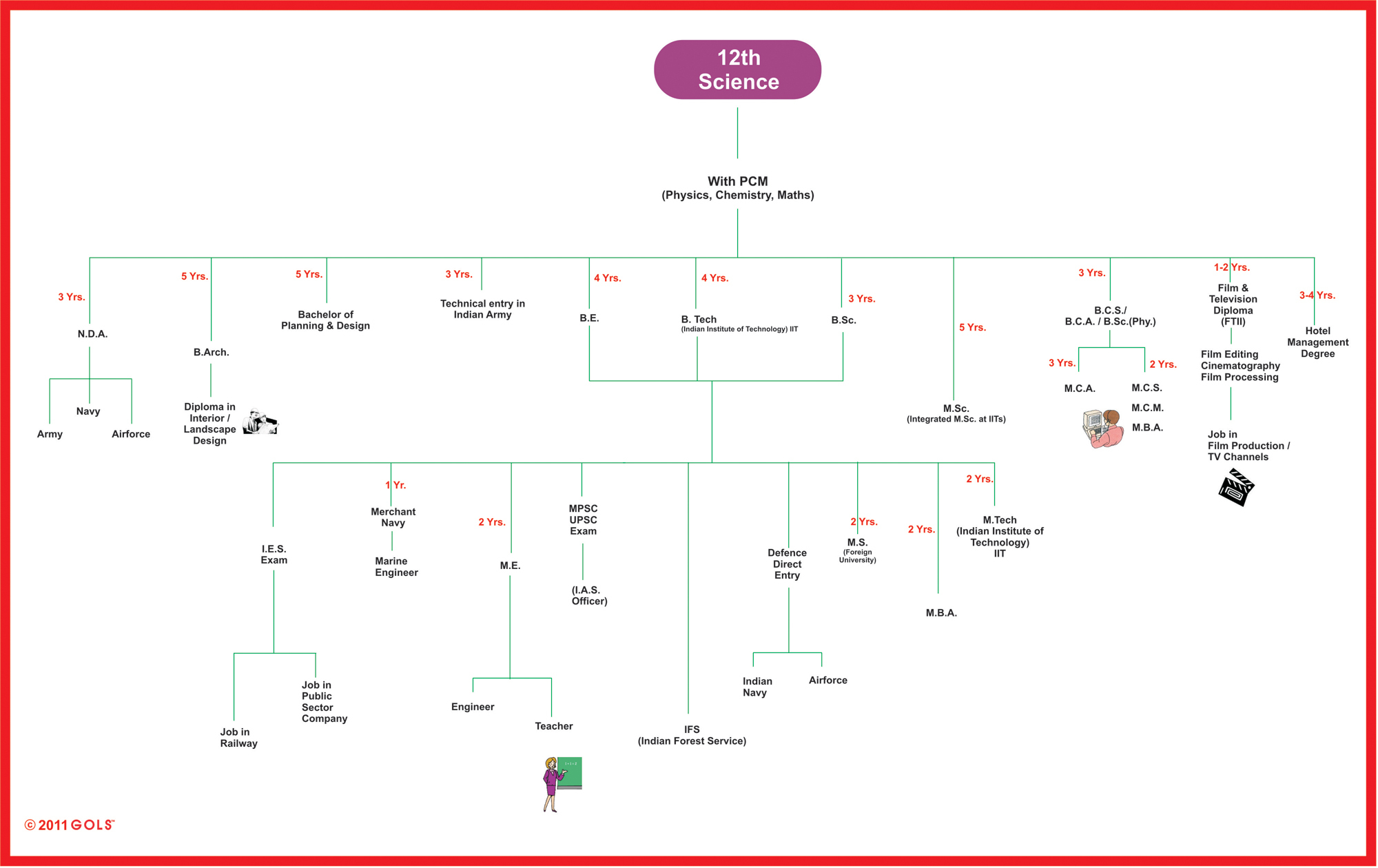
After the class 10th and 12th people usually have a dilemma of what to do next. Most of the children opt for medical and non-medical lines eying to become a computer science engineer or a doctor. In most cases people chose these streams purely based on pay, some due to parental pressure – Well Sharma Ji’s son and daughter are engineer and doctor so how can their relative’s children chose arts or commerce. This is a common notion throughout the country. Other professions are not considered at par. But what exactly are other professions?

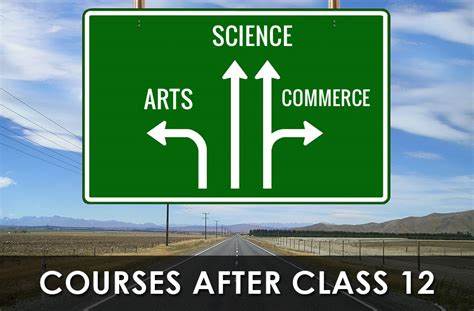
After class 10th streams are broadly divided into Medical, Non-medical, Commerce, and Arts. The detailed professions after class 12th are below:

See the source image

Non-Medical

It mainly comprises physics chemistry and math. Most of the people do BTech which is further branched into a plethora of fields like Computer science, Mechanical Engineering, Chemical and so on. People also do Bachelor of Architecture which comprises building construction. Besides this people can also opt for 3 year long BSc courses in the field of Mathematics, Chemistry, Physics, Computer Application.

Medical

After completing physics chemistry and biology students have options like MBBS, BDS which comprises of Dental Science, B Pharma. ( a 4 year long for becoming a chemist) , BSc Nursing, BHMS (Bachelor of Homoeopathic Medicine and Surgery), BAMS (Bachelor of Ayurvedic Medicine and Surgery). Just like Non, medical students can also opt for B.Sc. in Chemistry, Biology, Physics.

See the source image

Commerce

They have math, economics, accounts, business studies as their subjects. The most popular stream followed after class 12th is B.COM, a 3-year long course consisting of subjects related to finance and commerce. People who further want to do MBA usually opt for B.COM. There also other courses like BBA (Bachelor of Business Administration), CA, etc.

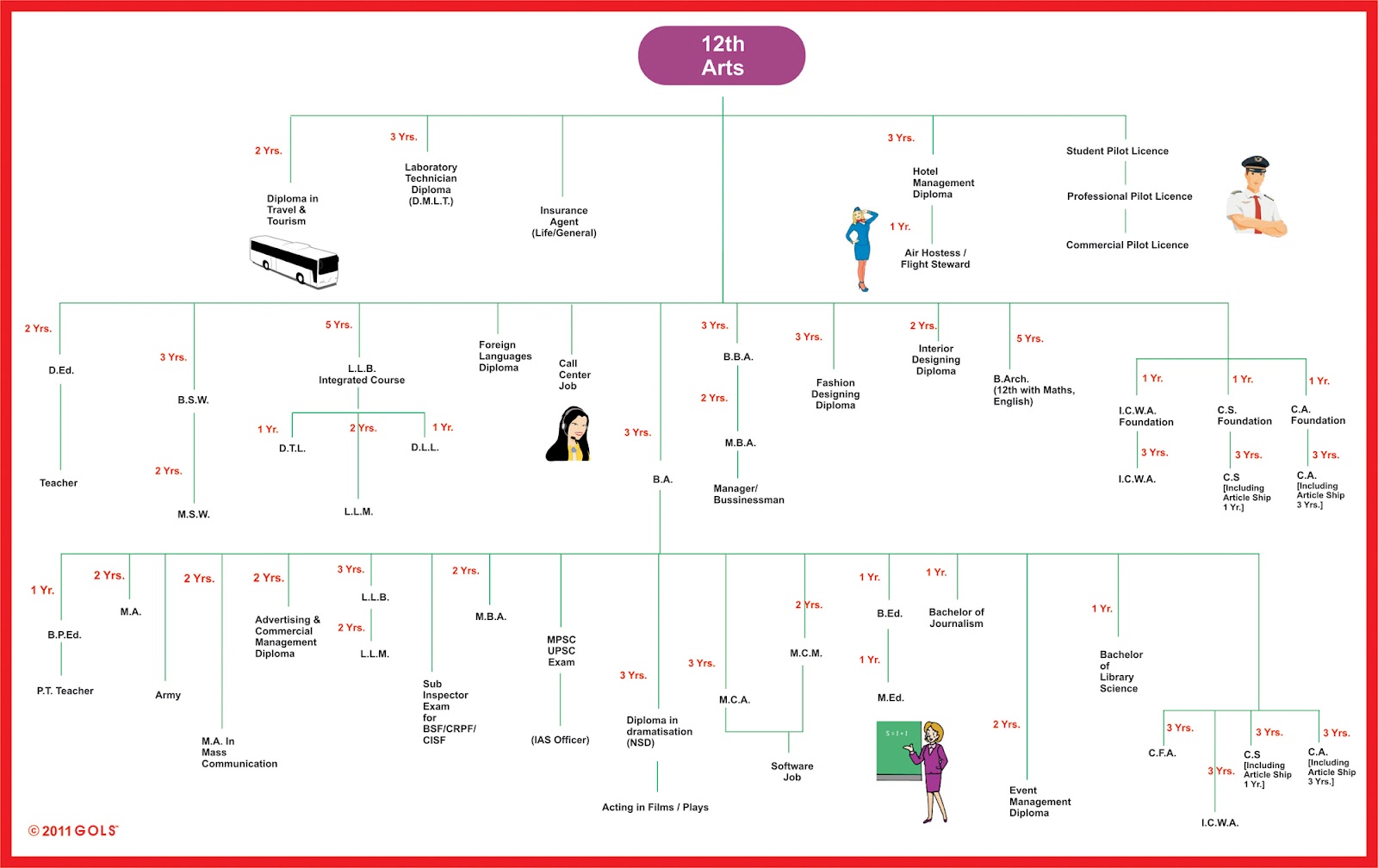
Arts

There are innumerous subjects like political science, history, English, economics, etc. Usually, people opt for BA after class 12th which can be done for various subjects like philosophy, political science, English, etc. People whose interest lies in drawing and painting chose BFA (Bachelor of Fine Arts). After that, they can take various professions like interior designing, etc.

Common courses

There are various courses which a student can opt after class 12th irrespective of their branch. People interested in law can opt for LLB (Bachelor of Law). People belonging to the agriculture domain opt for B.Sc. Agriculture. To become a fashion designer students do B.Sc. in Fashion Design. Students having a passion for teaching opt for B.Ed. in their particular domain. People who are intrigued by mass communication and journalism opt for BJMS(Bachelor of Journalism and Mass Communication. Likewise, there are various other fields.

Although there are various fields to explore students usually are restricted to particular fields like medical and non-medical. However, if someone has a passion in a particular domain, he/she will find success one day or another …

Introduction to Bits Pilani

Photo by Ekrulila on Pexels.com

The Birla Institute of Technology & Science, Pilani, popularly known as BITS Pilani, was established in 1964. It is a Deemed to be University for higher education. BITS Pilani is accredited by the NAAC with ‘A’ Grade with a 3.45 CGPA. In addition, BITS Pilani is ranked among the top 10 Engineering institutes in India by India Today 2020 Ranking survey.

The campus of BITS Pilani is sprawled over an area of 328 acres and is equipped with all necessary facilities. It specifically emphasises research and development and considers it as an integral part of its higher education ecosystem. The Centre for Material Science & Technology, Embedded Controller Application Centre and Centre for Robotics and Intelligent System are a few among many research centres that are there at BITS Pilani campus.

BITS Pilani provides decent infrastructure throughout the college. Following are the key highlights:

  • Hostels:  There are eleven hostels for boys and one hostel complex for girls.
  • Sports: Swimming Pool, Volleyball Court, Tennis court, etc.
  • Laboratories: Civil Engineering Lab, Chemistry Lab, Computer Lab, Design Lab, Electrical Lab, Electronics Lab, Mechanical Lab, Physics Lab, Petroleum and Petrochemical Lab, etc
  • Library: Library has room for up to 8,000 students, offers 738 open-access study places and 246 open-access IT work stations. As well as the books and periodicals you expect, it is home to computing facilities for students.
  • Other facilities: Gym, Cafeteria, Wi-Fi campus. AC Classrooms, etc.

https://www.google.com/url?sa=t&source=web&rct=j&url=https://www.bits-pilani.ac.in/&ved=2ahUKEwiM-LfdjsfxAhWyILcAHZvnCZsQFjANegQILBAC&usg=AOvVaw2xUo3sgWjB8sN3Atv8Q2TH

https://www.google.com/url?sa=t&source=web&rct=j&url=https://www.bitsadmission.com/&ved=2ahUKEwiM-LfdjsfxAhWyILcAHZvnCZsQFjAPegQIMRAC&usg=AOvVaw01a4501s38SJU_HqRst1sn

Happiness and Virtue!

t is believed that if we do something hoping for the sake of its own good will, then it will be in a realm of ultimate good. People shouldn’t be doing something good because they want something out of it, but for the sake of the good will only they should do it. When people do attain the ultimate good, its usually ends there with the end as its highlight. Aristotle has remarked that politics is what governs everything in life, we can’t find an activity around us that does not involve politics. All the sciences have politics in them and so the end of such sciences is the end of politics too.

Aristotle thinks that happiness can only be chosen in itself and not any other principles. It can only be attained directly, and there is no short cut or other way around it. We do something for various pleasures and wants in life but we want happiness for its own sake. Man, always want to be the best in everything they can achieve, this is with their soul’s conformity. It is always aligned with their certain principles and man always sets standards he wants to achieve. If he achieves these certain elements with the full passion he had put in to for its result, then he has attained his virtue. 

Happiness is an action that is to be lived well and achieved justly. It shouldn’t be deceived or cheated because only if you put the most efficient of work and passion, it can be achieved. Then only it becomes a virtue. It should be lived well to the virtue of the conformity. People aren’t born happy, but they find happiness on their journey of life. It is an activity throughout a person’s life achieved over time. Happiness is something that we gather across our life, through our experiences. It is not something that can be bought with. It is the result of certain actions attached with virtue.

Virtue is of two types o Intellectualo Moral 

Intellectual focuses on the intelligence, theoretical and wisdom of the virtue while the moral part focuses on kindness and generosity. No man should be less of one of the virtues. Both the virtues are important to lead a life. No man should be void of practical wisdom nor intelligence. Intellectual virtue is acquired though learning and training. You acquire it through your experiences and you learn new things on your way. While Moral virtues are attained out of habit(ethos).

Practical wisdom comes under the intellectual virtue, it is about the wisdom that one gains over a course of time in life. It is not something that you can learn while attending a class nor a seminar but it is something that you attain while learning life and adjusting to different circumstances in life. At each stage of our life, we come across different circumstances where we learn and become the better versions of ourselves. 

Political Wisdom and Practical Wisdom: Even though they are similar in some ways their core aspect is quite different. Political wisdom completely deals with the politics and legislation and it is quite different from Practical wisdom because it revolves around one’s thoughts. Political wisdom is different from the other one since we cannot have one’s views on making laws for the citizens. 

Political wisdom and Deliberation: Deliberation in action is quite a slow process, it is about investigating the whole picture and finding the end result through the right means. It requires calculation and proper understanding unlike guessing which goes quite quickly.

Practical wisdom is important in one’s life to make fair and good choices, to act in accordance with the goodwill of all and oneself. It is to achieve virtue in its highest form with a rational beginning for the end. 

Unlike any other we attain virtue only by practice, just like how an artist’s paints or a writer writes, we can only achieve virtue by putting it into practice. This is where the role of a lawgiver comes in, he is said to inculcate the good habits into its citizens. This is the duty of a good lawgiver. Accordingly, Aristotle believes more in the moral aspects which are to be attained over habits in one’s course of life. 

Virtue is highly associated with pleasure and pain in one’s life. A man must go through both pain and pleasure from the start of their childhood, then and then only they will be able to achieve true virtue. The right amount of pleasure and pain in certain circumstances lead to whether it was morally right or wrong. Pleasure should be attained at the right time and not the wrong one so as to develop. If pain is attained at a wrong time then it will only led to deterioration of the character and will not achieve virtue.

Introduction to medicaps university

Photo by Monstera on Pexels.com

Medicaps university is one of the most prominent institution located in Indore, Madhya Pradesh. It was evolved in july 2000. And since then it has been providing quality education in every field.

It has been ranked high in top engineering colleges of Madhya Pradesh. It is an autonomous college. Apart from it had a large campus having gymnasium , canteen , computer lab , a bank , hostel , transport facility , auditorium and temple.

Anyone seeking for good college can join this. It also offers great placements. This year in 2021 also companies like tata consultancy services came in campus. The highest placement was 14 lakh in computer science branch. Good campus placement is there in the college.

The courses which is offered by university are in engineering field : btech in all major branches and also in fire technology ,mtech in all major branches.

It also offers courses in management and commerce like BBA,MBA,Bcom. Also specialisation courses like bba in digital marketing is available.

In field of computer also there are courses available like BCA,MCA.

In science stream courses like Bsc, Msc and Bpharmacy are available.

There are specific blocks for each and every disciple. Also largest centeral library is present in university. You can sit and read any book of your choice and also issue 6 books on your card. The fees structure of university is quite affordable. Students need to wear Icard in the campus and university blazers during winter. The dress code for girls is salwar suit and for boys shirt and pant. No jeans and tshirts are allowed in university.

The result is declared in cgpa basis. And you need to earn credits for clearing semesters. The minimum credits are different for different branch.

If you want to know more about university you can visit their website https://www.medicaps.ac.in/

https://www.google.com/url?sa=t&source=web&rct=j&url=https://collegedunia.com/university/56455-medicaps-university-indore/courses-fees&ved=2ahUKEwjsopmkwLrxAhUTXnwKHY_pCH0QFjAQegQIIBAC&usg=AOvVaw0E4zTt4Bqpe6CFXIVBkGua

Guidelines to choose your career-for final year and pre-final year students

” I have no problem with starting from scratch” – Leif Garrett

The age 20-25 is quite confusing age of our lives. Everyone will have an inner voice which is constantly interrogating us a set of questions like , ” What are my interests?” , “Which is the field I can excel on?” , “How can I bring the best out of myself?”. Never be terrified by these questions. These are questions which will make you streamline your career path.

During the pre-final year and final times , we all will start to have a fear of future and will begin to recognize the practical aspects of life. The pressure could be due to college placements, peer discussions and expectations of our families. Never make any of these external factors influence your career choice.

The first step in order to identify the career path which best suits you is to know about your interests and skillsets. Write down three important interests of yours which may or may not relate to the stream of your study. Figure out what are the skill sets you have in those interests which could fetch you a job. In case if you have no skillsets in those fields refer to the career sites and find out what are the skill expectations for those roles.

The second step is to understand the industry. In the initial days of our college, we all would have had fun unaware of a world outside which is developing at a rapid phase . Start learning about what’s happening around you. Recognize the fields which are blooming and categorize those which attract you. List down the skills which are anticipated in those fields.

The third and most important step is to write down all the fields , interests and skillsets you have figured out in steps one and two. Write down your short term and long term goals which align with your interests. Narrow down to 2 fields which allure you and make you move forward towards your long term goals.

“We cannot become what we want to be , by remaining what we are” – Max DePree

Kick start your learning phase by acquiring skills and mastering them which attribute to revamp your profile. Make sure you update your profile regularly on career sites like LinkedIn which provides you the opportunity of networking. Never be petrified by the fear of perfection during the learning phases because,

“Continuous Improvement is better than Delayed Perfection” – Mark Twain.

7 Communication tips for College Freshers.

Photo by Andrea Piacquadio on Pexels.com

Having great communications and networking skills in college will go a long way in establishing your identity.

Here are some of the best tip from seniors on how to network better in your college as a fresher-

1. Build networking into your everyday routine

If the idea of networking is intimidating to your introvert-self, you’re not alone. But, with a little intention, you can start building your network during your everyday activities, like engaging with your professors and classmates.

Sometimes your professors and classmates can be some of your most valuable assets when it comes to job hunting. Not only can your professors offer valuable industry insight and advice, they’ve also taught some bright students in the past — what are they up to now? Sometimes those former students will email professors links to job openings: “Graduation is coming up… know any promising students who could take on this role?” By actually talking to your professors, it keeps your name in the back of their minds when this question arises.

2. Get involved on campus

There are a number of benefits to getting involved on campus. You’ll make friends, beef up your resume, and, yes, build your network.

There are a ton of ways to get involved on campus, including honor societies, professional clubs, social sororities and fraternities, jobs, student media, club spots — you name it. Not only will you be able to connect with a number of other students, you’ll also be able to connect with speakers, advisers, and mentors.

If your campus has an involvement or club fair, go! Or sign up for a campus email newsletter, peruse the bulletin boards in the study lounges or library, and talk to classmates and friends. As cheesy as it sounds, there’s something out there for everyone.

3. Pay a visit to your campus career center

Chances are, your campus has a career center full of free resource.

Find open internships or jobs posted by alumni, get tips on how to build your online presence, participate in a mock job interview, and learn about upcoming job fairs. Even if you aren’t actively looking for a job right now, it can’t hurt to stop by these job fairs. Shake hands with company representatives, pass your resume around, have conversations, learn what’s going on in your industry, and see where your potential future lies.

4. Develop your online presence

If the idea of talking to strangers makes you a little sweaty, don’t worry. You can also network from behind a screen — though not exclusively.

Start by building your online presence. If you haven’t already, create your LinkedIn profile. Depending on your industry, you might also want to make a website or start an online portfolio. Even if it’s a little sparse right now, you’re getting an awesome head start.

You can also leverage  social media, as long as your profiles are cleaned up. Your school might even have an alumni group on Facebook, and these can be infinitely helpful. Alumni will often post job openings within their company, and if you’re a fit, you can reach out to the poster to learn more. You already have one thing in common (ahem, where you went to school), so start a conversation. Ask thoughtful questions about the company and the open position. They just might go to their manager on Monday morning and give you a glowing recommendation, putting you ahead of the pack.

5. Be open to new connections

Honestly, establishing a networking connection could happen anywhere. Maybe you’re at your bus stop and overhear a professor talking and politely join in. Or you’re in line at the local coffee shop and hear a fellow student chatting about the guest lecturer they’re excited about.

6. Don’t be afraid to make the first move

But really, don’t be afraid to make the first move when it comes to building your network. Confidence can go a long way! Our best small-talk tip? Be genuine. Don’t treat networking like a game of who can make the most connections or how many resumes you can pass around. Instead, genuinely take interest in who you’re talking to — who they are and what they do. Try to remember important information about them. If you have to, jot some notes down in your phone.

7. Maintain your networks

We can’t emphasize enough that networking is more than collecting business cards, passing out resumes, and gaining LinkedIn connections. It’s hard work, and you’ll want to invest some time in maintaining your networks. If you meet someone at a job fair, for example, shoot them an email afterward. Even if they don’t have your perfect job position open right now, let them know you appreciate the time they took to talk to you.

For brownie points, throw in something personal you learned during your conversation. This will show that you were genuinely listening, and they just might remember you when they’re hiring again.

I hope these networking tips help you.

Thank you.

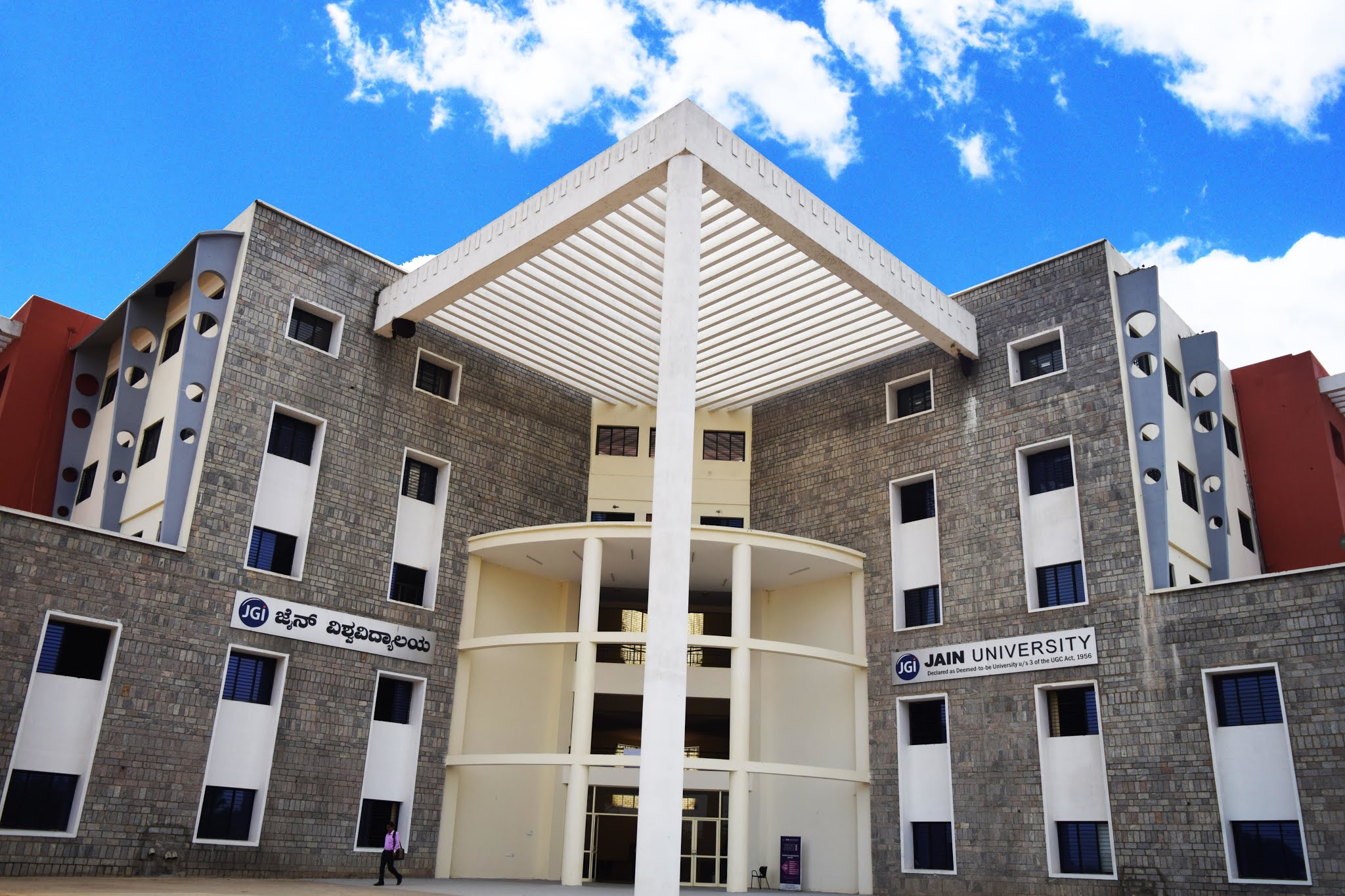
JAIN (Deemed-to-be University) Launches UGC Recognized Online Degree Programs

 Bengaluru, March 19, 2021: JAIN (Deemed-to-be University) has announced the launch of JAIN Online to offer Undergraduate and Postgraduate Online Degree Programs, in Commerce, Management, Information Technology, and Humanities recognized by the University Grants Commission (UGC). JAIN (Deemed-to-be University) is a world-class institution promoted by JAIN Group, with over 30 years of excellence in Education, Research, and Entrepreneurship.


The Chancellor of JAIN (Deemed-to-be University) Dr. Chenraj Roychand stated, \”The changing landscape of education globally shaped by disruptions due to the pandemic and technological advancements has caused challenges as well as opportunities for the education sector. When Universities, as we have known them, are being forced to change, online education brings a paradigm change that not only helps in reaching the unreached but also helps in differentiated program offerings in line with market demands. With JAIN Online, we are extending our commitment to provide high-quality and globally benchmarked education to the masses. The programs are designed in a way that also fulfills the needs of international students. With an industry-driven curriculum and cutting-edge technology, JAIN Online is set to reshape the careers of millions of students, making them global leaders and change-makers of tomorrow.\” 


The efficient and robust Learning Management System (LMS) of the University provides a high degree of convenience and flexibility to the learners who can access Videos, Self-Learning Materials, Virtual Labs, Assignments, Quizzes, Discussion Forums, and live classes over the weekends from top-notch faculty members are drawn from across the globe. Personalized support is offered to the students to clarify their queries from a dedicated Program Manager. The learning hours and credits of the online degree programs are at par with the regular programs of the University.


With technology playing a major role in its teaching-learning methodology, the University is all set to deliver an exceptionally engaging and enriching learning experience for its students through its Learning Management System. The learners will additionally get access to live classes on 25 key skills for success and more than 16000 courses on LinkedIn Learning, where they can learn as per their interests and get certified by LinkedIn and various industry partners like SHRM, Amazon, Google, Microsoft, EC Council, IIBA, etc. The University also extends its Career Advancement Services to its students on JAIN Online to facilitate job placements with over 2000 hiring partners. 


With this, JAIN (Deemed-to-be University) has become the first University in India to launch online degrees with prestigious Global Professional Bodies like ACCA – UK, CIMA – UK, CIM – UK, CIIS – UK, IOA – UK, CMA – US, and CPA – USA. The students would also be eligible for exemption of papers or get relevant professional memberships from these professional bodies on successful completion of the Online Degree Programs.


To know more about the programs, please visit https://online.jainuniversity.ac.in/

ATI College

About ATI College


Approval Disclosure Statement

ATI College is private institution approved by the Bureau for Private Postsecondary Education (2535 Capitol Oaks Drive, Suite 400, Sacramento, California, 95833) pursuant to California Education Code Section 94311. Although the institution was approved to operate by the former Bureau for Private Postsecondary and Vocational Education, the institution’s application for re-approval to operate has not been reviewed by the bureau pursuant to this chapter.


History & Development

ATI College is a private postsecondary vocational college system focused in technology-oriented programs. Main campus located in Norwalk California began its operation in January 1998. In August 2008, ATI branch campus moved its location to 1125 E. 17th Street Suite N251 in Santa Ana City to better accommodate the growing student population. College continues to offer varieties of career-focused vocational programs to adult learners in Los Angeles and Orange Counties. In June 2013, ATI branch campus was consolidated with the main school at 12440 Firestone Boulevard Suite 2001 in city of Norwalk.


Mission

ATI’s mission is to improve peoples’ lives through providing professional work-skill training. Students seeking to succeed as professional and instructors seeking to teach such students require a learning environment committed to high standards of instruction. ATI College seeks to respond to these needs and challenges by teaching students to develop high level of knowledge in their chosen field of career, to develop analytical and critical thinking skills, help understand the significance of self-discipline, acquiring self-confidence, to develop professional attitude and the ability to meet employer expectations in the world of professionalism. ATI is also accredited by a nationally recognized accrediting agency – Accrediting Commission of Career Schools and Colleges (ACCSC) since August 2002.


Philosophy

Philosophy of ATI College is to commit itself to providing a professional environment with the knowledge and skills to those who seek a vocational training to achieve higher goals in their lives.

Art Institutes

At The Art Institutes, financial aid is available to those who qualify. We\’re here to help you understand everything you need to know to help fund your creative education. We\’re always working to make your education more affordable. The Art Institutes system of schools is offering full and partial scholarships to new and current students. In fact, The Art Grant gives you the chance to earn a tuition grant of up to $17,340 for bachelor’s degree programs (an average of up to 18%) and up to $5,845, (up to 13%), for associate’s degree programs.

The hardest thing you’ll ever love.

Because it’s tough out there, it’s tough in here. But whatever direction your talents take you, your hard work and our support can take you from passionately creative to creative professional. Select an Area of Study below to learn more about our College Degree Programs.


ArtCenter College

Like many ideas emerging from ArtCenter throughout the decades, the very concept for such a school was visionary.

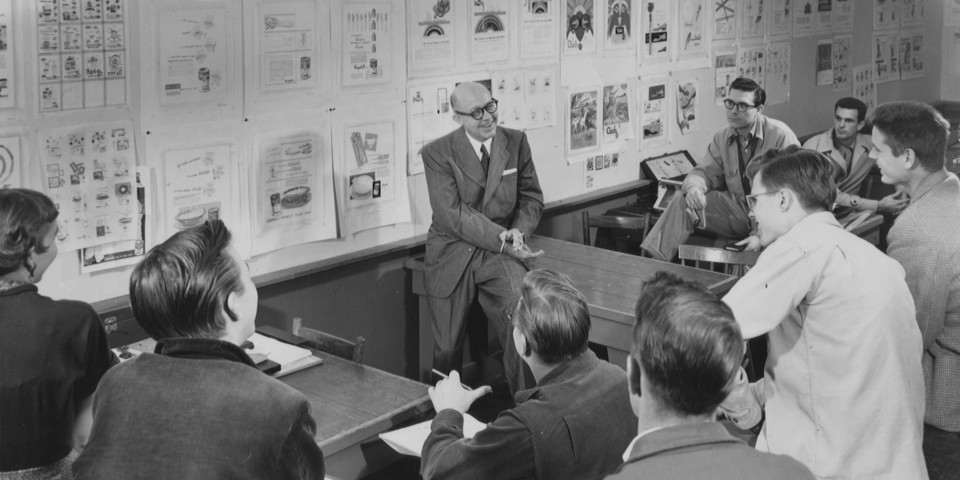
Edward A. “Tink” Adams was an advertising man with a radical idea in education: to teach real-world skills to artists and designers and prepare them for leadership roles in advertising, publishing and industrial design. To achieve that, he would create a faculty of working professionals from those fields. ArtCenter opened in 1930 with Adams serving as its director.

The viability of the idea he and a small group of colleagues launched was quickly proven. Even in the midst of the Great Depression, ArtCenter graduates quickly found employment.

In the years since, the caliber of our faculty and visiting artists has been extraordinary: Ansel Adams taught photography here; on a visit to campus, Keith Haring painted a mural; science fiction author Bruce Sterling was the College\’s first \”Visionary in Residence.\” Our alumni include many of the world’s leading car designers, contemporary filmmakers (Man of Steel, Transformers, The Vow), ad makers (“Thatsa one spicy meatball,” “Got Milk?”), concept illustrators, (The Avengers, Star Wars), artists (The Blue Dog), product designers (Apple monitor, Oakley Zeros, Kikoman soy sauce dispenser) and others who have shaped culture with their talents and vision.

Related Links
Mission and VisionArtCenter at a GlanceArtCenter ArchivesMaster PlanDiscover ArtCenter

Our original campus was in a courtyard of buildings on West Seventh Street in Los Angeles, a site sufficient for ArtCenter’s then 12 teachers and eight students. From the beginning, a simple filled-in circle—what has endured as the orange dot—was chosen as a graphic element to add to ArtCenter’s printed materials. By 1940, enrollment had grown to nearly 500 students representing 37 states and several foreign countries.

After the war, returning veterans pushed enrollment numbers even higher, prompting a move in 1946 to a larger building on Third Street, as well as a commitment to a year-round schedule. In 1948, our renowned Automotive Design Department—now Transportation Design—was founded.

A year later, ArtCenter became an accredited four-year college, and offered its first bachelor’s degrees in Industrial Design, Photography, Illustration and Advertising. We played a seminal role in the founding of the first advanced-concept design studio for the automotive industry in the 1950s.

Adams was the first to encourage ArtCenter’s international relationships. One of the turning points came in 1956, when the Japanese External Trade Recovery Organization began sending students to ArtCenter. Adams and faculty members George Jergenson and John Coleman visited Japan and wrote a report, “The Future of Japanese Industrial Design.”

Adams oversaw ArtCenter for nearly 40 years. When he stepped down, leadership transferred to an alumnus, Don Kubly, who would lead the College for nearly 20 years, including our move to Pasadena.

Throughout our existence, we continued to grow with, and often anticipate, the many cultural and technological landmarks of the 20th century while refining our educational tools and methodologies to remain on the forefront of art and design education. In 1965, we became ArtCenter College of Design.

Reflecting the College’s forward-looking momentum, new undergraduate departments would be added each decade: Fine Art in 1967, Film in 1973, Graphic Design in 1984, Product Design in 1991, Environmental Design in 1992, Entertainment Design in 2008, and Interaction Design in 2012. Graduate degree programs were launched in Film in 1975, Art in 1986, Media Design Practices in 2000, Industrial Design in 2004, both Environmental Design and Transportation Design in 2012, and Graphic Design in 2016. Additionally, the College partnered with Claremont University’s Drucker School of Management to offer a dual MS/MBA degree in Innovation Systems Design in 2014. 

Tink Adams was a terrific guy, and he knew exactly what the profession needed in preparing young people to run the world—it needed a school that could address that. We wanted to be leaders in the field, so it wasn’t a matter of training, but a matter of truly understanding. A school like ours was unusual back in those days.Don KublyArtCenter President


We moved to the Hillside Campus in Pasadena in 1976, into an iconic building designed by the modernist architectural firm Craig Ellwood Associates. In the 1980s, we were the first design school to install computer labs, spearheading the revolution in digital design. More recently, ArtCenter has focused on design’s potential to generate positive social change and improve people’s lives through our groundbreaking Designmatters educational program. In 2003, we became the first design school to receive Non-Governmental Organization (NGO) status by the United Nations Department of Public Information.

We have long taken a global view of the importance of design and art, and from 1986 to 1996, had a second campus in Vevey, Switzerland. Today, we continue to leverage opportunities as they arise in the world, sending our students to work on projects across Europe, Asia and Central and South America, in order to address particular design challenges.

Closer to home, our Public Programs reflect our philosophy of design being integral to all aspects of life and being accessible to the surrounding community. The Public Programs administrative team is based at our South Campus—a former aviation wind tunnel—opened in 2004. South Campus is also home to our Graduate Art and Media Design Practices programs.

In 2014, ArtCenter expanded South Campus by renovating a neighboring former post office building, effectively doubling the size of our downtown Pasadena location. The new facility provides dedicated space for our Fine Art and Illustration students, with a professional Printmaking Studio, added classrooms, individual studio spaces, shared exhibition spaces and a sculpture yard.

The most recent acquisition at South Campus, now spanning seven urban acres, is a six-story office building at 1111 S. Arroyo Parkway. The addition of the office building completes an eclectic trio of structures that have found vibrant new life as classroom, studio, exhibition and administrative spaces serving the needs of a growing student body.

We remain focused on our core educational mission of developing creative leaders and innovators in art and design. We’re leading the way with cross-disciplinary programs and studios that prepare students within and outside their chosen fields.

Our story is one that continues to unfold—and to be told.

Mission
Learn to create. Influence change.

This is our mission statement—and our answer to how art and design impact our global society. Part call-to-action. Part promise. All opportunity.

Vision
A new model for art and design education in the 21st century.

ArtCenter’s visionary approach to art and design education is based on the College’s conservatory-like approach to teaching and learning; a desire for rich, intercultural and transdisciplinary dialogue; and a mandate to provide students innovative learning and making spaces.

Strategic Plan
Create Change 2.0

Create Change 2.0 is the product of the ArtCenter community evolving and updating initiatives of Create Change 1.0, the plan that guided the institution from 2011 to 2016. We undertook our planning for Create Change 2.0 with a keen eye on the opportunities created by the bold initiatives we launched in the last five years. We have new programs in place, extraordinary new facilities and the strength and willingness to assess our progress honestly and to ask some tough and critically important questions about our future. The overarching driver of this plan is the question of value—how we create value for our students in the process of realizing our mission. In doing so, Create Change 2.0 organizes our thinking around issues of student success, educational innovation and strategic infrastructure.

1. Student Success

As our programs continue to expand at both the undergraduate and graduate levels, student demographics are shifting and new needs are emerging. Within this context, ArtCenter is dedicated to supporting students and helping them thrive in the classroom and beyond. Key aspects of this initiative include diversity, a “whole student” approach and post-graduation support.
2. Educational Innovation

ArtCenter values our history of rigor, mentorship and professionalism that has made us a standard bearer in the field of art and design. As we face ongoing challenges in higher education, we strive to continue to lead by expanding our pedagogical perspectives, cultivating our faculty, increasing access to our community and innovating art and design curricula that remain adaptive to the needs 
of our students first.

3. Strategic Infrastructure

ArtCenter’s vibrant community, pedagogy and dual-campus system demands a state-of-the-art infrastructure of accessible facilities (actual and virtual), processes and staff. In tandem with our significant campus expansion, we must identify and build crucial infrastructural competencies and capabilities. These will ensure that the College functions efficiently, supports nimble innovation and invests wisely.

Angeles College

 Founded in 2004, Angeles College has equipped hundreds of students with the skills needed to succeed in the challenging and gratifying field of healthcare. While offering the most up-to-date training in the fastest growing careers, we are committed to creating a welcoming environment with small class sizes and experienced instructors, ensuring each student has the opportunity to succeed.

Throughout the years, AC has grown quickly, expanding both its curricula as well as its locations. In 2013, the Los Angeles based main college opened its City of Industry satellite campus. Since this time the College has expanded its Mission Statement to include programs outside of the Healthcare niche.

As the school grows, Angeles College will continue to provide excellent training and support to students, preparing them for successful careers in the healthcare field.

Angeles College serves its immediate and extended community with the following Mission Statement:

Angeles College is committed to the educational preparation of its socially diverse community which it serves by creating a learner-centered environment that enables graduates to contribute to society through the application of problem-solving, critical thinking, and a deep knowledge of their respective discipline.

As part of the institution’s Mission, the College strives for the following Vision:

Angeles College strives to become a center of academic excellence by providing educational programs that are learner-centered, interpersonally supportive, engaging, innovative, success-oriented, and technologically responsive to a rapidly changing student population, educational milieu, business environment, and to an increasingly global community.

In the Identity Statement:

Angeles College is a private degree-awarding institution located in Southern California. It offers a variety of academic programs predominately in various health-related disciplines, as well as in business management and other fields to meet the need for an educated workforce and to provide opportunities for graduates to pursue rewarding careers. In respect to health related programs, Angeles College seeks to improve human health and welfare by educating students to provide clinical, managerial, and educational services.

In self-reflection, Angeles College represents the following Philosophy statement:

Angeles College believes that one of the highest calling people can have is to serve other people. We believe that the purpose of education is to prepare the next generation of professionals who have the knowledge, skills and attitudes necessary to continuously improve the quality, safety, and effectiveness of health and human services, and to serve as dedicated and competent professionals and employees in the business community. Educators facilitate student learning by functioning as partners, role models, coaches, and mentors of students in their discovery of new knowledge.

These institutional statements qualify the Mission Statement, Vision, Identity and Philosophical values Angeles College has developed into since its founding in 2004.

Institutional Objectives:
Upon completion of an Angeles College Program, graduates will be equipped to implement the following Institutional Learning Outcomes:

  1. Master the knowledge, skills, and attitudes of a discipline
  2.  Apply critical thinking and professional judgment skills in both problem analysis, and planning and implementing solutions
  3. Communicate effectively both orally and in writing, and through use of technological media
  4.  Exhibit the highest ethical and professional standards and integrity
  5. Function collaboratively as members of interdisciplinary teams
  6. Contribute to continuous quality improvement efforts.
  7. Use information literacy skills necessary to support continuous, lifelong learning
  8. Appreciate cultural differences and values in order to serve their communities as responsible professionals in a diverse society

In consideration, Institutional objectives for Angeles College evolve over time as they are shaped by students, faculty, staff, employers, and other constituencies along with the changing environment of its community.

Acupuncture & Integrative Medicine College

ABOUT AIMC BERKELEY

Welcome to AIMC Berkeley! We are happy you are curious about our unique college. We promote an integrative approach to medicine by offering strong Western medicine courses and cutting edge clinical experiences in Western medicine settings. We offer a diversified curriculum that incorporates mind body and spirit. We are extremely proud of our successful Masters program and our Professional Doctorate program that started in 2019.

We provide a supportive culture for you to realize your unique mission as a healer—to create for yourself what I call “tailor-made-medicine.” We offer an environment that encourages each student to put their singular imprint on medicine.

One of my core values is my commitment to our students’ needs. Sometimes that is quite literal: I provide our students with snacks every day and lunches during finals. This is just one of the ways I welcome students into our warm and inviting community.

Sincerely,
Yasuo Tanaka
President & CEO

PAST & PRESENT

The Acupuncture & Integrative Medicine College-Berkeley formerly known as Meiji College of Oriental Medicine (MCOM) was established in San Francisco, California in 1990 by the Meiji School of Oriental Medicine in Japan and its alumni. The first class was enrolled in September of 1991. In January 1999, the school relocated to Berkeley, California in order to provide its students with a higher quality facility and a better educational environment. In 2002, Dr. Shuji Goto assumed an appointment as a chairman of the board for the MCOM. In April 2003 the name of the school was changed to Acupuncture and Integrative Medicine College, Berkeley (AIMC, Berkeley) and new management has started under the new chairman’s leadership. Through the introduction of curriculum of Japanese Acupuncture and Kampo Medicine, the goals were set to take a leadership role for further development of Asian Medicine in the US. It was accredited by ACAOM under its new name in May 2004.

Today AIMC continues to develop its programs and professional affiliations. In 2017 we launched a new MSOM that improved the curriculum and streamlined the program so that it could be completed in 10 terms, or a little over 3 years. We have recently developed a First Professional Doctorate degree that launched in 2019.

“AIMC Berkeley prides itself on our accomplished faculty, our inclusive student community, and our integrated approach to medicine.”
INSTITUTIONAL MISSION & VISION

The mission of Acupuncture & Integrative Medicine College, Berkeley is to develop caring, proficient, and successful practitioners who serve our communities and the East Asian medicine profession by treating illness and promoting health and wellness. AIMC Berkeley promotes patient-centered integrative medicine focused on treating the whole person (mind/body/spirit), with consideration for both traditional and contemporary medical models and other factors that influence health, wellness, and disease.

AIMC Berkeley supports the following vision:
To serve as a center for international collaboration in the development of acupuncture and East Asian medicine within the concept of integrative medicine
To serve as a center for the promotion of health and wellness and care of the community through education, outreach, and patient care

AIMC Berkeley’s Strategic Plan outlines the institution’s goals and strategies
DIVERSITY & INCLUSION

At AIMC Berkeley we believe that a diverse community of students, faculty, staff and board members strengthens our capacity for empathy, compassion, and cultural humility and prepares us to be of best service to the rich plurality of the Bay Area and beyond.

We celebrate and strive to create an inclusive culture for all people of all identities. This includes, but is not limited to, sexual orientation, gender identity and presentation, racial identity, nationality, ability, belief system or religion, citizenship, socioeconomic status, and any identity that faces institutionalized oppression.

We honor the ancient East Asian roots of this medicine and aspire to practice in alignment with its original intent, while respectfully integrating it with allopathic medicine. We strive to learn from and live in harmony with the natural world and to recognize one another as varied and equal expressions of nature. We honor the Ohlone peoples whose land we occupy, as well as the long legacy of skilled practitioners who came before us.
EDUCATIONAL PROGRAMS & OBJECTIVES

AIMC offers the Master of Science in Oriental Medicine degree program and the Doctor of Acupuncture & Integrative Medicine degree program. These programs comprise the primary academic focus of AIMC Berkeley. Our faculty, curriculum, and clinical instruction promote the education and training of compassionate, successful, well-rounded practitioners; and our learner-centered, competency-based educational philosophy fosters lifelong learning and personal
improvement.

The mission of AIMC Berkeley’s Master of Science in Oriental Medicine (MSOM) and Doctor of Acupuncture & Integrative Medicine (DAIM) programs are to educate students to become knowledgeable, skilled, and professional practitioners of acupuncture and Integrative medicine. Upon completion of the MSOM program, graduates of AIMC Berkeley will be able to:
Demonstrate knowledge of the principles and practices of acupuncture and Chinese medicine
Apply the principles and practices of acupuncture and Chinese medicine to patient care
Describe the broad traditions in both Chinese and Japanese medicine
Demonstrate clinical effectiveness in patient assessment, diagnosis, and treatment
Make informed and appropriate referrals to other healthcare providers
Practice within established ethical, legal, and professional guidelines
Apply the principles of successful practice management

In addition, graduates of the DAIM program will be able to:
Utilize research methodology for research projects
Creatively synthesize the theories of traditional Chinese and Japanese medicine with a scientific viewpoint
Collaborate with a broad range of health care providers on incorporating the modalities of Chinese and Japanese medicine in patient care
ONGOING LEARNING

AIMC Berkeley advocates for continuing education after graduation and licensure. We provide a variety of certificate programs and CEU courses, as well as classes, seminars, and workshops for professionals, students, and community members interested in enhancing their understanding of East Asian Medicine and the art of healing.
SUCCESSFUL PRACTITIONERS

AIMC Berkeley-trained practitioners are successful because they attain MSOM and DAIM degrees, pass state and national certification exams with high first-time pass rates, and gain licensure. Furthermore, AIMC Berkeley-trained practitioners enjoy success because they graduate as skilled, confident, and compassionate healers who truly love what they’re doing with their lives, are happy serving in their communities, and are dedicated to making a difference in the world – one patient at a time.
COMMUNITY & PARTNERSHIPS
AFFORDABLE PATIENT-BASED HEALTHCARE

AIMC Berkeley endeavors to maintain the therapeutic treatment of patients in our community at the highest level of our activities. Our educational programs, research, and student and professional clinics target the beneficial, effective, holistic, and compassionate treatment of individuals rather than merely the fighting of disease. AIMC Berkeley is dedicated to providing effective healthcare to under-served populations, including women, children, youth, students, the elderly, minorities, and those who are economically disadvantaged and without access to medical insurance. Our Community Acupuncture Clinic and Herbal Dispensary offer office visits, treatments, services, and prescriptions at below local market rates.
OUR COMMUNITY

AIMC Berkeley recognizes the diversity of the community it serves. The people of Berkeley, Oakland, and Alameda County comprise our societal center; however, our patients, and especially our students, are drawn from throughout the entire Bay Area, Northern and Southern California, the United States, and many other countries. The participation with and interchange between our sister schools in Japan and China broaden and deepen our alliance with and commitment to Integrative Medicine. As an academic community, AIMC Berkeley finds within itself a vibrant and dynamic society composed of patients, students, faculty, administrators, and directors.
SISTER SCHOOLS

AIMC Berkeley has developed international partnerships and study-abroad programs in China and Japan as a part of ongoing collaborations with Goto College of Medical Arts and Sciences in Japan, Shikoku Medical College in Japan, and Tianjin University in China.

Goto College Japan

Shikoku Medical College

Tianjin University China

These programs give AIMC Berkeley students the opportunity to spend several weeks studying in China or Japan and to learn from leading international practitioners of Chinese and Japanese medicine.
INTERNATIONAL AFFILIATIONS
Japanese Society of Acupuncture & Moxibustion (JSAM)
Kampo, Acupuncture and Integrative Medicine (KAIM)

Experience of a 2020 Graduate

Every year when we passed a class, be it Kindergarten, 4th grade or 10th grade, we feel like we’ve grown and moved onto bigger things in life. Our teachers always made us feel like a wiser, more responsible person every time we moved up a class. When we graduated from school, a deep sorrow along with excitement for experiencing college life filled us. Passing the 12th grade is the ultimate goodbye from our friends and family, our teachers, the school we’ve been in for years, and the city we grew up in. Never did our previous years’ graduates were stuck in a limbo, out of school but not in a college. A long gap with nothing to do in it, no motivation and no goal. 

Every day of 11th and 12th, we heard our teachers and parents tell us the importance of the stream we choose and the things we learn in the duration of these two years. The final year of school, 12th grade is the most important year of the entire school life in terms of both academics and fun. 

From the very first day of 12th, we are told to study hard as it will play a great role in determining the college we get into and the career we choose. Even though it is the last year of school life, our focus remains more on our marks, completion of our syllabus, multiple coaching or tuition classes, and comparing our score to others. We forget to spend some of our time doing what we’ll actually miss and remember, hanging out with friends, extracurricular activities, going to the canteen, roaming around in the school, and so much more. 

The 2020 graduates have had the worst farewell or introduction into college. Some of us couldn’t even give the exams we had prepared for with all our might. When we were done with our exams, there was a long waiting period. All of the plans, going on a trip, having the time of our lives, were unsuccessful as we couldn’t even leave our houses. 

Having spent the last seven months in isolation, with uncertainty about our future, has really affected our mental health. Those who have taken admission into colleges have to adapt themselves to online college life with many hours spent in front of their laptops. Those who have not yet taken admission are also under a lot of stress as they are wasting away the important time of their life.

Competitive exams such as NEET (National Eligibility Cum Entrance Test), JEE (Joint Entrance Examination), CLAT (Common Law Admission Test), et cetera were postponed which severely stressed out the ones who had been preparing for these exams for the past two years. 

The results were delayed and the admission processes in some colleges have still not begun which is making the graduates anxious. This is in stark contrast to all the previous years’ experience which was full of joy and excitement, not stress and anxiety. 

Hopefully, everything will be back to as it was before!