DORM ESSENTIALS FOR COLLEGE STUDENTS

There is no denial that college life is one of the most exciting phases of life and it is an adventure on its own since it would be the first time many of you would live away from your family and friends. There will be many challenges in your way but first is taking your bedroom and fitting it in a small dorm room without overdoing it. To make your life a little easier I would list the things that you really need for college, and of-course this list would be economical!

ELECTRONICS

Photo by OVAN on Pexels.com

These are the list of the must have electronics for dorm rooms and few of them are required only if you are sharing your dorm with others.

  • Laptop and its charger
  • Mobile and its charger
  • Extension cord (really important)
  • Noise cancelling headphones (very much required when you share dorm)
  • Suitable mobile and internet plan
  • Based on your food arrangements you can even think of carrying a mini-fridge and microwave if required.
  • Bedlamp / study-lamp ( for the late night study without disturbing your room-mate)

CLEANING REQUISITES

These things always help you keep your dorm clean and tidy.

Photo by Daria Shevtsova on Pexels.com
  • Laundry baskets and detergent
  • Buckets
  • Cleaning wipes
  • dishwasher / soap
  • Cloth hangers
  • Cloth dryers and clips
  • Floor mat
  • Mini broom stick
  • Air freshener

TOILETRIES

Even if you are sharing the washroom with others you have to carry your own toiletries for personal hygiene and make sure you carry a good supply of them which is enough to last for few months.

Photo by cottonbro on Pexels.com
  • Shower Shoes
  • Shampoo
  • Conditioner
  • Bodywash
  • Soap
  • Moisturizer
  • Deodorants and body spray (This is really important!)
  • Cosmetics ( get the only the ones which you use on regular bases and avoid all the extras since they might consume a lot of space)
  • Tooth brush and paste
  • Mouth wash
  • Hair accessories (only important stuff)
  • Towels (at-least 2 )
  • Hand towels

FIRST AID

Keeping an emergency first aid kit in your room is always recommended but consult the doctor for any serious problems.

  • Cotton
  • Tablets for headaches , fever and mild body aches  
  • Band-aids
  • Antiseptic liquids
  • Acne creams
  • Multivitamins
  • Any other tablets which your doctor pre scribed should be carried always!

COMMODITIES FOR COMFORT

These things definitely will step up your comfort zone in the dorm. After a long day these things will definitely help you recover and rejuvenate.

Photo by Daria Shevtsova on Pexels.com
  • Pillows (At-least 2)
  • Mattress
  • Blanket (seasonal )
  • Sleep mask for eyes
  • Earplugs

FOOD

It is wise to always carry some food to your dorm since you never know when the mess/food stalls close, these come in handy.

  • Snacks (granola , instant noodles , fruit/nut bars etc avoid bringing fresh cooked foods because they stale in no time)
  • Paper utensils like plates , spoons and fork
  • A coffee mug
  • Water bottle

CLOTHES

Obviously there is no need of a list to pack clothes but here are few important mentions just in-case you forgot.

  • Always carry comfy night pajamas and shirts.
  • Lots of undergarments
  • Socks
  • Sneakers
  • Carry a lot of seasonal clothes especially if you are going to a cold or rainy place to study/work.
  • Hand-bag / Wallet (A small and easy to move bags and wallets are always useful to carry cash and cards.)

STUDY MATERIALS

Packing is of-course not complete without few stationary and study materials.

Photo by Anete Lusina on Pexels.com
  • Day- Planners and sticky Notes ( keeps your work organised)
  • Notebooks
  • pens , pencils and highlighters
  • tapes
  • scissors
  • staplers
  • paperclips
  • files and organizers
  • college bag

These pretty much sum up all the things that you should pack before going to college. Do remember, find out if there are any objections to bring certain things to the dorms before-hand so that it saves you some slack. Co-ordinate with your room-mate and other neighbors and share things when necessary and most of all carry your essentials bag always with you. With this said , happy freshman year!

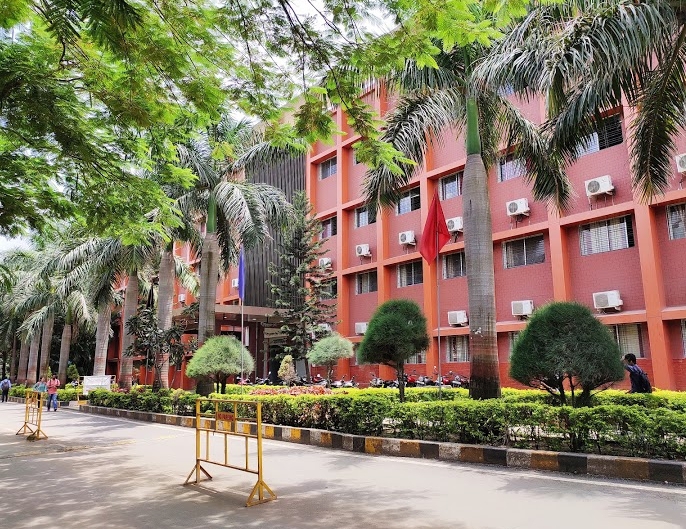
JSPM’S RAJARSHI SHAHU COLLEGE OF ENGINEERING TATHAWADE

An Institute which will help you to achieve your “DREAM”.

Jayawant Shikshan Prasarak Mandal’s Rajarshi Shahu College of Engineering is an autonomous private institute under Savitribai Phule Pune University. (since 2001)

NAAC Accreditation Grade “A”/ 54th in Top 175 Engineering Institute Ranking Survey 2021 /

10th in Top 30 Institutes in Research Capability.

There are a total of nine departments offering UG and PG level programmes in Computer, Electrical, Civil, Mechanical, Electronic and Telecommunications and Information Technology, Engineering Science, Management and IT.

Infrastructure : The infrastructure of JSPM’S RSCOE is really good. The classrooms are well euipped and also the labs provided to the students are one the best high tech labs in the entire pune with the best instruments and measurements tools.

Also the hostel rooms here are quite spacious and comfortable. The quality of food at mess is never a topic of concern. They serve the best and variety of menus.

Electrical Department : Electrical engineering has always been the evergreen branch of engineering. The best thing about this course is it can never get outdated, there is always something new to learn and explore.

Cultural Activities : JSPM’S RSCOE is not just focuses academics but also on individual’s professional development. Every year technical as well as cultural fests are organised by the students and for the students themselves. The campus surrounds with positive energies and positive minds inspiring lives of students studying here.

Internship : Every department offers not just national but international internships as well. Students get an opportunity to interact with foreign faculties and assimilate knowledge about various fields of engineering under the Mou with KMITL, Thailand.

Placement : Placement department trains  students to be job-ready in every way. The number of companies visiting is also increasing rapidly. Training and placement cell also conducts a mock interview and mock tests. Students are eligible for placements from the third-year second semester. The highest salary package offered this year is 36 LPA. From second year college gives free aptitude classes to all the students.

Faculty : Most of the teachers have completed their PhDs in respective fields of engineering and are really supportive. Faculties try to maintain a healthy faculty-student bond for complete understanding of concepts and ideas. The course curriculum is industry oriented and application based, making the students ready to face the challenges of corporate world.

Other : Many extracurricular activities like coding competitions, hackathons, and visits to an orphanage are held by the college which helps students to grow in different ways. In the previous year, students visited an orphanage and taught them about computer fundamentals.

There are many technical and cultural groups created by students for the students themselves, like team Rangbhumi, team curiosity, robotics team and many more.

So hurry up and apply now…

“Teacher’s Day”

Photo by Max Fischer on Pexels.com

Teacher‘s are a blessing for us. They help us in a myriad of ways throughout our life, & help us in achieving different milestone of success. In their honour, we have the teachers day on 5th September, every year. Teacher’s Day is celebrated in many countries around the world. including India. It falls on different days in different countries. In China it is celebrated on 28 September, which is the birthday of the great thinker, Confucius; in India it is celebrated on 5th September, the birthday of Dr Sarvapalli Radhakrishnan, a highly respected teacher who became the President of India.

The story behind it’s origin in India:

The story goes that when Dr Radhakrishnan became the country’s President in 1962, some of his students and friends went to him and requested him to allow them to celebrate his birthday. Dr Radhakrishnan replied, Instead of celebrating my birthday separately, it would be my proud privilege if 5th September is celebrated as Teachers’ Day.’ In our school, we start preparing for Teachers’ Day about a week before 5th September. Since we put up a variety entertainment for our teachers on that day, we first get together to decide what exactly we will do.

Photo by Andrea Piacquadio on Pexels.com

How we celebrate in Schools/Colleges:

This day is celebrated with great Rejoicment throughout the world. We put up a variety entertainment for our teachers on that day. Every year there were songs, dances, skits, mimicry, and recitation. year It is the duty of the School Captain to prepare a speech in praise of our teachers. This year’s Captain used a quote that has stuck in my memory: ‘to teach is to touch lives forever.’ Then there is the important matter of choosing Teachers’ Day greeting cards. I check the words in my cards very carefully, to make sure they are suited to the teachers for whom they are meant. There is no point in giving a very funny card to a very serious teacher, is there? We pool our money to buy our class teacher a very special present. For our ‘subject teachers’ we buy smaller presents.

On Teachers’ Day, we go to school early to decorate our classrooms, and the best artist in the class writes Happy Teachers’ Day’ on the blackboard in big, bold letters. When the class teacher arrives, the monitor puts a ceremonial scarf around the teacher’s neck, while another pupil presents the gift or gifts. The teacher thanks us and takes his place in the last row among the students. Some bright student, who is dressed up as a teacher for the occasion, conducts a mini-class on a subject that he has chosen. Then the bell rings, and the whole school goes into the hall for the entertainment programme. This lasts for two hours, and by the time it ends, it feels wonderful for a teacher to be a teacher, and a student to be a student!

Classification of Law in Jurisprudence

International Law and Municipal Law

Law maybbe broadly divided into two classes: international law and municipal law. Whatever the objections raised against the claim of international law to be called international law, it is now recognised that international law is not only law but also a very important branch of law.

International law is divided into two classes: public international law and private international law. public international law is that body of rules which governs the conduct and relations of the States with each other. by private international law we mean those rules and principles according to which cases having foreign element are decided. if a contract is made between an Indian and a Pakistani which is to be performed in Sri Lanka, the rules and principles on which the rights and liabilities of the parties depend are to be determined by private international law. Critics point out that the term private international law is not correct. The adjective “international” is wrongly given to it as it does not possess any characteristics of international law. Private international law applies to individuals and not to States. Moreover, the rules and principles of private international law vary from State to State and there is no uniformity. Private international law is enforced by municipal courts which apply municipal law and not international law. In order to avoid controversy, it is suggested that private international law be called Conflict of Laws and should be treated as a branch of municipal private law.

Municipal Law

Municipal law is the law applied within a State. It can be divide into two classes: public law and private law. Public law determines and regulates the organisation and functioning of the State and determines the relation of the State with its subjects.

Public law is divided ito three classes: constitutional law, administrative law and criminal law. Constitutional law determines the nature of the State and the structure of the government. It is superior to the ordinary law of the land. Constitutional law is written in India and the Unites States but it is unwritten in England. The modern tendency is to have written constitutons.

Administrative law deals with the structure, powers and functions of the organisation of administration, the limits of their powers, the methods and procedures followed by them and the methods by which their powers are controlled including the legal remedies available to persons whose rights have been infringed.

Criminal law defines offences and prescribes punishments for them. It not only orevent crimes but also punishes the offenders. Criminal law is necessary for the maintenance of law and order and peace within State. In criminal cases, it is the State which initiates proceedings against the wrongdoers. The State is always a party in criminal cases.

Private law regulates and governs the relations of citizens with one another. The parties are private individuals and the State decides the disputes among the people. There is great difficulty in classifying private law. A general classifiactionof private law is the law of persons, the law of property, the law of obligations, the conflict of laws, contaracts, quasi-contracts and tort.

Critics point out many defects in the above classification o laws. Many of the classes of laws do not exist in many legal systems of the world. Those branches f law which have recently been developed cannot be put under any classification. The result is that the classification given abone is neither universal nor exhaustive. Many jurists have attempted classifications on different principles. New branches of law are growing and developing rapidly in different parts of the world and provision has to be made for them in any classification of laws. Industrial law and commercial law are such subjects.

Comparative Study b/w Parliamentary and Presidential System of Government

Parliamentary system is a democratic form of government in which the party with the greatest representation in parliament (legislature) forms the govt., its leader becoming prime minister or chancellor. Presidential form of govt. is a democratic and republican govt. in which a head of govt. leads an executive branch. The head of govt. is in almost cases also the head of the state, which is called the President. India follows a parliamentary form of govt. modelled on Britain’s.

Features

Features of Presidential system are that the executive can veto acts by the legislature, the President has a fixed tenure and cannot be removed by a vote of no confidence in legislature. The President has the power to pardon or commute judicial sentences awarded to criminals and the President is elected directly by the people or by the people or by an electoral college whereas features of parliamentary system are- close relationship b/w the legislature and the executive, executive is responsible to the legislature, there are two executive i.e. real executive and titular executive, bicameral legislature, no fixed tenure, leadership of Prime Minister.

Merits

Merits of Presidential system are- seperation of powers, expert govt., stability and less influence of the party system.

Merits of Parliamentary system are- better coordination b/w executive and legislature, prevents authoritarianism, responsible govt., represents diverse groups, flexibility in the system.

Demerits

Demerits of Presidential system are- less responsible executive, deadlocks b/w executive and legislature, rigid govt., spoils system as the system gives the President sweeping powers of patronage.

Demerits of Parliamentary system are- no seperation of powers, unqualified legislators, instability, failure to take prompt decision because there is no fixed tenure, party politics is more.

Conclusion

The Presidential system is better for one because of its seperation of powers, the role of judiciary and the govt. accountability to its people. We should ensure a system of govt. whose leaders can focus on governance rather than on staying in power. The present parliamentary system has been tried and tested for nearly 70 years. It can be reformed thoroughly to remove the challenges thrown up by it. Also, there is a need to reform the electoral processes to make democracy more robust.

Volcano Eruption

“We are, all of us, growing volcanoes that approach the hour of their eruption, but how near or distant that is, nobody knows- not even God.”

~ Friedrich Nietzsche

We always talk about , what it would be like to see volcano eruption in front of your eyes ?

How amazing it would be like to find out , how the volcano erupt ?

There are many things that we don’t know exist in our earth 🌍. Do you want to know about it . If yes , than read the editorial .

Introduction

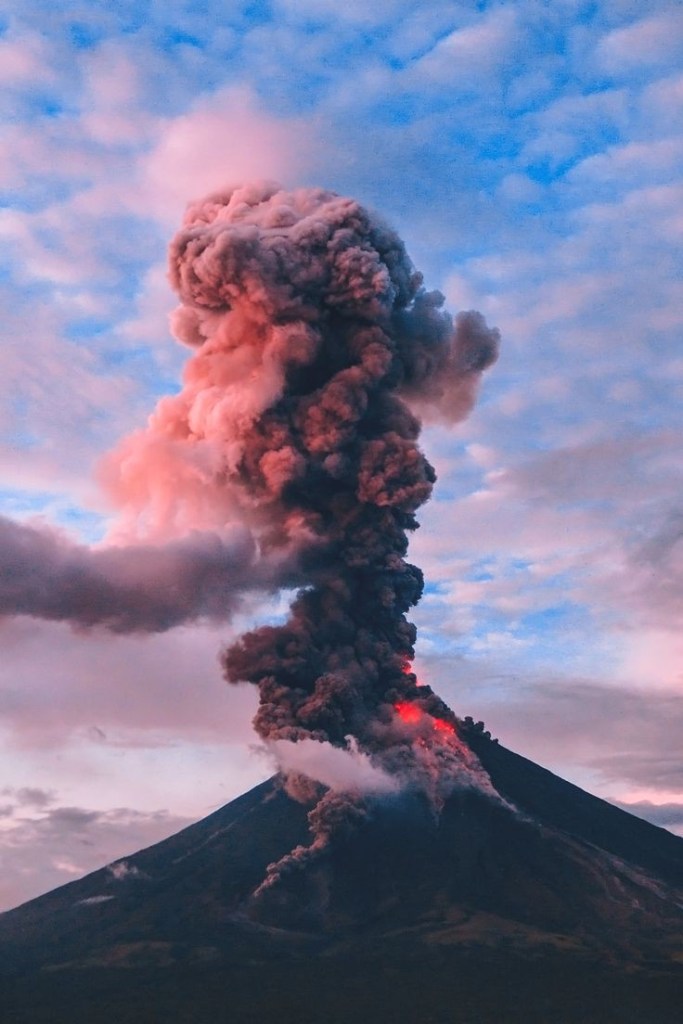
A volcano is a rupture in the crust of a planetary-mass object, such as Earth, that allows hot lava, volcanic ash, and gases to escape from a magma chamber below the surface.

On Earth, volcanoes are most often found where tectonic plates are diverging or converging, and most are found underwater.

The word volcano is derived from the name of Vulcano, a volcanic island in the Aeolian Islands of Italy whose name in turn comes from Vulcan, the god of fire in Roman mythology.

Many ancient accounts ascribe volcanic eruptions to supernatural causes, such as the actions of gods or demigods. To the ancient Greeks, volcanoes’ capricious power could only be explained as acts of the gods, while 16th/17th-century German astronomer Johannes Kepler believed they were ducts for the Earth’s tears.[87] One early idea counter to this was proposed by Jesuit Athanasius Kircher (1602–1680), who witnessed eruptions of Mount Etna and Stromboli, then visited the crater of Vesuvius and published his view of an Earth with a central fire connected to numerous others caused by the burning of sulfur, bitumen and coal.

Types of eruptions

  • Hydrothermal eruption. An eruption driven by the heat in a hydrothermal systems.
  • Phreatic eruption. An eruption driven by the heat from magma interacting with water.
  • Phreatomagmatic eruption.
  • Lava.
  • Strombolian and Hawaiian eruptions.
  • Vulcanian eruptions.
  • Subplinian and Plinian eruptions.

How do volcanoes erupt?

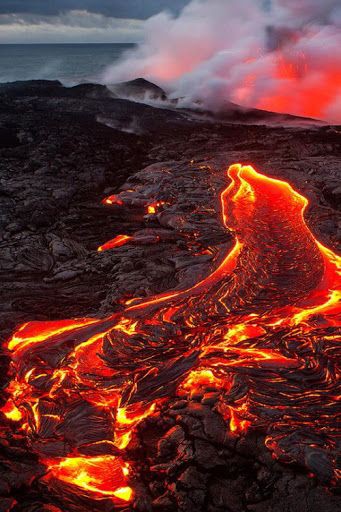
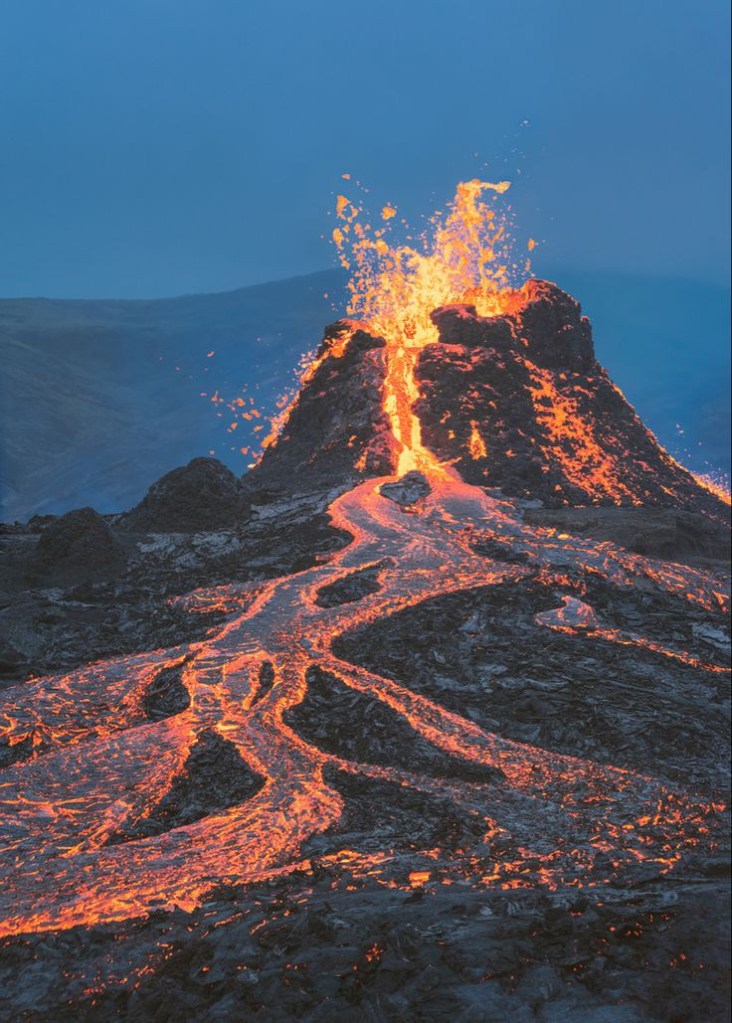
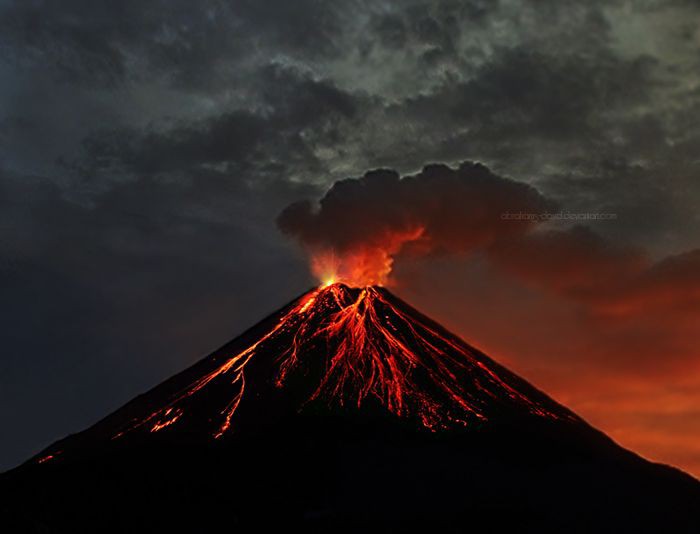
Deep within the Earth it is so hot that some rocks slowly melt and become a thick flowing substance called magma. Since it is lighter than the solid rock around it, magma rises and collects in magma chambers. Eventually, some of the magma pushes through vents and fissures to the Earth’s surface. Magma that has erupted is called lava.

The explosivity of an eruption depends on the composition of the magma. If magma is thin and runny, gases can escape easily from it.
Explosive volcanic eruptions can be dangerous and deadly.

Humans and volcanoes

Volcanic eruptions pose a significant threat to human civilization. However, volcanic activity has also provided humans with important resources.

Although volcanic eruptions pose considerable hazards to humans, past volcanic activity has created important economic resources.

Volcanic ash and weathered basalt produce some of the most fertile soil in the world, rich in nutrients such as iron, magnesium, potassium, calcium, and phosphorus.

Volcanic activity is responsible for emplacing valuable mineral resources, such as metal ores.

The paradox of volcanoes was that they were symbols of destruction but also life. Once the lava slows and cools, it solidifies and then breaks down over time to become soil – rich, fertile soil.
She wasn’t a black hole, she decided. She was a volcano. And like a volcano she couldn’t run away from herself. She’d have to stay there and tend to that wasteland.
She could plant a forest inside herself.

Matt Haig, The Midnight Library

Link

Introduction about different Schools, Colleges, Universities

Introduction about different Schools:-

INTRODUCTION:-

ust as teachers may teach a broad spectrum of subject matter from math, science, English, to foreign languages, technology and the arts, they also teach across a wide age range and in many different classroom settings around the country.

The specific type of school in which a teacher teaches can have a huge impact on many aspects of their teaching career. From public schools — including magnet schools, charter schools, urban schools, rural schools and high needs schools — to private schools including military schools and boarding schools, every classroom setting is different and each has it’s own unique benefits and challenges. Deciding where you are best able to make a difference can be difficult.

Learn more about each type of schools to help you decide where you can fit in best:

  • Public Schools
  • Charter Schools
  • Magnet Schools
  • Private Schools
  • High Needs Schools
  • Urban Schools
  • Rural Schools

1. Public Schools:-

 A public school is government funded and all students attend free of cost.Because of funding from several sources, private schools may teach above and beyond the standard curriculum, may cater to a specific kind of students (gifted, special needs, specific religion/language) or have an alternative curriculum like art, drama, technology etc. Public schools have to adhere to the curriculum charted out by the district, and cannot deny admission to any child within the residential school zone.Public schools are often thought of as shoddy, less disciplined and low-grade curriculum.

2. Charter Schools:-

A charter school is a public school that operates as a school of choice. Charter schools commit to obtaining specific educational objectives in return for a charter to operate a school. Charter schools are exempt from significant state or local regulations related to operation and management but otherwise adhere to regulations of public schools — for example, charter schools cannot charge tuition or be affiliated with a religious institution.In other words, charter schools are publicly accountable — they rely on families choosing to enroll their children, and they must have a written performance contract with the authorized public chartering agency. Charter schools are also autonomous — they have more flexibility in the operations and management of the school than traditional public schools.

3. What Is A Magnet School:-

Unlike charter schools or private schools, a magnet school is part of the local public school system. At regular public schools, students are generally zoned into their schools based on the location of their home – students go to the school that is nearest where they live. However, this may not always be true since boundaries can seem arbitrary and in some smaller towns schools are not zoned at all. But, magnet schools exist outside of zoned school boundaries. Whereas private schools are completely separate from local public school districts, and charter schools are public schools with private oversight, magnet schools remain part of the public school system and operate under the same administration and school board.

4. Private Schools:-

Many of the private primary and secondary schools in the United States were founded by religious institutions in order to incorporate religious beliefs and teachings into their students’ education, integrating it with a traditional academic curriculum. Some of the first religious schools were founded by the Catholic Church, and these parochial schools are still prevalent amongst private schools. Since then, however, many other religious denominations have started schools to provide religious education, and families often choose to enroll their children in schools whose policies reflect their own values. Nowadays, Protestant, Jewish, Muslim, Orthodox Christian and other religiously based schools are quite common. In addition, some private schools, boarding schools and military academies, offer their own unique approaches to education.

5. High Needs Schools:-

The No Child Left Behind Act of 2001 External link  defines a high-needs school as “within the top quartile of elementary and secondary schools statewide, as ranked by the number of unfilled, available teacher positions; or is located in an area where at least 30 percent of students come from families with incomes below the poverty line; or an area with a high percentage of out-of-field-teachers, high teacher turnover rate, or a high percentage of teachers who are not certified or licensed.” Essentially, high needs schools require teachers because they cannot fill job vacancies or retain teachers, or they have teachers who are not qualified or who teach in subjects outside their field. High-needs schools also serve communities of higher poverty rates, where classrooms are influenced by the difficulties of their students’ lives. Most high-needs schools are located in rural or urban areas.

6. Urban Schools:-

When thinking of high need schools, the first thing that comes to mind for many people is the image of an inner city school, crowded and poorly funded. The truth is, while this is a stereotype and many urban schools perform exceptionally well, there are still urban schools across the country that are in high need of teachers and resources.At the most technical level, urban schools are classified as city schools by the National Center for Education Statistics External link  (NCES). The NCES categorizes all schools into four locales by their size, population density and location in relation to a city. This is an “urban-centric” classification system. The four locale categories used by the NCES’ urban centric classification system External link  are city, suburb, town and rural. Urban schools are then broken down into three subcategories based on the Census Bureau External link ’s definitions of urbanicity:

7. Rural Schools:-

Ultimately, the technical definition of a rural school corresponds to our general understanding of rural areas; they are characterized by geographic isolation and small population size. All schools are categorized into four locales by their size, population density and location. The National Center for Education Statistics External link  (NCES) defines these locales by the school’s proximity to a city an “urban-centric” classification system. The four locale categories used by the NCES’ urban centric classification system External link  are city, suburb, town and rural. Rural schools are then broken down into three subcategories based on the Census Bureau External link ’s definitions of urbanicity. Rural schools are also all classified as high need schools.

Introduction about different Colleges:-

INTRODUCTION:-

college (Latin: collegium) is an educational institution or a constituent part of one. A college may be a degree-awarding tertiary educational institution, a part of a collegiate or federal university, an institution offering vocational education, or a secondary school.

In most of the world, a college may be a high school or secondary school, a college of further education, a training institution that awards trade qualifications, a higher-education provider that does not have university status (often without its own degree-awarding powers), or a constituent part of a university. In the United States, a college offers undergraduate programs; it may be independent or the undergraduate program of a university, it is generally also used as a synonym for a universitywhile in some instances a college may also be a residential college. A college in francophone countries [fr]—France (see secondary education in France), Belgium, and Switzerland—provides secondary education. However, the Collège de France is a prestigious advanced research institute in Paris.

Learn more about each type of colleges to help you decide where you can fit in best:

  • Community and Junior Colleges
  • Historically Black Colleges and Universities 
  • Liberal Arts Colleges
  • Women’s Colleges
  • Tribal Colleges
  • Technical Institutes and Professional Schools

1. Community and Junior Colleges:-

These colleges offer the first two years of a liberal arts education, as well as career or vocational training. Successful completion of a community or junior college curriculum earns graduates an associates degree. Many students continue on to a four-year institution after completing a community or junior college program.

2. Historically Black Colleges and Universities:-

These colleges originated when African-American students were legally denied access to most other institutions of higher education. Now, these colleges celebrate African-American culture and empowerment, and give black students the chance to experience an educational community in which they are finally part of the majority. A common abbreviation for this type of college is HBCU.

3. Liberal Arts Colleges:-

These colleges focus on the education of undergraduate students (students who are earning a bachelors degree). Classes are generally taught by professors who see teaching as their primary responsibility. Because most liberal arts colleges are smaller than universities, classes tend to be smaller and more personal attention  is available. Instead of preparing for a specific career path, students who attend liberal arts colleges are exposed to a broad sampling of classes. In addition, they select at least one area of in-depth study that is their college “major.” Many employers look for graduates of liberal arts programs.

4. Women’s Colleges:-

These colleges offer women the opportunity to enjoy a learning community where they are in the majority. Additionally, these colleges have a much larger population of female faculty and administrators. Women’s colleges graduate a high number of science majors, as well as students who continue on to graduate school or professional studies.

5. Tribal Colleges:-

Like HBCUs or Women’s colleges, these colleges focus on the needs and education of a group that has been traditionally underrepresented in higher education. In this case, these colleges focus on the education and empowerment of Native American students while celebrating a specific tribe’s unique culture and accomplishments.

6. Technical Institutes and Professional Schools:-

These colleges or institutes enroll students who have made a choice as to what career path they are taking. The curriculum at these colleges focuses solely on preparing students for these specific careers. Most of the career options offered at these colleges are in music, fine arts, engineering, or technical sciences.

Introduction about different Universities:-

INTRODUCTION:-

The original Latin word universitas refers in general to “a number of persons associated into one body, a society, company, community, guild, corporation, etc”. At the time of the emergence of urban town life and medieval guilds, specialized “associations of students and teachers with collective legal rights usually guaranteed by charters issued by princes, prelates, or the towns in which they were located” came to be denominated by this general term. Like other guilds, they were self-regulating and determined the qualifications of their members.

In modern usage the word has come to mean “An institution of higher education offering tuition in mainly non-vocational subjects and typically having the power to confer degrees,” with the earlier emphasis on its corporate organization considered as applying historically to Medieval universities.The original Latin word referred to degree-awarding institutions of learning in Western and Central Europe, where this form of legal organisation was prevalent and from where the institution spread around the world.

Learn more about each type of Universities to help you decide where you can fit in best:

  • Central universities, or Union universities
  • State Universities
  • Private Universities
  • Deemed university

1. Central universities, or Union universities:-

in India are established by an Act of Parliament and are under the purview of the Department of Higher Education in the Ministry of Education.In general, universities in India are recognised by the University Grants Commission (UGC), which draws its power from the University Grants Commission Act, 1956.In addition, 15 Professional Councils are established, controlling different aspects of accreditation and coordination.Central universities, in addition, are covered by the Central Universities Act, 2009, which regulates their purpose, powers, governance etc., and established 12 new universities.As of 1 June 2020, The list of central universities published by the UGC includes 54 central universities.

Other types of universities controlled by the UGC include:

  • State universities are run by the state government of each of the states and territories of India, and are usually established by a local legislative assembly act.
  • Deemed university, or “Deemed-to-be-University”, is a status of autonomy granted by the Department of Higher Education on the advice of the UGC, under Section 3 of UGC Act, 1956.
  • Private universities are approved by the UGC. They can grant degrees but they are not allowed to have off-campus affiliated colleges.

Apart from the above universities, other institutions are granted the permission to autonomously award degrees. These institutes do not affiliate colleges and are not officially called “universities” but “autonomous organisations” or “autonomous institutes”. They fall under the administrative control of the Department of Higher Education.These organisations include the Indian Institutes of Technology, the National Institutes of Technology, the Indian Institutes of Science Education and Research, the Indian Institutes of Engineering Science and Technology, the Indian Institutes of Management, the National Law Schools, the All India Institute of Medical Sciences, and other autonomous institutes.

2. State Universities:-

State universities are run by the state government of each of the states and territories of India, and are usually established by a local parliament act. As of 26 August 2011, the UGC lists 281 state universities, around 170 of which are receiving Central/UGC assistance. The oldest establishment date listed by the UGC is 1857, shared by the University of Mumbai, the University of Madras and the University of Calcutta.

In India, state universities are run and funded by the state government of each of the states of India.Following the adoption of the Constitution of India in 1950, education became a state responsibility. Following a constitutional change in 1976, it became a joint responsibility of the states and the central government.As of 17 March 2021, the UGC lists 426 state universities.

3. Private Universities:-

Private universities are approved by the UGC. They can grant degrees but they are not allowed to have off-campus affiliated colleges. The UGC list from 1 September 2011 lists 94 private universities.

Private universities and private colleges are usually not operated by governments, although many receive tax breaks, public student loans, and grants. Depending on their location, private universities may be subject to government regulation. This is in contrast to public universities and national universities. Many private universities are nonprofit organizations.

4. Deemed university:-

Deemed university, or deemed-to-be-university, is an accreditation granted to higher educational institutions in India, conferring the status of a university. It is granted by the Department of Higher Education.To quote the Ministry of Human Resource Development (MHRD), “An Institution of Higher Education, other than universities, working at a very high standard in specific area of study, can be declared by the Central Government on the advice of the University Grants Commission (UGC), as an Institution ‘Deemed-to-be-university’. Institutions that are ‘deemed-to-be-university’ enjoy the academic status and privileges of a university.”

Deemed university, or “Deemed-to-be-University”, is a status of autonomy granted by the Department of Higher Education on the advice of the UGC, under Section 3 of UGC Act, 1956. The UGC list from 23 June 2008 lists 130 deemed universities. According to this list, the first institute to be granted deemed university status was Indian Institute of Science which was granted this status on 12 May 1958. Note that in many cases, the same listing by the UGC covers several institutes. For example, the listing for Homi Bhabha National Institute covers the Institute of Mathematical Sciences, the Indira Gandhi Centre for Atomic Research and other institutes. The list below includes only the major institute granted the status, and such additional institutes are not listed separately.

Reference Link:-

https://teach.com/careers/become-a-teacher/where-can-i-teach/types-of-schools/rural/

https://www.cappex.com/articles/match-and-fit/the-different-types-of-colleges

https://sites.google.com/site/universitiesindiaonline/types-of-universities-in-india

How to choose the right college for you

Photo by Andrea Piacquadio on Pexels.com

Choosing a college is about more than the name on the diploma. Where a student goes to school touches numerous aspects of his or her life, from academic studies to social activities and beyond. Considering the importance of this decision, prospective students should think carefully about where they decide to enroll when looking over their options. Accepted to several of your top-choice colleges? That’s an enviable position to be in – though it might not feel like it. Follow these 6 steps to help you make a college decision

  1. Develop your short list.

A lot of thought should go into developing a short list of schools you would like to attend. But what kind of factors should drive your thinking when crafting that list? Brennan Barnard and Rick Clark, authors of “The Truth About College Admission: A Family Guide to Getting In and Staying Together,” urge students to think about location, enrollment size, majors and programs, the people on campus, opportunities outside of the classroom, cost and selectivity.

2, Rank your priorities.

Take time to make your own rankings, weighing the pros and cons of a particular school when you are working on choosing the right college. Carefully consider your wants and needs when thinking about where you’ll spend the next four years or longer. One way to do this, write Barnard and Clark, is to create a list of those wants and needs.

3. Don’t procrastinate.

Deadlines may vary depending on the institution, but applications typically are due by January for regular fall admission. Experts suggest getting started on the application process by the start of your senior year in high school. And plan plenty of time for college visits, taking standardized tests, writing essays and asking for letters of recommendation.

4. Go back to schools.

Once applications are in, it’s time to think hard about where you want to attend, which may prompt another visit. While you should have gotten a feel for campus life during initial college tours, take another trip to each school and ask 10 to 15 detailed questions, says Bob Roth, author of several books on college success. Know what to ask on a college visit, and don’t leave with any questions unanswered. But taking a campus tour can be expensive, considering travel costs. If a return trip is out of the question, take a second look at the campus via a virtual tour and reach out to college officials with any follow-up questions.

5. Delve into departments.

College rankings can be one tool in the decision process, but don’t forget that academic prestige can be examined on a smaller scale, too. Research the departments you’d be studying in, Roth says. Is one school better known for your major? Are faculty actively engaged at school and in the field? Visit college websites and reach out to faculty for more information. U.S. News also ranks specific undergraduate programs in business and engineering.

6. Compare financial aid awards.

If you’re looking to graduate from college with little or no debt, carefully compare financial aid packages. It’s wise to look beyond the tuition and see what other fees apply. Also, understand the difference between free money – such as grants and scholarships – and loans, which you’ll have to pay back eventually. Some colleges offer generous financial aid packages meeting full financial need, meaning those students are not required to take out loans.

Friendship Is The Most Wonderful Relationship In Our Life

Friendship is the most wonderful relationship that anyone can have. Ideally a friend is a person who offers love and respect and will never leave or betray us. Friends can tell harsh truths when they must be told. There are four different types of friends: True friends, Convenient friends, Special interest friends, and historical friends. To have friendship is to have comfort. In times of crisis and depression, a friend is there to calm us and to help lift up our spirits. There are many illustrations that show why a friend can be a great comforter. For example, if a student is going through a hard time at school, a friend can offer guidance, encouragement and support.

A true friend is also someone who loves and respects us. A boyfriend and a girlfriend desire to be with each other. They love each other so much that they just want to be with each other as much as possible. This bond is also present in a good friendship because it has genuine love. Also, as friends they respect each other. They try to avoid causing conflicts. They don’t make fun of each other, but treat each other with respect. As friends, we all make sacrifices for each other. Some friends risk their lives for a friend.

A person is acquainted with many persons in their life. However, the closest ones become our friends. You may have a large friend circle in school or college, but you know you can only count on one or two people with whom you share true friendship.There are essentially two types of friends, one is good friends the other are true friends or best friends. They’re the ones with whom we have a special bond of love and affection. In other words, having a true friend makes our lives easier and full of happiness.

Most importantly, true friendship stands for a relationship free of any judgments. In a true friendship, a person can be themselves completely without the fear of being judged. It makes you feel loved and accepted. This kind of freedom is what every human strives to have in their lives.In short, true friendship is what gives us reason to stay strong in life. Having a loving family and all is okay but you also need true friendship to be completely happy. Some people don’t even have families but they have friends who’re like their family only. Thus, we see having true friends means a lot to everyone.

Being in a relationship and having a boyfriend and girlfriend they key word in that is “friend” the key to a relationship is to be good friends first before rushing into anything. that also means you have genuine love for each other and you even respect each other more. One of the most important thing about having a friend is to never betray them. A friend is loyal through thick and thin, broke or rich, house or no house, smart or dumb. A lot of friendships now a days are not real friendships. People are friends with each other for even a certain period of time to get something out of them. A lot of people do not keep promises in a friendship anymore and it is sad. Loyalty and love makes a friendship a lot stronger.

Therefore, there is no doubt that best friends help us in our difficulties and bad times of life. They always try to save us in our dangers as well as offer timely advice. True friends are like the best assets of our life because they share our sorrow, sooth our pain and make us feel happy.

Does college really matter for placement ?

Every engineering aspirant always dream about IIT but Unfortunately,approximately only 10000 students get selected from approx 12 lakhs aspirant from all over India by clearing JEE mains and JEE Advanced.Many engineering aspirants are not able to crack IIts or NIIts and that doesn’t mean they will not be able to get placements in reputed companies such as google ,Amazon,Facebook etc .Of course IIt or NIIT does matters but up to certain degree . IIT or NIIT nor any other top university guarantee you of getting 100% placement .You will even find some jobless IITians.There is no denial that approx 15-20% ( or even more) do not get placed from campus.It’s a reality check .If you are not able to get admission in top universities that doesn’t mean that you can’t be placed in Google ,Accenture or IBM like top Companies.of course ,you can still be placed in these reputed companies if you are really working hard.If you want to know college matter for placement ,not really .It depend only to a certain extent.It is truth ,that college environment and the visiting companies matter .Obviously ,there are more opportunities if you are pursuing engineering from a reputed college .Their are many private universities or colleges with budget friendly fee structure having good college environment and Well known company visiting their campus for placement (like Amazon )such as Chandigarh Group of college ,Chandigarh University ,Chitkara University ,LPU and many more .But even if you are the part of the college having not such environment or your dream company doesn’t visit your college .Obviously,one can’t see google coming to a reputed college .That doesn’t mean you can’t get placed there.Even then you can by sharpen your skills and can get placed even in your dream company.Remember ,Companies hire on the basis what they see in you not where you came from .

Always remember , what really matter is skills.If you have relevant skills no one can stop you from getting placed from even a mediocre college .Off campus interview are the best instance their students our judged according to their skills not on the basis colleges .I have known many people who worked hard even had faced rejection but don’t stop.They get deeper and deeper knowledge , brush up their skills and now they are placed in well known companies with good packages .What one should learn from this that one should not be afraid of getting rejection .

Who doesn’t want to do anything can come up with a number of excuses .It mostly depend on person how much effort he/she has put .It totally depend on Students they will get success in their life or not .IIT doesn’t give you a guarantee that you will succeed in your life nor a Students from mediocre college end up having lower end job. Definitely one should work hard , putting his/her 100% effort to grind their skills as much as possible , then no one can stop you to succeed in your life.

Please comment below your thoughts in the comment below and have a wonderful day .

Basanti Devi College Kolkata

  Basanti Devi College is a government college for girls. It is the first government college in Kolkata which was founded by the government of West Bengal in 1959 with the mission of women empowerment. The college is affiliated with the University of Calcutta and accredited by NAAC. It offers a vast number of courses for students belonging to rural areas, economically weaker families, and scheduled caste.

LEARN MORE

Named after Basanti Devi, the first woman freedom fighter of the country, Basanti Devi College offers UG and PG courses. The courses include B.A. & B.Sc. (General & Hons.), M.A. in English, and Political Science. It also offers various Diploma and certificate courses at affordable fees. Admission to these courses offered by Basanti Devi College is solely merit-based and in accordance with the availability of seats, except fr MA. The college conducts an entrance test to provide admission to its MA course.

About 22% of seats for SC and 6% of seats for ST candidates are reserved by Basanti Devi College for all courses. For PWD candidates 3% of seats are reserved for each course. OBC students can get admission on the basis they have not lower than 10% marks in the previous qualifying exam.

Basanti Devi College Key Points

  • Basanti Devi College conducts admission procedures in offline and online mode.
  • The college has reserved seats for SC, OBC, ST students. 3% of total seats are reserved for candidates with disabilities.
  • Students can also join computer training along with their courses within college timings.
  • Candidates must have an aggregate of 55% marks in 12th for admission in the UG courses. Candidates are selected based on merit lists and reservation criteria.
  • The college provides the best placements to students with an average package of up to INR 2 LPA in different companies.
  • Insurance is also available for selected candidates.
  • Basanti Devi College is affiliated with the University of Calcutta and approved by UGC.
  • The college has special arrangements for women with weak socio-economic backgrounds and women with certain disabilities.
  • The girls are taught many different skills and also they are taught social values and a sense of self-respect.

Basanti Devi College Courses and Fees

Basanti Devi College offers UG, PG, Diploma, and Certificate courses in various specializations. Tabulated below are the details of the courses offered by the college:

PROGRAM PROGRAM DETAILS SELECTION CRITERIA
Bachelor of Arts (BA) Hons.
  • Duration: 3 years
  • Fees: INR 5,490/year
  • Specialization: Education, English, History, Bengali, Sanskrit, Communicative English, Philosophy, Political Science
  • Eligibility: 10+2 with 55% aggregate marks
On a merit basis through the qualifying exam
B.A.
  • Duration: 3 years
  • Fees: INR 5,340/year
  • Specialization: Psychology, Education, Communicative English, Political Science, English, History, Philosophy, Bengali, Sanskrit, Sociology
  • Eligibility: 10+2 with 55% aggregate marks
Bachelor of Science (B.Sc.) Hons.
  • Duration: 3 years
  • Fees: INR 8,050/year
  • Specialization: Chemistry, Physics, Mathematics, Economics, Statistics
  • Eligibility: 10+2 with 55% aggregate marks
B.Sc.
  • Duration: 3 years
  • Fees: INR 6,650/year
  • Specialization: Economics, Statistics, Chemistry, Computer Science, Mathematics, Physics
  • Eligibility: 10+2 with 55% aggregate marks
Master of Arts (M.A.)
  • Duration: 2 years
  • Fees: INR 20,600/year
  • Specialization: Political Science, English
  • Eligibility: Graduation with 55% aggregate marks
On a merit basis through the qualifying exam
Diploma Courses
  • Duration: 2 years
  • Specialization: Computer Application, Export & Import Management
  • Eligibility: Pass in 10th
Certification Course
  • Duration: 2 years
  • Specialization: Functional English, Physiological Counselling, Spoken English, Art and Craft, Spoken French, Legal Awareness for Women, Research Analysis
  • Eligibility: Pass in 12th

Basanti Devi College Placements

Basanti Devi College has a training and placement cell that looks after the recruitments and students’ training procedures. It also conducts webinar for students for recruitments and different placement requirements. Recently, a webinar was held on May 11, 2021, by Calcutta Business School.

  • In 2016-17, 41 graduate students from arts and science get placement with an average package of 1,44,000 LPA.
  • In 2015-16, 67 students get placement in different companies.
  • In 2014-15, 5 students get placement in TCS with a package of INR 90,000 Per Year.
  • Major recruiters of the college are Amazon CS, Bajaj Capital, SPASH Advisors Private Ltd.
  • The college also provides internship opportunities to the students.

Placement Statistics 2020

Tabulated below are the details of the placements or internships offered to the students at Basanti Devi College with the salary offered:

TOP RECRUITERS BASIC PACKAGE
Amazon INR 2,75,500 PA
Bajaj Capital Fixed Stipend up to INR 7,500/ – 14,500/ PM
SPASH Advisors Pvt. Ltd. 8k to 10k + incentives. (PM)

Basanti Devi College Scholarships

Various scholarships are provided to meritorious and needy students of Basanti Devi College as per the rules of the State Government. Some of them are as follows:

  • Free scholarship to SC, OBC, ST students
  • Merit Scholarships
  • Sports Scholarship
  • Kanyashree Scholarship
  • Minority Scholarship
  • Merit-cum-Means Scholarship

How to Avail Scholarships?

Candidates are required to submit the application form for the scholarships during the admission process along with the mandatory documents.

Hemchand Yadav Vishwavidyalaya

  Hemchand Yadav Vishwavidyalaya, also known as Durg Vishwavidyalaya, is a state university set by the State Government of Chhattisgarh. It is a hub of 138 affiliated colleges out of which, 62 are government institutes while the remaining 76 are private. The institute is known for providing UG, PG as well as Doctoral level courses such as BCA, BSc, MCom, MA, PhD and many more across different streams including Science, Commerce, Computer Applications, etc. Furthermore, the admissions to all the courses are granted on a merit basis, except for PhD programmes for which the university conducts written examinations and interviews.

Hemchand Yadav Vishwavidyalaya provides a plethora of facilities along with various infrastructural and academic facilities for the betterment of its students. The faculty of the institute is well qualified and provides extensive knowledge to its students.

    LEARN MORE

    Hemchand Yadav Vishwavidyalaya Highlights

    Established | Institute Type 2015 | State
    Approved by UGC
    Courses Offered UG, PG and Research Level
    Popular Courses BA, BSc, MA, MSc
    Admission Criteria Merit-Based
    Application Mode Online
    Facilities Available Cafeteria, Library, Laboratories, Hostel, Sports Complex, Auditorium
    Official Website http://www.durguniversity.ac.in

    Hemchand Yadav Vishwavidyalaya Courses

    Hemchand Yadav Vishwavidyalaya offers a variety of courses. Below mentioned are some of the most preferred courses offered by the institute:

    Course Details
    BSc
    • Duration: 3 Years
    • Specializations: Industrial Microbiology, Biochemistry, Computer Science, Zoology, Anthropology, Botany, Biotechnology, Chemistry, Defence Studies, Electronics, Geology, Home Science, Industrial Chemistry, Mathematics, Microbiology, Physics, Information Technology
    • Eligibility: 10+2 in relevant discipline from a recognized board
    • Selection Criteria: Merit Based
    BCom
    • Duration: 3 Years
    • Eligibility: 10+2 from a recognized board
    • Selection Criteria: Merit Based
    BA
    • Duration: 3 Years
    • Specializations: Economics, Education, Geography, Hindi, Drawing and Painting, History, Home Science, Mathematics, Philosophy, Political Science, Sanskrit, Sociology, Urdu, Management, Music, Defence Studies
    • Eligibility: 10+2 from a recognized board
    • Selection Criteria: Merit Based
    BCA
    • Duration: 3 Years
    • Eligibility: 10+2 from a recognized board
    • Selection Criteria: Merit Based
    BEd
    • Duration: 2 Years
    • Eligibility: Graduation in any stream with at least 50% aggregate marks from a recognized board
    • Selection Criteria: Merit Based
    MCom
    • Duration: 2 Years
    • Eligibility: BCom or its equivalent from a recognized University.
    • Selection Criteria: Merit Based
    PhD
    • Duration: 3 Years
    • Specializations: Physics, Mathematics, Chemistry, Sociology, Hindi, Zoology, Microbiology, Commerce, Biotechnology, Botany, Home Sciences, Geology, English, Economics, Education, Political Science
    • Eligibility: Post Graduation with at least 60% aggregate marks from a recognized university
    • Selection Criteria: Written Test and Interview

    Hemchand Yadav Vishwavidyalaya Admissions

    Hemchand Yadav Vishwavidyalaya offers predominantly merit-based courses, except for PhD programmes. However, PhD candidates who qualified UGC NET or any other equivalent examinations are exempted from the written test though they are required to appear for the interview round. In merit-based admissions, the selection of candidates is based upon the applicant’s aggregate in the previous qualification.

    How to Apply?

    Below mentioned are the steps to be followed for the application process:

    1. Visit the official website of the institute.
    2. Register yourself by making a User ID and Password.
    3. Fill in the necessary information such as name, DOB, marks in last qualifying examinations etc.
    4. Upload all the required documents.
    5. Proceed to pay the application fees via Online Banking, Debit/ Credit Card, UPI, etc.
    6. Submit the application form and take a print out of the same for future reference.

    Hemchand Yadav Vishwavidyalaya Placements

    Hemchand Yadav Vishwavidyalaya avails great placement opportunities for its students as it possesses a strong placement cell. Over the years it has successfully placed various worthy and skilled candidates into well-established companies with moderate salary packages. The average salary package offered is INR 3 LPA whereas the lowest salary package offered is up to INR 2.5 LPA. Along with placements, the institute also provides various internships at some the highly reputed organizations.

    The following companies are regarded as top recruiters of the university:

    Vodafone Samsung Nestle India Amway
    Deloitte Dainik Jagran Blue Star Vivo
    Justdial L&T Finance HGS Axis Bank
    ICICI Prudential Genpact Infosys Steel Mint

    Hemchand Yadav Vishwavidyalaya Facilities

    Hemchand Yadav Vishwavidyalaya caters a number of facilities and services for its students within a lush green campus such as:

    • Library: The library of Hemchand Yadav Vishwavidyalaya is enriched with a great collection of books, e-books and journals across various streams available on a returnable basis.
    • Laboratories: The university provides lab facilities for various departments in order to inculcate practical knowledge in its students as well.
    • Sports Complex: Hemchand Yadav Vishwavidyalaya knows the importance of sports and studies in a student’s life, therefore, it possesses a huge sports complex equipped with various sports equipment along with a big ground.
    • Other Facilities: Apart from the above mentioned facilities, the university offers the Cafeteria, Medical Facility, Hostel, Auditorium, Well furnished classrooms etc.

    Hemchand Yadav Vishwavidyalaya Faculty

    Hemchand Yadav Vishwavidyalaya possesses a highly qualified and experienced teaching staff dedicated to imparting quality education to each and every student. Each department is appointed an HOD along with other assistant and associate professors. Most of the faculty members hold a master’s and doctorate degree and are expertise in their area of interest. The total number of faculty members including the ones in affiliated institutes is mentioned below:

    • Professors: 62
    • Assistant Professors: 673
    • Associate Professors: 8


    Pt. Ravishankar Shukla University (PRSU)

      Pt. Ravishankar Shukla University (PRSU) is the oldest university established in 1964 in the state of Chattisgarh. It has 144 affiliated colleges and institutes. PRSU offers a range of degree and diploma courses across multiple streams such as MA, LLB, MSc IT, MSc Biotechnology, B. Pharma, etc.

    PRSU has 30 departments, and various vocational courses are offered to create a strong workforce for the state. Admissions are offered based on entrance exams and the merit secured by students in the previous qualifying exam.

    PRSU ranked 59 in 2020 among all colleges offering pharmacy across the country by NIRF; and was among the top 150 colleges in overall university ranking.

    LEARN MORE

    Pt. Ravishankar Shukla UniversityHighlights

    Below is a quick overview of PRSU, Raipur.

    Established | Institute type 1964 | Public
    Accreditation NAAC, BCI
    Approved by UGC
    Set by Government of India
    Affiliations AIU, MCI & DEB
    Entrance Exams GPAT/ CAT/ GMAT/ PRSU Entrance Exams,
    Programs Offered UG, PG, Diploma, Certificate and Doctoral
    Popular Courses B.Pharm, BSc, MA, MBA, MSc
    Basic Admission Criteria Merit-Based and Entrance-Based
    Application Mode Online and Offline
    Top Recruiters HDFC Bank, Cipla, Genpact, Axis Bank
    Campus Area 207 Acres
    Facilities Available Hostels, Canteen, Health Center, Central Library, Auditorium, Bank, Gym, Transportation, Facilities for a person with disabilities, etc.
    Yearly Intake 5,000 – 6,000 enrollments
    Official Website http://www.prsu.ac.in

    Pt. Ravishankar Shukla University Ranking

    RANKING AGENCY RANK YEAR
    NIRF(Pharmacy) 59 2020
    NIRF(Overall) 101 2020
    UniRank (India) 361 2020
    UniRank (World) 8059 2020

    Pt. Ravishankar Shukla University Courses

    Below are few popular courses offered by PRSU Raipur.

    COURSE DETAILS
    B.Pharm
    • Duration: 4 years
    • Eligibility: 10+2 with PCM/ PCB
    • Admission Criteria: Merit-Based
    B.Sc
    • Duration: 3 years
    • Eligibility: 10+2
    • Admission Criteria: Merit Based
    B.P.Ed
    • Duration: 2 years
    • Eligibility: 10+2
    • Admission Criteria: Merit-Based
    BA + L.L.B.
    • Duration: 5 years
    • Eligibility: 10+2
    • Admission Criteria: Merit Based
    MA
    • Duration: 2 years
    • Eligibility: Graduation
    • Admission Criteria: University Entrance Exam
    MBA
    • Duration: 2 years
    • Eligibility: Graduation with 50% + Entrance Test
    • Admission Criteria: Scores in CAT/ MAT /CMAT/ XAT.
    M.Sc
    • Duration: 2 years
    • Eligibility: Graduation
    • Admission Criteria: University Entrance Exam
    M.Phil,PhD
    • Duration: 3 years
    • Eligibility: Master’s Degree with minimum 50% marks
    • Admission Criteria: University Entrance Exam followed by PI

    Pt. Ravishankar Shukla University Admissions

    Admission at Pandit Ravishankar Shukla University, Raipur is either based on merit or entrance exams. The university accepts national level entrance tests like JEE, GATE, GPAT and conducts state level entrance tests for various other courses. Direct admissions are also offered for generic degree programs and diploma courses on a first-come first-serve basis.

    How to Apply?

    Students who wish to apply for admissions in Pt. Ravishankar Shukla University, Raipur, can submit the application forms in both online as well as offline mode.

    • Visit the Official website of the university and opt for the college of your choice from the affiliated colleges.
    • Fill the application form with the required details like personal details, qualifying exam details and upload the required documents.
    • The merit list will be displayed on the official website. Merit list is prepared based on qualifying exam scores and entrance exam scores,
    • Selected candidates will be required to submit the fees via online payment or by visiting the college premises in person.

    Documents Required

    Candidates should make sure they have the following documents ready:

    • Date of Birth Certificate
    • Marksheet of the qualifying exams
    • Transfer Certificate
    • Category Certificate (For reserved candidates)
    • Passport Size Photographs
    • Aadhar Card
    • NOC (for candidates in service)
    • National level entrance exam mark sheet

    Pt. Ravishankar Shukla University Placements

    PRSU has a dedicated placement cell to assist students with employment opportunities. Students have been placed in prestigious institutions and organizations depending on their stream. The average salary package for the Basic Undergraduate course is around INR 2,50,000 per annum. While the B Tech course’ average salary package is in the range of INR 3,00,000 – INR 4,00,000 per annum.

    Top Recruiting Companies:

    • HDFC bank
    • Cipla
    • Genpact
    • Axis Bank
    • ICICI Bank
    • CMC India Ltd
    • Spectramind

    Pt. Ravishankar Shukla University Scholarships

    Scholarships in accordance with state government policy are provided to eligible students. PRSU also conducts scholarship exams for students and researchers.

    • Students from the SC/ST/OBC and minority categories can avail of the scholarship if they have scored a minimum of 75% in their Higher Secondary Examination.
    • Students from an economically low background and wards of people served/serving the military are also eligible for a scholarship by the University.
    • Pt. Ravishankar Shukla University also offers scholarships under the sports quota to eligible students.

    Pt. Ravishankar Shukla University Facilities

    PRSU Raipur offers the following facilities to cater to its students, faculty, and non-faculty staff

    • Central Library & Computer Center – PRSU has a central library located with thousands of Printed Books, E-Books, journals, dissertations, research papers, and annual reports. Students can avail the facility of scanning, Including the books of almost all subjects.
    • Hostel – There are three boys’ hostels and four girl’s hostels. Only Outstations students can avail the Hostel facility. If the number of candidates exceeds the available seats, then admission is given according to the Merit (percentage of marks)
    • Canteen/Coffee House – The University has a good cafeteria within the campus, and it’s named “Indian House,” which is easily accessible from all the departments.
    • Bank – The campus has an in-house SBI branch to help students and faculties with banking needs.
    • Laboratory – The university has labs including Chemistry Lab, Computer Lab, Electronics Lab, Physics Lab, Bio-Technology Lab, Advanced Instrumentation Lab, Wi-Fi Facility, and more.
    • Other Facilities – Sports Complex, Gymnasium, Health Center, Transportation Service, Auditorium, Campus Press, ATM, etc.

    Pt. Ravishankar Shukla University Faculty

    Pandit Ravishankar Shukla University, Raipur, boasts of a list of expert and experienced faculty. Each department is led by the Head of Department/Dean, well supported by a team resident and guest faculties. The university provides excellent infrastructure for the faculty to prepare well-groomed professionals and future leaders for the country. Below is a break-up of faculty count in PRSU Raipur:

    • Head of Department – 19
    • Director – 14
    • Professors – 38
    • Assistant Professors – 61
    • Associate Professor – 9
    • Guest Faculty – 70