
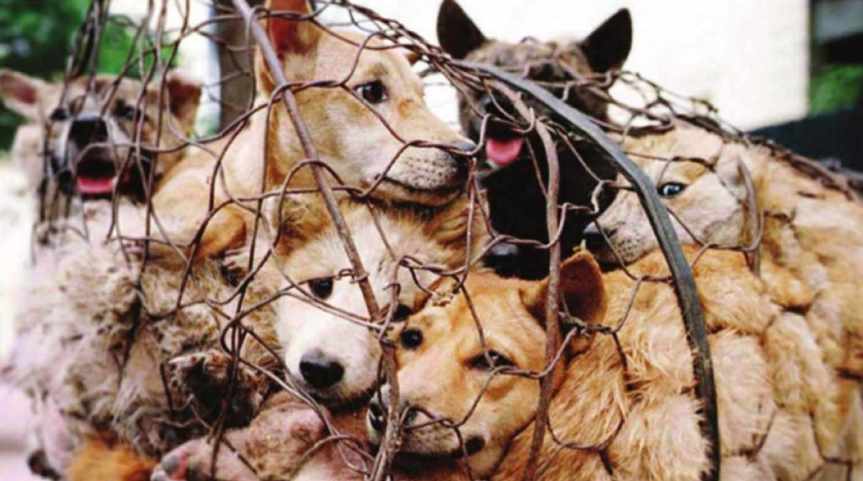
Animal Cruelty is a heinous crime which should be stop .

Animal Cruelty :
Simply put, animal cruelty harms animals, whether intentional or negligent. While certain activities  such as animal cruelty are generally perceived as cruel, the specific actions that make up animal cruelty vary from person to person and from places to places or different countries. Many  argue that docking a piglet’s tail without anesthesia is cruel, while others say it is common in meat production to prevent injuries later  in the pig’s life.  Animal cruelty defination is different in different areas due to countries laws.
Animal abuse is an pervasive problem which often  is difficult to detect. No species or community is spared from experiencing animal cruelty and neglect. Understanding what animal cruelty means and what it doesn’t mean is one of the first steps to  prevent it from happening again. Animals, whether it’s the food, cosmetics, entertainment, or  pet industry, don’t deserve to suffer.

Is Animal Cruelty Illegal:
The legality of  animal cruelty depends largely  on where the activity takes place . For example,  cruelty to farms and laboratory animals that is illegal in some countries may not be considered banned animal cruelty in some countries, due to differences in national law. In the United States, the best-known legislation to prevent animal cruelty excludes both livestock and laboratory animals from registration.

Animal cruelty in India:
Recently, cases of animal cruelty are increasing in India. The same began to discuss animal rights and the extent of legal protection that  current law provides to animals. The problem is that most of these crimes are either unreported or face disappointing legal responses, as some of the 1960 Animal Cruelty Prevention  Act  and  the Indian Criminal Code are obsolete.
SS Rithika an social activist in context to animal writes about common scenarios of animal cruelty and current laws, procedures, and court decisions dealing with animal cruelty in India. Rithika is also pushing for amendments to these laws to curb the rise in atrocities against animals.
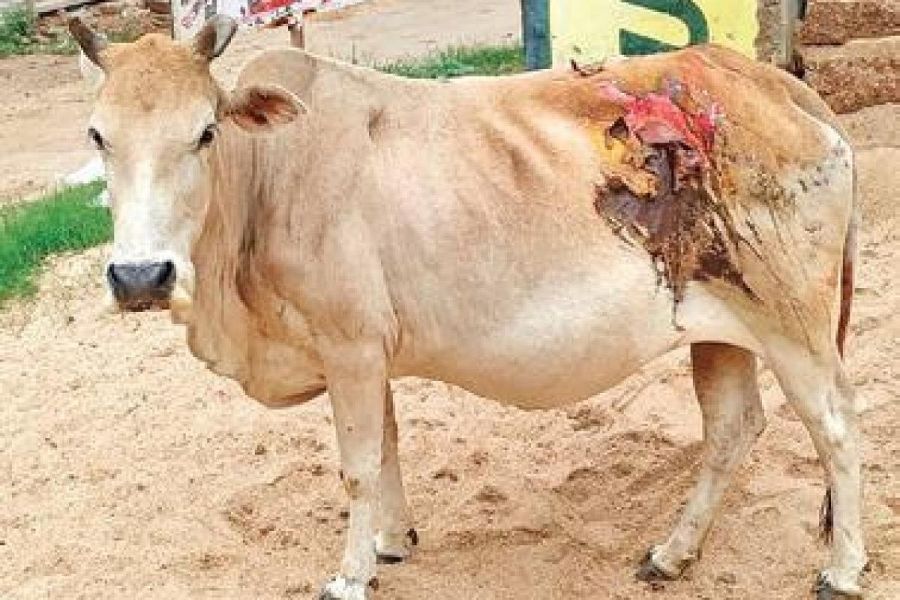
Law related to animal cruelty in India:
The Animal Cruelty Prevention Act of  1960 was amended in 1982. Under India’s newly amended 2011 Animal Welfare Act, animal abuse is a criminal offense  with a fine of at least 10,000 rupees, a fine of up to 25,000 rupees for the first violation, or upto two years of imprisonment. For the second and subsequent violations, a fine of 50,000 rupees or more  and imprisonment of 1 year or more upto 3 years or less. This amendment is currently awaiting approval by the Government of India.  The 1962 law is the law currently in force. The maximum fine under the 1962 Act is  50 rupees (less than $ 1). Many organizations, including  local SPCA, PF, A, Fosterdopt, etc., are actively involved in reporting cases of atrocities to police and assisting the general public in bringing perpetrators to justice. For this reason, there are many changes in the subcontinent.
Under IPC sections 428 and 429, causing mischief by killing or amputating an animal worth more than 10 rupees  is a recognizable crime punishable by two years’ imprisonment, a fine, or both.

Some of the campaign toward animal cruelty:#NoMore50 , #RespectForAnimals , #FarmedAnimals etc.

Implementation of Nanotechnology with DNA

Abstract:

DNA (Deoxyribonucleic acid) is the molecule that stores and transmits genetic information for the development, functioning, growth and reproduction of all living organisms and many viruses. It possesses remarkable binding specificity, thermodynamic stability and can be created with infinite choice of sequences that bind to their complementary nitrogenous bases (namely adenine (A), cytosine (C), guanine (G) or thymine (T)). It is structurally well defined on the nanometre scale and has a persistence length of 50 nanometres under conventional conditions. It can be rapidly synthesized and modified using automated methods. The field of DNA nanotechnology uses its information to assemble structural motifs and connects them together. This field has a significant impact on nanoscience and nanotechnology, and controls molecular self-assembly. Here, we summarize the approaches that are used to assemble DNA nanostructures and examine their emerging applications in areas such as biophysics, diagnostics, nanoparticle and protein assembly.

Introduction:

Nanotechnology is the purist’s approach to biomolecular engineering. This field aims to create molecular structures and devices through the exclusive use of DNA as an engineering material1. The well-characterized nature of DNA base pairing provides an easy means to control DNA interactions. The success of DNA nanotechnology comes from three key ingredients: 1) our quantitative understanding of DNA thermodynamics, which makes it possible to predict how single-stranded DNA molecules fold and interact with one another, 2) the rapidly falling cost and increasing quality of DNA synthesis, and 3) the focus on cell-free settings, where designed reaction pathways can proceed without interference from DNA and RNA processing enzymes that might be encountered in cells. DNA nanotechnology has long been motivated by the goal of building ‘smart therapeutics’, drug delivery systems, tools for molecular biology and other devices that could interact with or operate within living cells. Such applications play to the obvious strengths of nucleic acid nanostructures and devices, particularly their small size, biocompatibility and straightforward manner in which they could be programmed to interact with cellular nucleic acids through hybridization.

Cell-free DNA nanotechnology

To operate reliably in complex, wet environments, living organisms use sensory receptors to detect changes in that environment, motors and actuators to adapt to the environment, computational control circuits to convert sensor information into motor activity, and structural elements that protect and organize these components. Intriguingly, cell-free DNA nanotechnology has made progress towards the construction of most of the functional components — both structures and dynamic devices — required for creating molecular ‘robots’ that can emulate some of the behavioural complexity observed in biology.

DNA nanotechnology in lysates and fixed cells

Cellular conditions are considerably different from that of cell-free experiments. The presence of nucleic-acid-binding proteins, including DNases and RNases, may interfere with device performance, and cellular environments are highly structured, which inhibits the free diffusion of exogenously delivered nucleic acids. Cell lysates, serum and fixed cells provide reaction environments that each capture some of the complexity of live cells and enable testing and optimization of nucleic acid devices in well-controlled conditions.3

CONCLUSION:

DNA-based therapeutics and diagnostics are set apart from more established approaches because of their capacity to respond to the surrounding environment. Molecular logic and conditional (un)hiding of drug moieties could decrease side effects and increase specificity. Even the relatively simple one- or two-input systems built so far have resulted in increased specificity and performance, and could be further improved with more complex multi-input logic. Diagnostic and therapeutic decisions are routinely based on the analysis of panels of multiple molecular markers, be they proteins, RNA, DNA, lipids, sugars or metabolites. For example, immunologists must often consider large numbers of cell surface proteins to delineate all of the various cell types in a blood sample. Gene expression classifiers that reliably distinguish different tissues and disease states are typically built on measurements of tens or hundreds of different RNA species. Given the success of dynamic DNA nanotechnology in scaling up the size and reliability of molecular circuits in cell-free settings, it is intriguing to think that DNA ‘biocomputers’ could eventually perform complex diagnostic tasks based on the analysis of tens of molecular markers directly in living organisms.

REFERENCES:

Seeman, N. C. & Belcher, A. M. Emulating biology: building nanostructures from the bottom up. Proc. Natl Acad. Sci. USA 99, 6451–6455 (2002).
Chen, J. H. & Seeman, N. C. Synthesis from DNA of a molecule with the connectivity of a cube. Nature 350, 631–633 (1991).
Fu, T. J. & Seeman, N. C. DNA double-crossover molecules. Biochemistry 32, 3211–3220 (1993).

Anger management

Getting angry on someone is the most easiest thing because it almost happens all the time. Can we control anger? Can we stop before we get it? Anger is a sudden reaction of the pressure inside that occurred due to disagreement of your opinion. Anger has a great impact because we speak without control. Words that come out of our mouth were actually came from our heart. Usually people hide the true opinions and try to fake friendships. But due to this sudden process the opinion of us over others comes out in a sudden manner.

Things done can never be undone so think before you do. Thinking about done doesn’t erase done. Neither can we change the past not set the future. So think about present because it’s the only thing that’s in our control. May be I can modify the sentence as present is also not in our hands atleast we have a feel that it’s in our control. The feel of real is not real but we are atmost in real. It gives us confidence and hope of our chances to change our present. Going with the flow is a old phrase which makes our lives flow like a wave in a sea. Have focus because its something that stops us from making something. Our conscience reacts only when it’s emergency, so depending on it is not trustworthy.

Have a clarity over your doing. Anger can’t be stopped from getting started. But we can decrease the intensity. We don’t know the initial point of the anger when it’s about to start. But we can remember it only after the incident. So try to stop the origin isn’t in our hands because it happens all of sudden and we don’t have control over it. So try to save ourselves from becoming worse is the only option left with us. We get to know about ourself at the time of anger. We need to control ourselves by shifting our thought to some other thoughts.

Manage your anger by thinking of something else and let your brian think in different direction. Have a shift over your thoughts and manage your anger. Don’t try to stop anger because you can’t stop it. Try to control the intense when you have conscience over your doing. It decreases the intense of your anger and thereby letting you mange your anger.