Public Policy relevancy with Social welfare Programmes

Source: Shutterstock

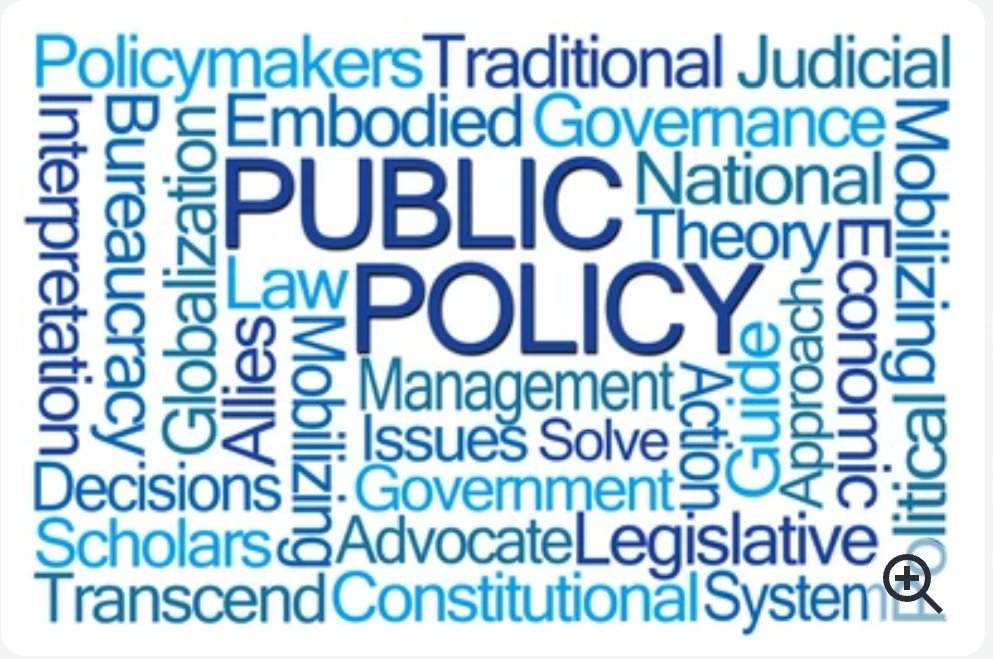
Public Policy is new tool of Government to solve socio economic problems through several policies such as Agriculture Policy, Labour Policy, Health Policy, Education Policy, Wage Policy, Industrial Policy and Foreign Policy etc. Government view public policy as a dependent variable and study as to how society is evolving and Political system shaping the nation.

The field of public policy has emerged comparatively in beginning as traced in early 1950s. The concept of public policy was originated in 1951 from the publication of Harold Lasswell. According to Thomas R Dye, Public Policy is what Government will choose to do or not to do. In indian context, public policy could be government rules and Programmes in the form of political system of laws, ordinance, court decision, executive orders, decisions or even unspoken understanding  of what is to be done.

Paul Appleby, the essence of public administrative decision policy defined as a purposed course of action of an individual a group, an Institution or government to realize a specific objective or purpose, within a given environment. The process of public policy flows both top to bottom and bottom to top or even simultaneously. The policy process is viewed from higher level as execution of Policy and viewing meta Policy meaning  progressive.

After independence, India did not carry a specific structural path for economic development. It was decided that economic development must be based on social, political growth that transmutes human advancements. India adopted the Socio – economic development model in which major areas were industries and agriculture. Planning commission (now NITI Aayog) for the purpose of development initiatives adopted in a five year plan as a major development plan. structure policies Public policy developed as academic pursuit in the 1950s. However, Public Policy was very much evident in 1940, stimulating Government activities and academic organizations. Study of government, policy, Social Science involves political Science, public administration, economics and management.

Dimock stated public policy as “deciding at any time or place what objectives and substantive measures should be chosen in order to deal with particular problems”. Public Policy process structure to maximize and utilize all resources to overcome the catastrophic events. Public Policy is a continuous process, furiously working towards  acquiring best outcomes. Righteous and accurate conditioning helps to bring desired aims. The process requires transparency, decentralization, and effective policy implementation. Public Policy Process is significant to change nation economic, social, and political representation especially in the Case of developing nations.

According to Chandler and Plano, treated public Policy as ” the strategic use of resources to alleviate national problems  or governmental concerns”. Freeman and Sherwoods stated that it is the Public answer to the interest in refining the circumstances. Robert linebewy  emphasized on “it is what governments do and fail to do for their citizens”. Anderson expresses it,” policy is being made as it is being administered as it is being made”.

 Understanding of Public Policy

Source: iass.potsdam.de

 The Public Policy process is a kind of Physics  equation that if finding a small error will cost the huge problem, also diffuses the whole processing mechanism. Public policy processes require pointed manifestation at each level. Hogwood and Gunn (Policy Analysis for the Real World, 1984) concluded nine vital Stages in the policy process: Agenda Setting, object screening issue defining , forecasting alternatives, objectives & priorities, policy implementation, monitoring and control, policy maintenance, succession and termination, these all required for successful policy. As we are aware, policy making is a complex and dynamic strategy, it requires certain tools to resolve the real world problem of economic, financial, economic, social problems. Public Policy enacted by the government or its executives with the help of civil Societies, media, and pressure groups.

 In the Context of public policy process Lindblom stressed on a highly relative and plasticity decision making system characterised by compromise, incrementalism and continual adjustment. Public policy process is conceptualized as in sequence or stages ( Benson, Jordan, 2015). There are (1) sequence follows as – i) Problem emergence 2) agenda setting 13) Consideration of policy options, &) Decision making 5) implementation 6) evaluation (Jordan and Adelle, 2012).

A policy can be simple or complex, explicit or implicit, discretionary or detailed, private or public qualitative and quantitative. Government does not set advisory principles;  it is the Supreme Court who decides and provides new interpretations of the articles of constitution to curve out the new Policy.

Nature of public policy covering wide portion of its activities such as socio- economic development, women empowerment, child labour, equality, education and so on. Nature of Public policy foremost needs Policy making closely related to decision-making. Decision making includes an identification of a problem, sharp analysis, and the ability to see alternatives. Policies have specific goals, It is absolute to expect a policy to indicate the direction towards. where actions are required. The choices of policies or its objectives are frequently mesmerized. Thus, goals and objectives depend on the values of the policy makers. Planning or formulation is a key component to move forward in the public policy process. Administrators must maintain a planner to know the portion of resources, investments because goals cannot be achieved without having proper planning. Policy Analysis is most significant to rectify any problem in process; it is a technique to use in Policy Process. Basically used for problem assessment and monitoring. Before the decisions, Similarly, Policy Management is also familiar with implementation. It deals with policy making and policy preparation process, it ensures it is producing good quality policies.

 Thus, goals and objectives depend on the values of the policy makers. Planning or formulation is a key component to move forward in the public policy process. Administrators must maintain a planner to know the portion of resources, investments because goals cannot be achieved without having proper planning. Policy Analysis is most significant to rectify any problem in process; it is a technique to use in Policy Process. Basically used for problem assessment and monitoring. Before the decisions, Similarly, Policy Management is also familiar with implementation. It deals with policy making and policy preparation process, it ensures it is producing good quality policies.

 Policy management should be considered as a loose point or giving no importance, it is an Icebreaker of Public Process, if you assess anything wrong at this stage, there will be high chance to “trash in” the policy. That is why policy analysis and policy management is interdependent. 
 

Effective Control of Parliamentary Committees on the Government

Source: Deccanherald

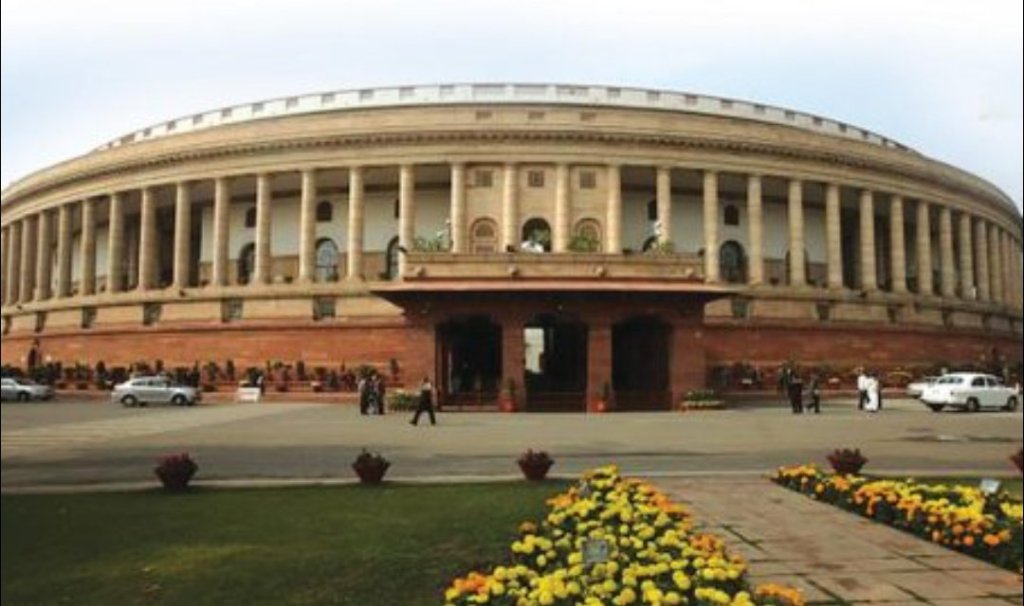
Parliamentary Committees are established to effectively control the governmental regular and constant activities. Parliamentary Committee is appointed by the house or nominated by the speaker or Chairman, shows its report to the house, work has been completed under the direction of speaker or Chairman. The Parliamentary system grants various ministries that are allotted without the elected Representatives of ministries.

The Constitution of India has mentioned these committees at different places but without making any specific provision regarding structure, tenure and functions. 

Types of Parliamentary Committee 

Parliamentary Committees are of two types : 

Standing Committee

The Standing Committee considers annual reports of ministries/departments. Examine bills pertaining to the concerned ministries. Overlook national basic long term policy documents presented to the houses. It considers the demands for grants of the concerned ministries departments before they are discussed and voted in the Lok Sabha. Report should not suggest anything of the nature of cut motions. It ensure economy and efficiency in Public expenditure for ministries and would be more careful in formulating their demands.

These committees are permanent and work on a continuous basis. These committees are classified into the six categories:

1) Financial committees

• Public accounts committee

• Estimates committee

• Committee on public undertaking

2) Departmental standing committees

3) Committees to inquire

4) Committees to scrutinize and control

5) Committees relating to the day to day business of the house

6) Housekeeping Committees or service committees

Financial Committees

Public Account Committee 

This Committee was set up first in 1921 under the provisions of the government of India Act 1919, which consists of 22 members (15 from Lok Sabha and 7 from Rajya Sabha). The members are elected by the parliament every year. The chairman of PAC is appointed by the speaker from its members.

The Committee examines Public expenditure not only from a legal and formal perspective of economy, prudence, wisdom and brings out the cases of corruption, inefficiency and expenses.

Some important functions of PAC are as under:

• To examine the appropriation accounts and the finance account of the Union Government and any other account laid before the Lok Sabha.

• To examine the accounts of stale corporation, trading concerns and manufacturing projects and audit report of CAG.

• To identify the money spent on any service during a financial  year in excess of the amount granted by the Lok Sabha.

• To formulate the account of autonomous and semi autonomous bodies, the audit which was conducted by the CAG.

Estimate Committee

To suggest alternative policies in order to bring alternative policies in order to bring about efficiency and economy in administration. To report what economies need to improve in organization, efficiency and administrative reforms consistent with the Policy underlying the estimates can be affected. To look how much money is spending out limits of the policy implied in the estimates.

The committee does not exercise its functions in relation to Public undertakings as are allotted to the committee on Public undertakings. It shall not be incumbent on the committee to examine the entire estimates for the year. 

Committee on Public undertakings

This Committee report of the CAG on Public undertakings. To exercise such other functions vested in the public accounts Committee and the estimates Committee in relation to the public undertaking . To examine the reports and accounts of PU and identify the affairs of the PU that are being managed in sound manner.

Departmental Standing Committee

The standing Committee is to secure more accountability of the executive to the parliament in the sphere of financial accountability. The term of office of each standing Committee, 8 work under the Rajya Sabha  and 16 under the Lok Sabha.

Committees to Inquire 

The main objective of this Committee is to identify petitions on bills and on general public importance. Matters associated with Union subjects. It is a semi-judicial system; examine the cases of breach of privileges of the house and its members and recommend action. The committee imposes the code of conduct of members of parliament. Also, look over the cases of misconduct and recommend action.

Committee to scrutinize and Control  

It is a committee that assures, promises and undertakings given by ministers from time to time on the time of house. It was established in 1953. It has the powers to make regulations or conferred by the Constitution. Its functions are to consider the reports of the National Commission for the STs to examine all the matters relating to welfare of SCs and STs like Implementation of constitutional and statutory safeguard. 

Committee Related to the day to day Business of the house

Committee regulates the programme and time table of the house. It allocated transactions of legislative and other business that came into the house or were introduced by the Government. The committee considers the matters of procedure and management in house and recommends necessary amendments. Classifies bills and allocates time for the discussion on bills and resolutions introduced by private members. 

Housekeeping Committees

The committee considers and advises on matters of the house that do not fall within the jurisdiction of any other parliamentary Committee. It deals with residential accommodation of members and other amenities like food, medical aid etc,. Conduct meetings related to the library of parliament and assist members in utilizing the library services. Committee also structure the salary, allowances and pension of members of Parliament Act 1954.

Yoga Policies and Programmes in Global Scanerio

Source: yoga alliance

Ongoing Pandemic has left with many physical and mental health issues; where we face constant on and off lockdowns. People suffering through financial hardship lead to an impact on their lifestyle and their work routine. Large population confronting Mental health issues, loneliness, constant fear of losing job, psychological suffering, anxiety depression, sleeping pattern and isolation.

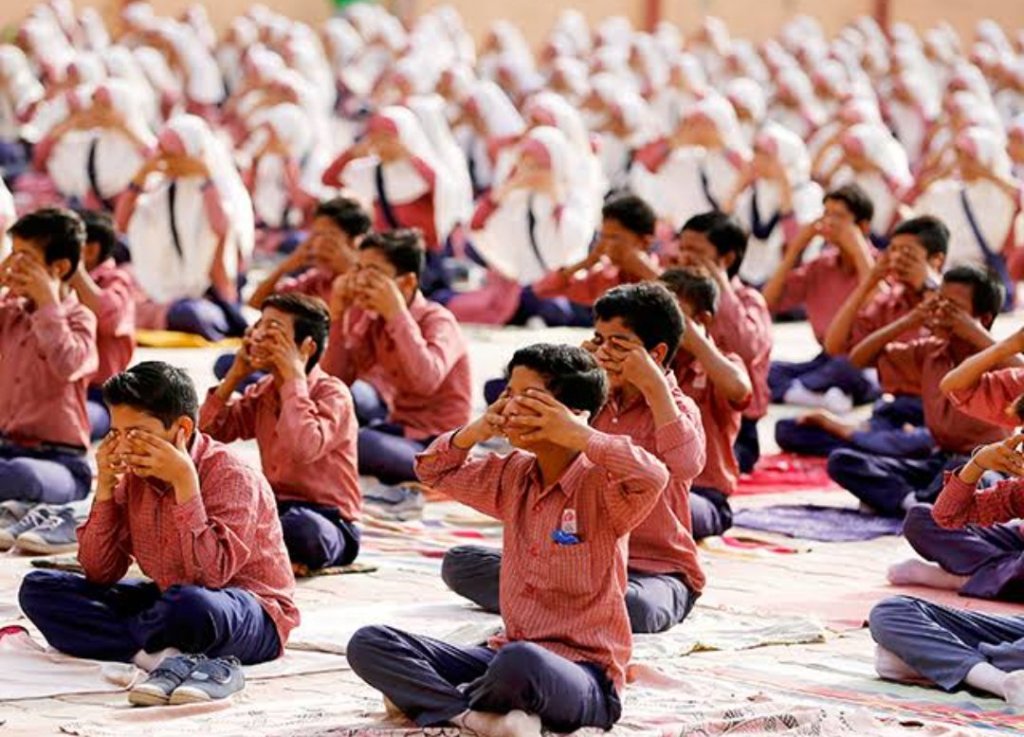
It is natural for anyone to develop anxiety or any health issue but this time needs to focus on our mental health therefore, yoga is considered as a preventive measure. Yoga is helpful to decrease the intensity of mental health issues and lead us towards a healthy lifestyle. Government of India, private yoga institutes abroad, campus awareness exclusively works on yoga significant aspects of human life. But, not even government or yoga institutes have introduced yoga programs for GBV survivors. India is a country who extensively works on yoga Policies and programmes by state government ,yoga Universities. India has its own Ministry for yoga that promotes yoga events on a larger scale. 

USA (New Jersey, Newton Massachusetts)

The USA federal government had not supported any yoga Policy or even program. To make it easier here, we need to understand the difference between Policy and programme.

Programme – short term intervention that creates temporary improvement in wake of challenges not necessarily supported by the government. On the other hand, policies are those which are passed by legislature and implemented by executives. 

Therefore, there is no government funded yoga policy or programme. But many initiatives taken up by several universities or yoga school based programmes. More  Christian dominating states are not ready for school based yoga programs for their children according to The Atlantic report. States like Georgia, Alabama find yoga as Hindu and Buddhist roots. 

Many private yoga studios are opening in the USA or programs. For example

  • Outdoor fitness Program by New York City Dept of Parks  & Recreation (private & paid).
  • 80 hours online yoga training 
  • Online self paced Restoration yoga training 
  • Online yoga teacher training 50 hours
  • Paid programmes in Arizona, Miami, California and Oregon.
  • Vinyasa flow, Iyengar, Ashtanga, heated flow, Relax & Renew and Restoration Yoga 

France/UK/Istanbul

France

France also has the same situation when it comes to government Policy or programmes. Few paid programmes are there like :-

  • Yoga holiday in Ariege
  • Day yogic healing Retreat in Biarritz
  • Day meditation and yoga retreat in Chateaubriant

Istanbul

Istanbul yoga centers have joined the yoga alliance to promote the practices of yoga.

  • Yoga posture and breathing classes for all ages
  • Yoga instructor certificate program of VYASA
  • Yoga therapy for common ailments.

United kingdom

  • Isha foundation
  • Yoga for health & wellness

Yoga practices in the UK Study: cross sectional online anonymous survey. The study investigated the characteristics of people who practice yoga, reasons for initiating & maintaining practices and perceived impact of yoga on health & well being.

India 

Source: International yoga day
  • Delhi Government launched online yoga classes for Covid 19 patients in home isolation. One hour each from 6am to 11am and 4pm to 7pm named the ” Dilli ki Yogshala”  programme.
  • Yoga on call promoting and facilitating yoga practices.
  • Yoga institutes give their services to transgenders, school children and senior citizens in Mumbai and Delhi.
  • Niti Aayog suggested yoga as a regular activity in schools to encourage healthy choices and behaviors.
  • Government schemes for those who are practicing yoga.
  • By HRD minister yoga training “study in India” program was introduced to enable foreign students to obtain authentic yoga training.
  • Haryana CM maintained a statement “yoga has been included in school curriculum for classes 1 to 10 from 2021” taking yoga to the grassroot level.
  • Many private/paid clubs are already in india.
  • Isha foundation
  • Art & living 
  • Total yoga

International organization

NGOs work overseas to promote yoga and well-being in people.

  • International yoga federation aims to create a world’s yoga community and environment of wellness through yoga.
  • Yoga alliance 
  • World yoga organization
  • International yoga training and healing center (Mauritius)
  • Sampoorna yoga
  • Total yoga program has group yoga classes, corporate wellness workshops, yoga retreats, seminars & events in Singapore, California and Philadelphia.
  • Yoga without Borders in Barcelona working in Palestine, Morocco and Tanzania
  • Art & Living (New Jersey) program teaches free breath meditation and breathing techniques that are helpful in reducing stress and make meditation effortless.
  • Isha foundation & Meditation class – Inner engineering Meetup group free meditation classes, different yoga programs and public events.
  • WHO also considers Yoga as one of the significant processes to protect themselves from coronavirus.
  • UN on International yoga day “yoga is also playing a significant role in psycho Social care and rehabilitation of Covid 19 patients during quarantine and isolation.

Private Research and Development

  • Dept of Ayush of Ministry of Ayush their laboratories come under Government of India R & D programs.
  • Kaivalyadhama established the scientific research Dept leading initiative in yoga recognised in the Institute of scientific research by the scientific & industrial research organization (SIRO) Ministry of science & technology Govt of india. More research on yoga’s impact on various biochemical, physiological and psychological parameters. Yoga effects on cancer, chronic diseases, immune diseases, psychogenic disorders, obesity, diabetes and stress.
  • Post graduate institute of medical education, Tshwane University of Technology and Uttarakhand Ayurved University put a recent development in yoga: A scientific perspective.

MUST WATCH FILMS FOR REAL NATIONALIST

Nationalism always been most  forgettable ideology. Nationalism seeks to pressure & foster a nation’s traditional culture. Nationalism dominant the loyalty and devotion towards nation. It aims to build and maintain a single National identity based on shared social characteristics of culture, ethnicity, geographic location, language, politics, religion traditions and belief in a shared singular history to promote National unity or solidarity.

The moral value of nationalism the relationship between nationalism patriotism and the compatibility of nationalism and cosmopolitanism are all subjects of philosophical labels. Nationalism can be combined with diverse Political goals & ideologies such as conservatism (Right Wing) or socialism (Left Wing). Nationalism is seen as positive or negative depending on it’s actions and outcomes.

Scholars frequently place thebeginning of nationalism in late 18th century or early 19th century with American declaration of Independence or with the French Revolution. Nationalism as a concept was firmly established by 19th century. The template of nationalism, as a method for mobilising Public opinion around new state based on popular sovereignty, Due to Industrial Revolution there was an emergence of an integrated, nation encompassing economy & National Public sphere, where the people began to identify with the country at large, rather than the smaller units of their provinces, town or family.

Union Jack was adopted in 1801 as the rational one. The political development of nationalism and the push for popular sovereignty culminated with the ethnic/ national revolution of Europe. It has also been used to legitimate racial, ethnic and religious divisions, suppress or attack minorities and undermine human rights and democratic tradition. Radical nationalism combined with racial hatred was a key factor in the Holocaust perpetrated by Nazi Germany. In 1749, Thomas Arne composed the patriotic song “Rule Britannia”!. Cartoonist John Arbuthnot invented the character of John Bull as the personification of the English national spirit in 1712.

Imposing the idea of one language in 1772 through his “ Treatise on the origin of language” focusing on the role of common language the instance observe in modern politics. He attached exceptional importance to the concepts of nationality and of patriotism.

Sociological or modernist interpretation of nationalism & nation building argues that nationalism arises and flourishes in modern societies that an industrial economy capable of self sustainability, a central supreme authority capable of maintaining authority and unity, few prominent figures developed the modernist interpretation of nation and nationalism include: Carlton J H Hayes, Rabindranath Tagore, Emile Durkheim, Max weber, Talcott Parsons, Arnold Joseph Toynbee.

 Now, think about it, how preferable to have nationalism as development ideology that emphasis on destroying the diversity; diversity that intact the entire nation in oneness without holding on discrimination. If people understand each other with different culture & religion the world will become the better place to live; politicians will not take advantage & will not turn up entire region in war.

Conflict will resolve quickly if sit & have table talk. Far – Right leader Marine Le Pen in France emerging as second highest vote collector candidate belongs to National Rally Party. National Rally believes in strong French centric ideology same as Trump reign during his tenure like “ Make America great again” to have strong immigration policy and secure the American individual identity . VÖLKISH MOVEMENT (Body of people) – German ethno nationalist movement from late 19th century through to Nazi Era impose the “blood and soil”.

However, It is difficult to amaze the world with far right nationalism as we have example of Vietnam War reaction when people saw the images from Vietnam War people protested against the government, Movements like Black life matters, Protest against CAA.

So, Now what should be the real meaning of Nationalism – Simple we believe in democracy and diversity (ironically scrapped from new CBSE syllabus) when we embrace the different culture. Encouraging tolerance for people of different cultural and racial background. When we send off ethnic & racial difference, religion, socio – economic background, intelligence. So whatever movies are mentioned here are based on true meaning of Nationalism. These movies asking question from Society in terms of socio – economic difference, war, racial discrimination, gender biases if you concern about these matter then you are real nationalist and kind of facets of society that Government wants us that we must not talk about these situations.

Movies Like: –

1)Never look away – Werk ohne Autor

2)Dr. Strangelove: Or How I learned to stop worrying and love the bomb

3)Full metal jacket

4)The lives of others – Das Leben Der Anderen

5)Ardh Satya

6)Mathilukal

7)Shyam benegal’ s films

8)Apu Trilogy

9)Bimal Roy’s films

These above mentioned movies list here in this article because of their Challenging Attitude towards for bringing something better for disadvantaged groups. More Can include in it with time and how we will evolve.


Indian Constitution: the soul of our democracy

“Constitution is not a mere lawyer’s document, it is a vehicle of Life, and its spirit is always the spirit of Age”.

 ~B. R. Ambedkar

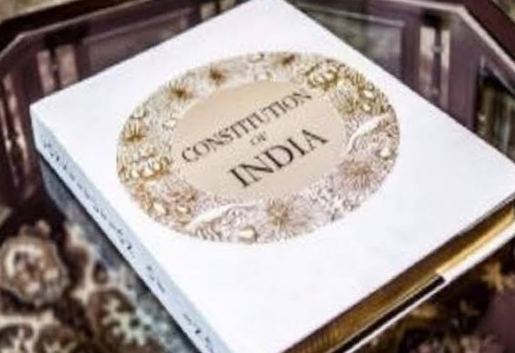
 Wikipedia says, “The Constitution of India is the supreme law of India”. But for the people of India, it is a book of faith. We all believe, if there’s anything politically and legally wrong in the country, just pick up the Constitution, it’s gonna be our savior. But all that we have today and all that we aspire to have tomorrow has gone through and will continue to go through a long journey. From the big broad pages illustrated and handwritten by Prem Behari Narain Raizada to the pocket Constitution today, it has traveled for over 7 decades. So let’s unravel the clock of time and see what all it has to go through to come to us in its present form.

 It took almost three years( 2 years 11 months and 17 days) for the Constituent Assembly to complete the historic task of drafting the Constitution for Independent India. And when it finally came into effect on 26th January 1950, India ceased to be a dominion of the British Crown. The 299 members of the Drafting Committee, chaired by B.R. Ambedkar, discussed for 165 days in 11 sessions to give the Constituent Assembly the first draft. 

 The Constitution was drafted into two language scripts, Devnagari and Roman, with 117, 369 words in the Roman script. 

 And since then, the Indian Constitution has gone through 101 amendments, the most famous being the 42nd Amendment of 1976, also known as the mini Constitution. It is the second-longest active Constitution, after Alabama.

 The task of writing down the whole Constitution by hand was given to Prem Behari Narain Raizada. A total of 254 pen holder-nibs of no 303 were used to pen down the Constitution. He was allotted a room in the Constitution House to work on the sacred texts. And as a fee for his 6 months’ hard work, Mr. Raizada asked for the permission to inscribe on each page of the Constitution and also the name of his grandfather (with his) on the last page. And the artistic ingenuity of the Constitution was the flair of Acharya Nandalal Bose of Shantiniketan and his students and the Preamble enriched by Beohar Rammanohar Sinha.

 The original handwritten copy of the Constitution is kept in specially designed helium cases in the Parliament of India Library.

 For 25 years after the adoption of the Constitution, there was no clarity to the question, whether the Preamble is a part of the Constitution or not? And hence some important judgments were made to with respect to the Preamble

 •Berubari Union Advisory Opinion Case of 1960: This case specified that Preamble can not be treated as a part of the Constitution.

 •Kesavananda Bharati vs State of Kerala Case of 1973: During this case, the Supreme Court altered the opinion and pronounced Preamble as a part of the Constitution. 

 •LIC of India Case of 1995: The Supreme Court again held the previous opinion.

Our Constitution is a bag of borrowing. Here is a list of excerpts taken from all the Other Constitution:

 •“Parliamentary form of Government, Rule of Law, Lawmaking procedure, Single Citizenship, Institution of Speaker, Doctrine of pleasure tenure of civil servants”- British Constitution

 •“Judicial System, Fundamental Rights”- American Constitution

 •”Federal System with strong central authority, Residual powers, center-state Relation”- Canadian Constitution

 •“Directive Principles, Elections of the President of India”- Irish Constitution

 •“Concurrent list, Freedom of Trade and Service within Country”- Australian Constitution

 •“Emergency Provision”- Weimar Constitution

 •“Five Year Plans, Fundamental Duties”- Soviet Constitution

 •”Amendment of Constitution”- South African Constitution 

 •“Office of the Governor, Powers of the federal jury”- Govt. of India Act 1935.