Emerging career options among Indian youth.

Empirical research by various trade organizations, media houses, and the Indian government clearly point towards a single fact: Youth can’t find jobs because they opt for traditionally favourite courses such as medicine, engineering and management. Rather than breaking away from the flock, study emerging trends and finding new generation careers, Indian youth pursue careers they wrongly believe would secure an excellent future.

Blogging

Blogging isn’t something that quirks with a flair for writing engage in. Instead, it’s a top class new generation career for youth. Blogging can help you get high-paying jobs with top companies or make money from home with minimal investment. All you require is passion or in-depth knowledge about a topic or field with creative writing and presentation skills.

Instagram Influencer

Almost every popular brand in the world is on Instagram. And for a reason too: this photo and video sharing website has over 800 million users worldwide. No business worth its name can afford to neglect Instagram as an effective marketing too. Nor can it overlook the importance of influencer marketing through Instagram.

Mobile Applications Developer

As cheaper smartphones and inexpensive mobile data packages flood the Indian market, there’s a correspondingly high demand for Android and IOS –based apps. India’s emergence as a digital economy is imminent. And the country’s moving rapidly towards digitization in various important spheres such as governance, law & order as well as healthcare. In coming years, most Indians will depend heavily on mobile apps for various activities. And organizations are already under pressure to provide apps that ease various processes such as application for services and jobs.

Digital Marketing

By using digital marketing strategies businesses can create their online presence in the form of a website, increasing more traffic to their website, attracting the target customers, interacting with the end customers in real time, collaborating with other businesses for more promotions, all this in an extremely cost efficient way. Digital marketing has helped businesses create their brand value thereby increasing trust and confidence of their customers. This has led to tremendous increase in the demand for many skilled digital marketing professionals for every business, big or small.

Virtual Gaming

The gaming landscape, especially PC and console gaming in India, has changed over the last few years. The major credit for this can be given to the nationwide availability of high-speed internet connectivity. Not only has this contributed to the increasing number of online gamers but gaming is now being considered a viable career option in the country.


Online Professional Degrees.

Online degree courses are by definition, those courses which can offer a degree certificate from an accredited university or college upon completion of the course by a student through the online or digital medium of the Internet. Online courses are preferred by many students who want a flexible course where they can study at their own time and place. 

Indians saw a sudden rise in online education in recent times, bringing one of the most debated subjects in the field of e-learning. There are several Indian universities offering online courses in India, thus putting an end to the drawbacks of classroom-based learning, such as location, accessibility, transport, and cost. Moreover, thousands of students in India move to different countries to get higher education and professional prospects. With Indian universities providing online courses, students can gain world quality education at the comfort of their home. For many online learning has become a way to complete their higher education. It has become a boon for working professionals as well as anyone who has other engagements to opt for online courses as it doesn’t carve into their already busy schedule. Some of the most enrolled online courses by students are :

  • Online BA
  • Online B.Com
  • Online BSc
  • Online BBA
  • Online MBA
  • Online MCA
  • Online MSc
  • Online Accounting Courses
  • Online Language master course
  • Online Content Writing course

Various websites that are providing these certified courses are.

  • Udemy
  • Coursera
  • SkillShare
  • Upgrad
  • LinkedIn Learing
  • Edx
  • UdaCity
  • Code Academy
  • Future Learn
  • Alison

Online Platforms for Learning.

An online learning platform is a webspace or portal for educational content and resources that offers a student everything they need in one place: lectures, resources, opportunities to meet and chat with other students, and more. It is also an excellent way for the student and the teacher to monitor student progress. Whether you want to learn a new language or obtain career-advancing certifications, signing up for an online course could be just the perfect solution. The online class is typically provided through online learning platforms. 

Online learning has numerous advantages over traditional learning methods. Some of these include the possibility for students to make use of self-paced learning and to choose their own learning environments. Additionally, e-learning is both cost-effective and cost-efficient, as it removes the geographical obstacles often associated with traditional classrooms and education. The benefits of an online course platform are that both students and teachers can track the students’ progress through the course material, and everything is neatly organized in one place. Additionally, students may also have an option of interacting with each other on the platform.

Some of the popular Online learning (e-learning) platforms.

Coursera.

Coursera isn’t just a place to take classes that are like college courses—it actually offers real academic courses from real professors and universities at a fraction of the cost of getting an online degree. The platform partners with over 200 universities and companies to provide real learning experiences that can connect to real-world benefits. In some cases, you can even earn certifications or degrees entirely through Coursera, which can then potentially lead to professional benefits like raises, promotions, and more. 

Course Hero.

Course Hero is home to study resources, 24/7 homework help and textbook guides to provide students across top institutions with tailored reinforcement of the courses in which they are enrolled. The library of materials uploaded to Course Hero’s platform can be searched by either school or textbook to find the exact resource a student needs, with tutors available to provide total support.

Edx.

Generally, this online learning platform has a high-end pedigree. edX was established by graduates from both MIT and Harvard University. Real college courses that are generated and taught by real college tutors are available in a vast array of topics and fields. They have a slight leaning toward the Science, Technology, Mathematics, and Engineering fields. Nonetheless, there are plenty of topics in the humanities, arts, and languages as well. By partnering with the universities, this course provides professional degree certificates as well as the “micro” degree programs at both the bachelor’s and the master’s levels. In this sense, they largely serve as tools for professional development. 

Skill Share.

Whereas many online class platforms do confer college-style classes, Skillshare is not formal and is mainly targeted at boosting creative skills. Some business and marketing classes exist on this online education platform. Most of the courses though tend to have a focus on the creative fields and are administered by practicing experts in various fields. Common examples of these fields are interior design, visual arts, animations, films, and photography. 

LinkedIn Learning.

Formerly called Lynda.com, LinkedIn Learning is an educational platform that confers professional course training in the fields of technology, business, creative fields, and technology-related areas mainly in the form of videos. The online learning marketplace is largely available as a premium service for the users of LinkedIn and has so far provided well over 16,000 courses in a whopping 7 languages. Its focus is mainly to aid individuals in investing in their professional development. 

Udemy.

If you want to learn something, it’s probably on Udemy. The site is less of a unified platform and more of a portal or repository where students can access well over 100,000 courses on every topic imaginable. There’s not one standard format for a Udemy course—the platform allows instructors to design multimedia lectures with audio, video, and text elements, plus readings, quizzes, and other activities. Udemy allows students to preview classes they’re interested in and does offer a 30-day refund if you’re dissatisfied.

FutureLearn.

FutureLearn lets you learn online from universities and companies all over the world, including Anglia Ruskin University, King’s College London, Monash University, and the University of Wollongong. On top of their university partnerships, they also partner with specialist organizations such as Accenture, Amnesty International, the British Library, and UNESCO. From personal development video lessons to employment-related course content, FutureLearn definitely deserves its place near the top of our best online learning platforms list.

Key skills one should learn.

Learning new skills is a habit that helps in career, profession, business, and daily life. It can be a technological skill, business management, resume writing, designing, marketing, advertising skills or basic computer skills. Consistent learning and skills development is important for everyone. It’s not only important for students, job seekers, professionals but also important for housewives, seniors citizens and leaders of various field.

Learning means, one self is practicing existing skills, experimenting with new imaginations, reading from books, learning from the internet, doing online and offline courses, learning by observing others, learning from failures and success of others and learning from the problems that you’re facing. Learning new skills is like watering a plant. Its connect to growth. And to grow in business, career and a student it’s important to learn new skills. So that you will become fruitful for companies, people and nation.

Some of the key soft skills are.

Communication skills

Communication skills are the most common and frequently used professional skills in our life. You use communication skills to give and receive different kinds of information, and it helps you to understand and be understood by others while communicating. These skills may include sharing ideas with others, actively listening to conversations, responding, and public speaking.

Teamwork skills

Teamwork skills are the qualities and abilities that allow you to work with a group of people during conversations, projects, meetings or other collaborations to achieve a common goal. Your teamwork skills are dependent on your ability to communicate well, actively listen and be responsible and honest. 

Time management

Time management is the process of organising, planning, and dividing your time between specific activities. Good time management skills enable you to work smarter, not harder. If you work smartly, you will get more done in less time, even when time is tight and pressures are high. Failing to manage your time while performing a task will damage your effectiveness and cause stress. 

Creative Thinking

Creative thinking means your ability to use the imagination to generate new ideas or ability to think about a task or a problem in a new or different way. Creative thinkers look at things from a unique perspective which is invisible to others. They can find patterns and make connections to find opportunities in complex systems. If you are a creative thinker, it will assist you to solve complex problems or find interesting ways to approach tasks.

Interpersonal skills

Interpersonal skills are the traits you rely on when you are interacting and communicating with others. These skills often indicate your ability to communicate and build relationships with others. Interpersonal skills are often called people skills. Because they combine both your innate personality characteristics and how you’ve learned to handle certain social situations. If you use interpersonal skills effectively, these skills can help you during the job interview process and can also have a positive impact on your career advancement.

Leadership skills

Leadership skills are those skills you often use when organizing other people to reach a shared goal or complete a task. It doesn’t matter if you are in a management position or leading a project, leadership skills require you to motivate others to complete a series of tasks before the deadline.

Some of the professional skills, one should learn are.

Graphics Designing

Graphic design is the art of making visual content to communicate messages. Designers apply different page layout methods and visual hierarchy by using letters and pictures to meet the need of end-users. Most companies use graphic design to sell their product or services and to convey complicated information by using infographics.

Web Development

It refers to developing and maintaining web pages, including bits and pieces of concepts like web design, web programming, web publishing, and database management. Further, it includes various types of web development tools and techniques such as text editors for manually coding the websites, Dreamweaver for developing a web page, using a blogging website to update blogs, and more. Having web development language skills will help candidates stand out from the rest. Prominent web developer skills include understanding HTML, design skills, and analytical knowledge.

Animation Designer

Animation design requires a balance of computer software and creativity skills to create animating graphics for an array of industries, including film, television, and marketing. Animation design is the act of creating visual effects and animations for a variety of multimedia, including video games, videos, and digital assets like websites and apps. These effects and animations can be 2D or 3D (CGI) and range from a simple loading icon that indicates something is happening behind the scenes to a full-scale animated video. 

Audio and Video editing

Knowing how to alter video and audio files can be a useful skill, especially for jobs in marketing and entertainment. This capability often requires expertise in editing software, which allows you to manipulate individual clips or add special effects. 

Search Engine Optimization

Search engine optimization (SEO) is a digital marketing strategy that allows companies to improve their website content so it might appear higher on the first page of a search engine’s results. This may involve using best technical practices to compose text, select image formats and include links that connect between two separate pages on a website.

Arrival of Dutch in India

The Dutch are the people of Holland (now the Netherlands). The Dutch arrived in India shortly after the Portuguese. The Dutch have long been experts in sea trading. The Dutch government granted the United East India Company of the Netherlands license to trade in the East Indies, including India, in 1602. Dutch India was more of a geographical location than a political authority. In comparison to the Portuguese and the English, the Dutch had the shortest presence in India of all the European colonial powers.

Dutch history in India
The Dutch East India Company was founded in 1602 and signified the Dutch entrance in India. They arrived in Andhra Pradesh’s Masulipatam (now Machilipatnam). From 1605 to 1825, they occupied the Indian subcontinent. Given the growing demand for Indian spices from Asia in Europe, the Dutch arrived to India with the intention of trading. The establishment of the Dutch East India Company marked the beginning of the modern multinational company (MNC). Following a pact between the Zamorin of Calicut and the Dutch chief, Steven Van der Hagen, Dutch trading in India began on November 11, 1604. The goal was to force the Portuguese off the Malabar Coast, but this was never achieved. The Dutch, on the other hand, soon built commercial facilities in various parts of India and traded cotton, textiles, silk, Indigo, and Golconda diamonds. In 1661, the Dutch conquered the Portuguese and took control of all of Malabar. They had now mastered the pepper trade and made tremendous profits selling pepper, which was known in Europe as “Black Gold.” In the 17th century, nothing could stop the Dutch from capturing Pondicherry from the French in 1693. In the East Indies, the Dutch became a large producer of sugar and coffee, as well as a big exporter of spices and textiles. During their time in India, the Dutch tried their hand at currency manufacture as well. They established mints in Cochin, Masulipatam, Nagapatam Pondicherry, and Pulicat as their trade grew. Furthermore, the Pulicat mint issued a gold pagoda with an image of Lord Venkateswara (god Vishnu). The Dutch minted coins that were all based on local coinages.

The Decline of Dutch power The Dutch East India Company began to fade in the mid-eighteenth century. It was characterised by poor corporate practices, corruption, and political upheaval. Martanda Verma, the formidable monarch of Travancore, defeated the Dutch in 1741 and reclaimed control of Malabar. The fourth Anglo-Dutch war, in which the British navy sunk Dutch ships and seized trading ports, resulted to their bankruptcy in 1799. Finally, the Anglo-Dutch Treaty of 1825 ended the Dutch dominance in India by transferring all Dutch assets to the British.

Arrival of Portuguese in India

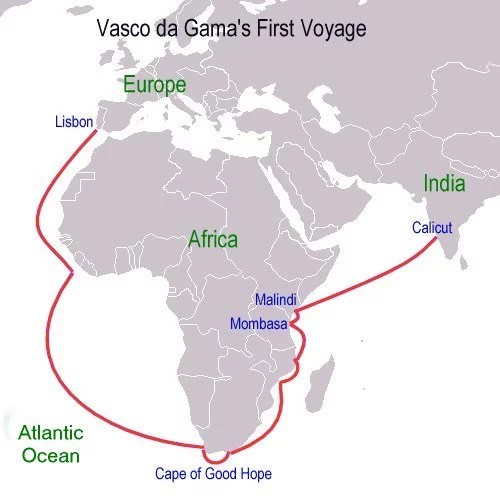
The Portuguese State of India was a Portuguese colonial state on the Indian Subcontinent. Vasco De Gama was the first Portuguese to set foot in India in 1498. However, Portuguese control in India is considered to have lasted from 1505 until 1961. Although Portuguese colonialism outlasted its English counterpart, it had little influence outside of its territories. The Portuguese were the first Europeans to arrive in India and the last to go.

Portugal’s Early Years in India
When Vasco da Gama arrived in Calicut on the Malabar Coast on May 20, 1498, Portuguese colonialism began in earnest. He met with the ruler of Calicut, the Zamorin, and received permission to trade in Calicut. But Vasco da Gama was unable to pay the customs duties and the cost of his merchandise. The Zamorin’s officials detained some of Vasco da Gama’s soldiers when the duties were not paid. This enraged him so much that he kidnapped some Indians and fisherman. However, the voyage was a success in the eyes of the Portuguese authorities in Lisbon. A sea path around the Ottoman Empire was discovered, and the expedition made a profit well in excess of its initial cost.

Expansion of Portuguese Colonialism
Vasco da Gama established a base of operations on the Malabar coast after further conflict with the Zamorin Kingdom. Francisco de Almeida, the first viceroy, placed his headquarters in what is now Cochin. Alfonso de Albuquerque, the second governer of the Portuguese territories in the East, was appointed in 1509. Off the coast of Calicut, a Portuguese fleet led by Marshal Fernão Coutinho arrives. Their orders were quite clear: destroy the Zamorin. The city was levelled and the palace of the Zamorins was taken, but the local soldiers rallied and attacked the invading Portuguese, forcing them to retreat and wounded Albuquerque. In 1510, Afonso de Albuquerque defeated the Sultanate of Bijapur, establishing Goa as a permanent settlement. It would later become the viceroy’s seat and the headquarters of the Portuguese colonial conquests in India. Modern-day Mumbai was likewise a colonial possession until 1661, when it was handed over to the British. From 1799 until 1813, the British conquered Goa for a brief while, eradicating the final vestiges of the inquisition. The capital was moved to Panjim, which was later renamed Nova Goa, in 1843, when it became the administrative center of Portuguese India. For the next century, Portuguese control would be limited to Goa and the enclaves of Diu and Daman.

Cause of Decline of Portugal in India
While the British granted independence to most of India, the Portuguese retained colonial colonies in India. Local anti-Portuguese demonstrations in Goa were violently suppressed. Despite repeated pleas from the Indian government, the Portuguese government, led by dictator António de Oliveira Salaza, refused to hand over its colonial holdings, saying that they were an intrinsic part of Portuguese territory. The invasion of Goa by the Indian troops took place in December 1961. The Portuguese attempted to resist against overwhelming odds, but were quickly crushed by the Indian Army. On December 19, 1961, the Governor of Portuguese India signed the Instrument of Surrender, freeing Goa after 450 years of Portuguese domination in India.

Low-Maintenance Houseplants to grow

There are endless varieties of indoor plants to choose from, and if you’ve never cared for a plant before, you might have no idea which one to choose. Factor in that some plants are much harder to care for and require a lot of attention, and it’s even more of a challenge. If you want to spruce up your home with a little greenery but you’re new to plant parenthood and want to stick to plants that are more forgiving and low-maintenance, here’s what you need to know, from which plants to buy to how to keep them alive and happy

You don’t need a ton of time, space or even light to grow your own indoor garden, either. In fact, some plants prefer a low level of light and infrequent watering. If you live in an apartment or home with little natural light or just want something a bit more low maintenance, there are many houseplants for you to choose from.

Jade Plant

Succulents are always an indoor houseplant go-to thanks to their sturdiness and ability to survive with little to no water. This one has a defined look with plush oval leaves and a substantial height In fact; a jade plant can grow to be 3-6 feet tall. It’s a slow grower, though, so this won’t happen overnight. Like many succulents, jade plants need a lot of bright, indirect sunlight.

Aloe

As long as it gets a lot of really bright light, the Hedgehog Aloe is pretty resilient. Aloe plants grow in nutrient-poor conditions, so they’re very good at assimilating and holding onto their nutrients.Aloe is happiest in the brightest windows, so stick it in a space that faces the sunset.

Snake Plant

snake plants are tall, dark, and handsome. In addition to being able to withstand pretty much any living conditions, snake plants are also really powerful air purifiers.they can pretty much take whatever you throw at them, so they’ll be fine in slightly darker and more humid rooms.

Parlor Palm

Bright filtered light is best for this lush palm plant, but it can adapt to low light if necessary. In terms of watering, make sure you avoid over-watering your parlor palm. Keep it in a warmer spot and give it the occasional misting for good measure.

Bamboo

Like air plants, that can actually grow without soil. Simply place the stalks in a vase full of water with pebbles or marbles at the bottom. And if your bamboo starts to get too big for its container, just upgrade to a new one with a similar set-up—no actual reporting required.

Snake plant
Parlor Palm
Jade plant
Aloe
Bamboo

The women’s suffrage movement

The Nineteenth Amendment to the US Constitution was ratified on August 18, 1920. It declares that “The right of citizens of the United States to vote shall not be denied or abridged by the United States or by any State on account of sex. Congress shall have power to enforce this article by appropriate legislation. “The amendment, which granted women the right to vote, represented the pinnacle of the women’s suffrage movement, which was led by the National American Woman Suffrage Association (NAWSA).In their decades-long struggle for female enfranchisement, women’s rights advocates met with strong opposition from anti-suffrage activists.

The women’s suffrage movement has its origins in the Seneca Falls Convention of 1848, the first women’s rights convention ever held in the United States. Approximately three hundred activists, female and male, gathered to discuss the condition of women and to devise strategies for achieving social and political rights for women. Though women’s suffrage was a topic of debate at the convention, it was not the main goal of the movement at this early stage, and the convention’s resolution demanding women’s suffrage was the only resolution that was not passed unanimously.

The first women’s suffrage organizations were created in 1869. Susan B. Anthony and Elizabeth Cady Stanton founded the National Woman Suffrage Association (NWSA), while Lucy Stone, Julia Ward Howe, and Henry Blackwell founded the American Woman Suffrage Association (AWSA). These two rival groups were divided over the Fifteenth Amendment, which guaranteed African American men the right to vote. The AWSA supported the Fifteenth Amendment, while the NWSA opposed it because it did not include suffrage for women. In 1890, the two competing organizations were merged into the National American Woman Suffrage Association (NAWSA).

During the 1870s, suffragists (women’s suffrage activists) began attempting to vote at polling places and filing lawsuits when their attempts were rejected. This drew attention to the women’s rights movement, particularly after Susan B. Anthony was arrested and put on trial for voting in the 1872 presidential election. Suffragists hoped that the lawsuits would work their way up to the Supreme Court, and that the justices would declare that women had a constitutional right to vote. In 1875, the Supreme Court, rejected women’s suffrage, ruling that the US Constitution did not confer the right of suffrage to anyone.

After the Supreme Court ruling, leaders of the women’s rights movement adopted other strategies for securing universal suffrage. Activists began organizing a drive to pass a constitutional amendment guaranteeing women the right to vote. The National American Woman Suffrage Association launched a campaign to achieve victories at the state level, in the hopes that if enough states allowed women the right to vote, federal legislation would follow. These efforts were so successful that by the time of the ratification of the Nineteenth Amendment, over half of all states had already granted limited voting rights to women.

The Nineteenth Amendment

In January, 1878, Republican Senator Aaron A. Sargent of California formally introduced in the Senate a constitutional amendment to guarantee women the vote. The bill languished in committee until 1887, when it finally went up to a vote, and was defeated. Not until 1914 was another constitutional amendment for women’s rights considered, and again rejected, by the Senate.

Though the movement for women’s suffrage was well-organized and gaining momentum by the early twentieth century, it met with strong opposition from some sectors of US society. Brewers and distillers were opposed to female enfranchisement because they assumed that women would vote for the prohibition of alcoholic beverages, while businesses that employed children feared that women would vote to eliminate child labour. Anti-suffrage organizations sprang up all over the country to oppose the drive for female enfranchisement. Anti-suffrage activists were not just men; indeed, many upper class women joined the movement, arguing that politics was a dirty business that would sully the moral and spiritual authority of women

The National American Woman Suffrage Association in 1900, launched an effort to link the drive for female suffrage to the US war effort in the First World War. Though many of her fellow suffragists were anti-war pacifists, Catt made the controversial decision to support the war and to thereby portray the women’s suffrage movement as patriotic. The effort was a success; in his 1918 State of the Union address, President Woodrow Wilson declared his support for female enfranchisement.

On August 18, 1920, Congress ratified the Nineteenth Amendment, which guaranteed the right to vote to all US citizens regardless of sex. The Nineteenth Amendment represented a major victory and a turning point in the women’s rights movement.

Veganism in a Nutshell

Once considered a niche diet, veganism has gone mainstream — so much so that the number of people following a vegan diet has increased by 350% in the last decade. By definition, veganism is a way of living in which people exclude, as much as possible, all forms of animal exploitation and cruelty.

At first glance, a vegan diet may seem complicated or overly restrictive. Many of my clients who are considering switching over to a vegan diet are initially worried about finding suitable vegan alternatives to their favourite meals. Yet, most find that once they get a few basics down, the transition is less difficult than they initially expected.

According to the Vegan Society, the term “vegan” was coined back in 1944 by a small group of vegetarians who broke away from the Leicester Vegetarian Society in England to form the Vegan Society. In addition to refraining from eating meat, they chose not to consume dairy, eggs, or any other products of animal origin The term “vegan” was chosen from the combination of the first and last letters of “vegetarian.” By 1949, the first definition of veganism had been born. It has changed slightly over the years to become what it is known as today. Many people use the term “vegan” to refer exclusively to diet. However, by this latest definition, veganism extends beyond eating a plant-based diet.

Those who identify as vegans typically aim to exclude animal exploitation or cruelty in all aspects of their lives, including the clothes they wear, the cosmetics they use, and the leisure activities they take part in .As a result, many vegans avoid purchasing wool coats, leather furniture, or down pillows and comforters. They may also opt to visit animal sanctuaries instead of going to zoos, the circus, or animal petting farms.

Reasons people go vegan

Health-Some people choose a vegan diet for its potential health benefits. Diets high in meat — especially red meat — have been linked to cancer, heart disease, and type 2 diabetes .On the other hand, plant-based diets have been linked to a lower risk of developing or prematurely dying from these diseases. Lowering your intake of animal products in favour of more plant-based options may also improve your digestion and reduce your risk of Alzheimer’s disease .A vegan diet can also help minimize the side effects linked to the antibiotics and hormones used in modern animal agriculture .Finally, vegan diets appear to be especially effective at helping people lose unwanted weight. Several studies link a vegan diet to a lower likelihood of obesity

Moral ideals-Ethical vegans strongly believe that all creatures have a right to life and freedom. They view all animals as conscious beings that, just like humans, wish to avoid pain and suffering .Because of this, ethical vegans are opposed to killing an animal in order to eat its flesh or wear its fur or skin. Vegans are also opposed to the psychological and physical stress that animals may endure as a result of modern farming practices — for instance, the small pens or cages that animals typically live in and rarely leave between their birth and slaughter.

Environment

People may also choose to avoid animal products in an attempt to limit their environmental impact. According to recent data, animal agriculture heavily contributes to greenhouse gas emissions (GHGEs), which cause climate change.Meat eaters are thought to be responsible for 2–2.5 times more GHGEs than people following a vegan diet. Ruminant animals, such as cattle, sheep, and goats, appear to emit the largest amount of greenhouse gases per gram of protein they deliver. Therefore, diets that reduce or totally eliminate dairy also produce significantly fewer GHGEs.

Foods that vegans eat

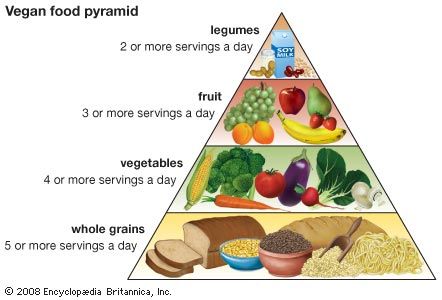
Avoiding animal products doesn’t restrict you to eating salads and tofu alone. There’s a wide variety of delicious foods you can eat on a vegan diet.

  • Beans, peas, and lentils: such as red, brown, or green lentils; chickpeas; split peas; black-eyed peas; black beans; white beans; and kidney beans
  • Soy products: such as fortified soy milk, soybeans, and products made from them, such as tofu, tempeh, and natto
  • Nuts: such as peanuts, almonds, cashews, and their butters
  • Seeds: such as sunflower seeds, sesame seeds, and their butters, as well as flaxseed, hemp seeds, and chia seeds
  • Whole grains: such as quinoa, whole wheat, whole oats, and whole grain brown or wild rice, as well as products made from these foods, such as whole grain bread, crackers, and pasta
  • Starchy vegetables: such as potatoes, sweet potatoes, corn, squash, beets, and turnips
  • Nonstarchy vegetables: such as broccoli, cabbage, asparagus, radishes, and leafy greens; these may be raw, frozen, canned, dried, or pureed
  • Fruit: such as apples, pears, bananas, berries, mango, pineapple, oranges, and tangerines; these may be purchased fresh, frozen, canned, dried, or pureed
  • Other plant-based foods: such as algae, nutritional yeast, fortified plant milks and yogurts, and maple syrup

There’s a good chance that many of the dishes you currently enjoy either already are vegan or can be made vegan with a few simple adjustments.For instance, you can swap meat-based main dishes for meals containing beans, peas, lentils, tofu, tempeh, nuts, or seeds.

Transitioning to a vegan diet is easier than most people think. That said, it does require a little additional nutrition knowledge.So if you’re interested in making the switch, consider seeking advice from a registered dietitian specializing in plant-based diets to make sure you’ve got your basics covered.Depending on your knowledge, budget, and culinary skills, you may also want to consider taking certain supplements to ensure you’re providing your body with all the nutrients it need

5 hobbies to develop this summer

Getting bored in the summer heat? Or you simply want to catch a break from a monotonous life? Well, its summer time and there is no better season to pick up some new hobbies and skills to add to the feathers in your cap. Here are 5 things you can do this summer to feel productive-

  1. Learn to swim

Swimming is a very handy skill and you are never too old to learn to swim. It’s great if you already know to swim too, take a dip in the pool and refine those strokes. Swimming keeps one physically fit, healthy and energised. It also tones your muscles and give you that tan you’ve been wanting.

2.Learn a foreign language

It could be the tongue native to a country you hope to visit someday or a language you’ve always wanted to learn just because you find it so beautiful. Learning the basics of a new language makes the world feel a little smaller, and numerous studies have indicated that being bilingual can give your brain a boost. There are so many free apps and videos that you can refer to at least get some basics of a language.

3.Make your own jewellery

Arts and crafts have always been at the tip-top of popular summer hobbies but have you tried making your own jewellery yet? Capture your own design aesthetic in wearable pieces that you can make from the comfort of your own home. Make them for yourself, gift them to a friend, sell them on Etsy… the possibilities are endless. There are some awesome kits, books, and Youtube videos (essential techniques, supplies to purchase, and of course, hacks) that will make getting started a whole lot easier. Redecorate your room with it or spruce up your collection of gems with some DIY jewellery making.

4. Develop a green thumb

 Summertime is the perfect time for gardening: there’s loads of sunlight and the right temperature to grow an entire range of vegetables like tomatoes and cucumbers, or even some herbs and flowers. Gardening can be a nice, rewarding hobby to take up in the summertime. Starting a garden can be an intimidating task but thankfully, there are plenty of resources out there to help you get your green thumb on.

5. Go Camping

Camping is a favourite pastime for many during the summer days and can also be very inexpensive . This is a fantastic low-cost hobby for adventure and nature lovers who want to disconnect from the Wi-Fi and real around a campfire. However, you shouldn’t set out without preparation, so go through this guide to make sure you’re well-prepared! It is a fun way to meet up for some outdoor time with friends and loved ones! It doesn’t have to been in the complete wilderness , just set a tent in your back yard and gaze at those stars.

All you need to know about an Economic Recession.

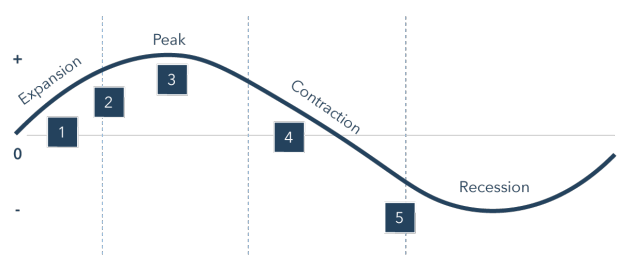
The National Bureau of Economic Research (NBER) defines a recession as “a significant decline in activity spread across the economy, lasting more than a few months, visible in industrial production, employment, real income, and wholesale-retail trade.” A recession is also believed to be signalled when businesses cease to expand, the GDP diminishes for two consecutive quarters, and the unemployment rate rises. The nature and causes of recessions are simultaneously evident and uncertain. Recessions are, in essence, a cluster of business failures being realized simultaneously. Firms are forced to reallocate resources, scale back production, limit losses, and, usually, lay off employees. Those are the clear and visible causes of recessions. There are several different ways to explain what causes a general cluster of business failures, why they are suddenly realized simultaneously, and how they can be avoided.

What Causes a Recession?

Some recessions can be traced to a clearly-defined cause. For instance, the recession of 1973-1975 began as a result of the 1973 oil crisis. However, most recessions are caused by a complex combination of factors, including high interest rates, low consumer confidence, and stagnant wages or reduced real income in the labour market. Other examples of recession causes include bank runs and asset bubbles.

Psychological Factors of a Recession

Psychological factors are frequently cited by economists for their contribution to recessions also. The excessive exuberance of investors during the boom years brings the economy to its peak. The reciprocal doom-and-gloom pessimism that sets in after a market crash at a minimum amplifies the effects of real economic and financial factors as the market swings. Moreover, because all economic actions and decisions are always to some degree forward-looking, the subjective expectations of investors, businesses, and consumers are often involved in the inception and spread of an economic downturn.

Economic Factors of a Recession

Real changes in economic fundamentals, beyond financial accounts and investor psychology, also make critical contributions to a recession. Some economists explain recessions solely due to fundamental economic shocks, such as disruptions in supply chains, and the damage they can cause to a wide range of businesses. Shocks that impact vital industries such as energy or transportation can have such widespread effects that they cause many companies across the economy to retrench and cancel investment and hiring plans simultaneously, with ripple effects on workers, consumers, and the stock market. There are economic factors that can also be tied back into financial markets. Market interest rates represent the cost of financial liquidity for businesses and the time preferences of consumers, savers, and investors for present versus future consumption. In addition, a central bank’s artificial suppression of interest rates during the boom years before a recession distorts financial markets and business and consumption decisions.

What Are the Indicators of a Recession?

Economists determine whether an economy is in recession by looking at a variety of statistics and trends. Factors that indicate a recession include:

  • Rising in unemployment
  • Rises in bankruptcies, defaults, or foreclosures
  • Falling interest rates
  • Lower consumer spending and consumer confidence
  • Falling asset prices, including the cost of homes and dips in the stock market

All of these factors can lead to an overall reduction in the Gross Domestic Product (GDP). The European Union and the United Kingdom define a recession as two or more consecutive quarters of negative real GDP growth.

Impact of Covid-19 Pandemic on the Economy

In February 2020, the National Bureau of Economic Research (NBER) announced that according to their data, the U.S. was in a recession due to the economic shock of the widespread disruption of global and domestic supply chains and direct damage to businesses across all industries. These events were caused by the COVID-19 epidemic and the public health response. Some of the underlying causes of the two-month recession (and economic hardship) in 2020 were the overextension of supply chains, razor-thin inventories, and fragile business models. The pandemic-related recession, according to NBER, ended in April 2020, but the financial hardship caused by the pandemic is still impacting Americans.

For simpler understanding-

Data Scientist Vs Data Analyst

What is the contrast between a Data Scientist and a Data Analyst? Are these two the equivalent? Such inquiries have been a wellspring of extraordinary disarray among youths, who wish to make an effective career in data science. I’m here to settle these inquiries and explain the whole matter for you.

How about we initially comprehend the center distinction between two occupation jobs, Data Scientists are master experts, outfitted with a blend of Coding, Mathematical, Statistical, Analytical and ML abilities. 

Data Analysts are principally associated with the everyday information assortment and investigation undertakings. They should filter through information to distinguish significant experiences from information.

Data Scientist and Data Analyst Comparison

1. Responsibilities

Data Scientist

! Create & define programs for data collection. modelling, analysis, and reporting.

! Perform information cleansing and preparing tasks to mine important bits of knowledge from information. 

! Foster custom information models and ML algorithms to suit organization/client needs.

! To mine and analyse data from company databases to foster optimisation and improvement of business operations. 

! To use the right data visualization and predictive modelling tools to boost revenue generation, marketing strategies, enhance customer experiences, etc.

! To foster new ML techniques and scientific models. 

! To associate diverse datasets, decide the legitimacy of new information sources and information assortment techniques. 

! To facilitate and speak with both IT and business supervisory crews to execute information models and screen the results. 

! To distinguish new business openings and decide how the discoveries can be utilized to upgrade business systems and results.

Data Analyst

! To analyse and mine business data to identify correlations and discover valuable patterns from disparate data points

! To work with customer-centric algorithm models and personalize them to fit individual customer requirements.

! To make and send custom models to reveal answers to business matters, for example, advertising techniques and their presentation client taste, and inclination designs, and so forth.

! To guide and follow information from various frameworks to tackle explicit business issues. 

! To compose SQL inquiries to remove information from the information stockroom and to recognize the responses to complex business issues. 

! To apply statistical analysis to lead purchaser information research and examination.

! To coordinate with Data Scientists and Data Engineers to gather new data from multiple sources.

! To design and develop data visualization, reports, dashboards, to help the business management team to make better business decisions.

! To perform routine analysis tasks as well as quantitative analysis as and when required to support day-to-day business functioning and decision making.

2. Skills

Data Scientist

The role of a Data Scientist is highly specialized and versatile. Henceforth, Data Scientists generally have Advanced Degrees like a Masters or PhD. 

! A least of a Master’s certification in Statistics/Mathematics/Computer Science. 

! Proficiency in programming languages like R, Python, Java, SQL

! In-depth knowledge of ML techniques, including clustering, decision trees, artificial neural networks.

! In-depth knowledge of advanced statistical techniques and concepts.

! Experience in working with statistical and data mining techniques (linear regression, random forest. trees, text mining, social network analysis) 

! Experience in working with as well as creating data architectures.

! Experience in manipulating data sets and developing statistical models.

! Experience in using web services such as $3. Spark, Redshift, Digital Ocean.

Data Analyst

For the work job of a Data Analyst, the base prerequisite is to have an undergraduate stamp. Science, Technology, Engineering or Math Degree, having advanced Degrees is excellent, but it is not a necessity. 

3. Salary

As indicated by a PWC study report, by 2020, there will be around 2.7 million employment opportunities for Data Scientists and Data Analysts. Glassdoor keeps up with that the normal yearly compensation of Data Scientist is Rs.10 lakh, while that of a Data Analyst is Rs.4,82,041. 

With everything taken into account, both the alternatives are arising and exceptionally rewarding profession decisions. So you have a promising profession in Data Science, regardless you pick.

History of Python Programming Language

Python

In this article we’ll see about the most popular and commonly used programming language, Python. So, let’s begin and learn about the development of Python and gain insights about the current IT trends.

Introduction of Python

Python is very famous for its simple programming syntax. code readability and English-like commands that make coding and English-like commands that make coding a lot easier and efficient. Due to this, it is the most popular and preferred language. Python is an interpreted, high-level, general-purpose programming language developed by Guido van Rossum at National Research Institute for Mathematics and Computer Science, Netherlands.

In contrast to popular belief that Python was named after the snake, Python was actually named after the show “Monty Python’s flying circus”. Guido van Rossum formulated Python in the late 1980’s as a successor to the ABC language.

Versions of Python

In 1994, Python version 1.0 was released with features like exception handling, Lambda, Map, Filter and Reduce. Python 2.0, released in 2000, introduced features like list comprehensions and garbage collection system capable of collecting reference cycle. Python 3.0 was released on the 3rd of December 2008. Undoubtedly, Python 2.x and 3.x have proven to be the most used versions. As of today, Python 3.9.5 is the latest stable version released in the summer of May 2021.

Applications of Python

Python is popularly used for development, scripting, and software testing. Top IT companies like Google, Facebook, Instagram, Spotify and Netflix, among others, use Python. Some major applications of Python can be seen in the fields of Machine Learning, Artificial Intelligence, Data Science and IoT.

Python Also Offers Many Libraries like

👉 Numpy

👉Scipy

👉 Keras

👉Tensor Flow

👉Django 

👉 Flask

Pep-8 is the official style guide that defines the styling conventions for Python code. A few popular open source Python projects include PipENV, Chatistics, solving the travelling salesman problem using self-organizing maps and Python to BPF converter. Popular websites on the internet, like Reddit and Quora, are built using Python. 

Some Popular Games Developed Using Python

👉EVE Online Freedom Force

👉Pirates of the Caribbean Online

👉 Civilization IV, Battlefield 2

👉Sims 4

👉World of Tanks  

According to Indeed, the average salary of a Python developer in India is about Rs.5,00,000 per annum and that in the US is around $124,000.

Users and admirers of Python, especially those considered knowledgeable, are referred to as Pythonists, Pythonistas, and Pythoneers. Since its inception, Python has come a long way to become the most popular coding language and continues to revolutionize the IT industry. This is the best course for all beginners who want to learn the new course.

The 10 Biggest Resume Mistakes You Can Easily Avoid


Writing a good resume is a dream of every student who is
facing interview. You do not want to miss any chance for any single job. Online
job searching is not a rocket science, making a professional resume is.


Now if you want to make a good resume you must follow a good
resume format. Of course, you will find tons of useful resources that will help
you make resume online.


But there are certain details in your resume you want to
double-check before sending mail to any Hiring Manager. Freshers even company
professionals making these mistakes would fail to land their dream job.


These are the most common mistakes on resume and if you
avoid these you will save yourself a career. So read on.


1. Do I look nice?


Yes. You do.


But you do not have to tell your interviewer. And if you are
not applying for any Model or Artistic Industry, I am sure they do not even
care about your looks.


Many students who are applying for a job for the first time,
think they must stick a photograph, like it will bewitch the employers.


The truth is that the photograph has to leave, until it is
asked for. Your skills and qualifications are more important.


2. My house is 2 blocks from Community Park.


Lucky for you.


Now, employers are very unlikely to visit your house or even
the park. They are not interested to send you offer letter by post.


Emails are the vessels of our destiny. We live in digital
era and we use Emails for our official communications. It is not wise to
include exact details of your residence. Just the name of city will do the job.


After all we DO give our contact number. That does the part.


3. Too Flashy and Trashy


Your creative side may distract many. In the last post I
told how important it is to include text based information in the resume. If
you add all the flashy graphics, your resume may not go to the next round.


Keeping minimal design shows professionalism and dedication.


4. “I cannot read, it’s all elvish.”


This is what the employers feel when they find a resume with
the different fonts. Using two fonts in a single resume or using crazy font
formatting will make you less appealing to the employers.


Keep Times, Cambria or Arial. You may Bold, Italicized, or
underline to highlight some point, as you wish. But don’t use all the different
formats in same sentence.


 5. Spell check once
again, and again.


Every resume should pass through grammar check and spell
check. Any deviation from these two checks is big red flags to your employers
about your application.


Your resume forecasts your work.


 6.  Essay no more.


You will not gain any advantage writing long, elaborate, and
detailed resumes. Resumes are short, but not too short, summary of your
academic and professional profile.


7. Cooking, dancing, singing, gardening, ……and leaving.


This was five years ago. No one is going to make you cook,
dance, or sing in the Company you are applying for. There is no need to write
what interests you.


Instead write relevant experience related to the job you are
applying for.


Tip: Mention what you can ‘solve’ for them.


8. 50+ courses in 5 months


No need to include all those certificate courses you have
done since the dawn.


Some graduates who are fond of online course certification
include everything they have learnt, even though it does not match with the job
profile.


I once saw a graduate candidate adding “Online English Grammar
Course” Certificate from Udemy. This is one such redundant bullet that
needs to leave resume.


I mean. C’mon. A graduate does not need to show that he knows
basic English grammar.


Solution is to add top 5-7 course certificates which you
have Mastered and applied to solve real life problems.


9. Find me on Facebook and Instagram – NOT!


No employer, at least real ones, will ever ask for your
personal details or links to your personal social sites.


Be professional. Linkden, Github, Quora, or any website you
have worked on is always welcomed on your resume.


10. Jack of all trades


Jack wanted to master all the Fortune500 Company. So he made
a resume, applied all the correct fonts, used spell checker, and did everything
fine.


He made his resume for an Automobile sector, then took that
same resume to the Medical Center, then to Academic Institute, then Public
Service, then a Rehabilitation Center…and so on.


At the end, he could not be a master of any one of the Companies.


Lesson learnt! Do not use same resume to different companies,
positions or places you are applying for. 
Make relevant changes accordingly.


Tip: Keep a resume template, and make changes according to
the field you are applying for.


Conclusion:


Use Resume Template from an authentic source. Keep up with the
latest LinkedIn posts related to the resume format. Use this 10 check list and
avoid them. And rock that interview!


I am sure there is more to this list. Comment below if you
think so.


How is the GMAT Scored?


Congratulations on your outstanding achievement in finishing your undergraduate program. Completing college is not easy and takes a lot of effort and work. Between the fall of 2009 to 2019, the number of undergraduate enrollments in postsecondary institutions decreased by 5 percent, from 17.5 million to 16.6 million students. Of that number, only an average of 62 percent will be able to finish their bachelor’s degree in six years.

If you look at the total population, the percentage is even lower. In 2019, only around 22.5 percent of people ages 25 and older finished four years of college. Now that you are done with your bachelor’s degree, you might feel ready to face the challenges of the corporate world.

But are you really ready? With the competitive workplace, you might need more tools and skills for your career to move forward. Enrolling in graduate business school would give you a competitive edge. However, applying for graduate school can be overwhelming. So make sure you’re as prepared as possible.

The first step in your graduate school preparation is taking the GMAT, which is recognized globally as an indicator of your readiness to take a graduate business school. The GMAT measures relevant skills such as critical thinking and reasoning skills needed by the world’s top graduate business school. The GMAT exam is the most common test for MBA admission and is taken by at least 200,000 graduate school candidates each year. With over 7,000 MBA and master’s programs using the GMAT exam to screen their prospective graduate school students, it’s imperative to prepare thoroughly for the exam.

Understand The Sections

Total, Verbal, and Quantitative Scores

Analytical Writing Assessment Scores

Integrated Reasoning Scores

Take your time

The GMAT is a 3.5-hour business school entrance exam that has three sections:

● Analytical writing assessment– Measures your ability to analyze and critique an argument. It also measures your ability to communicate ideas and think critically through an essay in English. Topics will include business and other subjects that can help assess critical thinking and communication skills.

● Quantitative and verbal reasoning– Quantitative reasoning measures your mathematical reasoning, skills in problem-solving, and interpreting graphical data. It will involve an understanding of common concepts of geometry, arithmetic, and elementary algebra.

Meanwhile, verbal reasoning measures your reading comprehension, critical reasoning, and editing abilities. It also involves evaluating arguments and correcting materials to express ideas effectively.

● Integrated reasoning– Measures how good students are at analyzing and interpreting data displayed in different formats. It involves synthesizing information from graphics, numbers, text, table analysis, and evaluating information from multiple sources.

Total GMAT scores can range from 200-800. The average score between January 2015 to December 2017 was about 521.27 out of a total score of 800. Verbal and Quantitative sections are scored interactively and adaptively.

The number of questions answered, how correct they are, and even the question difficulty determine your score. These two sections have scores anywhere from 0-60 after being tabulated. However, scores below 6 and above 51 are rare in verbal and quantitative reasoning.

The Analytical Writing Assessment (AWA) involves the analysis of one argumentative essay. Scores are from 0-6 in intervals of 0.5. Machine algorithms and professional essay raters are used in scoring the essay. You can request a rescore if you feel it was inaccurate. The score can be adjusted pending the review of another human rater for a fee of $45, but any requests for rescoring should be made within six months of the date of the test.

Integrated Reasoning (IR) is rated on a scale of 1-8 within single-digit intervals. You are allowed to use an online calculator with basic functions to answer the questions. However, each question requires multiple responses and parts completed. So you have to answer all responses correctly because you do not receive partial credit if you leave sections blank.

Get Prepared for GMAT

You have to do your best to get the best score on GMAT and show you have what it takes to enter business school. Now that you know the scoring methodology, you need preparation to get your target score required to get into business school. It would be best to select suitable materials and a clear study plan. Then, shift into high gear and find resources such as a GMAT prep courseto help you fine-tune your test-taking.

The GMAT exam is a crucial step for business school candidates. Around 62 percent of GMAT test takers complete four or more weeks of preparation before their exam. The more time you put into studying, the greater chance you will do better in the exam.

<!–
/* Style Definitions */
p.MsoNormal, li.MsoNormal, div.MsoNormal
{mso-style-unhide:no;
mso-style-qformat:yes;
mso-style-parent:””;
margin:0cm;
line-height:115%;
mso-pagination:widow-orphan;
font-size:11.0pt;
font-family:”Arial”,sans-serif;
mso-fareast-font-family:Arial;
mso-ansi-language:EN;}
h1
{mso-style-priority:9;
mso-style-unhide:no;
mso-style-qformat:yes;
mso-style-link:”Heading 1 Char”;
mso-style-next:Normal;
margin-top:20.0pt;
margin-right:0cm;
margin-bottom:6.0pt;
margin-left:0cm;
line-height:115%;
mso-pagination:widow-orphan lines-together;
page-break-after:avoid;
mso-outline-level:1;
font-size:20.0pt;
font-family:”Arial”,sans-serif;
mso-font-kerning:0pt;
mso-ansi-language:EN;
font-weight:normal;}
h2
{mso-style-priority:9;
mso-style-qformat:yes;
mso-style-link:”Heading 2 Char”;
mso-style-next:Normal;
margin-top:18.0pt;
margin-right:0cm;
margin-bottom:6.0pt;
margin-left:0cm;
line-height:115%;
mso-pagination:widow-orphan lines-together;
page-break-after:avoid;
mso-outline-level:2;
font-size:16.0pt;
font-family:”Arial”,sans-serif;
mso-ansi-language:EN;
font-weight:normal;}
span.Heading1Char
{mso-style-name:”Heading 1 Char”;
mso-style-priority:9;
mso-style-unhide:no;
mso-style-locked:yes;
mso-style-link:”Heading 1″;
mso-ansi-font-size:20.0pt;
mso-bidi-font-size:20.0pt;}
span.Heading2Char
{mso-style-name:”Heading 2 Char”;
mso-style-priority:9;
mso-style-unhide:no;
mso-style-locked:yes;
mso-style-link:”Heading 2″;
mso-ansi-font-size:16.0pt;
mso-bidi-font-size:16.0pt;}
.MsoChpDefault
{mso-style-type:export-only;
mso-default-props:yes;
font-size:11.0pt;
mso-ansi-font-size:11.0pt;
mso-bidi-font-size:11.0pt;
font-family:”Arial”,sans-serif;
mso-ascii-font-family:Arial;
mso-fareast-font-family:Arial;
mso-hansi-font-family:Arial;
mso-bidi-font-family:Arial;
mso-ansi-language:EN;}
.MsoPapDefault
{mso-style-type:export-only;
line-height:115%;}
@page WordSection1
{size:612.0pt 792.0pt;
margin:72.0pt 72.0pt 72.0pt 72.0pt;
mso-header-margin:36.0pt;
mso-footer-margin:36.0pt;
mso-page-numbers:1;
mso-paper-source:0;}
div.WordSection1
{page:WordSection1;}
/* List Definitions */
@list l0
{mso-list-id:609973364;
mso-list-template-ids:-1877600202;}
@list l0:level1
{mso-level-number-format:bullet;
mso-level-text:●;
mso-level-tab-stop:none;
mso-level-number-position:left;
text-indent:-18.0pt;
color:#0E101A;
text-decoration:none;
text-underline:none;}
@list l0:level2
{mso-level-number-format:bullet;
mso-level-text:○;
mso-level-tab-stop:none;
mso-level-number-position:left;
text-indent:-18.0pt;
text-decoration:none;
text-underline:none;}
@list l0:level3
{mso-level-number-format:bullet;
mso-level-text:■;
mso-level-tab-stop:none;
mso-level-number-position:left;
text-indent:-18.0pt;
text-decoration:none;
text-underline:none;}
@list l0:level4
{mso-level-number-format:bullet;
mso-level-text:●;
mso-level-tab-stop:none;
mso-level-number-position:left;
text-indent:-18.0pt;
text-decoration:none;
text-underline:none;}
@list l0:level5
{mso-level-number-format:bullet;
mso-level-text:○;
mso-level-tab-stop:none;
mso-level-number-position:left;
text-indent:-18.0pt;
text-decoration:none;
text-underline:none;}
@list l0:level6
{mso-level-number-format:bullet;
mso-level-text:■;
mso-level-tab-stop:none;
mso-level-number-position:left;
text-indent:-18.0pt;
text-decoration:none;
text-underline:none;}
@list l0:level7
{mso-level-number-format:bullet;
mso-level-text:●;
mso-level-tab-stop:none;
mso-level-number-position:left;
text-indent:-18.0pt;
text-decoration:none;
text-underline:none;}
@list l0:level8
{mso-level-number-format:bullet;
mso-level-text:○;
mso-level-tab-stop:none;
mso-level-number-position:left;
text-indent:-18.0pt;
text-decoration:none;
text-underline:none;}
@list l0:level9
{mso-level-number-format:bullet;
mso-level-text:■;
mso-level-tab-stop:none;
mso-level-number-position:left;
text-indent:-18.0pt;
text-decoration:none;
text-underline:none;}
@list l1
{mso-list-id:634678560;
mso-list-template-ids:1746455336;}
@list l1:level1
{mso-level-number-format:bullet;
mso-level-text:●;
mso-level-tab-stop:none;
mso-level-number-position:left;
text-indent:-18.0pt;
color:#0E101A;
text-decoration:none;
text-underline:none;}
@list l1:level2
{mso-level-number-format:bullet;
mso-level-text:○;
mso-level-tab-stop:none;
mso-level-number-position:left;
text-indent:-18.0pt;
text-decoration:none;
text-underline:none;}
@list l1:level3
{mso-level-number-format:bullet;
mso-level-text:■;
mso-level-tab-stop:none;
mso-level-number-position:left;
text-indent:-18.0pt;
text-decoration:none;
text-underline:none;}
@list l1:level4
{mso-level-number-format:bullet;
mso-level-text:●;
mso-level-tab-stop:none;
mso-level-number-position:left;
text-indent:-18.0pt;
text-decoration:none;
text-underline:none;}
@list l1:level5
{mso-level-number-format:bullet;
mso-level-text:○;
mso-level-tab-stop:none;
mso-level-number-position:left;
text-indent:-18.0pt;
text-decoration:none;
text-underline:none;}
@list l1:level6
{mso-level-number-format:bullet;
mso-level-text:■;
mso-level-tab-stop:none;
mso-level-number-position:left;
text-indent:-18.0pt;
text-decoration:none;
text-underline:none;}
@list l1:level7
{mso-level-number-format:bullet;
mso-level-text:●;
mso-level-tab-stop:none;
mso-level-number-position:left;
text-indent:-18.0pt;
text-decoration:none;
text-underline:none;}
@list l1:level8
{mso-level-number-format:bullet;
mso-level-text:○;
mso-level-tab-stop:none;
mso-level-number-position:left;
text-indent:-18.0pt;
text-decoration:none;
text-underline:none;}
@list l1:level9
{mso-level-number-format:bullet;
mso-level-text:■;
mso-level-tab-stop:none;
mso-level-number-position:left;
text-indent:-18.0pt;
text-decoration:none;
text-underline:none;}

–>