Franciso Toledo

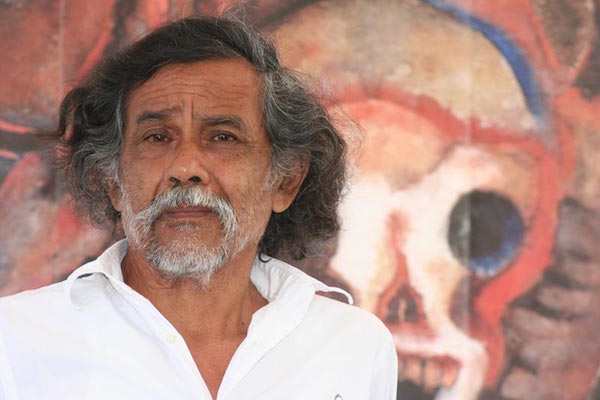
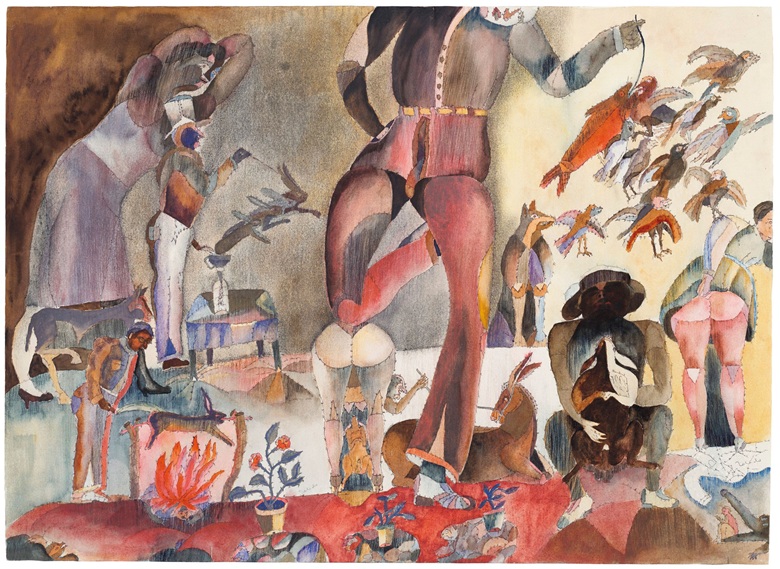
Francisco Benjamn López Toledo was born on this day in 1940 in Juchitán, Oaxaca, the centre of the Indigenous Zapotec culture. His exceptional ability for sketching was discovered when he was just 9 years old, and by the age of 19, he had staged his first solo show. Francisco Toledo was a painter, sculptor, and graphic artist from Mexico. Toledo’s paintings mirror Mexican mythology and frequently show the influence of Surrealism and Paul Klee’s whimsical style. This is seen in his work Hidden Scorpion (1996), in which the artist uses curling fractals to suggest a scorpion’s body. 

“What I do is a mash-up of things,” he added, “but the pre-Hispanic world has been a source of inspiration.” “There are certain decorative solutions that originate from pre-Hispanic art, and there is a lot of primitive art that is polished or basic but yet quite modern.” Toledo, self-described as a grillo (cricket) who thought his work reflected the restless Oaxacan spirit, travelled to Paris in the 1960s to study sculpture, painting, and printing. But he soon ached for the simpler life he had left behind. In 1965, he went to Oaxaca, where his skill and activism played an important part in the development of the southern Mexican state into a centre of the worldwide art community.

During this period, Toledo first gained worldwide popularity with a watercolour series of animal-human hybrids that formed his distinctive style steeped in Indigenous art traditions, Zapotec mythology, and influence from artists such as Francisco Goya. For over seven decades, Toledo experimented with every visual media imaginable, creating around 9,000 pieces ranging from a scorpion sculpture made of turtle shells to cloth puppets. His legacy lives on through the libraries, cultural institutes, and museums he created in Oaxaca, many of which are open to the public.

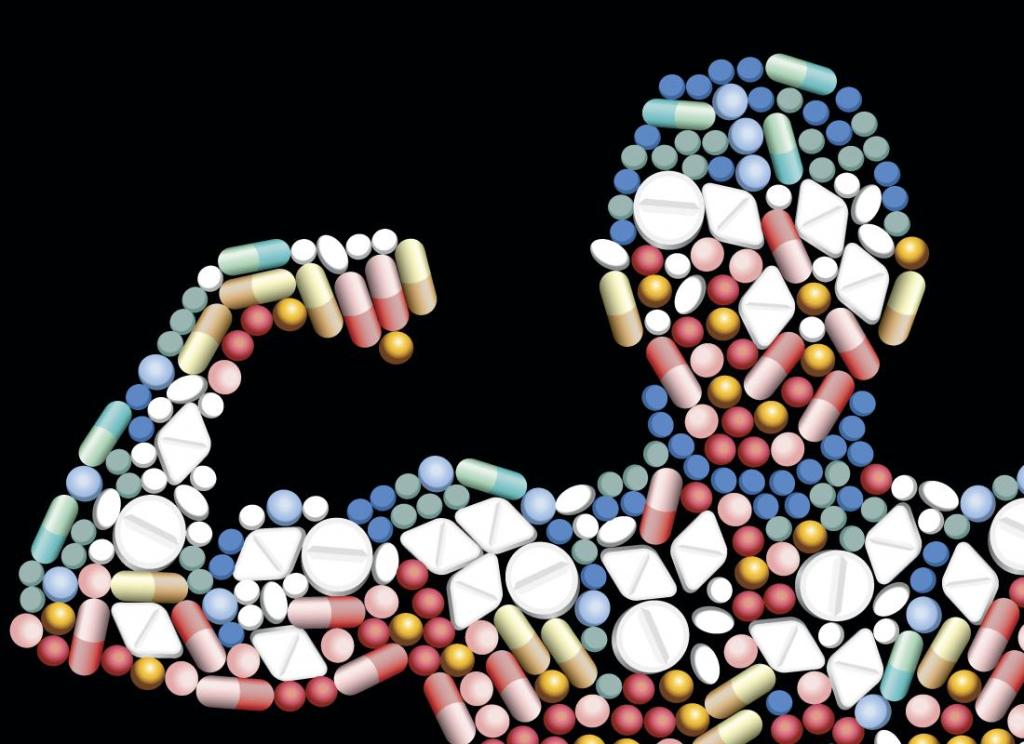
Doping – How is it Affecting Sports?

“Science has learned recently that contempt and indignation are addictive mental states. I mean physically and chemically addictive. Literally! People who are self-righteous a lot are apparently doping themselves rhythmically with auto-secreted surges of dopamine, endorphins and enkephalins. Didn’t you ever ask yourself why indignation feels so good?”

~ David Brin

Introduction

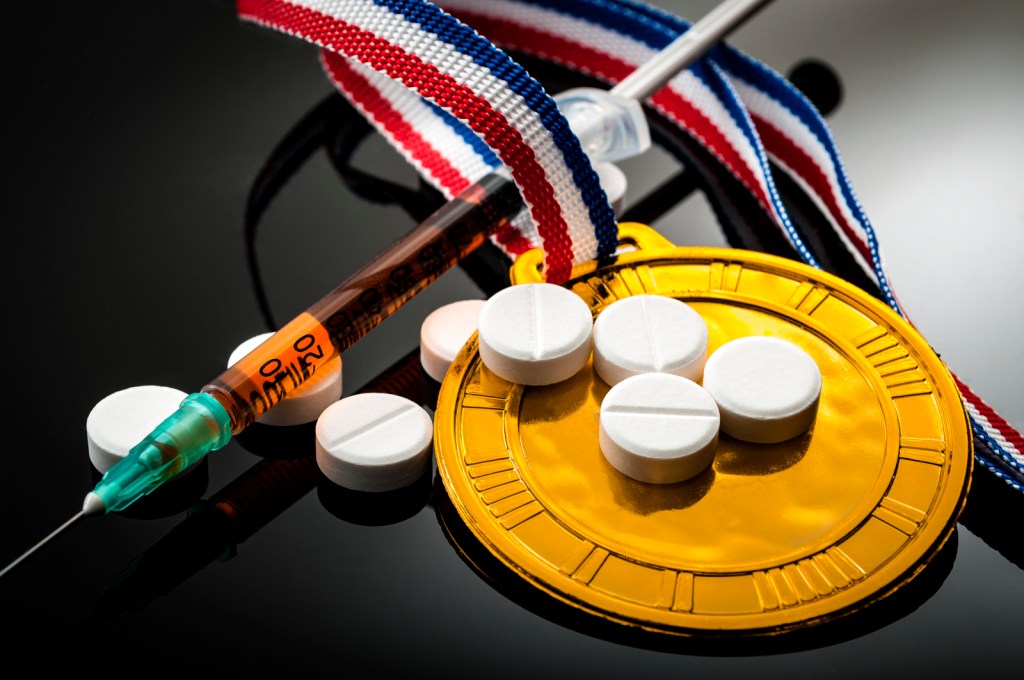
Doping in sport is a widespread problem not just among elite athletes, but even more so in recreational sports. In scientific literature, major emphasis is placed on doping detection, whereas detrimental effects of doping agents on athletes’ health are seldom discussed. Human growth hormone also increases muscle mass, although the majority of that is an increase in extracellular fluid and not the functional muscle mass.

The term doping is widely used by organizations that regulate sporting competitions. The use of drugs to enhance performance is considered unethical, and therefore prohibited, by most international sports organizations, including the International Olympic Committee.

History

According to the World Anti-Doping Agency (WADA), the term “doping” probably comes from the Dutch word “dop,” an alcoholic beverage made of grape skins that was used by Zulu warriors to make them stronger in battle.

Ancient Greek athletes used special diets and stimulating potions to improve performance, and 19th century endurance athletes indulged in strychnine, caffeine, cocaine and alcohol.

The American specialist in doping, Max M. Novich, wrote: “Trainers of the old school who supplied treatments which had cocaine as their base declared with assurance that a rider tired by a six-day race would get his second breath after absorbing these mixtures.”[8] John Hoberman, a professor at the University of Texas in Austin, Texas, said six-day races were “de facto experiments investigating the physiology of stress as well as the substances that might alleviate exhaustion.”

Effects of doping in sports

It builds muscle but causes abnormal growth, heart disease, diabetes, thyroid problems, hypertension, blood cancers and arthritis. Other adverse effects include joint pain, muscle weakness, visual disturbances, enlarged heart and diabetes.

Other side effects include:

  • Heart palpitations.Heart rhythm abnormalities.
  • Weight loss.
  • Tremors.
  • Mild high blood pressure (hypertension)
  • Hallucinations.
  • Stroke.
  • Heart attack and other circulatory problems.
  • Constipation.Skin rash or dermatitis.
  • Diarrhea.
  • Dizziness.
  • Drowsiness.
  • Dry mouth.
  • Headache.
  • Insomnia.

UFC ( Ultimate Fighting Championship ).

In December 2013, the UFC began a campaign to drug test their entire roster randomly all year-round. Random testing, however, became problematic for the promotion as it began to affect revenue, as fighters who had tested positive would need to be taken out of fights, which adversely affected fight cards, and therefore pay-per-view sales.

According to Steven Marrocco of MMAjunkie.com, about 31% of UFC fighters subjected to random testing since the program first started have failed due to using performance-enhancing drugs. That is approximately five failed tests for every sixteen random screenings.

From July 2015, the UFC has advocated to all commissions that every fighter be tested in competition for every card. Lorenzo Feritta, who at the time was one of the presidents of the UFC, said, “We want 100 percent of the fighters tested the night they compete”. Also, in addition to the drug testing protocols in place for competitors on fight night, the UFC conducts additional testing for main event fighters or any fighters that are due to compete in championship matches.

Link

Communication skills

Good communication is very important to convey what is there in the mind. Whatever language, communicating in a understandable way is very important. communication today is very important both in the business world and in private life.

Even though the person is good at skills and is capable of doing things better, lack of communication degrades the skills and brings a negative mark on the person which is a bad thing for the individual.

Top 5 communication skills and How to improve them

Developing strong communication skills is essential when it comes to building a successful careee. Communication skills play a key role in your private life too. These 5 skills are absolutely necessary for sucessful commuincation in the workplace or private life.

1. Listening :

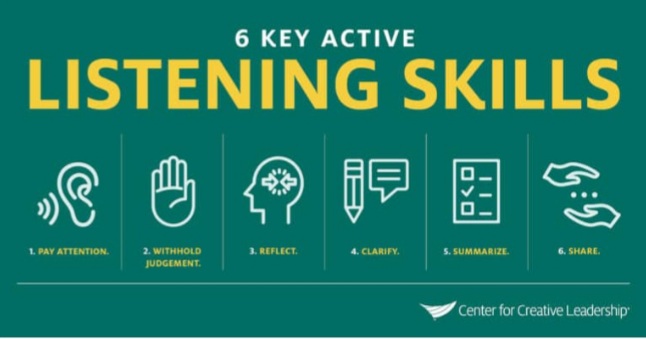
Listening is one of the most important aspects of communication. Successful listening is not just and understanding of spoken or written information, but also an understanding of how the speaker feels during communication. If a speaker can see and feel that someone is listening and understanding that can help build a stronger, deeper realtionship between interlocutors.

Careful listening can also create an environment in which everyone feels safe to express ideas, opinions and feelings, or plan and solve problems in a creative way.

2. Straight talking :

Conversation is the basis of communication, and one must not neglect its importanc. Even a simple, friendly conversation with colleafues can build mutual trust and even detect problems before they become serious. A healthy does of chatting with and unknown person can lead to a business opportunity . Be accessible and friendly because then you will be able to talk to almost anymore.

3. Non- verbal communication :

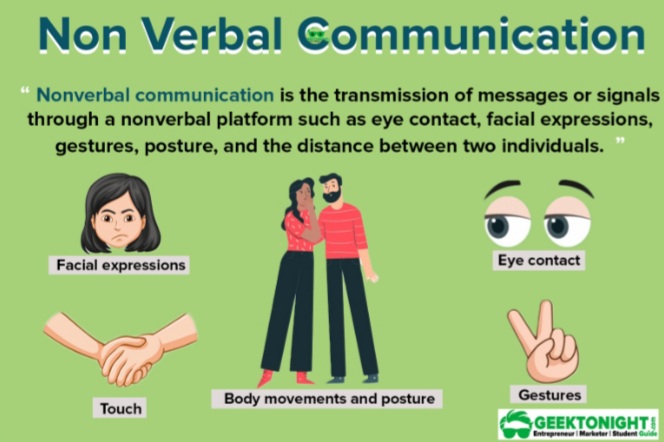
When we talk about things that matter to us then we send a lot of nonverbal messages. Non verbal signals are wordless communication, body position, facial experssion, hand movements, gestures, eye contact, attitude and tone of your voice, muscle tension and the way you breathe. The way you look, listen create, react, gesture , speaks far more about feelings than words will ever be able to.

4. Stress Management :

In small quantities, stress can be very useful and encouraging for work . However, when the stress becomes constant and completely begins to take effect, it can affect communication, clarity of opinion and appropriate behavior and action. When you are under stress you may misunderstand other people, send confusing nonverbal signals, and use funny patterns of behavior.

5. Emotion control :

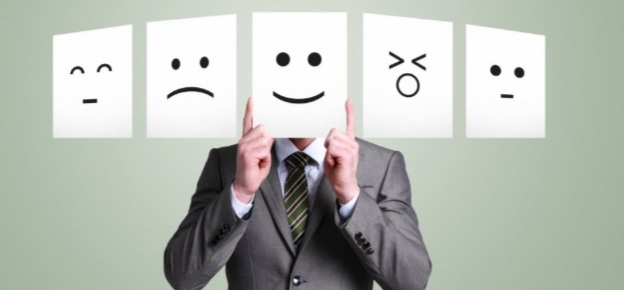
In communication, feelings play an important role. Making decisions more often affects the way you feel than the way you think. Gudided by emotions, your nonverbal behavior affects the understanding of other people and how others understand and perceive you. Control of emotions provides you with tools to understand others, yourself and the messages you send. Though recognizing feelings makes it simple, many people have strong feeling like anger, sorrow, or fear being pushed under the carpet.

Importance of communication :

Communication thus helps understand people better removing misunderstanding and creating clarity of thoughts and expression. The communication brings people together, closer to each other. The communication is an important management function closely associated with all other managerial functions.

Everybody has their own way of communicating. It is influenced by cultural background, the way someone was raised, their gender, their temperament, and much more. At that point true communication may become utterly impossible. Sometimes we may have a difficult time understanding anothers feelings , needs and habits.

* communication serves four major functions with a group of organization :

* control

* Motivational

* Emotional expression

* Information

* communication serves five major purposes :

* to inform

* to express feelings

* to imagine

* to influence and

* to meet social expectations

For example:

For instance, if an individual is going to an interview with great confidence. An individual who is good at different kinds of skills, and also good at executing them and he is lack of communication skills. As the person is not a good communicator, the person faces difficulty in explaining the things to the other person which is known to him. Instantly, this brings a bad impression on the person and a negative mark will be marked on him. The negative mark has a lot to do with. The negative mark can also lead to the rejection of the person in the interview.

Being knowledgeable is very important to achieve certain goals in life, attaining good communication skills and being a good communicator is also equally important to achieve high in the life. Being a good communicator is not A big deal. It is so easy as the lifestyle. Any individual can be good communicator if he communicates all the time with other people in the possible way.

The Amazon

The forest is a peculiar organism of unlimited kindness and benevolence that makes no demands for its sustenance and extends generously the products of its life activity; it affords protection to all beings, offering shade even to the axe-man who destroys it.

– Gautama Buddha

Today , let’s feel the presence of fresh air , waterfall , trees , flora and fauna . Being a citizen of a country , which is well known for its resources , different species, mixed economy and different cultures. It is important for us to see the world of flora and fauna.

Well you get to know by the heading , today we are gonna talk about THE AMAZON’S which is well known for its vast species .

Introduction .


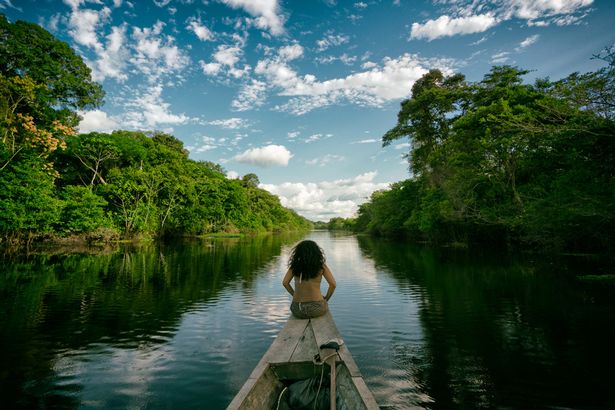
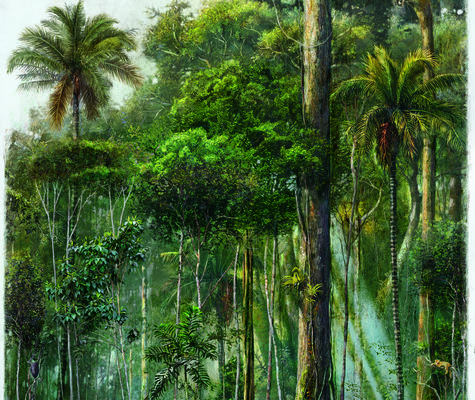
The Amazon jungle or Amazonia, is a moist broadleaf tropical rainforest in the Amazon biome that covers most of the Amazon basin of South America. This basin encompasses 7,000,000 km2 (2,700,000 sq mi), of which 5,500,000 km2 (2,100,000 sq mi) are covered by the rainforest. This region includes territory belonging to nine nations and 3,344 formally acknowledged indigenous territories.

The majority of the forest is contained within Brazil, with 60% of the rainforest, followed by Peru with 13%, Colombia with 10%, and with minor amounts in Bolivia, Ecuador, French Guiana, Guyana, Suriname, and Venezuela. Four nations have “Amazonas” as the name of one of their first-level administrative regions, and France uses the name “Guiana Amazonian Park” for its rainforest protected area. The Amazon represents over half of the planet’s remaining rainforests, and comprises the largest and most biodiverse tract of tropical rainforest in the world, with an estimated 390 billion individual trees divided into 16,000 species.

The name Amazon is said to arise from a war Francisco de Orellana fought with the Tapuyas and other tribes. The women of the tribe fought alongside the men, as was their custom. Orellana derived the name Amazonas from the Amazons of Greek mythology, described by Herodotus and Diodorus.

Flora and Fauna.

Wet tropical forests are the most species-rich biome, and tropical forests in the Americas are consistently more species rich than the wet forests in Africa and Asia.

This constitutes the largest collection of living plants and animal species in the world.

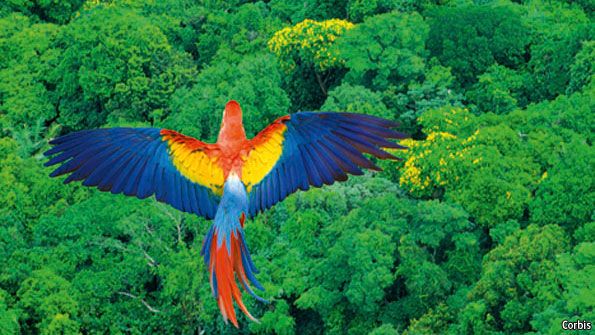
The region is home to about 2.5 million insect species, tens of thousands of plants, and some 2,000 birds and mammals. To date, at least 40,000 plant species, 2,200 fishes, 1,294 birds, 427 mammals, 428 amphibians, and 378 reptiles have been scientifically classified in the region.

The biodiversity of plant species is the highest on Earth with one 2001 study finding a quarter square kilometer (62 acres) of Ecuadorian rainforest supports more than 1,100 tree species.

Human impact on Amazon jungle.

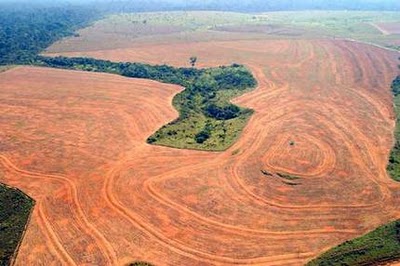
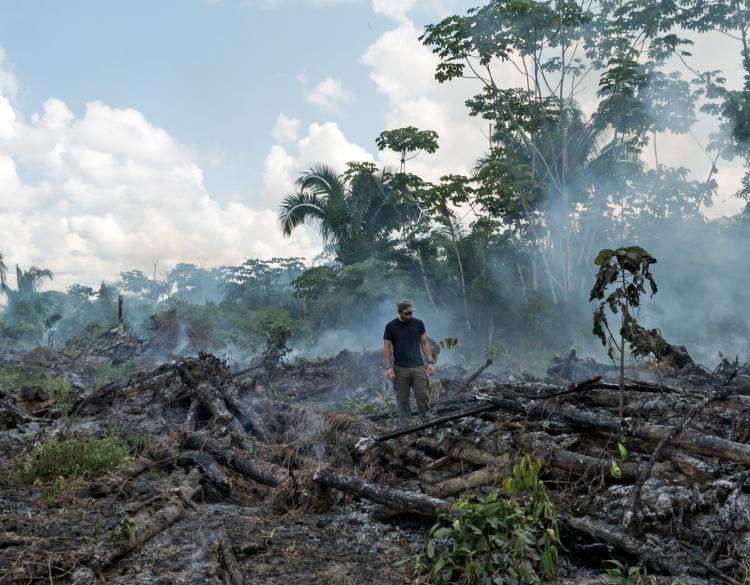
The human impact on the Amazon rainforest has been grossly underestimated according to an international team of researchers. … They found that selective logging and surface wildfires can result in an annual loss of 54 billion tonnes of carbon from the Brazilian Amazon, increasing greenhouse gas emissions.

Lead researcher Dr Erika Berenguer from Lancaster University said: “The impacts of fire and logging in tropical forests have always been largely overlooked by both the scientific community and policy makers who are primarily concerned with deforestation. Yet our results show how these disturbances can severely degrade the forest, with huge amounts of carbon being transferred from plant matter straight into the atmosphere.”

The second author, Dr Joice Ferreira from Embrapa in Brazil, said: “Our findings also draw attention to the necessity for Brazil to implement more effective policies for reducing the use of fire in agriculture, as fires can both devastate private property, and escape into surrounding forests causing widespread degradation. Bringing fire and illegal logging under control is key to reaching our national commitment to reducing carbon emissions.”

The forest is not a resource for us, it is life itself. It is the only place for us to live.

-Evaristo Nugkuag Ikanan

Link

Social Change ( Meaning, Definitions, Causes )

Nothing social remains the same , nothing social abides .

Nature is never at rest . Change is present in the world because change is the Law of Nature .
Like Heraclitus an ancient Greek philosopher said ,
” It is impossible for a man to step into the same river twice “
According to Heraclitean philosophy , “Neither remains the same “, ” the reality of change , the impermanence of being the inconstancy of everything but change itself “

Society we live in is changing .
It’s not a static phenomenon but a dynamic entity . It’s an “ongoing process “subject to constant change due to many forces and factors that irresistibly cause changes .

The perfect example can be observed in our own history , where the man’s rise and growth from the Paleolithic age to the Neolithic age, then to the Stone Age and next to the copper age to development over time, technologies expand, ideologies and values take on new components; institutional functions , modernization etc .

Incessant changeability is the very inherent nature of human society .
Hence , social change is due to the fact that humans are dynamic beings and undergo variation .

Meaning of social change

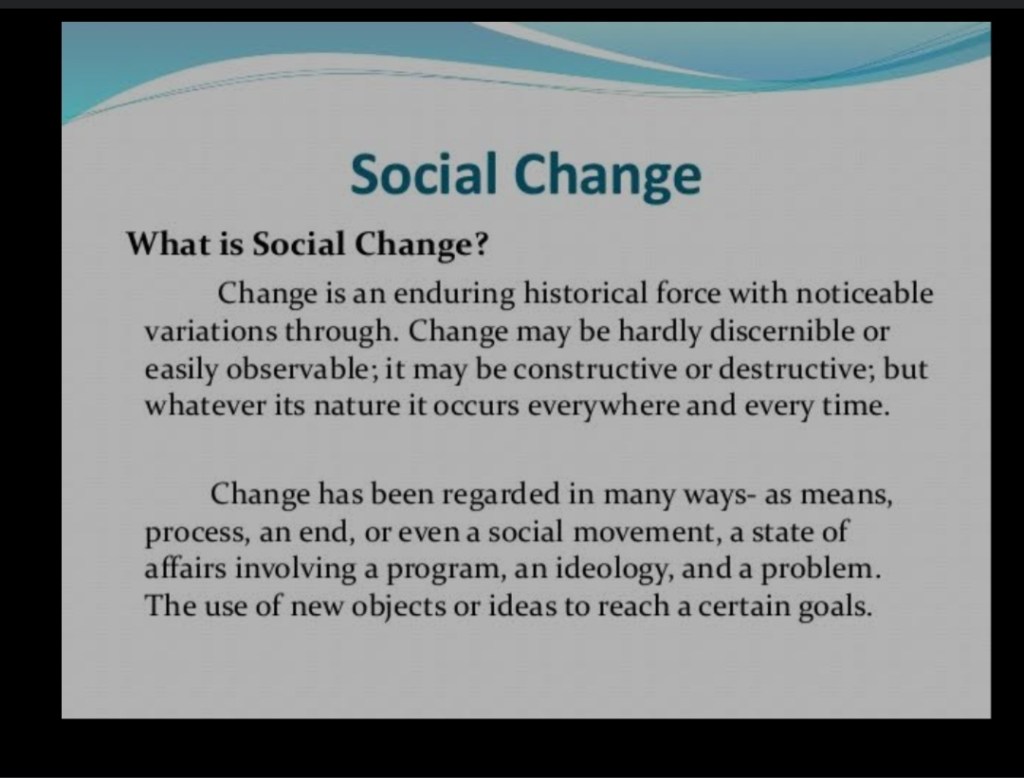
Social change in general means change in society .
Society is a web of Social relationships .

Social relationships include social processes and social interactions .

Hence , ‘social change ‘ is used to indicate the changes that take place in human interaction and interrelations .

Society is composed of a vast and complex network of patterned human relationships in which all humans participate.
When human behaviour is in process of modification , this is another way of indicating social change.
Thus , apparent alteration in the mutual behaviour between individuals which takes place is a sign of social change .

Definitions :-

Social change is a term used to describe variations in or modification of any aspect of social processes , social patterns , social interactions or social organisation .”
– M.E. Jones

By social change is meant only such alterations as occur in social organisation , that is structure and functions of society “
– Kingsley Davis

Social change may be defined as a new fashion or mode , either modifying or replacing the old ,in the life of a people – or in the operation of society “
– Majumdar ,.H.T

Social change refers to a ‘ process ‘ responsive to many types of changes ; to changes in the man-made conditions of life ; to changes in the attitudes and beliefs of men , and to the changes that go beyond human control to the biological and the physical nature of things .”
– MacIver and Page

MacIver also refers to social change as simply a change in human relationships .

Thus , social Change includes alternations in the structure and functions of the society .


Characteristics of Social Change

1:
Social Change is Continuous

2:
Social change is universal

3:
Social Change in Environment

4:
Social Change is Human change

5:
Social Change Results from Interaction of a Number of Factors

6:
Social Change May Create Chain Reaction

7:
Social Change Involves Tempo (or Rate) and
Direction of Change

8:
Social Change maybe planned or unplanned

9:
Social Change is an Objective Term

10:
Social Change can be a short as well as long run process.

11:
Social Change is Temporal


Sources of Social Change

There are several factors due to which social relationships undergo constant alterations .
Sociologists as well as many anthropologists have been debating and discussing the sources of social change .

Fundamentally , there are two factors that are major sources of social change according to various discussions by several sociologists.

Diffusion
• Inventions

The source of social change is to be found in both diffusion and invention .

Social change takes place due to cultural diffusion i.e spread of elements of culture from one local group to another .
Every society borrows the cultural elements of another society for its progress directly or indirectly . Many tribes became more civilized by diffusion of cultural elements from several local groups.

Social change also takes place because of the inherent capacity of people to invent .
Invention refers to the rearrangement of known traits into new patterns or configurations .
Inventions in every field whether industrial , agricultural , communication or transportation had a huge impact on society .
Hence , inventions constitute the major source of social change.


Causes of Social Change


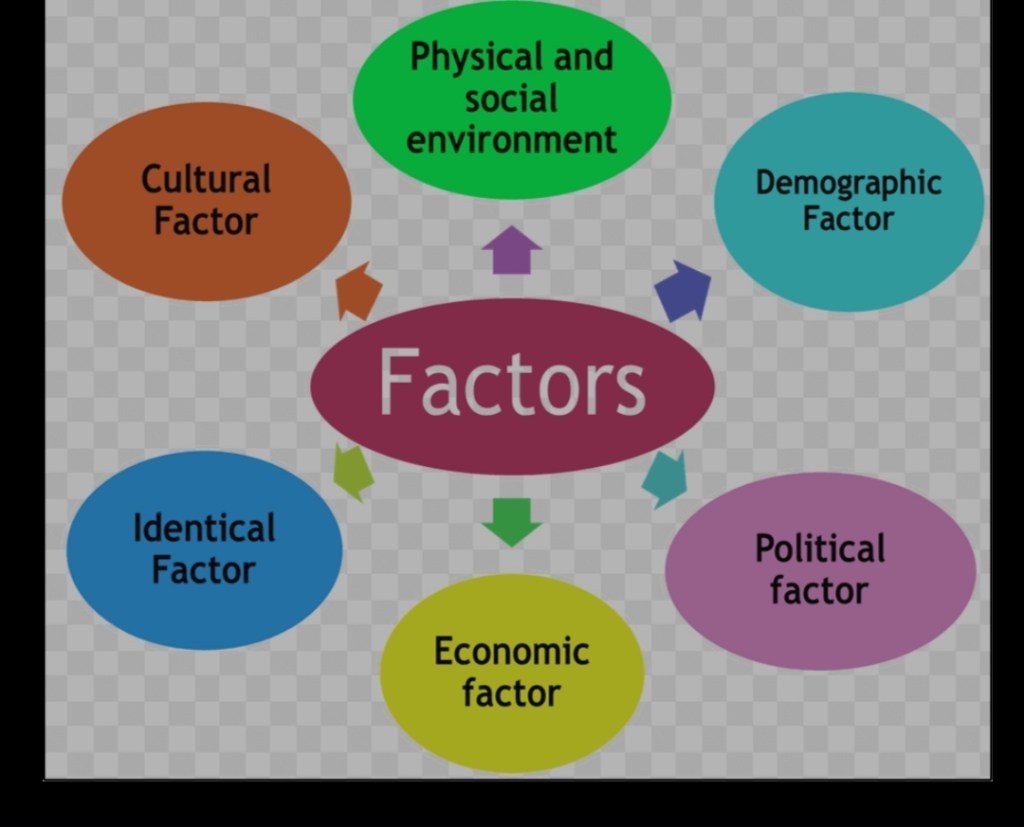
There is no single cause that produces change in society . Several factors operate together to cause social changes .

According to Harry M. Johnson the cause of social change are of three types

i) the causes of social change are inherent either in the general social system or in any specific social system.

ii) the change is caused because of some impact from the social environment of the social system.

iii) changes due to impact from a non – social environment .

The physical , biological , cultural and the technological factors have been generally regarded as the potential factors of social change.
Lapiere regarded these factors as ‘intervening variables ‘ rather than just ‘ causal or determining ‘ factors .


Geographical / Physical Factors


This factor emphasised the impact of the geographical environment upon human society .
According to Huntington ,. alternation in climate is the sole cause of the evolution and devolution of civilization and cultures.
Some social ecologists have attributed much importance to geographical factors for social change.
The physical factors such as climate , rivers ,climate , mountains , natural vegetation etc have profound influence on human society but these factors cannot solely explain the cause of rise and fall of civilization . Hence , the influence of geographical factors are neither decisive nor negligible.

Biological Factors

Biological factors include living and non living creatures. Man is influenced by non-human biological factors and modifies them to serve his purposes .
The biological factors influence the numbers , the composition ,the birth rate , the death rate , the fertility rate and hereditary quality of the successive generations.
Among the biological factors is the qualitative aspect of population , that produces major social change which has dynamic relations with man and society.

Cultural Factors

According to Max Weber theory of comparative study of religious and economic institutions , the main cause of social change is cultural factors.
Cultural factors consist of values and beliefs , ideas and ideologies , morals and manners , customs and traditions and various institutions .
Ideas and ideals , ideologies and philosophies are inherently changeful ,hence not only social values direct social changes but change themselves .
Dawson and Getty have written that culture gives speed and direction to social change and determines the limits beyond which social change cannot occur .
Our behaviour , living , thinking etc are influenced by the changes in social values.

Technological Factors

Technological Factors have immense influence on social change .
Ogburn stated , ” Technology changes society by changing our environments to which we ,in turn , adapt . The change is usually in a material environment and the adjustment we make to the changes often modifies customs and social institutions .”

The increase in new machines , new discoveries had a very great influence upon society.
Technology is the product of civilization .It is a systematic knowledge through which using tools and running machines helps to serve human purpose .
A single invention may have innumerable social changes . In the modern age technological factors are among the predominant causes of social change.


Role of Great Men in Social Change

Great Men like Buddha , Mahavira , Shankaracharya , Jesus Christ , Zoroaster , Prophet Mohammed , Confucius and many other great personalities introduced revolutionary change in the realms of religion .
Napoleon Bonaparte, Washington , Lincoln , Karl Marx, Lenin , Mao Tse Tung , Kemal Pasha , Mahatma Gandhi , Hitler , Mussolini , Khomeini and many others have caused revolutionary changes in the political field .
Similarly many writers , scientists , philosophers have many contributions to social changes .

Great Men and their leadership , revolutionary thoughts , extraordinary talents , powerful expression , ability and efficiency have brought revolutionary and long lasting changes in society .

All Social changes occur because of the actions of men and women .

As Robert Bierstedt said ,

Culture is not self innovating , ideas are not self creating , and technology is not self inventing . Somehow , somewhere , in a society , a man breaks however slightly from tradition . He does some things in a different way . He finds a shortcut . He has a new idea or makes a new discovery . When that happens whether he is a ‘ great man’ or not , he has distributed the stream of culture and like a stone , tossed into the waters , it’s ripples may go on forever . It may affect a while , all the compartments of culture and all the sectors of society .”