

No doubt corruption is one of the biggest obstacles in the growth of our nation. From the last 60 years corruption has deeply installed itself in very root of Indian society. Earlier corruption was mostly synonymous with Government officials. But today even the private sector has joined the race.
Corruption is defined as lack of integrity and honesty or to use a position of trust for personal benefits. In India for any kind of work that needed to be got done from government officer, he had to be bribed first. It does not matter whether the job was perfectly legal and part of his duty.
The corrupt employees went on to amass a large amount of wealth and lead a luxurious lifestyle. This corruption can be seen in every sphere of activity, from the sanctioning of loans to giving licenses or for booking the railway ticket and whether you want admission in a good college, you have to bribe first.
Today India has become an aspiring superpower with the fastest growing economy in the world, Indian companies are raking in millions. But sadly this has led to a more devastating form of corruption called ‘corporate corruption’. While the old corrupt employees of the olden days dealt with thousands or lakhs rupees and these modern corporates corrupt eat away millions of rupees. If all this money is put to use for developing the nation, we could easily feed the poor, treat the sick children, provide shelter to everyone, provide free education to deserving kids.
Some promising steps to root out corruption have come from government. A number of Investigative journalists through their sting operations and reports have nailed down quite a few high profile officers indulging in corruption. But still a lot more needs to be done. Each one of us can help in rooting out corruption by simply refusing to pay bribes to anyone, no matter how urgent our need is.
Tag: #curbcorruption
A Survivor : The Story of Lakshmi Agarwal

She was just a 15 year old girl . A girl , full of life . But what happened to her .
It’s her story . A story of a survivor.
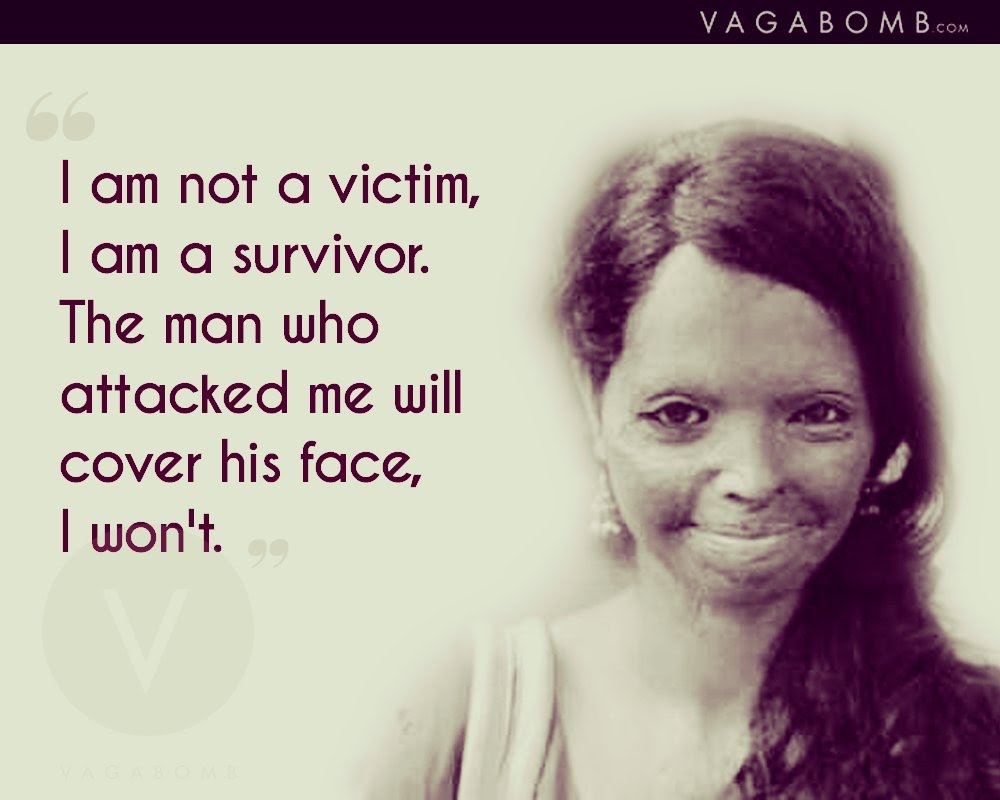
She was powerful not because she wasn’t scared but because she went on so strongly, despite the fear.”
– Atticus
At the age of 15 , when a girl or a boy makes happy memories and learn about life . She was attacked in the market full of people . She was attacked because she rejected an old jerk of 32 years old.
A 32 year old proposed a marriage proposal to a 15 year old girl , who lives near the neighborhood. She ignored and rejected him and he planned an acid attack .
Her name is Lakshmi Agarwal , she was attacked at the age of 15 in 2005 in New Delhi after rejecting the romantic advances of Naeem Khan . She didn’t inform anyone about the scenario because she believed her parents and society would have blamed her and stopped her study .
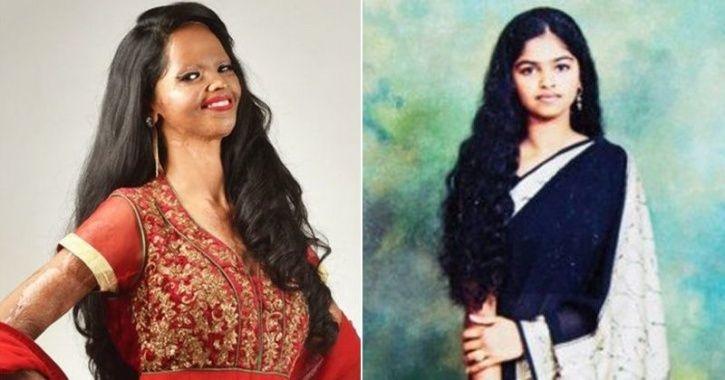
After 10 months , Lakshmi was in the market and Naeem asked her again through message about the marriage proposal but she didn’t respond . And in no time , Kamran (Naeem’s older brother ) and his girlfriend attacked her with acid . He was in the motorcycle and his girlfriend Rakhi threw acid on Lakshmi , when Kamran called her name and she looked behind for response.
She fainted on the road and when she regain consciousness she went middle of the road asked for help and met with multiple accidents but no one stopped to help her . She was burning in fire and her skin was melting.
A man named Arun Singh called PCR and told police about the situation . Someone threw water to help her but it turned out opposite and the acid burnt her neck . Arun think it might be late , so he helped her on the backseat of his car , later the seat cover turned into black hole due to the acid .
Arun admitted her in the hospital , called police and her family . Lakshmi went through many surgeries and operations including eye surgery. Four days later Naeem Khan got arrested but was bailed after a month later .

Protests and media attention.
After many protests and media attention Naeem got life imprisonment .
Lakshmi’s story was one of the series in the Hindustan Times. Lakshmi was scared after the attack because most of her face and body parts were not same as before . But she didn’t loose hope ,she fought for justice , asked for help for the victims of acid attacks and pleaded the law for the ban on sale of acid.
Meanwhile government failed to frame policies on acid sale and chemical attacks .
“ Seriousness is not seen on the part of the government in handling the issue,” the bench headed by Justice RM Lodha.
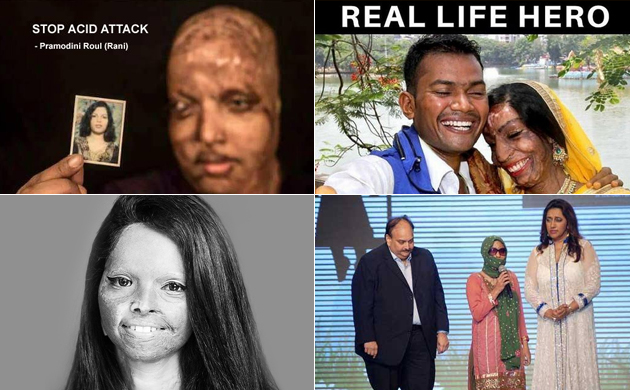
In 2013 , the plea of Agarwal was heard and later claims that “ Acid is freely available in shops. Our own volunteers have gone and purchased acid easily. In fact, I have myself purchased acid,” she said. “We have launched a new initiative called ‘Shoot Acid’.
After , the law passed by Supreme court . Lakshmi founded NGO named Chhanv Foundation to help acid attack survivors in India.
In 2019, she was honored with the International Women Empowerment Award from the Ministry of Women and Child Development, the Ministry of Drinking Water and Sanitation and UNICEF for her campaign of Stop Acid Sale. In 2014, she received the International Women of Courage award at the hands of First Lady Michelle Obama.

And the movie Chhapaak is based on her life and stars Deepika Padukone in her role.

“And one day she discovered that she was fierce, and strong, and full of fire, and that not even she could hold herself back because her passion burned brighter than her fears.”
– Mark Anthony
Link
CHILD TRAFFICKING
Introduction
In India child trafficking is a very serious issue. This is happening because there are a number of people who fall under the poverty level category and it is usually this demographic that is subject to child trafficking. The majority of the country’s trafficking problem is internal. This means that usually the most unprivileged families and disadvantaged people of the countries like the Dalits, religious minorities, tribal community members, and girls from different minority groups etc have to face this. Due to poor socio-economic situations, people take advantage of the poor parents and thereby leaving their children into such trafficking rings. The parents from these poor backgrounds assume that the children are going to live in better conditions but in reality, the children are kidnapped and taken advantage of.
What is child trafficking
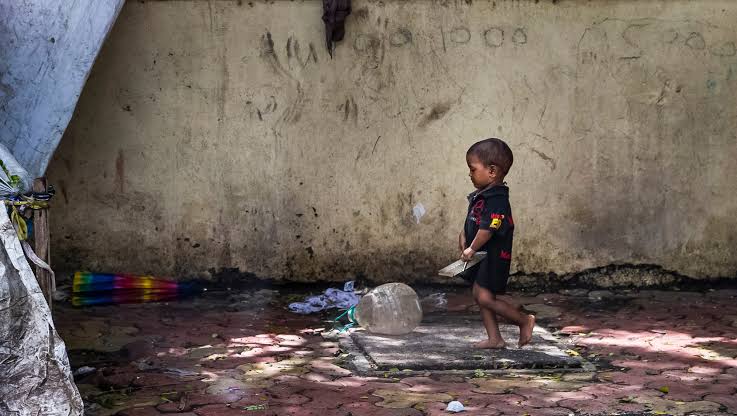
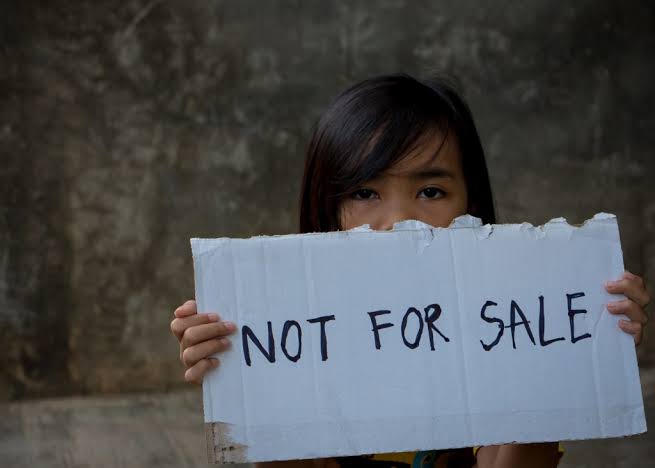
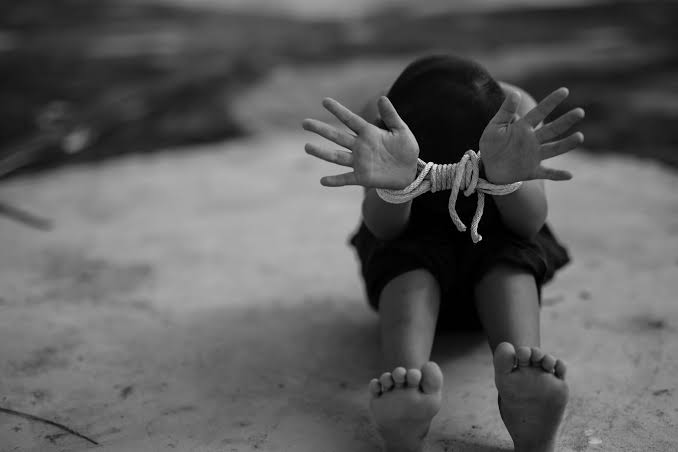
Child trafficking is a practice where children are taken away from their family and later they are forced to beg on streets, do some form of work, used for sex or simply sold.
Child trafficking is linked to demand for cheap labour, especially where the working conditions are poor. Children are forced to do many dangerous stunts and also in illegal situations. Such works include slavery, domestic labour, sexual exploitation or prostitution, drug couriering and being turned into child soldiers. Those children are exposed to many dangerous situations like working in hazardous environments. Many are also denied the chance to reach their full potential because they don’t get an education or have the freedom to make their own choices. Children become separated from their families. They are left without protection and are easy prey for traffickers to exploit either by force or with false promises.
How many children are affected by child trafficking?
It is estimated that almost 21 million people are trapped in forced labour or slavery among which one in every four people are under the age of 18.
Almost 5.5 million children are victims of child trafficking around the world. They suffer violence, exploitation and abuse – ending up in work, forced marriage, prostitution, begging and armed recruitment.
Causes of child trafficking
Poverty
Poverty is one of the main causes of child trafficking. Poor parents were sometimes forced to abandon their children in the hands of traffickers assuming that they would lead a happy life.
Humanitarian Crises
Child trafficking is particularly prominent in areas struck by natural disasters.The countries where human rights are violated have a higher rate of child trafficking.
Lack of Education
Illiteracy and the lack of education make families more vulnerable to traffickers.
Absence of Birth Registration
The children whose births were never registered are the most threatened.
Lucrative Activity
Child trafficking is extremely lucrative.
International Adoption
International adoption is very common among infertile couples. Traffickers and dishonest adoption agencies take these advantages and they don’t get much trouble finding potential clients.
Use of Children
Children are sold for the purposes of sexual exploitation, begging, soliciting, or for forced marriages. Their life comes to risk while doing construction work, working in factories, or are employed as domestic servants. Children are given a substantial sum of money to parents waiting to adopt.The sale of child organs is also a very infamous practice done by the traffickers. To earn a good living, many children agree to sell one of their kidneys for money.
Prevention of child trafficking
1. Foster the spread of education.
2. Spread awareness among parents and communities. …
3. Strict laws in place to prevent child trafficking. …
4. Encouraging business to not use child labour. …
5. We must support NGOs like Save the Children in the fight against trafficking.

http://www.ilo.org/ipec/facts/lang–en/index.htm
http://www.un.org/en/events/childlabourday
@track2traininginstitute @track2trainingseminar @edunewsnetwork @track2trainingservice
Right to Information as a tool to Fight against Corruption

Our ruling party has declared the battle against corruption to be a top priority. However, corruption is still widespread in the country, with numerous cases of political and bureaucratic corruption, public funds theft, fraudulent procurement practices, and judicial corruption. It is the abuse of authority and money by governments and individuals for personal gain, such as lobbying or diverting funds intended for public welfare into private sectors.
Corruption is a problem that, like a weed in a crop, threatens government transparency and citizen accountability. However, where there is a problem, there is also a solution: RTI.
Yes, Information is power but not by itself. Information, on the other hand, is an essential first step in the exercise of economic and political power. Changes in who can do what are brought about through opening up information channels.
In India, the government passed the landmark Right to Information Act in 2005 after a statewide movement driven by grassroots and civil society organizations. Since then, social activists, civil society organizations, and ordinary citizens have used the Act to effectively combat corruption and increase government transparency and accountability.
Right to Information laws give citizens the legal right to access information stored by their governments, bringing much-needed transparency to the government’s otherwise opaque operations. More than 80 countries have now passed such legislation, with the number expanding every year. The RTI Act of India is widely regarded as a robust and effective statute. Over the last six years, ordinary Indian residents have used the RTI to demand a wide range of information from their government.
The RTI Act of 2005 was enacted by the Government of India to provide transparency to an environment riddled with intrigue, secrecy, and corruption. This law has been used quite effectively by Indian citizens to bring about both large and little changes. The RTI Act has profoundly altered the power dynamic between the government and the governed, bringing together individuals who wield state authority in any form on the one hand, and millions of people who are impacted by the state’s decisions and operations on the other. No other law in India’s statute book allows citizens so much ability to question any public authority in the country in such a straightforward manner. And every citizen needs to take advantage of this power which is given to them by asking questions to their government by filing RTI requests, rather than assuming that they are answering us because it is their right to inquire.
curbing the corruption.
Politics is an art of making your selfish desires fulfilled, seems like national interest.
Universal Adult Franchise is a rule in India in which people above 18 years of age vote for their political parties, but the process of election is not heedless, indeed it requires money. According to the rules of election board, the parties indulged in election, cannot spend beyond 1 lakh, but this rule is known to few. Knowing this one ponders, the source from where these political parties fulfill their avarice, is ‘ We’ , the people who elect them.
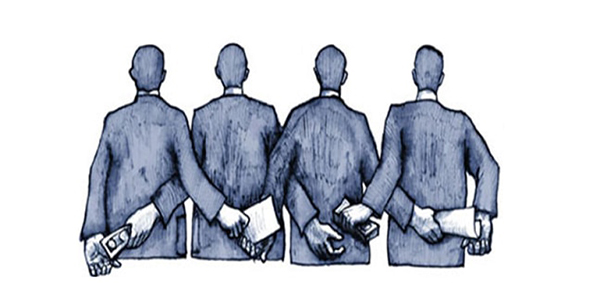
Elections are held once in 5 years in any state and with their onset, many political parties usher in with their symbols, slogans, rallies making clear their vision about the future of the country. In shout, they indirectly demand votes from us, indeed a handsome amount of money. Many builders, businessmen send them a hefty amount of money so that political parties can hide their illegal works. This money is used, indeed wasted in hiring thugs or given to younger boys and girls or for advertisement so that the party could win. This whole process gnaws the backbone of the honest and fair election system of India.
Corruption prevails in every government sector and no government sector or process is hurdle free or result oriented.
At length, it can be said that :
‘The citizens need to be vigilant and wise enough, to curb the roots of corruption within political parties.
It is important for citizens to be aware’.
 Eduindex
You must be logged in to post a comment.