What State Nicknames Actually Mean — And Why Most Are Not Official

Daily writing prompt
Where would you go on a shopping spree?

Every American state carries at least one nickname. You see them on license plates, welcome signs, and sports jerseys. But most people have never stopped to ask where these names came from — or whether any government body ever made them official. The symbols usa encyclopedia covers every state designation in depth, and the origins of nicknames alone tell a remarkable story.

The answers are more complicated than you might expect.

Most State Nicknames Were Never Voted On
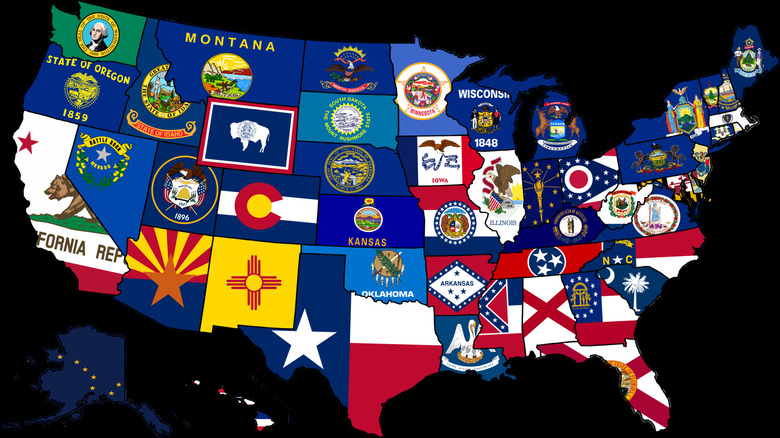
Here is something that surprises people: only about 14 of the 50 states have formally adopted their nicknames through state legislation. The rest exist through popular use, tourism marketing, or tradition — with no legal standing at all.

California’s “The Golden State” was codified by the state legislature in 1968. Florida made “The Sunshine State” official in 1970. Connecticut adopted “The Constitution State” back in 1959. But for the remaining states, nicknames occupy a gray zone: they show up on highway signs and bumper stickers while no law has ever declared them anything.

Washington State is a good example. “The Evergreen State” has been in use for decades, appeared in travel guides and state publications — yet as of early 2025, legislation to formalize it still had not passed. Arizona’s “The Grand Canyon State” had been on license plates since the 1940s but wasn’t legally adopted until 2011, after a California schoolgirl wrote a letter asking why it wasn’t official.

The Three Types of State Nickname

Researchers and educators generally split state nicknames into three categories:

Official — enacted by the state legislature, codified in statute. Examples: Nebraska’s “The Cornhusker State” (1945), New Mexico’s “The Land of Enchantment” (1999), South Dakota’s “The Mount Rushmore State” (1992).

Semi-official — appear on license plates, welcome signs, or official state materials but were never passed into law. Texas’s “The Lone Star State,” New York’s “The Empire State,” and Virginia’s “The Old Dominion” all fall here. They feel official. They are not, legally.

Unofficial — exist only through popular use, with no government recognition at any level. Alabama’s “The Yellowhammer State,” Georgia’s “The Peach State,” and Wisconsin’s “The Badger State” are examples.

The full breakdown of all 50 states with official status and adoption years is in the state nicknames and meanings guide.

Nature-Based Nicknames Are the Largest Group

If you scan all 50 nicknames, the biggest theme is geography and natural landscape. States named their territories after what people saw when they arrived: trees, animals, minerals, terrain.

Maine became “The Pine Tree State” because of its vast forests of Eastern White Pine — the same tree depicted on the state flag. Oregon’s “The Beaver State” honors the animal central to the Pacific Northwest fur trade. Washington’s “The Evergreen State” reflects its forests of Douglas fir and western red cedar.

Mississippi chose “The Magnolia State” after the flowering trees that grow across its landscape. Vermont’s name is itself a French phrase — les Verts Monts, meaning “the green mountains” — and “The Green Mountain State” is simply an English translation of the state’s own name.

Kansas has “The Sunflower State” because wild sunflowers blanket its prairies each summer. Kentucky’s “The Bluegrass State” refers to the blue-green grass in the central part of the state, where most of its famous horse farms sit.

Nicknames Rooted in History

Some nicknames preserve specific moments from American history — moments that would otherwise be forgotten.

Delaware earned “The First State” through a single meeting: on December 7, 1787, it became the first of the original 13 colonies to ratify the U.S. Constitution. Colorado became “The Centennial State” because it entered the union in 1876, the nation’s 100th year.

Tennessee got “The Volunteer State” during the War of 1812. Thousands of Tennesseans stepped forward to fight under Andrew Jackson at the Battle of New Orleans before any official recruitment had even begun. The memory stuck.

Oklahoma’s “The Sooner State” is darker. It remembers the settlers who entered Oklahoma Territory before the official land rush of April 22, 1889 — breaking the rules to claim land ahead of everyone else. The word “sooner” described anyone who jumped the starting signal.

Virginia’s “The Old Dominion” goes back further still. During the English Civil War, King Charles II reportedly gave Virginia the title for remaining loyal to the Crown. It predates American independence by over a century.

The Nicknames Nobody Can Fully Explain

Indiana’s “The Hoosier State” has no agreed-upon origin. The Indiana Historical Bureau lists over a dozen competing theories. One says early settlers called out “Who’s here?” when visitors knocked. Another credits a labor contractor named Samuel Hoosier who preferred hiring Indiana workers. A third traces the word to a dialect term for hill dwellers. No single explanation has ever been confirmed.

Missouri’s “The Show-Me State” is often attributed to Congressman Willard Duncan Vandiver, who reportedly said in 1899 that frothy eloquence did not satisfy him and that people had to “show him.” But the phrase was already circulating before that speech. Its true origin has never been pinned down.

North Carolina’s “The Tar Heel State” started as an insult. The name referenced workers in the tar and turpentine industry, or possibly Civil War soldiers threatened with tar on their heels to stop them retreating. Either way, North Carolinians eventually adopted it as a point of pride.

When States Change Their Nicknames

State nicknames are not always permanent. South Dakota replaced “The Coyote State” with “The Mount Rushmore State” in 1992, judging that a national monument made a stronger identity statement than a native animal. Arkansas dropped “The Land of Opportunity” in favor of “The Natural State” in 1995, shifting the emphasis from economic promise to natural beauty and outdoor tourism.

These changes reflect how states want to be perceived — by residents, by tourists, and in competition with neighboring states for attention and investment.

Why This Matters for Education

For students and teachers, state nicknames are a surprisingly efficient entry point into American history and geography. A single nickname can anchor a discussion of the Gold Rush, Reconstruction, the fur trade, or the Constitutional Convention. The stories behind “The Garden State” (New Jersey’s agricultural heritage feeding colonial cities), “The Beehive State” (Utah’s Mormon settlement patterns), or “The Last Frontier” (Alaska’s purchase from Russia in 1867 for $7.2 million) all connect directly to curriculum content.

Green and efficient synthesis of hydrogen peroxide under sunlight could benefit the industry

Daily writing prompt
Where would you go on a shopping spree?

Researchers have found an efficient, less energy-intensive, and environmentally friendly way of synthesizing hydrogen peroxide, a chemical that is crucial to the industry for disinfection, paper bleaching, and so on.

Hydrogen peroxide (H2O2) is a versatile oxidizing agent that is widely used in environmental disinfection, chemical synthesis, paper bleaching, and fuel cells. In addition, the growth of this market is driven by the increasing awareness of disinfection, the rise in the number of surgeries, the prevalence of hospital-acquired infections, and so on. Currently, over 95% of H2O2 is produced industrially using the anthraquinone oxidation process, which is very energy intensive, expensive and produces many hazardous chemicals as by-products.

Scientists are therefore looking for an environmentally friendly and economical strategy to produce H2O2 from renewable resources with minimal environmental impact. In this context, a new class of porous and ordered polymers with modifiable catalytic sites and light-harvesting properties in visible range, called covalent organic frameworks (COFs), have emerged as promising photocatalysts.

Figure 1.  Sustainable synthesis and versatile applications of hydrogen peroxide.

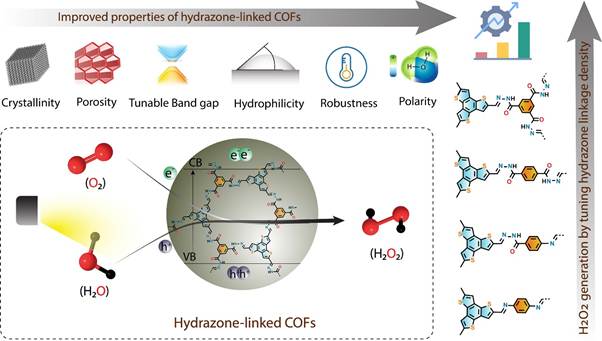
Researchers at S. N. Bose National Centre for Basic Sciences, Kolkata, an autonomous institute under the Department of Science and Technology (DST), have designed and prepared a series of COFs having good water affinity through careful control of the hydrazone linkage density and studied their effect on the photocatalytic performance for H2O2 generation. It was observed that the hydrazone-linked COFs provide abundant docking sites for water and oxygen, thereby promoting water oxidation reaction (WOR) and oxygen reduction reaction (ORR) – two main pathways for photocatalytic H2O2 generation.

As a result, the hydrazone-linked COF exhibited exceptional photocatalytic H2O2 production without external sacrificial electron donors when irradiated with a 40 W blue LED (λ = 467 nm). Interestingly, a significant amount of H2O2 (550 μmol g-1 h-1) was also produced under sunlight irradiation, which outperforms most organic photocatalysts under similar conditions, thus demonstrating a clean and sustainable pathway.

Furthermore, as-synthesized hydrazone-linked COFs can generate H2O2 up to 21641 μmol g-1 h-1 using an aqueous benzyl alcohol solution (water: benzyl alcohol = 90:10) by preventing the degradation of H2O2. This strategy of using a mixture of water-benzyl alcohol solution will be helpful in developing a continuous flow reactor for the sustainable production of H2O2 and will reveal a laboratory-to-industry technology transfer for the benefit of mankind.

***

PRESIDENT OF INDIA INAUGURATES VISITOR’S CONFERENCE 2024-25

Daily writing prompt
Where would you go on a shopping spree?

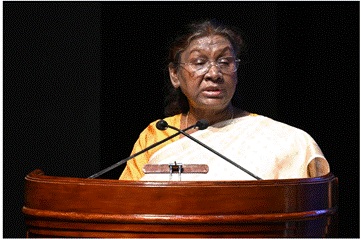
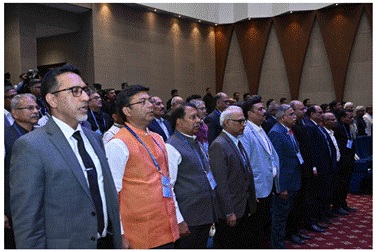
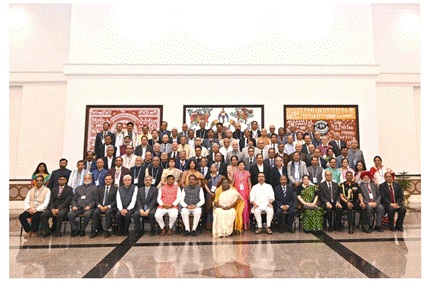
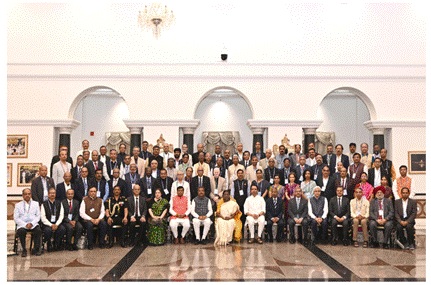
The President of India, Smt Droupadi Murmu inaugurated the two-day Visitor’s Conference 2024-25 at Rashtrapati Bhavan today (March 3, 2025). The President of India is the Visitor of 184 Central Institutes of Higher Education.

In her inaugural address, the President said that the level of development of any country is reflected in the quality of its education system. She told the heads of the institutions of higher learning that they have a crucial role in achieving the goal of establishing India as an important centre of the knowledge economy. She highlighted the need to pay a lot of attention to research along with education. She said that the Government of India has established the National Research Fund with a very good objective. She expressed confidence that institutions of higher learning would make good use of this important initiative and encourage research.

The President said that the ambition of our higher education community should be that researchers from our institutions get recognition at the world level, patents of our institutions can bring change in the world, and students from developed countries choose India as a preferred destination for higher education.

The President said that students from India enrich the world’s leading educational institutions and developed economies with their talent. She emphasised the need of making efforts to utilize their talent in our country. She stated that our national goal of establishing India as a Global Knowledge Super Power would be achieved only when the world community is eager to adopt the work being done in our laboratories.

The President said that many higher education institutions of our country have global brand value. The students of these institutions get big responsibilities in the best institutions and companies of the world. However, all our institutions should move ahead very fast. The leadership of heads of institutions of higher learning would be recognised by developing and utilising the immense talent of our large youth population.

The President said that along with excellence, social inclusion and sensitivity should also be an essential aspect of our education system. No economic, social, or psychological limitation of any kind should be a hindrance in getting higher education. She said that heads and teachers of institutions of higher learning should take care of young students, remove any insecurity from their minds and provide them moral and spiritual strength. She urged them to make every possible effort to provide counselling and inspiration to students and spread positive energy in the campuses.

The President said that our country has a rich tradition of scientific achievements. The branches and sub-branches of Indian knowledge and science have flourished in every region of the country. It would be very useful to rediscover the invaluable but extinct streams of knowledge and science by doing intense research. She stated that it is the responsibility of the higher education ecosystem to find ways to use such organically grown knowledge systems in today’s context.

The President said that educational institutions shape the future of the nation. Young students learn from the conduct of our policy makers, teachers, heads of institutions, and senior students. She expressed confidence that with their global thinking, the heads of higher learning institutions would prepare a generation of builders of a developed India.

During the inaugural session, the President presented the eighth Visitor’s Awards in the categories of Innovation, Research, and Technology Development.

The Visitor’s Award for Innovation was given to Prof Saripella Srikrishna, Banaras Hindu University, for developing Novel Indigenous Innovation in Quantum Technology to boost the National Green Hydrogen Mission.

The Visitor’s Award for Research in the field of Physical Sciences was conferred upon Prof Ashwini Kumar Nangia, University of Hyderabad, for his seminal research in the discovery and development of high bioavailability drugs and pharmaceuticals with enhanced efficacy at affordable cost.

The Visitor’s Award for Research in Biological Sciences was jointly presented to Prof Rina Chakrabarti, University of Delhi and Prof Raj Kumar, Central University of Punjab. Prof Chakrabarti has been conferred the Award for her research contributions to Sustainable Freshwater Aquaculture while Prof Raj Kumar has been presented the Award for his research contributions to exploring various cancer hallmarks and the development of synthetic anticancer lead molecules.

The Visitor’s Award for Technology Development was presented to Dr Venkateswarlu Chintala, Gati Shakti Vishwavidyalaya, for his research contributions to the petrol and diesel production at commercial scale from landfill municipal mixed plastic waste.

Tomorrow, the Conference will deliberate on issues such as – Flexibility in academic courses, Credit Sharing and Credit Transfer with multiple entry and exit options; Internationalisation efforts and collaboration; Translation Research and Innovation related to converting research or innovation into useful products and services; Effective student selection processes and respecting student choices in context of NEP; and Effective assessments and evaluation. The outcome of these deliberations will be presented before the President in the closing session of the Conference.

Shri Dharmendra Pradhan, while presenting the opening remarks, expressed his gratitude to the President, Smt. Droupadi Murmu, for guiding the academic fraternity with constant guidance, steady support, and visionary leadership. He also congratulated all the distinguished recipients of the 8th Visitor’s Awards.

Shri Pradhan mentioned that Smt. Droupadi Murmu’s leadership has always shown the way forward in breaking new ground in education, achieving national educational priorities, navigating the ever-evolving learning landscape, as well as taking significant strides toward making India the epicentre of knowledge, research, and innovation.

He urged the participants of the Conference to share their concerns, discuss best practices, and envision the future of higher education. He also highlighted that NEP 2020 stands at the heart of today’s discussions, a transformative blueprint reshaping the country’s education system.

The Minister urged everyone to create an ecosystem that empowers the youth, strengthens the workforce, and accelerates India’s journey toward Viksit Bharat 2047.

Expressing his gratitude to Prime Minister Shri Narendra Modi for his clarion call of Viksit Bharat by 2047, the Minister said the nation ought to be self-reliant, innovative, and knowledge-driven. Education must go beyond degrees; it must create thinkers, innovators, solution-givers, and job creators, for which the implementation of NEP 2020 in letter and spirit is essential, he noted. He emphasized the importance of rising above institutional silos to ensure that NEP 2020 translates into real and long-lasting impact.

He stressed the importance of working collaboratively and sharing best practices to optimize academic strength, strengthen policies, and execute them well with a real impact on the ground.

Showing his optimism, he said that academic institutions will emerge as the lighthouse of Viksit Bharat, anchoring the developmental journey in the Amrit Kaal and beyond. He also expressed confidence that the Visitor’s Conference will provide a clear roadmap for holistically transforming the education system, empowering the youth, strengthening the workforce, and establishing India’s higher education ecosystem as a global benchmark.

Please click here to see the President’s Speech: https://static.pib.gov.in/WriteReadData/specificdocs/documents/2025/mar/doc202533511401.pdf

*****