Recycled & Secondary Materials in the Construction of Roads

Daily writing prompt
What is one thing you would change about yourself?

By Kavita Dehalwar

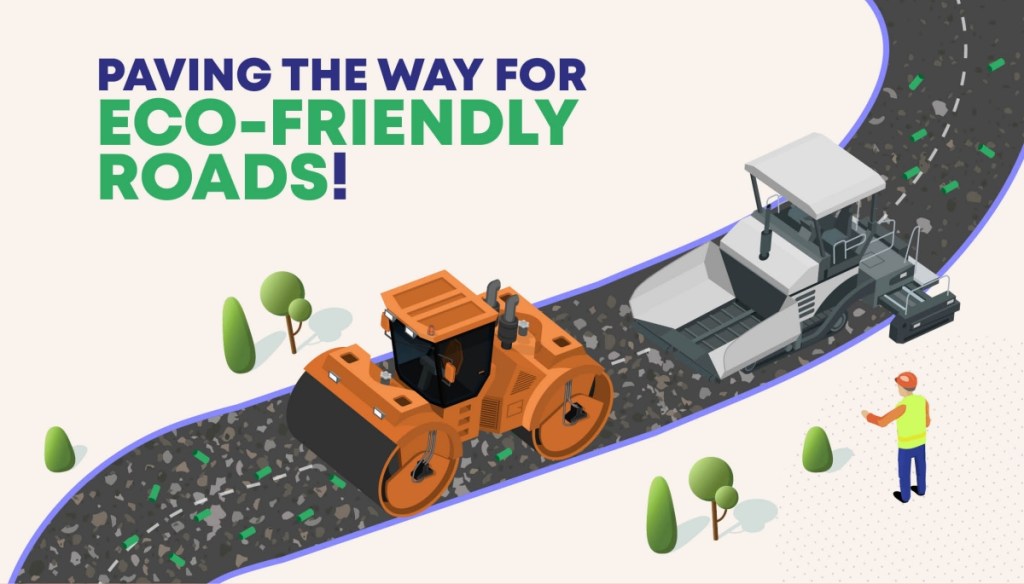
The use of recycled and secondary materials in road construction has emerged as an essential practice for achieving sustainability in the infrastructure sector. These materials not only reduce the demand for natural resources but also mitigate environmental impacts by repurposing waste products. Below is a detailed examination of the topic, highlighting types of materials, benefits, challenges, and future directions.

1. Types of Recycled and Secondary Materials

Several recycled and secondary materials can be used in road construction, including:

  • Recycled Asphalt Pavement (RAP): Milled material from existing roads, used as a cost-effective substitute for virgin asphalt.
  • Recycled Concrete Aggregate (RCA): Crushed concrete from demolished structures, utilized in sub-base layers or as aggregate in new concrete.
  • Steel Slag: A byproduct of steel production, known for its strength and skid resistance, suitable for aggregates in base layers.
  • Crushed Glass (Glassphalt): Recycled glass incorporated into asphalt mixtures.
  • Rubberized Asphalt: Ground rubber from waste tires mixed with asphalt binders to enhance durability and flexibility.
  • Fly Ash and Bottom Ash: Byproducts of coal combustion, often used as fillers or stabilizers in subgrade soils.
  • Plastic Waste: Melted or shredded plastics incorporated into asphalt mixes to improve durability and resistance to cracking.

2. Benefits

  • Environmental Sustainability:
    • Reduces the need for virgin materials, conserving natural resources like aggregates and bitumen.
    • Diverts waste from landfills and reduces pollution.
    • Lowers greenhouse gas emissions by minimizing the extraction and transportation of raw materials.
  • Economic Advantages:
    • Cost savings from using readily available waste materials.
    • Extended lifespan of roads due to enhanced properties of recycled materials (e.g., rubberized asphalt reduces cracking and maintenance needs).
  • Performance Improvements:
    • Some materials, such as steel slag and rubberized asphalt, improve road strength, flexibility, and resistance to wear.

3. Challenges

  • Material Quality and Consistency:
    Recycled materials can vary in composition and quality, leading to potential performance issues if not properly processed and tested.
  • Technical Limitations:
    • Compatibility of recycled materials with traditional road construction processes can be challenging.
    • Limited research on long-term durability for some innovative materials (e.g., recycled plastics).
  • Regulatory and Standardization Barriers:
    • Lack of universal standards and guidelines for incorporating recycled materials into road construction.
    • Hesitation among contractors and governments due to the perceived risks associated with new materials.
  • Economic Factors:
    • Initial costs of processing and testing recycled materials can be high.
    • In some regions, the availability of virgin materials at low cost reduces the economic incentive to use alternatives.

4. Case Studies

  • Rubberized Asphalt in the United States: States like California and Arizona have successfully used rubberized asphalt in highway projects, reducing waste tires and improving road durability.
  • Plastic Roads in India: Cities like Chennai have pioneered the use of shredded plastic in road asphalt, offering a sustainable solution to plastic waste while enhancing road performance.
  • Steel Slag Roads in Europe: Countries such as the Netherlands have utilized steel slag aggregates for base layers, demonstrating improved load-bearing capacity and lifespan.

5. Future Directions

  • Innovation in Material Processing:
    Advances in processing technologies can improve the quality and consistency of recycled materials, making them more viable for widespread use.
  • Lifecycle Analysis and Circular Economy:
    Conducting comprehensive lifecycle assessments to quantify the environmental and economic benefits of recycled materials will support their adoption.
  • Policy Support and Incentives:
    Governments can promote the use of recycled materials through subsidies, tax incentives, and mandatory quotas in public infrastructure projects.
  • Research and Development:
    Continued R&D into novel materials, such as bio-based binders and composite materials, can provide sustainable alternatives to traditional road construction inputs.

Conclusion

Incorporating recycled and secondary materials in road construction is a promising pathway to sustainable infrastructure development. While challenges exist, ongoing advancements in technology, coupled with supportive policies, can pave the way for broader adoption. This approach not only addresses environmental concerns but also contributes to economic efficiency and enhanced road performance, making it a win-win solution for modern societies.

References

Kassim, T. A., Simoneit, B. R., & Williamson, K. J. (2005). Recycling solid wastes as road construction materials: An environmentally sustainable approach. Water Pollution: Environmental Impact Assessment of Recycled Wastes on Surface and Ground Waters, 59-181.

Marinković, M., Zavadskas, E. K., Matić, B., Jovanović, S., Das, D. K., & Sremac, S. (2022). Application of wasted and recycled materials for production of stabilized layers of road structures. Buildings12(5), 552.

Nunes, M. C. M., Bridges, M. G., & Dawson, A. R. (1996). Assessment of secondary materials for pavement construction: Technical and environmental aspects. Waste Management16(1-3), 87-96.

Petkovic, G., Engelsen, C. J., Håøya, A. O., & Breedveld, G. (2004). Environmental impact from the use of recycled materials in road construction: method for decision-making in Norway. Resources, Conservation and Recycling42(3), 249-264.

Sharma, S. N., Prajapati, R., Jaiswal, A., & Dehalwar, K. (2024, June). A Comparative Study of the Applications and Prospects of Self-healing Concrete/Biocrete and Self-Sensing Concrete. In IOP Conference Series: Earth and Environmental Science (Vol. 1326, No. 1, p. 012090). IOP Publishing.

Sharma, S. N., Lodhi, A. S., Dehalwar, K., & Jaiswal, A. (2024, June). Life Cycle Assessment (LCA) of Recycled & Secondary Materials in the Construction of Roads. In IOP Conference Series: Earth and Environmental Science (Vol. 1326, No. 1, p. 012102). IOP Publishing.

One Nation One Subscription (ONOS)

Daily writing prompt
What is one thing you would change about yourself?

The Union Cabinet, chaired by Prime Minister Shri Narendra Modi, has approved One Nation One Subscription,  a new Central Sector Scheme for providing country-wide access to scholarly research articles and journal publication. The scheme will be administered through a simple, user friendly and fully digital process. This will be a “One Nation One Subscription” facility for the government higher education institutions and R&D laboratories of the central government.

A total of about Rs.6,000 crore has been allocated for One Nation One Subscription for 3 calendar years, 2025, 2026 and 2027 as a new Central Sector Scheme. One Nation One Subscription will build on and further enhance the scope and reach of the range of initiatives undertaken by the Government of India over the past decade in the domains of education, for maximizing access to quality higher education for the youth of India. This will supplement the ANRF initiative to promote research and development and foster a culture of research and innovation throughout government universities, colleges, research institutions, and R&D laboratories.

The benefits of One Nation One Subscription scheme will be provided to all Higher Educational Institutions under the management of the Central or State Government and Research & Development Institutions of the Central Government, through a national subscription coordinated by a central agency, namely the Information and Library Network (INFLIBNET), an autonomous inter-university centre of the University Grants Commission (UGC). This list covers more than 6,300 institutions, translating into nearly 1.8 crore students, faculty and researchers, who will be able to potentially avail benefits of One Nation One Subscription.

This is in line with the goals of Viksitbharat@2047, National Education Policy (NEP) 2020 and Anusandhan National Research Foundation (ANRF). The initiative will expand access to scholarly journals to a vast diaspora of students, faculty, researchers and scientists of all disciplines, including those in tier 2 and tier 3 cities, thereby promoting core as well as interdisciplinary research in the country. The ANRF will periodically review the usage of One Nation One Subscription and publications of Indian authors of these institutions.

The Department of Higher Education will have a unified portal “One Nation One Subscription” through which the institutions will be able to access the journals. The ANRF will periodically review the usage of One Nation One Subscription and publications of Indian authors of these institutions. The DHE and other Ministries having HEIs and R&D Institutions under their management shall be proactively conducting Information, Education and Communication (IEC) campaigns among students, faculty and researchers of these institutions about availability and method of access to One Nation One Subscription, resulting in improved usage of the facility across the country. The State Governments will also be requested to carry out campaigns at their level for maximizing usage of the unique facility by students, faculty and researchers of all government institutions.

*****

Bureau of Indian Standards addresses need for reliable, affordable medical assistive technology

Daily writing prompt
What is one thing you would change about yourself?

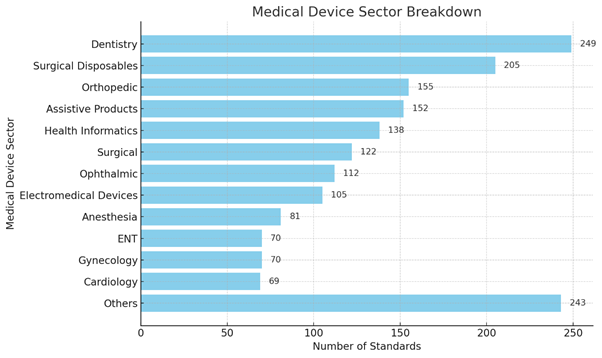
The Bureau of Indian Standards (BIS), India’s National Standards Body is addressing growing need for reliable and affordable medical assistive technology. The Bureau is developing standards for innovative products such as therapeutic footwear, portable ramps, braille displays, and fall detectors, which support individuals with disabilities and enhance their quality of life.

In line with the National Medical Device Policy, 2023, BIS is prioritizing standards development for 214 critical medical devices. These have been identified in consultation with the Department of Pharmaceuticals (DoP). It includes septal closure devices, plasma sterilizers, and phototherapy machines. The initiative is set for phased completion by December 2025.

The Bureau is also driving improvements in healthcare quality, safety, and reliability by developing robust medical device and service standards. By aligning with the Medical Devices Rules, 2017, and the National Medical Device Policy, 2023, BIS is proving to be instrumental in establishing a robust regulatory framework that prioritizes public safety while fostering innovation.

Output image

BIS has published over 1,700 standards for the medical sector, covering specialities such as cardiology, neurology, orthopaedics, ophthalmology, and more. Of these, around 1,200 standards specifically focus on medical devices critical to healthcare, including:

  • Life-saving devices: Cardiac pacemakers, heart valves, ventilators, and haemodialysis machines.
  • Advanced diagnostic tools: X-ray machines, CT scanners, MRI systems, and blood glucose monitors.
  • Assistive technology: Hearing aids, wheelchairs, Jaipur Foot, and tactile pathways for visually impaired individuals.

BIS standards in this sector ensure that Indian medical devices are safe, effective, and globally competitive. These efforts build trust among healthcare providers, consumers, and international stakeholders while solidifying India’s reputation as a leader in healthcare innovation.

Key Standards for Medical Devices:

Some of the key Indian Standards developed by BIS include:

  1. Cardiac Pacemakers: IS 13450 (Part 2/Sec 31): 2021
  2. Heart Valves: IS 17840
  3. Hip and Knee Implants: IS 12375
  4. Ventilators: IS 13450 (Part 2/Sec 12): 2023
  5. Infant Incubators and Radiant Warmers: IS 13450 (Part 2/Sec 19): 2023 for incubators and IS 13450 (Part 2/Sec 21): 2023 for radiant warmers
  6. Haemodialysis Machines: IS 13450 (Part 2/Sec 16) : 2019
  7. Infusion Pumps: IS 13450 (Part 2/Sec 24): 2019
  8. Advanced Diagnostic Tools:
    • X-ray and CT Machines: IS 7620 (Part 1) : 1986
    • MRI Systems: IS 13450 (Part 2/Sec 33) : 2018
    • Ultrasound Devices: IS 13450 (Part 2/Sec 37): 2019
    • ECG: Covered under IS 13450 (Part 2/Sec 25): 2018
  9. Monitoring Devices:
    • Blood Pressure Monitors: IS 13450 (Part 2/Sec 34): 2019
    • Blood Glucose Monitors: IS/ISO 15197: 2013
    • Pulse Oximeters: IS/ISO 80601-2-61: 2017

***

Global Cooperative Conference 2024 at Bharat Mandapam in New Delhi

Daily writing prompt
What is one thing you would change about yourself?

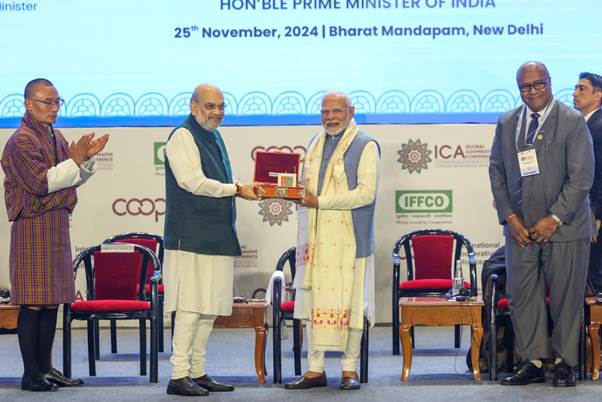
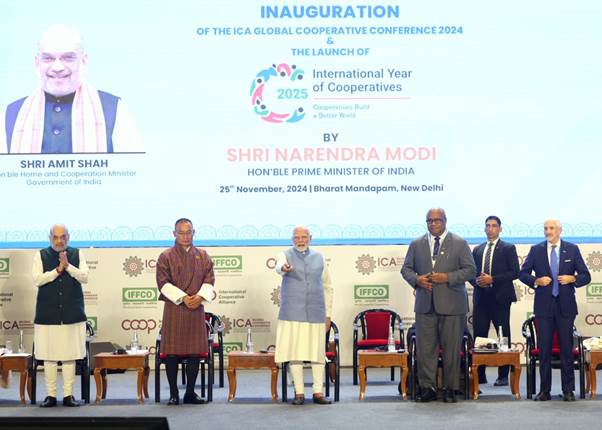
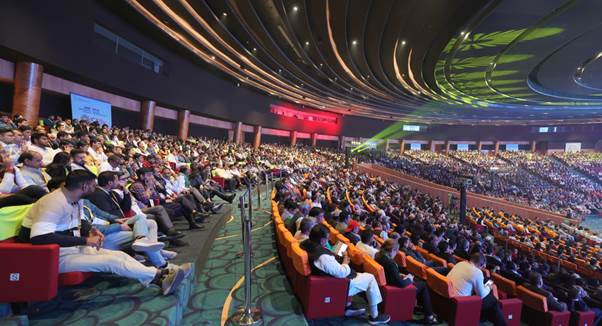
Prime Minister Shri Narendra Modi inaugurated the Global Cooperative Conference 2024 at Bharat Mandapam in New Delhi. Prime Minister Shri Narendra Modi also launched the United Nations’ International Year of Cooperatives 2025 and released a commemorative postal stamp. On this occasion, Union Home Minister and Minister of Cooperation Shri Amit Shah, the Prime Minister of Bhutan, the Deputy Prime Minister of Fiji, the President of International Cooperative Alliance (ICA), the Secretary of the Ministry of Cooperation, and several other dignitaries were present.

1.JPG

On this occasion, Union Home Minister and Minister of Cooperation Shri Amit Shah said in his address that the United Nations’ decision to observe 2025 as the International Year of Cooperatives is a timely step and will prove to be a blessing for millions of poor people and farmers worldwide. He added that the inauguration of the International Year of Cooperatives-2025 by Prime Minister Modi today and the hosting of the International Cooperative Conference of the ICA in India is a welcome step.

Shri Amit Shah said that Prime Minister Shri Narendra Modi three years ago gave the clarion call of “Sahkar Se Samriddhi” which reflects the essence of theme of this conference, which paved the way for the prosperity of millions of villages, women, and farmers. He said that in previous 3 years, many new activities have taken place in the cooperative sector of India, and after 75 years of independence, India’s cooperative movement has experienced a revival, bringing with it a new zeal.

Union Home Minister and Minister of Cooperation said that in next 3 years, through 2 lakh new Primary Agricultural Credit Societies (PACS), there will not be a single village panchayat in India without a cooperative society. He said that many steps have also been taken to make PACS modern, tech-enabled and economically-viable. He said that through 3 new cooperative bodies formed at the national level, the farmers of India will be able to increase their access to the domestic as well as global market. He said that National Cooperative Exports Limited (NCEL),  National Cooperative Organics Limited (NCOL) and Bharatiya Beej Sahakari Samiti Limited (BBSSL) will not only increase the participation of farmers in world trade in the coming days, but will also work to inspire cooperatives all over the World as to how a small farmer can reach all the markets of the World. Shri Shah said that Indian Farmers Fertiliser Cooperative (IFFCO), Krishak Bharti Cooperative (KRIBHCO) and Amul have set examples in the field of cooperatives all over the world and similarly these three cooperatives will also guide the people working in the cooperative sectors of the World.

2.jpeg

Shri Amit Shah said that after the formation of the Ministry of Cooperation three years ago, the entire legal framework of cooperatives has been strengthened, the White Revolution 2.0 and the Blue Revolution have also begun, in which the role of cooperatives is very important. He said that under the leadership of Prime Minister Modi, comprehensive changes have taken place in the last 3 years for the overall development of cooperatives. Shri Shah said that in the coming days, we are also going to build a cooperative university, through which trained and tech-enabled human resources will be created. In the “International Year of Cooperatives,” the Modi government will usher in new dimensions to India’s cooperative movement by introducing a new cooperative policy.

3.JPG

Union Home Minister and Minister of Cooperation said that in order to expand the reach of cooperatives, the Government of India is committed to connecting every village and farmer with the cooperative movement. He added that numerous efforts have been made to explore new areas and extend the scope of cooperatives.

Shri Shah stated that under the guidance of Prime Minister Modi, significant work has been done in the past three years to extend the reach of cooperatives to every individual and sector. He emphasized that the cooperative movement has opened several avenues for the empowerment of villages, farmers, women, and the underprivileged. Through this movement, the goal of “Sahkar se Samriddhi” envisioned by Prime Minister Modi, can be achieved in the coming times. He also said that the International Year of Cooperatives, inaugurated today by Prime Minister Shri Narendra Modi, will pave the way for the empowerment of millions of poor people, farmers, and women worldwide, enabling them to live with dignity and respect.

***

CREDAI to formalise its 14,000 members, says social security of labour crucial to real estate growth

Daily writing prompt
What is one thing you would change about yourself?

The real estate sector should look at a greater formalisation that will help the industry grow faster. This was stated by Union Minister of Commerce & Industry, Shri Piyush Goyal during his keynote address at the 25th Foundation Day of CREDAI (Confederation of Real Estate Developers’ Associations of India) in New Delhi today. He further urged the industry to engage the labour in formal employment, giving them the social security benefits of insurance (ESIC) and provident fund (EPFO). This will help in the number of employees getting reflected in annual reports and in national statistics. If social security, healthcare and post-retirement benefits are provided then the employees will align with the industry’s goals of enhancing their quality of work leading to better productivity and greater profits, he said. 

Photo by Alex Staudinger on Pexels.com

Commerce and Industry Minister also appealed to CREDAI to expedite formalisation of its 14,000 members. If everyone who works for CREDAI will receive salary through digital payment and if it is ensured that employees working in the ecosystem is a part of the national effort to meet the needs of the people, CREDAI’s contribution to employment will get recognised and rewarded, he said.

In his address, Shri Goyal raised the issue of environment pollution and urged CREDAI to consider setting up a team to study ways to adopt better construction techniques in the metropolitan cities of India. He further suggested the industry body to  take this up as a mission and report to the Government steps being taken in this direction. Adopting steel and precast fabrication will speed up construction benefitting the entire ecosystem. This can help in reducing AQI and pollution levels, he said.

Shri Goyal lauded CREDAI for its contribution to making India a powerhouse and also in its  journey towards Viksit Bharat and added that the industry has not only worked with brick and mortar to collectively prepare the nation for the future but has worked to provide opportunities and aspirations to the nation. Real estate contributes to the economy and jobs, he said.

Emphasising the difficulty citizens faced earlier in owning homes, Shri Goyal pointed out that a concerted effort has been undertaken in the last ten years to clean up processes, promote Ease of Doing Business and encourage businesses to expand. He also noted that bringing The Real Estate (Regulation and Development) Act (RERA) into effect in 2017 was a challenge, however, the regulations have enabled citizens to acquire homes without dispute. The Minister further highlighted CREDAI’s commitment to rectify the processes and pointed out that provisions like Goods and Services Tax (GST), RERA Act and efforts to eliminate irregular transactions have resulted in an organised growth of the real estate sector.

Hailing Prime Minister Shri Narendra Modi’s efforts to clean up the banking system, Shri Goyal noted that non-performing assets (NPAs) have decreased significantly and banks have strong credit portfolios with strong balance sheets, maintaining healthy profit each year. It shows how important the banking sector is for the real estate sector and for the economy to gain momentum in meeting the aspirations of the nation. As income levels rise, more people will take possession of their homes as they will be able to afford cheaper loans at  lower interest rates, he said.

Shri Goyal also spoke about affordable rental housing and announced that the Government would be engaging in discussions with the industry body to find ways to provide affordable rental to the citizens, besides working on the rehabilitations programme for slum dwellers. He said that affordable rental housing if made available would be able to stop the proliferation of slums in cities. Shri Goyal pointed out that aspects like parking lots and spaces for entertainment families should be looked into when planning layouts. He added that we need to recycle construction waste so that we move towards a circular economy as to be a net zero nation we have to begin from net zero localities and societies. 

Encouraging the industry leaders and participants to look for real estate opportunities abroad, Shri Goyal said that expanding the real estate footprint outside India will add to India’s exports and infrastructure services. He also urged the industry to expand its sector and the 250+ associate industries to make real estate a $1 trillion contributor to the nation.

***