The Great Pyramid of Giza

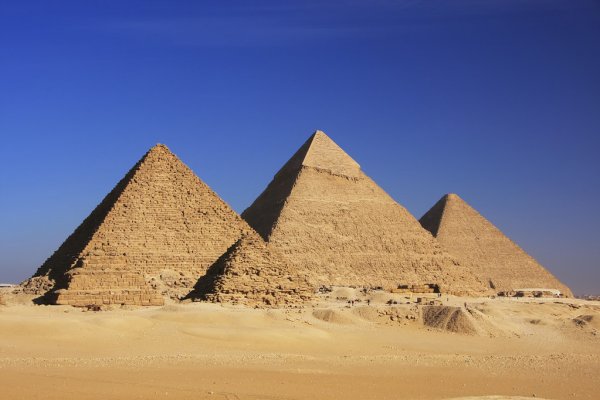
The Great Pyramid of Giza is a defining symbol of Egypt and the last of the ancient Seven Wonders of the World. It is located on the Giza plateau near the modern city of Cairo and was built over a twenty-year period during the reign of the king Khufu (2589-2566 BCE, also known as Cheops) of the 4th Dynasty. Until the Eiffel Tower was completed in Paris, France in 1889 CE, the Great Pyramid was the tallest structure made by human hands in the world; a record it held for over 3,000 years and one unlikely to be broken. Other scholars have pointed to the Lincoln Cathedral spire in England, built in 1300 CE, as the structure which finally surpassed the Great Pyramid in height but, still, the Egyptian monument held the title for an impressive span of time. The pyramid rises to a height of 479 feet (146 metres) with a base of 754 feet (230 metres) and is comprised of over two million blocks of stone. Some of these stones are of such immense size and weight (such as the granite slabs in the King’s Chamber) that the logistics of raising and positioning them so precisely seems an impossibility by modern standards.

Design

In terms of design and planning, some theories suggest that parts of the plan were laid out on the ground at a 1:1 scale. This might account for the accuracy of the workmanship, such that the four sides of the base have an average error of only 58 mm in length. The sides of the pyramid rise at the angle of 51°52′, accurately oriented to the compass’ four cardinal points.

The entrance is around 18 m (59 ft) above the ground on the north side. The Queen’s Chamber and the King’s Chamber are contained inside, connected via a corridor and a slanting gallery 46 m (151 ft) long. The King’s Chamber is shielded from the thrust exerted by the masses of masonry piled on top of it, by five compartments separated by massive horizontal slabs of granite, weighing 25-80 tonnes.

Construction

Most hypotheses are based on the idea that the huge stones were moved from a quarry, and then either dragged, lifted or rolled into place. The most widely accepted theory is that a ramp-like embankment of brick, earth and sand was increased along with the pyramid. Using this embankment, the Egyptians would have hauled the stone blocks using sledges, rollers and levers.

There is also disagreement about the size and nature of the workforce required. The Ancient Greeks thought that slave labour was used, with the historian Herodotus theorising that it took 20 years and 100,000 slaves to build. However, Egyptologists in the 20th century discovered archaeological remains of workers’ camps, which gave rise to the belief that a more limited workforce of as few as 20,000 could have been sufficient, with the workers being skilled rather than slaves.

The core of the pyramid was formed from 2.3 million limestone blocks. The outer casing was made using white Tura limestone, crafted to form a smooth surface with intricate joints unrivalled by any other Egyptian masonry. However, this casing was gradually plundered during ancient and medieval times, although some of the stones can still be seen around the base today.

Shine Bright Like a Diamond:

Today, the Giza pyramids wear the tawny tones of their surrounding Libyan Desert. But back in their heyday, they sparkled. Originally, the pyramids were encased in slabs of highly polished white limestone. When the sun struck them, they lit up and shimmered. Some researchers believe that the pyramids’ capstones were plated in gold as well.

Those dazzling façades have long been stripped—some sources report that those blocks of stone were repurposed and used to build mosques—but you can still see remnants of a once-snowy cap atop the middle pyramid.

Embroidery of India

Hello guys!!Today’s topic is about embroidery of India.

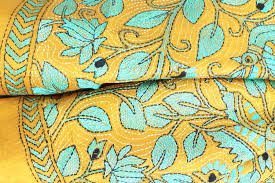
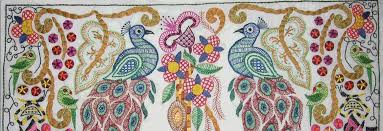
Embroidery is the craft of decorating fabric or other materials using a needle to apply thread or yarn.

In embroidery they use different materials such as pearls, beads, quills, and sequins and stitch them on the fabric enhancing it’s beauty.

From: wikipedia

In India the embroidery designs are formed on the basis of the texture and the design of the fabric and the stitch.

 They generally use  dot and the alternate dot, the circle, the square, the triangle, and permutations and combinations of these and develop the design .The range of varieties  is unlimited  and designing to stitching every step is different from each other .
  • Aari
  • Banjara embroidery
  • Banni or Heer Bharat (Gujarat)
  • Chamba Rumal (Himachal Pradesh)
  • Chikankari (Uttar Pradesh)
  • Gota (Jaipur, Rajasthan)
  • Kamal kadai(Andhra Pradesh)
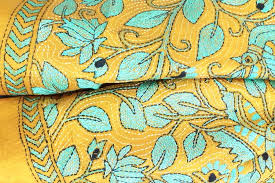
  • Kantha (Bengal)
  • Karchobi – Rajasthan
  • Kasuti or Kasuthi (Karnataka)
  • Kathi (Gujarat)
  • Kaudi(Karnataka)
  • Khneng(meghalaya)
  • Kutch or Aribharat
  • Kutchi bharat/Sindhi stitch (Gujarat)
  • Kashmiri embroidery
  • Mukaish Work- (similar to chikankari) -Lucknow
  • Phool Patti ka Kaam (Uttar Pradesh)
  • Phulkari (Punjab and Haryana)
  • Pichwai (Rajasthan)
  • Pipli (Odisha)
  • Rabari (Rajasthan and Gujarat)
  • Shamilami (Manipur)
  • Shisha or Mirrorwork (Gujarat, Haryana, Rajasthan)
  • Toda embroidery
  • Zardozi or Zari or kalabattu
  • From :wikipedia

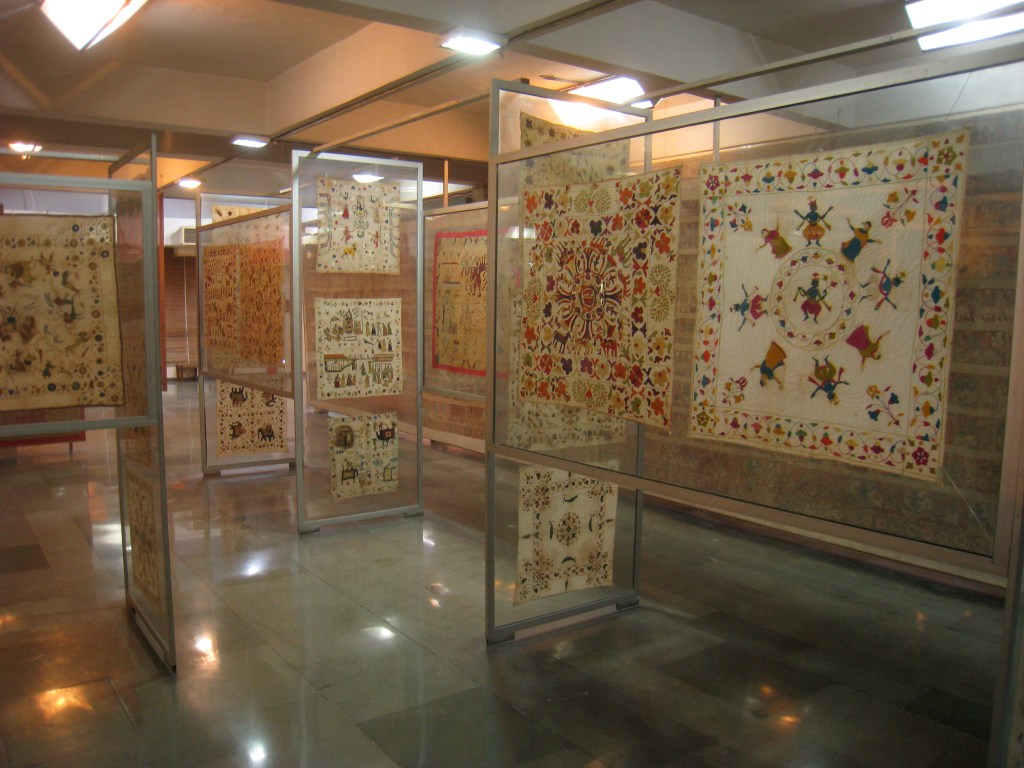
There are all different styles developed in different states giving them a tinge. Depicting their own traditions and culture through their work

Each state style gives of an unique mix to the Indian embroidery.
From craftsvilla

Each style is influenced by the fashion and attire they follow ,these styles are developed from their ancestors and Indian embroidery is famous for its simple yet classy look.

Embroidery is an art of fabric they make art pieces from a single piece of cloth and thread .
From:fibre2fashion.com

The trend always changes but the roots must not change , embroidery may changes over years with time but the effort they put into is will always be conveyed to people through their art ,through their embroidery.

Thankyou^^

Universal Design

Universal design is the approach of designing products and environment so that it can be used by broad number people irrespective of age, disability, ability, status in life and various other factors.

Usually, products are designed to be suitable for average users whereas products designed under the principle of universal design try to be suitable for the maximum number of users. The purpose of universal design is not to create a design that can work for 100 percent of the people because it is almost impossible to have a ‘One size fits all’ design. The purpose is to create a design that can serve solutions that are more inclusive. Designers have to look at those designs that push the boundaries as far out as possible without compromising the quality and integrity of the product.

There are many instances where a designer will have to choose between different designs and determine the more suitable design according to UD principles. For instance, if there is a choice to choose between a lever-design handle and a knob-design handle. It is preferable to choose the former rather than the latter as the lever design can accommodate more people’s daily usage. The lever design feature will be a more inclusive element compared to the latter. It can accommodate various usages like opening the door with closed fists or the elbow or so that a person can easily access the door while carrying something as well as people with finite strength.

There are briefly 7 Principles of Universal Design. These were developed in 1997 by a team of architects, designers, engineers, and environmental design researchers.  The team was led by the late Ronald Mace who was an internationally recognized American Architect and designer in North Carolina State University.

The seven principles are:

  • Equitable use

While designing, the product should be kept in mind that it should be accessible by every person including disabled people.  

  • Flexibility in use

The design needs to be configurable to accommodate everyone’s preferences, needs, and abilities.

  • Simple and intuitive

This means that the design should be easy to understand for everybody. The person can easily figure out a well-designed product or an environment without thinking too much about it.

  • Perceptible information

The design can communicate all of its necessary information to everybody irrespective of the environmental conditions or the user’s sensory abilities.

  • Tolerance for error

It refers to safety so that the design minimizes hazards, accidents or unintended actions.

  • Low physical effort

The design in use needs to be comfortable and efficient rather than being exhausting and fatiguing to use.

  • Size and space for approach and use

The design irrespective of user’s body size, posture, or mobility should not restrict anybody by its size or space.

Universal design can really make the lives of people much more comfortable, safer, and efficient in the long run. There are still many areas that are not designed well and poorly designed products, buildings or the environment can be a safety hazard as well. It is usually the job of a universal designer to design new products from the ground up and many also renovate existing designs to make them more accommodative and accessible.

References:

http://universaldesign.ie/What-is-Universal-Design/The-7-Principles/

https://www.washington.edu/doit/what-universal-design-0

Graphic design

Graphic design is the process of visual communication and problem solving through the use of type, space and image. The field is considered a subset of visual communication and communication design but sometimes the term ‘graphic design’ is used interchangeably with these due to overlapping skills involved. Graphic designers use various methods to create and combine words, symbols and images to create a visual arts and page layout techniques to produce a final result. Graphic design often refers to both the process (designing) by which the communication is created and the products (design) which are generated. Common uses of graphic design include identity, publications, print advertisements, posters, billboards, website graphics and elements, signs and product packaging. For example a product package might include a logo for other artwork organised text and pure design elements sketches images shapes and colour which unified the piece. Composition is one of the most important features of graphic design specially when using pre existing materials or diverse elements.

•Skills

A graphic design project me in work to stylisation and presentation of existing text and either pre existing imagery or images developed by the graphic designer. Artistic pieces can be incorporated in both traditional and digital forms which involves the use of visual arts typography and page layout techniques for publications and marketing for example a newspaper story begins with the journalist and photo journalist and then becomes the graphic designer job to organise the page into a reasonable layout and determine if any other graphic element should be required. In a magazine article or advertisement often the graphic designer or art director will commission photographers or illustrators to create original pieces just to be incorporated into the design layout or the designer may utilise stock imagery or photography. Contemporary design practice has been extended to the modern computer. Nearly all popular and ‘industry standard’ software programs used for graphic design since the early 1990’s are products of Adobe systems incorporated. They are Adobe Photoshop (a raster based program for photo editing), Adobe illustrator (a vector based program for drawing), Adobe InDesign ( a page layout program) and Adobe Dreamweaver (for webpage design).

Another major page layout tool is QuarkXPress (a product of Quark Inc. a separate company from Adobe). Both QuarkXPress and Adobe InDesign are often used in the final stage of the electronic design process. Raster images maybe edited in Adobe Photoshop, logos and illustrations in Adobe illustrator and the final product may be assembled in one of the major page layout programs. Most graphic designers entering the field since 1990 are expected to be proficient in at least one or two of these programs.

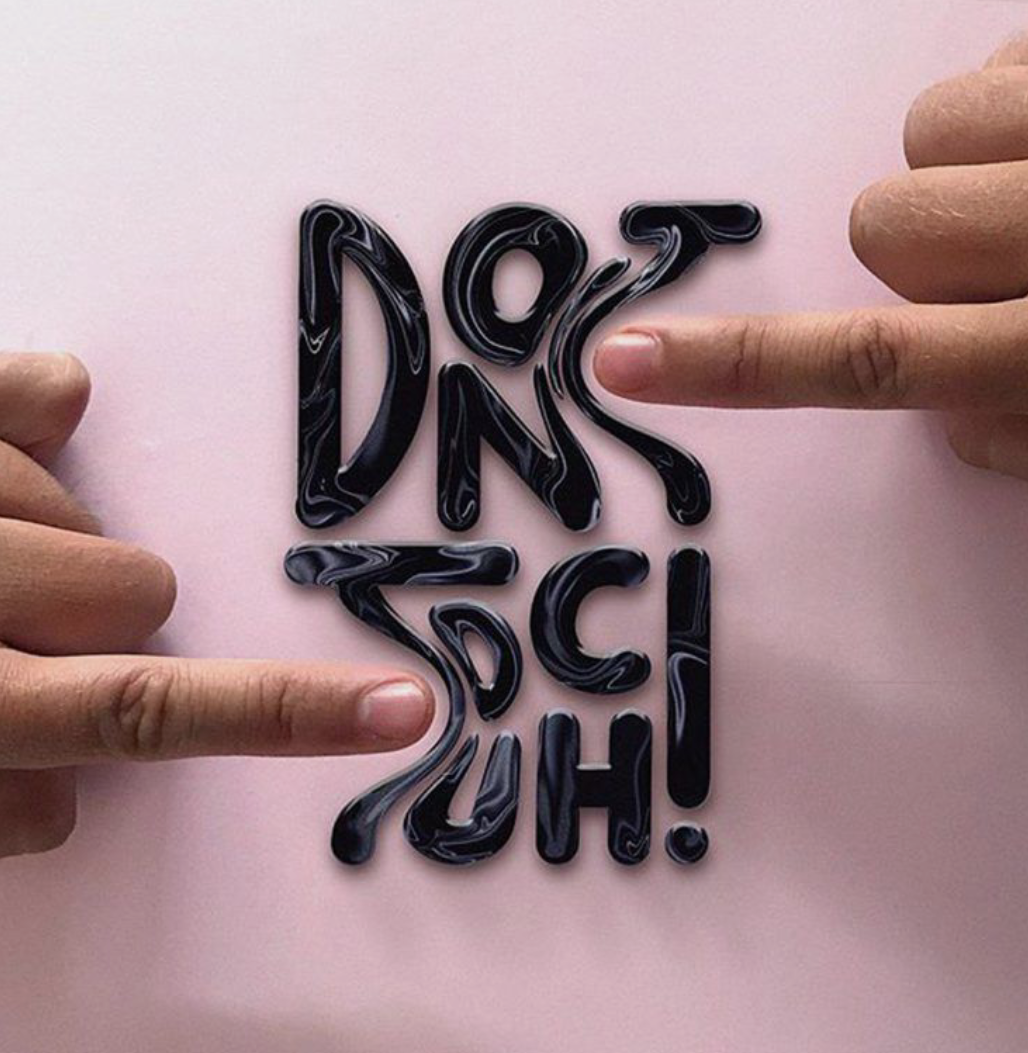
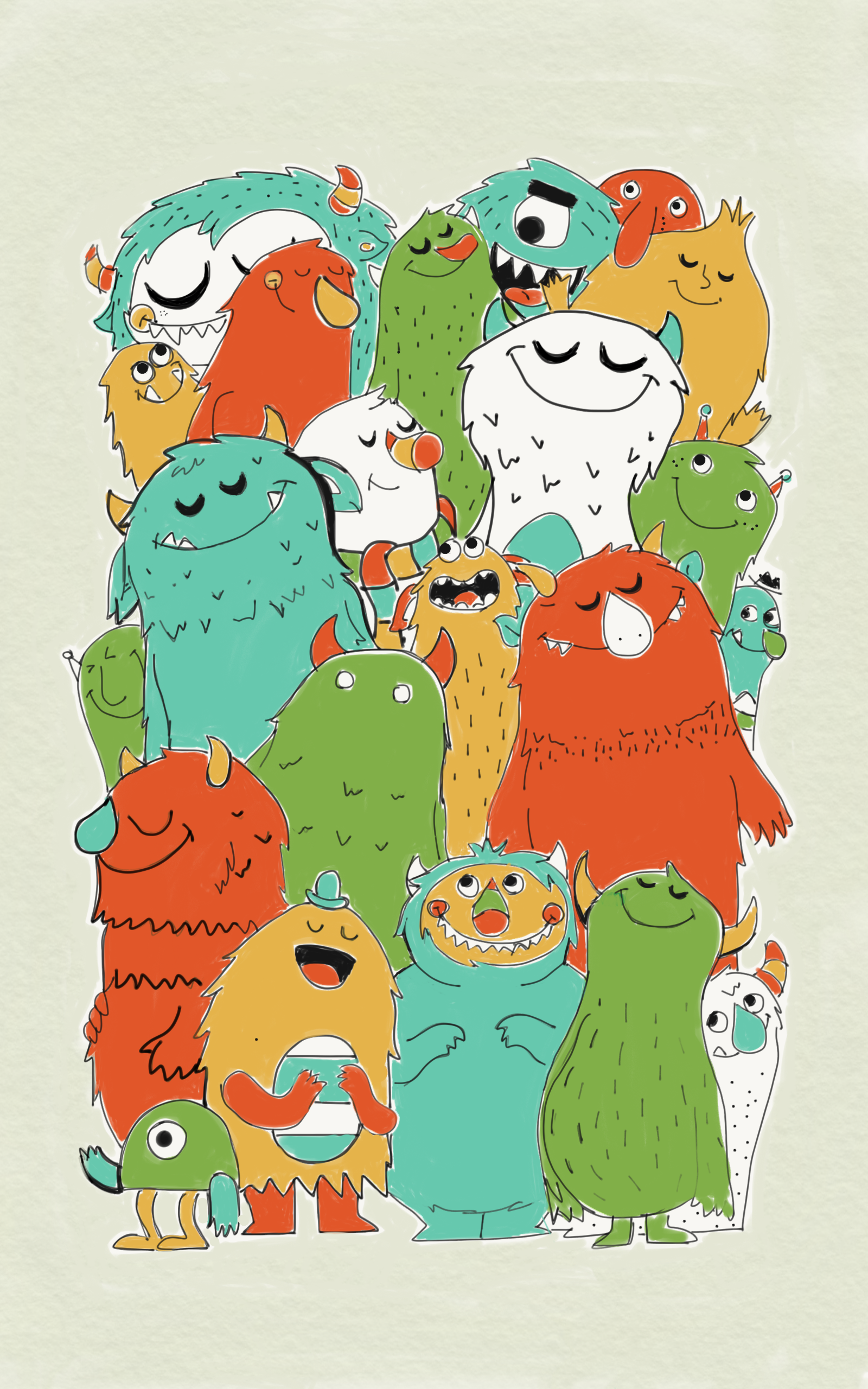
my work

Another one

•Occupation

Graphic design career paths cover all ends of the creative spectrum and often overlap. Employment within graphic design in walls workers performing specialised tasks such as design services publishing advertising and public relations. The main job responsibility of a graphic designer is the arrangement of visual elements in some type of media. The main job titles within the industry can vary and are often country specific. They can include graphic designer, are director, creative director former animator and the entry level production artist. Depending on the industry served commerce responsibilities may have different titles such as DTP associate and graphic artist But despite changes in the title graphic design principles remain consistent who start the responsibilities may come from early to specialised skills such as illustrations photography animation or interactive design. Today’s graduate in graphic design students are normally exposed to all these areas of graphic design and I guided to become familiar with all of them as well in order to be competitive. Graphic designers will face strong competition when applying for positions for organizations look for candidates with convincing talents and college level education post of field requirements consist of having strong portfolio and bachelors degree first of graphic designers can work in a variety of environments while many will work in companies devoted specifically to the industry such as design consultancies or branding agencies, others may work in publishing, marketing for other communication companies. Increasingly, special sense the introduction of personal computers to the industry commerce many graphic designers have found themselves working in non design oriented organizations as in house designers. Graphic designers may also work as freelance designers, working on their own terms, prices, ideas etc. A graphic designer reports to the art director, creative director or senior media creative. As a designer becomes more senior, he/she may spend less time designing media and more time leading and directing other designers on broader creative activities such as brand development and corporate identity development. Senior designers are often expected to interact more directly with clients, for example taking and interpreting briefs.

Thank you for reading. Have a nice day!🌼

Photoshop

When I mentioned this word there might come two thoughts in your mind according to the height of knowledge you have regarding this topic. The beginners would call it basically a platform used for photo-editing or making posters maybe. But the one who has an ample amount of knowledge in this field would definitely say a lot more amount this. The must sat there are multitudinous virtues whose silhouttes will prove to be a boon for you creativity. I am not considering those who are not interested in this software because if it is so then you must not have opened this article.

So let’s start with an introduction, a basic introduction. So it is a raster graphic editor developed and published by Adobe for Windows and macOS. Now being a beginner, a very obvious question is what does this uncanny word raster mean? Okay,this means That photoshop is based on the pixels. There are two types graphic files:

  • Raster Graphics: These kind of files are based on pixels. You have to design a raster file according to the screen on which it would get displayed. You can’t just design a poster of any size and simply zoom it according to your need because that file will start getting pixelated and ultimately lead to spoil your poster and it’s purpose.
  • Vector Graphics: These kind of files are composed of paths and based on mathematics so they can quickly scale more substantial or smaller. This means you can design on any size then simply zoom-in or zoom-out according to your need.

Please don’t judge the photoshop on this basis it has it own virtues. Adobe Photoshop is a vital resource for artistic practitioners such as programmers, web developers, visual artists, photographers. Photoshop is commonly used for uploading images, retouching, designing image templates, mock-ups of websites and incorporating effects. You can edit digital or scanned images for online or in-print use. Inside Photoshop, website templates can be created; their designs can be finished until the developers move on to the coding level. It is possible to create and export stand-alone graphics for use within other programs.

Now for let’s come to the point hoe can you learn photoshop? Adobe Photoshop can be learnt in several ways. Popular methods include taking Photoshop classes in person, taking Photoshop classes live online, learning through online Photoshop tutorials, and Photoshop books. Classes are designed to help the students benefit from both group learning and one-on-one instruction activities. Classroom learning also has the advantage of using guided instruction to help students overcome challenges or obstacles. Such development programs are especially useful when it comes to introducing new apps or resources. The American Graphics Institute in Cambridge, as well as New York City and Philadelphia, provides Photoshop courses.

You-tube is also a very good source and provide you a lot of content that too for free. And what I would recommend is to practice, practice, and practice because Practice makes permanent. Go for more practice than theory because you will learn more by doing things practically than just reading or knowing about them. You have to get your hands dirty with these, this is the only way to master or at least to learn this I would say.

Hope you find this helpful. Happy learning!