Advantages of Digital India

The Government of India began the Digital India initiative to ensure that residents can access government services electronically through enhanced online infrastructure and increased Internet connectivity, or by making the country digitally empowered in the field of technology. Rural communities will be connected to high-speed internet networks as part of the effort. The construction of a safe and robust digital infrastructure, the delivery of government services online, and universal digital literacy are the three main components of Digital India. BharatNet, Make in India, Startup India, and Standup India, industrial corridors, Bharatmala, Sagarmala, dedicated freight corridors, UDAN-RCS, and E-Kranti were all launched on July 1, 2015, by Indian Prime Minister Narendra Modi.

In this article, let’s see the advantages of the Digital India Campaign.

Benefits of Digital India

  • Removal of the black economy all internet transactions can be easily monitored, and every payment made by a customer to any business will be logged, ensuring that no unlawful transactions occur and that people cannot hide their money. The government can effectively evict the underground economy by prohibiting cash-based transactions and requiring solely digital payments.
  • Payment without cash you won’t need to hold cash if you use cashless payment. Cash theft will be reduced, and when you make an online payment, all of your payments will be saved in the Record Bank. Customers can still get discounts on cashless payments and cashback through apps like Paytm, Phone Pe, and Freecharge. There are also shopping websites such as Flipkart and Amazon that offer discounts when making online bank payments.
  • Revenues Increasing another significant benefit of digital India is that as transactions become more digitized, monitoring sales and taxes becomes much easier. Because transactions are recorded, customers will now receive a bill for each purchase they make, and merchants will no longer be able to avoid paying tax to the government, resulting in increased government revenue – and thus growth of the economy.
  • The Economy has improved Digital India has made the most significant contribution to India’s Internet connectivity. The cashless economy is completely reliant on the Internet, allowing all types of information to be received solely through the Internet; the Digital India program will also considerably boost the country’s economy.
  • New jobs are being created there have been several ways to expand job opportunities in new markets as well as increase employment prospects in existing markets as a result of the Digital India program. New markets have begun hiring individuals, thereby raising the employment rate.
  • Establishes a foundation for e-governance. E-government is a great advantage for all citizens since it is easier, faster, and safer than traditional governance. With e-governance, you can now receive anything from a birth certificate to a death certificate in seconds, making it handy for individuals to get the information they need on the go.
  • People’s empowerment is a term used to describe the process of empowering people. One of the most significant benefits of Digital India is that it empowers citizens. When payments go digital, everyone will need a bank account, a phone, and other electronic devices. The government may quickly send subsidies to people’s Aadhaar-linked bank accounts in this way. In other words, people no longer have to wait for the government to provide them with the incentives and subsidies that they are entitled to. In most cities, this feature is already in place. The government provides LPG subsidies to the general public as an example of this feature. These days, the payment of the subsidy is done through bank transfers.

Digital Banking

Digital Banking has completely changed the way we bank in today’s times. With Digital Banking, you can transact with higher speed, ease and convenience.

What is Digital Banking? 

In simple terms, Digital Banking means availability of all banking activities online. Here, you have the luxury to freely access and perform all traditional banking activities 24*7 without having to personally go to a bank branch to get your work done. Some of the major online banking activities include-

(1) Money Deposits, Withdrawals, and Transfer
(2) Checking/Savings Account Management
(3) Applying for Financial Products
(4) Loan Management
(5) Bill Payment
(6) Account Services

Many banks also offer other integrated services like investing in Mutual Funds and other investment options online. Thus, making Digital Banking a widely used concept.

Digital Banking in India

Digital Technology has drastically changed the way banks interact with us. Similarly, it has completely changed the way we transact and interact with the bank. This is especially true in the case of a booming technological and financial economy like India, where more and more people are being connected to Digital Banking Platforms with each passing day. 

With Digital Banking you can perform every transaction, from start to end in a seamless, secure manner. You can withdraw money, deposit money, apply for loans, invest in Mutual Funds- all at a click of a button.

With the introduction of mobile banking you can perform transactions on the go. Mobile banking is a convenient and easy way to finish your transactions. For example, you can do over 125 transactions through HDFC Bank’s mobile banking app. 

The latest addition to mobile banking feature is the Mobile Banking LITE app.The HDFC Mobile Banking app can work without an internet connection, italso doesn’t take up too much space and is quick to install over slow connections. It’s a safe and secure way of making transactions on the go.

Digital Banking services are offered by all major retail banks in the country today and have, in fact, become an integral part of their services. So, one can now bank from the ease of one’s home, with the convenience of smartphone screens.

(1) Indian Financial System Code (IFSC)
The Indian Financial System Code (IFSC) is an 11-character code in alphanumeric format to uniquely identify all bank branches within the NEFT, RTGS, and the Immediate Payment Service (IMPS) network within India. This code is printed on every cheque leaf in your personal or company chequebook. To transfer funds to an account electronically, the receiver must share his IFSC code as it identifies the receiver bank and branch.Magnetic Ink Character Recognition (MICR)
Magnetic Ink Character Recognition (MICR) is a technology used to verify the legitimacy or originality of paper documents, especially cheques. A special ink sensitive to magnetic fields is used in the printing of certain characters. Every bank branch has a unique MICR code, which helps the RBI speed up the cheque clearing process, with MICR readers.

(2)Magnetic Ink Character Recognition (MICR)
Magnetic Ink Character Recognition (MICR) is a technology used to verify the legitimacy or originality of paper documents, especially cheques. A special ink sensitive to magnetic fields is used in the printing of certain characters. Every bank branch has a unique MICR code, which helps the RBI speed up the cheque clearing process, with MICR readers.

(3) Electronic Clearing Service (ECS)
Electronic Clearing Service (ECS) is another method of transferring funds from one bank account to another. It is most often used to pay regular bills (telephone, mobile, credit card, electricity, etc, to make EMI payments (Personal, Car, Home Loan), and SIP investments. This is done by invoking the auto debit facility. ECS is also used by entities for payment of salaries, pensions, distribution of dividend interest etc.

(4) Immediate Payment Service (IMPS)
Since NEFT may not be available for use on weekends and bank holidays, you could try using IMPS or Immediate Payment Service. The service is available 24X7. The minimum transfer value is Rs 1 and the maximum value is Rs 2 lakh.
But to use this service, you will need to register via your bank and provide the mobile number and MMID of the beneficiary as IMPS transfer can also be done through mobile phones. Mobile Money Identifier (MMID) is a seven-digit unique number issued by the bank.

(5) National Electronic Funds Transfer (NEFT)
The National Electronic Funds Transfer (NEFT) system allows individuals, companies, and other entities to transfer funds electronically from one bank to another within India. Normally, funds from the remitting bank will be sent to the RBI within three hours of the transaction. However, the time taken to credit the beneficiary bank’s branch account depends on how long it takes the bank to process the transaction. It should be noted that NEFT operates only during business hours on weekdays. NEFT transactions cannot be done on Sundays, bank holidays, and second and fourth Saturdays of the month. The minimum transfer value is Rs 1 and there is no upper limit.

(6)Real Time Gross Settlement (RTGS)
Another method for transferring money electronically, from bank to bank, within the Indian banking system is Real Time Gross Settlement (RTGS) scheme, where the minimum amount for each transaction is Rs 2 lakh and there is no upper limit. The beneficiary account receives the money immediately.
The RTGS system is primarily meant for large value transactions.With effect from 00:30 hours on December 14, 2020, RTGS facility is available round the clock on all days i.e. 24 hrs. India one of the few countries to operate the system 24×7. This comes within a year of the Reserve Bank of India (RBI) operationalising NEFT 24×7. NEFT is the popular mode for small-value transactions. RTGS, which started on March 26, 2004 with a soft launch involving four banks, presently handles 6.35 lakh transactions daily for a value of Rs 4.17 lakh crore across 237 participant banks. The average ticket size for RTGS in November 2020 was Rs 57.96 lakh, making it a truly large-value payment system. RTGS uses ISO 20022 format which is the best-in-class messaging standard for financial transactions. The feature of positive confirmation for credit to beneficiary accounts is also available in RTGS.
Earlier, the RBI had decided not to levy charges on transactions through NEFT and RTGS in order to promote digital transactions, and had asked banks to pass on the benefits to customers. The RBI used to levy minimum charges on banks for transactions routed through RTGS and NEFT. Banks, in turn, levied charges on their customers. RTGS is meant for large-value instantaneous fund transfers, while NEFT is used for fund transfers of up to Rs 2 lakh.
It should be noted that NEFT, RTGS and IMPS impose transaction fees in slab rates.

(7) Society for Worldwide Interbank Financial Telecommunication (SWIFT)
SWIFT is an acronym for Society for Worldwide Interbank Financial Telecommunication. It is an internationally recognised identification code forbanks worldwide, and is usually used for international wire transfers. Only those banks that are SWIFT-enabled can take part in this system. In EU nations SWIFT is also known as BIC or Bank Identification Code. When dealing with international transfers also be aware of IBAN or International Bank Account Number. IBAN (International Bank Account Number) appears in bank statements and the bank’s online systems. IBAN and BIC (Bank Identification Code ) contain your bank account number and sort code written in an internationally recognised format. All these numbers can make your wire transfers happen quickly and securely.


Digital Marketing

Digital marketing is an internet or remote area marketing where customer and dealer purchase and sell products. It is a marketing which can be done on our laptop , PC’s , Computer, Mobile. It consists of various types of marketing on social media like Facebook , Instagram , Twitter etc.

As technology increasing day by day , the way of online marketing also changes rapidly. Digital marketing is just a promotion of ads, brands to a potential customer who is willing to purchase a product. There are some various companies like Flip kart.com, Amazon.com , E-bay.com who did online marketing to sell their products to customer.

There are various types of marketing techniques which are similar as digital marketing. These are as following-:

Content Marketing

This is the marketing technique by which you can reach a customer by writing some content. Content marketing deals with the distribution of a valuable contents provide to a customer or customer is retaining or not. Content Marketing taught us how we can deliver our content to a customer so that customer becomes loyal towards us.

Affiliate Marketing

Affiliate Marketing is a advertising technique where you can promote the products of a company in your websites or blogs to earn money. Many of the companies like Amazon , Walmart , Flip kart have affiliate programs that pay out millions of rupees or dollars who sell their products to remote area customers.

Social Media Marketing

Social Media Marketing is a technique by which we can promote brands or ads of a product in social media Facebook , Instagram , Twitter etc . to earn money.Using Social media marketing you can generate social trust and awareness among peoples. Peoples are very busy in social media for chatting , by using social media marketing they can utilize their time to earn some trust or money.This is a platform where you can provide availability of a product to a customer so that he/she can retaining your products and generate awareness among another customers.

Email Marketing

Email Marketing is a platform of marketing where you can touch with your customers by sending emails to generate awareness among customers. There are many people’s who are confused by unsolicited emails or spams , this is not what Email marketing does. By using Email Marketing we can send the information about products to a customer , if customer wants to purchase the product they can send mail .

Pay Per Click Marketing

The primary goal of this marketing is the paid ads. Pay per Click Marketing is a technique which is used to drive traffic to a websites in which an advertiser pays a publisher when the ad is clicked. Marketers can set PPC on Instagram, Facebook , P interest and show the ads to the people to purchase the products.

Digital Marketing Challenges/Issues

  • The challenge which a Digital Marketer faces is to generate traffic of the number of individuals who is coming in your website and how long they are staying. More a traffic more customers can purchase a products.
  • Another challenge is that the content which you can showcase in your social media or a channel whether a customer can stay in your channel or not.
  • The challenge is that you can know the technology which are changing from day to day to life.
  • Digital Marketers must convence their brands and ads to people’s to earn money.
  • Digital marketer first take care of that what customer needs, according to customers needs , questions , concerns digital marketer takes decision.

Pros/Cons of Digital Marketing

Pros of Digital Marketing

  • Digital Marketing is Cost Effective as compared to Traditional Market.
  • Digital Marketing is measurable i.e how many peoples reach website, click website, post like, post share,audience retention rate etc.
  • By Digital Marketing we can reach our business globally around the world by sitting at home.
  • Digital Marketing is personalized i.e we have data of customer like email,address,mobile no.

Cons of Digital Marketing

  • Digital Marketing Requires skills to grow a business electronically or digitally without skills you cannot perform digital marketing.
  • Digital Marketing is time consuming i.e it takes time to grow your skills, business etc.
  • In Digital Marketing there is High Competition to reach globally in a world.
  • In Digital Marketing customer can complain to a social media that his brand is not so good ,their may be chances of negative responses from customers then ratings of product decreases.

Digital India

Digital India initiative is one the key initiative launched by government of India on 1st July 2015. The initiative is counted among one of the most prestigious projects just like made in India, Swach Bharat Abhiyaan etc. it consists of some major objective towards the development of better services and infrastructure in terms of digital modernisation of the country.
It comes under the ministry of Electronics and information and ministry of finance, officially launched by Prime minister of India Shree Narendra Modi. it has 3 main area of focus which includes:
• The utility of Digital infrastructure for the citizens of India
Improvement of digital infrastructure so that the citizens can utilise the services of internet.
• Internet and other services requirement
There are areas where people still do not have access to basic internet services, and additionally providing all the advance services to the population of the country.
• Digital empowerment
It refers to overall empowerment that will occur when the digital structure strengthens in the country.
The initiative serves multiple purpose, starting from improving the basic facilities to introducing modern technology at various level.
the initiative stands upon many important aspects which are:
• Broadband highways
• IT for all
• Electronic manufacturing
• E governance
• E Kranti etc
These aspects have their own significance in long run and can bring the much-needed changes in the country. Digitisation of the already existing facilities for the convenience of people and implementing new changes and development in the country.
Implementing a big initiative like digital India on a very large scale takes to answer a lot of challenges. Highlighting the challenges which occurred are:
• Adaptation
adapting to the ongoing and upcoming changes is going to be a big task for many Indians, it is also a time taking process.
• Illiteracy
The portion of population which is not well educated will find is very challenging, as they are not even aware about the basics. To make them aware and making them digitally literate is a major challenge.
• Providing better facilities to all
India has a huge population, ensuring that each and every one has access to the latest facilities
and convenience is important.

Conclusion
Digital India has proven beneficial for many specially the ones who had minimal access to such facilities, this is important from the perspective of both economic development and individual development. Technology, if used wisely can-do miracles in different sectors like education, employment, agriculture etc. the ongoing pandemic crisis has made us totally dependent on laptops and smartphones. Every developing country aim is to be technologically advanced in the coming years is a common goal. Even the developed nations are getting advanced each day.

Thus, an initiative like this can support and enhance the development taking place in the country. Despite, the challenges faced progress is visible. The initiative is already running since 2015 and within the reach of this initiative many changes are successfully implemented too.

How Archives transformed in the Digital era

The Word archive is derived from the Greek word ‘Arkheion’. The word was further referred from ‘Archon’, which meant a magistrate who oversaw the town hall where all the official public documents were stored. The Word Archive came to use for the first time in the 17th century.

Archives are also known as ‘memory institutions’ because they record and preserve memories and form a significant part of culture, community, official and unofficial history of any place or region or state, or any institution. Their function is to collect, store and preserve artefacts and documents of historical, cultural, and legal importance from the yesteryears and the present so that they remain accessible, informative, and useful to future generations. In general, any organization, government institution or individual can build archives. The National Archives, UK has described archives as “collections of records or documents, selected for lasting preservation due to their historical value, significance as evidence, or as a source for research studies”. International Council on Archives (ICA) has defined archives as “documentary result of various human activities conserved for its long-term value”. They further described archives as contemporary accounts created to can provide a true and verified version of past events.

The significance of the archives lies in the orderly collection of crucial source documents accumulated over an individual’s or organizations’ lifespan and preserved, which can serve as evidence or reference for future work. As archives are the repositories housing various historical documents and records of value, archival research is facilitative for scholars and researchers looking for data to assess and facts to study from the original documents. However, owing to the vastness and diversity of ample archival documents and records, archival analysis is a hectic and tedious job. Access to the artefacts and documents stored in an archive is not an easy task and requires permission from the respected authority. In addition, most of the information stored in traditional achieves is paper-based and thus, is susceptible to decay with time. The aforementioned limitation of traditional archives can be overcome by archiving documents and artefacts in various digital formats, which can ensure that the information is preserved for a substantially longer period.

With the advent of newer digital technologies, it became easier and more convenient to store and preserve the information in the digital space. With the assistance of new digital tools and methods, the process of transcending information from the physical world to the digital world became much efficient and easier. 

Digital archiving is an area where the relationship between digital tools/methods and information preservation can be witnessed. It is a blend of the former and current storage of information. Their function is similar to traditional archives, as repositories of elaborated collection of information in various digital formats at a virtual location. This also makes digital archives more accessible and democratic as the physical constraints are eliminated.

Advantages of Digital Archives:

  • The the digital archive allows “anywhere-anytime” accessibility to users ensuring a reduction of time, cost, and money.
  • The redundancy of information stored in digital archives can be reduced, which can promote ease of access.
  • No geographical site is required to build a digital archive, which is cost-effective.
  • The simultaneous requests of access from multiple users can be addressed by creating multiple copies of information stored, which can overcome the issue of bottlenecks encountered in traditional archives.
  • Managing and navigating objects or records stored digitally are easier in digital archives, which allow developing capacity to preserves terabytes of information.
  • Digital archives are less subjected to bureaucracy like traditional archives, which can ensure data accessibility to the general public.

Digital archives are not perfect. Many times due to the digital divide and other constraints, researchers are not able to access the information. Sometimes the information challenges the authority and due to this, the information can be unavailable in the digital archives because of censorship. But there is no denying that digital archives have transformed the way information is stored and processed.  

References:

DIGITAL INDIAN CAMPAIGN


Digital India is an umbrella programme that covers multiple Government Ministries and Departments. It weaves together a large number of ideas and thoughts into a single, comprehensive vision so that each of them can be implemented as part of a larger goal.
Each individual element stands on its own, but is also part of the larger picture. Digital India is to be implemented by the entire Government with overall coordination being done by the Department of Electronics and Information Technology (DeitY).


Digital India aims to provide the much needed thrust to the nine pillars of growth areas, namely Broadband Highways, Universal Access to Mobile Connectivity, Public Internet Access Programme, e-Governance: Reforming Government through Technology, e-Kranti – Electronic Delivery of Services, Information for All, Electronics Manufacturing, IT for Jobs and Early Harvest Programmes. Each of these areas is a complex programme in itself and cuts across multiple Ministries and Departments.


The Digital India programme aims at pulling together many existing schemes. These schemes will be restructured, revamped and re-focused and will be implemented in a synchronized manner. Many elements are only process improvements with minimal cost implications. The common branding of programmes as Digital India highlights their transformative impact. While implementing this programme, there would be wider consultations across government, industry, civil society, and citizens to discuss various issues to arrive at innovative solutions for achieving the desired outcomes of Digital India.

DIGITAL INDIA

The Government of India initiated the “Digital India” program to increase the use of technology in India. The goal was to make government services more accessible to citizens electronically by strengthening the country’s online infrastructure. The procedure will be designed to expand internet connectivity in order to empower the country digitally. It aids in reaching out to the general public and encouraging them to use technology in their daily life. Mr. Narendra Modi, Prime Minister of India, inaugurated the campaign on July 1, 2015. The initiative attempts to link rural India through high-speed internet connectivity.

At the heart of the “Digital India” campaign are three components:


Development of digital infrastructure– To be able to implement diverse digital services across the country, a solid digital infrastructure must be built, particularly in rural areas. The country’s interior regions have either very little or no electronic network. This is why a digital network is being established across the country. Bharat Broadband Network Limited is the governmental agency in charge of implementing the National Optical Fiber Network project, as well as the Digital India Project.

Digital service delivery– The delivery of government and other services digitally is a key component of the Digital India Campaign. It is simpler to transition from physical to digital service delivery. Many services have been digitised as part of the Digital India effort. People’s daily monetary transactions were likewise changed to digital format. To maintain transaction transparency and to combat corruption, all money transactions are conducted online and are protected by one-time passwords.

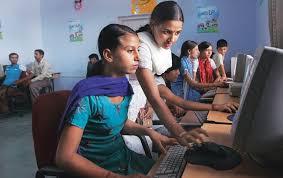
Knowledge of the Internet– The skill required for full participation of the people in India is known as Digital Literacy. The fundamental behaviours, knowledge, and skills required to effectively use digital devices are required. Desktop computers, laptop computers, tablets, and smartphones are utilised for interacting, expressing, cooperating, and advocating. Over six crore rural households would be reached by the digital literacy initiative.

The Government of India hopes to achieve all-round growth on various fronts via the Digital India Programme. The government’s goal is to focus on ‘The Nine Pillars of Digital India,’ which include

  • Broadband Highways
  • Public Interest Access Programme
  • E-Kranti
  • Universal Access to Mobile Connectivity
  • E- Governance
  • Global Information
  • Electronics Manufacturing
  • Global Information
  • Early Harvest Programmes
  • Training in IT for jobs

The Digital India Campaign has successfully raised public awareness of the relevance of technology in India. In recent years, there has been a significant increase in the use of the internet and technology. On August 5th, the Panchkula district in Haryana was named the finest and top performing district in Haryana as part of the Digital India initiative.

Technology behemoths from around the world have been paying careful attention to the Digital India Campaign and are enthusiastically supporting it. Even Facebook CEO Mark Zuckerberg updated his profile image to support the cause. He launched a Facebook trend and pledged to get Wifi hotspots operational in remote areas. Google has begun to fulfil its commitment to provide internet connectivity at 500 Indian railway stations. India is also establishing itself as a cloud hub through the use of data centres in the country. Oracle intended to invest in 20 states in order to work on smart city initiatives and payments. This Digital India campaign will aim at the growth and development of the masses of the country and will aim at improving their social and economic status.

Video games and Education : How to bridge the two

Videos games have become a significant part of our culture for over half the century. They have also lead to many leading artistic and technical endeavors including many innovations in all these years. People have started to recognize the importance of these games as culturally important and the need to curate and store them properly. 

Education is one of the areas that have gone through a transformational change in 2020 and forward. The learning space has transitioned from a physical space to a space that has gone digital. The convergence of various technologies and modalities has given birth to a new space in the education system.

When it comes to Computer games, many used to scoff at them as a mere product for brief entertainment, but the increased proliferation of digital in every individual’s life means that Video games have a more significant role to play than ever before. The increased visual fidelity with better computing power has signified more immersion in the digital world. Online education has been given a push from governments around the globe. The majority of the higher institutions are teaching remotely with the help of different online tools. One of the major challenges that many educators face is the problem of engagement on par with the physical class.

Instead of just looking at online education as an alternative for the physical classes, we have to look at online education as a means of learning that can enhance the experience and engagement of the students than the physical classes as well. The technologies in 2021 clearly indicate that various tools and measures can be added into the experience of not just online learning and but also in the space of cultural heritage and digital tourism. Video games are an important tool that educators can leverage to fulfill these requirements.

Engagement and immersion can be the key factors that can drive the education system forward. There are many instances where students skip a certain subject even before attempting to learn it. This can be due to a poor and unfavorable experience with a certain instructor or wrong assumptions about the difficulty of that subject. Engaging interfaces in the form of creative games, virtual reality, augmented reality, mixed reality can help alleviate these types of issues.

Human-Computer-Interaction is an important field where the aspect of design and technology converge. This area not just deals with technological issues but also with the psychological and socio-cultural problems while designing/building a product or an interface. The interface is an important area that is often overlooked on many platforms. Many Educational platforms don’t offer the freedom that can help students, but they rather use the stingy design philosophy and force the users to a particular behavior while using it. Therefore the interface of games becomes equally important. Games can be used to create a more participatory environment for both the teachers and students alike while increasing the experimentation and systematic thinking in the class.

Video games are usually played to win or accomplish a level. Players are motivated by winning these challenges and this is the key to stay engaged. Games motivate through fun, which is part of the natural learning process in human development with instant and visual feedback.

We can conclude that the implementation of video games in the realm of education can make online learning more engaging and intuitive for learners. This is still a novel field of research and we have a long way to go but we cannot dismiss the numerous possibilities that games can provide us in this area.  

Digitalization: Where will we head?

Digitalization is the process of converting information in the form of text, audio, video, or any combination of all three or more into digital format. The omnipresence of computers in our daily lives had its roots in the introduction of computers in Indian workspaces in the 1990s. Since then the proliferation has increased manifold and digitalization has become an integral part of lives. Indian IT exports have been one of the major contributing factors to our GDP and this will not slow any time soon.

Digitalization has certainly made out lives much more comfortable and easier than it was a couple of decades ago. Since 2015 Indian government focused on increasing digital proliferation to even more areas. With the initiatives like digital India, numerous services have been transferred into digital platforms. This is evident with some major examples like the Driving license and Learners license services which have been fully transferred to an online platform and all the paperwork can be completed without visiting the RTO. The candidates have to select their slot and attempt the test of the stipulated date. This is reduced middlemen corruption and made the process of obtaining a driver’s license much more seamless. After the advent of the Covid pandemic, there has been an unprecedented growth in digital platforms. People who were wary or unsure of digital platforms were forced to learn and adapt due to the unavailability of non-digitalized services due to restrictions. Schools have adapted to the age of online classes. The consumption of online coaching platforms has increased. Businesses are developing infrastructure to support their digital services. Small business owners are jumping on online platforms to reach a wider range of potential clients.

But there are still many discrepancies with digital proliferation. This growth and reach of digital are not equally distributed. India still faces many problems due to its weak infrastructure and limited internet connectivity. This phenomenon which is also called ‘Digital Divide’ has to be addressed quickly. Because many rural areas don’t have the facility of good internet connectivity and many rural communities have not been able to avail many benefits of this digital revolution. Government schools in rural areas have been affected the most during the pandemic as the schools there don’t have adequate funding to facilitate online classes. Many teachers are untrained to use digital tools and many students don’t have laptops or smartphones to really take advantage of online classes. But this problem is not just limited to rural and undeveloped areas and many people whom we call urban poor also face similar problems.

Government initiatives are commendable but there needs to be more focus on the equal distribution of these digital services. There has to be a greater emphasis on how the services can be availed by the weaker economic section of the society otherwise it will only exacerbate the issue of the digital divide that we are facing right now. Despite having the second biggest internet user base second to China, only half of our population has an active internet connection.  A new policy needs to be implemented at a national level so that digital services can be availed equitably by every citizen of India.