Actions of State and Non State Actors in Disaster Management

Source: lawwn

In contemporary time, Managing disasters is a highly dynamic, complex  and multifaceted affair. It is about to coordinated and contributions by a broad range of actors, including states, international organizations, non – governmental organizations, humanitarian organization, charities, private philanthropists, companies and affected local communities.

State Actors must perform some duties related to provide legitimacy to the operation, ensure coordination of various actors, provide information to needy agencies for Operation purpose, determine sufficient deputation of para military yo ensure smooth rescue and relief operation. Proper post disaster rescue and relief operation.

Contribution of Specialized Agencies in Disaster Management

There are several agencies apart from NDRF that play an significant role in Disaster management and hence they maintained in ‘standard operating procedure’ and prescribed definite role.

Civil Defence performance of some or all of the humanitarian tasks intended to protect the civilian population against the dangers and to help to recover from immediate effects of hostilities or disasters and also provide the conditions necessary for it’s survival.

Source: National Health Portal

Management of blackout measures; Rescue, medical services, including first aid and religious assistance, fire fighting are necessary components. Decontamination and take protective measures, emergency accommodation, emergency assistance in the restoration and repair indispensable public utilities. Assistance in preservation of essential objects for survival and complementary activities necessary to carry out any task.

Civil Defence Act 1968, is organized in areas and zones which are tactically and strategically considered vulnerable from the point of aggressive opposite side. Civil Defence activities are restricted to 225 categorized towns spread over 35 States/Union Territories. Civil Defence is primarily organized on voluntary.

The immediate response of any calamity comes straight to Police station. Their immediate help and responsibility is to communicate the information and Provide rescue efforts with whatever resources are available. In disaster management if police is first responder they need to fully equipped with effective resources. Police should involved in the preparation of the local Crisis/Disaster Plan.

The role of home guards is to serve as an auxiliary to the police in the maintenance of internal security, help the community in any kind of emergency such as fire, cyclone, earthquake, epidemic etc help in maintenance if essential services, promote communal harmony and assist the Administration in protecting weaker sections, participation in socio economic and welfare activities and perform Civil Defence duties.

Home guard facility not available in Kerala. Home guards act, rules of the states are the same. They are recruited across the section of the society whoever available for betterment of community. Home guards duties like any other public servant but not in the case of Civil Defence both are like voluntary corps.

Fire services have been set up by the state government with Union government providing technical and financial support. Fire services play prominent role in all types of disaster and fire related crisis. There is an urgent need to train and equip the fire to handle all types of crisis in any multi hazard crisis.

Armed forces have invariably played an important role in rescue and relief operation in all major disasters in the country. The contribution of Specialized NDRF battalions would reduce the pressure on the armed forces. Availability of highly trained dedicated and we’ll equipped human resources and their capability to play a vital role in rescue and relief during all major crises. They should be mobilized for creating a voluntary disaster task force at the local level.

 Contribution of Non State Actors

Non State Actors are those who are first respondents in case of Disaster and considered to perform few tasks like ensuring dissemination of information to the ground level. Promotion of government strategies and policies to counter disaster. Ensure community participation, the corporate or private player must come forward to support the victims financially with the use of corporate social responsibility.

Voluntary services like distributing food, clothes, helping the state in proper rehabilitation work. Full understanding of the disaster and subsequent policies of livelihood of survivors. To aware of human rights to help the survivors without any partisan view.

All about Drought


What is Drought?

It is an extended period of time when there is shortage of water availability with respect to atmospheric (below average precipitation), surface water or ground water. It can last for months or years.

source: worldatlas.com


Types of Drought

It is classified mainly into three types, they are as follows:

  1. Meteorological Drought :- It is a condition when there is a prolong period of inadequate precipitation. It usually precedes other kind of drought.

  2. Agricultural Drought :- It can be also called as Soil Moisture Drought, characterized by low soil moisture that is necessary to support crops. Due to which there is crop failure in the area affected by this drought. There are many reasons for this drought to occur such as erosion, and events that cause depletion in nutritious content of soil.

  3. Hydrological Drought :- It is a situation where availability of water in reserves like aquifiers, lakes and reservoirs falls below the level, which precipitation can replenish. This drought tends to show up more slowly.

Causes

There are many causes of drought, some are explained below:

  • Precipation Deficiency :- Precipation can be of three types, they are ice, liquid water and water that freezes on contact. Low level precipation can lead to drought. It mainly occurs in region where normal level of rainfall is low.

  • Dry Season :- Dry season causes drying of rivers, lakes and other water bodies due to which it increases drought occurences.

  • Human Activities :- The ability of land to capture and hold water reduces due to overfarming, excessive irragation, deforestation and erosion. As water holding capacity of land is reduced there is depletion in ground water levels which further affects vegetation.

Can First Rainfall break the drought?

As mentioned above drought is a situation where there is shortage of water for an extended period of time, So First rain cannot break the drought but it is capable of providing temporary relief. A light or moderate rainfall can reduce temperature and provide cooling whilethe rain will be quickly evaporated or used by plants as it seeps into soil, which will provide more relief. Soaking of rain in land is best against drought as it increases ground water due to which plants can grow properly; It also feeds streams i.e. provides water to lakes, rivers, etc.

Consequences

There are many consequences some are mentioned below:

  • Famine :- Drought destroys food sources, as it has less water to support plants, crops, fodder crops, etc. Due to which animals, cattles, poultry cannot have enough food to eat. Even human beings has less food available. When this condition continues for long time period then it may lead to famines.

  • Decrease in drinking water :- Most of natural and man-made reserves dry up or has very less water to quench thirst of living beings. At this times many animals and birds either die or migrate to some other places.

Measures

  • Dams :- additional water can be supplied at time of drought with help of dams.

  • Desalination :- sea water can be used for irrigation or consumption.

  • Inter-connectivity of water bodies can help reduce severity of drought. For example if there is a drought like situation then water from other bodies can be provided to that region so that upto some extent water needs can be fulfilled.

  • Drought severity can be reduced by rainwater harvesting on individual basis.

p { margin-bottom: 0.25cm; line-height: 115% }

Earthquake Simplified

What is an Earthquake?

Earthquake occurs when two blocks of Earth suddenly slip over each other. The surface where slips occurs is called fault or fault plane. The location at which earthquake starts below the earth surface is called as Focus, and the location exactly above it of earth’s surface is called as Epicenter.


source: worldatlas.com

Why and where it occurs?

The earth is divided into three major layers they are as follows:

  • Crust :- Thickness of this layer ranges from 5 to 70 km. It is 1% of the whole earth.

  • Mantle :- The thickness of Mantle is 2900 km. It is 84% volume of earth.

  • Core :- It is 15% volume of earth. It is further divided into two parts as follows:

    a) Outer Core

    b) Inner Core

The crust and upper layer of mantle is divided into tectonics plate, and the edge of plate is called as plate boundaries. The plate boundaries consists of faults and most of the time earthquake occurs on these faults. The edges of plates are rough so they stick to each other. Even edges are stuck, the remaining part of plate keeps moving. When the plate has reached far enough at that time edges cannot hold each other and they unstick and move. Due to this Earthquake occurs.

Types of Earthquake Waves

Earthquake wave are of majorly three types. They are as follows:

  1. P wave or Longitudinal waves :- It is similar to sound wave. It can travel through solid, liquid and gases state.

  2. S wave or Transverse wave :- It can travel only through solid.

  3. L wave or Surface wave :- When body wave i.e. P and S wave, when interacts with surface of earth it is called Surface wave.

Effects of Earthquake

Earthquake has many effects and it can also lead to another diaster which can be caused due to earthquake as root cause

  • On ground :- Fissures settlements, Landslides, Liquefication, earth pressure and many more.

  • On manmade structures :- Cracking, Collapse of building, Buckling and many more.

  • On water :- Tsunami, Waves Hydro-Dynamic Pressure, etc.

Measurement of Earthquake

Siesmograph is used to measure earthquake.

Richter scale :- It is used to measure magnitude of earthquake and it ranges from 0-10.

Mercalli scale :- It is used to measure intensity of earthquake and it ranges from 1-12.

Why earthquake is a matter of concern to world?

Earthquakes occur suddenly at a place and it spreads to nearby places so very less time is provided to people to respond to it. The damage depends on severity of earthquake. It causes much damage to environment. Many lives of human, animals, birds and other living beings of an area are lost where earthquake occured with severity and less damage occurs where it occured with less severity. There are much loss causedfinancially to a country such as building collapse, cracks or hole in roads. The place where earthquake occurs resident people have to deal with so much of physical and mental pain and pressure. So earthquake is one of the dangerous natural disaster.

p { margin-bottom: 0.25cm; line-height: 115% }

Preparation through education is less costly than learning through tragedy

In this era, where humanisation of nature is taking place at a tremendous rate, where the nature is altered at an alarming rate for the so – called benefits of “we” humans, disturbances are created in the normal functioning of nature and so nature rises in its fury and the fury of nature is not magnanimous but rather too destructive to ignore.

                 According to Max Mayfield, “Preparation through education is less costly than learning through tragedy”. The point that he is trying to bring into the notice of so- called enlightened society is that if our learning through education is put into action, we would avoid any tragedy, we would invite less destruction. If the foundation is strong, the building won’t be shaken easily.

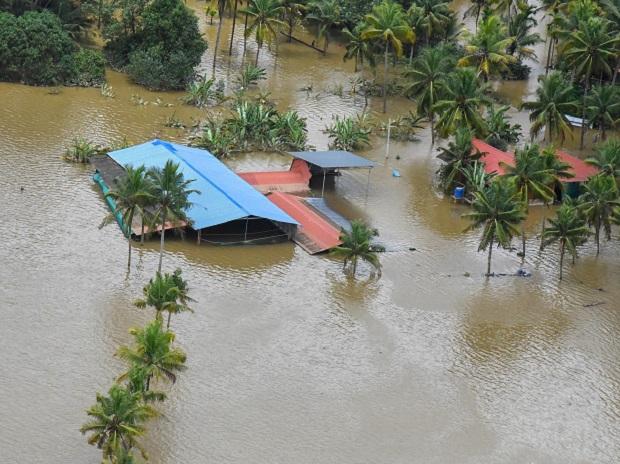
                If we look at the recent cases of natural calamities, we would get a better picture of what he is trying to bring into notice. In India itself, we could trace the tragedy that took away the life of many.  In the Kerala floods, death toll rose to around 417 people, which was the worst natural calamity to strike the southern states in decades. Kerala faced the flash flooding which occurred due to heavy downpour, but this four months of torrential rain in Kerala became destructive because the situation was aggravated due to the ignorance of local officials.

                “This could have been avoided if the dam operators had start releasing water in advance rather than waiting for the dam to be filled up, when they have no alternative but to release water”, water expert Himanshu Thakkar told the BBC.

                  The ignorance of the local officials along with the failure of India’s Central Water Commission to introduce a flood forecasting system to issue warning gave a major setback not only to the southern states but also to the entire nation.

                   More than one million people were displaced and kept in relief camp. The money that the Central Government directed towards the recovery of Kerala, could have been avoided if the system, if the infrastructure were in place. Millions of people would have not lost their home if there was some preparedness, if there was some warning, if at all the learning were in place. There are many other places in different parts of the world where such calamities are taking the life of many because we tend to over push the limits of nature.

                  This is what Max Mayfield tried to explain through his words. The cost not only in terms of money but also in terms of lives could have been less if there was proper crisis preparedness.

                Another case or why not say another calamity which is not respecting any so – called political boundaries and the effect of which is slowly taking a drastic grip on us is ‘Global Warming’. It’s high time to realise that, “Global Warming is Global Warning”. Global warming is the increase in the general level of earth’s temperature. Our earth has its own mechanism to combat the disturbances in its functioning but “we” humans tend to aggravate the situation to the extent that the mechanism is at the verge of breaking down.

          Burning of fossil fuels like coal, gas to create electricity or to power the cars or for the industrial purpose, results in the emission of profound amount of carbon dioxide in the atmosphere which results in carbon pollution and contribute in making the quality of air severe. It is quite clear the way urban expansion is encroaching upon the wilderness. We clear large patch of forest for the purpose of settlement and other things. When vegetation is cleared or burnt, the stored carbon is released into the atmosphere as CO2, contributing in global warming. The list would be never ending if we look for the causes that involve humans.

           The effect of global warming can already be seen clearly – the melting of glaciers, consecutively rise in the sea level and simultaneously flooding of coastal areas, the quality of air from being worse to severe, droughts, expansion of deserts.

             The call of the time is “Sustainable Development” which is in par with nature. It was in 1980s that the bad health of environment and consecutively bad health of ours and the concept of sustainable way of living was realised. But why is it that in the last 50 years more species became extinct than ever!

              Education is not something which is limited to books, specific to getting qualifications. It would really be a bliss if we would start bringing the knowledge into action, if we would move towards sustainability that we have been learning, if we would start preventing the tragedies through preparedness rather than learning through its cure.

             When disaster takes place, timings is essential. Many lives can be saved; destruction can be minimized if actions are taken quickly. But the action can be taken quickly only if there is some preparedness, if there is some alertness. There should be efficient communication system in place for destruction to be minimized.

            The government is not always to be blamed for the crisis. We as educated citizens can do a lot, we can channel our learning, our talent through joining various humanitarian organisations that works towards better development, toward preventing and reducing the crisis.

            The Kerala case was a big setback to the nation. Though it was a lesson for everyone but it could have been better if we could have prevented it, the southern state could have focussed on other major social issues grouping the society. And the global warming, before it scales to a height, where we would be left helpless, with no idea of what to do next, it would be better if we try to work together to reduce the harmful industrialisation, if we would walk in the path of sustainable development.

          So, it’s high time to realise that in this era, we got to be more conscious of what we learn and how do we channel it. As the saying goes, “Learning is a treasure that will follow it’s owner everywhere”. So let it follow your action and put it into right use. It is the collective work in which each and every individual needs to come together to make this world a better place.

Image Credit: Business Standard News

Retrieved from: Google

A “wobble” in the moon’s orbit, according to NASA, may cause record flooding on Earth.

Because of a “wobble” in the moon’s orbit, which is acting in concert with climate change-fueled rising sea levels, every coast in the United States is experiencing fast-growing high tide floods.

New research published recently in the journal Nature Climate Change by NASA and the University of Hawaii warns that future changes in the moon’s orbit might result in record flooding on Earth in the next decade.

Researchers discovered flooding in American coastal towns may be many times worse in the 2030s, when the next moon “wobble” is projected to begin, by mapping the National Oceanic and Atmospheric Administration’s (NOAA) sea-level rise scenarios, flooding thresholds, and astronomical cycles. They predict major infrastructure damage and community displacement as a result of the water.

While the study emphasizes the grave position that coastal towns are in, the lunar wobble is a natural phenomenon that was first documented in 1728. The moon’s orbit causes periods of greater and lower tides every 18.6 years, although they aren’t harmful in and of themselves.

“Earth’s typical daily tides are suppressed during half of the Moon’s 18.6-year cycle: high tides are lower than usual, and low tides are higher than normal,” NASA says. “Tides are magnified in the second part of the cycle, with high tides getting higher and low tides getting lower. High tides are only going to get higher as the world’s sea level rises. As a result, half of the 18.6-year lunar cycle reduces the influence of rising sea levels on high tides, while the other half increases it.”

Scientists, on the other hand, are more alarmed this time. The next high tide floods are anticipated to be more severe and frequent than ever before as sea levels rise owing to climate change, compounding already dire projections.

In 2019, the National Oceanic and Atmospheric Administration (NOAA) reported around 600 such floods. After another decade of sea-level rise, scientists predict three to four times that amount in the mid-2030s.

Based on the current study, these floods will emerge more often throughout the country and can occur in clusters lasting over a month, depending on the moon, Earth, and sun’s locations. Floods might occur as frequently as every day or every other day during certain alignments.

“Low-lying regions around sea level are becoming increasingly vulnerable and suffering as a result of rising floods, and the situation is only going to get worse,” NASA Administrator Bill Nelson said. “Coastal flooding on our coasts and throughout the world will continue to be exacerbated by the Moon’s gravitational pull, increasing sea levels, and climate change.”

Almost all of the United States’ continental coasts, as well as Hawaii and Guam, are likely to be affected. By the end of the century, sea-level rise is anticipated to have rendered hundreds of thousands of square kilometers of coastline untenable, displacing over 100 million people globally.

Researchers hope that their findings will spur more focused efforts to avert as many harmful effects on the environment and people’s welfare as possible before it becomes too late. While high tidal floods may not include as much water as hurricanes, their regularity poses a serious threat.

What will have an impact is a cumulative effect over time,” said lead author Phil Thompson. “A firm cannot operate with its parking lot underwater if it floods 10 or 15 times each month. People lose their employment as a result of their inability to get to work. Sewage ponds have become a public health concern.”

Natural Disasters!

Natural disasters are complicated events of nature within which people are subjected to a multitude of risks and dangers. Floods, earthquakes, hurricanes, volcanic eruptions, and tsunamis are among most frequent phenomenons and can affect the political and economical state of a country.

A natural calamity is defined as an event of nature, which overwhelms local resources and threatens the function and safety of the community. Some of the most common natural disasters that occur around the globe include:

1.Drought – Drought is a serious disaster which impacts the whole of mankind, wildlife, and vegetation greatly. It is particularly a curse for the farmers as it destroys their crops. Continuous drought-like situation also leads to the soil becoming less fertile. In a region that has been severely affected by a drought, mortality may increase sharply due to malnutrition and certain vitamin deficiencies, such as a lack of Vitamin A, can lead to specific consequences such as child blindness. Also long standing malnutrition can easily lead to increased rates of disease and mortality, and limit the general population’s functionality. It is a severe condition which interferes with the quality and functioning of life.

2.Floods – In comparison to other natural disasters, floods cause more damage to life and property. According to a recent study, around twenty percent of deaths caused by floods in the world, occur in India. The causes of flood include heavy rainfall, sediment deposition (river beds become shallow due to sedimentation thereby reducing the water carrying capacity of rivers. Hence, the heavy rain water over flows the river banks.) , deforestation (the land becomes obstruction free and water flows with greater speed into the rivers and causes flood.), cyclones , interference in drainage system etc. Humans and animals both are both affected by flood as several people are rendered homeless, houses are destroyed , industries are crippled, crops are submerged in flood water and domestic as well as wild animals die. Also outbreak of epidemics like malaria and diarrhea etc. are common after floods.

3.Earthquakes – Earthquakes are tremors or sudden shaking or trembling of the earth surface. Earthquakes can cause huge damage to life and property. When an earthquake occurs, all buildings , underground pipelines and railway lines are severely damaged or totally destroyed. Also the impact of the earthquake can be devastating to human life as thousands of people may die during the tremors (a short period). Also tsunamis are caused by earthquake which wreaks havoc on settlement of coastal areas and sinks large ships. Landslides and avalanches are triggered. Also earthquakes can result in fires as the earthquake severely damages the electric power and gas lines.

4.Landslide – Landslides are slipping of masses of rocks or debris downwards on the mountain slopes or banks of the rivers . The main causes of landslide include heavy rain , deforestation , earthquakes and volcanic explosions , building of roads and construction of houses and other buildings. Landslides impact and degrade the environment along with damage to several properties and lives lost.

There are several organizations and groups set up with the primary goal of being prepared for natural disasters who work on a global and local scale rescue work such that when a country or an area is badly affected by a natural disaster, aid is quick to come. Aside from those who have chosen to make disaster relief their life-work, when disasters hit, it’s the individuals who step in who help to make a difference.