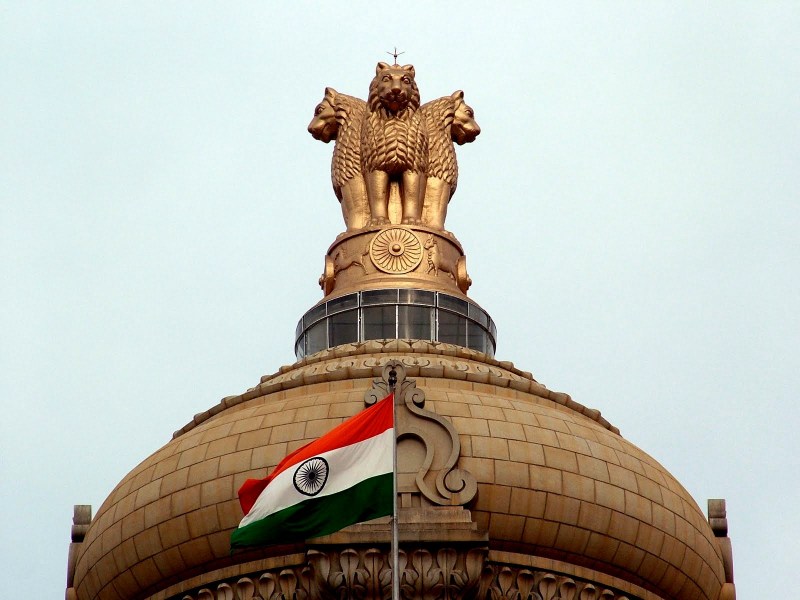
India is interesting among popular governments in that an established right to correspondence isn’t supported by complete enactment.
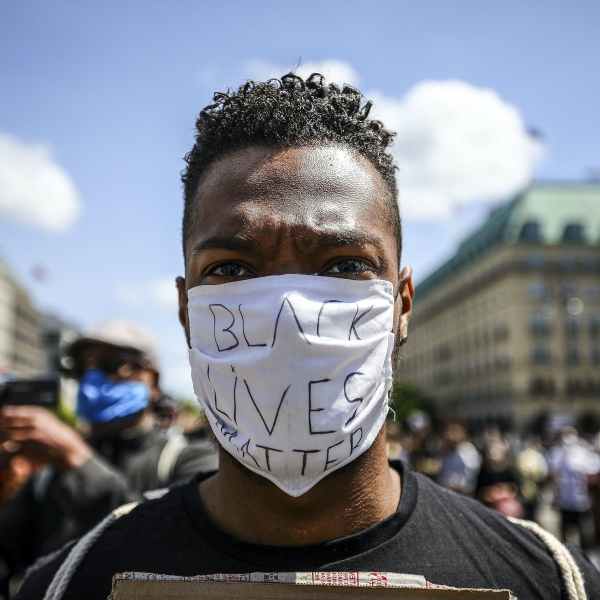
Game is regularly a microcosm of society. Much as we would once in a while consider it to be a leveler, it constantly will in general underscore increasingly endemic imbalances. Late disclosures made by the previous West Indies cricket chief Darren Sammy, thusly, must stir us to a difficult that goes a long ways past the cricket field and its tight limits, of a general public packed with bigotry.
Voices in sport
In our nation, this issue is just exacerbated by other generally imbued types of separation, along the lines of rank, class, sex, and religion in addition to other things. To be sure, in responding to Mr. Sammy’s announcements, the previous Indian cricketer Irfan Pathan pointed not exclusively to how players from the south of India routinely confronted maltreatment from swarms in the north — something which the Tamil Nadu and India opener Abhinav Mukund excessively validated — yet in addition to another type of partiality significantly increasingly settled in the public eye. On June 9, Mr. Pathan stated, in a tweet, that bigotry in our nation goes past the shade of our skins, that upholding embargoes on individuals looking to purchase houses dependent on their confidence should similarly be viewed as an element of partiality.
Typically, Mr. Pathan confronted a volley of maltreatment for his tweet. Various individuals revealed to him that India had given him everything — love, notoriety and cash — and that he should check with Pakistan on how they were doing. In any case, on the off chance that anything, these reactions just strengthened his contention. Here was a cricketer, who had spoken to India on the world stage with some differentiation, being approached to demonstrate his dedication once more, basically because of his confidence. So poisonous were a portion of the reactions that Mr. Pathan was in the end constrained into explaining that his sentiments “are consistently as an Indian and for India”. He didn’t have to do this, not least since his judgment had caught the bit of the discussion: that over 70 years after Independence, our general public stays overflowing with auxiliary separation.
Blow against race-lack of bias
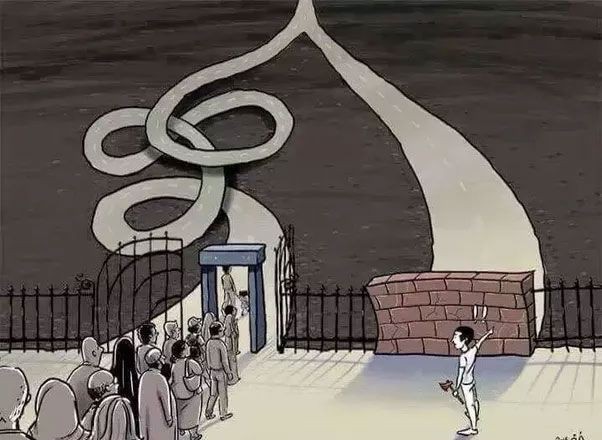
These preferences, which infest each part of life, from access to fundamental products, to training and work, are now and then show. In any case, on different events, the segregation is aberrant and even unintended. The last mentioned, be that as it may, is similarly as vindictive. The structures that it takes were maybe best clarified by the U. S. Incomparable Court’s decision in Griggs versus Duke Power Co. (1971). There, the court held that a vitality organization had fallen foul of the U. S. Social liberties Act of 1964 — which made racial separation in private working environments illicit — by demanding a pointless composed test by candidates for its better section level occupations. In spite of the fact that, by all accounts, this necessity was race-impartial, by and by it permitted the organization to mislead African-Americans.
In a critical judgment, conjuring an Aesop tale, Chief Justice Burger composed that “tests or measures for work or advancement may not give uniformity of chance simply in the feeling of the famous proposal of milk to the stork and the fox. ” despite what might be expected, the law, he stated, turning again to the tale, “gave that the vessel wherein the milk is proffered be one all searchers can utilize. ” That will be, that it wasn’t just “clear separation” that was illicit yet in addition “rehearses that are reasonable in structure, yet prejudicial in activity”.
State and private agreements
Both immediate and backhanded types of separation militate against India’s established vision of uniformity. The decision in Griggs was eminently applied by Justice S. Ravindra Bhat in the Delhi High Court’s 2018 judgment in Madhu versus Northern Railway. There, the Railways had denied free clinical treatment to the spouse and little girl of a representative which they would somehow or another have been qualified for under the standards. The Railways fought that the representative had “abandoned” his family and had their names struck off his clinical card. The court held that to make fundamental advantages, for example, clinical administrations subject to a statement by a worker may be “facially nonpartisan”, yet it created a dissimilar effect, especially on ladies and youngsters.
In any case, while this case concerned segregation by the state, section obstructions to products, for example, lodging, schools and work will in general capacity in the domain of private agreements. The Constitution, however, is especially vocal on this as well. Article 15(2) specifies that residents will not on grounds just of religion, race, station, sex, or spot of birth be denied access to shops, open eateries, inns and spots of open diversion. However, now and again, this right, which applies on a level plane, entomb se people, collides with the privileges of people to connect with others, frequently to the avoidance of specific gatherings. This is the reason each time an instance of segregation is brought, the gathering that separates guarantees that he has a freedom to do as such, that he should be allowed to act as per his own feeling of still, small voice.
The Supreme Court, in 2005, in Zoroastrian Cooperative Housing Society versus District Registrar Co-employable Societies (Urban) and Others, supported one such prohibitive bond, when it decided for a bye-law of a Parsi lodging society that denied the offer of property to non-Parsis. This option to deny such a deal, the Court controlled, was inherent in the Parsis’ principal option to connect with one another. In any case, in holding in this way, the judgment, as Gautam Bhatia calls attention to in his book, The Transformative Constitution, not just conflated the opportunity to contract with the protected opportunity to relate, yet in addition ignored inside and out Article 15(2).
From the outset become flushed, Article 15(2) might have all the earmarks of being to some degree constrained in scope. Be that as it may, “shops” utilized in it is intended to be perused generally. An investigation of the Constituent Assembly’s discussions on the condition’s encircling gives us that the authors expressly proposed to put limitations on any financial movement that looked to prohibit explicit gatherings. For instance, when an individual will not rent her property to another dependent on the client’s confidence, such a refusal would run straightforwardly counter to the assurance of correspondence.
An overruling of the decision in Zoroastrian Cooperative, while attractive, is far-fetched, in any case, to fill in as a panacea. India is one of a kind among majority rule governments in that a sacred right to equity isn’t bolstered by extensive enactment. In South Africa, for instance, a sacred assurance is increased by a sweeping law which restricts uncalled for segregation by the administration as well as by private associations and people.
Endeavors at change
In India, there have been a couple of endeavors to this end lately. Shashi Tharoor presented a private part’s bill (drafted by Tarunabh Khaitan) in 2017, while the Center for Law and Policy Research drafted and discharged an Equality Bill a year ago. These endeavors perceive that our common freedoms are similarly as equipped for being compromised by demonstrations of private people as they are by the state.
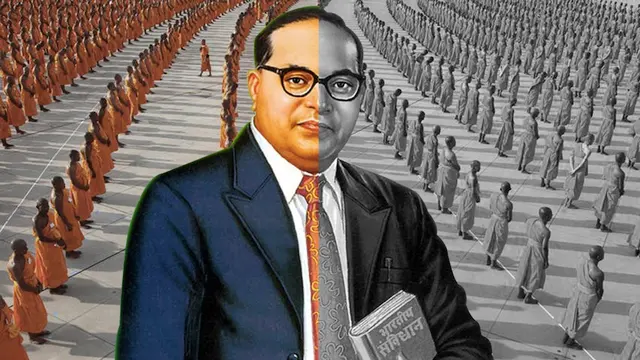
At last, our standard of law must subsume an understanding that segregation shares various structures. Any sensible origination of equity would request that we look past the aims of our activities, and at the engrained structures of society. This doesn’t imply that we have to live under a dream that a resolution will settle our fundamental inclinations, that we will by one way or another mysteriously change ourselves into the sort of country that B. R. Ambedkar imagined. However, presently like never before, as we hope to reset our cultural plans in the wake of COVID-19, a rededication to our unique established responsibility could be beneficial. With that in mind, sanctioning a law that will help enhance our lifestyles, that will help turn around our profound established culture of separation, merits pondering.







/cdn.vox-cdn.com/uploads/chorus_image/image/67290882/AFP_1WQ3EA.0.jpg)



 Eduindex
You must be logged in to post a comment.