Bharat Drone Mahotsav 2022

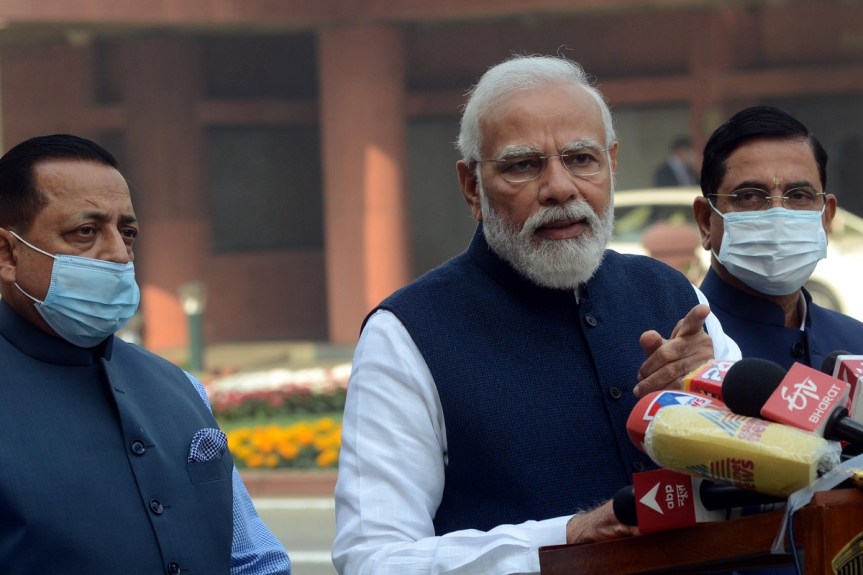
Recently, India’s biggest Drone Festival – Bharat Drone Mahotsav 2022 was inaugurated in New Delhi by the Prime Minister. A virtual award of drone pilot certificates, panel discussions, product launches, display of a ‘Made in India’ Drone Taxi prototype, flying demonstrations, among others were the key events.

Drone is a layman terminology for Unmanned Aircraft (UA). Originally developed for the military and aerospace industries, drones have found their way into the mainstream because of the enhanced levels of safety and efficiency they bring.

Applications of Drone Technology?

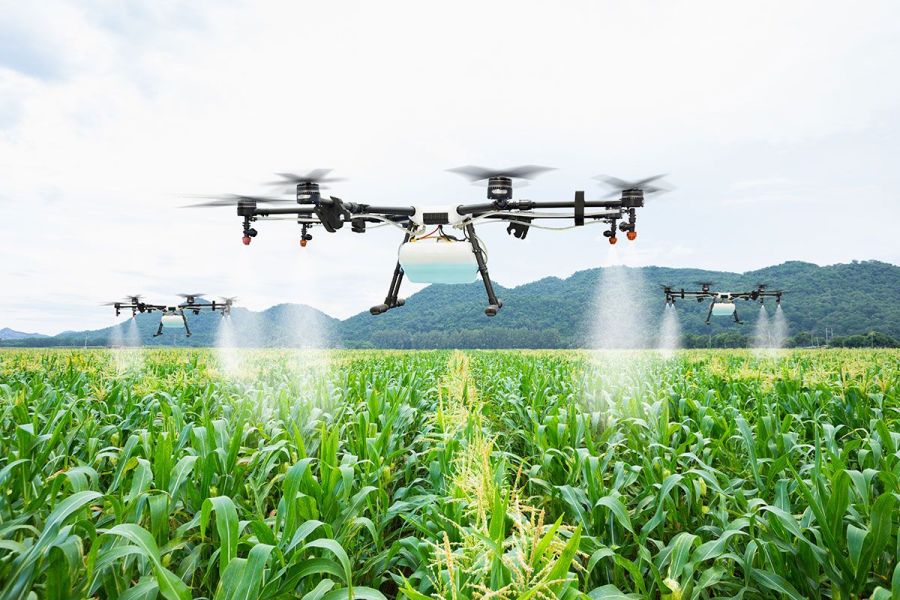
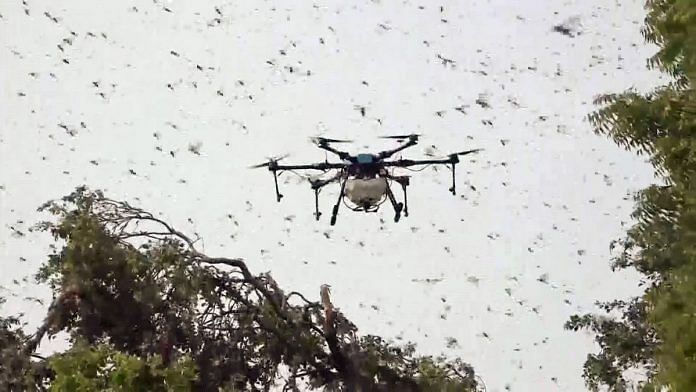
Agriculture: In the agriculture sector, micronutrients can be spread with the help of drones. It can also be used for performing surveys for identifying the challenges faced by the farmers.

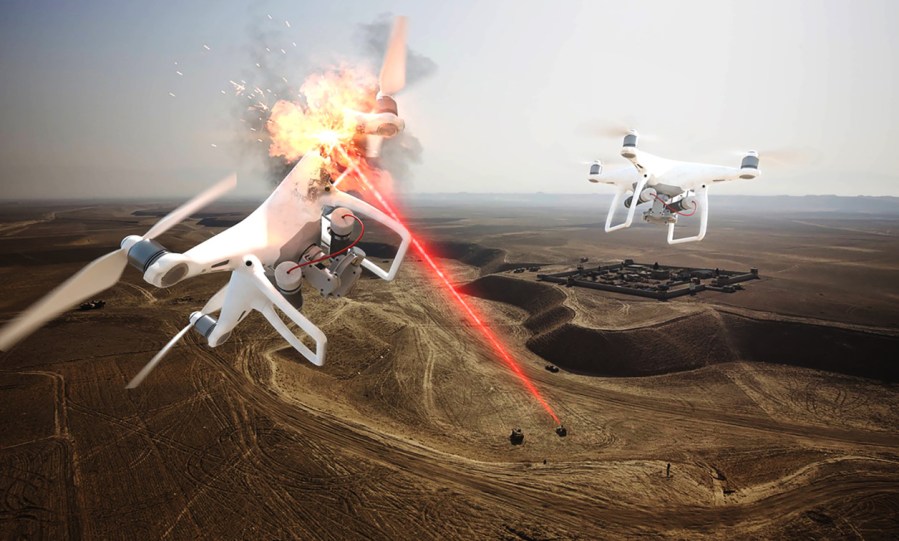
Defence: Drone system can be used as a symmetric weapon against terrorist attacks. Drones can be integrated into the national airspace system.Deployment of drones for combat, communication in remote areas, counter-drone solutions can be done.

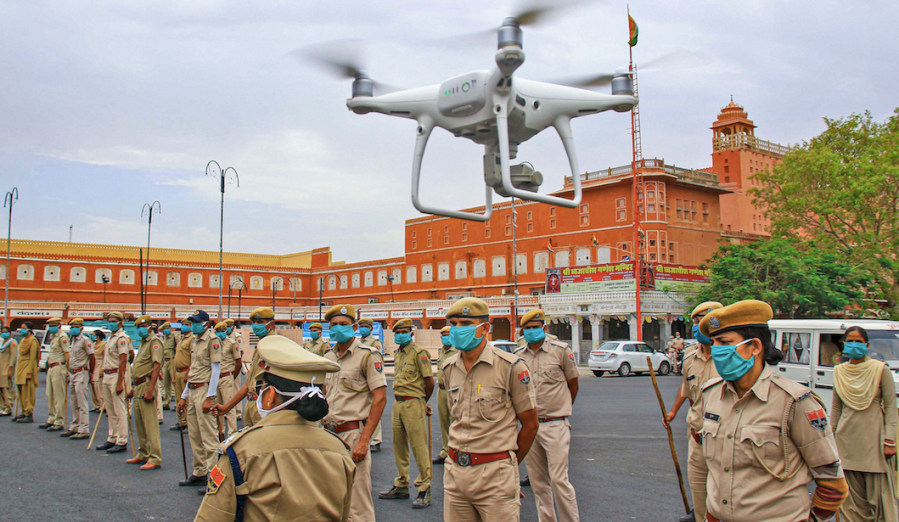
Law Enforcement: Drones are also significant for the law enforcement agencies, the fire and emergency services wherever human intervention is not safe and the healthcare services.

Healthcare Delivery Purposes: Indian Council of Medical Research (ICMR) devised Drone-Based Vaccine Delivery Model, i-drone. Telangana and North-east states have been approved to use this drone technology for delivering vaccines in remote areas.

Significance of Drone Mahotsav?

As drone technology has its application in diverse areas such as defence, disaster management, agriculture, healthcare, tourism, film and entertainment, there is a great possibility of a major revolution creating immense opportunities for employment. Villages are witnessing the arrival of roads, electricity, optical fibre and digital technology. However, agriculture work is still being conducted in old ways, leading to hassles, low productivity and wastage. Drone technology is going to play a major role in empowering farmers and modernize their lives.

Government is making efforts towards creating a strong drone manufacturing ecosystem in India through schemes like Production-Linked Incentive (PLI).

Startups to leverage " Deep Tech " to build solutions for local & global markets

 The Minister of Commerce and Industry, Consumer Affairs, Food and Public Distribution, Shri Piyush Goyal today called upon the Indian industry to aim for raising 75 unicorns in the 75 weeks to the 75th anniversary of Independence next year.

“We have added 43 unicorns added in 45 weeks, since the start of ‘Azadi ka Amrit Mahotsav’ on 12th March, 2021. Let us aim for atleast 75 unicorns in this 75 week period to 75th Anniversary of Independence,” he said, while releasing the NASSCOM Tech Start-up Report 2022.

Shri Goyal said Startup India started a revolution six years ago and today ‘Startup’ has become a common household term. Indian Startups are fast becoming the champions of India Inc’s growth story, he added.

“India has now become the hallmark of a trailblazer & is leaving its mark on global startup landscape. Investments received by Indian startups overshadowed pre-pandemic highs. 2021 will be remembered as the year Indian start-ups delivered on their promise, – fearlessly chasing opportunities across verticals – Edtech, HealthTech & AgriTech amongst others,” he said.

Shri Goyal lauded the ITES (Information Technology Enabled Services) industry including the Business Process Outsourcing (BPO) sector for the record Services exports during the last year.

“Services Export for Apr-Dec 2021 reached more than $178 bn despite the Covid19 pandemic when the Travel, Hospitality & Tourism sectors were significantly down,” he said.

Shri Goyal said the Prime Minister Shri Narendra Modi has declared 16th January as the National Startup Day, showing his commitment to take the innovation culture to every nook and corner of the country.

“We all celebrated this innovation spirit through Startup India Innovation Week, during the last week as part of ‘Azadi ka Amrit Mahotsav’. PM’s interaction with Startups a week ago has supercharged the courage of our innovators,” he said.

Shri Goyal said the Government has taken several steps to boost startup ecosystem, –

  • Removing problems of ‘Angel tax’, simplification of tax procedure & allowing self-certification and self-regulation towards which we are moving
  • Reducing burden of over 26,500 compliances
  • Decriminalization of 770 compliances

Shri Goyal said the New India is today being led by new troika of Innovation, Technology & Entrepreneurship (ITE), which in a way has grown further from the original ICE (Information, Communication & Entertainment).

“I remember when ICE was introduced many years ago, we were excited about the new information age. Today, that same vibrancy & excitement is witnessed in the way our startups are growing in the ITE areas,” he said.

Shri Goyal said India’s unique digital infrastructure – Aadhaar, Digilocker, Fastag, Cowin, UPI etc. have enabled Access & Affordability.

“The Cowin portal showed the world that Indian could run world’s largest vaccination programme efficiently & effectively, with complete mapping & monitoring done digitally. UPI has helped new age technologies in reaching the common man at affordable prices,” said Shri Goyal.

“The next “UPI moment” will be the ONDC (Open Network for Digital Commerce). The first-of-its-kind globally, ONDC to enable interoperability between eCommerce companies, providing equal opportunity to small & large players, will help control digital monopolies & make industry more inclusive for buyers & sellers alike, empowering MSMEs to unlock innovation & value,” he added.

Shri Goyal unveiled a five-point plan as the way forward for the NASSCOM:

     1. Emphasize on basic & core needs of people, – providing better access to financial          services, education & healthcare; solutions to problems of farmers, etc.

     2. Focus on High growth & Job creating sectors, – Advertising & Marketing, Prof. services, Fitness & Wellness (Yoga becoming popular globally), Gaming, Sports, Audio-Visual services

     3. More & more startups should leverage Deep tech to build solutions for local & global markets, – AI, IoT, Big Data, Data Analytics, Blockchain, Virtual Reality, 3D Printing, Drones, etc.

     4. We have a lot of potential in Startups from Tier-2 & 3 cities. If we give them more support & proper mentoring, they could also play a much greater in the years to come.

     5. India will assume G20 presidency in 2023 – suggest ideas on themes resonating with our vision to solve global issues.

Shri Goyal hoped this momentum of the Indian Startup ecosystem will continue in the current year and the years to come.

“While 2021 was a year in which we defied all odds, 2022 will be the breakthrough year which will unlock country’s exponential value. ‘India at 100’ will be renowned as a Startup nation. But as PM Modi said yesterday in his speech- the “Amrit Kaal,” the coming 25 years – are the period of utmost hard work, sacrifice and tapasya,” he said.

*****

IN A NEW PUSH FOR DRONE USE,GOVERNMENT EASES NORMS

The Ministry of Civil Aviation released certain draft policy for drones on Thursday which brings more safety features and appears to address some problems in India’s nascent unmanned aerial vehicle (UAV) industry regarding the compliance norms outlined earlier.

The draft policy, titled Drone Rules 2021, will replace the Unmanned Aircraft System (UAS) Rules 2021, which came into force in March this year. It is open for public suggestion till August,5. After taking the comments into consideration, the final rules are expected to be issued that will replace the stricter UAS rules.

CHANGES:

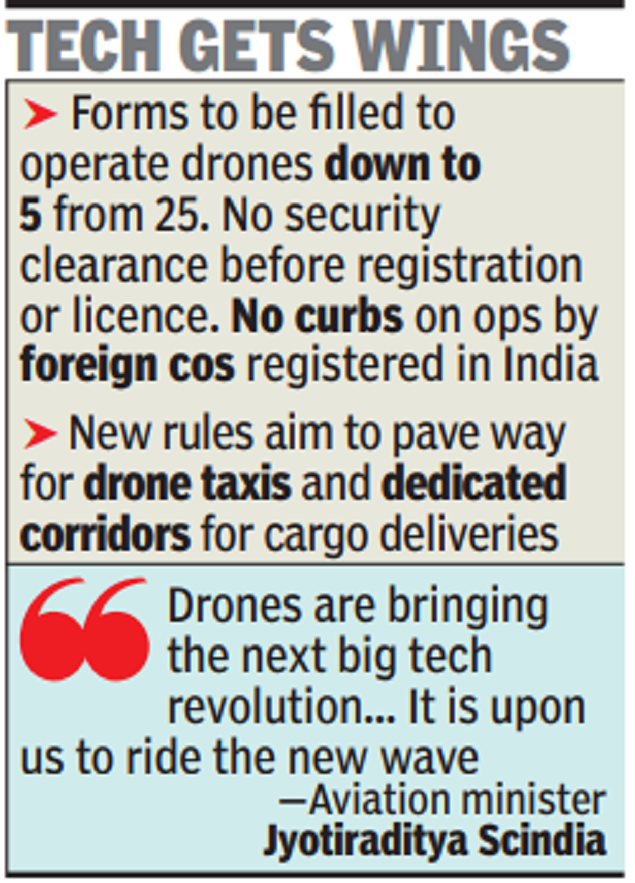
“On the premise of basis of trust, self-certification, and non-intrusive monitoring”, the draft policy reduces the number of approvals required by applicants. It brings down the number of forms from 25 to 6 under the UAS Rules, and reduces fees for certain approvals. Also it proposes mandatory safety features like ‘No permission – no take-off’. It provides easy process for transfer and de-registration of drones. There is no pilot license required for Nano drones Real-time tracking beacon and geo-fencing are to be quipped. Drone owners who don’t have these installed will have to incorporate them within six months of the rules coming into effect, the draft policy states. Under new rules, manufacturer can develop their drone’s unique identification number on digital sky platform through self certification route. According to this new policy, there will be no restriction on drone operations by foreign owned companies in India. The fees for using drones will also be cut short. The maximum penalty under new rules will becaped at rupees 1 lakh.

These changes has got a great thumbs up from the industry.

Arjun Aggarwal, MD of drone major Aero arc, said the change will “give impetus to an ‘aatmanirbhar’ drone eco-system”. Scindia tweeted: “Drones are bringing the next big tech revolution around the globe with reduced costs, resources and time taken for operations. It is upon us to ride on the new wave and facilitate its uptake, especially among our startups”.Dubey said “rules have to evolve” with the “pace of change in drone technology”. “Drone Rules 2021 are just a step in that direction. Drone rules in 2025 and 2030 could be completely different from this. The government works closely with the drone academia and industry. In their success is India’s success,” he added.   

FACTS ABOUT DRONES

In the tech world, we call a drone as ‘Unmanned Aerial Vehicle’. Started as a military invention in the US, drones and their scope of use is growing day by day. At present, civilians and police departments around the world are also enjoying the benefits of the drone technology at an increasing rate. Photography, videography, food-delivery, farming, environmental and crime surveillance, etc. are the activities for which we are using the features of drones. We can buy drones for personal of professional use from any local or online tech or gadget store starting from a range of USD 50 or INR 45,000 to 50,000.

Scope of drones

Drone is another rapidly growing and adaptive gadget which the humans can manipulate for humanitarian causes and as well as causing harm to life and property. From delivering food packets for flood-relief to deadly gunshots on people, drone industry is much diverse and is rising soon creating a boom into the ecommerce delivery system and agricultural industry in the coming years.

But before that, let’s have a look at some important facts about drones which you probably don’t know.

  • Drones are not always remote controlled.

It will surprise you that there are three types of drones according to their piloting methods:

  1. Remotely Piloted Drone–Piloted from a remote station where the drone is not directly visible.
  2. Model Remotely Piloted Drone-Piloted for educational, recreational or experimental usage only within a visible area of sight.
  3. Autonomous Drone–Does not require a pilot. We feed the flight and working instructions into its system before taking off, just like any targeted missile.
  • Drones can legally invade your privacy.

To your shock, there is no national framework or statutory body to govern the use of drones by the police. Police don’t even require a warrant or permission to survey using drone. The drones flown by the police or military drones have ungoverned access to all parts of the United States to gather data except government properties and lands. Many other countries act similarly for regulating drones by government authorities.

  • Can you fly a drone easily in your country?

The drone rules of each country are different and very complex. It takes days or months for common people to get certain licenses and permissions to fly drones in a particular country.

Examples:

  1. A foreigner or a foreign company cannot fly drone in India. To use drone for commercial activities, a foreigner is bound to lease their drone to an Indian company who will get Unique Identification Number (UIN) and drone permit called UAOP (Unmanned Aircraft Operator Permit) from DGCA (The Directorate General of Civil Aviation) for the foreigner.
  2. A non-US citizen is bound to take permission and licenses 15 days prior to using drone in the US.
  • Drones have killed lakhs of children

The military, police, and terrorists use attack drones or weaponized drones at the time of warfare. Drones work as small weapons, which is very hard to notice for a common citizen. This reckless use of drone technology by military, police and criminals over the years is taking many lives. Most of the victims are civilians and children.

  • Resolving worst farming and food problems by using drones.

Thermal cameras installed on drones can identify water leakages and identify which crops are getting enough water. A drone can zoom down to even an individual plant. Farmers in Canada and other countries are using drone data for years to calculate the health of the plants.

8 WAYS Technology is Helping To Fight the CORONA VIRUS 2020

As Corona virus keeps on getting bigger and spreads so is the technology and innovation. It is making peoples life easier in the lockdown by keeping us all virtually connected. Technology is helping the authorities fight this virus.

The Drones in the Skies-

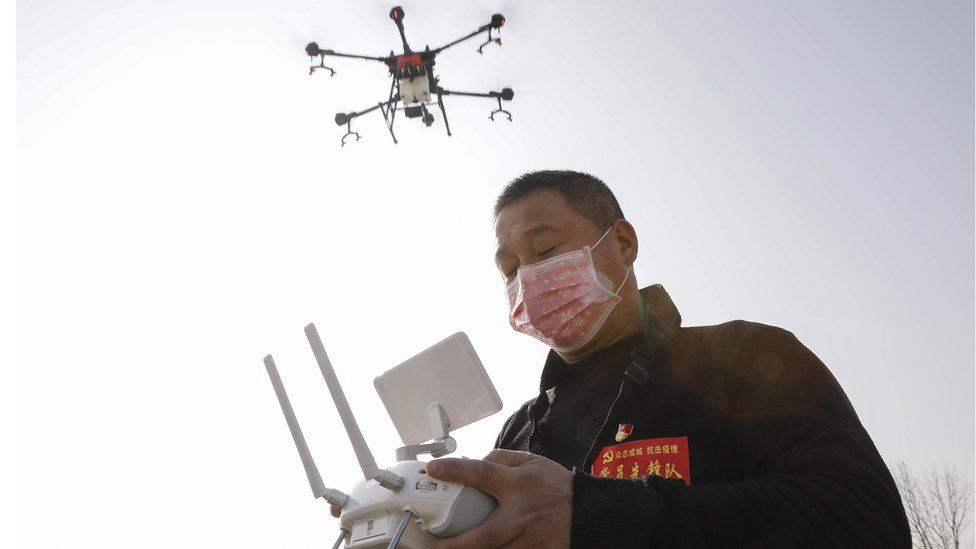
These flying camera birds are helping in patrolling and making sure evrybody is maintaining social distancing. They help the officials check on things and also maintain social distancing at the same time. In remote areas agricultural drones were used for spraying disinfectants. In some parts of the country theyare being used to deliver crucial medical supplies.

Coronavirus: China's tech fights back - BBC News

Online Clinics and Counseling-

Due to this one illness other diseases have lost its importance. People suffering from issues like hypertension and arthiritis are being provided with online medical assistance. Many institutes are also offering online psychological counseling service.

How Technology Has Made Online Medical Consultation Possible ...

Robot nurses and Artificial Intelligence scans

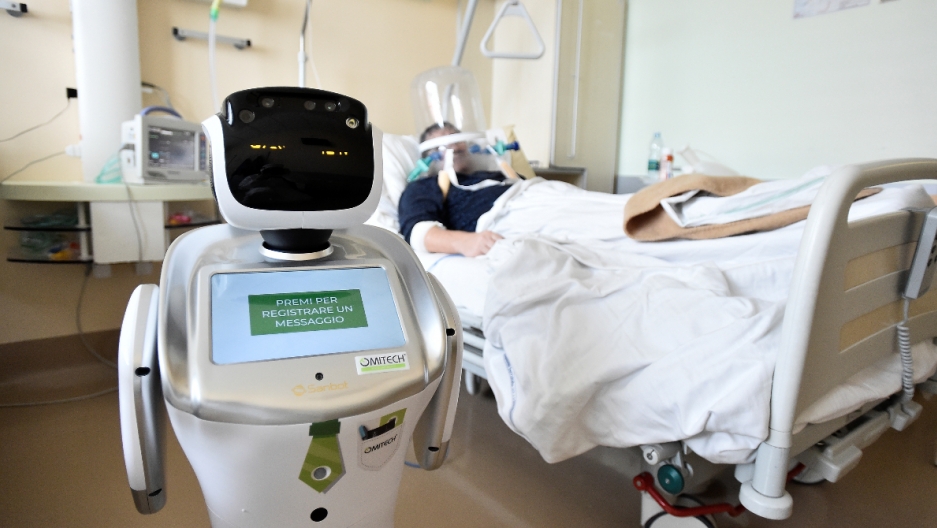
Robots are also used in many Chinese hospitals to deliver food, medicine and other supplies to patients; to disinfect hospitals and other public areas; to check patients temperatures; and to answer common questions. Coronavirus is being   diagnosed using AI, which can read thousands of CT scans in 20 seconds with an accuracy rate of 96%.

Robot nurse helps Italian doctors care for COVID-19 patients

Virtual Classrooms

After weeks of schools being closed, possibly the biggest challenge for parents is keeping children occupied and continuing their schoolwork.  To enable this, many schools have rolled out online learning platforms, where students take courses and teachers give lectures from home, via live-streaming platforms.

With online classes in vogue, schools shift focus to feedback and ...

Research and Development

Within the first few weeks of the virus, China had sequenced the genome. By posting that sequencing online, it trigged a ripple effect in research labs across the world, with a surge in orders for synthetic samples of the virus to build copies of it from scratch. This allowed new treatments to be trialed – even experiments that failed offered vital clues in guiding researchers on where they should focus.

Three TN medical colleges to get virus research labs in 6 months ...

Smartphones and Internet

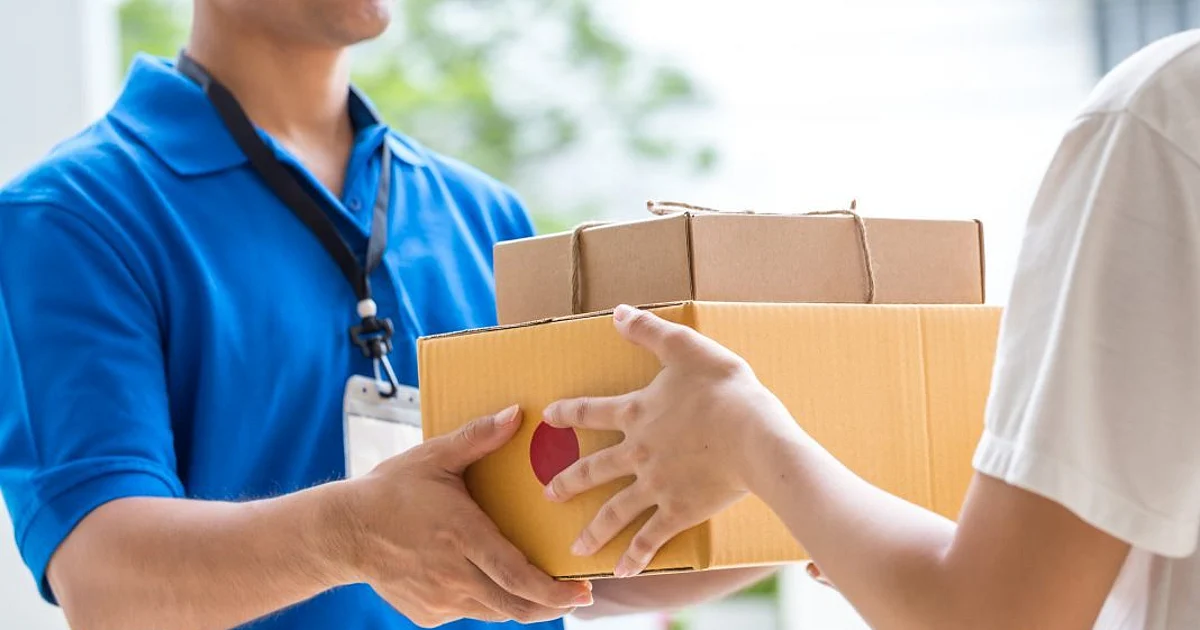
Smartphones are playing a critical role in reducing exposure. Delivery apps offer contact-less delivery, whereby drivers drop food off at a specific point – including a card stating the temperature of everyone involved in cooking and delivering the food. Another offers users maps marking residential communities with confirmed cases and their proximity to them. Meanwhile, mobile payment apps are reducing transmission along paper money, which can carry viruses for up to 17 days. With the world’s highest penetration of e-wallets and two of the world’s largest mobile pay, Chinese fin-tech is helping to slow the coronavirus spread.

India lockdown throws online delivery out of gear, millions cry

Work From Home

A major challenge during the virus is being able to work.  Several tech companies are offering free online collaborative tools. Other businesses have quickly adopted work-from-home policies, using online meeting software, collaborations platforms and LBS technology to clock in and  ensure employees stay home. At UNDP, the use of Zoom teleconferencing and ERP Platforms have allowed us to keep working.

Coronavirus and Working From Home: How to Keep the Kids Busy - Nelson

Virtually Connected

Compulsory quarantine has disrupted daily life and curtailed social interaction for nearly one fifth of the global population. This is leading millions to meet online instead. Families dine together with relatives in distant cities, raising a glass to each other on camera. Even weddings have been held in Virtual Reality.

Things To Do With Friends While Hanging Out Virtually - Addison ...

While the use of technology can at times present its own challenges, and fuel debates about privacy and public good; in the fight against the coronavirus, it is playing a critical role in offering treatment, information, support, food, schooling and greater safety for many.