How India Generate Money for the Growth of Economy

Source: VectorStock

Government of India adopted mixed economy strategy after the independence from British Colonialism. A mixed economy is a system which comprehend the blending elements of market economies with the elements of planned economies with the hint of free market with state intervene such as with private enterprise and public enterprise.

A mixture of markets with state intervention referring to capitalist market economies with strong regulatory oversight, intervening policies and governmental provision of public services.”  This type of economy is apolitical in nature and holding the same substance of private and public enterprise.

In Western world, capitalist economy containing more dominance of private ownership with profit seeking enterprise and accumulation of capital as consider it fundamental driving force for the growth. In such system, markets are tend to flatulent between government and regulatory control which influence indirect macroeconomics influence through fiscal and monetary policies. India has mixed economy culture since independence. The second Five Year Plan infused the economy of socialist pattern for India. Planned Development yielded the socialist strategy for economic planning and Development of public sector. As India adopted mixed economy, Economic planning associated with capitalistic framework. Indian economy augment in Monopoly trends support mixed economy, predominance of
Source: Economic Times

markets mechanism which create the prevalence of markets for goods; this determined the demand and supply created private ownership of production.

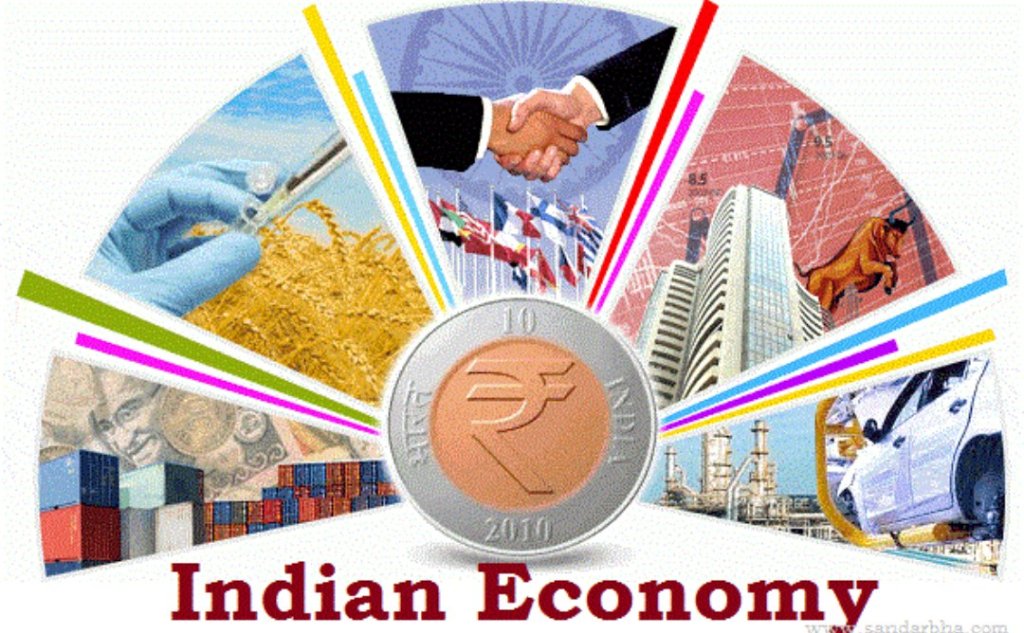
Since the mid 1980s, India has opened up its markets through economic reform. Several industrial policies, Indian economy provided space for private sector but before 1980 the participation of private sectors in economy was very low. Indian economy started to become mixed economy in 1980s and India’s International trade started at large scale.

There are few reasons that why India inclined towards mixed economy and got the base of liberalization, pravitalisation and globalization and switching from agrarian economy. The low growth rate of the economy of India before 1980 which was stagnant from 3 to 3.5% from 1950s to 1980s while per capital income averaged 1.3%. At the same time, Pakistan grew by 5% Thailand by 9%, South Korea by 10%. Before 1990s, only four and five working license were given to steel, electrical, power and communication. License owners large enterprises.

A huge power sector emerged as state owned enterprises made large losses. Income taxes and custom department become inefficient in checking tax evasion. Infrastructure investment was poor because of the public sector monopoly. License Raj established the irresponsible bureaucracy and corruption in the enterprises and corruption flourished in this system.
Source: PaperTyari

In 1990, Prime minister PV Narasimha Rao, with Finance Minister Manmohan Singh initiated the Economic Liberalization in 1991. Reforms vanished license Raj, reduced tariffs and interest rates and ended many public monopolies, allowing Foreign investment in many sectors. Through the Economic Reform of 1991, Indian economy introduced liberalization privatization and Globalization as part of Structural Programme.

Liberalization has equated a change of reorganization of institutional space; it is a relationship of economies in the direction of market principles. Liberalization create jobs, increase competition, Private companies buys land and develop cities.

Privatization reduce the government’s political interference. It improve the efficiency of profit incentive; improve operational efficiency in order to reduce their costs and improve on profits. Produce good quality products and provide better services and reduce wastages and utilize the resources.

Globalization encourages producers and consumers to benefit from division of labor. More free market movement between countries. Gains from the sharing of ideas skills technologies across national borders. Opening up of capital markets allows developing countries to borrow money to over a domestic savings gap. Increased awareness among consumers of inequality and climate change. Competition pressure from Globalization may improved the governance.
Indian Economy after independence

Source: jagranjosh

Indian economy at the time of Independence was in crucial state. This situation occurred due to the British Colonialism. After independence the Government changed plan for economic growth. The area of attention was shifted from agriculture to industry.

The growth of public enterprise generate employment and reduce poverty. In 1991, a revolution came into place in terms of liberalization, privatization and globalization that shaped the face of Indian economy. The Indian have the lowest per capital income and also the lowest consumption in the world.

The low income level consequent into low saving and thus small or no investment which end with low capital formation. Therefore, the dangerous cycle of poverty running in the country. The First Five Year Plan stated that the Indian economy remained more or less stagnant during colonial regime, because the basic conditions of economy was continuously remain the same.

The impact of modern industrialism in the later half of the 19th century was emerged through import of machine made goods from abroad that impact adversely on the traditional pattern of economic life, however unable to create the spark for Development. The conditioning of state led to decline of productivity especially those engaged in agriculture, the adverse effects. The consequence was a continuously increasing of employment. Hence, there could be no economic progress.

At the time of Independence 80% of population living in rural areas were engaged in agriculture for subsistence purposes; using traditional low productive technique for agriculture. The underdevelopment of Indian economy is reflected in it’s unbalanced occupational structure. Illiteracy was 84% , Communicable disease were widespread due to the absence of a good public health services, mortality rate was very high.

Agricultural activity contributed nearly 50% to Indian’s National Income. Mines, factories and small craftsmen work contributed only one – sixth, even lower than the numbers for trade, transport and communication. After independence, the government concern in the sphere of economic policy was to control persistent and severe inflationary pressure and to alleviate shortage of essential food items, which was increased by the partition of the country.

The industrial Policy Resolution of 1948 stamped as fundamental departure from earlier policy of laissez faire. Finally, the concept of planning Development programme under the auspices of the central government, was accepted and the planning commission was set up in March 1950 to make an assessment of the material capital and human resources of the country and to formulate a plan for the most effective and balanced utilisation of the countries resources.

India embarked upon the programme of planned economic development of the country with the formulation of first year plan that covered the period of 1951 – 1956. The second plan that followed was form 1956 – 1961 and third plan from 1961 to 1966. The other plans followed there after. The Eleventh Five Year Plan has been launched from 2007 – 2012; Twelfth Five year Plan was started from 2013 – 2014.


Source: Deccanherald

The first five year plan provided an inclusive general analysis the nature of the country’s Developmental problem and various options for mobilising resources and achieving Development with more equal distribution. There was special emphasis on the role of mass mobilization of idle rural labour and land reform. The plan optimistically project that saving and investment as a proportion of National Income would rise from an estimated 5 – 6% in the early 1950 to 20% by 1968 – 69.

S Chakravarti  had mentioned some shortcomings of Indian economy. Such as

• The basis cause of development was seen as being an acute deficiency of material capital, which prevented the introduction of more productive technologies.

• The limitation on the speed of capital accumulation was seen to lie in the low capacity to save.

• It was assumed that domestic capacity to save and raised by means of suitable fiscal and monetary policies. There were structural limitations preventing conversion of saving into productive investment.

• The inequality in income distribution was considered to a bad thing, a precipitate transformation of the ownership of productive assets was held to be detrimental to the maximization of production and savings.

• Agriculture was subject to secular diminishing returns, industrialization would allow surplus labour currently under employed in agriculture to be more productively employed in industry.


Panchayat Raj Institutions vital force for Indian democratic structure

Source: latestlaw.com

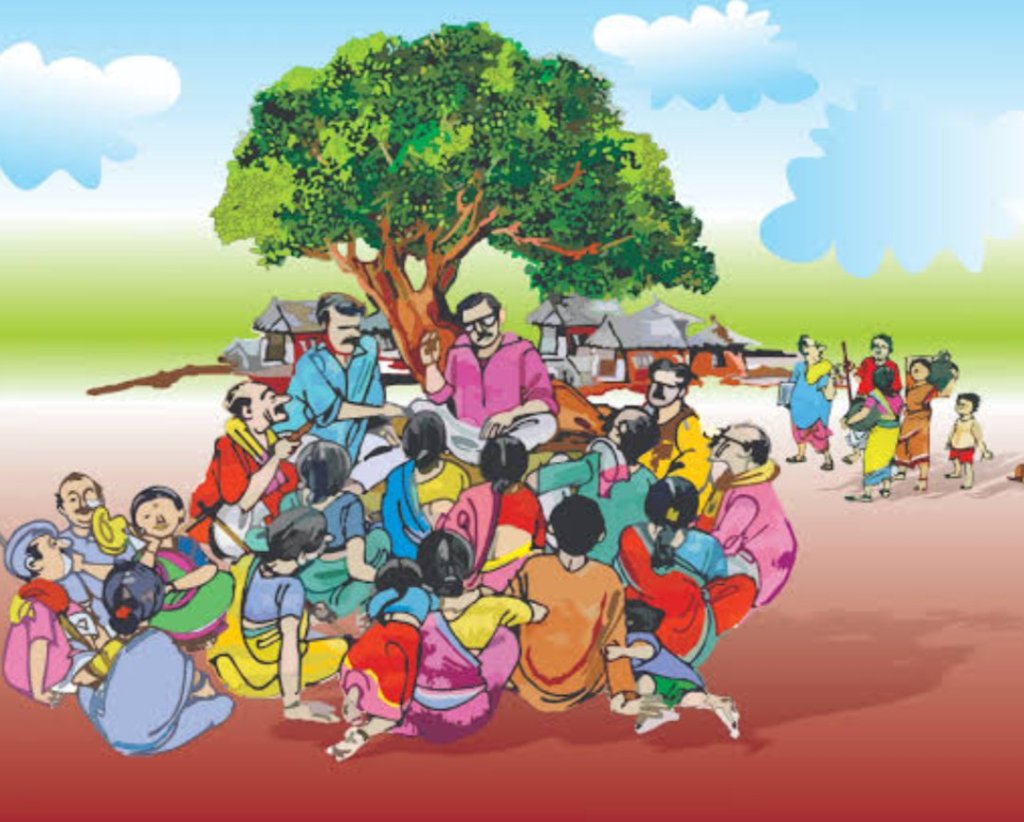
Evolution and development of the local self Government has long history. The notion of direct democracy in janapada and mahajanapadas, that said to be precursor of panchayati Raj Institutions in Post – independence India. The idea of local self – Government  (LSG) was also extended to the urban areas, thereby making the notion of local self government two dimensional i.e. rural local self Government and urban local self Government.

Local Self Government based on basic human needs having direct bearing on the lives of the individual and the community as whole, better fulfilled by a government to which the individual and the local community have direct and easy access. Panchayati Raj in India signifies the system of rural local self Government.

Post independence times, democratisation of the Polity in the members of the constituent assembly, Gandhian plea for a village based system of political formation fostered by a stateless, classless society was initially rejected by the Congress Constitution committee. The idea of Panchayati Raj finding a place in the Constitutional framework of the country persuaded to provide a place of relative insignificance to the dream of Panchayati Raj by placing part IV of the Constitution.

It was created to establish democracy at the grassroot level.  It was constitutionalised through 73rd Constitutional Amendment Act 1992. The Ministry of Rural Development looks after the matters relating to panchayati Raj bodies. The 5th entry of state list of the 7th schedule to the Constitution of India deals with local government. The government to operationalize the panchayati Raj with the inauguration of the Constitution on 26th January 1950.


Committees on Local Self Government

Balwant Raj Mehta Committee

In 1957, Government of India appointed a committee under Balwant Mehta to examine the working of the community development Programme and National Extension services. The committee recommended the establishment of democratic decentralization, which ultimately came to known as Panchayati Raj.

Recommendations of Balwant Mehta Committee are as follows;

Establishment of a 3 tier panchayat Raj system Gram panchayat at the village level, panchayat samiti at the block level, Zila Parishad at the district level.  

The village Panchayat should be constituted with directions elected Representatives. The panchayat samiti and Zila Parishad should be constituted with indirectly elected members.

These bodies are entrusted with all developmental activities. The Panchayat samiti should be the executive body while the Zila Parishad be the advisory body.

The district collector should be the Chairman of Zila Parishad.

National Development Council accepted these recommendation, but left to states to evolve their own patterns.


Ashok Mehta Committee

In December 1977, the janta Government appointed a committee on panchayat. Raj Institutions under the chairmanship of ashok mehta. It submitted it’s report in August 1978 and made 132 recommendations to revive and strengthen the declining Panchayati Raj system in the country.

The 3 tier system of Panchayati Raj be replaced by the two tier system, Zila Parishad at the district level. A district should be the first point for decentralization under popular supervision below the state level. Zila Parishad should be the executive body and made responsible for planning at the district level.

There should be an official participation of political parties at all levels of panchayat elections. The panchayat Raj Institutions should have compulsory powers of taxation to mobilize their own financial resources.

A minister for panchayat Raj should be appointed in the state council of ministers to look after the affairs of the panchayati Raj Institutions. Seats for SC and ST should be reserved on the basis of their population.

GVK Rao Committee

The planning commission of India in 1985, appoint GVk Rao as the Chairman of the committee on administrative arrangement for rural development and poverty alleviation programmes. The commission found that bureaucracy side lined Panchayati Raj in developmental process. The phenomenon of bureaucratisation of development administration’ results into grass without roots.

The committee made following recommendations:

Zila Parishad should become the principal body for management of all development programme at the district level. Planning functions at the state level should be transferred to the district level planning units.

A post of District Development commissioner should be created. He should act as the chief Executive officer of Zila Parishad.

The Panchayati Raj Institutions at the district and lower levels should be assigned an important role with respect to planning implementation and monitoring of rural development programme. Election to Panchayati Raj Institutions should be held regularly.

LM Singhvi Committee

Rajiv Gandhi Government in 1986, appointed a committee on “Revitalization of Panchayati Raj Institutions for democracy and development” under the  ‘Chairmanship of LM Singhvi’.

Constitutional recognition of the Panchayati Raj Institutions were recommended. It suggested Constitution provisions to ensure regular , free and fair elections to the panchayati Raj bodies.

Nyaya panchayat should be established for cluster of village. The village Panchayats need to be equipped with financial resources.

The judicial tribunals should be established in each state to adjudicate controversies about the election to the panchayati Raj Institutions their dissolution and other matter related to their functioning.


73rd Amendment Act 1992

The Constitutional Amendment Act of 1992 has added Part – IX to the Constitution of India. It is entitled as The Panchayats’ and consists of provision from Article 243 to 243. The act also add 11th schedule to the Constitution. It contains 29 functional items of the panchayat and deals with Article 243- G.

Panchayati Raj Institutions get a constitutional status and State Government are oblised to adopt the new Panchayati Raj Act. Constitution balance between the center and state is not disturbed by the act.

Gram Sabha

Gram Sabha as the foundation of the panchayati Raj system. The Gram Sabha is a body consisting of persons registered in the electoral rolls of a village comprised within the area of panchayat at the village level. The Gram Sabha exercise such powers and functions at the village level. The Balwant Rai Mehta committee report, which envisaged a three tier structure at local level, made no formal mention of the Gram Sabha.

Gram Sabha exists as a statutory body in almost all states except in Kerala and Tamil Nadu. In states like Bihar, Odisha and Rajasthan, all the audit residents of a village or a group of village are it’s member.

Functions of Gram Sabha

To help implementation of the development programme and schemes of the panchayat. To support the programme of mass education and family welfare.

To solicit support in cash or kind or both and voluntary labour from the Public for community welfare programme. To discuss and appropriate action with regard to reports of the vigilance committee.


Property Rights

What Are Property Rights?

Property rights define the theoretical and legal ownership of resources and how they can be used. These resources can be both tangible or intangible and can be owned by individuals, businesses, and governments. In many countries, including the United States, individuals generally exercise private property rights or the rights of private persons to accumulate, hold, delegate, rent, or sell their property. In economics property rights form the basis for all market exchange, and the allocation of property rights in a society affects the efficiency of resource use.

Understanding Property Rights

Property is secured by laws that are clearly defined and enforced by the state. These laws define ownership and any associated benefits that come with holding the property. The term property is very expansive, though the legal protection for certain kinds of property varies between jurisdictions.Property is generally owned by individuals or a small group of people. The rights of property ownership can be extended by using patents and copyrights to protect:

  • Scarce physical resources such as houses, cars, books, and cellphones
  • Non-human creatures like dogs, cats, horses or birds
  • Intellectual property such as inventions, ideas, or words

Other types of property, such as communal or government property, are legally owned by well-defined groups. These are typically deemed public property. Ownership is enforced by individuals in positions of political or cultural power. Property rights give the owner or right holder the ability to do with the property what they choose. That includes holding on to it, selling or renting it out for profit, or transferring it to another party.

Acquiring Rights to a Property

Individuals in a private property rights regime acquire and transfer in mutually agreed-upon transfers, or else through homesteading. Mutual transfers include rents, sales, voluntary sharing, inheritances, gambling, and charity. Homesteading is the unique case; an individual may acquire a previously unowned resource by mixing his labor with the resource over a period of time. Examples of homesteading acts include plowing a field, carving stone, and domesticating a wild animal. In areas where property rights don’t exist, the ownership and use of resources are allocated by force, normally by the government. That means these resources are allocated by political ends rather than economic ones. Such governments determine who may interact with, can be excluded from, or may benefit from the use of the property.

Private Property Rights

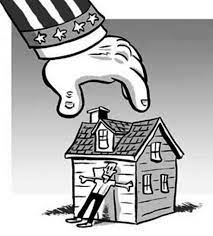
Private property rights are one of the pillars of capitalist economies, as well as many legal systems, and moral philosophies. Within a private property rights regime, individuals need the ability to exclude others from the uses and benefits of their property. All privately owned resources are rivalrous, meaning only a single user may possess the title and legal claim to the property. Private property owners also have the exclusive right to use and benefit from the services or products. Private property owners may exchange the resource on a voluntary basis.

Private Property Rights and Market Prices

Every market price in a voluntary, capitalist society originates through transfers of private property. Each transaction takes place between one property owner and someone interested in acquiring the property. The value at which the property exchanges depends on how valuable it is to each party. Suppose an investor purchases $1,000 in shares of stock in Apple. In this case, Apple values owning the $1,000 more than the stock. The investor has the opposite preference, and values ownership of Apple stock more than $1,000.

The Amazon

The forest is a peculiar organism of unlimited kindness and benevolence that makes no demands for its sustenance and extends generously the products of its life activity; it affords protection to all beings, offering shade even to the axe-man who destroys it.

– Gautama Buddha

Today , let’s feel the presence of fresh air , waterfall , trees , flora and fauna . Being a citizen of a country , which is well known for its resources , different species, mixed economy and different cultures. It is important for us to see the world of flora and fauna.

Well you get to know by the heading , today we are gonna talk about THE AMAZON’S which is well known for its vast species .

Introduction .


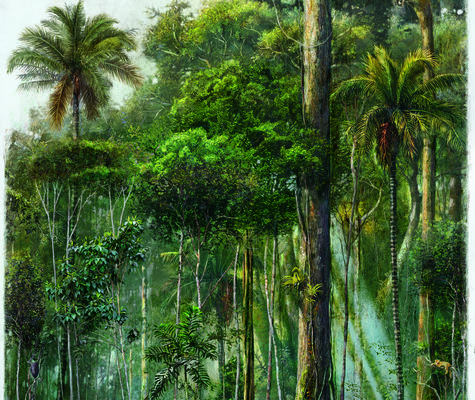
The Amazon jungle or Amazonia, is a moist broadleaf tropical rainforest in the Amazon biome that covers most of the Amazon basin of South America. This basin encompasses 7,000,000 km2 (2,700,000 sq mi), of which 5,500,000 km2 (2,100,000 sq mi) are covered by the rainforest. This region includes territory belonging to nine nations and 3,344 formally acknowledged indigenous territories.

The majority of the forest is contained within Brazil, with 60% of the rainforest, followed by Peru with 13%, Colombia with 10%, and with minor amounts in Bolivia, Ecuador, French Guiana, Guyana, Suriname, and Venezuela. Four nations have “Amazonas” as the name of one of their first-level administrative regions, and France uses the name “Guiana Amazonian Park” for its rainforest protected area. The Amazon represents over half of the planet’s remaining rainforests, and comprises the largest and most biodiverse tract of tropical rainforest in the world, with an estimated 390 billion individual trees divided into 16,000 species.

The name Amazon is said to arise from a war Francisco de Orellana fought with the Tapuyas and other tribes. The women of the tribe fought alongside the men, as was their custom. Orellana derived the name Amazonas from the Amazons of Greek mythology, described by Herodotus and Diodorus.

Flora and Fauna.

Wet tropical forests are the most species-rich biome, and tropical forests in the Americas are consistently more species rich than the wet forests in Africa and Asia.

This constitutes the largest collection of living plants and animal species in the world.

The region is home to about 2.5 million insect species, tens of thousands of plants, and some 2,000 birds and mammals. To date, at least 40,000 plant species, 2,200 fishes, 1,294 birds, 427 mammals, 428 amphibians, and 378 reptiles have been scientifically classified in the region.

The biodiversity of plant species is the highest on Earth with one 2001 study finding a quarter square kilometer (62 acres) of Ecuadorian rainforest supports more than 1,100 tree species.

Human impact on Amazon jungle.

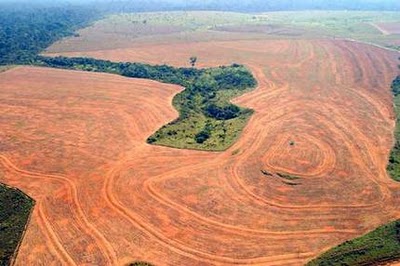
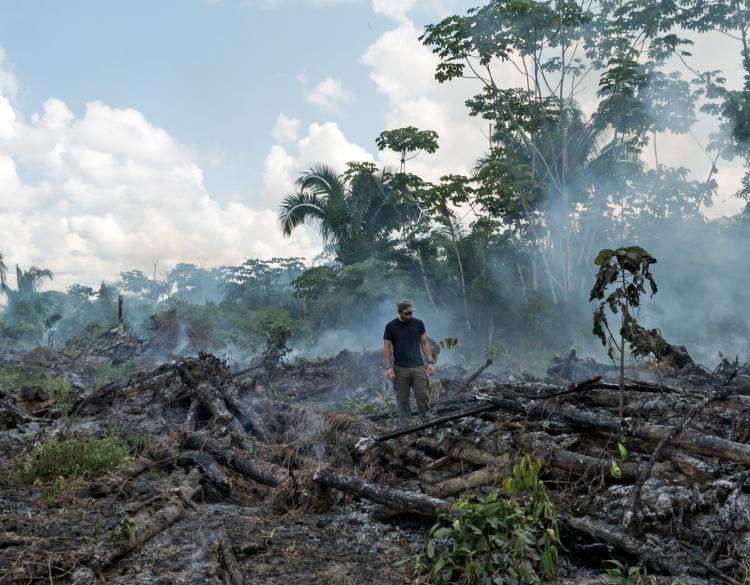
The human impact on the Amazon rainforest has been grossly underestimated according to an international team of researchers. … They found that selective logging and surface wildfires can result in an annual loss of 54 billion tonnes of carbon from the Brazilian Amazon, increasing greenhouse gas emissions.

Lead researcher Dr Erika Berenguer from Lancaster University said: “The impacts of fire and logging in tropical forests have always been largely overlooked by both the scientific community and policy makers who are primarily concerned with deforestation. Yet our results show how these disturbances can severely degrade the forest, with huge amounts of carbon being transferred from plant matter straight into the atmosphere.”

The second author, Dr Joice Ferreira from Embrapa in Brazil, said: “Our findings also draw attention to the necessity for Brazil to implement more effective policies for reducing the use of fire in agriculture, as fires can both devastate private property, and escape into surrounding forests causing widespread degradation. Bringing fire and illegal logging under control is key to reaching our national commitment to reducing carbon emissions.”

The forest is not a resource for us, it is life itself. It is the only place for us to live.

-Evaristo Nugkuag Ikanan

Link

Transportation in India.

India’s transport sector is large and diverse; it caters to the needs of 1.1 billion people. In 2007, the sector contributed about 5.5 percent to the nation’s GDP, with road transportation contributing the lion’s share.

Good physical connectivity in the urban and rural areas is essential for economic growth. Since the early 1990s, India’s growing economy has witnessed a rise in demand for transport infrastructure and services.

However, the sector has not been able to keep pace with rising demand and is proving to be a drag on the economy. Major improvements in the sector are therefore required to support the country’s continued economic growth and to reduce poverty.

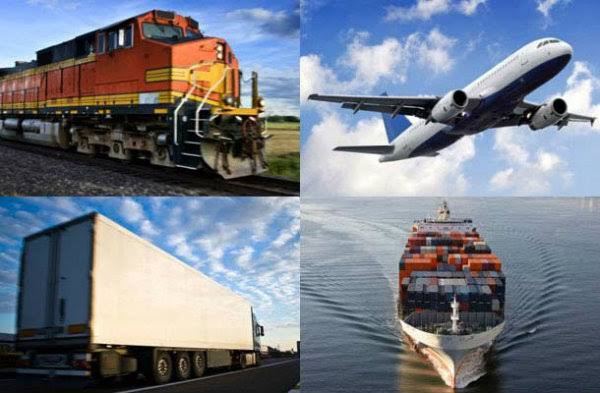
Roads. Roads are the dominant mode of transportation in India today. They carry almost 85 percent of the country’s passenger traffic and more than 60 percent of its freight. The density of India’s highway network — at 0.66 km of roads per square kilometer of land – is similar to that of the United States (0.65) and much greater than China’s (0.16) or Brazil’s (0.20). However, most roads in India are narrow and congested with poor surface quality, and 33 percent of India’s villages do not have access to all-weather roads.

Rural Roads-A Lifeline for Villages in India: Connecting Hinterland to Social Services and markets

Railways. Indian Railways is one of the largest railways under the single management. It carried some 19.8 million passengers and 2.4 million tonnes of freight a day in year 2009 and is one of the world’s largest employer. The railways play a leading role in carrying passengers and cargo across India’s vast territory. However, most of its major corridors have capacity constraint requiring capacity enhancement plans.

Ports. India has 13 major and 199 minor and intermediate ports along its more than 7500 km long coastline. India’s seaborne foreign trade being 95% by volume and 67% by value, the ports play a very significant role in improving foreign trade in a growing economy. These ports serve the country’s growing foreign trade in petroleum products, iron ore, and coal, as well as the increasing movement of containers. Indian ports handled cargo of 850 million tonnes and about 9.0 million TEU container traffic in year 2010. Over the last decade, the average annual growth rate of port cargo volume has been about 10%.. The future potential for port sector, particularly container ports is huge considering that the container traffic is projected to grow to 40 million TEU by 2025. Inland water transportation also remains largely undeveloped despite India’s 14,000 kilometers of navigable rivers and canals.

Aviation. India has 128 airports, including 15 international airports. Indian airports handled 142 million passengers in 2010-11 and 1.6 million tonnes of cargo in year 2009-10. The CAGR for the domestic passenger and freight growth over the last decade has been 14.2% and 7.8% respectively. The dramatic increase in air traffic for both passengers and cargo in recent years has placed a heavy strain on the country’s major airports. Passenger traffic is projected to grow more than 15% annually over 2011-13 and it is estimated that the aviation industry, currently 9th largest in the World, will require 30 billion USD investment in the next 15 years to keep pace with the growing demand.

Urban Transport. India is experiencing rapid urbanization with the present urbanization levels at 30% translating to a population of roughly 340 million living in urban areas. The number of million plus cities is presently at 42 and the urban economy accountd for roughly 60% of the GDP. Motorisation rates in India are in double digits as in most developing economies. Only about 20 cities out of 87 cities with a population in excess of 500,000 and state capitals have any kind of organized transport and only 3-4 cities could lay claim to a mass rapid transit system. The share of public transport in cities with population sizes over 4 million has declined from 69% to 38% between 1994 to 2007. Accident and fatality rates are one of the highest in the world affecting primarily the poor and vulnerable without their own means of transport.

Transport infrastructure in India is better developed in the southern and southwestern parts of the country.

The major challenges facing the sector are:

• India’s roads are congested and of poor quality. Lane capacity is low – majority of national highways are two lanes or less. A quarter of all India’s highways are congested. Many roads are of poor quality and road maintenance remains under-funded. This leads to the deterioration of roads and high transport costs for users.

• Rural areas have poor access. Roads are significant for the development of the rural areas – home to almost 70 percent of India’s population. Although the rural road network is extensive, some 33 percent of India’s villages do not have access to all-weather roads and remain cut off during the monsoon season. The problem is more acute in India’s northern and northeastern states which are poorly linked to the country’s major economic centers.

• The railways are facing severe capacity constraints. All the country’s high-density rail corridors face severe capacity constraints. Also, freight transportation costs by rail are much higher than in most countries as freight tariffs in India have been kept high to subsidize passenger traffic.

• Urban centers are severely congested. In Mumbai, Delhi and other metropolitan centers, roads are often severely congested during the rush hours. The dramatic growth in vehicle ownership during the past decade – has reduced rush hour speeds especially in the central areas of major cities.

• Ports are congested and inefficient. The average annual growth of cargo volume in the ports in the last decade was close to 10%, However, capacity utilization in some of the major ports remain as low as 58-60% Both bulk and containerized traffic is expected to grow at a much faster pace in future and by some estimate the container traffic is projected to grow to about 4.5 times of the current volume by 2025. India’s ports need to significantly ramp up their capacity and efficiency to meet this surging demand.

• Airport infrastructure is strained. . Air traffic has been growing rapidly leading to severe strain on infrastructure at major airports, especially in the Delhi and Mumbai airports which account for more than 40 percent of nation’s air traffic.

Globalization!

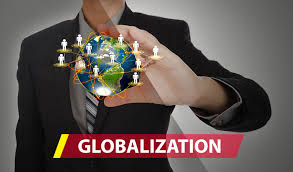
Globalization is the word used to describe the growing interdependence of the world’s economies, cultures, and populations, brought about by cross-border trade in goods and services, technology, and flows of investment, people, and information.

Globalization is driven by the convergence of political, cultural and economic systems that ultimately promote — and often necessitate — increased interaction, integration and dependency amongst nations.

The more that disparate regions of the world become intertwined politically, culturally and economically, the more globalized the world becomes.

These international interactions and dependencies are enabled and accelerated by advances in technology, especially in transportation and telecommunications. In general, money, technology, materials and even people flow more swiftly across national boundaries today than they ever have in the past. The flow of knowledge, ideas and cultures is expediated through Internet communications.

There are three types of globalization:

1. Economic globalization. This type focuses on the unification and integration of international financial markets, as well as multinational corporations that have a significant influence on international markets.
2. Political globalization. This type deals mainly with policies designed to facilitate international trade and commerce. It also deals with the institutions that implement these policies, which can include national governments as well as international institutions, such as the International Monetary Fund and the World Trade Organization.
3. Cultural globalization. This type focuses on the social factors that cause cultures to converge — such as increased ease of communication and transportation, brought about by technology.

Free Trade Policy . (Meaning , Advantages , Disadvantages)

What is Free trade policy?

Free trade policy refers to a trade policy without any tariffs , quantitative restrictions and other devices obstructing the trade of goods between countries ..

According to Adam Smith,
The policy of free trade is a system of commercial policy which draws no distinction between the domestic and foreign commodities and thus neither impose additional burden on the latter nor grants any special favour to the former “

The theoretical case for free trade is based on Adam Smith’s argument about absolute comparative advantage , that the division of labour among countries leads to specialization, greater efficiency, and higher aggregate production.

Free trade therefore , signifies a non discriminatory trade policy that places no artificial barriers upon free international movement of goods and services .

Definitions :-

Prof Jagdish defines free trade policy as , ” absence of tariffs , quotas, exchange restrictions , taxes , subsidies on production , factor use and consumption “

Prof Lipsey gives a very simple definition ,
“A world of free trade would be one with no tariffs and no restrictions of any kind on importing or exporting . In such a world a country would import all those commodities that it could buy from abroad at a delivered price lower than the cost of producing at home .”

In Haberler’s words , ” free trade is the external trade system of liberation which opposes every interference by the state with the free play of economic forces .”

Thus ,the policy of free trade means simply complete freedom of international trade without any restrictions on the movement of goods between countries.

Free trade, also called laissez-faire,
a policy by which a government does not discriminate against imports or interfere with exports by applying tariffs (to imports) or subsidies (to exports).

However sometimes, governments with generally free-trade policies still impose some measures to control imports and exports.
For instance , in the United States, most industrialized nations negotiate “free trade agreements(FTA ),” or , with other nations which determine the tariffs, duties, and subsidies the countries can impose on their imports and exports.

Theories Of Free Trade :-


The years of debates over the benefits versus the costs of free trade policies to domestic industries, two predominant theories of free trade have emerged: mercantilism and comparative advantage.

Mercantilism

The theory of maximizing revenue through exporting goods and services is Mercantilism. High tariffs on imported manufactured goods are a common characteristic of mercantilist policy.
Mercantilist policy helps governments avoid trade deficits, in which expenditures for imports exceeds revenue from exports.
The goal of mercantilism is a favorable balance of trade, in which the value of the goods a country exports exceeds the value of goods it imports.
Mercantilism lost its popularity as it often led to colonial expansion and wars.

Today many multinational organizations such as the WTO work to reduce tariffs globally, free trade agreements and non-tariff trade restrictions supersede mercantilist theory.

Comparative Advantage

David Ricardo in his book “Principles of Political Economy and Taxation,” 1817 , stated the law of comparative advantage which refers to a country’s ability to produce goods and provide services at a lower cost than other countries.
The Comparative advantage theory is that worldwide openness in trade will improve the standard of living in all countries.
Comparative advantage holds that all countries will always benefit from cooperation and participation in free trade.


Advantages ( pros ) of Free Trade Policy.

Free trade policy has many advantages for a country.
The following are some pros of free trade policy :-

1: Maximum of Output :- Under free trade the country specialises in the production of those commodities which it is relatively best suited to produce and exports them in exchange for those imports which it can obtain more cheaply . This maximises the output of all the participating countries because all gain from trade which in turn , increases the real national income of the world economy . Thus free trade leads to the maximisation of output income and employment.


2: International Specialization :-
Free trade causes international specialisation as it enables the different countries to produce those goods in which they have comparative advantage . International trade enables countries to obtain the advantage of specialisation . If there were no international trade many countries would have to go without some products .

3: Optimisation of Consumption :-
Free trade secures the optimisation of consumption . In other words ,it benefits the consumers when they are able to buy a variety of commodities from abroad at the minimum possible prices . This results in raising their standard of living .

4:. Link with others Countries :-
International trade and commercial relations often lead to an interchange of knowledge ,ideas and culture between nations . This often produces a better understanding among those countries and leads to amity and reduces the possibility of commercial rivalry and war .

5:. Prevent Monopolies :-
Free trade prevents the establishment of monopolies . Under free trade, the country specialises in the production of a few commodities ,and the firms or industries are of the optimum size so that the cost of production of each commodity is the minimum . Thus , free trade ensures a lower price for exports as well as imports and the price mechanism under perfect competition prevents the formation of Monopolies.

6:. Higher Efficiency and optimum Utilisation of Resources :-
Free trade stimulates home producers who face to foreign competition to put forth their best efforts and thus increase managerial efficiency . Again as under free trade each country produces those goods in which it has the best advantages , the resources of each country are utilised in the best possible manner.

7:. Best policy for Economic Development :-
Haberler points out that “substantial free trade with marginal insubstantial corrections and deviations is the best policy from the point of view of economic development “
Besides the direct gains of free trade noted above , free trade fosters development in the following ways
(a) it leads to the importation of capital goods , and raw material ;
(b) it instills new ideas and brings technical know-how, skills , managerial talents and entrepreneurship to the developing countries ;
(c) it facilitates the flow of foreign capital and fosters healthy competition and checks inefficient and exploitative monopolies.


Disadvantages ( cons ) of Free Trade

Despite having several advantages , there are certain theoretical and practical difficulties in following free trade policy .

Some of those disadvantages are :-

1:
Excessive dependence :- Free Trade policy leads to unwanted dependence for goods among countries which leads to major problems in a countries economy if there is some conflicts between the Countries due to some matter .

2:
Obstacles to Development of home Industries :-
If foreign goods are imported freely , the domestic industries of the developing countries would not be able to develop rapidly due to the superior strength of foreign industries .

3:
Empire Builder :- Under the free trade the foreign traders particularly the dominant ones may try to become empire builders in future . In the past it is see ,free trade gave rise to colonialism and imperialism.

4:
Import of Expensive Harmful Goods :- With no restrictions it’s easy to import expensive harmful foreign goods . This leads to diminution of social welfare . Trade restrictions on import goods become necessary.

5:
Less job opportunity :- While free of tariffs, products imported from foreign countries may be seemingly good for consumers, it makes it hard for local companies to compete, forcing them to reduce their workforce. It causes job loss through outsourcing: Tariffs tend to prevent job outsourcing by keeping product pricing at competitive levels. with lower wages cost less.


In conclusion , we can say that at present no country in the world follows the policy of free trade . Every country imposes some restrictions on the import and export of goods .
T.Scitovsky has pointed out that free trade can be shown to be beneficial to the world as whole but has never been proved to be the best policy for a country .


However , poor countries that have adopted free-trade policies have experienced high economic growth, with China and India as prime examples. Free trade allows companies from rich countries to directly invest in poor countries, sharing their knowledge, providing capital and giving access to markets.