Real Estate crisis in China.

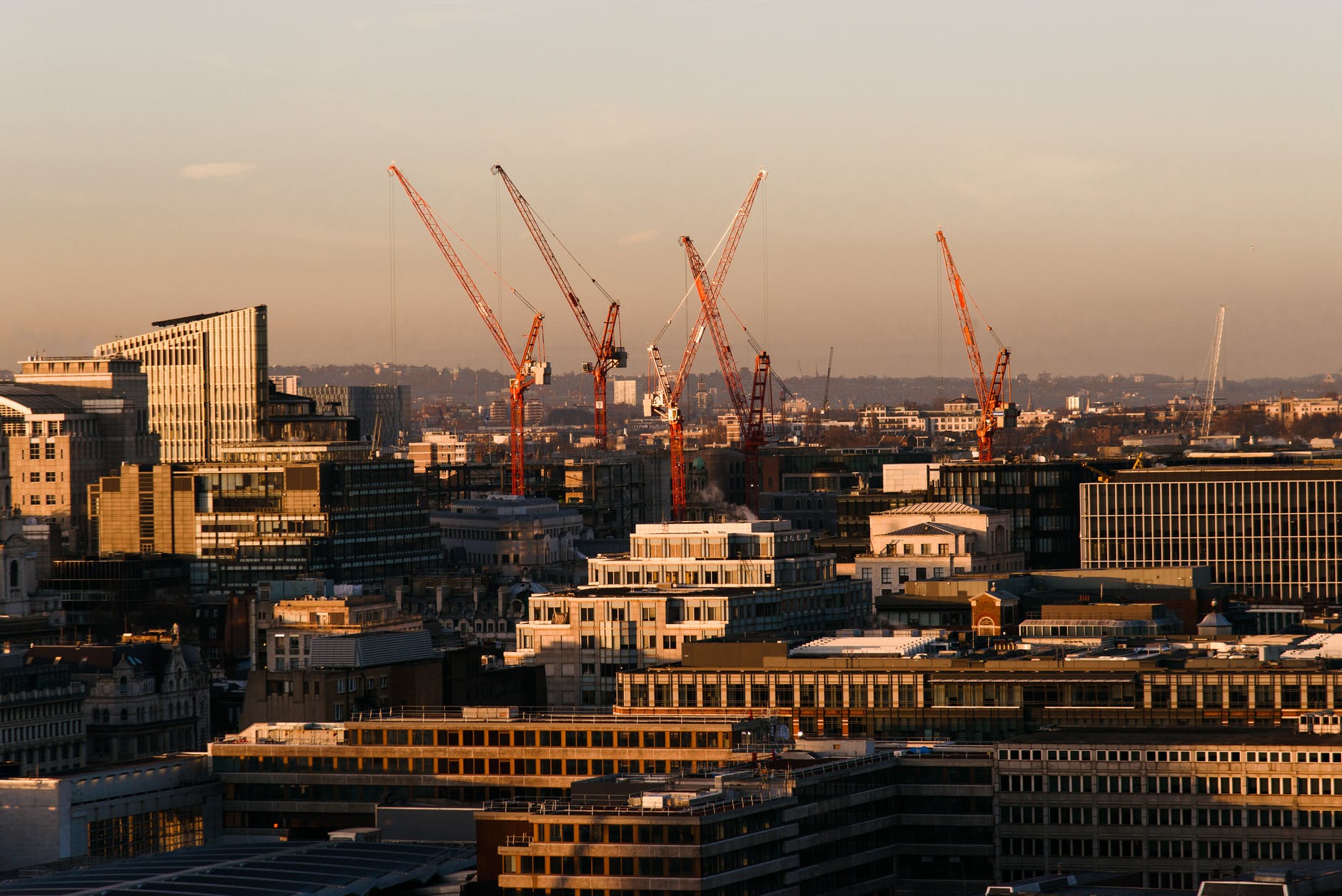
China’s real estate sector has a debt problem. Large property developers like the embattled company Evergrande have racked up massive amounts of debt, leading to construction stoppages and lots of angry homebuyers.

Amid the turmoil, buyers across China have banded together and threatened to stop paying mortgages on over three hundred unfinished housing projects. Hundreds of thousands of homebuyers have begun a mortgage boycott, refusing to pay their mortgage for unfinished or stalled housing projects.

As of previous month, homebuyers in 80 cities and 200 projects had threatened to stop mortgage payments. Home sales have collapsed by nearly 60% compared to a year ago, and the current constant decline of sales (11 months) is pegged to be the worst in China’s history. Analysts expect property sales to have dropped 25% from January to June, amidst China’s Zero Covid Cases strategy. Numerous developments in China have halted as property developers have run out of capital to finish construction.

Across China, real estate developers are getting desperate – attempting to sell homes by whatever means possible, even going as far as accepting down-payments in wheat, garlic, watermelons and peaches to cater to farmers.

The real estate industry has an oversized impact on the economy. When related sectors like construction and property services are included, real estate accounts for more than a quarter of Chinese economic output, by some estimates. About 70 per cent of household wealth is stored in property, along with 30-40 per cent of bank loan books, while land sales account for 30-40 per cent of local government revenues, according to sources. The worsening crisis will test authorities’ ability to minimise the fallout. In case the situation is not being handled strategically by Chinese authority, then the consequences of such crises may spread all across asia and globe as well.

Zero probability of recession in India.

Amid global pandemic accompanied by Russia-Ukraine crises and rising prices of fuels, the major economies across the globe are facing economic slowdown majorly in the form of peaked inflation, unstable government, industrial slowdown, low supplies and much more consequences. Some of the economies have slipped into crises, while some are struggling through the worst phase of slowdown. Industry experts have been showing aspersions that a global recession is just around the corner.

The recent survey by Bloomberg has attempted to gauge the percentage probabilities of various countries slipping into recession. The survey by Bloomberg said that risk of recession in a handful of Asian economies is rising as higher prices spur central banks to accelerate the pace of their interest rate hikes. Sri Lanka, which is in the midst of its worst economic crisis ever, has an 85% probability of falling into recession in the next year, up from a 33% chance in the previous survey by far the highest increase in the region. Economists see a 20% chance that China will enter recession, and a 25% likelihood that South Korea or Japan will enter one. Bloomberg economists also raised their expectations for a chance of recession in New Zealand, Taiwan, Australia and the Philippines to 33%, 20%, 20% and 8%, respectively. Central banks in those places have been raising interest rates to tame inflation.

India being one of the major and growing economy, also have been facing the consequences of global crises, particularly inflation. The survey report by Bloomberg for India is that it mentions that India has zero probability of slipping into recession. India literally has 0 percent chances of recession as against economic giants US and China which has 40 percent and 20 percent respectively. Although for India, surging domestic prices of key commodities is mainly on account of imported inflation, retail inflation based on consumer price index stood at 7.01%. In April, it had jumped to 8-year high of 7.79% have feared the economist about a probable recession but the case for India is much better compared to other economies.

Launching of first International Bullion Exchange in India.

India being the second biggest consumer of precious metals, tries to regulate the market for the precious metal. For this Prime Minister on July 29 laid the foundation of India International Bullion Exchange (IIBX), based at Gujarat International Finance Tec-City, or GIFT City in western Gujarat state.

India imported 1,069 tonnes of gold in 2021, up from 430 tonnes a year ago. Indian households own an estimated collective 25,000 tonnes of gold, which passes from one generation to the next. New Delhi has been trying to monetise these holding to reduce the imports. Gold is tightly regulated in India and currently only nominated banks and agencies approved by the central bank can import gold and sell to dealers and jewellers. The opening of the international bullion exchange is aimed to standardize the gold pricing in India. It further seeks to it easier for small bullion dealers and jewellers to trade.

Currently, there are nominated banks and agencies who have been approved by the central bank to conduct trade or import gold and sell it to dealers.

“IIBX with its technology-driven solutions, will facilitate transition of Indian bullion market towards a more organised structure by granting qualified jewellers a direct access to import gold directly through the exchange mechanism,” the exchange said in a statement.

The International Bullion Exchange shall be the Gateway for Bullion Imports into India, wherein all the bullion imports for domestic consumption shall be channelized through the exchange, as per a government’s notification.

The exchange ecosystem is expected to bring all the market participants at a common transparent platform for bullion trading and provide an efficient price discovery, assurance in the quality of gold, enable greater integration with other segments of financial markets and help establish India’s position as a dominant trading hub in the World.

Gig Economy

What Is the Gig Economy?

In a gig economy, temporary, flexible jobs are commonplace and companies tend to hire independent contractors and freelancers  instead of full-time employees. A gig economy undermines the traditional economy of full-time workers who often focus on their career development.

Understanding the Gig Economy

In a gig economy, large numbers of people work in part-time or temporary positions or as independent contractors. The result of a gig economy is cheaper, more efficient services, such as Uber or Airbnb, for those willing to use them. People who don’t use technological services such as the Internet may be left behind by the benefits of the gig economy. Cities tend to have the most highly developed services and are the most entrenched in the gig economy. A wide variety of positions fall into the category of a gig. The work can range from driving for Lyft or delivering food to writing code or freelance articles. Adjunct and part-time professors, for example, are contracted employees as opposed to tenure-track or tenured professors. Colleges and universities can cut costs and match professors to their academic needs by hiring more adjunct and part-time professors.

The Factors Behind a Gig Economy

America is well on its way to establishing a gig economy, and estimates show as much as a third of the working population is already in some gig capacity. Experts expect this working number to rise, as these types of positions facilitate independent contracting work, with many of them not requiring a freelancer to come into an office. Gig workers are much more likely to be part-time workers and to work from home. Employers also have a wider range of applicants to choose from because they don’t have to hire someone based on their proximity. Additionally, computers have developed to the point that they can either take the place of the jobs people previously had or allow people to work just as efficiently from home as they could in person.

Economic reasons also factor into the development of a gig economy. Employers who cannot afford to hire full-time employees to do all the work that needs to be done will often hire part-time or temporary employees to take care of busier times or specific projects. On the employee’s side of the equation, people often find they need to move or take multiple positions to afford the lifestyle they want. It’s also common to change careers many times throughout a lifetime, so the gig economy can be viewed as a reflection of this occurring on a large scale.

During the coronavirus pandemic of 2020, the gig economy has experienced significant increases as gig workers have delivered necessities to home-bound consumers, and those whose jobs have been eliminated have turned to part-time and contract work for income. Employers will need to plan for changes to the world of work, including the gig economy, when the pandemic has ended.

Criticisms of the Gig Economy

Despite its benefits, there are some downsides to the gig economy. While not all employers are inclined to hire contracted employees, the gig economy trend can make it harder for full-time employees to develop in their careers since temporary employees are often cheaper to hire and more flexible in their availability. Workers who prefer a traditional career path and the stability and security that come with it are being crowded out in some industries.

For some workers, the flexibility of working gigs can actually disrupt the work-life balance, sleep patterns, and activities of daily life. Flexibility in a gig economy often means that workers have to make themselves available any time gigs come up, regardless of their other needs, and must always be on the hunt for the next gig. Competition for gigs has increased during the pandemic, too. And unemployment insurance usually doesn’t cover gig workers who can’t find employment.

In effect, workers in a gig economy are more like entrepreneurs than traditional workers. While this may mean greater freedom of choice for the individual worker, it also means that the security of a steady job with regular pay, benefits—including a retirement account—and a daily routine that has characterized work for generations are rapidly becoming a thing of the past.

Lastly, because of the fluid nature of gig economy transactions and relationships, long-term relationships between workers, employers, clients, and vendors can erode. This can eliminate the benefits that flow from building long-term trust, customary practice, and familiarity with clients and employers. It could also discourage investment in relationship-specific assets that would otherwise be profitable to pursue since no party has an incentive to invest significantly in a relationship that only lasts until the next gig comes along.

Top brands that represent India

Atmanirbhar, A word that entered every Indian’s vocabulary by the end of the year 2020. This gave a hype to use made in India products. people started to check for the made in India label. Now the era is of brands. Everybody wish to wear top brand accessories and cloths and drive a branded car. How can someone fulfil this desire while being Atmanirbhar? There are some brands which represent India and are listed at top. World has many brands, which appear as foreign brand by their names but are Indian.

The golden old times had brands like Parle-G, Vadilal, Godrej etc. The new era is dominated by these brands.

the royal enfield

As the name suggests, the brand is truly royal. It is an Indian multinational company. The headquarters is in Chennai, Tamil nadu. The brand was originally owned by a British company Enfield Cycle and was stared in 1893. In 1994 an Indian company Eicher Motors bought it and renamed it as Royal Enfield India. The brand is special and admired for its retro charm and the thumpy sound. The fuel tank is hand painted. The bike brand is known for its affordability. The bikes price starts at rupees 1.34 lakh and most expensive model is of 3.13 lakh. And it is not complex and easy to repair. Owning a Royal Enfield has been a matter of pride.

a Royal Enfield bike

van heusen india

It is a clothing band. The brand is under PVH corporation which is founded in 1889 and named after a Dutch immigrant john manning van heusen. The Indian section of this brand is owned by Aditya Birla fashion and retail limited. The company calls itself to be a fashion powerhouse. Aditya Birla group has a network of 3,212 stores across the country. Aditya Birla fashion and retail limited is the first billion dollar fashion house of India.

peter england

This brand is also a clothing brand. In 1889 the brand was founded in Londonderry of Ireland. The purpose of establishment was to provide khaki trousers to the British soldiers. The Brand entered India in 1997. In 2000 Aditya Birla group owned this brand. The headquarter is in Bangalore, Karnataka. The brand is the top men’s wear brand and has huge market. The customer base is estimated to be 4 million people. The brands target customers are the corporate employees. The brand offers collection of denims, festive wear, Indian kurtas, accessories etc.

lakme

The brand offers beauty products like cosmetics, skincare products and beauty saloons. It is India’s first cosmetic brand. It is the first to introduce makeup to Indian women and its been more than 50 years for the company for being a beauty brand. The main Idea of establishing a makeup brand of India was of prime minister Jawaharlal Nehru and He asked JRD Tata to execute this. The brand was named after a French opera coincidently which was derived from the name of the goddess Laxmi. Now also the brand tops in the popularity list.

jaguar

This brand is also stared as a British company founded by William Lyons. But now it is owned by Tata motors from 2008. The models are still manufactured in UK and headquarters is in Whitley Coventry, England. The car is one of the luxury vehicle. The cars are very much classy and show a great performance. The car price starts at 46.64 lakh.

these represent some of the success stories of Brands. There are many more brands too in the market who represent India internationally. These are the examples that India can do a great job in establishing brands and can lead the world.

Ways to Manage Stress

Stress is part of being human, and it can help motivate you to get things done. Even high stress from serious illness, job loss, a death in the family, or a painful life event can be a natural part of life. You may feel down or anxious, and that’s normal too for a while. Talk to your doctor if you feel down or anxious for more than several weeks or if it starts to interfere with your home or work life. Therapy, medication, and other stategies help. In the meantime, there are things you can learn to manage stress before it gets to be too much. Consider these suggestions:

Exercise

To start with, physical activity can help improve your sleep. And better sleep means better stress management. Doctors don’t yet know exactly why, but people who exercise more tend to get better deep “slow wave” sleep that helps renew the brain and body. Just take care not to exercise too close to bedtime, which disrupts sleep for some people. Exercise also seems to help mood. Part of the reason may be that it stimulates your body to release a number of hormones like endorphins and endocannabinoids that help block pain, improve sleep, and sedate you. Some of them (endocannabinoids) may be responsible for the euphoric feeling, or “runner’s high,” that some people report after long runs.

People who exercise also tend to feel less anxious and more positive about themselves. When your body feels good, your mind often follows. Get a dose of stress relief with these exercises:

Applications

Property Rights

What Are Property Rights?

Property rights define the theoretical and legal ownership of resources and how they can be used. These resources can be both tangible or intangible and can be owned by individuals, businesses, and governments. In many countries, including the United States, individuals generally exercise private property rights or the rights of private persons to accumulate, hold, delegate, rent, or sell their property. In economics property rights form the basis for all market exchange, and the allocation of property rights in a society affects the efficiency of resource use.

Understanding Property Rights

Property is secured by laws that are clearly defined and enforced by the state. These laws define ownership and any associated benefits that come with holding the property. The term property is very expansive, though the legal protection for certain kinds of property varies between jurisdictions.Property is generally owned by individuals or a small group of people. The rights of property ownership can be extended by using patents and copyrights to protect:

  • Scarce physical resources such as houses, cars, books, and cellphones
  • Non-human creatures like dogs, cats, horses or birds
  • Intellectual property such as inventions, ideas, or words

Other types of property, such as communal or government property, are legally owned by well-defined groups. These are typically deemed public property. Ownership is enforced by individuals in positions of political or cultural power. Property rights give the owner or right holder the ability to do with the property what they choose. That includes holding on to it, selling or renting it out for profit, or transferring it to another party.

Acquiring Rights to a Property

Individuals in a private property rights regime acquire and transfer in mutually agreed-upon transfers, or else through homesteading. Mutual transfers include rents, sales, voluntary sharing, inheritances, gambling, and charity. Homesteading is the unique case; an individual may acquire a previously unowned resource by mixing his labor with the resource over a period of time. Examples of homesteading acts include plowing a field, carving stone, and domesticating a wild animal. In areas where property rights don’t exist, the ownership and use of resources are allocated by force, normally by the government. That means these resources are allocated by political ends rather than economic ones. Such governments determine who may interact with, can be excluded from, or may benefit from the use of the property.

Private Property Rights

Private property rights are one of the pillars of capitalist economies, as well as many legal systems, and moral philosophies. Within a private property rights regime, individuals need the ability to exclude others from the uses and benefits of their property. All privately owned resources are rivalrous, meaning only a single user may possess the title and legal claim to the property. Private property owners also have the exclusive right to use and benefit from the services or products. Private property owners may exchange the resource on a voluntary basis.

Private Property Rights and Market Prices

Every market price in a voluntary, capitalist society originates through transfers of private property. Each transaction takes place between one property owner and someone interested in acquiring the property. The value at which the property exchanges depends on how valuable it is to each party. Suppose an investor purchases $1,000 in shares of stock in Apple. In this case, Apple values owning the $1,000 more than the stock. The investor has the opposite preference, and values ownership of Apple stock more than $1,000.

Financial Literacy

What Is Financial Literacy?

Financial literacy is the ability to understand and effectively use various financial skills, including personal financial management, budgeting, and investing. Financial literacy is the foundation of your relationship with money, and it is a lifelong journey of learning. The earlier you start, the better off you will be, because education is the key to success when it comes to money.

Read on to discover how you can become financially literate and able to navigate the challenging but critical waters of personal finance. And when you have educated yourself, try to pass your knowledge on to your family and friends. Many people find money matters intimidating, but they don’t have to be, so spread the news by example.

Understanding Financial Literacy

In recent decades financial products and services have become increasingly widespread throughout society. Whereas earlier generations of Americans may have purchased goods primarily in cash, today various credit products are popular, such as credit and debit cards and electronic transfers. Indeed, a 2019 survey from the Federal Reserve Bank of San Francisco showed that consumers preferred cash payments in only 22% of transactions, favoring debit cards for 42% and credit cards for 29%.

Other products, such as mortgages, student loans, health insurance, and self-directed accounts, have also grown in importance. This has made it even more imperative for individuals to understand how to use them responsibly. Although there are many skills that might fall under the umbrella of financial literacy, popular examples include household budgeting, learning how to manage and pay off debts, and evaluating the tradeoffs between different credit and investment products. These skills often require at least a working knowledge of key financial concepts, such as compound interest and the time value of money. Given the importance of finance in modern society, lacking financial literacy can be very damaging to an individual’s long-term financial success.

Being financially illiterate can lead to a number of pitfalls, such as being more likely to accumulate unsustainable debt burdens, either through poor spending decisions or a lack of long-term preparation. This in turn can lead to poor credit, bankruptcy, housing foreclosure, and other negative consequences. Thankfully, there are now more resources than ever for those wishing to educate themselves about the world of finance. One such example is the government-sponsored Financial Literacy and Education Commission, which offers a range of free learning resources.

Strategies to Improve Your Financial Literacy Skills

Developing financial literacy to improve your personal finances involves learning and practicing a variety of skills related to budgeting, managing and paying off debts, and understanding credit and investment products. Here are several practical strategies to consider.

Create a Budget—Track how much money you receive each month against how much you spend in an Excel sheet, on paper, or with a budgeting app. Your budget should include income (paychecks, investments, alimony), fixed expenses (rent/mortgage payments, utilities, loan payments), discretionary spending (nonessentials such as eating out, shopping, and travel), and savings.

Pay Yourself First—To build savings, this reverse budgeting strategy involves choosing a savings goal (say, a down payment for a home), deciding how much you want to contribute toward it each month, and setting that amount aside before you divvy up the rest of your expenses.

Pay Bills Promptly—Stay on top of monthly bills, making sure that payments consistently arrive on time. Consider taking advantage of automatic debits from a checking account or bill-pay apps and sign up for payment reminders (by email, phone, or text).


UNEMPLOYMENT IN INDIA

New job creation is a critical endeavour that has a significant economic impact. For most countries, the economic crisis has morphed into a social crisis, resulting in a high rate of unemployment. Unemployment is a condition in which people have the aptitude and ability to work and earn money but are unable to do so due to a lack of suitable employment opportunities. It is also known as “involuntary inactivity.” Unemployment does not imply that there isn’t any work available. It literally means ‘lack of work.’ Unemployment can be characterized as a situation in which a substantial number of able-bodied people of working age are willing to work but are unable to do so at the present wage rate.
The number of persons who are unable to acquire work in relation to the available people in the labor market measures the rate of unemployment in a given country.
Seasonal, Frictional, Cyclical, and Structural unemployment are the most common types of unemployment. In terms of population density, India is the world’s second largest country. The country’s unemployment rate is quite high, owing to the large number of people who are unable to find work.

TYPES OF UNEMPLOYMENT IN INDIA :

Rural Unemployment in India: India’s rural population accounts for around 70% of the total population. However, there is insufficient employment in rural areas for everyone. This can result in two types of unemployment. Unemployment and underemployment are problems that exist in the rural economy at the same time.

Frictional Unemployment: It occurs when people are unemployed for a brief period of time while looking for a new job or changing occupations. The time gap between jobs is known as frictional unemployment, also known as Search Unemployment. Frictional unemployment is referred to as voluntary unemployment because the source of unemployment is not a lack of jobs, but rather the workers’ own decision to leave in search of better chances. It exists because people move from places, jobs, and sectors where their productivity is low to places where their productivity is high, and they should be encouraged to do so.

Disguised Unemployment: This refers to the large number of rural people who are employed in agriculture in excess of what is required due to increased pressure on land. Uncovering hidden unemployment is most common in the unorganized sector or in agriculture.

Seasonal Unemployment: This word is self-explanatory. Seasonal unemployment is common in industries including construction, agriculture, canning, and tourism, where the weather or the calendar dictates when production can be carried out or demand levels. It is common to utilize seasonally adjusted unemployment figures for measuring the business cycle and the strength of demand in the labor market.
Underemployment is a word that can be used to describe this situation. That state of unemployment in which people are unemployed for part of the year, such as in India, where laborers are rarely employed all year.

Structural Unemployment: When a country’s economic structure changes dramatically, structural unemployment occurs. Normally, these changes have an impact on the demand for or supply of a production factor. In other words, structural unemployment is a result of global technological and economic development in every field. This type of unemployment occurs when a worker’s abilities do not meet the market’s job availability. Many people in India do not acquire occupations that match their talents or do not get positions owing to a lack of essential skills, and because of their low education level, it is critical to offer them with relevant training.

Technological Unemployment: Technological unemployment develops as a result of specific changes in production procedures that do not necessitate a large amount of manual labor. Modern technology has overtaken the need for and significance of physical labor in recent years, resulting in technical unemployment. According to World Bank data from 2016, the proportion of jobs in India threatened by automation increased by 69 percent year over year.

Causes of Unemployment in India:

  • The Joint Family System
  • Specialization in the Workplace
  • Low Rates of Economic Growth
  • Mobility of the workforce
  • Norms of Conduct
  • Cottage and small-scale industries are on the decline.
  • Population growth and technological advancements
  • A Scarcity of physical capital

Entrepreneurship Development

Entrepreneurship is the ability to develop, organize and run a business enterprise, along with any of its uncertainties in order to make a profit. Entrepreneurship is basically the act of creating a business or businesses while building and scaling it to generate a profit. It’s about building a life on your own terms. No bosses. No restricting schedules. And no one holding you back.
Entrepreneurship development is a process of developing certain skills in an individual which are required to make him/her a successful entrepreneur. The success of an entrepreneur can be judged by success of his project or business. Finding a way to sell oneself before anyone believes in one or ones business, being able to explain and prove why their product or service is worth the price or investment, knowing when something is valuable, even if no one else does etc. are some of the features a successful entrepreneur possess.
Big successful companies like Microsoft, Google, Apple etc. have all attained the status they have now because of their respective entrepreneurs. Success of such start-ups not only benefits the people associated with it but also the economy as a whole. It slowly changes the world. Off course not every start up is a massive hit, some might be pretty mediocre and some might even do more losses than gains but nevertheless in the contemporary world, the need and urge for entrepreneurship development has drastically increased.
There are certain characteristics which are observed in entrepreneurs who write big success stories. These characteristics are a prerequisite for becoming a successful entrepreneur. The first and foremost skill is creativity. It means thinking out of the box. Coming up with new ideas, being open to new methodologies, creating something new etc. are some examples of being creative. Creativity gives birth to Originality. Risk taking is another characteristic of a successful entrepreneur. Without the will to explore the unknown, one cannot discover something unique. Risk-taking involves a lot of things. Using unorthodox methods is also a risk. Investing in ideas, nobody else believes in but you is a risk too. Good entrepreneurs are always ready to invest their time and money. But, they always have a backup for every risk they take.
Planning is another characteristic and probably the most important one. They say “If you fail to plan, you plan to fail.” Planning is strategizing the whole thing ahead of time. It basically sums up all the resources at hand and enables one to come up with a structure and a thought process for how to reach ones goal. It involves how to make optimum use of these resources. Facing a situation or a crisis with a plan is always better. It provides guidelines with minimum to no damage incurred to a business.
Other characteristics include passion for the work or business one choose to do, professionalism in the way the work is done, knowledge of the field of work or business, social skills including relationship building. An entrepreneur must be open minded towards learning, people and even failures.

https://www.jbcnschool.edu.in/blog/characteristics-of-an-entrepreneur/

https://www.entrepreneur.com/article/250564

The utterly butterly delicious story of Amul

Over the years, Amul, one of the most beloved brands of our country, has become the taste of India, just as its tagline claims. Every Indian millennial has grown up listening to the jingles of its many dairy products, and the Amul girl, the brand’s mascot in the polka-dotted dress, has become a nostalgia-evoking symbol. Amul has truly come a long way since its founding in 1946.

The beginning

Amul was formed as a part of a cooperative movement against Polson Dairy in Anand, Gujarat, which procured milk from local farmers of Kaira District at very low rates and sold it to the then Bombay government. Everyone except the farmers benefited from this trade. The farmers took their plea to Sardar Patel, who had advocated farmers’ cooperatives since 1942. The result was the formation of the Kaira District Co-operative Milk Producers’ Union Limited in Anand.

The union started pasteurising milk produced by a handful of farmers for the Bombay Milk Scheme and grew to 432 farmers by the end of 1948. The rapid growth led to problems including excess production that the Bombay Milk Scheme couldn’t accommodate. To solve this issue, a plant was set up to process all that extra milk into products such as milk powder and butter.

Amul is born

The late Dr. Verghese Kurien, rightly called the Milkman of India, was Amul’s true architect. His journey at Amul began in 1949 when he arrived in Anand to manage a dairy as a government employee. He went from helping farmers repair machinery to revolutionising India’s dairy industry with the White Revolution (or Operation Flood), the largest dairy development programme in the world.

The new dairy with the milk processing plant was ready for operation in October 1955, the year that also saw a breakthrough in dairy technology —buffalo milk was processed to make products for the first time in the world. The word ‘Amul’, derived from ‘Amulya’, which means ‘precious’ or ‘priceless’ in Sanskrit, was used to market the range of milk products developed by the Kaira Union. It is also an acronym for Anand Milk Union Ltd.

Dr Kurien had a vision. He wanted to offer small-scale dairy farmers quality-control units and centralised marketing, which were missing at the time in the dairy economy. Thus, the Gujarat Cooperative Milk Marketing Federation (GCMMF) was created in 1973 to market milk and all milk products produced by six district cooperative unions in Gujarat. GCMMF is the largest exporter of dairy products in India and Amul is the umbrella for all of its products.

Awards, accolades, and a global presence

Over the years, Amul, together with GCMMF, has won numerous awards. Some of these include the Rajiv Gandhi National Quality Award, 1999; the Golden Trophy for Outstanding Export Performance, 2009-10; Best Marketing Campaign, 2014; and World Dairy Innovation Award, among many others. Amul earned recognition all over the world when GCMMF  introduced it on the Global Dairy Trade (GDT) platform, where only the six top dairy players across the world sell their products.

More than a mere slogan

Amul’s famous slogan, which is now a part of its logo, was created in 1994 by Shri Kanon Krishna of a Mumbai-based advertising agency called Advertising and Sales Promotion (ASP). According to Amul, the Taste of India slogan is more than just corporate positioning or advertising jargon. This slogan lends meaning to the brand’s never-ending commitment to taking quality food and products to the rural man, which he otherwise couldn’t have afforded.

The Butter Girl

Amul did not always have the round-eyed moppet as its mascot. The Butter Girl was born in 1966 when Sylvester daCunha, the then MD of the advertising agency handling Amul butter’s account, created her for its campaign. It was a pleasant change from the dull, corporate ads that the previous agency had come up with. Being a seasoned marketer himself, Dr Kurien gave daCunha complete creative freedom to create and release the ads without taking the company’s permission. 30 years later, the Utterly Butterly Girl still wins hearts wherever she is, whether on a billboard or on the packet of butter.

Amul is not just a brand; it is also a movement that represents farmers’ economic freedom. The name is now a household term that is here to stay, and the chubby-cheeked Amul girl will continue to cast a spell on the public.

Money and it’s Functions

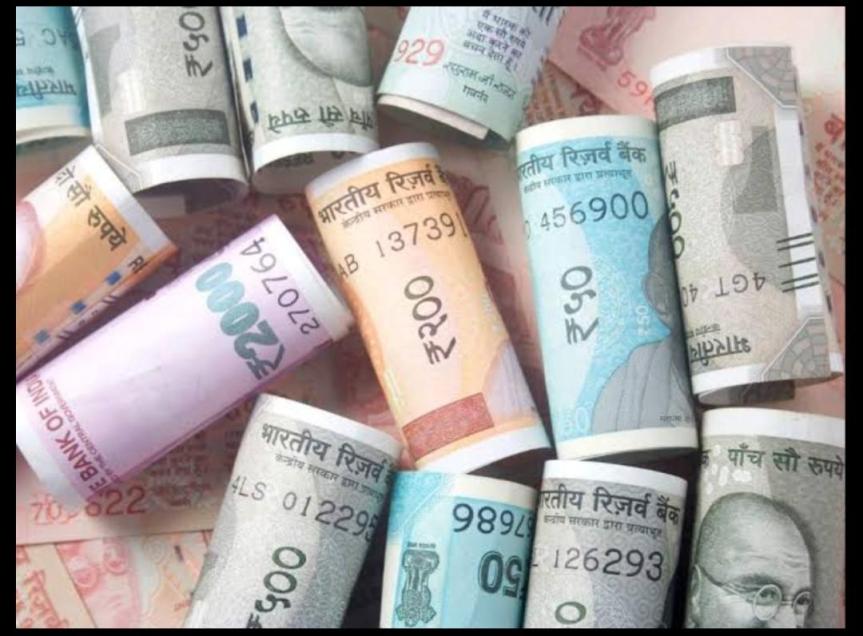
Money a commodity accepted by general consent as a medium of economic exchange. It is basically the legal tender of exchange. The paper currency which we use today has a long history behind it’s origin and evolution. Even today, money is continuously evolving, going from paper to plastic to digital. Over the years, money has changed it’s forms several times but what hasn’t changed is it’s functions. No matter what form it is used in, money almost always serves the same functions.
The functions of money are categorised as primary, secondary and contingent functions.

Primary Functions of Money:

Under this category, money performs it’s two main functions that are medium of exchange and unit of value. In the former case, money has removed the need of double coincidence of wants, something which was very much needed in the batter system which was used earlier. Being a medium of exchange means being generally acceptable. This gives the user freedom of choice and economic independence. It also acts as an intermediary and facilities exchange.
Money as unit of value means money is the standard for measuring values of all goods and services. This value is expressed in terms of price. Price is in terms of monetary unit and money acts as the determiner of rate of exchange. It also helps in calculating important economic parameters like costs, revenue, profits etc.

Secondary Functions of Money:

Under this, money performs three functions. It acts as a standard of deferred payments, it acts as a store of value and as a transfer of value. Money as a standard of deferred payments means that money acts as a standard for payments, which are to be made in future.
Money as a store of value means that money can be used to transfer purchasing power from present to future. Money is a way to store wealth. Although wealth can be stored in other forms also, but money is the most economical and convenient way. Money as a transfer value refers to the fact that money has velocity. It keeps transferring from person to other person.

https://www.yourarticlelibrary.com/economics/money/primary-and-secondary-functions-of-money/30307

Contingent Functions of Money:


Money performs certain contingent functions. These include: distribution of national income, maximization of satisfaction, basis of credit system, money as the most liquid asset. Money helps in distribution of the national product in the form of rent, wage, interest and profit, which are expressed in money terms. Money helps the consumers and producers in maximizing their satisfaction. A consumer derives maximum satisfaction when marginal utility is greater than marginal cost. Money helps in credit creation for banks. Money as a store of value has encouraged savings by people in the form of demand deposits in banks. These deposits are used for generating credit. Money is the most liquid asset of all assets in which wealth is healed. Individuals hold wealth in numerous forms ranging from currency, demand deposits, time deposits to bonds , savings, treasury bills etc. All these forms can be converted into money and vice versa.

https://www.yourarticlelibrary.com/economics/money/contingent-functions-of-money-in-economics/30310

Keynesian Economics

Keynesian Economics is a macroeconomic theory that came into existence after the fall of Classical Economics. It was given by John Maynard Keynes in order to understand the Great Depression of the 1930s. His theory focussed on aggregate demand and aggregate supply. This theory was the refutation to the classical economics.
Keynes theory of employment was based on the principle of effective demand. According to this, the level of employment in a capitalist economy depends on the effective demand. Unemployment is the result of deficiency of effective demand.
Keynes used the term aggregate demand price and aggregate supply price to explain effective demand.
Aggregate demand price refers to the amount of money which entrepreneurs expect to get by selling the output. It is basically the expected revenue from the sale of outputs at a certain level of employment.
Aggregate supply price on the other hand refers to the proceeds necessary for the sale of output at a particular level of employment. Basically each level of employment is related to a particular aggregate supply price.
The determination of effective demand is done by using aggregate demand price and aggregate supply price. The level of employment is determined when aggregate demand price is equal to the aggregate supply price. This level of employment is also the point of effective demand and here entrepreneurs earn normal profits.

Keynes also criticized the idea of excessive saving, unless it was for a specific purpose such as retirement or education. He saw it as dangerous for the economy because the more money sitting stagnant, the less money in the economy stimulating growth. Instead, he focussed more on investment and highlighted it’s role in determining the level of employment in the economy. According to him, aggregate demand function depends on the consumption function and investment function. A fall in any of these two functions result in unemployment. Thus it is the aggregate demand function which is the effective element in the principle of effective demand.
Keynesian economics focuses on demand-side solutions to recessionary periods. The intervention of government in economic processes is an important part of it. Keynesian theorists argue that economies do not stabilize themselves very quickly and require active intervention that boosts short-term demand in the economy.

https://www.investopedia.com/terms/k/keynesianeconomics.asp

Keynes also reformulated the Quantity Theory of Money. He criticised the classical idea of money being neutral. According to him money is the link between the present and the future. The Keynesian theory emphasises that the price level is in fact a consequence of aggregate demand or expenditure relative to aggregate supply rather than of quantity of money.


https://www.yourarticlelibrary.com/economics/money/keynesian-monetary-theory-money-income-and-prices-with-diagrams/37961


The multiplier effect was developed by Keynes’s student Richar Kahn. According to Keynes’s theory of fiscal stimulus, an injection of government spending eventually leads to added business activity and even more spending. This theory proposes that spending boosts aggregate output and generates more income. The magnitude of the Keynesian multiplier is directly related to the marginal propensity to consume. Keynes and his followers believed individuals should save less and spend more, raising their marginal propensity to consume

Classical Economics

Classical economics relates to the school of thought of economics that originated in Britain during the late 18th and early 19th centuries. The classical economists believed in the existence of full employment in the economy. It is believed that ‘The Wealth of Nations’ by Adam Smith published in 1776 marked the beginning of classical economics. J.B. Say, Alfred Marshall, A.C. Pigou are some of the famous classical economists.
This school of economics focused on the theory called the ‘invisible hand‘ being the highlight at the beginning stages of domestic and international supply and demand. They assumed the economy to be laissez faire capitalist. It was a closed economy with no foreign trade. Labour was a homogenous and wages were flexible. It assumed the economy to be in the long run.


https://cleartax.in/g/terms/classical-economics


The Classical school of thought is based on the Law of Markets given by J.B. Say. According to that law “supply creates it’s own demand“. Therefore there can never be the problem of overproduction or unemployment in the economy as whatever is produced is consumed. Unemployment may occur only in the short run and in the long run, economy tends towards full employment.
The Classical economists also believed in wage price flexibility. This concept was given by A.C. Pigou. It was basically the formulation of Say’s Law in terms of labour market. According to this, whenever there is unemployment in the economy, a general cut in money wages will restore full employment condition. Unemployment is a consequence of the rigid wage structure.
They also believed in the existence of equilibrium in the goods market. It is achieved when savings is equal to investment. This equality is usually brought by the mechanism of interest rate. Similarly, the money market is in equilibrium when the demand for money is equal to the supply of money. This concept was explained in the Quantity Theory of Money.

The Fall of Classical Economics:

During the time of The Great Depression i.e. 1929-1930’s, the classical theory failed to be applicable. It failed to solve the problem of depression that plagued for about 43 months. Keynes criticized the classical theory on several grounds.
First and foremost was the classical assumption of full employment equilibrium. Keynes considered it as unrealistic and argued that the situation in the capitalist economy is underemployment and full employment is a special case. He refuted Say’s law of market and stated that it was demand that created supply. He was also against the idea of laissez faire. He believed that self adjustment was not possible in a capitalist system and this was responsible for the Great Depression. He advocated state intervention within the economy through monetary and fiscal measures.
The wage price flexibility was also heavily criticised. In the modern world, where workers have trade unions, any cuts in wages will lead to strikes and industrial unrest. Keynes also stressed that equality between savings and investment was not brought by rate of interest but instead by the level of income and marginal efficiency of capital.
Lastly, the long run analysis of Classical economy was refuted on the grounds of inapplicability. Since it operated in the long run, it is incapable of solving present day economic problems.

https://www.yourarticlelibrary.com/economics/keynes-criticisms-against-classical-theory/24859

Baltic Countries and their economic transformation

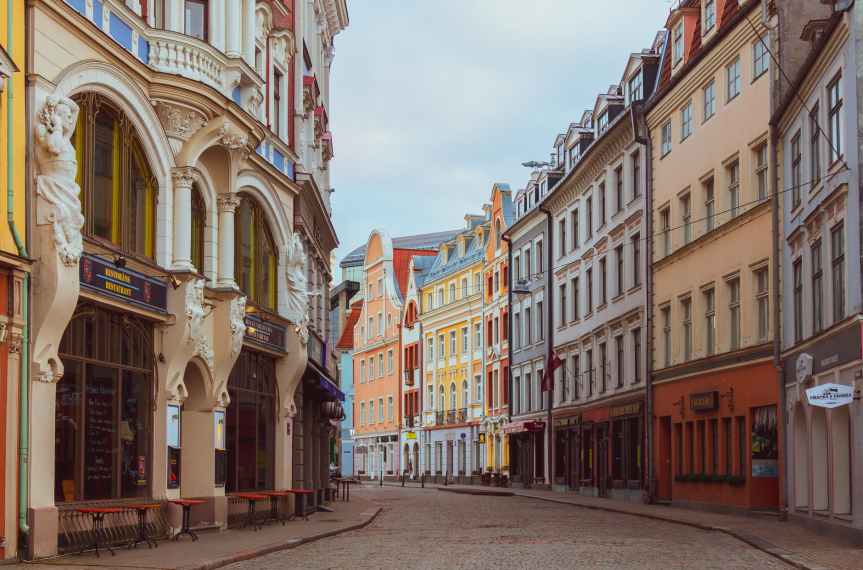
Baltics, also known as the Baltic States is comprised of three countries including Latvia, Lithuania, and Estonia. The three countries are situated on the eastern shores of the Baltic Sea. In 1991 the regional governments of Lithuania, Latvia, and Estonia declared independence from the Union of Soviet Socialists Republics (USSR). Three countries have a collective population of just over 6 million. The three have been one of the better examples which have been progressing well after the breakup of the USSR. Many other former Soviet republics have been suffering the disarray of corruption and political instability.

In 2002 Baltic countries applied for membership in the European Union (EU) and by May 2004 all the three countries joined the EU. They also gained membership in NATO by March 2004.

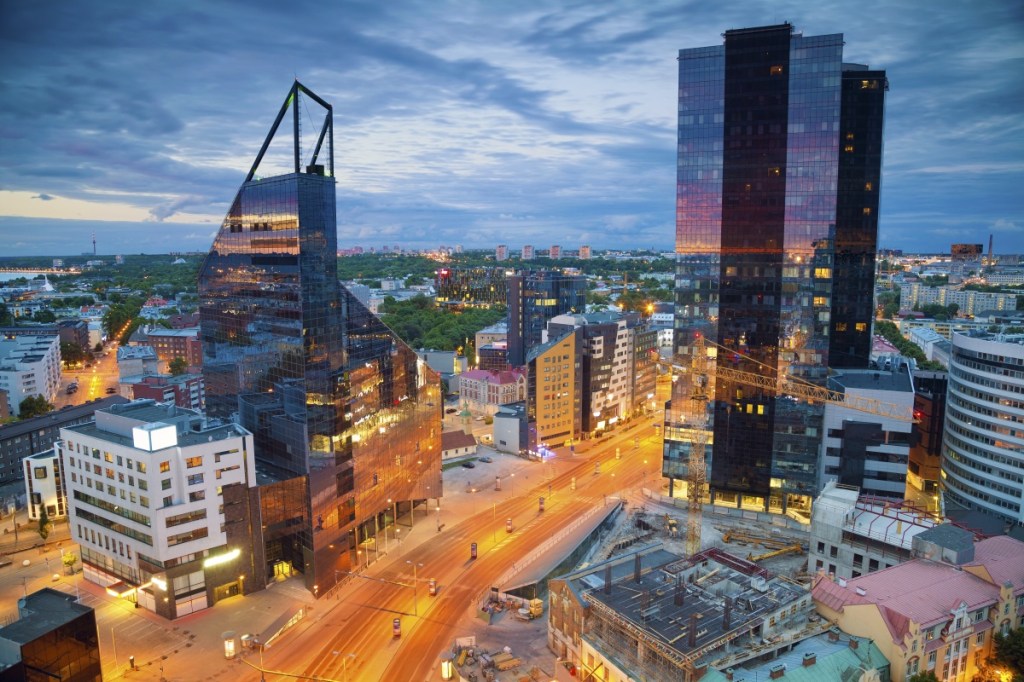
Downtown Tallinn

Baltic independence in 1991

It’s truly astounding how the three countries have developed since 1991. None of them were independent since 1940. The three countries had large Russian minorities and many Soviet soldiers were still stationed there. There were no major national institutions and banking infrastructure with a crumbling economy. There was a growing homegrown national moment against the ruling government since the 1980s. The homegrown fronts won the republican parliamentary election against the ruling party in early 1990 and were allowed to govern but with limited power. The Russian president at that time, Boris Yeltsin had not contested their newly declared independence in 1991. The Baltic also witnessed no violence when the three governments had declared their independence.

The three nations also had almost no natural resources, unlike USSR which was resource-rich. They were still in a very vulnerable situation with a small population and no military of their own. Even though the countries were linguistically distinct with different languages, but people in all three countries had a united drive to strive for a better future. The three had implemented reforms with a shared vision. The governments of the three shared many policies, ideas, and experiences. The Baltic States also valued their new independence with a lot of enthusiasm and didn’t take it for granted. The other ex- USSR countries often had to ask for assistance from Russian Federation and also formed new alliances with the Russian government. Baltic countries on the other hand tried to stay away from joining the post-Soviet Commonwealth of Independent States. In the subsequent years, all the three countries adopted radical economic policies and Estonia was the first mover and Latvia and Lithuania would follow suit. In 1994 Estonia introduced a flat income tax at just 24 percent and the other two also implemented the policies. Currently, Lithuania has a tax rate of just 15 percent which is one of the lowest. With early and fast deregulation and privatization, the Baltic countries were able to capture a large amount of foreign direct investment. Estonia also radically transformed its public sector with various digitalization implementations and less reliance on paperwork. Latvian and Lithuania’s transformation in this area was not as drastic but after some time both of them followed Estonia’s footsteps.  Transparency International ranks Estonia No. 17, Lithuania 37, and Latvia 42 out of 175 countries on its Corruption Perception Index for 2020. This is a commendable ranking considering they all the three are a relatively new entrant to the EU and many other EU countries have lower ranks than the three.

Success attributions

The success can also be attributed to the generous support that the three countries received from the international community and funds granted by the EU, World Bank, and the IMF. In 2008 Baltic suffered from the global economic crisis. The three soon adopted the Euro as their currency to avoid any future liquidity freeze issues that they experienced at that time. The economies al the Baltic rebounded quickly and due to good monetary measures, the three have a very low public debt. Baltic governments have also made swift progress in the Education sector and the three have attained commendable rankings in the Program for International Student Assessment (PISA) of the Organization for Economic Cooperation and Development (OECD). Estonia has done a very commendable task in this area with top 10 rankings in many assessments.  But the Baltics also face many challenges with population loss due to low birth rate and emigration. Proximity and hostility with Russia still is a challenge that the tiny nations have to endure.