Actions of State and Non State Actors in Disaster Management

Source: lawwn

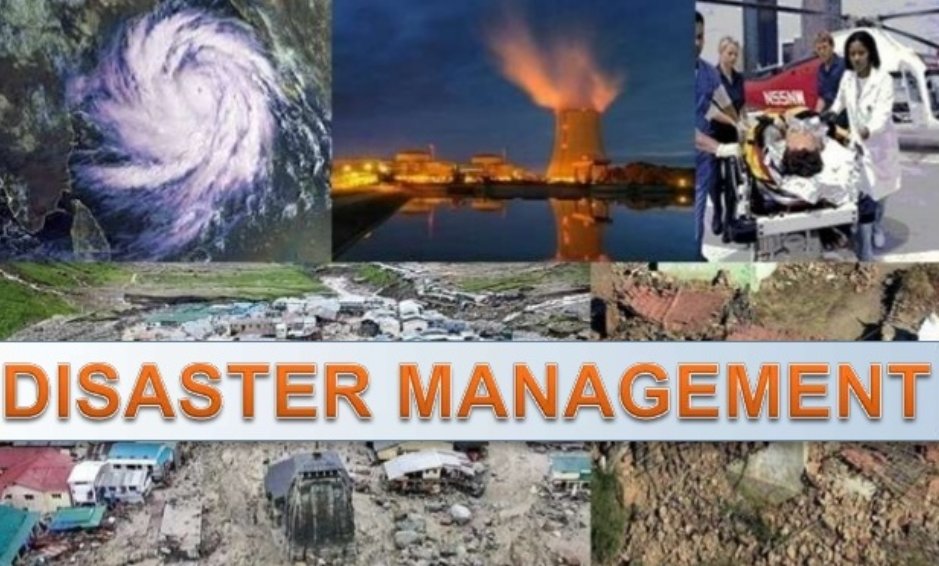
In contemporary time, Managing disasters is a highly dynamic, complex  and multifaceted affair. It is about to coordinated and contributions by a broad range of actors, including states, international organizations, non – governmental organizations, humanitarian organization, charities, private philanthropists, companies and affected local communities.

State Actors must perform some duties related to provide legitimacy to the operation, ensure coordination of various actors, provide information to needy agencies for Operation purpose, determine sufficient deputation of para military yo ensure smooth rescue and relief operation. Proper post disaster rescue and relief operation.

Contribution of Specialized Agencies in Disaster Management

There are several agencies apart from NDRF that play an significant role in Disaster management and hence they maintained in ‘standard operating procedure’ and prescribed definite role.

Civil Defence performance of some or all of the humanitarian tasks intended to protect the civilian population against the dangers and to help to recover from immediate effects of hostilities or disasters and also provide the conditions necessary for it’s survival.
Source: National Health Portal

Management of blackout measures; Rescue, medical services, including first aid and religious assistance, fire fighting are necessary components. Decontamination and take protective measures, emergency accommodation, emergency assistance in the restoration and repair indispensable public utilities. Assistance in preservation of essential objects for survival and complementary activities necessary to carry out any task.

Civil Defence Act 1968, is organized in areas and zones which are tactically and strategically considered vulnerable from the point of aggressive opposite side. Civil Defence activities are restricted to 225 categorized towns spread over 35 States/Union Territories. Civil Defence is primarily organized on voluntary.

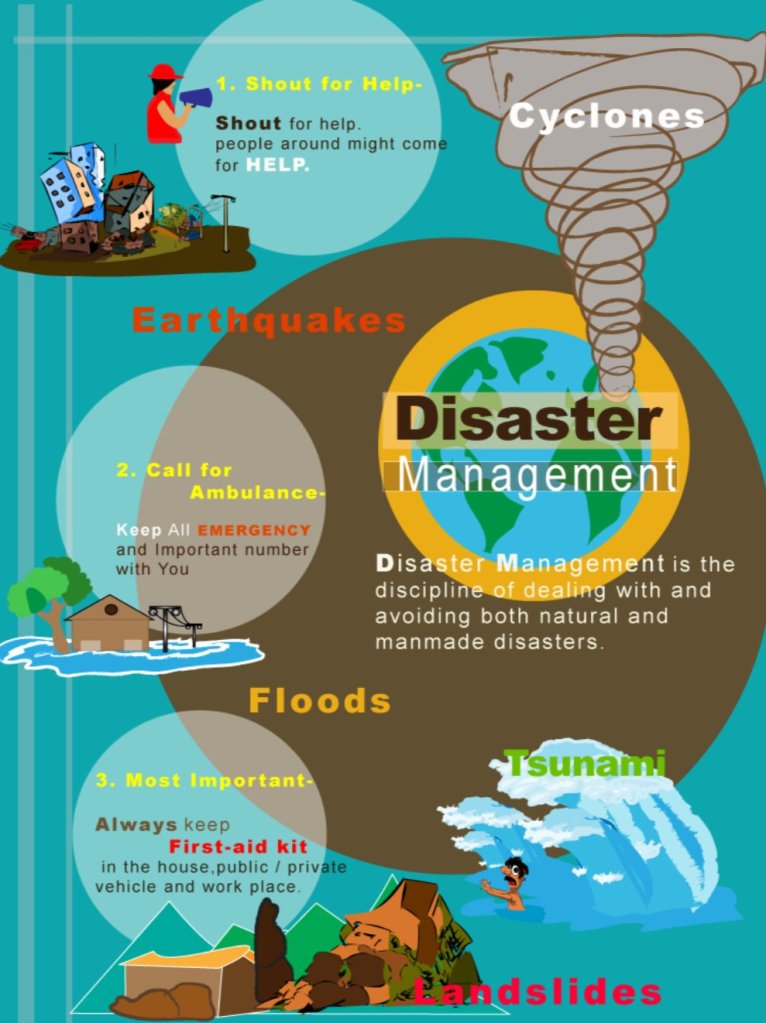
The immediate response of any calamity comes straight to Police station. Their immediate help and responsibility is to communicate the information and Provide rescue efforts with whatever resources are available. In disaster management if police is first responder they need to fully equipped with effective resources. Police should involved in the preparation of the local Crisis/Disaster Plan.

The role of home guards is to serve as an auxiliary to the police in the maintenance of internal security, help the community in any kind of emergency such as fire, cyclone, earthquake, epidemic etc help in maintenance if essential services, promote communal harmony and assist the Administration in protecting weaker sections, participation in socio economic and welfare activities and perform Civil Defence duties.

Home guard facility not available in Kerala. Home guards act, rules of the states are the same. They are recruited across the section of the society whoever available for betterment of community. Home guards duties like any other public servant but not in the case of Civil Defence both are like voluntary corps.

Fire services have been set up by the state government with Union government providing technical and financial support. Fire services play prominent role in all types of disaster and fire related crisis. There is an urgent need to train and equip the fire to handle all types of crisis in any multi hazard crisis.

Armed forces have invariably played an important role in rescue and relief operation in all major disasters in the country. The contribution of Specialized NDRF battalions would reduce the pressure on the armed forces. Availability of highly trained dedicated and we’ll equipped human resources and their capability to play a vital role in rescue and relief during all major crises. They should be mobilized for creating a voluntary disaster task force at the local level.

 Contribution of Non State Actors

Non State Actors are those who are first respondents in case of Disaster and considered to perform few tasks like ensuring dissemination of information to the ground level. Promotion of government strategies and policies to counter disaster. Ensure community participation, the corporate or private player must come forward to support the victims financially with the use of corporate social responsibility.

Voluntary services like distributing food, clothes, helping the state in proper rehabilitation work. Full understanding of the disaster and subsequent policies of livelihood of survivors. To aware of human rights to help the survivors without any partisan view.


How Development Administration introducing socio economic transformation

Source: leverage.edu

The nectar of development administration is to bring changes through integration, organized and properly directed governmental action. The Administrative shift concern towards development objectives the researchers and practitioners of Public Administration forced to conceptualize the developmental conditions and to bridge the gap in administrative theory.

The term development administration was first coined in UL Goswami an Indian scholar’s article entitled ‘The structure of development administration in india’ published in 1955. George Gant, an american scholar is regarded as the father of development administration, Edward Weidner, Riggs , Ferrel Heady were major contributor to this field.

Conceptual thinking in this area is notably available in the writing of a group of American experts on comparative administration such as Merle Fainsod, Montgomery and Diamant. The writing of these scholars not just talk about foundation not Development Administration but also contributed greatly to its formulation and growth. Emergence of concept of developing countries in Asia, Africa and Latin America due to the liquidation of colonialism and imperialism. Extensive american economic and technicalassistance plans to newly emerged developing countries. Developmental schemes in the developing countries through multilateral technical aid and financial assistance and established Comparative Administration Group.

Source: futurelearn

After the World War Second, countries became politically independent, they have been facing political problem, they have been confronting immense problem if poverty, illiteracy, poor health, low agricultural productivity, lack of industrial development and socio political instability. The immediate action before these countries is to bring about socio economic transformation and nation building through change.

In order to achieve the objectives, the developing countries have under taken various Departmental activities in the economic and the social sphere of society. The term Development Administration is used to refer to the directly government led effort to intervene in the process of socio economic transformation.

The new administration required for the government in both quantitatively and qualitatively difference from the traditional administration. Development Administration is a concept that aim to strengthen the structure and function of developing countries in post world War II.

Objectives of Development Administration are conclude the innovative strategies for the development. Development Administration emphasis on development at the grassroot level. Development has to be need oriented and require self reliant process. It stress on social development and human capital as a major resource. Development has to be viewed not merely as a technological problem but found ideological ground.

Profound and rapid change in order to establish a distriction in  social order. Recognizing and highlighting the unity, effective and efficient use of scarce resources. Creation of a politics administration environment which is oriented towards securing basic needs  of the population. Freedom of administrative machinery to express its values and beliefs without fear or favour on programmes and projects.

The capacity of an administrative system to take decisions in order to meet the increasing demands coming from the environment with objective of achieving larger political and socio economic goals. Specialization and division of tasks and in the professionalism is personnel. Increase in administrative capability and capacity. A pattern increasing effectiveness in the optimum utilization of available resources and increase the Governance capability and capacity. Modernising the bureaucracy by external inducement and transfer of technology and training is necessary.

Development Administration of developing nation’s is rooted in the field as most of the developmental activities take place at field level. Emphasis on decentralization of authority which enables the different field units. Administration encompasses contribution from cultural anthropology and sociology. A wider perspective than the conventional approach based on organizational reforms. Development administration lays emphasis on self reliance and participation of people in the development activities. It stresses decentralized, responsive and accountable management of Developmental plans, policies and programmes.


Significance of Biodiversity

Biodiversity in simple words is the biological diversity or the variety of life forms that can be found on earth as well as to the communities that they form and the habitats in which they live. Biodiversity provides us with various benefits directly or indirectly, it plays numerous functions which can be classified as : ecological, economical and social benefits. It maintains balance in the ecosystem by :
✓ Recycling and storage of nutrients
✓ Fighting pollution
✓ Stabilising climate
✓ Maintenance of water resources
✓ Replenishment of Soil and control of soil erosion
Economically provides us with all raw materials for industries, helps in meeting our medical needs and more importantly provides us with food. The biodiversity looks after us in all the aspects in one hand and on the other hand it repairs all the destructions caused by us.

Biodiversity is the basis for our survival. But we human beings are the major reason for its destruction. We are not only pushing other species to danger but slowly demolishing the habitat that we live in, further paving way towards our extinction.

The saddest part is that though most of us are aware of these facts, we are not paying attention to it. But we need to realise the fact that each and every action of us has an impact on the world. We can’t pass out a day without making changes or influencing our surrounding. The process of conservation is incomplete without our participation.So we must realise the need or the urge for conservation of biodiversity. Everyone must be aware of its importance and work towards preserving our future.

Pollution

Pollution is the containment of material particles or energy into the natural environment, causing adverse effects on the ecosystem.

Types of pollution

(1) Air Pollution: It occurs when any harmful gas, dust smoke enters the atmosphere and makes it difficult to survive living organisms like plants, animals, and human beings as well. And causes common respiratory diseases such as asthma, bronchitis.

(2)Water Pollution: It is due to the presence of foreign substances like sewage, algae, soluble salts, etc in water. It can also be due to the presence of some metals in water. Some metals like chromium and Arsenic cause diseases like cancer, cadium can cause Itai-Itai disease, and mercury causes Minamata disease.

For a healthy aquatic life, dissolved oxygen (DO) is 5-6ppm. For clean water, BOD (Biochemical Oxygen Demand) is less than 5ppm while for highly polluted water is 17ppm or more.

(3) Soil Pollution: It is an alternation in soil. It is caused by pesticides, insecticides, for example, DDT, BHC, etc, herbicides for example sodium chloride, fungicides like organomercury compounds.

Hazardous Effects of Pollution

Greenhouse Effect- It is the heating of the earth and its objects because of the trapping of Infra-Red radiations by carbon dioxide(CO2), methane, (CH4), nitric oxide (NO), ozone (O3), chlorofluorocarbons(CFCs), and water vapours.

.• Global Warming- It is a result of the increased concentration of greenhouse gases. It may result in the melting of ice caps and glaciers, spreading several infectious diseases like malaria, sleeping sickness, etc.

• Acid Rain- It has a pH of less than 5. It is due to the presence of oxides of nitrogen and sulphur in air that dissolve in rain water and forms nitric acid and sulphuric acid. It damages the buildings and other other structures made up of limestone and results in several diseases such as qskin infections. pH of normal rain water is 5.6.

Pollutants

There are the substances that contaminates the environment and of two types:

(1) Primary Pollutants: These persist in the environment in the form which they have produced, for example, sulphur dioxide(SO2), nitrogen dioxide (NO2), etc.

(2) Secondary Pollutants: These are the products of nitrogen of primary pollutants, for example, PAN (Perocyacylnitrates), nitrogen dioxide (NO2), etc. The order of different pollutants to cause pollution is carbon monoxide (CO, SO2 hydrocraban particulates nitrogen oxides.

Carbon monoxide (CO)- It is formed by incomplete combustion. It is colorless, odourless gas. It contains a triple bond and are fairly polar, resulting in a tendency to bind permanently to haemoglobin molecules, displacing oxygen, which has a lower binding affinity.

Particulates- These are minute solid particles and liquid droplets dispersed in the air, for example, mists, dust, smoke, fumes, etc. They result in causing many serious diseases like pneumoconiosis, due to inhalation of coal dust, silicosis due to inhalation of free silica (SiO2), black lung disease found in workers of coal mines, white lung disease found in textile workers, byssinosis due to inhalation of cotton fiber dust.

Smog- It is a consequence of particulate pollution and is of two types they are:

• Classical smog

• Photochemical smog

Effects of Global Warming

Case study : Effect of global warming on the Sundarban National Park, West Bengal.
Methodology:

  • Description of the problem.
  • Cause of the problem.
  • Analysis of the problem.
  • Control of the problem.
  • Introduction to the problem:
    The Sundarbans provide important protection against storms and flooding for cities including
    Kolkata, India, on the Bay of Bengal. But increasing global warming accelerates the sea-level
    which adversely affects the Sunderbans. This would eliminate the protection they provide
    against the region’s from the intense tropical storms.
  • Scientists project that under a high emissions scenario, relative sea-level rise is likely to
    inundate most of the Sundarbans by mid-century, and could wipe them out by the end of
    the century.
  • Mangroves of the Sundarbans prevents the damage caused by the cyclones and storms.
  • Cause of the problem:Global warming is one of the main reasons for the increased sea-level which adversely affects
  • the mangrove forests. Due to which reserved space is no longer a safe refuge for mangrove
    forests and their associated species. And other national parks also face damage due to climate
    change in the form of an increase in invasives, loss of vulnerable species, and changes in species composition. In a few cases, the biome as a whole faces extinction. Climate changes has already begun to have negative impacts on ecosystems and their families.


Analysis of the problem:

•Global Temperature Report for 2019 by Berkeley Earth:
This is the report by the Berkeley Earth (a California non-profit organization) which clearly
shows the continuous increase in temperature of earth in the past years.

•Ecosystem is a cycle which can only be run with balance. Any change in the climate causes
imbalance of the ecosystem which causes different natural disasters and global warming is one
of the biggest problems which we are facing nowadays.

Control of the problem:
The only solution to control any of the problems is to keep balance in all the things. The main
cause of the bad effects on the Sundarbans is global warming or we say continuous rise in the
temperature of the earth which causes rise in the sea-level, cyclones, flooding, storms etc..,
which adversely affects the reserved part of mangrove forests and other national parks.

Ways to prevent global warming:-

● Reduce⬇ Reuse⤴ Recycle🔄

● Power your home with renewable energy.

● Reduce excess use of water.
There is a solution for every problem. We just need to focus on the problem and prevent rise of

References:-https://www.climatehotmap.org/global-warming-locations/kolkata-west-bengal-india.html
#:~:text=Global%20warming%20compounds%20the%20dangers,in%20ground%20and%20surface%20waters