Registration for the flagship initiative of Prime Minister Shri Narendra Modi, Pariksha Pe Charcha (PPC), concluded with a record-breaking over 3.5 crore participation from students, teachers and parents. This is a nationwide movement to transform exam-related stress into a festival of learning and celebration. The 8th edition of PPC 2025 has set an unprecedented milestone in terms of registrations from students, teachers, and parents across India and abroad. This remarkable response underscores the growing resonance of the program as a true Jan Andolan.
The online registration for PPC 2025 was hosted on the MyGov.in portal, from 14 December 2024 to 14 January 2025. The program’s immense popularity highlights its success in addressing the mental well-being of students and fostering a positive outlook towards examinations.
The interactive event, organized annually by the Department of School Education and Literacy under the Ministry of Education, has become a much-anticipated celebration of education. The 7th edition of PPC in 2024 was held at Bharat Mandapam, Pragati Maidan, New Delhi, in a town hall format and received widespread acclaim.
In line with the spirit of PPC, a series of engaging school-level activities commenced on 12 January 2025 (National Youth Day) and will continue till 23 January 2025 (Netaji Subhash Chandra Bose Jayanti). The activities aim to foster holistic development and inspire students to celebrate examinations as an Utsav. These activities include:
• Indigenous games sessions
• Marathon runs
• Meme competitions
• Nukkad Natak
• Yoga-cum-meditation sessions
• Poster-making competitions
• Inspirational film screenings
• Mental health workshops and counselling sessions
• Performances by CBSE, KVS, and NVS students
Through these activities, PPC 2025 reinforces its message of resilience, positivity, and joy in learning, ensuring that education is celebrated as a journey rather than a pressure-driven task.
Jammu, Jan 14, 2025: Sahaj Sabharwal, a celebrated author, social media influencer, and motivational speaker from Jammu, proudly represented Jammu and Kashmir at the prestigious Viksit Bharat Young Leaders Dialogue 2025, held at Bharat Mandapam, New Delhi, on January 10th, 11th, and 12th. The event, organized by the Ministry of Youth Affairs and Sports, featured the Hon’ble Prime Minister Shri Narendra Modi, who addressed 3,000 select youth leaders chosen from over 30 lakh participants nationwide.
Sahaj Sabharwal was invited as a Special Invitee – Youth Icon, providing him with a platform to share his valuable insights and inspire young leaders. The dialogue, centered around ten core themes for India’s progress, focused on the nation’s vision to become a Viksit Bharat by 2047. Sahaj’s participation served as a beacon of motivation for the emerging leaders, encouraging them to contribute innovative ideas for the nation’s development.
A multi-talented individual, Sahaj has authored three impactful books—Poems by Sahaj Sabharwal, Pedagogical Thoughts Made Facts, and Anecdote. As a content creator, singer, rapper, blogger, and vlogger, Sahaj has collaborated with over 150 brands and garnered widespread recognition for his contributions to literature, social work, and motivational speaking. His aim remains to make India proud through his work, while empowering youth to take active roles in society.
During the event, Sahaj had the privilege of interacting with key national figures such as Shri Mansukh Mandaviya, Minister of Labour and Employment, Minister of Youth Affairs and Sports Rakshatai Khadse, Ritesh Agarwal (CEO of OYO Rooms), international cricket coach Jonty Rhodes, and Prime Minister of India, Narendra Modi. These interactions enriched Sahaj’s experience, adding new perspectives and knowledge to the overall discourse.
The Viksit Bharat Young Leaders Dialogue serves as a crucial initiative to empower youth in shaping India’s future through leadership and civic engagement. With Sahaj Sabharwal representing Jammu and Kashmir, the region continues to showcase its rich talent and potential on the national stage.
India’s education sector is undergoing a transformation, with an urgent demand for skilled faculty and researchers. According to the HRD Ministry’s report, over 14,500 faculty positions remain unfilled across leading institutions, including IITs and IIMs. Addressing this gap, IIM Bodh Gaya invites applications for its PhD program starting July 2025, offering an unparalleled opportunity for aspiring scholars to lead in academia and industry.
Beyond Academia: The Real Power of a PhD
A PhD equips scholars with more than just academic credentials. Graduates often step into leadership roles in multinational corporations, government advisory boards, think tanks, and research organizations. The degree hones critical thinking, analytical rigor, and innovative problem-solving skills, making PhD holders indispensable in shaping sustainable business practices, public policy, and global strategies.
IIM Bodh Gaya’s PhD Program: Where Excellence Meets Opportunity
Launched in 2020, the PhD program at IIM Bodh Gaya provides world-class training in eight specializations:
Marketing
Economics
Finance and Accounting
Information Technology and Analytics
Operations Management and Quantitative Techniques
Human Resource Management and Organizational Behaviour
Business Communication
Strategy Management
The program is designed to foster cutting-edge research in a supportive environment, backed by a team of experienced faculty and state-of-the-art resources, including advanced analytics tools and well-stocked libraries.
Competitive Scholarships and Global Exposure
A key highlight of IIM Bodh Gaya’s PhD program is its financial support. Scholars receive a stipend starting at ₹50,000 per month, increasing to ₹60,000 post-comprehensive exams—one of the highest among IIMs. Additionally, the program ensures global exposure through specialized training at IIM Bangalore and collaboration opportunities with QS 200-ranked international universities.
Eligibility and Application Details
To be eligible, candidates must meet one of the following criteria:
A Master’s degree with 60% marks or equivalent.
Professional qualifications such as CA, ICWA, or CS with 60% marks or equivalent.
A Five-year Integrated Master’s degree program with 60% marks.
A Four-Year Bachelor’s degree in Engineering with 65% marks or equivalent.
Candidates should also have valid scores in CAT (2022/23/24), GRE, GMAT, GATE, JRF (UGC/CSIR), or the IIMB Test. Applications close on March 31, 2025.
Why Choose IIM Bodh Gaya?
Pursuing a PhD at IIM Bodh Gaya is more than an academic endeavor—it’s a gateway to global opportunities and impactful research. With exceptional financial aid, a nurturing research ecosystem, and unmatched international exposure, IIM Bodh Gaya empowers scholars to become changemakers in their fields.
If you’re ready to redefine your career and make a lasting impact, apply to IIM Bodh Gaya’s PhD program today. Visit their website for more details and take the first step toward unlocking a future of excellence.
Look for the “Submit Journal for Indexing” or “Index Your Journal” section on the homepage or the navigation menu.
Step 2: Prepare the Required Details
Before submitting, ensure you have the following journal information ready:
1. Journal Information
Full Name of the Journal
ISSN (Print and/or Online)
Domain/Field of Study
Frequency of Publication (e.g., Monthly, Quarterly)
Year of Inception
2. Editorial Details
Name of the Publisher
Editorial Board Information (including Editor-in-Chief and team members)
Contact Information (email and phone number)
3. Publication Details
Number of Issues Published to Date
Average Number of Articles Published Per Issue
Open Access Status (Open Access or Subscription-Based)
4. Journal Website
URL of the journal’s official website
Direct links to archives, author guidelines, and policies
5. Indexing History
List of existing indexing platforms where the journal is already listed (if applicable)
6. Supporting Documents
Sample PDF of Published Articles
Scanned Certificate of ISSN Registration
Any other accreditation or recognition certificates
Step 3: Fill Out the Submission Form
Access the submission form on Eduindex.
Provide the requested details accurately and ensure all required fields are filled.
Step 4: Submit Supporting Documents
Upload the required documents, such as ISSN certificates or sample articles, to validate your journal’s authenticity.
Step 5: Pay Indexing Fees
Some indexing platforms may charge a fee for processing. Verify the fee structure on the Eduindex website and complete the payment if necessary. The payment link is given on the right sidebar on the top. Support Eduindex News.
Step 6: Review and Confirm Submission
Double-check all provided details before final submission.
Once verified, click on the “Submit” button.
Step 7: Wait for Approval
Eduindex will review your journal details and validate the information.
The review process may take several days to weeks, depending on the volume of submissions.
Step 8: Receive Confirmation
Once approved, you’ll receive a confirmation email with indexing details.
Your journal will then be listed on Eduindex’s platform, enhancing its visibility and credibility.
Benefits of Indexing with Eduindex
Increased Visibility: Your journal becomes discoverable by a broader academic audience.
Credibility Boost: Indexed journals are perceived as more reliable and reputable.
Citation Impact: Indexed articles often receive higher citations.
Global Reach: Expand your journal’s readership across the globe.
Start your submission today and elevate your journal’s standing in the academic community!
Indian knowledge systems offer a unique, complex, and holistic approach to understanding the world, but are criticized for being patriarchal, detached from practical applications, and at risk of cultural appropriation.
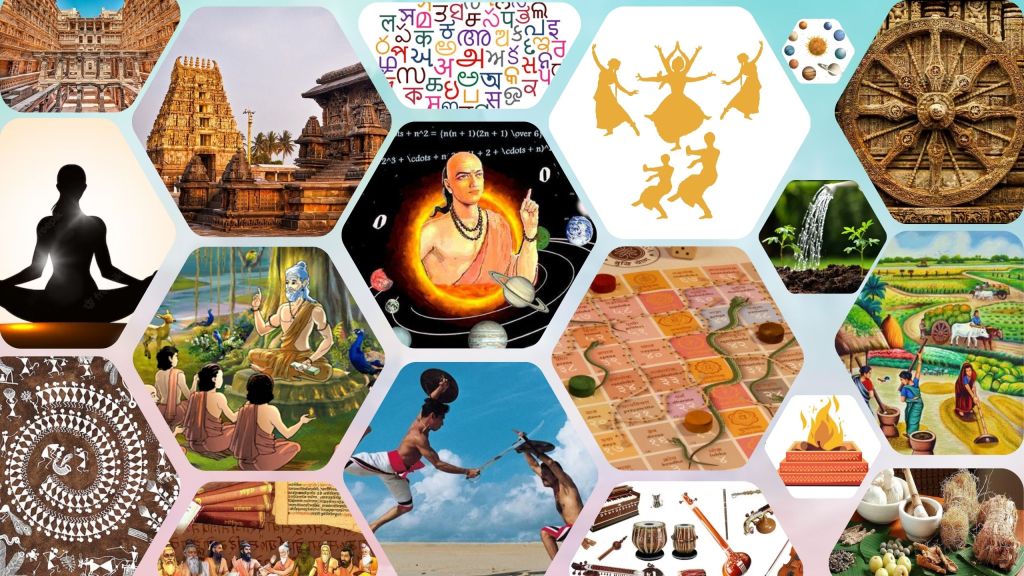
Indian knowledge systems are an amalgamation of diverse, ancient, and intricate philosophical, spiritual, and scientific traditions that have been developed and refined over several millennia. These knowledge systems encompass a broad range of subjects, including metaphysics, ethics, linguistics, mathematics, astronomy, medicine, and yoga. They are deeply rooted in the Indian way of life, culture, and spirituality and have shaped the Indian society, economy, and governance for centuries. Indian knowledge systems are characterized by their holistic and integrative approach, which emphasizes the interconnectedness and interdependence of various aspects of existence. They are also notable for their emphasis on experiential and intuitive knowledge, as opposed to a purely empirical or rationalist approach. Indian knowledge systems have also contributed significantly to the world’s intellectual and cultural heritage, influencing several fields of knowledge and thought, including mathematics, science, literature, and philosophy.
Despite their rich and diverse heritage, Indian knowledge systems have faced challenges in the modern era, including marginalization, misrepresentation, and neglect. However, recent years have seen a renewed interest in these systems, both within India and abroad, as scholars and practitioners seek to rediscover, revive, and reinterpret them for contemporary contexts. This resurgence has led to a growing recognition of the relevance and value of Indian knowledge systems in addressing contemporary challenges, such as sustainability, health, education, and governance, and promoting cross-cultural dialogue and understanding.
Indian knowledge systems, with their rich and diverse heritage, have made significant contributions to the world’s intellectual and cultural heritage. They offer a unique and holistic approach to understanding the world, emphasizing the interconnectedness and interdependence of various aspects of existence. However, there are several criticisms of Indian knowledge systems that should be considered.
Firstly, Indian knowledge systems are often criticized for being too complex and abstract, making them difficult to understand and apply. This complexity is attributed to the system’s emphasis on metaphysical and spiritual concepts that are not easily accessible to the average person. As a result, there is a risk of these systems being perceived as esoteric and inaccessible to modern society.
Secondly, Indian knowledge systems have been criticized for their patriarchal and hierarchical nature, which can lead to the marginalization of certain groups, including women and lower castes. This criticism stems from the fact that these systems have been developed and maintained by male scholars and practitioners, often reflecting patriarchal values and norms.
Thirdly, there is a concern that the study and practice of Indian knowledge systems are often detached from practical applications and modern realities, leading to a lack of relevance and applicability. There is a need for the integration of traditional knowledge systems with modern scientific and technological advancements to ensure their continued relevance and effectiveness.
Finally, there is a risk of cultural appropriation and misrepresentation of Indian knowledge systems, as they become popularized and commercialized in the global market. There is a need for responsible engagement and representation of these systems, ensuring that they are not reduced to superficial or exoticized stereotypes.
In conclusion, while Indian knowledge systems offer a unique and holistic approach to understanding the world, there are several criticisms that should be considered. These criticisms highlight the need for ongoing engagement, critical reflection, and responsible representation of these systems in contemporary contexts.
References
Brodt, S. B. (2001). A systems perspective on the conservation and erosion of indigenous agricultural knowledge in central India. Human Ecology, 29, 99-120.
Dehalwar, K., & Sharma, S. N. (2024). Social Injustice Inflicted by Spatial Changes in Vernacular Settings: An Analysis of Published Literature.
Farooquee, N. A., Majila, B. S., & Kala, C. P. (2004). Indigenous knowledge systems and sustainable management of natural resources in a high altitude society in Kumaun Himalaya, India. Journal of Human Ecology, 16(1), 33-42.
Pollock, S. (2002). Introduction: Working papers on Sanskrit Knowledge-Systems on the eve of colonialism. Journal of Indian Philosophy, 30(5), 431-439.
Puri, S. K. (2007). Integrating scientific with indigenous knowledge: Constructing knowledge alliances for land management in India. MIS quarterly, 355-379.
Rao, S. S. (2006). Indigenous knowledge organization: An Indian scenario. International Journal of Information Management, 26(3), 224-233.
Sharma, S. N. The Usefulness of Animal Husbandry for Improving Livelihoods.
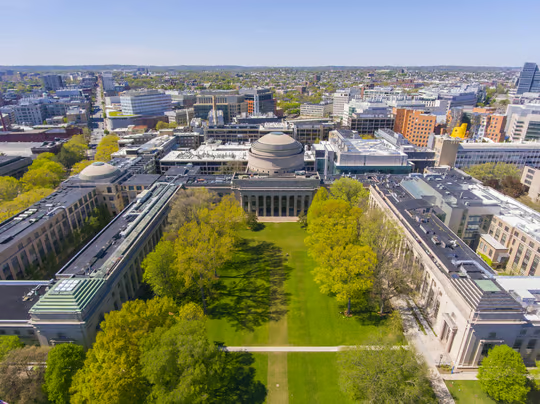
The United States is home to some of the world’s most prestigious colleges and universities, known for their rigorous academic programs, state-of-the-art facilities, and vibrant campus communities. Here is a list of the top 10 colleges in the USA, known for their excellence in education and research:
1. Massachusetts Institute of Technology (MIT)
Located in Cambridge, Massachusetts, MIT consistently ranks as the top college in the world for its cutting-edge research and innovation in science, technology, and engineering. Its collaborative and entrepreneurial culture attracts some of the brightest minds globally.
Highlights:
World-class STEM programs
Strong emphasis on entrepreneurship
High return on investment for graduates
2. Stanford University
Situated in the heart of Silicon Valley, California, Stanford is synonymous with innovation. It offers a diverse array of programs in fields such as business, engineering, and humanities.
Highlights:
Close ties to the tech industry
Exceptional research opportunities
Stunning campus architecture
3. Harvard University
As the oldest institution of higher education in the U.S., Harvard in Cambridge, Massachusetts, is a symbol of academic excellence. Its reputation spans across law, medicine, business, and arts.
Highlights:
Rich history and traditions
Prestigious alumni network
Strong financial aid programs
4. California Institute of Technology (Caltech)
Located in Pasadena, California, Caltech is renowned for its focus on science and engineering. It boasts a small student body and an impressive faculty-to-student ratio.
Highlights:
Intense focus on STEM disciplines
Access to cutting-edge research facilities
Close collaboration between students and faculty
5. University of Chicago
This Illinois-based institution is celebrated for its intellectual rigor and strong programs in economics, political science, and the humanities.
Highlights:
Nobel Prize-winning faculty
Emphasis on critical thinking and inquiry
Unique Core Curriculum
6. Princeton University
Located in Princeton, New Jersey, this Ivy League institution offers a unique blend of undergraduate focus and world-class research.
Highlights:
Strong liberal arts curriculum
Stunning Gothic architecture
Generous financial aid packages
7. Yale University
Situated in New Haven, Connecticut, Yale is known for its programs in law, drama, and the humanities. Its residential college system creates a close-knit community.
Highlights:
Renowned performing arts programs
Historic and picturesque campus
Strong emphasis on leadership and service
8. Columbia University
Located in New York City, Columbia offers unparalleled access to global opportunities in finance, media, and arts, making it a magnet for ambitious students.
Highlights:
Vibrant urban campus
Strong focus on research and innovation
Home to the Pulitzer Prize
9. University of Pennsylvania (Penn)
Penn in Philadelphia, Pennsylvania, combines a strong liberal arts education with world-class professional programs in business, law, and medicine.
Highlights:
Founding member of the Ivy League
Wharton School for business
Focus on interdisciplinary studies
10. Duke University
Located in Durham, North Carolina, Duke is known for its rigorous academics, strong athletics, and vibrant campus life.
Highlights:
Excellent programs in business, law, and medicine
Beautiful campus and athletic facilities
Commitment to global education
Factors for Consideration
The rankings above consider academic excellence, faculty quality, research output, financial aid, student satisfaction, and global reputation. Choosing the right college depends on personal goals, preferred programs, and campus culture.
Would you like additional information on admission requirements, financial aid, or campus life for any of these colleges?
The National Education Policy (NEP) 2020, envisions a comprehensive revision and revamping of the education system, including its governance and regulation. The Department of School Education & Literacy remains committed to supporting students in achieving better learning outcomes, thereby ensuring an inclusive and effective education system.
In line with this commitment, the Central Government, through notification (G.S.R. 777(E)) dated 21st December 2024, published in the Gazette of India, has amended the rules under the Right of Children to Free and Compulsory Education (RTE) Act, 2009, as revised by the RTE (Amendment) Act, 2019. The amended rules, titled the Right of Children to Free and Compulsory Education (Amendment) Rules, 2024, introduce significant changes to promote student learning while ensuring equity and inclusion.
The amendment is the introduction of a revised “Detention Policy” applicable to students in Grades 5 and 8 of school established, owned or controlled by the Central Government, or the administrator of the Union Territory, having no legislature.
Under this, if a student fails to meet the promotion criteria after annual examination, he or she will be provided additional instruction and an opportunity to appear for a re-examination within two months of the declaration of results. In the event the student does not meet the promotion criteria even after the re-examination, he/ she will be continued in the same grade. During this period, the class teacher will actively engage with the student and the parents, providing specialized guidance and addressing identified learning gaps through targeted interventions.
Though the RTE Act was amended in 2019 it was decided to await finalisation of National Education Policy (NEP), 2020 and National Curriculum Framework for School Education (NCFSE), which was put up in public domain on 23.08.2023. After due consultation with stake holders, the rules have been notified.
As reported by States and Union Territories, 18 States/UTs have issued notification for implementation of provisions of RTE(Amendment) Act, 2019, these include Assam, Bihar, Gujarat, Himachal Pradesh, Jammu & Kashmir, Jharkhand, Madhya Pradesh, Meghalaya, Nagaland, Punjab, Rajasthan, Sikkim, Tamil Nadu, Tripura, Uttarakhand, West Bengal, NCT of Delhi and Dadar & Nagar Haveli & Daman & Diu. State of Haryana and UT of Puducherry are yet to take a decision in the matter.
The States/UTs of Andhra Pradesh Arunachal Pradesh, Chhattisgarh, Goa, Karnataka, Kerala, Maharashtra, Manipur, Mizoram, Odisha, Telangana, Uttar Pradesh, Andaman & Nicobar Island, Chandigarh, Ladakh and Lakshadweep continue to follow the no detention policy from Class I to VIII.
The amendment reinforces that no child shall be expelled from school until the completion of elementary education ensuring every child’s right to education.
This unique opportunity provides medical students with up to 12 months of practical training in the fundamentals of journalism, communications, and global health reporting on a variety of media platforms in order to build a generation of physician-storytellers who can combat medical misinformation and shine a light on untold global health stories. About the Fellowship
In order to overcome medical misinformation and build public trust, the world needs more physicians who are also versed in journalism and communication.
This year-long fellowship, the first of its kind in the U.S., teaches physicians-in-training to use various media channels to advocate and inform on global health issues. The selected fellow learns how reporting on global health issues can impact health and human rights efforts, foundation and government health assistance, and individual health choices.
Through coursework, independent reporting, and a CNN internship, fellows gain an understanding of how to tell compelling stories and work with local, national and international media outlets in order to share valuable medical and global health information with the general public.
Each year, one fellow is chosen from a pool of students enrolled in U.S. medical institutions committed to a career in global health (candidates do not have to be from Stanford). This opportunity provides medical students with up to 12 months of practical training in the fundamentals of journalism, communications, and global health reporting on a variety of media platforms, including print, online, broadcast, and social and digital media.
Each fellow participates in three rotations over the course of their fellowship year. The fellow spends the fall quarter (September through December) on campus taking courses in Stanford’s Graduate Program in Journalism <http://journalism.stanford.edu/>. In the winter, the fellow is embedded at CNN in Atlanta with Dr. Sanjay Gupta’s health reporting team to learn the fundamentals of health reporting and gain hands-on experience. In late spring, the fellow conducts a capstone project based on their interests and focused on developing the skills they most wish to hone to improve their global health storytelling and mass communication capabilities.
A modest travel stipend is awarded in addition to the fellowship stipend. Fellows receive a stipend from CNN during their internship portion.
—————————— Eligibility
This fellowship is available to current allopathic medical and osteopathic (D.O.) students; the fellowship is not open to residents. Applicants must be currently enrolled in medical school at an institution in the United States to be considered. Fourth-year medical students interested in applying can opt to delay their residency and do a fifth year of medical school in order to be eligible. —————————— Timeline
Applications for the 2025-26 fellowship will open December 2, 2024 and the deadline to apply is January 21, 2025.
Finalists will be contacted and interviewed in mid-late February. A fellow is typically selected by early-mid March.
The fellowship begins in September and runs through the following July. —————————— Goals and Objective
We want to grow the audience for global health stories and we want to make sure the stories that are told are accurate. To help physicians engage with journalists, we designed this program to teach fellows:
– How journalists and TV medical correspondents select and frame topics, stories, and issues in the field of global health; – Techniques to present and write persuasively about global health, medicine, and science; – How to access new channels and technologies for persuasive communication.
Upon completion, the fellow will produce an in-depth article or other substantive media creation on a global health topic.
The Fellow will return to medical training with the expectation that in addition to treating patients, conducting research or teaching, she or he will also become an advocate and spokesperson for global health issues. ——————————
The Central Teacher Eligibility Test (CTET) is a national-level examination conducted by the Central Board of Secondary Education (CBSE) to assess candidates’ eligibility for teaching positions in schools. Qualifying CTET opens the door to various teaching opportunities in both government and private schools across India. This article provides a comprehensive overview of the career prospects available after clearing the CTET exam.
Why CTET is Important?
Mandatory Qualification: CTET is a prerequisite for applying to teaching positions in central government schools like Kendriya Vidyalayas (KVs) and Navodaya Vidyalayas (NVs).
Enhanced Credibility: CTET certification adds weight to a candidate’s profile, even in private and unaided schools.
Nationwide Acceptance: The CTET score is recognized by schools across India, providing broader career opportunities.
Teaching Opportunities After CTET
1. Central Government Schools
Examples: Kendriya Vidyalayas (KVs), Navodaya Vidyalayas (NVs), Tibetan Schools, and other schools under the administrative control of the central government.
Roles:
Primary Teacher (PRT) for Classes I-V.
Trained Graduate Teacher (TGT) for Classes VI-VIII (requires additional qualifications).
Benefits:
Competitive salary.
Job security and pension benefits.
Opportunities for professional development.
2. State Government Schools
Many state governments consider CTET scores for recruitment in state-run and aided schools.
Candidates may need to meet specific state eligibility criteria, such as proficiency in the local language.
3. Private and Unaided Schools
Role: Teachers in reputed private schools often prioritize candidates with CTET certification.
Advantages:
Higher chances of selection due to CTET qualification.
Negotiable salary packages in high-ranking schools.
4. Education Departments
Role: Educational officers or trainers for teacher training programs.
Scope: Opportunities to work in curriculum development, teacher training, and educational policy implementation.
5. Special Category Schools
Examples: Schools run by the Ministry of Defence, such as Army Public Schools and Air Force Schools.
Role: Primary and secondary teachers for children of defense personnel.
6. E-Learning and EdTech Platforms
Role: Content developers, online tutors, or subject matter experts in educational technology companies.
Scope: Creating teaching material, video lessons, or conducting live classes.
7. International Schools
Some international schools in India and abroad recognize CTET and prioritize candidates with this qualification for teaching positions.
Non-Teaching Opportunities After CTET
Educational Content Development
Designing teaching aids, lesson plans, and curriculum resources for publishers and educational organizations.
Teacher Training
Assisting in the professional development of teachers by conducting workshops and training sessions.
Education Consultant
Advising schools or educational bodies on curriculum design, teaching methodologies, and assessment practices.
Salary Prospects After CTET
Government Schools:
Primary Teacher (PRT): ₹35,000 to ₹50,000 per month.
Trained Graduate Teacher (TGT): ₹40,000 to ₹60,000 per month.
Post Graduate Teacher (PGT): ₹50,000 to ₹70,000 per month.
Private Schools:
Salaries vary based on the school’s reputation and location, ranging from ₹20,000 to ₹60,000 per month.
EdTech Platforms:
Online tutors or content developers may earn ₹25,000 to ₹75,000 per month, depending on experience.
Career Advancement Opportunities
Promotions:
With experience, teachers can advance to positions like Head of Department (HOD), Vice Principal, or Principal.
Further Qualifications:
Pursue courses like Bachelor of Education (B.Ed.), Master of Education (M.Ed.), or specialized certifications to enhance career prospects.
Research and Higher Studies:
Opportunities to work in educational research or pursue higher studies in pedagogy and child development.
Preparation for Further Exams
CTET qualification also makes candidates eligible to apply for other competitive exams, such as:
State TET Exams: To qualify for state-level teaching positions.
KVS/NVS Recruitment Exams: For higher-level positions in central government schools.
NET (National Eligibility Test): For college and university-level teaching positions.
Conclusion
Qualifying CTET is a significant milestone for aspiring teachers. It not only opens the doors to rewarding teaching positions in government and private schools but also provides opportunities in diverse educational roles. With the growing emphasis on quality education, the demand for CTET-qualified teachers is set to rise. Those passionate about teaching can look forward to a fulfilling and impactful career.
The Staff Selection Commission (SSC) is one of the most prestigious organizations in India, conducting various competitive exams for recruitment into government departments and organizations. Clearing SSC exams opens the door to secure, respectable, and well-paying jobs in the public sector. This article provides a detailed overview of the job opportunities available after qualifying in SSC exams.
Major SSC Exams and Their Scope
1. SSC Combined Graduate Level (CGL) Exam
The SSC CGL exam is conducted for graduate-level candidates and offers positions in Group B and Group C posts in various government departments.
Job Roles After SSC CGL:
Assistant Section Officer (ASO): In ministries, departments, and organizations.
Inspector (Income Tax, Customs, GST): Enforcement and compliance roles in financial departments.
Sub-Inspector (CBI, NIA): Investigative positions in security and intelligence agencies.
Auditor/Accountant: Roles in offices under the Comptroller and Auditor General (CAG) or other departments.
Statistical Investigator: For candidates with expertise in statistics and analysis.
The SSC CHSL exam is conducted for candidates who have completed their higher secondary education (10+2).
Job Roles After SSC CHSL:
Lower Division Clerk (LDC): Administrative support roles in various departments.
Data Entry Operator (DEO): Handling data and maintaining records.
Postal Assistant/Sorting Assistant: Managing postal services and sorting operations.
Court Clerk: Assisting judicial officers in courts.
Key Benefits:
Entry into government service at an early age.
Opportunities for further education and promotions.
3. SSC JE (Junior Engineer) Exam
This exam is conducted for candidates with a background in engineering disciplines.
Job Roles After SSC JE:
Junior Engineer (Civil, Electrical, Mechanical): Technical roles in government construction and maintenance projects.
Engineering Assistant: Support in implementing technical solutions in departments like CPWD, MES, and BRO.
Key Benefits:
Lucrative salary and perks.
Involvement in national infrastructure projects.
4. SSC MTS (Multi-Tasking Staff) Exam
The SSC MTS exam recruits for Group C posts suitable for candidates who have passed the 10th standard.
Job Roles After SSC MTS:
Peon, Daftary, Chowkidar: Supporting administrative and operational functions.
Junior Gestetner Operator: Handling duplicating and copying equipment.
Gardener, Gatekeeper: Maintenance and security roles.
Key Benefits:
Easy entry-level jobs in government sectors.
Scope for career progression through departmental promotions.
5. SSC Stenographer Exam
This exam is for candidates proficient in stenography, providing opportunities in Group C and D posts.
Job Roles After SSC Stenographer Exam:
Stenographer in Ministries and Departments: Assisting in documentation and correspondence.
Personal Assistant: High-profile roles assisting senior officers.
Key Benefits:
Direct interaction with senior government officials.
Opportunities to work in prestigious government offices.
6. SSC GD Constable Exam
This exam is for recruitment into paramilitary forces and CAPFs.
Job Roles After SSC GD Constable Exam:
Constable in BSF, CRPF, ITBP, CISF, and SSB: Security and law enforcement roles.
Rifleman in Assam Rifles: Regional security roles.
Key Benefits:
Respectable job in national defense and security.
Adventure and opportunities to serve the nation.
7. SSC CPO (Central Police Organization) Exam
This exam recruits candidates for sub-inspector and assistant sub-inspector roles in police forces and paramilitary organizations.
Job Roles After SSC CPO Exam:
Sub-Inspector in Delhi Police, CAPFs: Crime investigation and law enforcement.
Assistant Sub-Inspector in CISF: Administrative support in industrial security.
Key Benefits:
Hands-on involvement in maintaining law and order.
Prospects for promotions to higher ranks like Inspector or Assistant Commissioner of Police (ACP).
Advantages of Jobs Through SSC Exams
Job Security: Permanent roles in government sectors with stability.
Attractive Salary: Competitive pay scales, allowances, and pension benefits.
Work-Life Balance: Fixed working hours with ample leave provisions.
Social Prestige: High regard for government employees in society.
Career Growth: Opportunities for promotion through departmental exams and seniority.
Preparation Tips for SSC Exams
Understand the Syllabus: Analyze the exam pattern and topics thoroughly.
Practice Mock Tests: Regular practice improves speed and accuracy.
Stay Updated: General awareness and current affairs are crucial for success.
Time Management: Allocate time wisely during preparation and in exams.
Conclusion
Qualifying SSC exams opens doors to diverse career opportunities in the government sector, offering job security, financial stability, and societal respect. Whether you are a graduate, a 10+2 candidate, or have a technical background, there’s an SSC exam tailored for you. With diligent preparation and dedication, a rewarding career in the public sector awaits.
Asia, a continent known for its rich history, diverse cultures, and rapid economic growth, is also home to some of the world’s top-performing educational institutions. With an increasing emphasis on global competitiveness, the quality of education in many Asian countries has risen to new heights in recent decades. Schools in Asia are recognized for their academic rigor, innovative teaching methods, and focus on developing global citizens. This essay will explore some of the top schools in Asia, highlighting the factors that contribute to their success and influence.
1. The International School of Beijing, China
The International School of Beijing (ISB) is one of the premier international schools in China. Located in the capital city, ISB offers an education primarily based on the International Baccalaureate (IB) curriculum, with an emphasis on inquiry-based learning. It serves students from pre-kindergarten through grade 12, drawing families from over 50 countries. One of ISB’s key strengths is its commitment to fostering cultural diversity and international-mindedness. The school offers a wide range of extracurricular activities, including sports, music, drama, and Model United Nations (MUN), which help develop leadership and communication skills.
ISB’s strong academic results are also a testament to its high standards. The school’s high school students consistently perform well in the IB Diploma Programme, and its university placement record is excellent, with graduates attending prestigious universities across the globe.
2. Singapore American School (SAS), Singapore
The Singapore American School (SAS) is widely regarded as one of the best schools in Asia. Founded in 1956, SAS offers a rigorous American-style education from pre-kindergarten to grade 12. The school is renowned for its high academic standards, exceptional facilities, and outstanding faculty. SAS is particularly known for its focus on developing well-rounded individuals, with a strong emphasis on both academics and extracurricular activities.
The school offers Advanced Placement (AP) courses, and its students routinely perform well in these exams, with many going on to attend top universities in the United States, such as Ivy League schools. SAS is also known for its focus on STEM (science, technology, engineering, and mathematics) education, with state-of-the-art laboratories and robotics programs. Its commitment to character development and service learning makes it a leader in educating global citizens. You can view website to get an in-detailed idea of international schools in Singapore.
3. The International School of Hong Kong (ISHK), Hong Kong
The International School of Hong Kong (ISHK) is one of the top international schools in the region. It offers the International Baccalaureate (IB) curriculum, catering to students from early childhood through to high school. ISHK is particularly known for its personalized approach to education, focusing on individualized learning paths that meet the needs of each student. The school emphasizes inquiry-based learning, which allows students to actively engage with the material and develop critical thinking skills.
ISHK’s strong emphasis on cultural diversity is also a standout feature. Hong Kong is a melting pot of cultures, and ISHK fosters a global perspective, encouraging students to understand and appreciate different cultures and backgrounds. Its high school students consistently achieve impressive results in the IB Diploma Programme, which enables them to gain entry to top universities around the world.
4. Nanjing International School (NIS), China
Nanjing International School (NIS) is another top international school in Asia, located in Nanjing, China. NIS offers a challenging and well-rounded education, focusing on both academic excellence and holistic development. The school follows the IB curriculum and places a strong emphasis on inquiry-based learning, which nurtures independent thinkers and problem solvers.
NIS has a reputation for offering a well-integrated approach to education, with a robust arts and sports program. The school also encourages service learning and social responsibility, helping students develop a sense of global citizenship. NIS graduates regularly gain acceptance into prestigious universities worldwide, making it one of the top choices for expatriate families in China.
5. Seoul Foreign School, South Korea
Seoul Foreign School (SFS) is one of the top international schools in South Korea, offering a curriculum that blends American and international standards. Established in 1912, SFS has a long history of providing an excellent education to expatriates in Seoul. The school serves students from preschool through to grade 12 and offers a diverse range of extracurricular activities in addition to its rigorous academic programs.
SFS offers both the Advanced Placement (AP) and IB Diploma Programmes, allowing students to choose the educational pathway that best suits their needs. The school has consistently high academic standards, and its graduates have gone on to attend prestigious universities, particularly in the United States. SFS’s commitment to developing well-rounded individuals is reflected in its strong focus on sports, arts, leadership, and community service.
6. The British International School, Phuket, Thailand
The British International School (BISP) in Phuket is a prominent institution in Thailand, known for its high academic standards and focus on developing global citizens. Following the British curriculum, BISP offers a strong academic program from early childhood through to the A-levels. The school is particularly well-regarded for its emphasis on extracurricular activities, including sports, music, drama, and outdoor education.
BISP’s commitment to holistic education is demonstrated by its focus on both academic achievement and personal development. The school boasts a strong university placement record, with graduates attending top institutions in the United Kingdom, United States, and other parts of the world. Its picturesque location in Phuket provides a conducive learning environment, and its international community ensures a diverse, inclusive atmosphere.
7. Jeddah International School, Saudi Arabia
Jeddah International School (JIS) is one of the top international schools in the Middle East and has earned a strong reputation for its academic excellence. Offering both the IB and American curriculums, JIS provides a rigorous academic environment for its students, alongside a diverse array of extracurricular activities. The school places a strong emphasis on moral values, social responsibility, and leadership.
JIS has a highly dedicated teaching staff and offers a range of extracurricular activities, such as sports, arts, and community service, that encourage students to grow in a well-rounded manner. Its university placement program is highly successful, with many students gaining entry to prestigious universities in the US, UK, and other countries.
8. Tata Institute of Social Sciences (TISS), India
While India is home to a multitude of prestigious schools, Tata Institute of Social Sciences (TISS) stands out due to its unique focus on social sciences and social work education. Based in Mumbai, TISS offers undergraduate, postgraduate, and doctoral programs in various fields, including social work, education, health systems, and public policy. TISS is known for its rigorous academic curriculum, combined with a strong emphasis on social responsibility and community engagement.
Although TISS is more of a university-level institution, its influence and reputation for academic excellence make it a leader in higher education in Asia. The university has consistently ranked among the top in India and offers a transformative educational experience.
Conclusion
The top schools in Asia exemplify excellence in education, each with its unique approach to developing students into successful, well-rounded global citizens. Whether following international curriculums like the IB or offering specific country-based systems, these schools are shaping the future of education in Asia and beyond. With their emphasis on academic rigor, cultural diversity, and holistic development, these institutions set the stage for the next generation of leaders, thinkers, and innovators. As Asia continues to play a central role in global development, the quality of education in its schools will undoubtedly remain a critical factor in shaping the future of the continent and the world. Visit the website to get more insights on international schools in Asia.
Considering furthering your education but struggling to find time? You’re not alone. Adults seek to update their skills or pursue new careers while balancing work and family commitments.
An online adult school can be the key to achieving your goals without compromising your current responsibilities. With flexible learning options, tailored programs, and various course offerings, these institutions cater specifically to adult learners. Let’s delve into the top nine benefits of enrolling in an online adult school that could change your life.
1. Flexible Learning Schedules
One major benefit of online adult schools is the flexibility they offer, which is especially helpful for adults juggling multiple responsibilities. With online programs, you can choose when and where to study, allowing you to fit education into your busy life. Whether you work full-time, care for a family, or have other obligations, these programs make it possible to pursue learning without sacrificing other important areas of your life.
This flexibility also means you can plan your studies around your personal schedule. For instance, you might study early in the morning, during a lunch break, or late at night-whatever works best for you. Unlike traditional schools that require fixed attendance times, online classes let you create a routine that fits your needs.
2. Diverse Course Options
Online adult schools offer a wide range of courses, giving learners the chance to explore many different areas. This variety makes it easier for you to find classes that align with your personal interests or career goals. Whether you want to learn practical skills for a new job, improve abilities you already have, or dive into something completely new, these schools often have career advancement options to match what you’re looking for.
For example, if you’re interested in technical skills, you might find courses on computer programming, graphic design, or digital marketing. These skills are highly valued in today’s job market and can open doors to better job opportunities. If your interests lie in the liberal arts, you could choose from topics like literature, history, or creative writing, which allow you to explore your passion for knowledge and self-expression.
Personal development courses are another great option. These might focus on leadership, communication, or even time management, helping you grow not only professionally but also in your everyday life. Some programs also offer hobby-related classes, such as photography, cooking, or music, which are perfect for those looking to learn for enjoyment and relaxation.
3. Affordable Education
Going back to school can be expensive, but online adult programs are often much cheaper than traditional colleges. One big reason is that these programs cut down on many of the extra costs that come with attending a physical school. For example, you don’t need to spend money on commuting since you can study from home. There’s no need to pay for housing on or near campus, which can be a big expense for students at traditional schools.
Another way online programs save money is by offering digital materials. Instead of buying expensive textbooks, many courses provide e-books, online resources, or other materials that are free or low-cost. This makes learning more affordable and accessible for everyone.
Online schools also tend to have lower tuition fees compared to traditional colleges. This is because they don’t have to maintain large buildings or other facilities, which means they can pass those savings on to students. Some programs even offer payment plans or financial aid options, making it easier for you to afford your education.
4. Boost Skills and Credentials
In today’s job market, having the right skills and credentials can make a big difference. Online adult schools can help you develop new abilities or strengthen the ones you already have. Completing courses shows employers that you’re serious about growing professionally, giving you a better chance at promotions or new job opportunities.
5. Focus on Personal Growth
Many online adult programs don’t just teach work-related skills-they also emphasize personal development. Classes on leadership, communication, or problem-solving can help you grow as a person. These skills are valuable in both your career and personal life, making you more confident and satisfied with your progress.
6. A Global Learning Community
Online schools connect you with people from all over the world. You can interact with classmates and teachers who have different perspectives, helping you learn about new cultures and ideas. This global connection can inspire creative thinking and give you a broader understanding of the world around you.
7. Personalized Learning
Online adult schools often offer tailored experiences to meet your specific needs. Many programs use technology to adjust the material so it fits your learning style. This kind of personalization can be very helpful, especially if traditional classroom settings didn’t work well for you in the past.
8. Learn at Your Own Speed
Another great feature of online programs is the ability to learn at your own pace. You can take extra time to understand harder topics or move quickly through easier ones. This approach helps you truly grasp the material and remember it better, making your education more effective.
9. Better Job Prospects
Finishing a program at an online adult school can lead to new career opportunities or help you get promoted in your current job. Employers value candidates who continue their education because it shows dedication and a willingness to improve. By enrolling in these programs, you can stand out in a competitive job market and move closer to your professional goals.
When considering further education, it’s essential to understand the difference between an MBA vs. Master’s Degree in your field. The choice can greatly affect your career trajectory since an MBA focuses more on business administration and management skills, while a specialized Master’s
A degree might delve deeper into a particular discipline. Evaluating your career goals will help guide your decision and ensure you choose the path that aligns with your aspirations.
Take the Leap in an Online Adult School
With its numerous benefits, enrolling in an online adult school can be a transformative step in your educational journey. From flexible learning schedules to increased career opportunities, the advantages are clear.
Don’t let your busy life prevent you from pursuing your educational dreams. Explore the options available and consider how an online adult school can help you reach your full potential.
For more topics aside from adult education courses, visit our blog!
Are you passionate about storytelling, eager to investigate compelling issues, and interested in building a career in journalism? Eduindex News, a leading online news portal, is offering an exciting internship opportunity for budding journalists. This internship is a golden chance to gain hands-on experience in the dynamic world of journalism while honing your skills in writing, editing, and reporting.
About Eduindex News
Eduindex News is a well-established online news platform that focuses on delivering insightful and balanced coverage of global events, educational developments, and socio-economic trends. Known for its emphasis on credible journalism, Eduindex News serves as a reliable source of information for readers worldwide. The platform covers a diverse range of topics, including education, culture, politics, technology, business, and more.
Why Choose the Eduindex News Internship?
Eduindex News provides a unique learning experience tailored to prepare interns for the competitive field of journalism. The internship is structured to equip candidates with essential industry skills and foster professional growth. Here are the highlights:
Real-World Experience:
Interns will work on live projects, including news reporting, feature writing, and investigative journalism.
You’ll have the opportunity to pitch story ideas and collaborate with senior journalists.
Skill Development:
Enhance your skills in content creation, research, editing, and multimedia reporting.
Learn how to use professional tools for writing, video editing, and graphic design.
Mentorship:
Gain mentorship from seasoned journalists and editors at Eduindex News.
Learn the nuances of journalistic ethics, news analysis, and audience engagement.
Portfolio Building:
Publish your work on Eduindex News, allowing you to build a professional portfolio.
Showcase your skills to potential employers with bylines under your name.
Networking Opportunities:
Connect with industry professionals and fellow interns to expand your network.
Flexible Work Environment:
This internship offers remote work options, enabling candidates to contribute from anywhere.
Internship Roles and Responsibilities
As an intern at Eduindex News, you’ll be expected to perform various roles, including:
Researching and writing news articles, editorials, and opinion pieces.
Conducting interviews with subject matter experts and sources.
Fact-checking and ensuring the accuracy of published content.
Collaborating with the editorial team to plan and execute news coverage.
Assisting in multimedia projects such as video reporting and podcast production.
Promoting published articles through social media and other digital platforms.
Eligibility Criteria
Eduindex News welcomes applications from students and recent graduates in journalism, mass communication, or related fields. Candidates should meet the following criteria:
Strong command of the English language.
Excellent writing and editing skills.
A keen interest in current events and news reporting.
Basic knowledge of digital media tools and platforms.
Ability to meet deadlines and work under pressure.
Duration and Stipend
The internship duration ranges from 1 to 6 months, depending on the candidate’s availability and performance.
A certificate of internship will be provided upon successful completion. Exceptional interns may also be considered for full-time roles at Eduindex News.
How to Apply?
To apply for the journalism internship at Eduindex News, follow these simple steps:
Prepare your resume highlighting your skills and achievements.
Write a cover letter explaining your interest in journalism and why you wish to intern at Eduindex News.
Submit 2-3 writing samples or links to published work (if available).
Send your application to editor@eduindex.org with the subject line “Internship Application – Journalism.”
Testimonials from Previous Interns
“My internship at Eduindex News was a transformative experience. I learned the ins and outs of journalism and got the chance to publish my work. The team was incredibly supportive!” – Aditi Sharma
“Eduindex News helped me develop the confidence to pursue a full-time career in journalism. The mentorship and real-world exposure were invaluable.” – Ramesh Kumar
Conclusion
An internship at Eduindex News is more than just a learning experience—it’s a stepping stone to a successful career in journalism. Whether you dream of being a news reporter, editor, or media strategist, this opportunity will help you build the skills, knowledge, and network required to achieve your goals.
Don’t miss this chance to kickstart your journalism journey with one of the most dynamic platforms in the industry. Apply now and make your mark in the world of news and media!
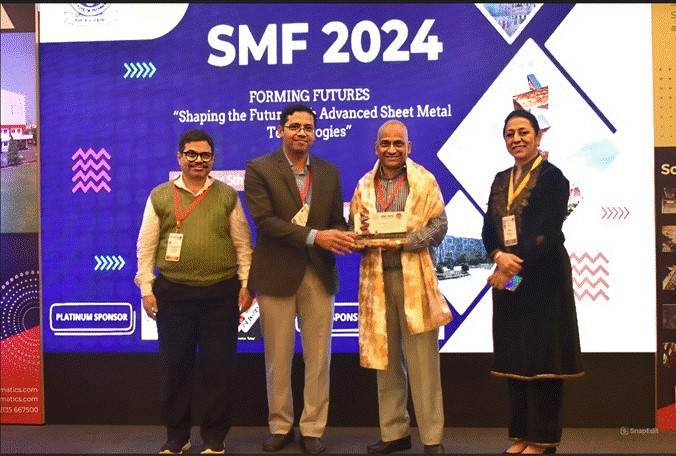
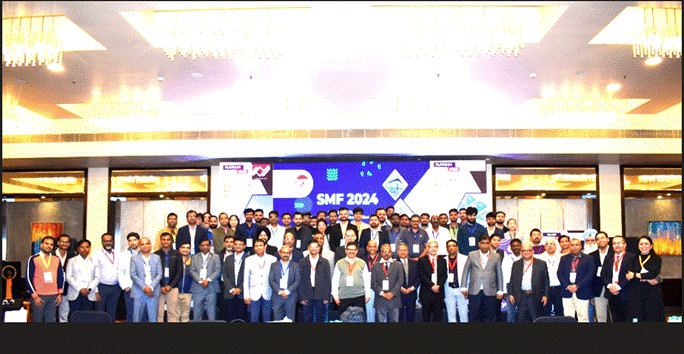
Rupnagar, 9th December 2024: IIT Ropar successfully hosted the Sheet Metal Forming (SMF) 2024 conference, attracting a large gathering of national and international delegates. The event featured eminent speakers from IITs and prominent industry partners, including Auto form, Electropneumatics & Hydraulics, Altair, Tata Steel, Tata Technologies Ltd., Ford India, Felss System GmbH, and JBM Auto Ltd. SMF 2024, the flagship conference of the Sheet Metal Forming Research Association (SMFRA), provided a platform for researchers and developers from India and abroad to present and exchange ideas on metal forming technologies.
The conference commenced on December 5th with an inaugural ceremony. Prof. Anupam Agrawal, from the Department of Mechanical Engineering at IIT Ropar and Organizing Secretary of SMF 2024, welcomed the attendees, including speakers, SMFRA members, scholars, and industry guests. Prof. Rajeev Ahuja, Director of IIT Ropar, conveyed his best wishes for the success of the conference. This was followed by an address by Dr. Prabhat K. Agnihotri, Head of the Department of Mechanical Engineering and Chairman of the conference. Chief Guest Dr. Santosh Kumar, Vice President, Jindal Stainless Ltd., delivered the Rasquinha Memorial Lecture, sharing insights on the latest advancements and challenges in the field of sheet metal forming. Prof. K. Narasimhan, Secretary of SMFRA and Professor at IIT Bombay, highlighted the key challenges in metal forming for academia and underscored the importance of the SMF conference series in bridging academia and industry. The ceremony concluded with a vote of thanks by Prof. Navin Kumar, Department of Mechanical Engineering, IIT Ropar, and Co-Organizing Secretary of SMF 2024.
The event was supported by Platinum Sponsors Auto Formand Electropneumatic & Hydraulics (I) Pvt. Ltd., along with Silver Sponsor Altair Engineering India Pvt. Ltd.
Day 1 of the conference showcased presentations by leading researchers, professors, and industry leaders on the latest advancements in sheet metal forming. Day 2 included technical sessions on diverse topics, such as lightweight metal forming, hot forming for lightweight construction, and challenges in skin panel forming. Attendees had the opportunity to engage with experts and exchange ideas on cutting-edge research in sheet metal forming.
SMF 2024 featured a panel discussion on day 2, moderated by Mr. Avinash Khare, Consultant at Tool Maker’s Facility, India. The panel included distinguished experts such as Prof. Hariharan K. (Associate Professor, IIT Madras), Mr. Prashant Kulkarni (Regional Manager, Altair Engineering India Pvt. Ltd.), Dr. Rahul Kumar (Tata Steel), and Prof. Ekta Singla(Associate Professor, IIT Ropar).
SMF 2024 aimed to provide insights into the future of metal forming research and promote knowledge-sharing among experts. The biennial event concluded successfully, with SMF 2024 Organizing Secretary Prof. Anupam Agrawal and Co-Organizing Secretaries Prof. Navin Kumar and Prof. Ekta Singla—receiving widespread appreciation for their efforts. The conference ended on Day 2 with a valedictory address by Prof. Anupam Agrawal.
The Department of School Education and Literacy, Ministry of Education, Government of India has been implementing a rolling programme of sample based National Achievement Survey (NAS) aimed at classes III, V, VIII and X with a cycle period of three years. The last National Achievement Survey (NAS) was held on 12th November, 2021.
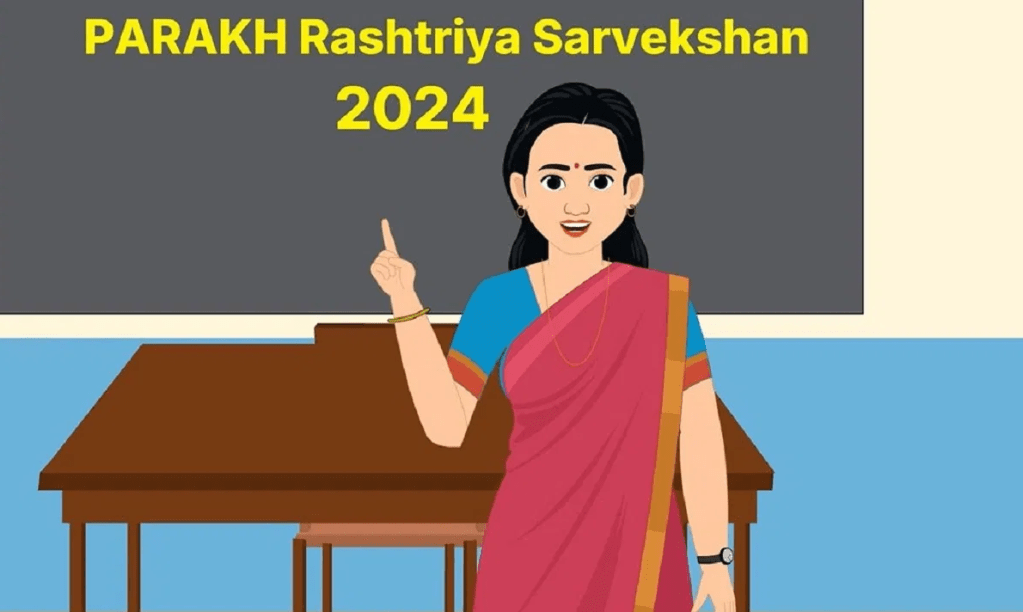
In pursuance of the recommendations of the National Education Policy (NEP) 2020, National Assessment Centre, PARAKH (Performance Assessment, Review, and Analysis of Knowledge for Holistic Development) has been setup by the Ministry of Education under the National Council of Educational Research and Training (NCERT) and has been entrusted with the responsibility of carrying out the next round of NAS, hereafter referred to as PARAKH Rashtriya Sarvekshan 2024. The survey will be held on 4th December, 2024 across the country and will help to assess the competencies developed by students at the end of foundational, preparatory and middle stages (i.e., Students currently in 3rd, 6th and 9th Grades) and help to take remedial measures. The instrument development, testing, finalization of the test items and survey tools have been developed by PARAKH, NCERT. However, the administration of the test in the sampled schools will be done by CBSE in collaboration with the respective States/UTs.
The PARAKH Rashtriya Sarvekshan is a baseline study to understand the achievement of the stage specific competencies at the end of foundation, preparatory and middle stages as per NEP 2020. It will cover the entire spectrum of schools i.e., Government Schools (Central Government and State Government), Government Aided Schools and Private schools across the country. It is expected that around 23 lakh students of approximately88 thousand schools spread out in 782 districts across 36 States and UTs will be covered in the PARAKH Rashtriya Sarvekshan 2024. Students of Grades 3, 6, and 9 will be assessed in the subjects, Language, Mathematics, the World Around Us, Science and Social Science. The Test would be conducted in 23 mediums of instructions covering Assamese, Bengali, Gujarati, Hindi, Kannada, Konkani, Malayalam, Manipuri, Marathi, Nepali, Oriya, Punjabi, Sanskrit, Santhali, Sindhi, Tamil, Telugu, Urdu, Bodo, English, Mizo, Garo & Khasi.
For smooth and fair conduct of the survey 94878 Field Investigators, 75,565 Observers, 3128 District Level Officers and 180 State Nodal Officers from 36 States and Union Territories have been appointed. Also, 782 Board Representatives along with 38 National Level Observers have been appointed in the districts for monitoring the overall functioning and ensuring fair conduct of the Survey. All the personnel have been provided extensive training regarding their roles and responsibilities.
A National Steering Committee has been constituted for conduct of PARAKH Rashtriya 2024 headed by Secretary, Department of School Education and Literacy, Ministry of Education. A Portal https://ncert.nic.in/parakh/rashtriyasarvekshan.php has been launched to enable coordination with various key functionaries for smooth conduct of PARAKH Rashtriya 2024. National, State and District Report cards for all Stages covered under the survey will be released and placed in public domain.


























 Eduindex
You must be logged in to post a comment.