Never Let Me Go- Kazuo Ishiguro

Never Let Me Go is an English novel by Kazuo Ishiguro. Ishiguro is a British novelist, screen writer, musician and short story writer. His novels are majorly based on memory and have a great emotional force. His most celebrated works include The Remains of the Day, When we were Orphans, Never Let Me Go. He has received Man Booker Prize in 1989 and Nobel Prize in Literature in 2017.

Never Let Me Go is a dystopian science fiction novel written in 2005. It is a novel showing what happens when a society is allowed to use scientific experiment without considering the consequences. It is a story with systematised and legalised cloning.

Kathy is the central character and narrator telling of their lives at Hailsham, the seemingly idyllic place with dark secrets. The characters are shown to be normal humans at first. Eventually we coe to know that they were clones made to support the humanity by donating their organs. And eventually completing (a euphemism for dying)

Ishiguro examines many important issues like identity crisis, nostalgia and friendship. Questioning humanity and morality is also a prominent theme. The novel contemplates on the the way clones were treated. It allows the reader to question the ethics of human cloning.

Friendship and Love depict the human relationship. Giving these dimensions to clones directly indicates towards their humane feelings. Jealousy is also one of the factors of the humane side of the scientifically developed clone.

Memory plays an important role in Kazuo Ishiguro’s novels. The novel is a record of 30 years old kathy’s recalling of past memories. She preserves the memory of closed Hailsham, her completed- friends. The novel epitomises the desire to hold on. When in Hailsham, Kathy dances to a song by Judy Waterbridge, Never Let Me Go, holding an imaginary baby. Through these small incidents we see how memory holds an important position.

“Memories, even your most precious ones, fade surprisingly quickly. But I do not go along with that. The memories I value most, I do not ever see them fading.”

The novel has various themes and symbols enhancing the emotional and artistic quality of author to deal with such deplorable topics.

BELIEVE YOU CAN SUCCEED AND YOU WILL SUCCESS

 BELIEVE YOU CAN SUCCEED AND YOU WILL
SUCCESS :-

 positive things. Success means personal prosperity: a fine home, vacations, travel, new things, manual security, giving your children maximum advantages. Success means winning admiration, leadership, being looked up to by people in your business and sodalite. Success
means freedom: freedom from worries, fears, frustrations, and
failure. Success means self-respect, continually fading more real
happiness and satisfaction from life, being able to do more for
those who depend on you.
Success means winning.
Success~achievement~is the goal of life!

HOW TO DEVELOP THE POWER OF BELIEF:-

 Here are the three guides to acquiring and strengthening the
power of belief:
1. Think success, don’t think failure. At work, in your home,
substitute success thinking for failure thinking. When you
face a difficult situation, think, ”I’ll win,” not ‘Til probably

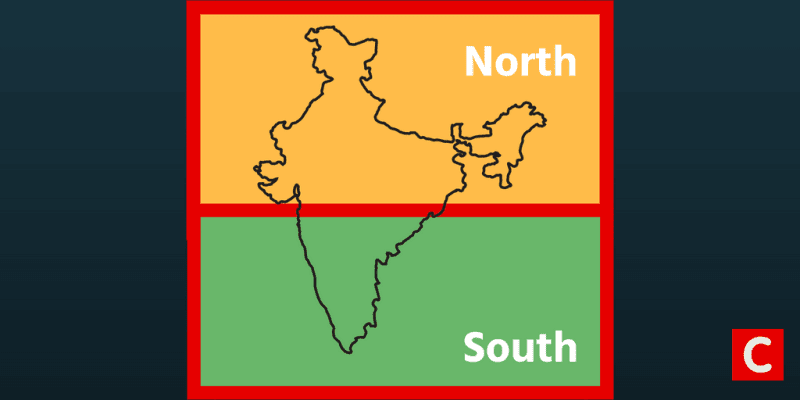
South India Is Better For Women Than North India

Hi everybody, If you were to ask an Indian woman, to prefer between living in North India or South India, imagine what would her answer be? Don’t worry, it’s not a trick question? Most women would prefer to live in South India. And it shouldn’t come as a surprise. In South India, women marry late, live longer, and are more educated. 

The gender gap in education is 26% for the north and while for the south it’s only 9%. Other than economic and social benefits, safety is another factor that could explain the woman’s preference. Compared to North India there could be less crime against women in the south. If you notice, I used the word ‘could’. It’s because data suggest that states like Kerala have high crime rates against women. But it’s not clear why the crime rate is higher in Kerala. 

NORTH INDIA VS SOUTH INDIA

Due to which a woman and her family will feel safer to lodge a police complaint against a crime. compared to the north Indian states? We’re aware that the family of a sexual assault victim doesn’t lodge a complaint in India. Around 99% of the sexual assault cases go unreported. Like the data we studied before, due to many socioeconomic indicators, women of South India live better lives than that of North India. But what’s the reason?

 It’s very interesting to find an answer to such a question. Because this difference didn’t arise in the past 70 years. It dates back to the 19th century. According to research, due to a famine in the 19th century, the women in Punjab got affected more severely than the women in Madras. Around that time the sex ratio of South India was better compared to the north. 

So Maharastra has been included in South India and West Bengal in North India. Professor Alice Evans wrote a detailed article on this subject. In her article, she wrote that when during the 19th century a group of Marathi women traveled to Calcutta, they got surprised by what they saw. According to the group of Marathi women, a woman in Calcutta could scarcely stand in presence of her relatives. Her face was always veiled. 

She wasn’t allowed to speak to any man, muss less laugh with him. Before discussing the factors that could explain this difference, let’s first understand the factors that can’t explain it. One such factor is Poverty. Many might think South India has more female empowerment given how rich the state is. But it’s not necessarily the truth. According to the GDP, Punjab and Haryana are one of the richest states in India. But these states have the worst sex ratio too.

 Doctor Evans uses these charts to prove that it’s not necessary that a woman belonging to a rich state will find better job opportunities. The second factor that can’t explain the difference, is the marriage custom or traditions. In North India, women are generally married into other villages. When they go away from their families, the chances of them ever getting their share of inheritance of property becomes nil. 

In South India, women are most probably married into the same village. And according to research when a woman marries into the same village, she’s more likely to move freely, and earn more cash. And the logic behind this is that in an intra-village marriage, you get more freedom as you live within the security of your parents and a community with whom you’ve grown accustomed. But can this norm of intra-village marriage explain the gender difference? Alice believes that it can’t. As we can see the examples of cousin marriages in the Middle East and North Africa. 

Even though after marriage the women live among their relatives, the cases of women empowerment weren’t reported in these regions. The third reason is that of colonialism. This map shows the years Britishers governed a certain region of India. They governed some regions for more than 200 years and on the other hand, they scarcely governed some regions at all. Given this, we never saw much difference in the terms of women empowerment. 

As you can notice, Britishers governed the regions of Tamil Nadu and UP for the same time period. But there’s a huge difference in the female literacy rate of UP and Tamil in the data of the 19th and 20th centuries. Now let’s discuss the factors that can better explain the difference. And one of the factors relied largely on the British administration. Looking at a broader level we won’t sense the difference that the Britishers created in the women empowerment between North and South India. 

But we dig deeper, it becomes clearer. According to Hindu law, there are two types of property inheritance rights. One is called Mitakshara and another is called Dayabhaga. Dayabhaga originated in the Bengal region. According to Dayabhaga, women could inherit property. Mitakshara operated in Madras and Bombay presidency. According to this law, women had no inheritance rights.

 Looking at the surface level, you might think that the Bengal region should have more women empowerment given it had Dayabhaga law, which ensured property to women. But we saw in research how surprised the women of Madras were on seeing restrictions on the women of Calcutta. So what’s going on here? If Bengali women held more rights, why didn’t they have a better position? According to research, the district governed by Dayabhaga saw an increase in the practice of Sati Pratha (widow immolations) too. 

Instead of improving a women’s position in society, inheritance rights led to an average increase of between 115 and 437 widow immolations in Dayabhaga districts. This law was enacted at the time of extreme elite patriarchy. This suggests that women were subjected to torments. This positive law backfired. Many joint families argued that by implementing Dayabhaga law they would tarnish their traditions. Due to this, the districts where women were given the rights of inheritance, saw an increase in the practice of sati too.

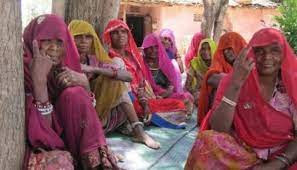
 The second factor that can explain this difference is the tradition of Ghunghat (veil). This system originated in the Arabic region and was introduced to India during the Islamic invasions. This was a mode of ensuring status. The families that belonged to higher status wanted their women to practice Purdah (veil) to maintain their status of superiority. The cast system of India was already had several restrictions for women. If a woman from an upper-caste married a man belonging to a lower caste, the family of the woman lost its honor. And the Purdah system got added to that.

 This was common among the Rajput families belonging to North India. This practice severely affected the way the women lived their lives. In rural Haryana, if a woman failed to cover her face with a veil, she was subjected to afflictions and her character was questioned too. This affected the women’s ability to earn a living. As researches have shown that due to Purdah or Ghunghat, women become more dependent on men for financial support. 

Many of you might wonder who would be practicing an age-long tradition of the Purdah system nowadays. But that’s not true. In rural Rajasthan, 98% of women in the age group of 18-25 cover their faces with a veil. The third reason is the difference in the agricultural practices between North and South India. In India, crop cultivation has two patterns. One is the cultivation of wheat by plowing of fields as seen in North India. 

Another one is the wet and intensive cultivation of rice in South India. If we take wheat for an instance, the intensive plowing isn’t carried out by women. And cultivation of wheat isn’t labor-intensive. This lowers the demand for female labor in the field. Whereas cultivation of rice is labor-intensive. Here women are required to contribute to the workforce. Dr. Evans states in her research that, women are required to step out and contribute to the workforce for the cultivation of rice. And that’s the reason why women in South India are better empowered as compared to their North Indian compatriots.

 These three factors can explain the difference in the condition of women in North and South India. Inheritance rights, Purdah/Ghunghat system (veil system), and the agricultural practices. But we need to let go of the delusion that women living in south India are leading a perfect life. They too have to face problems of their own. 

Our government shouldn’t have an objective that they should somehow provide North Indian women the quality of life as that of South Indian women. They should have a broader objective. If you consult the rankings, India is further low in gender issues. In the UN’s Gender Inequality Index, India ranks 131st, even lower than Iraq. According to World Bank, nations not well off as India, like Bangladesh and Nepal, have better literacy rates among girls. 

Our politicians dream about making India a superpower. But it would never become a reality until Indian women are given opportunities to contribute too. Through this video, we learned the differences in the situation of women in North and South India. But North Indian women shouldn’t take the lives of South Indian women as their ideal. They should aim for something better than that. This is the way India will become a superpower.

7 Mumbai-Based Women Entrepreneurs Made a 1600 Cr empire from 80Rs – Lijjat Papad Case Study

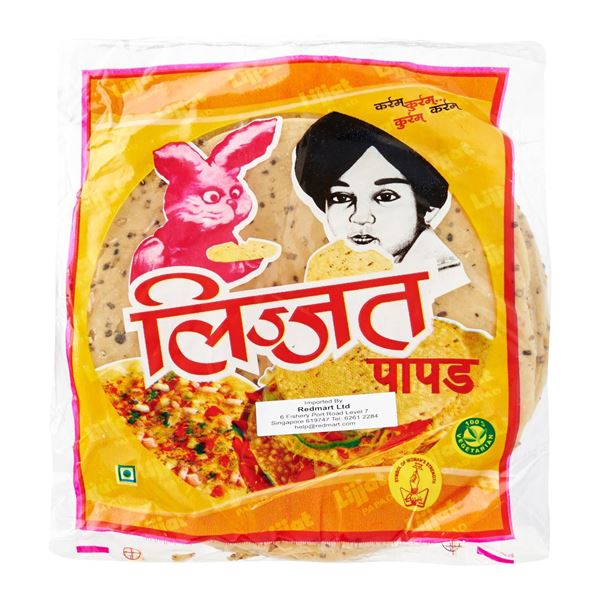
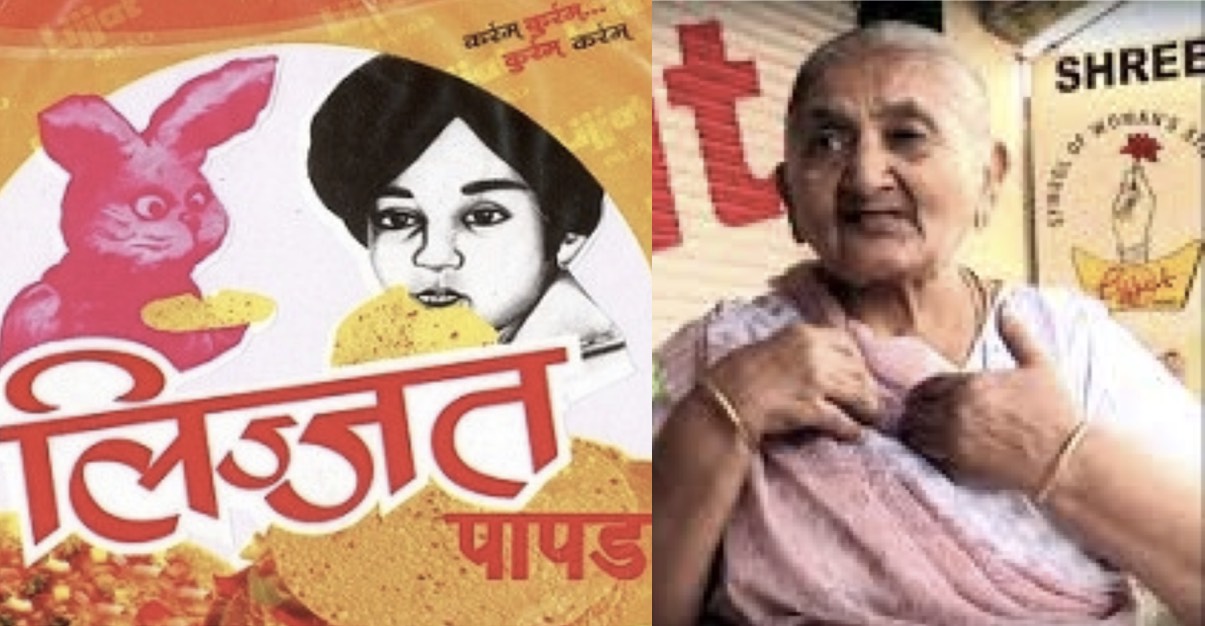
 Hi everybody, This is a story of 7 ordinary women who had no background in business, no significant educational qualification And with just 80 rupees in capital they were able to build a business empire worth 1600 crores which is spread across 69 branches and more than 42,000 employees. This home-grown brand that I’m talking about is none other than Shri Mahila Griha Udyog Lijjat Papad.

 Now, what’s more fascinating about this company is not the growth of the company but the fact that the business philosophies of this home-grown company somehow seems to have very close resemblance to extraordinary companies like Starbucks and Apple also. The question is- What is so special about this papad company and how has it lasted for more than 62 years ? And how did these 7 women manage to build a business empire out of just ₹80 in capital ? The answer to this question lies in the incredible history of the Lijjat papad. 

This is a story that dates back to the late 1950s India when India was a fairly underdeveloped country. And back then let alone education, even literacy was considered to be a luxury. And even in terms of literacy during those times woman’s literacy was not even considered important because of which only 8% of women in India could read and write while 92% of women in India were illiterates. On top of that, women were not even allowed to go out and work and the earning capacity of the families was not enough to afford a decent standard of living. That is when in 1959, Mumbai. 

A group of 7 amazing women from very ordinary background came together to discuss a business idea which wouldn’t need them to step out of the house, wouldn’t need education and yet could produce a competitive product in the market. Ladies and gentlemen, that is how the idea of Lijjat Papad was born with just ₹80 of capital that was given to them by a social worker. They first started selling their papads at a local store and soon enough due to the superb quality and taste of the papad even other shops started buying their papads. And that’s when they started scaling up. 

Now, when they started scaling they had the opportunity to hire women at a dearth cheap cost because they were one of the rarest avenues of income for women which allowed them to work from home. But you know what ? When these women had their first board meeting they established the fact that the primary goal of their business wouldn’t be to make money but to empower women from the smallest households of the country and to provide them with the livelihood to nurture their family. And mor importantly they also established the fact that money would only be used as a fuel to scale their impact on the women of India and not be the sole purpose of their existence. 

So instead of hiring women they started to give out ownership to every woman who joined their business and called them Lijjat Sisters rather than employees. This is what you call as collective ownership, wherein every employee owns a small part of the company such that the profits and losses, both are shared by every single person in the organisation. So regardless of your age, caste, religion even if you were at the lowest hierarchy of the Lijjat Papad organisation you’d still own a part of the business.

 Now, most of us might think that this is just another business move but I gotta tell you guys that this attribute of collective ownership is one of the foundational principles that make Starbucks an extraordinary company. Because you know what ? Just like the sisters of Lijjat papad own a small part of the company regardless of their position in the organisation, every employee at starbucks is considered as a partner in the business rather than an employee. Everyone starting from the baristas who serve coffee to the customers all the way upto the senior management officers, each one of them are offered stock options of the company. 

So this way, just like the Lijjat sisters every employee in Starbucks could be a small owner of the company And this move develops a deep sense of ownership which cultivates a culture of greatness wherein every employee is motivated to go out of the way and to contribute diligently towards the growth of the organisation. But the only difference between both these companies is that while Starbucks ideated this with MBA masterminds and with a million dollar capital backing the 7 sisters of Lijjat did it way before Starbucks, in 1959 without even knowing what an MBA degree is. 

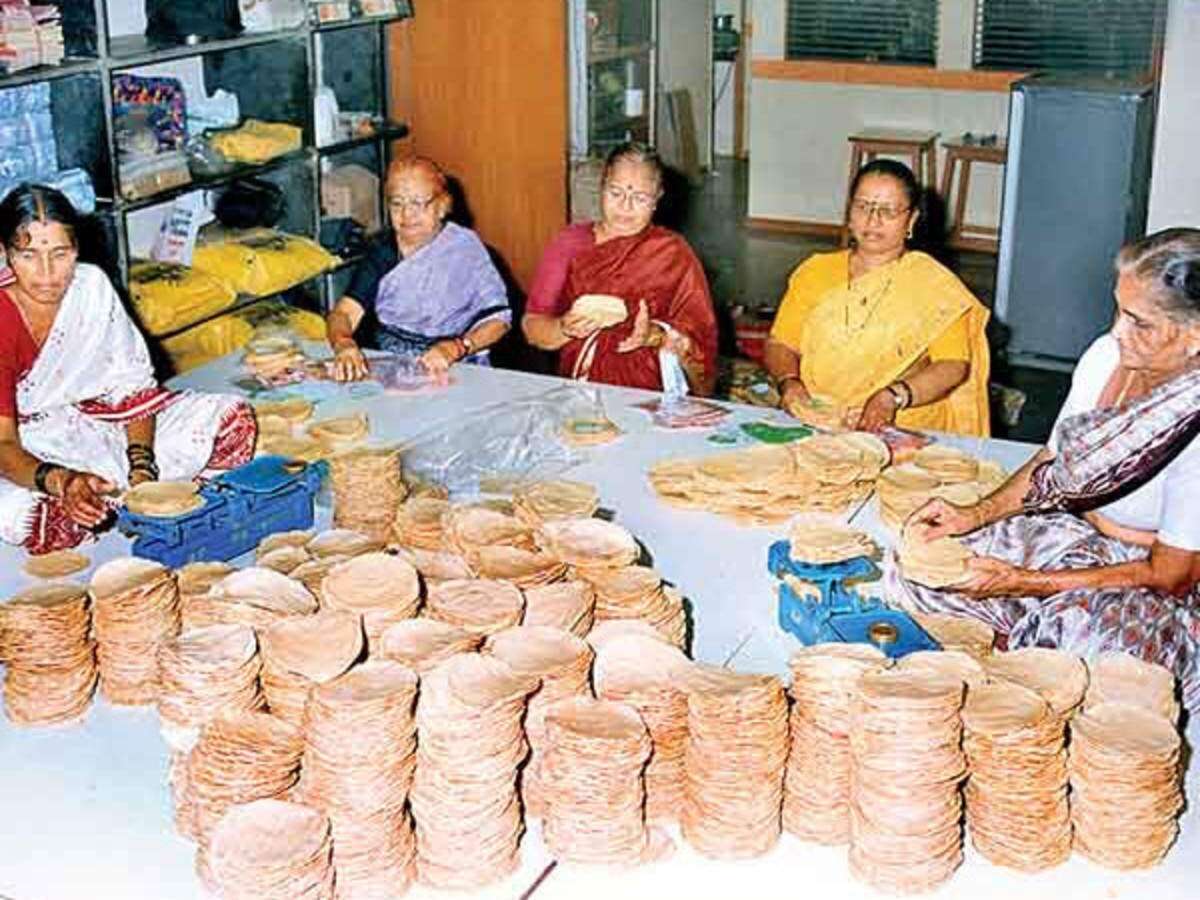
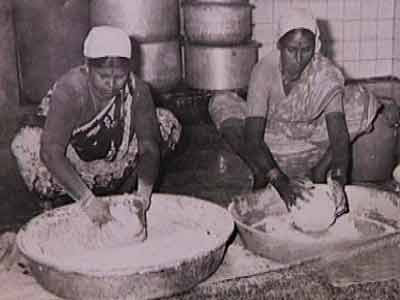
Such was the business acumen of these incredible women. The second phase of Lijjat was building a robust supply chain that would be cost effective, would ensure quality production and would fit the lifestyle of the women who work for the company. So instead of having huge office spaces they used the houses of the sisters as their small centres of papad making. And this is what their supply chain looked like The flour would first arrive from the mills to the respective central location wherein the dough is made. And after the dough is made the sisters will be brought by a bus facility provided by the company. 

Over here they would collect the doughs and then go home, make papads dry them on the veranda and then deliver the papads the next day. And lastly, after the delivery of the papads they would collect their money and the dough for the next cycle. This would be followed by surprise visits by the supervisors to check the quality of oil they use, the hygiene check of the house and most importantly the process of making papads. Now the sisters are also given aluminium papad makers to ensure that the papad is produced in a standardised manner. This happens at all the branches. If one of these branches does very well the profits are distributed among the sisters. And if not, the losses are borne by the branch members together. And after all of this comes the most challenging part of all and that is sticking to the vision and mission statement of the company. 

Now people, for most of us mission and vision statements are just stupid formalities and they have no real significance for us.  At the same time in case of colleges also even your principle wouldn’t remember the vision and mission statement of your college and if he did it would only be because he mugged it up because some committee was visiting to give your college some stupid certification or some accreditation. And this is the reason why most of us do not understand the importance of mission and vision statements. 

But here’s a thing guys Mission and vision statements form the very foundations of every single organisation. And when designed and followed the right way it can help the organisation sustain for a century. At the same time, if not done right they can even bring down a million dollar business. A classy example of the same is Apple. Now people, when Steve Jobs got fired from Apple in 1984, Apple was a million dollar company. Until he was there at the company, the company stuck to it’s value. And it was a formidable player in the industry. But after he left, they started to derail from their values. And within just 10 years they were almost about to go bankrupt. 

That’s when Steve Jobs got called back to Apple to fix things and get the company back on track. And you know what ? After he took over the company, the first question he asked to every single engineer to every single deisgner and every single manager was What does Apple stand for ? And what are the values that we believe in as a company. Because the biggest mistake that Apple made was while he was not around they started to loose their identity and started to deviate from their values because of which they started making products with no sense of purpose. 

Eventually, the brand lost it’s unique identity and customer loyalty just faded away. So Steve baba comes back asks this question and within some time the entire team is absolutely clear as to what exactly they were supposed to do. And this is what got them the ‘Think Different’ campaign that told the world what Apple truly stood for. And that is “Think Different”. And within just 2 years the same company with the same engineers and the exact same resources then went on to create history to become a legendary company that made products that changed the world forever. And again as soon as Steve baba left we all know what’s happening with Apple.

This is the importance of mission and vision statements. And here’s the most mind-blowing fact of all. In it’s 62 years of existence, not a single time Lijjat Papad has ever deviated from it’s core values. And even today After expanding to 67 branches and scaling up to 42,000 employees and after exporting their products to 15 different countries. They still abide by the core philosophy of their business, that is, Sarvodaya, which means Progress for all. 

While we live in a world where billion dollar corporates, even with the slightest change in the policies wouldn’t think twice before firing thousands of employees and putting each one of their family’s life at stake. On the other side we have got Lijjat Papad wherein with every single machinery they bring in for automation, they make sure that not a single woman is asked to leave the organisation. Because they are 100% clear that their ultimate purpose of business is not to make money but the empowerment of women so that they can give their family and children a better quality of life. 

On one side where we have got these evil companies who would put the health of their frontline workers at stake just to maximize their profits. On the other hand we have got Lijjat Papad wherein even if they have a great year, they make use of the extra profits to sponsor the education of the children of their frontline workers regardless of their age, caste, religion or even the position in the organisation. 

And they do all of this just so that the next generation of these frontline workers can be given the opportunities that they truly deserve. And last and most importantly while inspite of being at the pinnacle of the technological revolution there are people like you and me who often keep doubting our capabiities. And here we see a standing example of 7 incredible women who had no educational qualification. no background in business and no fancy investor. And yet, they were able to build a business empire that is now empowering generations of women all across the country. 

And that too during a time when women had no scope of opportunities. If this isn’t an epitome of greatness I don’t know what is…. bye bye.

WHAT ARE VOWELS ?

Vowels are sounds in which there is no obstruction to the flow of air as it passes from the larynx to lips . Vowels are thus produced with a stricture of ‘open approximation ‘, that is the tongue (active articulator ), is raised towards , the roof of the mouth (passive articulator),so that there is enough gap between them for the air to flow out freely and continuously , without friction . Vowels are essentially a ‘tone’ or ‘hum’ issuing from the glottis with the vocal cords vibrating . Hence all vowels are voiced sounds .The quality of a vowel depends on the shape of the cavities of the pharynx ,the mouth and the nose , which in turn depend on the position of the soft palate , the tongue and the lips during its articulation .

CLASSIFICATION OF VOWELS

Vowels may be either long or short ./I/ for example ,is short while /i:/ is long Usually vowels from the ‘nucleus’ in a syllable . They are soft , voiced and musical .Vowels can be classified on the basis of

  • THE HEIGHT TO WHICH THE TONGUE IS RAISED
  • THE PART OF THE TONGUE THAT IS RAISED
  • THE POSITION OF THE LIPS

CARDINAL VOWELS

For the proper study of vowel sounds ,we need a set of fixed vowel points as references .The vowel sounds specially selected for this purpose are called Cardinal vowels .They are used as references to describe , classify and compare the the vowels of any language . If we learn them we are learning about the range of vowels that human vocal organs can make.

STAYING MOTIVATED WHILE STUDYING

Some people say that the hardest step in studying is to get started. Once you have taken the first step, the rest is easy, they suggest.

Other people, however, find it difficult to stay motivated when studying, especially when the end seems a long way away.


A Strategy for You👉

There is no single strategy that will work for everyone in supporting ongoing motivation.

However, there are plenty of options that you can try, to see if they work for you. If they do, you should incorporate them into your ongoing strategy. If not, then put them aside and try something else.

The important thing is whether your strategy keeps you motivated, not whether other people agree with you.

Tips for staying motivated👇

1. Designated study space

The first step to help you motivate yourself to study at home involves creating a designated space for your learning and revision to take place. Whether it’s a desk in your bedroom, or a portion of the kitchen table, make sure you sit in this same space each time you want to study, so your body gets into a routine of knowing that this is the space in which it needs to focus. 

2. Effective study schedule

One of the greatest benefits of getting up and going into school and/or college or university, is that you follow a structured timetable that helps your body get into routine. As humans, we need routine to help our brains know where and when to focus our attention, as well as when to relax. Therefore, it’s essential you create your own schedule/timetable to ensure you can study efficiently at home.

3. Break the task down into manageable chunks

A big task, such as writing a dissertation, or revising for an extended period, can be demotivating because it seems so big.

Breaking the task down into manageable chunks can therefore help make it seem less daunting.

4. Try different study approaches

Especially when you first start studying, you will not necessarily know what works for you. 


It is therefore worth trying different approaches, to see which you find most productive.

It is also worth varying your studying to keep you interested. Some days you may want to look at one subject, and try another on a different day. You may also find it helpful to vary your style of working. You could, for example, try working in different places, and varying whether you work alone or with friends.

5. Exercise regularly

When you’re focused on studying for a major exam, it’s common to overlook exercise.

But, as far as possible, get 20 to 30 minutes of physical activity every day.

This is because regular exercise is vital if you want to study effectively and stay motivated.

Aerobic activity, such as swimming, jogging or walking, sends oxygen, blood and nutrients to your brain.

This helps you to think and concentrate.

Conclusion

The key to getting motivated to study is organising your time and work, and knowing how to use your mind effectively.


Evaluation of Otto Von Bismarck

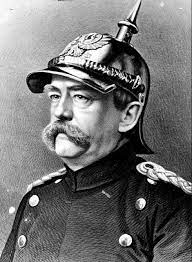
Otto Von Bismarck (1815-1898) was a Conservative Statesman from Prussia. He was appointed as the Prime Minister of Prussia by William II. He remained the first chancellor of German federation from 1871 to 1890.

After joining the office, his primary objective was Unification of Germany. For this he chose the path of diplomacy throughout the process.

He believed in Real Politik, an ideology of Machiavelli, i.e. the policy to be applied rather than have a handbook. In his famous Blood Iron Speech he said:

"Germany doesn't look to Prussia's Liberalism but to her power... not by speeches and majorities will the Great queestions of the day be decided but by Iron and Blood."

Role in Unification of Germany

Diplomacy

He won the support of Liberals and Socialists with following policies:

  • He banned Social Democratic Party but started Social Welfare Program which included health insurance, accident insurance and old age pensions.

For liberals he diminished church rights. Also made anti church and anti Catholic policies. The struggle between the church and Bismarck was called Kulturkamph.

Bismarck was also in favour of Industrialization which added points in favour of Liberals.

War strategies

i) Prussia + Austria againdst Denmark (1864)

(Diplomacy to gain Austrian support)

Denmark lost

Prussia and Austria took over Schelweig and Holstein respectively.

ii) Austria-Prussian War (1866)

(Prussia was supported by Italy)

prussia won in 7 weeks

Austria’s allies were annexed and Prussia became leader of German unification

iii) Franco Prussian War (1871)

(Planned to arouse Nationalism by France attack on Germany)

Aims of policy:

Wanted to isolate France thereby remaining in good terms with Austria and Russia

  1. Driekaiserbund (League of Three Emperors) was Bismarck’s policy of isolating France
  2. He hosted Congress of Berlin 1878. The result left Russia angry and signed out of Driekaiserbund.
  3. To safeside Germany he made Reinsurance Treaty 1887, with Russia.
  4. Dual Alliance 1879, with Austria became “the way to cornerstone of the foreign policy” says Caer.
  5. Bismarck wanted to remain neutral and did not want to disturb Balance of Power. However pressure built during Scramble of Africa.

Bismarck enjoyed formidable reputation. His handling of Vongress of Berlin helped prevent war in Europe. Biggest criticism for him is his disregard for people of small nations. He ignored the wish of people of Ottoman Empire during Berlin Conference.

Universal Human Values

Human values are necessity in today’s society and business world. Human values are the features that guide people to take into account the human element when one interacts with other human. They have many positive characters that create bonds of humanity between people and thus have value for all human beings. They are strong positive feelings for the human essence of the other. These human values have the effect of bonding, comforting, reassuring and procuring serenity. Human values are the basis for any practical life within society. They build space for a drive, a movement towards one another, which leads to peace. In simple term, human values are described as universal and are shared by all human beings, whatever their religion, their nationality, their culture, and their personal history. By nature, they persuade consideration for others. These are described below:

Co-operation

It is the procedure to work jointly to attain some goal, but many scholars visualize co-operation as a luxury and not an important human value. It is unquestionably one of the most vital assets one can have when working through a problem. Having the opinions and voice of another person will not only draw out a discussion of the topic, but also lead person to good solution. Co-operation has been under-appreciated for years in its importance and should be held in high regard.

Caring

This human value is viewed as exhibiting kindness and concern for others, the true importance of this value comes from the work or practice of looking after those unable to care for themselves. Caring for others both physically and spiritually is an extremely important value to have; people will always rely on someone else for help at one point or another, but we often fail to realize how much of a difference caring for another person can make.

Honesty

Honesty is also vital human values. Presently, adopting an honest approach can often feel intimidating and impossible, but people fail to realize is that it is not the act of simply telling the truth that makes someone honest rather the quality of person who is being honest. An honest person is often straight, upright, sincere and fair and being an honest person brings more reward to the soul than the damage a lie could do.

Love, Respect & Faith

The presence of love in human life, the love they have for their families, friends, our faith and for themselves is important source of energy to lead smooth life. Respect is a feeling of deep esteem for someone or something elicited by their abilities, qualities, or achievements. Faith is complete trust or confidence in someone or something.

Beauty

Beauty is something that has really been spoiled by human society. The way we think about something that is beautiful is judged on a purely physical response, but the true meaning of beauty is being in balance and harmony with nature. Many researchers would argue that beauty is not a human value and, although beauty is a subjective experience, when they analyze what a subject of beauty is, it becomes anything that resonates with personal meaning, not just emotion. The prominence of this Human Value is clear when people think about the things that bring meaning into their life such as family and friends, these things become beautiful in a greater sense.

Wisdom

Wisdom is also significant human value in many ways; under-appreciated in its importance, in its value in our lives and in its true meaning. Wisdom is also very often confused with words like knowledge or intelligence but the word wisdom is defined as the quality of having experience and good judgment and the resulting soundness of that action or decision.

Role of family and society in teaching values

Moral values such as truthfulness, happiness, peace, justice are inculcated in children’s thoughts, feelings and actions and they function as ideals and standards that govern their actions in their life. The value system practiced in the family becomes automatic to the young family members if they are taught moral values thoroughly. The family has a great responsibility to pass on to the children many truths and values, and competencies to accomplish their place in life, whatever the society, whatever the culture or times. The family, forms the child’s viewpoint towards people and society, and helps in mental development in the child and supports his desires and values. Delightful and joyful atmosphere in the family will develop the love, affection, tolerance, and generosity. A child learns his behaviour by demonstrating what he sees around him.

Role of educational institutions

Value education is important to help everyone in improving the value system that he/she holds and puts it to use. Once, one has understood his/ her values in life he/she can examine and control the various choices he/she makes in his/ her life. Many reports signify that the aim of educational institutions should not only be to teach education alone but should also be to inculcate values and improving skills of children and teens. In school, children are affiliates of a small society that exerts a great influence on their moral development. Teachers serve as role model to students in school. They play a major role in inculcating their ethical behaviour.

FACTS ABOUT HUMAN BODY.

Human body is one of the most fascinating and complex living systems on the earth. Let us get more familiar features and facts about human body.

  1. Adults lungs are of 70 sq. meters in terms of surface area.
  2. Your left lung and right lung are not of same size. Your left lung is little, smaller in size when compared to right lung, which allows room for you heart.
  3. 11,000 litters of air is what an average person breath daily.
  4. The growth of our ears and nose is continues throughout our life.
  5. Human’s sense of smell is 10,000 times more sensitive when compared to the sense of taste.
  6. Over a quarter of oxygen is use by a brain of a human body.
  7. A average weight of a human brain is about 3 pounds i.e. 1.5 kg. Even after this it contributes 2% of body’s weight.
  8. If you smooth all your wrinkles and set it into your brain, it will lay straight as a size of pillow cover.
  9. Our hearts beat around 1,00,000 a time in a day, 365,00,000 times in whole year and billion times if you live more than 30 years.
  10. During listing to music, your heart will automatically sync with the rhythm.
  11. Heartbeat of about 75 times on average in a minute is a sign of a healthy human body.
  12. A human heart can pump the enough of blood in a year which can fill an Olympic size pool.
  13. A human body vessel, when laid by connecting to each other then it can surround the earth 4 times.
  14. The largest organ in a human body is skin.
  15. Skin of human sheds around 6,00,000 particles every day, which means it is the largest dust particle you clean from your house daily.
  16. Your eyelashes fall off after every 150 days.
  17. Like every unique fingerprint we human also have unique tongue print.
  18. We are the only living animal with chin.
  19. The amount of iron that a human body contains is enough to make your nails 2.5 cm (1 inch) long.
  20. Your hands get 50% of the strength from its little finger.
  21. A human body carries in and around 4 pounds of bacteria in them.
  22. In terms of vision a human eye has 576 of mega pixel.
  23. Our brain produces enough energy that it can light a bulb.
  24. A human cannot swallow while he is breathing.
  25. The cornea is the only part with no blood vessels, it take oxygen directly from the air.
  26. We human produces ample of saliva during our life which can fill two swimming pools easily.
  27. 23 feet long is the size of our small intestine.
  28. Seven bars of soaps can be made from the fat that contains in a human body.
  29. A human skin weight about 4-5 kg.
  30. Human brain has 2 sides, right and left. Left side of  the brain controls the right side of the brain and right side of the brain controls the lefts side of the brain.

ONLINE EDUCATION: EXHAUSTION FOR STUDENTS RATHER THAN KNOWLEDGE

Specially for students of age 4 to 9 years

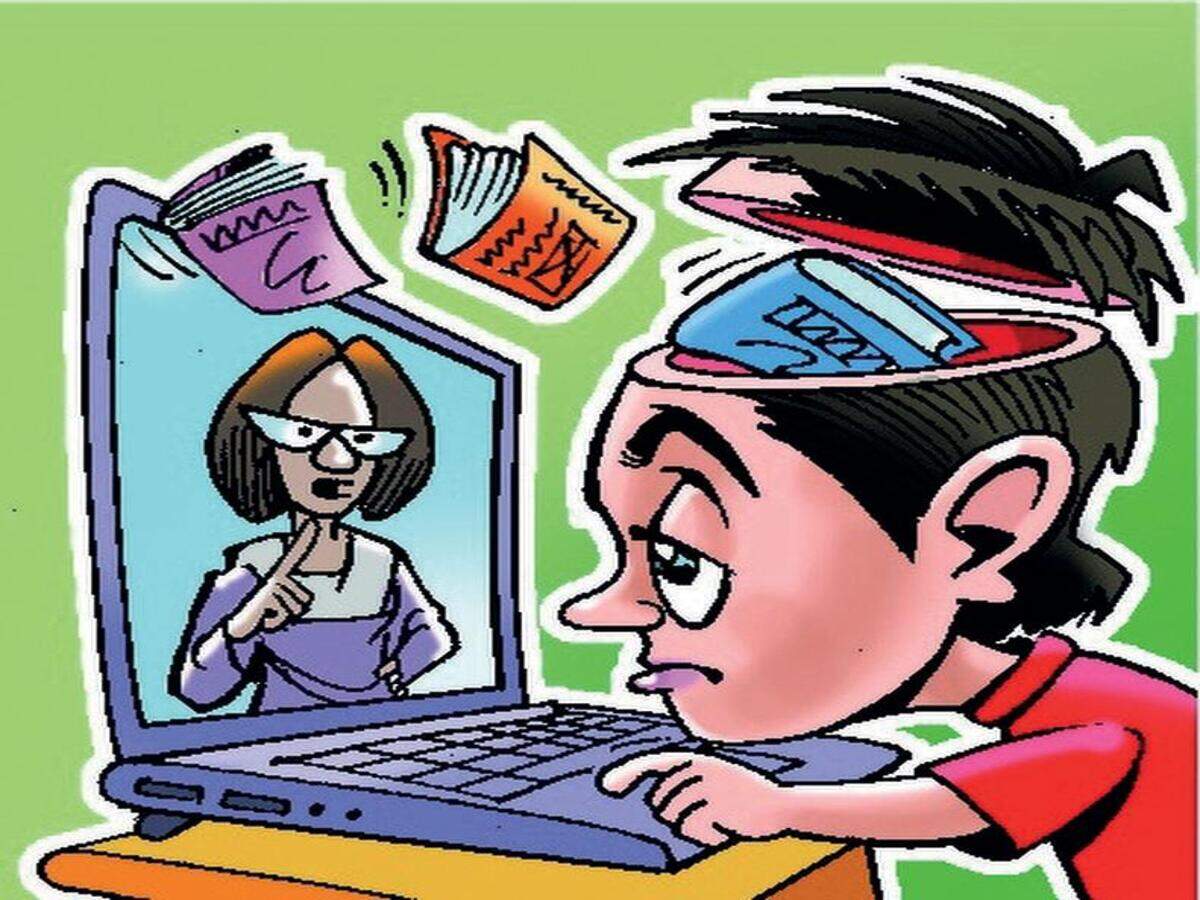
Everything has a positive and negative side. Similarly, online classes has both positive and negative sides. On one hand, the e-education and online classes have emerged as a solution for the educational crisis in current pandemic and thanks to these technological advancements which helped the students to continue their education. But on the other hand, online learning has numerous negative consequences also. In this article. we will try to identify and understand some these negative consequences and effects of online learning.

Due to pandemic, everybody lost many things, everyone’s life and lifestyle have changed and society has been altered but the there’s a huge impact of this pandemic is on the children’s of age group 4 to 9. These children’s should be learning new thing now, exploring and playing and making friends but all these things are nearly impossible for them in current situation. The pandemic forced the kids to moveout from the learning zone with which they were acquainted, like a classroom and are setup in the completely opposite scenario, where the students have missed many essential part of their education. The sudden transition of education from classroom studies to online learning will also have a huge impact on them. However, the new generation is very internet savvy but the e learning has certain limitations. Online learning comes with many challenges that has many impact on the students.

The main issue here is the lack of consistency… Children are more attentive and curious to learn things when they were in class but in this online learning scenario, the consistency of these children to be focused on studies and concentrated decreases. A students interest to answer the questions and clear doubts is more in classes but this is reduced in online learning. The willingness of a student to get his or her doubts cleared and participate in the class decreases due to the lack of one to one reaction with the teachers.

Reduced Concentration and Self Discipline… The major limitations that the students are currently facing in the online learning is reduced concentration in the class and self discipline. A school classroom provides the complete atmosphere which boosts the interest and concentration of students to learn. And such environment and structure which is effective for learning is not present at home. This classroom atmosphere give the best environment to student where they can learn, complete their assignment. Homes lack such things and as a result of which students struggle to finish their homework’s and assignments, lack of motivation and lower goals for themselves. This also discourages the students to do better in academics and explore new things.

Reduced Interaction with Peers… In addition to lack of motivation to study, the very important part of a child’s school life is also missed. This is their interaction with friends. Schools provide a neutral environment for students where they can study as well as enjoy. There is scope of social interactions which aids in developing many new skills such as understanding people of different personalities, setting boundaries, learning cooperation and empathy etc. These skills are very important for the students as it helps them in socializing with others. But such facilities cannot be provided in the homes due to the current pandemics. Because of this the students get isolated and a sense of isolation can emerge in them.

Health Hazards of Online Teaching… Online learning required continuous focus of screens which has many physical health and mental health hazards. The increase in screen time is one the major concerns and disadvantages of online learning. Some students may also develop bad posture and physicals problems. It has serious impacts on the eye sight of the students also.

Business War – Apple Music vs Spotify vs YouTube Music

 Hi everybody. We all know that Spotify is by far the most successful audio streaming platform in the world. In fact, even during the pandemic itself, the stock price of Spotify went up by 70%. Now, on the outside if you look at the numbers while Apple Music has only 72 million users Spotify has more than 345 million users and the rest of the competition is not even close. On top of that, its recommendation and playlist have been so amazing that you’ll agree that it has given you an incredible experience every single time. But you know what guys? Fortunately or unfortunately, in 2021, Spotify is in deep-deep trouble. 

While on one side the losses of the company have been stacking up rapidly On the other side with the giants entering the streaming market Spotify is officially in a business war. And what we are witnessing right now is perhaps one of the most interesting Internet business wars in history. And if you pay very close attention you’ll be able to learn some incredible business lessons that you can apply to your startup and most importantly, as an investor, if you’re investing into US stocks this streaming war is going to be very very crucial. The question is- What is this business war and most importantly as an entrepreneur, what are the business lessons that you can learn from this iconic case study. 

People, the music streaming revolution of the world started way back in the 1990s. Now, back then from 1984 to 1999 CDs were the ultimate instrument of the music industry. The distribution channels of the music CDs made the record labels and musicians billions of dollars every single year. But in the 1990s the Internet and the computer revolution began to pick up resulting into massive penetration of both, computers and web, into the American household. Now, people if you see this is a fine culmination of technology and connectivity and if you observe closely every time this golden combination happens, it gives rise to a new generation of startups. In the music industry, it was the company called Napster which was started way back in 1999 by Shawn Fanning and Sean Parker. 

In simple words Napster was nothing but a music torrent instead of buying a CD for 20 dollars you can download an MP3 file for free and share it with your friends And you know what guys? This invention was a disruption in the making because what followed next was the first wave of music streaming. And this wave did not just change the way people listen to music it literally changed the entire music industry. Within a few months it had 4 million song downloads and in less than a year, Napster had 20 million users. Now, initially, people thought that it’s no big deal. But in sometime, the numbers of Napster exploded further, to 60 millions users by 2001. And this is when the record labels began to realize that their stores are incurring losses and when they actually computed it shocked them to see that they were incurring more than $100 million in losses due to Napster.

 And that’s when hell broke loose for Napster. They got slapped with a lot of lawsuits and what followed next was the historic suit that led Napster to pay millions of dollars to artists, creators and record label companies eventually they had to shut down their operation in sometime. Now, while most people thought that piracy will be gone and that CDs will be back as it turns out, Napster left the market but the behavioural design of the society had been so strongly altered that people just didn’t go back to CDs at all. 

The CD stores were still closing down and other piracy websites took the place of Napster. Companies were still incurring millions of dollars of losses because people just wouldn’t pay $20 for an album. And this is where record labels were desparately looking out for an alternative to actually get their distribution channel back on track. And while all of this drama was going on, there was one man who noticed this and decided to become an opportunist during the times of chaos. And this man was none other than the legendary Steve Jobs himself and the solution that he brough to the table was to give people ultra cheap music and to give record labels a non-piratable distribution channel for their music. And this solution was none other than the iconic iPod and the rest is history. 

The record labels again started to make billions of dollars customers fell in love with the iPod as it brough along the second wave of music streaming revolution.  There were two major problems over here. Number one, not everyone owned an iPod or a Macbook and number two, not everyone could pay for each album. but everyone had the computers and the Internet. So, guess what? This culmination of technology and connectivity, again, gave rise to another generation of startups and the most successful player in this segment turned out to be none other than Spotify which started way back in 2006. 

Spotify learnt from the pains of the customers and decided to build a music streaming platform that could be used by everyone and could be used by everyone for free and this is where Spotify deploys its freemium model with an option to subscribe but this time it wasn’t easy because they knew what happened to Napster and the subscription model was way more complex than the discreet model of iTunes. Because when it comes to CDs or iTunes, it was pretty straightfoward if you buy a $1 album from iTunes 80% of that goes to record labels and 20% of that is mediator fees and that’s it. 

Whereas in case of subscription, it’s quite difficult because you are giving unlimited access to everyone for a defined fees. So, the revenue distribution itself becomes very very complex. But fortunately the Spotify guys got through it and they spent about $9.8 billion dollars between 2006 to 2018 just to get the music rights without legal issues and they built the freemium model to make music accessible to everyone. And what followed next was the third wave of music streaming that is, unlimited legal music which could be listened for free. As a result of which, again, Spotify exploded and today it is a market leader with the highest number of paid subscribers. But again there were 3 problems.

 Number one, ad revenue was not enough to pay the artists well and because the music is free, very few people actually opted in for a subscription. Number two, there was no profit for Spotify, in fact the company suffered massive losses during its rise. And last and most importantly things got really ugly with the artists. Taylor Swift and Adele broke up with Spotify over low pay. And again it led to a series of troubles for them from the creators’ side. Now, the company was badly cornered. With massive losses on one side annoyed artists on the other and on top of that they’ve now got freebie loving customers. And this gave them no option but to run a lot of ads to push their customers to buy Spotify Premium and hence a lot of interruptions. And this is when ladies and gentlemen 2 more giants decided to step into the game.

 In 2015, Apple introduced that it’s going to kill iTunes and launch the subscription model which was Apple Music as direct competition to Spotify. And in just 5 months, in November 2015, YouTube entered the streaming wars with YouTube Music. Now, if you observe this streaming war very very closely guys, you’ll see that both these services, that is, Apple Music and YouTube Music are built over the weaknesses of Spotify. And with just a few moves here and there Spotify could be killed and there could be another wave of social media revolution on YouTube. The question is- How is that even possible? If you look at this table, Apple Music deploys a premium model and its only for Apple users while Spotify and YouTube Music is for everyone and they use the freemium model which gives them a wider audience. 

Now, if you look at the user base, Apple has 1.65 billion users Spotify has 345 million users and YouTube, well it’s got 2.1 billion users. But when it comes to paid subscription Spotify is way ahead of Apple because of its accessibility through both Android and Apple. While Apple Music has only 72 million users but all of them are paid Spotify has 345 million users out of which 155 million of them pay. Now, the X factor for Spotify over here is its amazing playlists and podcasts that is integrated into the app. And this is where we saw Spotify coming out with Spotify Originals like 22 Yarns and signing up creators like Joe Rogan to become Spotify exclusive. But Apple and YouTube both also have their podcast but separately. YouTube has Google Podcasts and Apple has Apple Podcasts. And now, guys here comes the big difference. 

While Apple Music generates a revenue of $4.1 billion with very less profits because it’s just an ecosystem product Spotify being a standalone incurred a loss of $698 million inspite of generating a revenue of $9.2 billion. And YouTube? Well it’s way ahead of the game with $19.7 billion dollars in revenue and this is mainly because of it’s video service. Fun fact: YouTube is one of the most popular platforms to discover musicians and artists. Now, guys, if you take a step back (I don’t know if you see this) but YouTube can literally accommodate every single X factor of Spotify and Apple Music in the YouTube app itself. Number one You kind of already search for songs through lyrics from Google and YouTube which is the USP of Apple Music. 

Number two, you can ask Google which song is playing and it will find that out for you which is nothing but a Shazam feature. And most importantly Google has Google Podcasts and a huge base of creators who are already making podcast on YouTube. Now, every single creator knows that YouTube is by far the best platform for creating content. And users know very well how well YouTube understands them and their preferences. Now, if YouTube rolls out an update tomorrow saying that Google Podcasts is now integrated into YouTube as YouTube podcasts. 

Do you realize what’s going to happen? It is going to lead to another huge wave of creators who will flock to upload their audio content on YouTube because there are already a ton of audio creators who are desperately wanting to be on YouTube. And if given a chance with YouTube algorithm, it’s going to be a game changer for them. And the best part is, because it’s available on both Android and iOS the user base is insanely huge. So, basically YouTube literally has the best of both Spotify and Apple. And when integrated together, it will become unbeatable in the content space just like Instagram is right now for social media networks. And my sense is, one day there will be a grand announcement that’s going to change everything for Spotify. This is what, ladies and gentlemen is happening in the streaming wars. Now let’s move on to the most important part of the video and that is what are the lessons that we can learn from this iconic case study. 

 Now, let’s talk about the lesson from the case study. Lesson number one. People, always remember that being the first mover can sometimes be a terrible thing and as far as my observation goes it’s almost every time a terrible thing. And it’s always better to be a second mover so that you can build upon the mistakes made by the first mover. In this case if you see, iTunes built over Napster Spotify built over iTunes and Apple Music and YouTube music built over Spotify. So, if you’re the first mover, you’ve got to be very very careful and if you’re the second mover you’ve got to be very very happy, at the same time, very very sharp about the mistakes that have been made by the first mover. 

Lesson number two companies might come and go but the behavioral design they leave behind will stay forever. In this case, it was the paradigm shift from CDs to streaming. So, while most people will neglect it and try to reverse it you as an entrepreneur can be an opportunist and can bring about a solution which is forward looking rather than backward looking. In this case the opportunist was none other than the legendary Steve Jobs himself who built upon the behavioral design left behind by Napster. 

And most importantly, always remember guys the culmination of technology and connectivity is always the sweet spot for innovation and it will give rise to the most revolutionary startups. In this case, it was the computers and the Internet but in the next 3 years it’s going to be the green tech and the Internet, blockchain and the Internet and most importantly Artificial intelligence and the Internet.  Bye-Bye.

THE INSPIRING STORY OF THE MISSILE MAN – APJ ABDUL KALAM

“IF YOU WANT TO SHINE LIKE A SUN, FIRST BURN LIKE A SUN”- KALAM

Avul Pakir Jainulabdeen Abdul Kalam was the man loved by all the Indian as well as he was respected outside the India also. Kalam was the man with 0 haters he was one who gave the wings to fly. From a newspaper delivery boy to the President of Indian, his great contribution toward India is remarkable which cannot be ignored.

Let’s read more about the success of the missile man of India-

EARLY LIFE AND CHILDHOOD

Kalam was born on 15th October 1931 in a Tamil Muslim family in the city of Tamil Nadu, Rameswaram. Jainulabdeen, Kalam’s father was a boat owner and IMAM of a local mosque, Ashiamma his mother was a home maker. He was blessed with 4 brothers and 1 sister. He was the youngest among all the siblings.

In his childhood, due to the financial crisis in the family, Kalam was forced to sell newspaper at a very young age to support his family. Kalam was an average student during his school time, but he was hardworking, good learner as well as a bright student as per his teacher’s saying. Abdul Kalam completed his schooling in Schwartz Higher Secondary School. In the year 1954 he completed his graduation in physics from Saint Joseph’s College. Later in the year 1955, Kalam went to Madras Institute Of Technology to study aerospace engineering.

Kalam’s wanted to be a fighter pilot, but he almost missed his dream, as there were only 8 position and Kalam secure 9th position in the qualifiers of Indian Air Force (AIF).

ABDUL KALAM’S CAREER

Career as scientist: – After completing his graduation from Madras University in the year 1960. Kalam joined Aeronautical Development Establishment of the Defense Research and Development Organization [DRDO] as a scientist. His career began when he started to design small hovercraft, but he was not happy as he was not satisfied with his job. Later in the year 1969, he was appointed as the director of India’s 1st Satellite launch vehicle [SLV-III] in Indian Space Research Organization  [ISRO] which was successful in July 1980. Tremendous and huge contribution and efforts of Kalam in the development of Polar Satellite Launch Vehicle [PSLV] and SLV-III launched between 1970s and 1990s and by the grace of God both were successful and one of the most important victory for India. Kalam was also invited to witness the India’s first nuclear test ‘’Smiling Buddha” by Raja Ramanna.

Career as president: – Abdul kalam became 11th President of India in the year 2002, he was 3rd president of India who was honoured with Bharat Ratna before he became the President. He was the only scientist and bachelor to occupy ‘Rashtrapati Bhawan’.

The Tragic death of Kalam: – On 27th July, when he of 83, we lost the gem of India. When kalam was delivering a seminar on “Creating a liveable planet Earth” at IIM Shillong, he collapsed he was rush to near by hospital, but he was dead at that time due to the cardiac arrest. APJ Abdul Kalam was famously knowns as ‘Missile Man of India’. He was the one who made India to fly high and achieve success. He was love by children and his story inspires us for the success.  

FEMALE FOETICIDE

Female foeticide is the process of finding out the sex of the foetus before the birth, if the foetus turns to be a girl, then the mother must undergo with abortion. Although this is all illegal but till it is practice in many parts of Indian. By the side of this there are some people who practice female infanticide that means killing the girl child after she is born. This leads to the decline in the ratio of boy is to girl in our country. This decline in the sex ratio means that we are taking away the human rights of girls not only this we are the reason behind not giving them rights to live.

This practice needs to be banned before it is too late as both boys and girls have equal right to live. In order to prevent their rights, we need to forbid the practice of dowry system, child marriage which are practiced from long time.

Despite of having a strong Prenatal Diagnostic Techniques Act, it is a high time to strengthen this law, since the number of cases regarding female foeticide are still not less. Preference of boy child or having the first child as boy has became the tradition in every Indian household especially in rural areas. Many parents also give more importance to the boy child, thinking of that he will be their backbone after they get aged and will take care them during their old age. But the reality is, once boys reach the age of manhood and starts to earn wealth and gets all the facilities, they soon forget their parents and leaves them and gets settle with their wives and kids to live an independent life.

Now the time has changed, today we can witness many temples specifically build in the names of women. In Tamil Nadu, these temples are knowns as ‘amman’ temple, ‘ammavaru’ temple is called in Telegu belt whereas in Kerala these temples are know as ‘bagawathi’ and so on in many parts of India. There are many festivals on specifically for female goddess like Navratri which is celebrated of 9 days and nights in the name in Goddess Durga.

But we can still taste the bitter truth, when it comes to bearing a girl child or when a family gets to know that their daughter-in-law is pregnant, they soon conduct or follows the superstitious activity and ask only boy child should be born. I still do not understand this dirty logic behind this.  

After 73 years of Independence, living in 2ist century it’s our responsibility, not to encourage such dirty practice.

Indira Gandhi, Kalpana Chawla, Saina Nehwal and many more are the females who made their parents and India proud. It just we need to give them their right and see what magic they do.

To abolish this practice government also launched campaign “save the girl child”.

At last, but not the least, boy or girl they are God’s creation, accept what he gives. Never ever destroy at the stage of development itself, you never know she can be another Mother Teresa, Kalpana Chawla and give you a chance to be proud of her. Do not forget betiya ghar ki Lakshmi hoti hai (girls are consider as Goddess of wealth).

“The White Tiger”- Class Struggle from a Humorous Perspective

“The White Tiger” (2008), a Man Booker Prize winner novel by Arvind Adiga is his debut novel.

Compelling, angry and darkly humorous. The White Tiger is an unexpected journey into a new journey into a new India. Adiga is a talent to watch.
   -Mohsin Hamid

The story revolves around Balram Halwai- a self declared “self-made entrepreneur”, a rickshaw puller’s son who skillfully climbs India’s social ladder to become a chauffer and later a successful businessman.

The novel is in epistolary form. He writes from his office in Bengaluru to Chinese officer Premier wen Jiabo with the goal of telling him about India.

The novel’s specialty is the simple language used to describe complex political and social theories. Balram belongs to the village Laxmangarh or “Darkness”, as he names it. Throughout the novel, we get to see Balram’s perspective of rich and poor. He is the psychopath-anti hero who killed his employer Mr. Ashok. He justifies his actions in the whole process.

“You can take almost anything you hear about our country from the prime minister and turn it upside down and then you will have then you will have truth thing.”

Balram in his letter

The subtle statements arouse emotions of humour and also give the facts. The novel is written in the tradition of ‘expose writing’. This uses plots as a means to examine social institutions. Balram’s dark comic provides an ironic yet emotional edge to the work. Balram holds positive view of the caste system. He expresses a significant degree of nostalgia praising the orderliness. In his mind people were struck where they were and considered it as the natural state. So there was a general sense of satisfaction.

On this context he puts forward the theory of Rooster Coop. It is Balram’s metaphor for describing oppression of India’s poor class. Roosters in a coop watch the other get slaughtered, but are unwilling to rebel and break out of the coop. He actively argues that poor stop each other from escaping. Therefore the Rooster Coop is guarded from inside- thinks Balram.

Animal imagery is yet another humorous aspect to illustrate the flaws in social conditions. The four landlords who oppressed the villagers are namely The Stork, The Buffalo, The Raven and The Wild Boar. These landlords resemble the characteristics of respective animals. The other names are The Mongoose and Country Mouse.

And then, thanks to all the politicians in Delhi, on the fifteenth of August 1947, the day British left- the cages had been let open… Those were the hungriest, ferocious, had eaten everyone else up and grown big bellies.

The statement draws connection between the animals and how people of India live.

Dr. B.R. Ambedkar

Indifferentism is the worst kind of disease that can affect people

Dr.Babasaheb Ambedkar

Dr. B. R. Ambedkar or Bhimrao Ramji Ambedkar or Babasaheb Ambedkar a well known Indian Jurist,Economist, Politician and Social reformer. We all know him beccause of the work done by him on the initial stage of our country’s development. But do you know more about his work and Protests he’s being part of? Do you know what his life story? Let’s dig into it more deeply.

Early Struggle

In the early life itself Ambedkar has faces a lot of discrimination issues. If we go for each belongingness it will difficult to reflect his journey.

Ambedkar was born on 14th April 1891 in Mhow town which is actually a military cantonment and currently is in Madhya Pradesh. He was the 14th number child in his family. His father Ramji maloji sakpal is an army officer in British East India Army, mother Bhimabai sakpal. His brothers Balaram, Anandrao and his sisters Tulasa and Manjula. Ambedkar is from Mahar(dalit) caste background which in the ancient time treated as untouchables and subjected to socio economic discriminations. At the age of 15 in 1906 he is married to Ramabai who is 9 yrs old. His marraige is taken place with the consideration of couple’s family choices and decisions.His wife died in 1933 due to long illness.After completing the draft of India’s contitution in the late 40’s ambedkar suffered with lack of sleep, neuropathic pain in his legs.When he went to Bombay there he met Sharada Kabir whom he married on 15th April 1948. After a while she adapted a name “Savita Ambedkar” and cared for him for the rest of his life.She is also called Mai and died on May 29,2003 at the age of 93 in Mumbai.

Dr. B.R. Ambedkar, Savita Ambedkar

After Ambedkar father’s retirement their whole family shifted to Satara. Just after that Ambedkar’s mother Bhimabai died due to illness because of which they are moved to their paternal aunt.Ambedkar is very fond of studies. Out of his all siblings he is the most intelligent one this is the reason he is selected for high school examinations.But on the other hand, in his village satara his family faces alot of discrimination issues. Because of his dalit cast ambedkar family members are not treated as an ordinary people for eg:

  1. They cant drink water from a single tap as used by everybody else.
  2. In school their children have to sit in a sack away from other children’s
  3. Whenever they want to drink water in school peon will give them water from a utensil far away from them so that utensil is untouchable by them.
  4. In case of medical emergencies they did not get any proper medication because the medical persons are not ready to touch them due to discrimination.
  5. The village people fully insult or boycott them from every single alternative to insult them.

The above examples are enough to understand the type of sufferer they have been. Still it will never become blockage for ambedkar determination towards his values to make a difference.

Education

In 1912 he obtained the degree in Economics and Political science from Bombay university. Meanwhile, he also worked as Private tutor, accountant and established an investment consulting business. In 1918 he became professor of political economy in the sydenham college of commerce and econimics in Mumbai. Over there also professor’s objected to share a jug with him. The discrimination which he faced in his town it never leave his path.

Opposition to Untouchability

Inspired by Dalit buddhist and campaigned against social discrimination towards dalit he is being part of many marches and movements. In 1927 he decided to launch active movements against untouchability. Marches for drinking water with a single tap and entering Hindu temples are his common initiated movements. Not only this the learnings from his childhood to his adult, the suffering that he faced all he compressed in establishing in India’s constitution. From importance of lower caste to importance of knowledge for female he implemented all of them in india’s constitution and made a drastic change in the history of the India.

But still the story of this fabulous person came to an end on 6 december 1956 due to his illness and medication side effects. After that as well the legacy he left behind against discrimination, for knowledge gaining and making dedication for making a difference is still effectful in this modern india.